30 Garden Ideas to Copy This Spring, From a Bare Lawn Up

Garden ideas are easiest to copy in the order you would build them, from a hose on the lawn to a rain barrel.
These 30 are written for early to mid spring in a temperate US yard, with a cost on each.
Timing shifts by zone, so check your zone and last frost date, and call 811 before you dig.
Where are you in the build?
1. Lay a Hose on the Lawn to Draw the First Bed
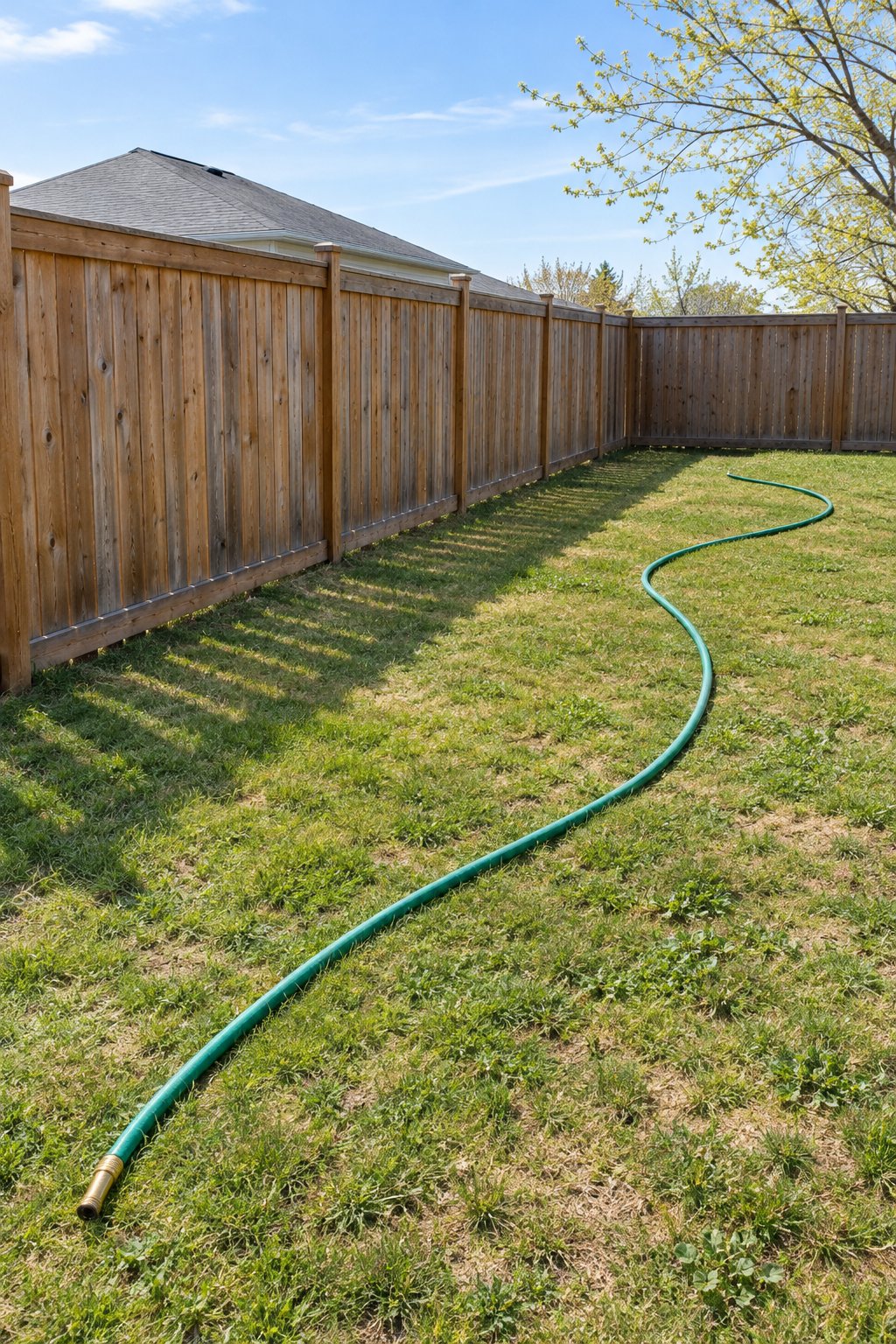
Draw the first bed with a garden hose, because a curve you can see beats one you imagine. Lay it on the lawn, then look at it from the kitchen window and the patio door.
I’d leave it out for two or three days before I cut anything.
2. Cut a Spade Edge Before You Buy a Single Plant

A spade cut along the hose line is the cheapest border there is. Slice straight down a few inches, then tip the spade back to leave a clean edge.
Call 811 before you cut, and see my flower bed edging ideas for a permanent edge.
3. Cardboard and Mulch Turn Lawn Into a Bed Without a Shovel

Cardboard and mulch kill a patch of lawn without a shovel. Overlap plain brown sheets with tape and labels removed, wet them, and cover with several inches of mulch.
I’d take this over renting a sod cutter.
4. Follow the Line Your Feet Already Take With a Wood Chip Path
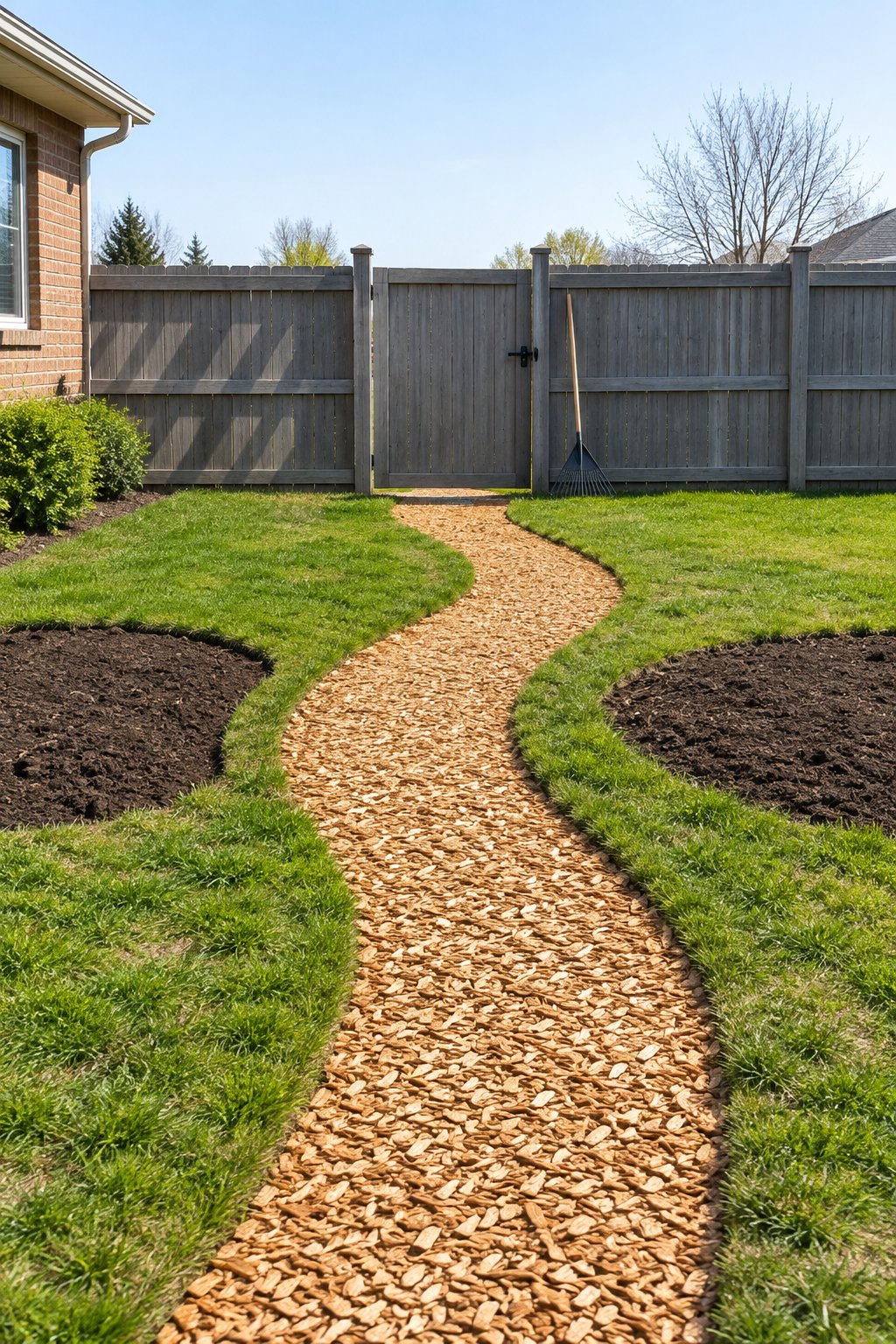
Follow the line your feet already take, because a path nobody uses is decoration. Lay cardboard or landscape fabric along it and spread wood chips a few inches deep.
Make it 2 feet wide to walk, or 3 feet if you will push a wheelbarrow.
5. Mulch Two to Three Inches Deep and Stop There

Two to three inches of mulch is plenty, and more is worse. Spread bark or shredded wood across a new bed, then pull it back a few inches from every stem and trunk.
A cubic yard covers about 100 square feet at that depth.
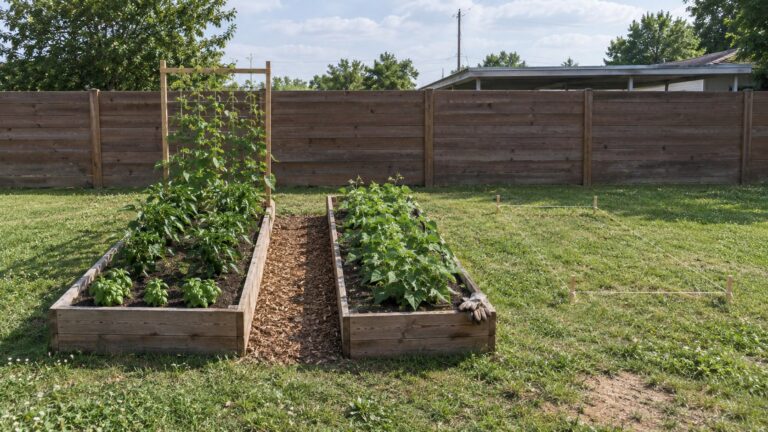
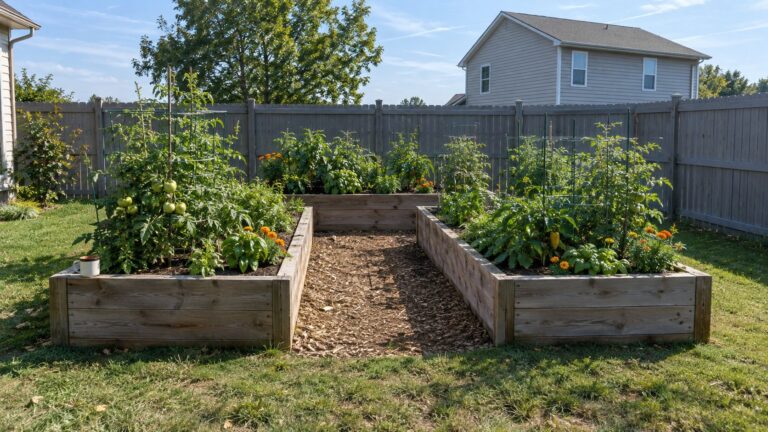
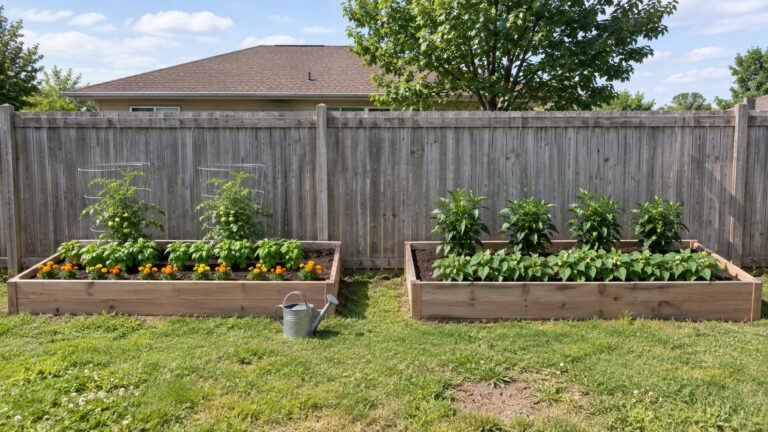
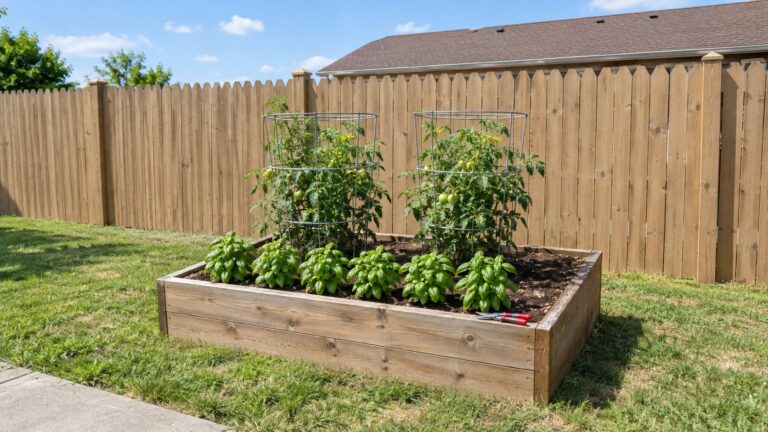
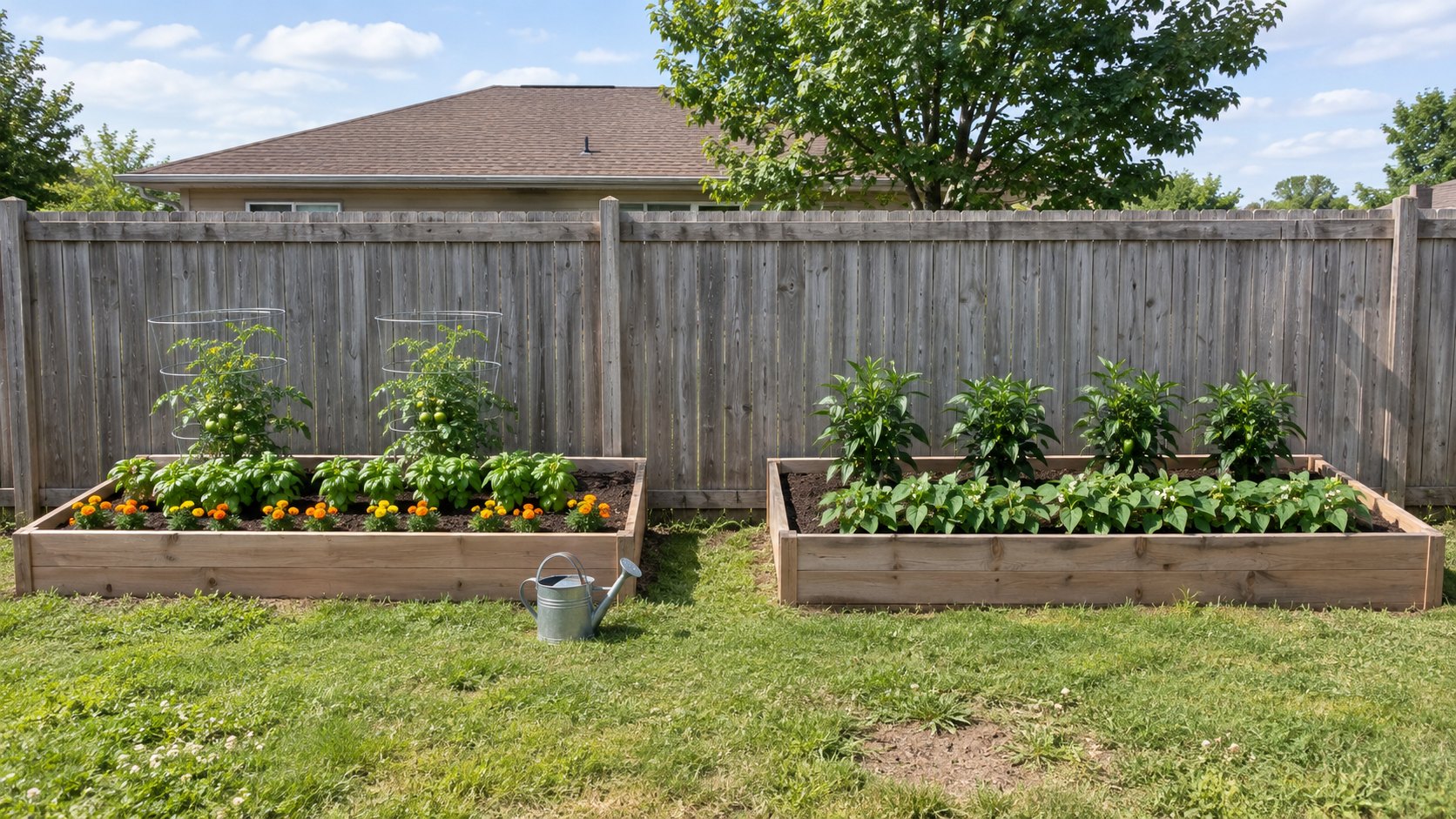
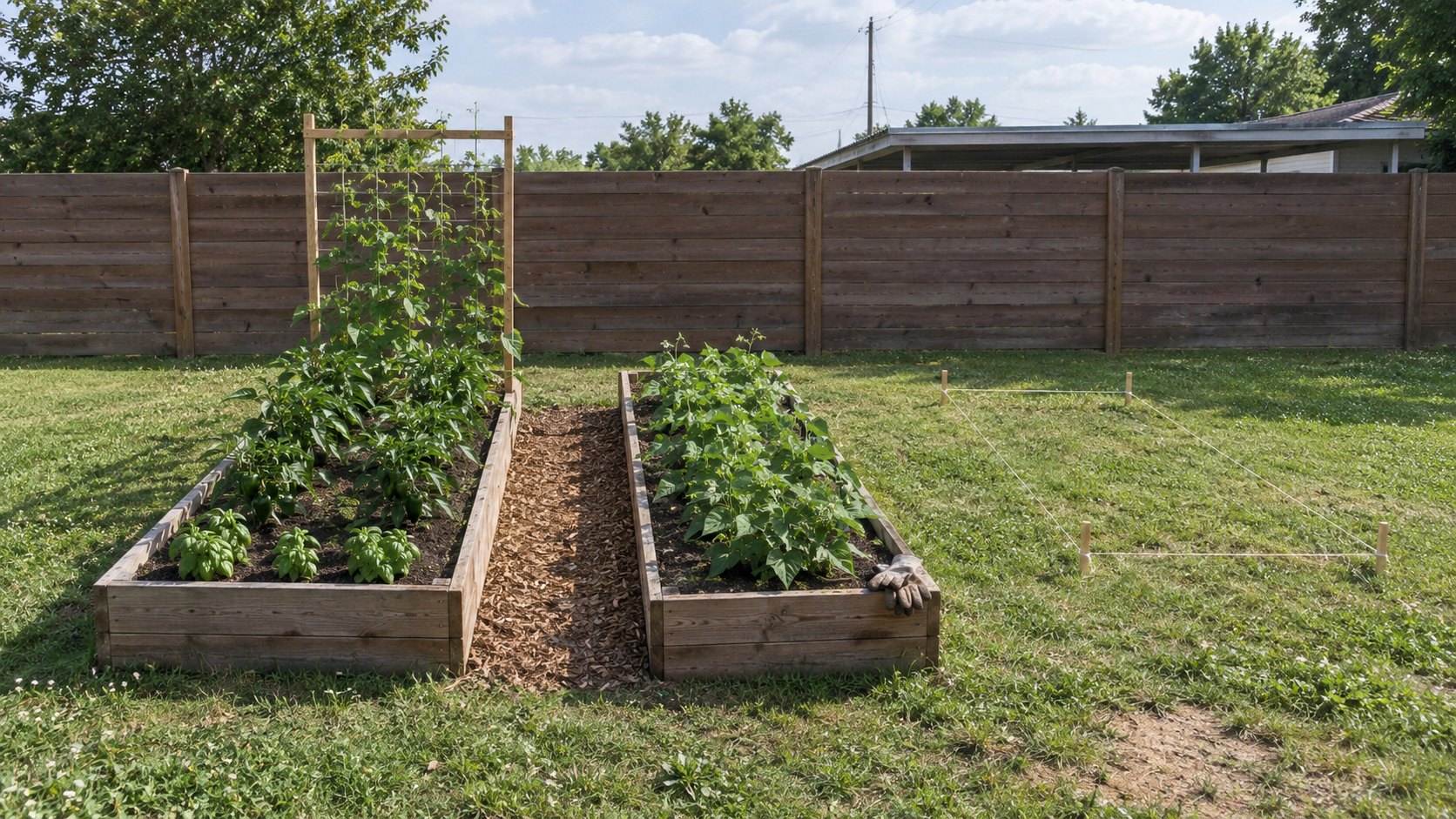
6. Build a First Raised Bed 4 Feet Wide

Build the first raised bed 4 feet wide, so you can reach the middle from either side. Fill it with a bagged mix made for beds, and keep the first one plain.
Boards and screws will do, as in my cheap raised garden beds.
7. Peas Up a Trellis Before the Weather Warms
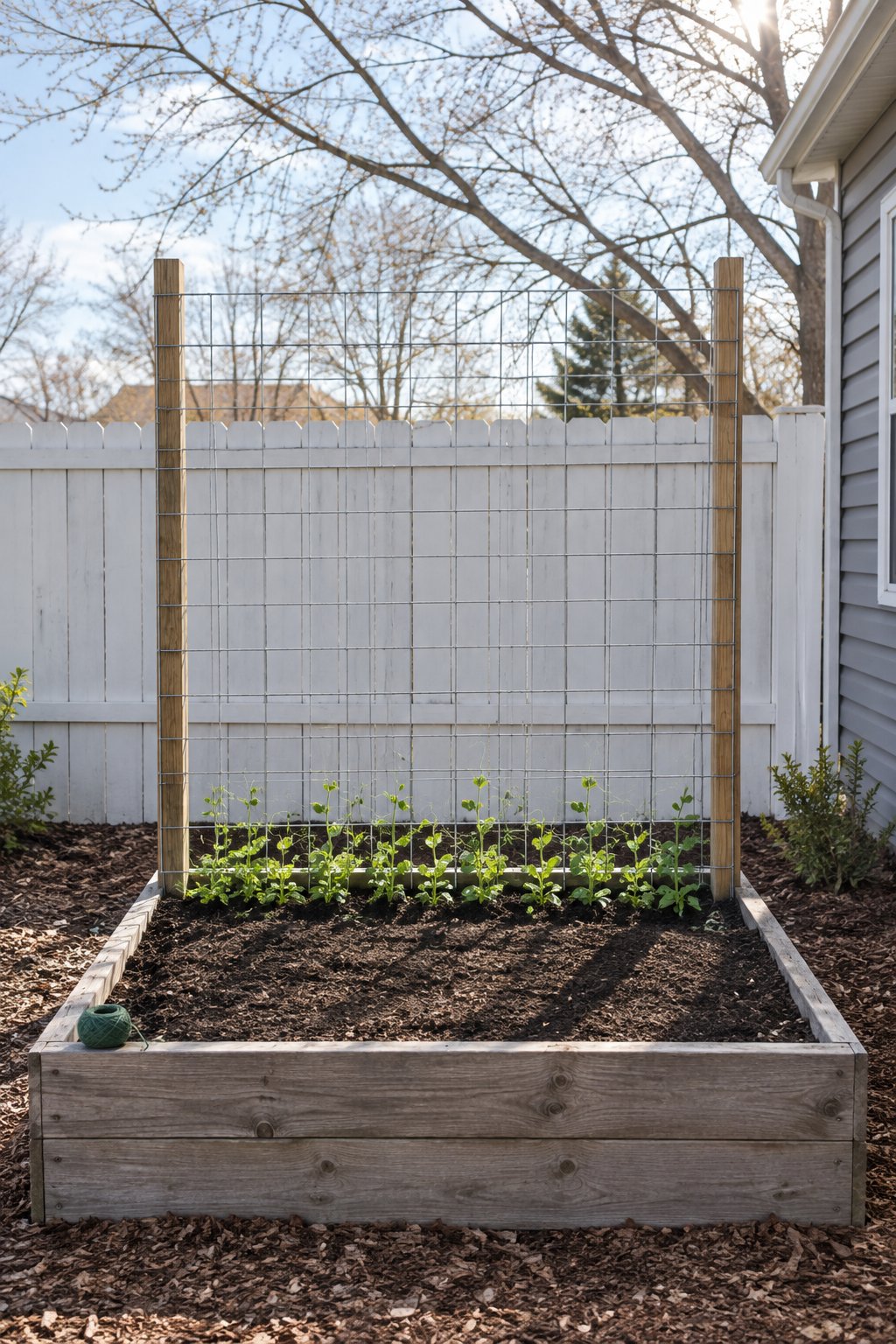
Peas are the best reason to build a trellis early, since they go in as soon as the soil can be worked. Many climbers reach 3 to 6 feet, so check the packet.
I’d use a wire panel or netting on two sturdy stakes.
8. If You Want Height, Start With an Arbor Over a Gate or Path
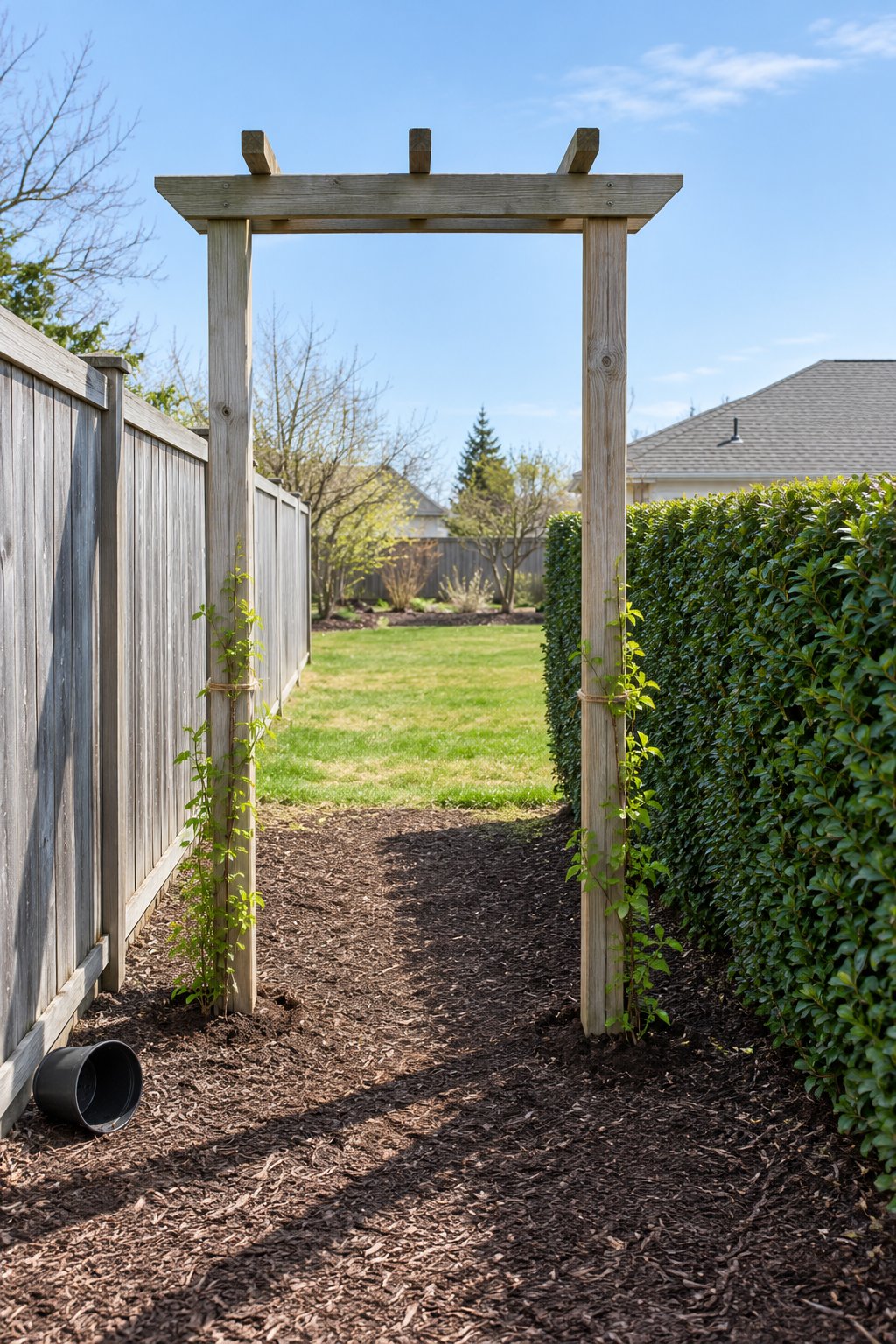
If you want height, start with an arbor over a gate or a path, where it reads as a doorway. In the middle of a lawn it looks lost.
Anchor the posts firmly, then plant a young vine or climbing rose at each foot.
9. Fence Low, or Skip the Fence and Use a Border

Fence low, or skip the fence and mark the edge with stones or short wire hoops. A knee-high edge tells people where the bed stops without hiding the view.
Many towns cap front-yard fence height, often around 3 to 4 feet, so ask before you buy.
10. Stepping Stones One Stride Apart

Stepping stones belong one stride apart, with their tops level with the soil so the mower can pass over them. Set each on a couple of inches of sand or fine gravel.
I’d take big flat stones over small round ones.
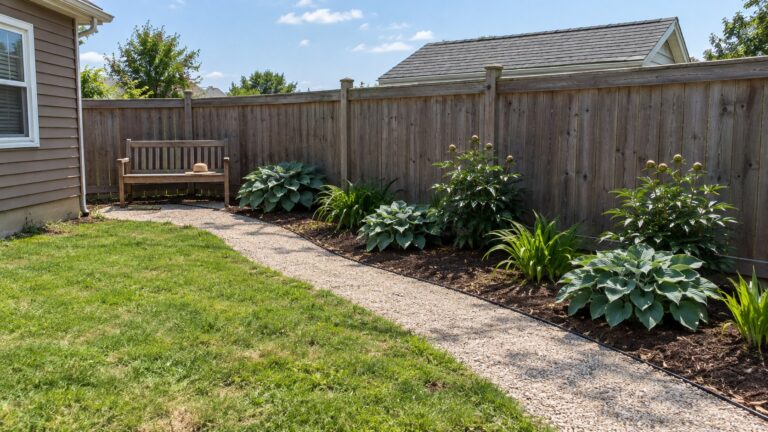
11. Put a Bench Where You Will Actually Sit
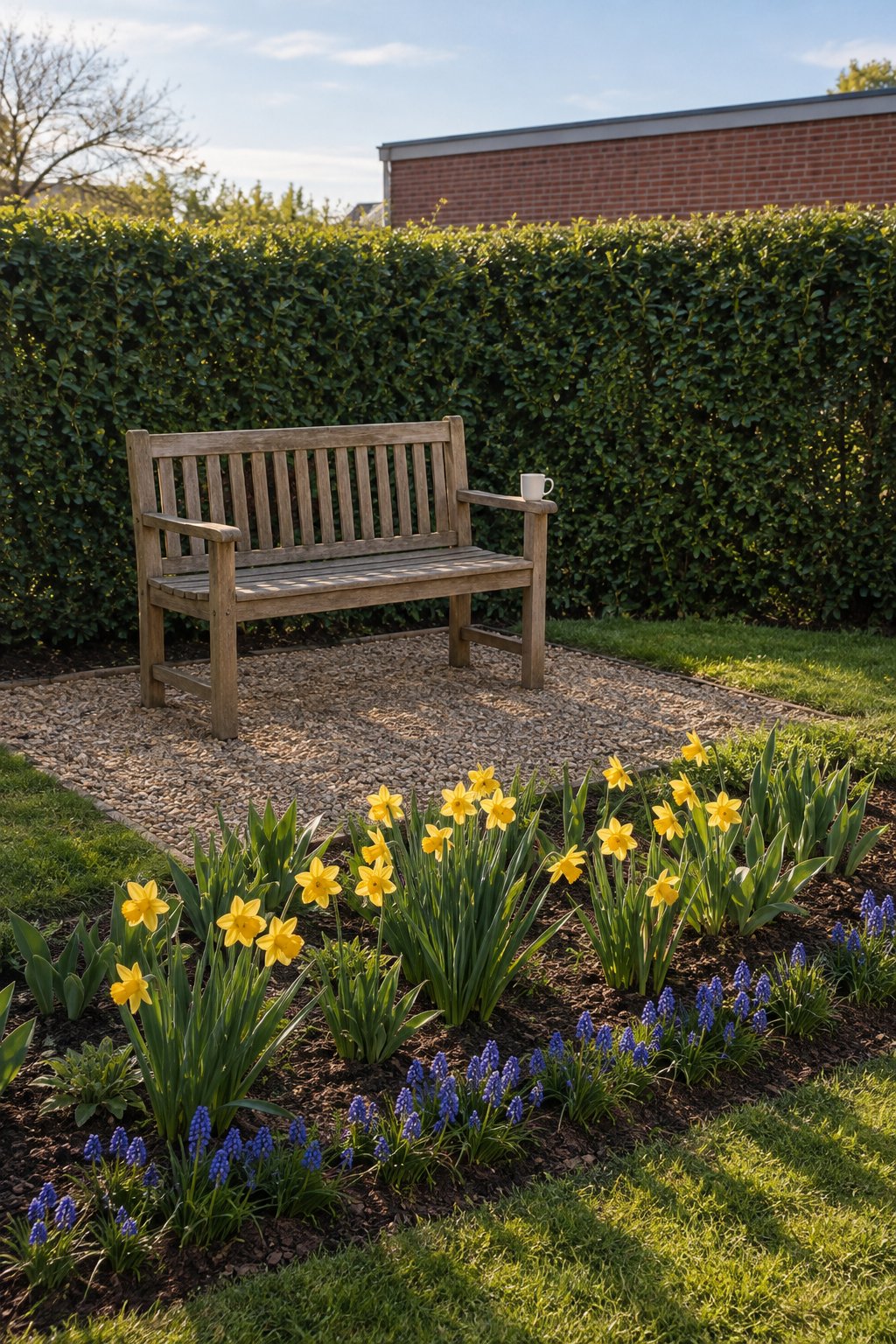
Put the bench where you will actually sit, which is usually close to the house, not at the far end of the yard. Face it toward the best view, with a hedge or fence behind it.
I’d pick the spot by sitting there with a coffee first.
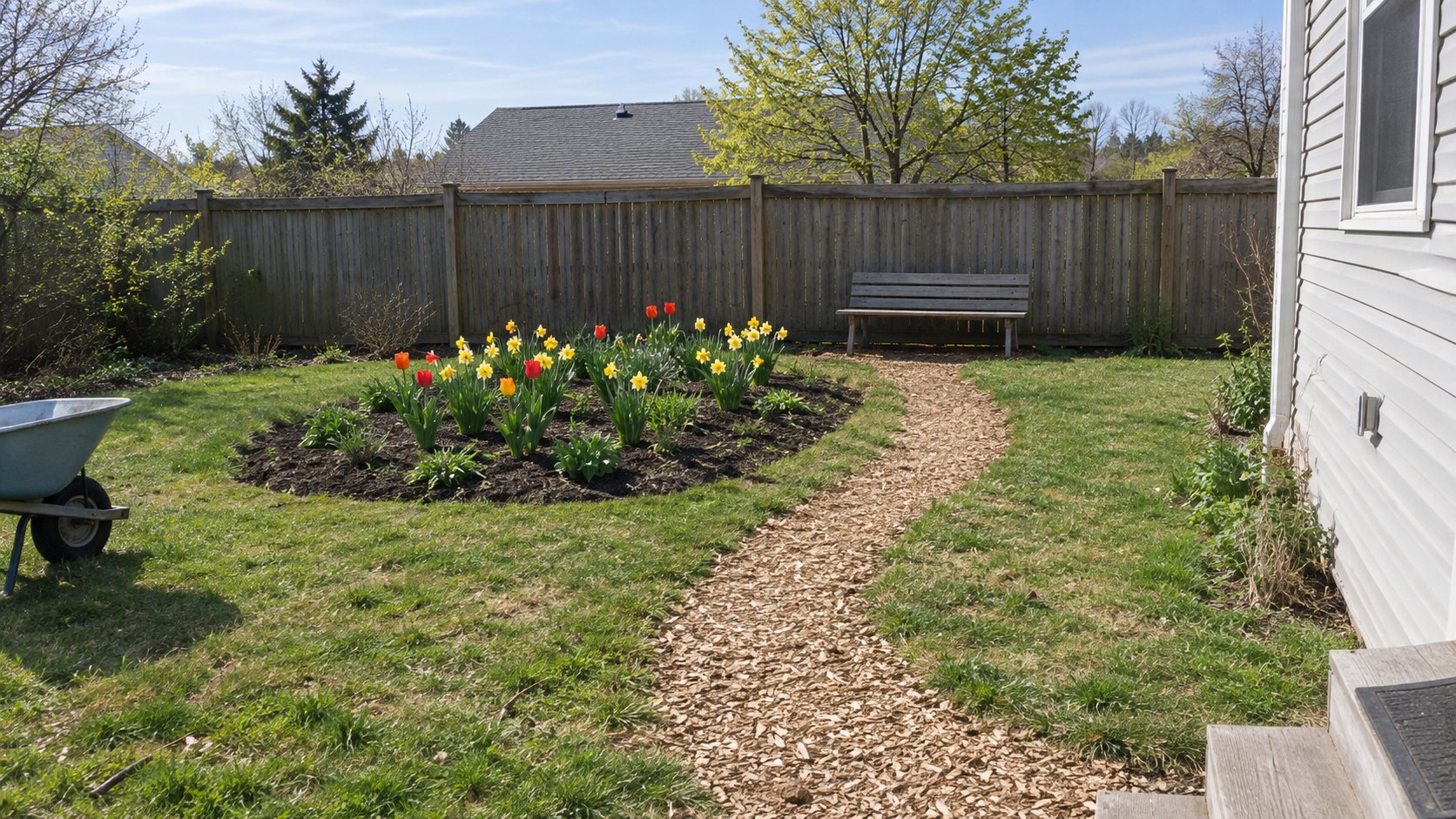
12. Daffodils and Grape Hyacinth Along a Fence, Planted in Fall

Daffodils and grape hyacinth are the easiest spring color along a fence, but they go in the ground in fall. Mark this year’s gaps with stakes and buy bulbs in autumn.
Bloom time shifts by zone: March or April in milder areas, later further north.
13. A Cottage-Style Border That Looks Good in April

A cottage border looks good in April only when the foliage is doing some of the work. Tulips and primroses carry spring in many zones, and creeping phlox edges the front.
I’d keep the palette to two colors and repeat them.
14. Pollinator Patch in the Sunniest Corner
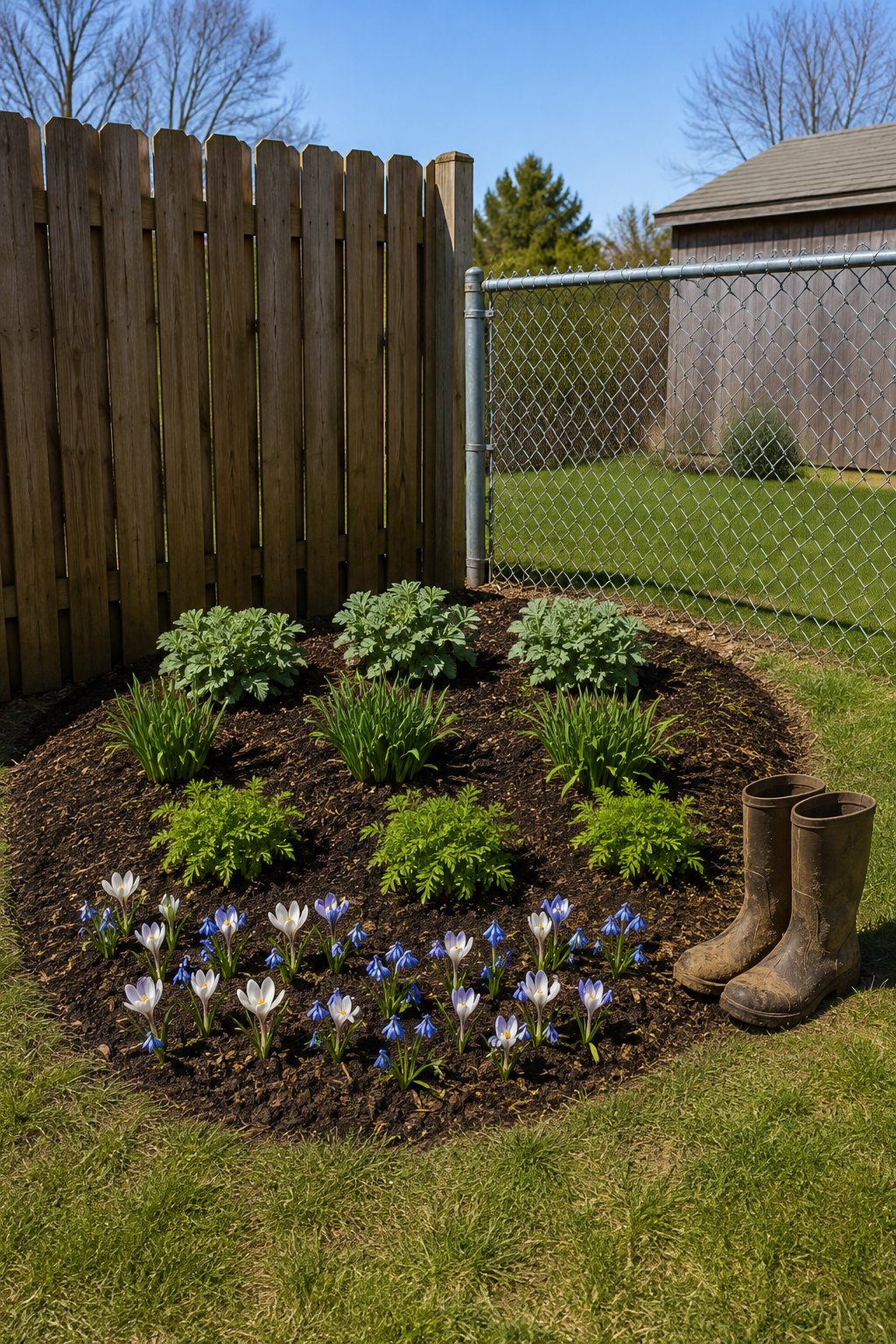
Give pollinators the sunniest corner you have, at least 6 hours of direct sun, and plant each kind in a group. Choose perennials native to your region and expect little bloom until later in the season.
Your county extension office can list natives that suit your zone.
15. Bleeding Heart and Primrose for the Shady Side
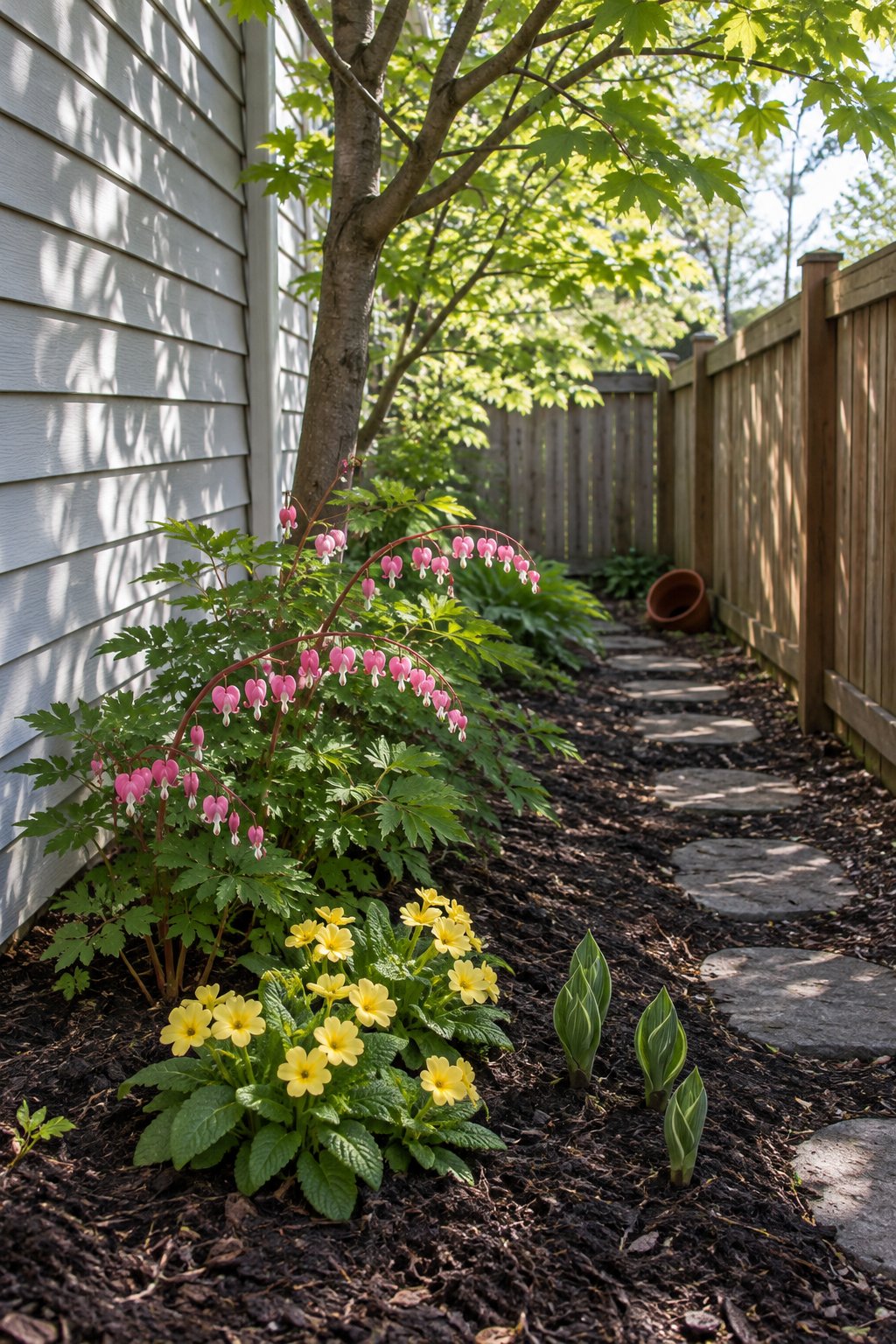
Bleeding heart and primrose are the spring answer to a shady side, since both like part shade and moist, well-drained soil. Bleeding heart is often rated for zones 3 to 9, so check the tag.
It fades and goes dormant in summer heat, which I’d plan for.
16. Replace the Patchy Strip With Creeping Phlox

Replace the strip where grass keeps failing with creeping phlox, but only in full sun with good drainage. It flowers in spring, often April to May, and is usually rated for zones 3 to 9.
Remove the sod, then plant about a foot apart and let it knit together.
17. Shrubs in a Row Make a Softer Screen Than a Fence
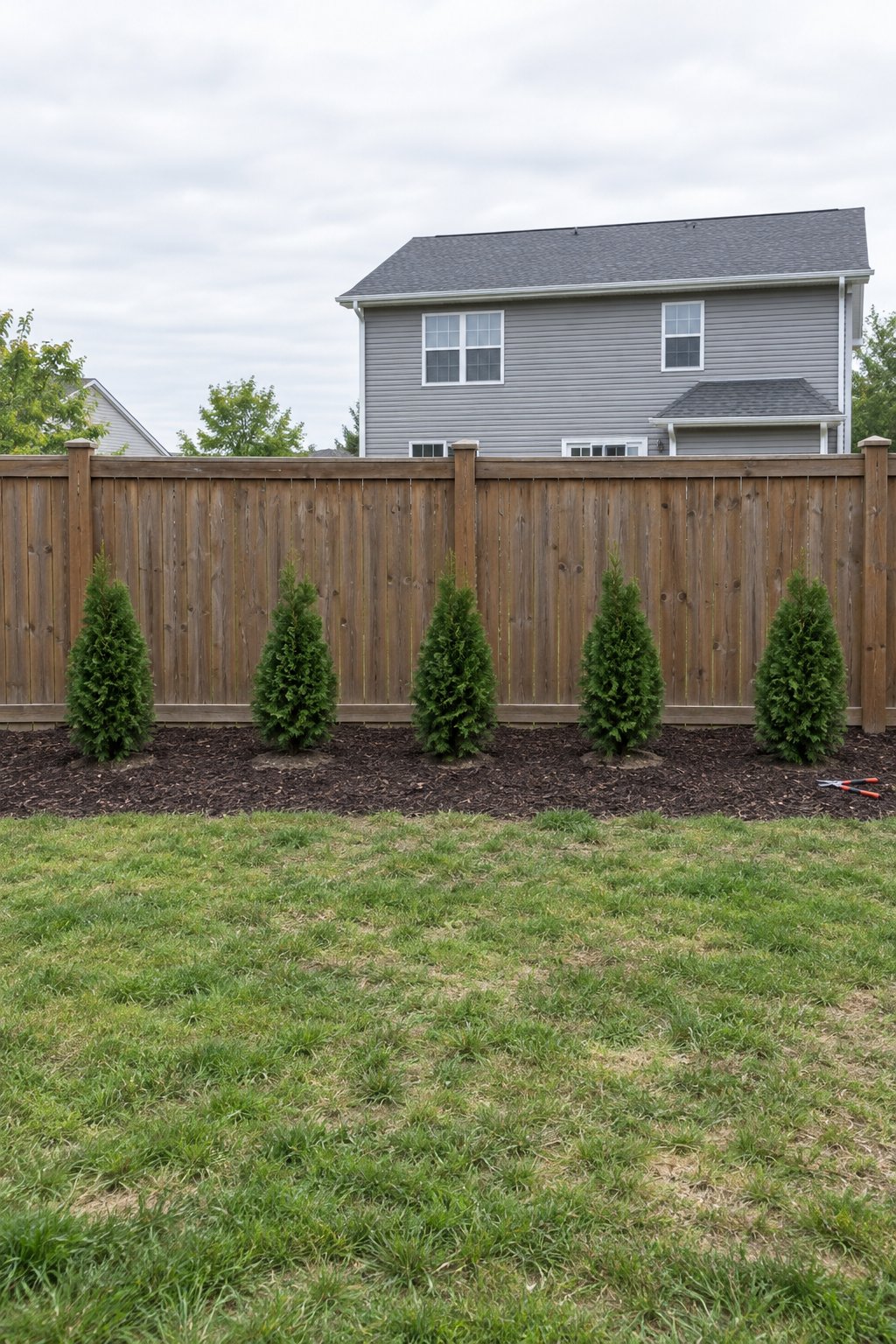
Shrubs make a softer screen than a fence but take a few seasons to fill in. Plant at the spacing on the tag, leaving room for their full width.
Water them regularly through the first season, and see my patio privacy ideas for other screens.
18. Pansies and Violas in Pots by the Door
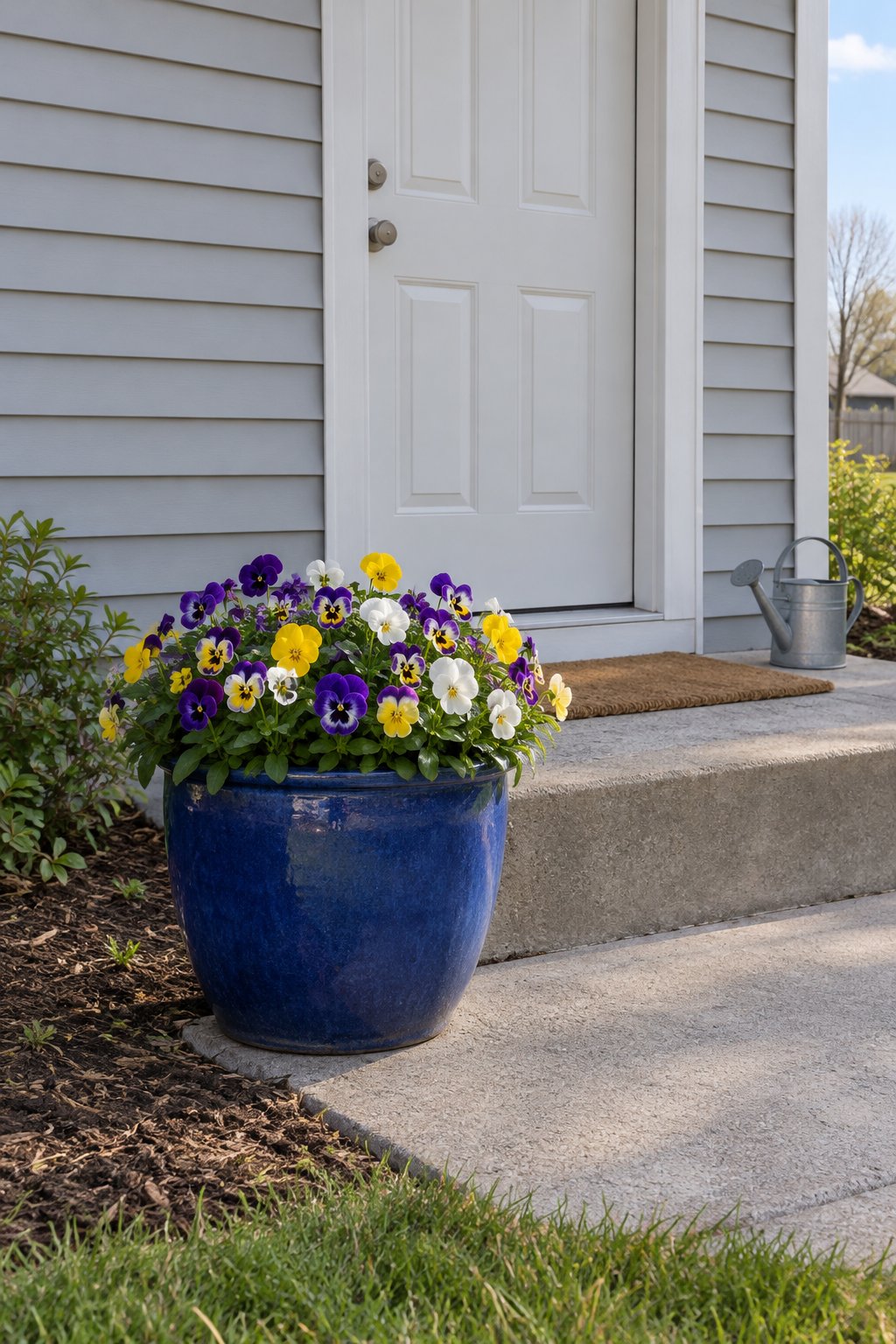
Pansies and violas suit April pots, because they are cool-season plants that take a light frost. They usually fade once summer heat arrives.
One big pot beats three small ones; see my container gardening vegetables for size and drainage.
19. Herbs Within a Few Steps of the Kitchen Door
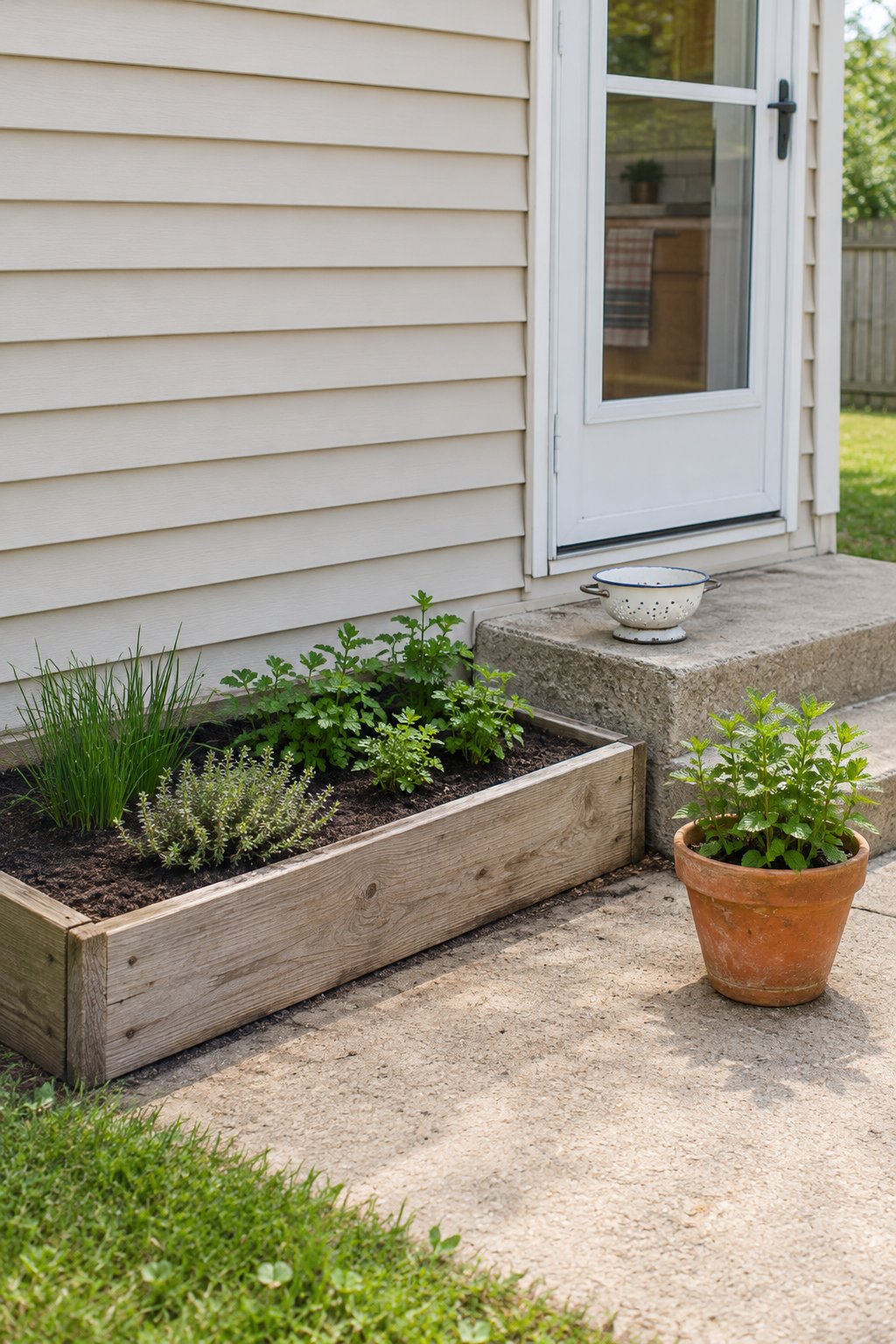
Put the herb corner within a few steps of the kitchen door, since a herb you have to walk to gets skipped. Mint goes in its own pot because it spreads.
Most herbs want 6 or more hours of sun and good drainage.
20. Where Does the Vegetable Plot Go? Start Small
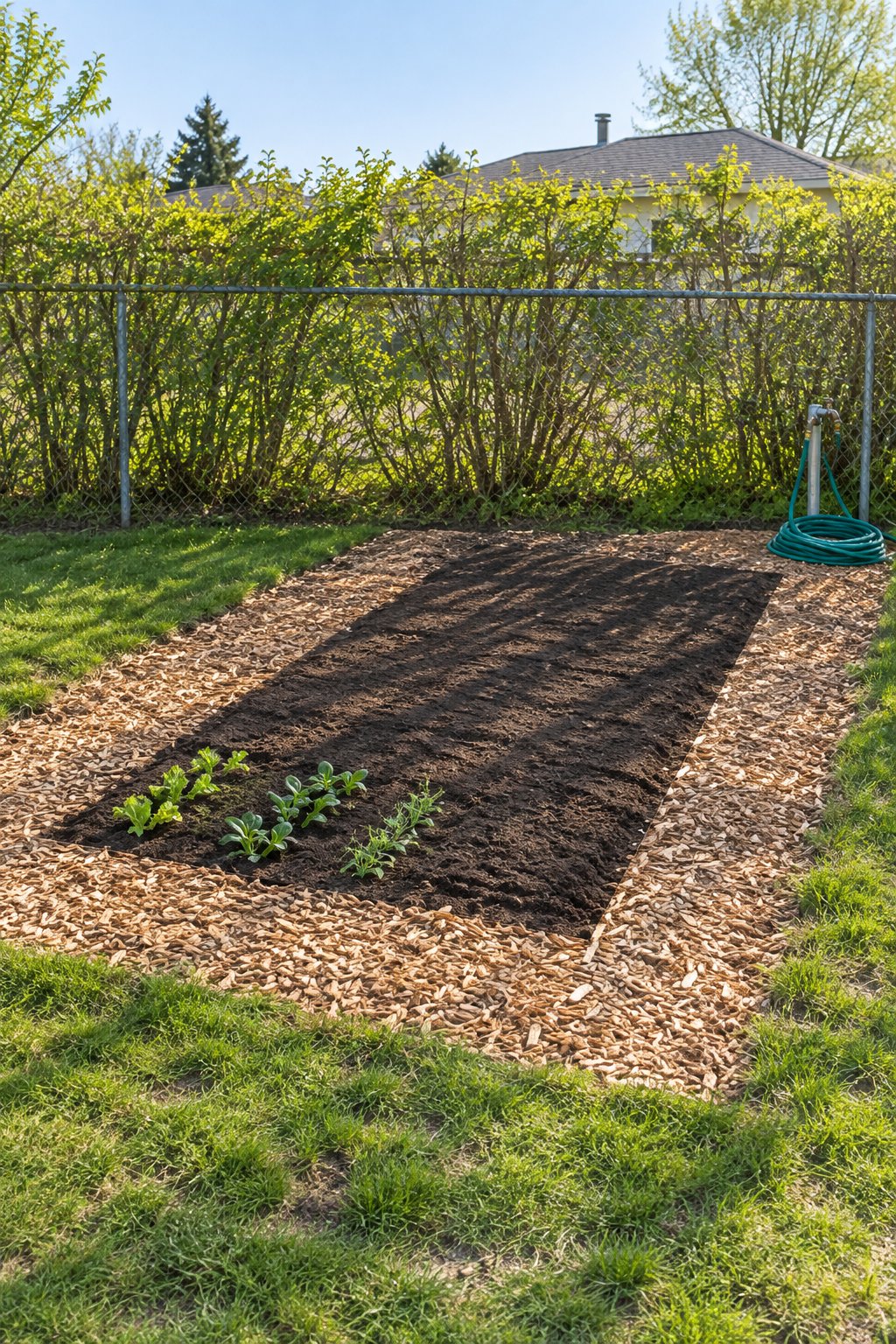
Start the vegetable plot small, about 4 by 8 feet, in a spot with 6 or more hours of direct sun. A plot you keep up beats a big one you abandon by July.
I’d plant cool-season crops now and leave the tender ones for later.
21. Lettuce, Spinach and Radishes in One Cool-Season Bed
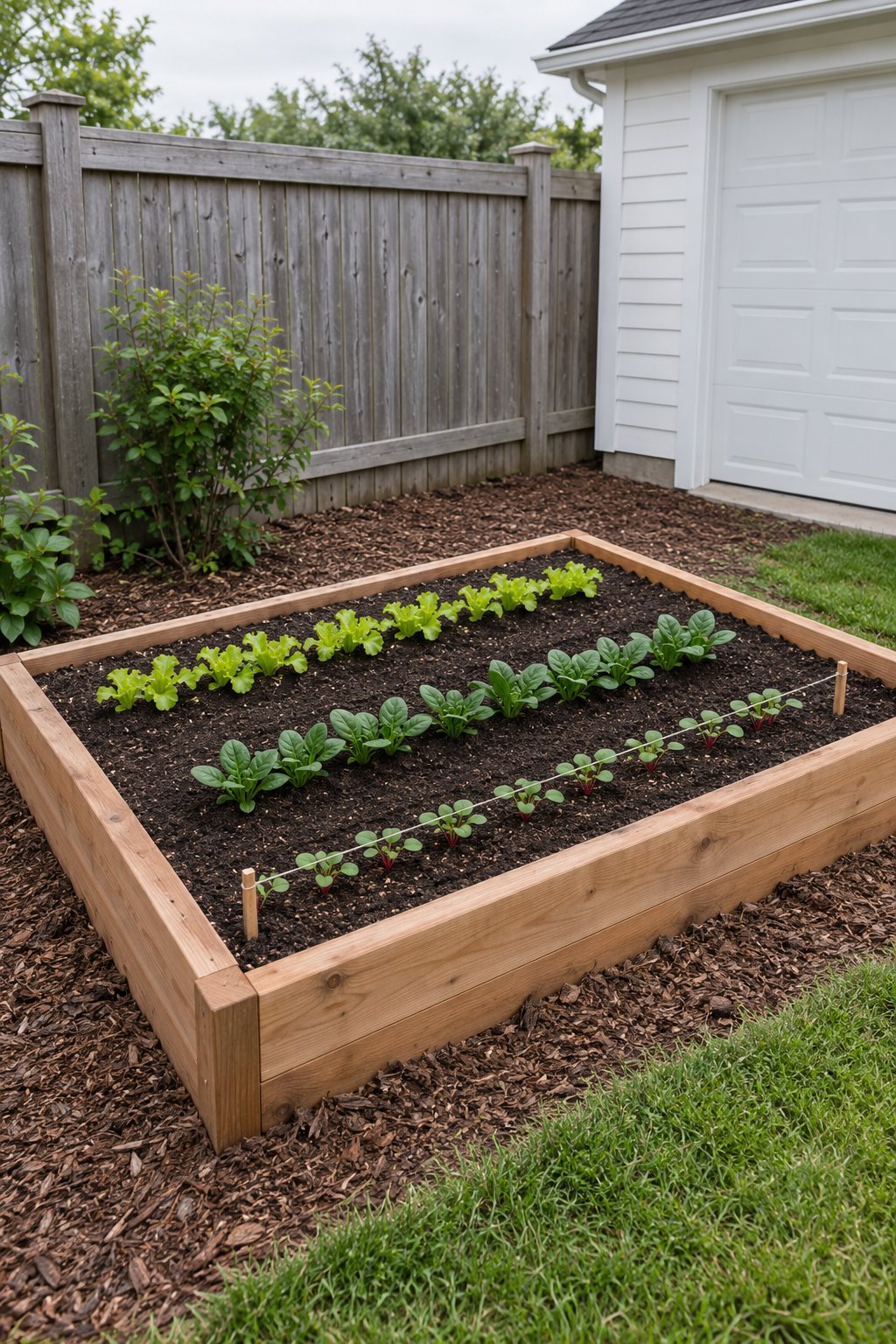
Lettuce, spinach and radishes go straight into workable soil, so they are the quickest crop of spring. Radishes are often ready in 3 to 5 weeks, and lettuce and spinach bolt in summer heat.
Sow a short row every couple of weeks, not one long row.
22. Tulips in a Cutting Row Out of the Main View

A cutting row of tulips, planted last fall, gives you vase flowers in April or May in many zones. Cut when the buds show color but are still closed.
Keep the row out of the main view, where the leaves can fade in peace.
23. Save a Sunny Corner for Berries

Save a sunny corner for berries, with 6 or more hours of sun and well-drained soil. Strawberries go in with the crown level with the soil, and blueberries need acidic soil, about pH 4.5 to 5.5.
Test the soil before you buy a blueberry bush.
24. Birdbath Within Sight of the Kitchen Window

Put the birdbath where you can see it from the kitchen window, and keep it shallow, 1 to 2 inches deep at most. Add a flat stone in the middle if the bowl is deeper.
I’d set it a few feet from a shrub, so birds have cover close by.
25. Pebbles in a Saucer: A Water Dish for Bees
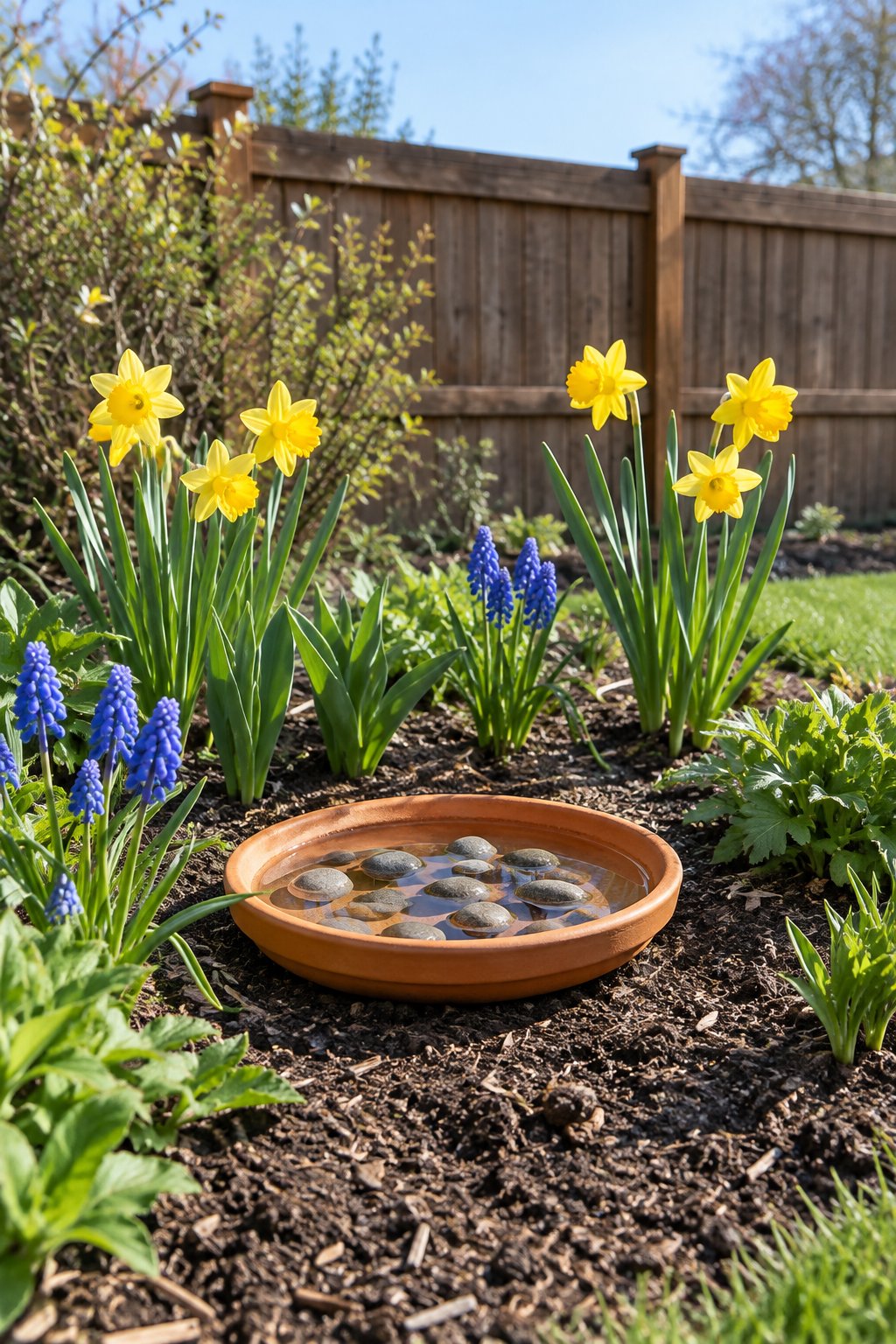
A shallow saucer of water with pebbles standing above the surface gives bees and butterflies somewhere to land and drink. Keep it in the sun near your flowers.
It costs almost nothing and takes two minutes.
26. Hide a Compost Corner Behind the Beds

Hide the compost corner behind the beds, handy but out of view. A bin or pile about 3 feet on each side is the usual minimum for it to heat up.
Check your city and HOA rules before you start one.
27. Drip Line or Soaker Hose Under the Mulch
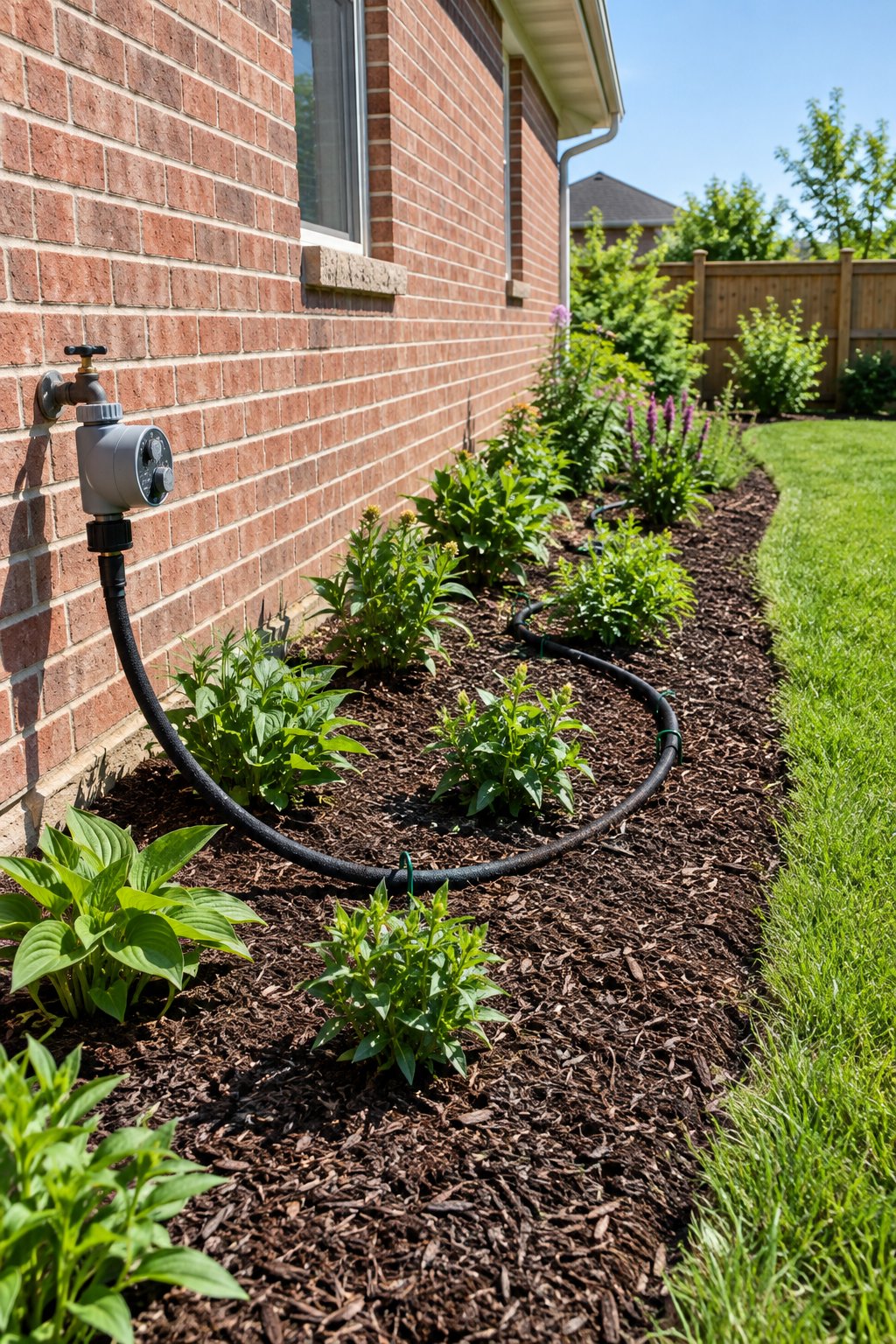
A drip line or soaker hose under the mulch waters the roots, not the leaves, and ends the forgetting. Lay it along the plants, peg it down, cover it with mulch and add a hose-end timer.
Wait to connect it until hard freezes are over.
28. Gravel Strip Along the House Wall
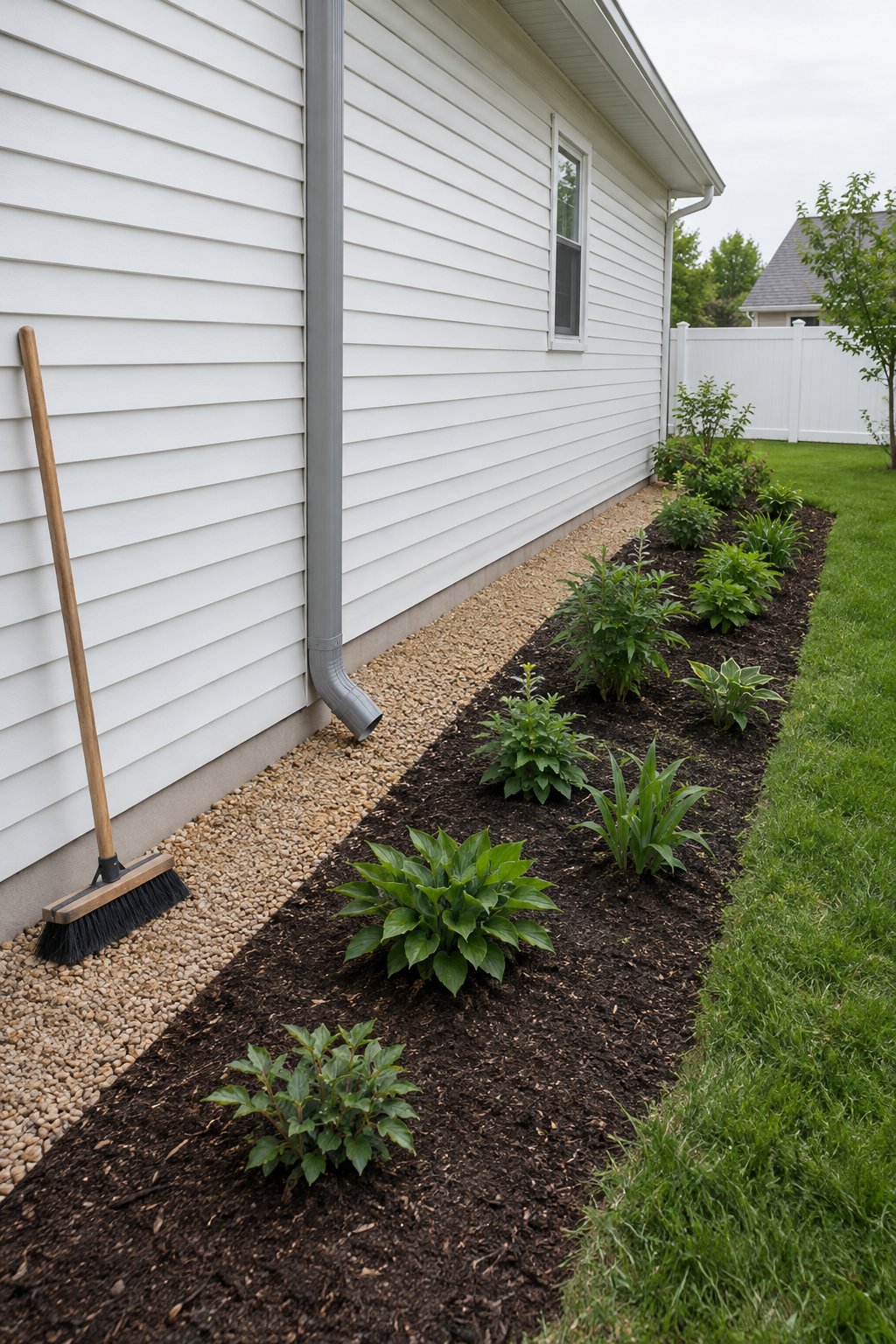
A gravel strip along the house wall keeps mulch and soil off the siding and catches roof runoff. Lay landscape fabric, add gravel a few inches deep, and keep it below the bottom edge of the siding.
I’d pick gravel over mulch for the first foot beside the wall.
29. Rain Barrel Under the Downspout
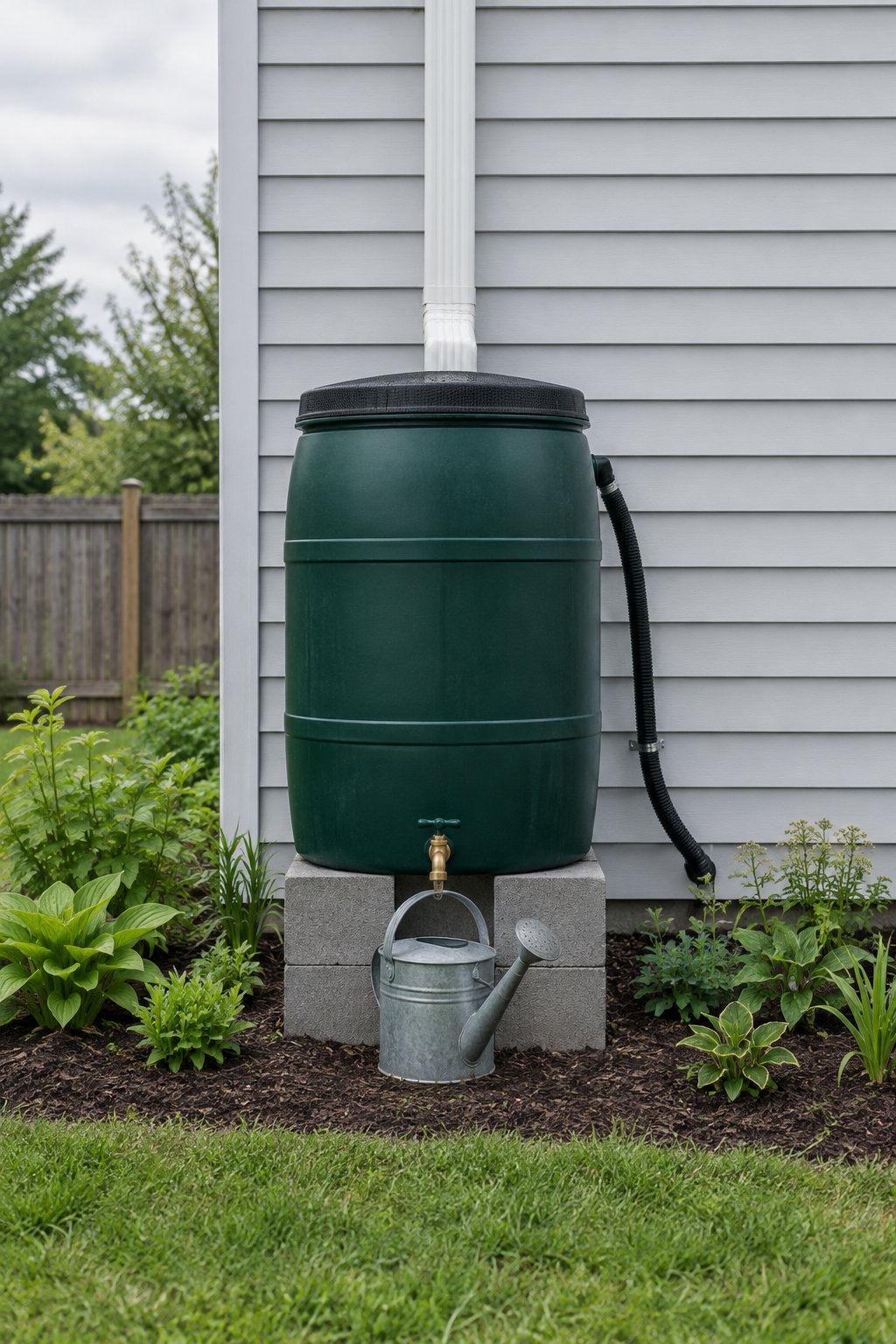
A rain barrel under a downspout gives you free water for beds and pots. Fit a screen on top to keep out leaves and mosquitoes, and raise the barrel on blocks so a can fits under the spigot.
Some states limit rain collection, so check local rules before you buy.
30. Potting Bench Beside the Hose Tap
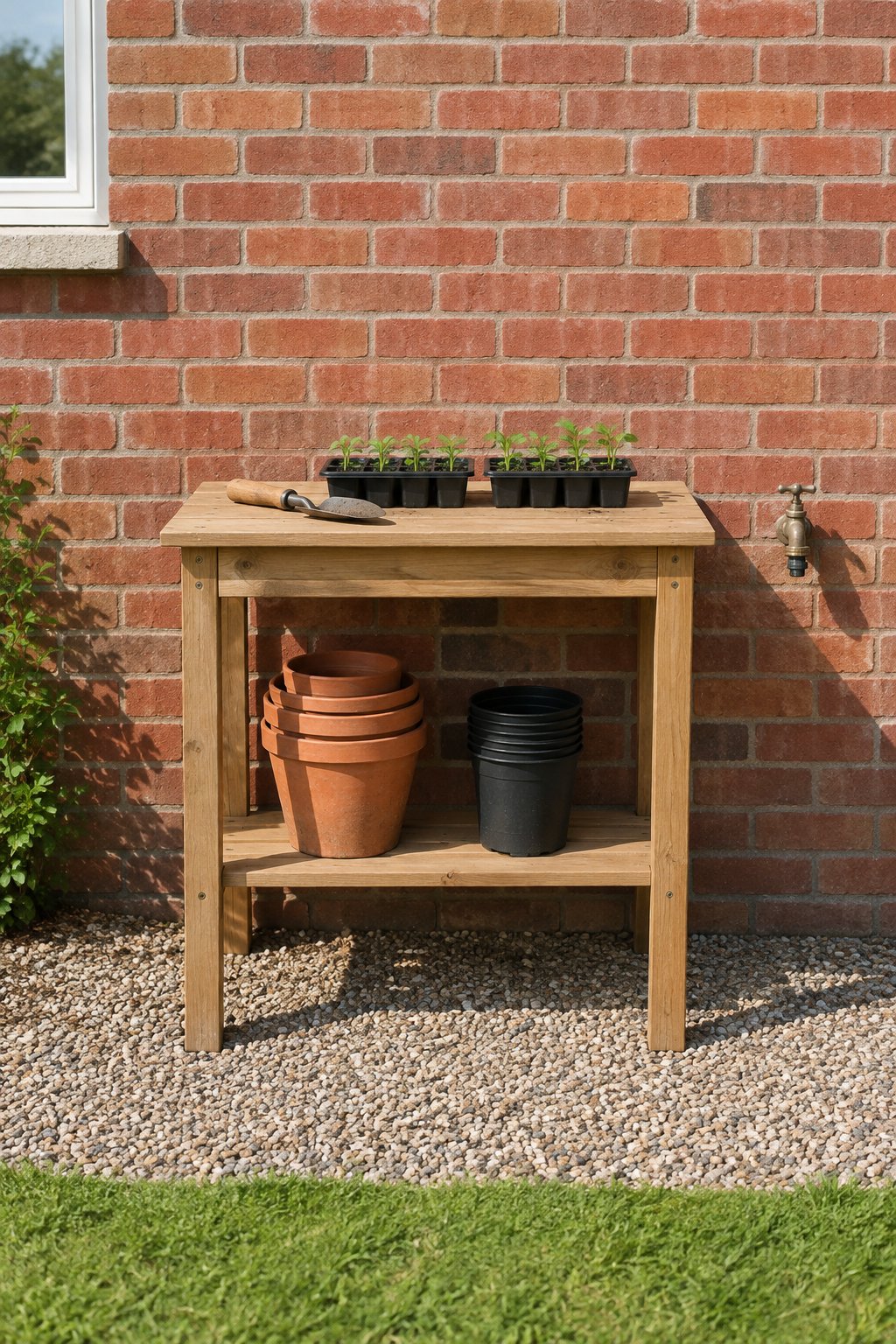
Put a potting bench beside the hose tap, because that is where every planting day starts. Waist height saves your back, and a shelf below holds pots and a trowel.
I’d skip a fancy one and use an old table.
Garden Numbers on One Page
Every idea above rests on a few figures.
Get these right before you buy or dig anything.
| What | The figure | Why |
|---|---|---|
| Full sun | 6 or more hours of direct sun | What most vegetables and sun-loving perennials want |
| Mulch | 2 to 3 inches deep, pulled back from stems | One cubic yard covers about 100 square feet at 3 inches |
| Raised bed width | About 4 feet | You can reach the middle from both sides without stepping in |
| Path width | About 2 feet to walk, 3 feet for a wheelbarrow | Narrower paths get trampled or clipped, wider ones waste bed space |
| Birdbath depth | 1 to 2 inches of water | Small birds need to stand in it |
| Tender plants | After your last frost date | Your county extension office can give you the date for your zip code |
Six Spring Garden Mistakes to Skip
Frost-tender plants set out too early
Do thisWait until your last frost date has passed for anything tender. Use pansies, violas and other cool-season plants in the meantime.
Digging before 811 marks the lines
Do thisCall 811 a few days ahead and wait for the marks. It is free, and it covers every hole from a bed edge to a fence post.
Buying plants before mapping the sun
Do thisWatch the spot in the morning, at noon and late in the afternoon, and count the hours of direct sun. Full sun means 6 or more.
Mulch piled against stems and trunks
Do thisKeep mulch 2 to 3 inches deep and pull it back a few inches from every stem and trunk.
Starting every project in one weekend
Do thisFinish one edge, one bed and one path before you start the next. A single bed that is planted and mulched looks better than five that are half dug.
Building before you check the rules
Do thisFences, arbors and sheds often need a permit or HOA approval, and many towns cap fence height. Ask before you buy a single post.
Dig One Test Hole Before You Plan Anything
Find out what the ground does before you pick a spot. Once 811 has marked the lines, dig a hole about a foot deep where you plan to plant and fill it with water.
If the water is still standing the next day, that spot drains slowly, so put a raised bed there.
Then squeeze a handful of damp soil: a sticky ribbon means clay, and a pile that falls apart means sand.
I’d rather spend ten minutes with a spade than a season replacing plants.
Start with the hose and the spade edge, because they cost almost nothing and show you the yard you will have.
Add one bed’s worth of plants this spring, then come back for the next stage once the first bed has filled in.
Pick the first bed by the sun it gets, not by the space it has.
Frequently Asked Questions
What is the cheapest way to start a garden on a bare lawn?
Lay a hose on the lawn to draw the bed, cut the edge with a spade and cover the grass with cardboard and mulch. That costs little more than the mulch, and you call 811 before you cut the edge.
When can I plant in spring?
Cool-season plants such as pansies, peas, lettuce and spinach go in as soon as the soil can be worked. Tender plants wait until your last frost date has passed, which your county extension office can tell you.
Do I need a permit for a fence or an arbor?
Often you do, and many towns cap fence height. Ask your building department and your HOA before you buy materials.
How much sun does a garden need?
Most vegetables and many flowering perennials want 6 or more hours of direct sun. For less, choose plants rated for part shade, such as bleeding heart and primrose.
Can renters try these garden ideas?
Pots, a bench, a birdbath and a potting bench move with you. Digging, fences and arbors need the landlord’s OK first.
You Might Also Like
Save This For Later
Loved garden ideas? Save this pin to your Pinterest board now so you can find it again anytime you need the inspiration.