Container Gardening Vegetables: 16 Pot Setups for a Patio or Balcony
With container gardening vegetables, the pot matters as much as the plant.
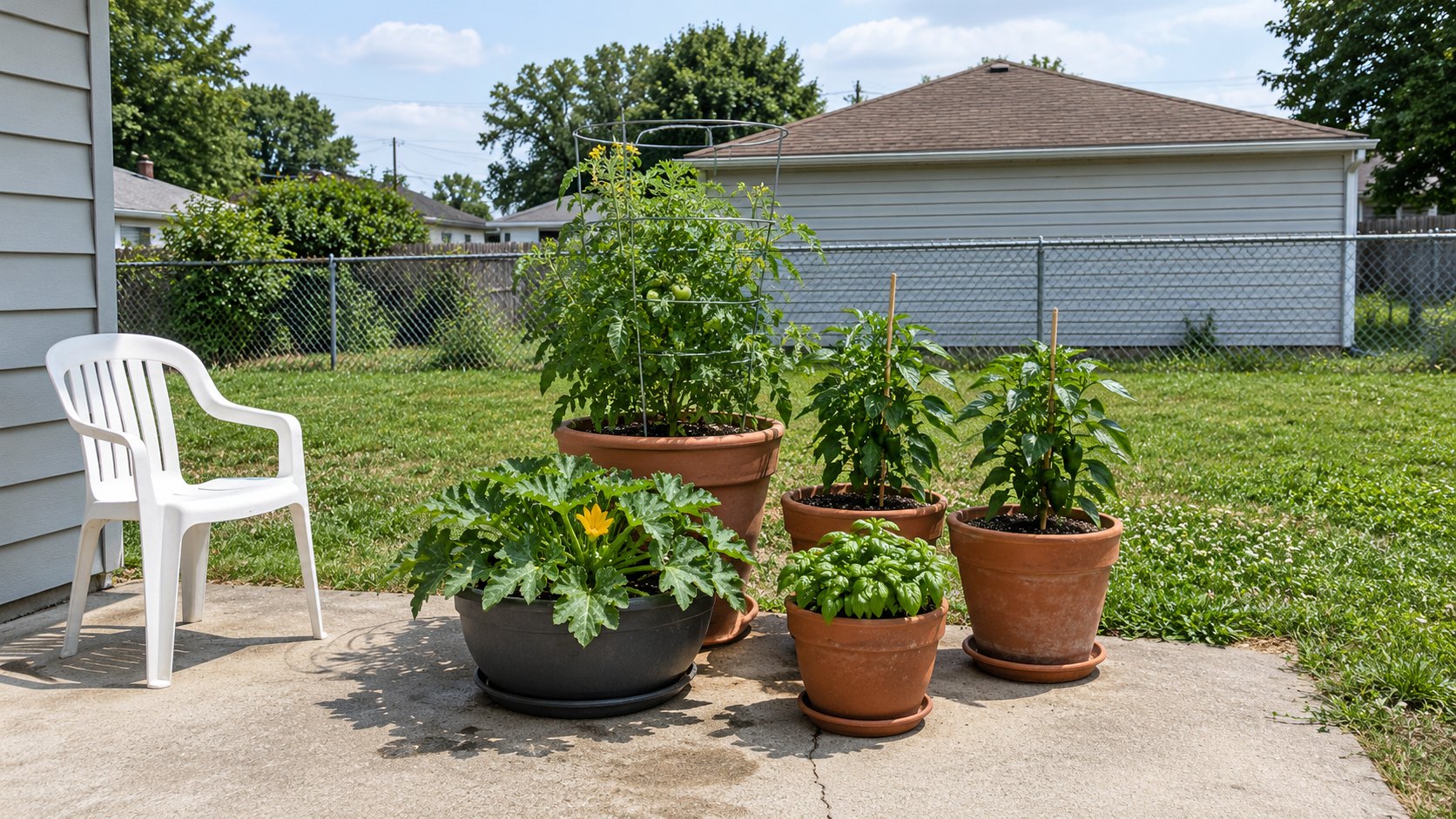
These 16 setups cover a patio, a deck, a porch and an apartment balcony, starting with a single big pot.
Each one names the container, the support and the crops that share it.
How much room do you have?
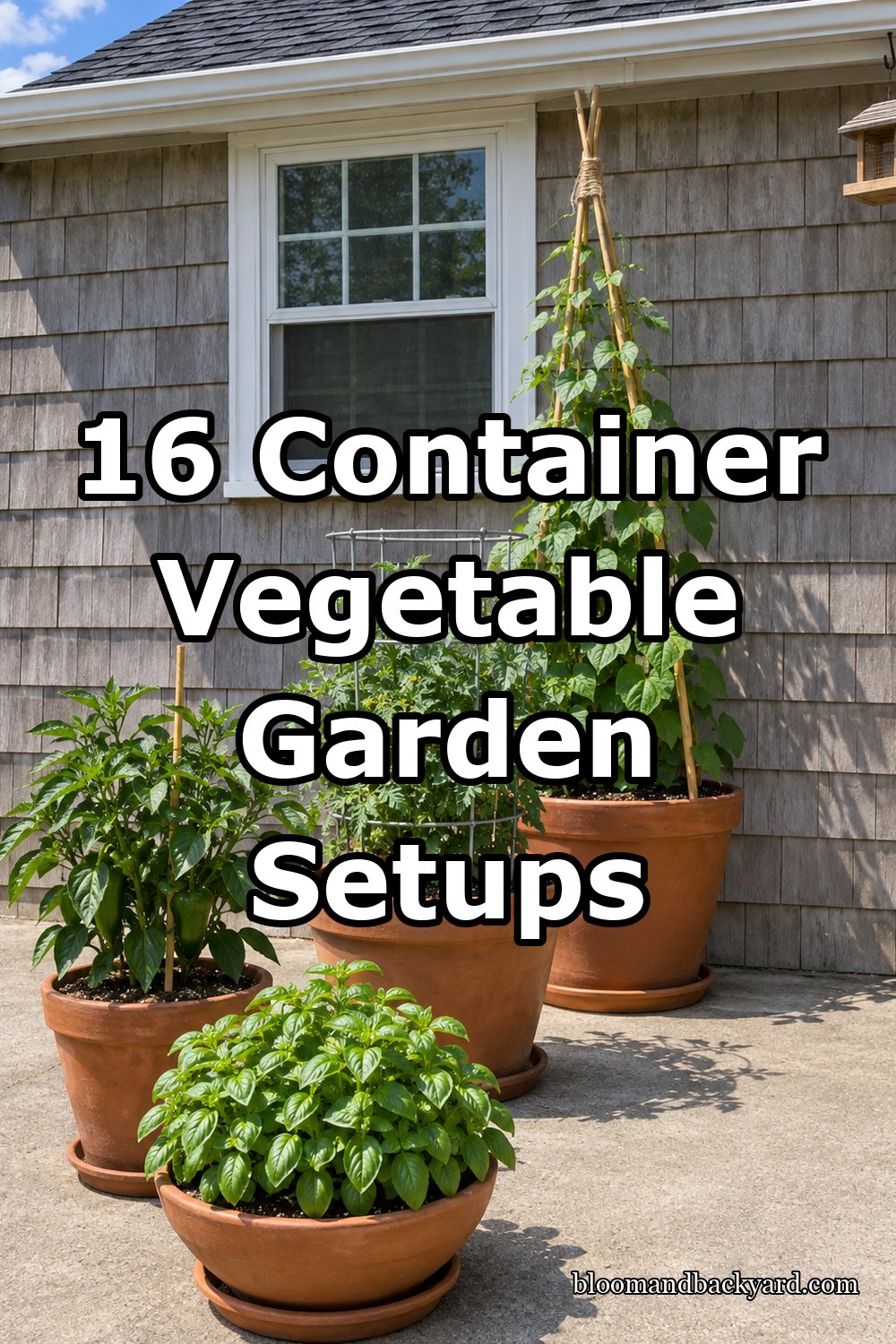
1. A Patio Tomato Shares Its Pot With Basil
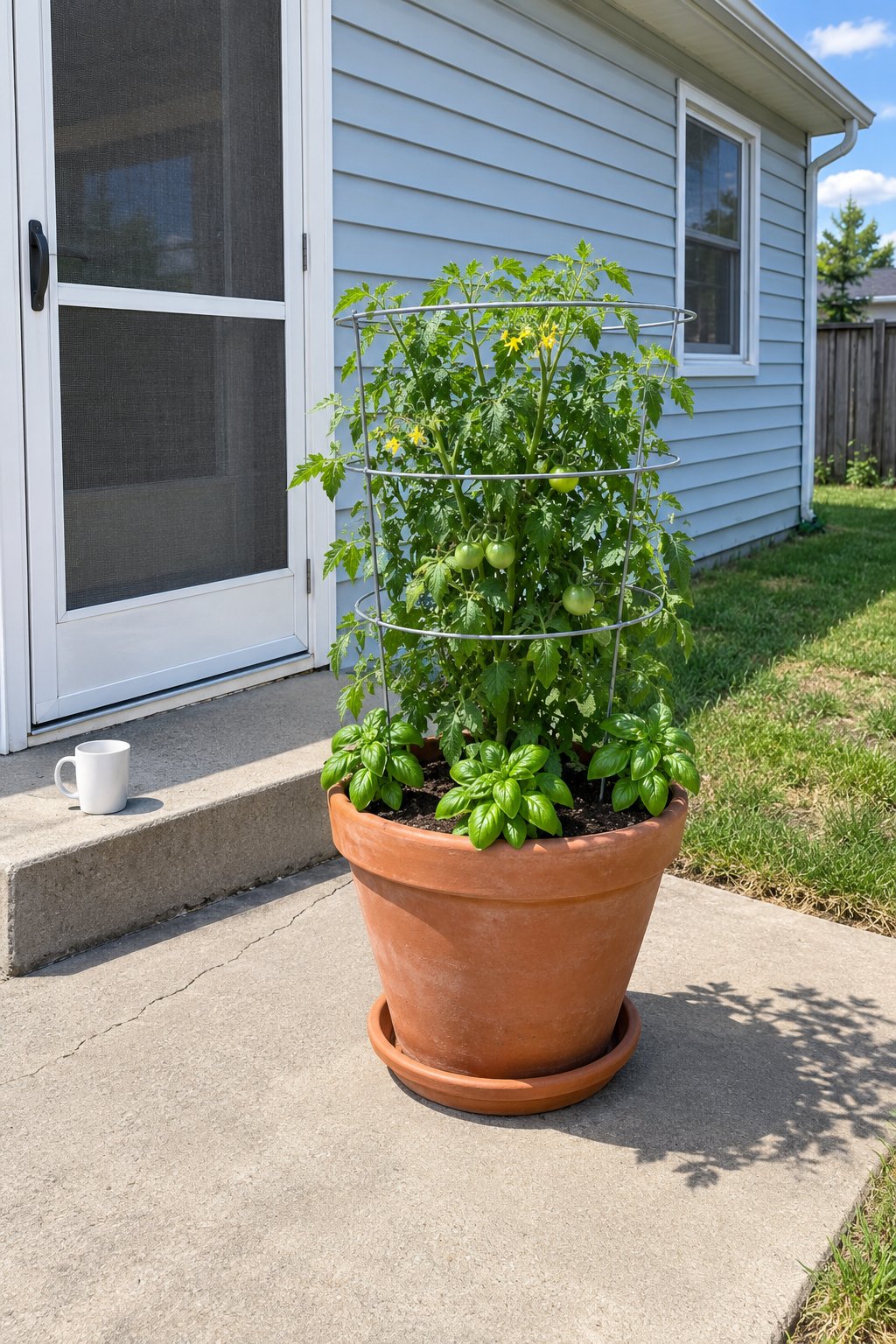
One pot can be a whole garden if it is big enough. Choose one that holds at least 10 gallons, stand it by the back door and set a cage in on planting day.
A compact patio tomato takes the middle and basil fills the rim.
2. One Tall Tomato Gets the Whole Half Barrel
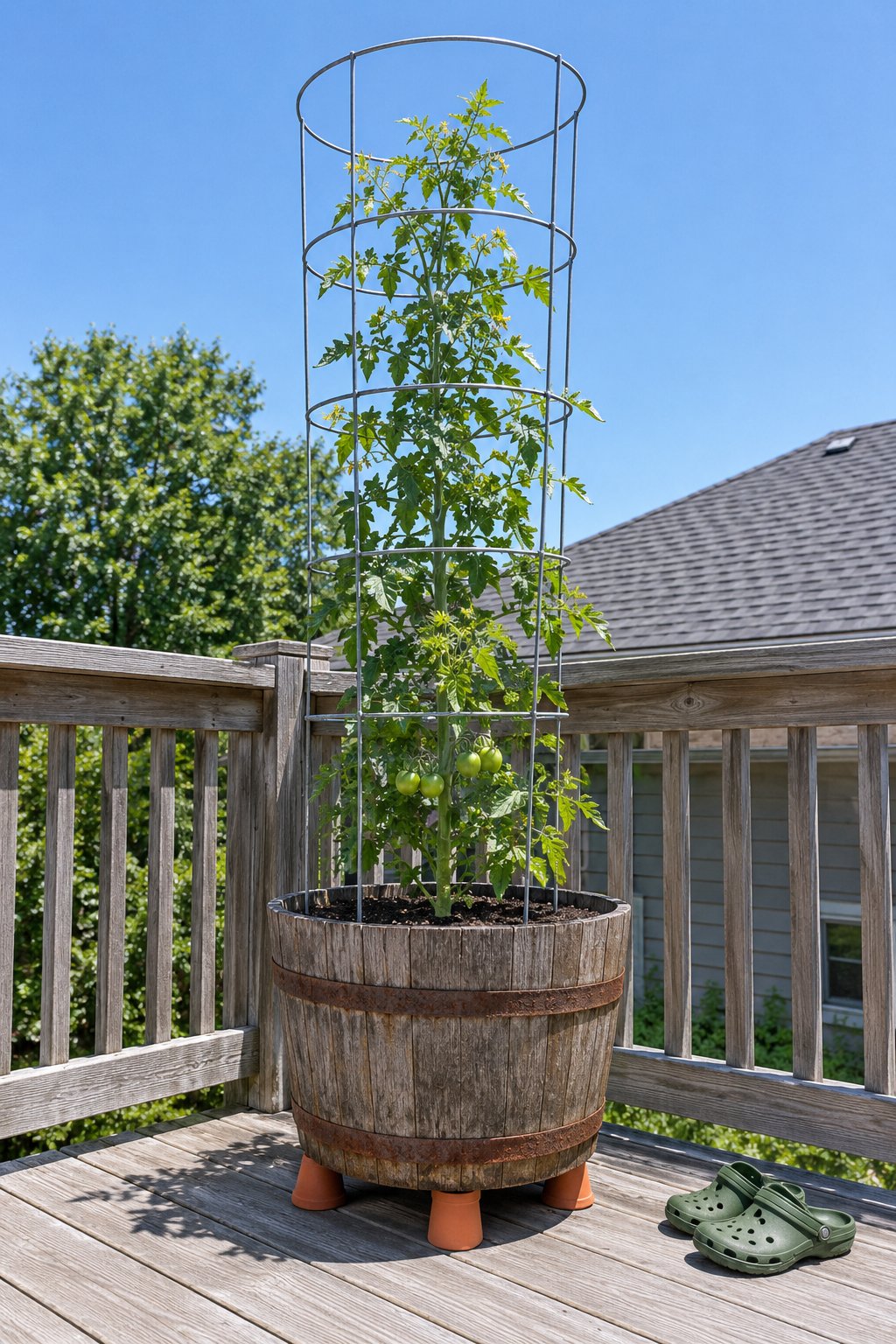
An indeterminate tomato keeps climbing all summer, so it belongs only in the largest tub on the deck. A half barrel clears the 10-gallon minimum with room to spare.
Drill drainage holes in the base and push a tall cage in at planting.
3. Bush Zucchini Takes a Wide Tub to Itself
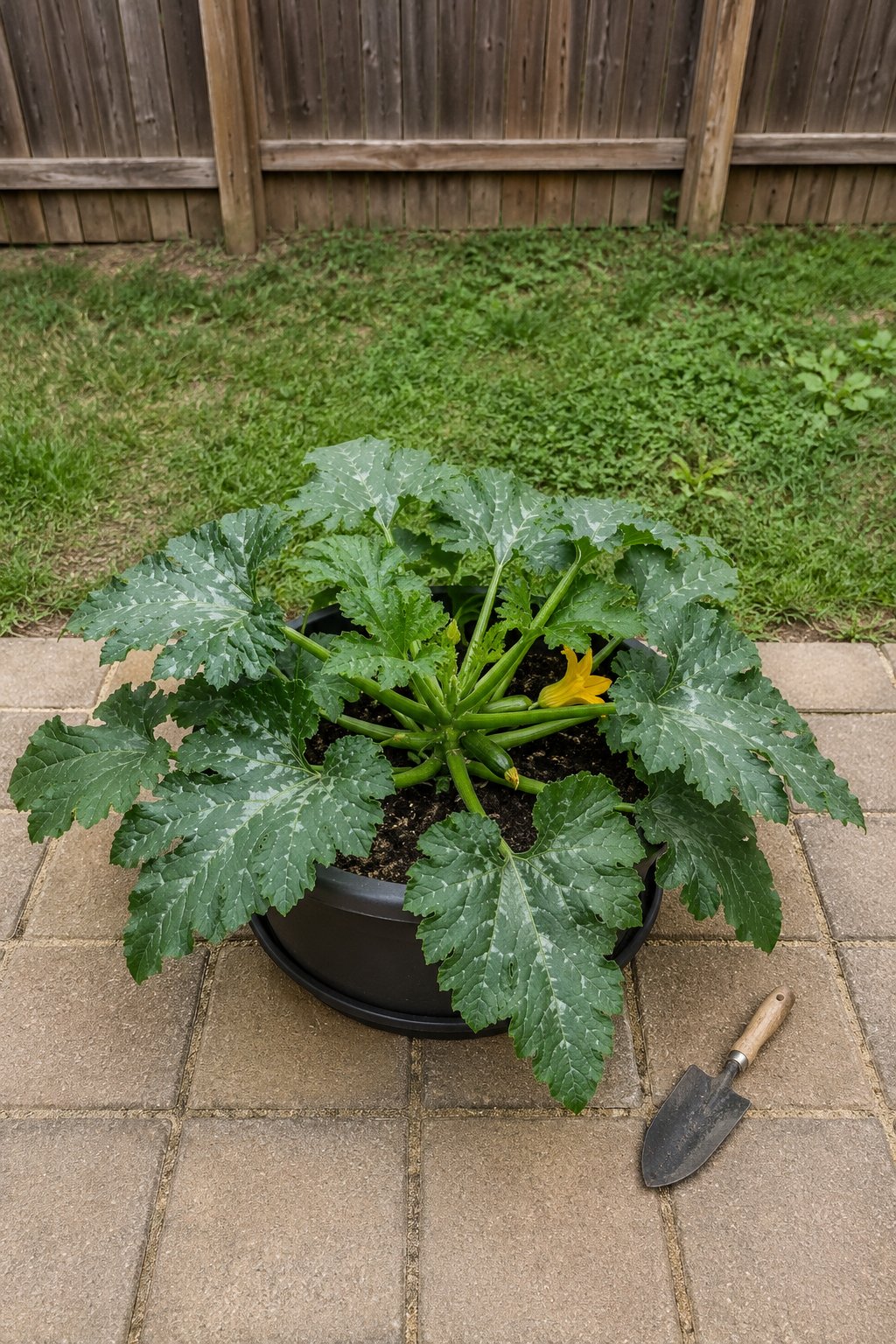
Zucchini is greedy for room, even the bush kind. Give one plant a large, wide tub of its own and stand it where the leaves can spread past the patio edge.
I’d skip a support here, since a bush type stays in a mound.
4. Bush Cucumbers Spill Over a Pot by the Garage Wall
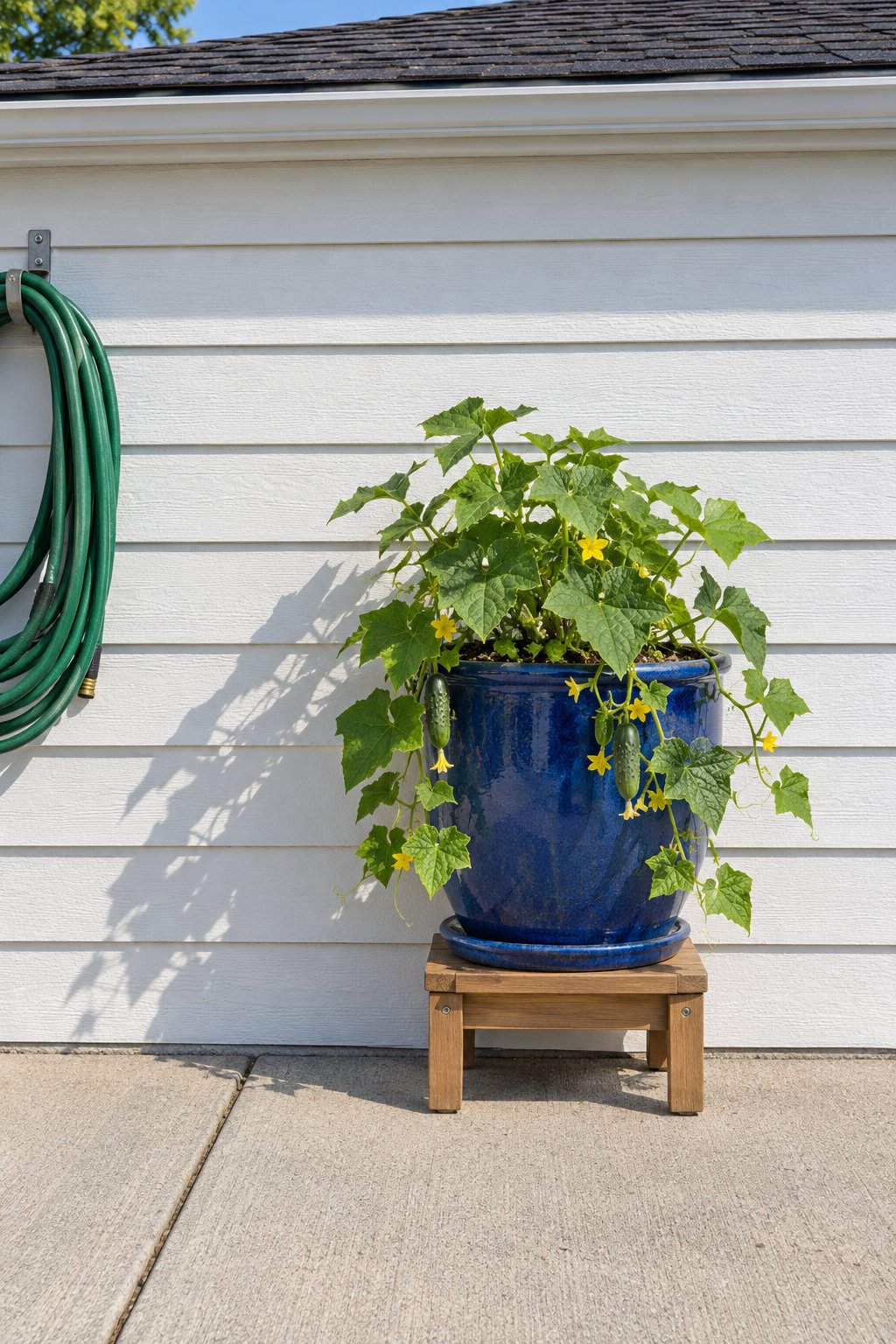
Not every cucumber needs a trellis. A bush type keeps its vines short, so one large pot beside a sunny garage wall holds it without any frame.
Let the vines hang over the rim and keep the potting mix evenly moist.
5. Three Peppers Line the Sunny Edge of the Slab
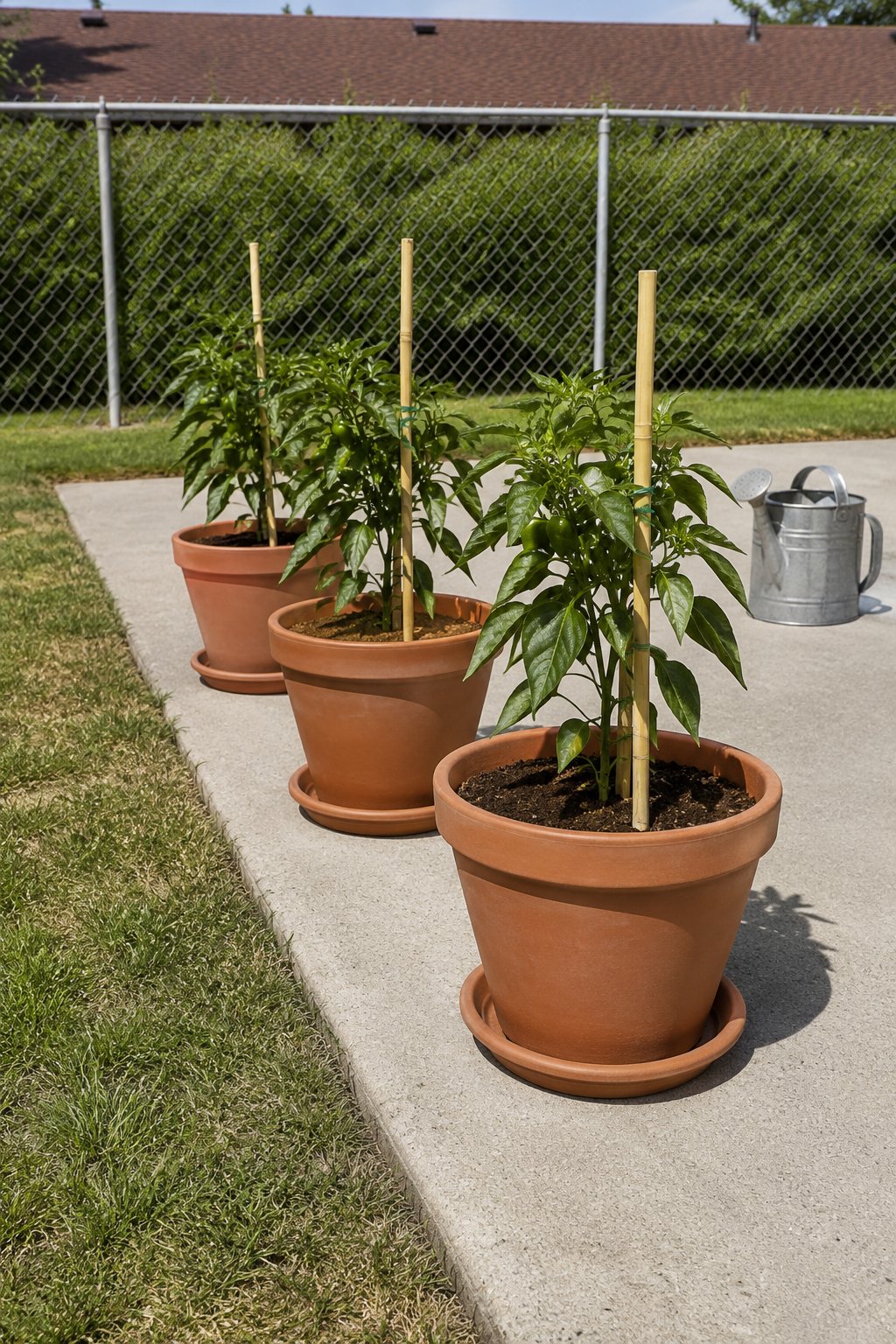
Peppers make the tidiest row I know: one plant per pot, three pots, all the same size. Line them along the side of the patio that gets six hours or more of direct sun.
A short stake in each pot steadies the branches once fruit sets.
6. A Caged Tomato Stands Beside a Pot of Parsley and Chives
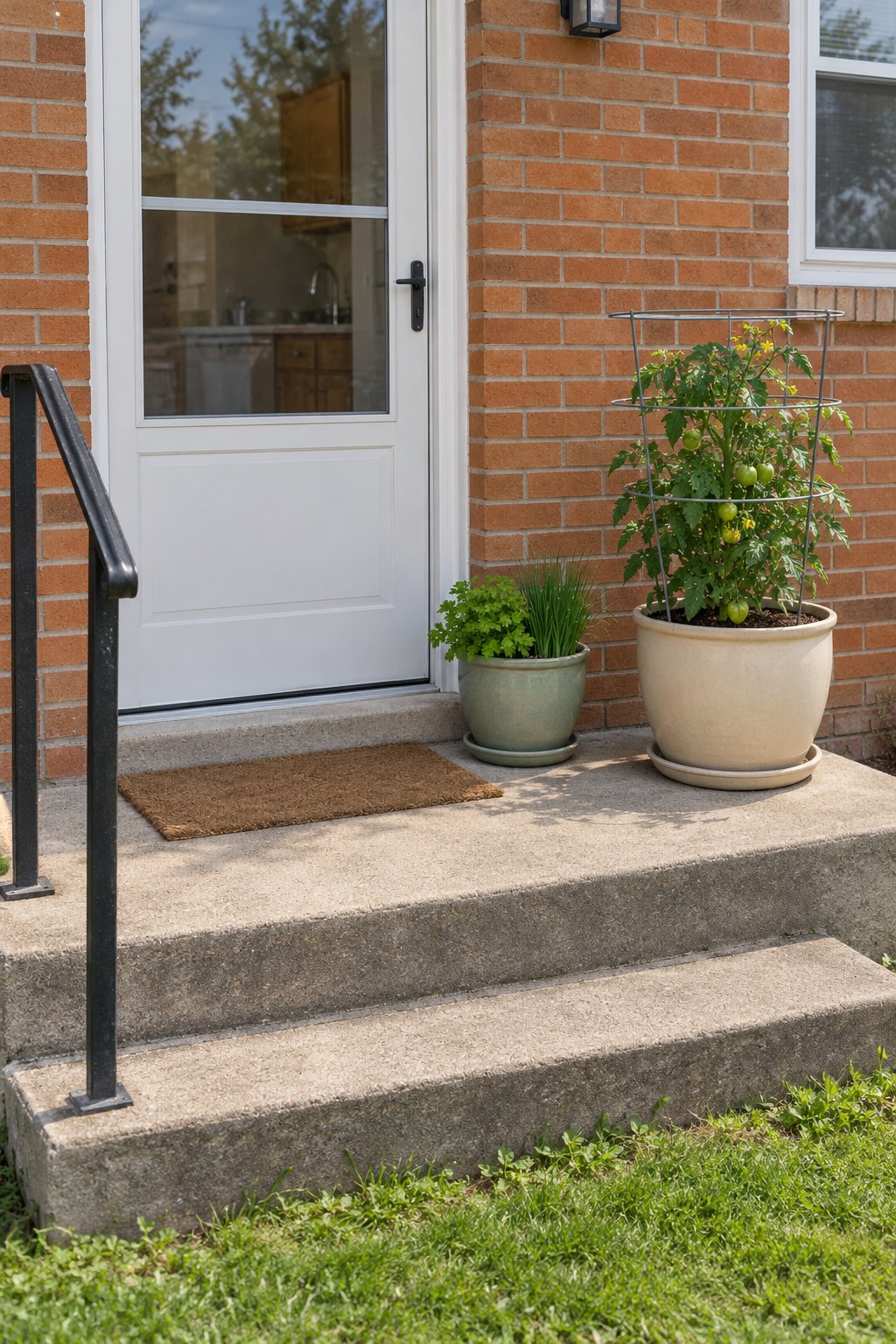
Two pots by the kitchen door cover a lot of ground. The big one, at least 10 gallons, holds a compact determinate tomato in a cage.
The smaller pot holds parsley and chives together, since both like the same regular water.
7. Basil, Parsley and Chives Climb the Porch Steps
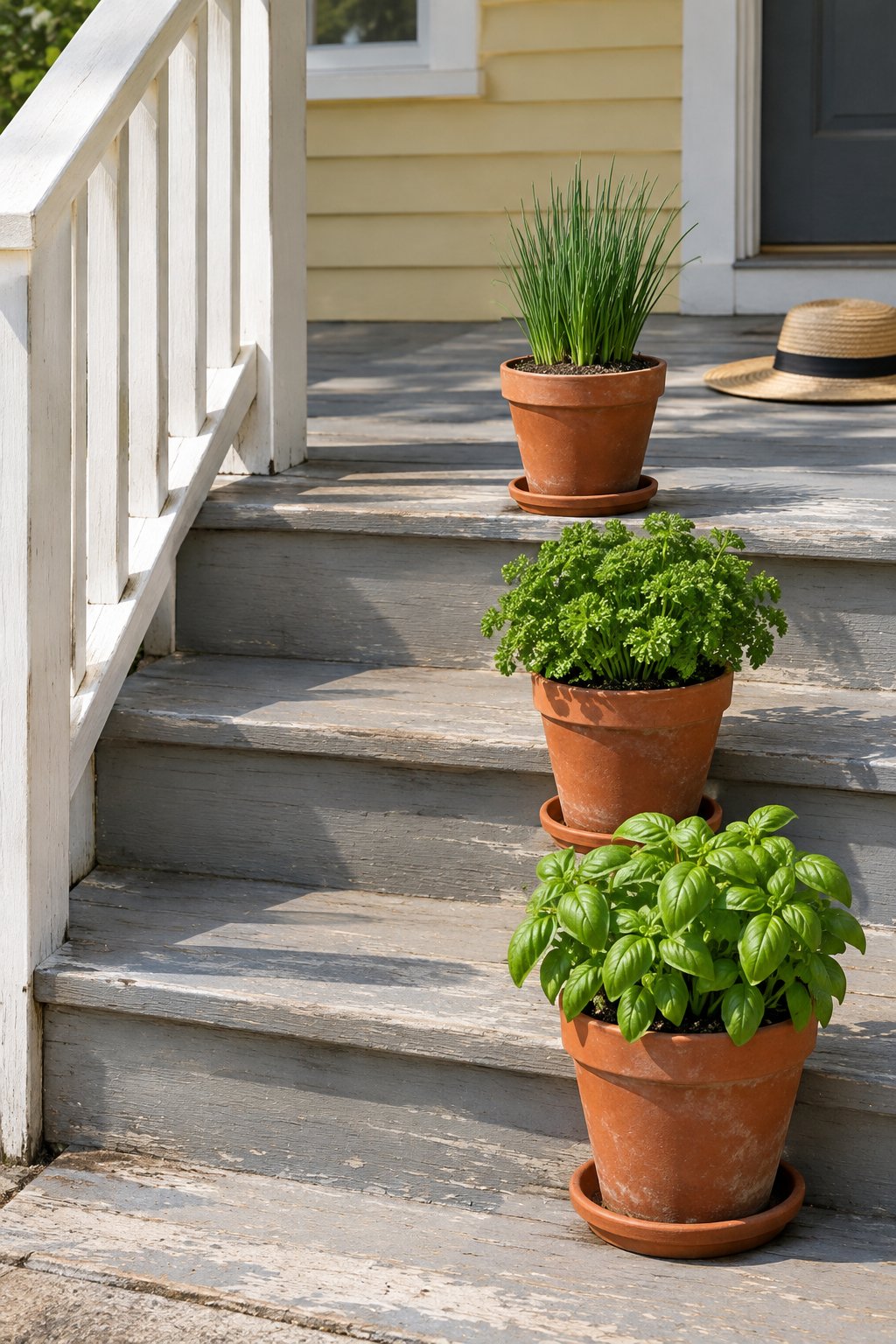
Sunny steps are wasted on a doormat. Set one pot on each of three steps, on the side you don’t walk: basil at the bottom, parsley in the middle, chives on top.
Small pots dry out fastest, so check these three every morning in hot weather.
8. Two Eggplants Flank a Pot of Basil on the Deck
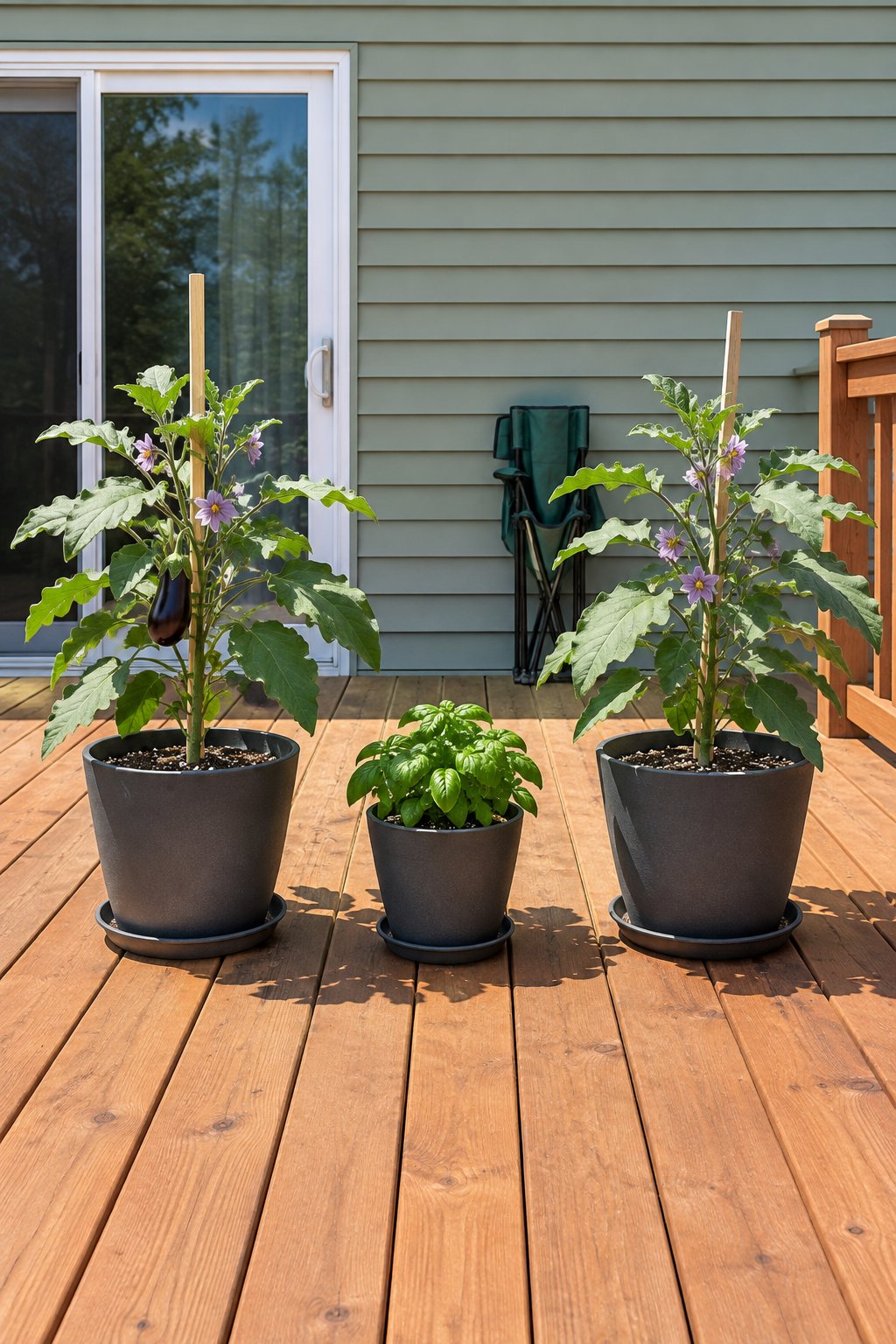
Eggplant loves heat, which makes a sun-baked deck its best seat in the house. Stand two large pots along the boards, one plant in each, with a stake pushed in beside the stem.
A smaller pot of basil sits between them.
9. Pole Beans Scale a Cane Teepee Against the Balcony Wall
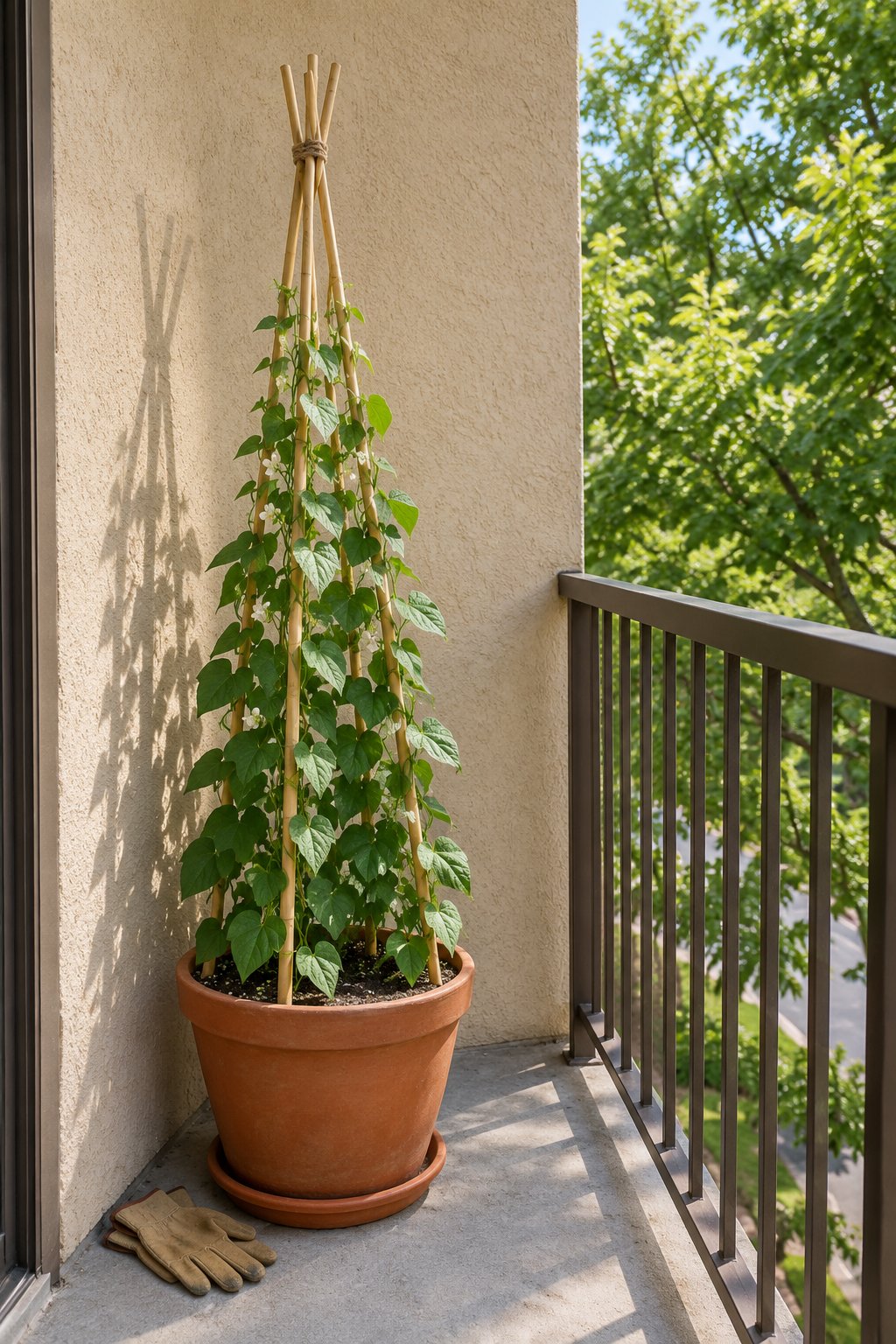
Pole beans climb, so a balcony can grow up when it can’t grow out. Tie four canes into a teepee inside one large pot and sow the beans around the base.
Stand it against the house wall, not the railing, and check the balcony’s load limit first.
10. Salad Greens and Herbs Ride the Railing in Two Boxes
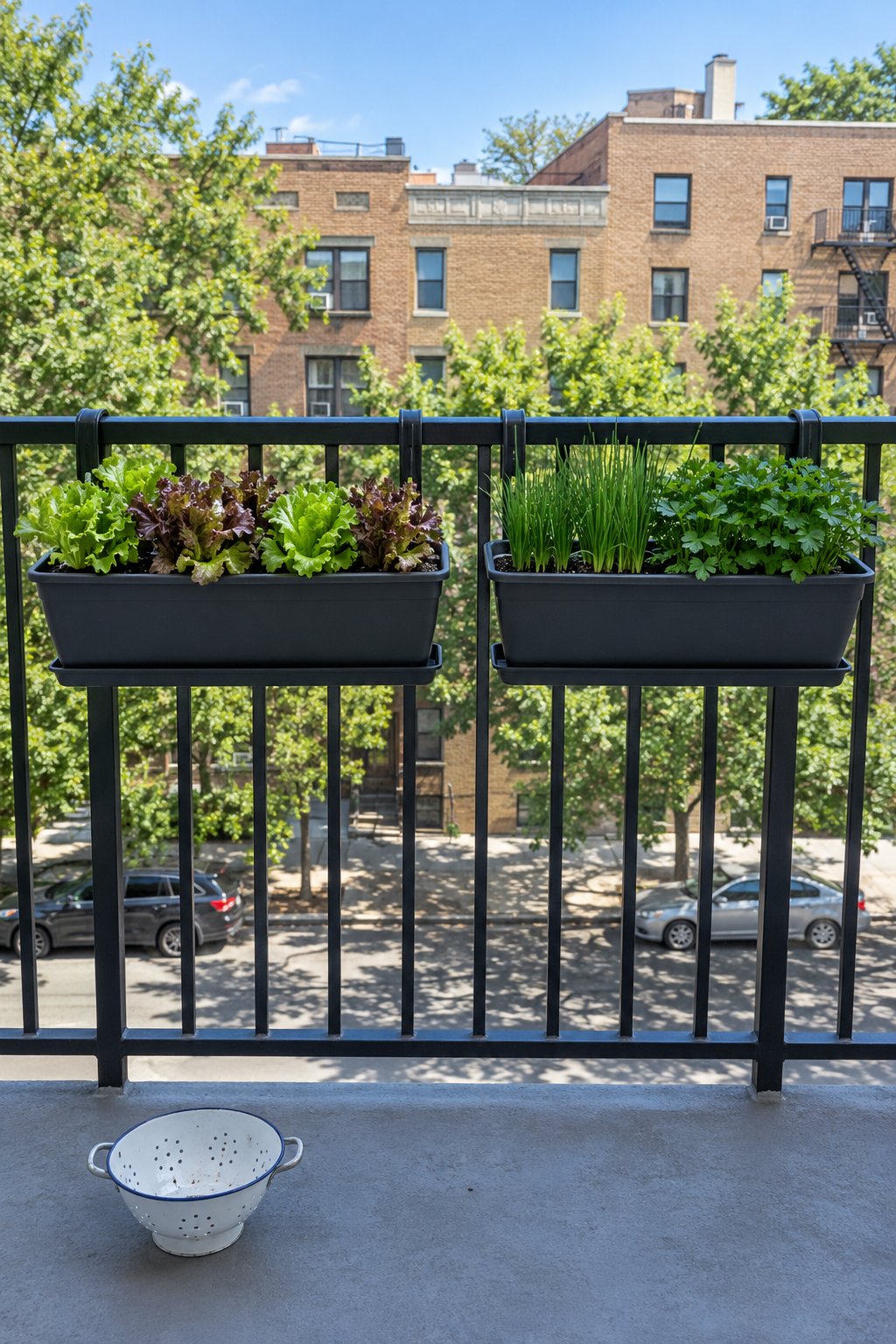
Railing boxes only work in brackets made for your railing, hung on the balcony side. Never balance a pot on the top rail.
Lettuce fills one box, chives and parsley the other. Lettuce prefers cooler weather, so it is happiest where the afternoon sun misses it.
11. A Tomato, a Pepper and Basil Hug the Sunny Wall
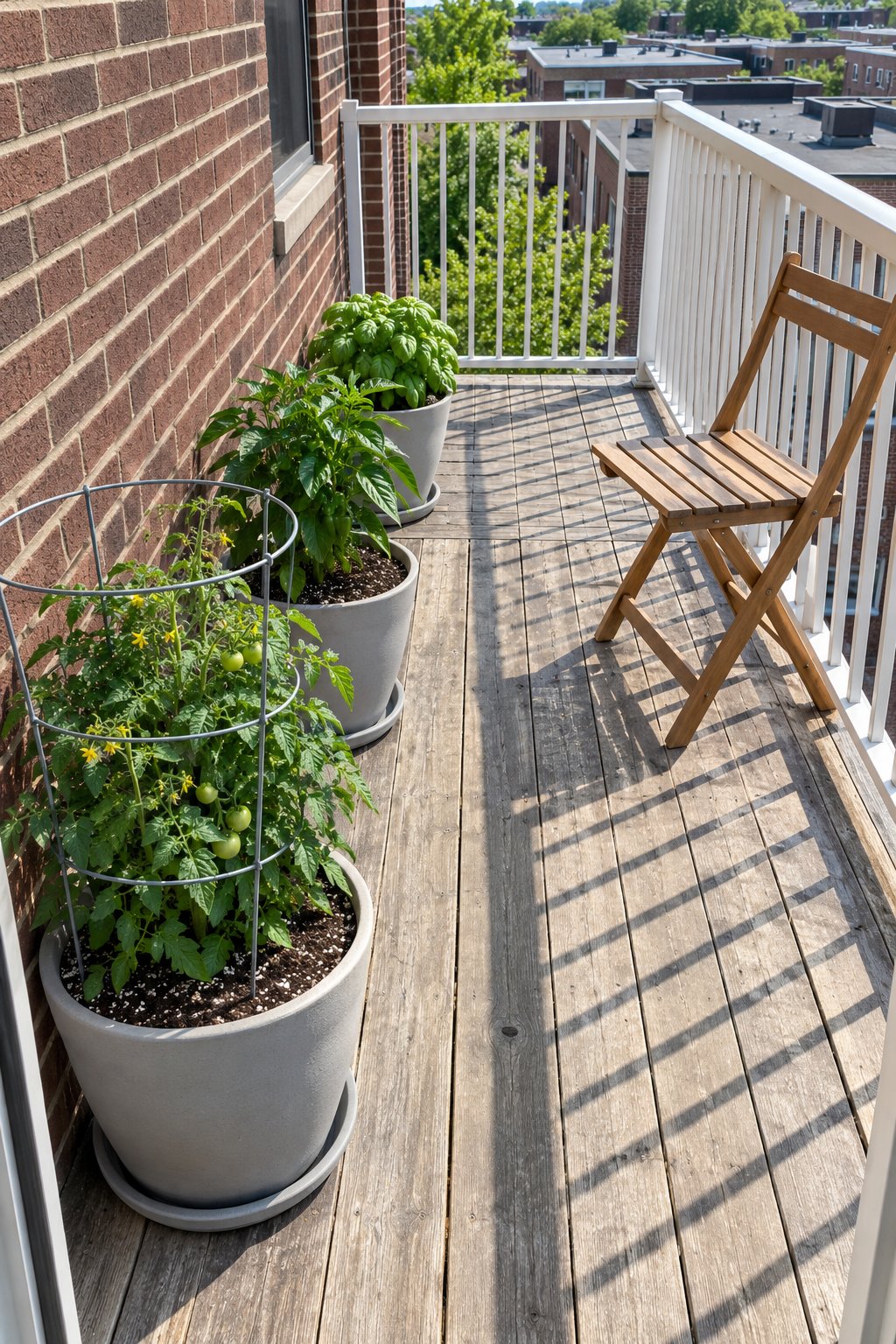
Three pots in a line along the wall leave the balcony floor free for a chair. The tomato pot is the big one: at least 10 gallons, a compact type and a cage.
The pepper and the basil get a medium pot each.
12. Bush Beans Fill Two Low Pots on a Breezy Balcony
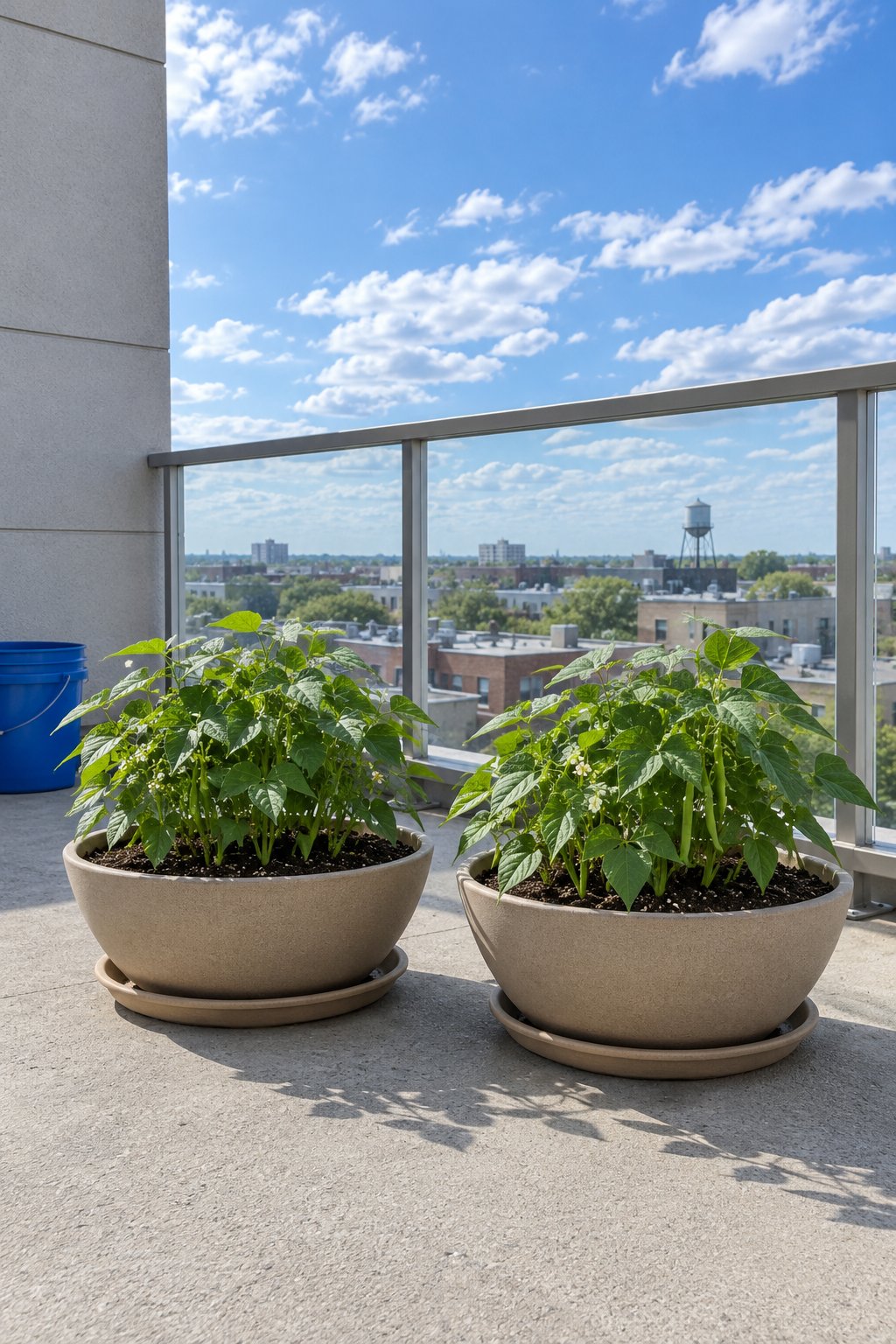
On a high balcony, I’d grow the crop that stays low. Bush beans need no cage, stake or trellis, so two wide pots on the floor are the whole setup.
Each pot sits on a saucer, so water doesn’t run onto the balcony below.
13. A Tomato, a Pepper and an Eggplant Sit in Three Grow Bags
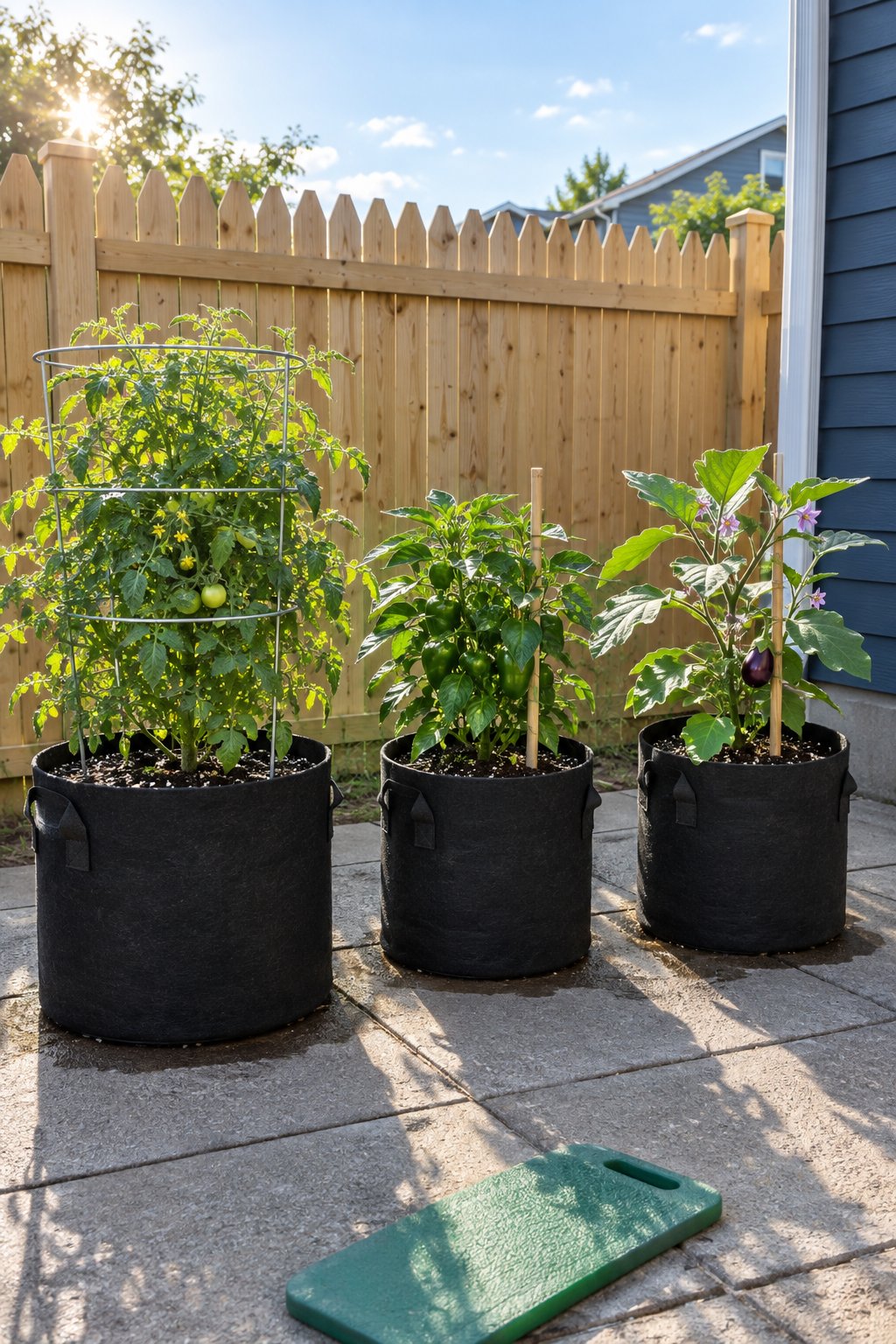
Fabric grow bags fold flat in winter, which suits a rental. Line three along the patio: a bag of at least 10 gallons for a caged compact tomato, and a large bag each for the pepper and the eggplant.
Set them where water can run off.
14. Bush Beans Run the Length of a Trough, With Parsley at Each End
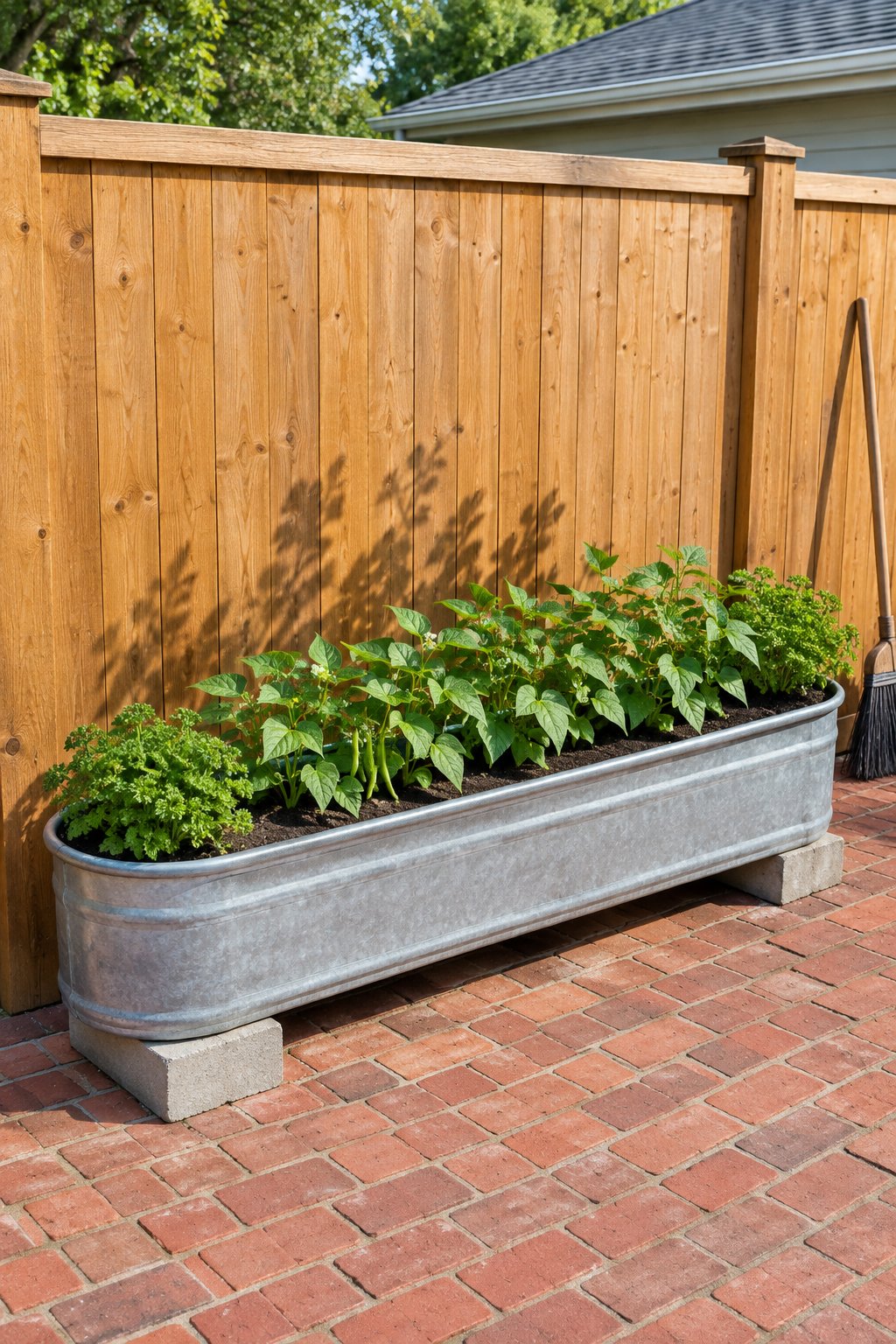
A long, deep trough along the patio fence gives bush beans a proper row. Sow them down the middle and tuck one parsley plant in at each end.
No support is needed, only drainage holes along the base.
15. Lettuce and Radishes Share a Trough in Afternoon Shade
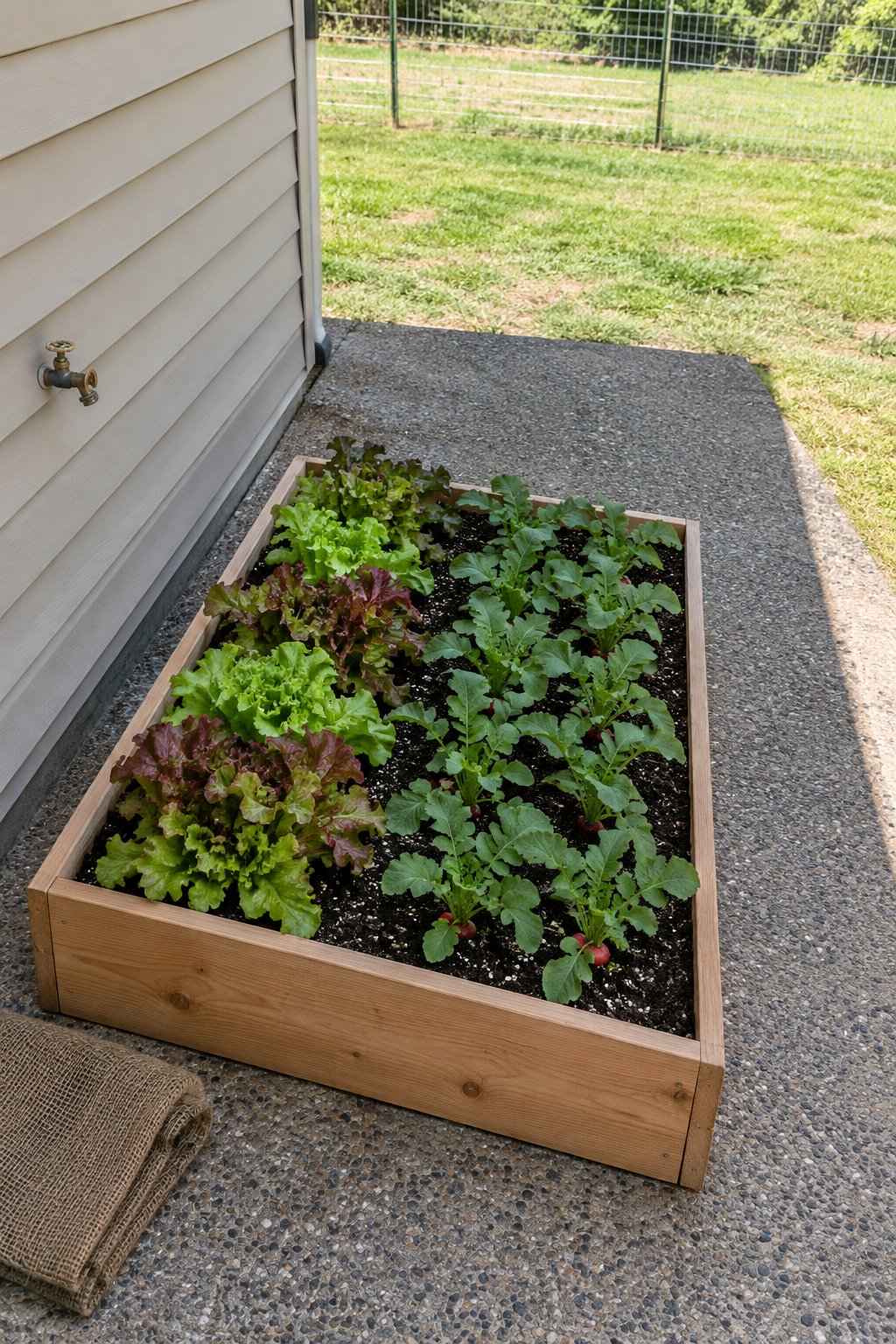
This is the one setup I’d keep out of the hottest spot. Lettuce and radishes both prefer cooler weather, so the trough goes on the east side of the patio, where the house shades it after lunch.
A wide, shallow trough is enough for both.
16. Cucumber Vines Climb a Trellis Behind One Deep Trough
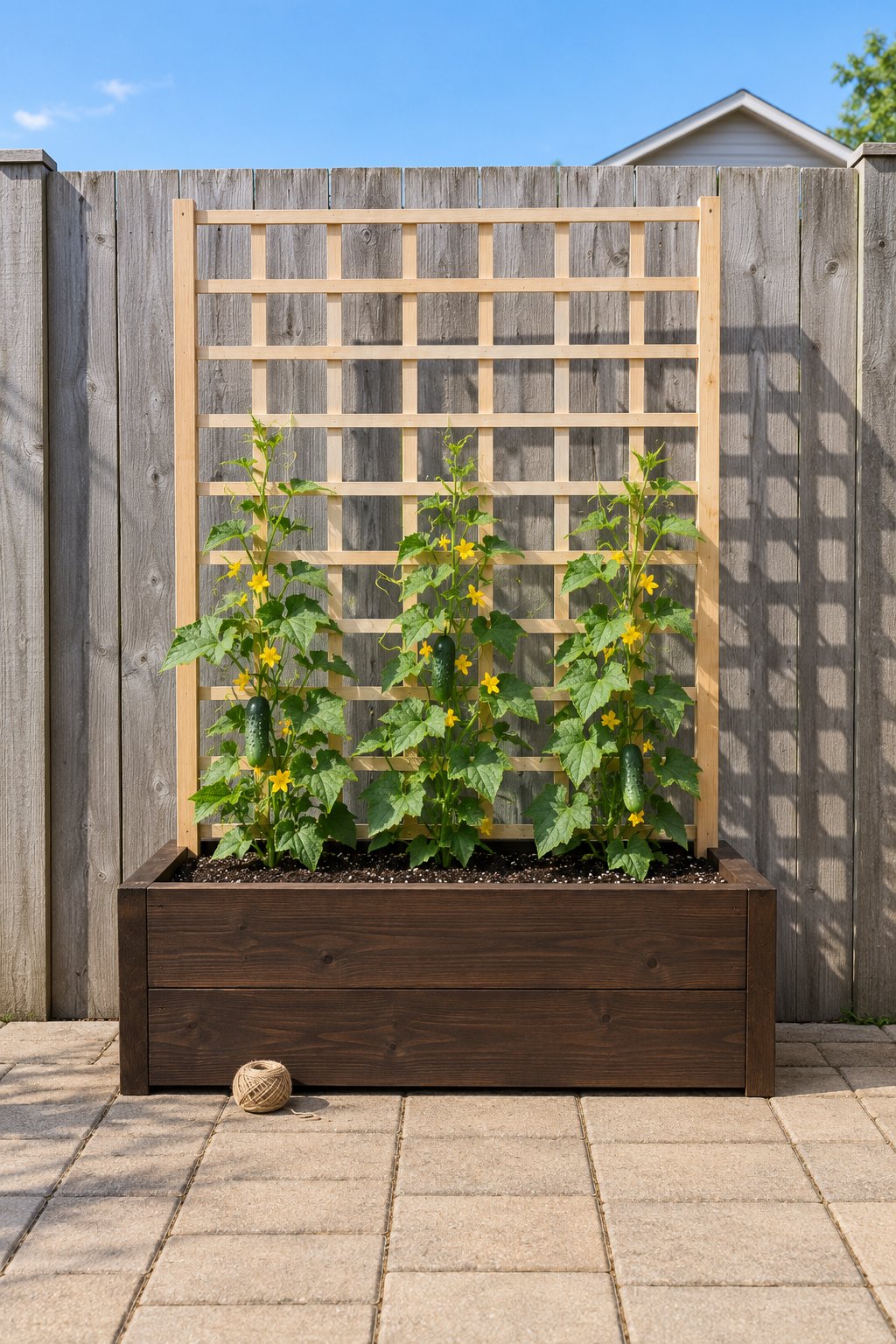
Vining cucumbers cover a lot of trellis, so this is the setup for a bare fence at the patio’s sunny edge. Stand a deep trough at its foot and set a trellis panel into the back.
The vines go up, and the patio floor stays clear.
Pot, Support and Sun for Every Crop on This Page
Full sun means six hours or more of direct sun. Pot sizes are in relative words on purpose, apart from the tomato.
When you are torn between two pots, take the bigger one.
| Crop | Container | Support | Sun |
|---|---|---|---|
| Tomato, compact or determinate | At least 10 gallons, one plant | A cage | Full sun |
| Tomato, indeterminate | The largest tub you have, never under 10 gallons | A tall cage | Full sun |
| Pepper | Medium to large pot, one plant | A short stake once fruit sets | Full sun |
| Eggplant | Large pot, one plant | A stake | Full sun |
| Zucchini, bush type | Large, wide tub, one plant | None | Full sun |
| Cucumber | Large pot or deep trough | None for bush types, a trellis for vining types | Full sun |
| Beans | Wide pot or long, deep trough | None for bush beans, a teepee or trellis for pole beans | Full sun |
| Lettuce and radishes | Wide, shallow bowl or trough | None | Morning sun, afternoon shade in summer |
| Basil, parsley, chives | Small to medium pot | None | Full sun |
Six Things That Hold Back Vegetables in Pots
A pot with no drainage holes
Do thisEvery container needs holes in the base so extra water can leave. Drill them before you plant, or pick another pot.
Yard soil shoveled into the pot
Do thisFill containers with potting mix made for containers. Soil dug from the yard packs down in a pot and drains poorly.
A tomato squeezed into a small pot
Do thisGive one tomato a container of at least 10 gallons, and choose a compact or determinate type unless the tub is much larger.
Watering by the calendar
Do thisContainers dry out faster than the ground and may need water every day in hot weather. Push a finger into the mix and water when the top feels dry.
Fruiting crops on the shady side
Do thisTomatoes, peppers, eggplant, cucumbers, zucchini and beans need full sun, which means six hours or more of direct sun. Count the hours on your patio before you place a pot.
Dry-soil herbs in the tomato pot
Do thisRosemary, thyme, sage, oregano and lavender want drier soil than basil, parsley and chives. Keep them in pots of their own, away from these setups.
A Pot Is All the Ground a Plant Gets, So Size Comes First
In a garden bed, roots spread out through the soil to reach water. In a pot they meet a wall.
The container is all the ground that plant will ever have, and its size decides how much water is within reach.
A bigger pot holds more potting mix, more mix holds more water, and the plant goes longer before it dries out.
That is why I’d buy one large pot before three small ones.
It is also why the tomato, usually the biggest plant on a patio, gets a container of at least 10 gallons.
Start with one pot this summer: a compact tomato and basil in at least 10 gallons, in the sunniest spot you have.
Water when the top of the mix feels dry, which can be every day in hot weather.
Patio container gardening is best built one pot at a time, and that first pot will show you where the second should stand.
Frequently Asked Questions
What are the easiest container gardening vegetables for beginners?
Bush beans, peppers, lettuce and basil are forgiving first crops. A compact tomato is manageable too, as long as its pot holds at least 10 gallons and stands in full sun.
How big a pot does tomato container gardening need?
At least 10 gallons for one plant, with drainage holes and a cage. Choose a compact or determinate type unless you have a much larger tub.
Can I start a balcony vegetable garden in an apartment?
Yes, if the balcony gets enough direct sun for the crop. Check the building’s rules and the balcony’s load limit before adding large wet containers, and ask the landlord if you rent. Keep pots off the top of the railing unless a bracket is made for that railing.
How often do vegetables in pots need water?
More often than the same plants in the ground. Check every day, and expect to water daily in hot weather, especially small pots and fabric bags.
Can I use garden soil for vegetable container gardening?
No. Use potting mix made for containers, and leave yard soil in the yard.
Save This For Later
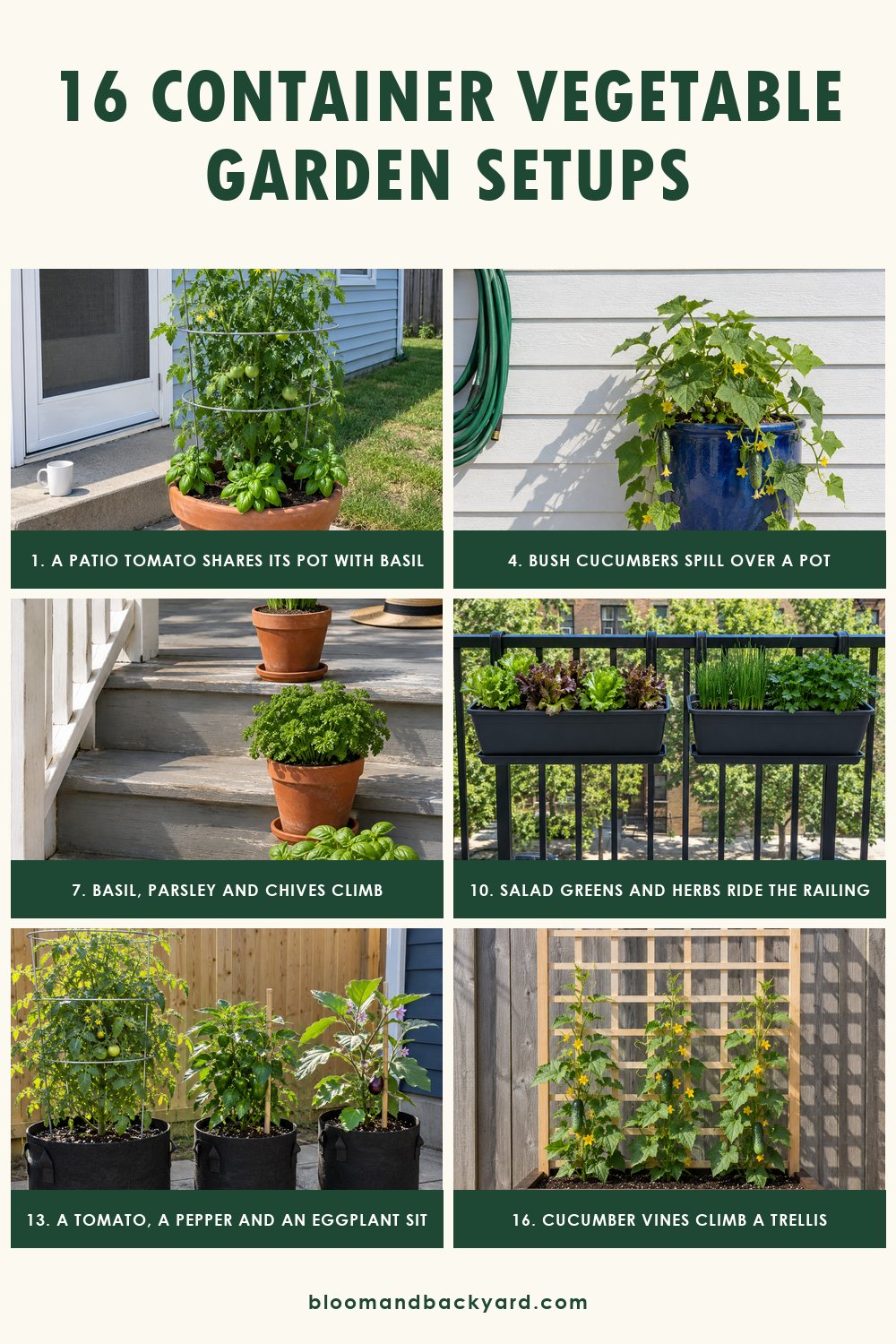
Loved container gardening vegetables? Save this pin to your Pinterest board now so you can find it again anytime you need the inspiration.