15 Cheap Raised Garden Beds You Can Build in a Weekend
Cheap raised garden beds come down to one choice: what the walls are made of.
I’ve sorted 15 builds by material, from pine boards and fence pickets to stacked block, a stock tank and a plain mound of soil.
Each one goes together in a weekend, and I say which tools it takes.
Find your build
1. One-Board Pine Frame
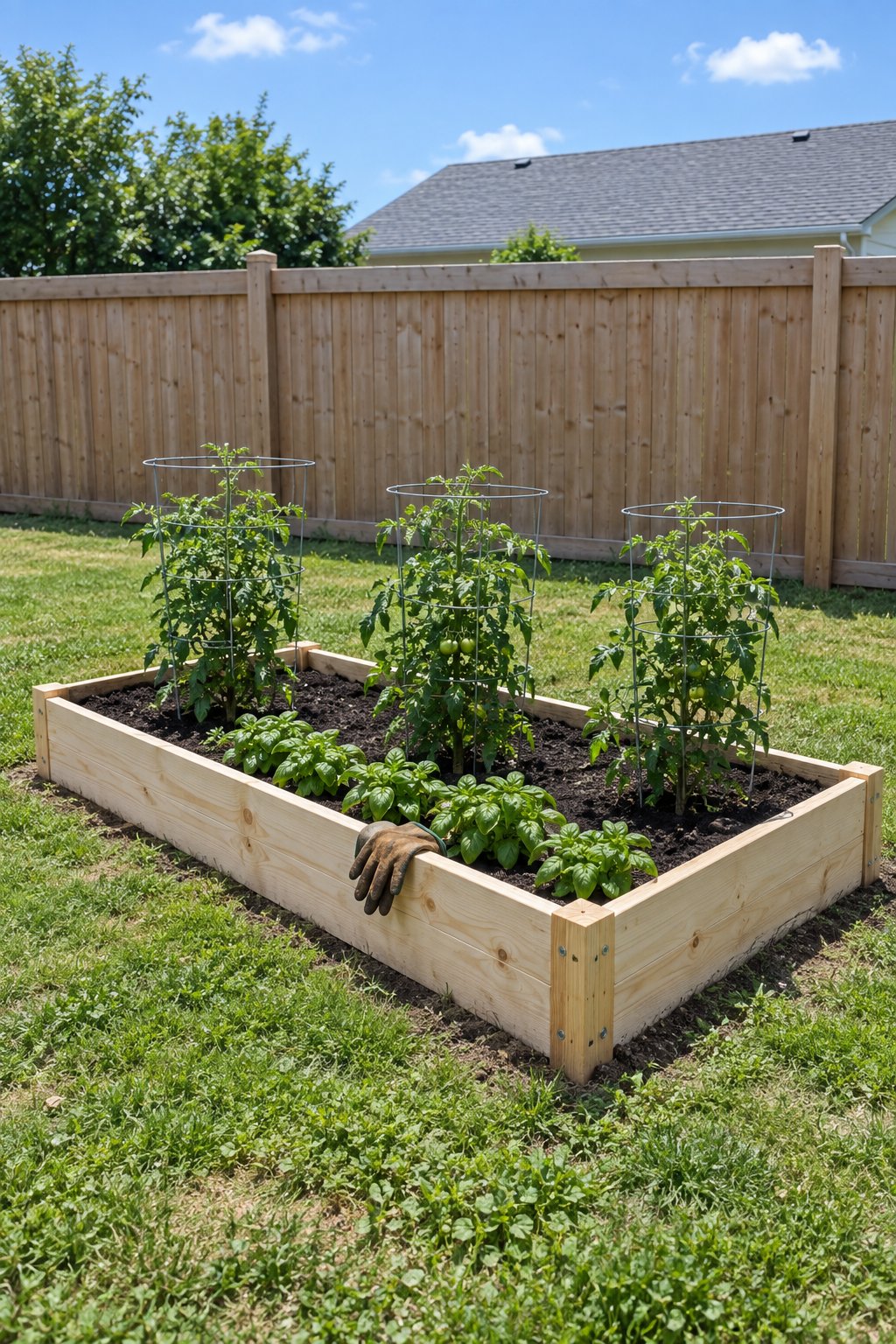
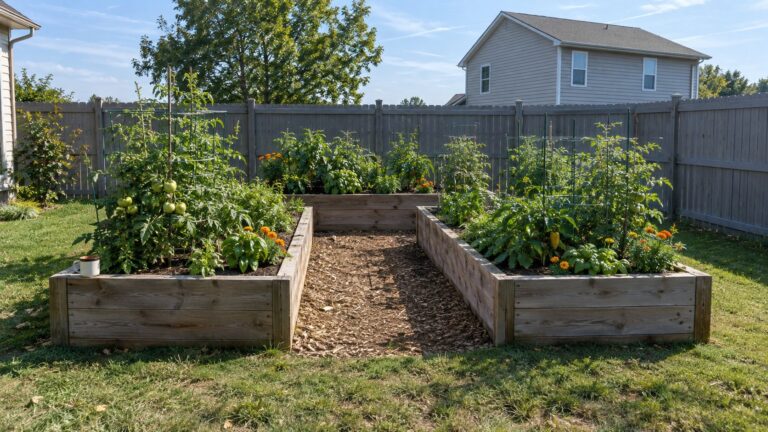
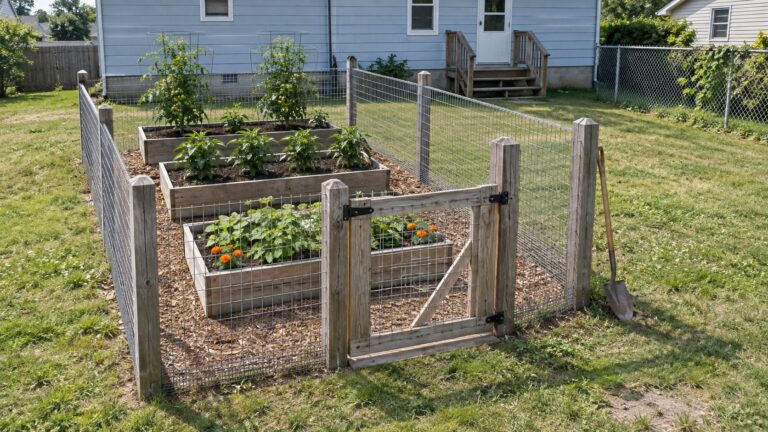
Four untreated pine boards screwed into a 4 by 8 foot rectangle make the cheapest wooden bed I know.
One board high is enough to start, with a short stake inside each corner to screw into.
2. Cedar Fence Pickets on Corner Stakes
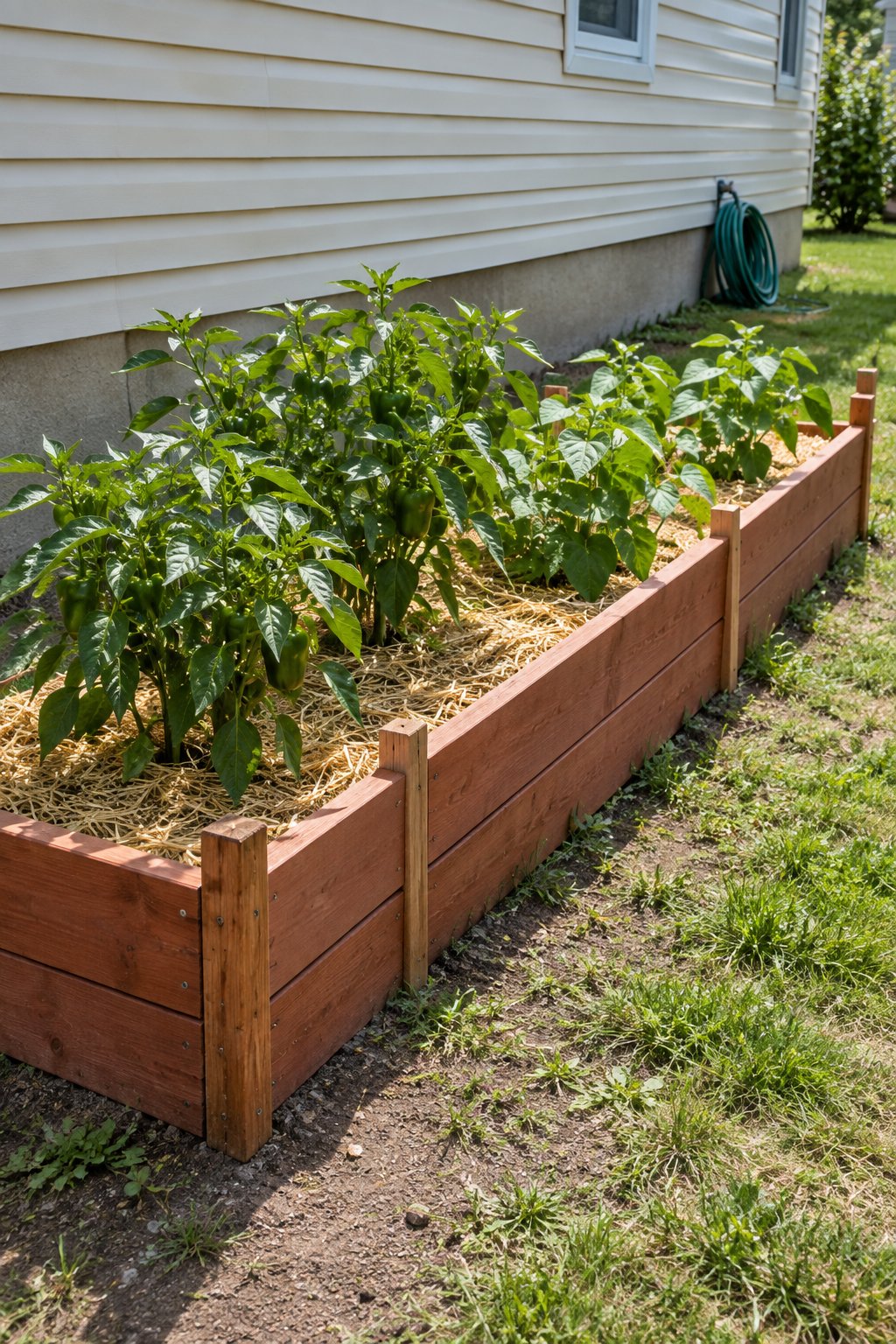
Cedar fence pickets are thin and light, which makes them the budget route to a cedar bed.
Stack them two high and screw them to a 2 by 2 stake at each corner and at the middle of each long side.
3. A Slim Bed Built for the Fence Line
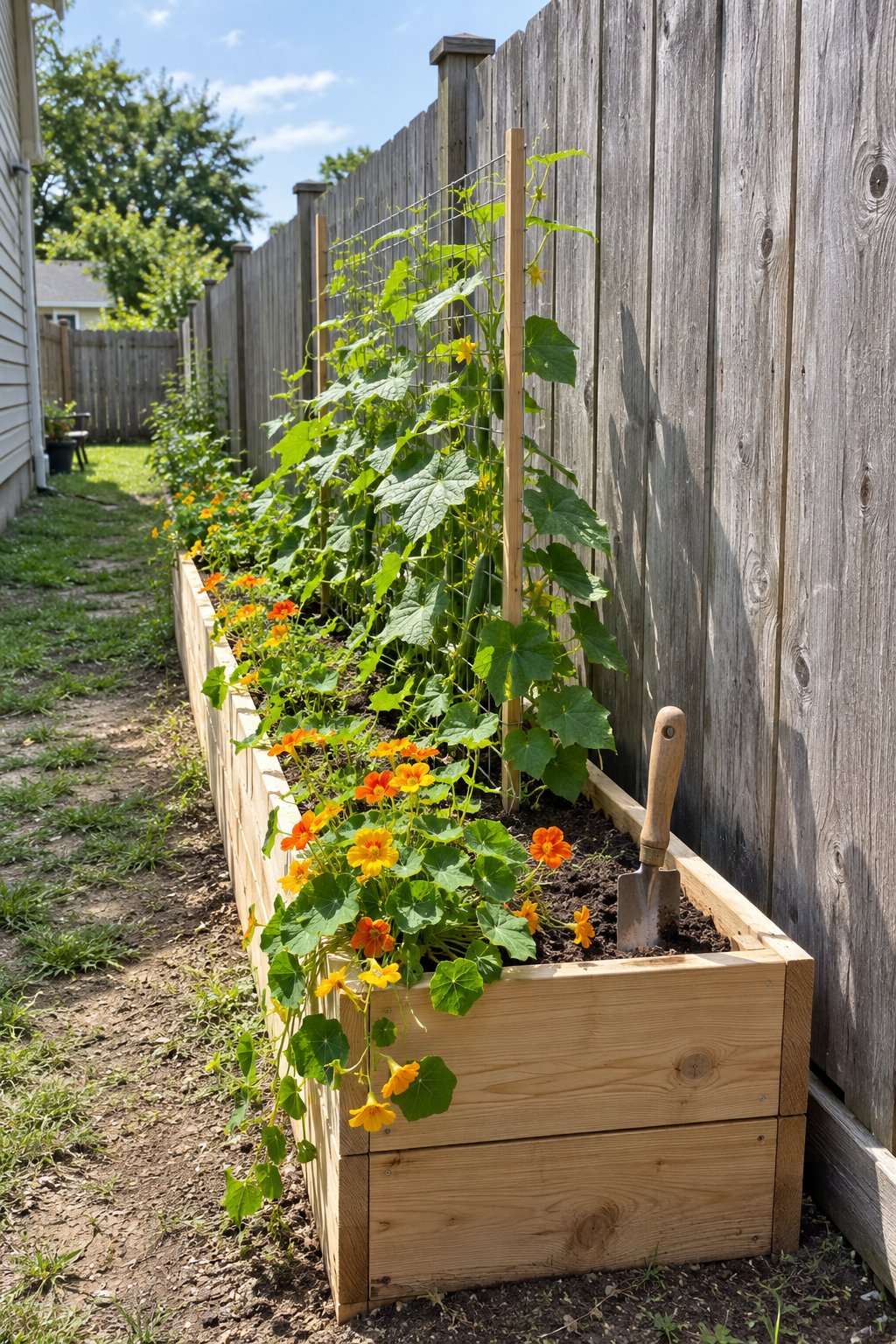
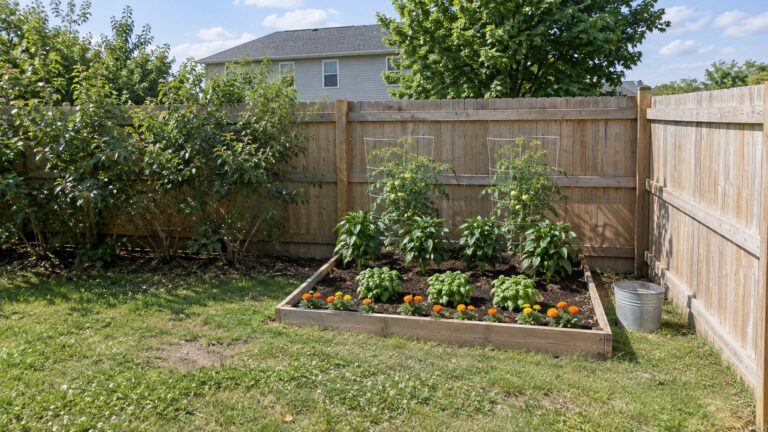
A bed against a fence is reached from one side only, so I build it about 2 feet deep and as long as the boards allow.
Give it its own back board. Soil piled against a wooden fence keeps the fence wet.
4. Boards Dropped Into Slotted Corner Blocks
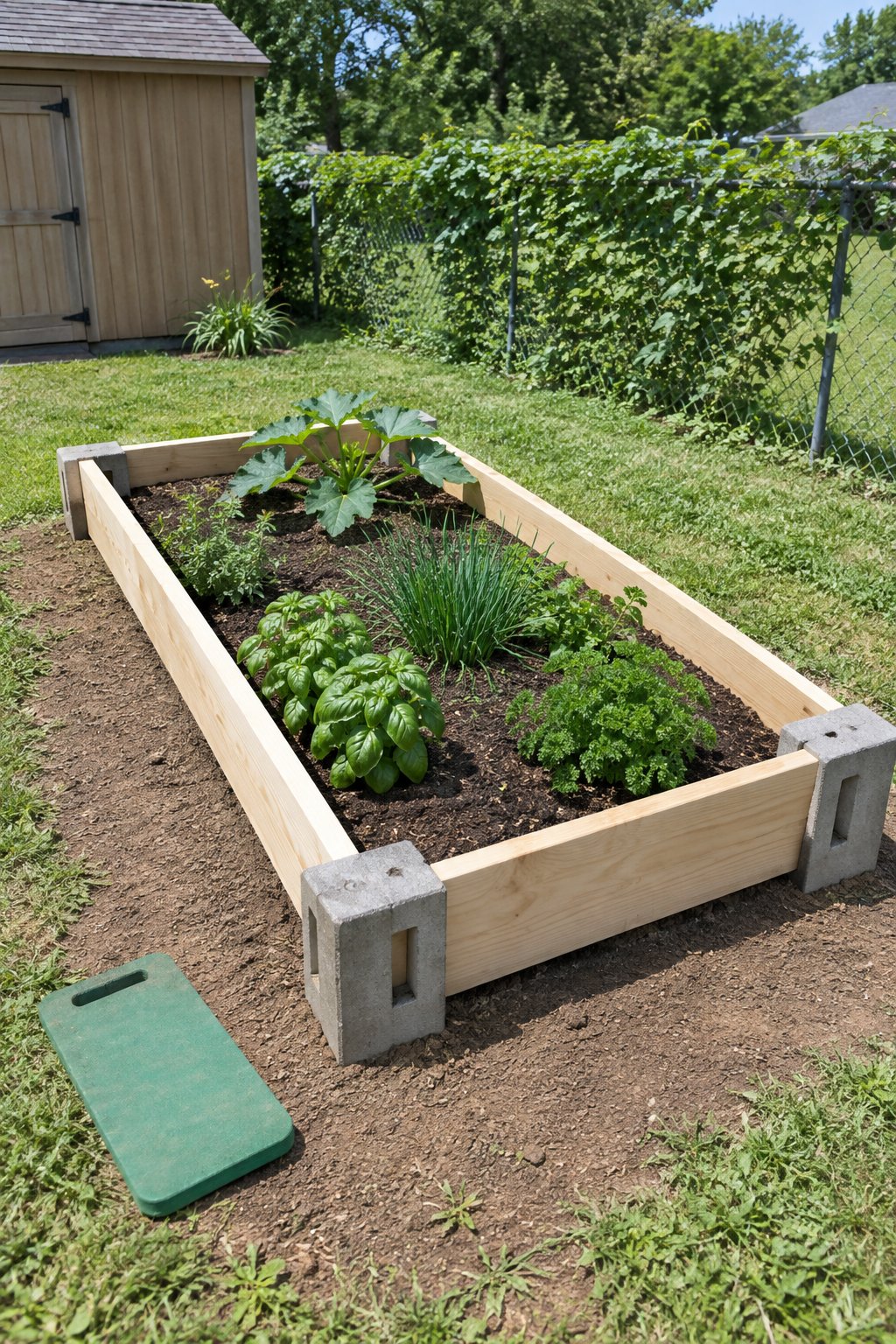
Stackable concrete corner blocks have a slot on each side, and a 2 by 6 board drops straight into it.
No screws and no corners to square, which makes this the easiest wooden bed for a beginner.
5. Pallet Slats, With the Stamp Checked First
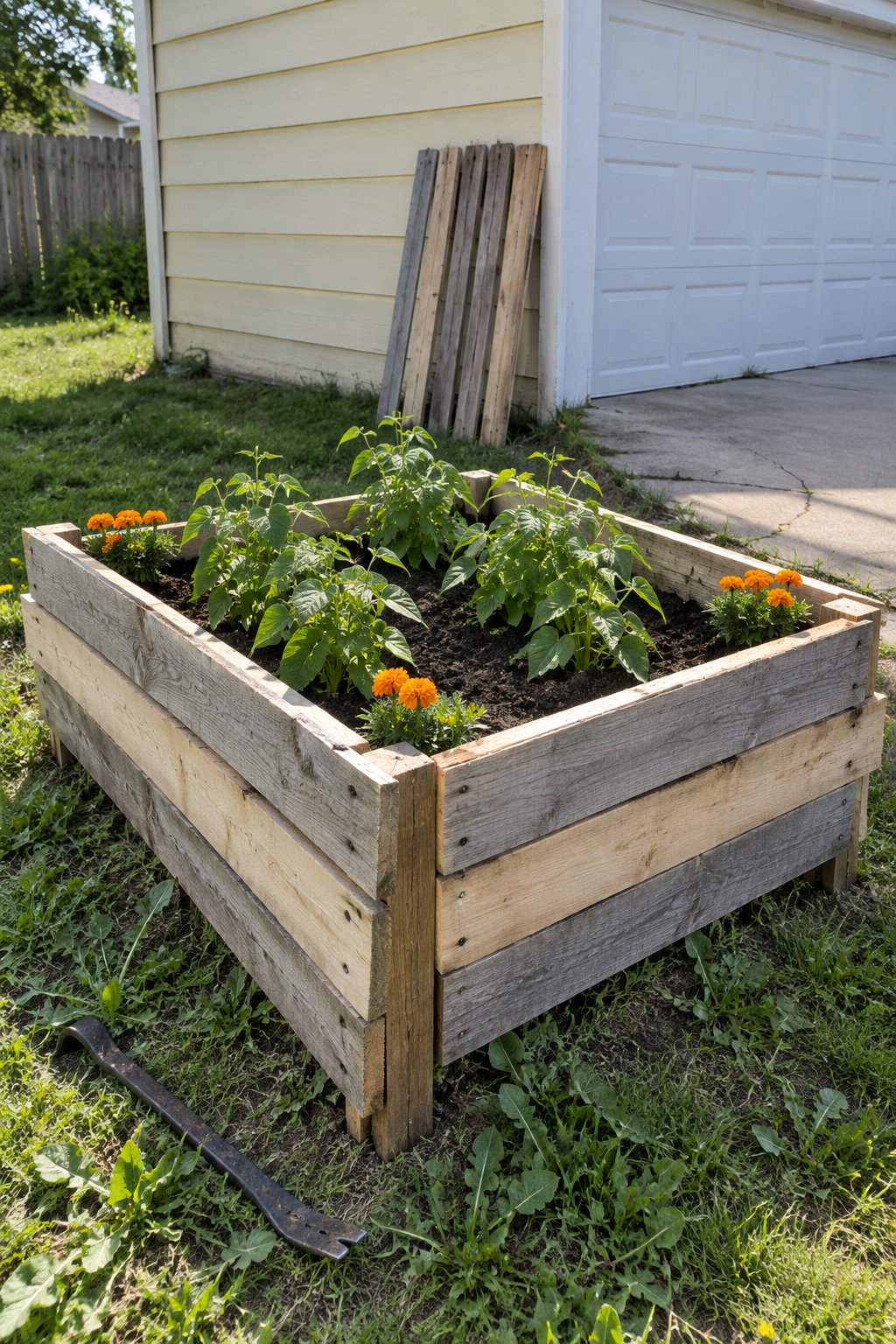
Free pallets become bed walls once you pry the slats off and screw them to corner stakes.
Use only pallets stamped HT, which means heat treated. Skip unmarked ones and anything stamped MB.
6. Dry-Stacked Concrete Block
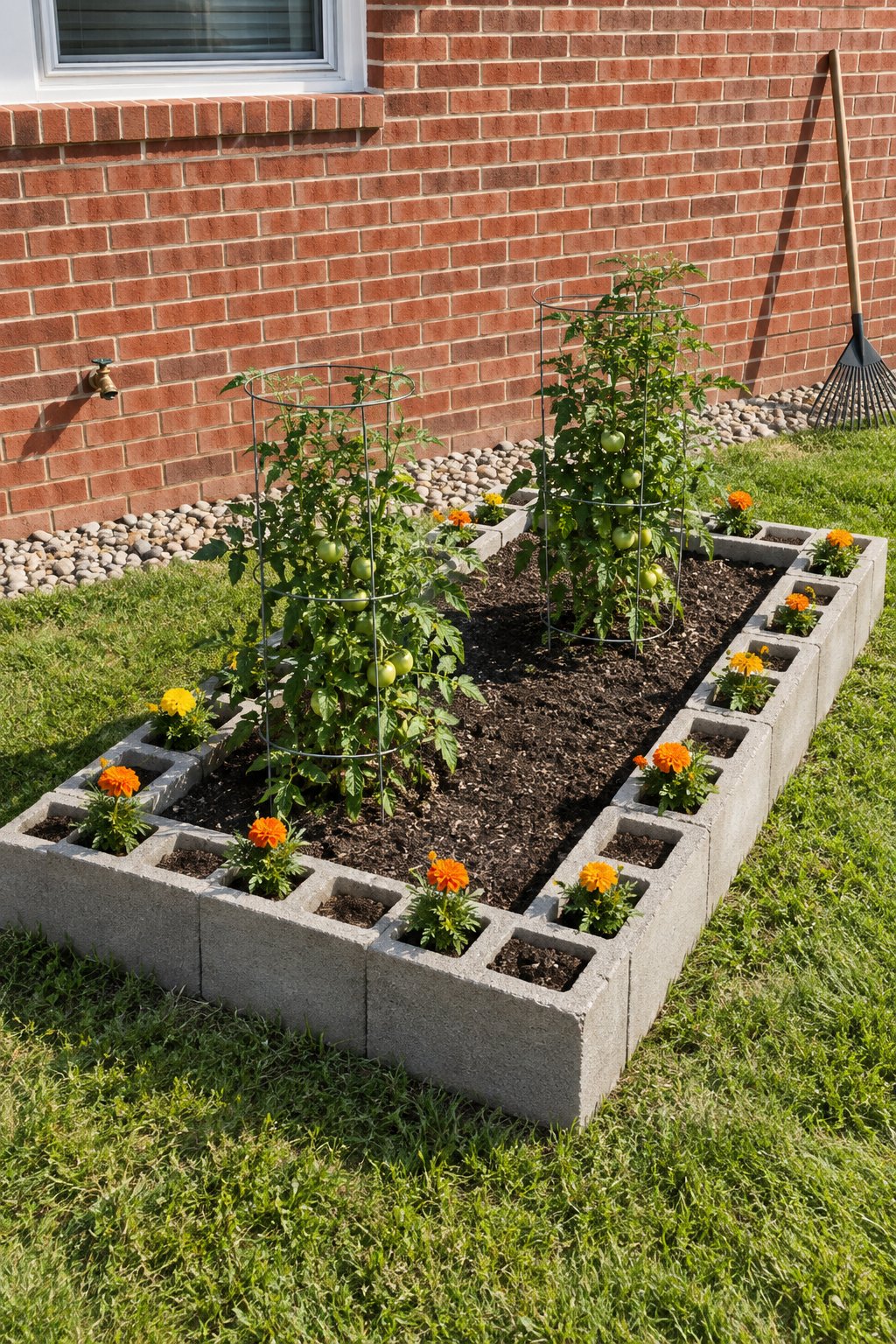
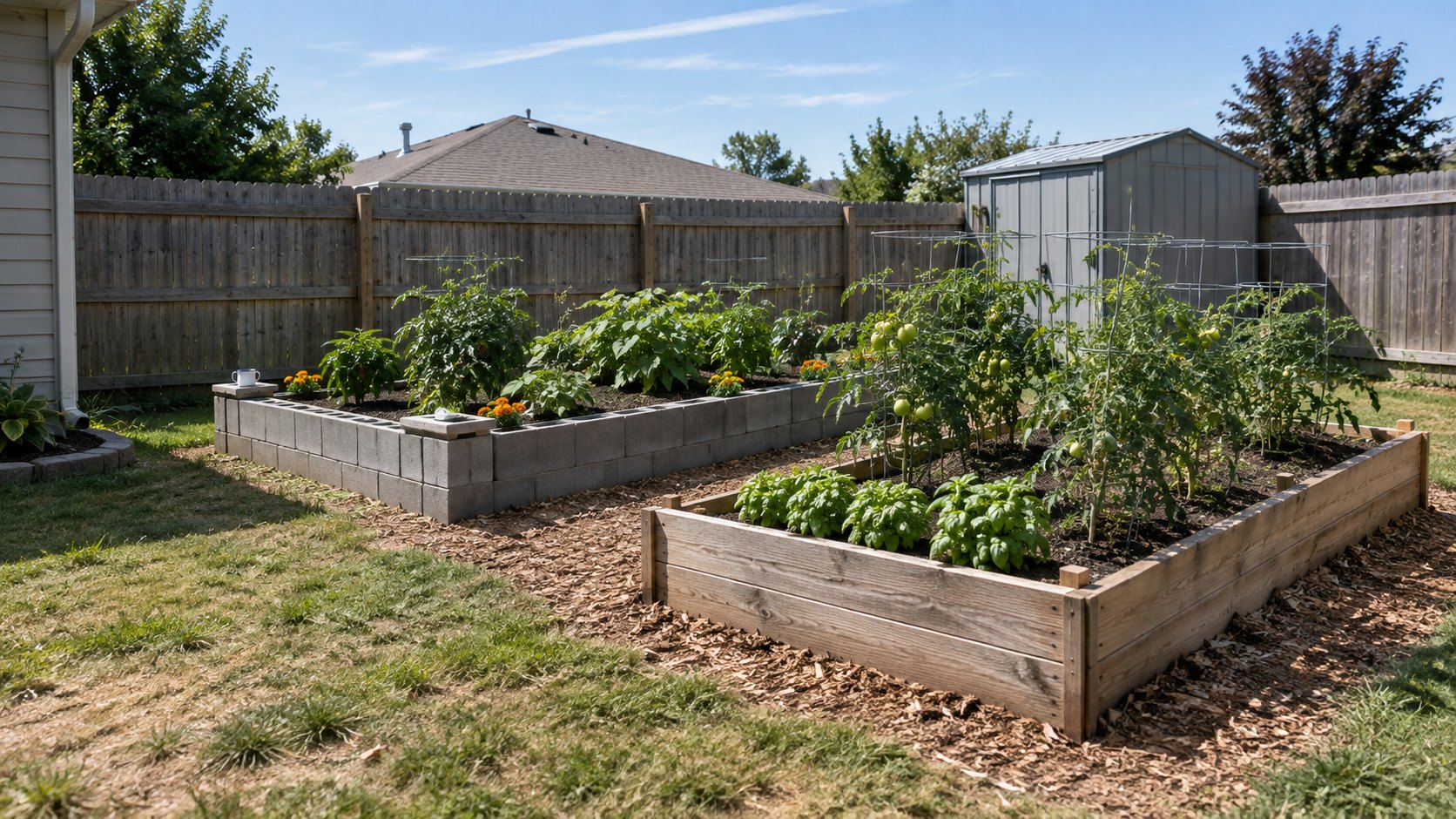
Standard concrete blocks set end to end, one course high, make a bed with no fasteners at all. Their own weight holds them in place.
I like the hollow cores facing up, because each one takes a marigold.
7. Leftover Bricks, Stacked Without Mortar
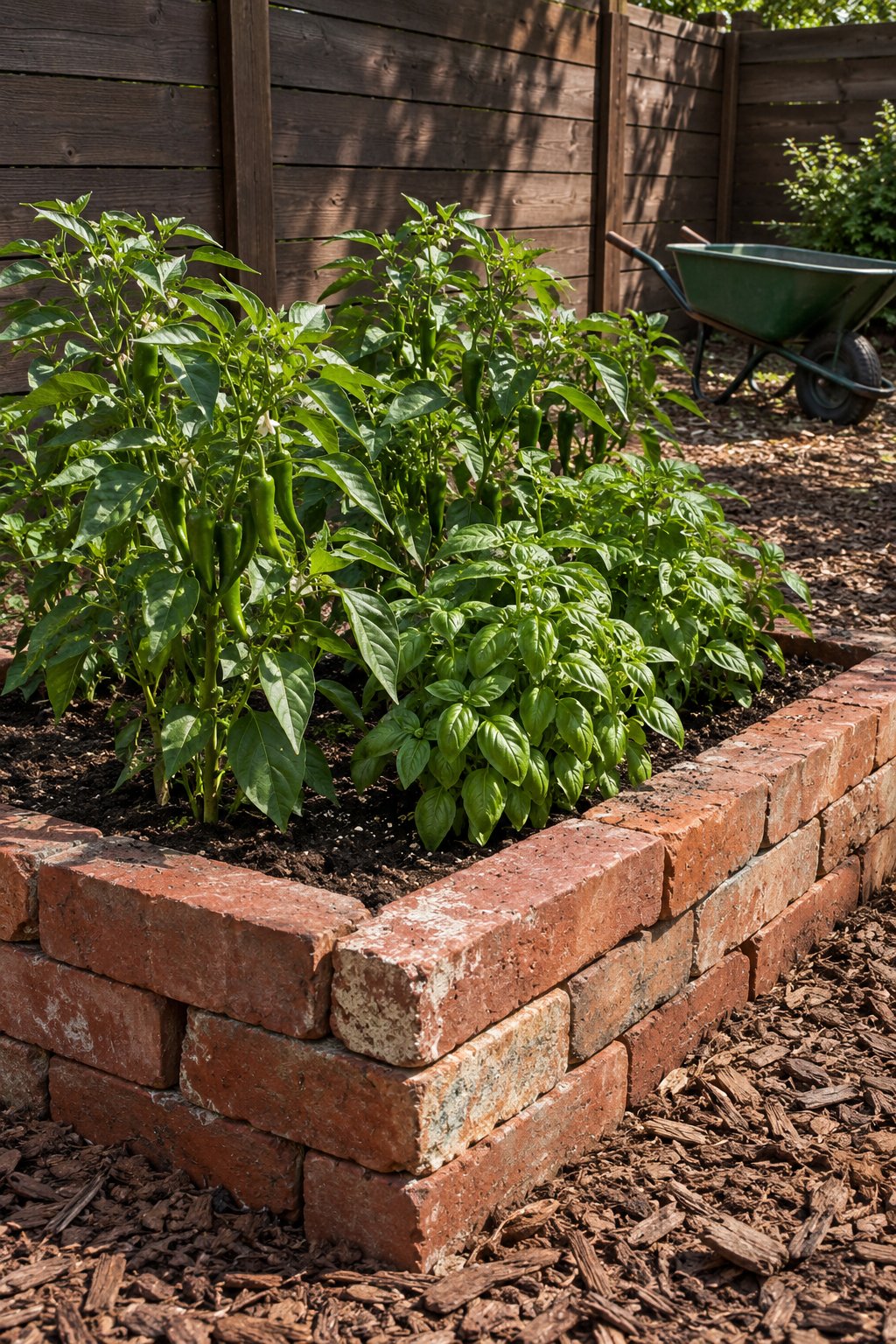
A pile of bricks left from another job is a bed wall you already own. Stack them two or three courses high, each brick covering the joint below.
Keep it low. A wall with no mortar gets wobbly as it gets taller.
8. Fieldstone From Your Own Yard
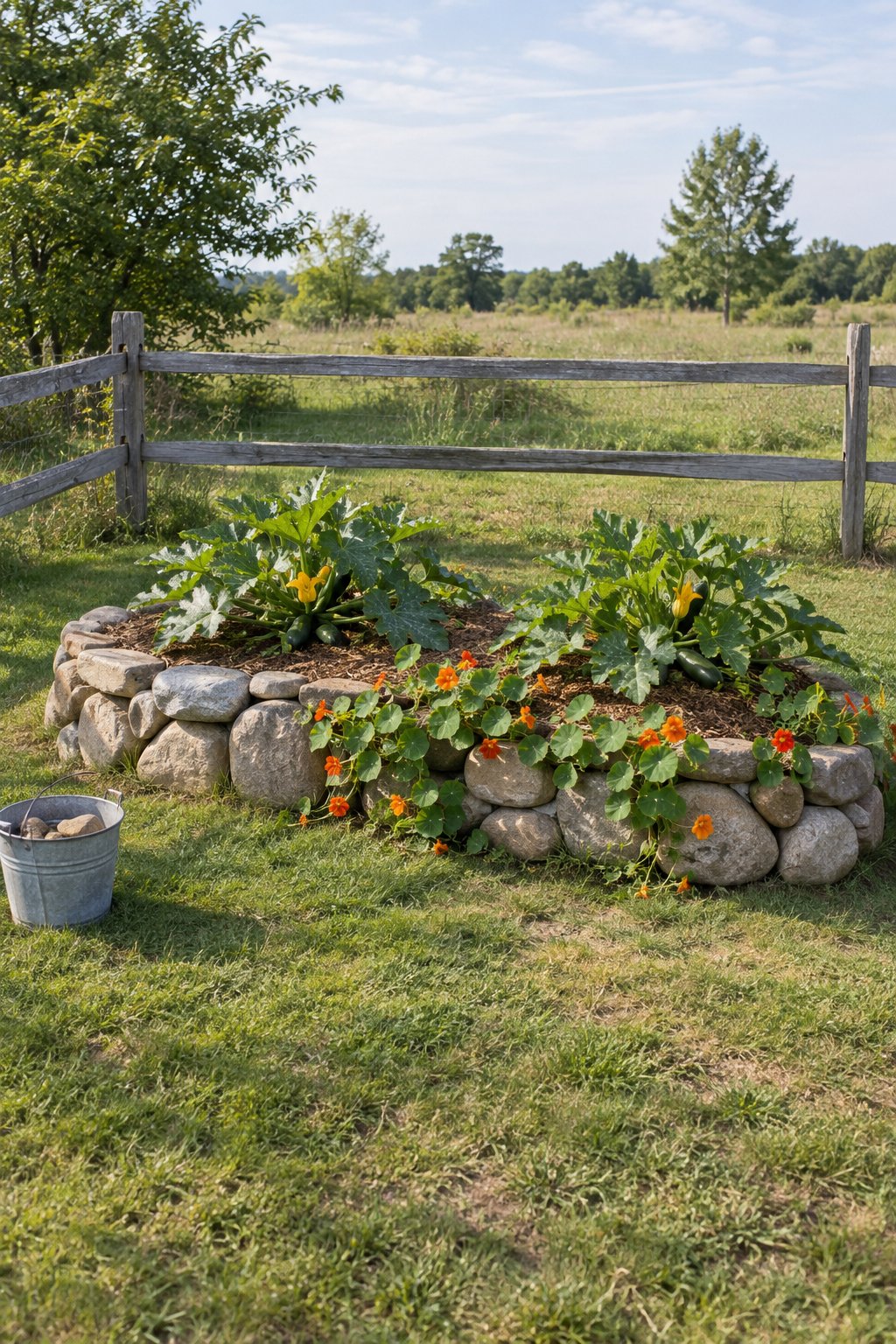
If your yard grows rocks, stack them. The largest stones go on the bottom, each leaning slightly inward, with smaller ones wedged on top.
The wall stays low and loose, and it follows a curve where boards cannot.
9. Pavers Stood on Edge
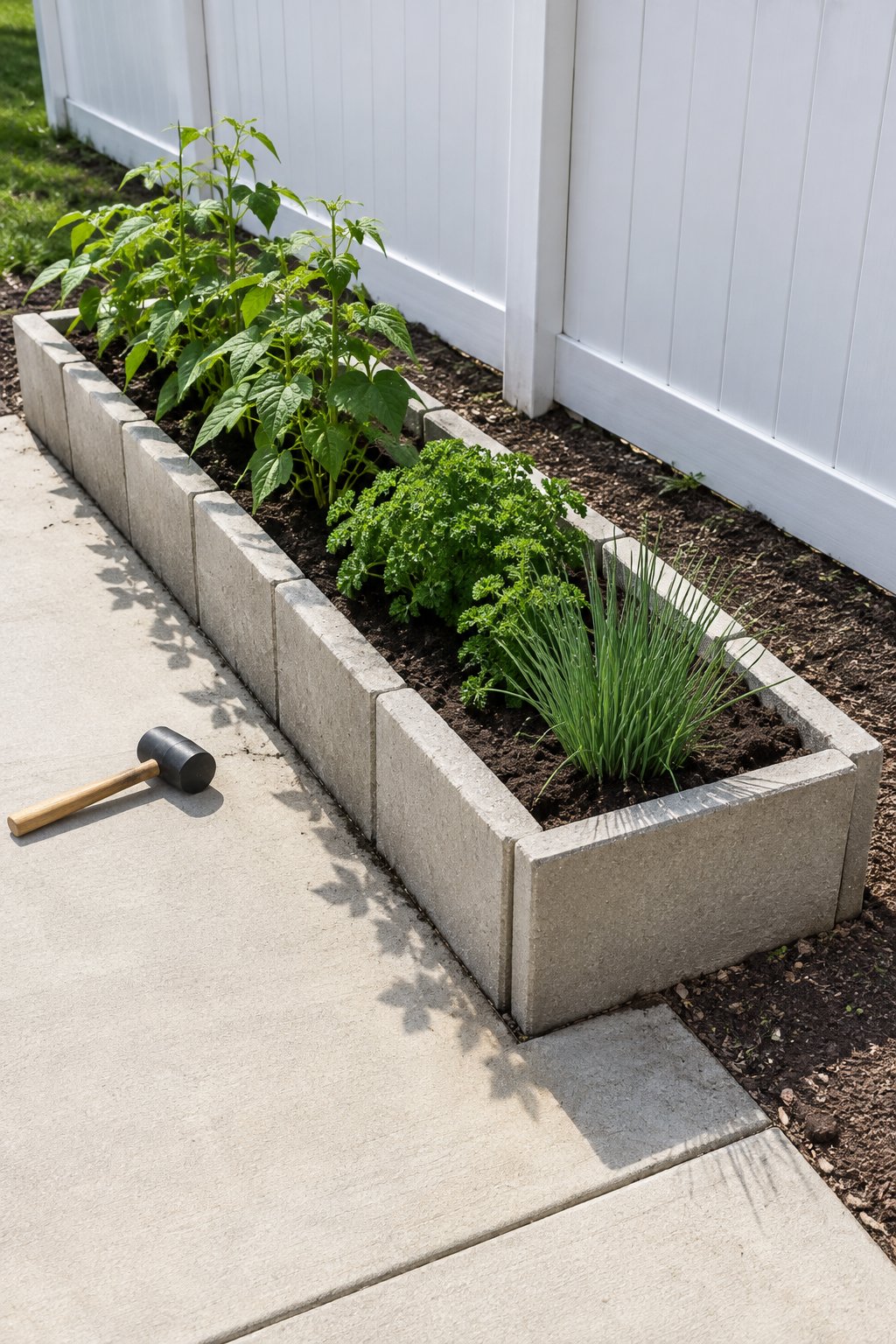
Flat concrete pavers stood upright in a narrow trench make a thin wall that takes almost no room.
Bury the bottom few inches of each paver. That is what keeps it standing.
10. Corrugated Panels in a Light Wood Frame
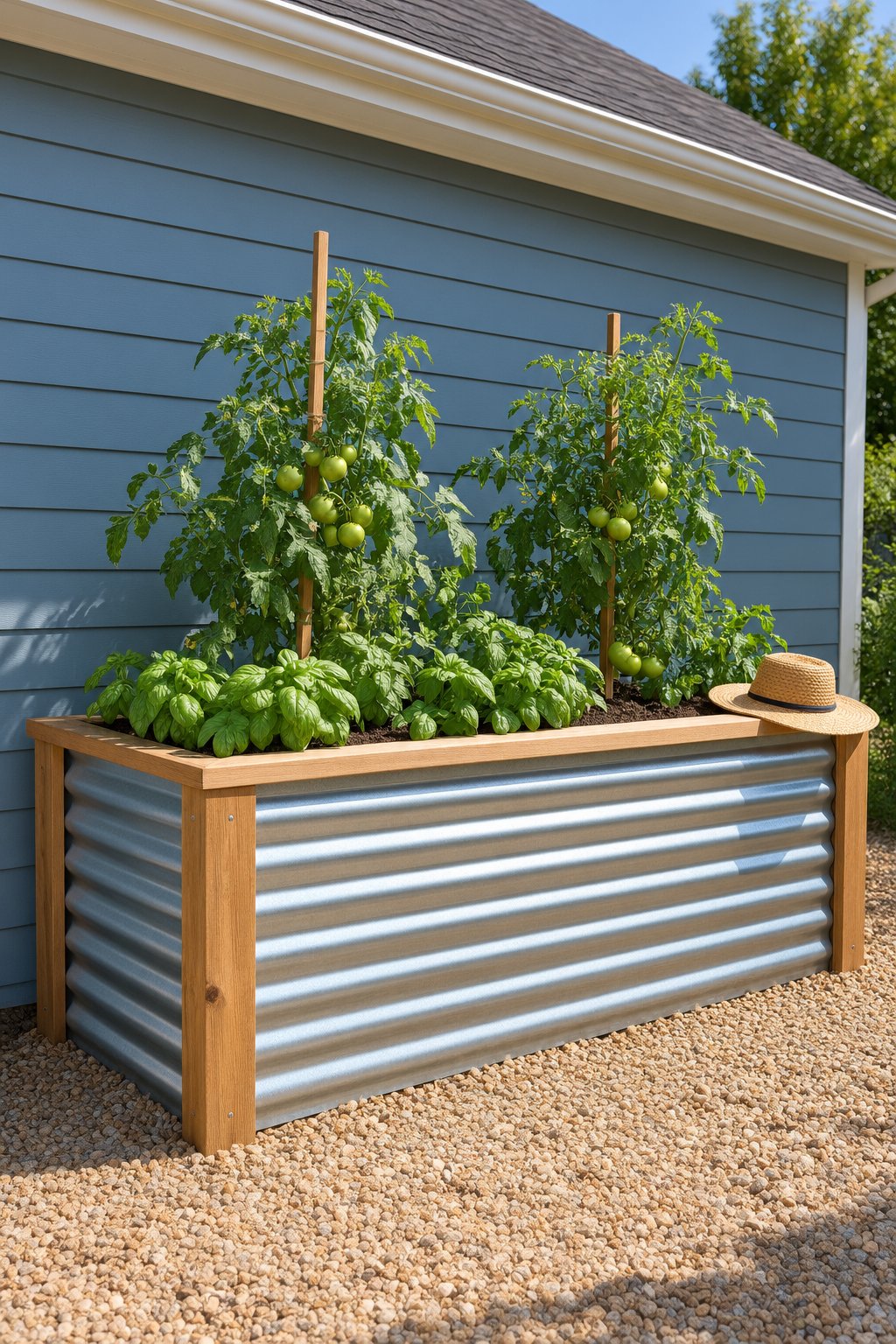
New corrugated metal roofing panels, screwed inside four corner posts, give a tall bed from very little lumber.
It asks for the most tools of any build here: a drill, a saw and tin snips.
11. A Stock Tank With Holes Drilled
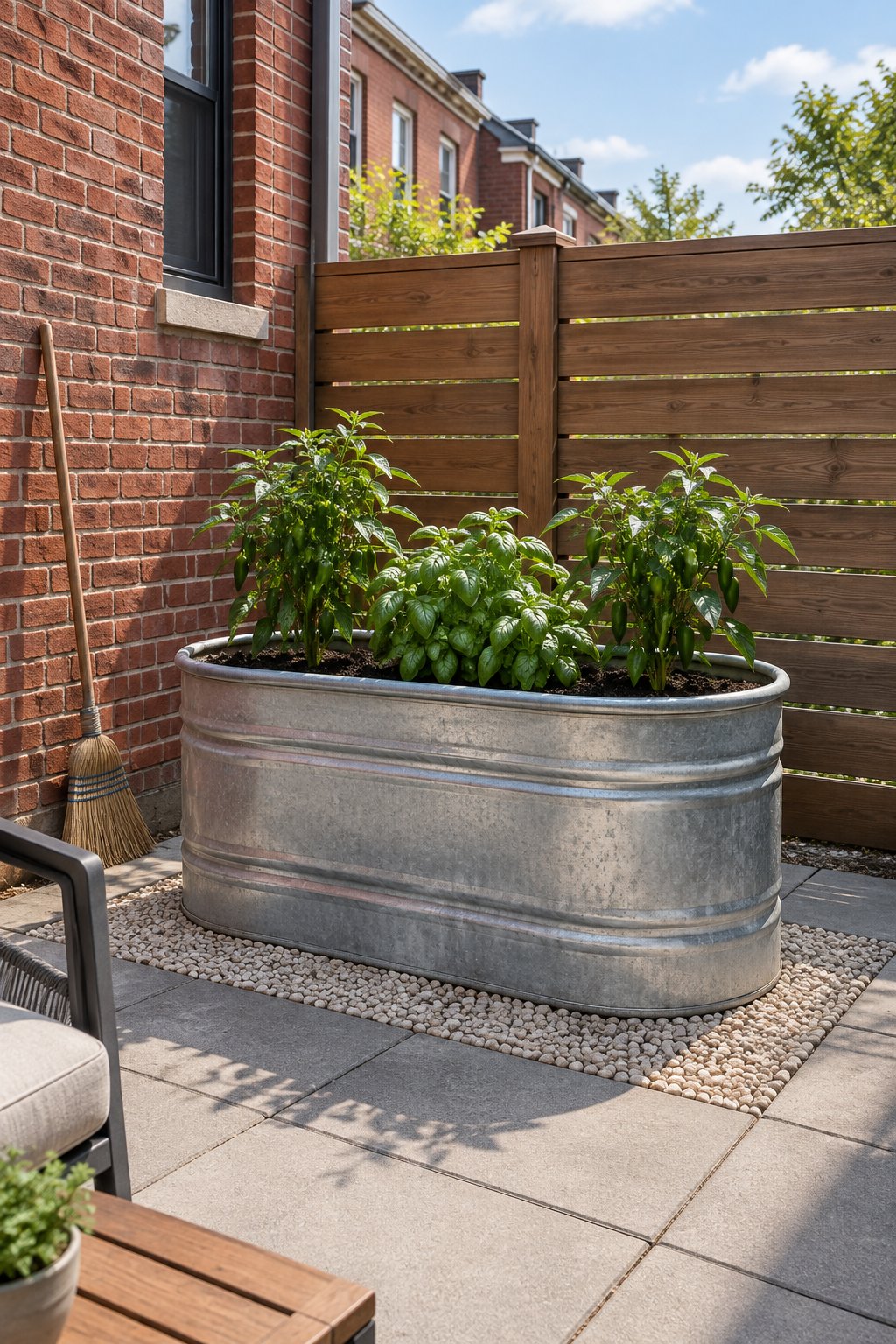
A galvanized stock tank is a raised bed the moment it lands on the ground. No frame, no corners.
It needs drainage holes drilled in the bottom before any soil goes in.
12. Four Logs From a Fallen Limb
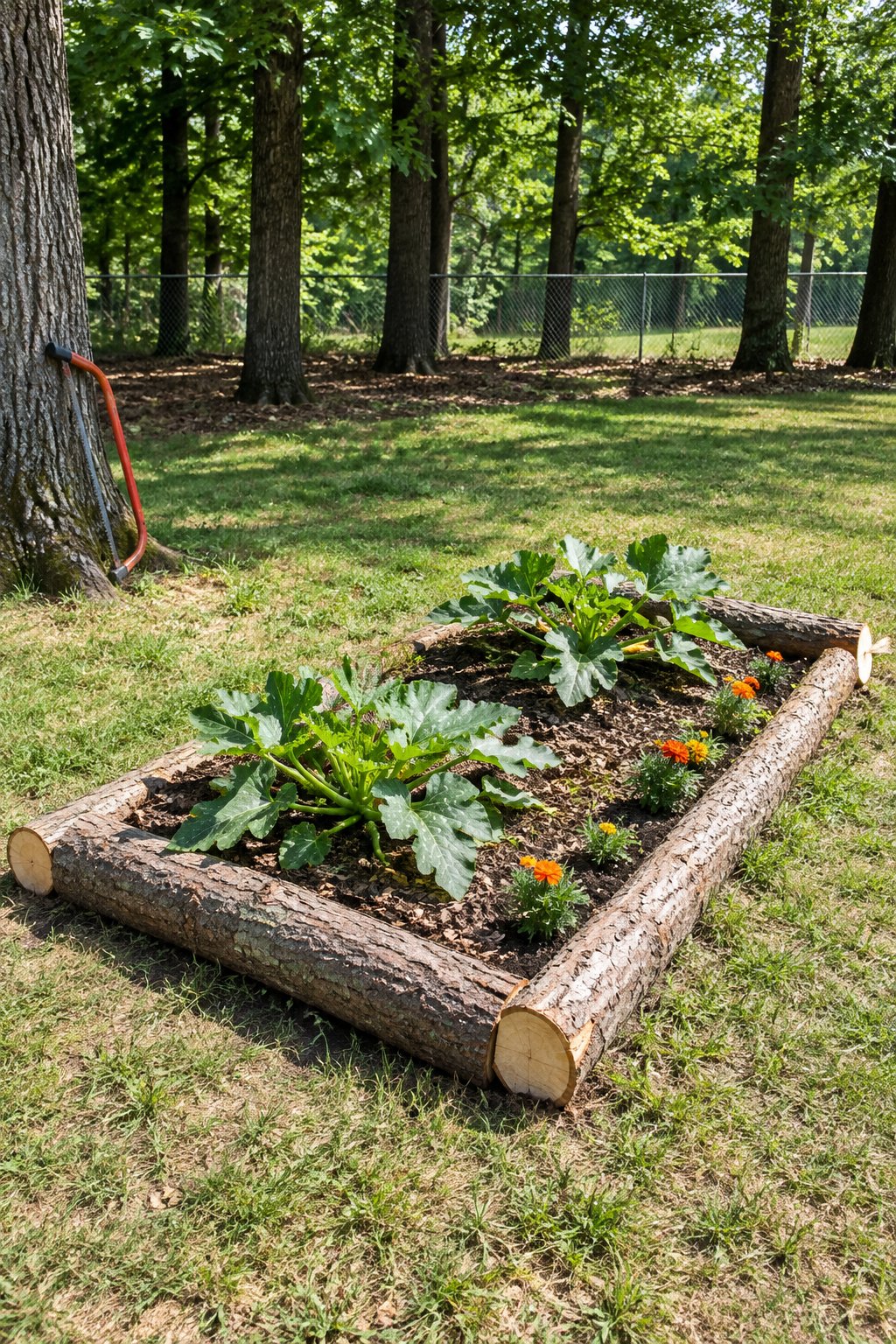
A limb that came down in a storm is a bed wall for free. Lay four straight lengths in a rectangle and push the ends tight together.
It will never look tidy, and I’d be fine with that.
13. Woven Branches Between Stakes
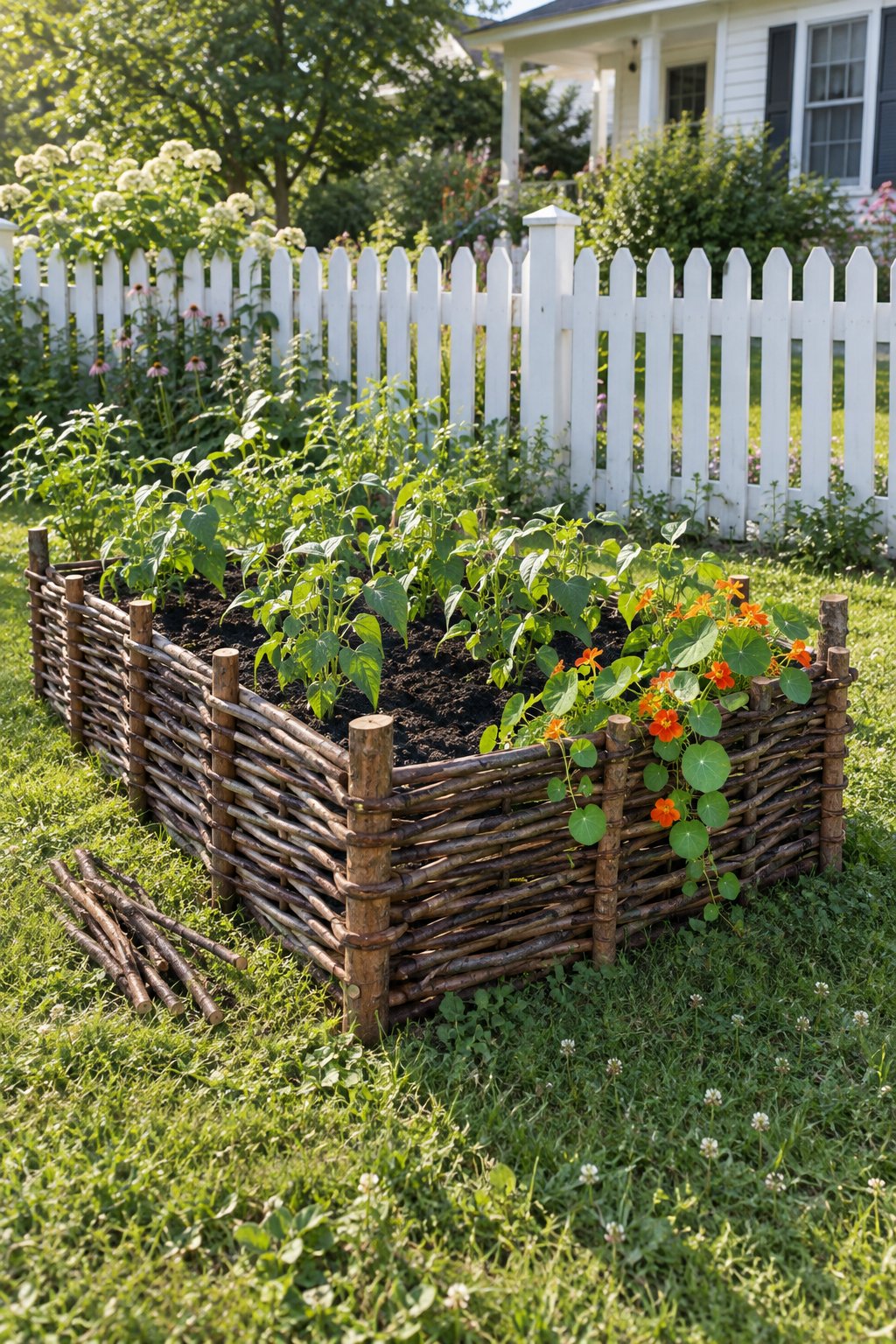
Drive a row of sturdy stakes around the bed, then weave long, flexible branches in and out between them, like a basket.
Fresh prunings bend best, so weave them soon after cutting.
14. The Mounded Bed With No Sides
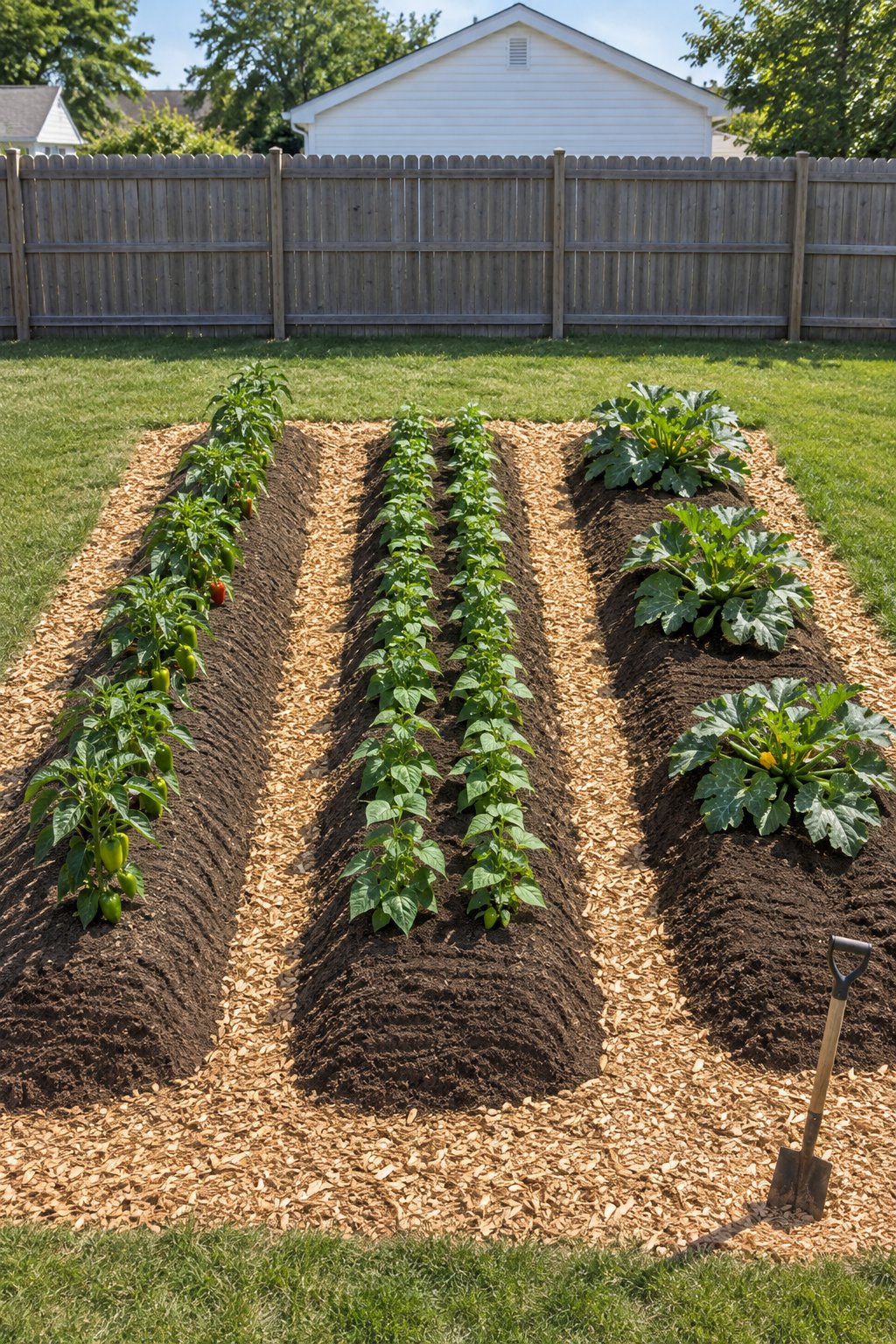
A raised bed does not need walls at all.
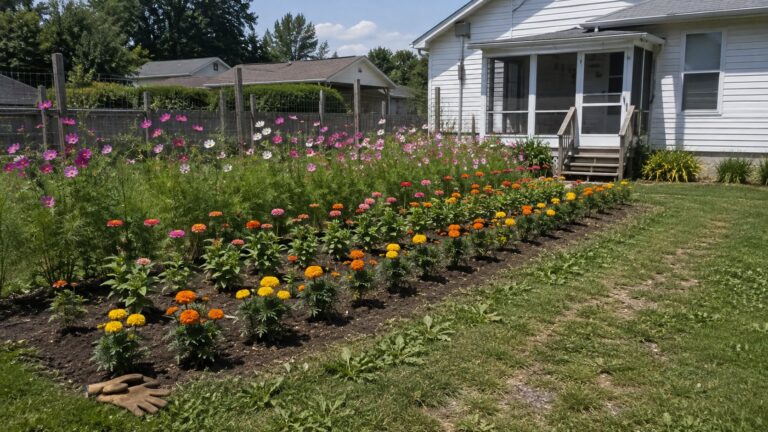
Rake soil and compost into a flat-topped mound, no wider than 4 feet, and mulch the paths around it so the edges hold their shape.
15. A Fabric Bed That Unfolds
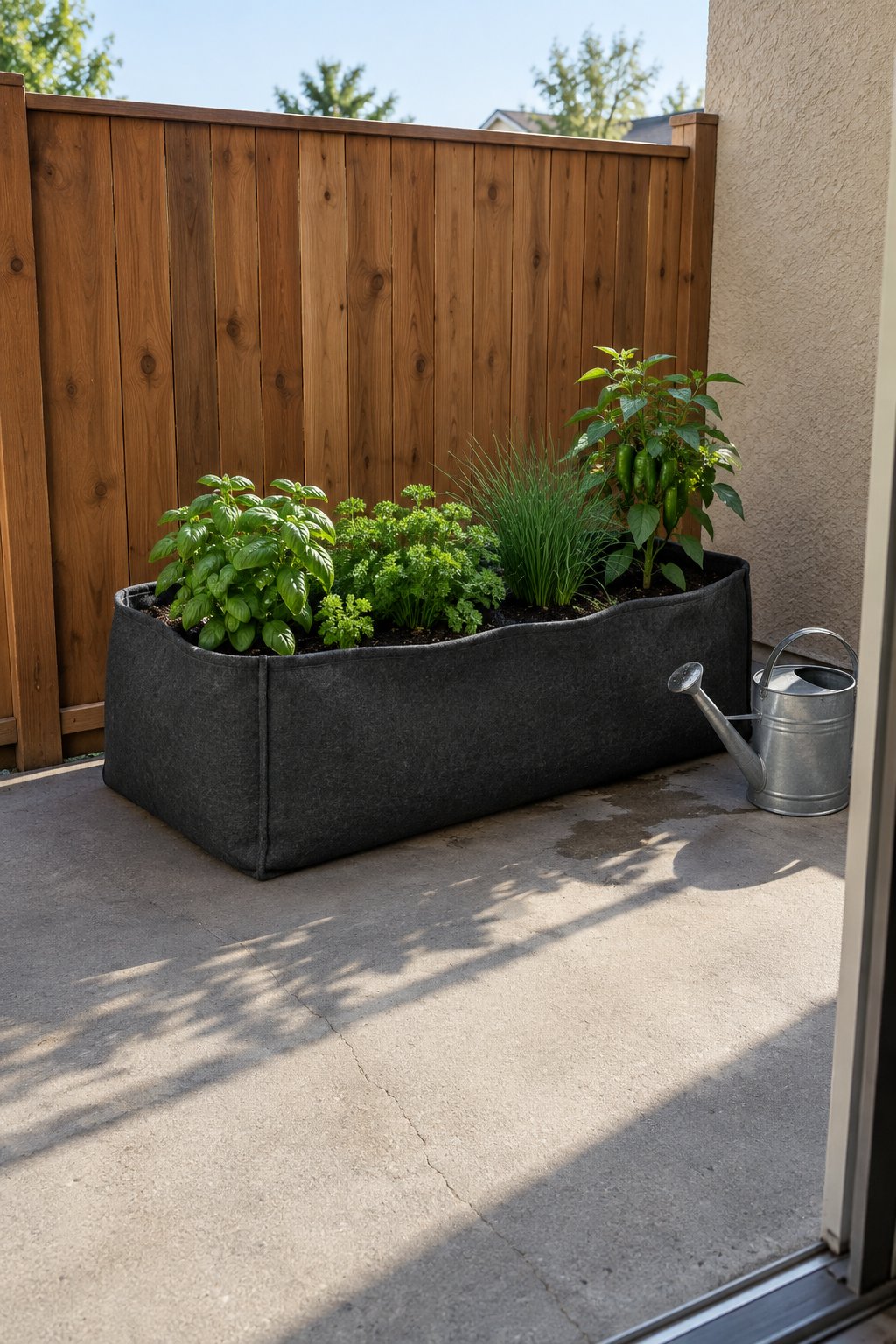
A fabric raised bed unfolds, stands up as you fill it and is ready to plant the same afternoon.
It sits on a patio without marking anything and folds flat when you move, so it suits a rental.
Cheap Raised Bed Materials Compared
Cost is relative, because prices change by region and season. Anything you already own counts as the lowest.
| Material | Cost | How long it lasts | Tools |
|---|---|---|---|
| Untreated pine boards | Low | The shortest of the bought materials; plan to replace it after some seasons | Drill |
| Cedar fence pickets | Low | Longer than pine, because cedar resists rot naturally | Hand saw, drill |
| Pallet slats, logs and woven branches | Lowest | Short; they slowly rot back into the soil | Hand tools |
| Concrete block, brick, stone and pavers | Lowest to low | The longest; they do not rot | Spade, level |
| Corrugated panels and stock tanks | Medium | Long; galvanized steel holds up for many years | Drill, tin snips |
| Soil mound or fabric bed | Lowest to low | A mound is reshaped each spring; fabric wears out sooner than wood | Rake, or none |
6 Cheap Raised Bed Mistakes to Skip
Free wood with an unknown past
Do thisTurn down painted, stained or treated salvage boards when you cannot tell what is on them. For pallets, take only those stamped HT and leave unmarked or MB ones behind.
Thin boards with no stake mid-span
Do thisWet soil pushes long sides outward. Drive a stake at the middle of every long side and screw the boards to it.
A tub or tank with no drainage
Do thisDrill holes in the bottom of any metal tank or tub before you fill it. Water has to be able to leave.
Building wider because the boards were long
Do thisKeep a bed you reach from both sides to 4 feet wide at most, and a bed against a fence or wall to about 2 feet. Cut the boards down.
Squeezing the paths to fit one more bed
Do thisLeave at least 2 feet between beds for walking. Give one path about 3 feet so a wheelbarrow of soil gets through.
Filling the bed with yard soil alone
Do thisMix compost into the soil you fill with. Plain yard soil packs down hard inside a frame.
Plan the Weekend: The Order of Work That Saves a Second Trip
A weekend build goes wrong in the parking lot, not in the yard. Decide the bed’s size at home, with string and a tape measure on the actual spot.
Write down every length, then ask for the boards to be cut where you buy them. Many lumber counters will do it, and the pieces then fit in an ordinary car.
I’d do the ground on Saturday and the building on Sunday.
Lift the turf, rake the spot level and build the frame right where it will stay. A filled bed does not move.
Fill it, water it well and let the soil settle before you plant. For more than one bed, soil delivered in bulk usually costs less than the same amount in bags.
Start with one change: walk your yard and garage and see what you already own. A stack of bricks, a fallen limb or a few spare boards decides the build for you.
If you own nothing, the one-board pine frame is the easy raised garden bed to begin with. Build one, grow in it for a season, then add a second.
Frequently Asked Questions
What is the cheapest way to build a raised garden bed?
A mounded bed with no sides, because you only pay for soil and compost. Next come materials you already have, such as logs, stones or leftover bricks, and the cheapest bought option is a frame of untreated pine boards.
Are raised garden beds out of pallets safe?
Use only pallets stamped HT, which means the wood was heat treated. Skip unmarked pallets, any stamped MB, and any with paint, stains or spills.
How wide should I build a raised garden bed?
At most 4 feet if you can reach it from both sides. Against a fence or wall, where you reach from one side only, keep it to about 2 feet.
Which cheap raised bed works for a rental or a small space?
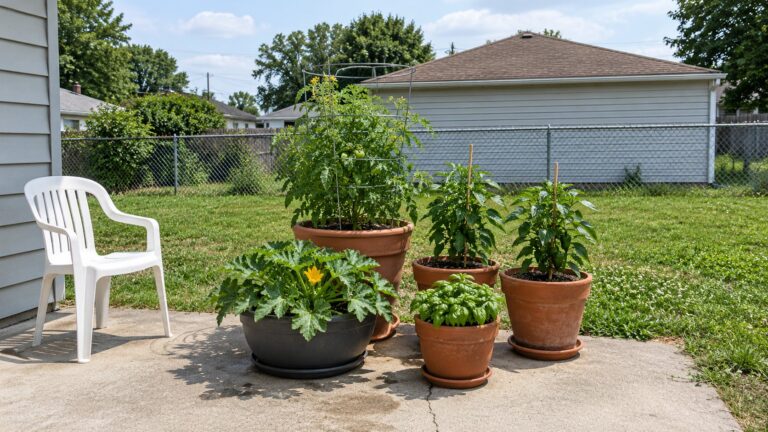
A fabric bed or a stock tank, because both sit on an existing patio with no digging and can move with you. Ask your landlord before you lift turf or fix anything to a fence.
How long does an untreated wood raised bed last?
Untreated pine is the shortest-lived choice, so plan on replacing it after some seasons. Cedar lasts longer because it resists rot naturally, and block, brick and stone do not rot at all.
Save This For Later
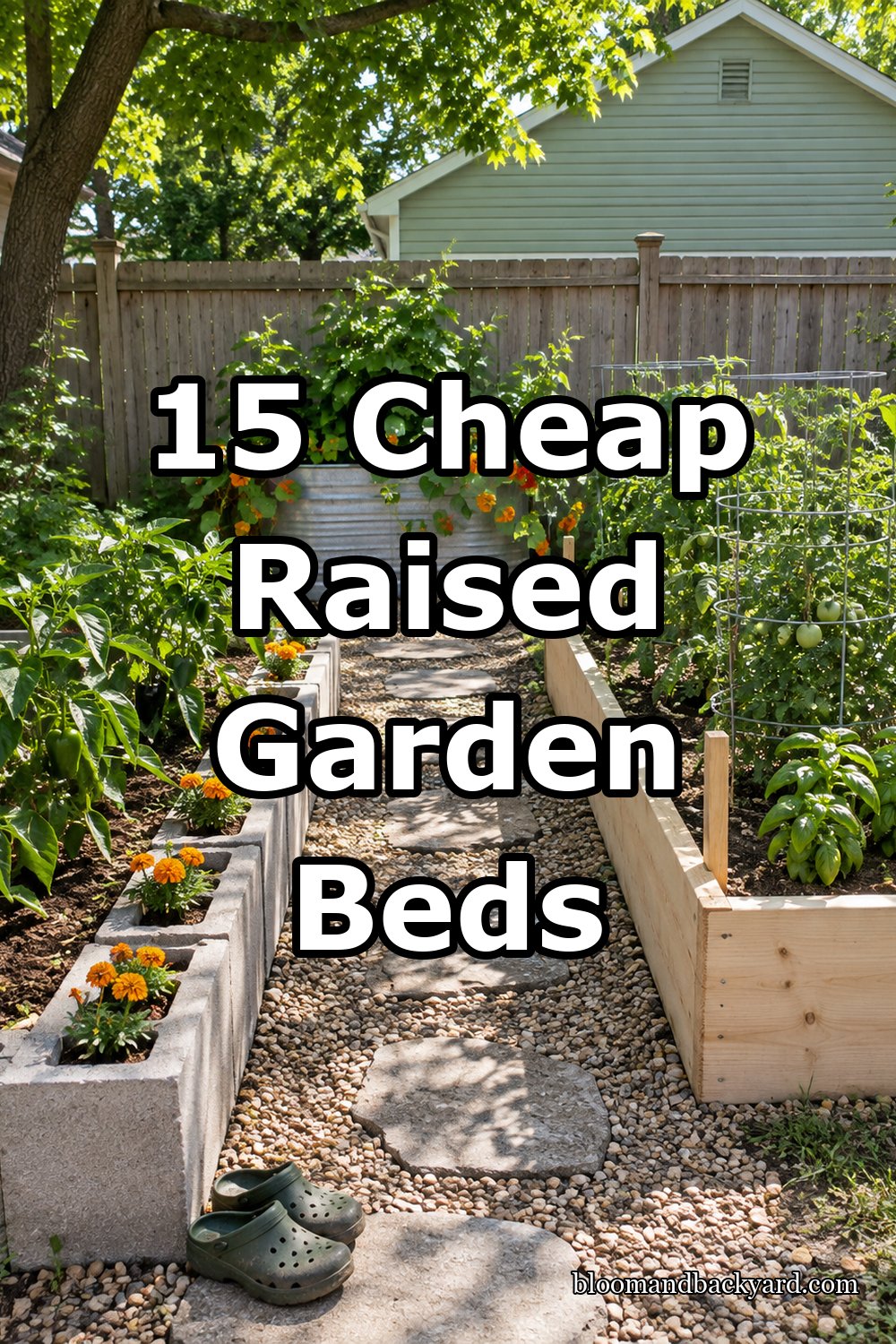
Loved cheap raised garden beds? Save this pin to your Pinterest board now so you can find it again anytime you need the inspiration.