18 Small Vegetable Garden Ideas for a Corner of the Yard
Small vegetable garden ideas start with one question: which corner of the yard gets six hours or more of direct sun?
These 18 are sorted by spot, from a fence corner to the front walk.
Every entry gives you the place, the kind of bed and the crops to plant in it.
Where is your spare patch of ground?
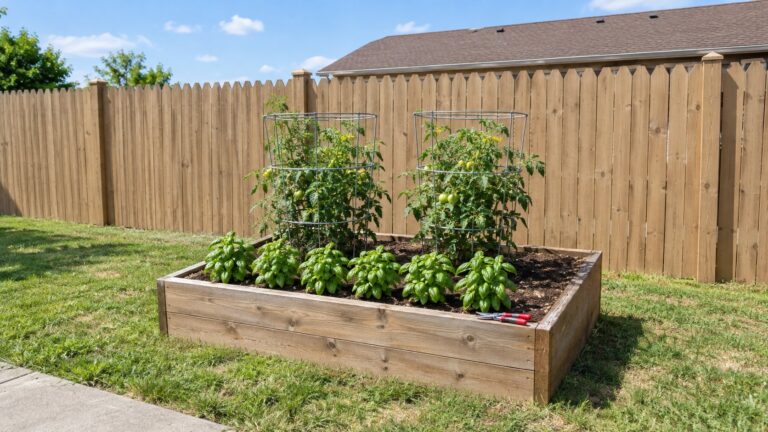
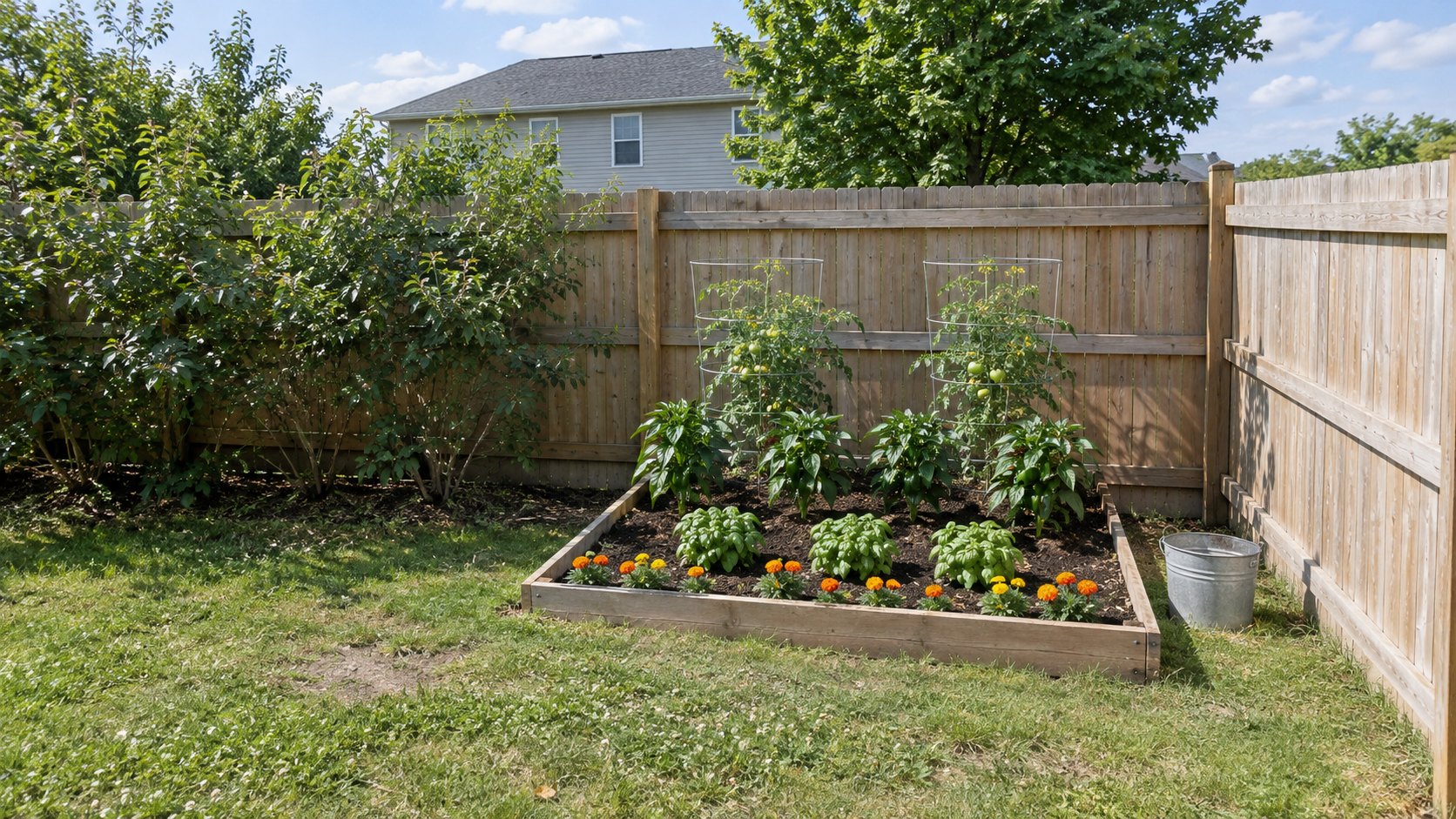
1. A Fence-Corner Triangle Planted With Tomatoes, Basil and Marigolds
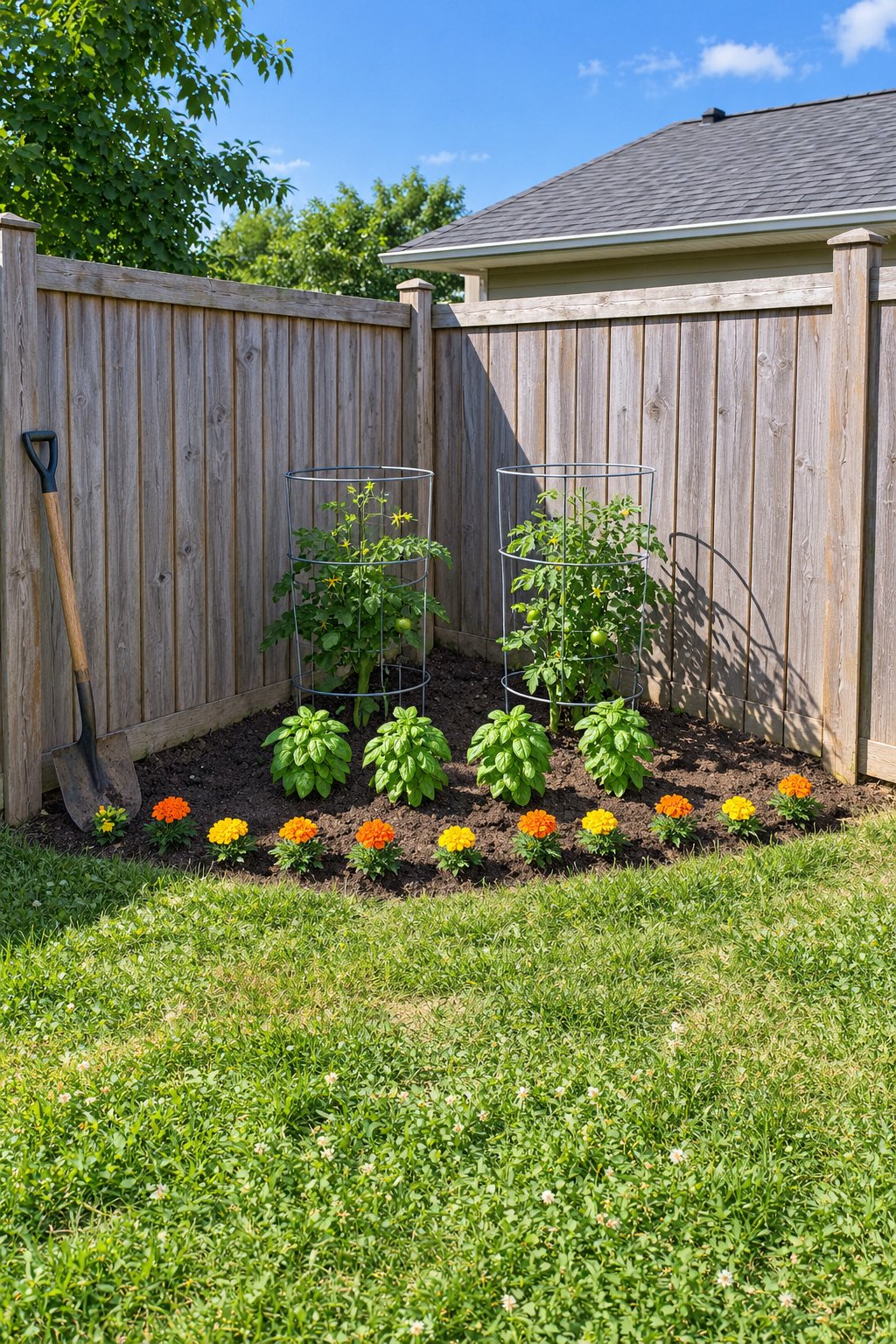
A fence corner is the easiest ground to give up, as long as it gets six hours or more of direct sun. Cut a triangle bed into it and cage two tomatoes at the back.
Basil fills the middle and marigolds line the front edge.
2. A Lawn Square With a Cane Teepee Planted With Pole Beans and Peppers
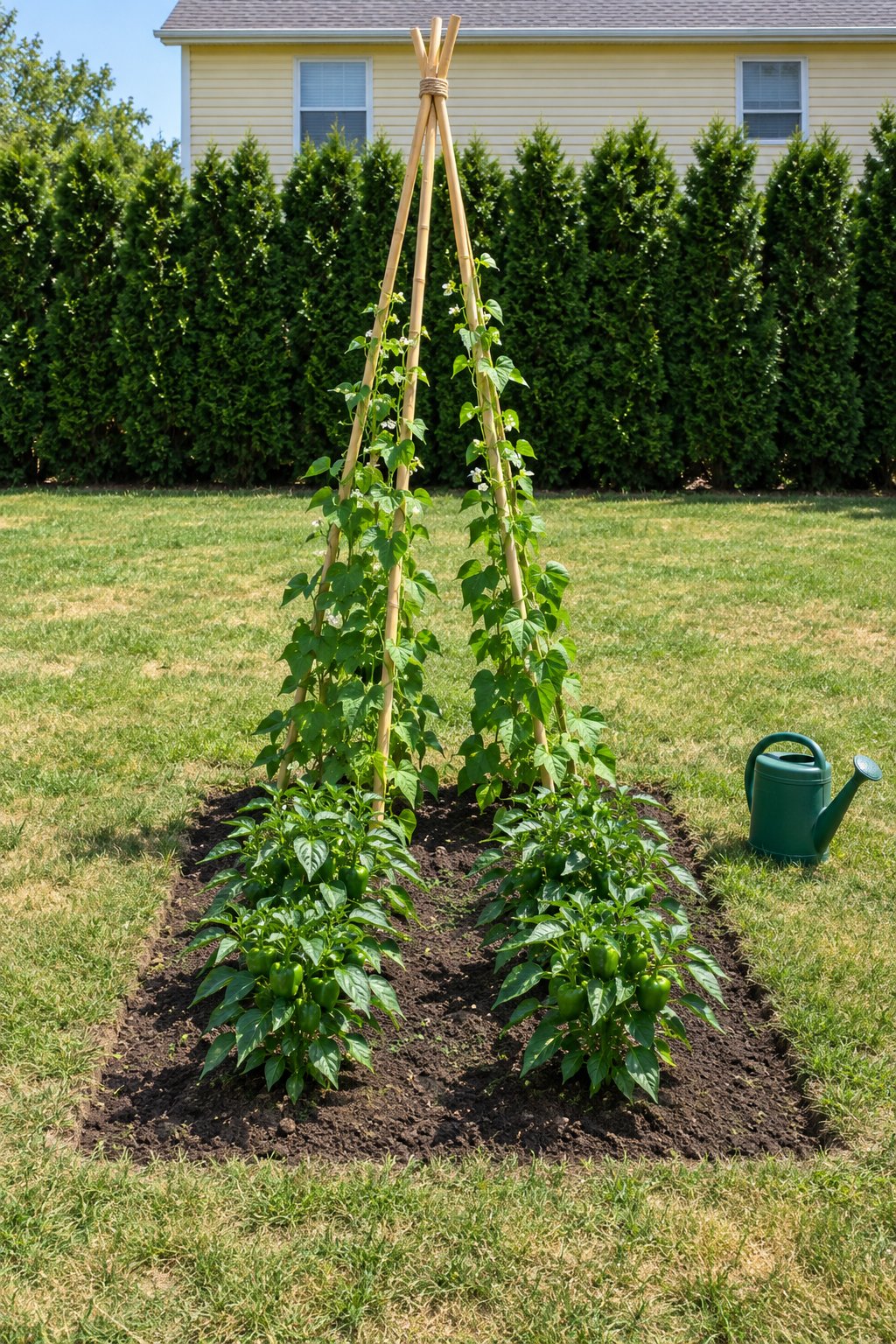
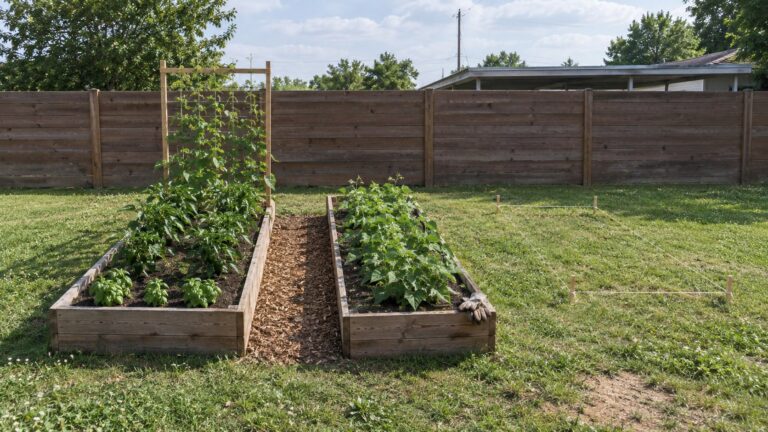
A bed you can reach from both sides can be up to 4 feet wide, and a square that size fits most lawns. Stand a cane teepee on its north side for pole beans.
Peppers take the south half, out of its shadow for most of the day.
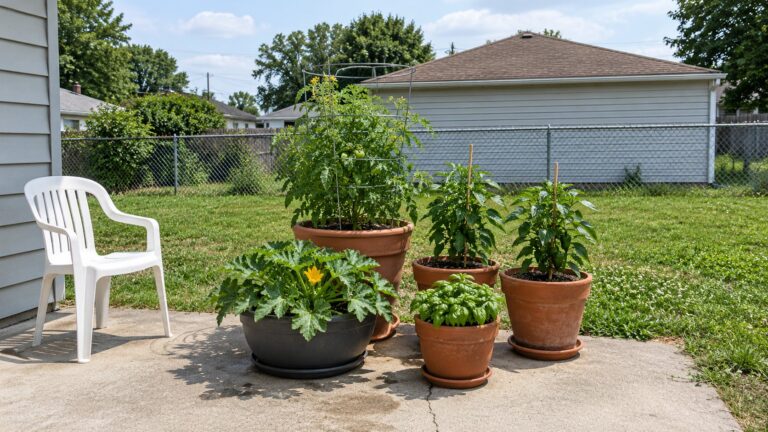
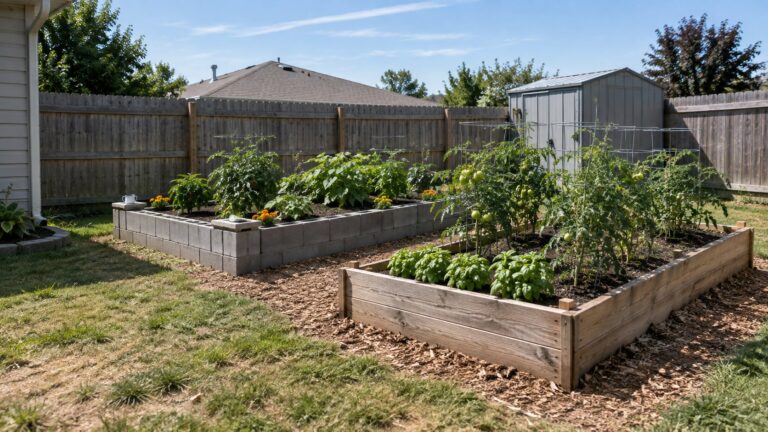
3. One Raised Bed and Two Big Pots Planted With Peppers, Bush Beans and Tomatoes
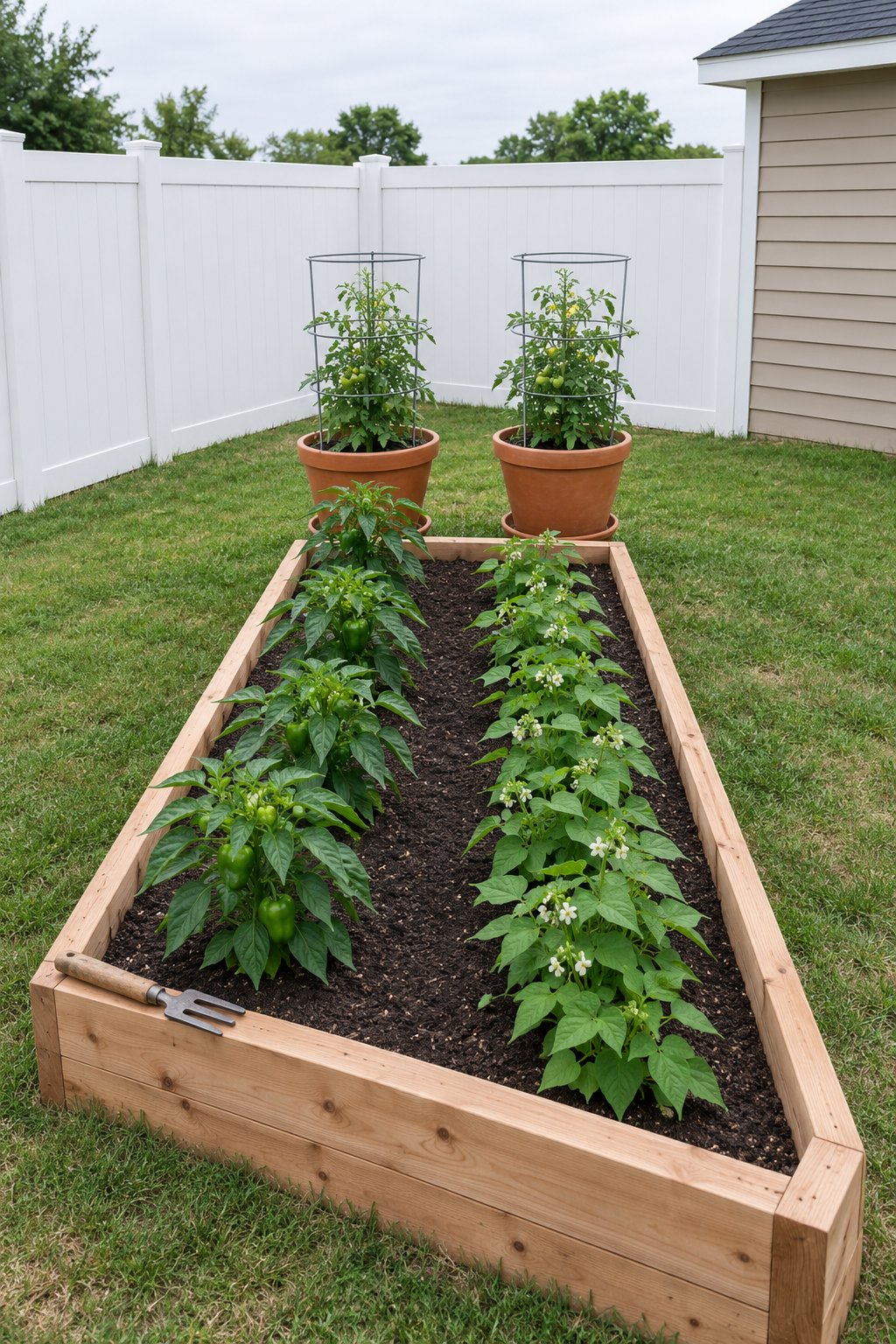
Tomatoes are the crop that outgrows a small bed, so I move them out of it. Two pots of at least 10 gallons each stand at the bed’s north end, one caged tomato apiece.
That leaves the raised bed for peppers and bush beans.
4. A Mulched Corner Mound Planted With One Zucchini and Nasturtiums
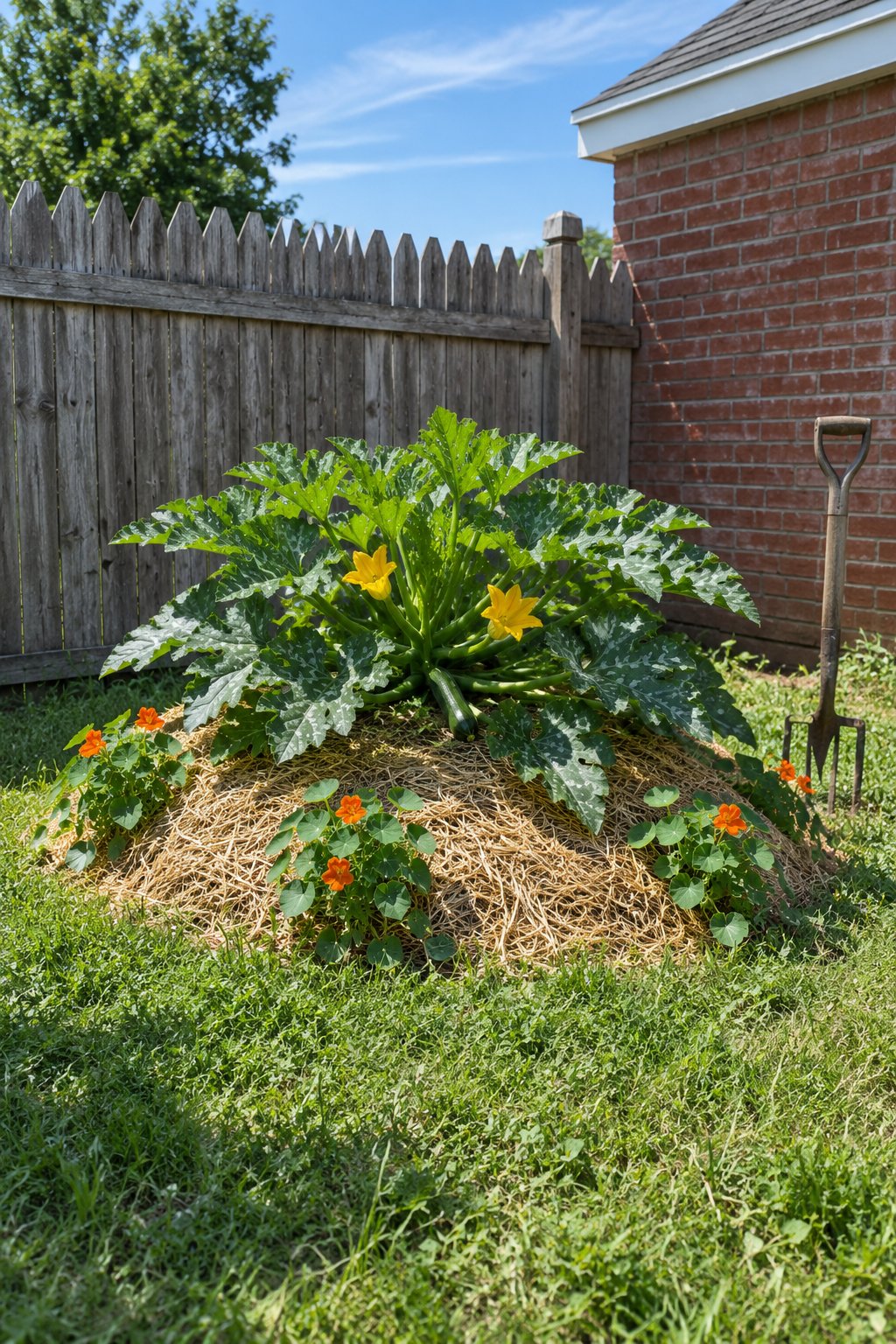
Zucchini wants room more than anything, so give one plant a corner to itself. Rake the soil into a low, wide mound, set the plant on top and mulch around it.
Nasturtiums can trail down the sides.
5. A Chain-Link Fence Strip Planted With Cucumbers and Bush Beans
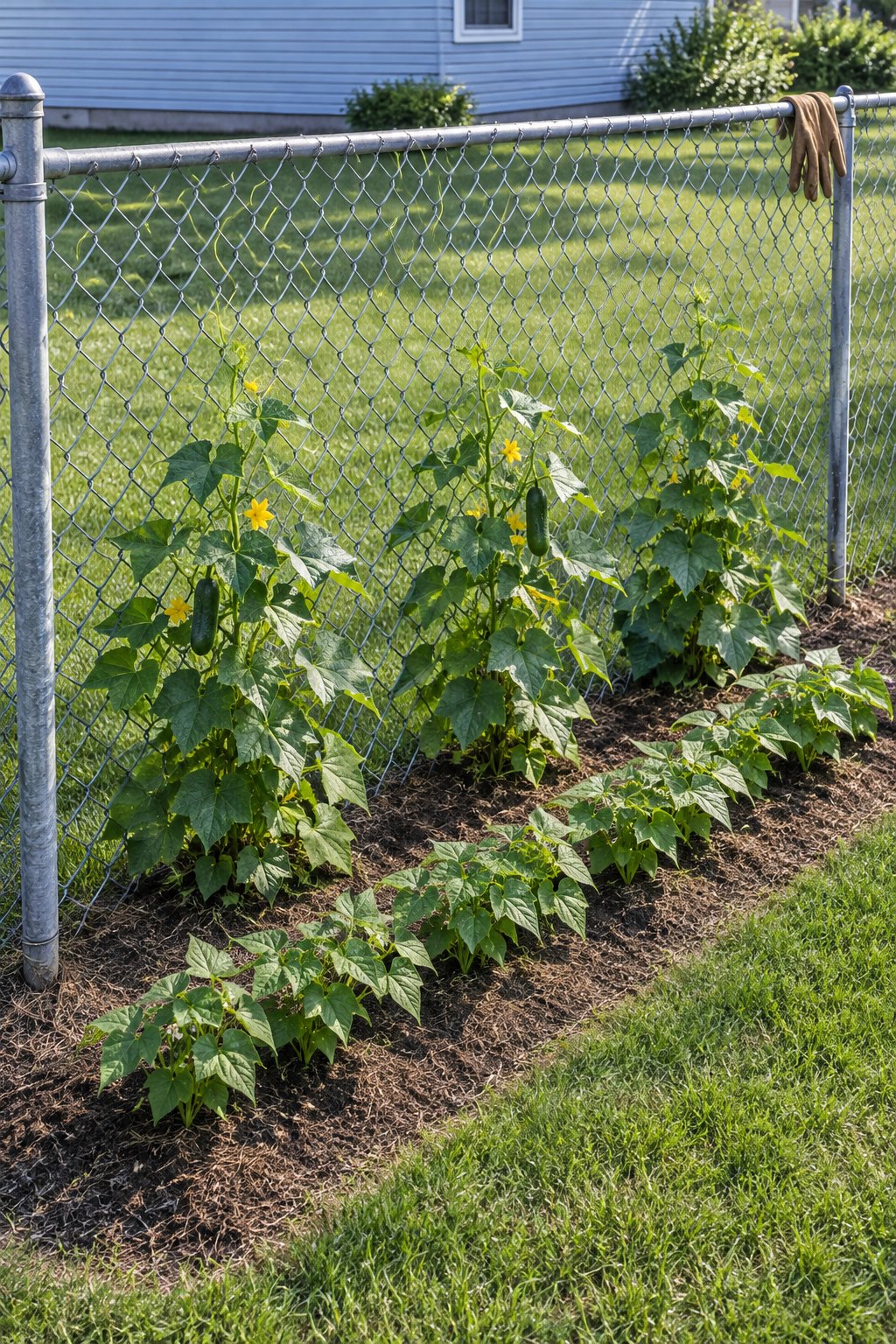
Chain-link is a trellis you already own. Dig a bed about 2 feet deep along its sunny side and let cucumber vines climb the mesh, with a row of bush beans in front.
Call 811 before you dig, and ask first if the fence is shared.
6. A Shed-Wall String Trellis Planted With Pole Beans and Parsley
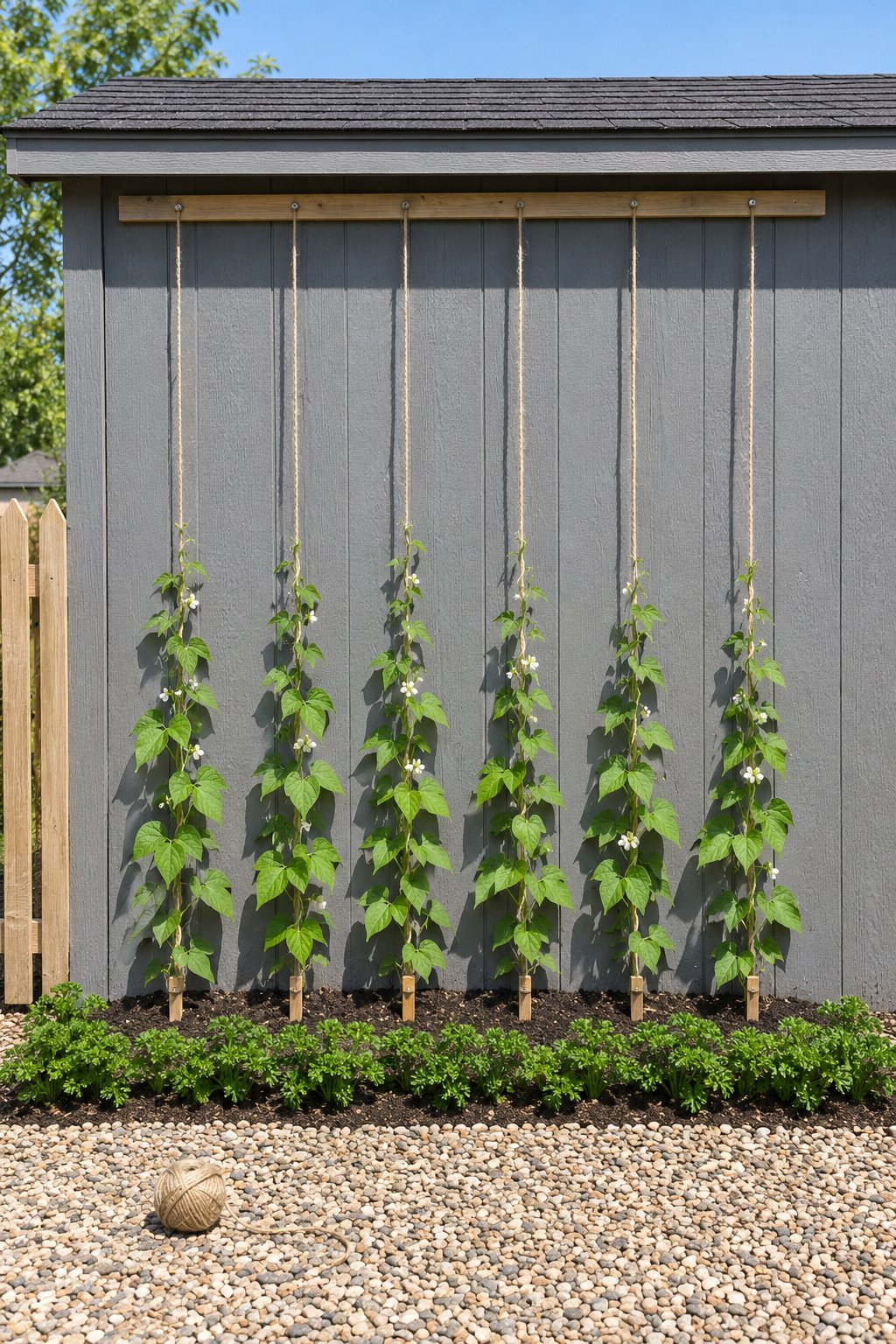
Pole beans twine up string, so a sunny shed wall can carry a crop without a built trellis. Fix a batten under the eave, run strings down to pegs in a narrow bed and sow beans at the foot of each.
Parsley edges the front.
7. A Leaning Wire Panel Planted With Cucumbers Over Lettuce
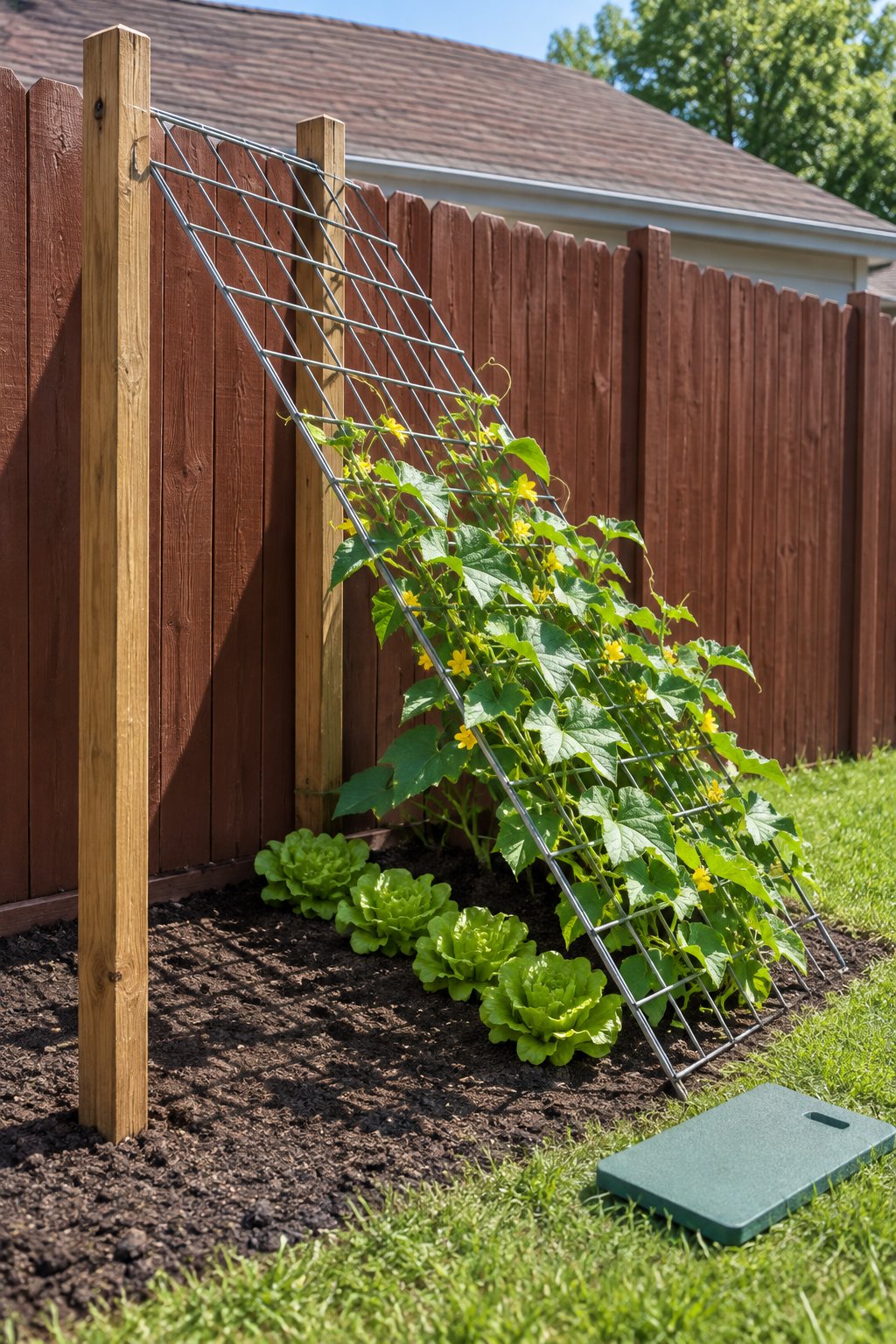
A rigid wire panel leaned on two stout stakes makes two growing spaces from one. Cucumbers climb the sunny face.
Lettuce goes in the shade underneath in spring and again toward fall, because it is a cool-season crop.
8. A Step-Side Raised Bed Planted With Peppers, Basil and Chives
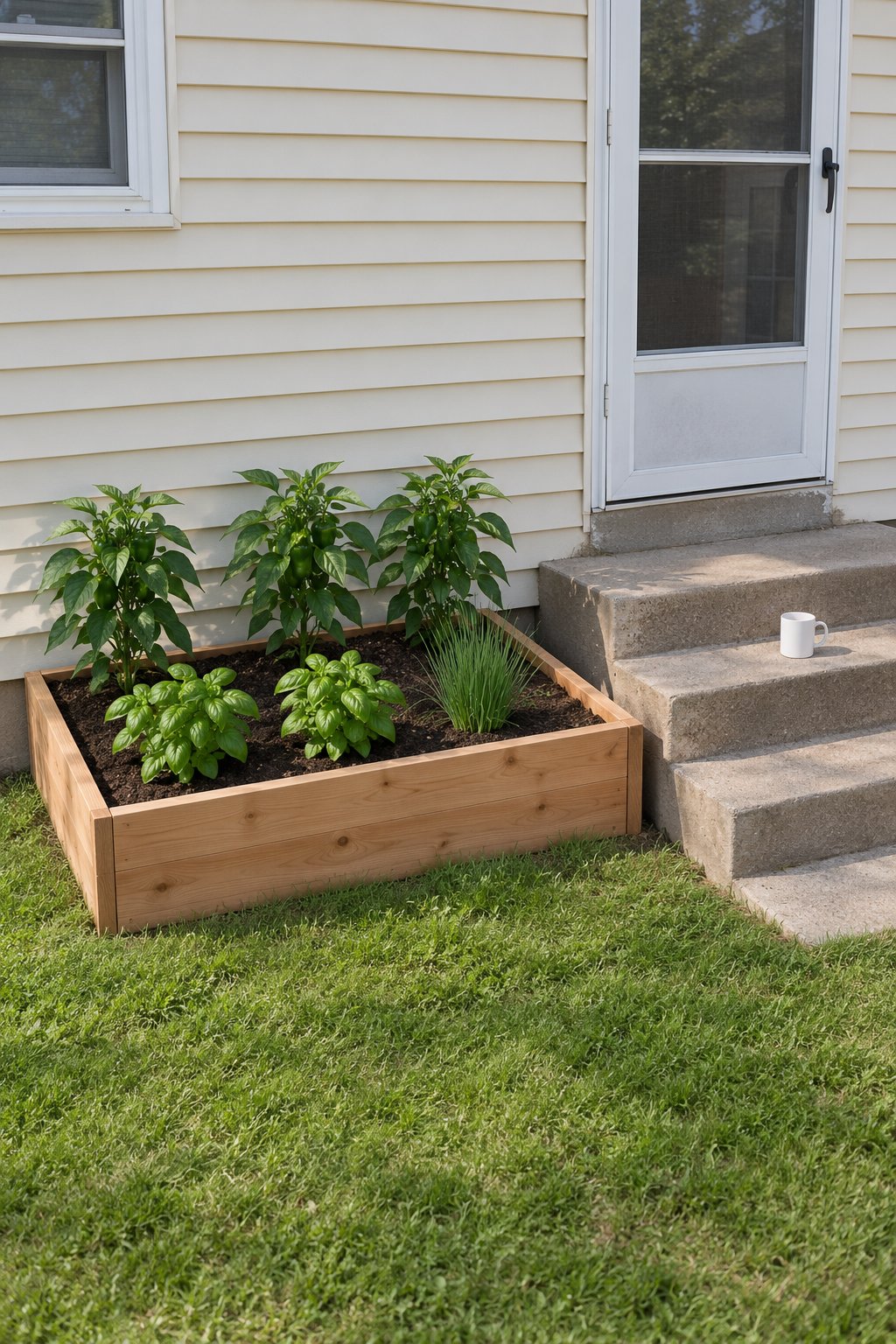
The bed you pass ten times a day is the one that gets watered. Build one small raised bed beside the back steps, in full sun, with peppers at the back and basil and chives in front.
Raised beds dry out faster than open ground.
9. A House-Wall Strip With Stepping Stones Planted With Eggplant and Basil
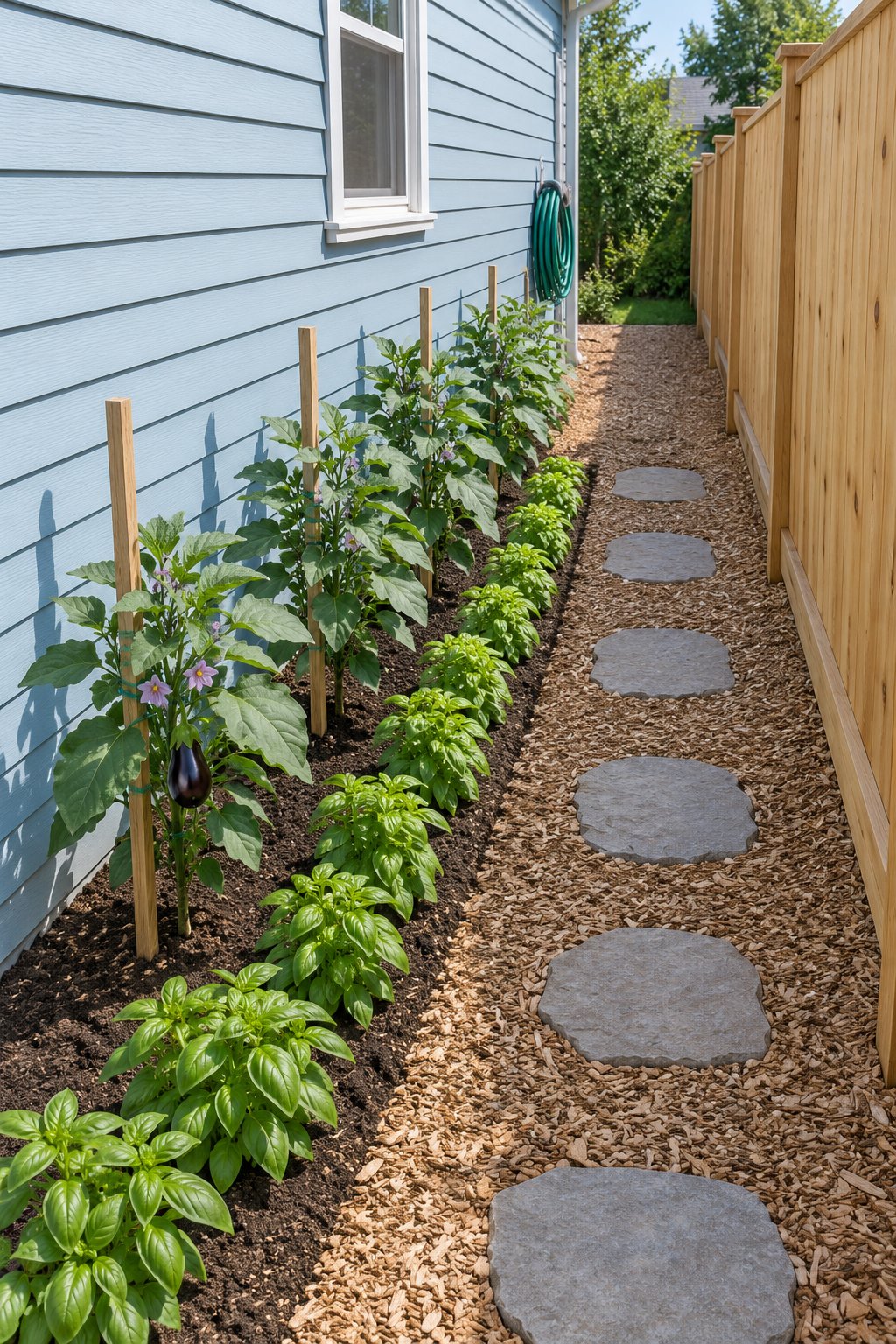
A side yard grows food only where the sun reaches, so count the hours first. If one wall gets six or more, dig a strip about 2 feet deep along it and lay stepping stones beside it.
Eggplant goes at the back, basil in front.
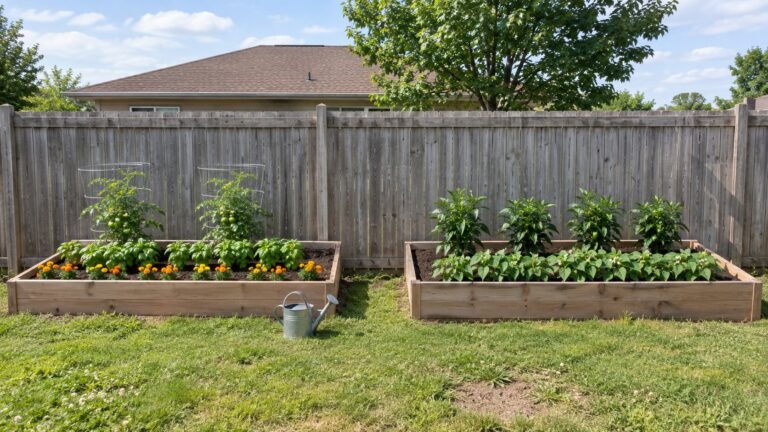
10. A Single Staked Row Planted With Three Tomatoes and Marigolds
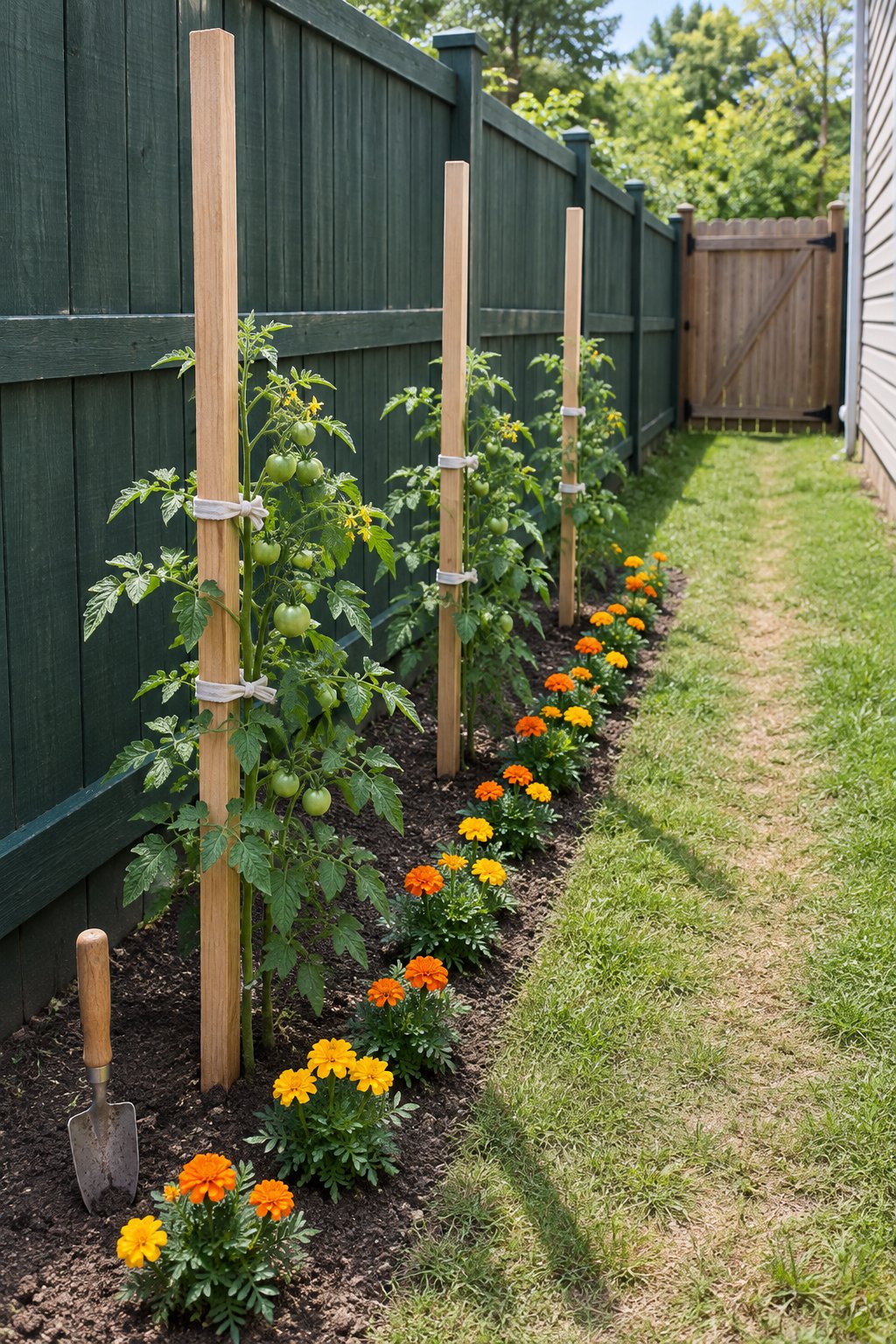
Three tomatoes in a line need less width than any bed. Plant them along the sunny side fence, each tied to its own tall stake, and edge the row with marigolds.
Air and light reach every plant, because nothing stands behind another.
11. A Cross Bed at the Side Yard’s End Planted With Bush Beans and Peppers
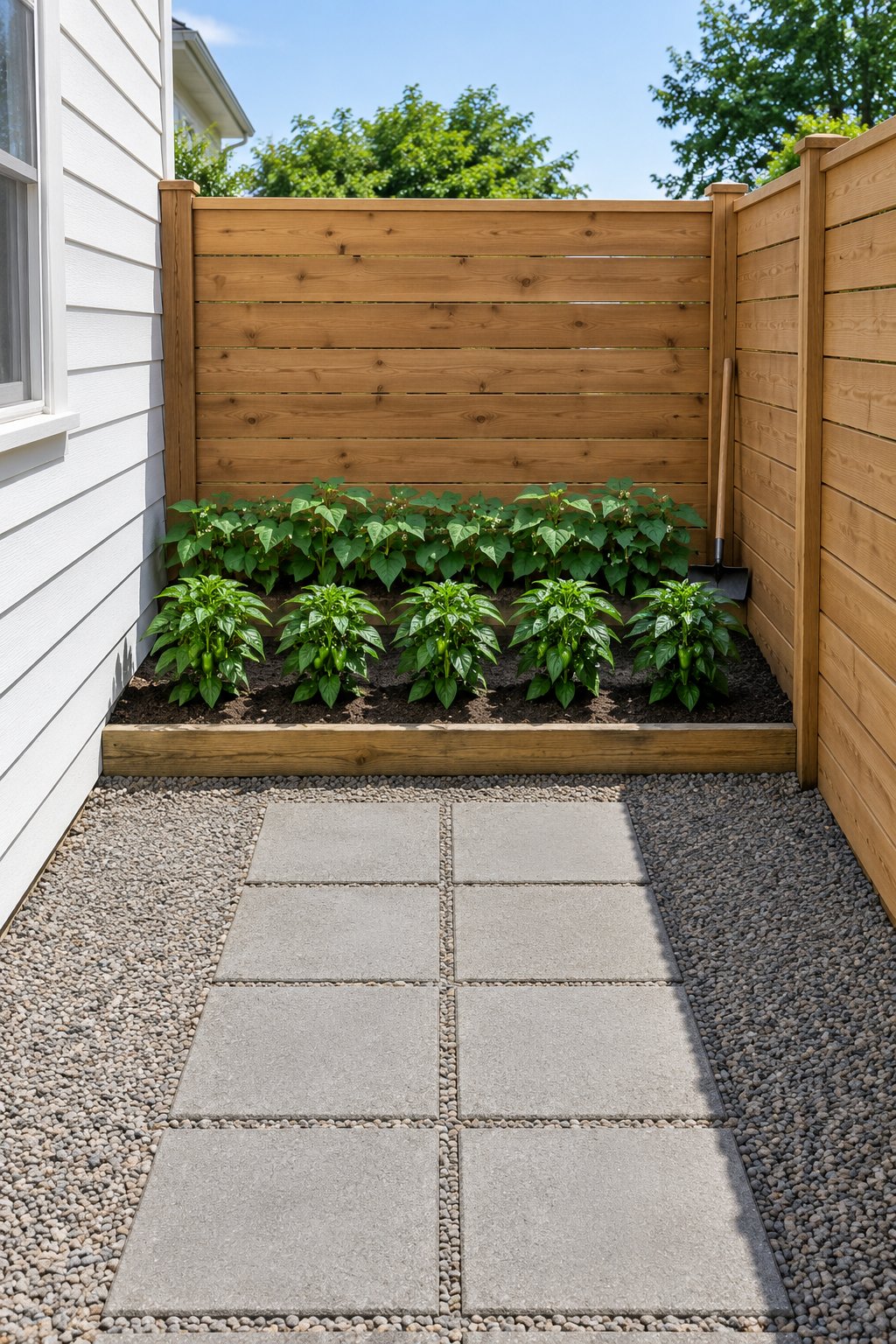
The closed end of a side yard is ground nobody walks on. Run one bed across it, wall to fence, and keep it about 2 feet deep so you reach the back from the front.
Bush beans fill the back row and peppers the front.
12. A Brick-Edged Front Walk Bed Planted With Peppers, Parsley and Marigolds
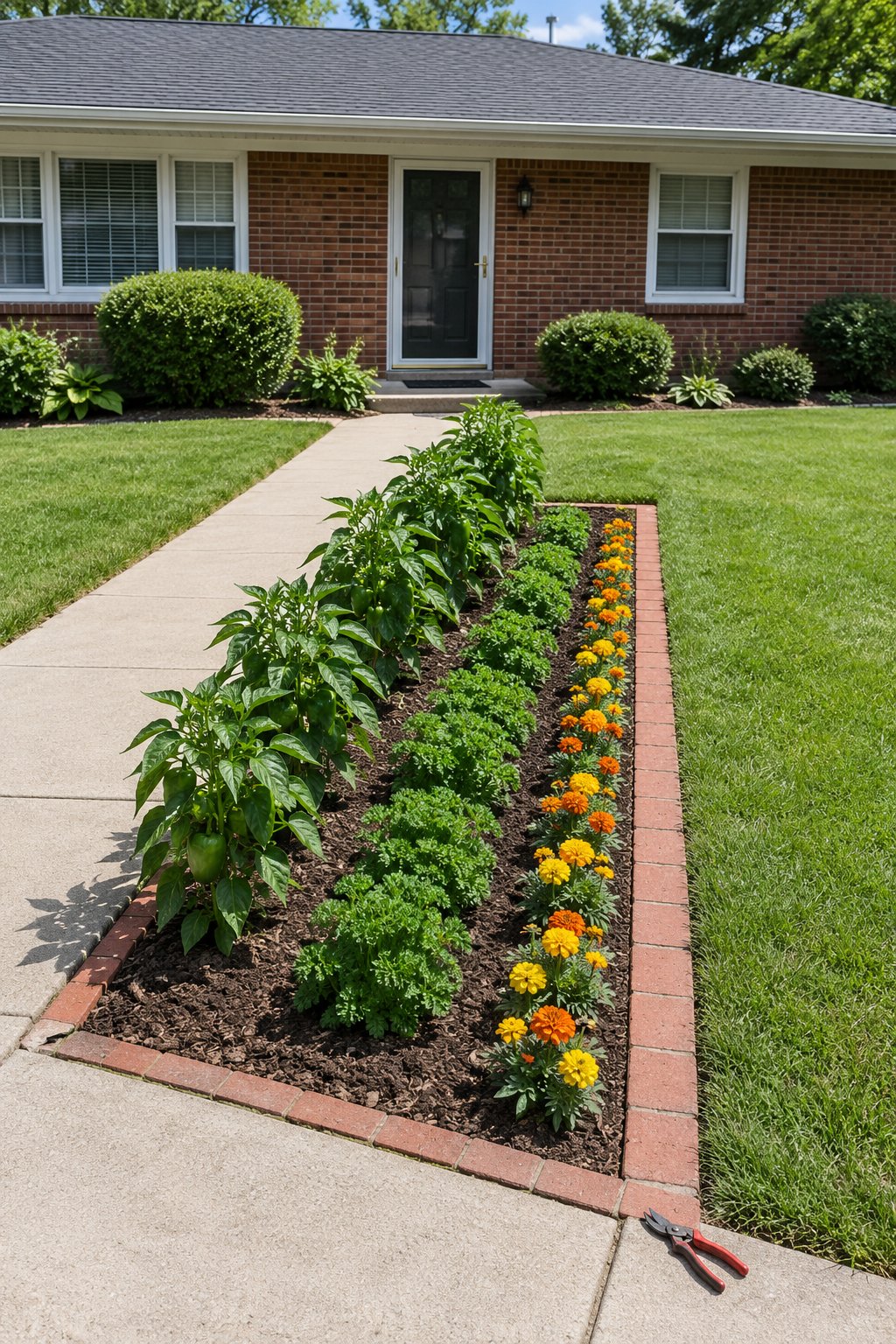
Out front, the edge does the persuading. Lay a flat brick border around a bed beside the front walk, then plant in rows: peppers behind, parsley in the middle, marigolds along the brick.
Check HOA and local rules before growing vegetables in a front yard.
13. A Picket-Edged Square Planted With One Tomato, Basil and Nasturtiums
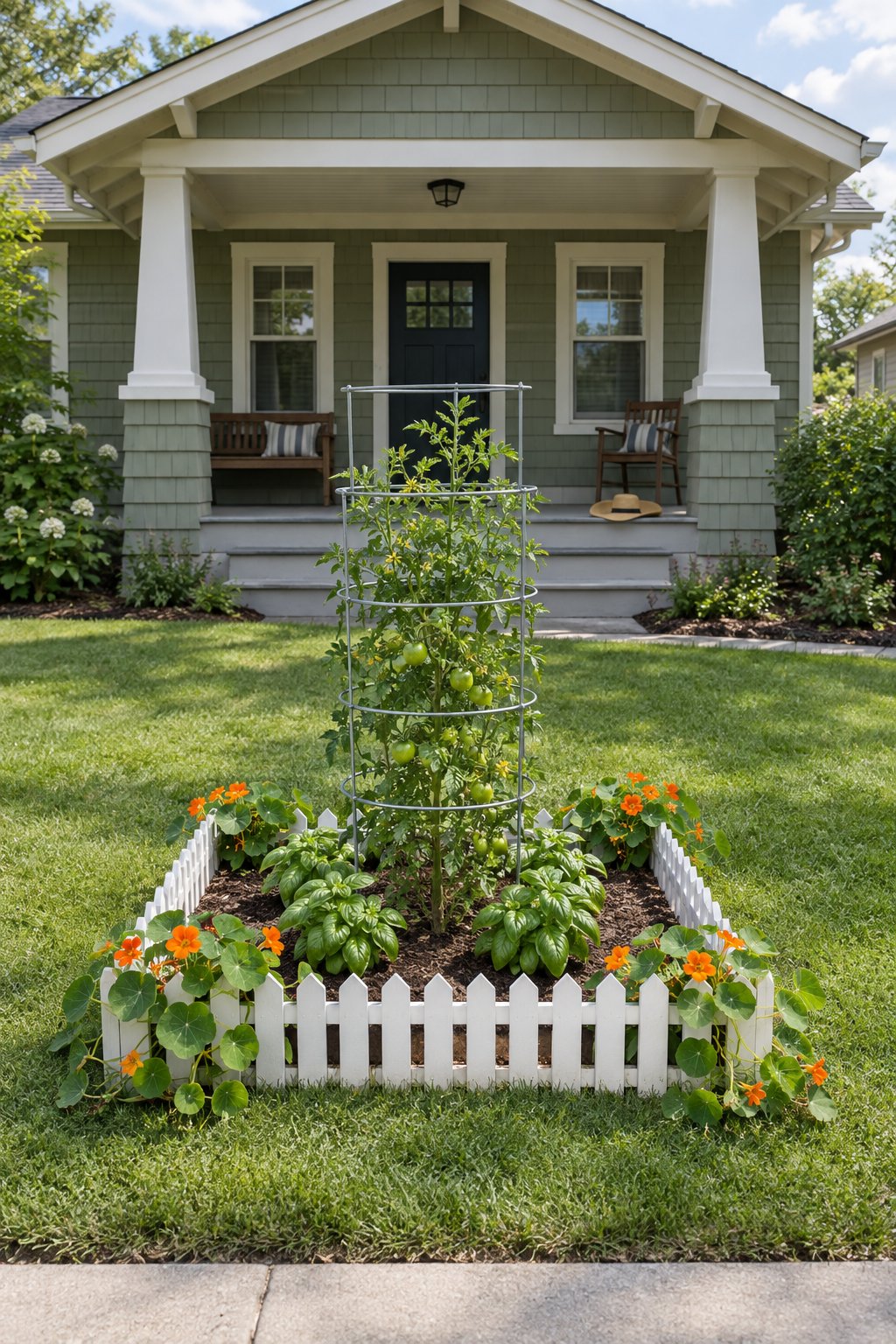
One tomato in a tall cage gives a front bed the height a shrub would. Center it in a small square edged with a low picket border, and plant basil around its feet.
Nasturtiums can spill over the pickets.
14. A Porch-Front Flower Border Planted With Eggplant, Chives and Marigolds
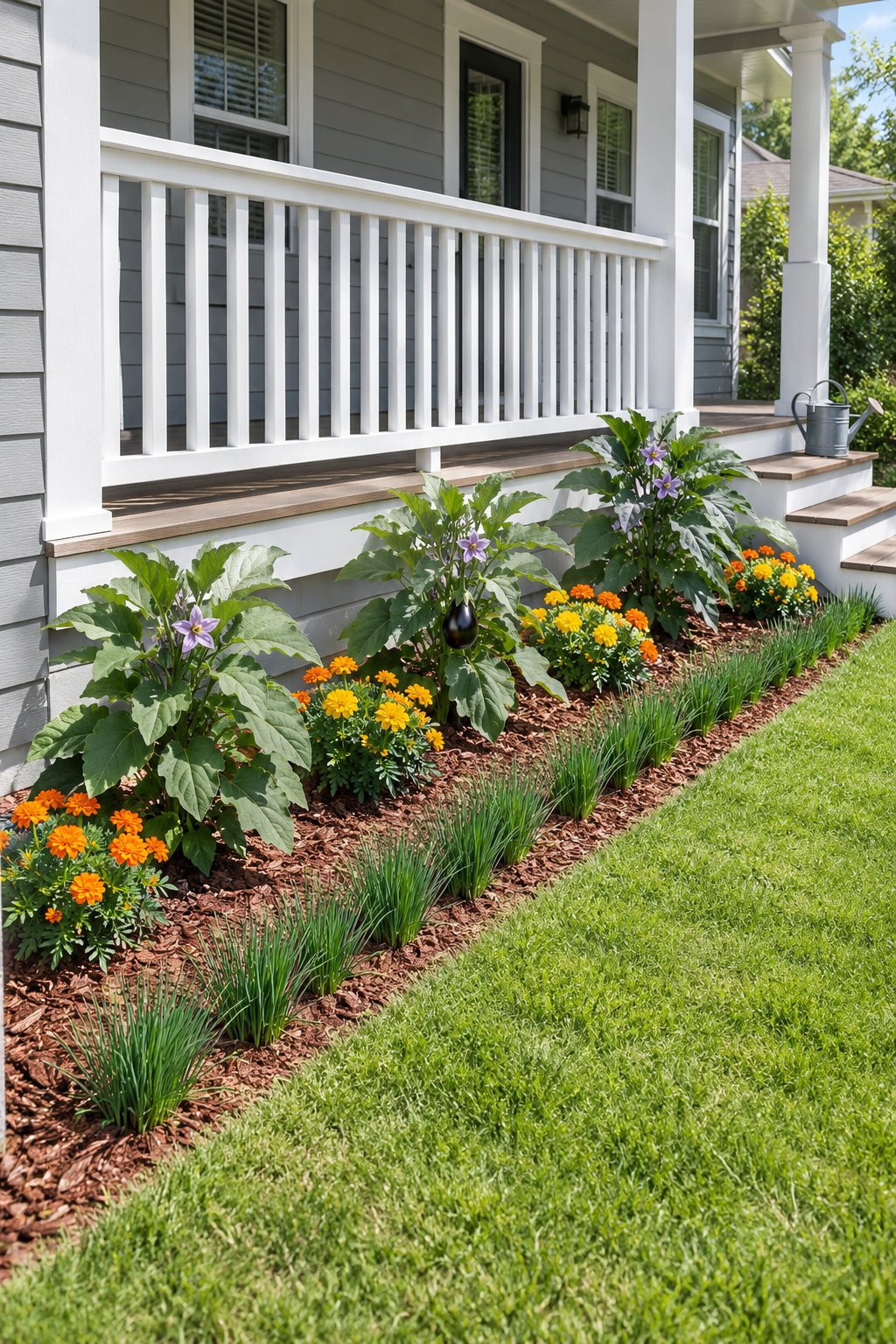
Vegetables can hide in plain sight. Eggplant has leaves and flowers good enough for a flower border, so set three among the marigolds in the bed along the porch.
Chives make a neat front edge.
15. A Waist-High Planter Table Planted With Lettuce, Radishes and Chives
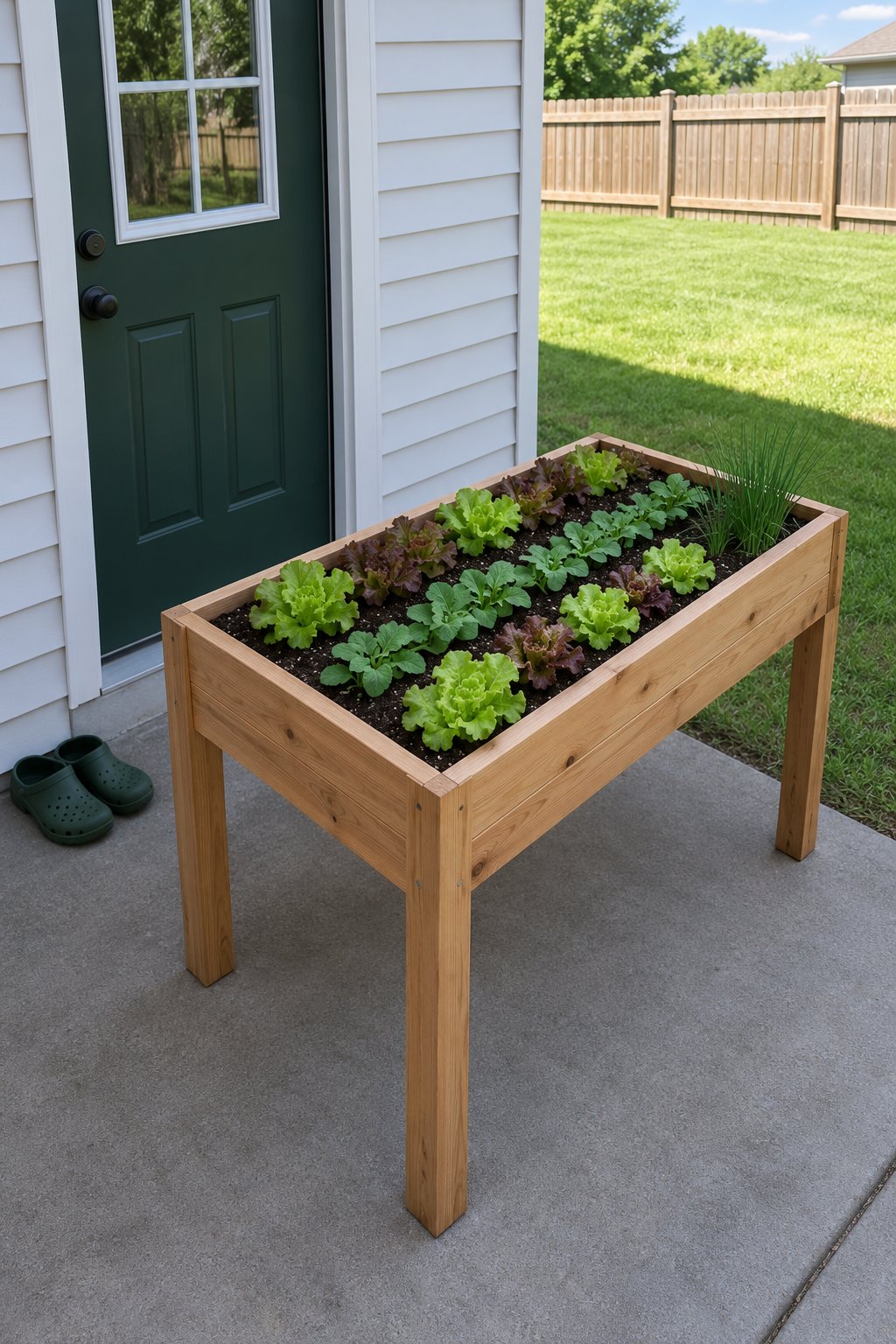
A planter table on legs needs no ground and no bending. Stand it by the back door and sow lettuce, radishes and chives.
Lettuce and radishes are cool-season crops, so they do best in spring and fall.
In summer, give the table afternoon shade.
16. A Driveway-Edge Strip Planted With Bush Beans and Marigolds
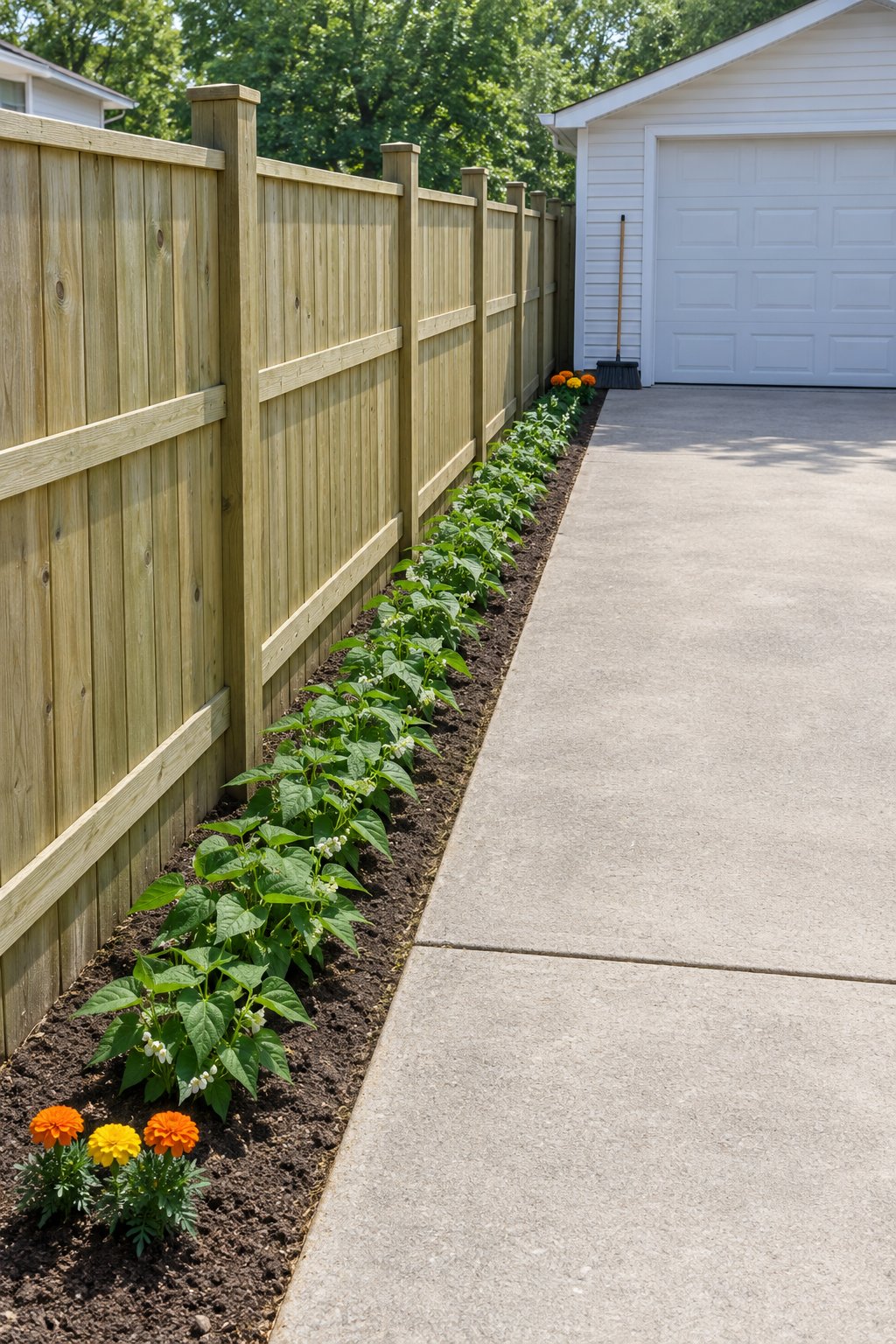
The strip between driveway and fence is often the sunniest spare ground a house has. Dig it over, sow bush beans down its length and plant marigolds at each end.
Bush beans need no support, so nothing leans into the car door.
17. An Old Sandbox Frame Planted With Peppers, Eggplant and Basil
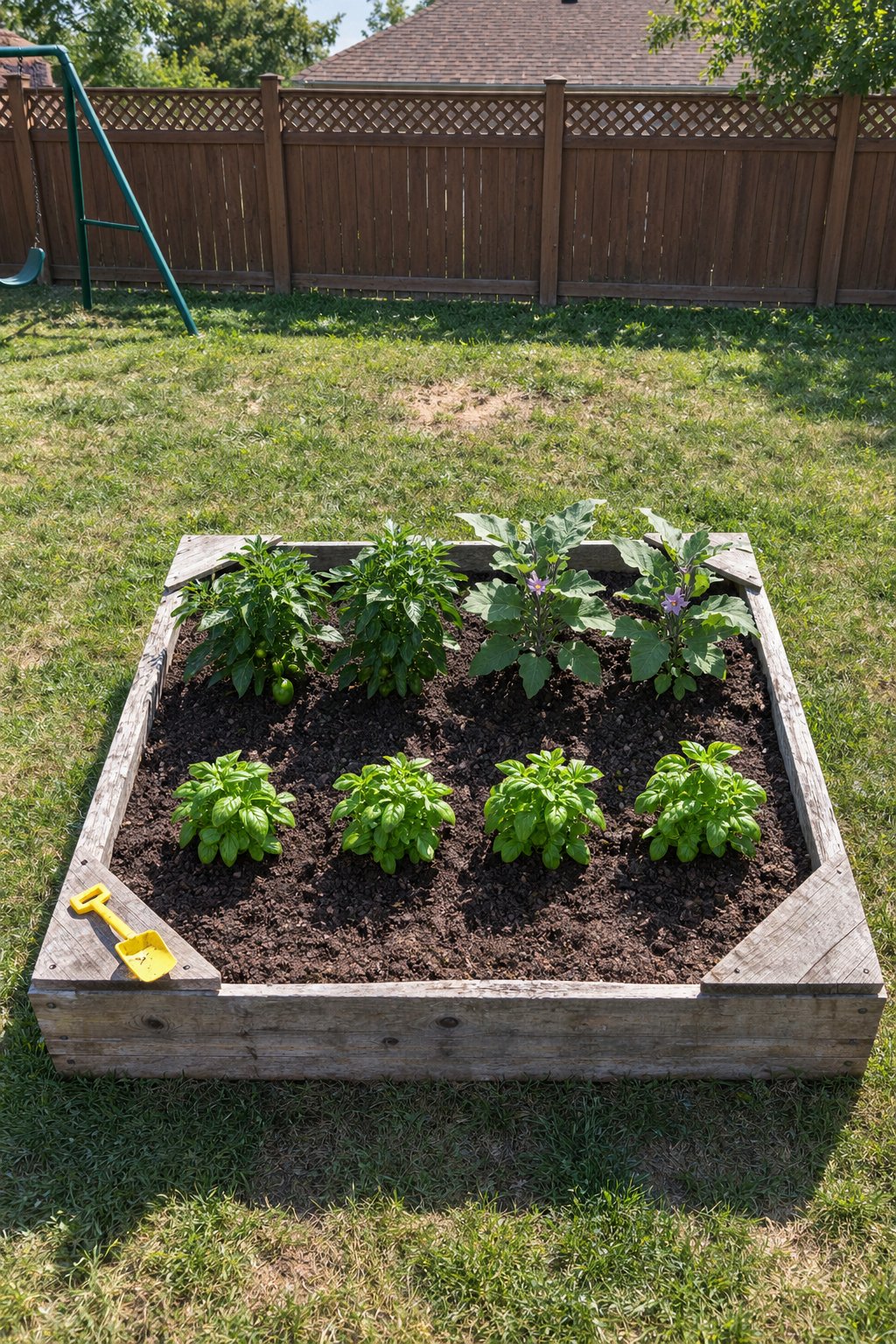
An outgrown sandbox is a raised bed waiting to happen. Shovel out the sand, check that water can drain through the base and fill the frame with garden soil and compost.
Peppers and eggplant take the back row, basil the front.
18. A Deck-Foot Strip Planted With Pole Beans and Nasturtiums
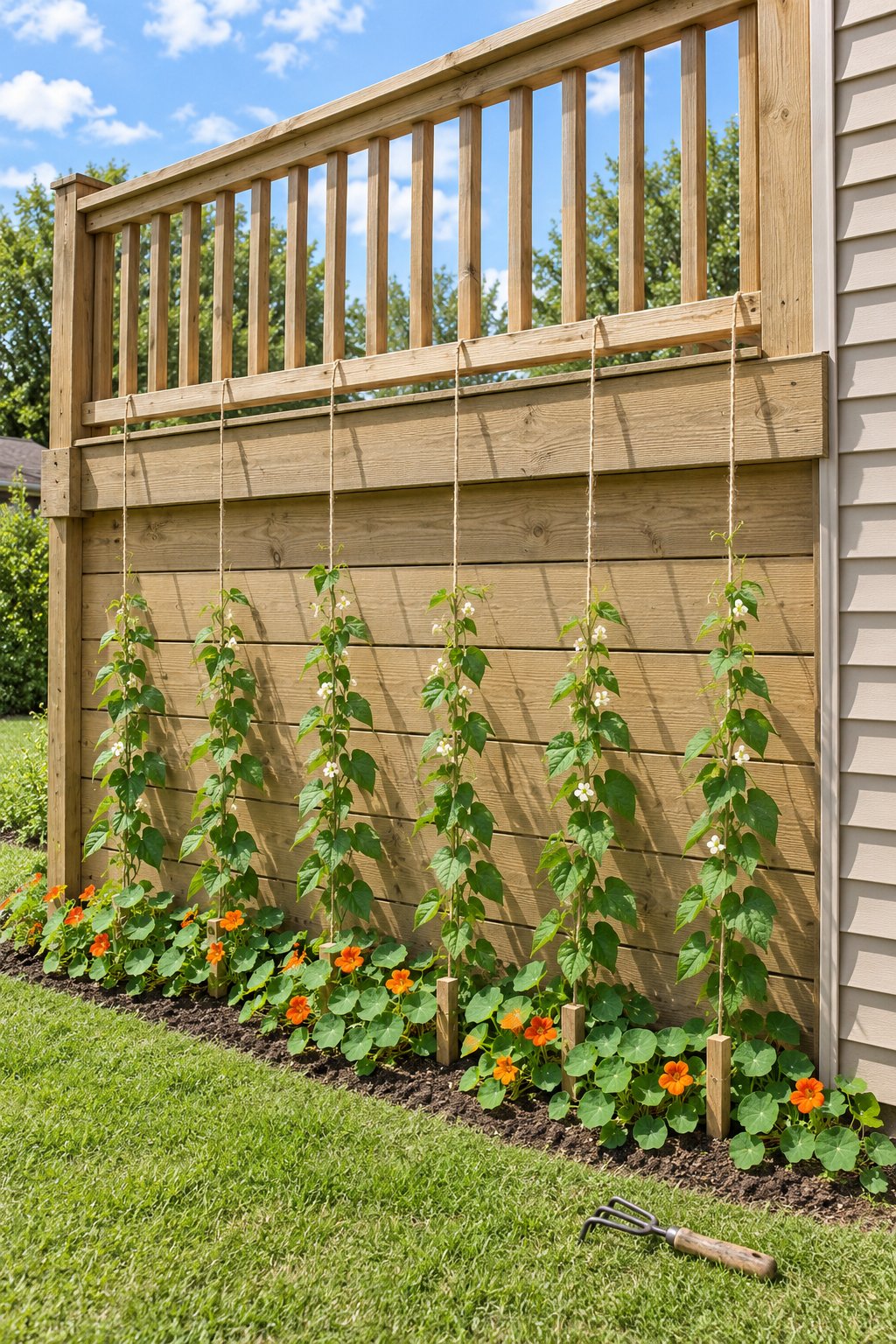
The side of a raised deck is a ready-made trellis. Dig a narrow strip along its sunny side, tie strings from pegs up to the bottom rail and let pole beans climb.
Nasturtiums cover the soil below.
Seven Figures That Keep a Small Vegetable Plot Workable
A small bed fails when you can’t reach into it or the sun can’t. These are the sizes behind the 18 gardens above.
| What | The figure | Why it matters |
|---|---|---|
| Full sun | Six hours or more of direct sun | What tomatoes, peppers, beans, cucumbers, zucchini and eggplant need |
| A bed reached from both sides | At most 4 feet wide | You reach the middle without stepping on the soil |
| A bed against a fence or wall | About 2 feet deep | You reach the back row from the front |
| A walking path | At least 2 feet wide | Room to pass with a watering can |
| A wheelbarrow path | About 3 feet wide | Room for the barrow and your elbows |
| A tomato in a pot | At least 10 gallons | A smaller pot dries out too fast for a plant that size |
| Tall crops and trellises | On the north side | Their shadow falls away from the shorter crops |
Small Vegetable Plots: Six Choices That Work Against You
Picking the corner before counting the sun
Do thisTomatoes, peppers, beans, cucumbers, zucchini and eggplant need full sun, which means six hours or more of direct sun. Count the hours on a clear day before you dig.
A bed too deep to reach across
Do thisKeep a bed you reach from both sides to 4 feet wide at most. Against a fence or wall, keep it to about 2 feet deep.
Tall crops on the south side
Do thisPut caged tomatoes, pole beans and any trellis on the north side of the bed, so they don’t shade the shorter plants.
Crops with different thirst in one bed
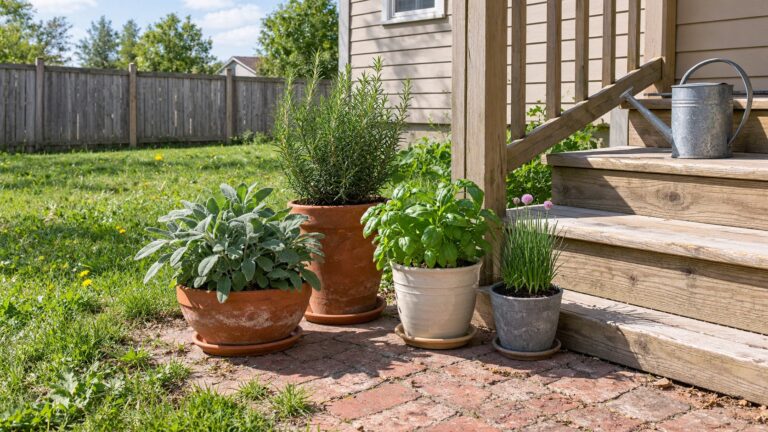
Do thisPlants that share a bed should share sun and water needs. Keep dry-soil herbs such as rosemary, thyme and sage out of a bed you water for tomatoes and basil.
Sowing lettuce and radishes for midsummer
Do thisBoth are cool-season crops that prefer spring and fall. Give that space to beans or basil in the hot months.
Digging before you call 811
Do thisCall 811 before you dig a bed or drive in stakes, and wait until the buried lines are marked.
The Best Corner Sits Between the Back Door and the Hose
Sun comes first. Among the sunny spots, though, I’d pick the one nearest the back door and the outdoor tap.
A bed you walk past gets noticed on the day it wilts.
A bed behind the shed gets visited when you remember it.
Distance matters for water too. Raised beds and pots dry out faster than open ground, and a hose that reaches easily is a hose that gets used.
If two corners tie on sun, the closer one wins.
Start with one bed in the sunniest corner you have, sized so you can reach every plant without stepping on the soil.
Plant two or three crops that want the same sun and water, and call 811 before you dig.
A second corner can wait until this one has had a full summer.
Frequently Asked Questions
How much sun does a small vegetable garden need?
Six hours or more of direct sun for tomatoes, peppers, beans, cucumbers, zucchini and eggplant. Lettuce and radishes are cool-season crops, so grow them in spring and fall.
Can I plant a front yard vegetable garden?
Often yes, but check HOA and local rules first. A crisp edge, straight rows and a few marigolds help the bed look tidy from the street.
What is a good small vegetable garden design for a beginner?
One bed, at most 4 feet wide if you can reach it from both sides, or about 2 feet deep against a fence. Put tall crops on the north side and stop at two or three crops.
Is a raised bed or an in-ground bed better for a small backyard vegetable garden?
Both work. A raised bed needs building and filling and dries out faster than open ground, while an in-ground bed costs the least but means digging. Call 811 first, and renters should ask the landlord before digging.
Which vegetables fit a very small space?
Crops that climb use height instead of ground, so pole beans and cucumbers suit a fence or strings. Peppers and bush beans stay compact, while zucchini needs a corner to itself.
Save This For Later
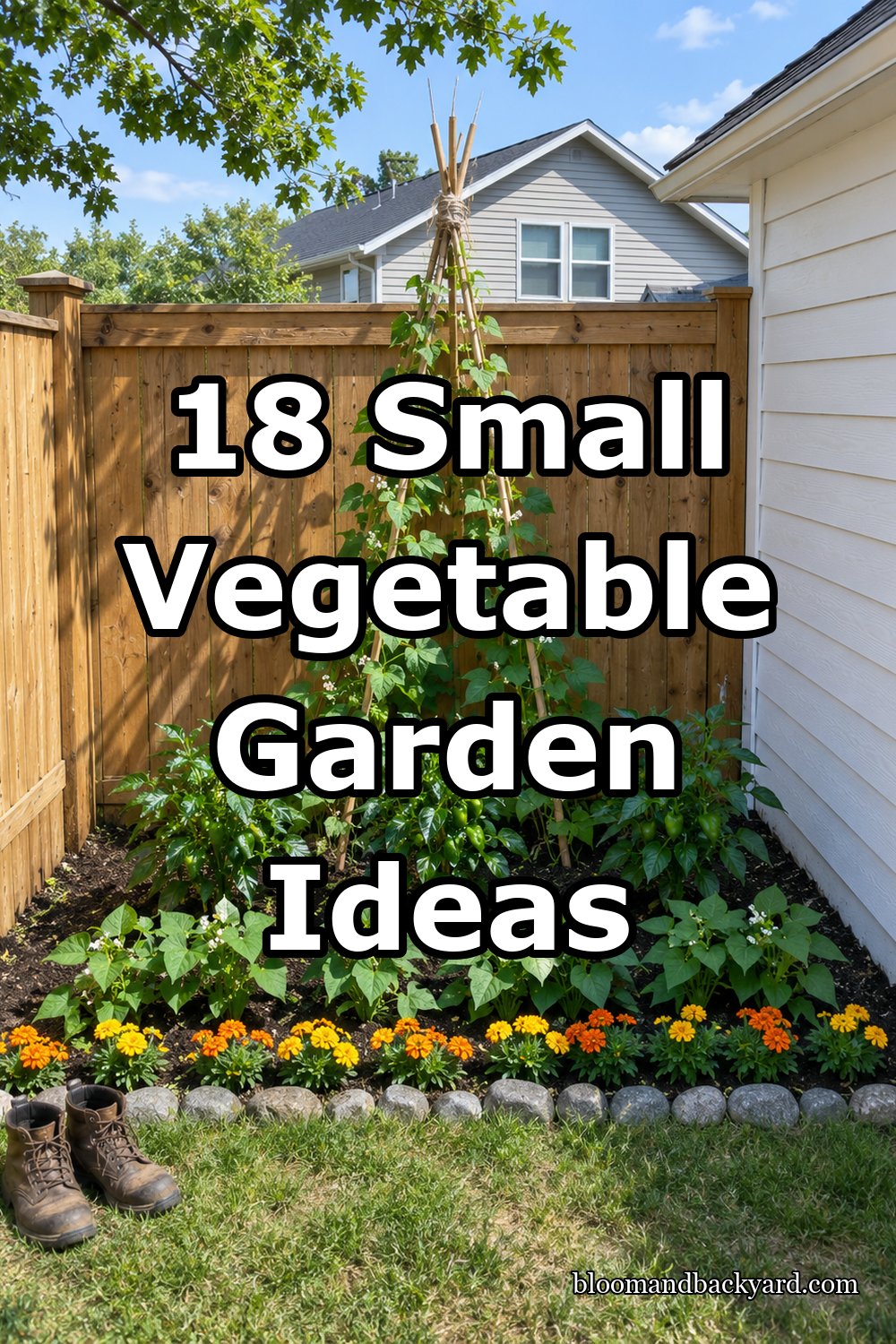
Loved small vegetable garden ideas? Save this pin to your Pinterest board now so you can find it again anytime you need the inspiration.