Companion Planting Chart: 12 Pairings Gardeners Plant Together
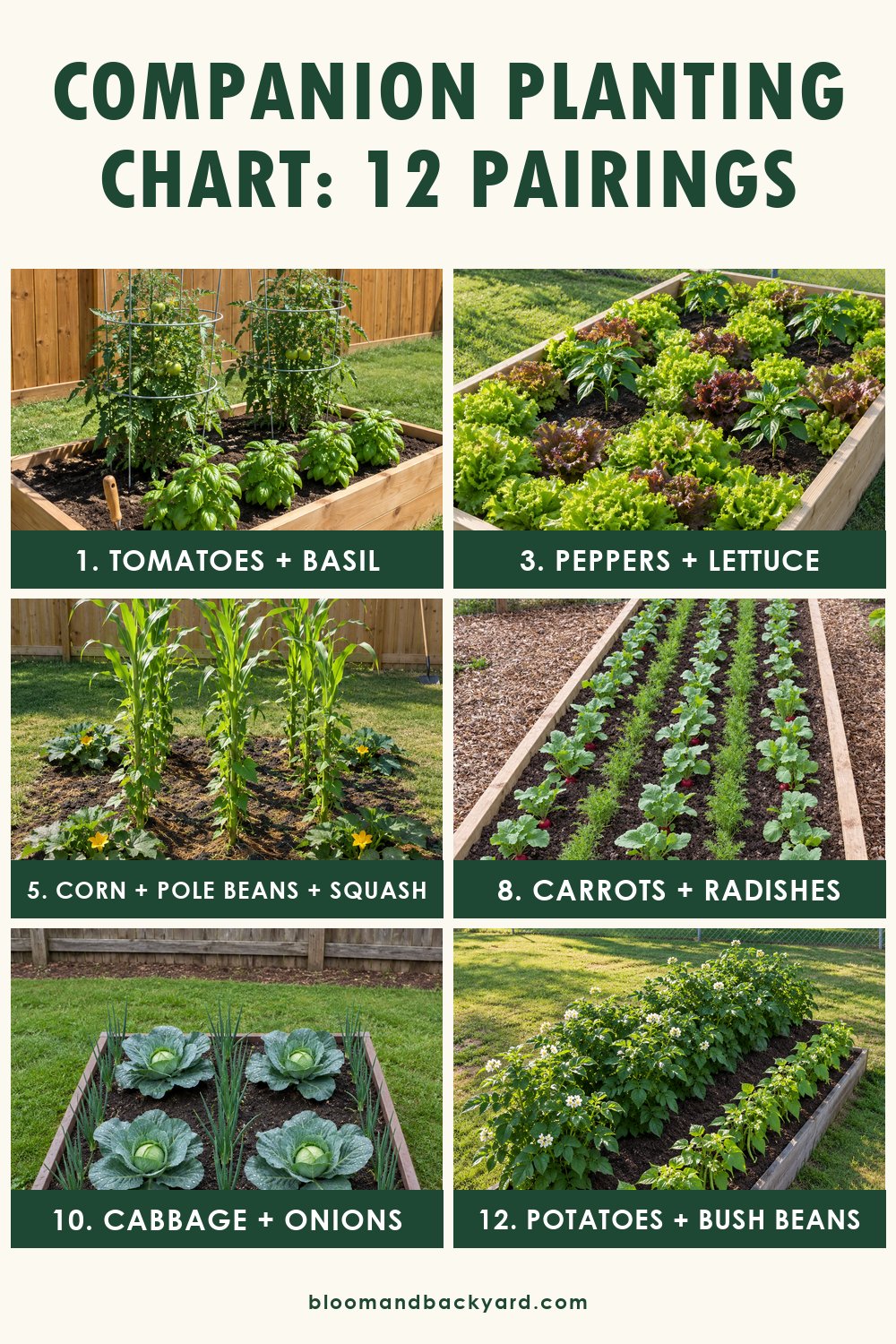
A companion planting chart is a list of crops that gardeners traditionally grow side by side, and it is a starting point, not a promise.
These 12 pairings all appear in university extension sources.
The chart itself comes after the list, with the pairs those sources say to keep apart.
Which bed are you planting?
1. Tomatoes + Basil
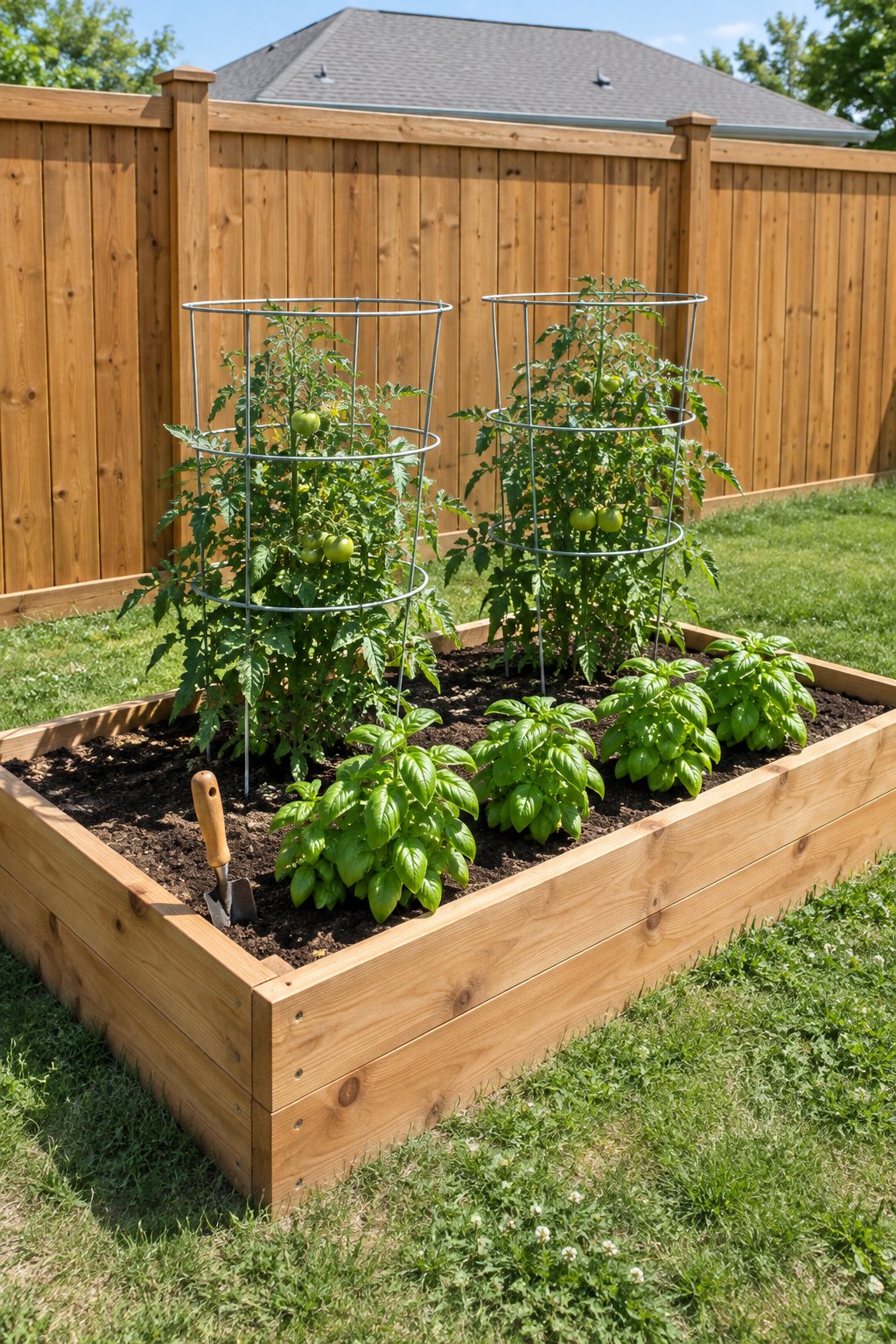
This is the pairing with the most behind it. The University of Minnesota Extension notes that a few studies found basil reduced thrips on tomatoes, and that basil may even help tomato growth.
Both want full sun and regular water, so they share a bed easily.
2. Tomatoes + Parsley
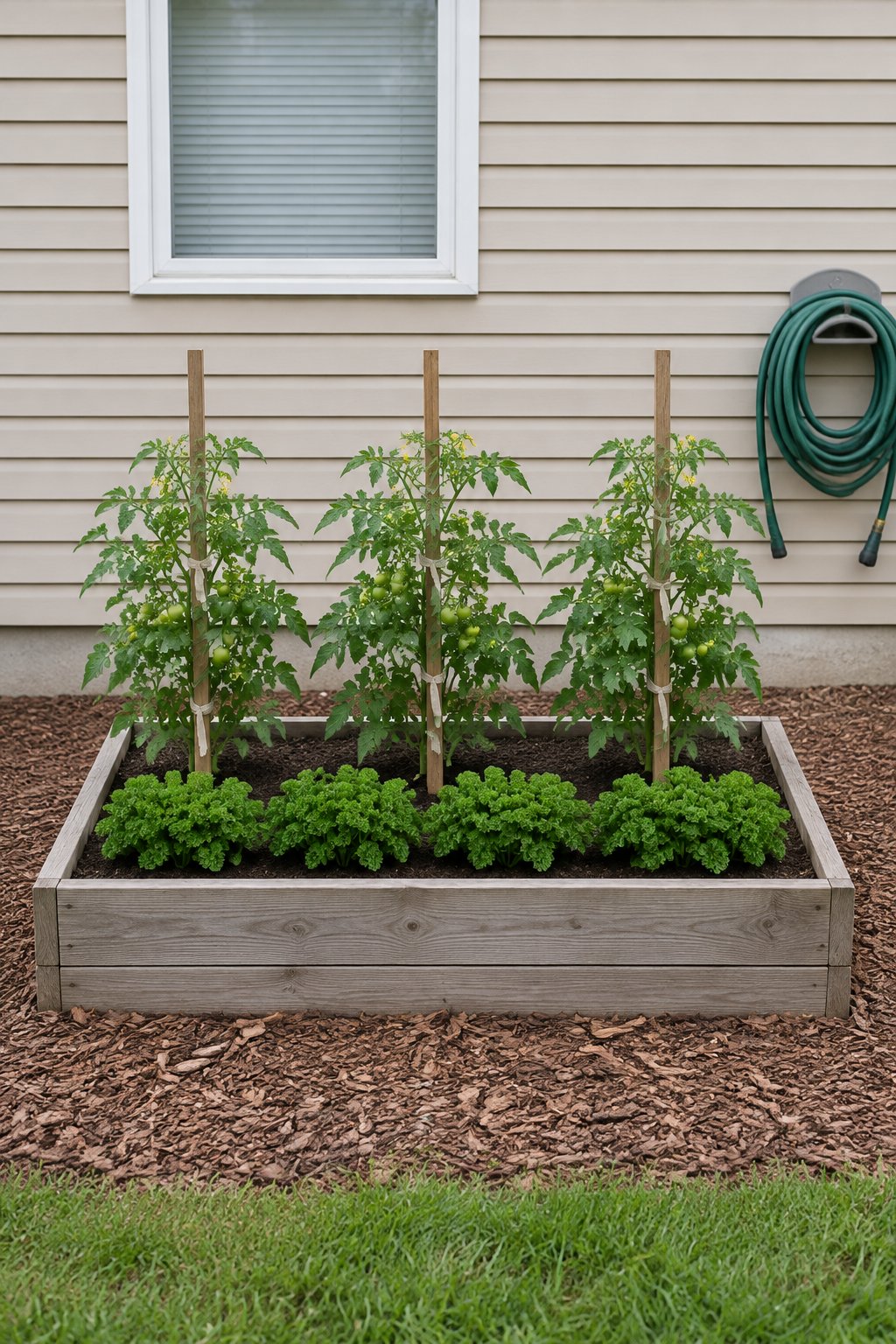
Parsley gets less attention than basil and sits on the same line of the chart. West Virginia University Extension lists herbs such as parsley, dill and basil as tomato companions.
Parsley stays low, so it edges the bed without crowding the cages.
3. Peppers + Lettuce
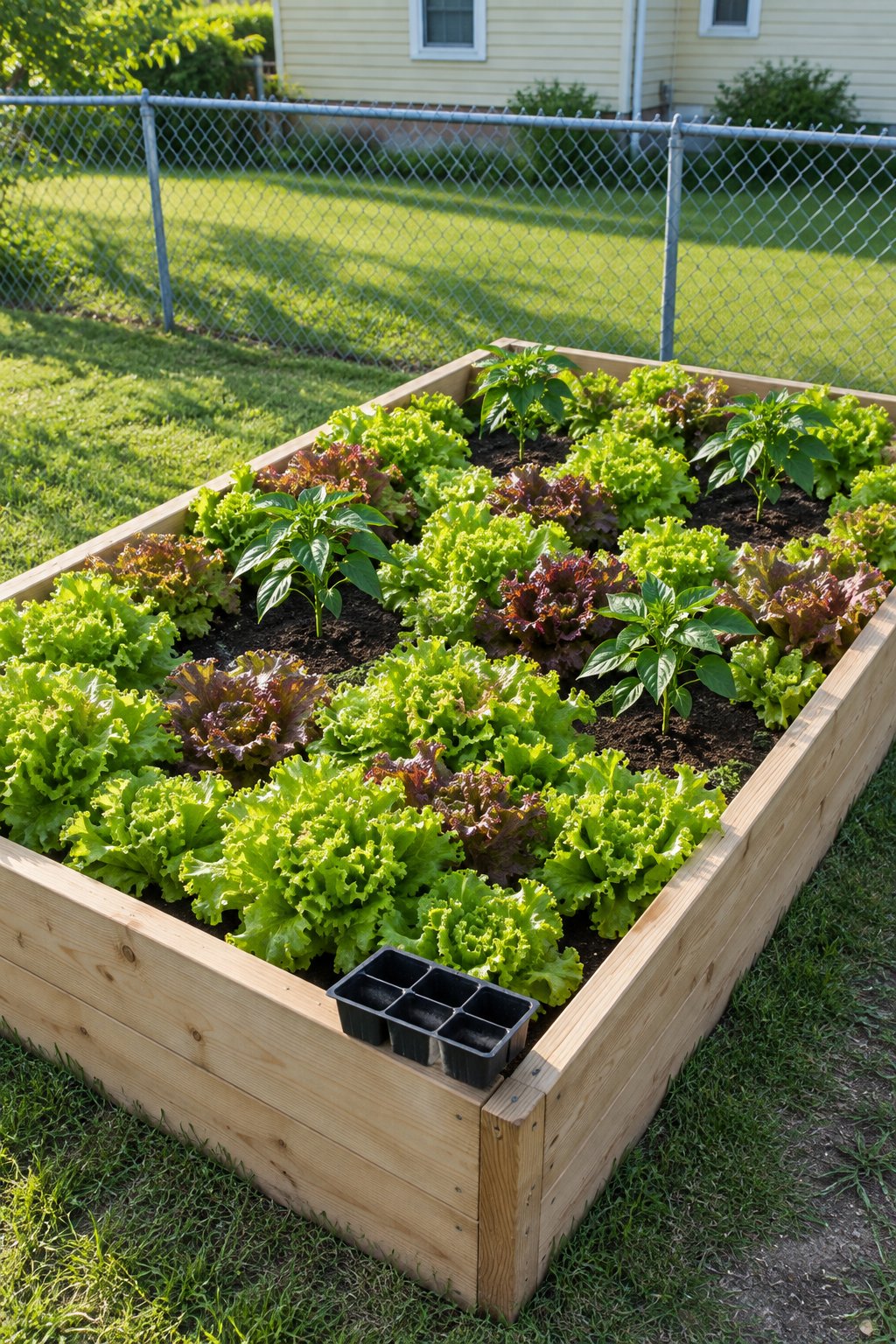
Here the benefit is plain arithmetic: two crops from one patch of soil. The University of Minnesota Extension describes planting lettuce early, then setting peppers into the same bed as the lettuce matures.
Lettuce is a cool-season crop, so it is finishing as the peppers fill in.
4. Eggplant + Marigolds
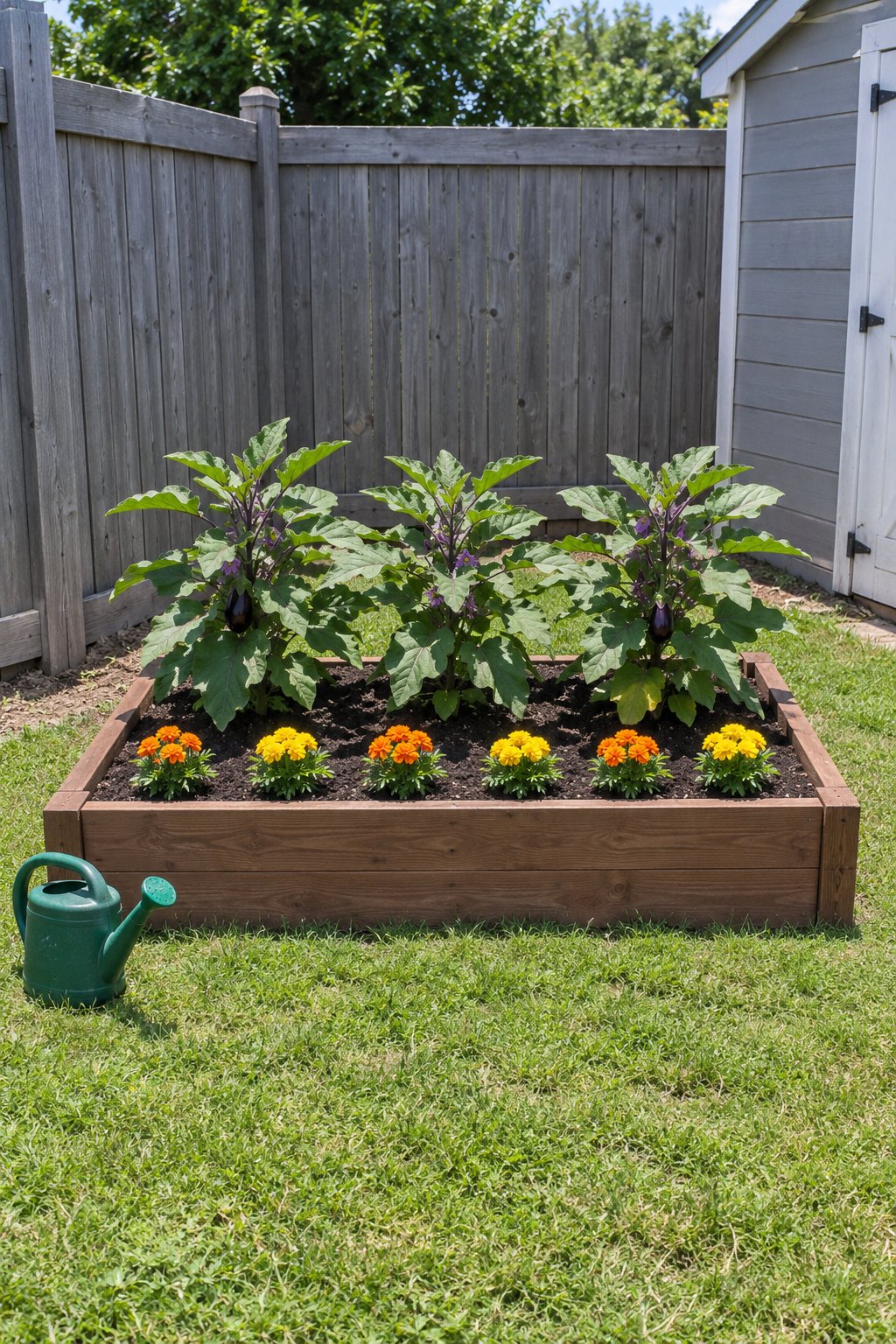
Marigolds get credited with more than they have earned. The University of Minnesota Extension says they work against insects sometimes and not others.
Still, West Virginia University Extension lists marigolds as an eggplant companion, and a row of them takes little room.
5. Corn + Pole Beans + Squash

The Three Sisters is the oldest pairing here, grown by Indigenous communities for hundreds of years. Corn gives the pole beans a stalk to climb, and the beans provide nitrogen.
The University of Arizona Cooperative Extension adds that squash leaves shade the soil like a living mulch.
6. Zucchini + Nasturtiums
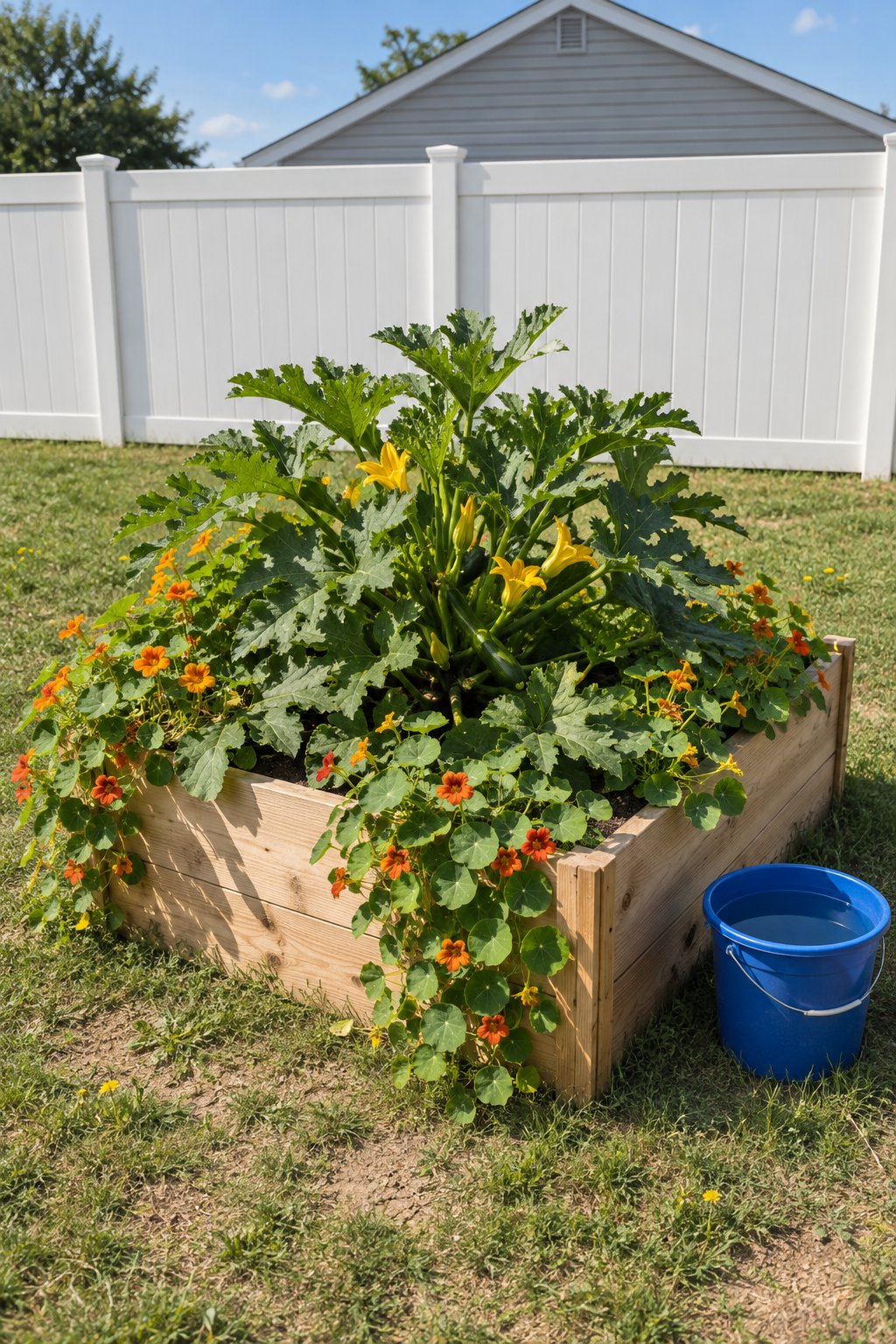
Plenty of chart pairings are folklore. This one has studies behind it: the University of Minnesota Extension notes research showing nasturtiums can help reduce squash bug numbers.
Nasturtiums trail, so they cover the soil around the plant.
7. Cucumbers + Bush Beans
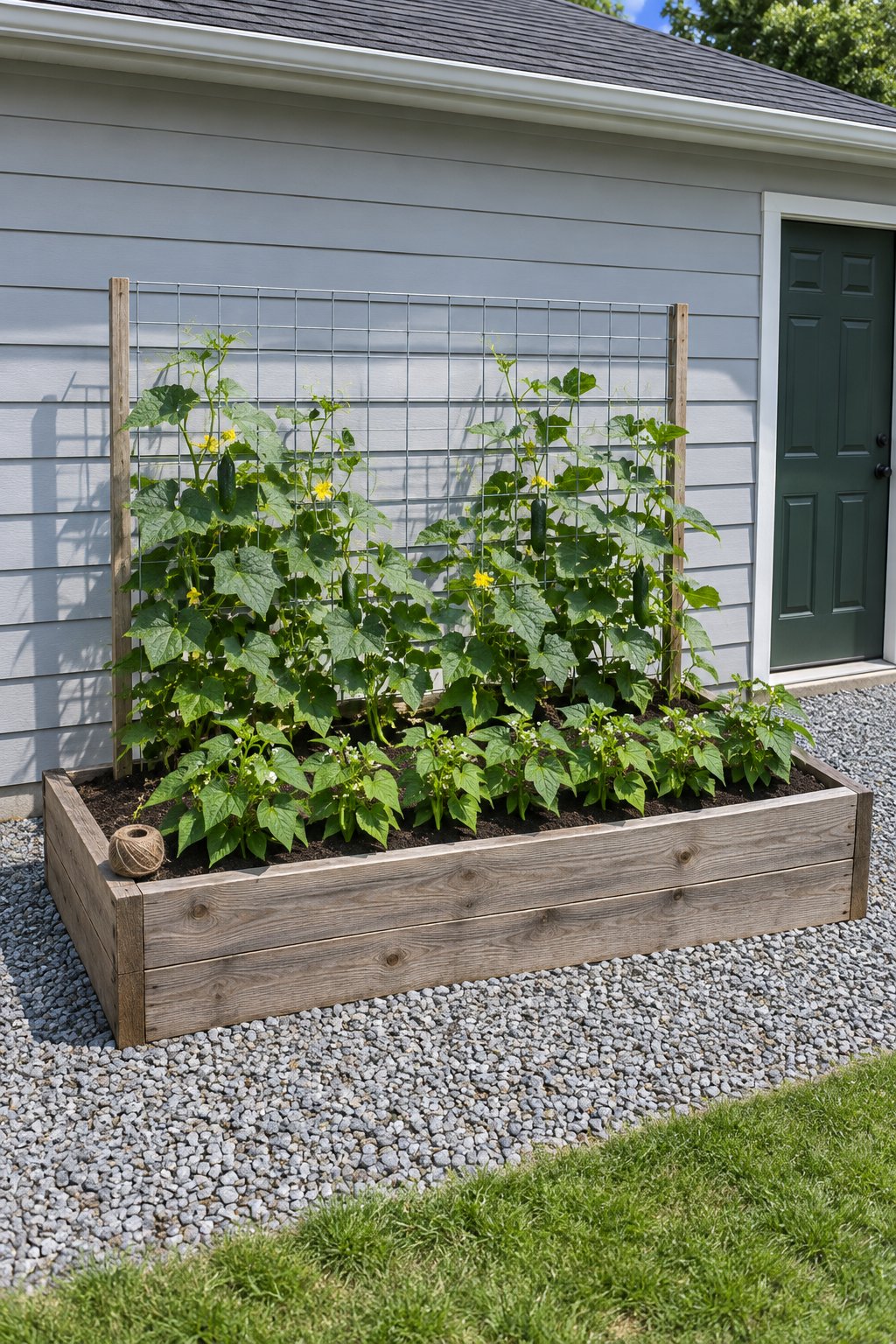
No big claim here, only a long tradition. West Virginia University Extension lists beans among the companions for cucumbers, and both want full sun and regular water.
Send the cucumbers up a trellis and the beans get the ground in front.
8. Carrots + Radishes
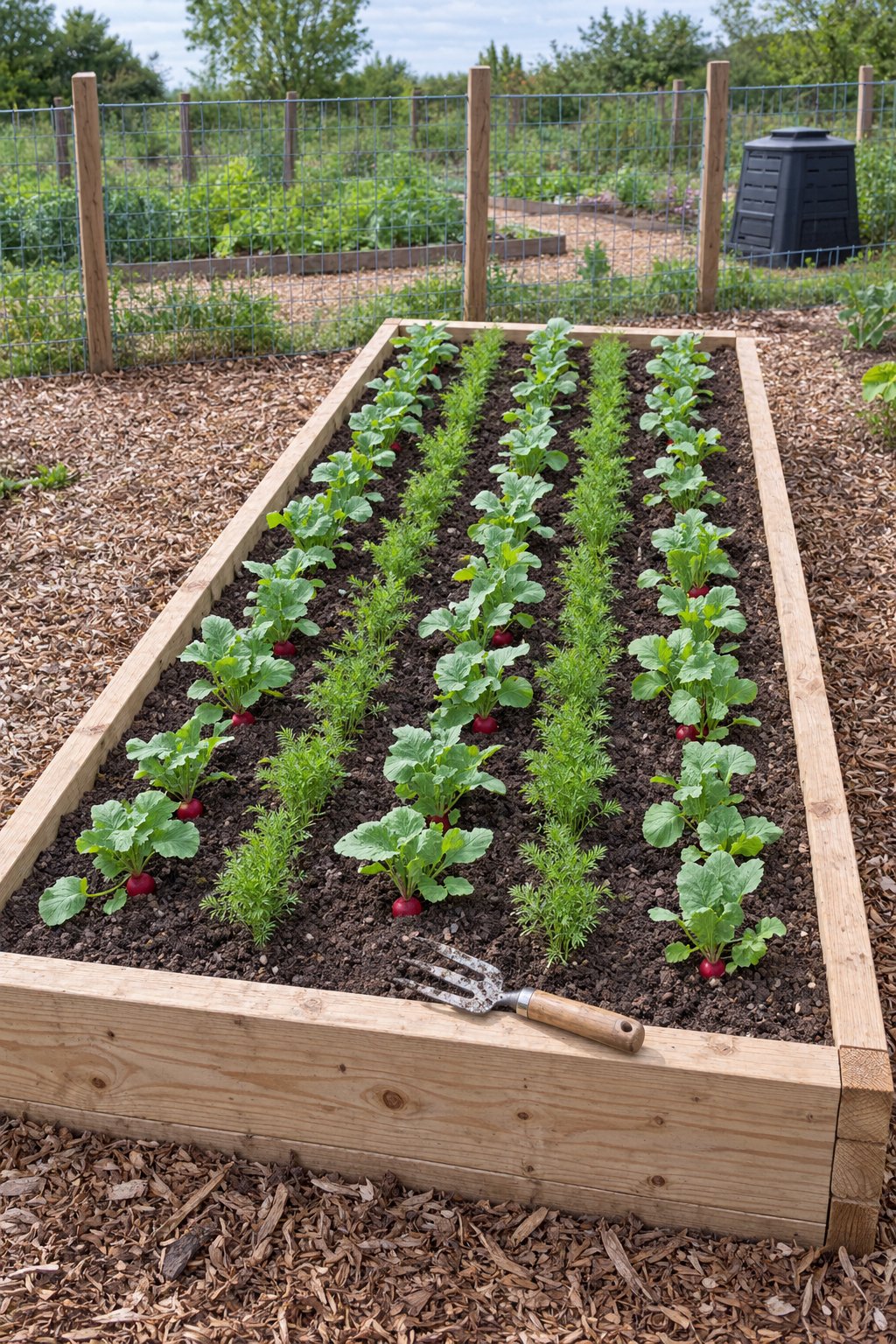
I like this one because nobody has to believe anything. The University of Minnesota Extension calls radishes and carrots side by side a great example of saving space.
Radishes are a cool-season crop, sown in spring and again toward fall.
9. Strawberries + Lettuce
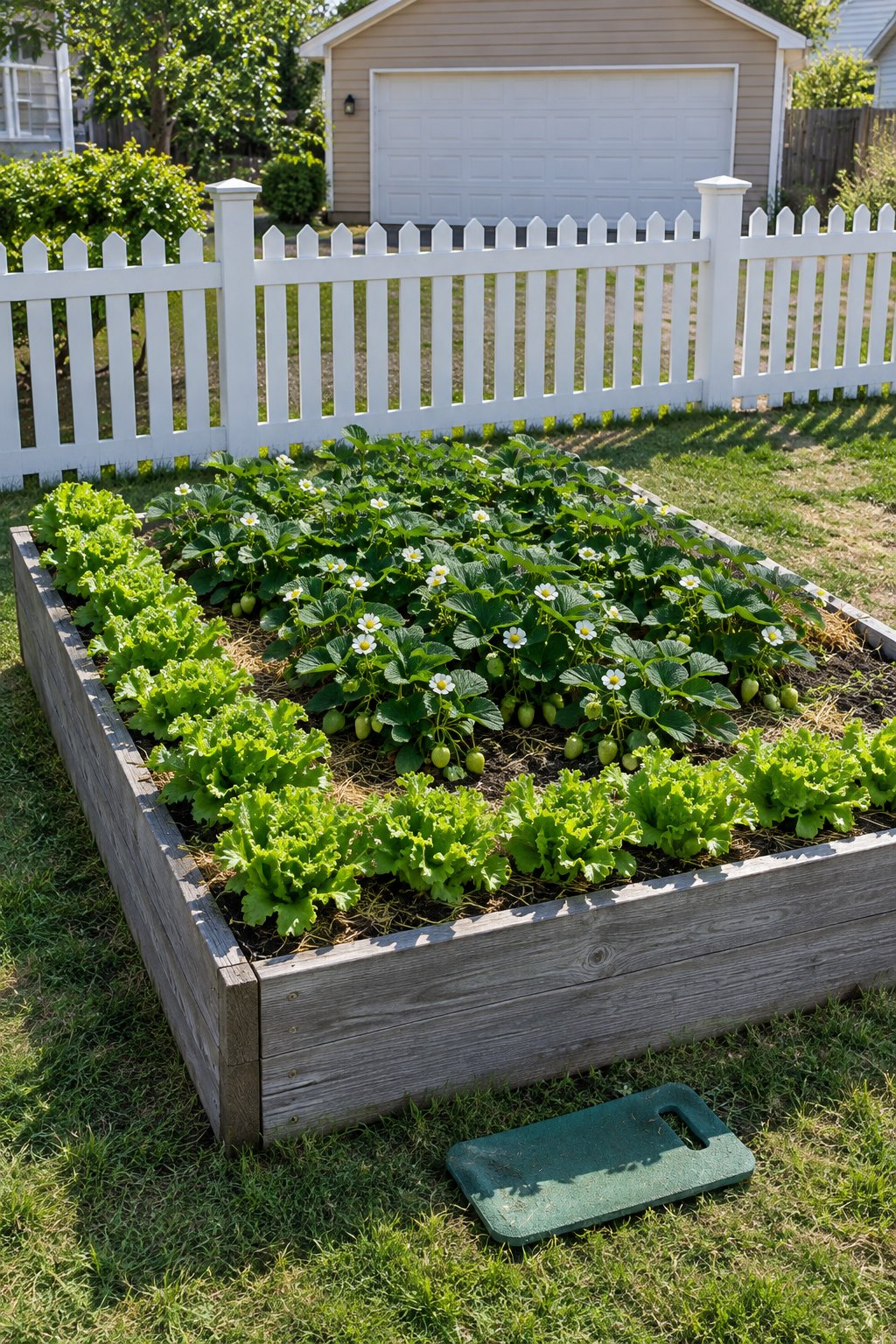
I’d use lettuce as the edging here. West Virginia University Extension lists lettuce as a border for strawberries, with spinach and bush beans as other companions.
Lettuce is a cool-season crop, at its best in spring and fall.
10. Cabbage + Onions
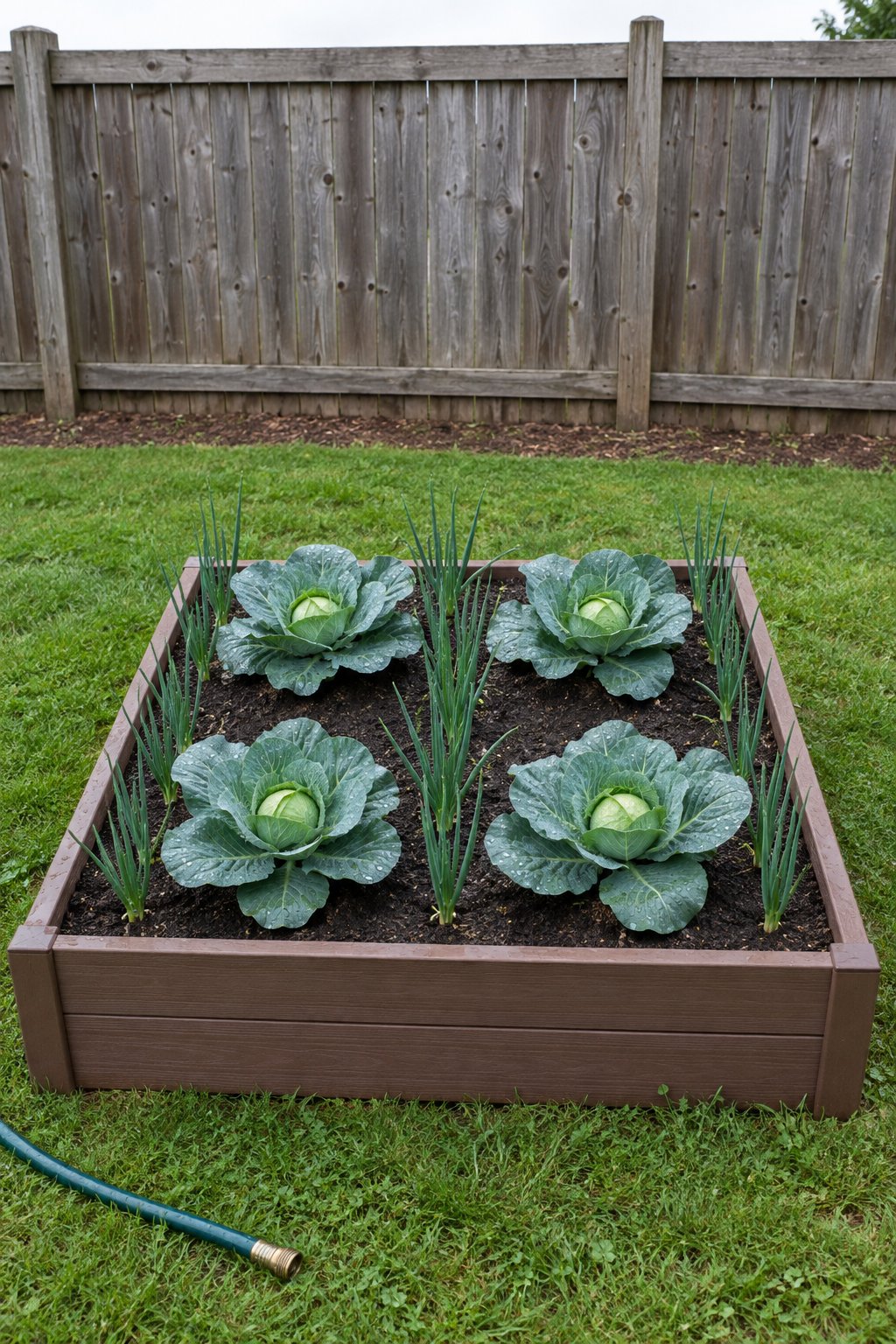
West Virginia University Extension lists the onion family among the companions for cabbage. The University of Minnesota Extension points to an Iowa study in which onion, marigold and nasturtium helped reduce two kinds of cabbage worm on cabbage.
11. Broccoli + Nasturtiums
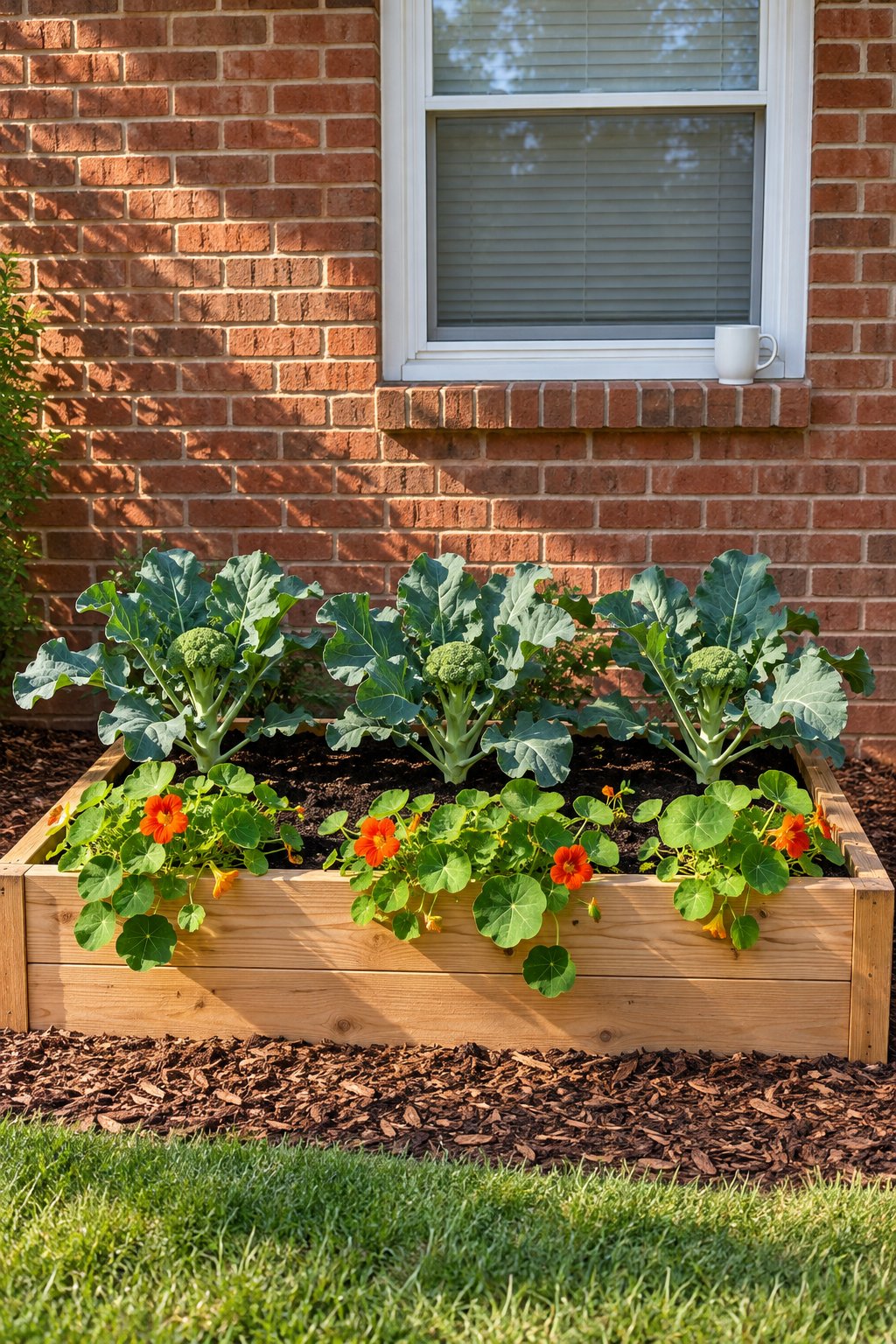
Broccoli sits in the cabbage family row of the chart, and nasturtiums are on its list of companions.
The University of Minnesota Extension cites an Iowa study in which thyme, onion and nasturtium helped reduce cabbage looper and imported cabbageworm damage on broccoli.
12. Potatoes + Bush Beans
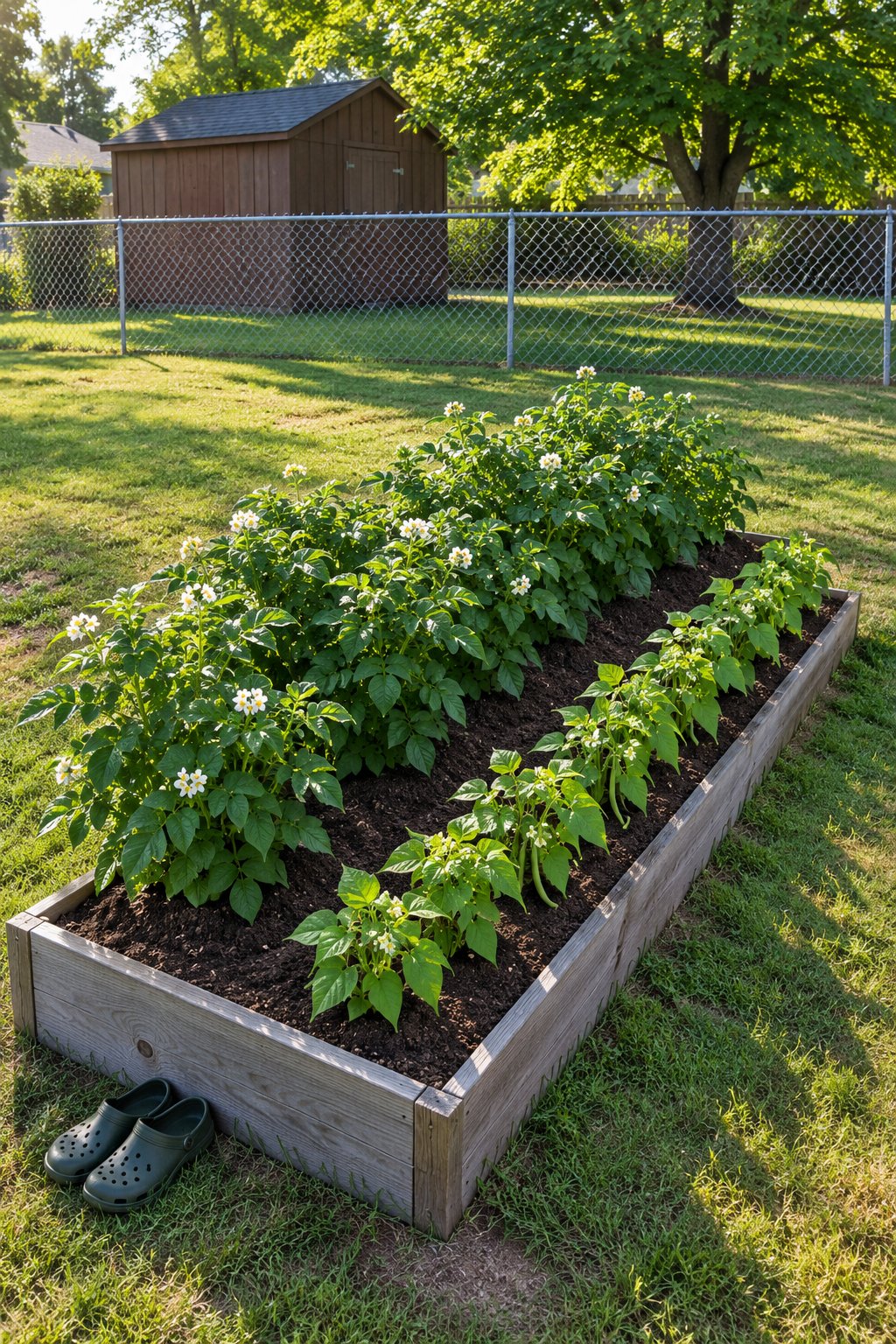
Potatoes have more names in the keep-apart column than almost anything else. West Virginia University Extension lists beans as a companion and says not to plant potatoes next to tomatoes, squash or cucumbers.
So potatoes get a bed away from the tomatoes, with bush beans alongside.
Five Ways to Misread a Companion Planting Chart
Treating the chart as a guarantee
Do thisWest Virginia University Extension calls companion planting not an exact science, with results that vary by area. Use a chart as a starting point and keep notes on what happens in your own beds.
Pairing plants with different thirst
Do thisPlants that share a bed should share sun and water needs. Check that before anything a chart says, since a bed gets watered as one thing.
Squeezing two crops into one crop’s space
Do thisA companion still needs its own room. Follow the spacing on each seed packet or plant tag, and give up a plant before you crowd a bed.
A tall companion shading a short one
Do thisPut tall crops and trellises on the north side of the bed. Corn, trellised cucumbers and caged tomatoes all cast shade that a low crop behind them has to live in.
Trusting one chart when sources disagree
Do thisCharts contradict each other. One extension chart lists sunflowers beside cucumbers, while a University of Arizona Cooperative Extension article reports other plants doing poorly within a couple of feet of a sunflower.
The Companion Planting Chart: 12 Crops, What to Grow With Them and What to Keep Apart
Read the chart from the left. The first column is the crop you are planting, the green column lists what gardeners traditionally grow beside it, and the red column lists what the sources say to keep in another bed.
Every row comes from the University of Minnesota Extension, West Virginia University Extension or the University of Arizona Cooperative Extension.
Where a row says “No well-documented conflict”, those sources name nothing to keep away from that crop.
These pairings are mostly traditional practice. The Minnesota page points out that long lists of companion plants are not always backed by research.
I’d treat the green column as things worth trying and the red column as the cheaper advice to follow.
Start with one pairing this year, and make it tomatoes and basil if you grow tomatoes at all.
Plant it in a bed where both get full sun and the same water, then write down what you see.
West Virginia University Extension suggests recording your results from year to year, and that notebook will soon know your yard better than any chart.
Frequently Asked Questions
Does companion planting really work?
Some pairings have research behind them, and many are tradition. The University of Minnesota Extension notes that long lists of companion plants online are not always accurate or backed by research.
What should not be planted next to tomatoes?
West Virginia University Extension lists Irish potatoes, fennel and the cabbage family as plants not to put next to tomatoes.
How close do companion plants need to be?
West Virginia University Extension suggests planting companions within two or three rows of each other. Plants on the keep-apart list go at least two to three rows away.
Can I follow a companion planting chart in raised beds?
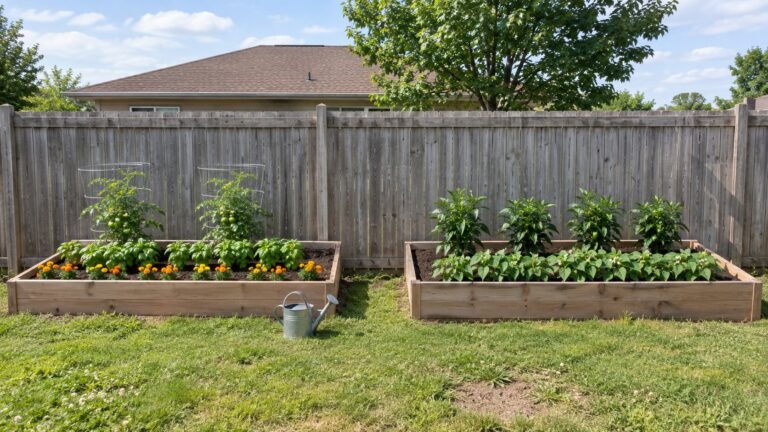
Yes. Pair plants that share sun and water needs, and keep any bed you reach from both sides to 4 feet wide at most. A raised bed dries out faster than open ground, so two crops in one bed means watering more often.
What is the Three Sisters in companion planting?
Corn, pole beans and squash grown together, a method Indigenous communities have used for hundreds of years. The corn gives the beans a stalk to climb and the beans provide nitrogen.
Save This For Later
Loved companion planting chart? Save this pin to your Pinterest board now so you can find it again anytime you need the inspiration.