Cut Flower Garden Layout: 12 Plans for a Small Bed, a Border or Raised Beds
A cut flower garden layout is planned for the scissors first and the view second.
So I’ve drawn up 12 plans: for one small bed, a fence border, raised beds and a bigger patch.
Each names its rows, its path, its supports and three or four full-sun flowers that share regular water.
Where will you grow them?
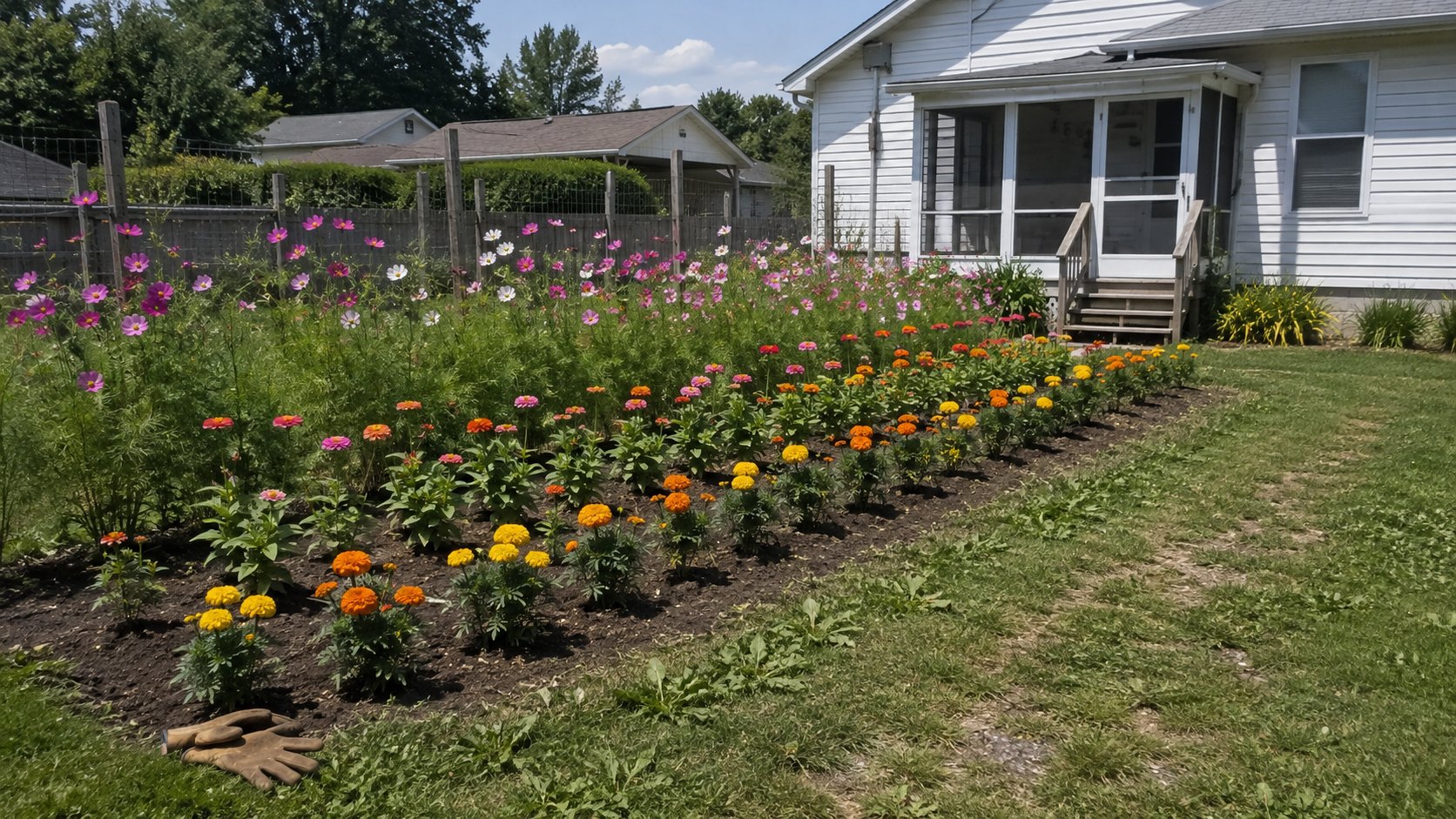
1. Three Long Rows for a First Cutting Bed
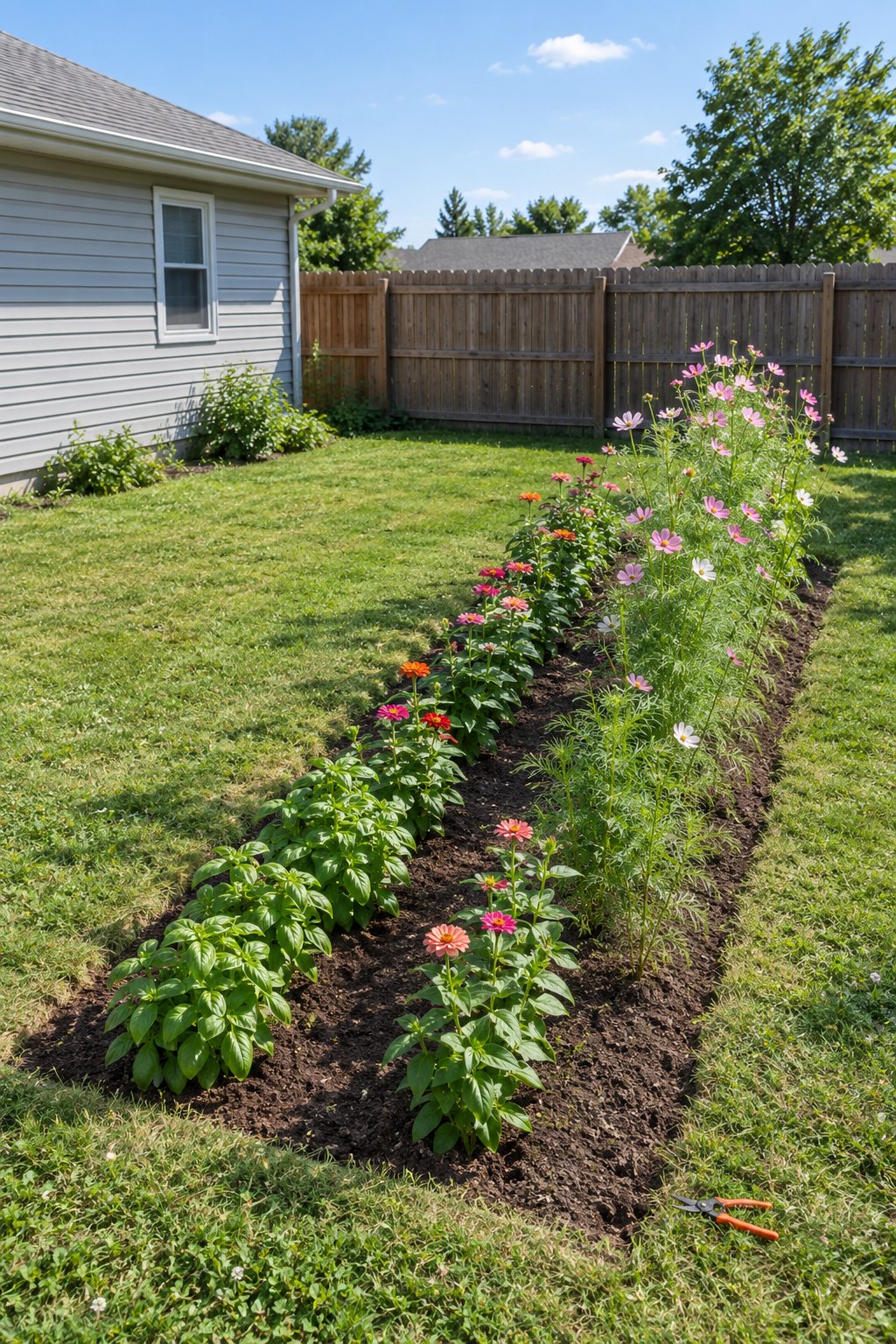
Start with one bed and three flowers, no more. Cut it into the lawn at most 4 feet wide, so you reach the middle from the grass on either side.
Cosmos take the north row, zinnias the middle and basil the south edge.
2. Four Blocks That Step Down to the South
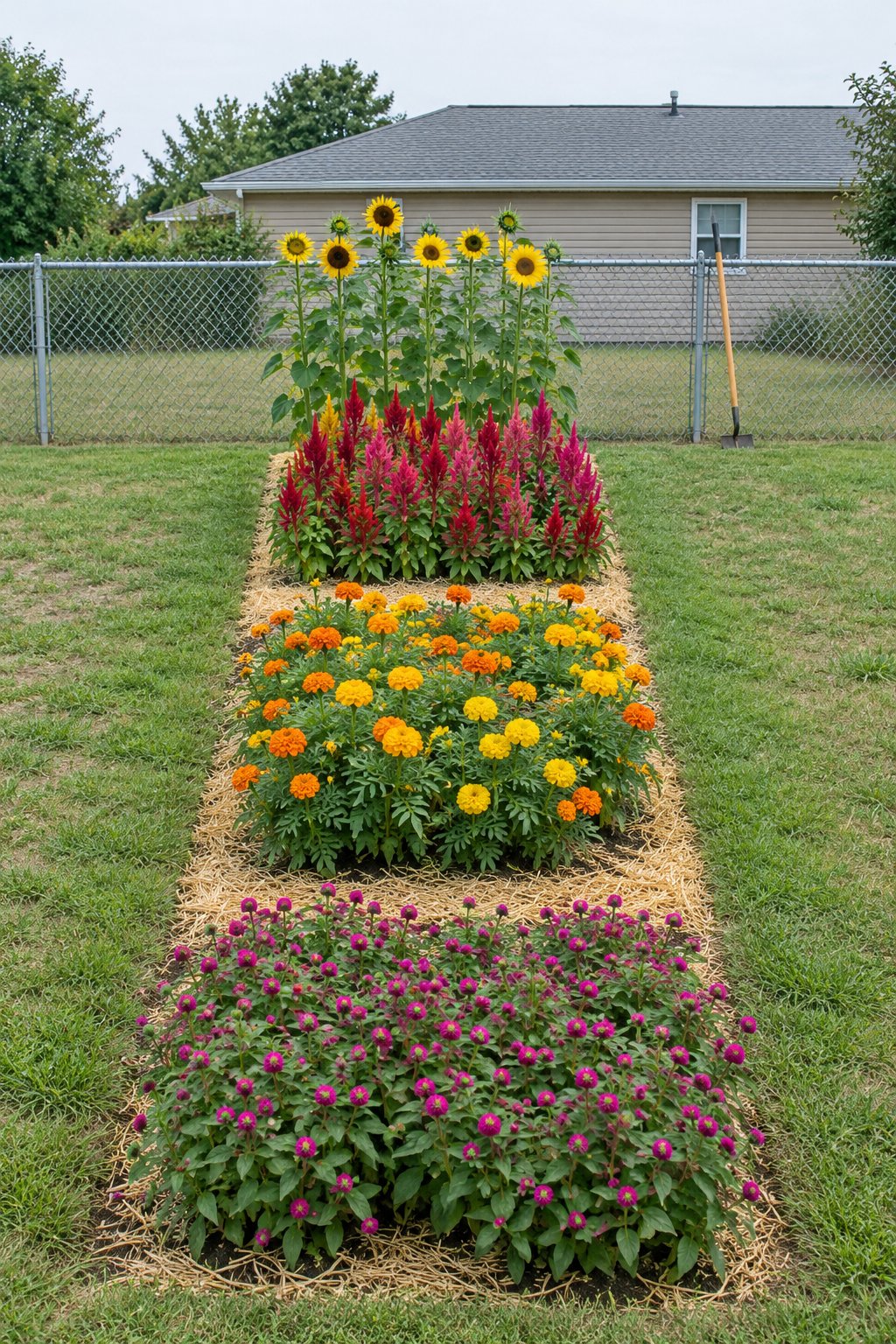
Blocks beat rows when you want four flowers in one short bed. Run the bed north to south and split it crosswise into four squares.
Single-stem sunflowers fill the north square, then celosia, then marigolds, with gomphrena at the south end.
3. Three Sowings Side by Side in One Bed
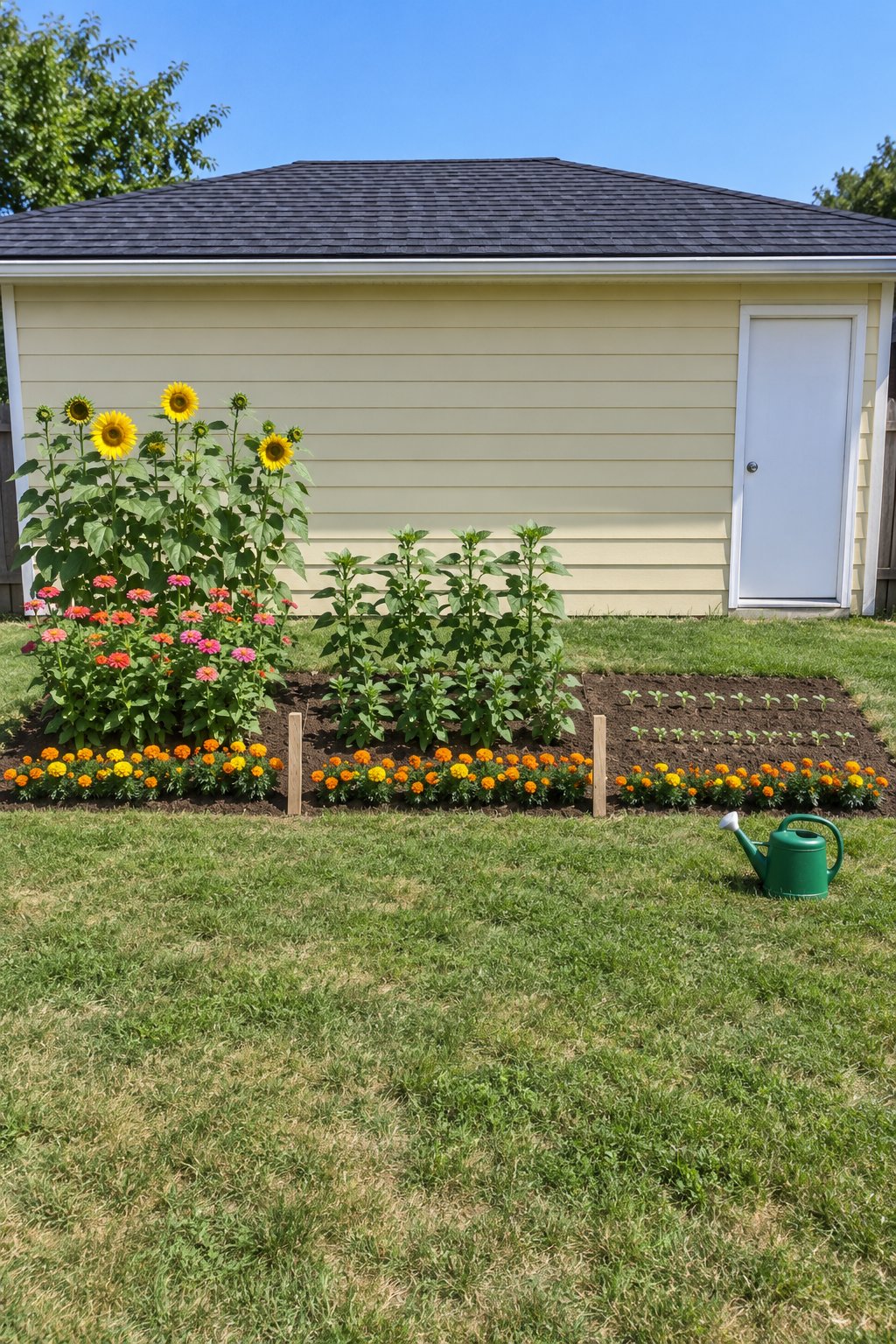
A single-stem sunflower gives one bloom, so I never sow the whole bed at once. Divide it into three sections and sow them in turn.
Each section gets sunflowers on the north side and zinnias in front, with one marigold edge along the whole bed.
4. Three Arcs Fanned Out From a Fence Corner
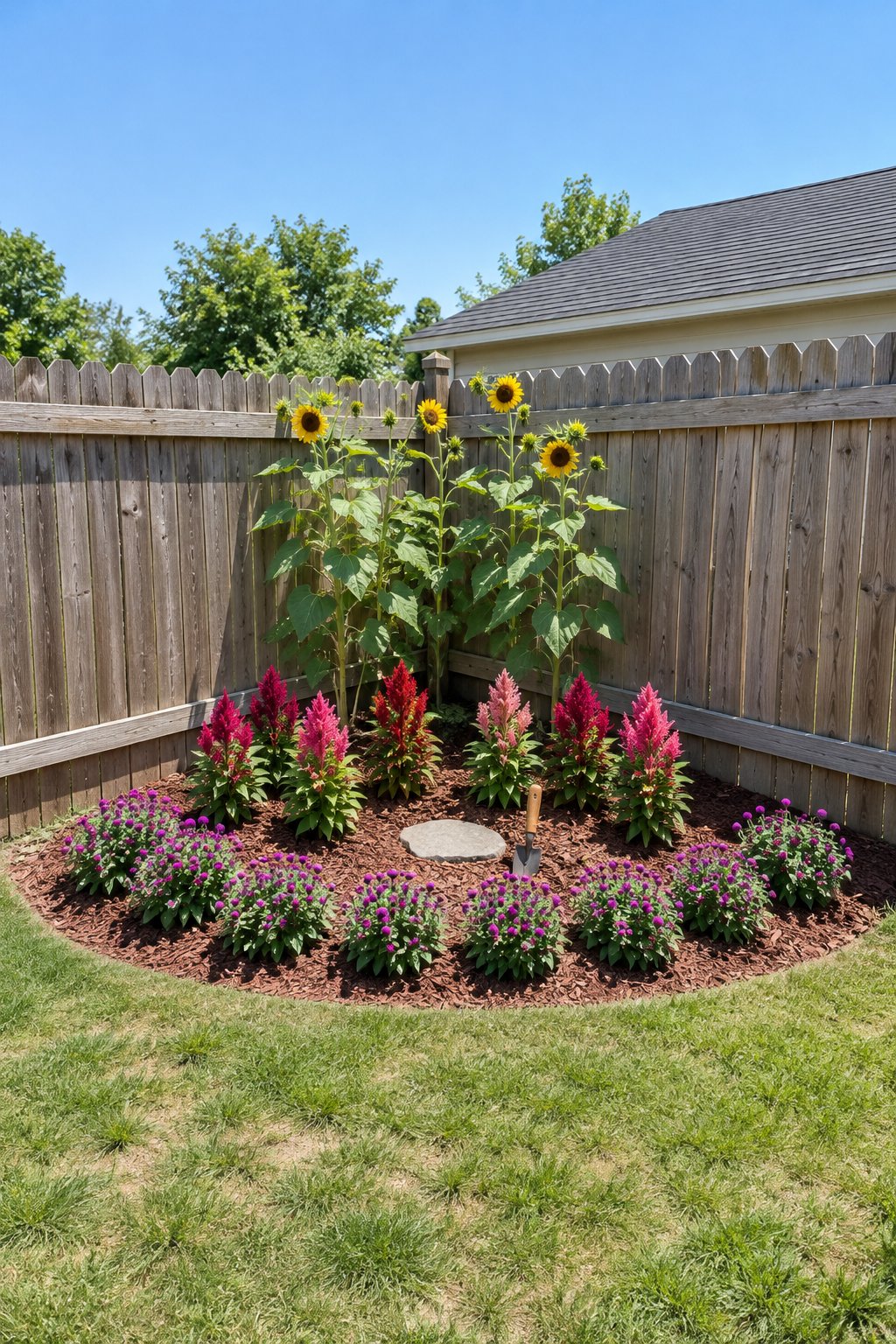
That dead lawn corner is a cutting bed waiting to happen, if it gets six hours or more of direct sun. Cut a quarter circle and plant three arcs.
Branching sunflowers stand in the corner, celosia curves in front and gomphrena edges the lawn.
5. Two Rows Tucked Against a Sunny Fence
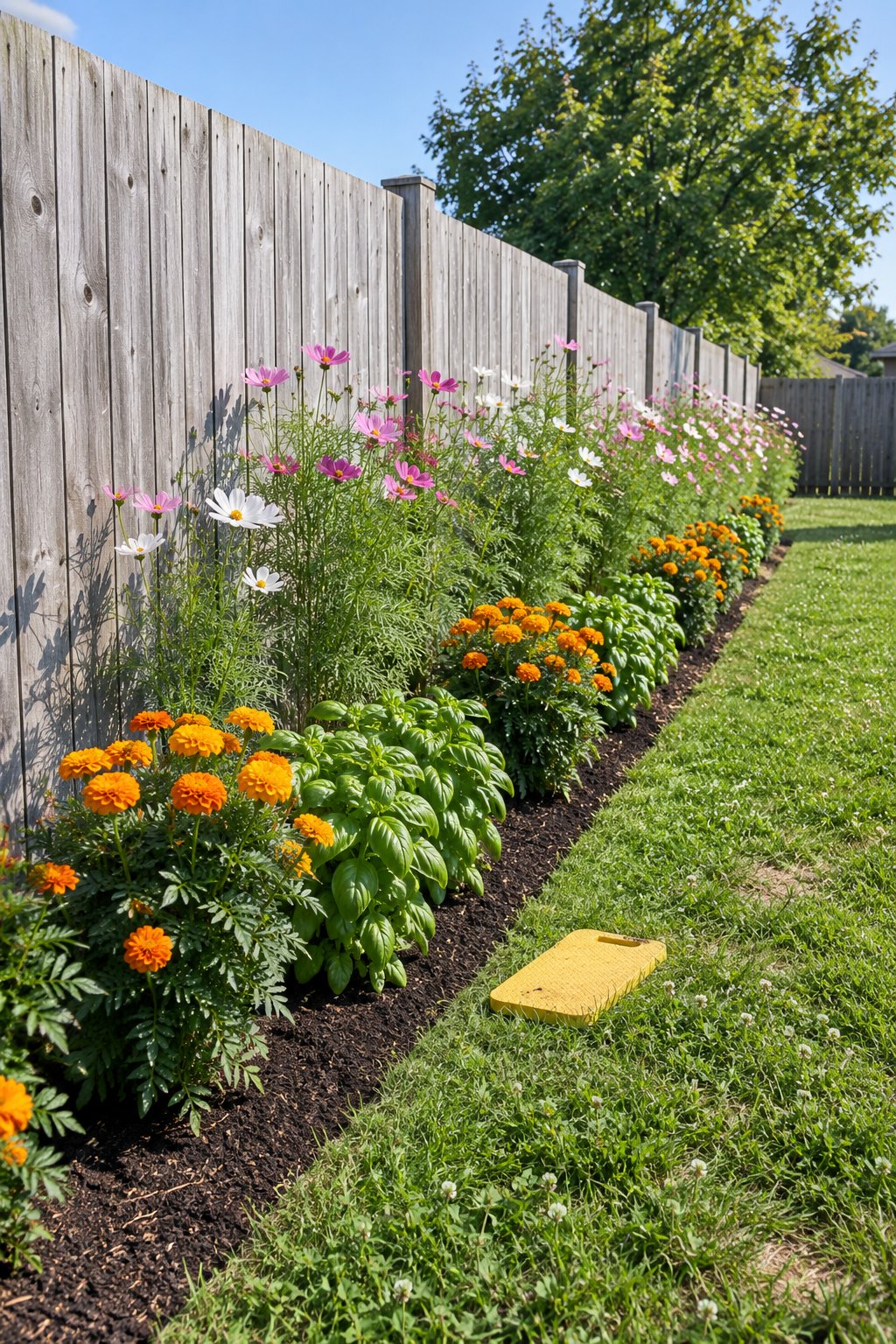
A border you can only reach from the lawn should stay about 2 feet deep. That is two rows, and two rows is enough.
Cosmos line the fence at the back. Marigolds and basil share the front row in alternating blocks.
6. Three Rows Deep With a Stepping-Stone Line
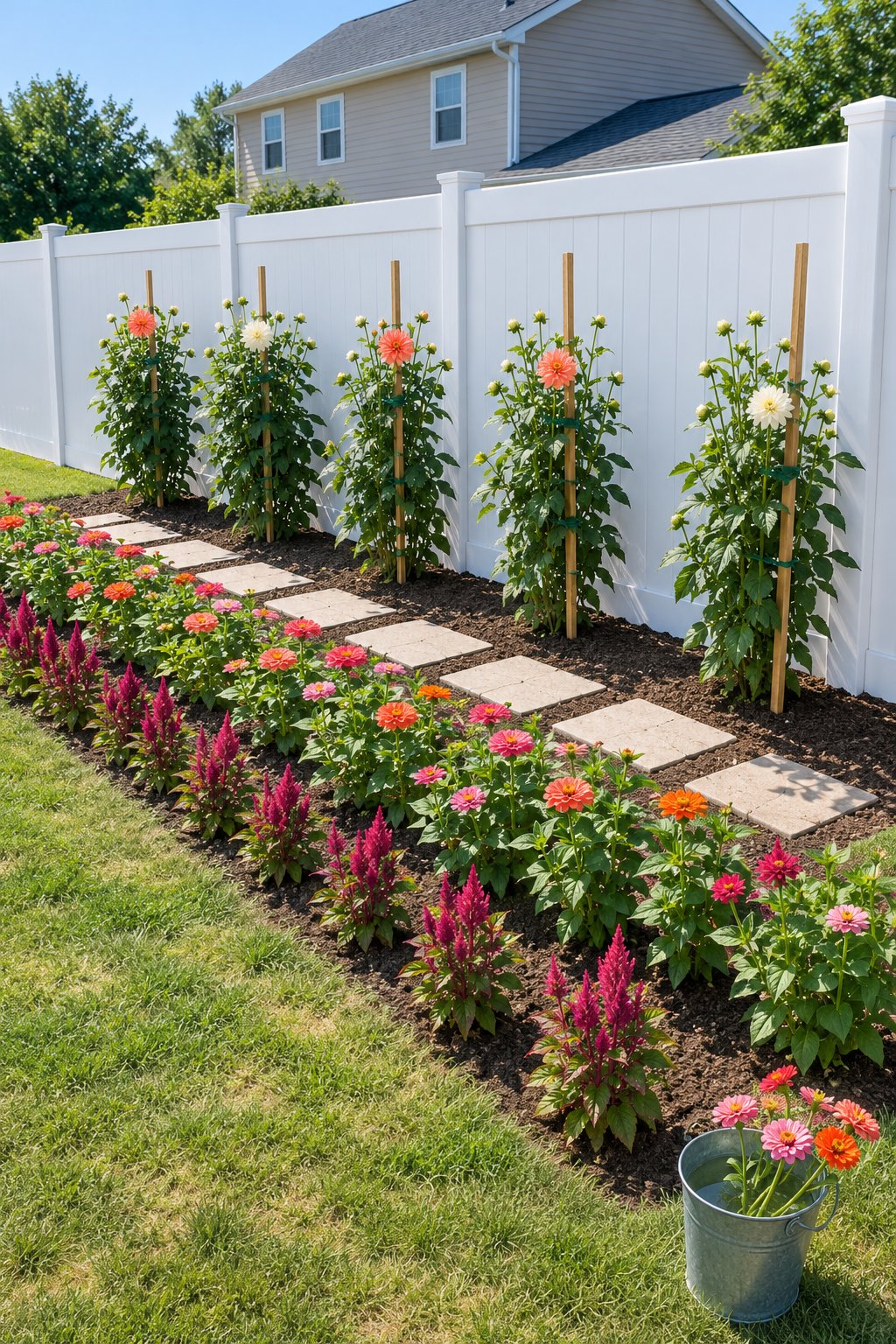
A deeper border needs a way in. Lay a line of stepping stones through it, so every stem stays within reach.
Dahlias stand behind the stones, each tied to its own stake. Zinnias and celosia fill the two rows in front.
7. Two Rows and a Support Net on the Shed Wall
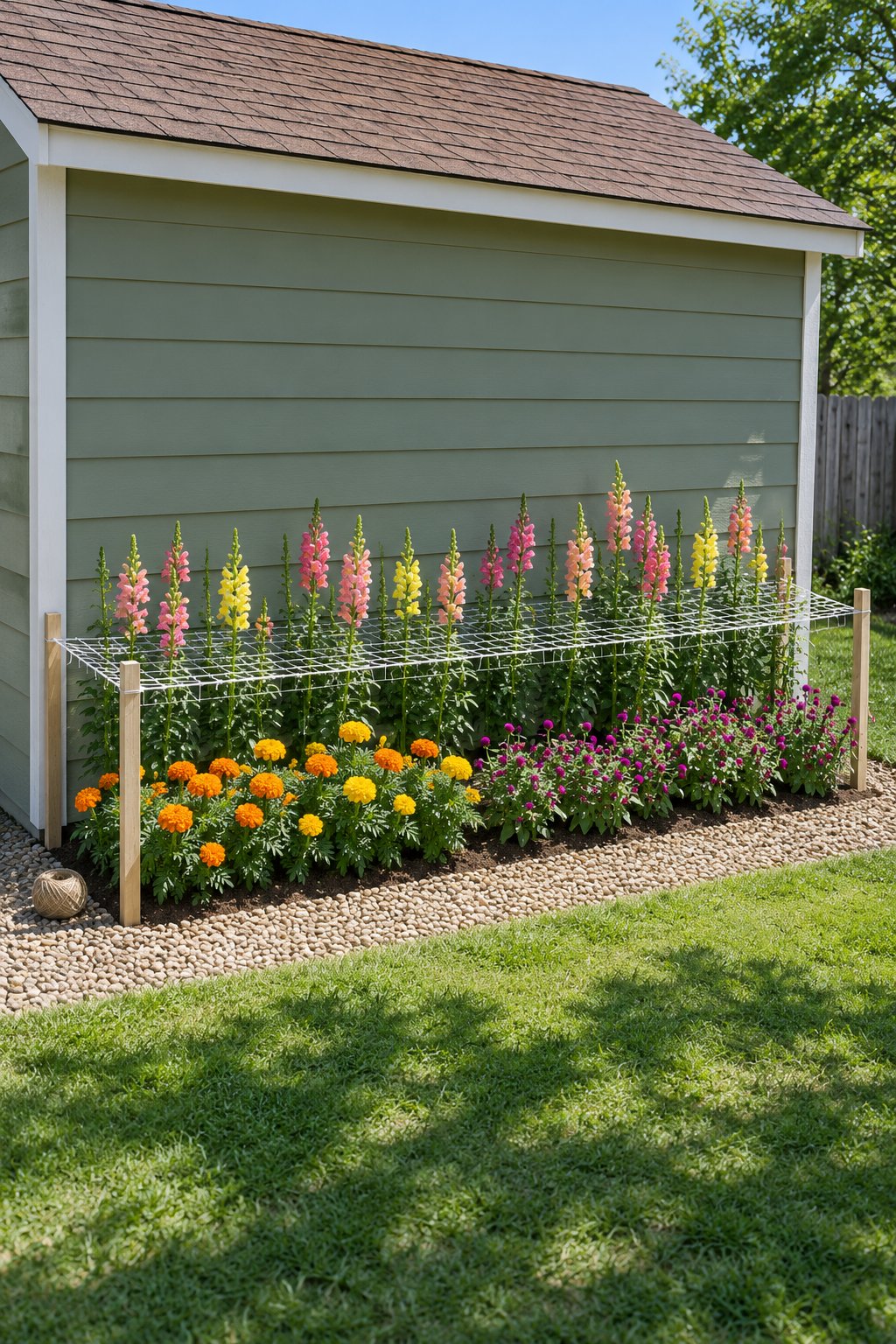
Snapdragons flop without help, so this strip is built around the net. Stretch horizontal support netting between four corner stakes, level and taut.
Snapdragons grow up through it along the wall. Marigolds and gomphrena hold the front row. Gomphrena stands on its own, and tall marigolds only need a stake in a windy spot.
8. One Raised Bed Built Around Staked Dahlias
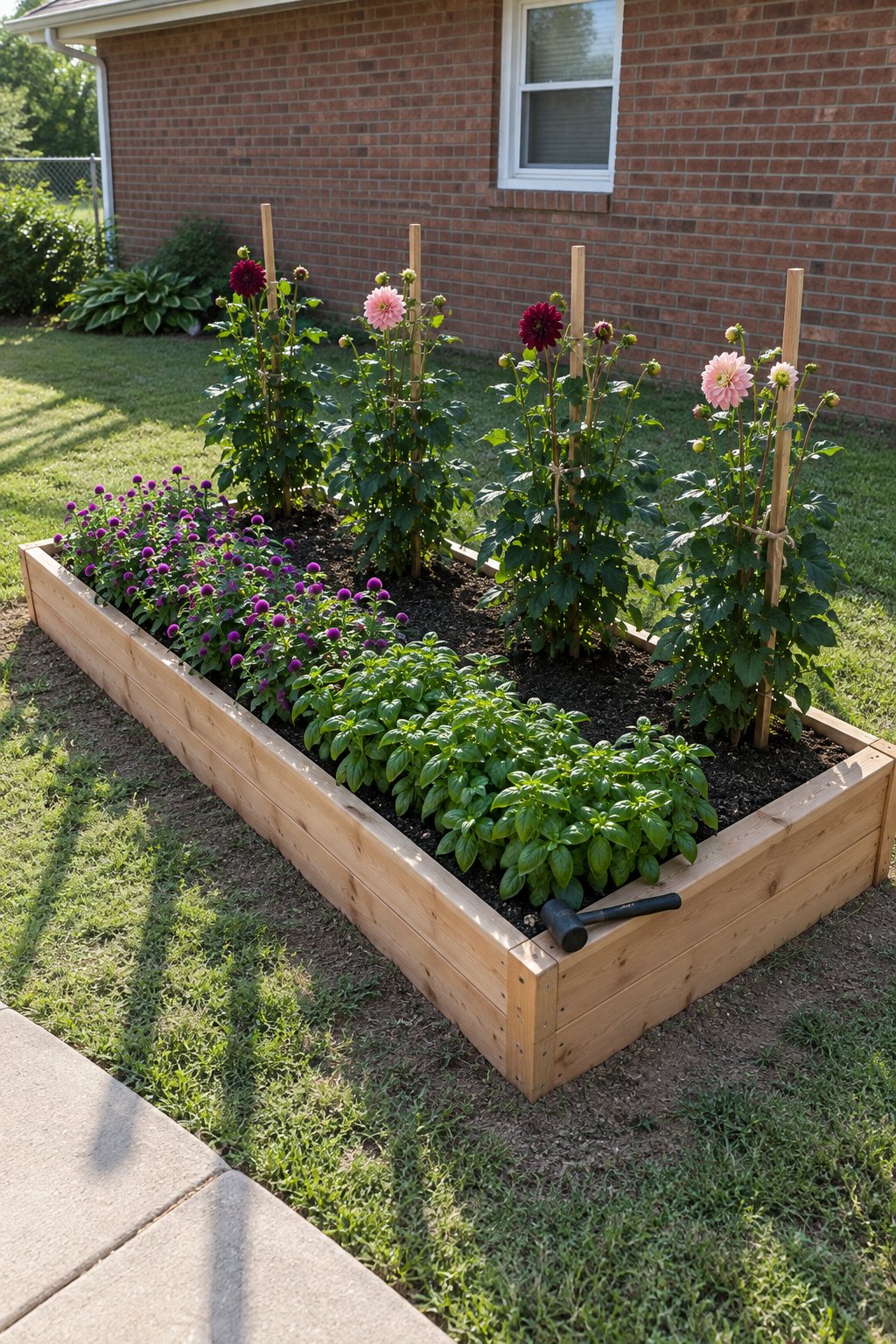
Dahlias earn a raised bed that is planned around them. Keep the frame at most 4 feet wide and run it east to west.
One row of dahlias takes the north edge, a stake beside each plant. Gomphrena and basil split the south row.
9. Three Raised Beds Sorted by Bouquet Job
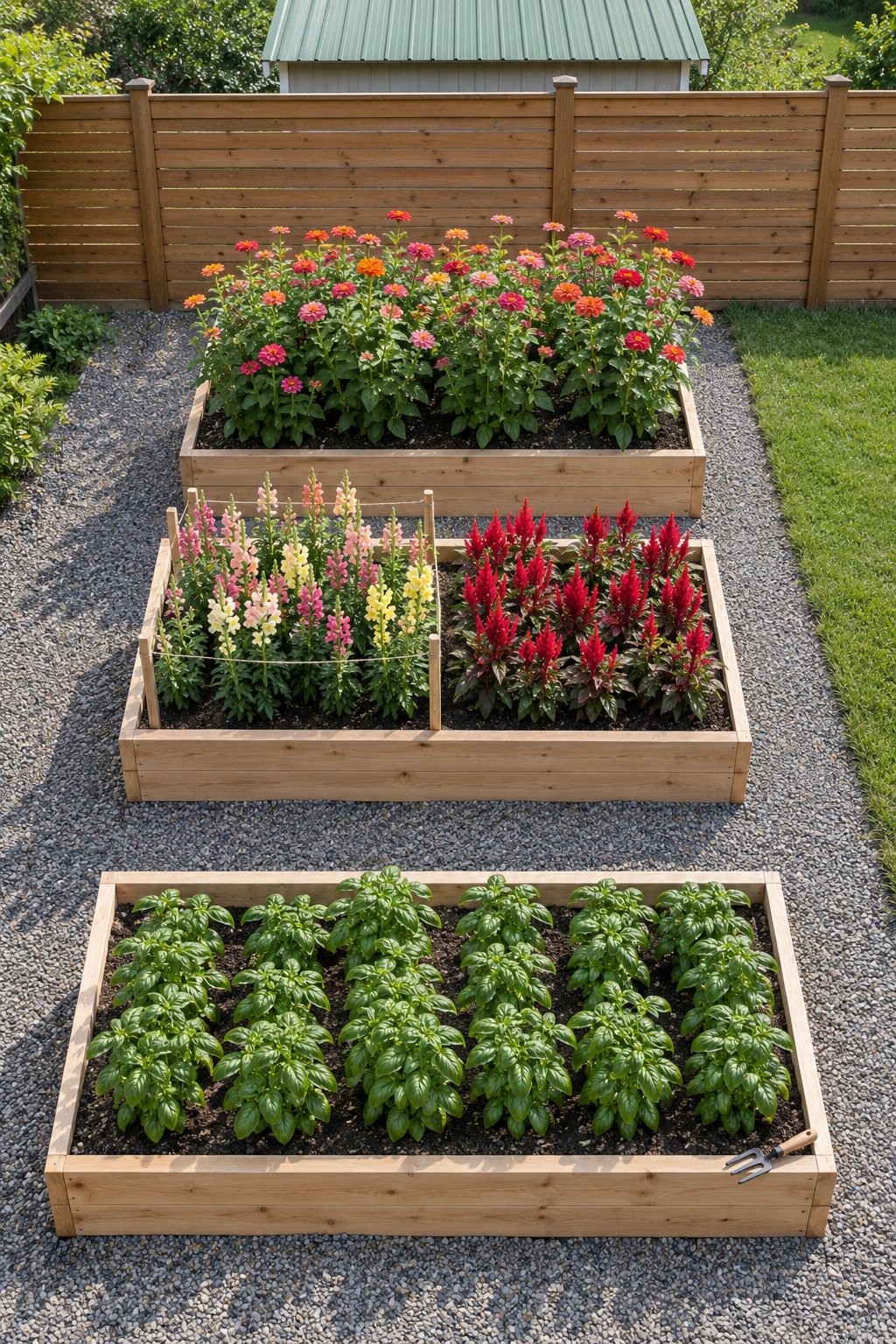
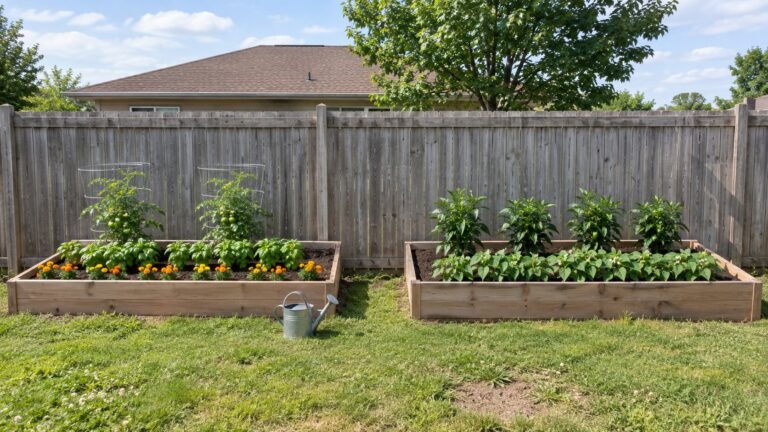
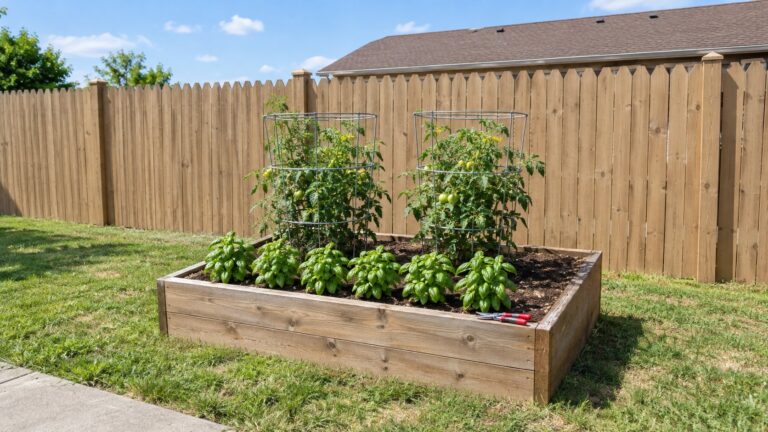
A bouquet needs a focal flower, a spike and a filler, so give each its own bed. Set three raised beds one behind the other, with paths of at least 2 feet between them.
Zinnias go north, snapdragons and celosia in the middle, basil south.
10. Two Metal Troughs Parked on a Patio Slab
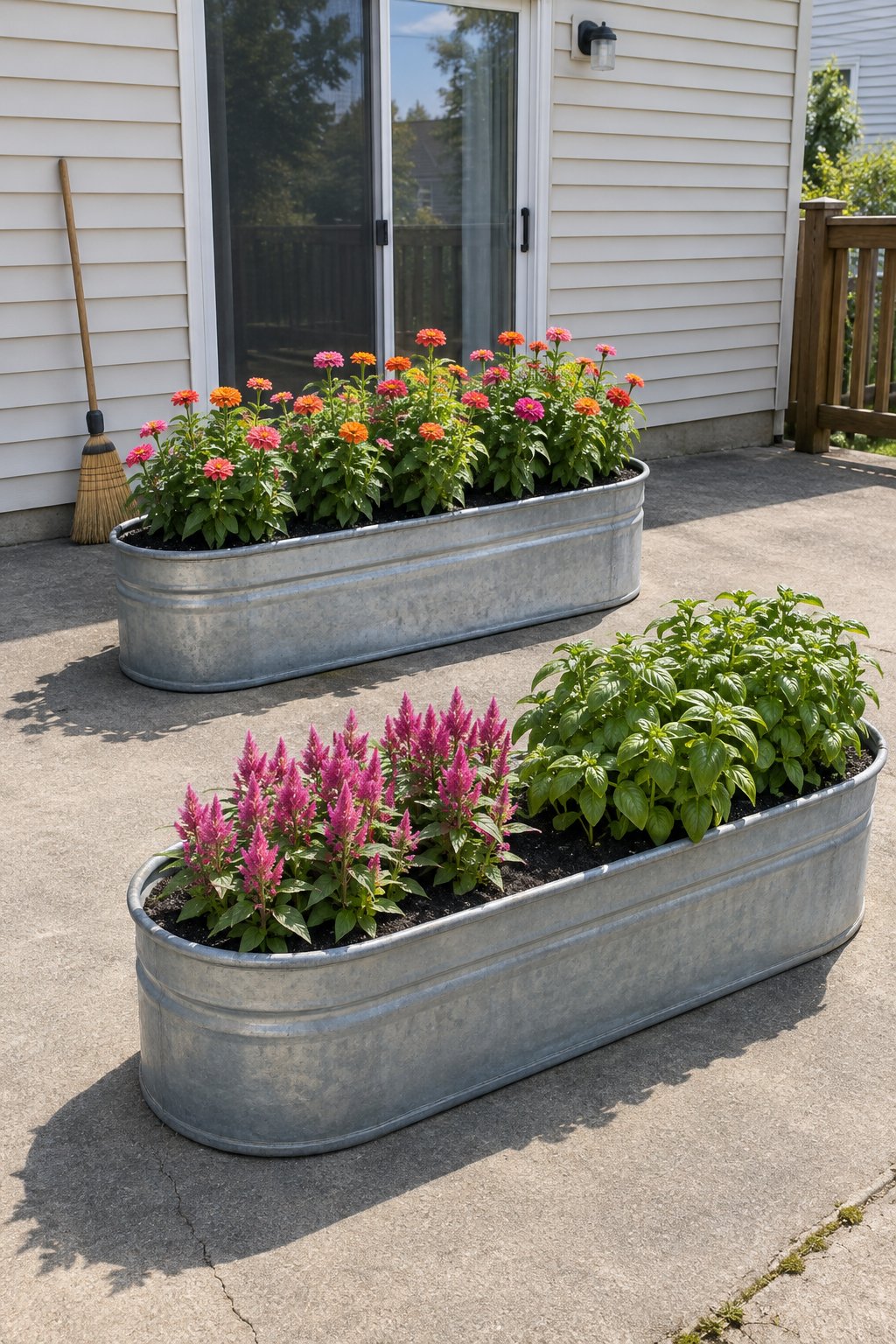
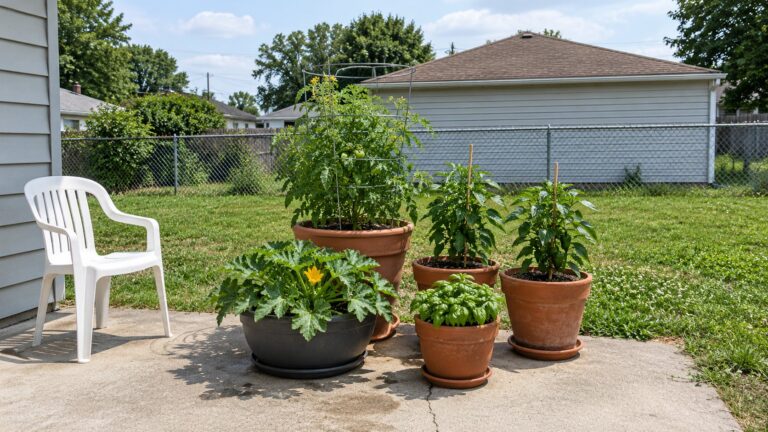
No lawn to dig? Two long metal troughs on a sunny slab make a real cutting garden, as long as each has drainage holes.
Zinnias fill the back trough. Celosia and basil share the front one.
11. Four Single Rows Split by Mown Grass Paths
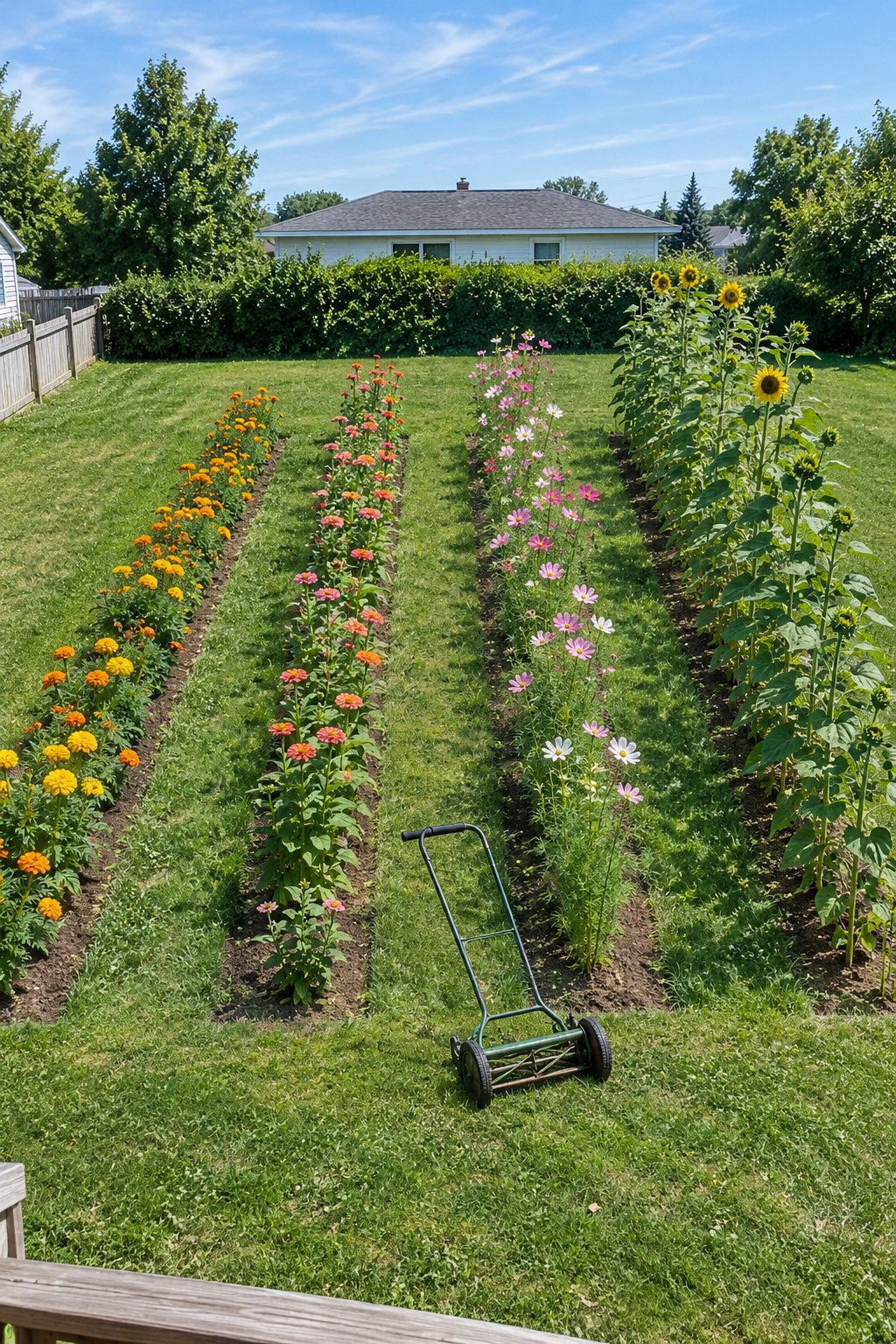
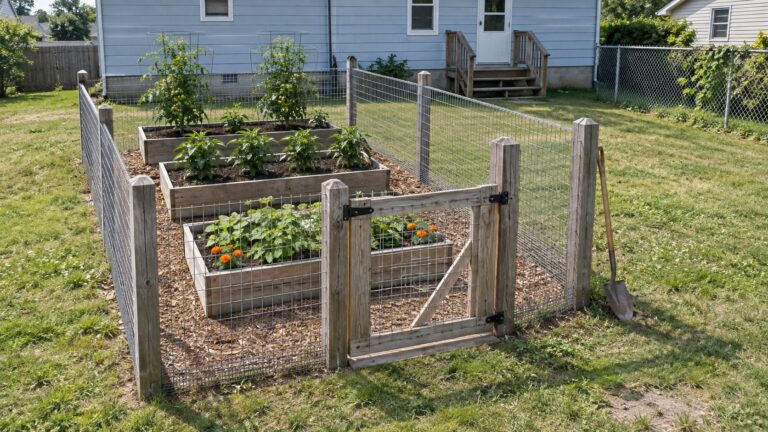
With room to spare, I’d skip beds: call 811, then strip four straight rows out of the lawn. Leave grass paths between them, at least 2 feet wide and wide enough for your mower.
Branching sunflowers take the north row, then cosmos, zinnias and marigolds.
12. Two Long Beds Watered Row by Row
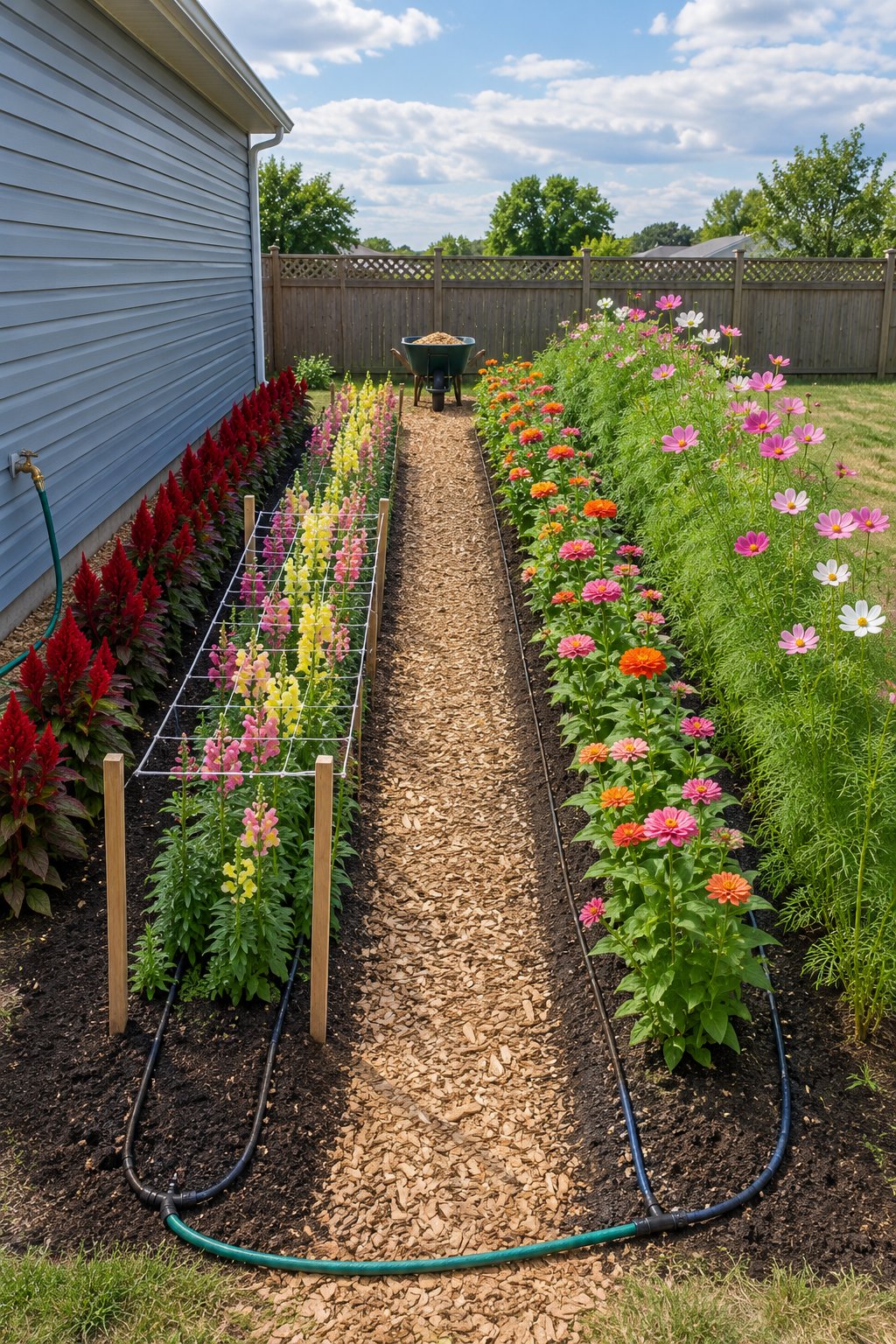
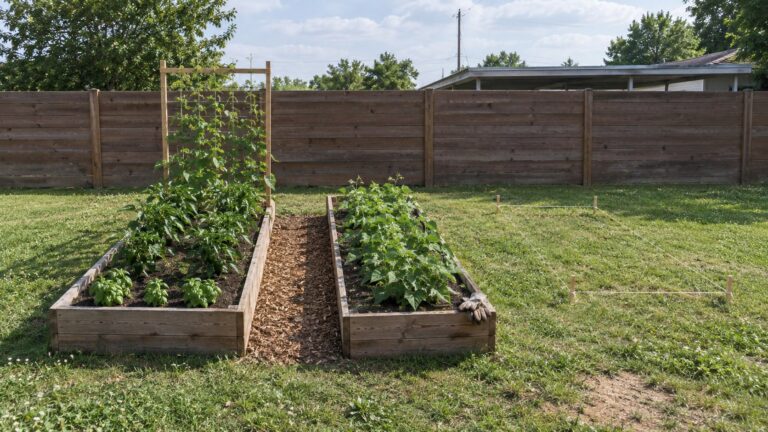
This is the small flower farm version, and the hose does the work. Two long beds, each at most 4 feet wide, sit either side of a mulched path.
Cosmos and zinnias fill the north bed, netted snapdragons and celosia the south. A soaker hose runs down every row.
The Nine Flowers, Sorted by Height and Bouquet Job
Read across a row before you place a flower. All nine want full sun, which means six hours or more of direct sun, and regular water.
Heights are for the tall cutting types and shift with the variety.
| Flower | Height | Job in a bouquet | Needs support? |
|---|---|---|---|
| Sunflower | Tallest | Focal | No, unless the spot is windy |
| Cosmos | Tall | Airy filler | No, unless the spot is windy |
| Dahlia | Tall | Focal | Yes, a stake per plant |
| Zinnia | Waist-high | Focal | Usually not |
| Snapdragon | Knee to waist-high | Spike | Yes, netting or stakes |
| Celosia | Knee to waist-high | Spike (plume types) | No |
| Marigold | Knee to waist-high | Focal | Tall types, in wind or heavy rain |
| Gomphrena | Knee-high | Filler | No |
| Basil | Knee-high | Foliage filler | No |
Before You Dig: Six Cutting Bed Layout Slip-Ups
A bed too wide to reach across
Do thisKeep a bed you reach from both sides at most 4 feet wide. Against a fence or wall, about 2 feet deep is as far as you can cut comfortably.
Tall flowers on the south side
Do thisPut sunflowers, cosmos and dahlias on the north side or at the back, so they do not shade the shorter rows.
A path too tight for a bucket
Do thisLeave at least 2 feet between beds. You will walk it with an armful of stems and a bucket of water.
Supports added after the stems lean
Do thisSet a stake beside each dahlia at planting. Stretch netting over snapdragons while they are still short, so they grow up through it.
The whole bed sown on one day
Do thisSow single-stem sunflowers and zinnias in several rounds, not all at once. New stems then follow the first flush.
A spot with half a day of sun
Do thisEvery flower in these plans needs full sun, which means six hours or more of direct sun. Watch the spot for a day before you lift any turf.
A Cutting Bed Is a Crop, So Give It the Back of the Yard
A flower border is planted to be looked at. A cutting bed is planted to be emptied, and a well-used one looks picked over for most of the summer.
That is why every plan here uses straight rows and plain blocks.
Rows let you weed with a hoe, stretch a net and cut an armful of one flower without hunting for it.
I’d put a backyard cut flower garden behind the garage or along the side fence, in full sun and near a hose.
Keep the pretty border by the patio, and you never have to choose between a vase and a view.
Pick the sunniest strip you have and build one bed this year. Three flowers in three rows will teach you more than a dozen kinds scattered around the yard.
Then cut often. Zinnias and cosmos keep producing when you cut them regularly.
Most cut flower garden ideas fail on reach, not on flowers, so measure the bed before you buy a single seed.
Frequently Asked Questions
What is the easiest cut flower garden for beginners?
One bed with three flowers: zinnias, cosmos and basil, as in plan 1. All three want full sun and regular water, and zinnias and cosmos are easy to grow from seed.
How big should a small cut flower garden layout be?
Size it by reach, not by area. Keep a bed you reach from both sides at most 4 feet wide, and a bed against a fence about 2 feet deep, then make it as long as your space allows.
Does a cut flower garden layout work in raised beds?
Yes. Keep each raised bed at most 4 feet wide, put the tallest flowers on the north side and leave paths of at least 2 feet. Dahlias and snapdragons still need stakes or netting.
Which cut flowers keep blooming after you cut them?
Zinnias and cosmos are cut-and-come-again flowers, so regular cutting brings more stems. A single-stem sunflower gives one bloom per plant, which is why I sow those in succession.
Where should a backyard cut flower garden go?
In full sun, which means six hours or more of direct sun, and within reach of a hose. Call 811 before you dig a new bed, so buried utility lines are marked first.
Save This For Later
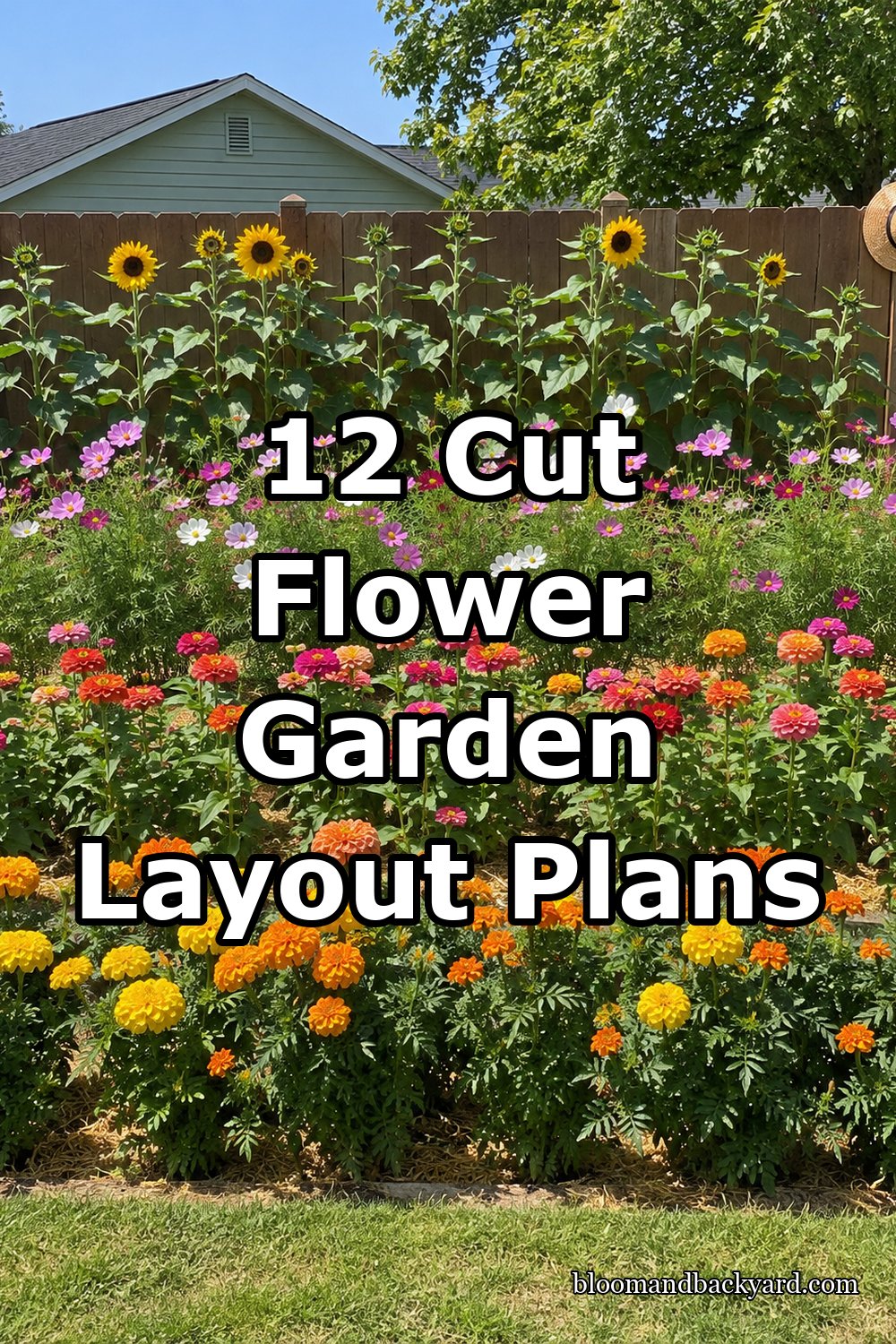
Loved cut flower garden layout? Save this pin to your Pinterest board now so you can find it again anytime you need the inspiration.