Fenced Vegetable Garden: 15 Designs for Yards With Deer and Rabbits
A fenced vegetable garden starts with one question: what is getting in?
Rabbits come along the ground, deer come over the top, and the dog just wants the shortcut.
These 15 designs are sorted by that answer, each with its fence, its gate and the beds inside.
What is getting into the beds?
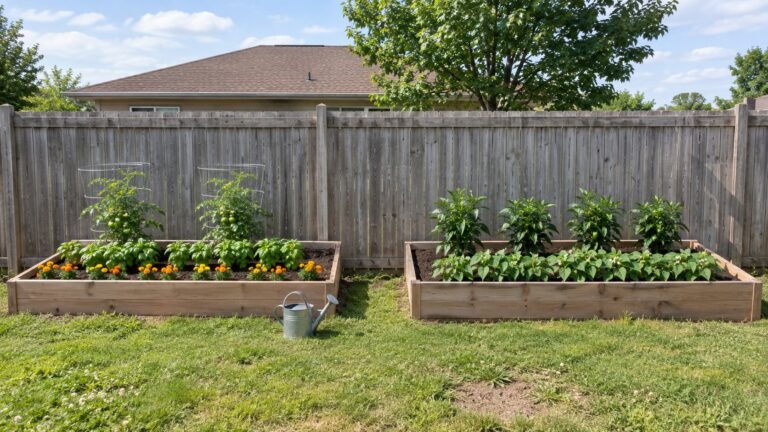
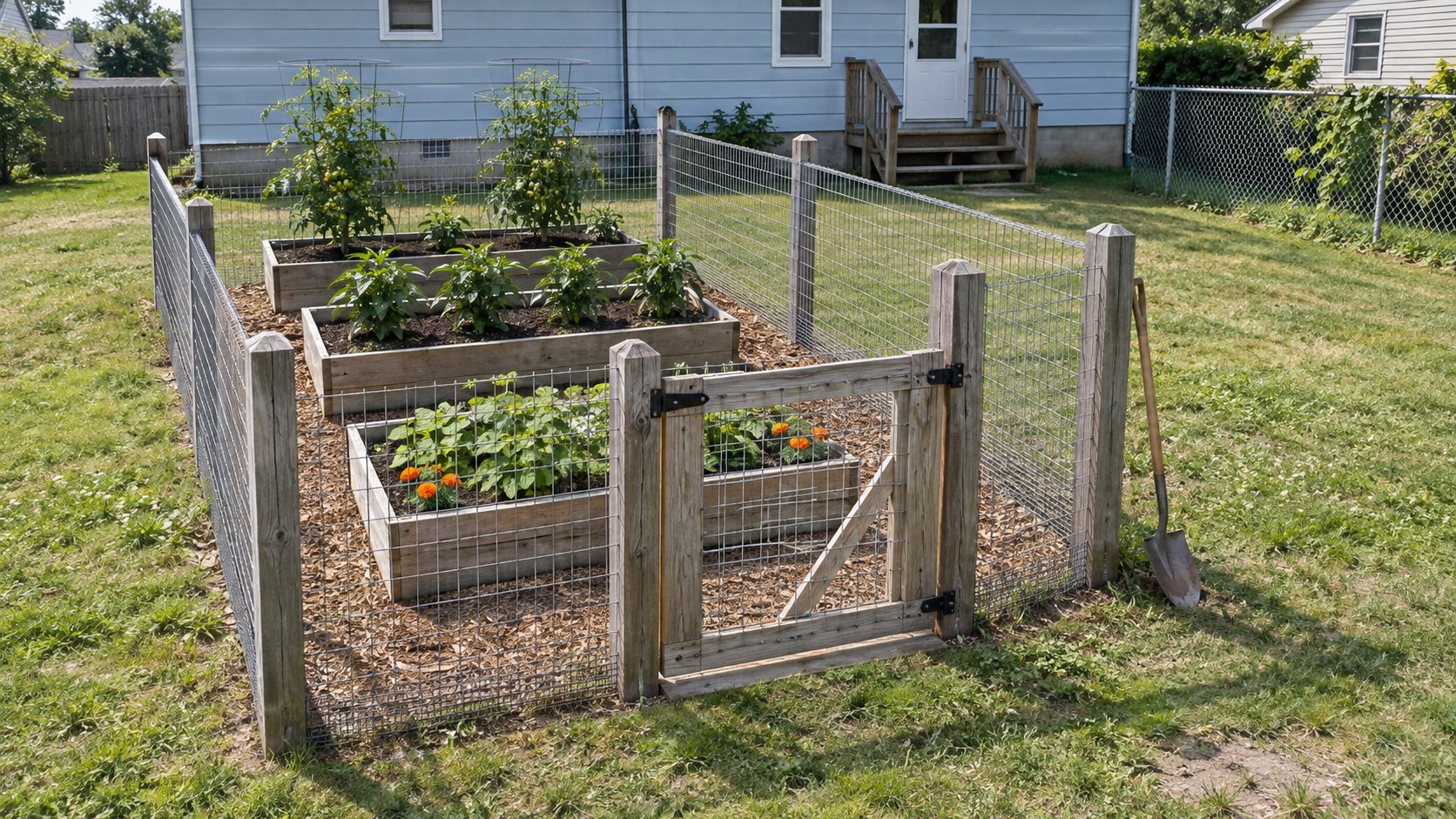
1. Wire Mesh on Cedar Posts Around Two Raised Beds, Gate on the House Side
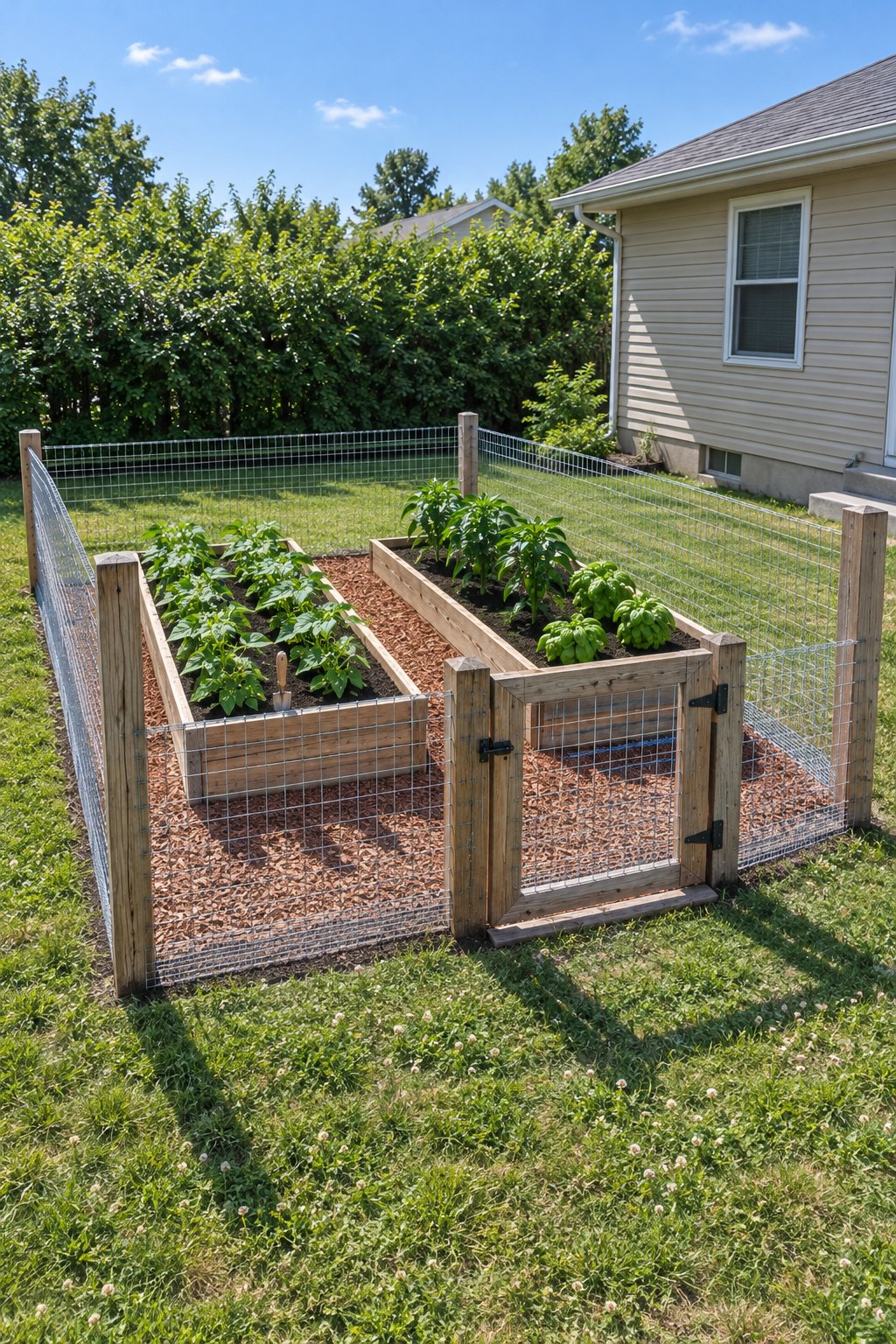
A rabbit looks for a gap at ground level, so that is where this fence does its work. The mesh is small at the base and its bottom edge is buried.
Inside, two raised beds hold bush beans, peppers and basil.
2. White Pickets Lined With Mesh Around a Square of Four Beds, Gate Facing the Back Door
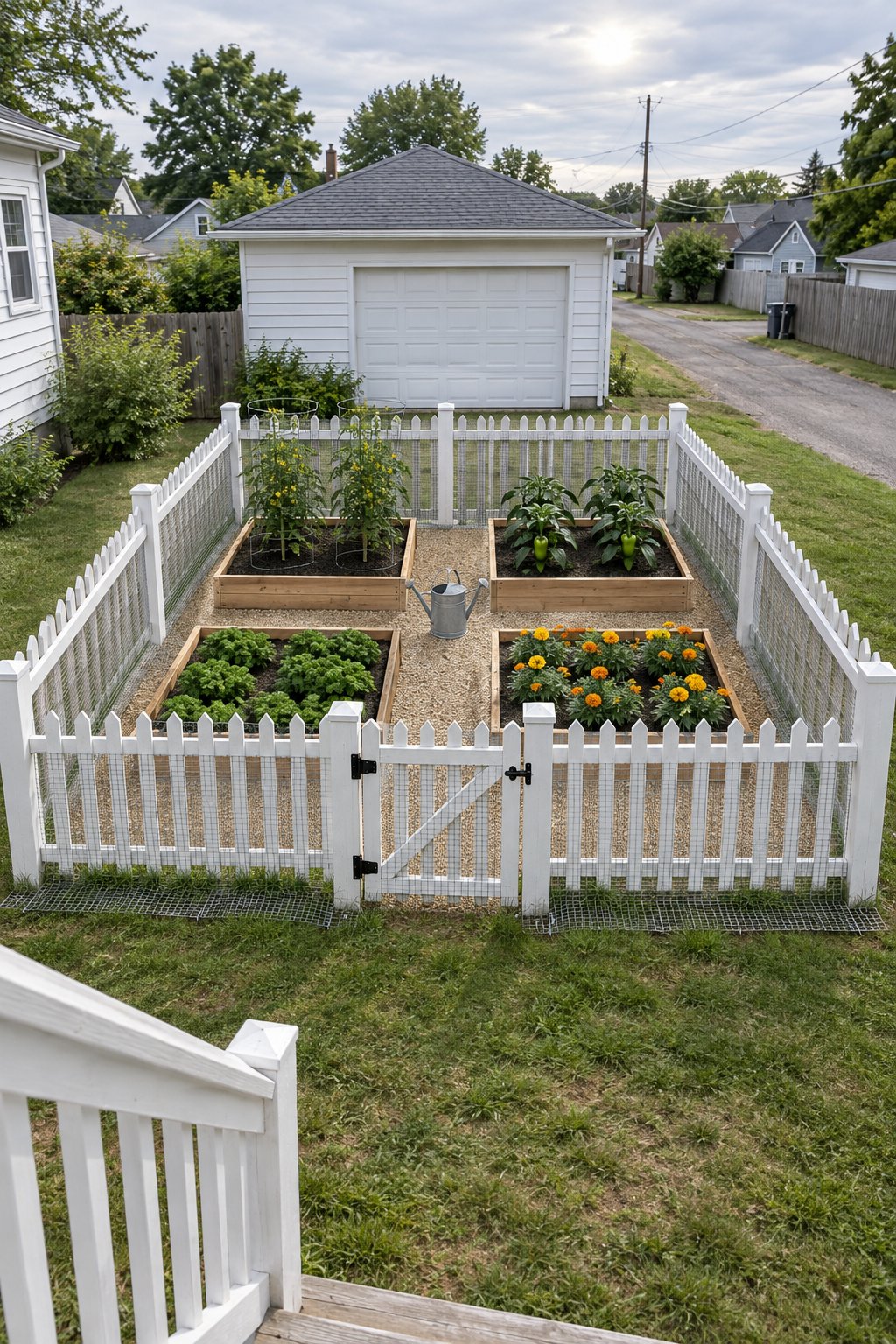
Pickets look finished and wave a rabbit straight through. Small mesh fastened to the inside, with its bottom edge bent outward along the ground, closes the gaps.
Four beds hold tomatoes, peppers, parsley and marigolds.
3. Stock Panels Between Timber Posts Around Three Beds, a Hinged Panel for a Gate
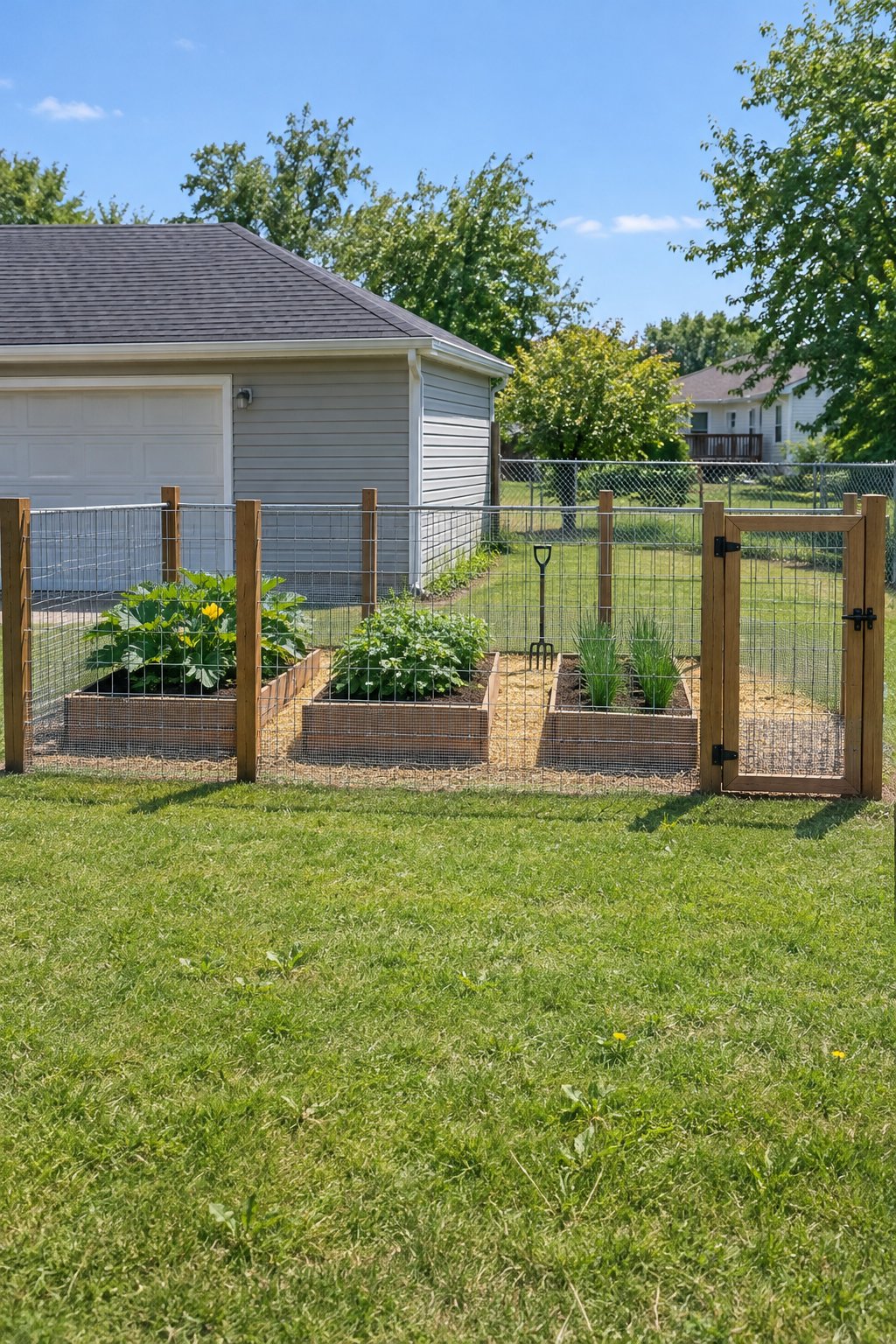
Rigid cattle or hog panels go up one section at a time, with nothing to stretch. Their openings are wide, so a strip of small mesh runs along the base, bottom edge buried.
Three beds hold zucchini, bush beans and chives.
4. A Low Mesh Fence on Metal Stakes Around Four In-Ground Rows, One Section That Unhooks
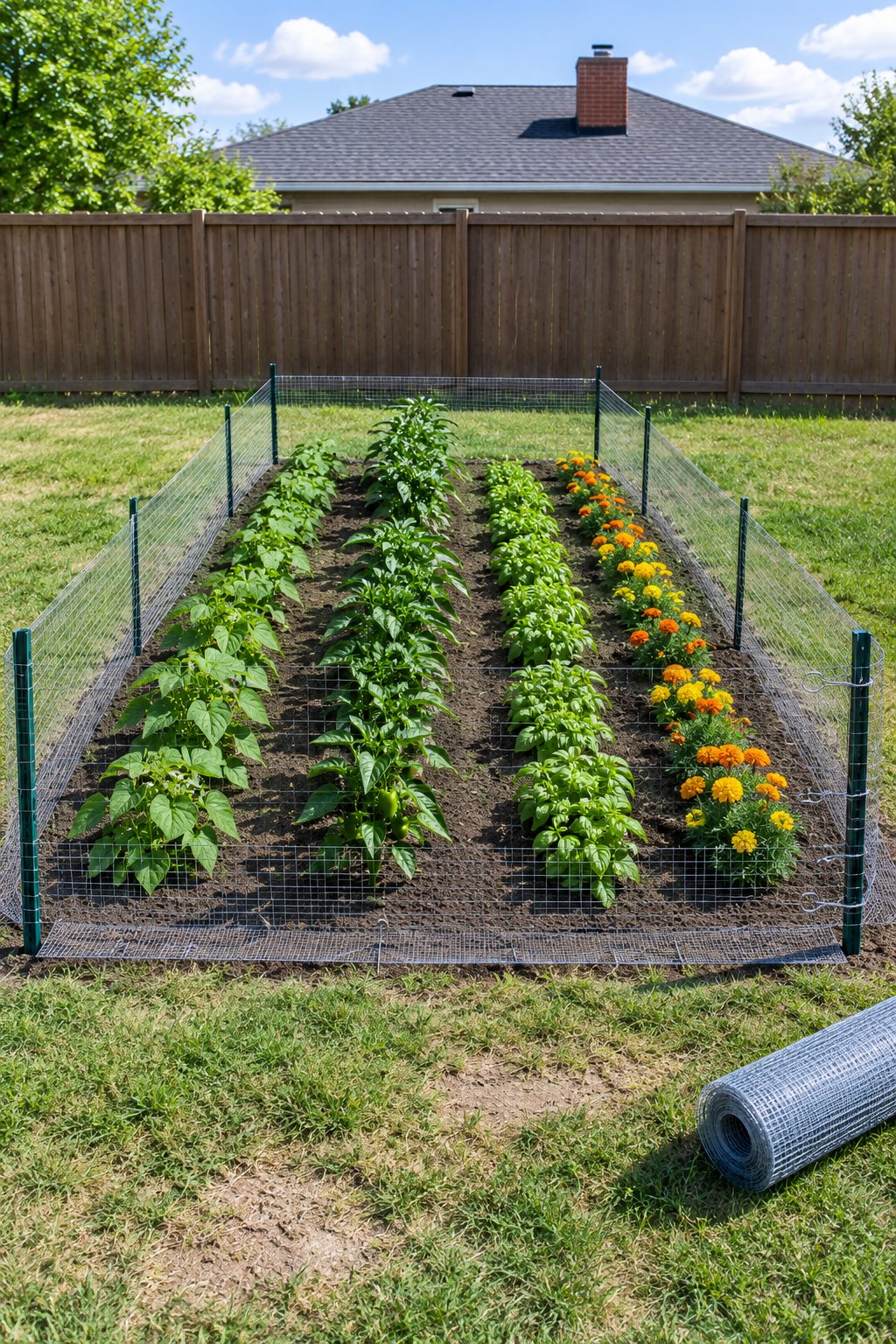
This is the cheapest fence here: a roll of small mesh, a handful of stakes and no posts to dig. The bottom edge is bent outward and pinned to the soil.
Four rows hold bush beans, peppers, basil and marigolds.
5. Tall Wire on Tall Wooden Posts Around Four Beds, a Full-Height Gate at the Corner
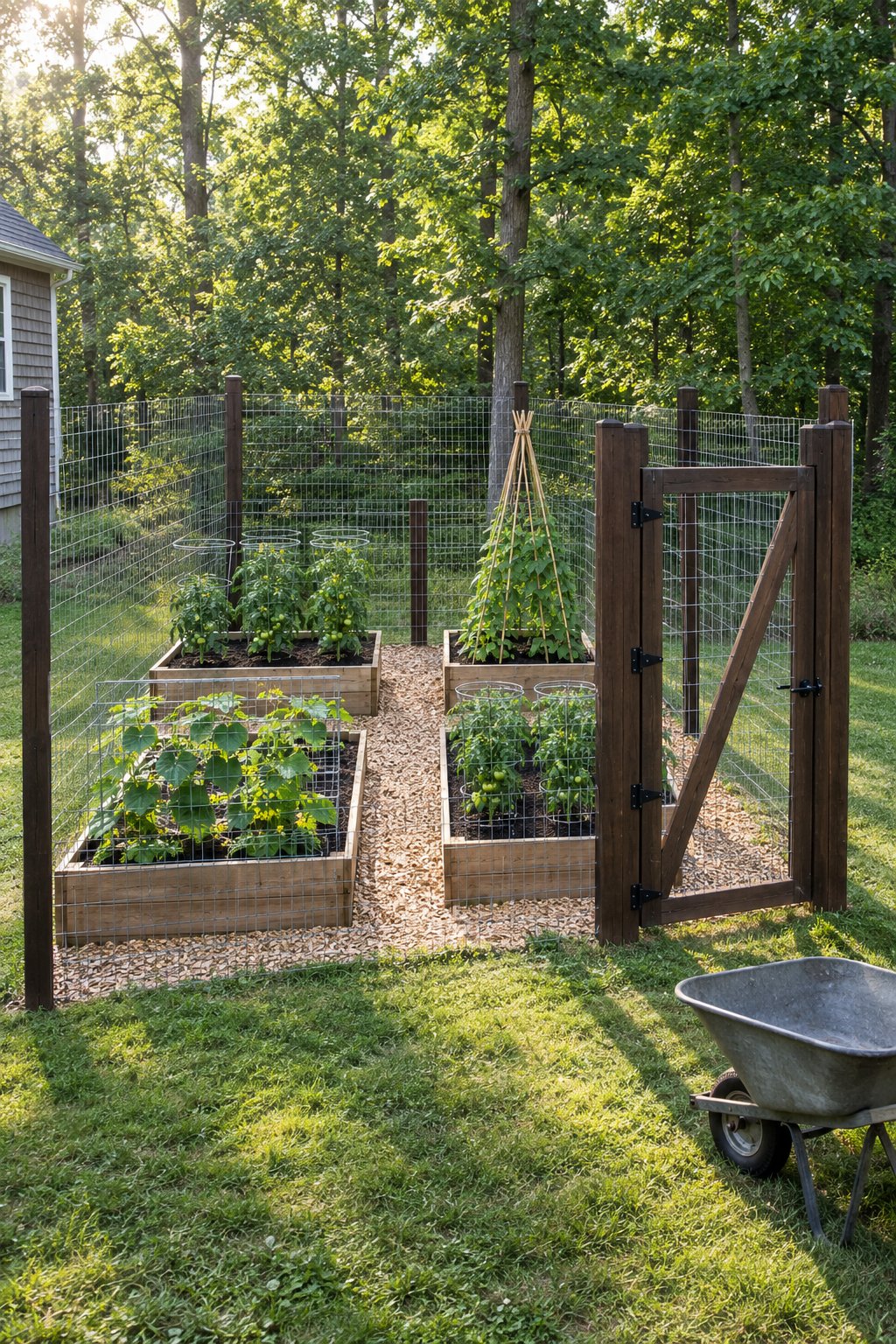
Deer jump, so a deer fence is a tall one. How tall depends on local deer pressure, and your extension office can tell you.
Four beds hold tomatoes, pole beans and cucumbers, with a 3 foot path from the gate.
6. Tall Wire With Small Mesh Along the Base Around Three Beds, One Wide Gate
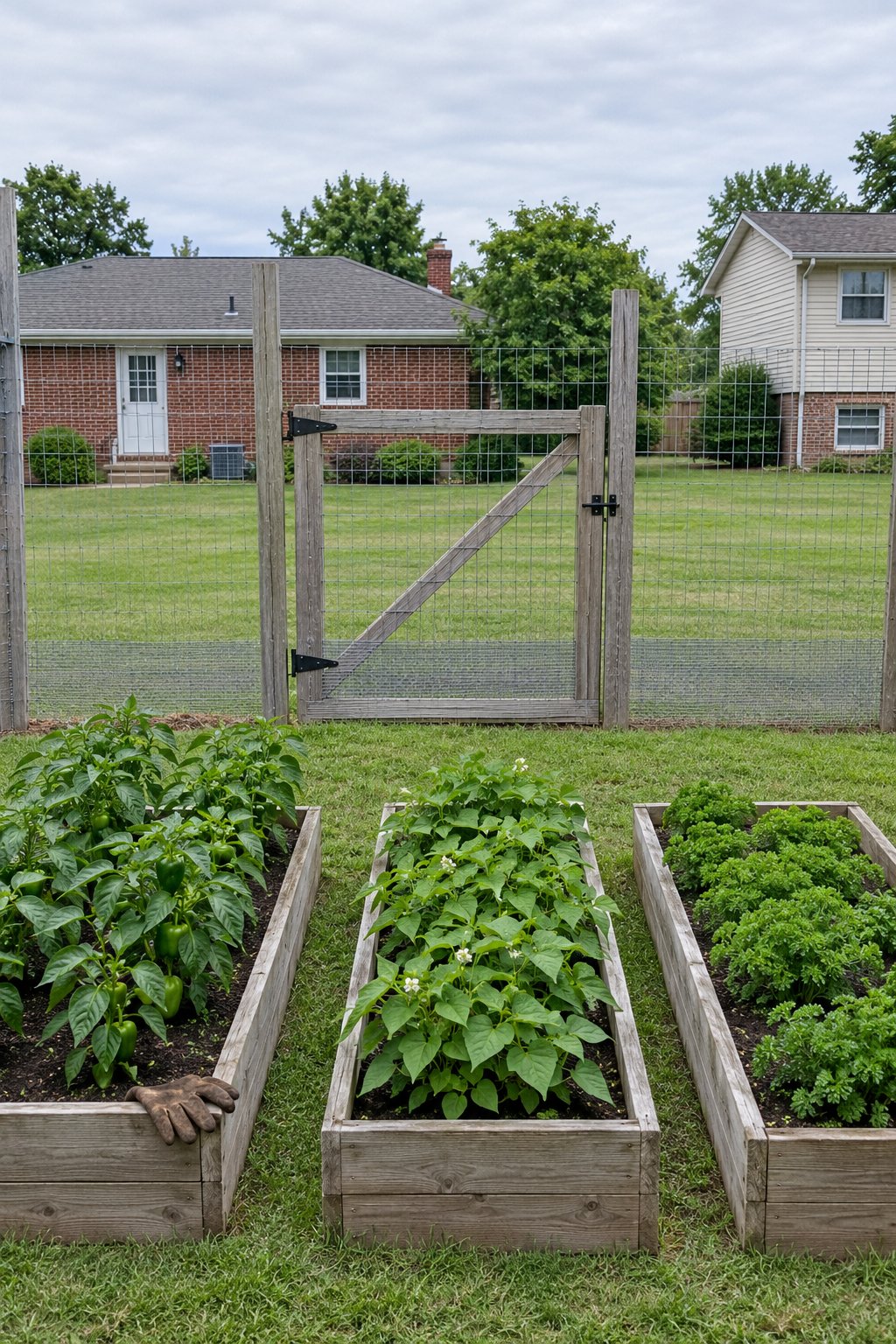
Where deer and rabbits both visit, one fence can be built for the pair. Tall wire handles the top, and a band of small mesh along the base, bottom edge buried, handles the ground.
Three beds hold peppers, bush beans and parsley.
7. A Walk-In Frame With Mesh Walls and a Mesh Roof Over Two Beds, a Framed Door
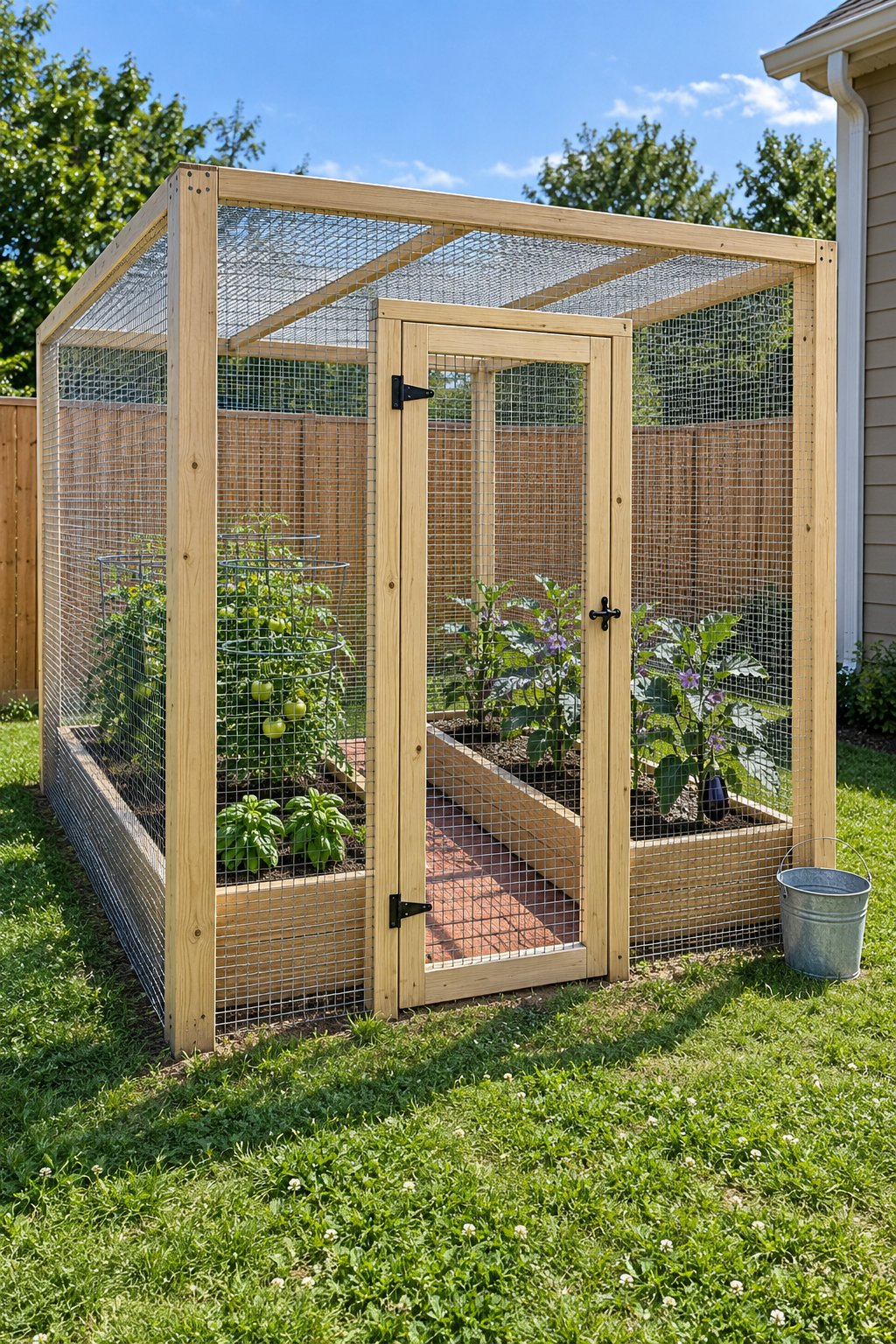
Roof the garden and the fence no longer has to out-jump anything. The frame only needs to be tall enough for you to stand in, with mesh on every side and overhead.
Two beds hold tomatoes, eggplant and basil.
8. Tall Wire on Driven Metal Posts Around Five Long In-Ground Rows, a Gate Hung on Two Wooden Posts
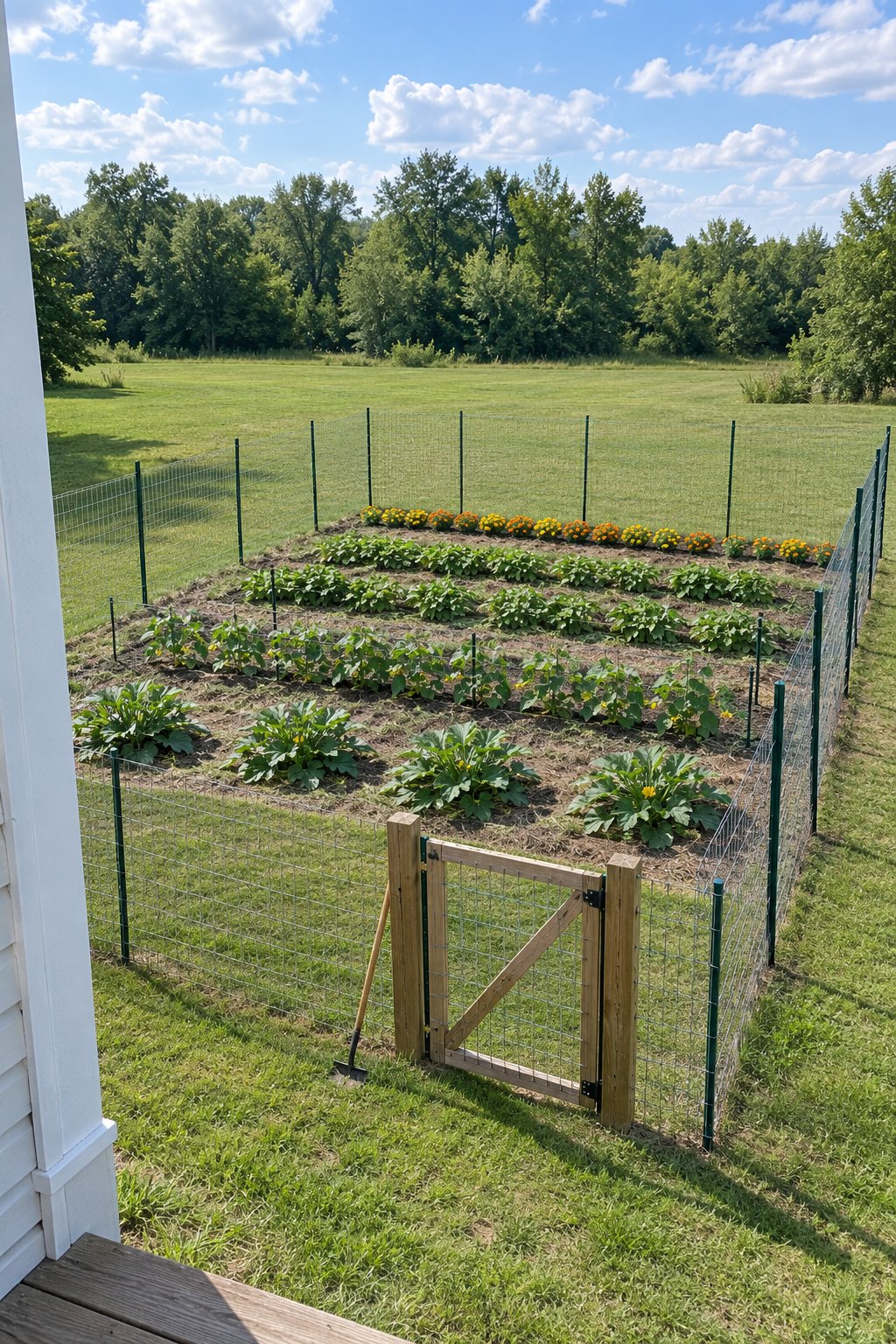
Metal posts are driven, not dug, which makes this the lighter way to fence a bigger plot against deer. Wooden posts go only at the gate.
Long rows hold zucchini, cucumbers, bush beans and marigolds.
9. Low Pickets Around Three Beds Beside the Patio, a Gate That Shuts Itself
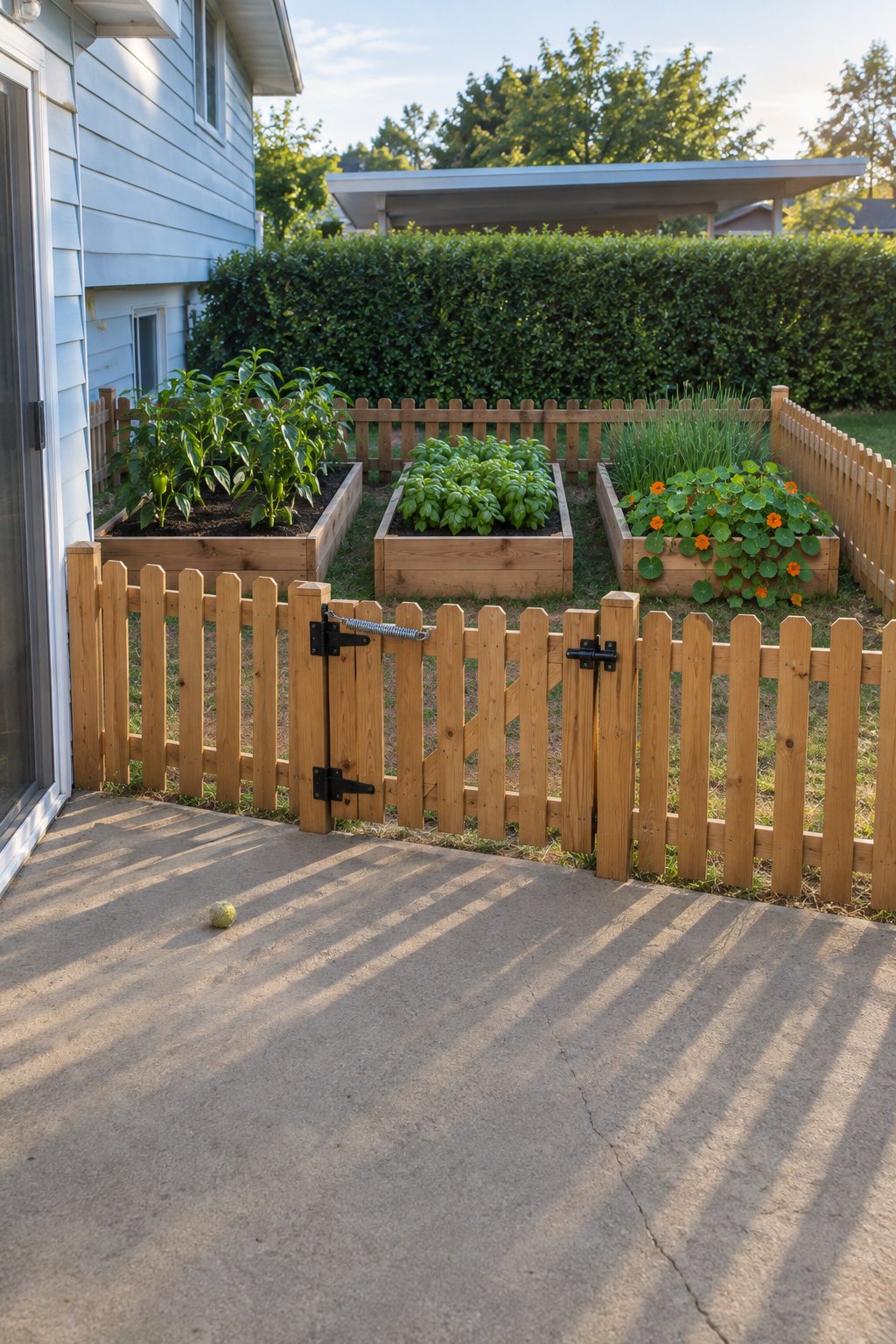
A dog isn’t after the peppers. It wants the straight line across the yard, and a low fence takes that line away.
Three beds hold peppers, basil, chives and nasturtiums.
10. The Yard Fence as Two Sides, Wire Panels as the Other Two, Gate at the Open Corner
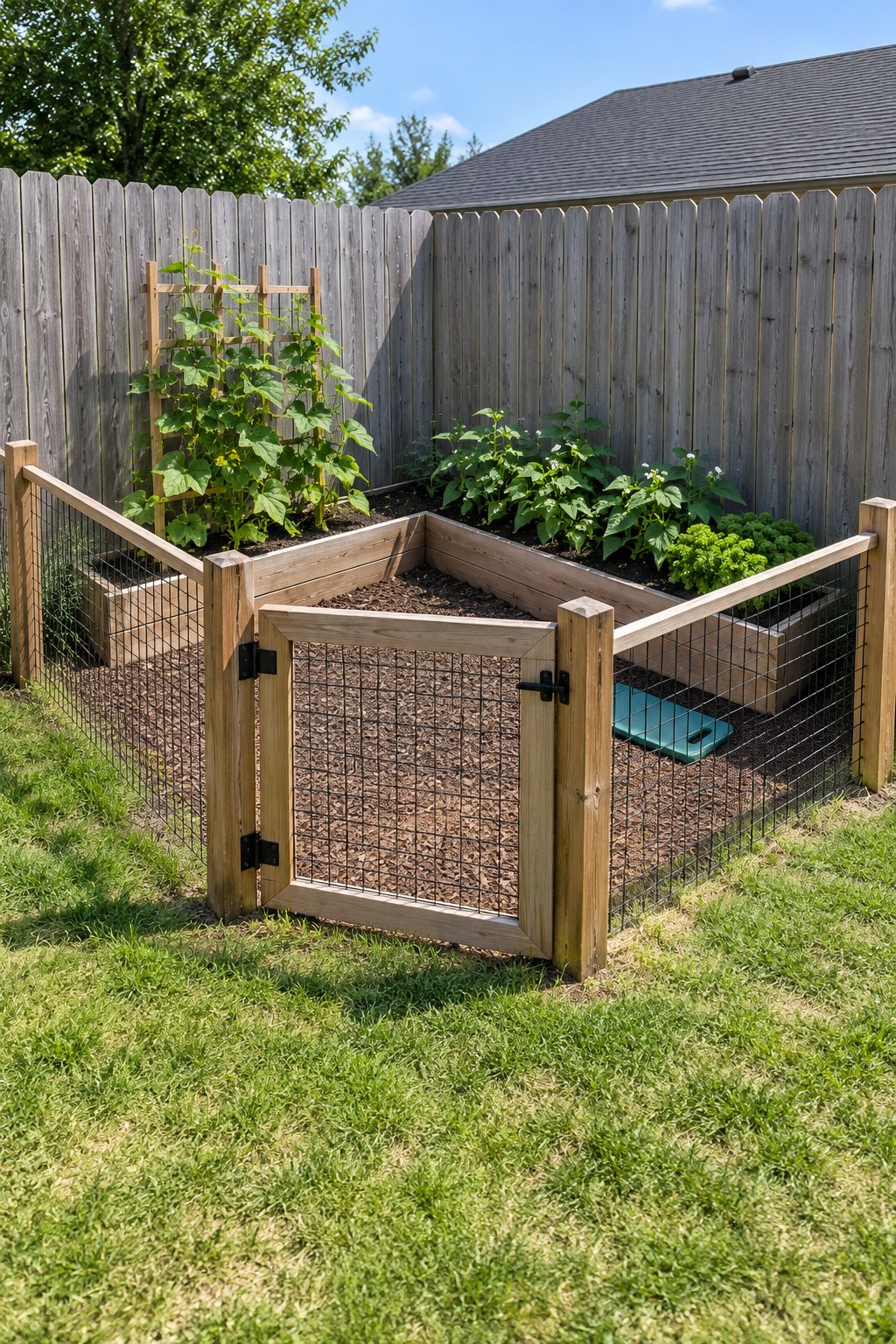
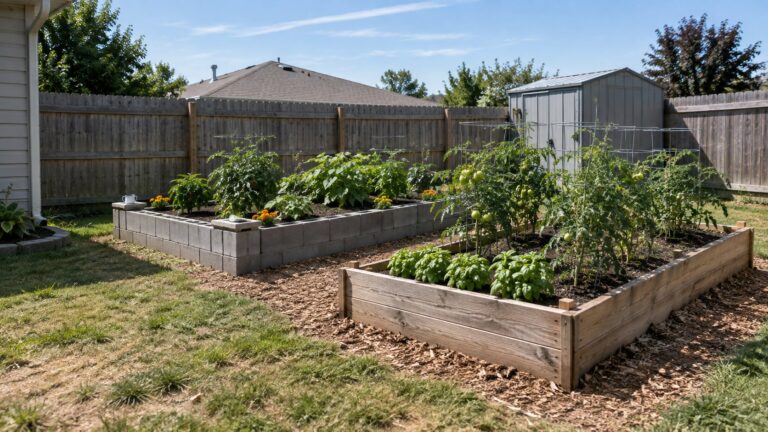
A fenced corner is half built already. Two beds, each about 2 feet deep, run along the existing fence in an L, and two short runs of wire panel close the square.
The beds hold cucumbers, bush beans and parsley.
11. The Back Fence as One Side, a Front Run of Mesh on Posts, Gate in the Middle
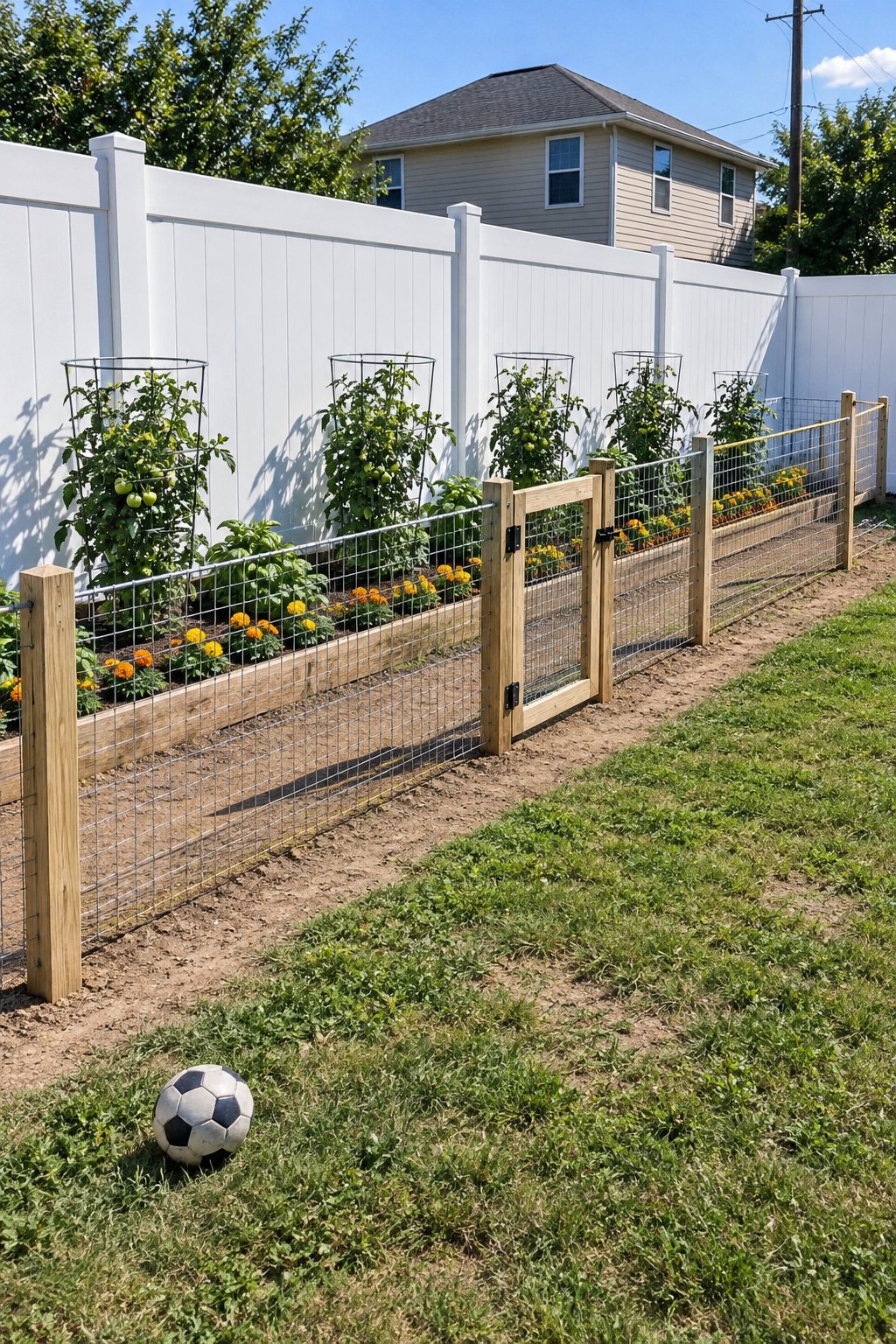
Soccer balls travel low and fast, and a tomato cage loses every time. One long bed, about 2 feet deep, sits against the back fence with a mesh run in front of it.
It holds tomatoes, basil and marigolds.
12. One Fence and Gate Across the Side Yard, With the House Wall and Yard Fence as the Rest
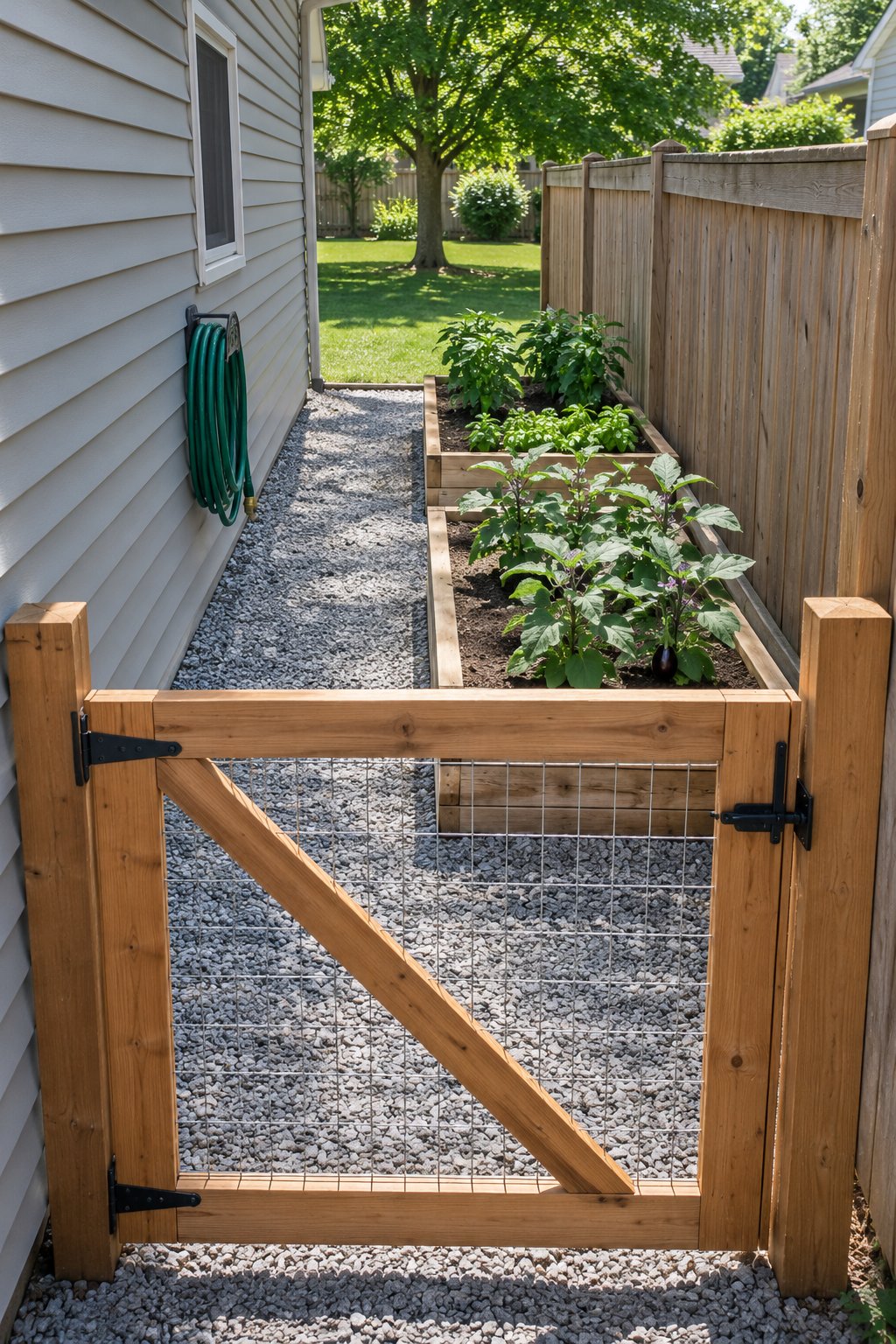
A side yard needs only one new run of fence, across its open end. The house wall and the yard fence do the rest.
Two beds in single file hold eggplant, peppers and basil.
13. Two Hinged Mesh Lids on One Raised Bed, No Gate to Build
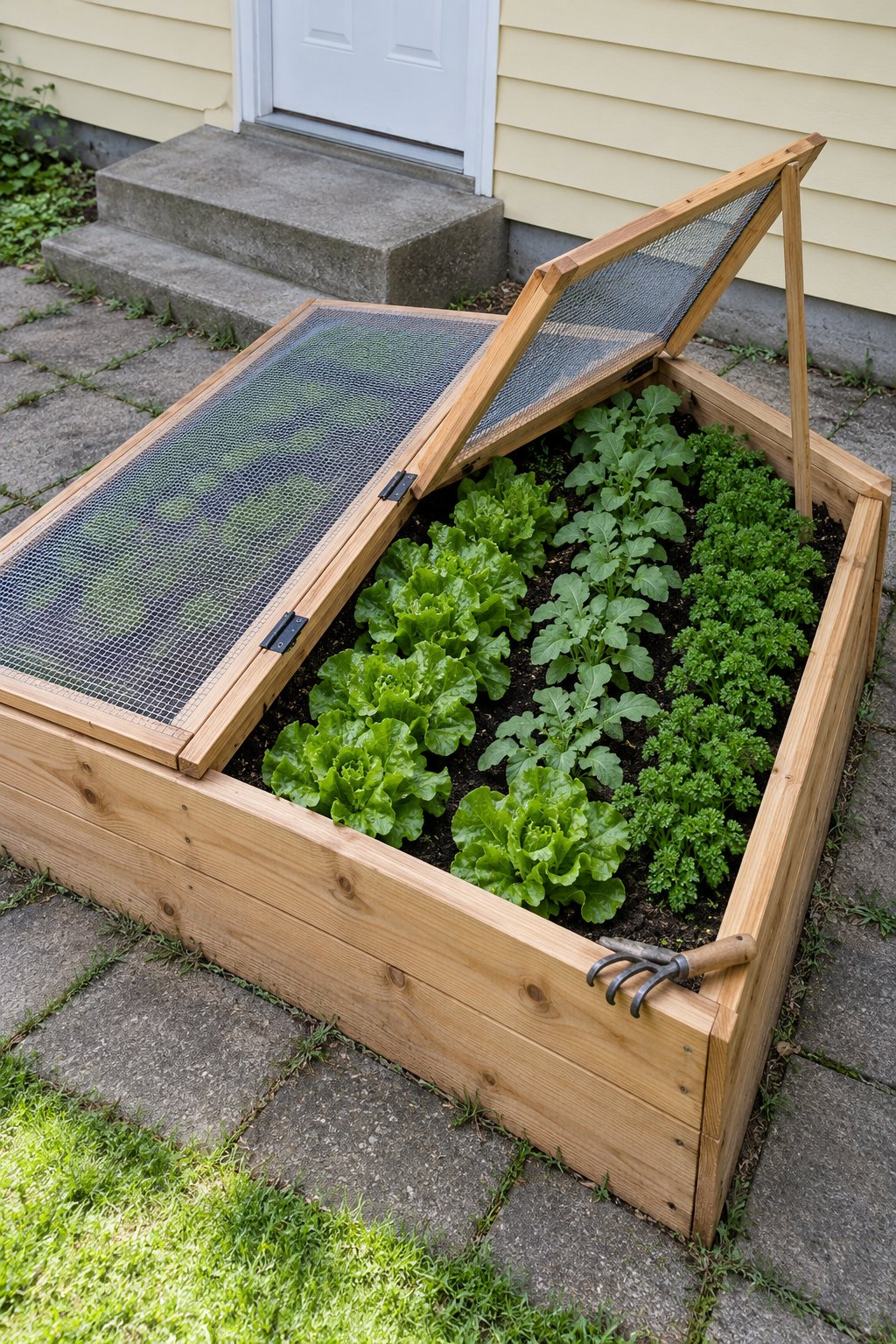
One bed needs a lid, not a fence. Two shallow frames covered in mesh hinge along the bed’s long sides and meet in the middle.
Underneath go lettuce, radishes and parsley. Lettuce and radishes are cool-season crops, best in spring and fall.
14. Hoops and Wire Mesh Arched Over One Raised Bed, an End Panel That Lifts Off
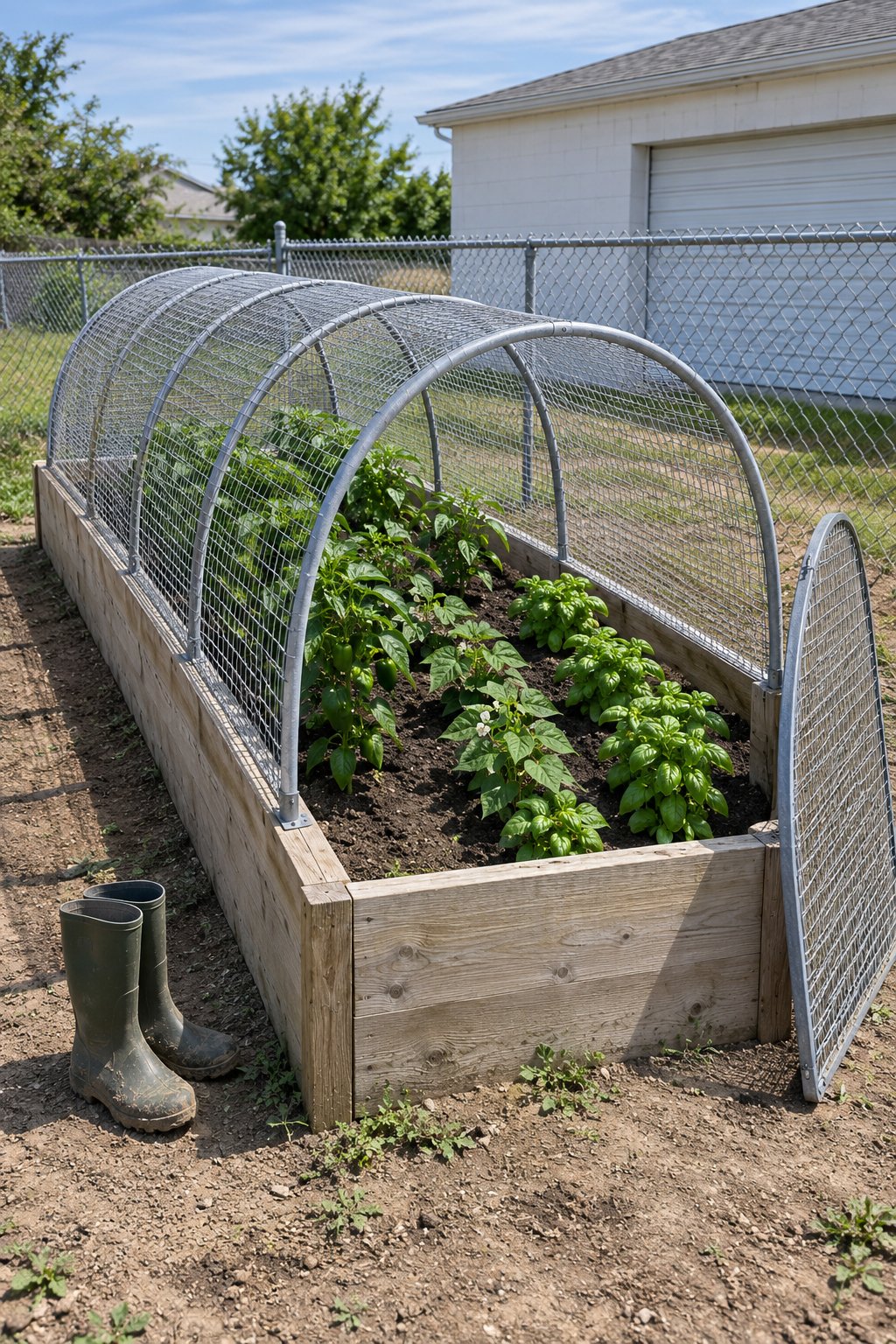
Hoops give a single bed headroom that a flat lid can’t. Bend them from side to side, cover the arch in wire mesh and close both ends.
Peppers, bush beans and basil fit underneath.
15. A Low Mesh Collar Fixed to One Raised Bed’s Corners, One Side That Unhooks
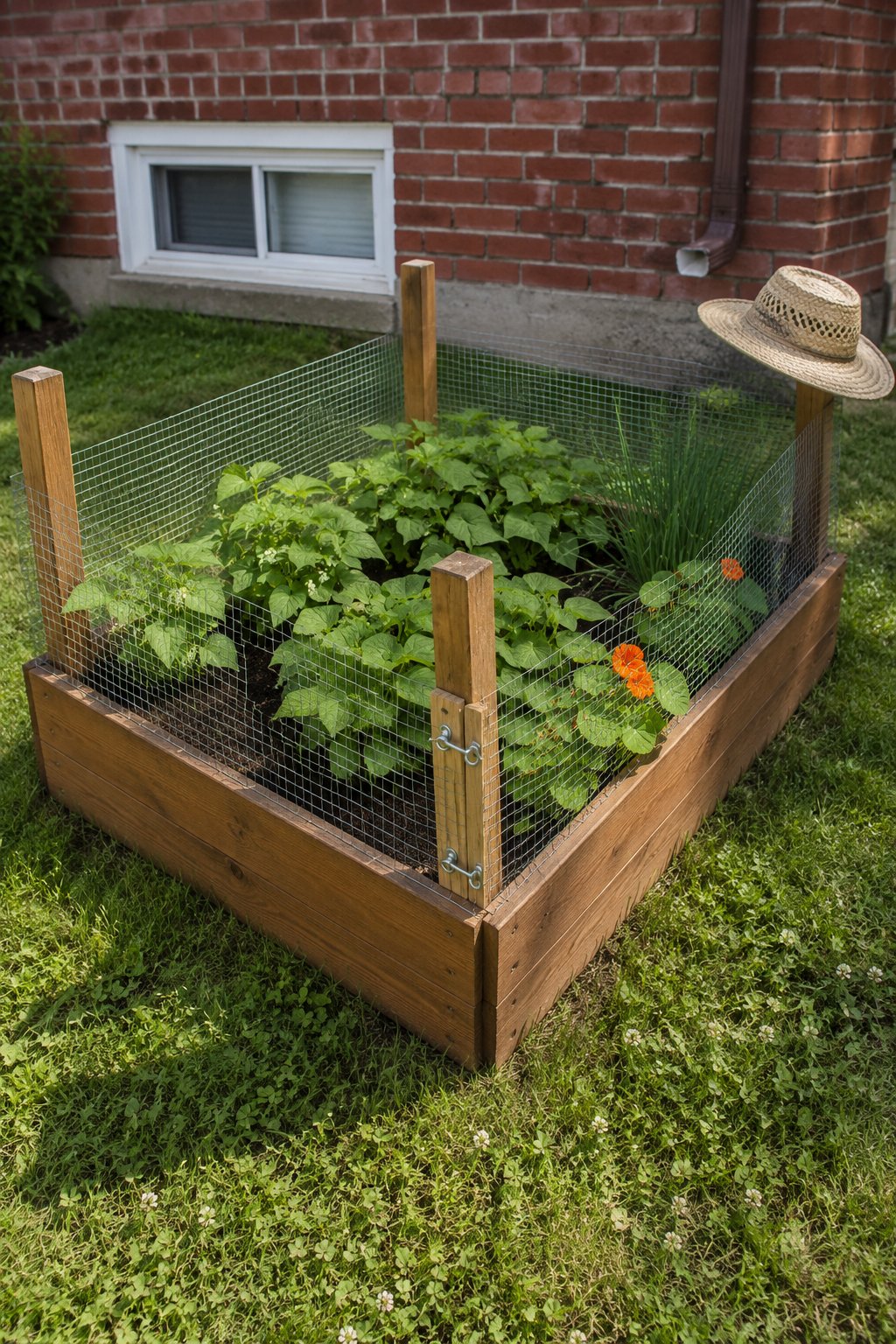
Here the bed’s own boards are the base of the fence. A stake at each corner carries a low band of mesh above the rim, so there is no edge to bury.
Bush beans, chives and nasturtiums grow inside.
Match the Fence to the Visitor
A fence is built for one kind of visitor. Find yours in the left column and read across.
| Who or what | What the fence needs | At the gate |
|---|---|---|
| Rabbits | Small mesh at the base, with the bottom edge buried or bent outward | No gap underneath, and a board across the threshold |
| Deer | A tall fence. The height depends on local deer pressure, so ask your extension office | As tall as the fence |
| Deer and rabbits | A tall fence with a band of small mesh along the base | Full height, and tight to the ground |
| A dog | A low fence across its usual route. It won’t hold a dog that jumps | A spring and a latch, so it shuts by itself |
| Soccer balls and kids | A waist-high run of mesh between the lawn and the beds | Wide enough for the wheelbarrow, about 3 feet |
| One bed only | A hinged lid, a hoop cage or a mesh collar fixed to the bed | A lid or panel you can open with one hand |
Where a Vegetable Garden Fence Usually Fails
Mesh that stops at the soil line
Do thisBury the bottom edge of the wire, or bend it outward along the ground and pin it down. Use small mesh at the base.
A gate too narrow for the wheelbarrow
Do thisA wheelbarrow path is about 3 feet wide, so make the gate match it. Soil and mulch come through that opening every year.
Posts set before the 811 call
Do thisCall 811 a few days before you dig or drive posts. The call is free.
Building before reading the height rules
Do thisLocal and HOA rules limit fence heights, so check both before you build. Renters should ask the landlord before digging or building anything.
A solid fence on the sunny side
Do thisBoards cast shade and wire doesn’t. Keep the fence open, so the beds still get six hours or more of direct sun.
Beds jammed against the wire
Do thisLeave a walking path of at least 2 feet between the beds and the fence. A bed that does sit against a fence should be about 2 feet deep.
Fence for the Garden You Will Want Later
Beds are easy to add. A fence is not easy to move.
So I’d draw the fence line around more ground than you plan to plant this year.
Build two beds inside it and leave the rest as mulch or lawn. When you want a third bed, the posts and the gate are already where they need to be.
The spare ground earns its keep meanwhile. It is where the wheelbarrow turns around and where a bag of compost sits until you need it.
A snug fence looks tidy in the first summer and feels like a mistake in the second.
Name the one visitor you are fencing against, then pick the smallest design here that answers it.
Call 811, check the height rules and set the gate posts first, because everything else lines up from the gate.
No fence is a promise, but a fence built for the right visitor changes what you get to pick.
Frequently Asked Questions
How tall should a vegetable garden fence be for deer?
Tall, and the right height depends on how much deer pressure your area has. Your county extension office can tell you what works locally. Check local and HOA height limits before you build.
Does a fenced garden with raised beds stop rabbits?
It helps when the fence has small mesh at the base, with the bottom edge buried or bent outward, and no gap under the gate. A low raised bed by itself is not a barrier, and no fence is a guarantee.
What are simple garden gate ideas for a small fenced vegetable garden?
A wooden frame covered in the same mesh as the fence, hung on two hinges with a latch. Make it as tall as the fence and wide enough for your wheelbarrow.
Can enclosed raised garden beds work without fencing the whole plot?
Yes. A hinged mesh lid, a hoop cage or a mesh collar encloses one bed by itself, which suits a single bed or a rental where you can’t set posts.
Do I need permission to build an enclosed vegetable garden?
Local and HOA rules limit fence heights, so check both first. Renters should ask the landlord, and everyone should call 811 before digging or setting posts.
Save This For Later
Loved fenced vegetable garden? Save this pin to your Pinterest board now so you can find it again anytime you need the inspiration.