Raised Garden Beds Along a Fence: 14 Ways to Use a Narrow Strip
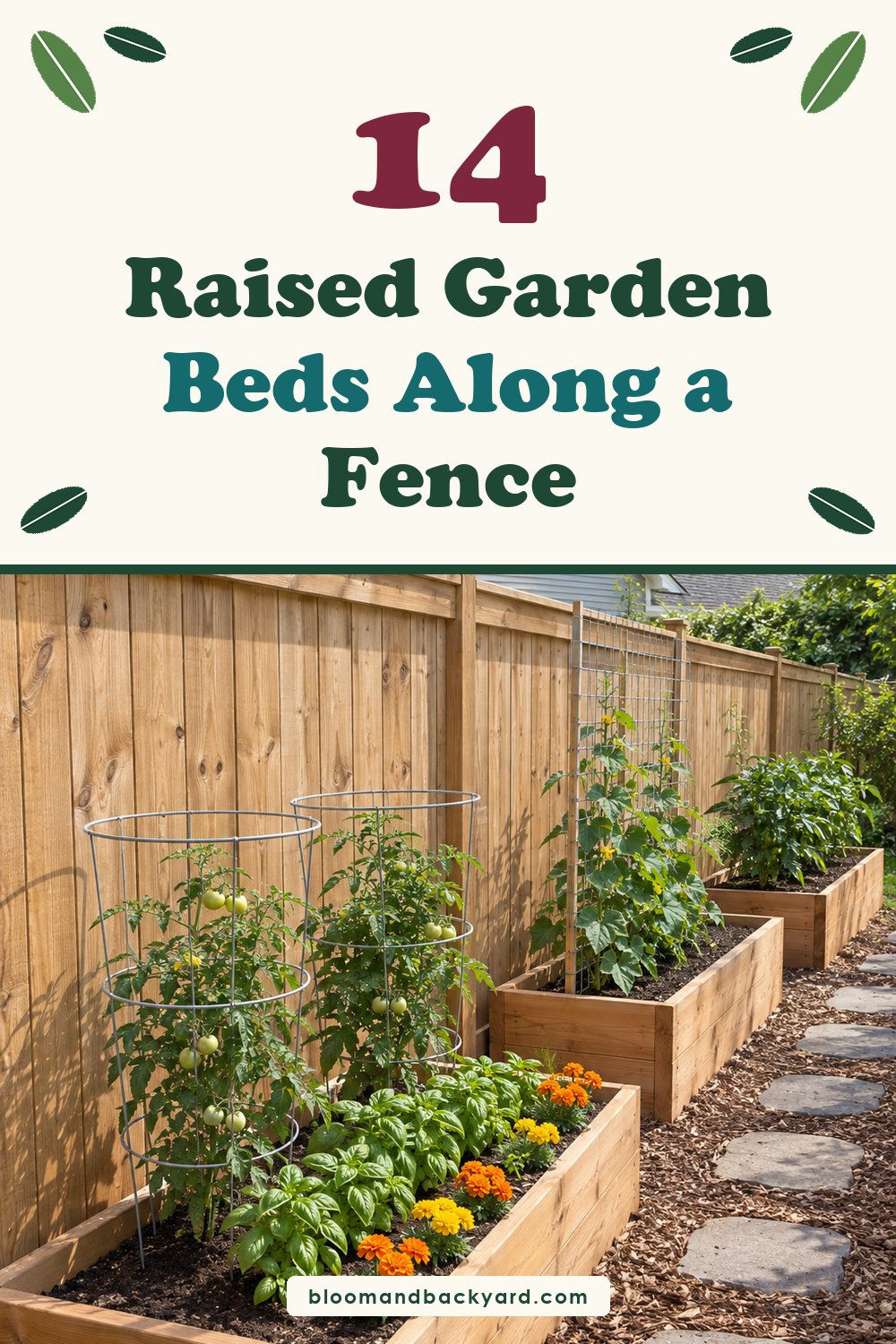
Raised garden beds along fence lines turn the least used strip of a yard into growing space.
These 14 setups are sorted by the fence you have: sunny, part shade, chain-link, sloped, shared or rented.
Each one keeps the bed about 2 feet deep and a hand’s width off the fence.
Which fence do you have?
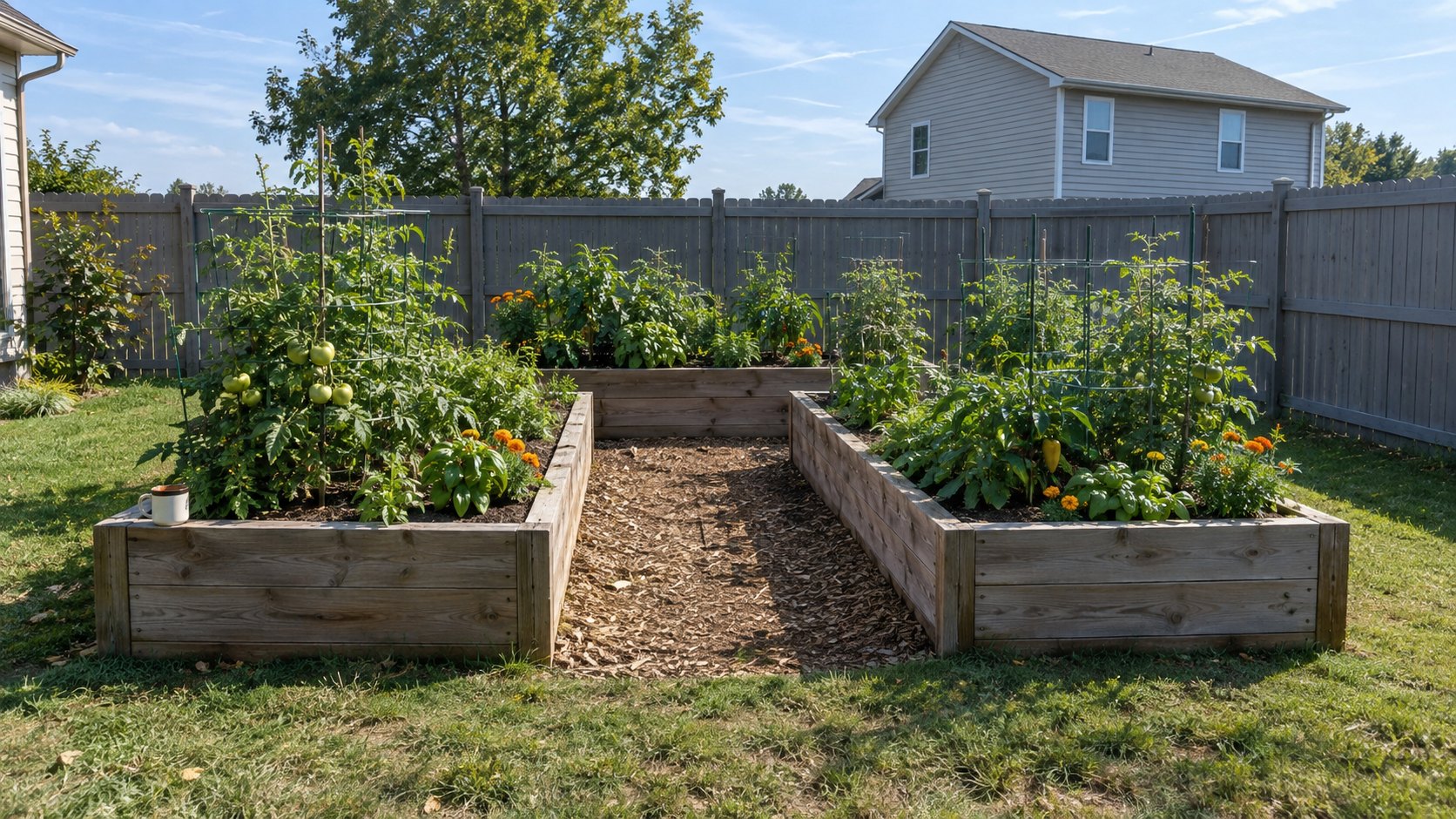
1. If the Fence Faces South: Three Cedar Boxes With Stepping Gaps
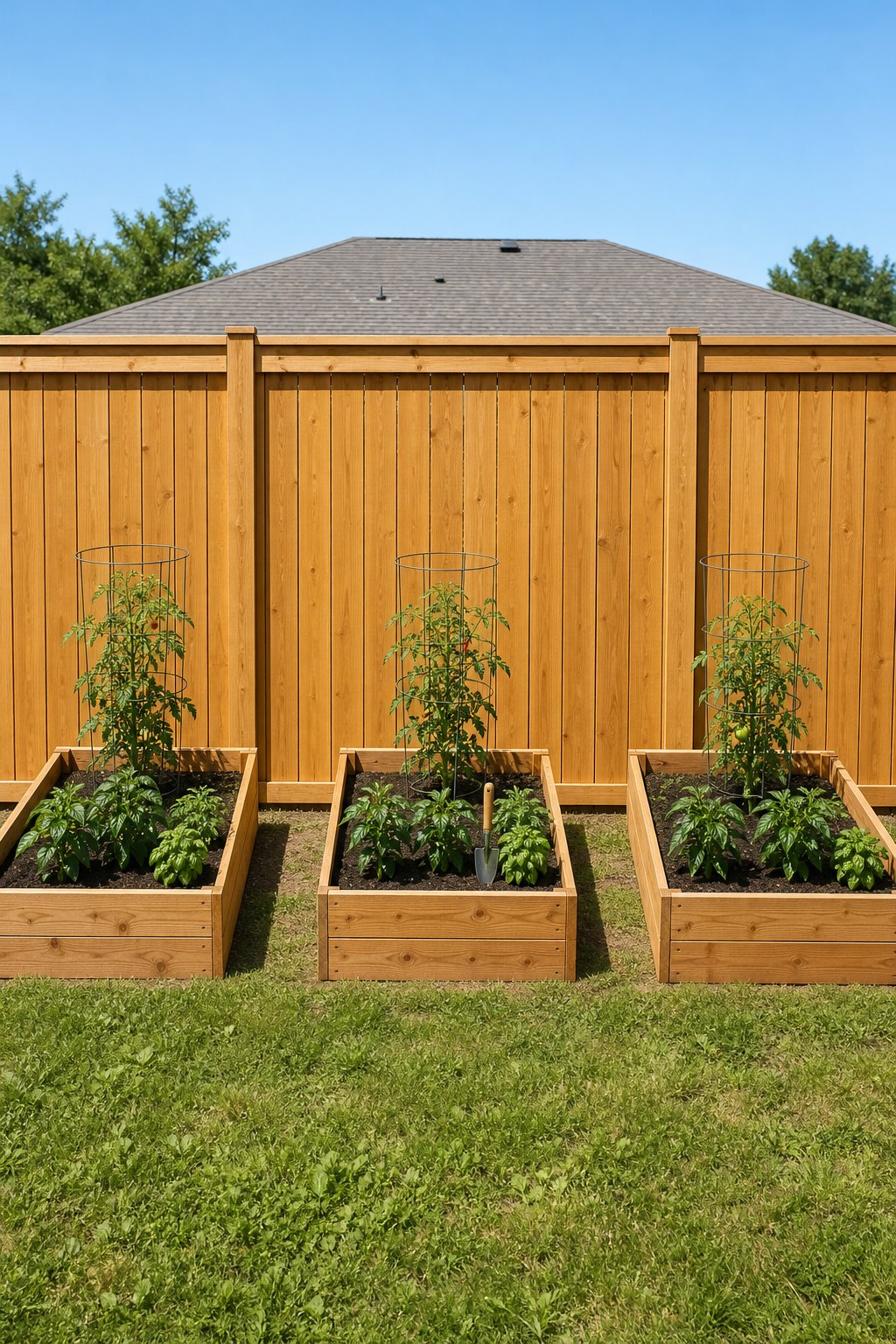
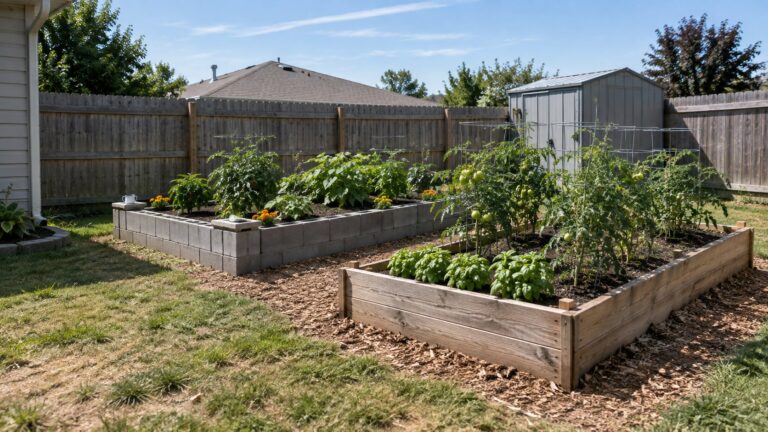
A south-facing fence gets the most sun, so it earns the tomatoes. Three cedar boxes, each about 2 feet deep, stand a hand’s width off the boards with a gap between them to step through.
Caged tomatoes go at the back, peppers and basil in front.
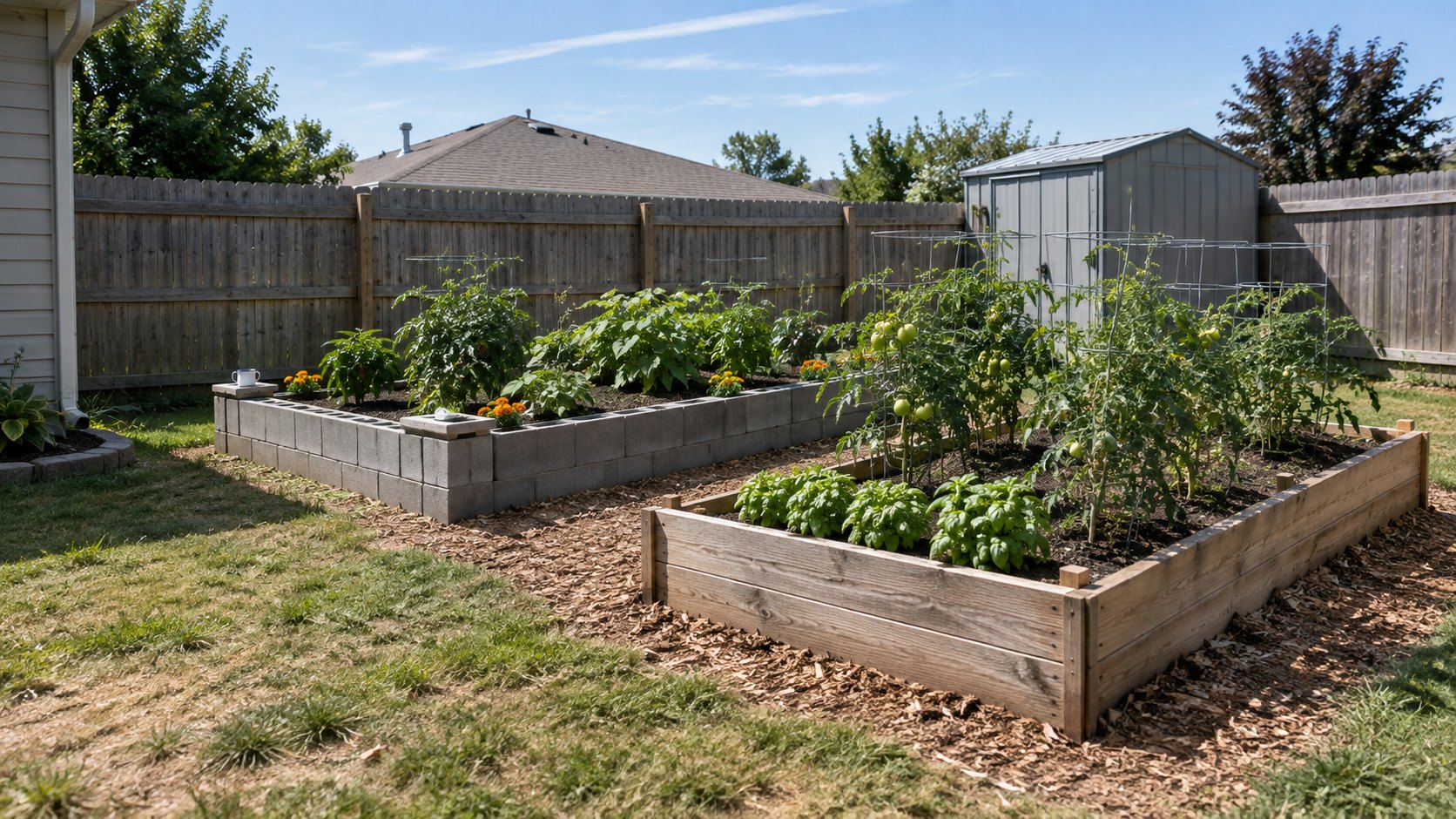
2. If the Fence Faces West: One Long Pine Bed With a Wire Panel Standing in It
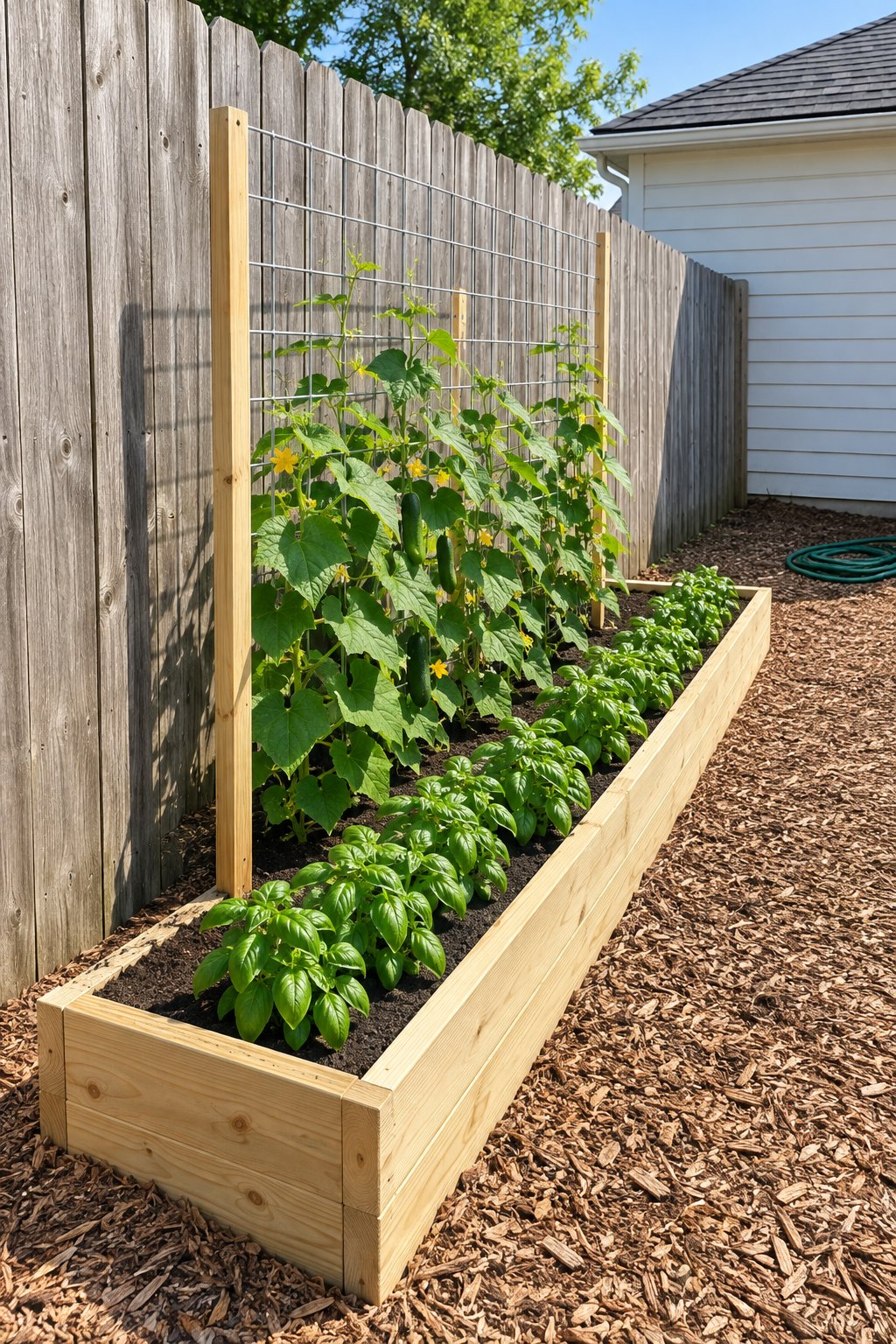
A west-facing fence takes the afternoon sun, and cucumbers will use it. One long pine bed runs along the boards, with a wire panel held upright on two stakes driven into the bed’s own soil.
Cucumbers climb the panel and basil fills the front.
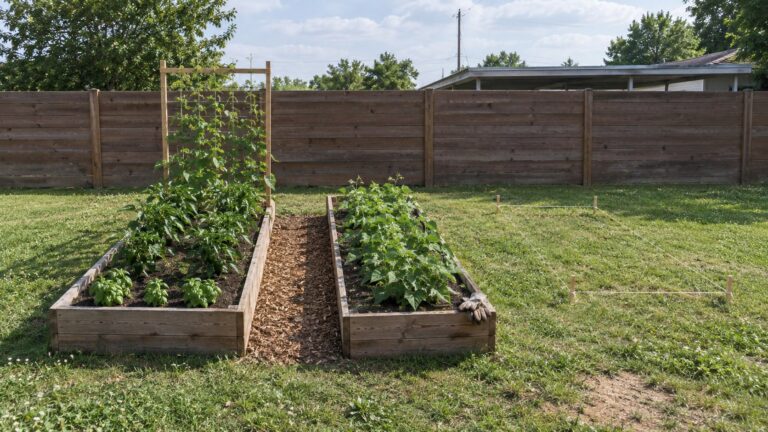
3. If You Want Climbers and a Bare Fence: One Bed With Its Own Posts and Top Rail
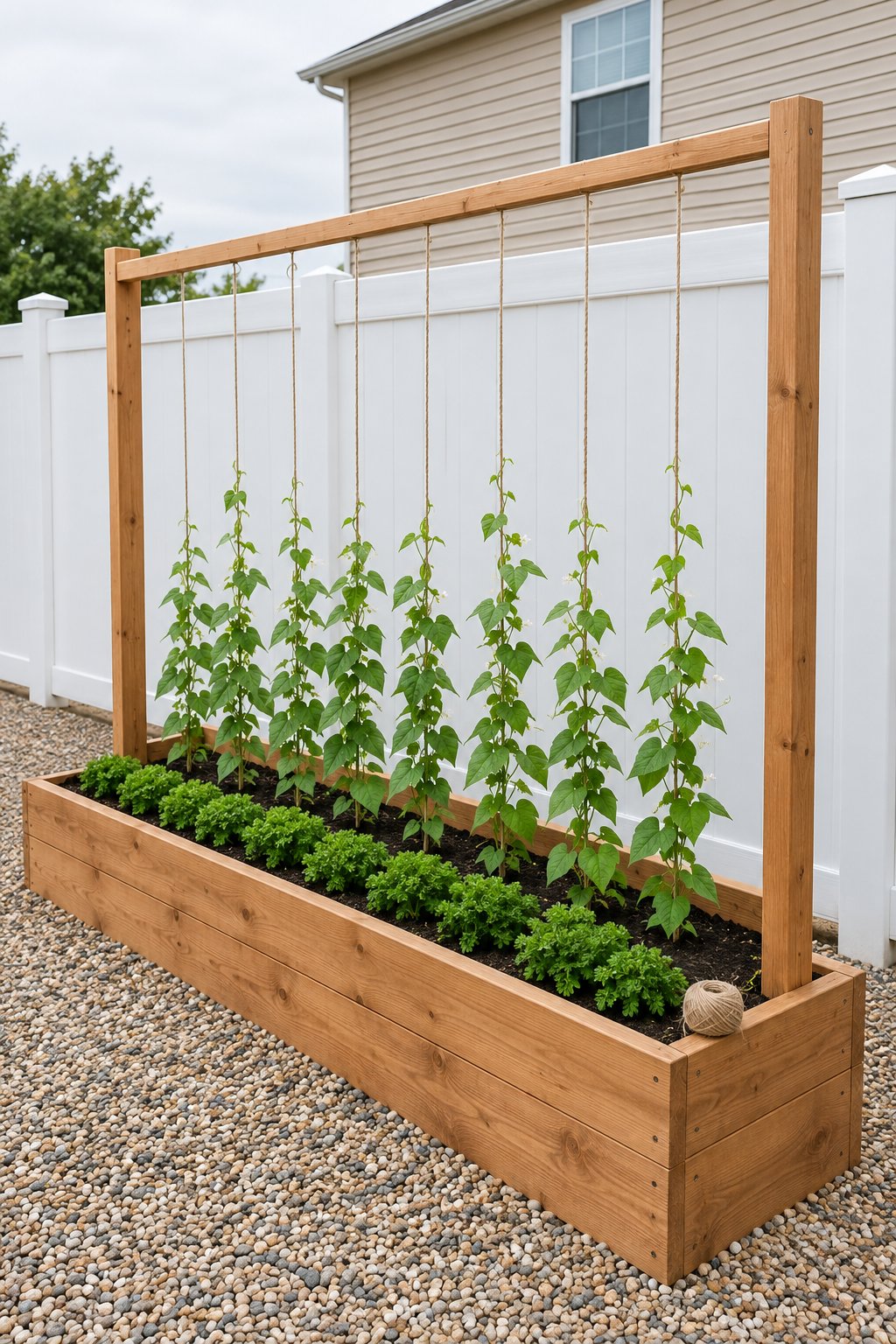
Two tall posts are screwed to the ends of the bed and joined by a rail across the top. Strings run from that rail down to the soil, and pole beans twine up them.
The frame belongs to the bed, so the fence carries nothing.
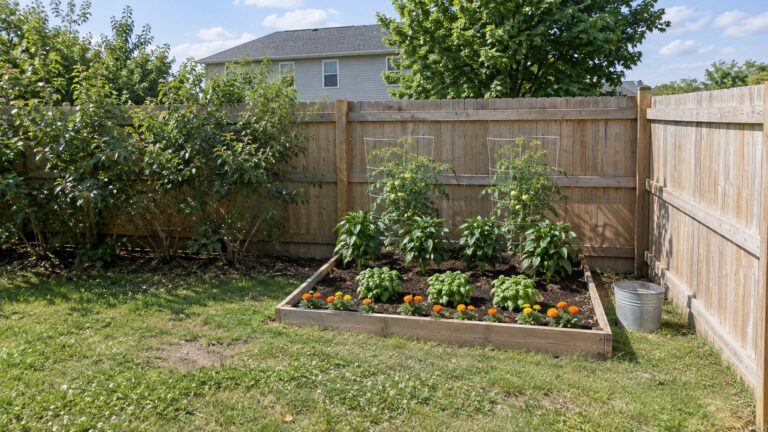
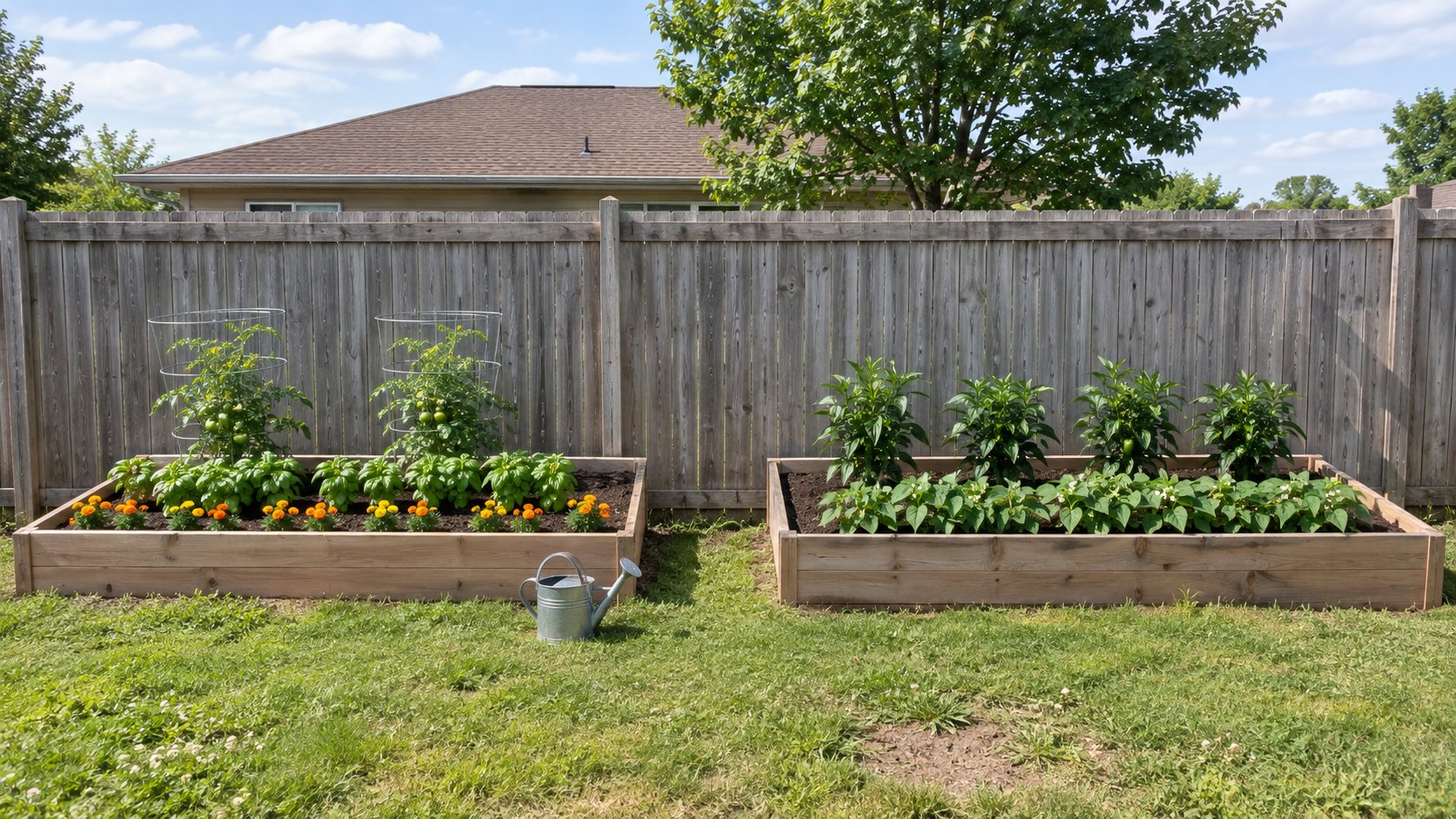
4. If the Fence Is Shared: One Cedar Bed With Three Tomato Cages
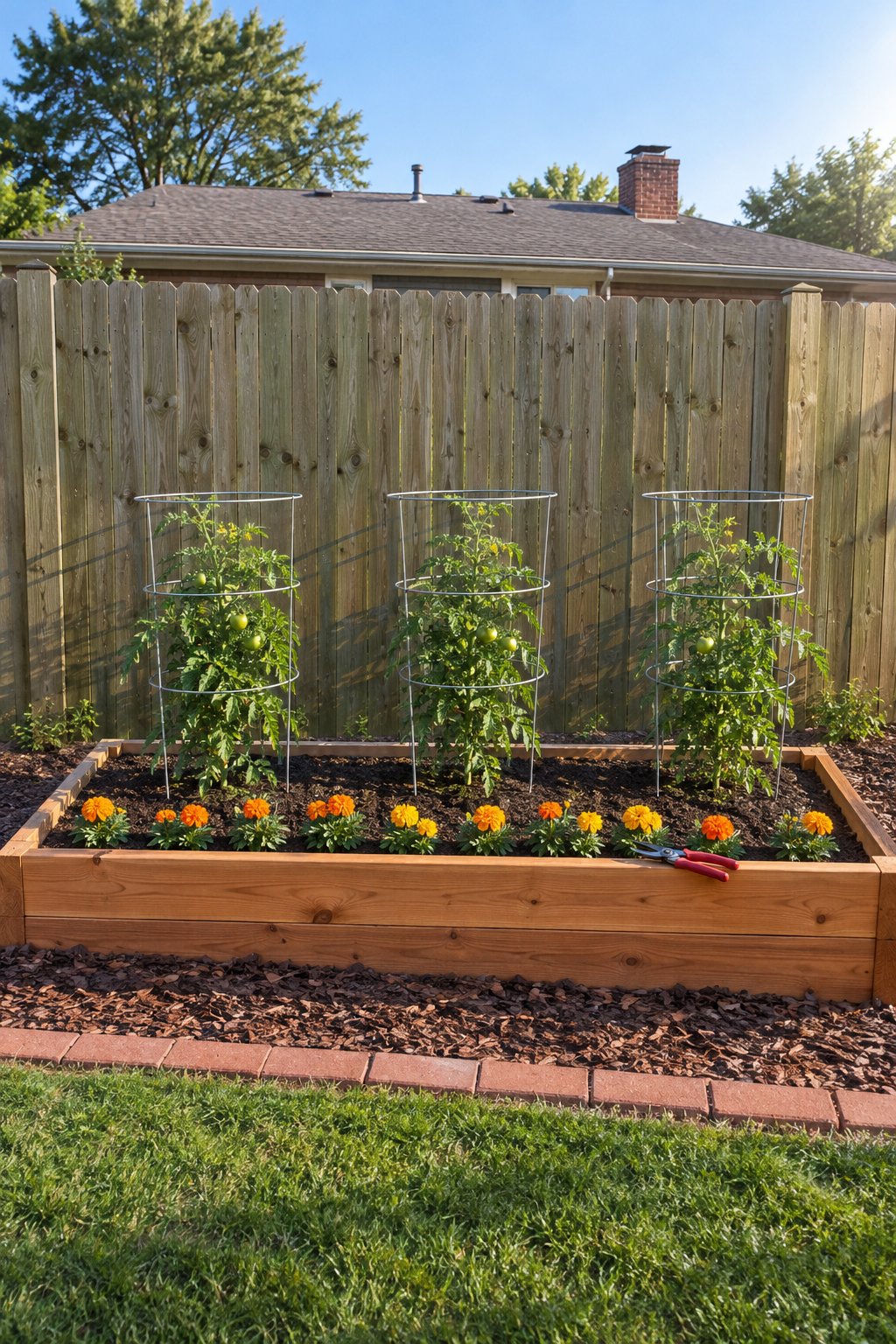
On a shared fence, I keep every support inside the bed. Three wire cages stand in one cedar bed, a tomato in each, with marigolds along the front board.
Ask the neighbor before fixing anything to a fence you share. Here there is nothing to ask.
5. If the Sunny Fence Is Long: Four Short Beds With Walk-Through Gaps
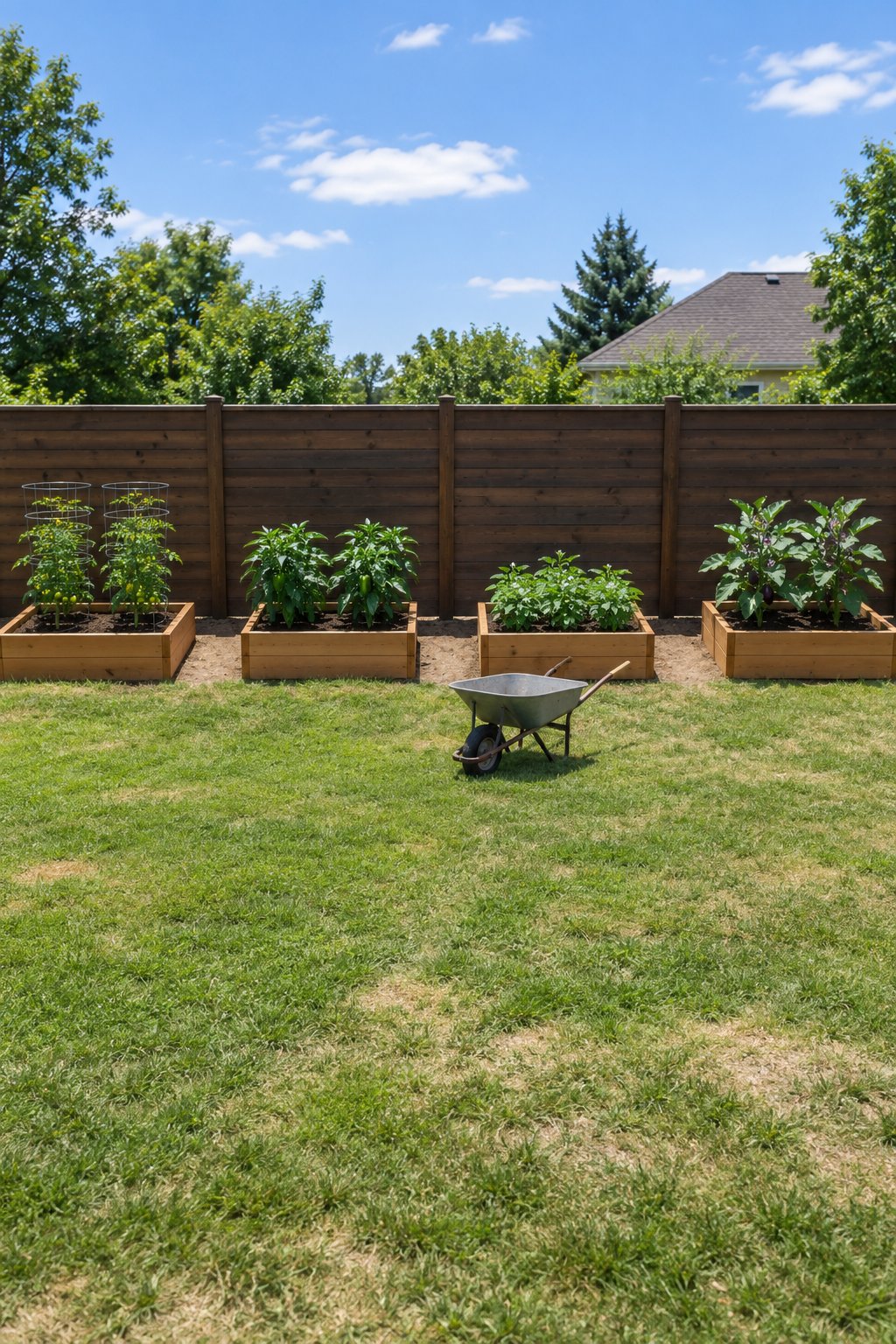
A long back fence tempts you into one endless bed. Four short cedar beds work better, with a gap of at least 2 feet between them to walk through.
Give each bed one crop: tomatoes, peppers, bush beans, eggplant.
6. If the Fence Gets Sun for Part of the Day: One Low Pine Bed of Lettuce and Radishes
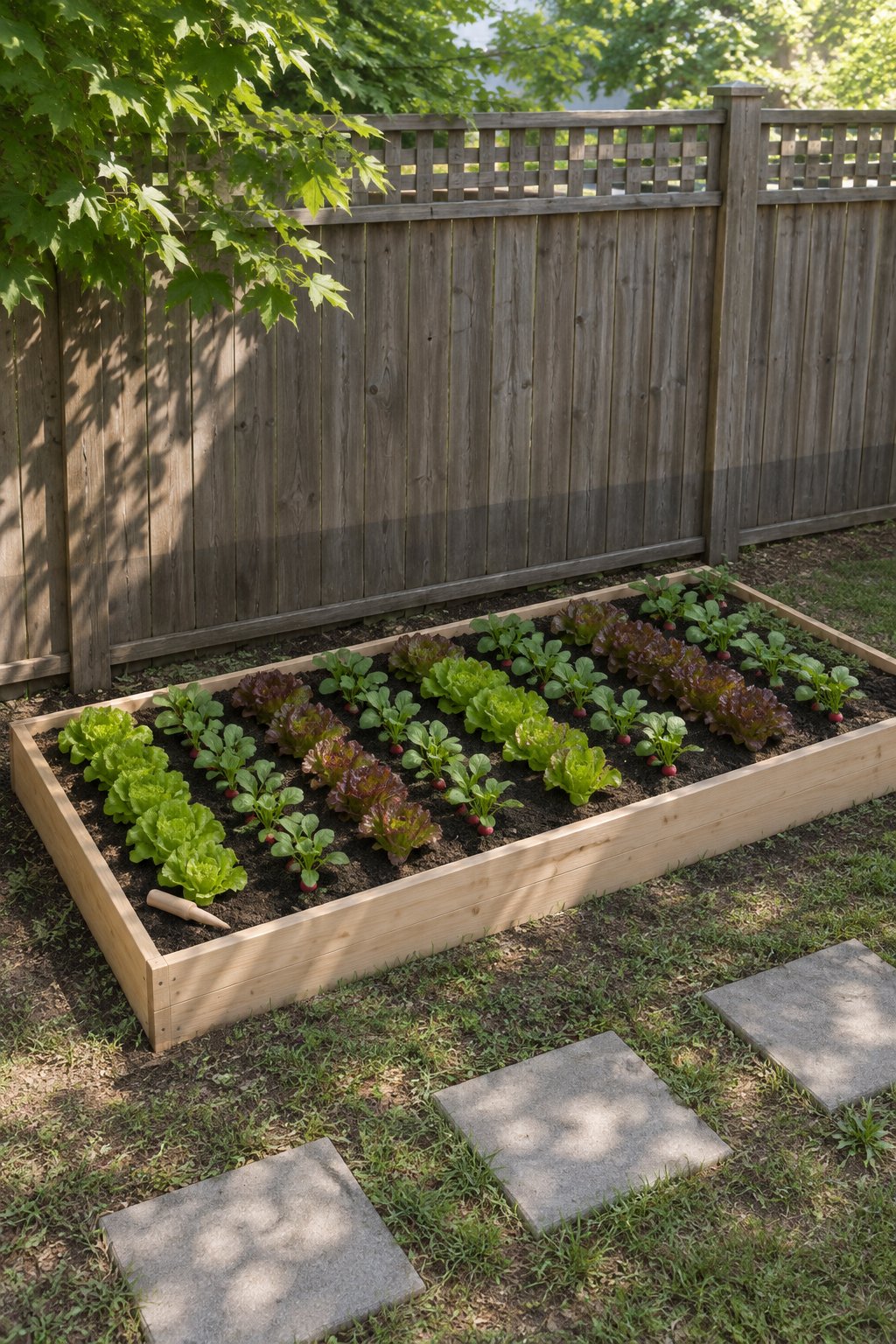
A fence with sun for only part of the day is the wrong place for tomatoes. It suits lettuce and radishes, cool-season crops you sow in spring and again toward fall.
I’d build one low pine bed, a single board high.
7. If a Tree Shades One End: Two Beds, One Planted for Sun and One for Shade
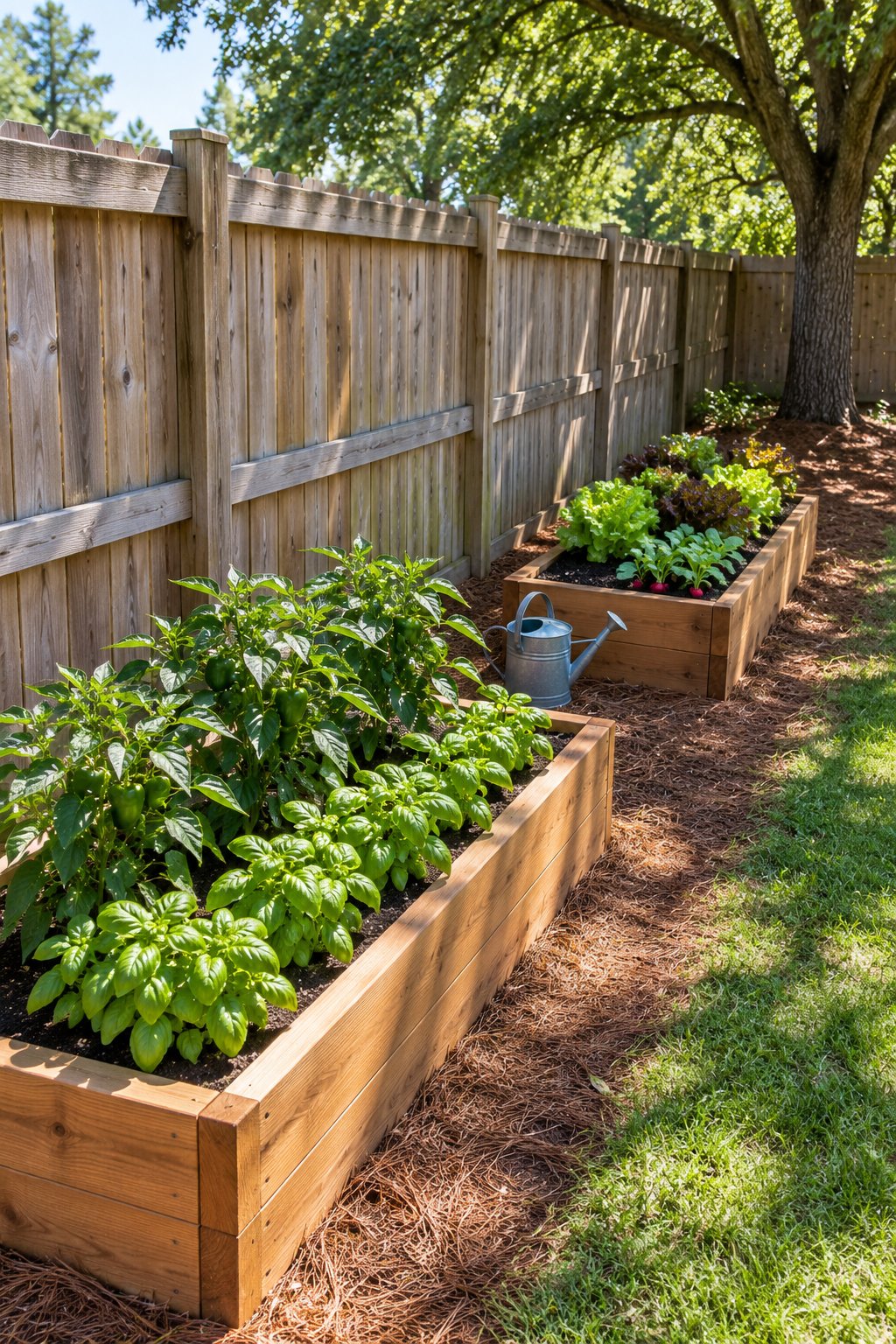
Few fences are all sun or all shade. Build two cedar beds end to end and plant each for its own light: peppers and basil where the sun lasts, lettuce and radishes where the tree’s shade falls.
Plants that share a bed should share sun and water needs.
8. If a Tall Fence Shades the Strip After Lunch: One Block Bed of Lettuce, Parsley and Chives
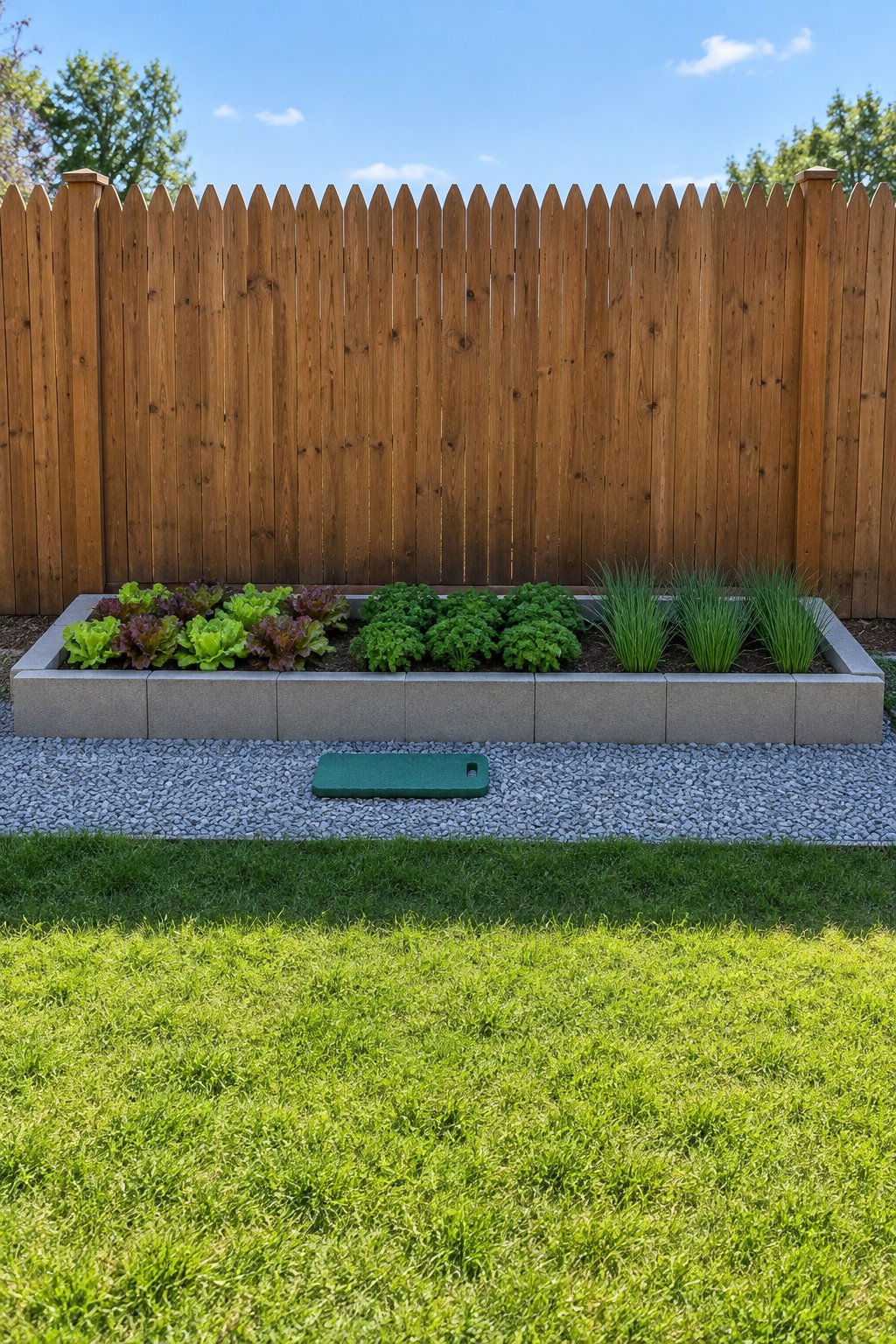
A tall fence that shades the strip after lunch is hard on tomatoes and kind to lettuce in warm weather. Stack one course of concrete block into a bed and plant lettuce, parsley and chives.
Block won’t rot, but I’d still leave the air gap so the fence can dry.
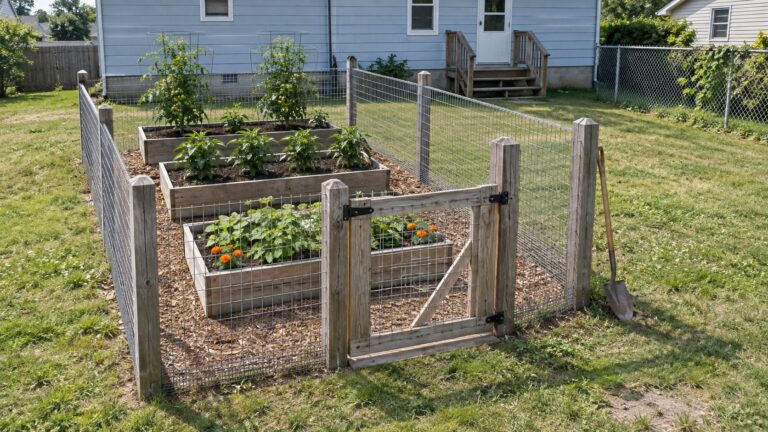
9. If the Fence Is Your Own Chain-Link: One Bed Set Off the Mesh for Pole Beans
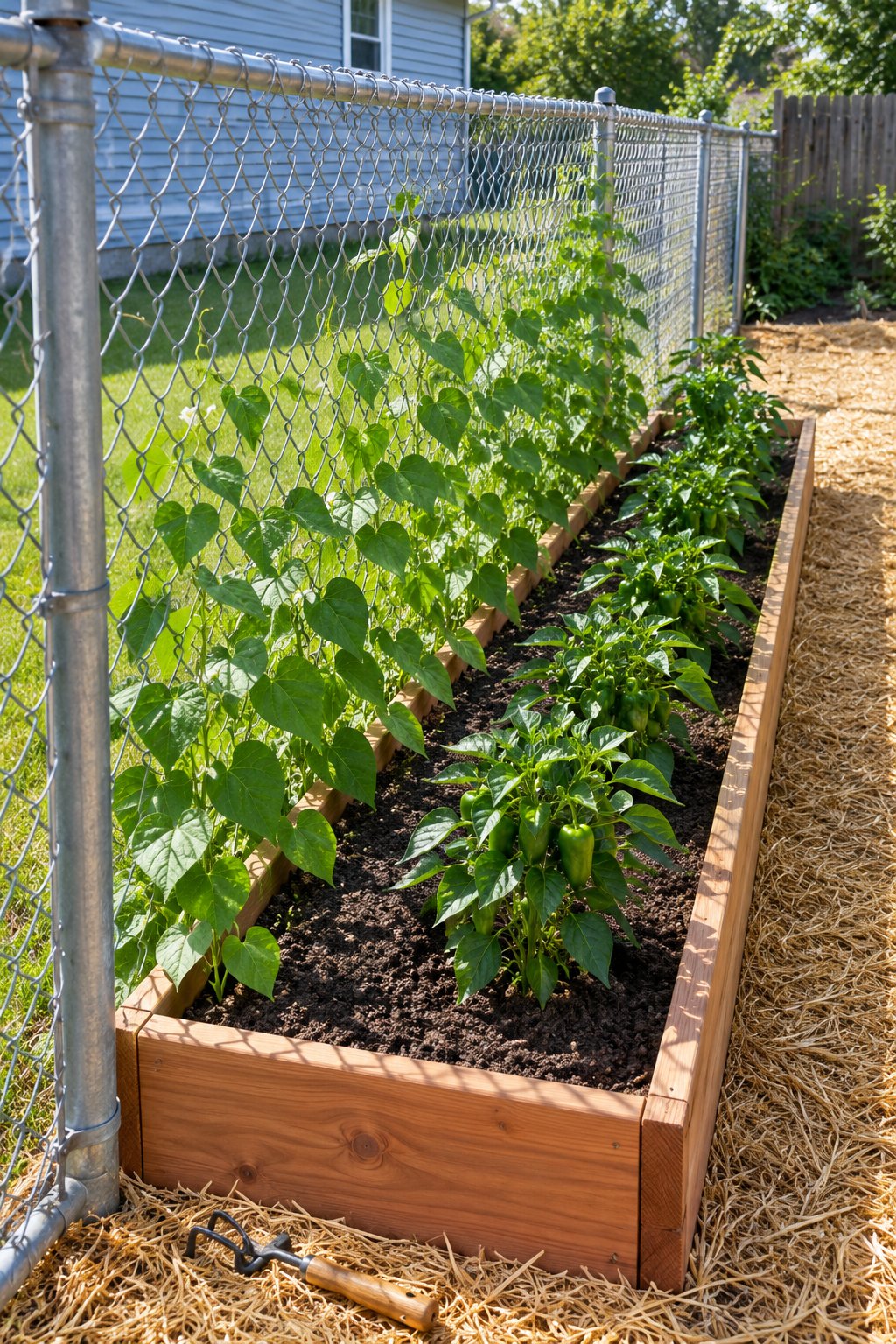
Chain-link lets light through, so a bed beside it is lit from both sides. Give the bed its own back board anyway, a hand’s width off the mesh.
If the fence is yours, pole beans can cross the gap and twine up the wire. If it is shared, ask first.
10. If a Gate Breaks the Run: One Short Bed Clear of the Swing
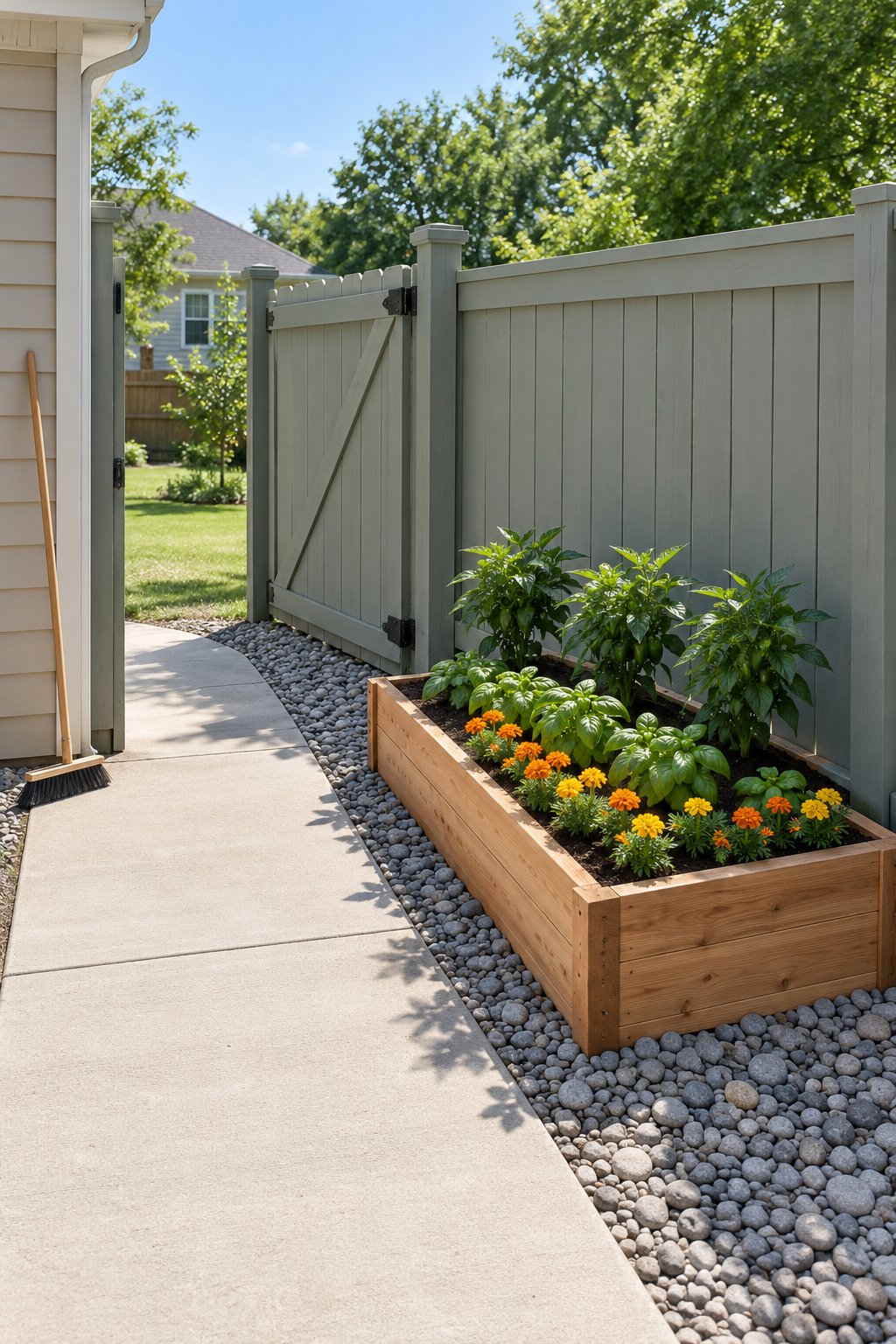
A gate needs its full swing and room for whoever comes through it. Open it all the way, mark where it stops, and start the bed past that mark.
One short cedar bed of peppers, basil and marigolds is enough.
11. If the Fence Line Slopes: Three Level Boxes That Step Downhill
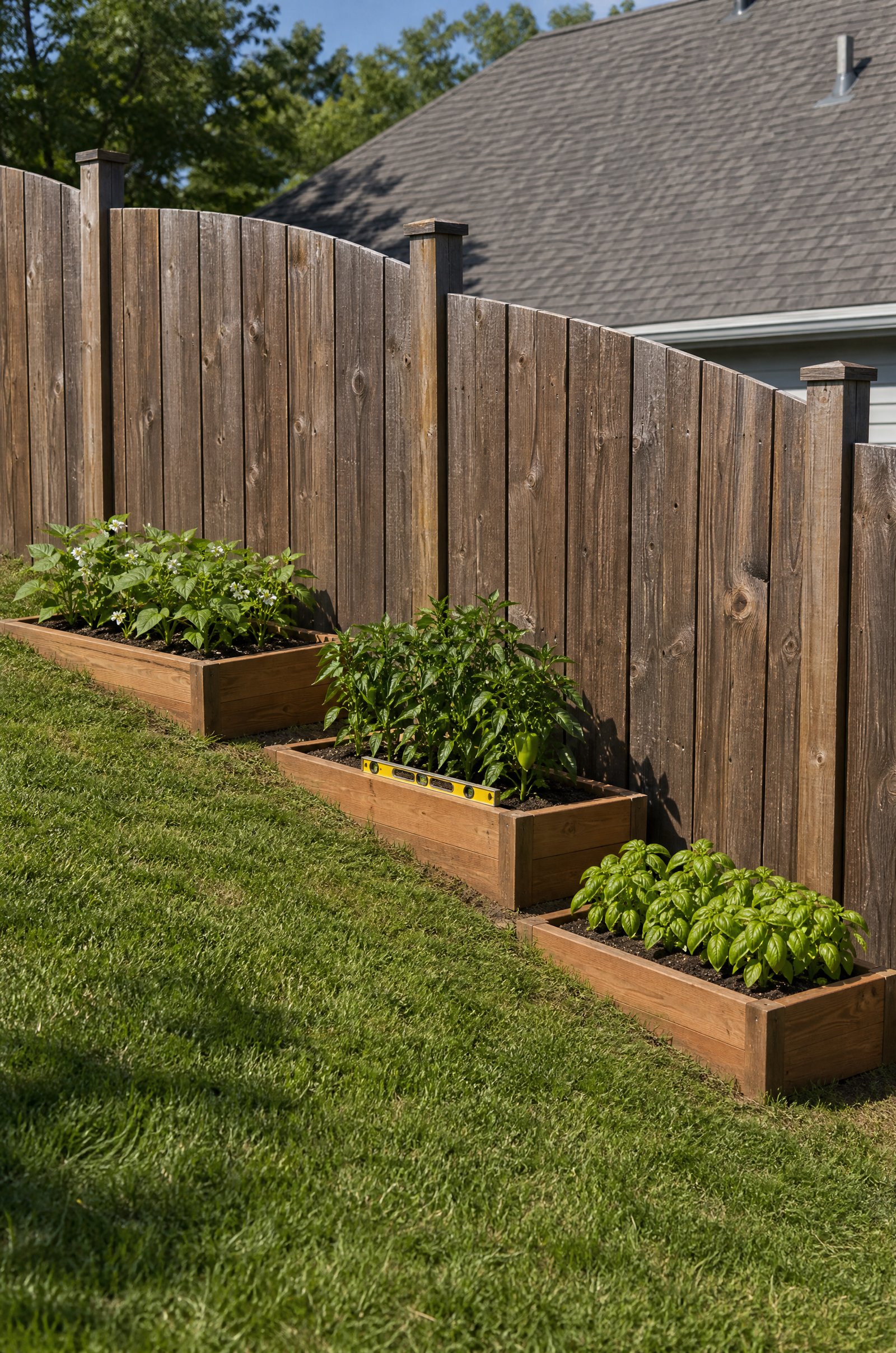
A long bed on a slope ends up tilted, or very tall at one end. Three short cedar boxes fix that: each sits level, one step lower than the last.
Bush beans, peppers and basil take a box each. Leveling means some digging, so call 811 first.
12. If Two Fences Meet: Two Beds and a Bean Teepee in the Corner
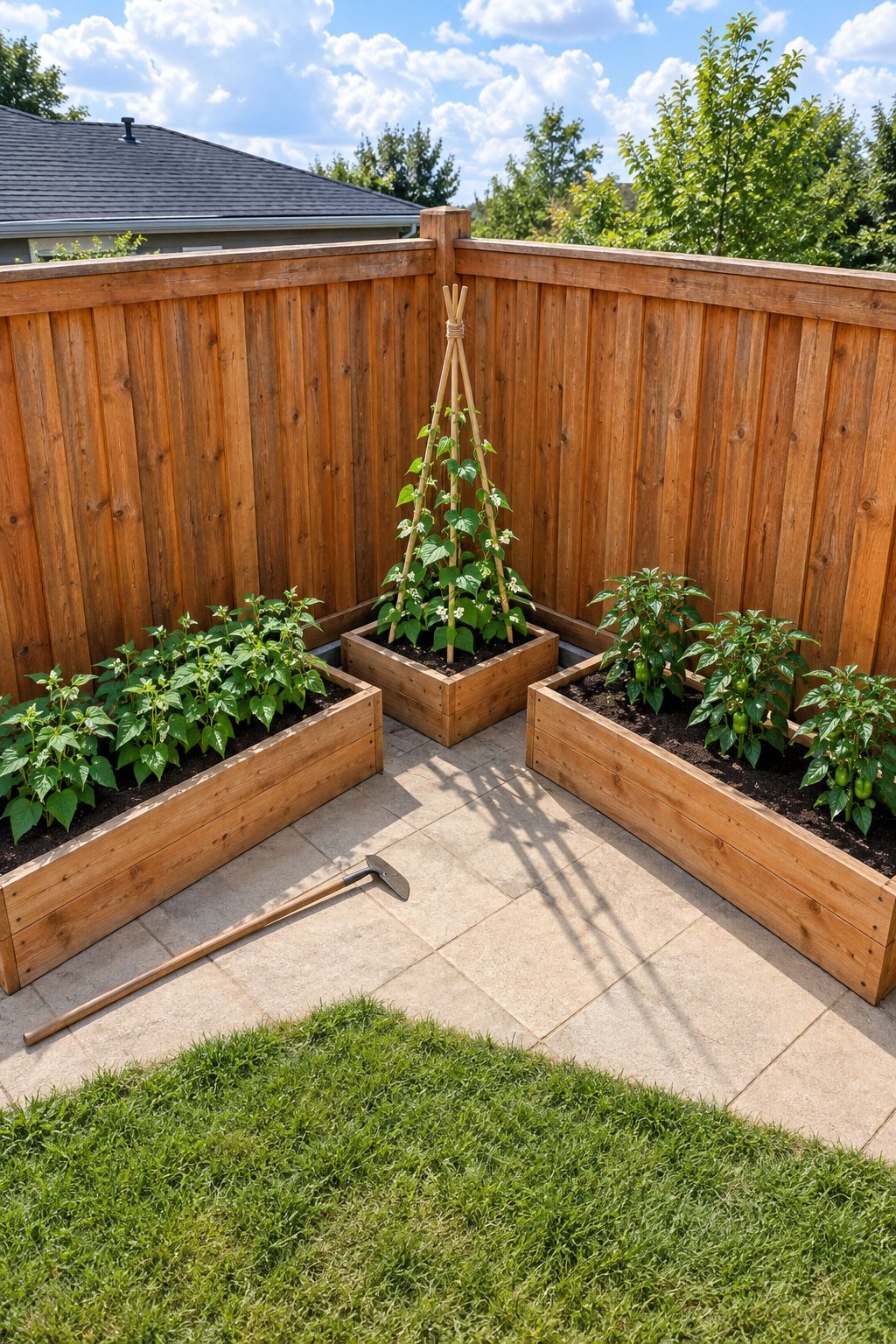
A corner is two fence strips and one awkward square. Run a bed along each fence and stop both short of the corner, then set a square box in the angle with a four-cane teepee for pole beans.
Bush beans and peppers fill the two beds.
13. If You Rent: Two Metal Beds That Unbolt and Leave With You
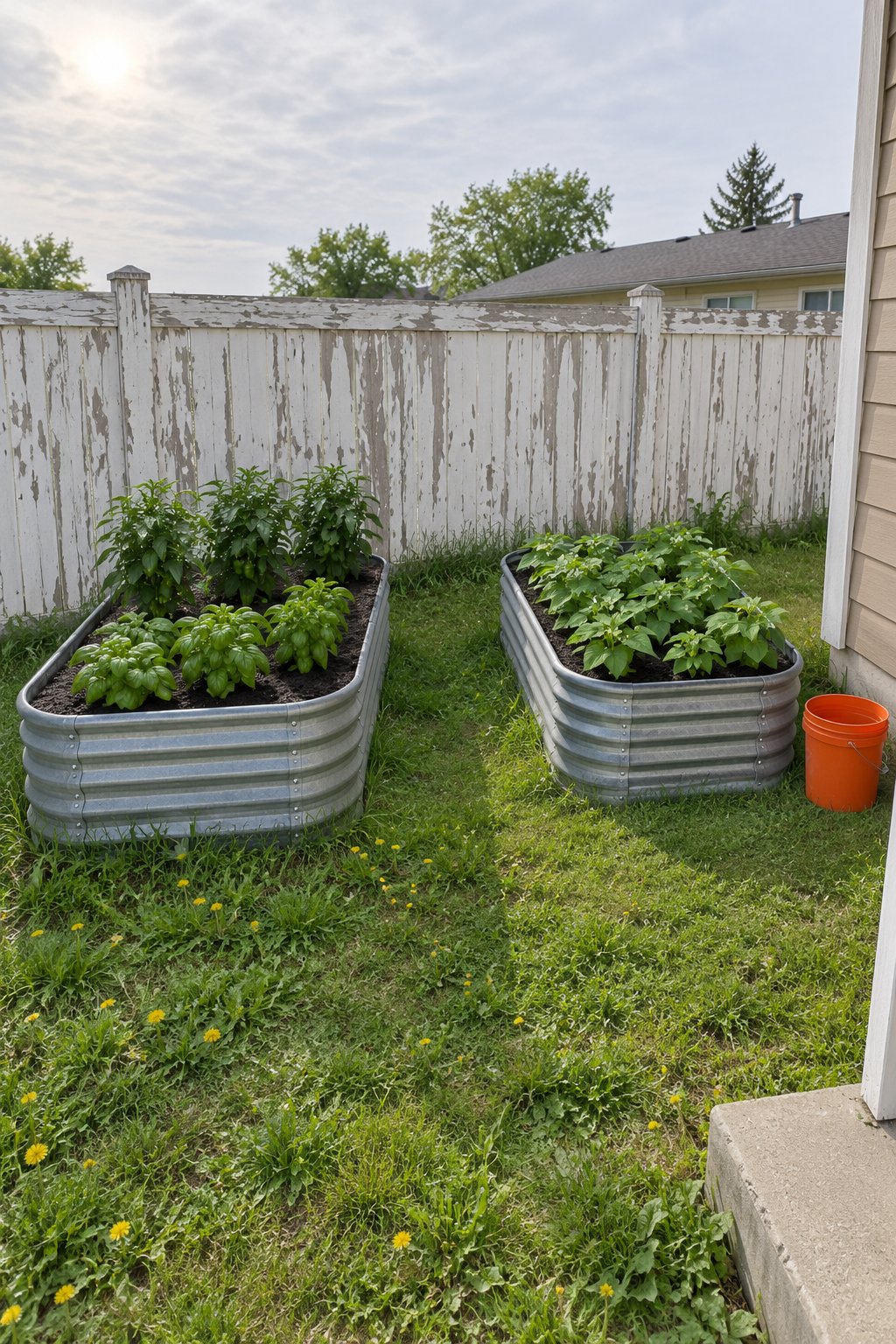
Bolt-together metal beds have no bottom and need no digging. Stand two on the lawn along the fence, a hand’s width out, and fill them with soil mixed with compost.
Nothing is fixed to the fence, and the beds unbolt when the lease ends.
14. If It Is a Picket Fence Out Front: One Tidy Bed Beside the Walk
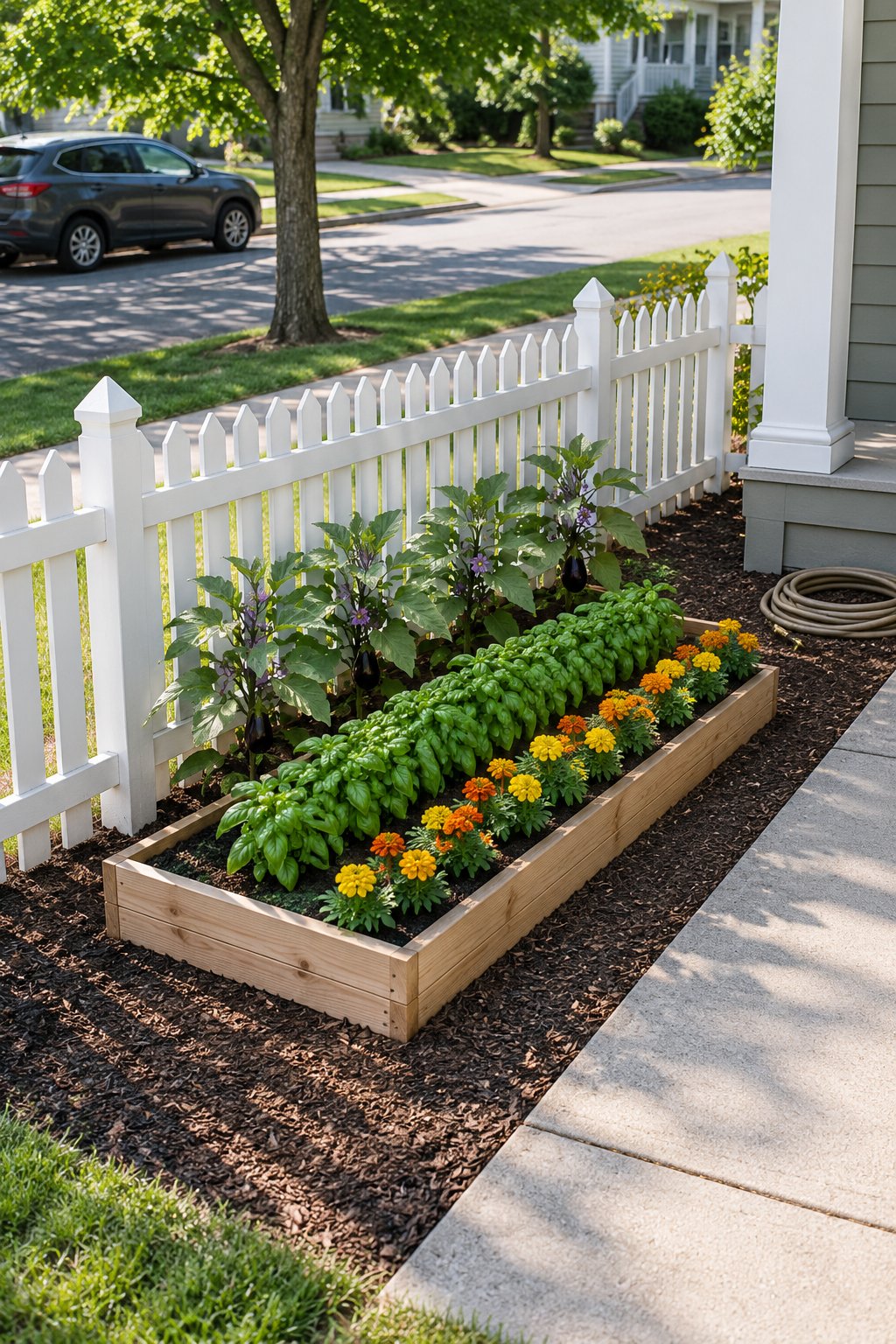
Out front, the fence is on show, so the bed has to look deliberate. One cedar bed runs inside the pickets, planted in straight rows: eggplant at the back, basil in the middle, marigolds along the front board.
Check HOA and local rules before growing vegetables in a front yard.
What a Fence Bed Needs, Measured
Every setup above rests on the same few figures.
Get these right and the crops are the easy part.
| What | The figure | Why |
|---|---|---|
| Bed depth, front to back | About 2 feet | You reach the back row from the front, the only side you have |
| Gap between bed and fence | About a hand’s width | Air gets through, so the fence can dry |
| Back of the bed | Its own back board | Soil against a wooden fence keeps the fence wet |
| Walk-through gap between beds | At least 2 feet | Room to step through and reach the fence |
| A gap the wheelbarrow uses | About 3 feet | Room for the barrow and your elbows |
| Sun for tomatoes, peppers, beans and cucumbers | Six hours or more of direct sun | That is what full sun means; a south-facing or west-facing fence gets the most |
Five Ways a Fence-Line Bed Goes Wrong
Using the fence as the back of the bed
Do thisSoil against a wooden fence keeps the fence wet. Give the bed its own back board and leave an air gap of about a hand’s width.
A bed as deep as one in open lawn
Do thisA bed reached from both sides can be up to 4 feet wide. Against a fence you reach from one side only, so keep it to about 2 feet deep.
Screwing a trellis to a fence you share
Do thisAsk before fixing anything to a shared fence, and renters ask the landlord. A cage, a teepee or a panel on stakes inside the bed needs no permission.
Tomatoes on a fence that gets half a day of sun
Do thisTomatoes, peppers, beans and cucumbers want full sun, which is six hours or more of direct sun. Give a part-shade fence to lettuce and radishes in spring and fall.
Plain yard soil shoveled into the frame
Do thisPlain yard soil packs down in a raised bed. Mix compost into it before you fill, and expect to water more often, because raised beds dry out faster than open ground.
The Fence Still Needs Looking After, So Leave Yourself a Way In
A bed pushed tight against a fence hides the boards behind it. You stop seeing them, and the fence stays damp where nobody looks.
The hand’s-width gap is there for air, and it also lets you look down the back of the bed once a season.
The gaps between beds matter for the same reason. They are how you get to a loose board or a leaning post without climbing through the peppers.
Wood in soil rots in time, and cedar outlasts pine. So the bed’s own back board is the part that wears out, and it is a far easier board to replace than a fence panel.
I’d rather replace one bed board in a few years than a fence.
Start with one bed on the sunniest stretch of fence you have, about 2 feet deep and a hand’s width out.
Put the supports inside the bed, and the fence stays out of it whether it is yours, shared or the landlord’s.
A second bed can follow once you know how often the first one needs water.
Frequently Asked Questions
How far from the fence should a raised bed sit?
Leave an air gap of about a hand’s width, and give the bed its own back board. Soil against a wooden fence keeps the fence wet.
How deep should a raised bed against a fence be, front to back?
About 2 feet, because you reach it from one side only. A bed you reach from both sides can be up to 4 feet wide.
Can I fix a trellis to the fence behind my raised bed?
If the fence is yours, that is your call. Ask before fixing anything to a shared fence, and renters should ask the landlord. A teepee, a cage or a wire panel on stakes inside the bed avoids the question.
What can I grow in raised garden beds along a fence that is shady for part of the day?
Lettuce and radishes, which are cool-season crops for spring and fall. Tomatoes, peppers, beans and cucumbers need full sun, which is six hours or more of direct sun.
Which side of a fence is best for a fence line garden?
A south-facing or west-facing fence gets the most sun. Count the hours of direct sun on a clear day before you build.
You Might Also Like
Save This For Later
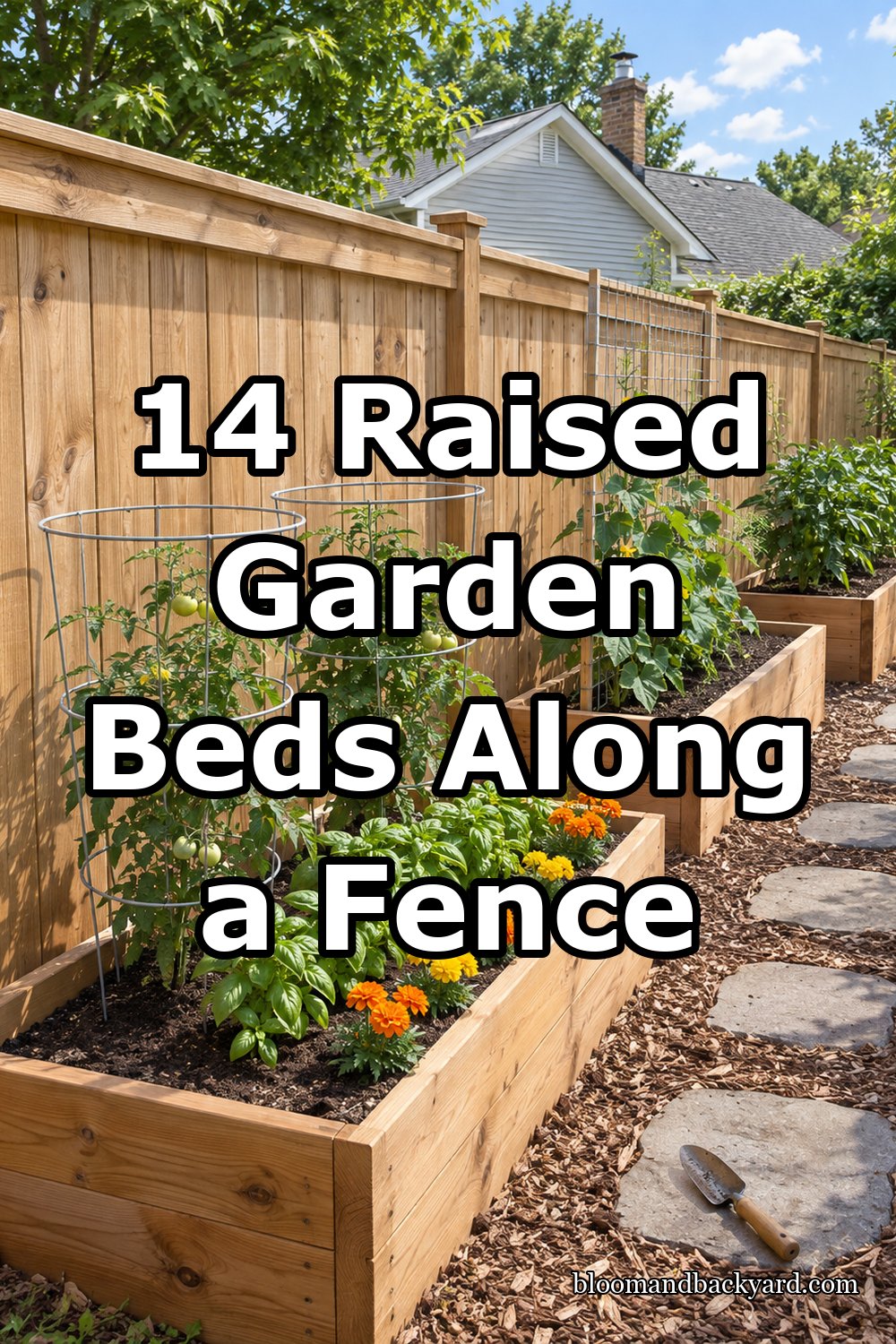
Loved raised garden beds along fence? Save this pin to your Pinterest board now so you can find it again anytime you need the inspiration.