Raised Garden Beds Layout: 17 Plans for Small, Narrow and Sloped Yards
A raised garden beds layout succeeds or fails on three things: where the sun falls, how far you can reach and how wide the paths are.
I’ve sketched 17 plans here for ordinary American yards, grouped by the problem they solve: a small yard, a narrow or side yard, and a slope.
Find your yard
1. The Two-Bed Starter With One Wide Path
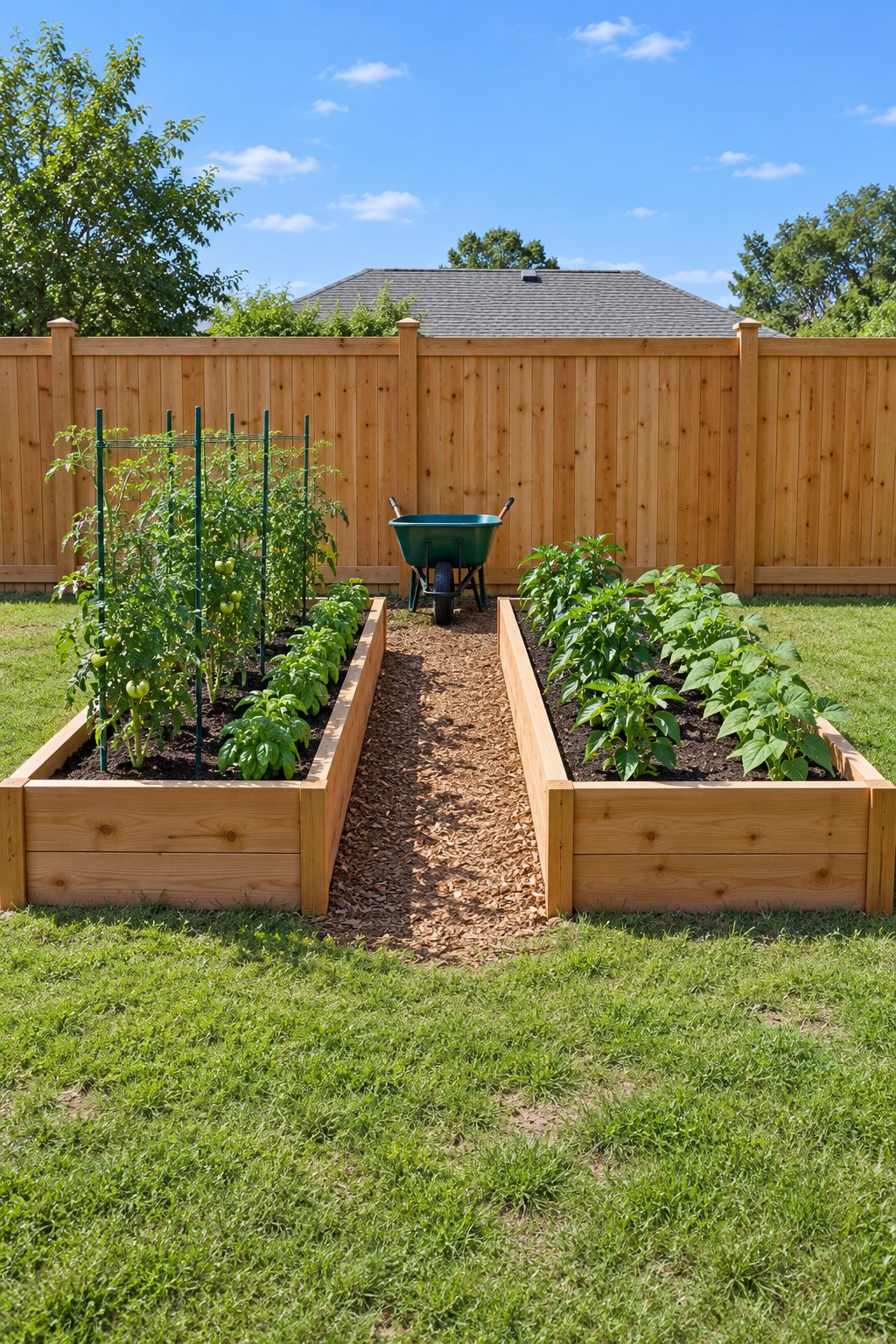
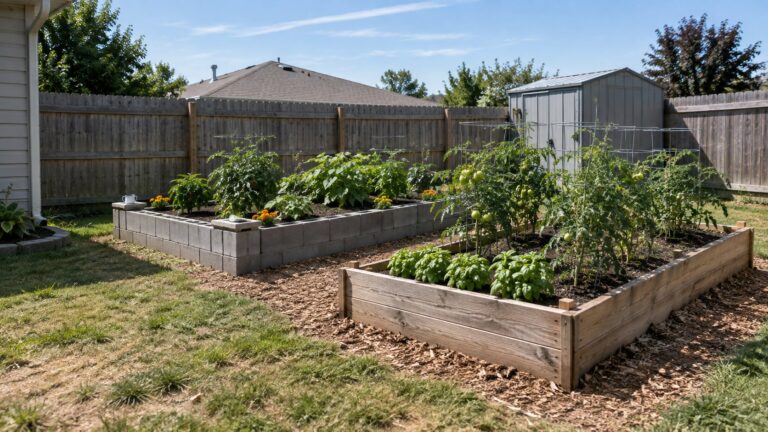
Two 4 by 8 foot cedar beds, set side by side, are where I’d start any first vegetable garden.
The 3 foot wood-chip path between them takes a wheelbarrow, and each bed can be reached to its middle from either side.
2. The Four-Square Grid With a Gravel Cross
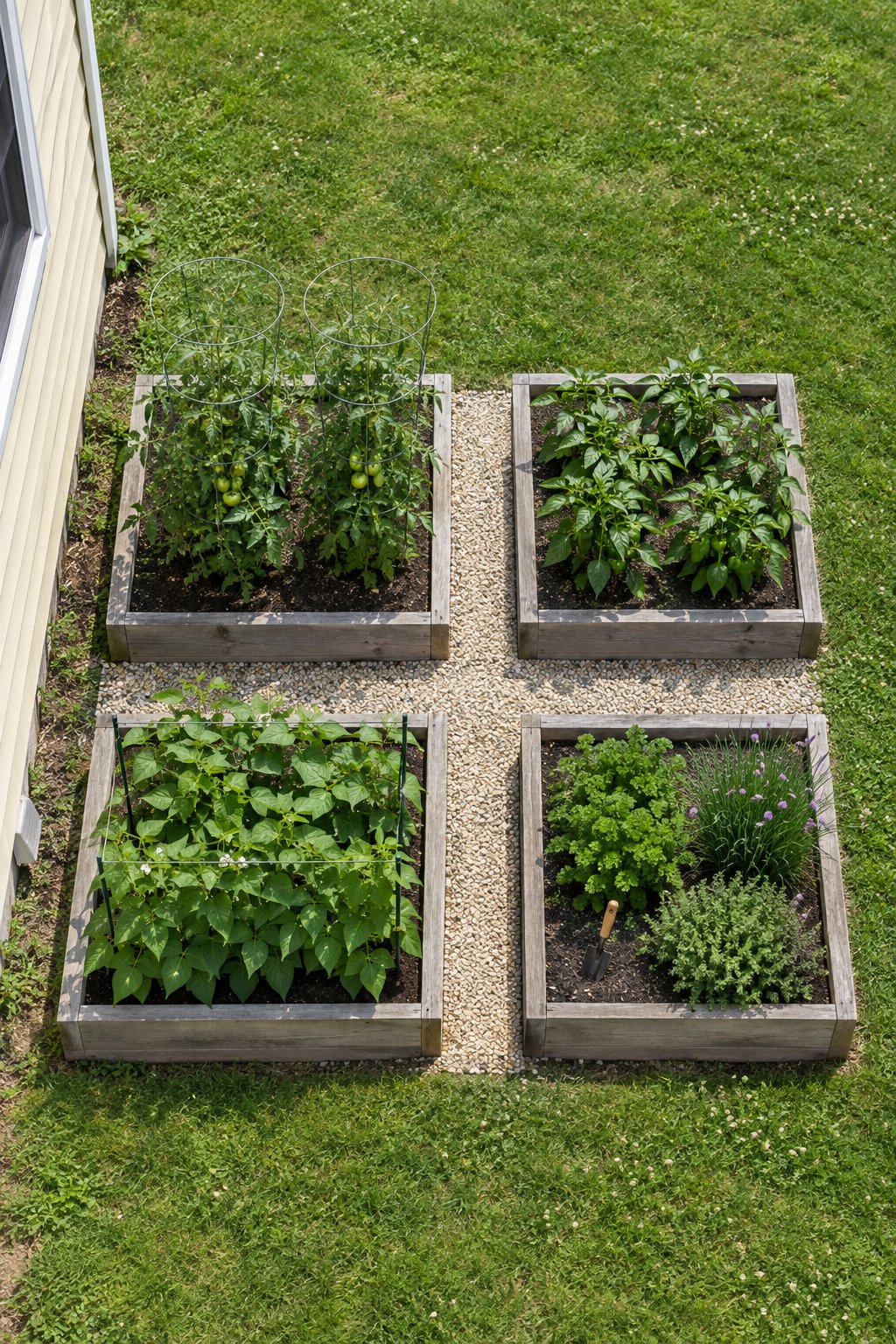
Four 4 foot squares in a two-by-two grid put every plant within arm’s reach of a path.
The cross of 2 foot pea gravel paths is what makes it work: you never have to step on the soil.
3. The Corner L That Leaves the Lawn Open
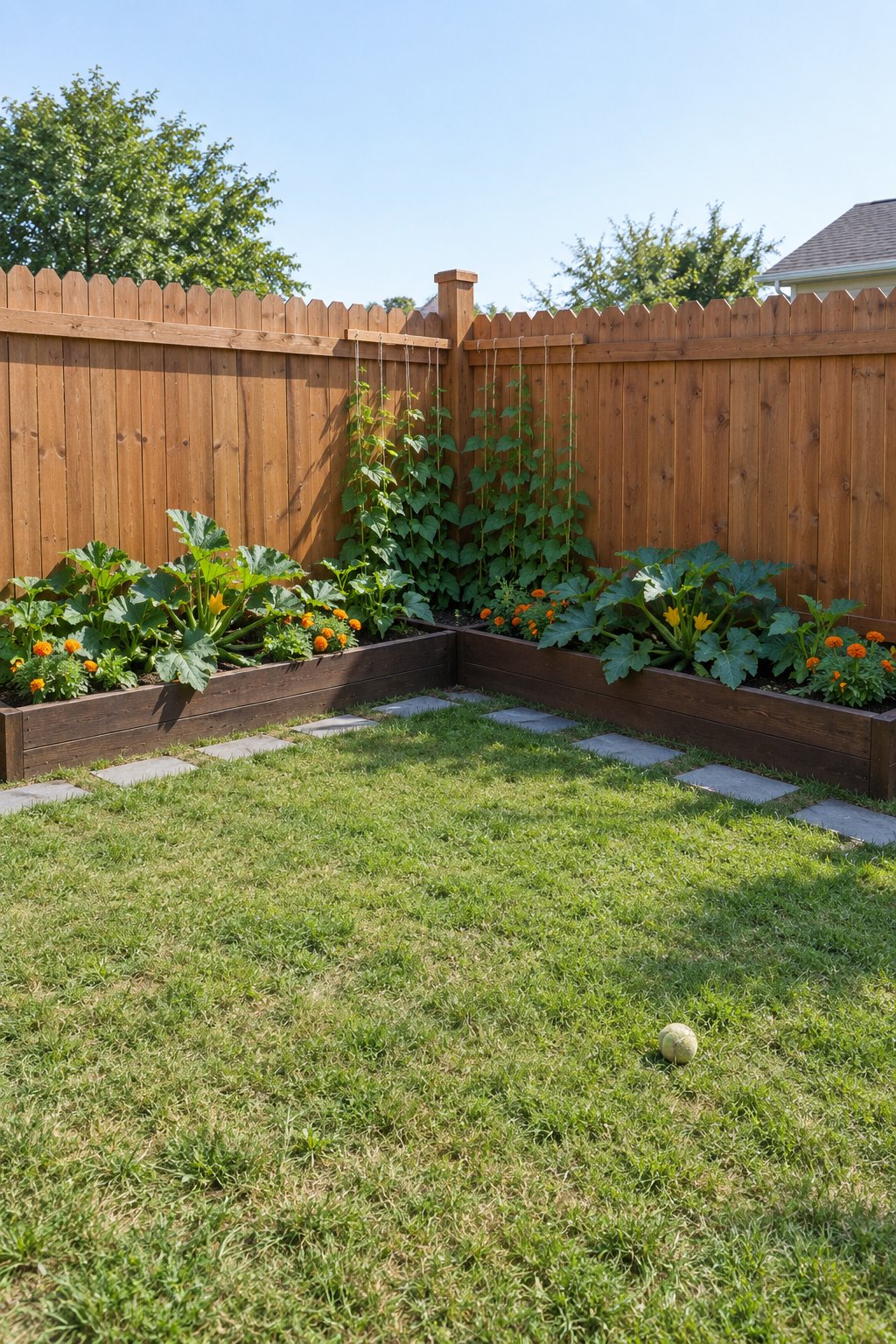
Tuck two beds into a fenced corner and the middle of the lawn stays free for kids or a dog.
Both arms are reached from the front only, so keep them about 2 feet deep, with flagstone stepping stones along the open edge.
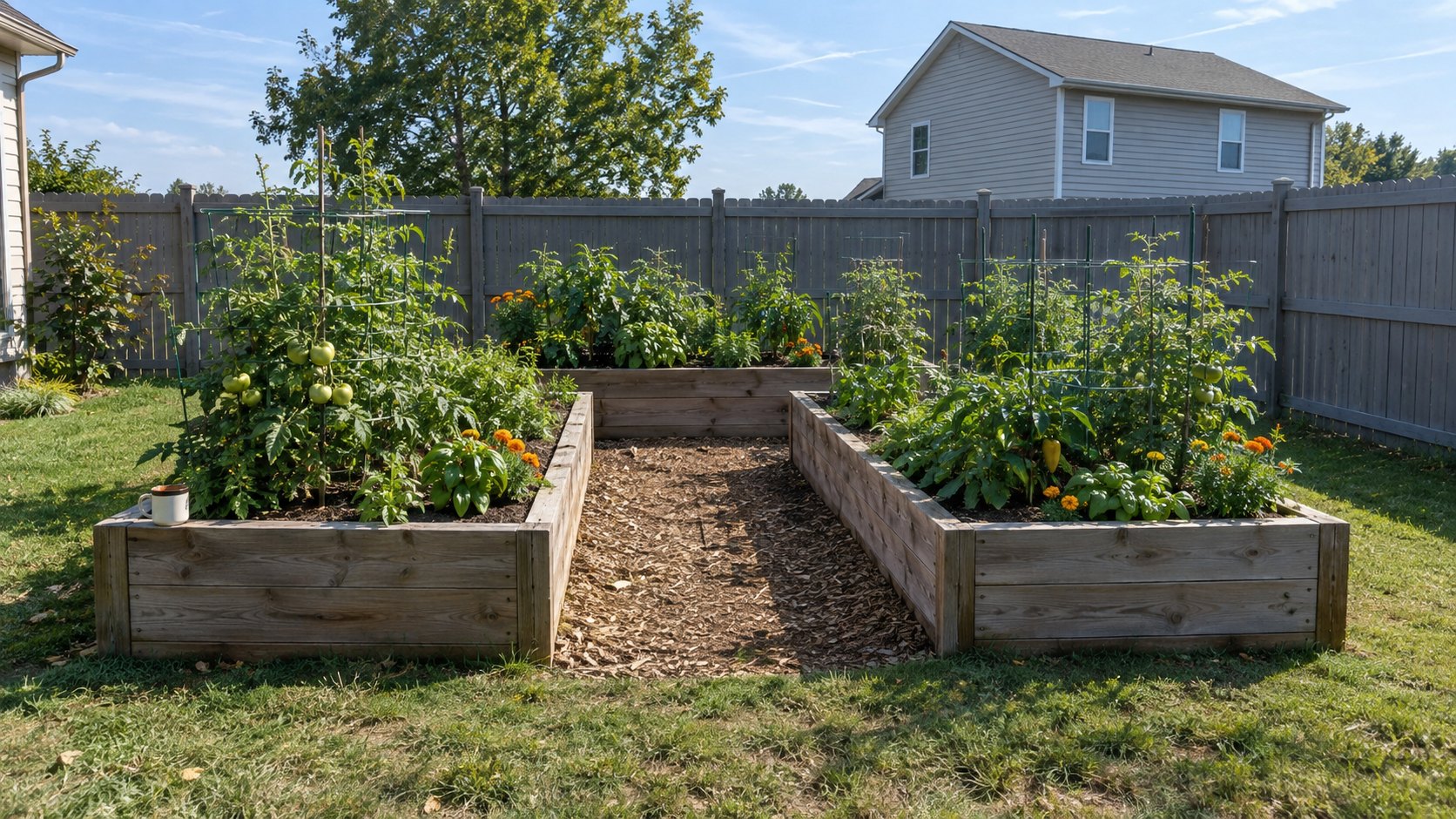
4. The U-Shaped Keyhole Bed
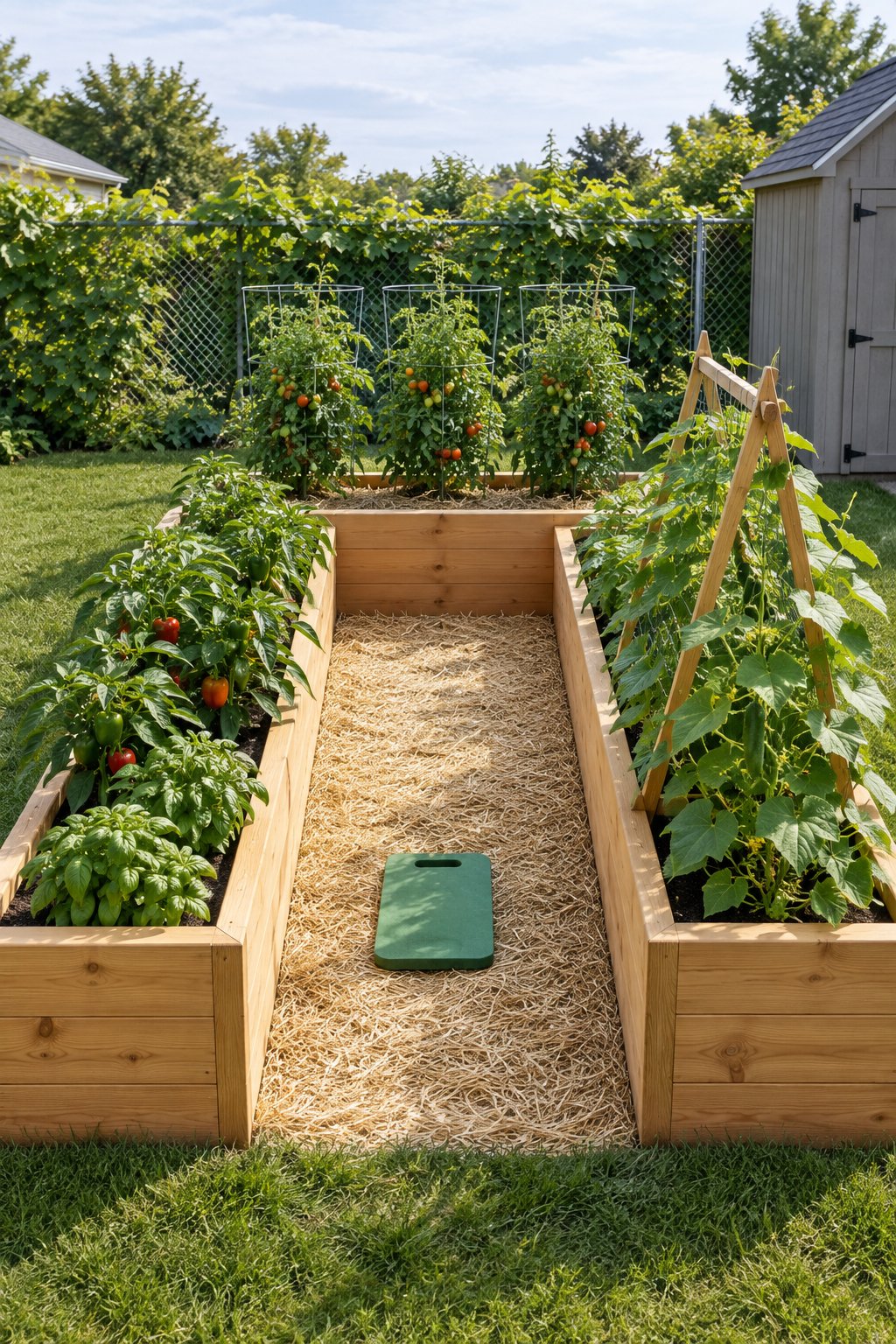
Three joined beds wrapped around a 2 foot aisle pack the most growing space into one small footprint.
You step into the middle and reach every arm from the inside and the outside.
5. The Patio-Edge Trio for a Tiny Yard or Rental
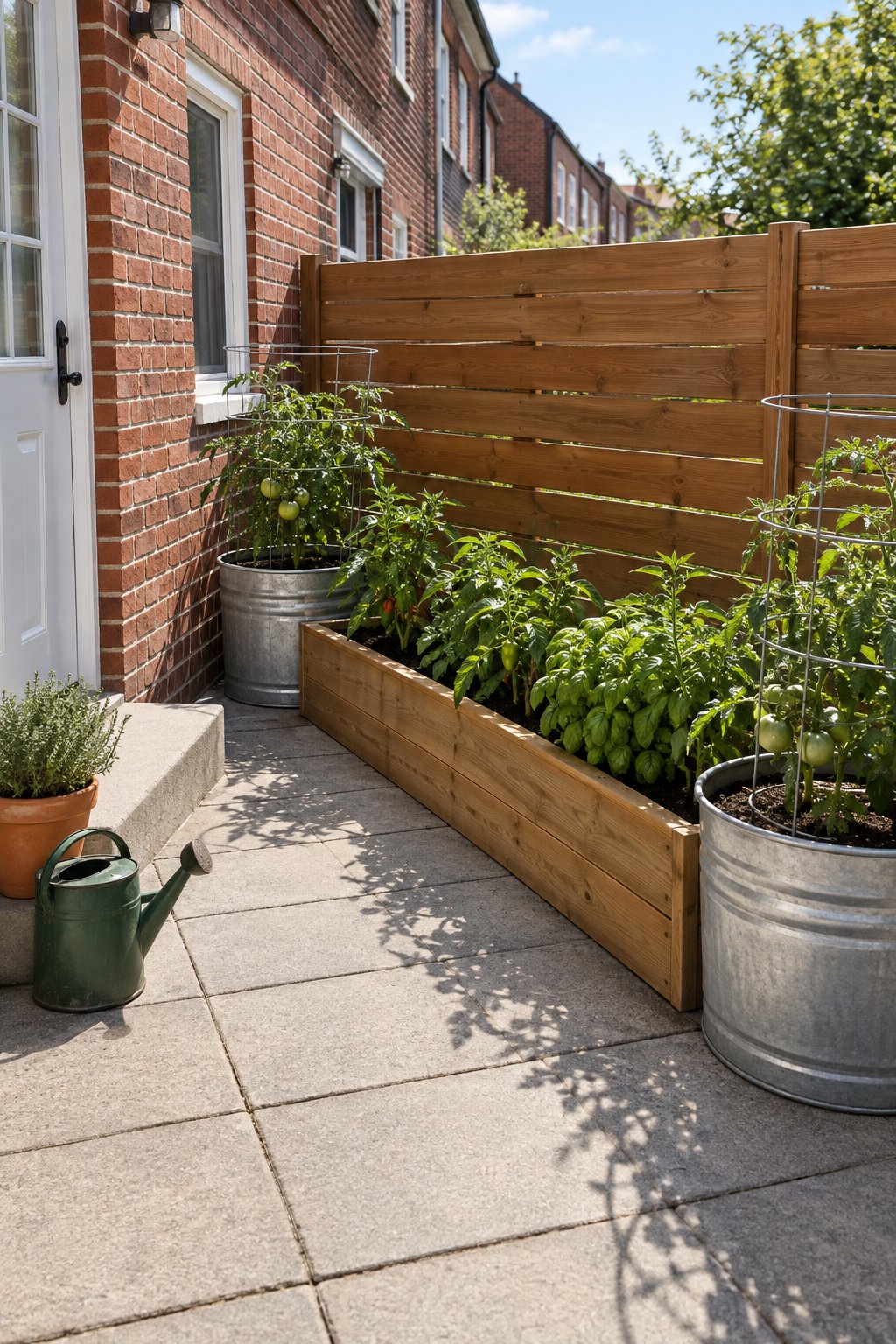
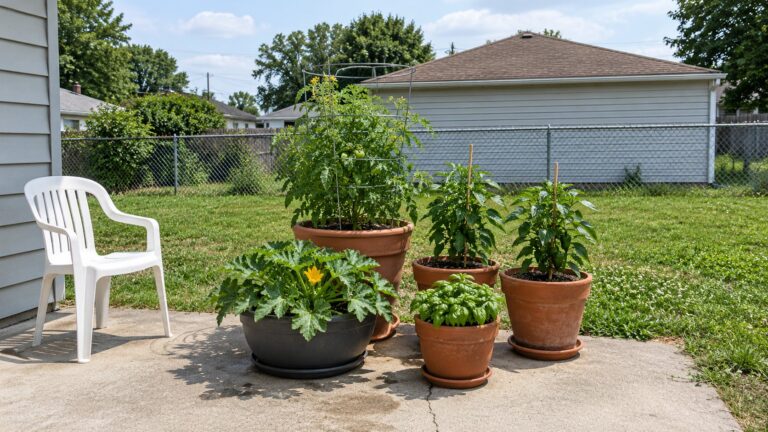
No lawn and no digging: one 2 by 8 foot wooden bed along the patio edge, with a round galvanized tub at each end.
Everything sits on the existing pavers, so it suits a rental. Peppers and basil take the bed, with one caged tomato per tub of at least 10 gallons.
6. The Single-File Side Yard
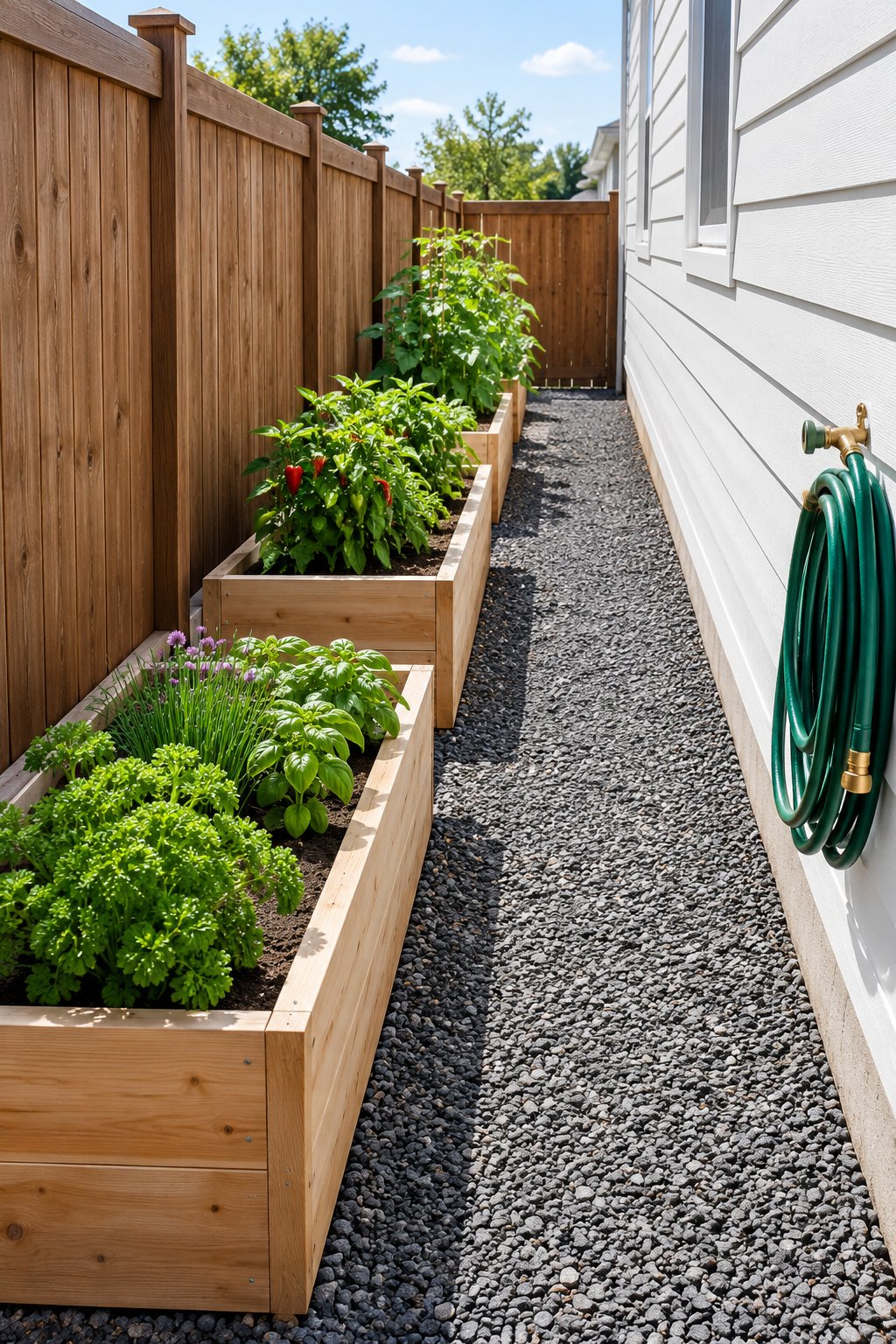
Three 2 by 6 foot beds run end to end against the fence, with a short gap between each.
A continuous 3 foot gravel path on the house side keeps the side yard working as a walkway.
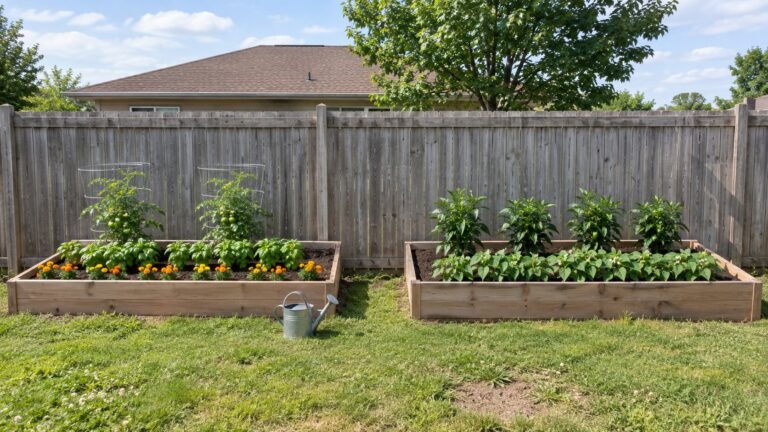
7. The Fence-Line Trellis Run
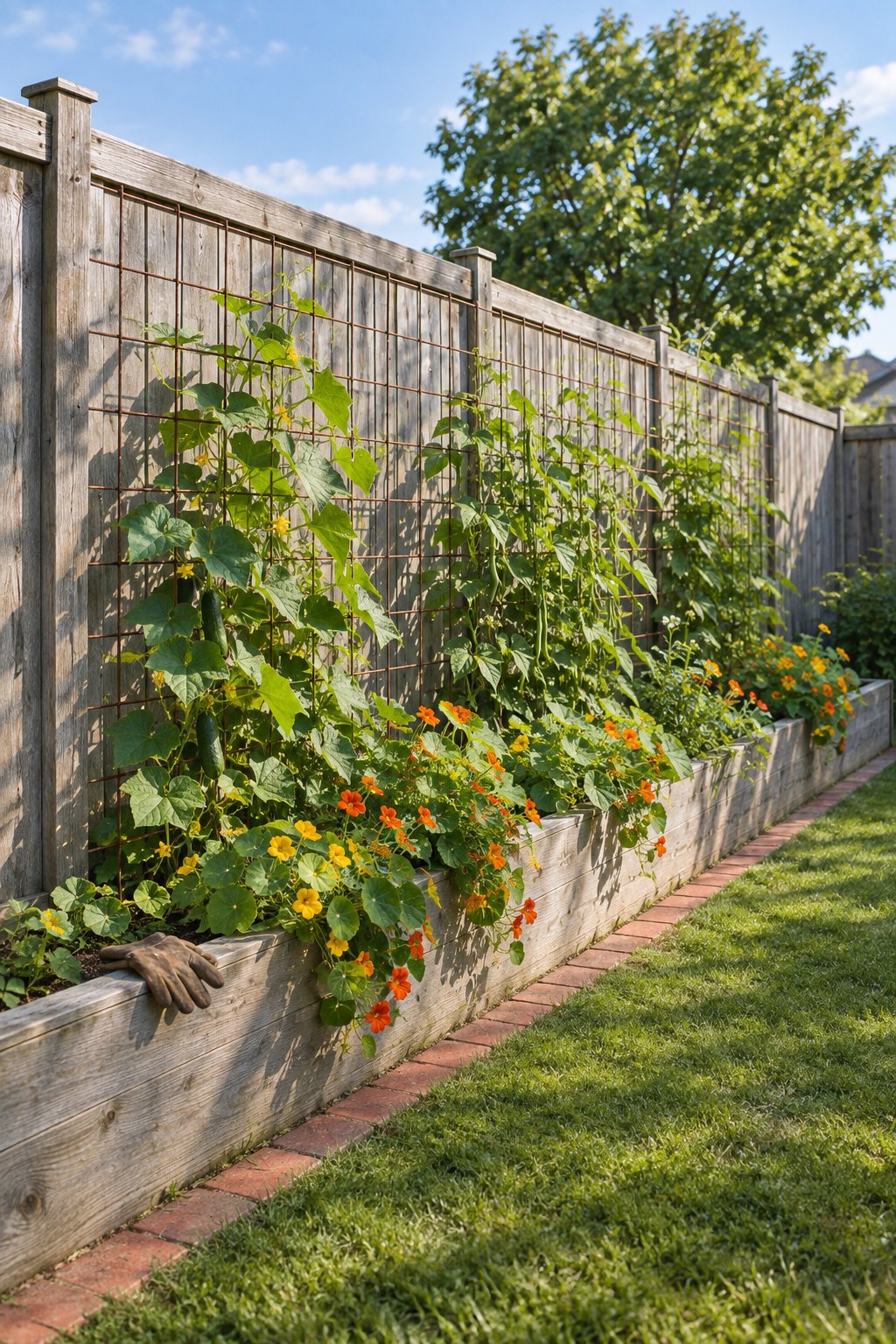
A long, sunny fence is growing space most yards never use.
One bed about 2 feet deep runs its length, with a flat wire panel trellis fixed along the back for cucumbers and pole beans. Nasturtiums spill over the front edge.
8. The Zigzag Strip for a Long, Narrow Yard
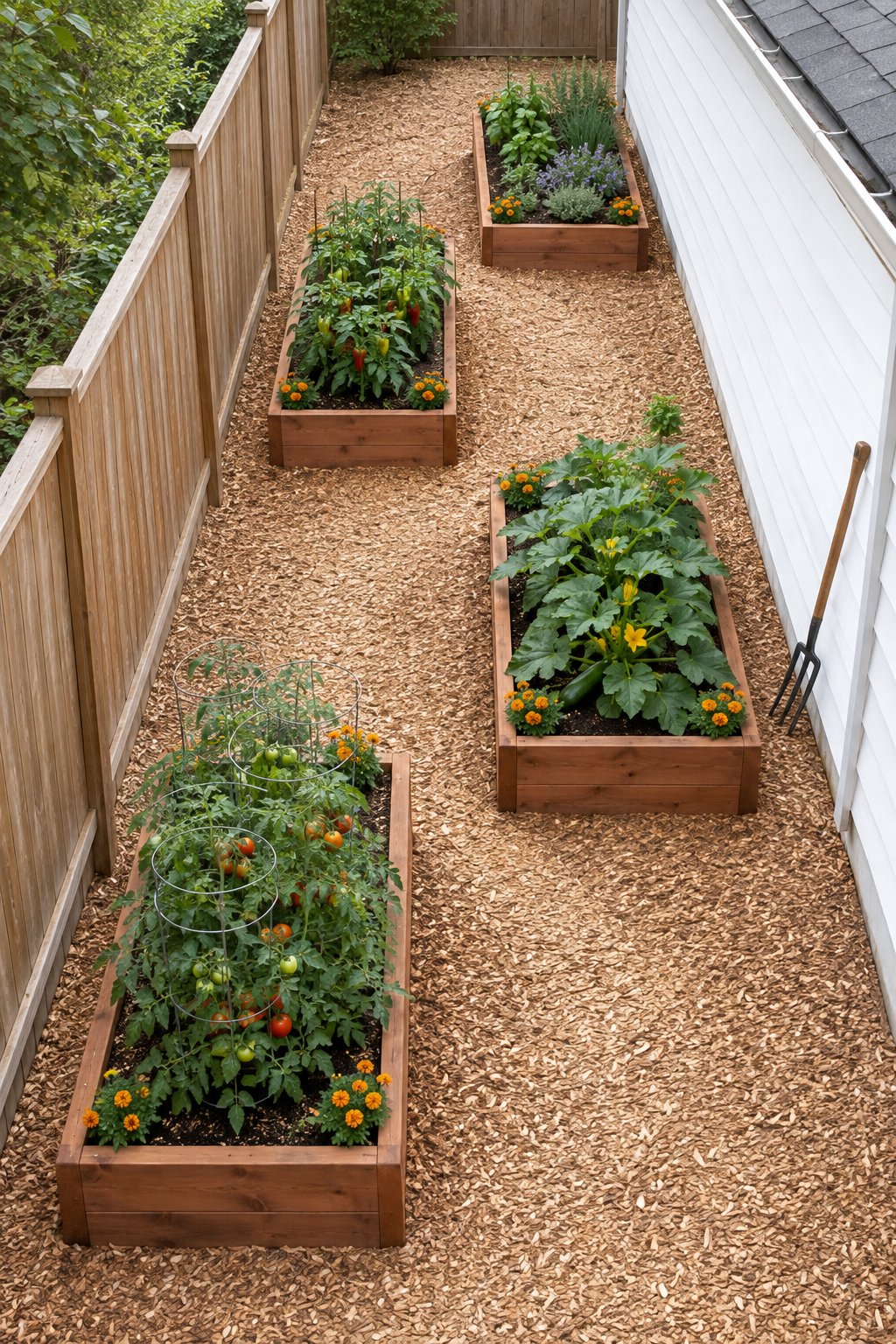
Four 3 by 6 foot beds alternate left and right down the yard, and a 2 foot wood-chip path weaves between them.
The stagger slows the eye, so the space stops reading as a corridor.
9. The Arch Tunnel Over the Path
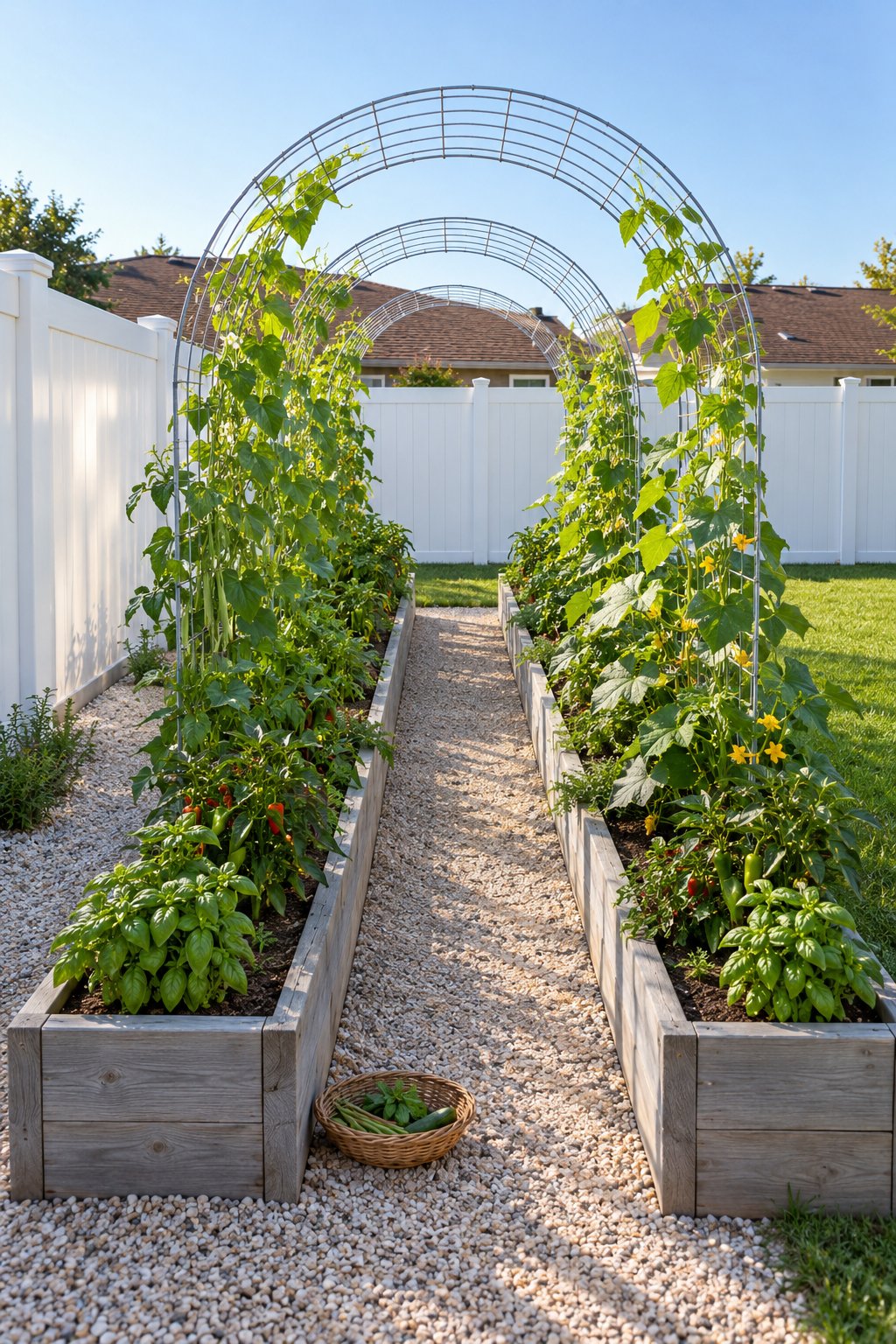
When a yard is too narrow to spread out, grow over the path.
Two long 3 foot wide beds face each other across a 3 foot gravel path, and wire panel arches span it for pole beans and cucumbers. Basil and peppers take the sunny outer edges.
10. The Garage-Wall Strip
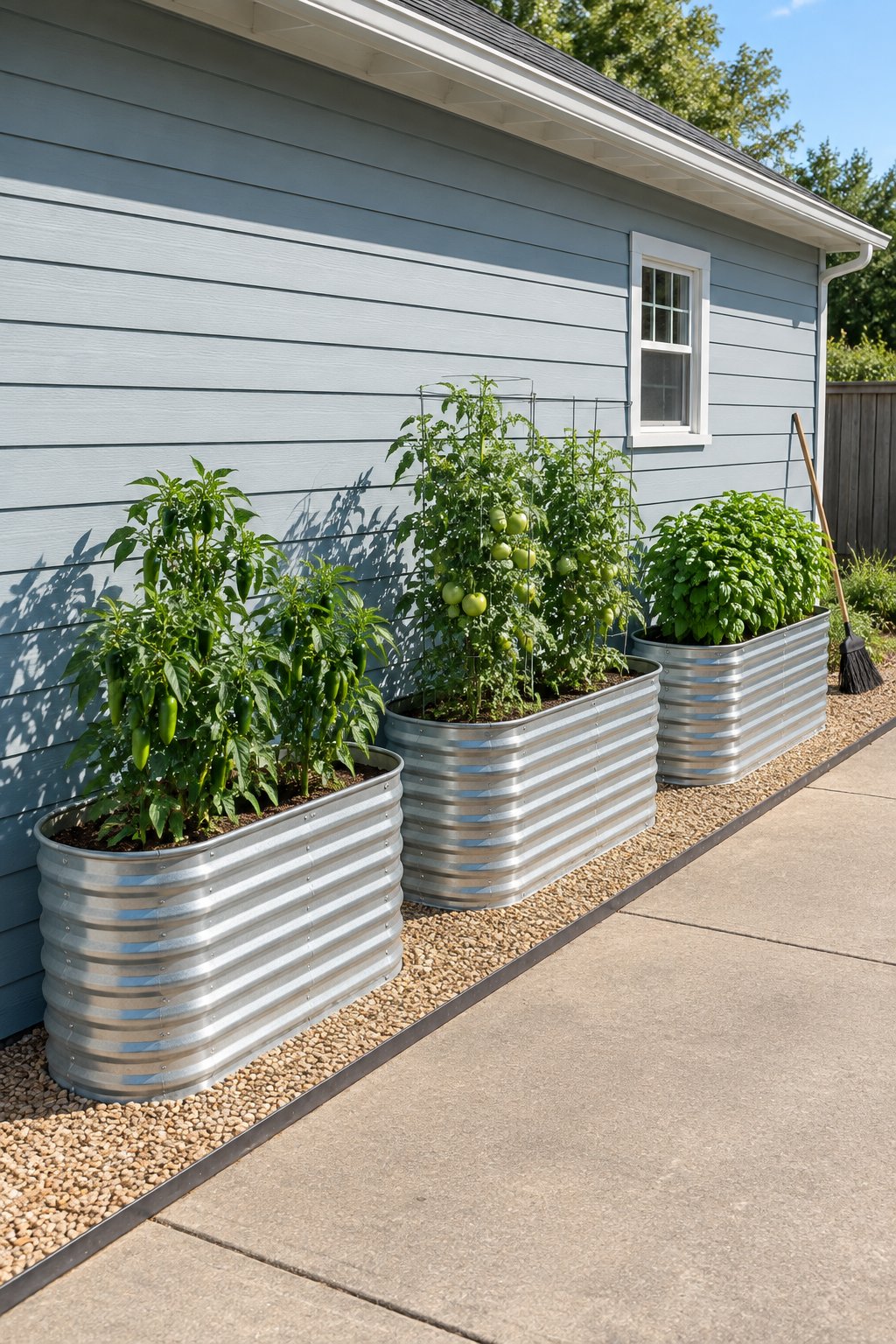
Three tall, slim corrugated metal beds, about 2 feet deep, line up against a sunny garage wall on a gravel strip.
The wall holds the day’s heat, which suits peppers, tomatoes and basil.
11. The Three-Step Terrace
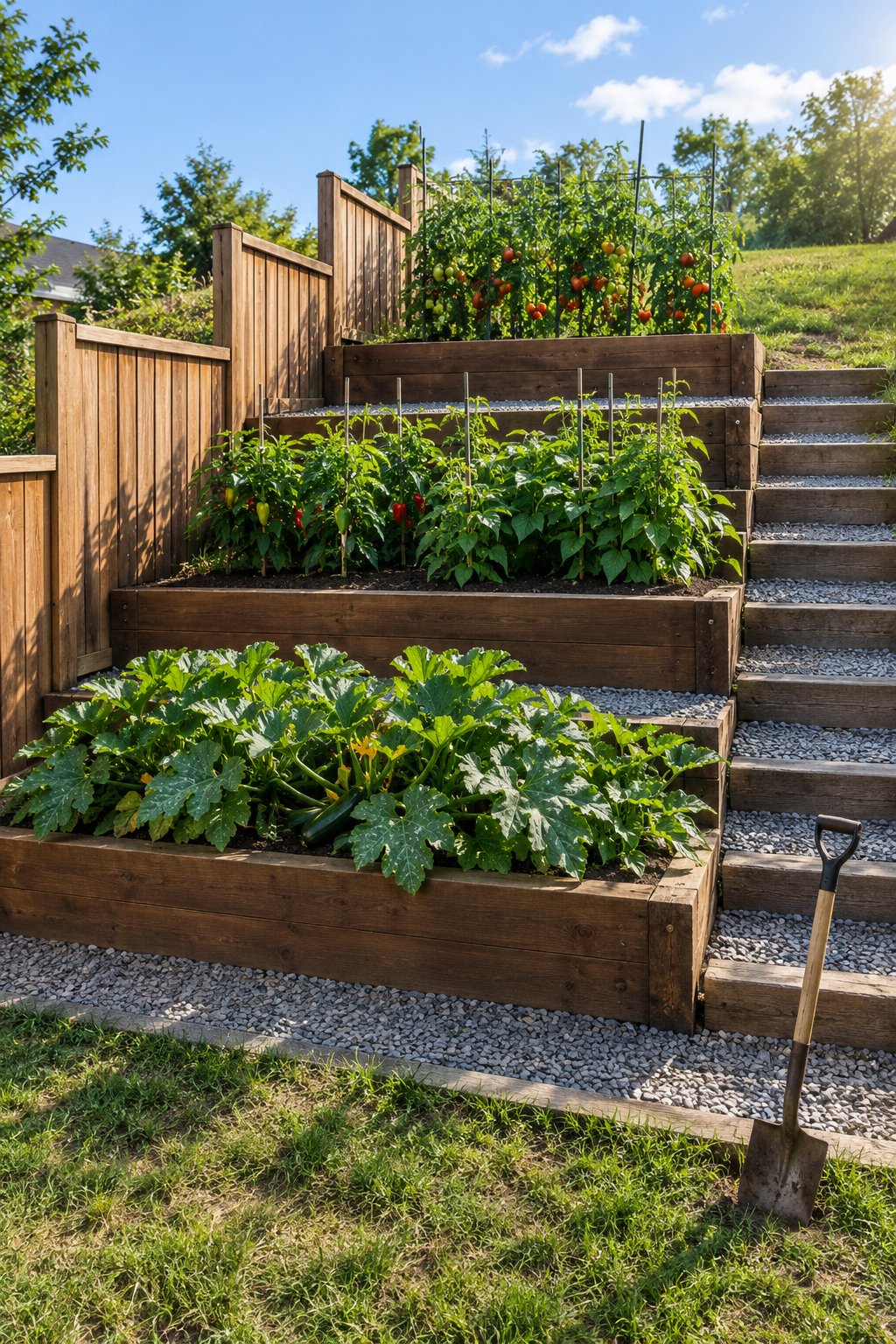
On a steady slope, stop fighting the grade and build steps.
Three timber beds run across the hill, each a step lower than the last, with level tops and gravel steps down one side. Each bed gets a flat strip to stand on.
12. The Contour Rows for a Gentle Slope
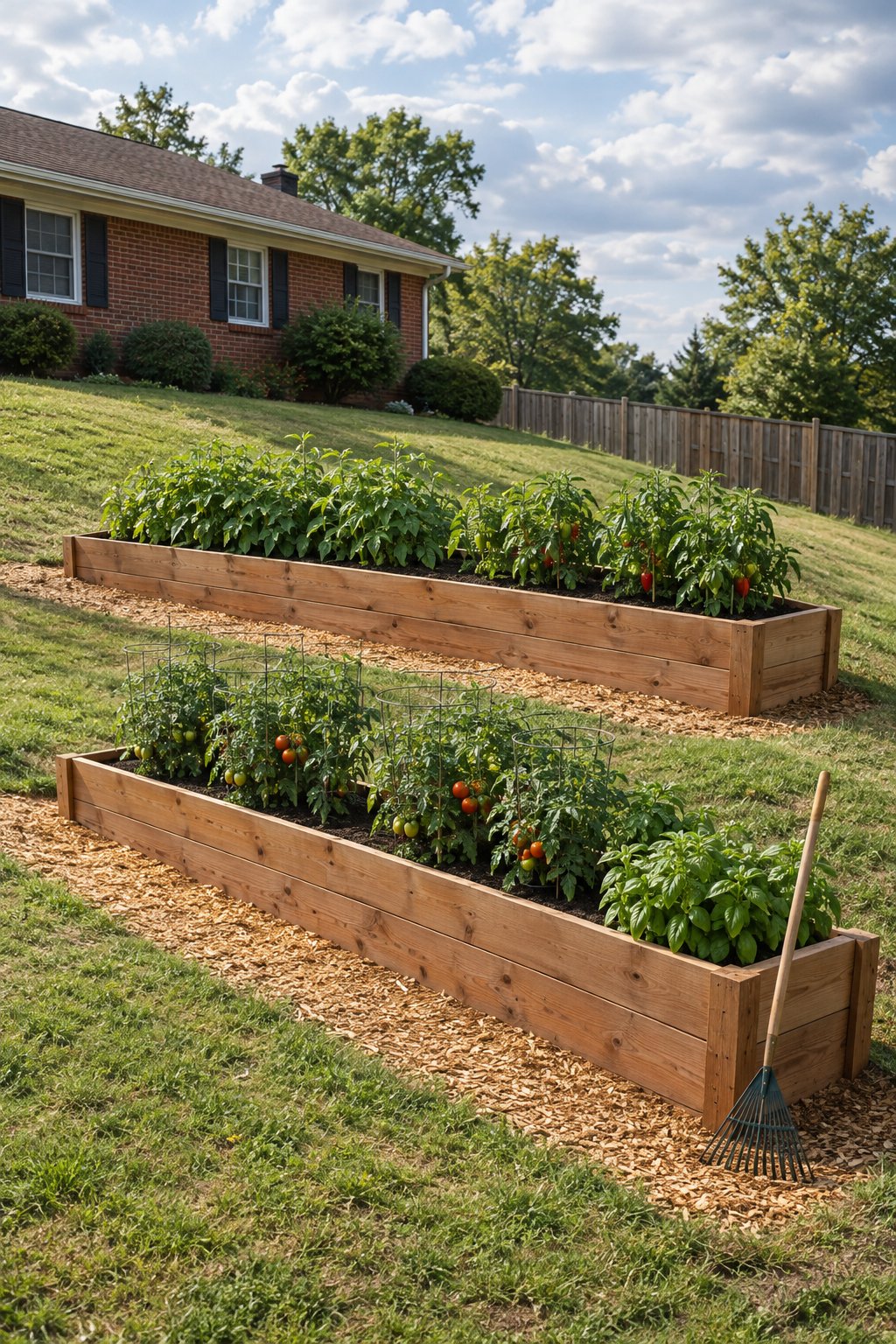
Two long 4 foot wide beds follow the slope, one above the other, each with a taller downhill wall.
That deeper downhill board lets the soil sit level, so water soaks in and does not run to one end.
13. The Low Block Bed at the Foot of the Slope
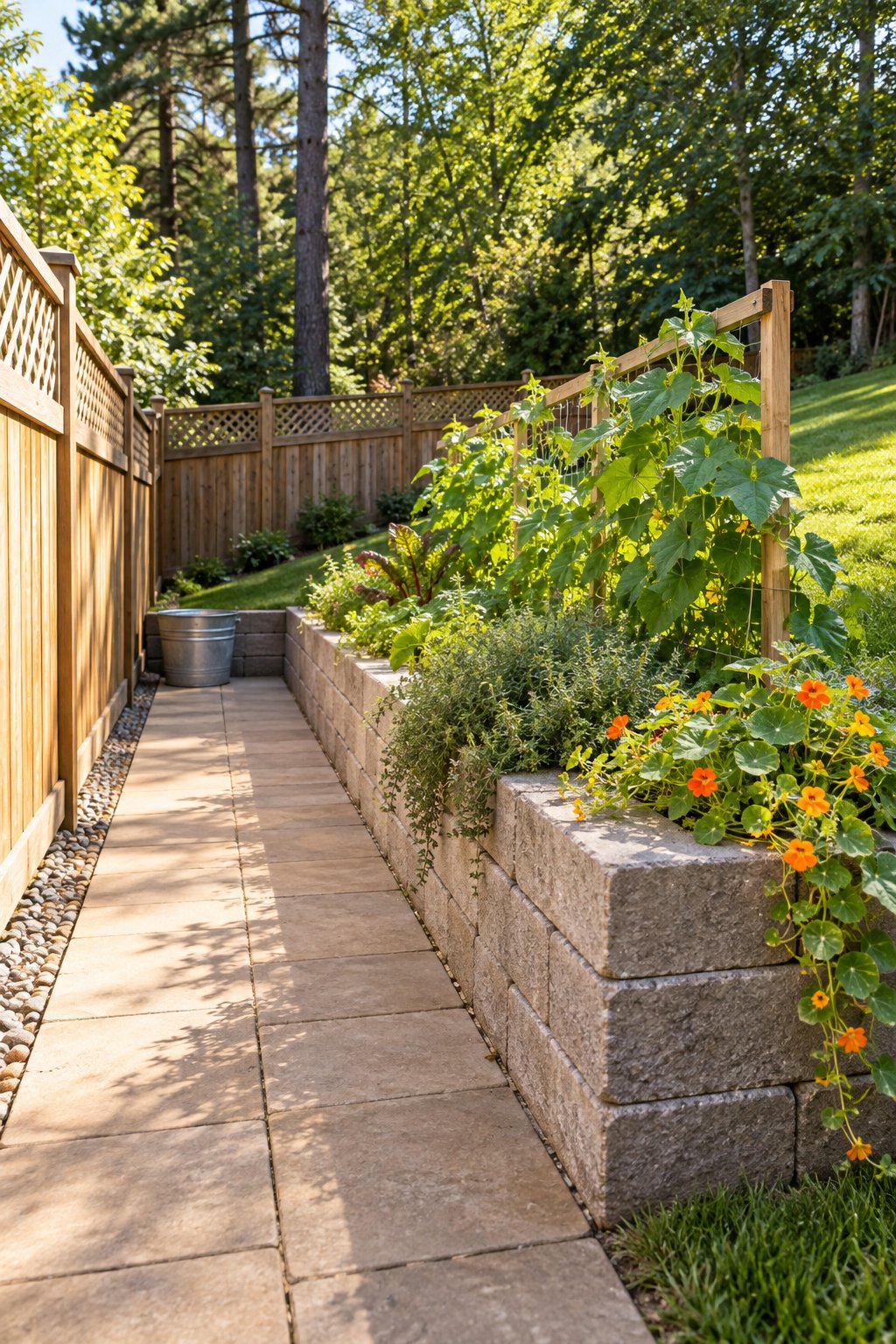
Where the yard falls toward the back fence, one level bed at the bottom is enough.
Stacked concrete blocks stand two or three courses high at the front and lower where they meet the slope, with a paver landing to kneel on.
14. The Leveled Tanks on Gravel Pads
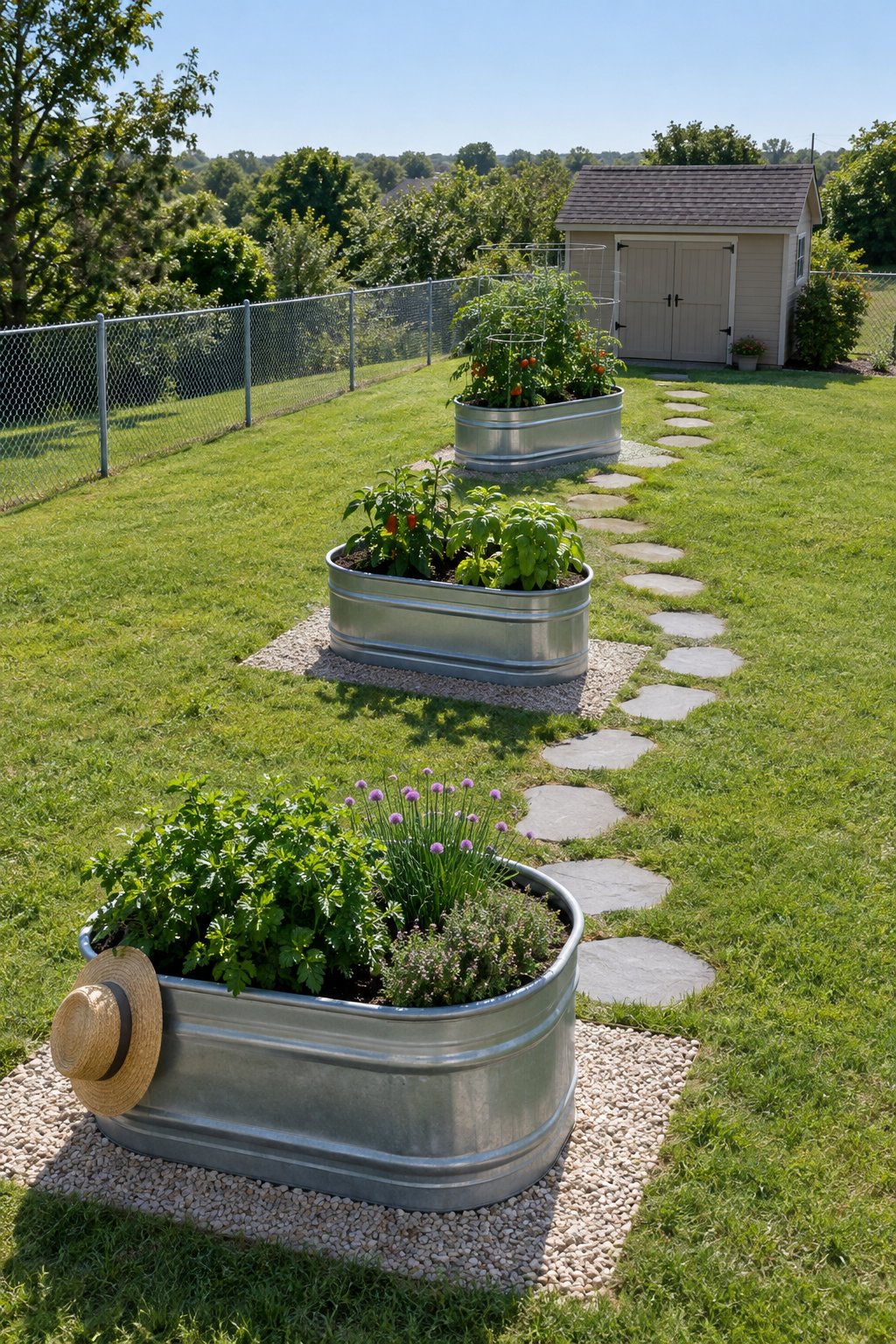
Three oval galvanized troughs step down a gentle slope, each on its own leveled gravel pad.
No saw and no carpentry: a spade and a level do the whole job.
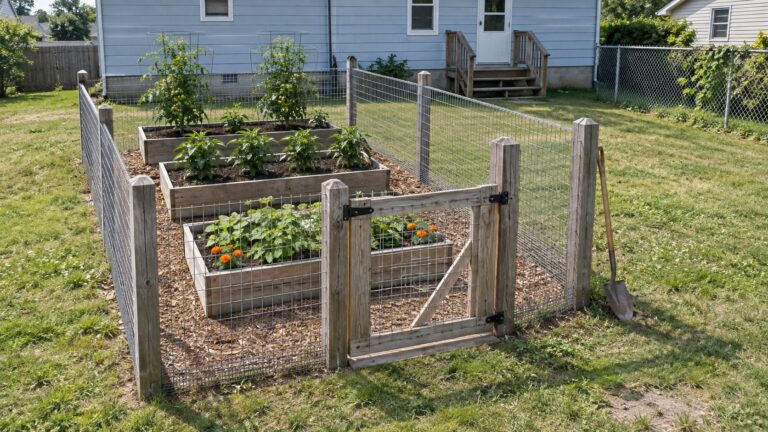
15. The Fenced Six-Bed Kitchen Garden
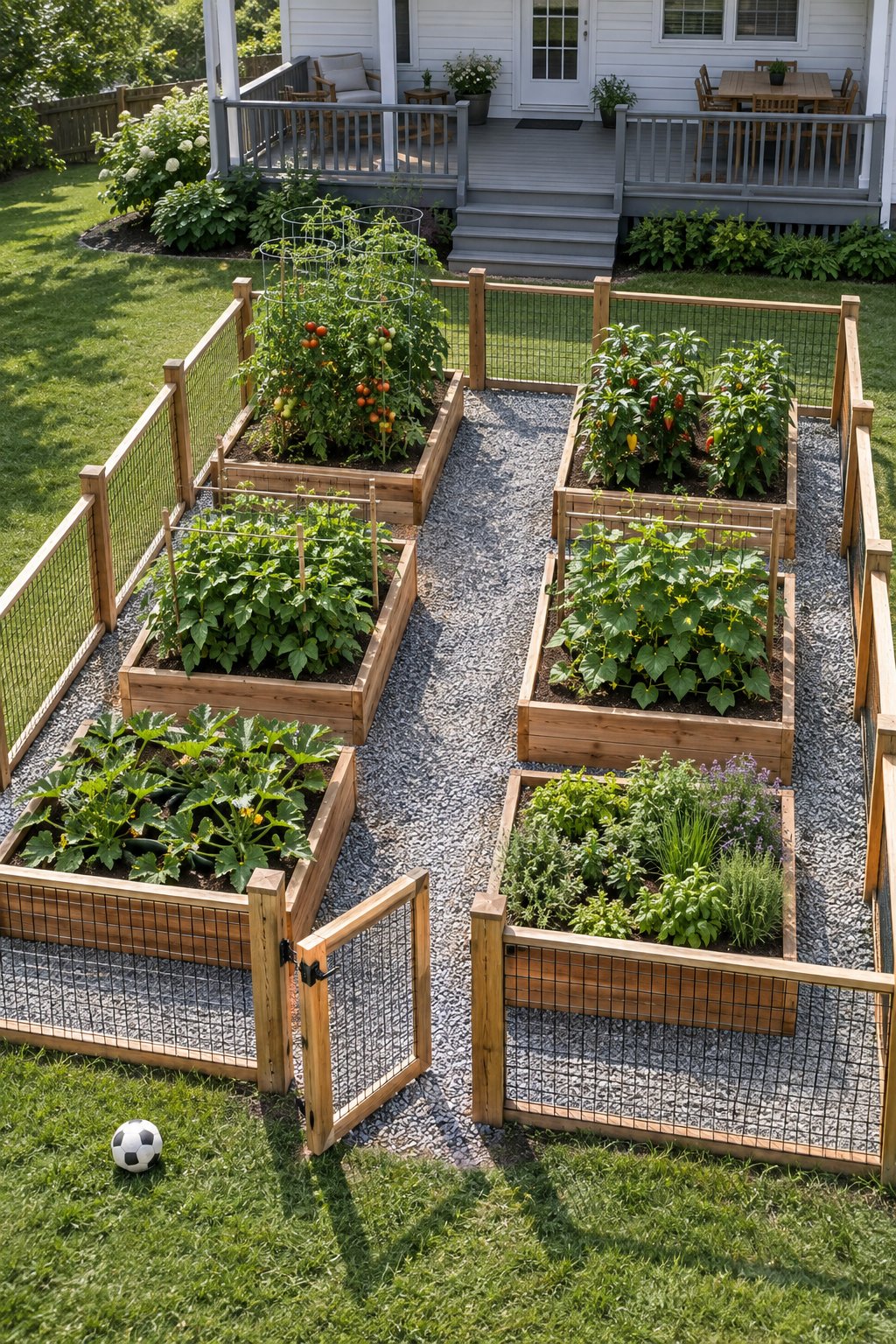
Six 4 by 8 foot beds in two rows of three, inside a low post-and-wire fence, suit a yard shared with a dog or a soccer ball.
A 3 foot center aisle from the gate takes the wheelbarrow, with 2 foot paths between the beds.
16. The Three Long Rows, Tall Crops to the North
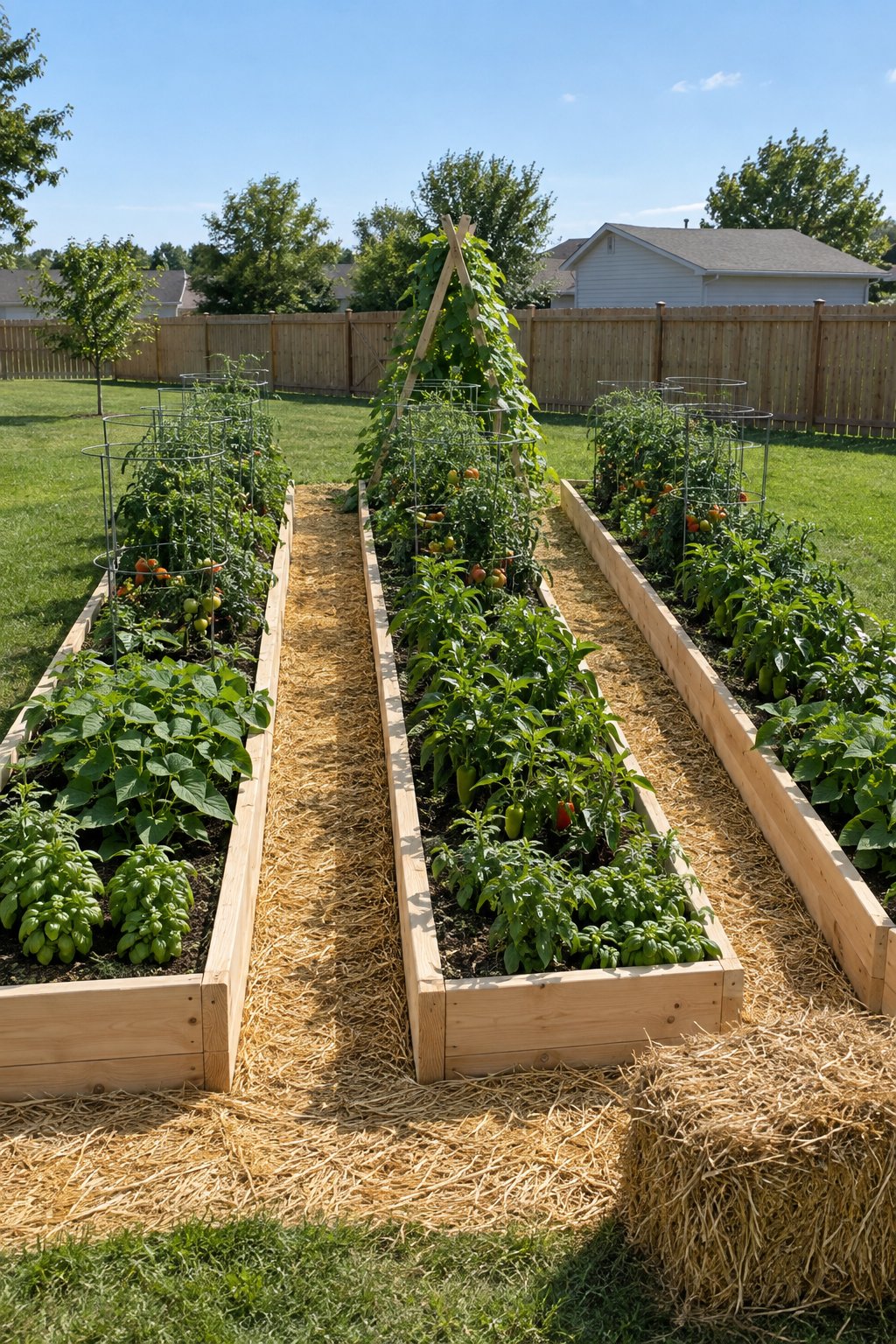
Three 4 foot wide beds run north to south, so both long sides get sun through the day.
Height steps down from north to south: pole beans on an A-frame, caged tomatoes, then peppers, bush beans and basil.
17. The Lawn-Edge Border
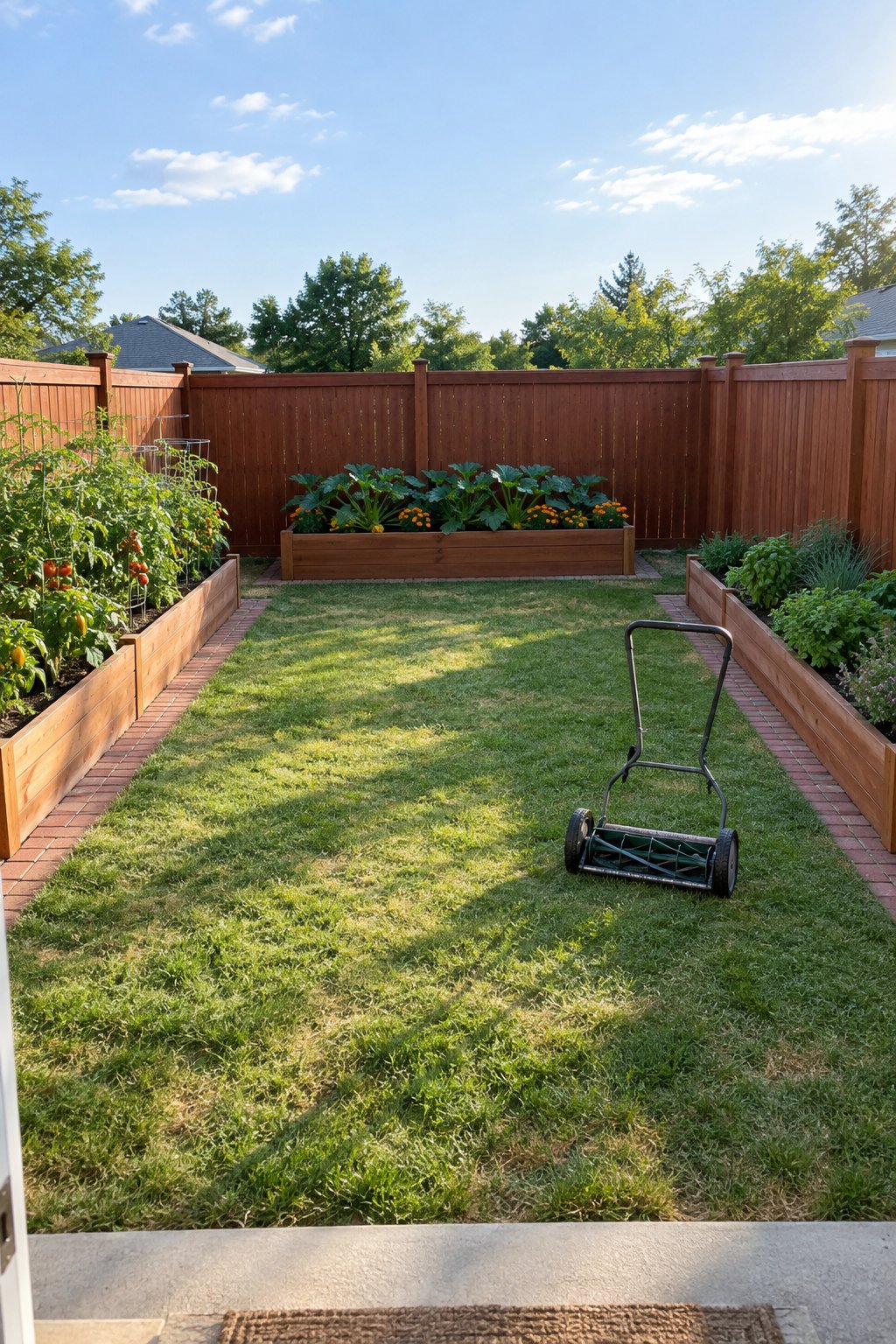
A family yard can keep its grass and still grow vegetables.
Three beds about 2 feet deep follow the fence on three sides, with gaps at the corners and a brick mowing strip along each front. The lawn is the path.
Raised Bed Sizes at a Glance
The four numbers every plan above is built on.
| What | Size | Why |
|---|---|---|
| Bed reached from both sides | 4 ft wide at most | The middle stays within reach |
| Bed against a fence or wall | About 2 ft deep | You reach from one side only |
| Walking path | At least 2 ft | Room to kneel and turn |
| Wheelbarrow path | About 3 ft | One main route for soil and mulch |
6 Raised Bed Layout Mistakes to Skip
Beds wider than your reach
Do thisKeep a bed you can reach from both sides to 4 feet wide at most. A bed against a fence or wall, reached from one side, should be about 2 feet.
Paths too tight to walk
Do thisLeave at least 2 feet between beds for walking. Make one main path about 3 feet wide so a wheelbarrow gets through.
Tall crops on the south side
Do thisPut trellises, pole beans and caged tomatoes on the north side of the bed or the plot, so their shade falls away from the shorter crops.
A bed set straight onto a slope
Do thisLevel it first, either by digging in the uphill side or by building the downhill wall taller. The top of the soil should sit flat.
Beds beyond the reach of the hose
Do thisRun the hose out to the spot before you build. Raised beds dry out faster than open ground, so a bed you can’t water easily gets neglected.
Building every bed in the first year
Do thisStart with one or two beds and leave the space for the rest marked out. Add more once you know how much you really tend.
Map Your Sun Before You Place a Single Bed
The vegetables in these plans are full-sun crops, and full sun means at least six hours of direct sunlight a day.
Pick one clear day and look at your yard three times: mid-morning, midday and late afternoon. Mark where the shadows of the house, the fence and any trees fall each time.
I’d do this with a few stakes and a phone photo from an upstairs window.
Shadows run longer in spring and fall than in midsummer, and a tree that is bare in March casts far more shade once it leafs out. The patch that stays bright at all three checks is where the beds go.
Start with one change: mark out a single bed with string and a tape measure, then walk around it for a day.
If you can reach the middle and the path feels easy, build that one first. A second bed is simple to add next season, once you know how the sun moves across your yard.
Frequently Asked Questions
How wide should a raised garden bed be?
At most 4 feet if you can reach it from both sides, so the middle is never more than an arm’s length away. Against a fence or wall, where you reach from one side only, keep it to about 2 feet.
How much space do I need between raised beds?
At least 2 feet for a walking path. Give any path that has to take a wheelbarrow about 3 feet.
Which direction should raised beds run?
North to south is the usual choice, because both long sides of the bed then get sun through the day. If your yard only allows east to west, it still works: keep the tall crops and the trellis on the north edge.
Can I put raised beds on a slope?
Yes, as long as the top of the soil ends up level. Terrace the beds in steps, build the downhill wall taller, or set each bed on its own leveled pad, and expect some digging either way.
Are raised beds renter-friendly?
Free-standing beds and metal tubs that sit on an existing patio need no digging and can move with you. Ask your landlord before you lift turf or fix a trellis to a fence.
Save This For Later
Loved raised garden beds layout? Save this pin to your Pinterest board now so you can find it again anytime you need the inspiration.