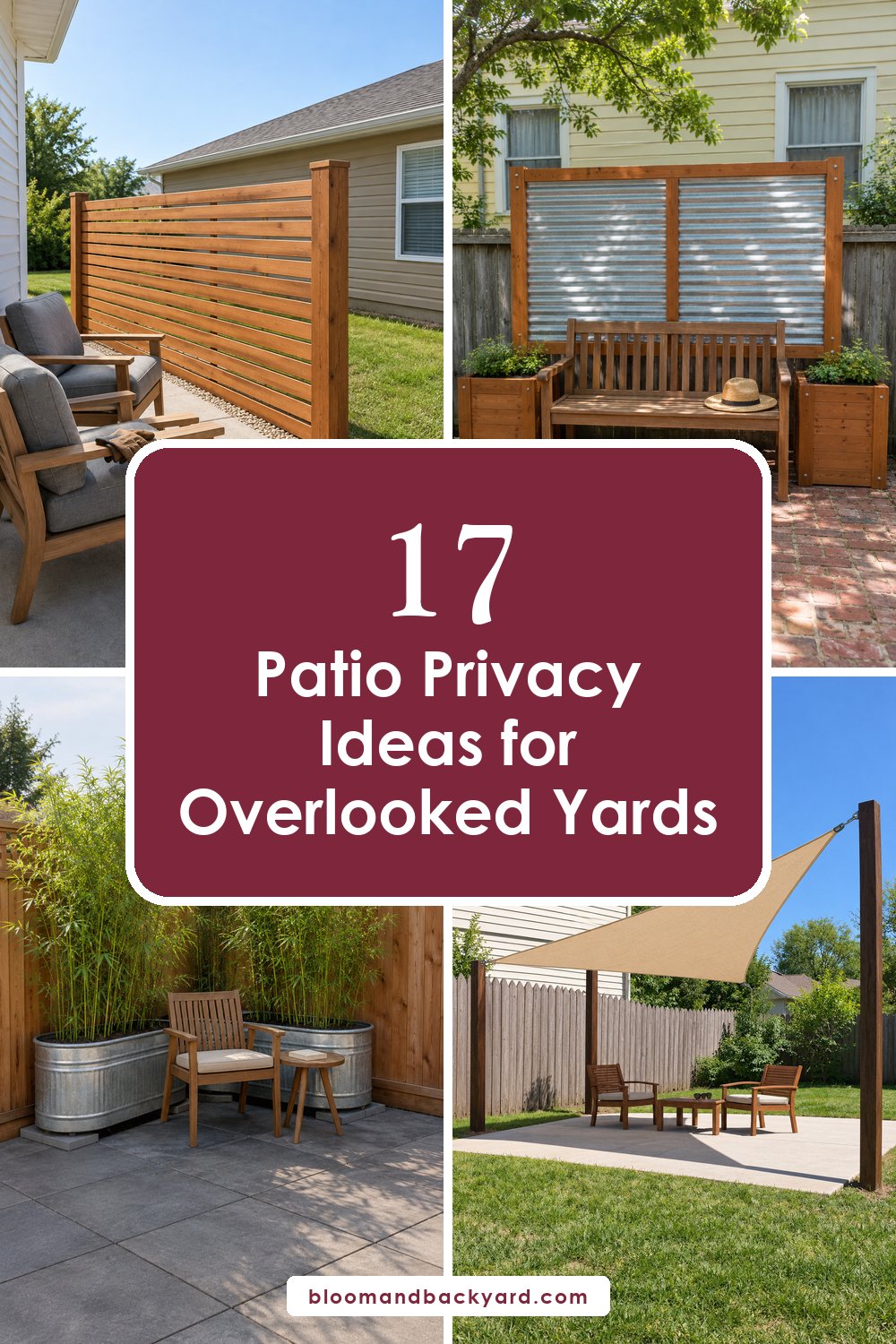
17 Patio Privacy Ideas for Yards the Neighbors Can See Into
Patio privacy ideas work when they block one line of sight, not the whole yard.
So I’ve sorted these 17 by kind: screens and panels, plants, overhead cover and fabric, then movable fixes for renters.
Each one names the view it stops, from a two-story window to the street.
Which kind of privacy fits?
1. Cedar Slats on Two Posts That Shut Out the Side Yard
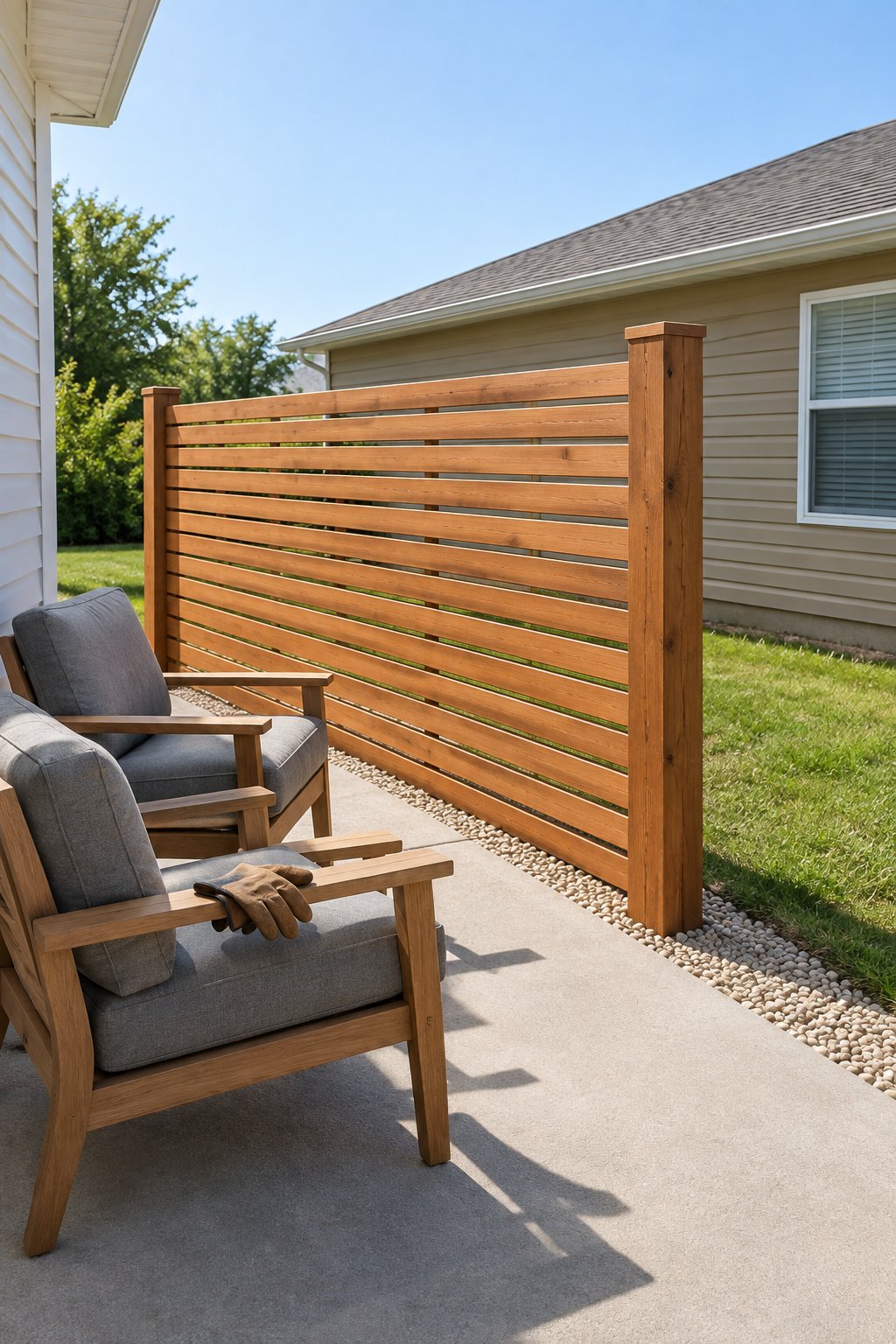
A side yard view comes in low and level, so a short screen beside the chairs is enough. Fix horizontal cedar slats to two posts set in the ground, over a gravel strip.
Call 811 before you dig, and check local and HOA height rules before you build.
2. Louvered Panels on Planter Boxes That Screen the Street
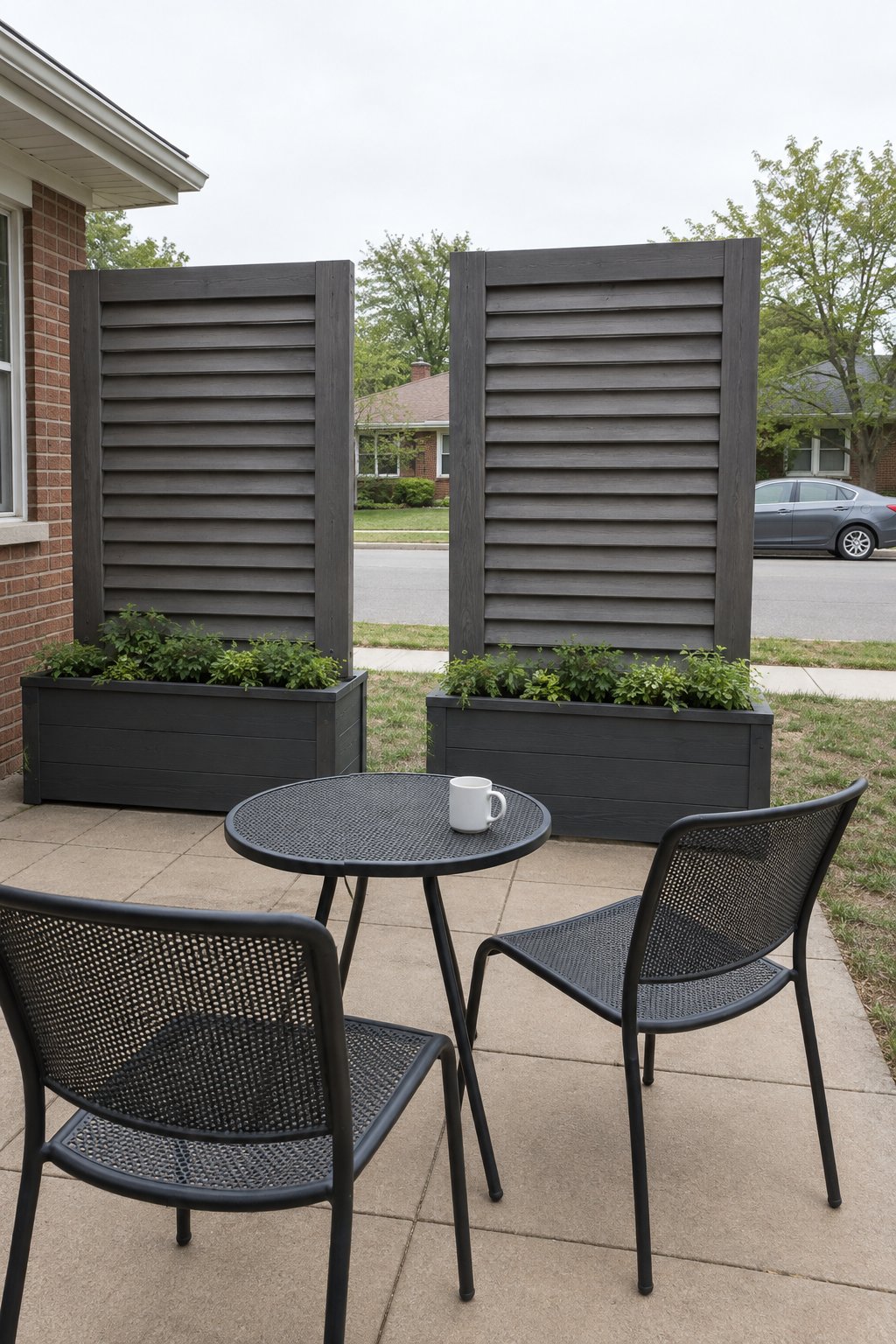
Angled louvers stop a straight look from the sidewalk and still let air through. Stand two framed louver panels at the street edge of the patio, each fixed to a heavy planter box.
From the chairs you see slats and sky.
3. Three Staggered Panels That Break a Diagonal View
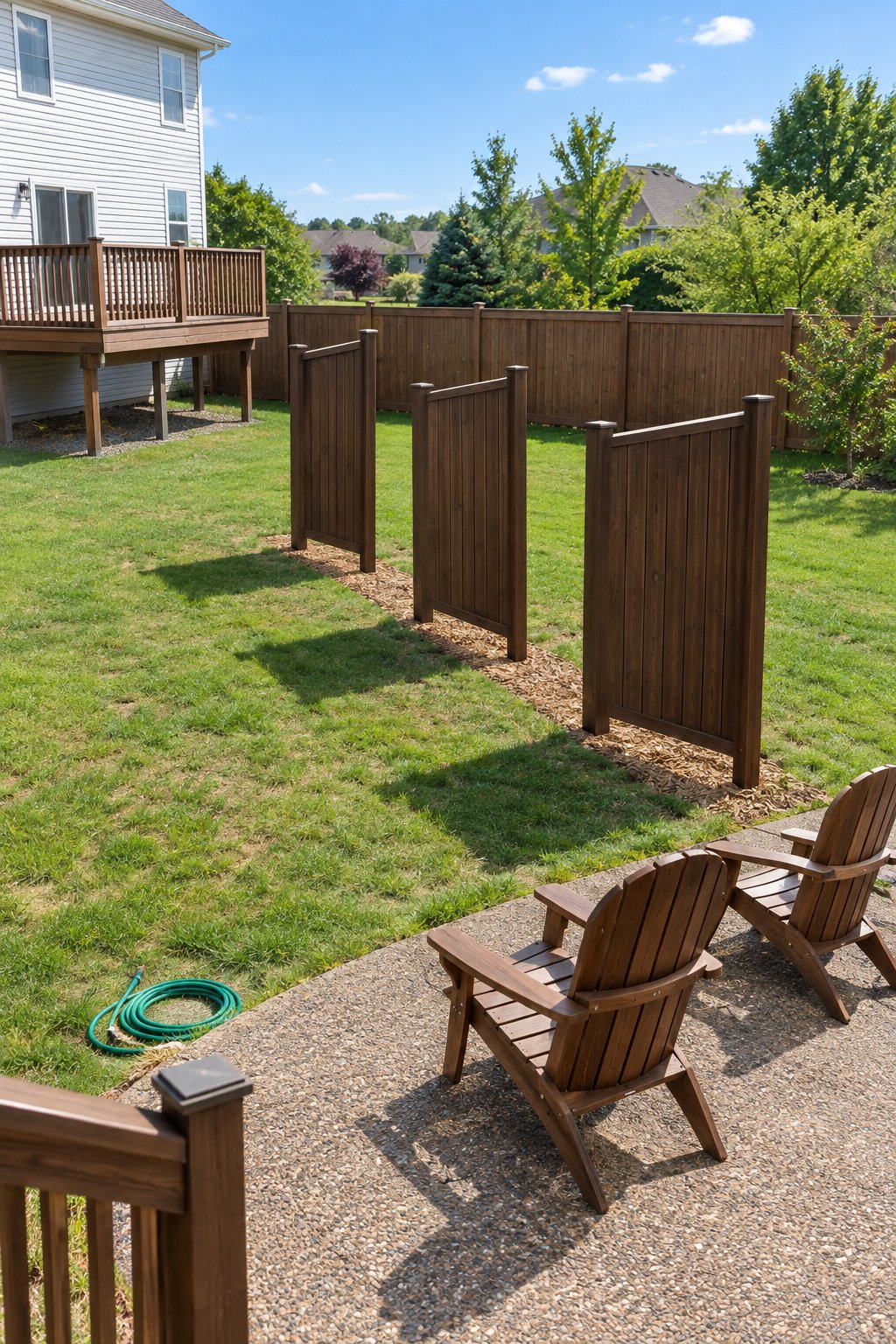
A neighbor’s deck looks in at an angle, and a diagonal line needs less screen than a whole side. Set three narrow board panels on posts in an offset row across that line, with walking gaps between.
Call 811 before setting the posts, and check local height rules.
4. Corrugated Metal in a Cedar Frame That Backs a Bench
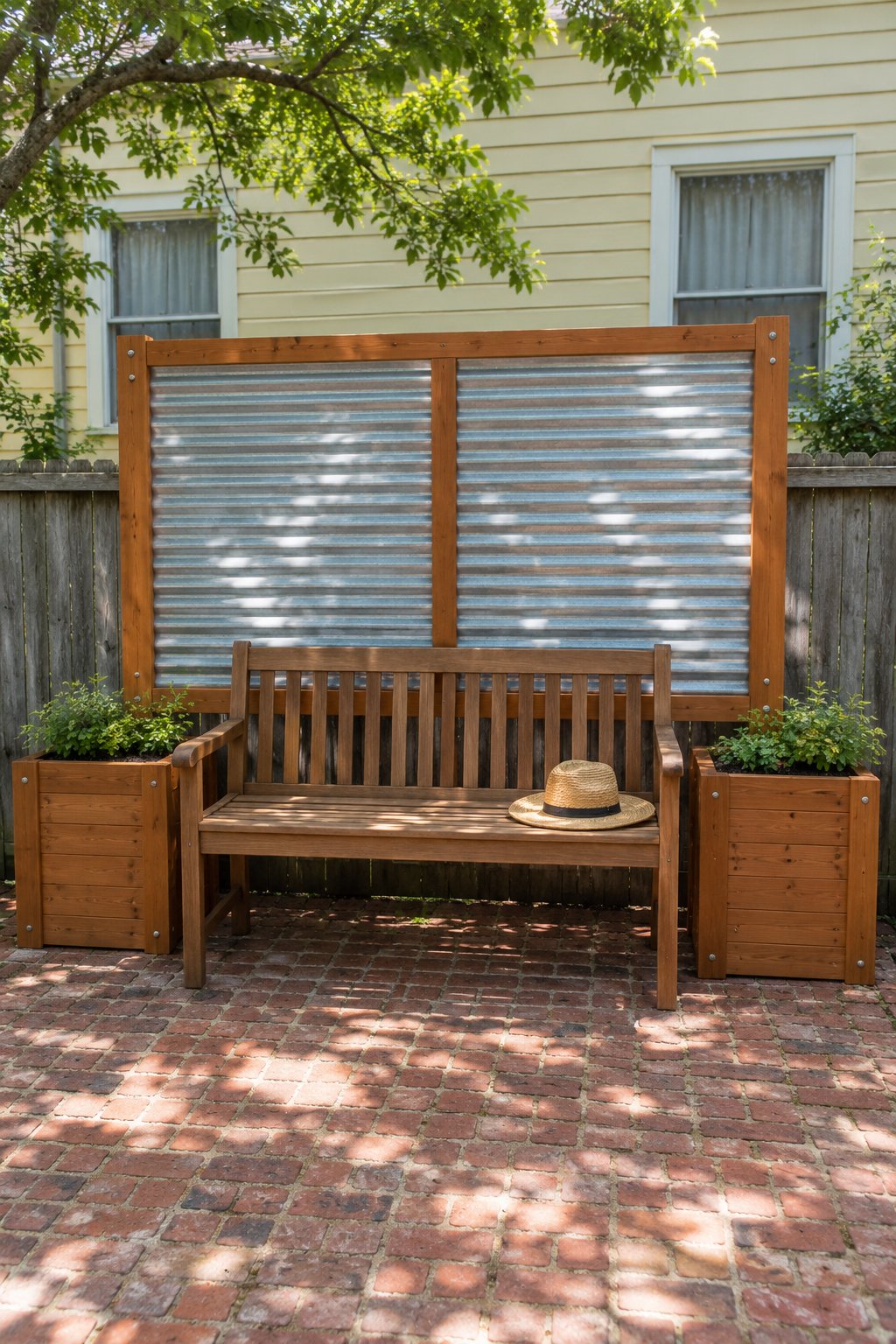
A solid panel right behind a seat hides more of you than a taller one across the yard.
Frame two sheets of corrugated metal in cedar, bolt each end to a deep, soil-filled planter box for weight, and set a bench in front with its back to the shared fence.
5. An Arborvitae Row That Screens the Fence Line All Year
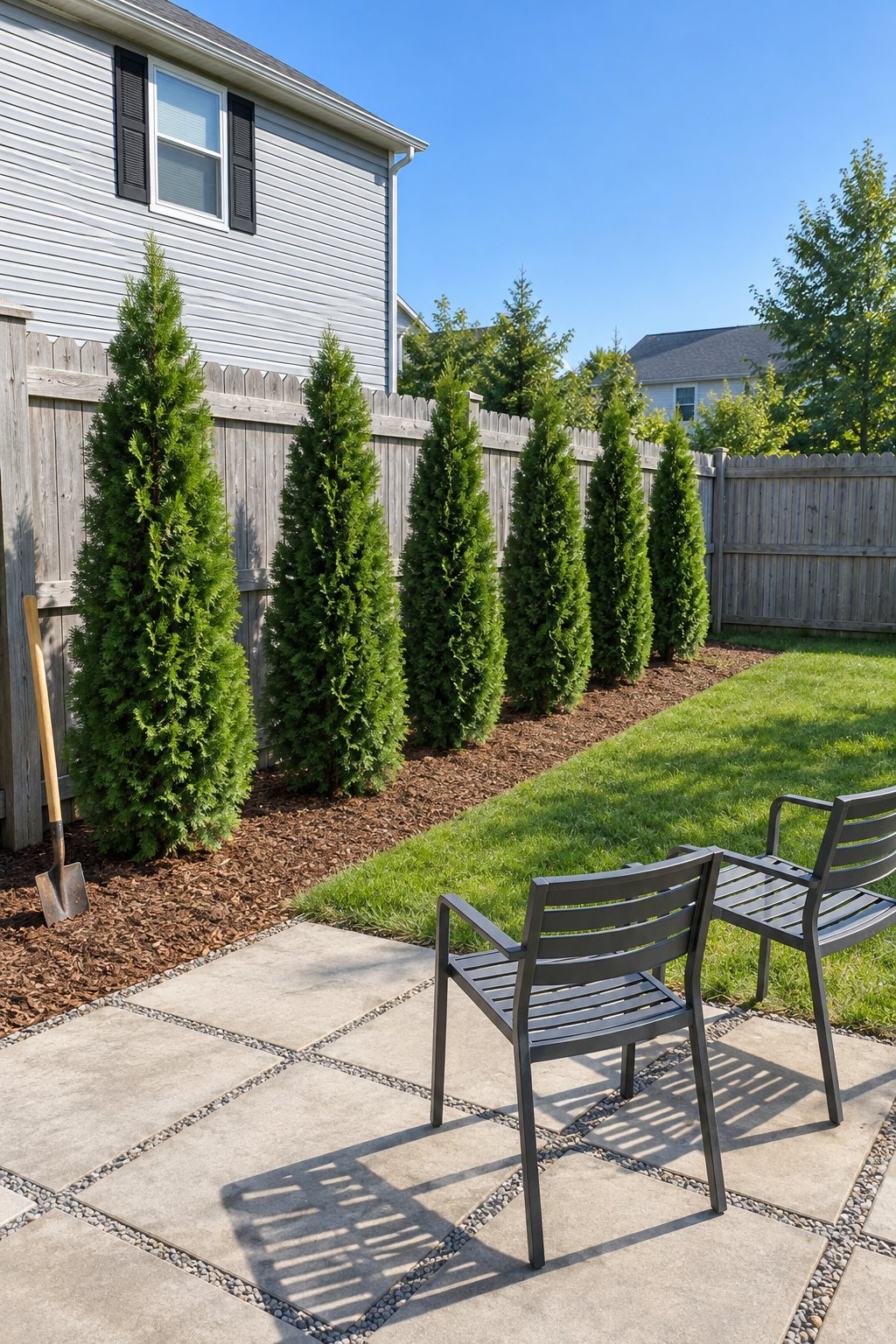
Evergreens do what most screening plants can’t. They still block the view in January.
Plant a row of upright arborvitae in a mulched bed along the shared fence, in full sun. Check that the variety suits your zone, and call 811 before you dig.
6. A Switchgrass Strip That Thickens as Summer Warms Up
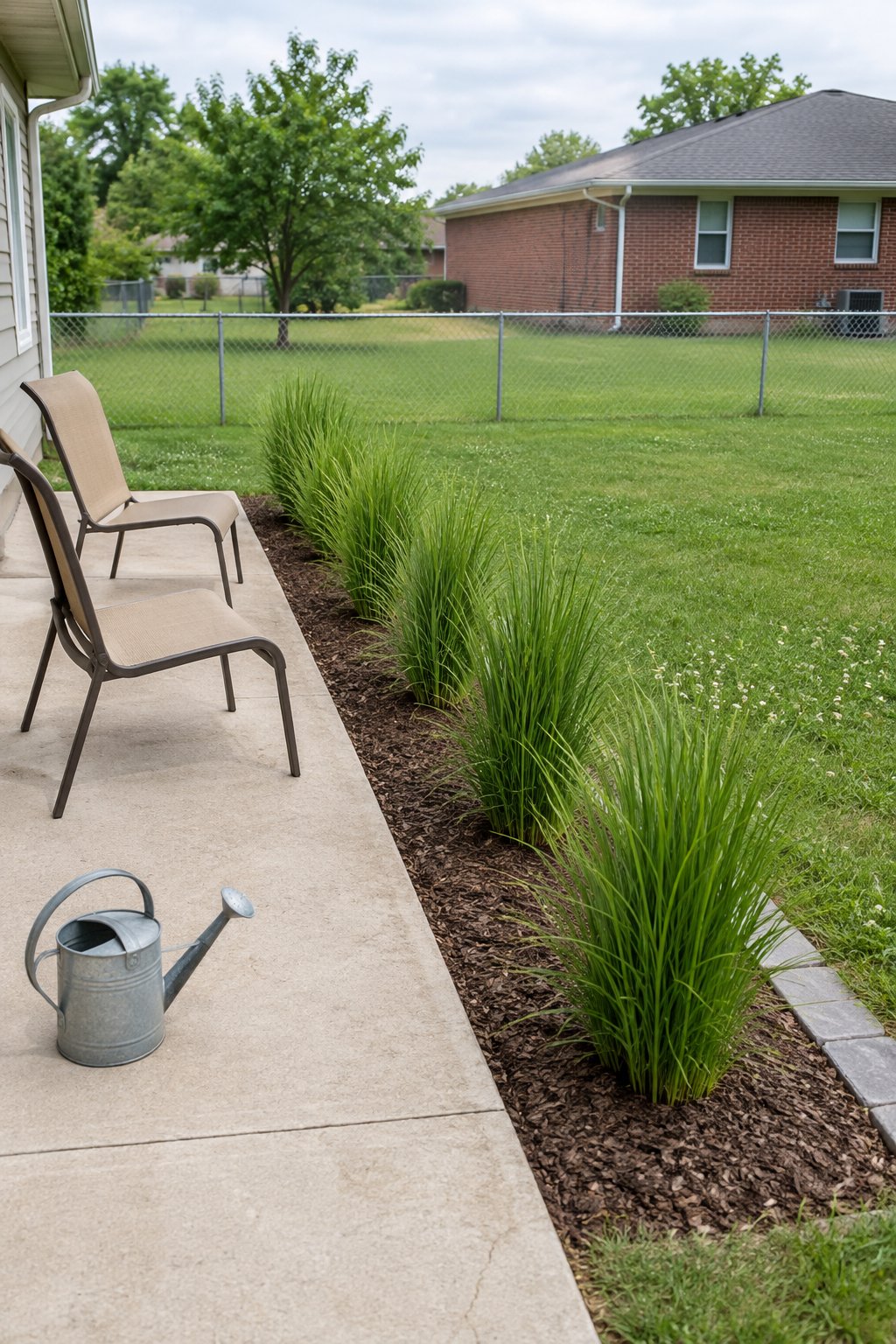
Switchgrass is a warm-season grass, so it greens up late in spring and fills out through summer, when you sit outside most. Plant a strip along the patio’s open edge in full sun, with a row of pavers as a mowing edge.
7. Clumping Bamboo in Stock Tanks That Walls Off a Corner
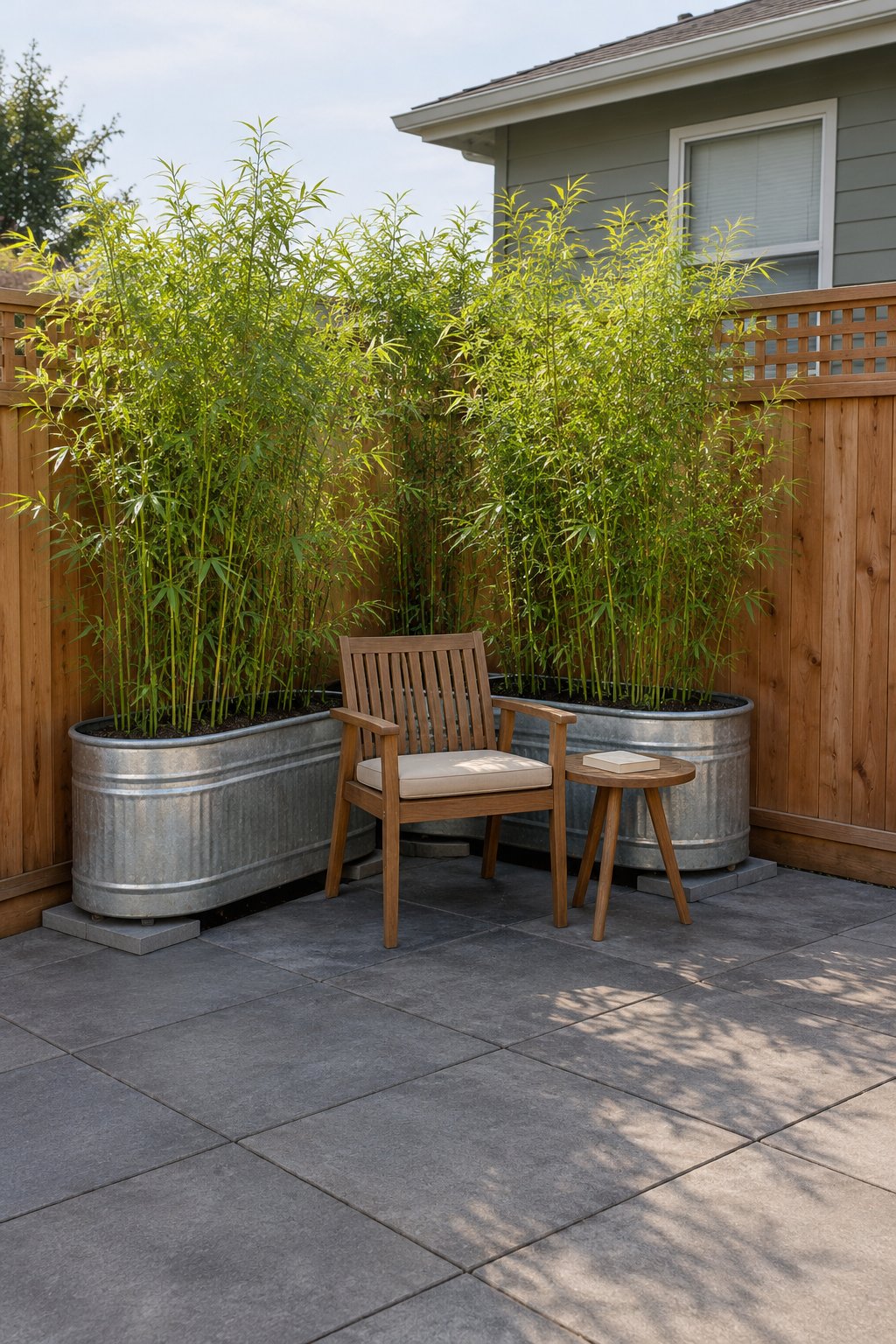
Bamboo makes a dense green screen, and it belongs in a container. Stand two metal stock tanks with drainage holes at the patio corner and plant a bamboo labeled clumping, never running.
Check the tag for your zone and its light need, and water it regularly in summer.
8. A Wire Panel of Morning Glories That Greens Up for One Summer
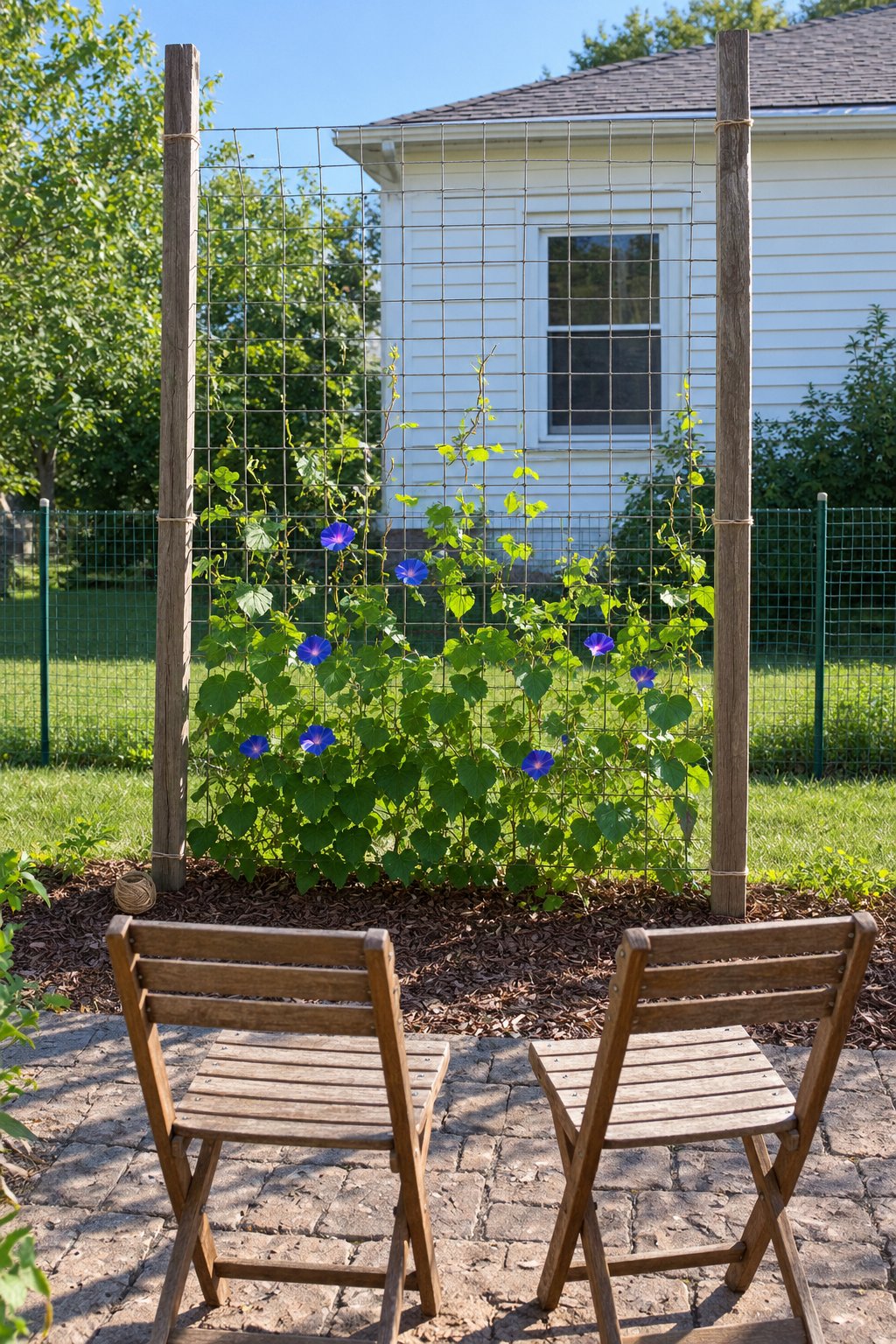
Morning glory and hyacinth bean are twining annual vines that want full sun. Sow them at the foot of a rigid wire grid panel tied to two tall stakes, in a narrow bed between the chairs and the neighbor’s kitchen window.
Call 811 before you drive the stakes.
9. A Double Row of Sunflowers That Hides the Back Fence in Summer
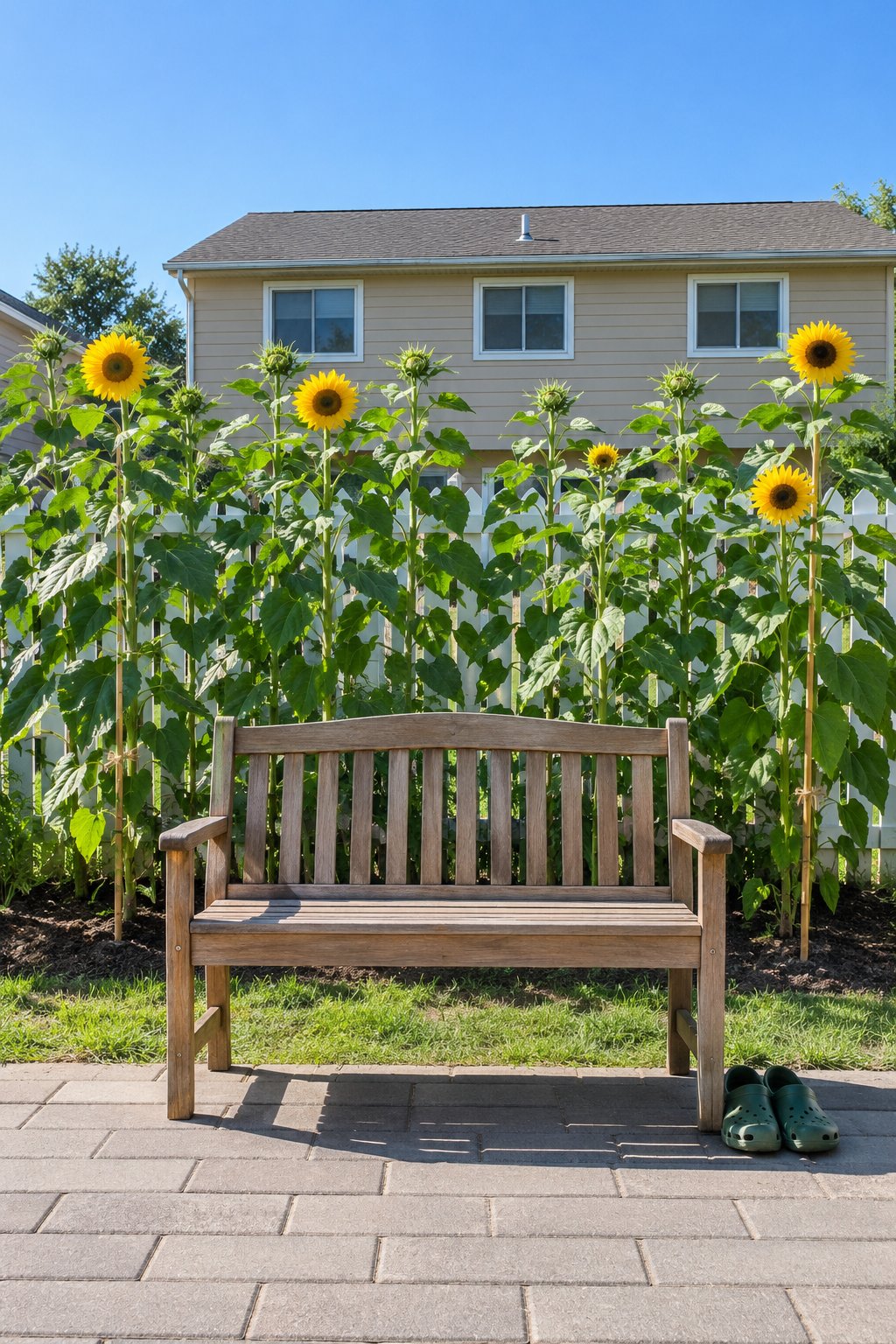
Sunflowers are a screen you sow, and they need full sun. Sow a tall variety in two staggered rows along the back fence after the last frost, behind a bench.
I count this as a summer screen only. The row is bare in spring and finished by fall.
10. Bigleaf Hydrangeas That Fill In Under an Open Fence
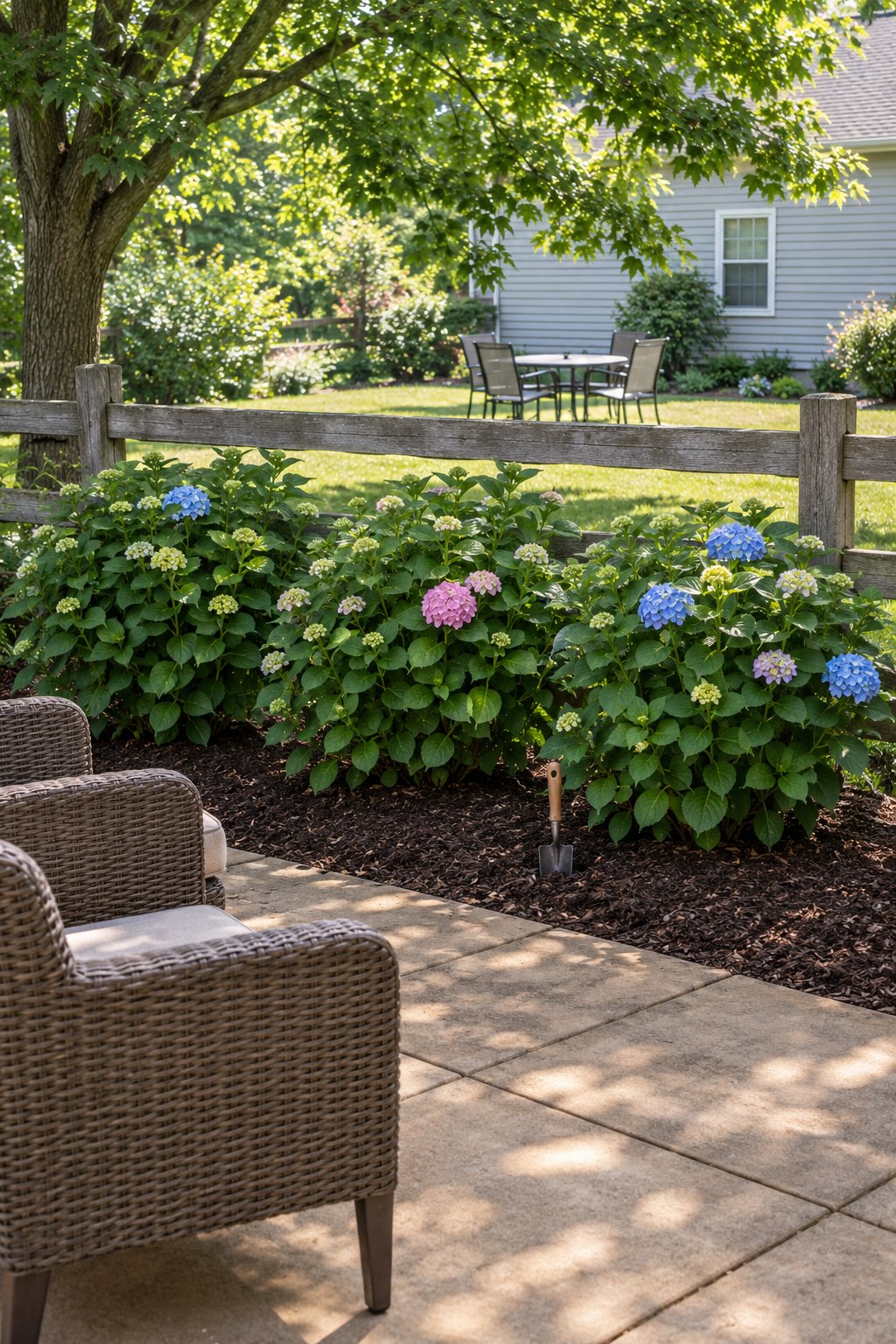
Where a fence gets morning sun and afternoon shade, bigleaf hydrangeas take over from the sun grasses. Plant three in a mulched bed along it and keep the soil moist.
They drop their leaves in winter, so this is a summer screen at seated height.
11. A Tilted Shade Sail That Blocks the Upstairs Window
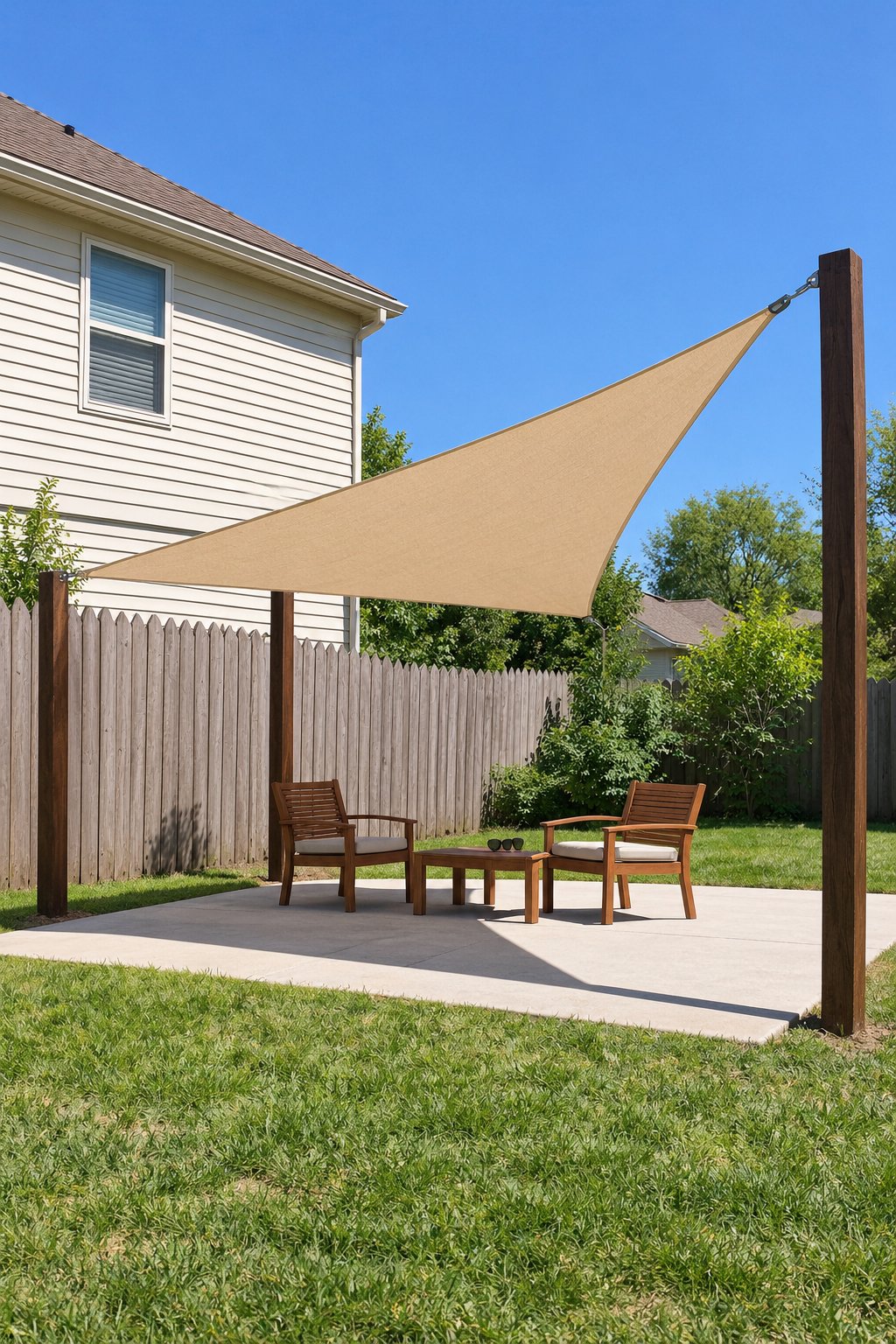
A second-story window looks down, so the fix goes overhead. Stretch a triangular shade sail between three posts, tilted to face the neighbor’s upper window like a shield.
Anchor it as the maker instructs, take it down in strong wind, and call 811 before digging post holes.
12. An Offset Umbrella That Tips Toward the Neighbor’s House
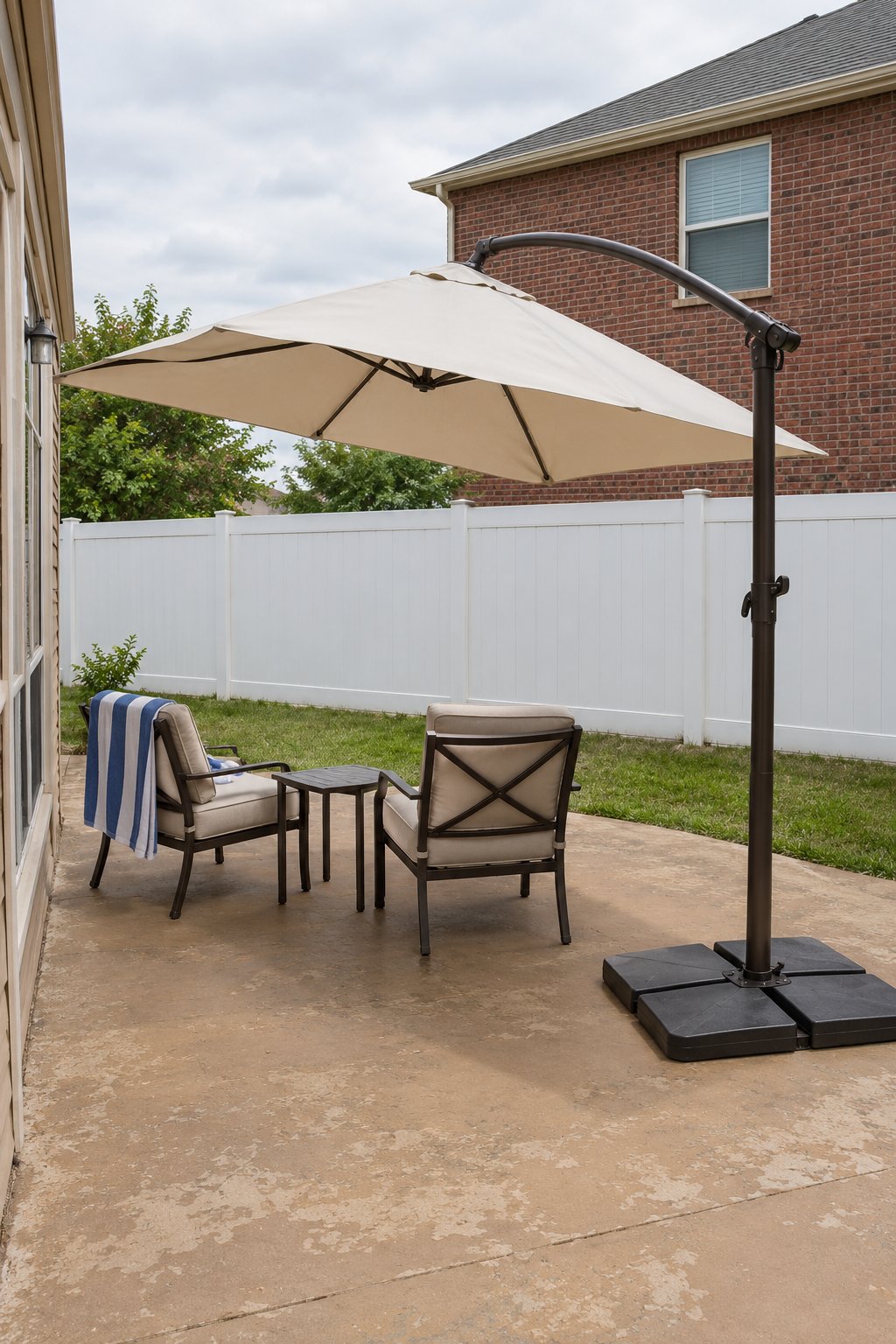
An offset umbrella hangs from a side arm, so its canopy can tilt toward a window instead of only overhead. Stand it beside two chairs, with the base weighted as its maker specifies.
Close it in wind and whenever you leave the patio.
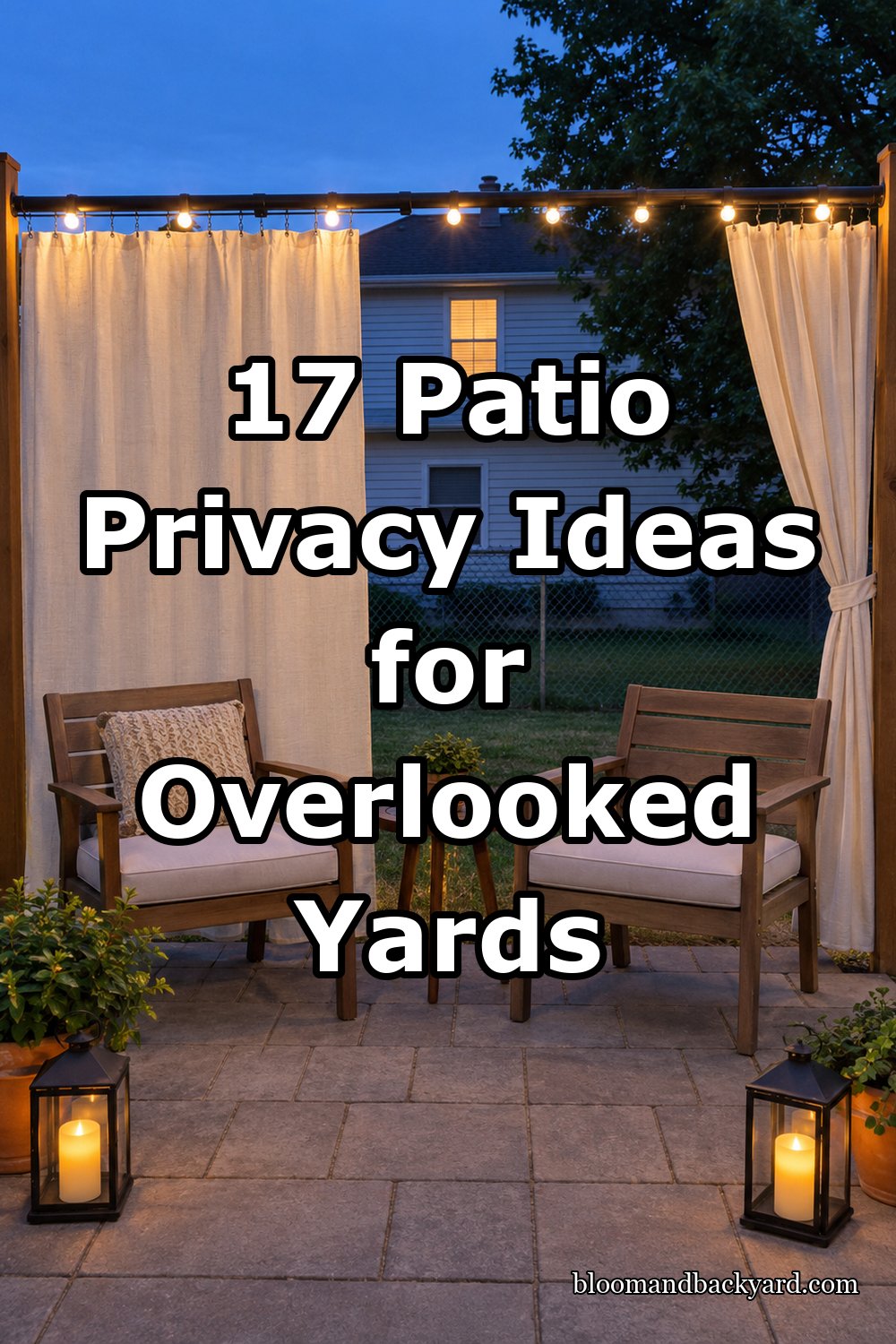
13. Outdoor Curtains on a Post-and-Rail That Close One Side
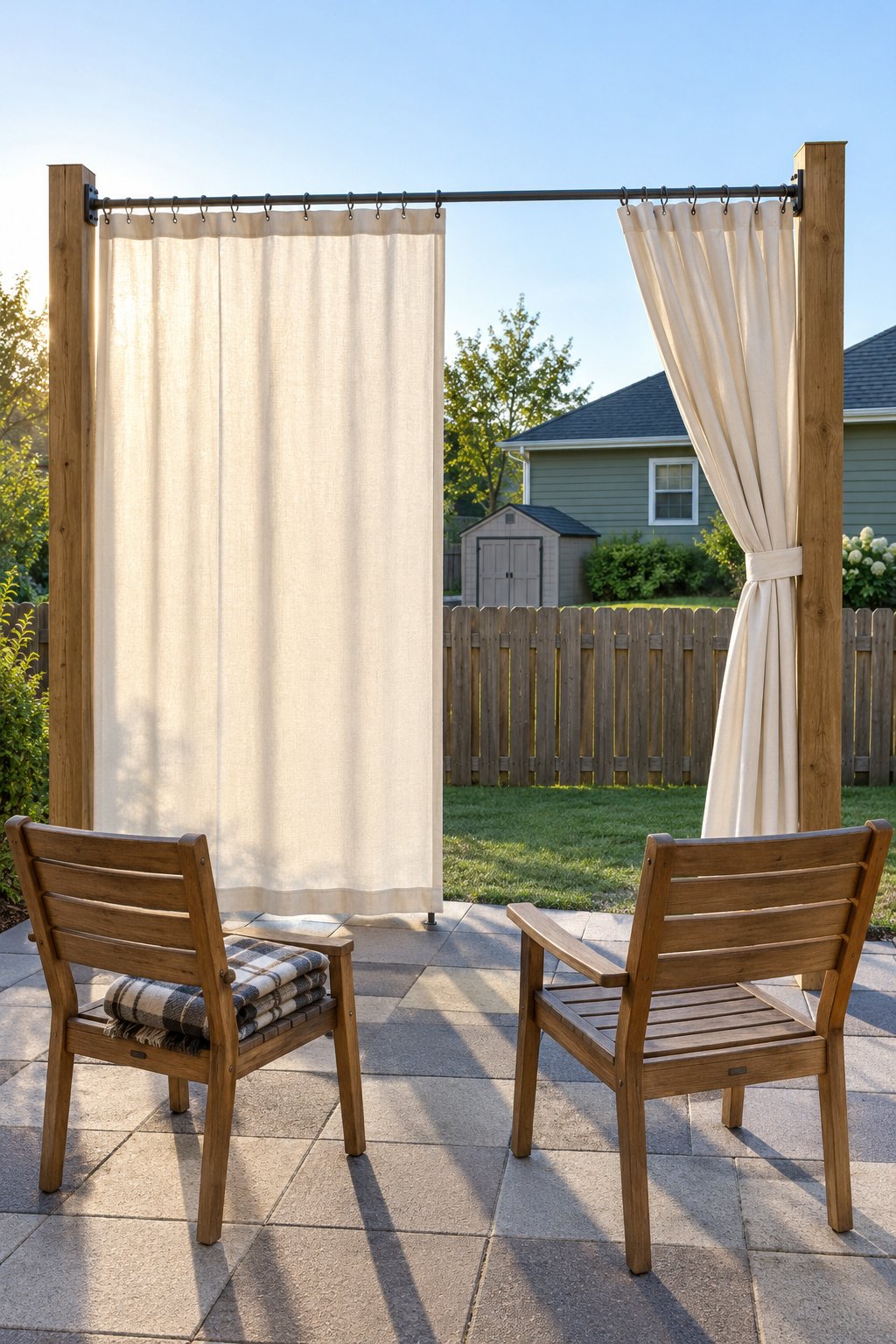
Curtains give privacy you can pull open again when nobody is next door. Hang two outdoor fabric panels from a metal rail between two posts on the patio’s open side.
The posts go in the ground, so call 811 first, and tie the panels back in strong wind.
14. Roll-Down Shades That Close the Edge of a Covered Patio
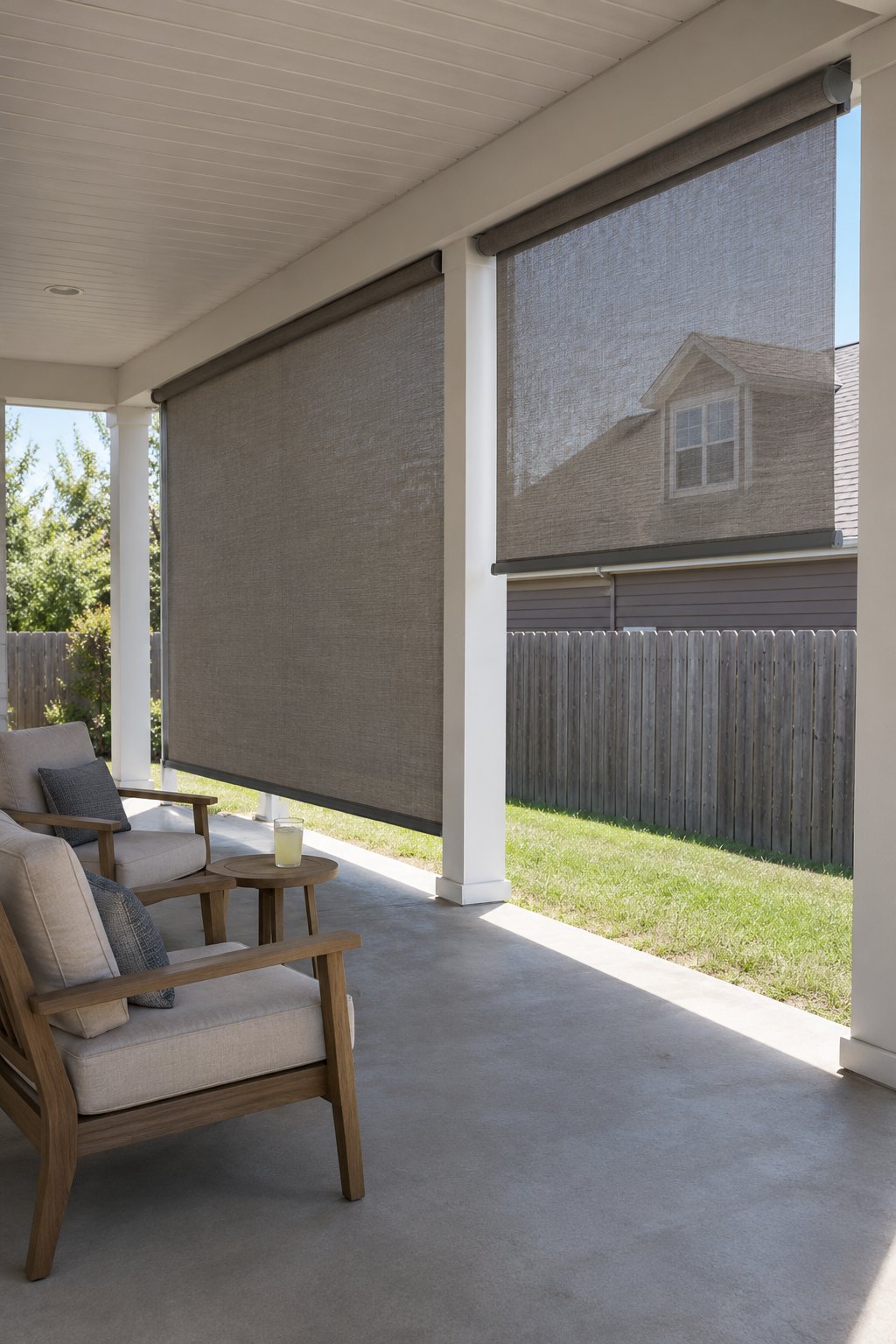
If the patio already sits under a porch roof, its beam is your hanging point. Fix two outdoor roller shades along the edge that faces the neighbor, and lower them only while you sit.
They attach to the house, so renters need the landlord’s permission first. Roll them up in wind.
15. A Folding Three-Panel Screen That Moves With the Chairs
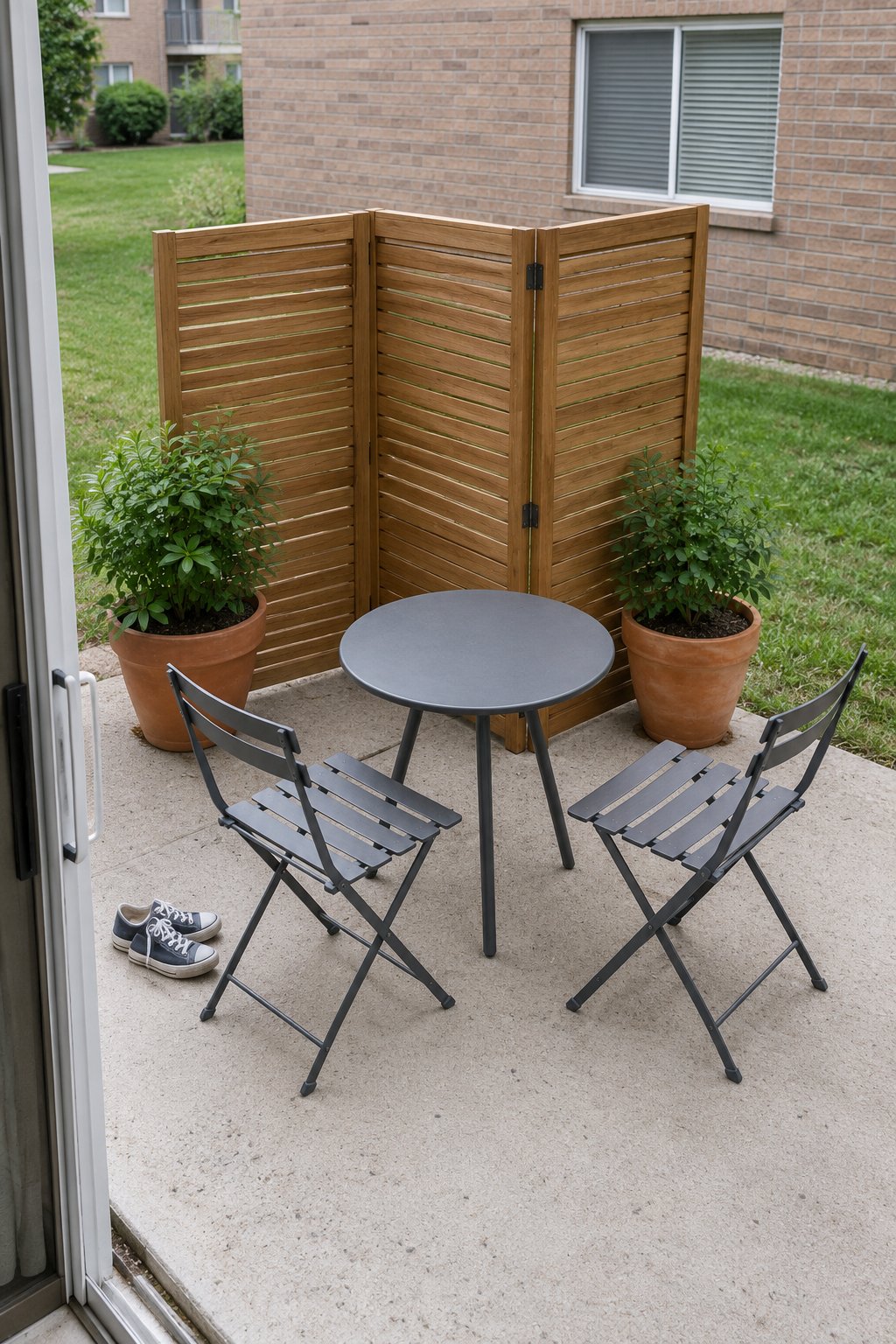
A hinged outdoor screen needs no posts and no drilling, so it suits renters. Stand three panels in a zigzag behind the chairs, on the side the neighbor’s window faces, with a heavy pot against each end.
Fold and store it when wind is forecast.
16. A Laced Fabric Panel That Covers an Apartment Railing
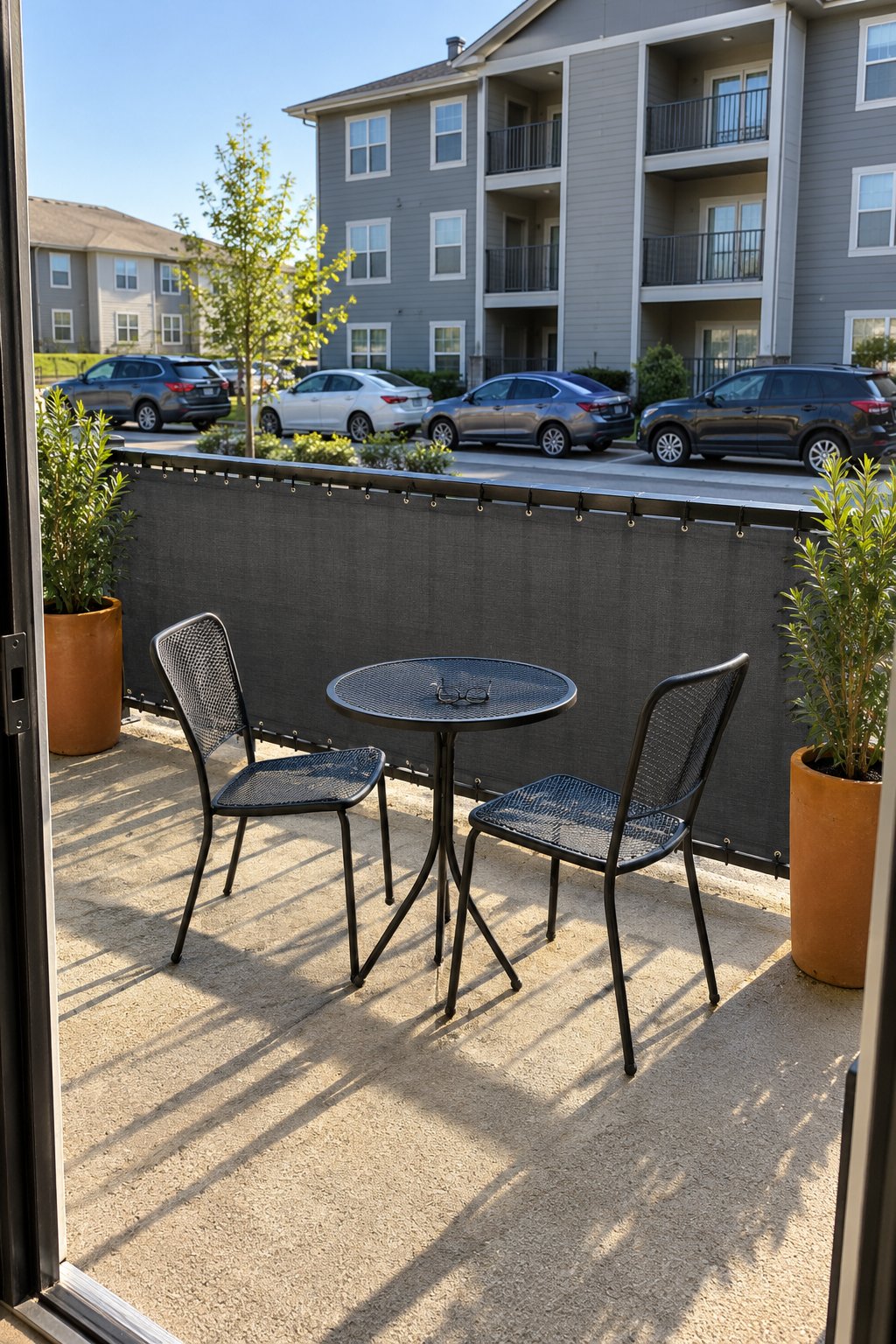
On an apartment patio the view comes through the railing, at seated height. Lace an outdoor fabric privacy panel to the inside of the rail, fastening every eyelet as its maker instructs, then stand a tall pot at each end.
Ask the landlord first, since it fastens to the building.
17. Two Chairs Turned Around That Use the Fence You Have
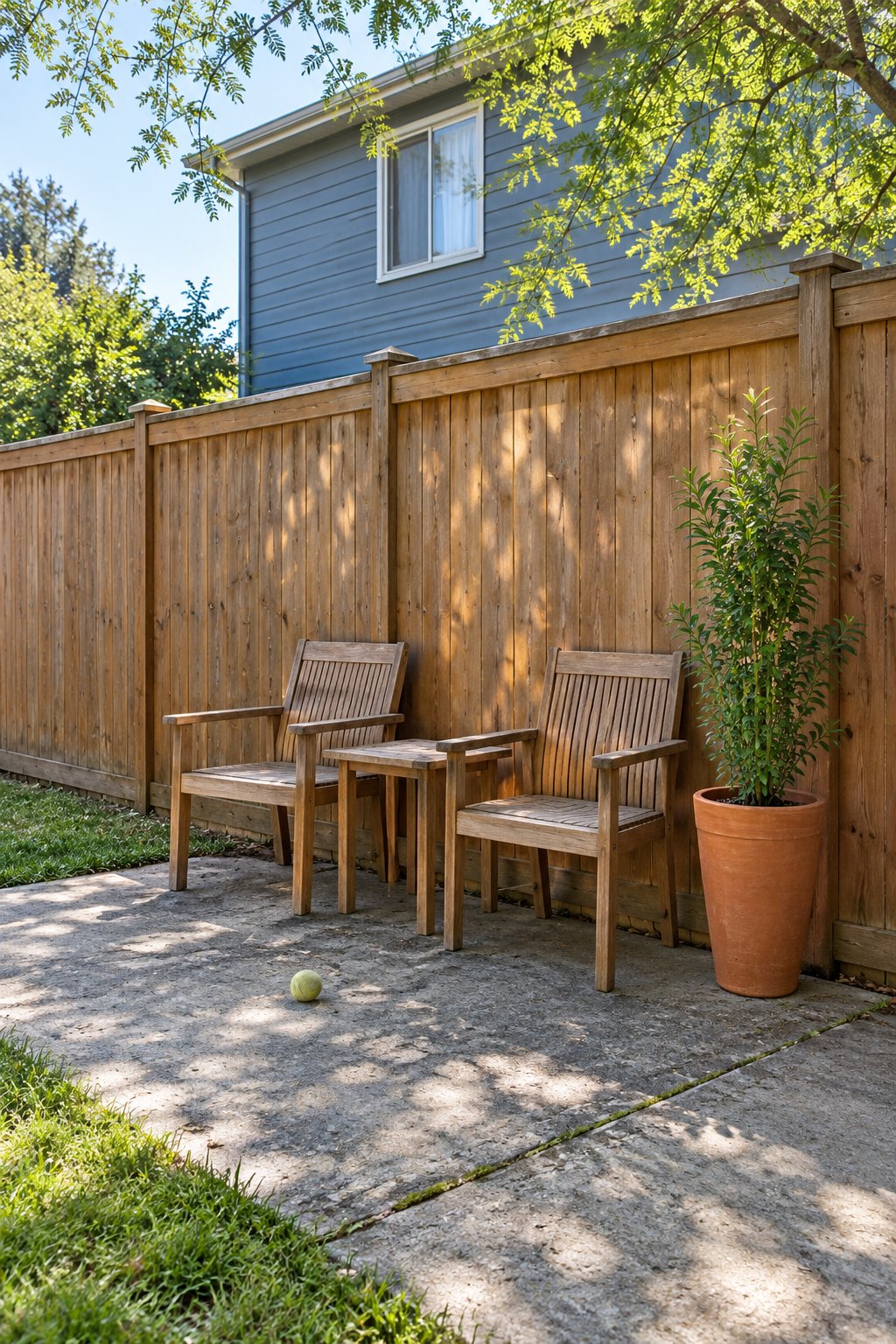
The cheapest screen is the fence already standing. Sitting close to it hides more of you from a view that comes over the top, so pull two chairs and a small table in beside it, backs to the boards.
Add one tall pot on the open side.
Patio Privacy by Where the View Comes From
Cost is a relative level, not a price. Renter-friendly means nothing is dug, drilled or fixed to the building.
| Where the view comes from | The fix that fits | Cost level | Renter-friendly |
|---|---|---|---|
| A two-story window next door | Shade sail or offset umbrella (no. 11, 12) | Medium | Umbrella yes, sail no |
| Over or along a shared fence | Arborvitae row or a panel behind the bench (no. 5, 4) | Medium to high | No |
| A side yard, level with you | Cedar slats or outdoor curtains (no. 1, 13) | Medium | No |
| The street or sidewalk | Louvered panels or a switchgrass strip (no. 2, 6) | Low to high | Panels yes, grass no |
| Through a railing or open fence | Laced fabric panel or hydrangeas (no. 16, 10) | Low to medium | Fabric, with the landlord’s OK |
| Any side, and you rent | Folding screen or turned chairs (no. 15, 17) | Lowest to medium | Yes |
Patio Privacy Screens: 6 Ways the First Try Fails
Building before checking the height rules
Do thisFence and screen heights are limited by local rules and often by HOA rules too. Check both before you buy any lumber.
Digging post holes without calling 811
Do thisCall 811 before you dig for posts, stakes or a planting bed, and wait until the buried lines are marked.
Fixing things to a shared fence unasked
Do thisAnything attached to a shared fence, a house wall or a rental needs the owner’s or landlord’s permission first.
Leaving fabric up in strong wind
Do thisAnchor or weight freestanding screens, curtains, shade sails and umbrellas as their maker instructs. Take them down, close them or tie them back when strong wind is forecast.
Planting running bamboo for a fast screen
Do thisBuy only bamboo labeled clumping and keep it in a container. Running types spread by underground stems and are hard to get rid of.
Screening every side at once
Do thisSit in your usual chair and find the one view that bothers you. Block that line first, then decide whether you need anything more.
Which Screens Still Work in January, and Which Are Summer Only
Most backyard privacy ideas get judged in June, when everything is in leaf. The better question is which months you need the cover.
Built screens and evergreens such as arborvitae block the view all year.
Switchgrass stands through winter as dry stems until you cut it back, so it thins but does not vanish.
Bigleaf hydrangeas, annual vines and sunflowers are summer screens. They are bare or gone in the cold months.
I’d match the screen to the months I actually sit outside.
If that is May to September, a summer screen is enough.
Start with one change: sit in the chair you use most and name the single view that makes you go back indoors.
Then pick the lowest-cost idea in the group that answers it. Moving the chairs in beside the fence costs nothing, so try idea 17 before you build anything.
Frequently Asked Questions
How do I get privacy from neighbors with a two-story house?
Put the cover overhead, between the upstairs window and your chairs. A tilted shade sail or an offset umbrella does this, where a fence or a side screen can’t.
What are cheap patio privacy ideas that still look good?
Move the chairs close to the fence you have, sow a double row of sunflowers, or grow annual vines up a wire panel. On a railing, a laced fabric panel is the low-cost fix.
Which apartment patio privacy ideas need no drilling?
A folding screen weighted with pots and an offset umbrella on a weighted base both stand on their own. A fabric panel laced to the railing needs no drilling either, but ask the landlord first.
What are good privacy plants for patio containers?
Clumping bamboo in a large container with drainage holes makes a dense screen. Upright grasses such as feather reed grass also work in pots in full sun. Pots dry out faster than the ground, so water them regularly in summer.
Do I need permission to put up a patio privacy screen?
Check your local rules and any HOA rules first, because both can limit how high a fence or screen may be. Anything fixed to a shared fence, a house wall or a rental also needs the owner’s or landlord’s permission.
Save This For Later
Loved patio privacy ideas? Save this pin to your Pinterest board now so you can find it again anytime you need the inspiration.