Vegetable Garden Layout: 12 Rules Before You Dig the First Bed
A vegetable garden layout is easier to get right on paper than to fix with a shovel.
I’d settle these 12 rules before a single bed gets built, sun first.
Most come with one number to measure against, and none needs more than a tape and a clear day.
The 12 rules in short
1. Find Six Hours of Direct Sun Before Anything Else
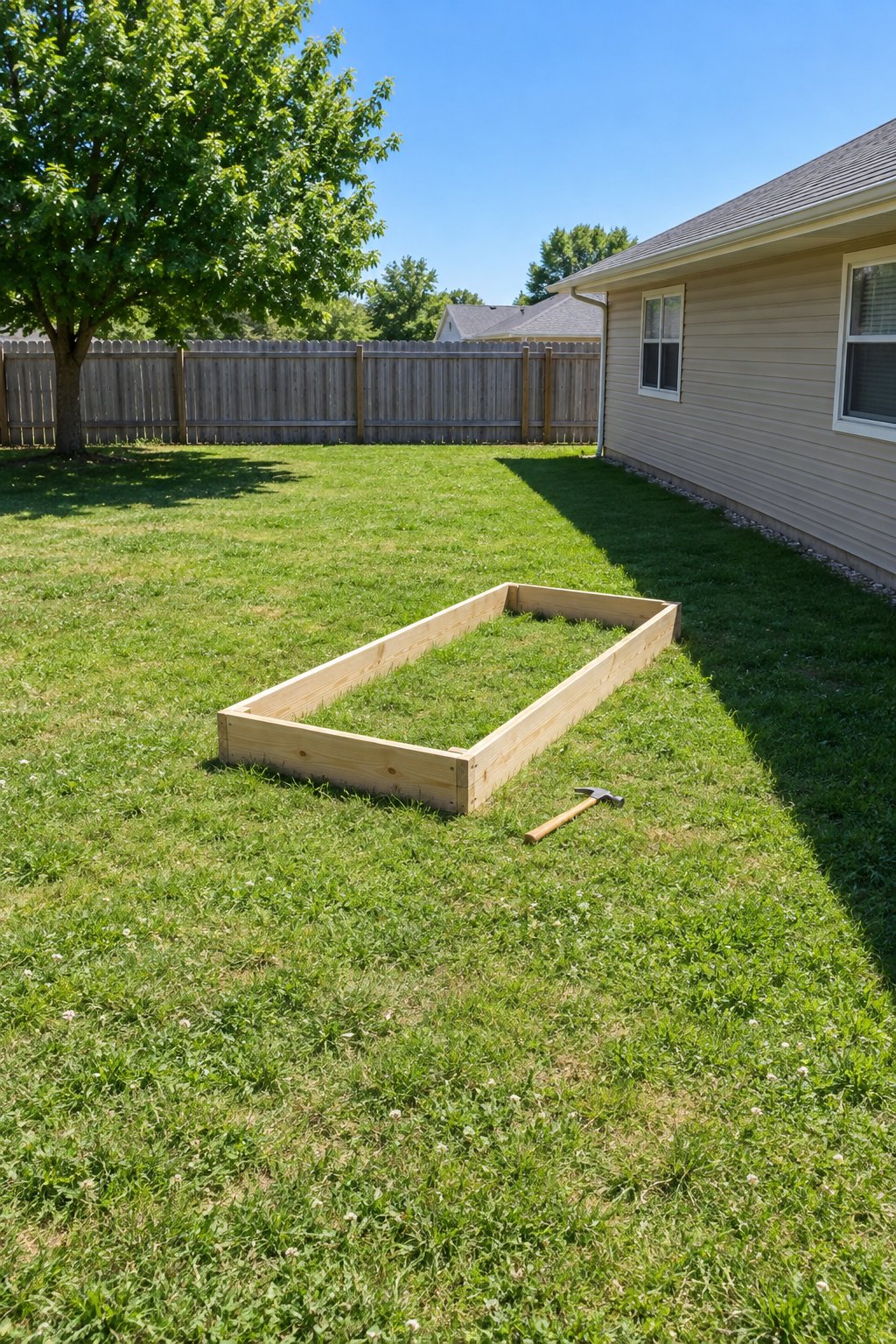
Shade is the one layout mistake you can’t dig your way out of.
Tomatoes, peppers, beans and cucumbers all want full sun.
2. Size Each Bed to Your Reach, Not to the Lumber
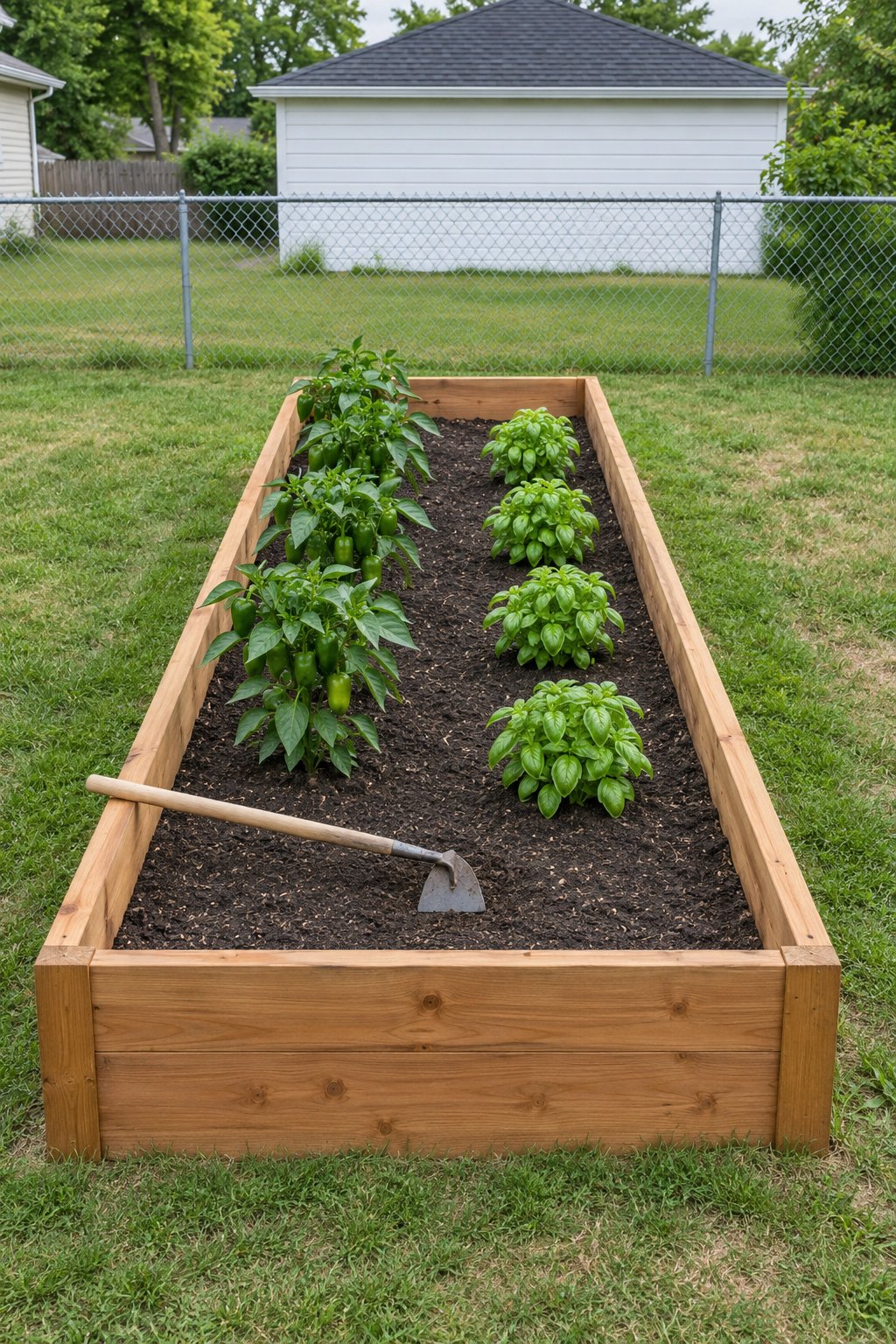
A bed you have to step into is a bed with packed soil.
Your arm sets the width, whatever length the boards came in.
3. Draw the Paths as Carefully as the Beds
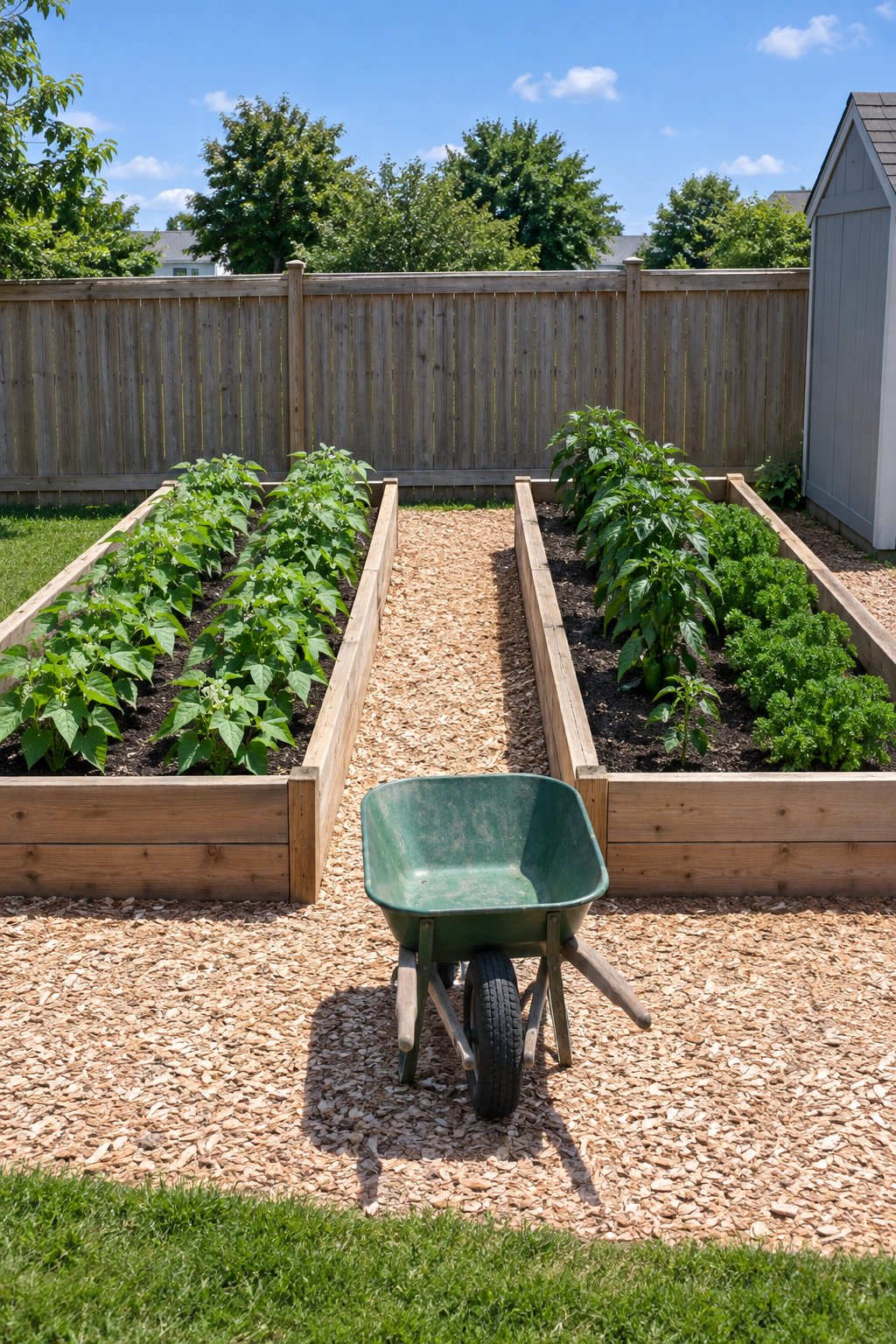
Paths are where a layout gets stingy, and a stingy path is why nobody weeds the back bed.
You need room to kneel, turn and carry.
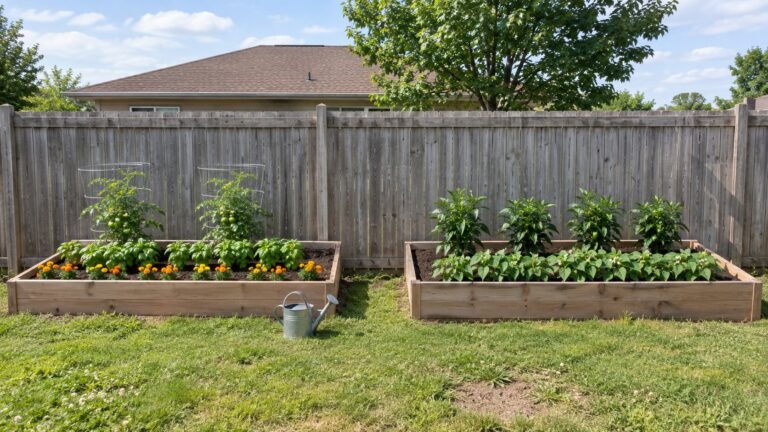
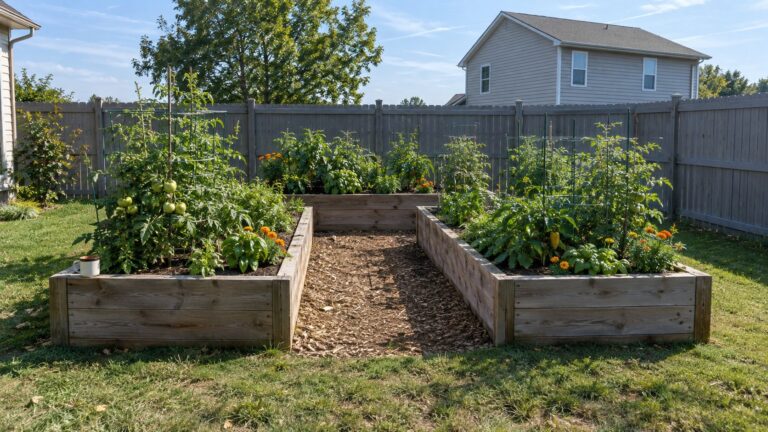
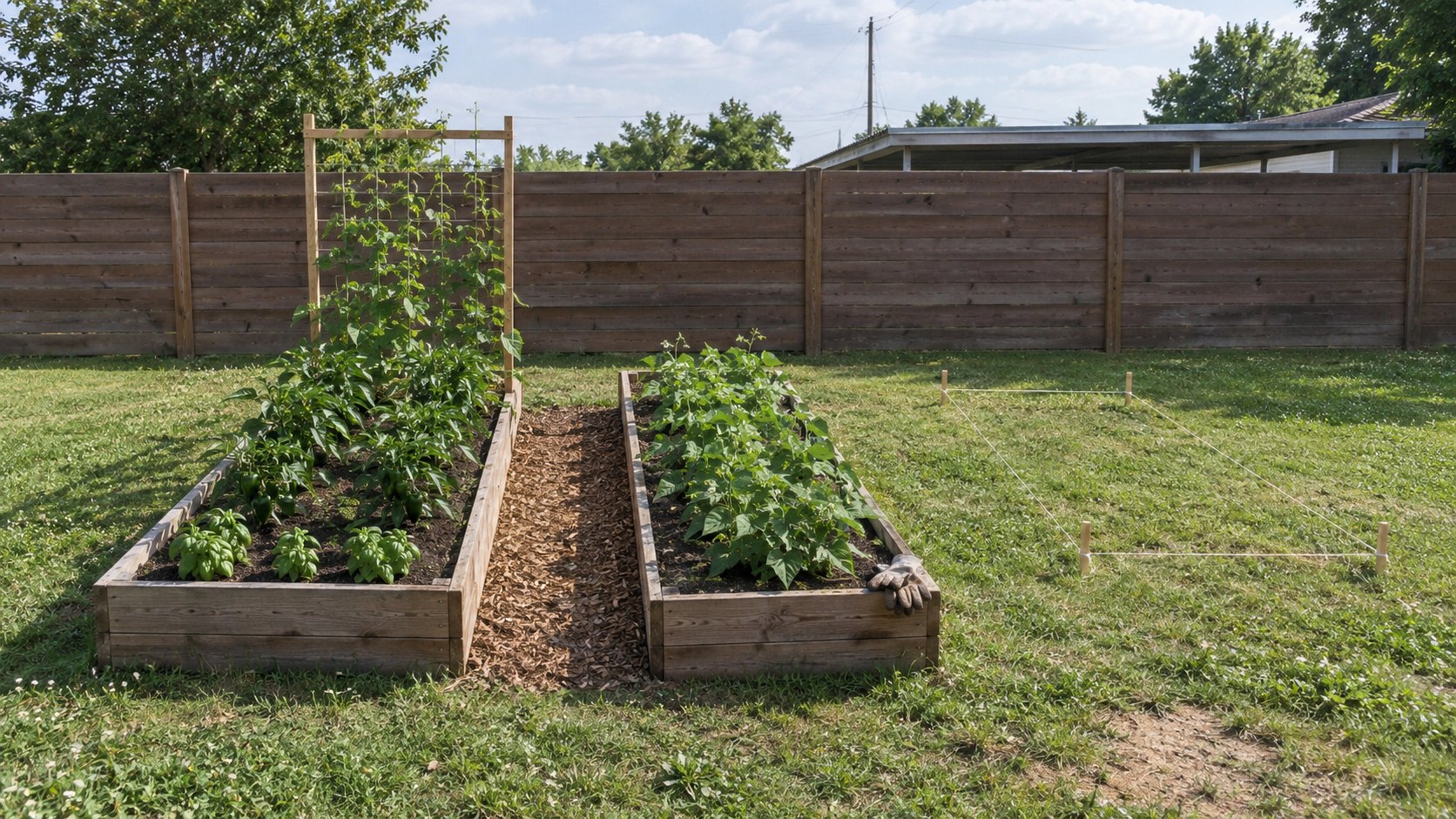
4. Stand Tall Crops and Trellises on the North Side
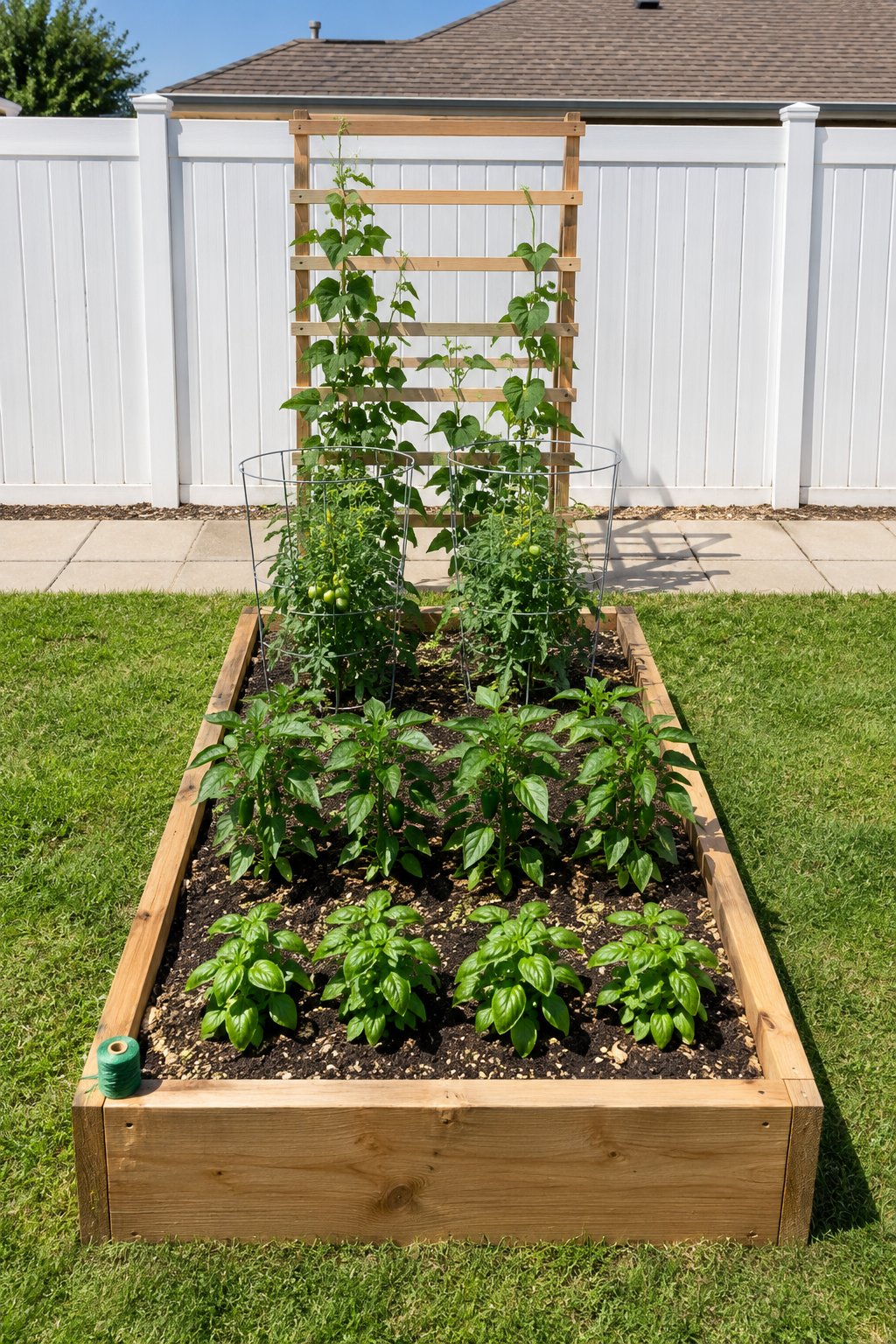
A trellis in the wrong place is a wall of shade over everything behind it.
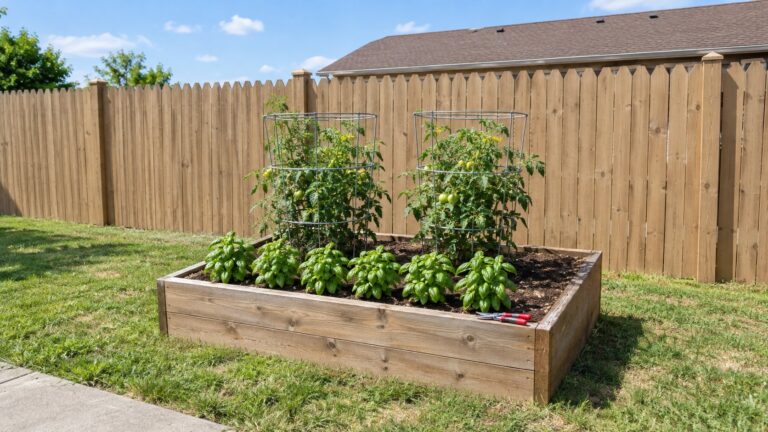
Pole beans, cucumbers on a frame and caged tomatoes are the tall ones.
5. Turn the Long Side of Each Bed to Run North to South
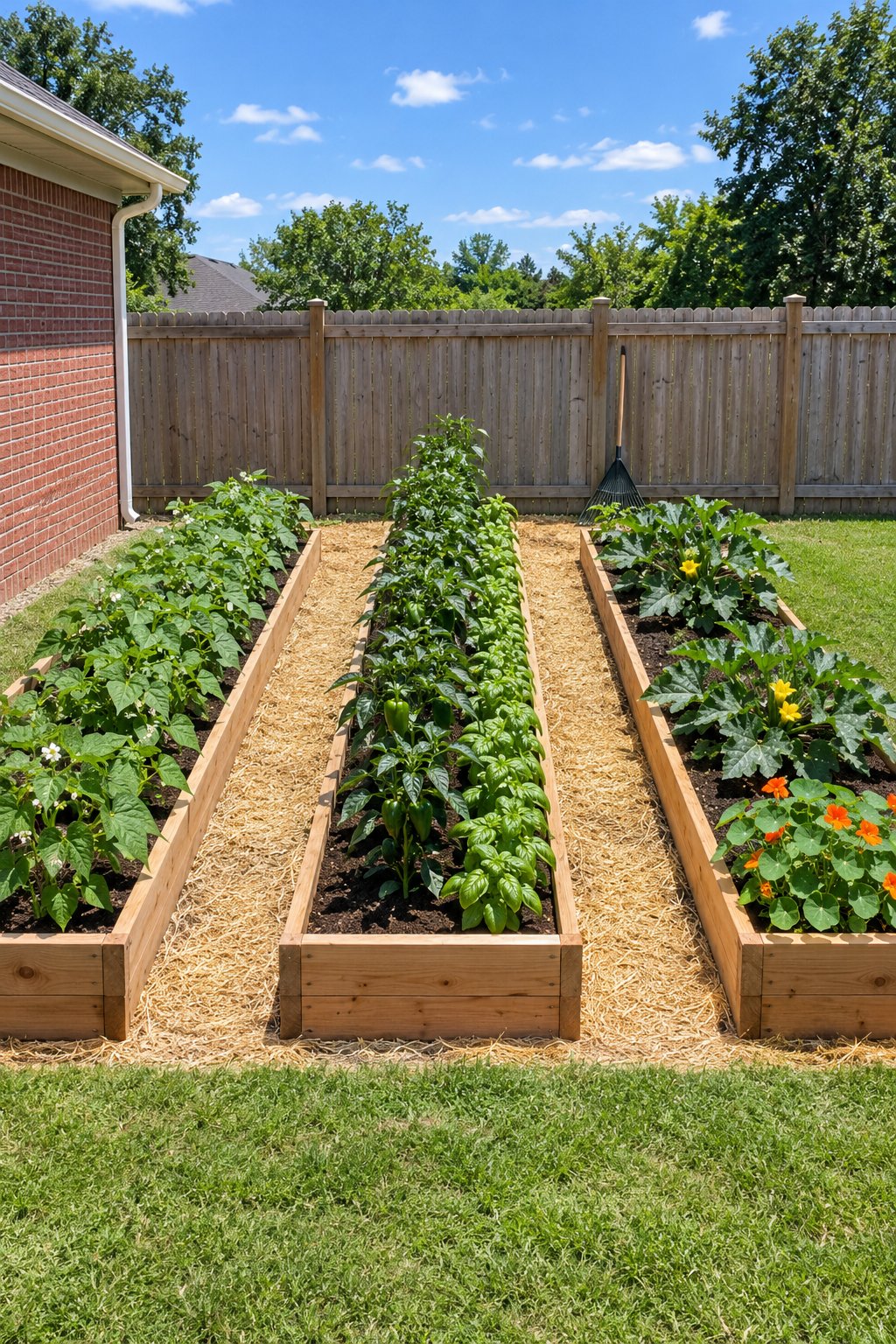
I’d turn the beds before I’d move them.
A bed that runs north to south gets sun on both long sides as the day goes on.
6. Keep Every Bed Inside the Hose’s Reach
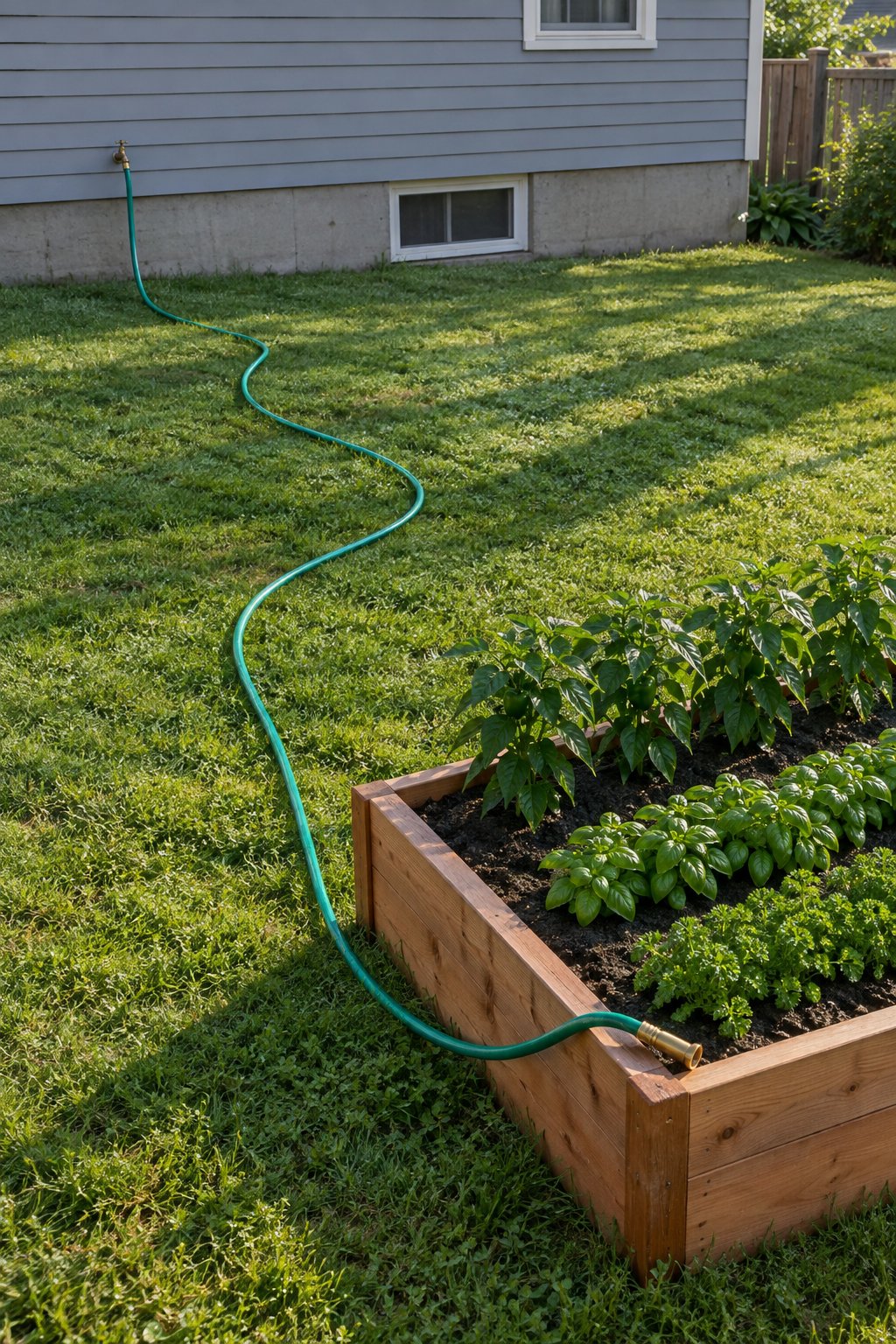
The far corner of the yard looks free until you carry water to it in July.
Raised beds dry out faster than open ground, so they ask for water most often.
7. Plan the Whole Plot, Then Build One or Two Beds
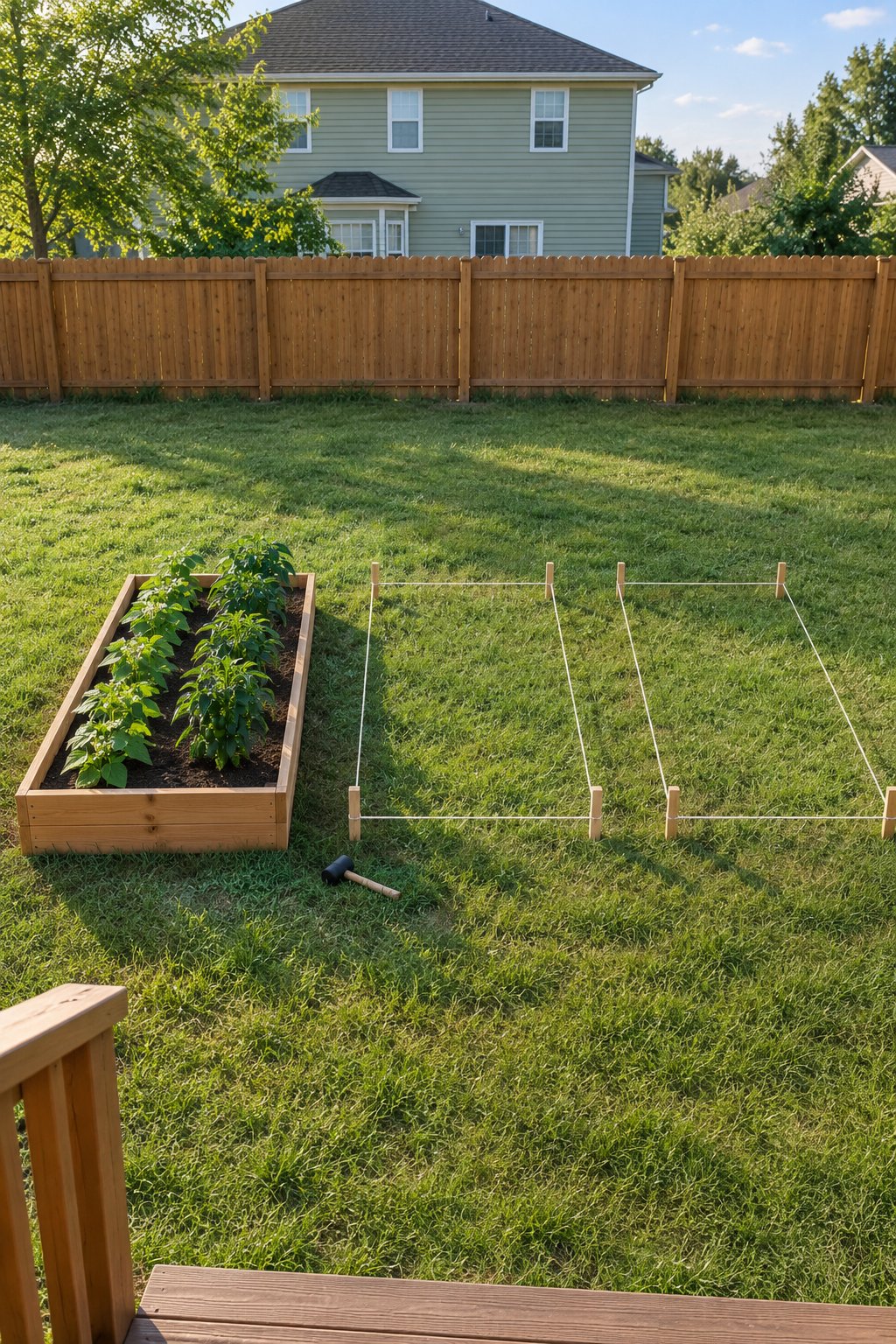
The usual way a first garden goes wrong is too much of it.
Every bed you build is a bed you water, weed and pick all summer.
8. Give Each Bed One Level of Thirst
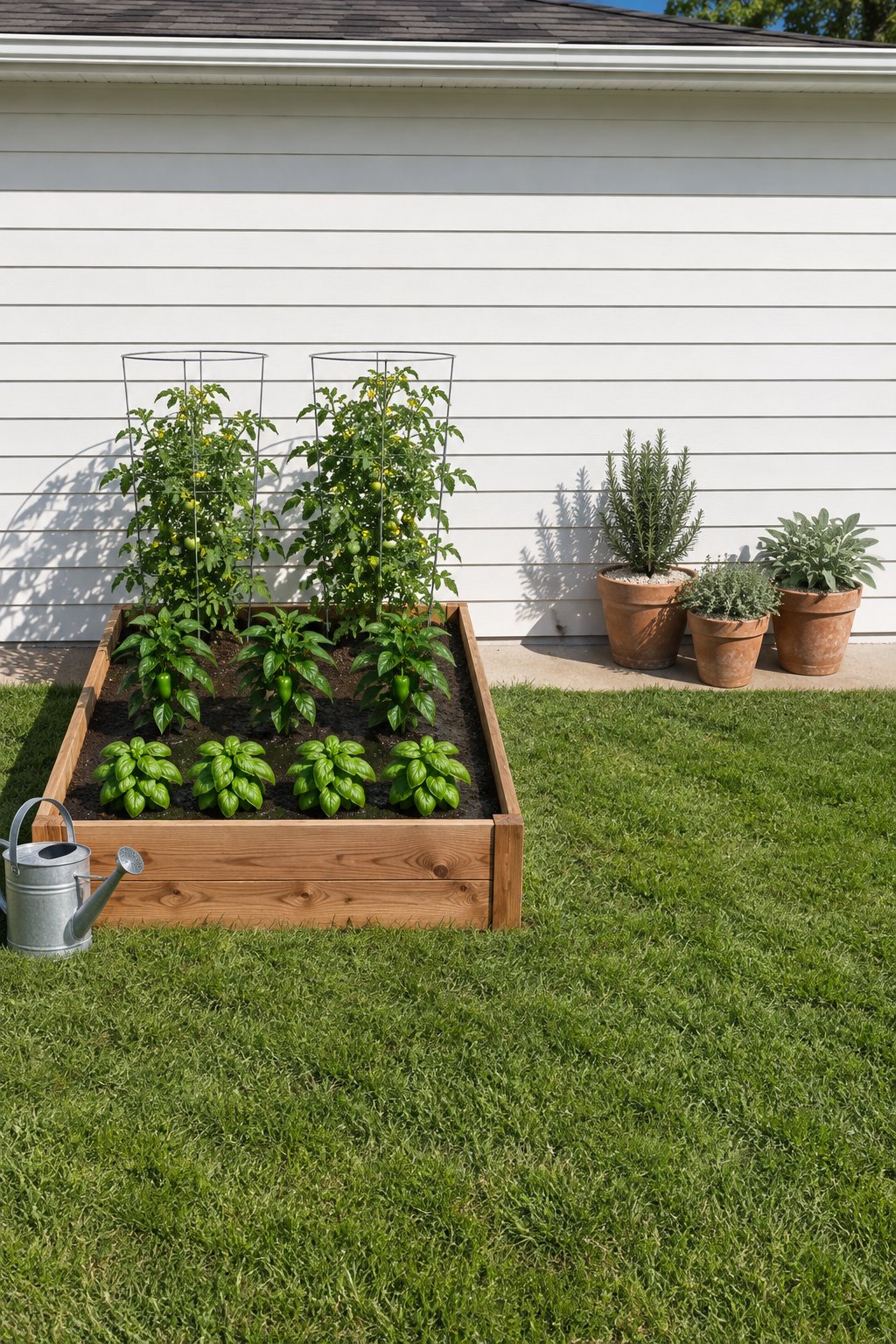
A bed gets watered as one thing, so the plants in it have to agree.
Plants that share a bed should share sun and water needs.
9. Hand the Summer Shade to Lettuce and Radishes
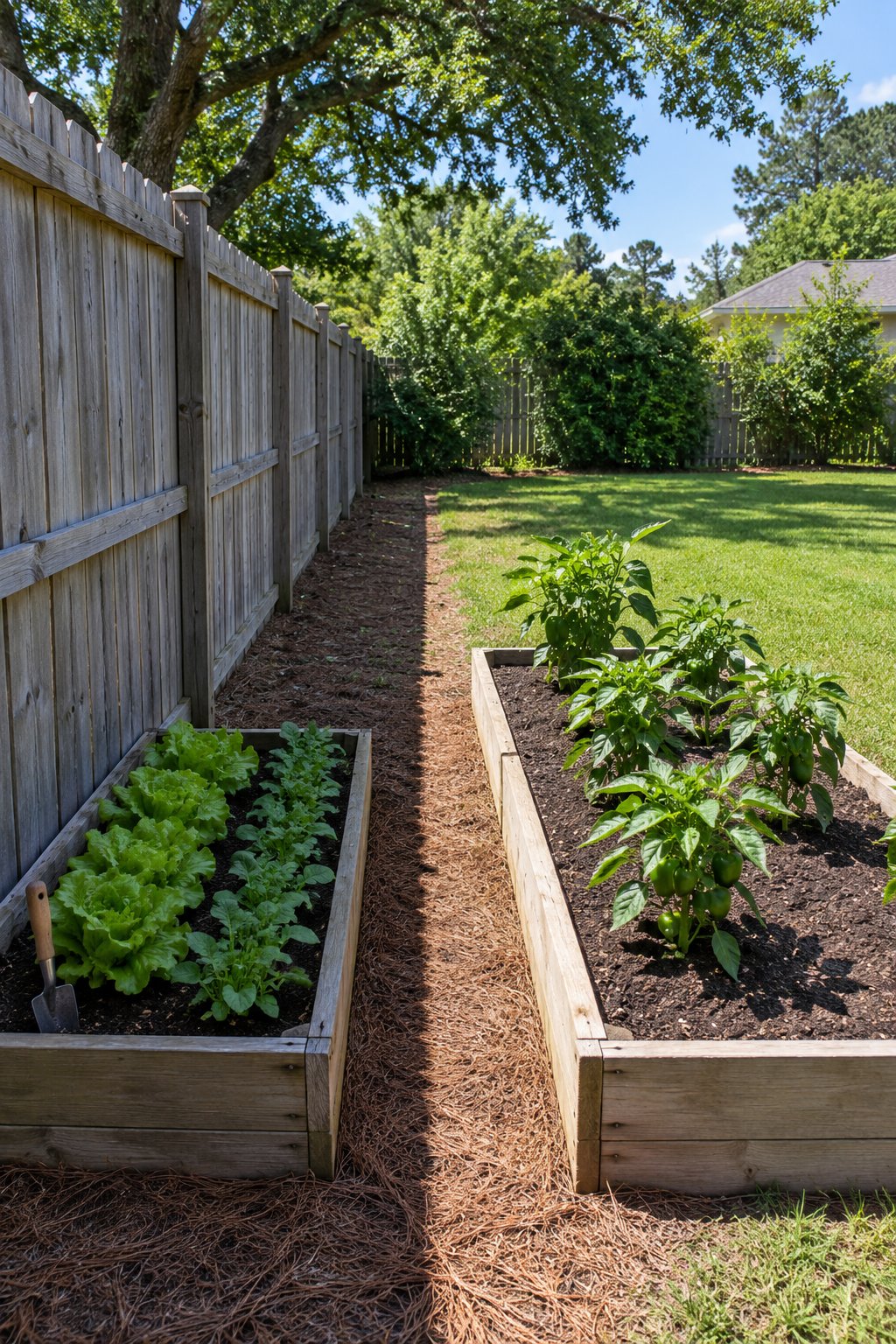
Not every bed has to sit in the full blaze all day.
Lettuce and radishes are cool-season crops, at their best in spring and fall.
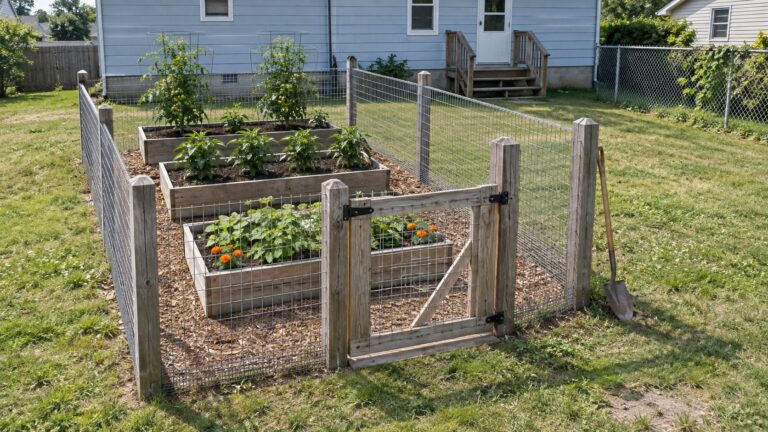
10. Leave Wheelbarrow Room Where You Come In
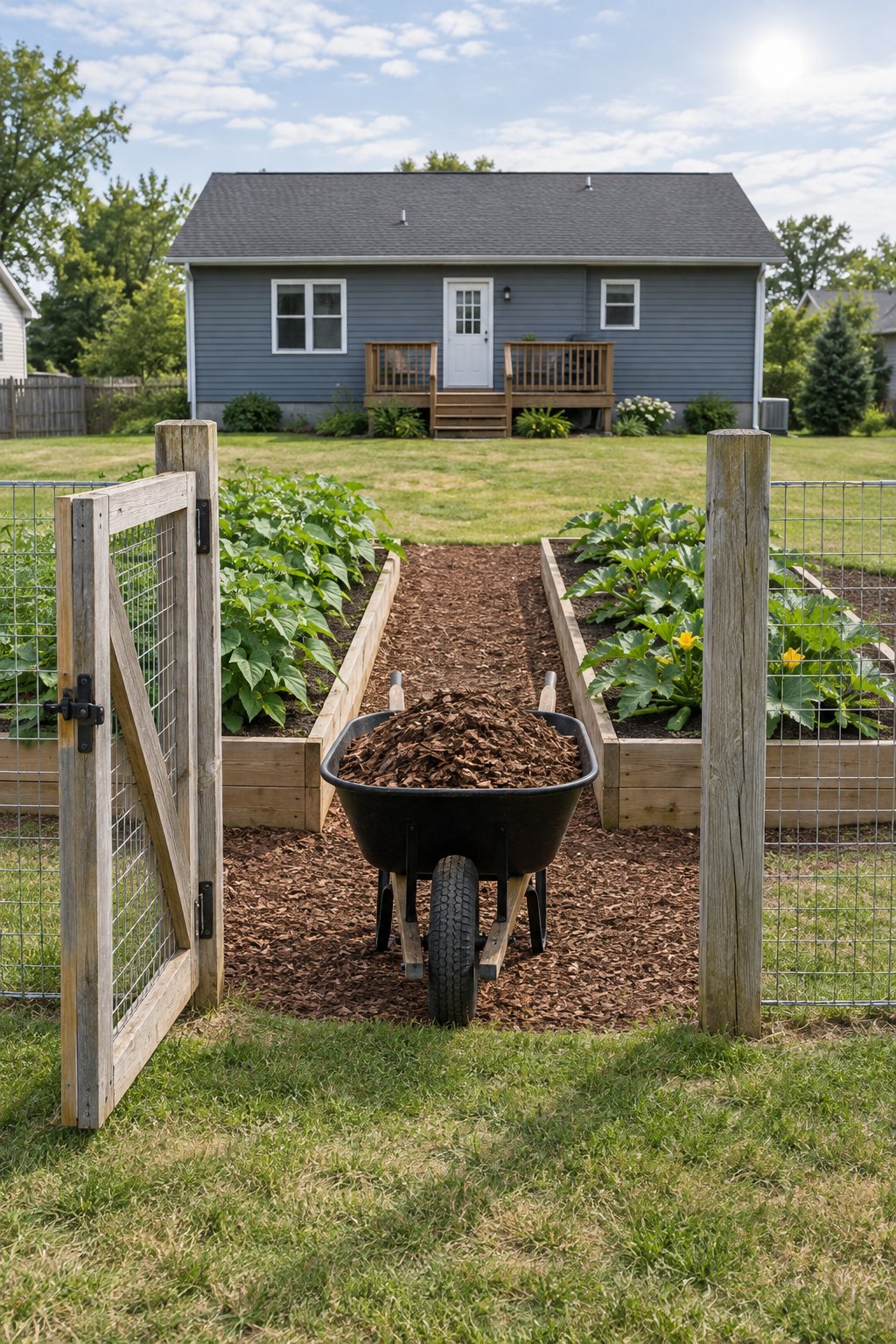
The entrance is the part of the plot that works hardest and gets drawn last.
Soil, mulch and compost all arrive through it by the barrow load.
11. Pull Beds Out From Under the Eaves and Off the Fence
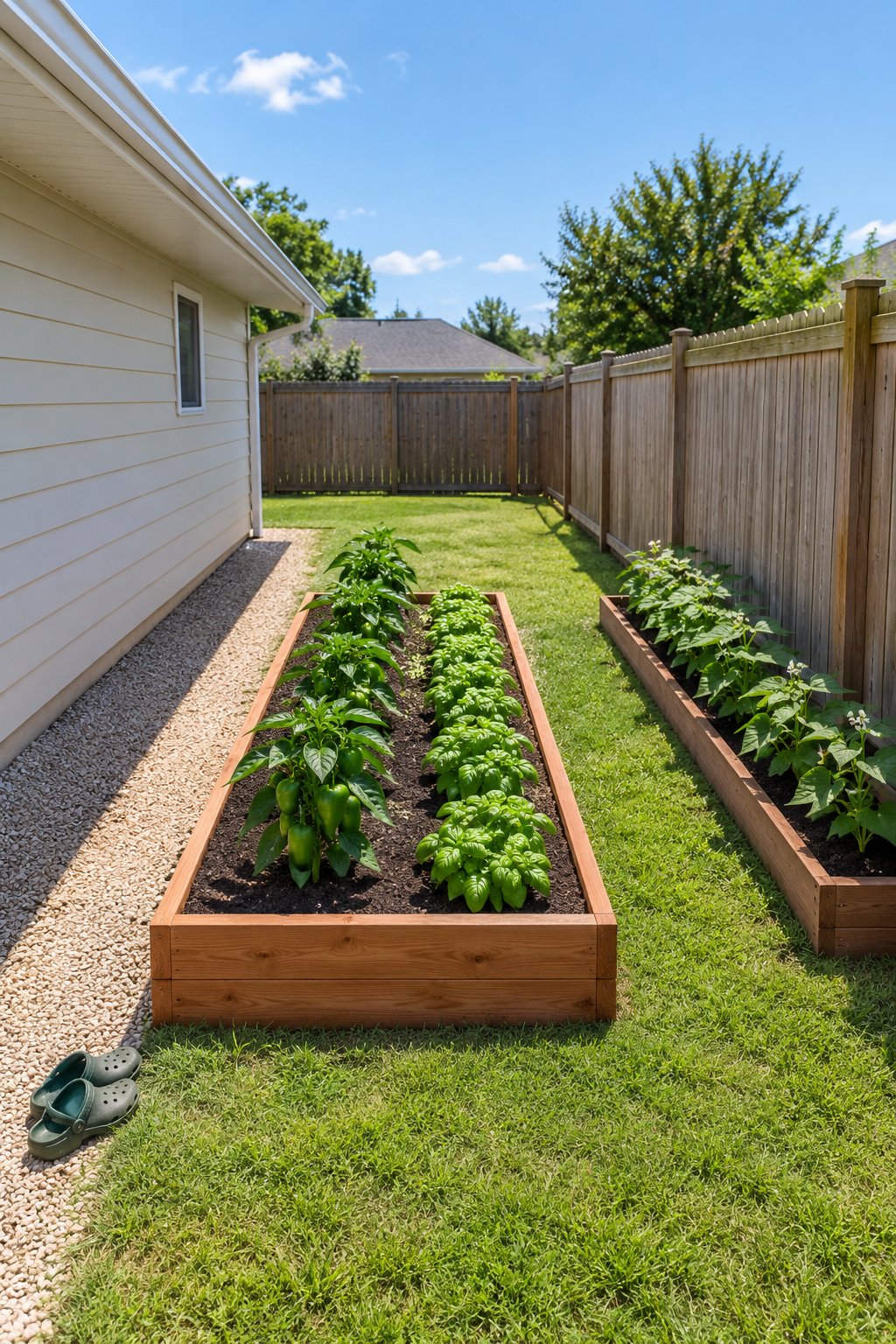
The strip along the house looks sheltered, and that is the problem.
A roof overhang keeps rain off the ground beneath it, and a wide bed against a fence can’t be reached from behind.
12. Call 811 and Read the Rules Before the First Shovel
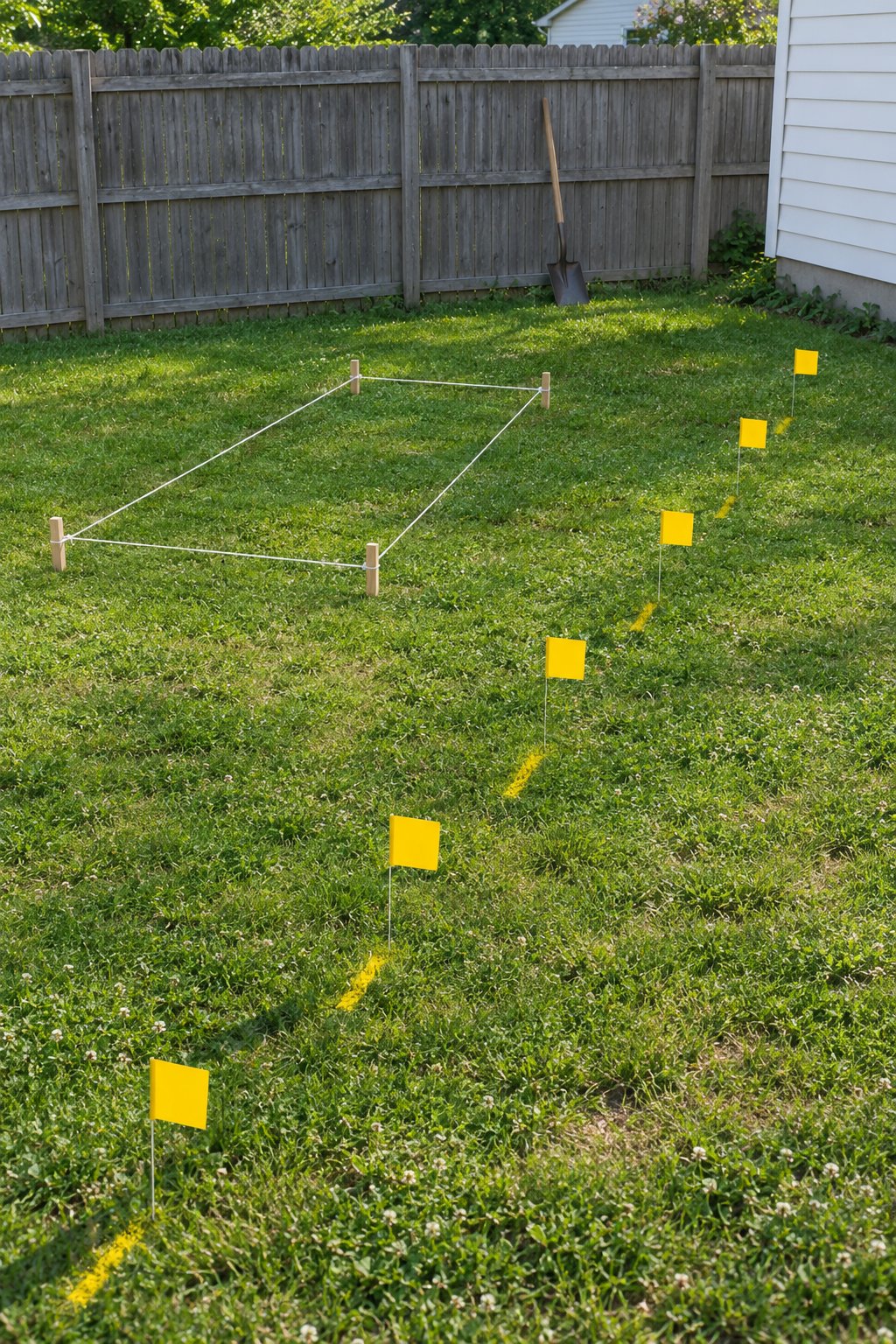
Buried lines don’t show on a sketch.
The 811 call is free, and it comes a few days before you dig or set a post.
The Rules on One Page
All twelve, with the number or the check that goes with each.
| Rule | The number or the check | Why |
|---|---|---|
| 1. Six hours of sun first | Six hours or more of direct sun | Tomatoes, peppers, beans and cucumbers are full-sun crops |
| 2. Beds 4 feet wide, max | At most 4 feet wide when reached from both sides | You reach the middle without stepping on the soil |
| 3. Paths 2 and 3 feet | Walking paths at least 2 feet, one wheelbarrow route about 3 feet | Room to kneel, turn and carry |
| 4. Tall crops go north | Tall crops and trellises on the north side | Their shade falls away from the shorter crops |
| 5. Beds run north to south | Long sides running north to south, where the yard allows | Sun reaches both long sides |
| 6. Stay inside hose reach | Inside the reach of your own hose | Raised beds dry out faster than open ground |
| 7. Build one or two beds | One or two beds in the first year | Every bed needs watering, weeding and picking all summer |
| 8. One thirst per bed | One level of thirst per bed | A bed is watered as a whole |
| 9. Shade for lettuce and radishes | The bed with afternoon shade, sown in spring and toward fall | Lettuce and radishes are cool-season crops |
| 10. Wheelbarrow room at the entrance | About 3 feet clear at the gate or opening | Soil, mulch and compost come in by the barrow load |
| 11. Clear of eaves and fences | Clear of the roof overhang; about 2 feet deep against a fence or wall | The overhang keeps rain off, and you reach from one side only |
| 12. Call 811, check rules | Call 811 a few days ahead (free); check local and HOA rules | Buried lines don’t show, and fence heights are limited |
Four Layout Slips the Rules Don’t Catch
Counting the sun while the trees are bare
Do thisA tree casts far more shade once it leafs out. Count the hours again in late spring, or keep the beds clear of where its summer shade will fall.
Plain yard soil shoveled into a raised bed
Do thisYard soil packs down inside a frame. Mix compost into it before you fill the bed.
A rental yard dug up without asking
Do thisRenters should ask the landlord before digging or building anything, and get the answer in writing.
No room left for a fence
Do thisIf rabbits or deer visit your yard, leave space around the beds for a fence and a gate now. It is far easier than moving beds later.
Draw the Yard on Squared Paper and Slide the Beds Around
A layout costs nothing to change while it is still paper.
Take a sheet of squared paper and let one square stand for one foot. Draw the house wall, the fences, the outdoor tap and an arrow pointing north.
Then cut the beds out of a second sheet, four squares wide, and move them around with your fingers.
Shade in where the shadows fell when you counted the sun. Any paper bed that lands on the shading moves.
I’d keep the sketch taped inside a cupboard door. Next spring it tells you where the next bed goes.
Start with rule 1 and a clear day, because the sun decides more of the layout than you do.
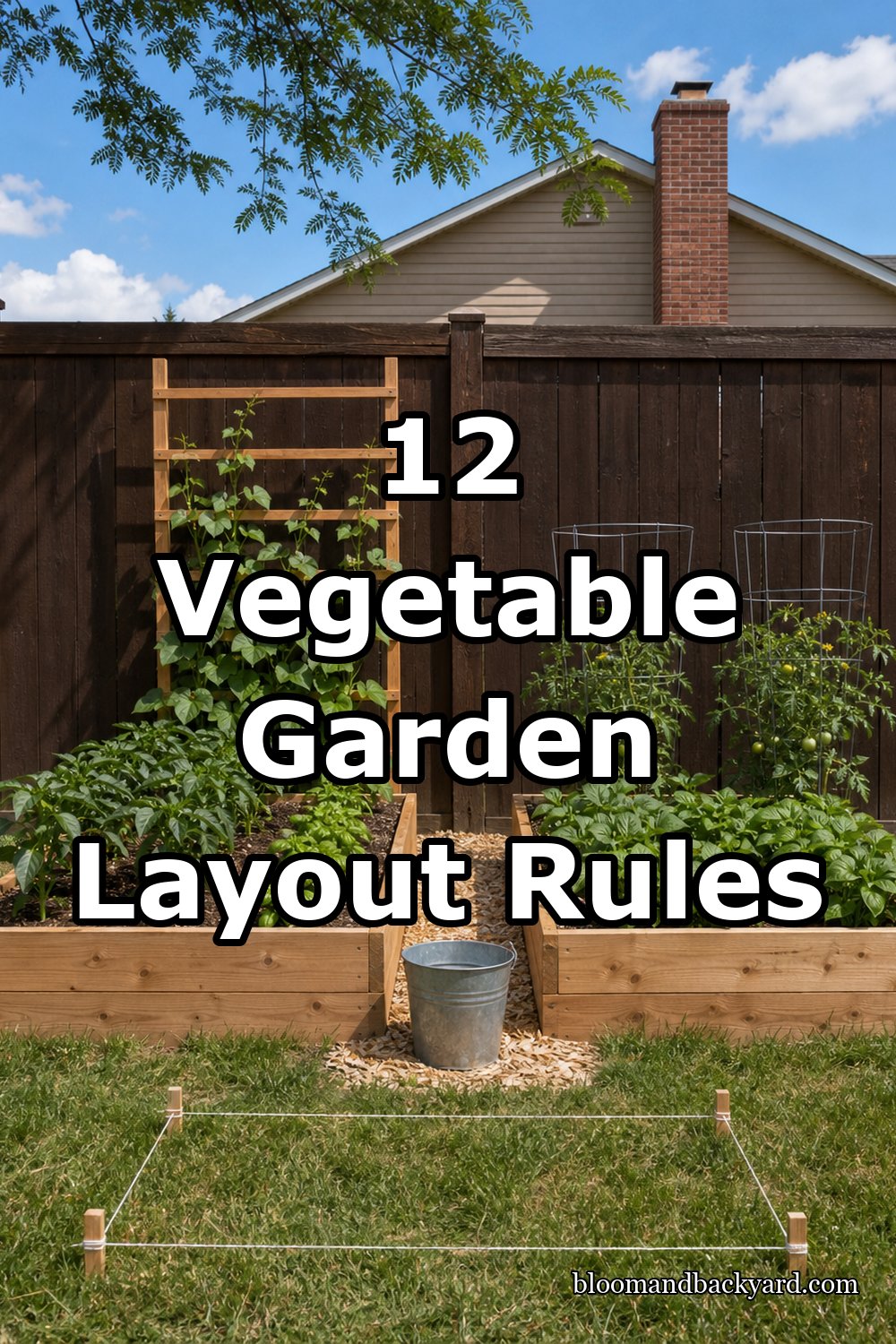
Then mark one bed on the lawn with stakes and string, and walk around it with the wheelbarrow before you build anything.
If the string looks too small, good: that is the right size for a first year.
Frequently Asked Questions
What is a good vegetable garden layout for a beginner?
One or two beds, each at most 4 feet wide, in the spot that gets six hours or more of direct sun. Put tall crops on the north side and keep the beds within reach of the hose.
Does it matter which way the beds face in a backyard vegetable garden design?
Beds that run north to south get sun on both long sides. If your yard only fits them east to west, they still work with the tall crops along the north side.
How wide should the paths be when I’m doing my vegetable garden planning?
At least 2 feet for a path you walk and kneel in. Plan one main route of about 3 feet for the wheelbarrow, from the entrance to the beds.
What is a sensible small vegetable garden design along a fence?
A bed about 2 feet deep on the fence’s sunny side, so you reach the back row from the front. Check it gets six hours or more of direct sun, and call 811 before you dig.
Save This For Later
Loved vegetable garden layout? Save this pin to your Pinterest board now so you can find it again anytime you need the inspiration.