Flower Bed Edging Ideas: 18 Borders in Brick, Stone, Steel and Wood
Most flower bed edging ideas look good on the day they go in. The real test is the first time you mow beside them.
These 18 borders run from brick and stone to steel, wood and a plain spade-cut line.
For each one, I say how it is laid, what it costs in relative terms and how it mows.
Start with the material
1. A Flat Brick Mowing Strip for a Straight Front Bed
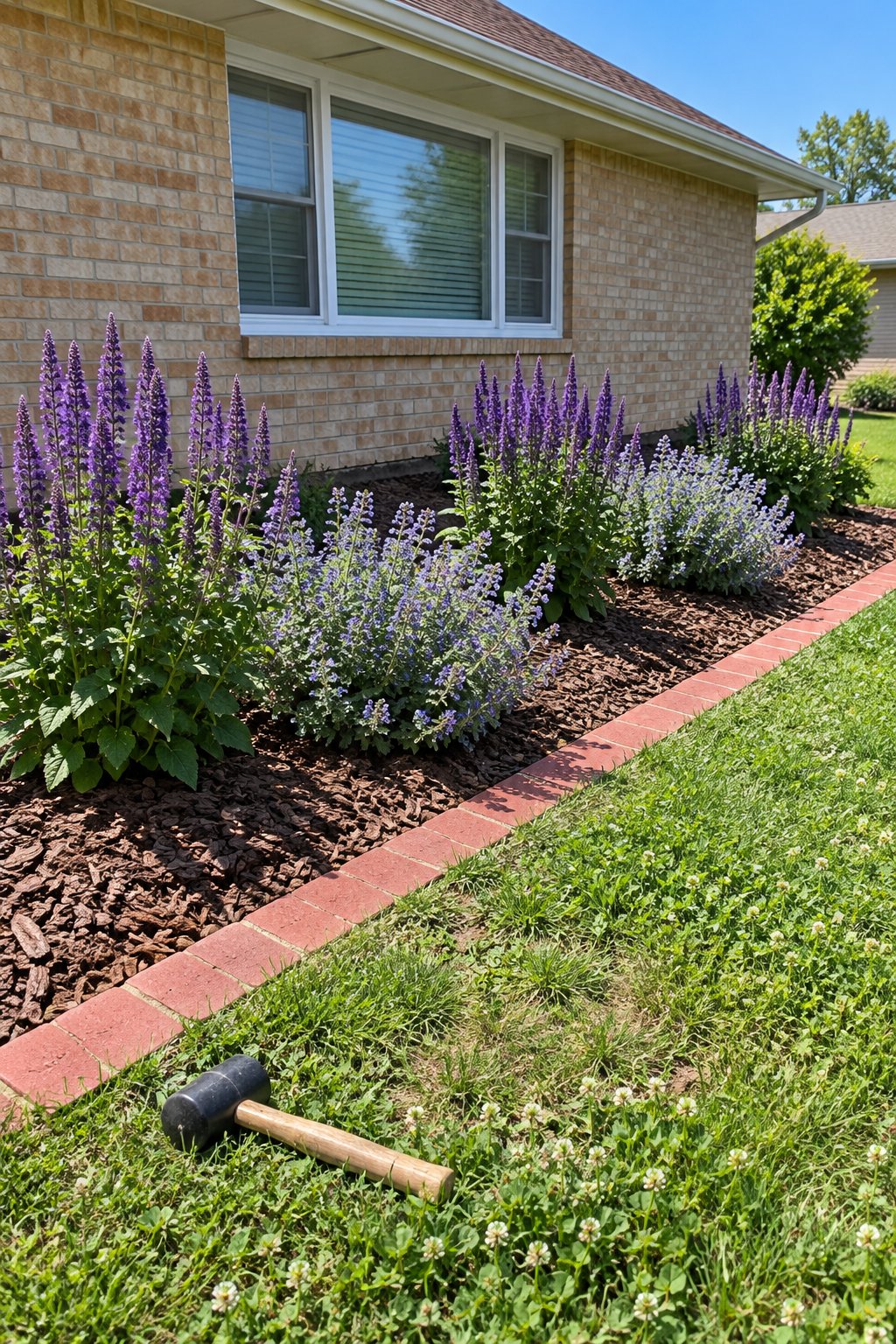
Bricks laid flat and level with the lawn make a mowing strip.
One mower wheel runs along the brick, and the blade takes the grass right at the edge. Seat them side by side in a shallow trench on a little sand.
2. An Upright Soldier Row for a Bed Along the Front Walk
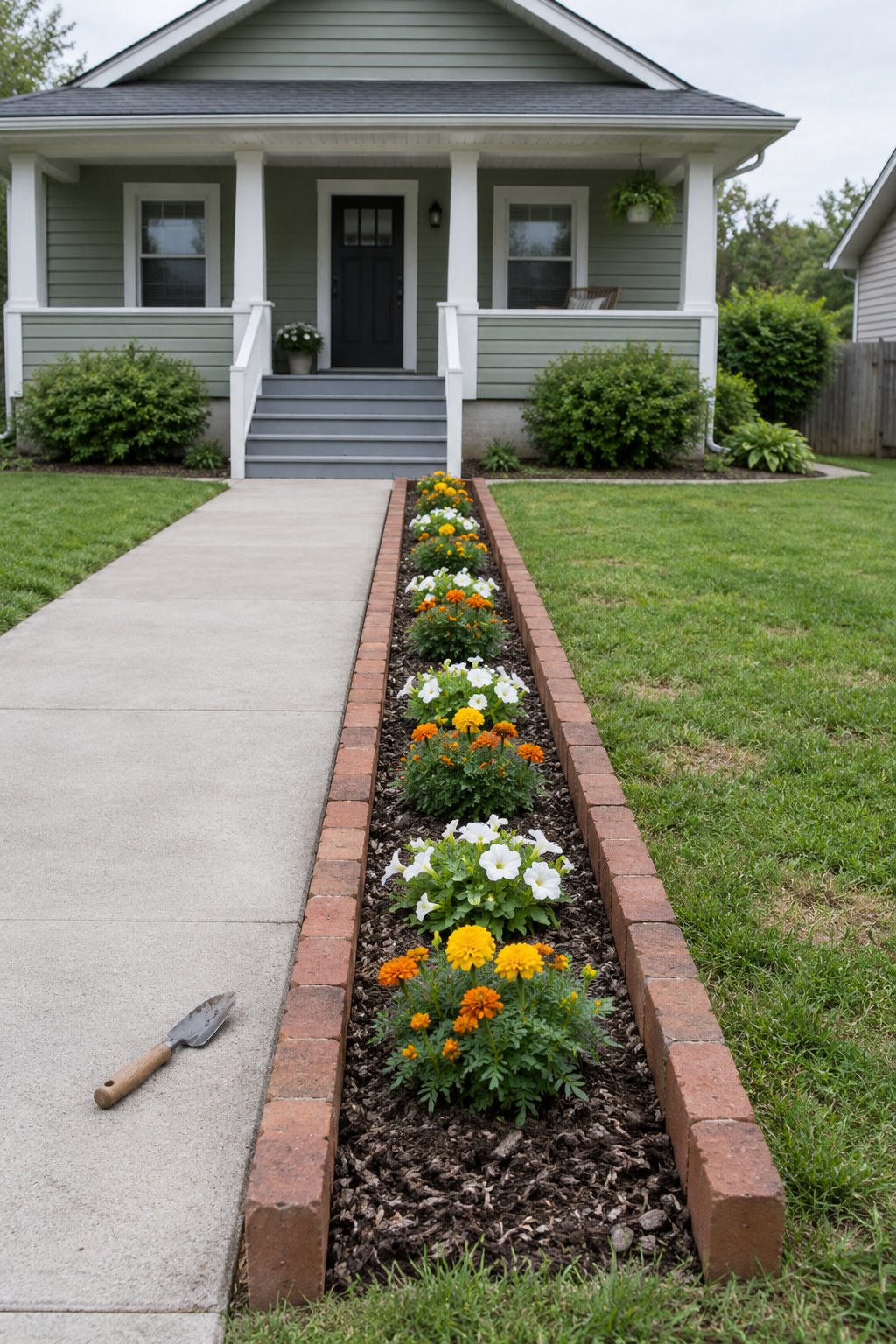
Stood on end, shoulder to shoulder in a narrow trench, bricks make a crisp raised line that keeps mulch off the walk.
The row stands above the grass, so the mower cannot reach the last strip.
3. Sawtooth Brick for a Loose Cottage Border
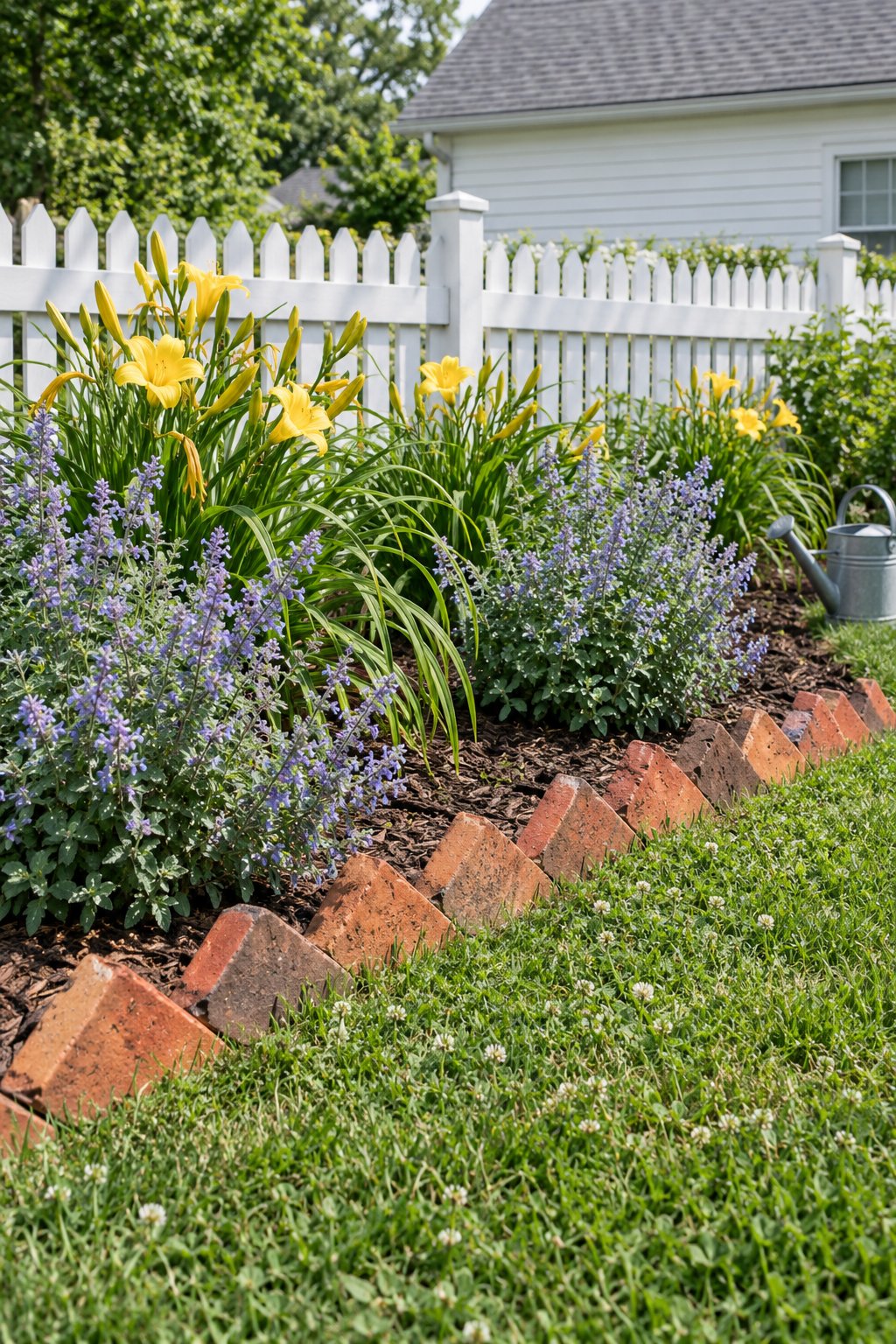
Lean each brick on the one before it, in a trench, so a row of corners points up along the bed.
It is an old-fashioned edge, and I think it suits a loose, flowery border best.
4. A Flat Row Plus an Upright Row for a Deeply Mulched Bed
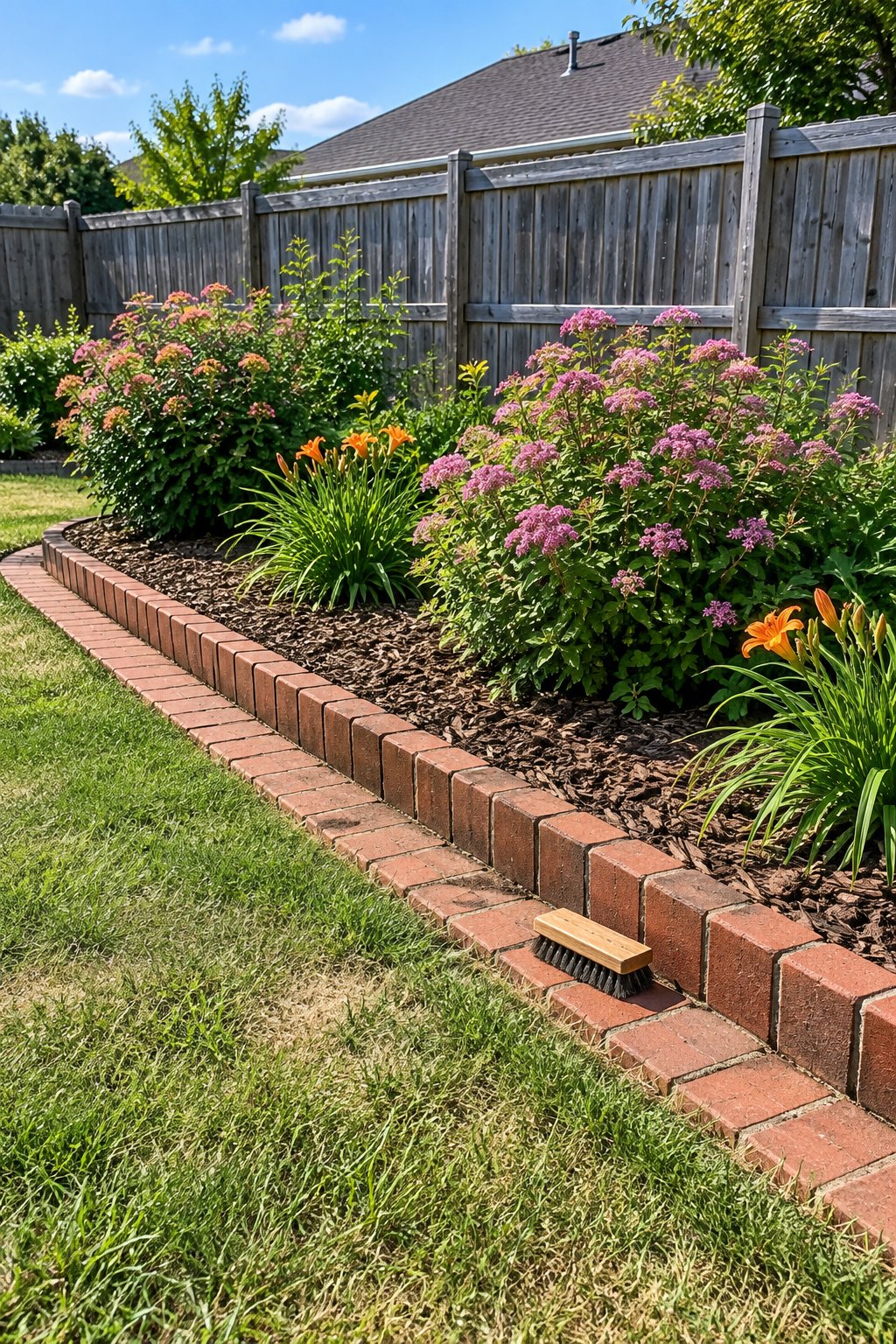
Two rows do two jobs.
The flat row on the lawn side carries the mower wheel. The upright row behind it holds back a thick layer of mulch.
5. Pavers Fanned Flat for a Curved Island Bed
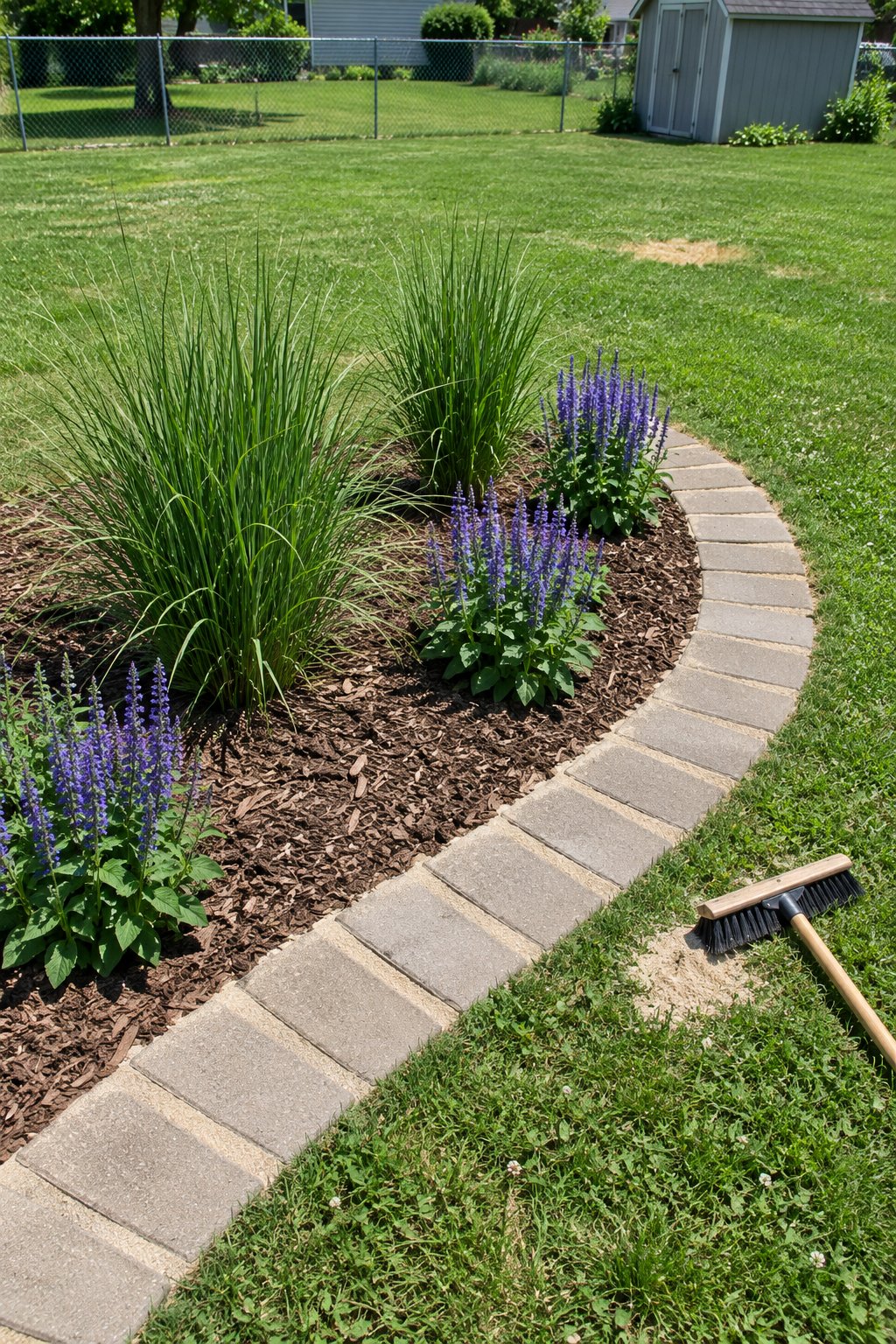
Rectangular pavers follow a curve if you lay them crosswise, like the spokes of a wheel. Wedge-shaped gaps open on the outside of the bend.
Sweep sand into the gaps and keep the tops flush with the lawn.
6. One Line of Fieldstone for a Bed Under a Tree
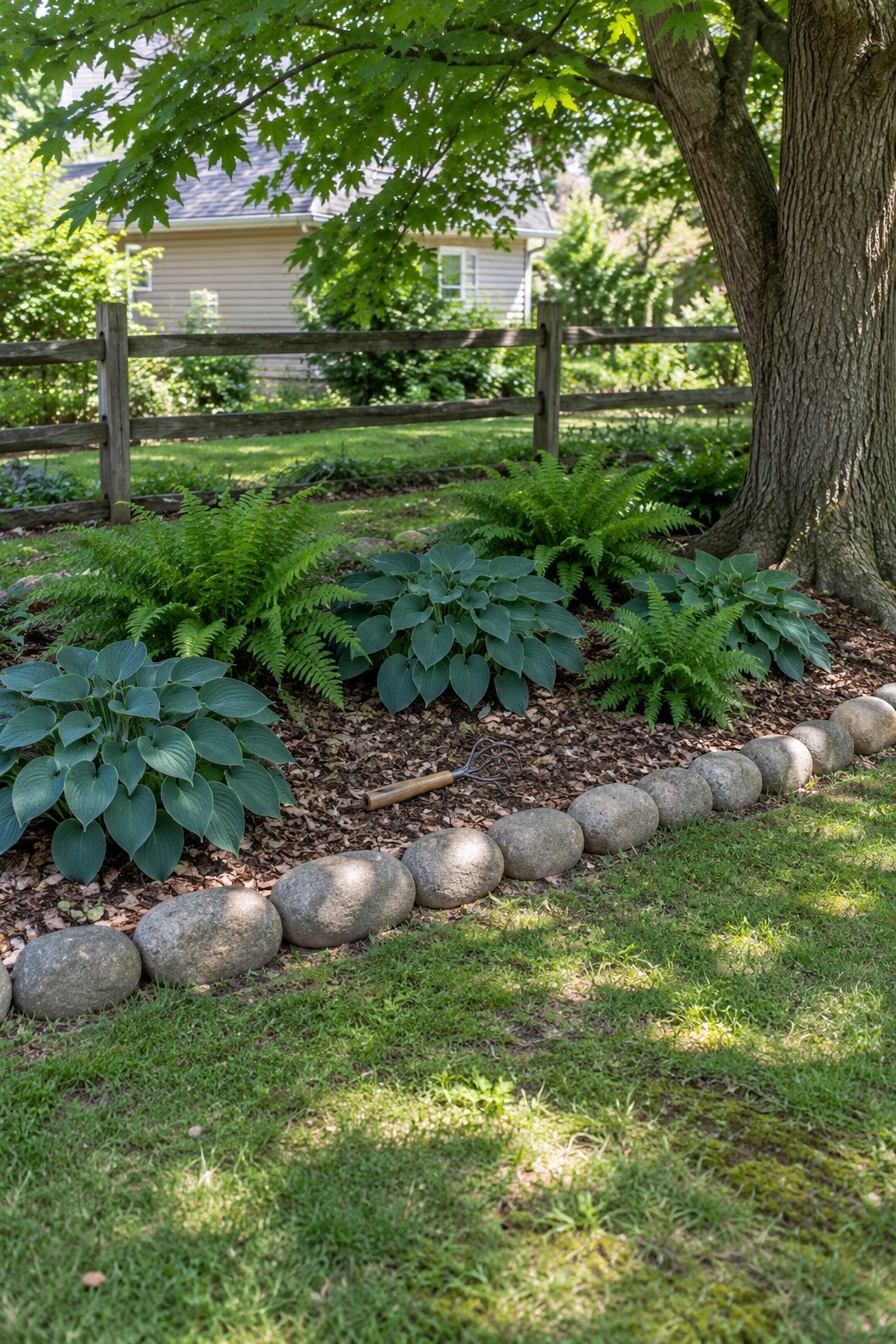
Rocks of about the same size, set in one line, make the edge with the least work. Bed each one a little way into the soil so it cannot roll.
Under a tree, dig shallow and work around the roots.
7. Two Courses of Stacked Flat Stone for a Bed on a Slope
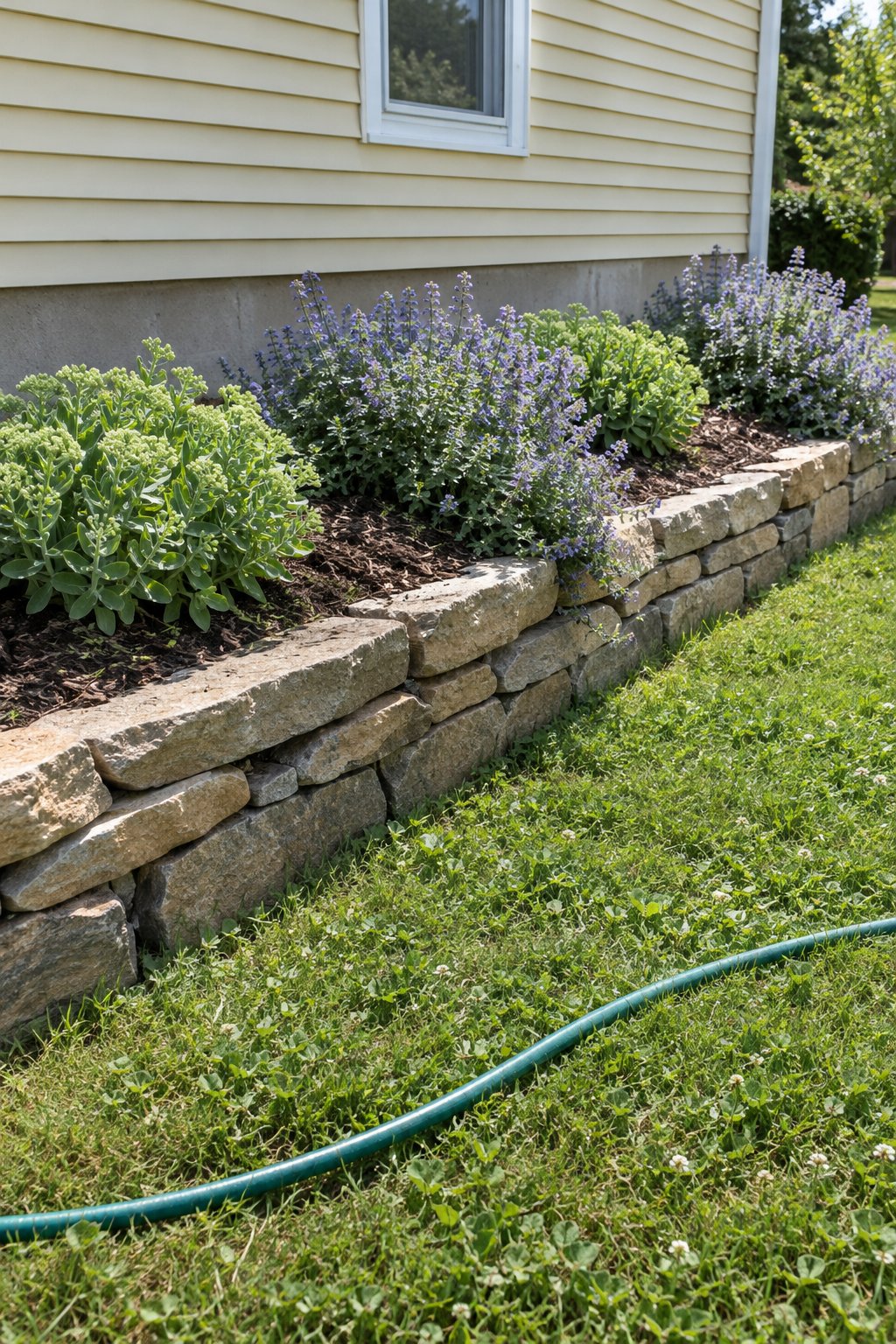
On a slope, the low side of a bed needs something to hold the soil. Two courses of flat stone, stacked dry, do it.
Lap every stone over the joint beneath it, as a bricklayer would.
8. Flagstone Set Flush for a Bed Beside the Patio
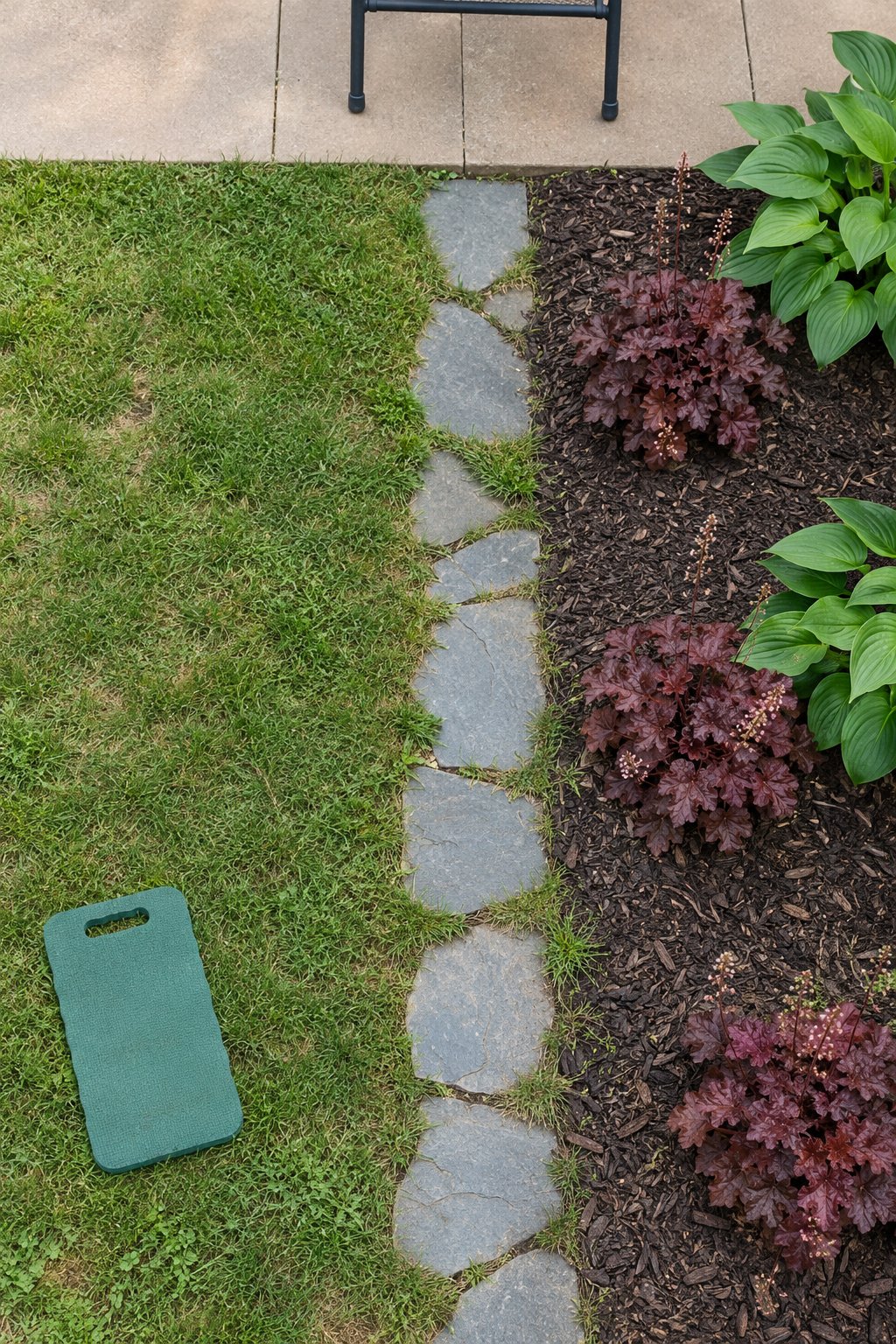
Flat pieces of flagstone, sunk level with the grass, give a mowing strip with a softer, broken outline than brick.
It suits a bed that meets a stone or paver patio.
9. A Row of Granite Cobbles for a Bed by the Driveway
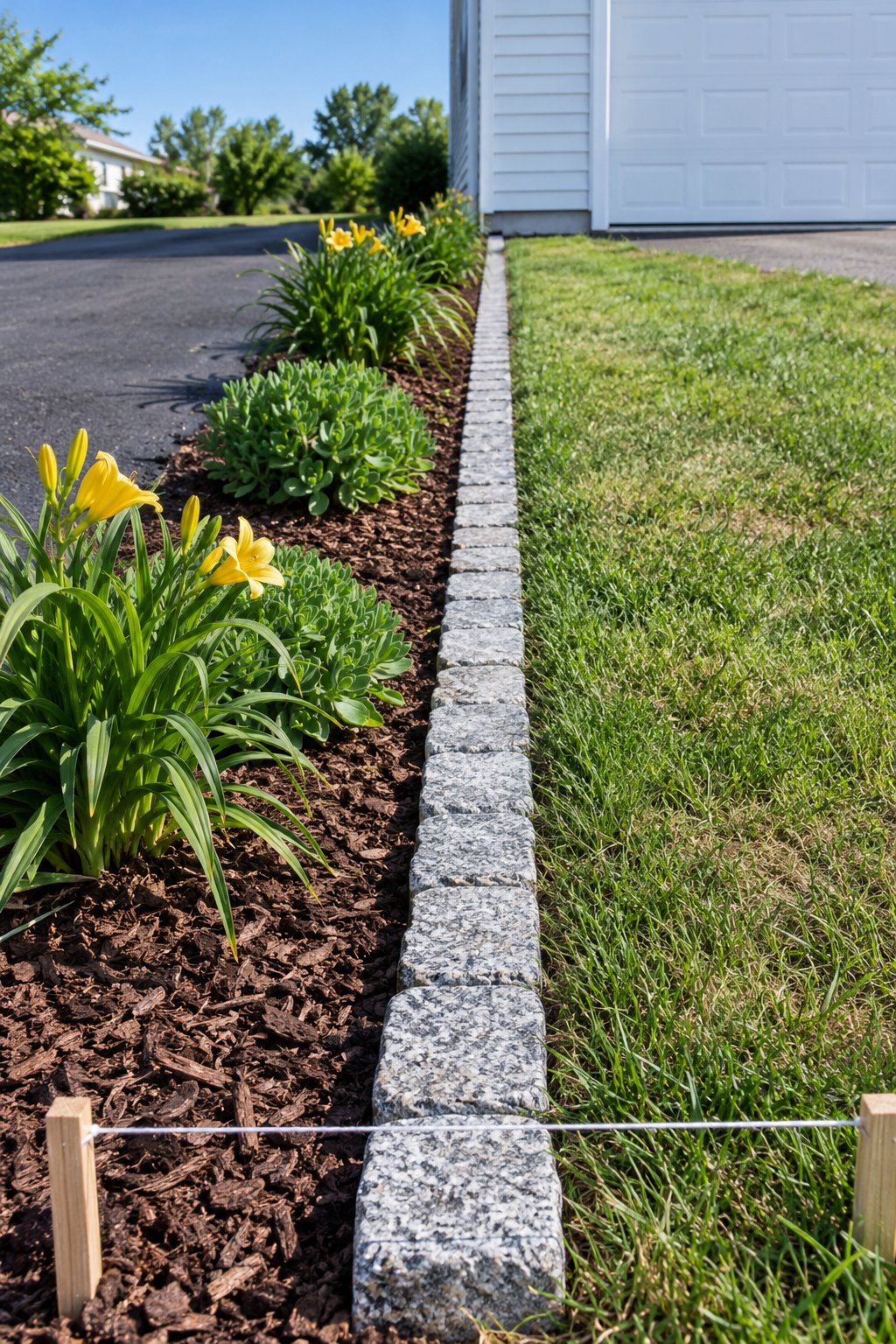
Squared granite cobbles, set side by side and level with the lawn, make the toughest edge in this list. Granite does not rot or rust.
It is also the priciest stone here, so I’d save it for a short run.
10. A Staked Steel Strip for a Bed With Sweeping Curves
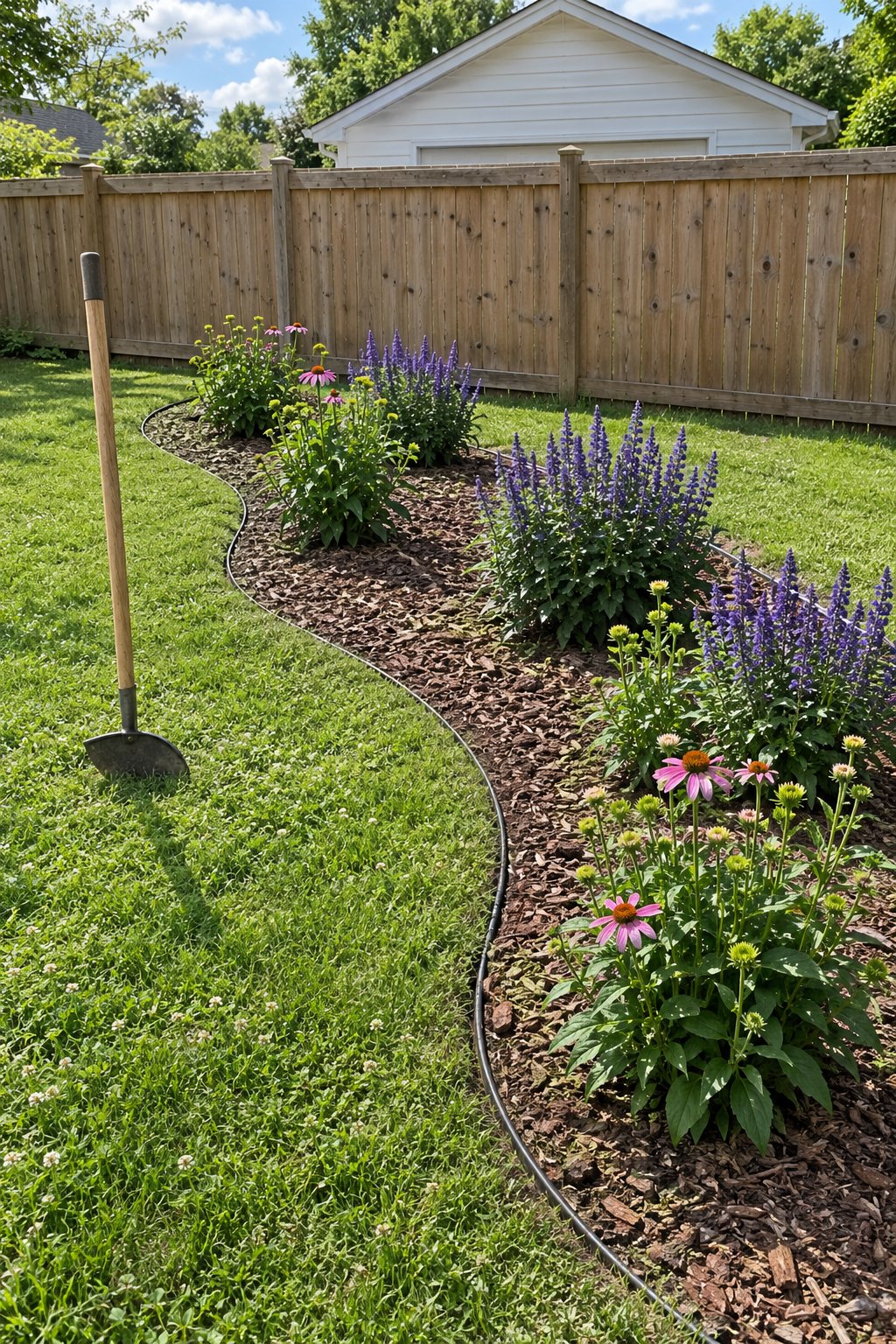
Steel strip gives the thinnest line of any edging, and it bends into curves that brick cannot follow.
It goes into a narrow slot in the soil and is held by stakes.
11. Weathering Steel for a Slightly Raised Bed
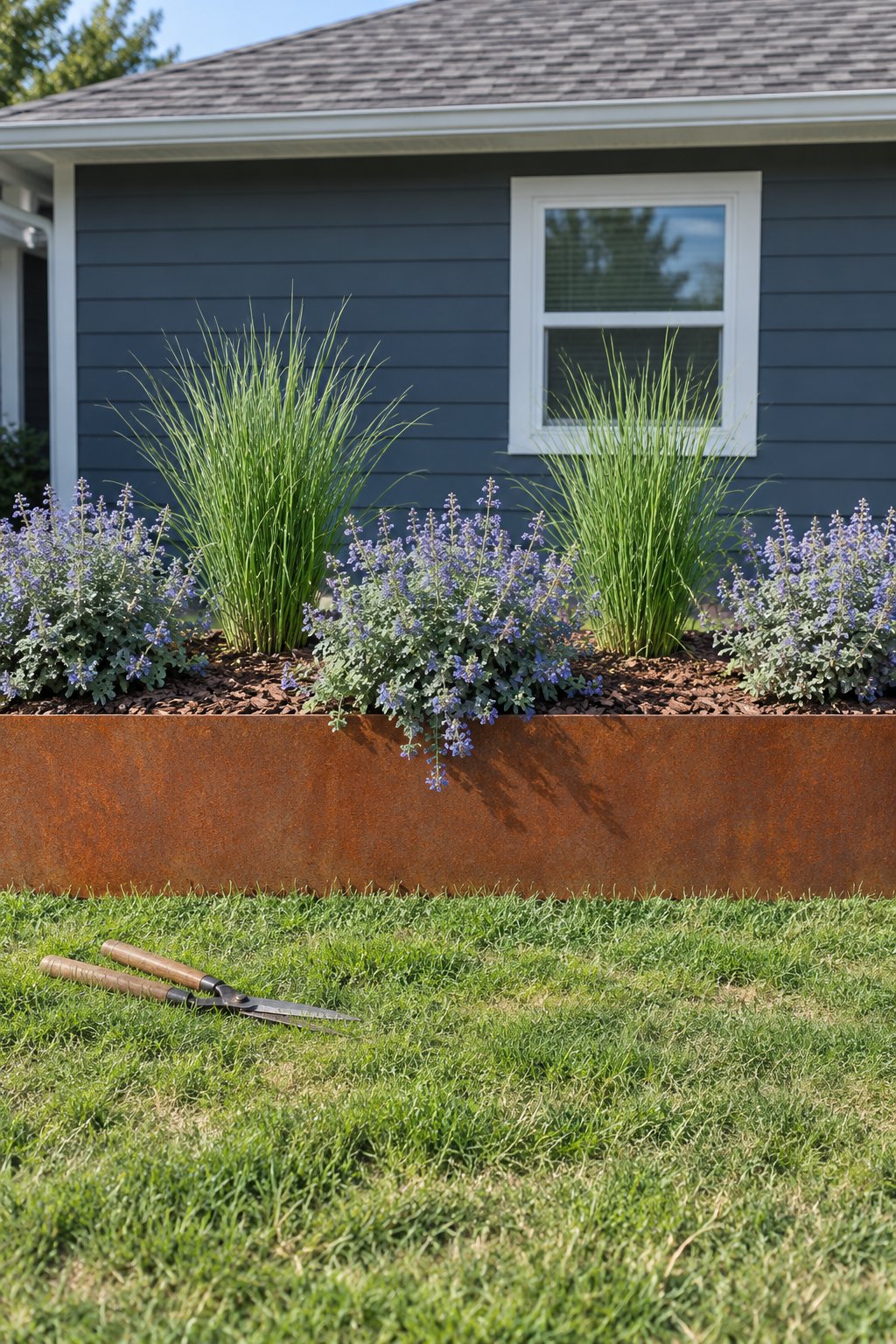
Weathering steel grows a rust-colored skin that protects the metal under it. In a taller strip, it holds a bed a little above the lawn.
While that skin forms, rain can carry rust onto whatever sits beside it.
12. An Aluminum Strip for a First Edging Job
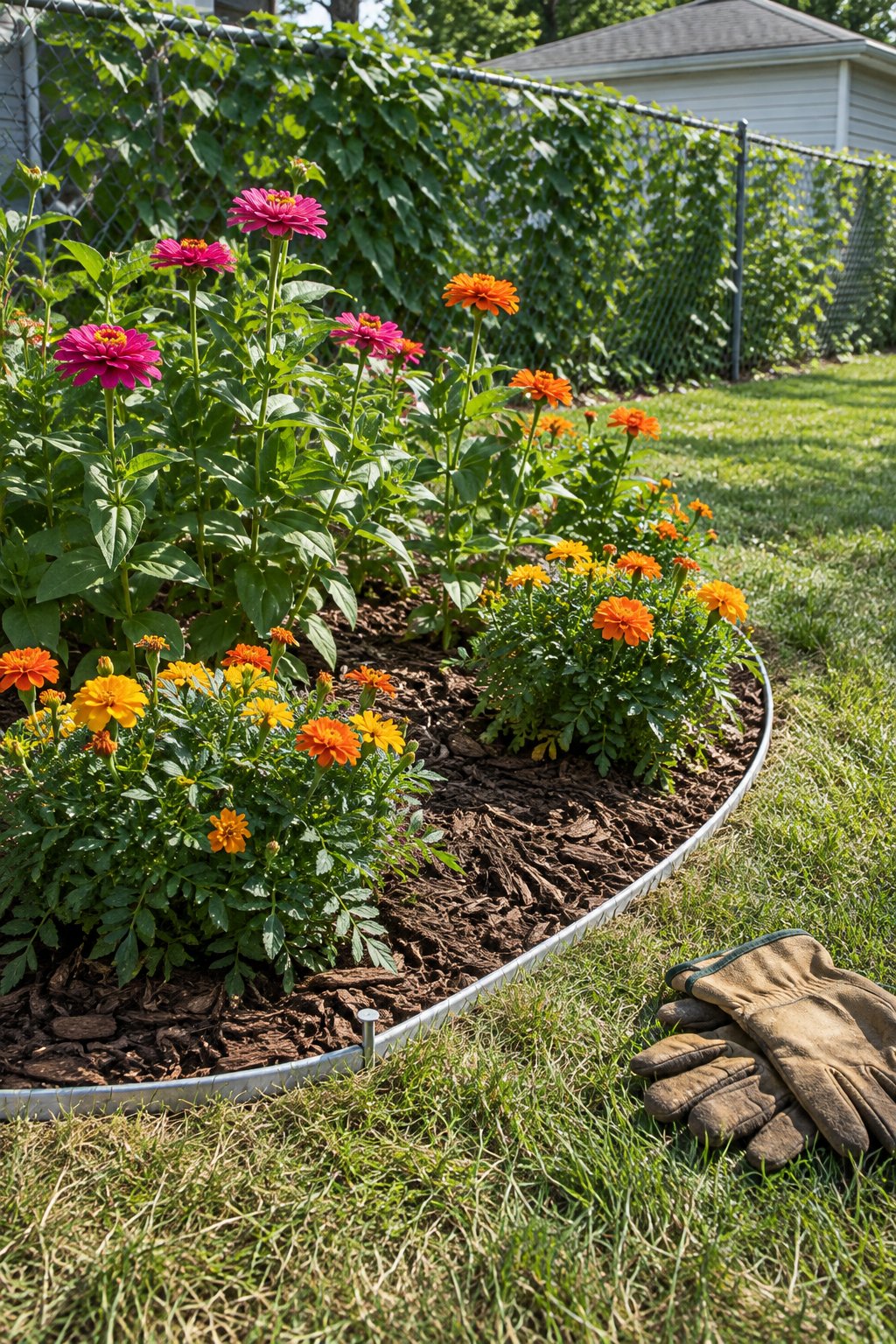
Aluminum strip is lighter than steel and does not rust. It bends by hand and cuts with a hacksaw, so it is the metal edge I’d hand a beginner.
It is softer than steel, though, and it dents.
13. Cedar Boards on Edge for a Straight Fence-Line Bed
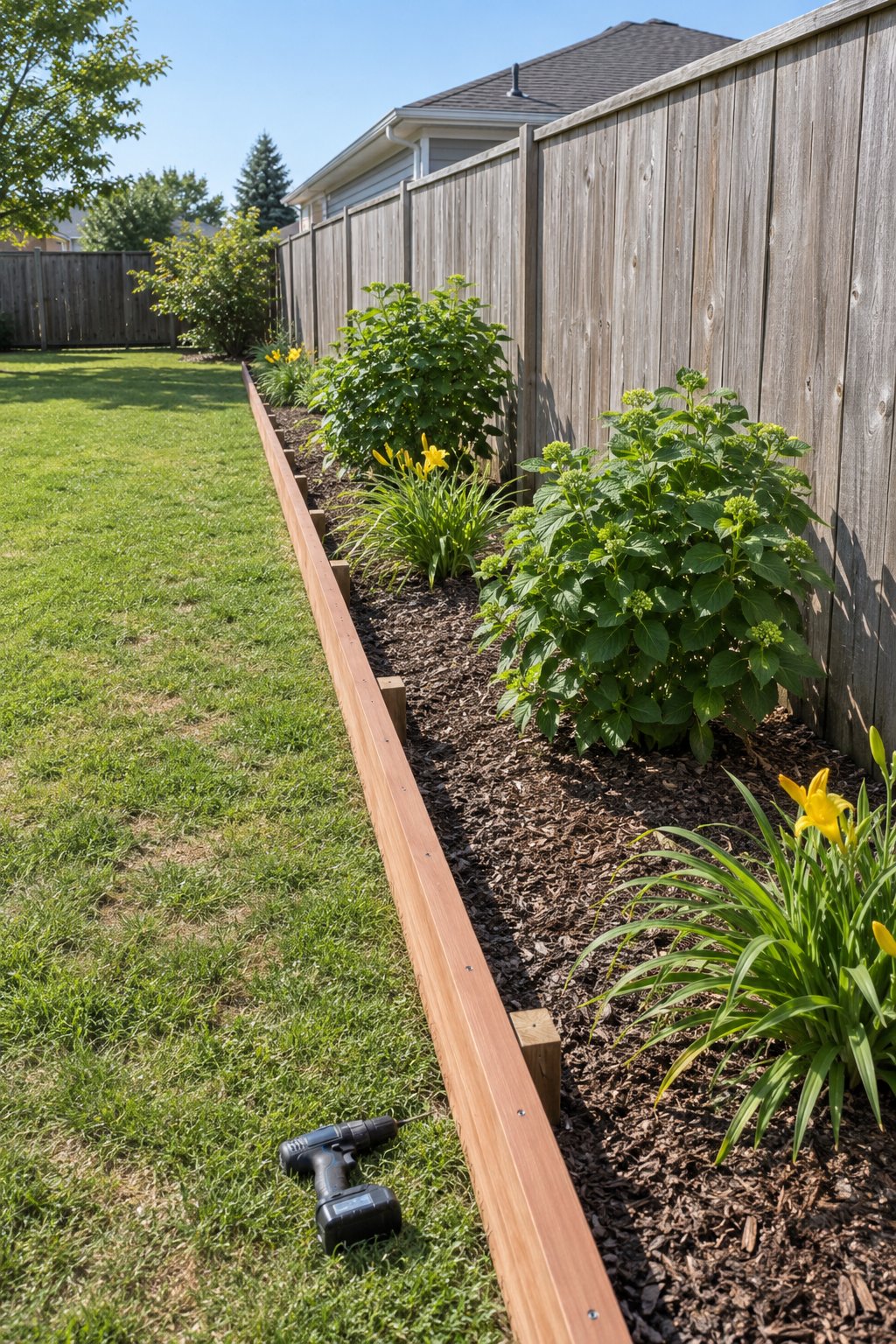
Cedar boards stood on edge and screwed to short stakes make a clean, straight line along a fence.
Wood touching soil rots in time. Cedar holds out longer than pine.
14. Cedar Timbers Laid End to End for a Bed Along the House
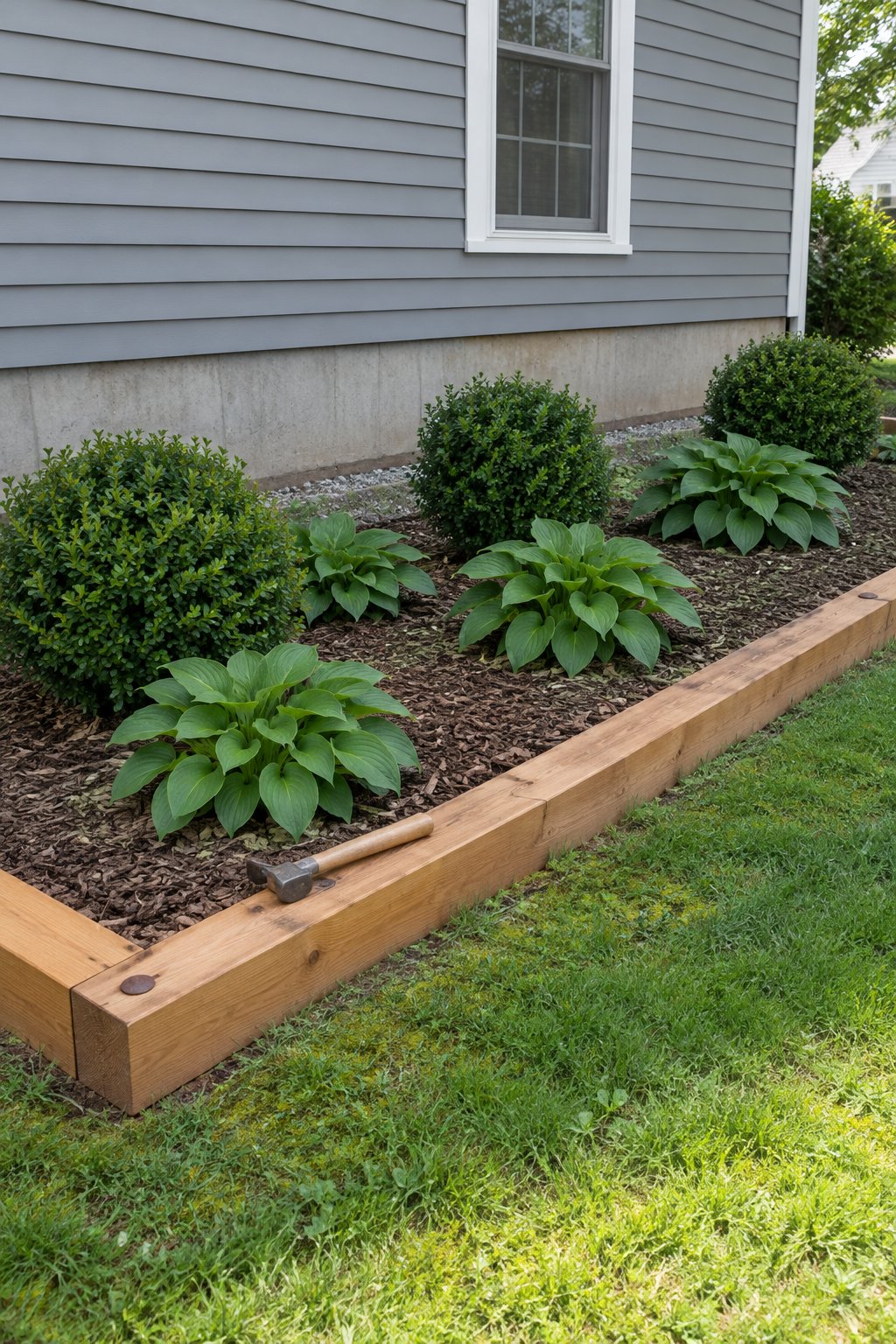
Square cedar timbers, laid end to end and pinned to the ground with lengths of rebar, edge the front of a bed along the house. It takes a drill.
A timber holds mulch in, and that invites piling it deep.
15. Bender Board for a Curved Bed on a Budget
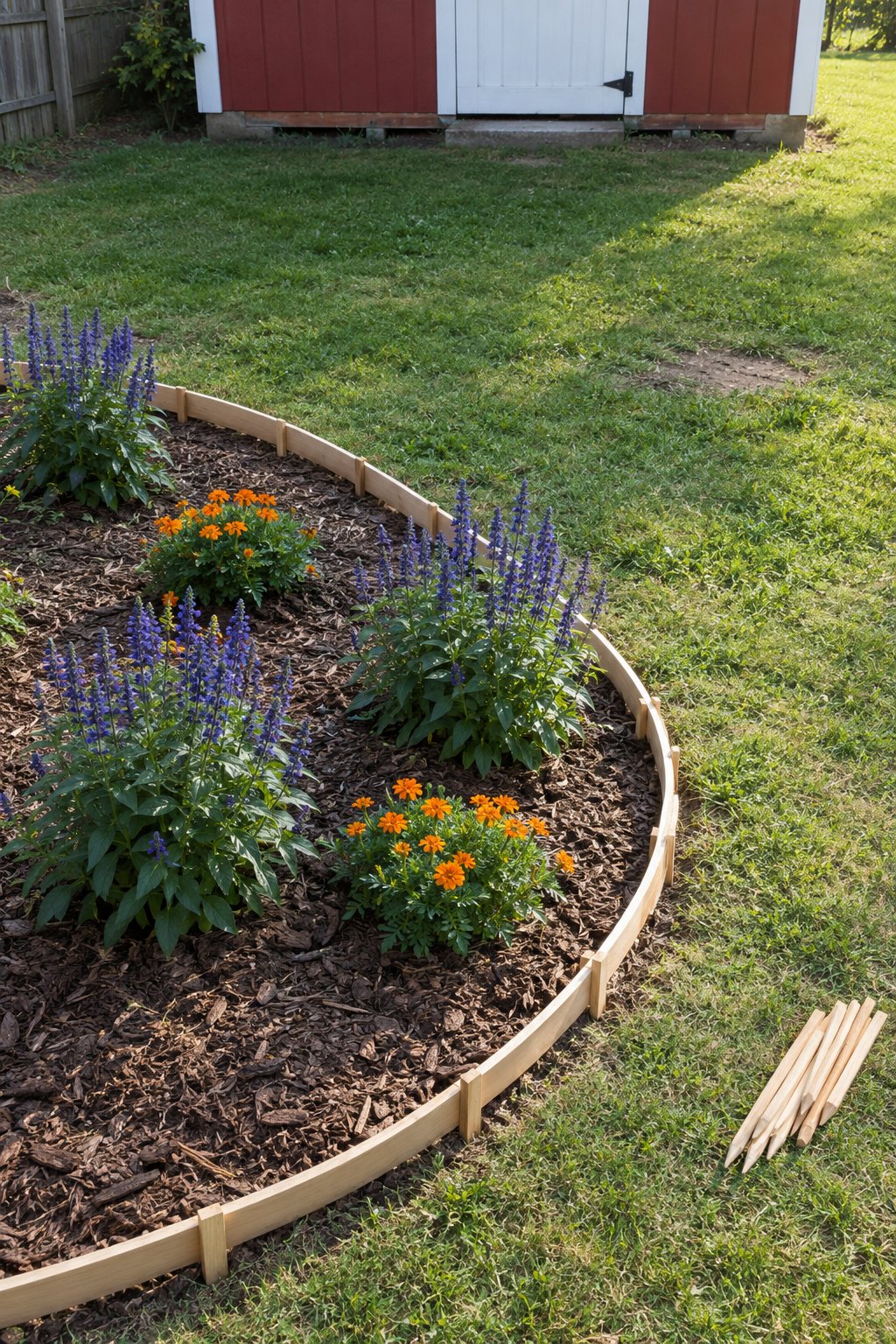
Bender board is a thin, flexible strip of wood made for curves. Stand it on edge in a shallow slot and stake it.
It is the budget way to a curved wooden edge, but thin wood rots sooner than a thick board.
16. Short Log Posts for a Woodland Shade Bed
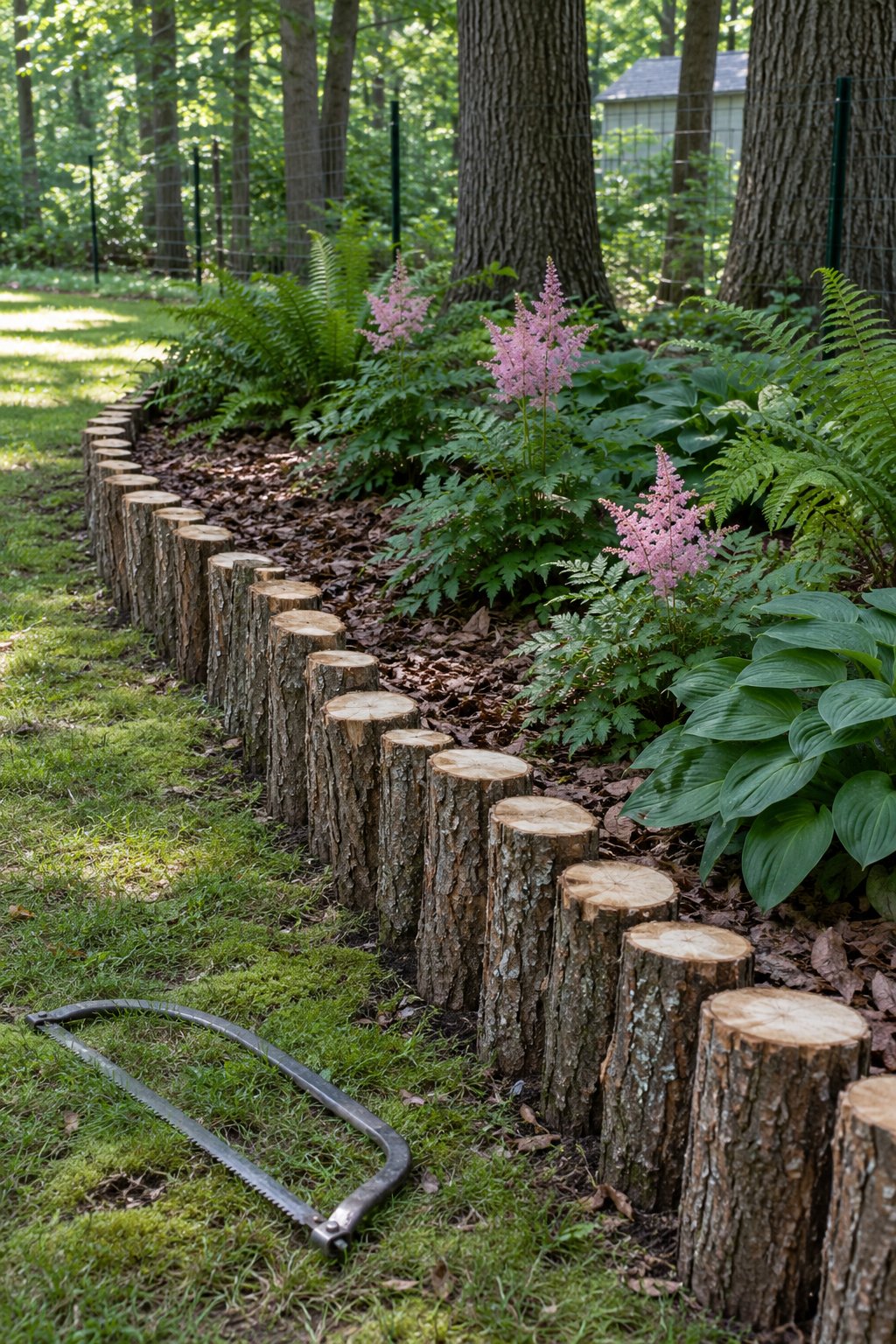
Short lengths cut from a pruned or fallen limb, stood upright in a trench, make a low log edge. Leave the bark on.
It costs nothing, and it rots at the soil line in time.
17. A Spade-Cut Trench for Any Bed, at No Cost
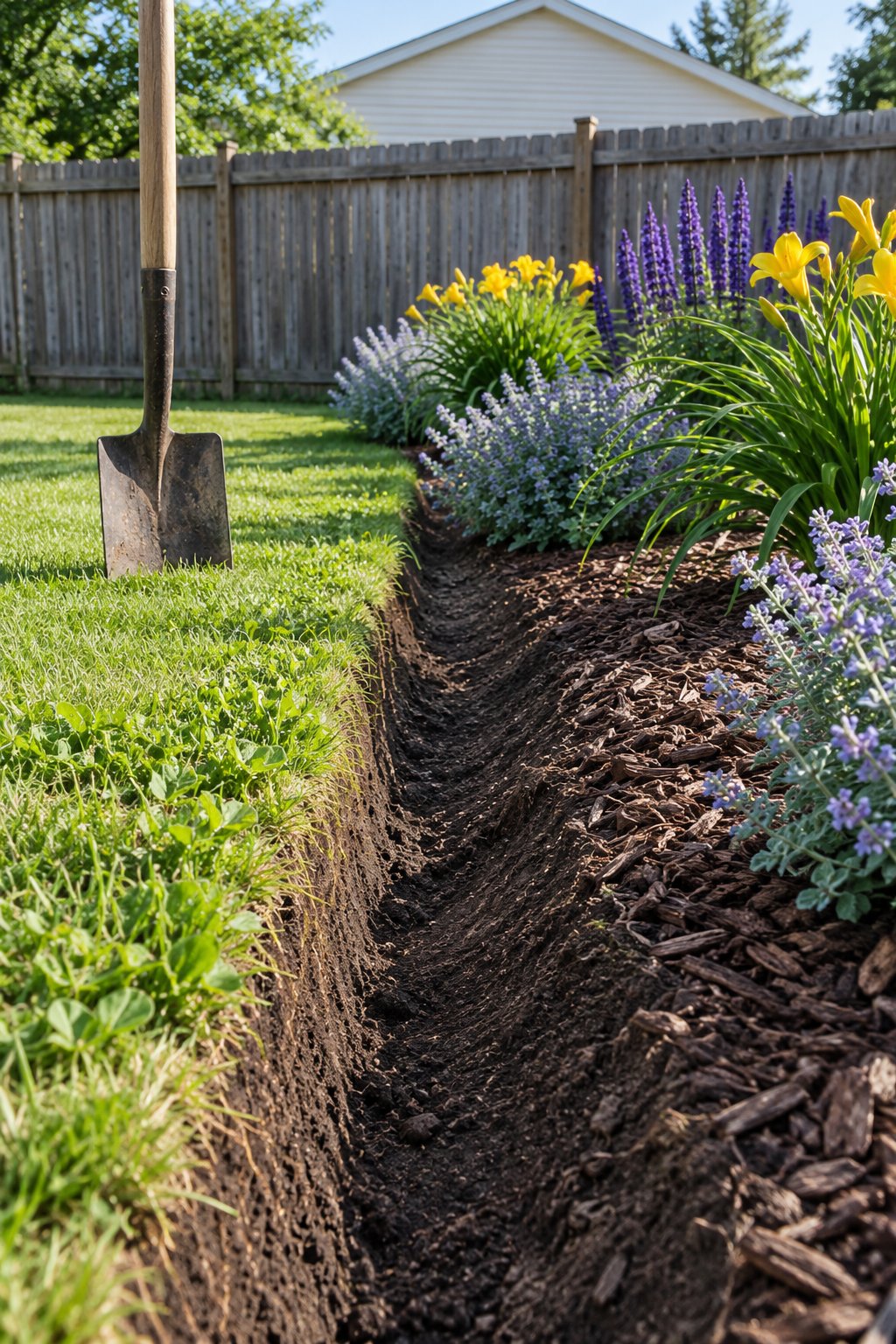
The cheapest edge is no material at all.
Push a flat spade straight down along the lawn line. Then cut toward it at a slant from the bed side and lift out the wedge of turf.
Grass creeps back, so plan to recut it.
18. Clipped Boxwood for a Formal Bed by the Front Walk
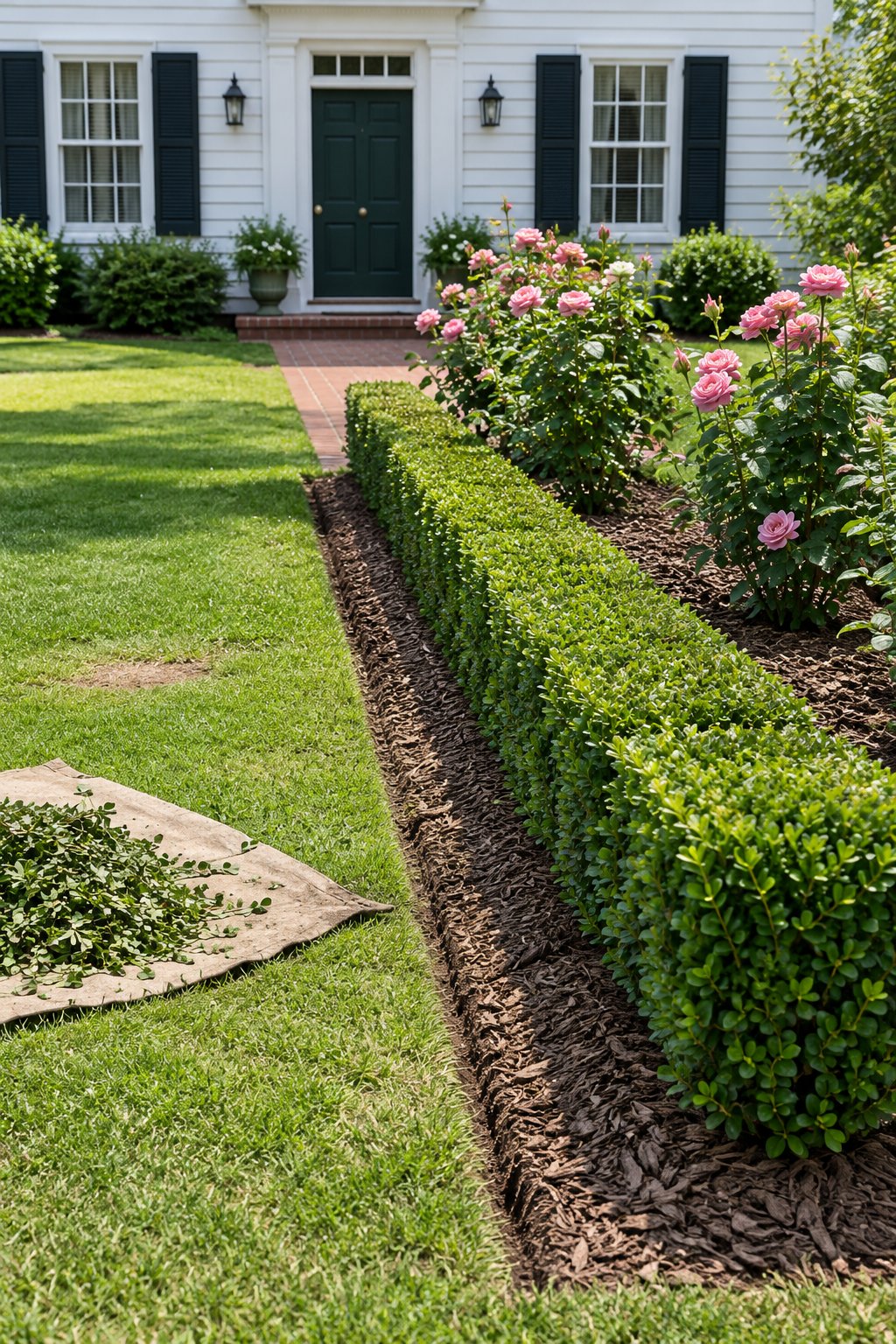
A low clipped row of boxwood draws the line with plants. Boxwood is evergreen and grows in sun or part shade.
A plant edge does not stop grass, so cut a spade edge in front of it.
Bed Edging Materials, Side by Side
Cost is a relative level, because prices change by region. Anything already lying in your yard or garage counts as the lowest.
| Material | Cost | How long it lasts | Mowing | Curves |
|---|---|---|---|---|
| Brick and pavers | Low to medium | Very long. They do not rot, though frost can lift them out of line and they then need resetting | Laid flat and flush, a mower wheel rides on them. Upright rows need a string trimmer | Broad curves only |
| Natural stone | Lowest from your own yard, high for cut granite | The longest. Stone does not rot or rust | Flat stones set flush take a mower wheel. Rounded or stacked stones need a string trimmer | Yes |
| Steel strip | Medium to high | Long. The surface rusts, but the strip holds its line for many years | The mower passes over a strip set at soil level | Yes, the best of all |
| Aluminum strip | Medium | Long. It does not rust, but it dents more easily than steel | The mower passes over a strip set at soil level | Yes |
| Cedar boards, timbers and logs | Lowest to medium | The shortest of the built edges. Wood touching soil rots in time, cedar later than pine | Needs a string trimmer | Only with thin bender board |
| Spade-cut trench | Lowest | Until the grass creeps back. Recut it each season | Nothing for the mower to hit | Yes |
| Clipped plant edge | Medium | As long as the plants are healthy and kept clipped | Needs a cut edge in front of it | Yes |
Six Shortcuts That Spoil a Flower Bed Border
Digging the trench before calling 811
Do thisCall 811 a few days before you dig, even for a shallow edging trench. The service is free, and the buried lines get marked on your lawn.
Flat bricks set higher than the lawn
Do thisSet a mowing strip level with the soil so the wheel can ride on it. If it sits above the grass, the blade hits it.
A shallow edge against a creeping lawn
Do thisGrass that spreads by runners crosses a shallow edge. Expect to pull or cut back what gets through, whatever the border is made of.
Tight wiggles the mower cannot follow
Do thisDraw the line in long, broad curves. A mower follows a sweep and leaves tufts of grass in every tight bend.
Metal edging left standing proud
Do thisWear gloves when you handle it, and set the top edge flush or just above the soil. An exposed metal edge is a trip and cut hazard.
Mulch heaped over the edge and up the wall
Do thisKeep the mulch below the top of the edging so it stays in the bed. Along the house, keep mulch and soil off the siding.
One Long Curve Mows Better Than Five Small Ones
The shape of the line matters as much as what it is made of. A mower turns in a wide arc, so it follows a long sweep and gives up on a tight wiggle.
Lay a garden hose on the grass to draw the edge, then stand back and look at it from the street.
I’d rather have one sweep across the whole bed than a scallop around every shrub.
The shape also picks the material. Straight runs and broad curves suit brick, boards and timbers.
Tight bends call for a steel or aluminum strip, small stones or a spade-cut edge. Mark the final line with the spade before you lift the hose.
Start with one change: cut a spade edge along a single bed this weekend. It costs nothing, and it shows you whether the line is right.
Live with it and mow beside it for a few weeks. If you want something permanent after that, the trench is already there for brick, stone or steel.
Frequently Asked Questions
What is the cheapest flower bed edging?
A spade-cut trench, because it uses no material at all. After that come things you already own, such as leftover bricks, stones from the yard or short logs from a pruned limb.
Which flower bed border ideas are easiest to mow beside?
Anything flat and level with the lawn: brick, pavers, flagstone or cobbles laid as a mowing strip. One mower wheel rides on the edging, so there is little left for a string trimmer.
Do I have to call 811 for a shallow edging trench?
Yes. Call 811 a few days before any digging, because some buried lines sit close to the surface. The call is free.
Which garden edging ideas work on a curved bed?
Steel and aluminum strip bend into the tightest curves, and thin bender board follows a gentle one. Small stones and a spade-cut edge follow any line, while brick and pavers suit broad curves only.
Will edging keep grass out of a flower bed for good?
No edging does that by itself. It slows the grass and gives you a clean line to work to, but grass that spreads by runners still crosses a shallow edge and has to be pulled or cut back.
Save This For Later
Loved flower bed edging ideas? Save this pin to your Pinterest board now so you can find it again anytime you need the inspiration.