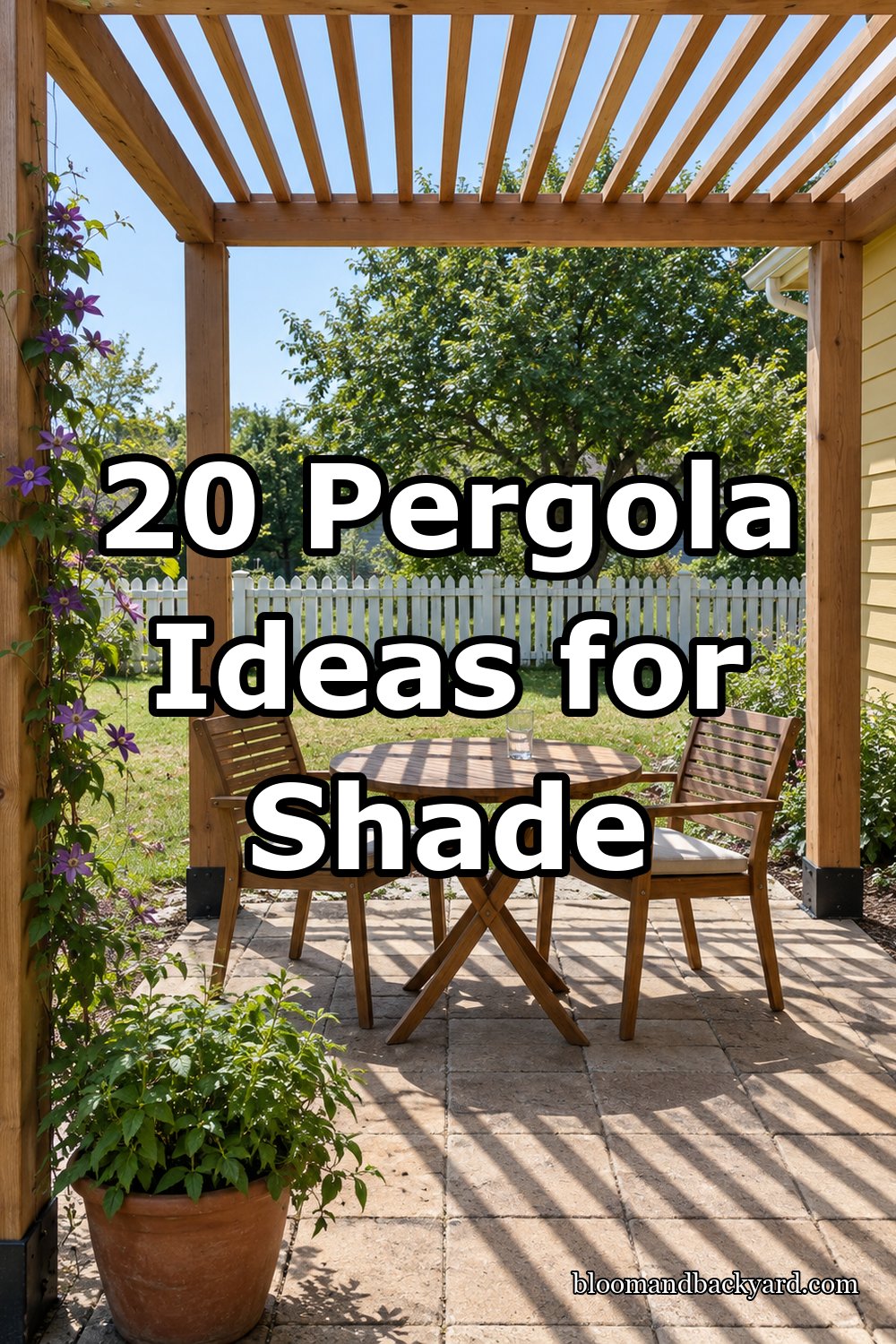
20 Pergola Ideas for Shade, Lights and a Place to Sit

Pergola ideas start with one question: what is missing from your yard, shade, privacy, light or a place to sit?
These 20 are sorted by that problem, each with a rough cost and a check to make first.
Ask about permits, footings and HOA rules before you dig or buy lumber.
What does your yard need?
1. Freestanding Cedar Pergola Over the Patio
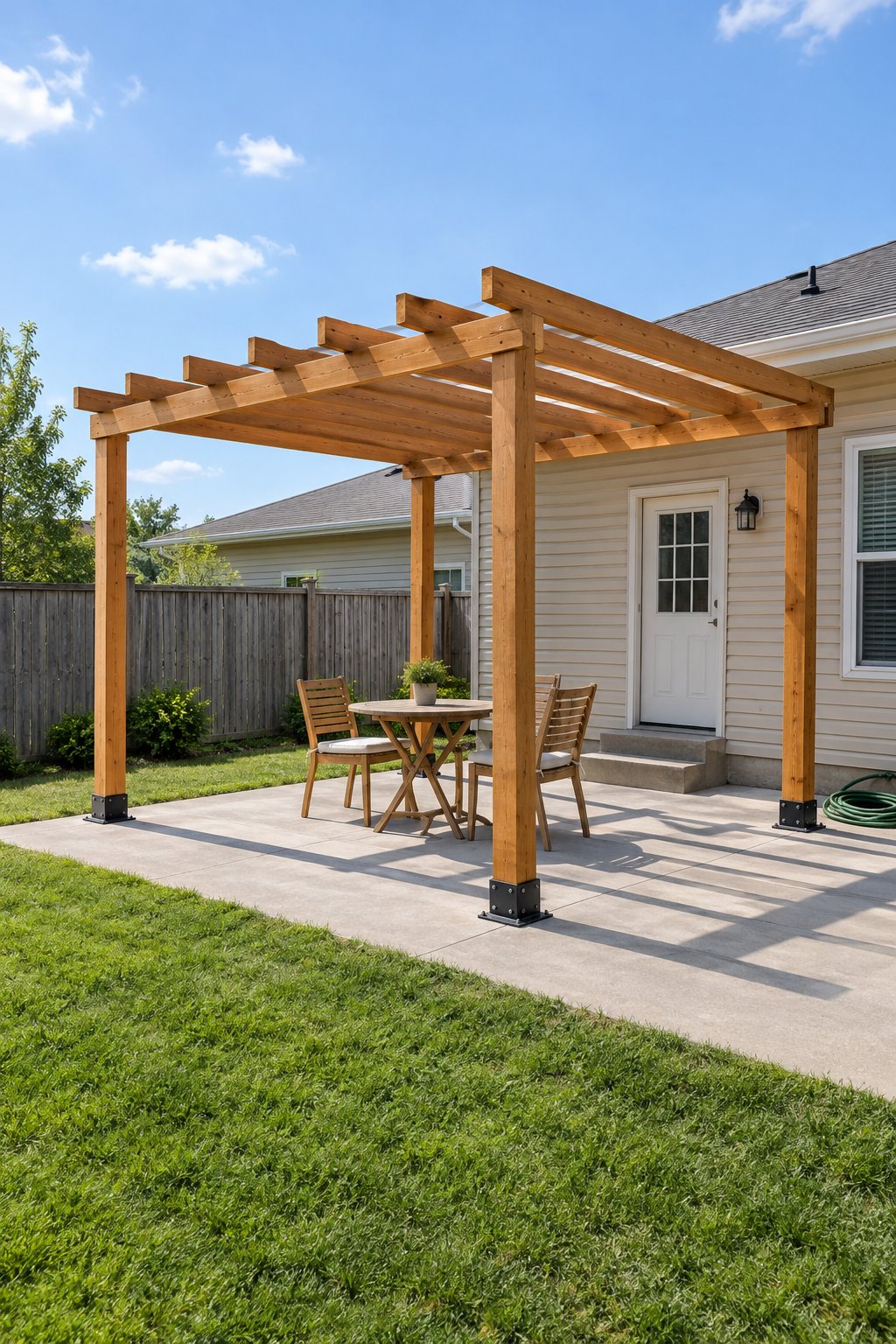
A freestanding frame stands on four posts of its own and never touches the house. Size it a little larger than the furniture under it.
Many towns require a permit above a set size.
2. Attach It to the Back of the House, With a Proper Ledger

An attached pergola can use just two outer posts, because the inner beam rests on a ledger board on the house wall.
The ledger must be fastened into the house framing and flashed, not just screwed to the siding.
3. Tuck a Corner Pergola Where Two Fences Meet

Set a square frame in the back corner, a few inches in from both fences, so you can still reach the boards.
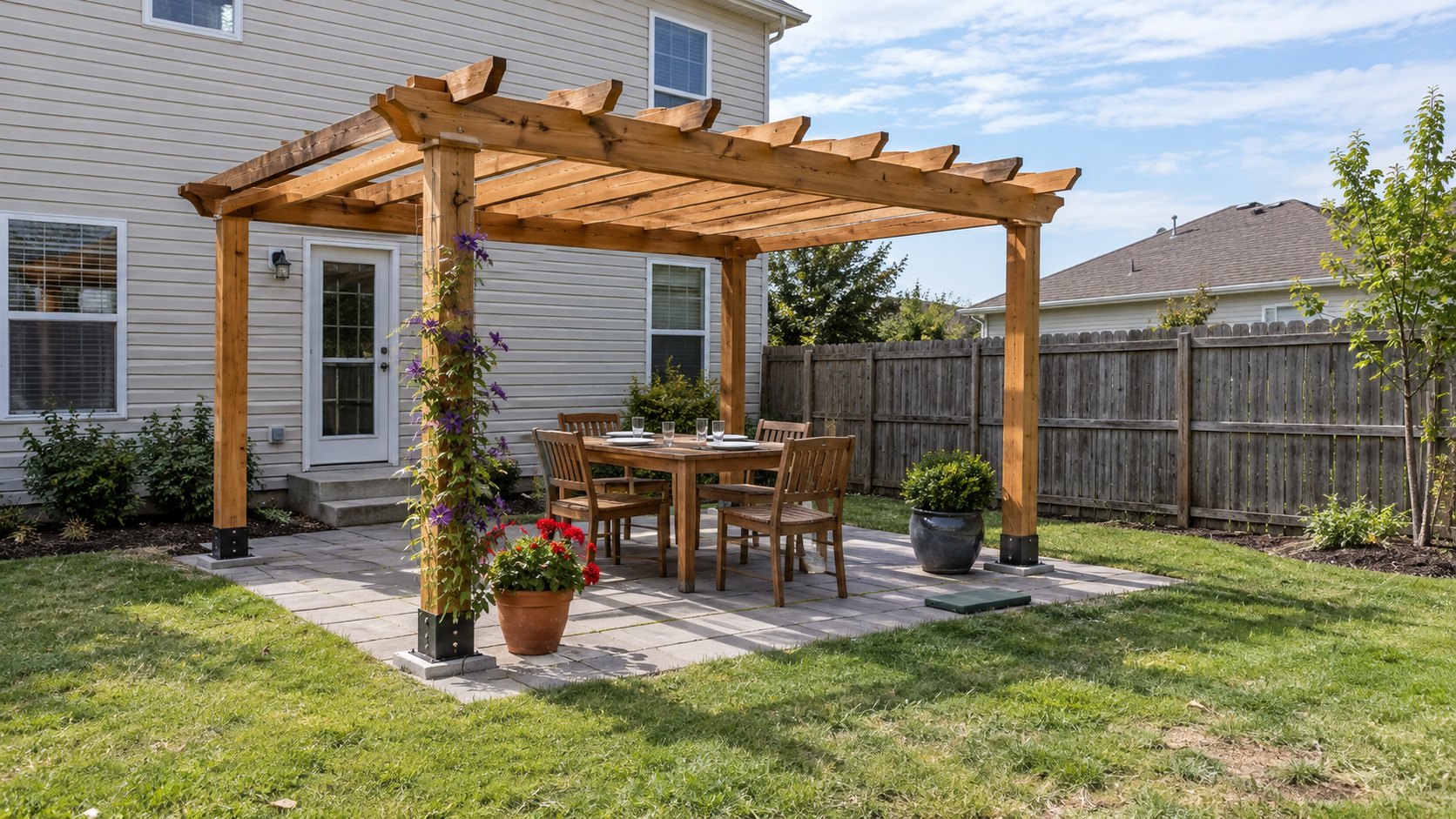
Check setbacks and easements along the property line before you mark the posts.
4. Walk Under One Along a Side-Yard Path
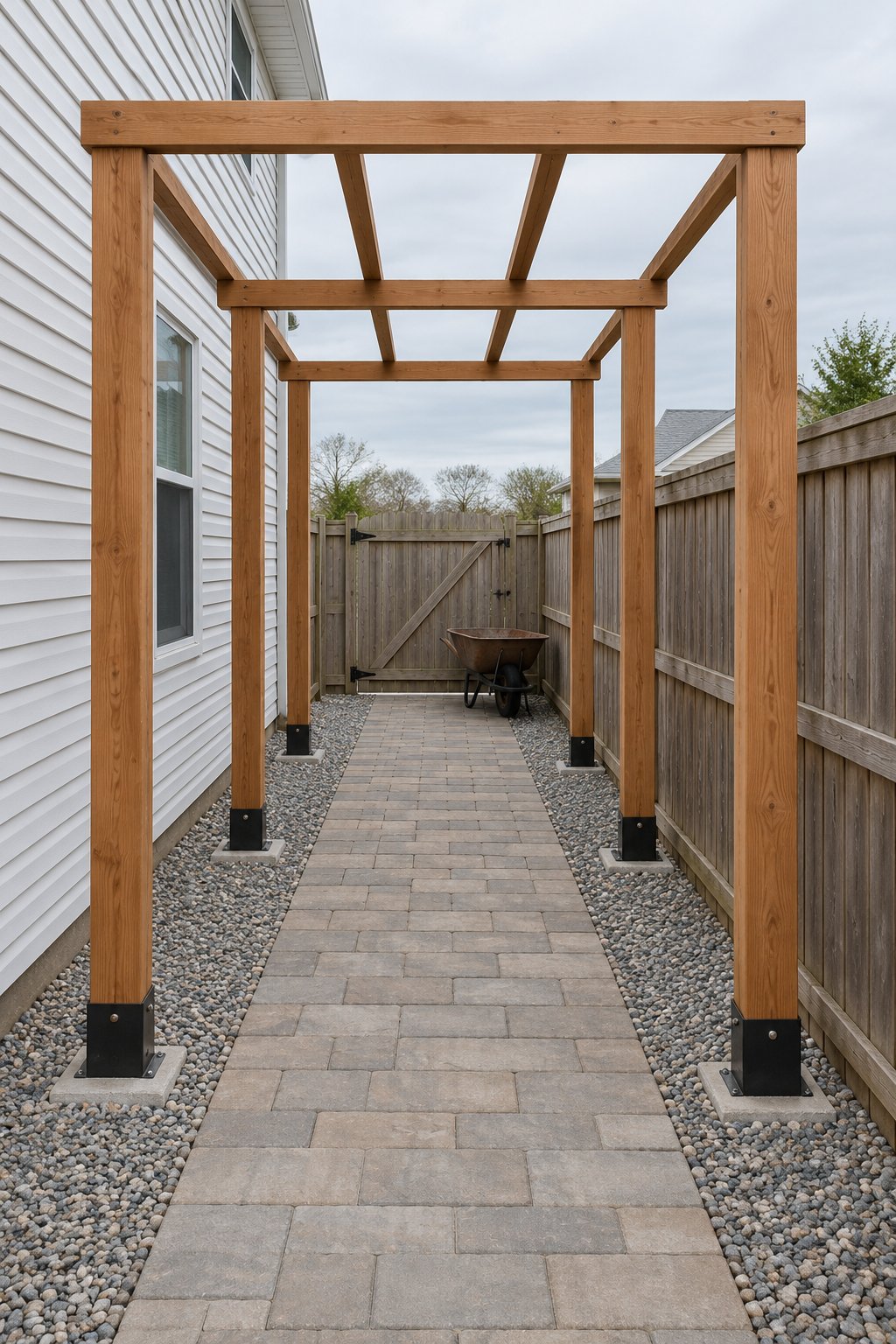
Three pairs of posts along a side-yard path turn a service strip into a way in. Keep the path at least 3 feet wide and the beams at least 7 feet up.
Anything narrower or lower feels like a tunnel.
5. Small Patio? Use Four Slim Posts and Keep the Top Open

Slim posts and an open top keep a frame from crowding a bistro table. Put the posts at the corners so the middle stays free.
A small frame may fall under your town’s permit cutoff, so ask.
6. Narrow Pergola Along a Fence, on Its Own Posts
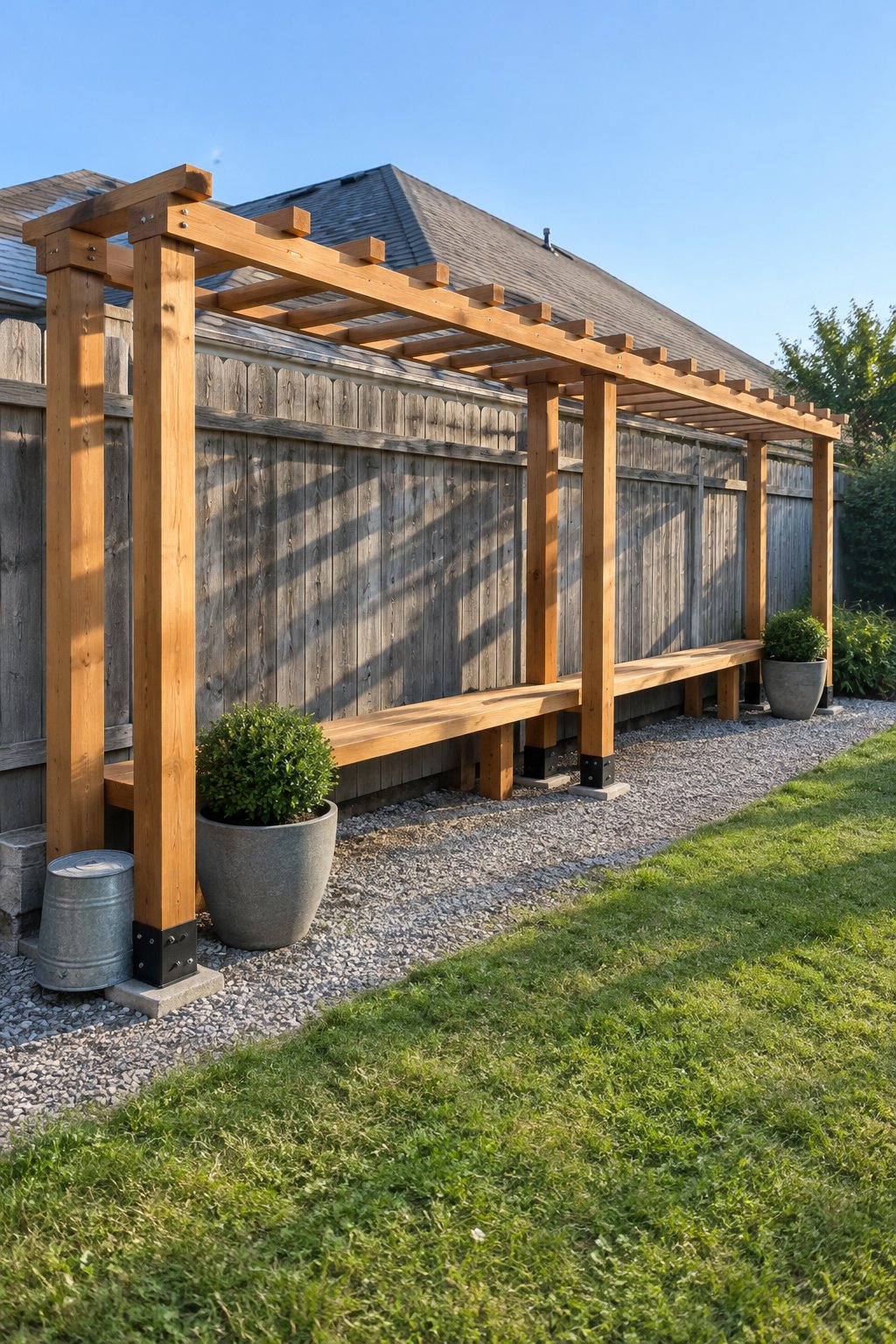
A pergola 4 feet deep gives a bench and a pot or two a roof line of their own. Set its posts a few inches off the fence, never tied to it.
A fence can’t carry a roof, and it may not be yours.
7. Slatted Roof That Gives Part Shade and Lets the Air Through
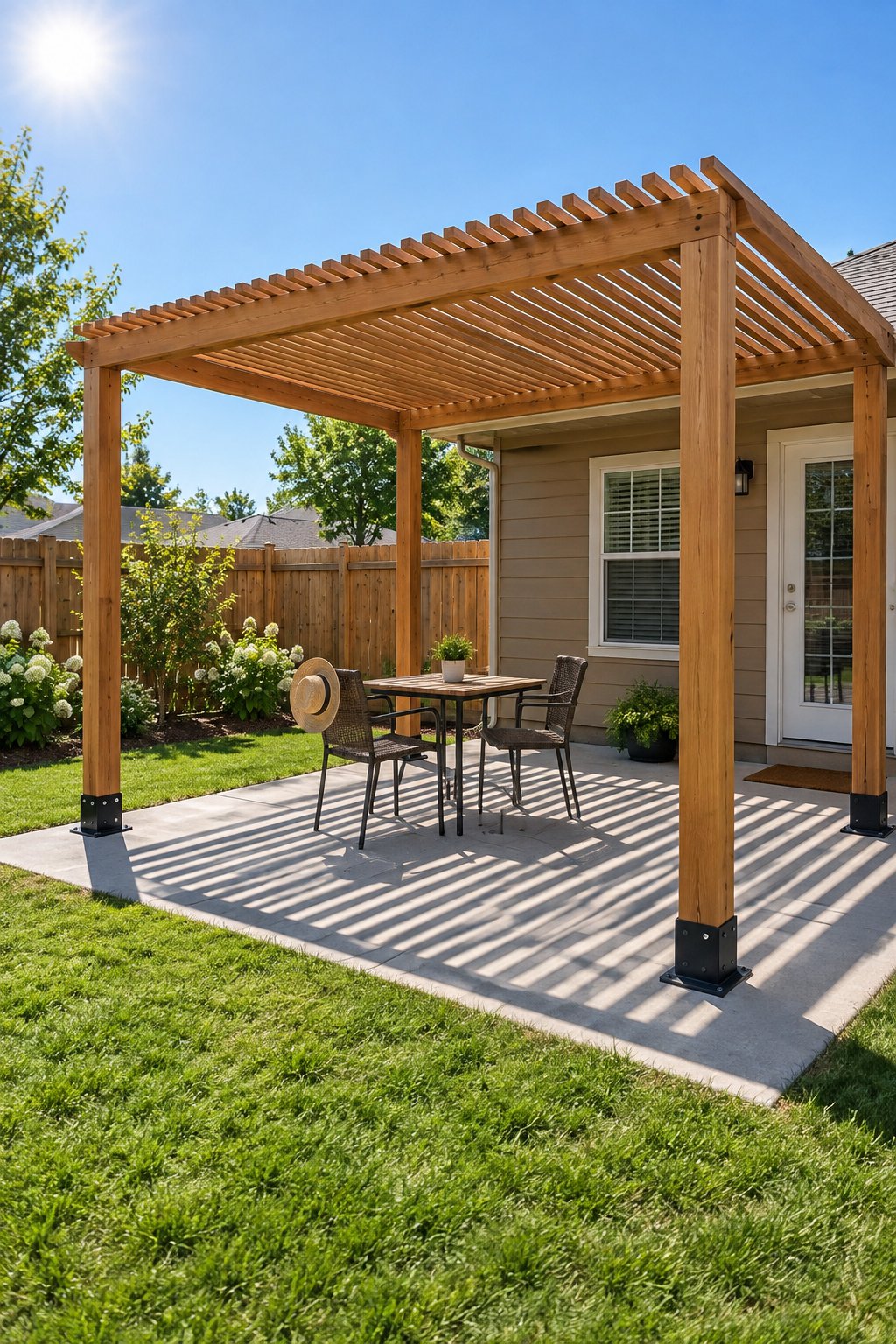
Slats laid across the beams make stripes of shade that move over the day. Closer spacing blocks more sun, and wider spacing blocks less.
Slats cut the glare but do not keep rain off the furniture.
8. Shade Cloth or a Sail Over the Hottest Side
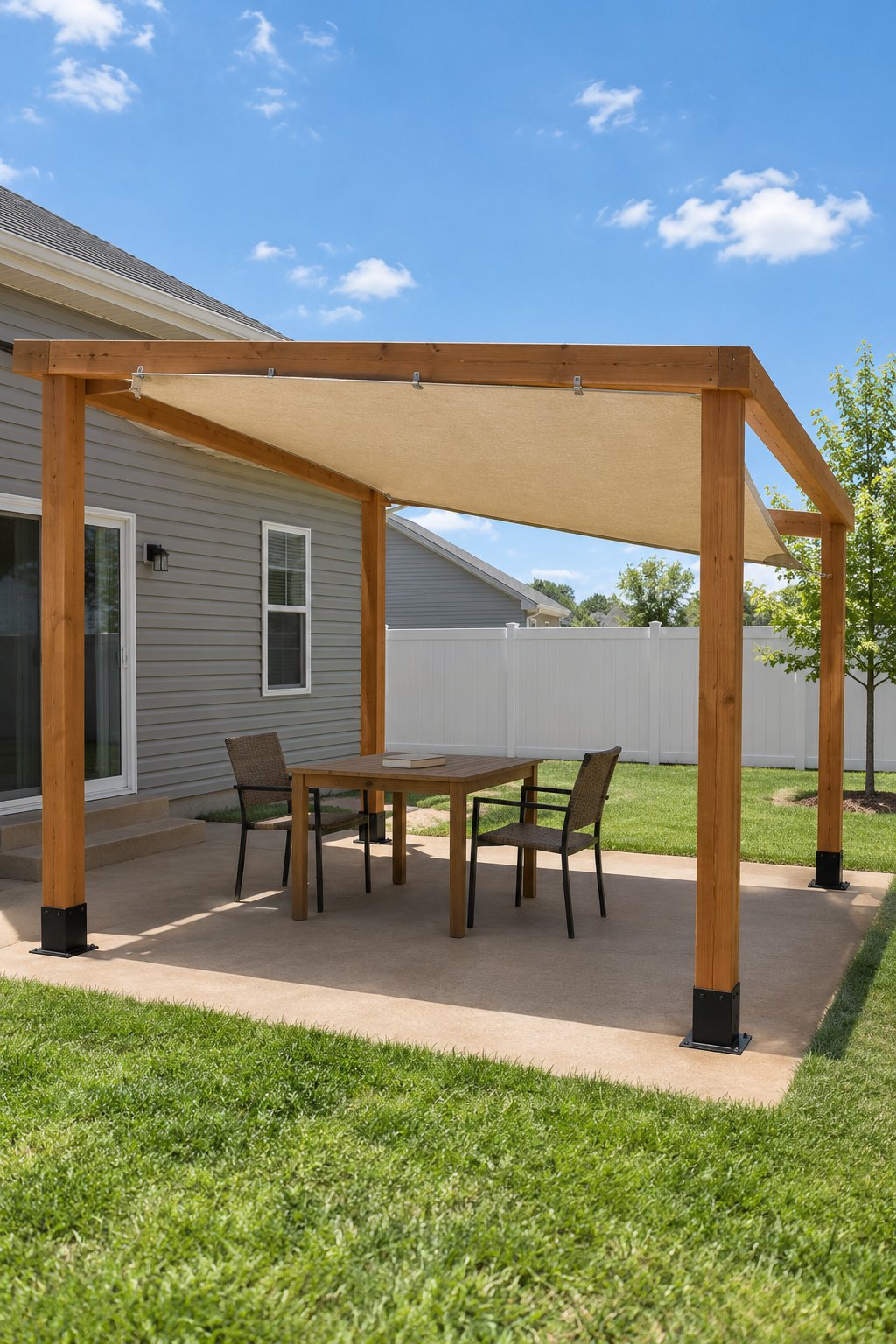
Shade cloth is a knit fabric rated by the percent of sun it blocks, so a higher number means more shade. A sail hung with one corner lower lets rain run off.
Take either one down before high wind or snow.
9. Retractable Canopy That Slides Closed When the Sun Is Strong
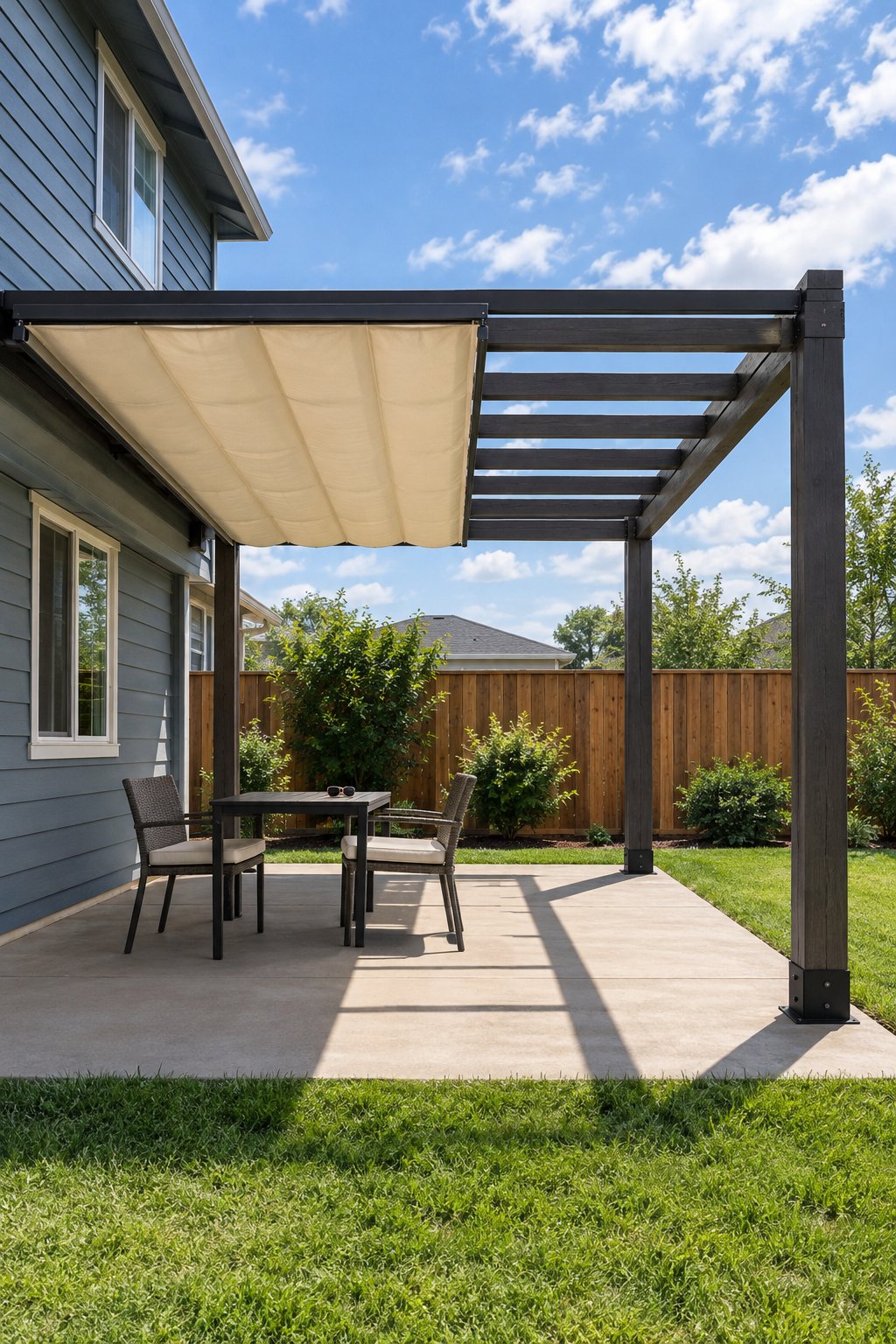
A retractable canopy rides on tracks along the beams, so you close it for midday sun and draw it back for the evening. Check that your frame suits the maker’s spec.
Draw it back before wind, heavy rain or snow.
10. Set a Dining Table Under the Beams With Room to Pull Chairs Out

Measure the table, then add about 3 feet around it for the chairs. Set the posts outside that line so no one scoots into one.
The frame should fit the table, not the other way around.
11. Lounge Corner With Two Chairs, a Low Table and a Rug

Low chairs, a small table and a flat-woven outdoor rug make a lounge corner under the frame. Pick cushions made for outdoor use.
An open roof shades the seats but won’t keep cushions dry.
12. Build a Bench Into One Side of the Frame
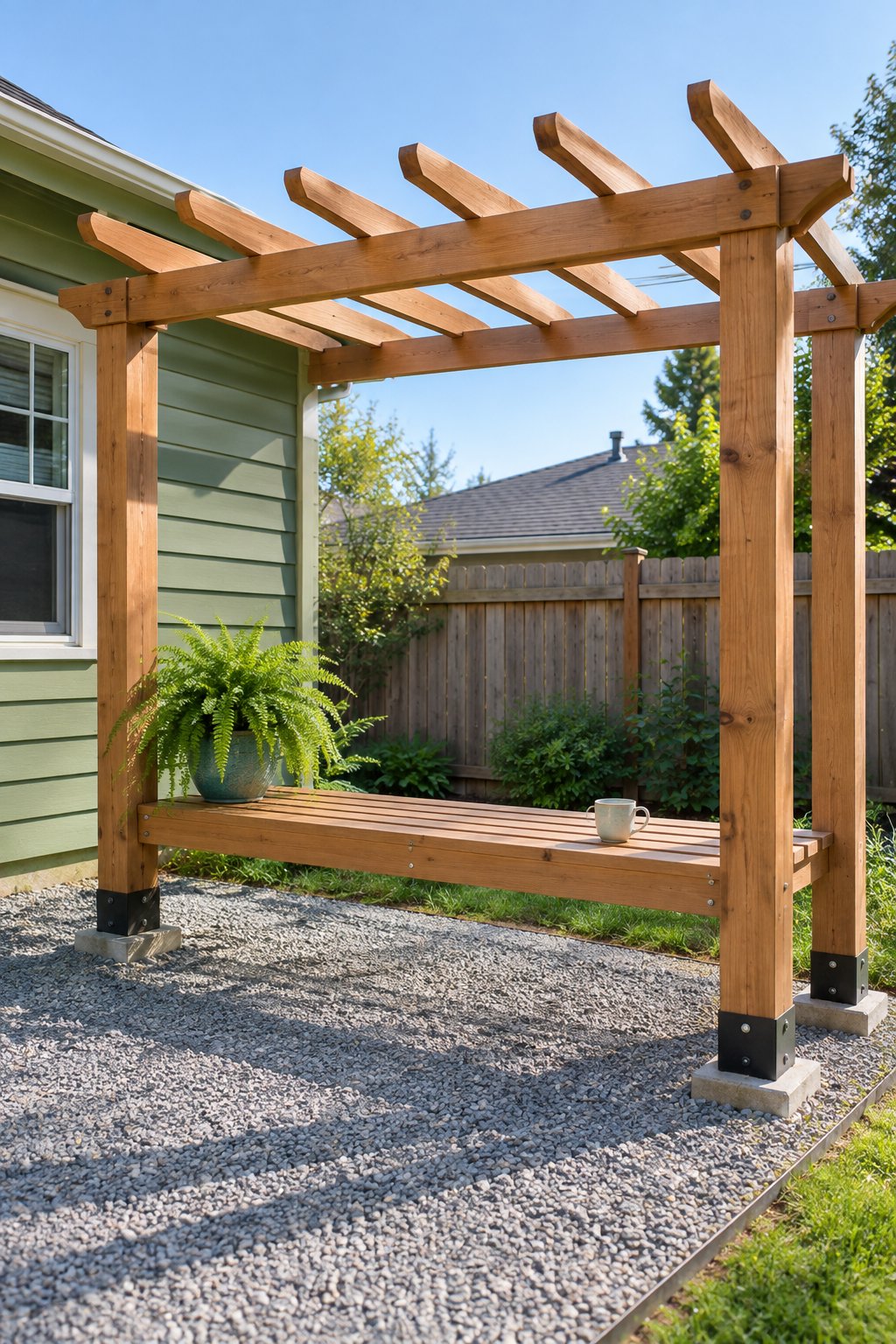
A bench set between two posts gives seating without taking floor space from a table. Make the seat about 18 inches high, which suits most adults.
Use rot-resistant wood such as cedar, or pressure-treated lumber, and fasteners rated for it.
13. Clematis, Grapes or Climbing Roses on the Posts and Beams

Run wires up each post and train clematis, grapes or climbing roses along them. All three want plenty of sun.
Some vines, wisteria above all, are heavy and aggressive, so check before you plant.
14. Outdoor Curtains Hung From the Beams on a Sturdy Rod
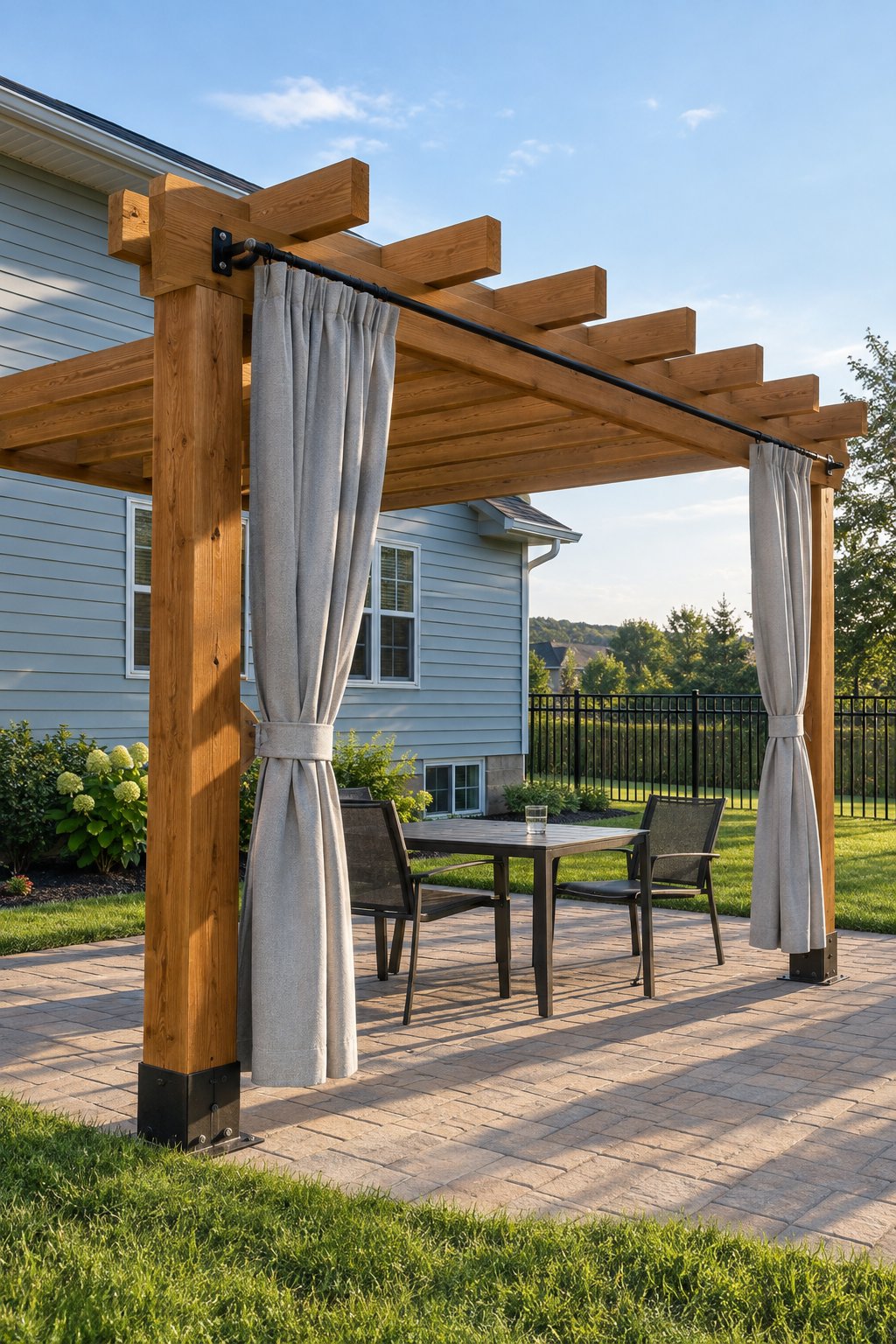
Outdoor-fabric curtains on a rod along one side block low sun and add some privacy.
Tie them back when the wind rises, and keep them away from any flame.
15. Privacy Slats Down One Side of the Frame
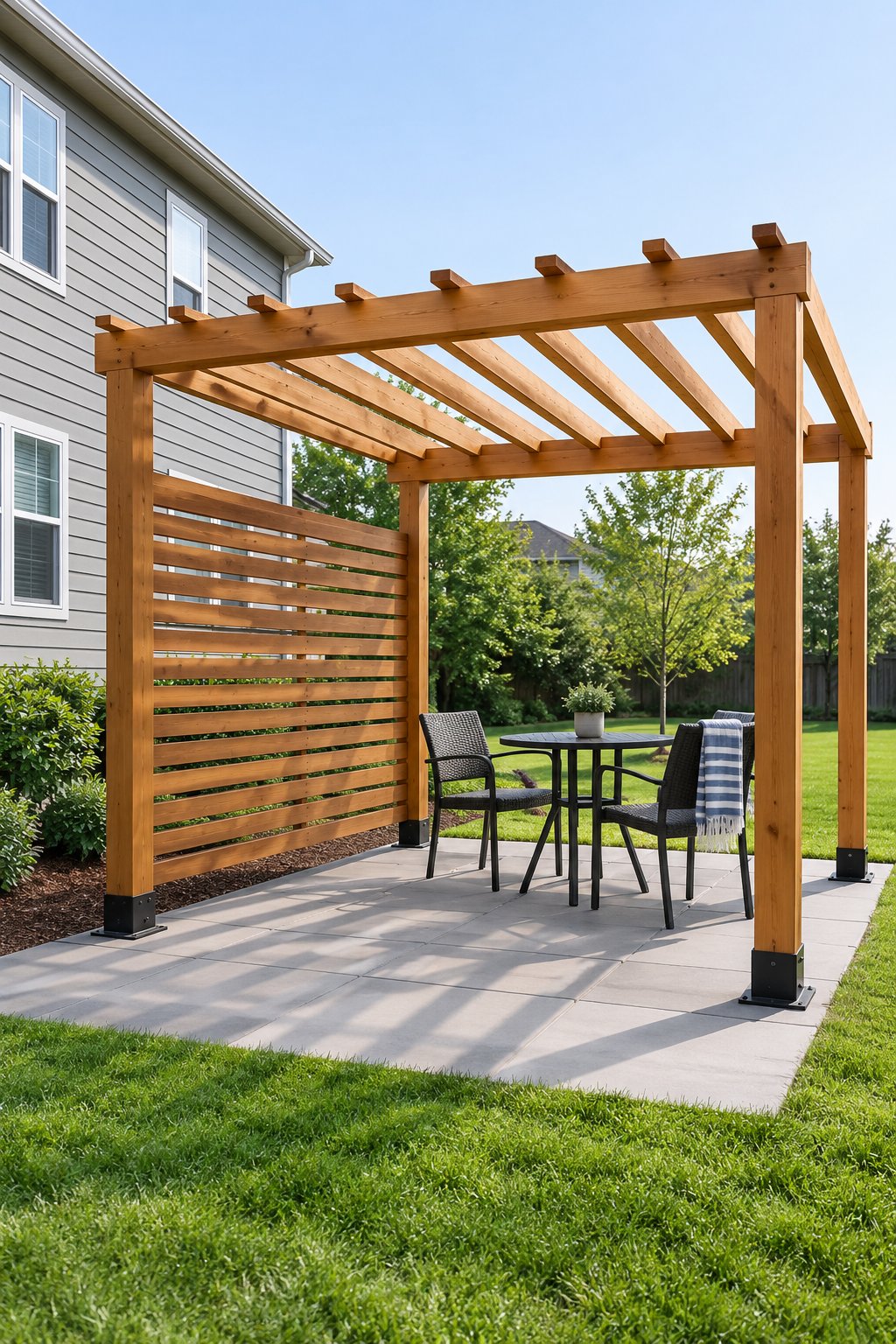
A slat panel down the side that faces the neighbors blocks the view while leaving gaps for air.
A solid panel acts like a sail in wind, so keep some gaps.
16. String Lights Along the Beams, Plugged Into a GFCI Outlet

Run outdoor-rated string lights beam to beam, hung from hooks or clips with a little slack. Plug them into a GFCI-protected outdoor outlet, or choose solar strings, which need direct sun on the panel.
A new outlet is a job for a licensed electrician.
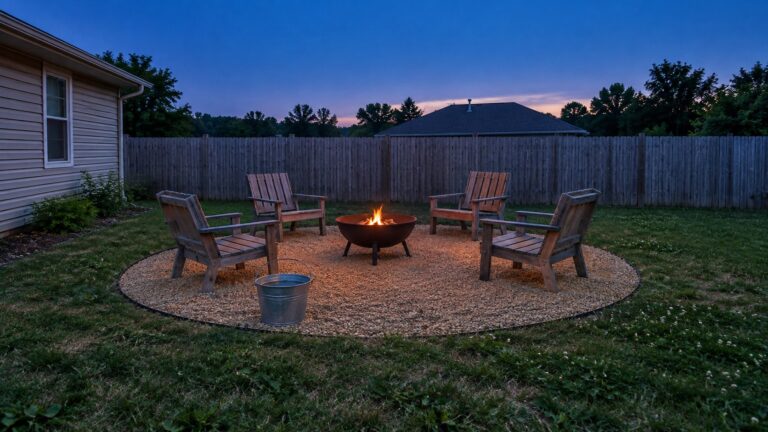
17. Fire Pit Nearby? Check the Clearances First
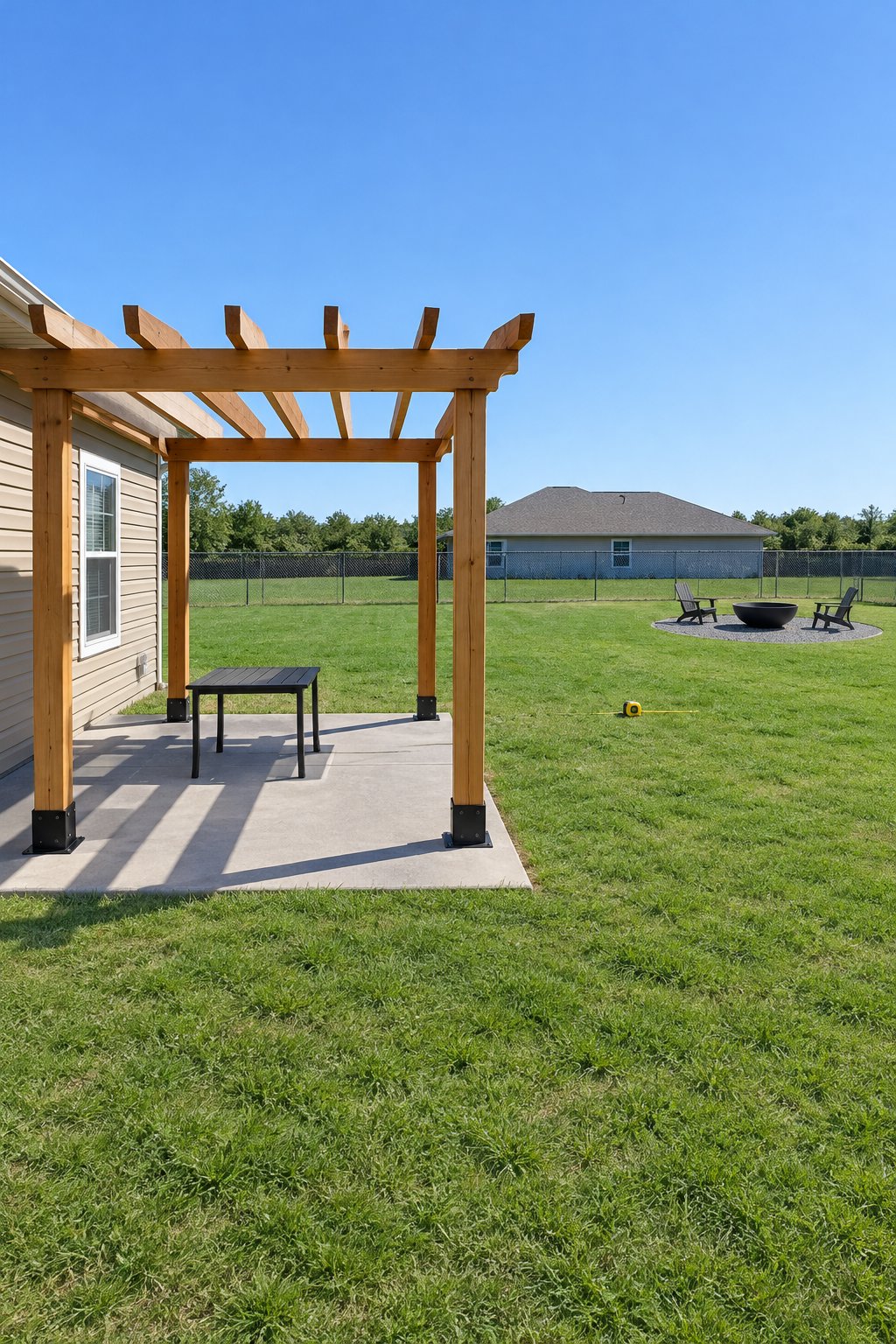
Never put a fire pit under a pergola or near its beams, because flame, heat and sparks can reach the wood. Keep it well away in open yard.
Follow the maker’s clearances and your town’s fire rules.
18. Start From a Kit and Anchor It the Way the Maker Says
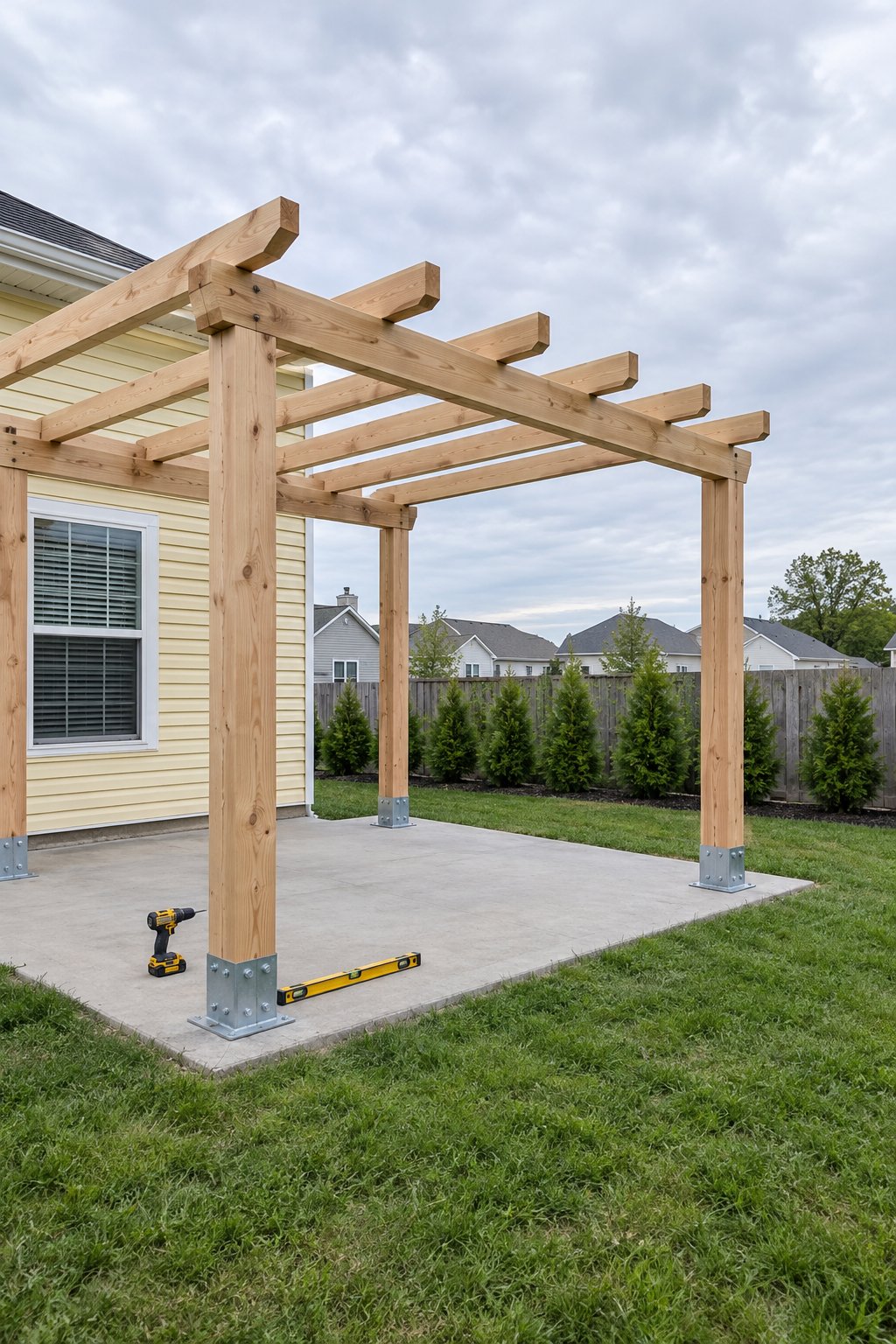
A kit brings cut parts and a plan, a fair way to learn the build. Plan on a helper and more than one day.
Follow the anchoring steps exactly, because a light frame can lift in wind.
19. Aluminum Pergola That Needs No Staining
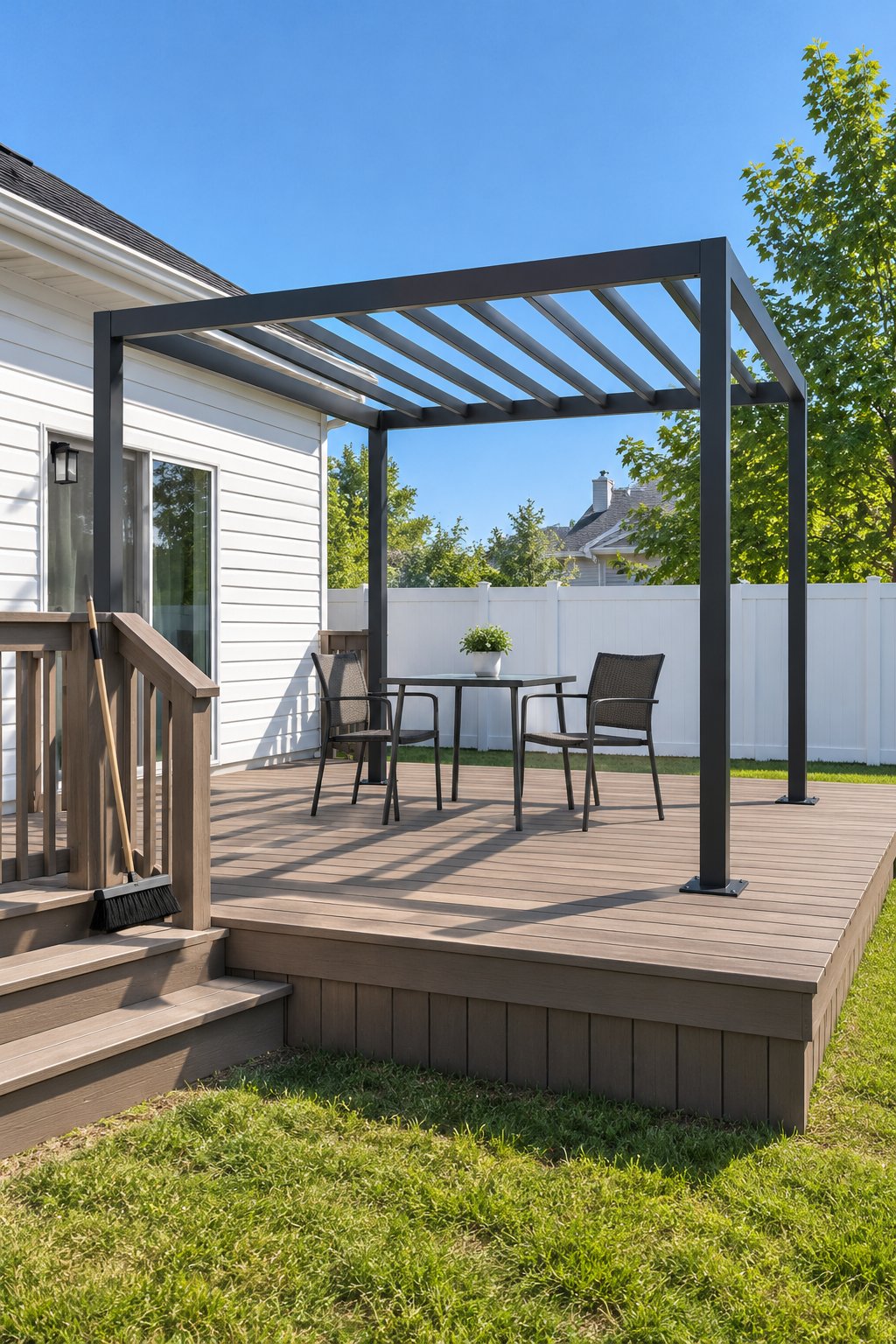
A powder-coated aluminum frame does not rot and needs no stain, just an occasional wash. Steel works too, but a chipped coating can rust.
Dark metal gets hot to the touch in direct sun.
20. Finish With a Rug, Two Pots and a Hanging Lantern
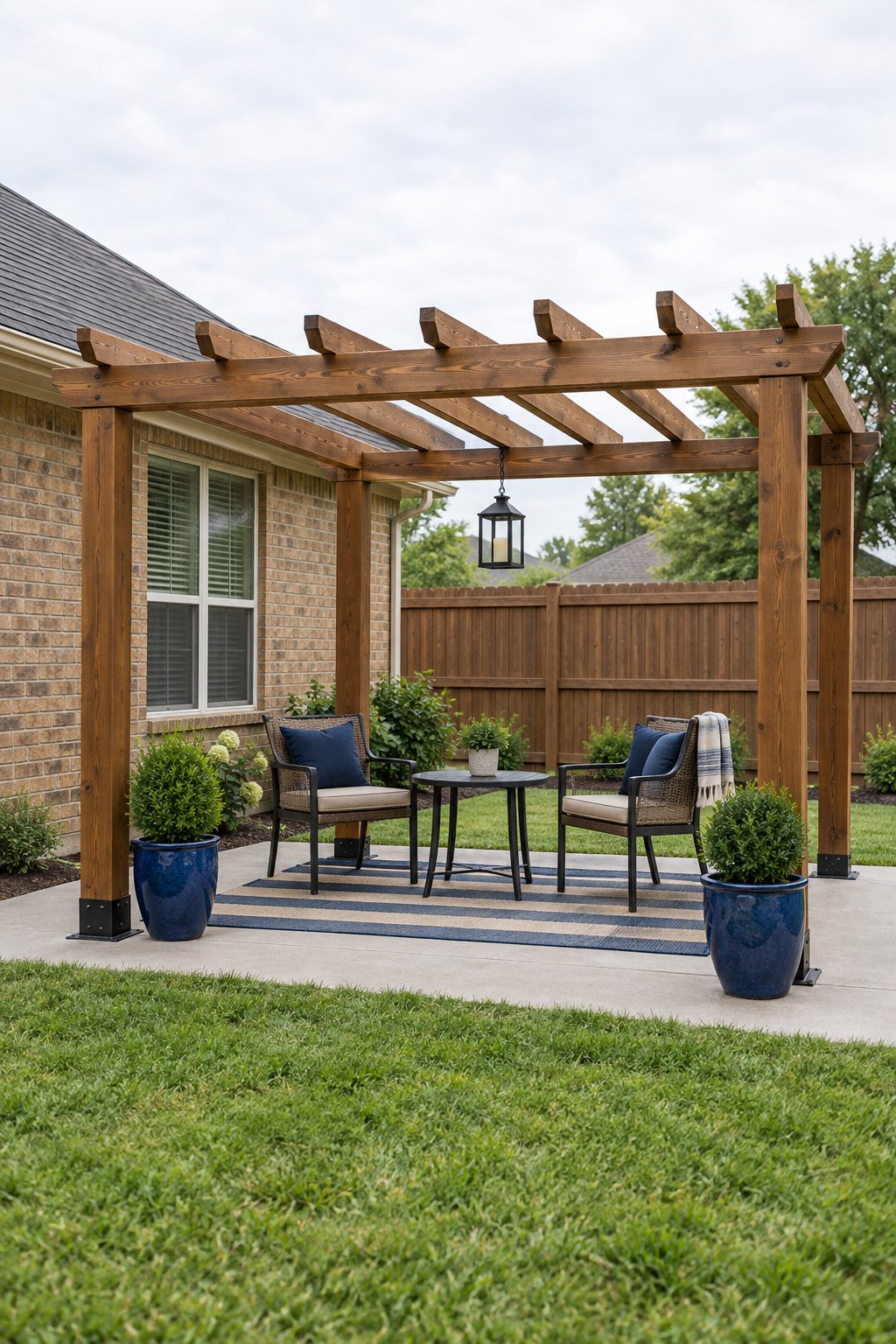
Finishing touches make a frame feel like a room: a flat-woven rug, two matching pots at the front posts and a lantern with an LED candle.
Before you add anything, check every bolt and seal the wood as the label says.
Pergola Numbers on One Page
Every idea above rests on a few figures.
Get these right before you buy any lumber.
| What | The figure | Why |
|---|---|---|
| Headroom under the beams | At least about 7 feet | Tall enough to walk under without ducking. Your local code decides |
| Path under a walkway pergola | At least 3 feet wide | Narrower than that feels like a tunnel |
| Room around a dining table | About 3 feet around the table | Chairs have to slide out without hitting a post |
| Sun for climbing roses and grapes | Full sun, 6 hours or more | Most clematis also want sun on the top growth |
| Bench seat height | About 18 inches | A comfortable seat height for most adults |
| Before you dig footings | Call 811 | It is free and gets buried lines marked |
Six Pergola Mistakes to Skip
Building before you check the permit
Do thisAsk your building department what size needs a permit, whether an attached frame does and how deep the footings must go. Read your HOA rules too, because some want approval before you buy anything.
Posts left loose in the lawn
Do thisAnchor every post to a footing or to the anchor the maker specifies. A roof of beams catches wind like a sail.
A ledger fixed only to siding
Do thisFasten an attached pergola’s ledger into the house framing and flash it so water stays out. If you aren’t sure where the framing is, hire a pro.
Hanging a swing or fan from the beams
Do thisHang a swing, hammock or ceiling fan only if the maker rates the frame for it. Otherwise buy a freestanding stand.
Wiring lights without a GFCI
Do thisPlug outdoor-rated lights into a GFCI-protected outdoor outlet, or go solar. A new outlet or hardwired fixture is a job for a licensed electrician.
A vine that outgrows the frame
Do thisStay with clematis, grapes or climbing roses, and prune them every year. Wisteria grows heavy and aggressive enough to damage a light frame.
An Open Pergola Is a Frame, Not a Roof
A basic pergola is posts, beams and rafters with sky between them. On its own it gives dappled, partial shade, not a dry floor.
What you put on top decides the shade, the rain cover and the weight the frame carries.
Slats, cloth, vines and a canopy each change one of those. A tighter cover blocks more sun, but it also catches more wind, and in snow country more snow.
I’d pick the cover first, then size the posts and footings to carry it.
Start with the rules and the footprint: ask about the permit, call 811 and mark the post spots with stakes and string. Then choose one cover for the top, shade cloth if you want it quick, slats if you want it to last.
Get the frame right first, and the lights, vines and curtains can come later.
Frequently Asked Questions
Do I need a permit to build a pergola?
Often you do, especially once it passes a certain size or is attached to the house, and the cutoff differs by town. Call your building department and read your HOA rules before you buy lumber.
How deep do pergola footings need to be?
It depends on your climate and local code. In cold areas footings may have to reach below the frost line, so ask the building department what depth it requires, and call 811 before you dig.
How much shade does an open pergola give?
An open frame gives dappled, partial shade. For more, add closely spaced slats, shade cloth or a retractable canopy, and expect a tighter cover to catch more wind.
Which climbing plants suit a pergola?
Clematis, grapes and climbing roses are common, conservative choices, and all three do best with plenty of sun. Climbing roses need tying to their supports, and you should check hardiness for your zone on the tag.
Can I put a fire pit under a pergola?
No. Keep open flame and heat well away from the roof and the beams, and follow the fire pit maker’s clearances and your town’s fire rules.
You Might Also Like
Save This For Later
Loved pergola ideas? Save this pin to your Pinterest board now so you can find it again anytime you need the inspiration.