24 Front Yard Landscaping Ideas for Curb Appeal
Front yard landscaping ideas work best when you start from what’s wrong with the view from the street: a bare foundation, a dead lawn, a driveway that dominates.
I’ve sorted these 24 by that problem, and each one gives a cost and what it takes.
Check your HOA and town rules, and call 811 before you dig.
What is wrong with your front yard?
1. Tall at the Corners, Low Under the Windows

An upright evergreen such as arborvitae at each front corner frames the house. Under the windows, pick shrubs that mature below the sill.
Tall at the ends and low in the middle sends the eye to the door.
2. Set Foundation Shrubs Half Their Width From the Wall

A compact panicle hydrangea likes sun and keeps spreading, so set it about half its mature width from the wall.
I’d rather see a gap now than branches scraping the siding later.
3. Matching Shrubs Either Side of the Walk

Two identical rounded shrubs flanking the walk read as a formal entrance. Pick an evergreen such as inkberry holly so the pair matches in every season.
Symmetry works best when the walk is centered on the door.
4. Three Layers Anchor a Blank Corner

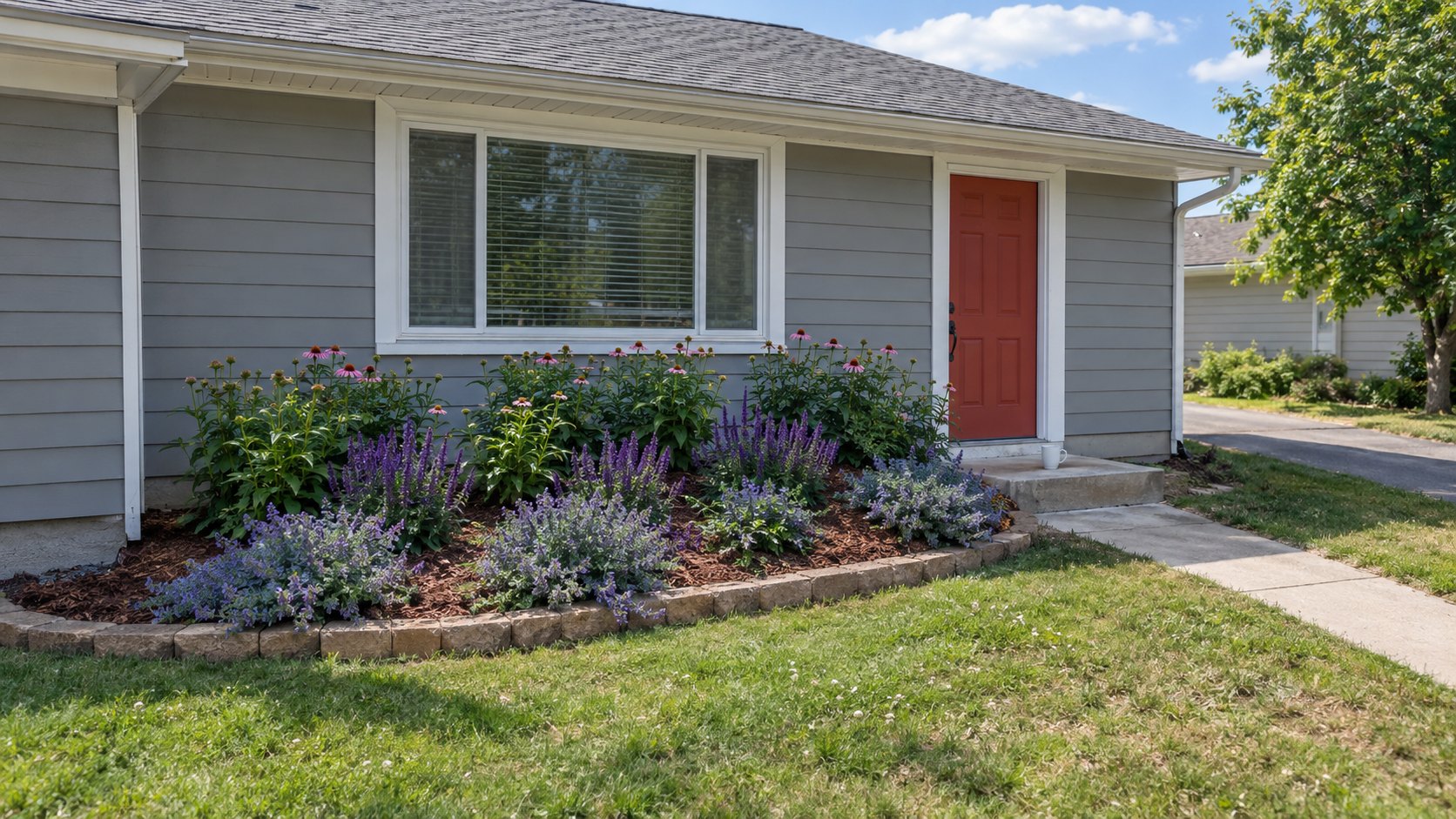
Give a sunny corner three steps of height: a narrow upright holly at the back, a compact ninebark in the middle and catmint in front.
Stepped heights fill a corner without crowding the house.
5. Curve the Walk Around Something, Never Around Nothing

A gentle curve slows the approach and makes room for plants. Bend it around a bed or a tree, never around empty lawn.
A bend works only when something sits on its inside curve.
6. Straighten the Path People Already Cut Across
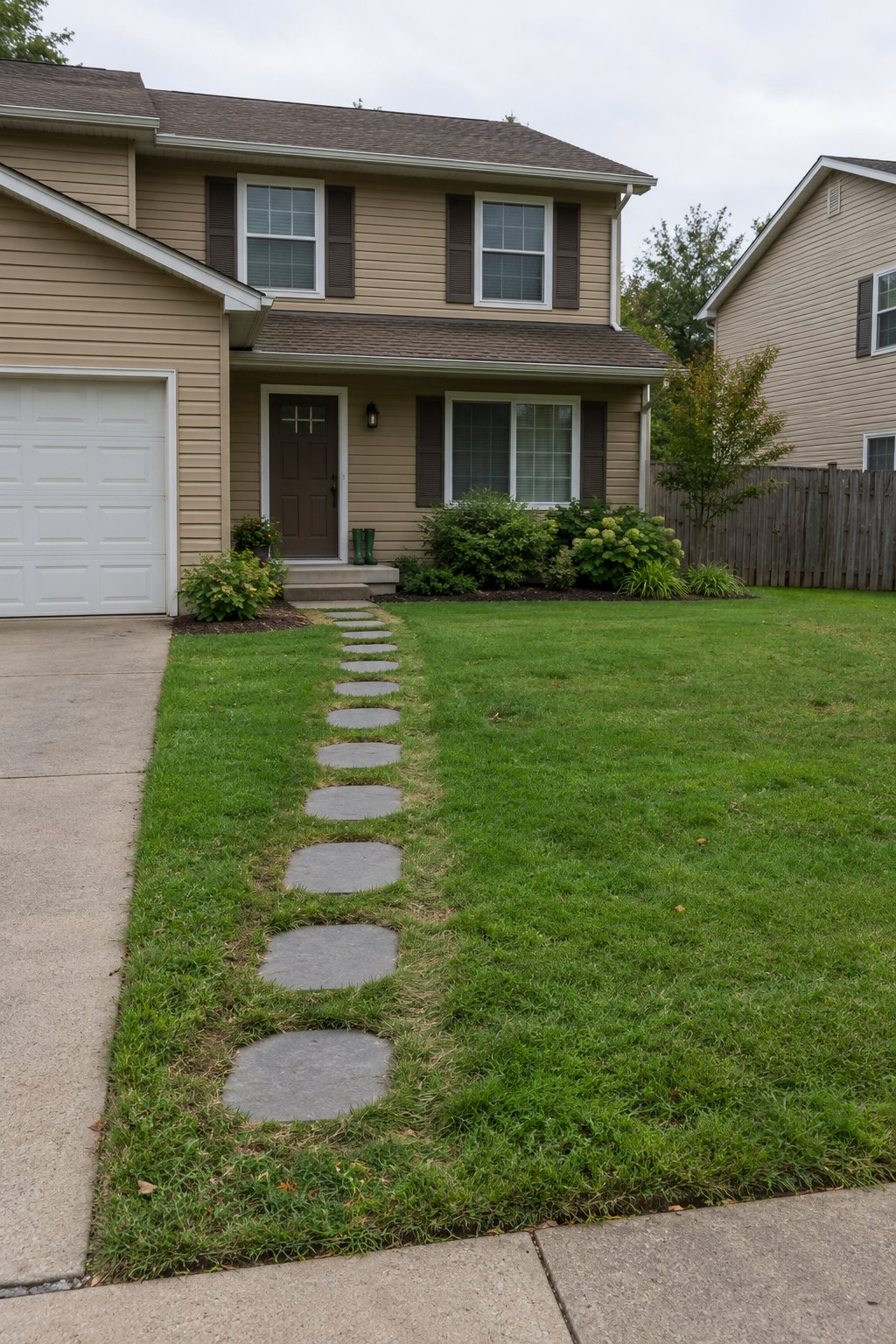
A worn line across the lawn is a path nobody drew. Set stepping stones along it, because people take the shortest line to the door.
A straight path suits a short yard, where a curve only adds steps.
7. Cut a Clean Edge Along Every Bed

A crisp line between lawn and bed makes a yard look cared for. Cut it with a flat spade, 3 to 4 inches deep.
From the street, the edge is what the eye reads first.
8. Mulch Three Inches Deep, and Keep It Off the Siding

A wide mulched bed turns bare soil into a deliberate shape. Spread 2 to 3 inches, and pull it back a few inches from siding and trunks.
Mulch piled against bark or siding holds damp where you don’t want it.
9. Repeat Three Plants Across the Whole Front

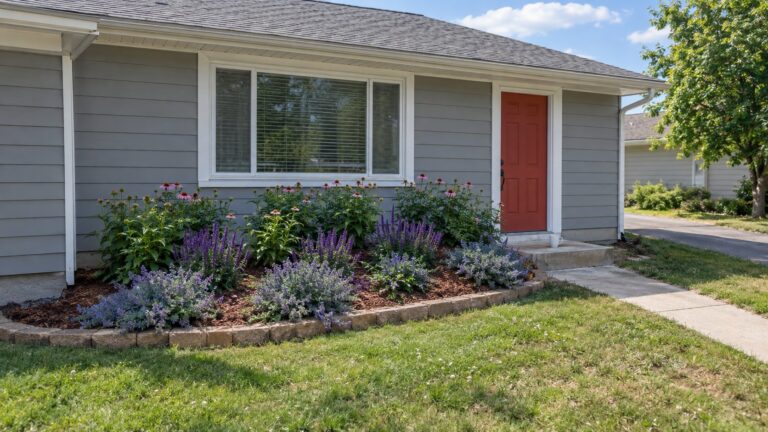
Choose one shrub, one grass and one perennial, and repeat the trio in groups along the front. Dwarf spirea, feather reed grass and catmint all do well in sun.
Repeating the trio at both ends ties a wide front together.
10. Shrink the Lawn and Wrap It in a Bed

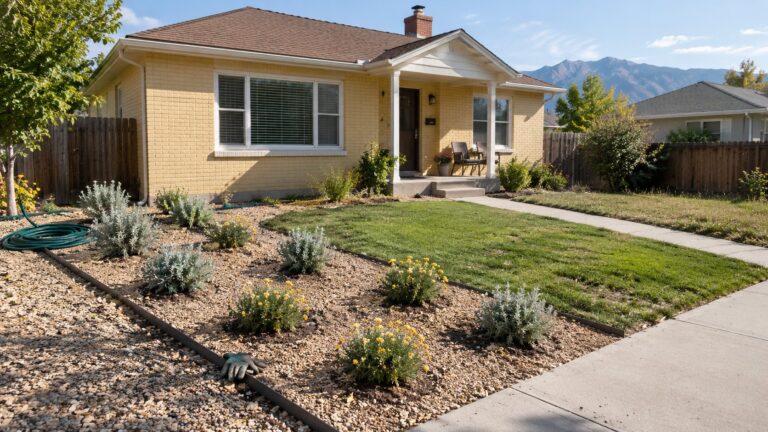
Shrink a lawn you can’t keep green and wrap a wide bed around it. Mow a simple oval, and let shrubs and perennials fill the rim.
Less grass means less mowing and a front yard with a shape.
11. Clover Mix for the Patch Where Grass Gives Up
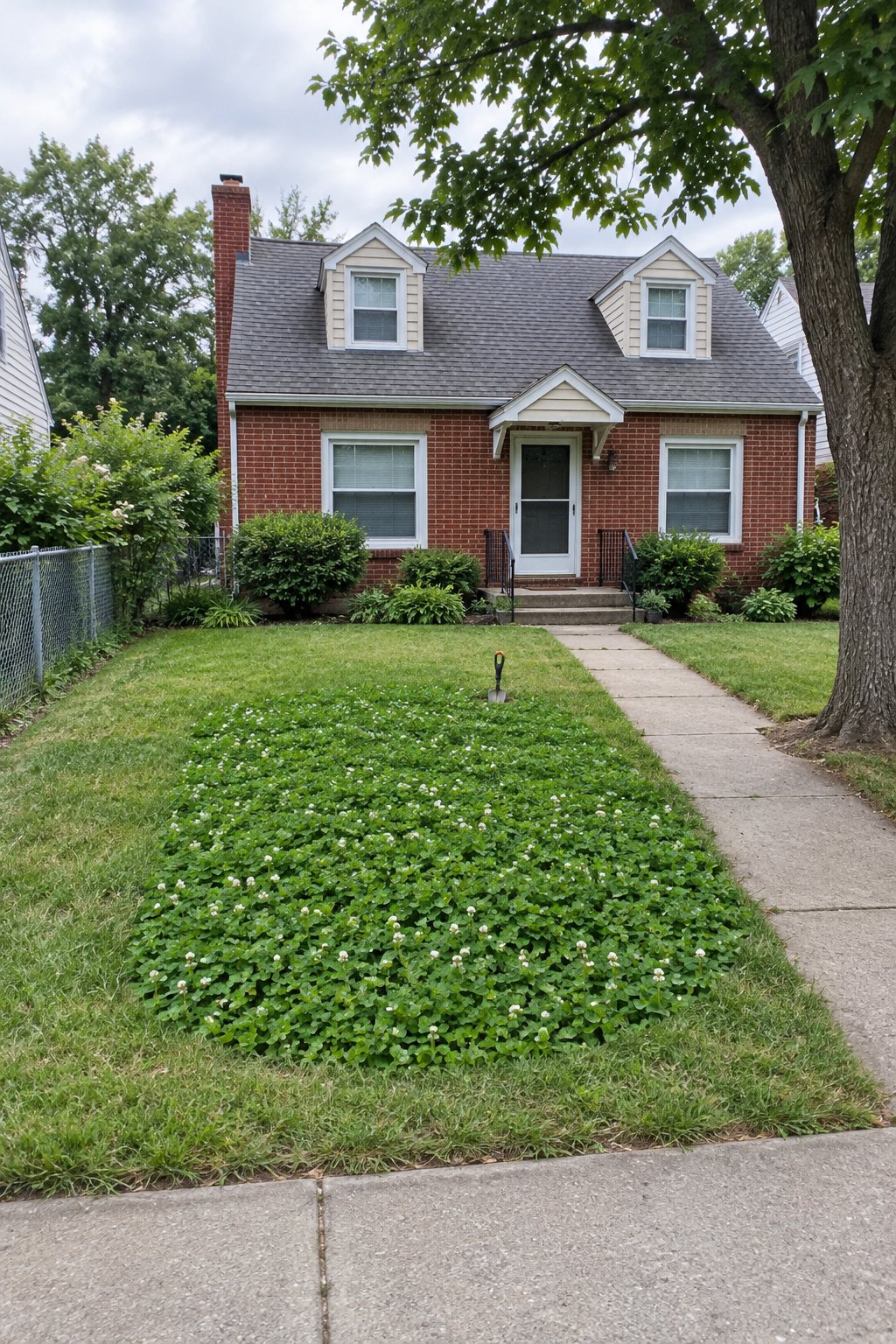
White clover, or a clover and grass mix, can fill a worn patch where grass keeps failing. It often stays green in dry spells and takes light to moderate foot traffic.
Use clover for the one hard spot, not the whole yard.
12. Under the Big Tree: Mulch and Shade Plants Instead of Grass

Grass thins under a big maple, where shade and roots take its light and water. Plant hostas, which want shade and even moisture, in small holes between roots.
A bed under a tree works when the roots are left alone.
13. Drive Edge Border, Set Back From the Car Doors

Low plants soften a wide slab of drive. Keep 2 to 3 feet of clear mulch or gravel where people step out of cars.
Pavement radiates heat, so pick tough sun plants such as stonecrop and catmint.
14. Gravel Strip Where Tires Keep Chewing the Lawn Edge

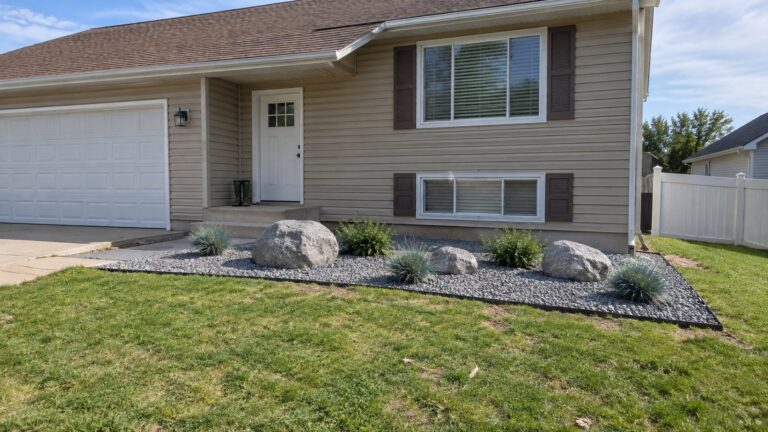
A strip of angular gravel about 18 inches wide beside the drive ends the ruts where tires drop off the edge. A steel or stone edge keeps the stones in.
Stone is forgiving where a lawn edge is not.
15. Mailbox Bed Kept Low at the End of the Drive

A small half-moon bed around the mailbox post marks where the yard starts. Keep plants about knee height or lower.
Anything tall at the end of a drive hides the sidewalk from a driver.
16. Stack a Low Retaining Wall to Step a Front Slope
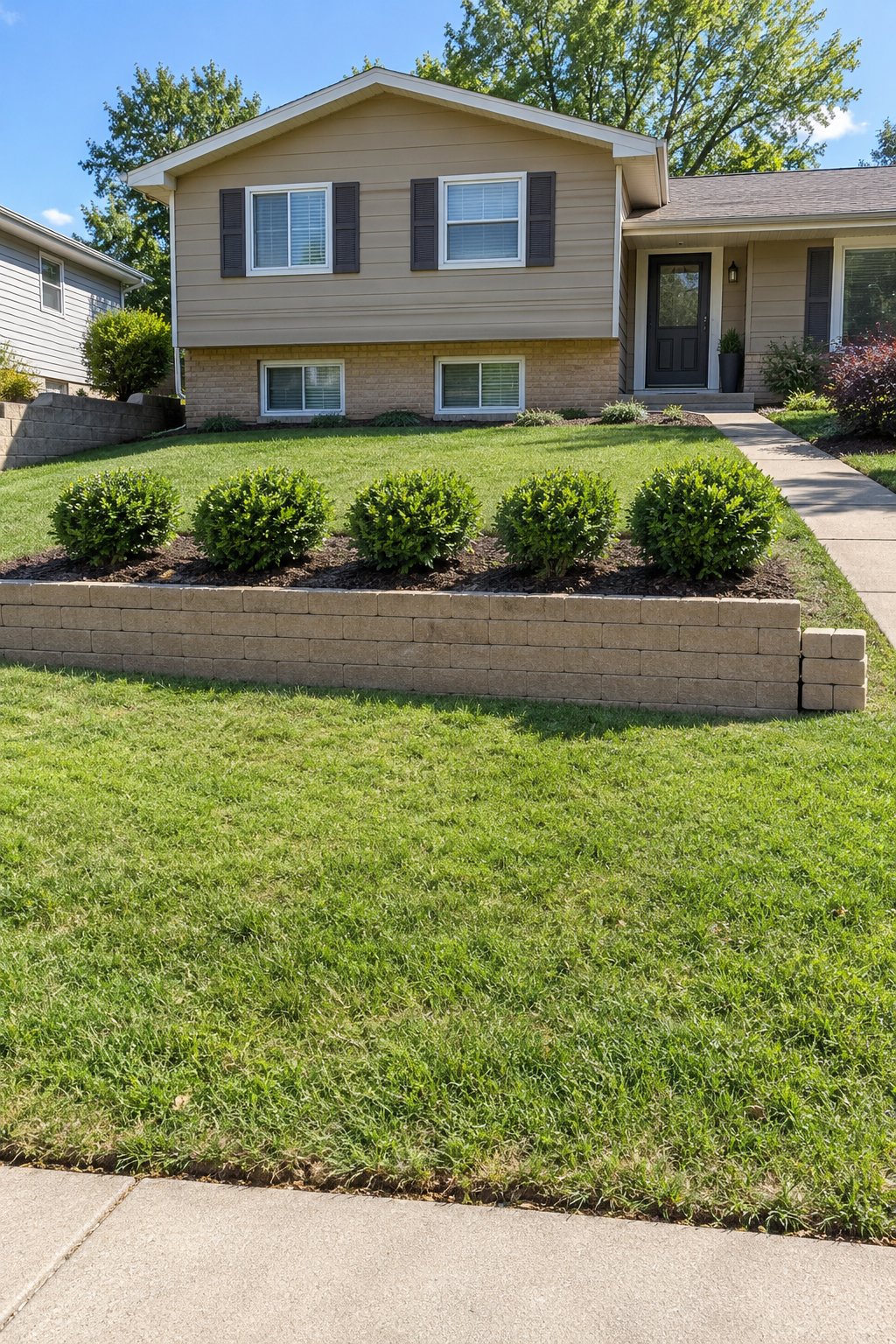
A low block wall across a slope makes a flat planting ledge. Above a modest height, often 3 to 4 feet, walls usually need a permit or an engineer.
I’d stop at two feet and let plants carry the rest of the grade.
17. Plant the Bank Instead of Mowing It

Mowing a bank steeper than about 3 feet across per foot of drop is risky. Cover it with creeping juniper, an evergreen that wants full sun and good drainage.
Roots hold the soil, and a low evergreen mat needs no mowing.
18. Street Tree Placed for the Size It Will Grow To

A street tree frames the house and shades the sidewalk. The strip beside the curb is often city property, so ask your city before planting.
Plant for the size the tree will reach, not the size it is at the nursery.
19. Low Hedge Along the Sidewalk That Frames the Yard

A clipped hedge about 3 feet tall marks the yard’s edge without walling it off. Compact inkberry holly is evergreen, but check the tag for your zone.
A low hedge frames the yard and still lets the house show.
20. If Your Town Allows It, Set a Low Picket Along the Front

A picket fence about 3 feet tall marks the line without hiding the house, and a gate shows where to enter. Many towns and HOAs limit front fences, so check first.
Pickets let you see through, which keeps the front open.
21. Tuck a Sitting Spot Into the Side of the Front Yard
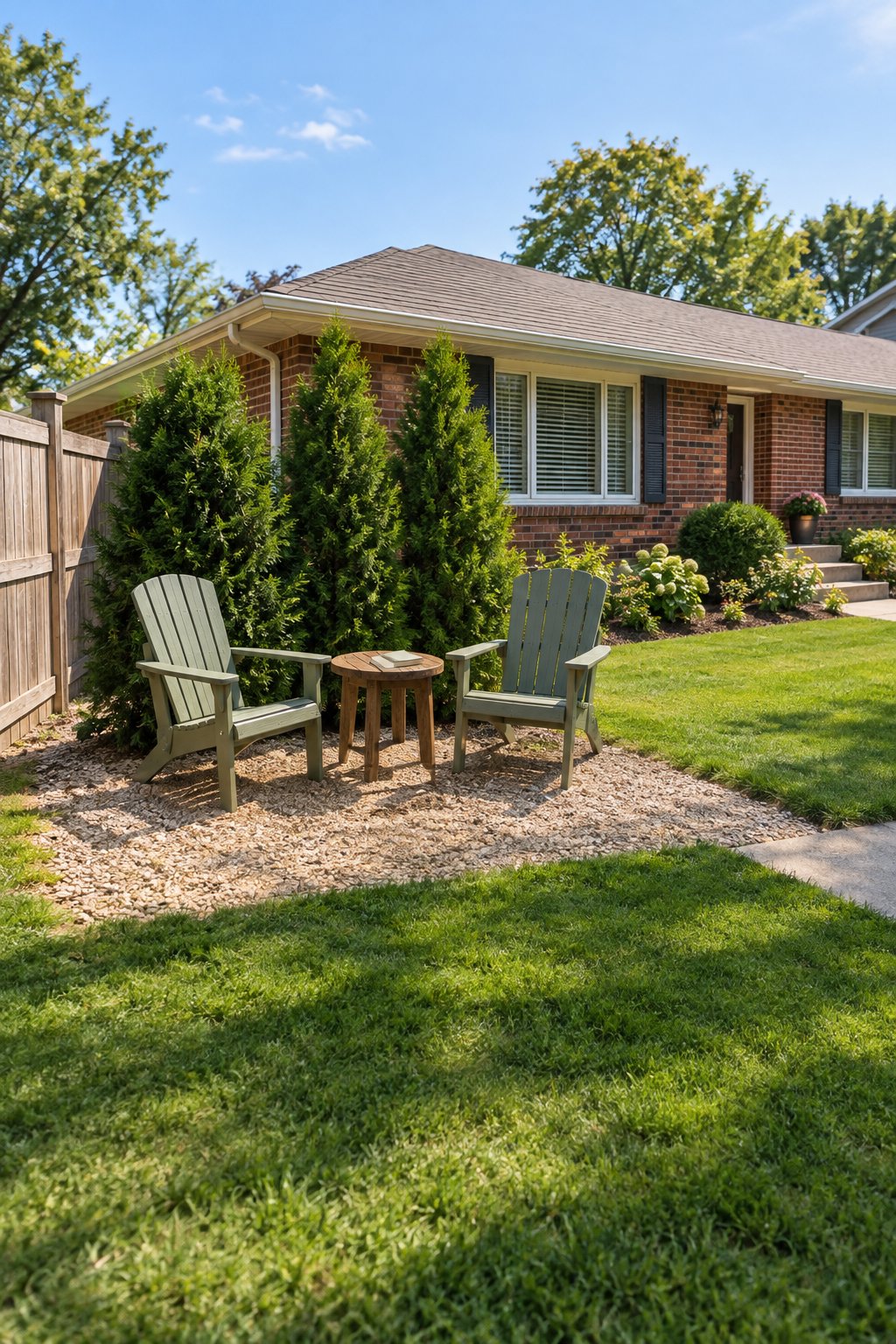
A front yard feels used when someone can sit in it. Set a small gravel pad at the side, backed by shrubs.
Two chairs angled toward each other beat a row facing the road.
22. Light the Walk With Low Fixtures Spaced Apart

Low path lights spaced about 6 to 8 feet apart pool light on the walk. Solar kits need no wiring, and low-voltage kits are a common DIY job.
Light the ground, not the eyes of the person walking.
23. Keep the Upkeep Low: Evergreens, Grasses Cut Back Once, Mulch

A low-upkeep front pairs evergreens that need little trimming with grasses you cut back once a year, in late winter. Compact juniper and switchgrass both want full sun.
No plant is care-free, but this mix cuts the chores to a few a year.
24. Seasonal Color in One Bed, Green Everywhere Else

Put seasonal color where the walk begins and let the rest stay green, so one bright bed gets noticed. Marigolds suit sunny summers, and pansies suit cool weather.
One bed of color reads as a choice, and ten small spots read as clutter.
Front Yard Numbers on One Page
Most of the ideas above rest on a few figures.
Get these right before you buy or dig anything.
| What | The figure | Why |
|---|---|---|
| Foundation shrubs from the wall | About half the shrub’s mature width | The branches need room, and the plant tag lists the width |
| Mulch depth | 2 to 3 inches, a few inches off siding and trunks | More than that holds damp where it does harm |
| Main walk width | About 4 feet | Two people can walk side by side |
| Clear margin beside the drive | 2 to 3 feet | Room to step out of a car without crushing plants |
| Hedge or fence height | Often capped near 3 to 4 feet in front yards | Your town or HOA decides, so ask first |
| Retaining wall height | A permit or an engineer is often needed above about 3 to 4 feet | Rules vary, and some towns set the line lower |
Six Front Yard Mistakes to Skip
Buying shrubs by pot size
Do thisRead the mature height and width on the plant tag, and plant each shrub about half its mature width from the wall.
Mulch piled against trunks and siding
Do thisSpread 2 to 3 inches and pull it back a few inches from bark and from the house wall.
A tree sited by its sapling size
Do thisPlace it for the size it will reach, away from power lines and well away from the foundation.
Regrading toward the neighbor or the house
Do thisLeave the lay of the ground alone so water keeps flowing the way it does now. Ask your town or a pro before moving much soil.
Digging before you call 811
Do thisCall before any digging, including a tree or a fence post, and check HOA and town rules on fences, hedges and lawn changes at the same time.
Pulling out grass with no plan
Do thisMark the new bed shapes with a hose first, then plant and mulch soon after, so bare soil doesn’t sit through rain.
Find Your Sight Triangle Before You Plant Anything Tall by the Drive
Where a driveway or a street corner meets the sidewalk, many towns protect a triangle of open view, often called a sight triangle.
Tall plants, hedges and fences inside it can hide a walker, a cyclist or a car from a driver backing out.
The size and the height limit vary by town, so search your town’s code for the words sight triangle or call the planning office.
Until you know, keep everything near the drive and the corner low, and put the tall plants well back along the house.
I’d rather make one phone call than move a hedge later.
Start with whatever you see first from the sidewalk, whether that is the edge of the lawn, the foundation or the drive.
Leave walls, trees and fences for later, once you have called 811 and checked the rules.
One fixed bed changes the view more than five half-planted ones.
Frequently Asked Questions
What is the cheapest front yard landscaping idea?
Cut a clean edge along the beds and add 2 to 3 inches of mulch. Both cost little and change how the whole yard reads from the street.
How far from the house should I plant shrubs?
A common rule is about half the shrub’s mature width from the wall. The plant tag lists the width, and the gap keeps branches off the siding.
Do I need a permit for a retaining wall or a fence?
Often you do: walls above a modest height, often about 3 to 4 feet, usually need a permit or an engineer, and many towns and HOAs limit front-yard fences and hedges. Call your building department before you buy.
Can a renter do these front yard landscaping ideas?
Mulch, stepping stones, solar lights and a clover patch usually need only the landlord’s OK. Trees, walls, fences and anything dug into the ground need written permission first.
When should I call 811?
Call before any digging, including planting a tree or setting a fence post. The call is free, and the utilities mark their buried lines for you; your state sets how long you wait.
You Might Also Like
Save This For Later
Loved front yard landscaping ideas? Save this pin to your Pinterest board now so you can find it again anytime you need the inspiration.