17 Balcony Garden Ideas for Pots, Rails and Walls
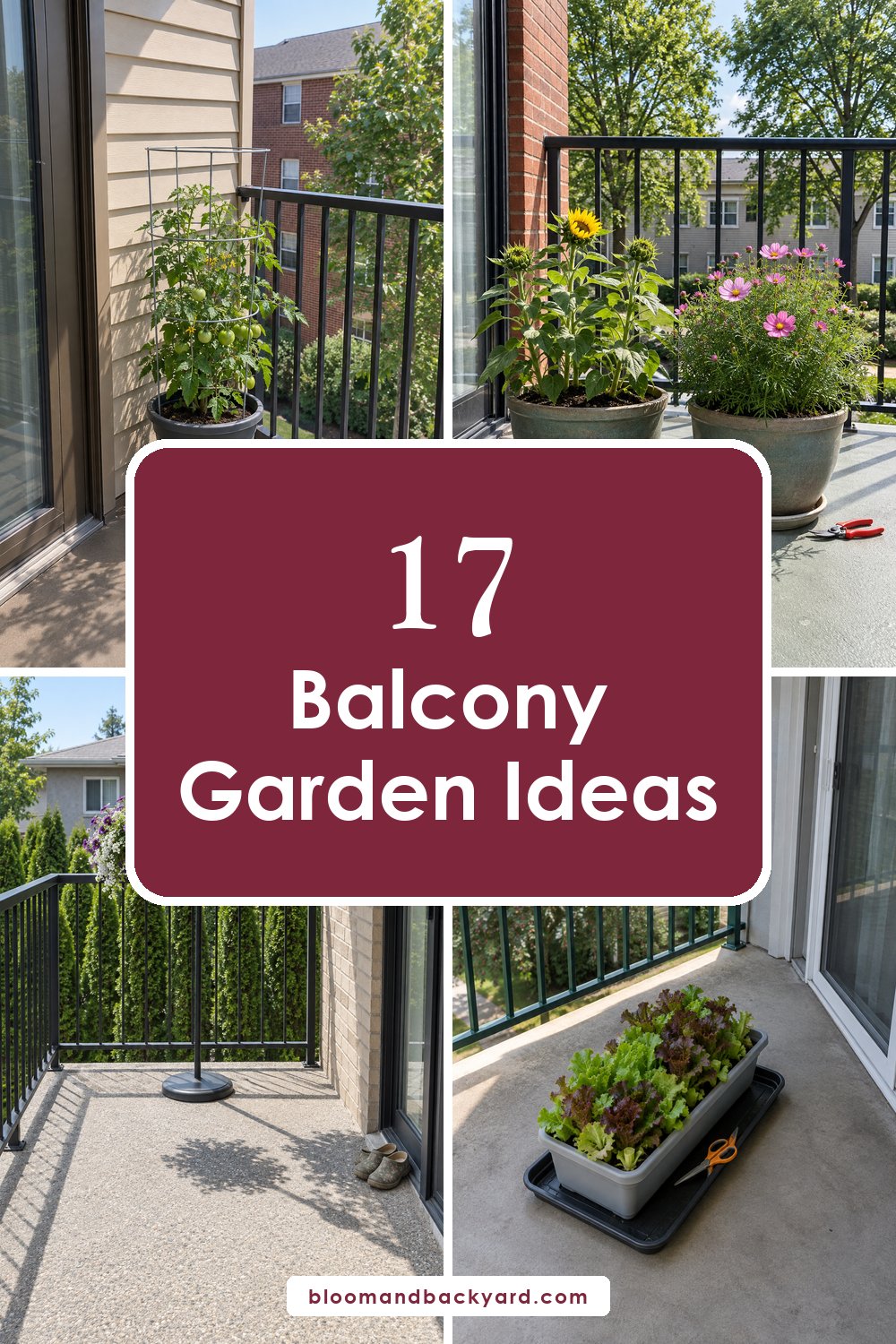
Balcony garden ideas work best when you start from the light, not the plants.
These 17 are sorted by sun and by method, each with a cost, and furniture and styling live in my balcony ideas for apartments.
Check your lease and the balcony’s weight limit before you buy a pot.
How much sun does your balcony get?
1. Cage One Tomato in a 5-Gallon Pot on the Sunniest Wall

A patio-type tomato in a 5-gallon pot needs at least 6 hours of direct sun and a cage set in at planting.
Pot size decides how often you water, as my container gardening vegetables guide explains.
2. Peppers Take the Hottest Corner, One Plant to a Pot

Peppers like heat, so give them 6 hours or more of direct sun and a corner where the wall holds warmth. One plant to a 5-gallon pot is a safe size.
Two pots in the hottest corner beat four spread around the floor.
3. Strawberries Spill From a Pocketed Terracotta Pot

Strawberries want at least 6 hours of direct sun. Everbearing types crop more than once, which suits a single pot.
The side pockets dry out first, so water from the top until it drains.
4. Dwarf Sunflowers and Cosmos in Two Wide Pots for Cutting

Dwarf sunflowers and compact cosmos both want 6 hours or more of sun, and a pot about 14 inches across. Sow them after your last frost.
Cutting cosmos often keeps new buds coming.
5. Lantana and Salvia Pull Pollinators to One Wide Pot

Salvia and lantana both want 6 hours or more of sun, and bees and butterflies visit both. Use one wide pot with drainage holes.
Two flowers in one pot look planned, and five look like a mix-up.
6. Herb Box Fixed to the Inside of the Railing, Never Over It
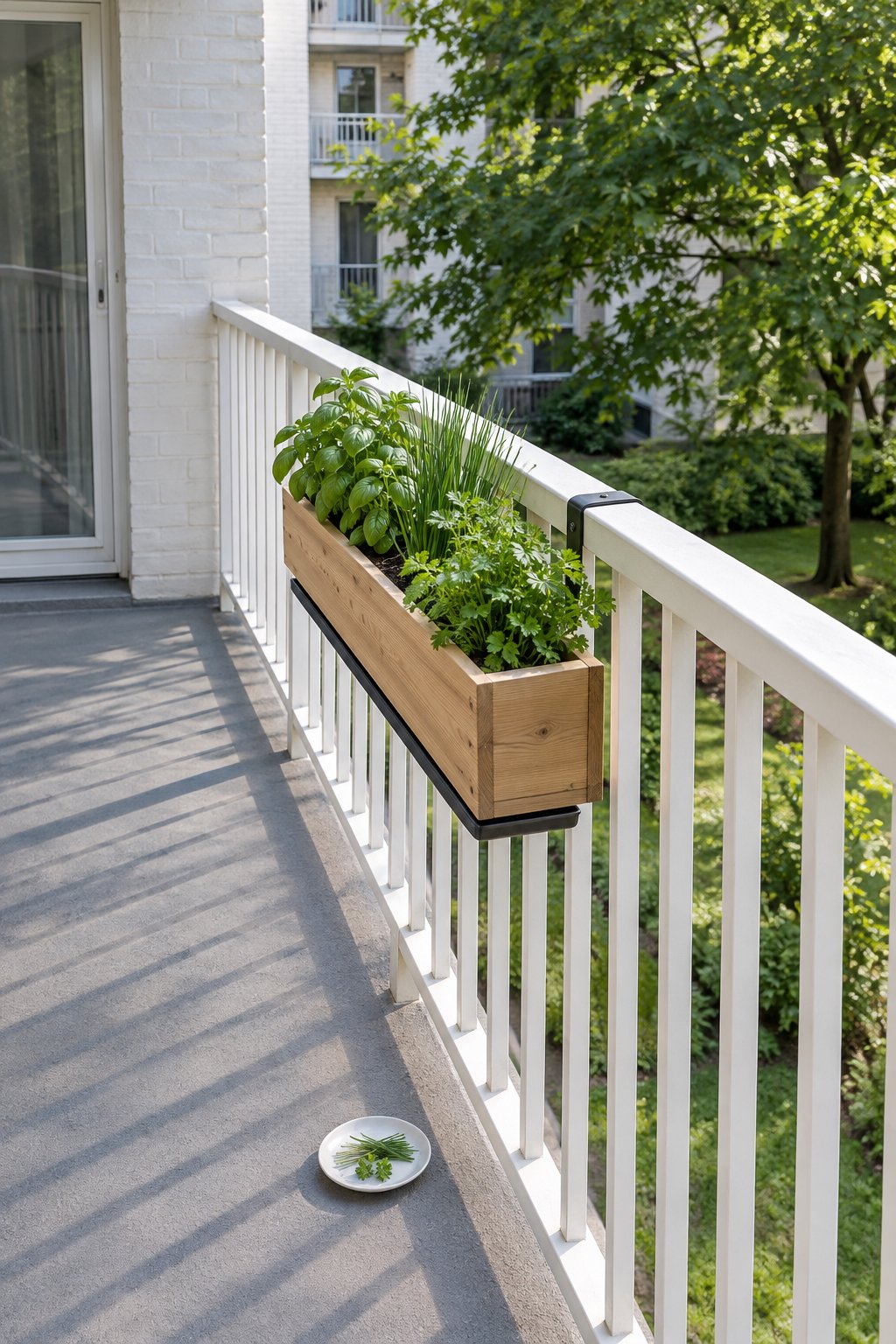
A narrow box on the inside face of the rail puts basil, chives and parsley at waist height. It sits below the top rail, with a drip tray under it.
For which herbs share a watering group, see my herb garden ideas.
7. Hanging Baskets on a Weighted Stand Set Inside the Rail

Two baskets of calibrachoa and sweet alyssum hang from a weighted steel stand set inside the railing. Both want 6 hours or more of sun.
Baskets dry out faster than any other container, so check them daily in warm weather.
8. Low, Heavy Pots of Sedum and Dwarf Grass for a Windy Upper Floor

Wind dries pots and snaps tall stems, so I’d choose low plants. Sedum, a dwarf fountain grass and thyme all want full sun and drain fast.
Wide, heavy pots matter more than the plant, because a tipped pot can fall.
9. A Tiered Wooden Stand Sorts Plants by How Much Light Each Shelf Gets

On a three-shelf stand the top shelf gets the most sun, and the shelves below sit in its shade.
Marigolds and basil go up top and lettuce below, in one pot’s floor space.
10. Pocket Planters Hung on a Freestanding Frame, No Drilling

A felt pocket planter on a weighted frame gives you a wall of plants with no drilling. Chives, parsley and mint cope with part sun, roughly 4 to 6 hours.
Plant mint alone in its own pocket, because it spreads.
11. Lettuce in a Shallow Salad Box That Gets Four Hours of Sun

Leaf lettuce tolerates about 4 hours of direct sun, so a box on the shadier side works, and 6 inches of mix is deep enough.
Sow a few seeds every couple of weeks and you always have something to cut.
12. Peas Climb a Three-Foot Trellis in One 12-Inch Pot

Peas are a cool-season crop that fades in summer heat, so give them full sun to light shade. A short variety suits a 12-inch pot with a 3-foot trellis.
When the peas finish, sow bush beans in the same pot.
13. Grow Bags Hold Swiss Chard Along the Wall

Fabric grow bags of 5 to 10 gallons are light when empty and fold flat for winter. They dry out faster than plastic pots.
Swiss chard copes with 4 to 6 hours of sun and keeps growing as you pick outer leaves.
14. Ferns, Impatiens and Hosta Make a Shade Garden on a North Balcony

A north balcony gets little direct sun, so choose plants that want shade: Boston fern, New Guinea impatiens and hosta. Under about 3 hours of direct sun counts as shade.
Pots in shade dry slowly, so water less often than you would in the sun.
15. Every Pot Gets a Tray, So Nothing Drips on the Neighbors Below

Give each pot a saucer or share a wide tray, and keep the floor drain clear. Water until a little shows in the saucer, then stop.
Water that reaches the balcony below is a lease problem, not just a mess.
16. Water Early, Slowly, and Only When the Top Two Inches Are Dry

Push a finger in to the second knuckle, about 2 inches, and water only if the mix is dry. Water in the morning, slowly, at the base.
On hot, windy days, check twice, because small pots can empty in a day.
17. Bring Tender Plants In and Wrap the Hardy Ones Before Frost

Basil, peppers, tomatoes and Boston fern are tender, so bring them in before frost. Hosta and sedum can stay out, grouped against the wall.
Roots in a pot get colder than roots in the ground, so choose plants rated two zones colder than yours.
Balcony Garden Numbers on One Page
Every idea above rests on a few figures.
Check these before you buy a single plant.
| What | The figure | Why |
|---|---|---|
| Tomatoes, peppers, strawberries, sunflowers | 6 hours or more of direct sun | That is what full sun means, and fruit and flowers need it |
| A tomato pot | 5 gallons or larger | More mix holds more water and dries out more slowly |
| Lettuce and other greens | About 4 hours of direct sun | They are cool-season crops that bolt in hot weather |
| Ferns, impatiens and hosta | Under about 3 hours of direct sun | These are the shade plants for a north balcony |
| A herb box | At least 6 inches deep | Roots need room, and a shallow box dries out fast |
| Plants that stay out in winter | Rated two zones colder than yours | Roots in a pot freeze harder than roots in the ground |
Six Balcony Garden Mistakes to Skip
Pots balanced on top of the railing
Do thisKeep every pot on the floor or inside the rail. Anything on or over the rail can fall on someone below.
Watering until it pours off the edge
Do thisPut a saucer under each pot and water slowly until a little shows in it. Runoff on a balcony below is a lease problem.
More wet pots than the balcony allows
Do thisWet potting mix and big pots are heavy, and the building sets the limit. Ask the landlord what the balcony can carry before you fill it.
Sun lovers in a shady corner
Do thisCount the hours of direct sun first. Tomatoes and peppers want 6 or more, while ferns and hosta suit shade.
Drilling before you read the lease
Do thisUse freestanding stands and frames, and ask the landlord before you fix anything to a wall or railing.
Blocking the door or a fire exit
Do thisKeep a clear path to the door about two feet wide. Never stack pots across a fire exit route.
Why a Balcony Runs Hotter and Drier Than a Yard
A balcony catches heat from every side, because the concrete floor, the wall and the glass door all warm in the sun.
The same pot dries out faster up there than it would in a yard.
A bigger pot, a pale pot and a layer of mulch on top all slow that down.
I’d put anything that wilts easily in the shadier corner.
Start with one pot your sun hours can actually support, and learn how fast it dries out.
Add saucers before you add a second pot, and check the lease and the weight limit first.
One pot you water on time beats six you forget.
Frequently Asked Questions
How many hours of sun does a balcony garden need?
Tomatoes and peppers want at least 6 hours of direct sun, while lettuce and other greens tolerate about 4. Ferns, impatiens and hosta suit shade, so match the plant to the hours your balcony really gets.
Can I grow vegetables on a north-facing balcony?
A north balcony usually gets too little direct sun for tomatoes and peppers. Shade plants like ferns and hosta suit it better, and leafy greens that tolerate part shade are the only vegetables worth trying.
How heavy is a balcony garden?
Wet potting mix is heavy, and big pots add up quickly. Ask your landlord what the balcony can carry, and start with a few pots.
How do I stop water dripping on the neighbors below?
Put a saucer or tray under every pot and water slowly until a little shows in it. Tip out any water left in the saucer after an hour, and keep the floor drain clear.
Do renters need permission to hang planters?
Anything freestanding is usually fine, including pots, stands and grow bags. Anything fixed to a railing or wall, or hung outside the rail, needs the landlord’s OK and the building’s rules first.
You Might Also Like
Save This For Later

Loved balcony garden ideas? Save this pin to your Pinterest board now so you can find it again anytime you need the inspiration.