Back Porch Ideas: 24 Ways to Make It Comfortable in Every Season
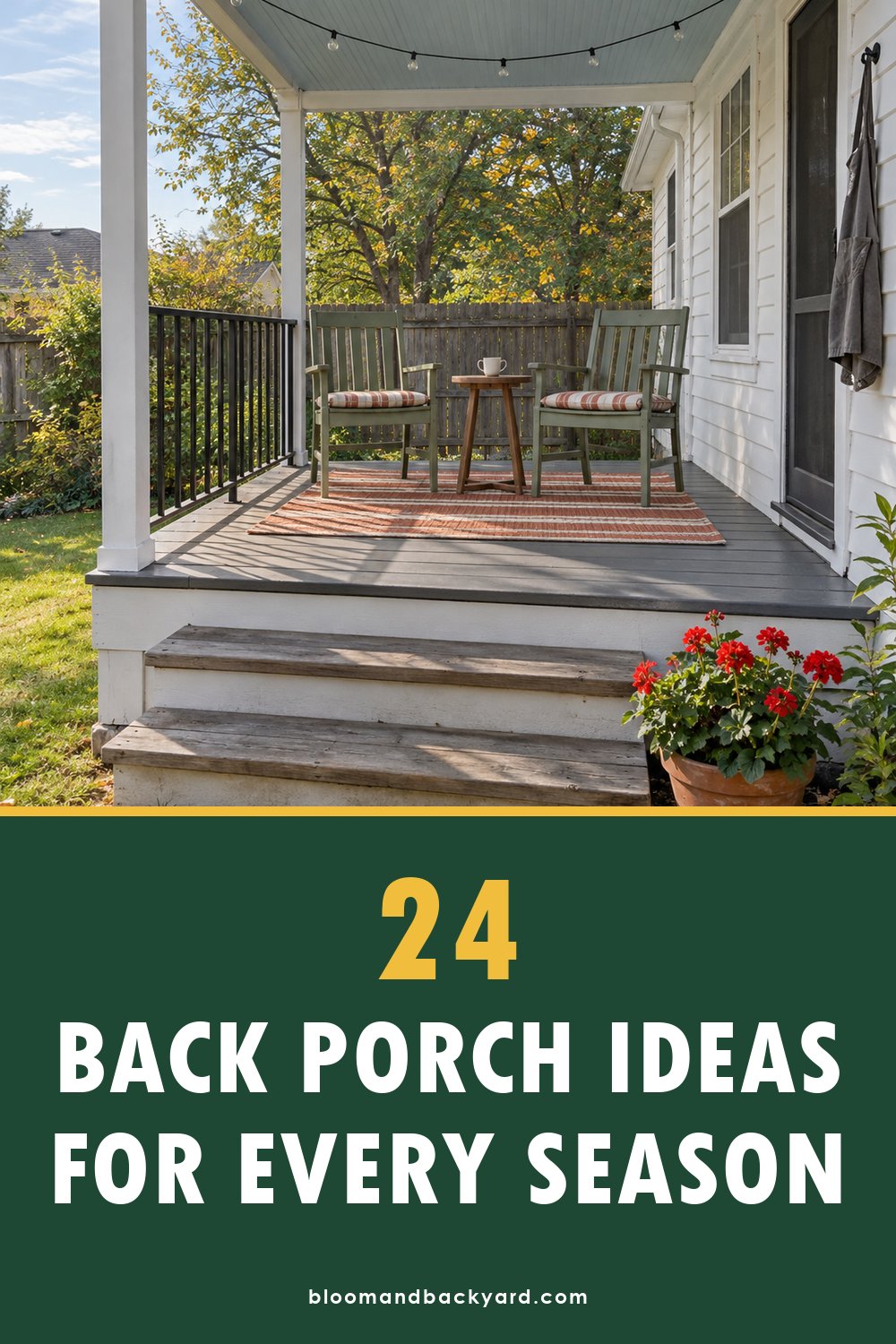
Back porch ideas work best when they start with the porch you actually have: a two-step stoop, a covered slab or a small deck.
These 24 setups cover every size and season, each with a cost and what it takes.
Check your lease, HOA and local code before you drill, wire or build.
What does your porch need?
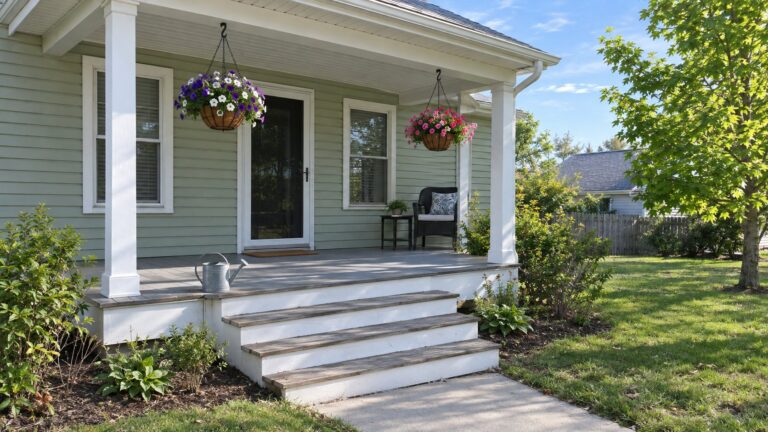
1. Two-Step Stoop: One Chair, a Stool and a Pot

A stoop about 4 by 5 feet holds a chair, a stool and one pot. Put the chair against the wall so you can still step past.
Three pieces at three different heights read as a setup, not clutter.
2. Narrow Porch: Wall Bench, Slim Table, Nothing That Sticks Out
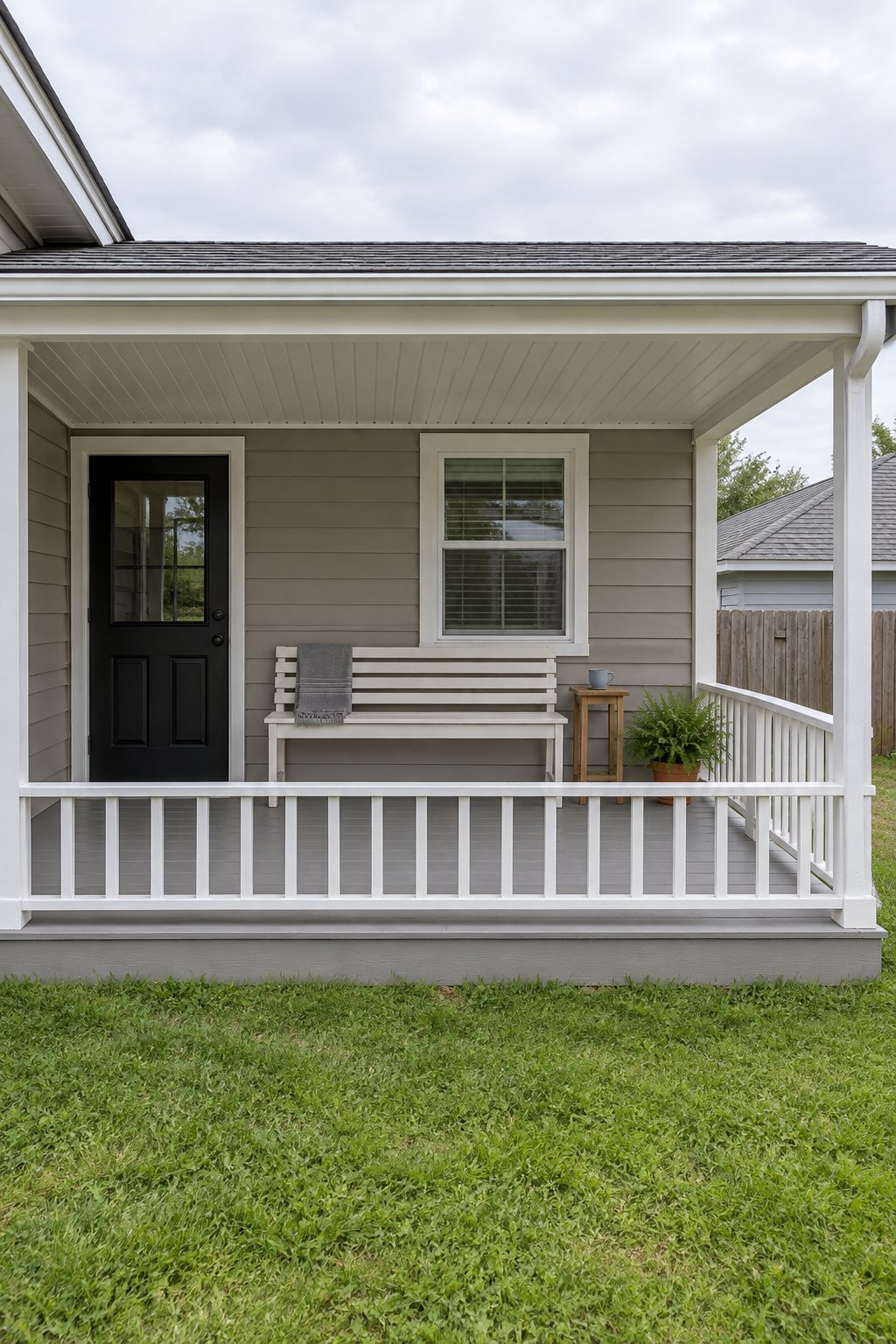
Small back porch ideas start with the walkway. On a porch about 4 feet deep, put the bench and a slim table against the wall and leave the front clear.
Furniture on one side and a clear path on the other keeps a narrow porch from feeling cramped.
3. Full-Width Covered Porch: A Dining End and a Lounge End
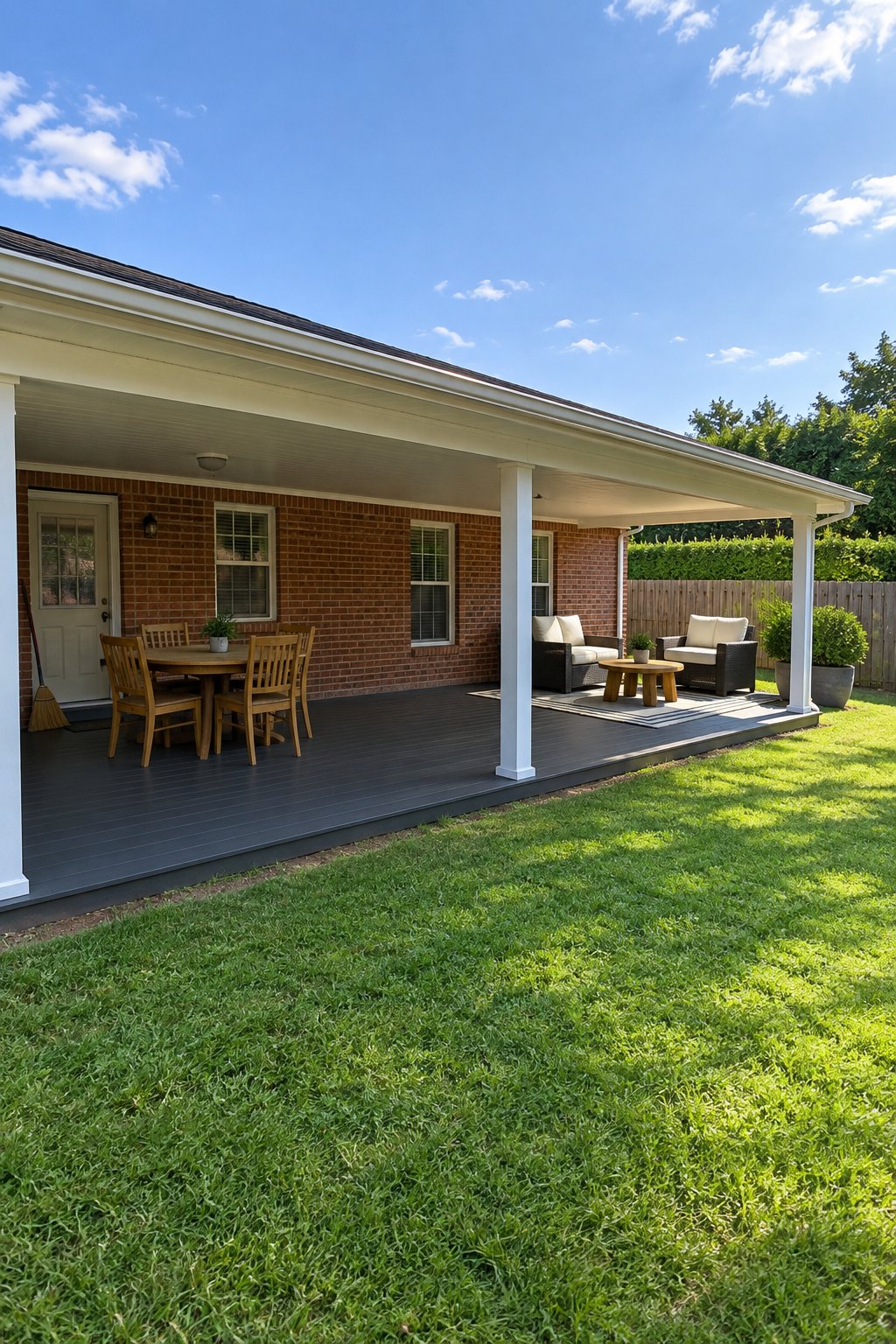
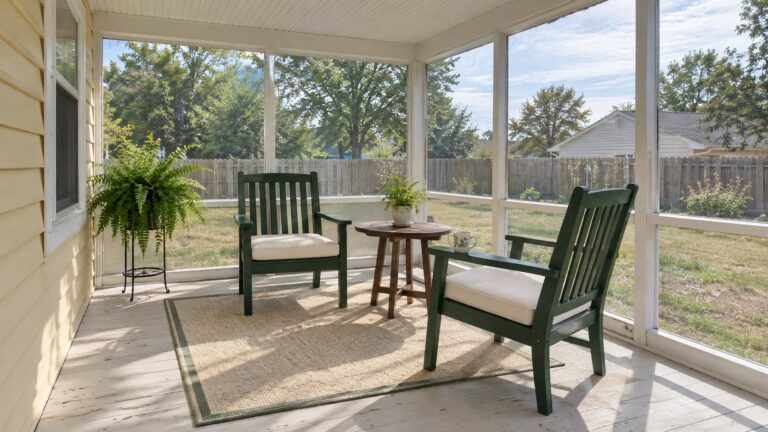
Covered back porch ideas work best when each end has a job. A table and four chairs go near the kitchen door, and two chairs and a low table go at the far end.
Two small rooms feel more comfortable than one long hall.
4. Corner Seating on a Small Open Deck

On an open deck about 8 by 10 feet, angle two chairs toward each other in the corner against the house wall. The wall breaks the wind, and the middle stays open.
Seats angled toward each other make talking easy and leave a clear path.
5. Potting Bench Beside the Back Door

A potting bench by the back door puts pots, soil and a trowel where you pass every day. Hooks above hold a watering can, and a shelf below keeps bags off the floor.
A task spot by the door gets used, and a tool shed at the far end of the yard gets forgotten.
6. Flat-Woven Rug on a Covered Slab, Lifted to Dry

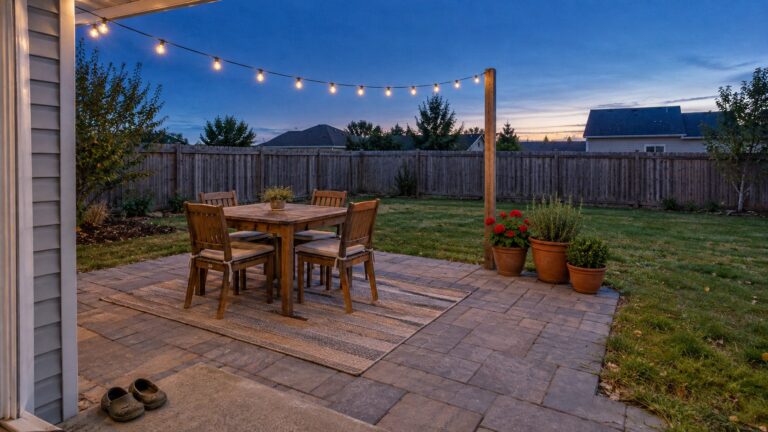
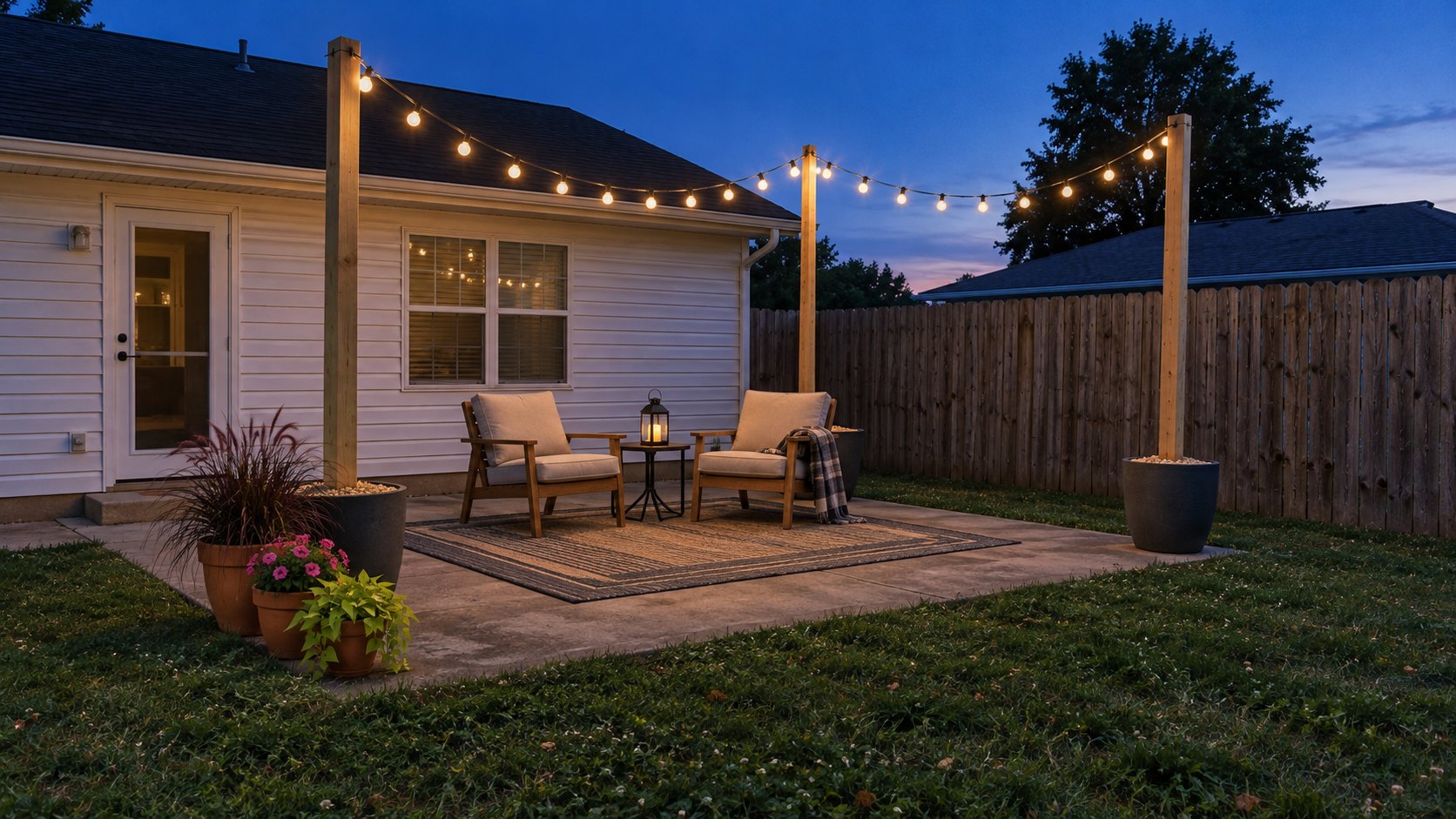
A 5 by 8 foot outdoor rug under a table and two chairs turns a bare covered slab into a room, as in my back patio ideas on a budget.
Polypropylene rugs are sold as quick drying, but a roof means less sun, so lift the rug to dry after a wet week.
7. Repaint a Worn Wood Floor in Porch Paint

Flaking floor paint is the first thing you see from the yard. Scrub, dry, sand rough spots and roll on paint made for porch floors.
Paint only when the label’s temperature range and a dry forecast agree.
8. Drop at the Back Door? Rail, Landing and a Lit Step First

A back door over a drop needs a safe landing before any furniture. Codes generally ask for a guard once the edge is more than 30 inches up, usually 36 inches high with gaps under 4 inches.
Safety work comes before decorating, and a permit may apply.
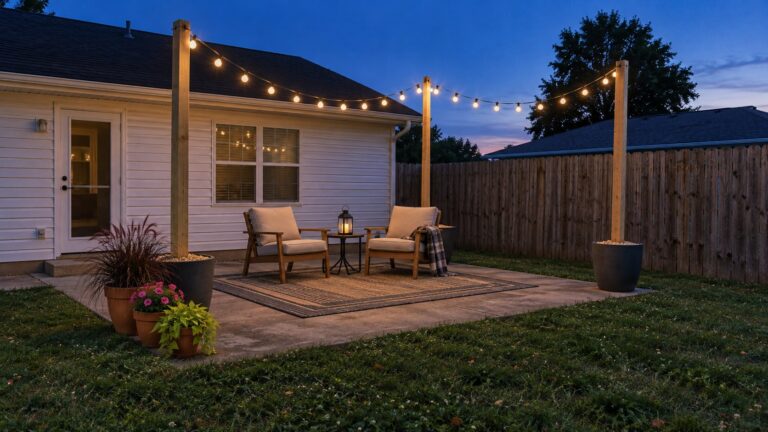
9. String Lights Under the Porch Roof, on a Timer

Outdoor-rated string lights hung along the porch ceiling put light overhead, where it falls on the table instead of glaring in your eyes. A plug-in timer turns them on at dusk.
Light from above, with a little slack in each strand, makes a calm evening.
10. Add a GFCI Outlet and a Plug-In Lamp

A porch with no outlet runs on extension cords. An electrician can add a GFCI-protected outdoor outlet with a cover that stays weatherproof with a plug in, and then a lamp or a fan is easy.
Code generally requires GFCI protection on outdoor outlets at a house.
11. No Outlet at All? Rechargeable Lamp and Lantern

Rechargeable LED table lamps and a lantern with a battery candle give a porch light with no cord. Put one lamp on the table and one low by the chairs.
A lamp on the table and another near the floor light the faces and the ground.
12. Roll-Up Shade on the Hot Side

A west-facing porch bakes in late afternoon, when low sun slips in under the roof. A roll-up shade at the open side blocks it and lets air through, like the screens in my patio privacy ideas.
Low sun comes in sideways, so the shade hangs at the open side, not overhead.
13. Twine Trellis and Black-Eyed Susan Vine in Tall Pots

Two tall pots at the sunny end, each with twine or a trellis, grow a green screen in one summer. Black-eyed Susan vine wants 6 to 8 hours of sun and climbs about 7 feet.
It is a perennial only in zones 10 and 11, so most gardeners plant it new after the last frost.
14. Hostas, Coleus and a Fern in Big Pots for a Shaded Porch

A porch on the north side of the house sits in shade most of the day. Group a hosta, a fern and a coleus in big pots, the coleus at the sunniest edge.
Under a roof the rain never reaches the pot, so these need watering by hand.
15. Damp-Rated Ceiling Fan Over a Covered Porch

A ceiling fan makes a hot porch bearable. Choose a damp-rated fan, wet-rated if rain blows in, with blades at least 7 feet above the floor.
Hang it only from a box listed to support a fan, which is a job for an electrician.
16. Freestanding Fan Across the Seats, Plus Bug Housekeeping

A freestanding fan aimed across the seats moves air and makes mosquitoes work harder. They are weak fliers, and wind cut trap catches in a published study.
Tip out the water in pot saucers too, because mosquitoes breed in very little standing water.
17. Move the Chairs to Catch the Fall Afternoon Sun

In fall the sun sits lower and reaches farther under the roof. Slide two chairs to the side that gets afternoon light and keep a basket of throws in reach.
The porch that was too hot in July can be the warm one in October.
18. Pansies and Ornamental Kale Pots for the Cool Season

Pansies and ornamental kale handle cool nights and light frost. Plant a pair of pots in early fall at a bright spot, with the kale in the middle and the pansies around it.
Choose plastic or another frost-resistant pot, because wet clay can crack when it freezes.
19. Electric Infrared Heater on a Covered Porch, Wired by a Pro

An electric infrared heater is made for covered porches when installed to the maker’s instructions. Hard-wired models need a licensed electrician and a dedicated circuit.
Follow the mounting height and the clearances to the roof, walls and furniture.
20. Cozy Coffee Corner With Throws in a Lidded Bin
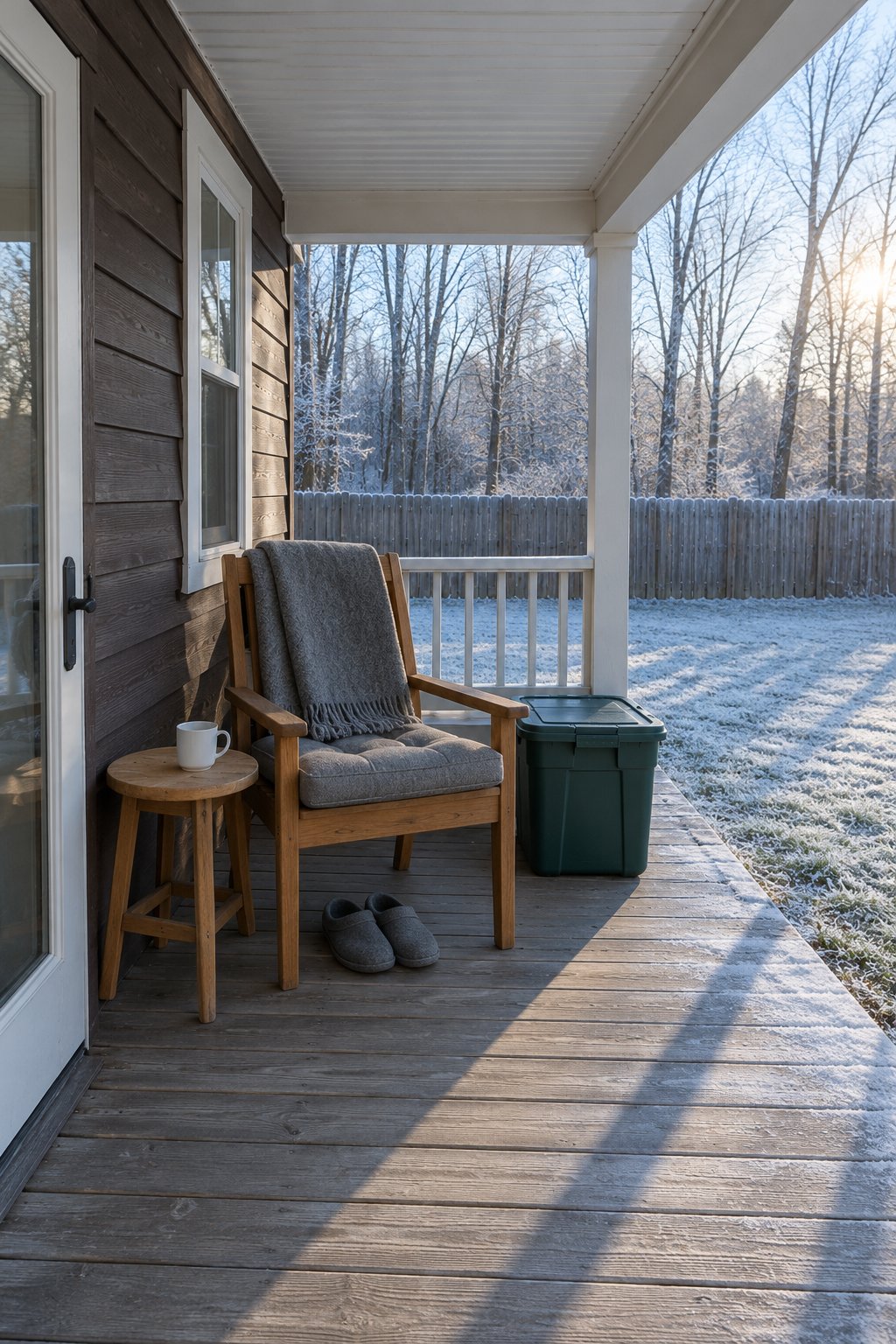
Cozy back porch ideas don’t need a heater. A chair with a thick seat pad, a wool or fleece throw and a small table for a mug make a cold morning worth sitting through.
A lidded bin by the chair keeps the throws within reach and dry.
21. Evergreen Boughs in Frost-Proof Pots for Winter

Cut evergreen boughs pushed into a pot of soil give winter color when everything else is bare. Use cedar, pine or fir, and water them in so the soil freezes and holds them.
Use a plastic, metal or fiberglass pot, since clay and glazed pots can crack when water freezes in them.
22. Wet-Weather Landing for Boots and a Muddy Dog
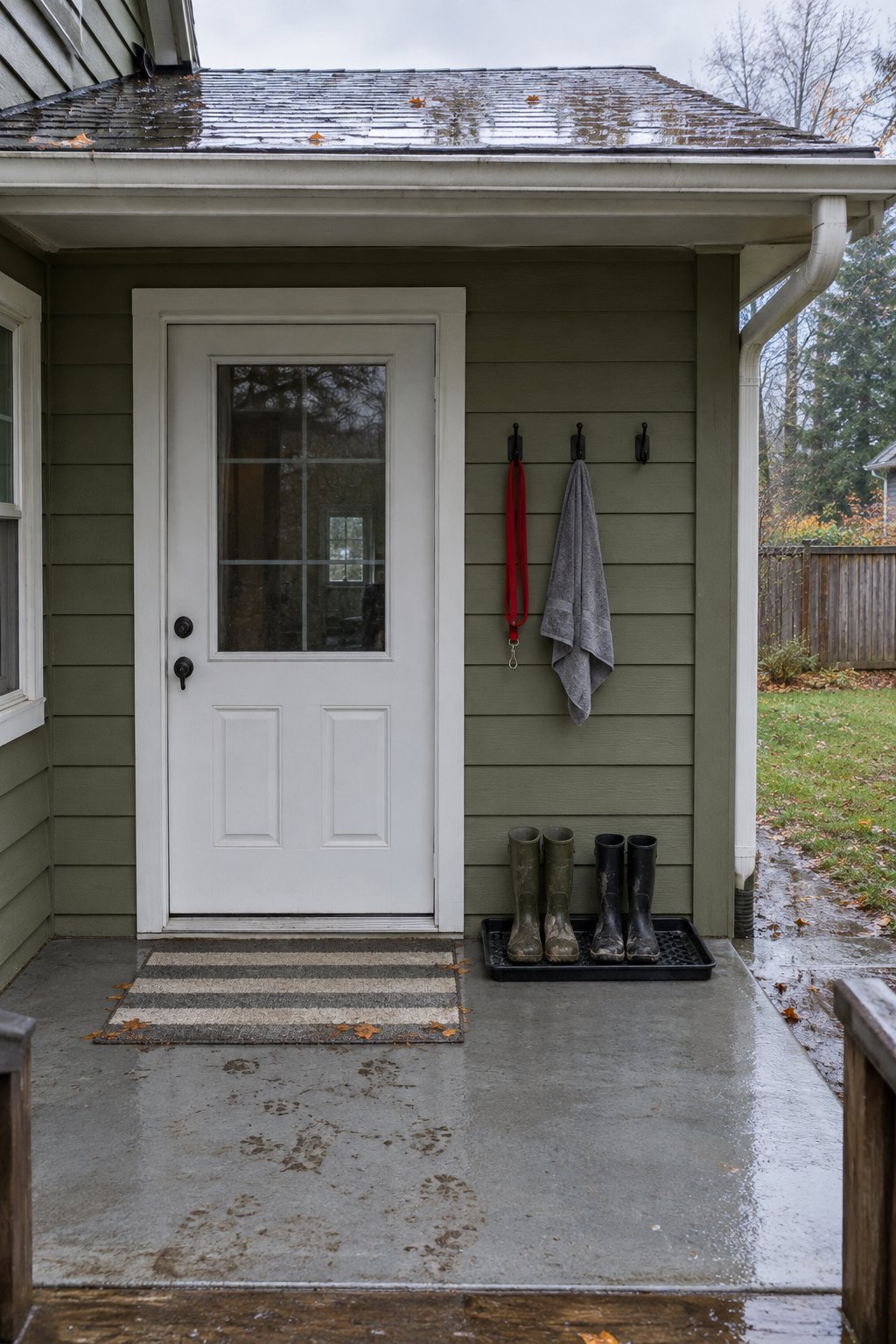
The back door is where mud comes in. A washable mat, a boot tray and a row of hooks for leashes and a dog towel catch the mess before it crosses the kitchen.
Put it all on the side the rain doesn’t reach, which one storm will show you.
23. A Renter Setup With Nothing Drilled

Folding chairs, a rug, a plant stand and a freestanding hook rack need no screws, and they pack away when the lease ends.
Weight and friction hold things in place, so choose pieces that stay put in wind.
24. Serving Table by the Door, Grill Out on the Lawn
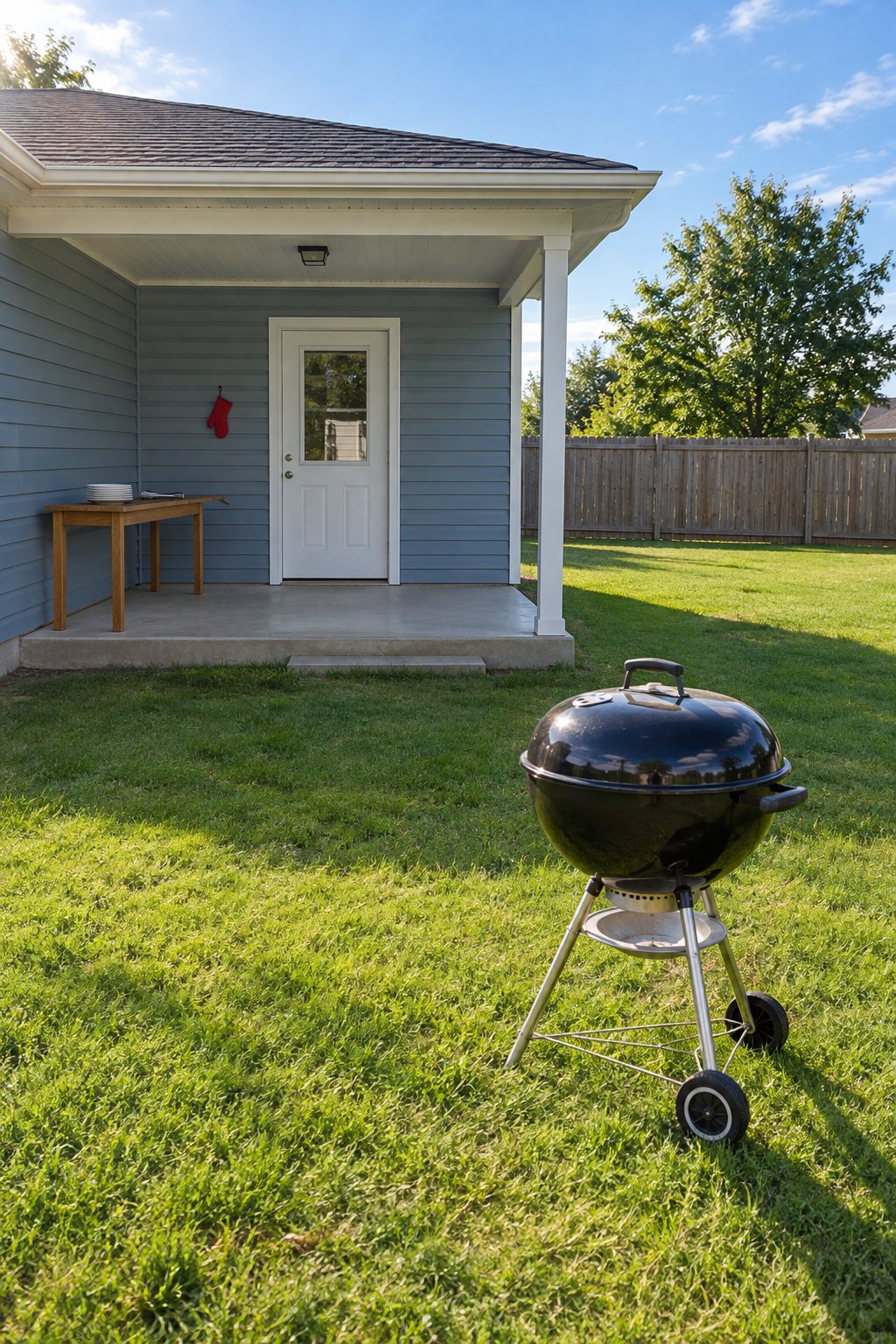
A narrow serving table beside the back door gives the cook somewhere to put plates and tongs, while the grill sits out on the lawn.
Many local fire rules and grill manuals keep a grill at least 10 feet from the house and out from under a roof.
Porch Numbers on One Page
Every idea above rests on a few figures.
Check these against your own porch and your local code before you buy anything.
| What | The figure | Why |
|---|---|---|
| A guard around a raised porch | Needed when the edge is more than 30 inches above the ground | Residential codes generally set the guard at 36 inches high, some places 42, with gaps under 4 inches. Your local code decides |
| A handrail on steps | 34 to 38 inches above the front edge of the treads | Common residential code for stairs with four or more risers. The tallest riser is generally 7 3/4 inches |
| Ceiling fan blade height | At least 7 feet above the floor | Fan labels set this, and a damp-rated fan suits a roofed porch, wet-rated if rain blows in |
| Ceiling fan size | About 44 to 52 inches across for a porch up to roughly 150 to 225 square feet | Guides differ, so use the fan maker’s own sizing chart |
| Grill distance from the house | At least 10 feet as a safe default | Common fire-code and manual guidance. Your manual and local fire department decide |
| Sun for black-eyed Susan vine | 6 to 8 hours of direct sun | Hostas prefer morning or dappled light, since hot afternoon sun is hard on them |
| Porch floor paint | Air between about 50 and 90 degrees F, no rain for 24 hours | A typical label range. Read the one on your can |
Six Back Porch Mistakes to Skip
A propane heater under the porch roof
Do thisFuel-burning heaters have set clearances and ventilation needs, and many manuals warn against enclosed spaces. Read yours, or choose an electric infrared heater made for covered porches and wired by an electrician.
A grill on the porch
Do thisMove it out onto the lawn, at least 10 feet from the house as a safe default, and never under the roof. Check your grill manual and your local fire rules.
A fan hung from an ordinary box
Do thisA ceiling fan needs a box listed to support a fan and a damp-rated fan under a roof. Have an electrician fit both.
Extension cords through the doorway
Do thisA cord pinched in a door wears through. Add a GFCI-protected outdoor outlet, or go rechargeable.
Furniture blocking the door or the steps
Do thisKeep a clear path about 3 feet wide from the door to the steps. Open the door fully before you place anything.
Clay pots left out in a freeze
Do thisPlastic, metal or fiberglass pots survive winter outdoors where wet clay can crack. Empty and store clay pots, or buy ones labeled frost resistant.
Which Way Your Porch Faces Decides Its Weather
Stand on the porch with your back to the house. The direction you are looking is the way the porch faces.
Your phone’s compass will tell you, though it reads magnetic north and can be off by 10 degrees or more in parts of the country. That is close enough to tell east from south.
For a free check with no phone, stand a stick upright in a pot and watch its shadow. In the morning it points west, around the middle of the day it points north, and in late afternoon it points east.
A porch facing south gets the most sun, east gets the morning, west gets the hot afternoon and north gets the least.
A roof helps most on a south-facing porch, where it blocks the high summer sun while the lower winter sun can still reach in.
On a south or west porch, choose fade-resistant outdoor fabric and plants that want full sun. On a north porch, choose shade lovers and put cushions in a bin, because damp lingers.
In much of the country the prevailing wind blows from the west, so note which side of your porch gets wet in the next storm.
I’d do this check once, on a clear day, before buying a single piece.
Start with the change that fixes what you notice first: a chair and a stool on a bare stoop, a rug on a cold slab or a lamp for the evening.
Do the safety jobs, the rail, the outlet and the fan, before the cushions.
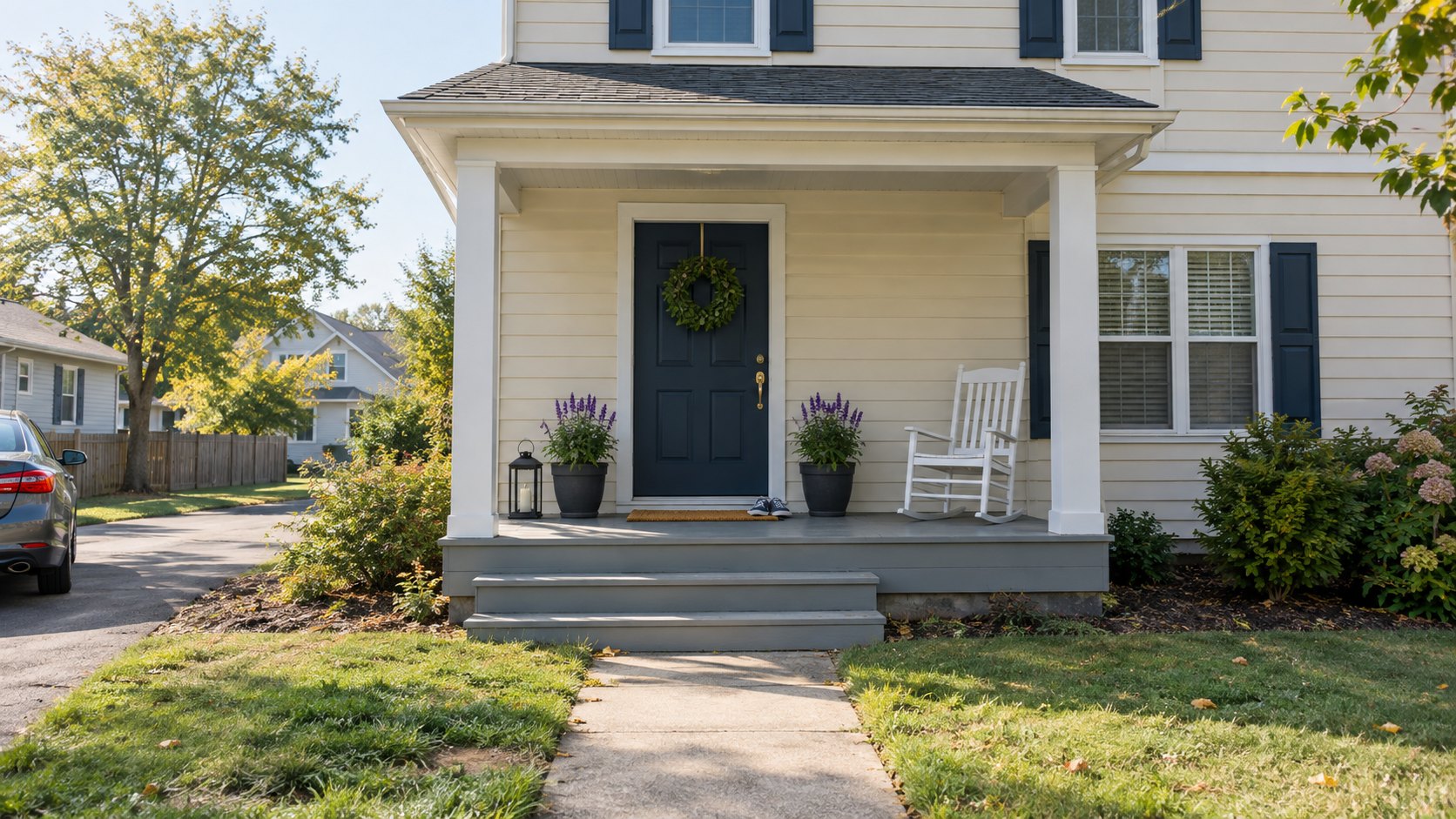
The other door deserves the same care, and my front porch ideas cover it.
Frequently Asked Questions
What are good small back porch ideas?
Keep everything against the wall and the floor clear: one bench or two chairs, a slim table and a pot or two. A walkway of about 3 feet along the front keeps a narrow porch from feeling cramped.
How do I make a back porch cozy?
Add layers you can touch: a rug underfoot, a thick seat pad and a throw, then warm light overhead or at table height. In cold months add a heater only if it is made for covered porches and installed to the maker’s instructions.
Do I need a railing on my back porch?
Often, yes, if the edge is more than 30 inches above the ground. Residential guards are generally 36 inches high and some places require 42, so check local code with your building department.
What is the difference between a back porch and a back patio?
A porch is attached to the house, usually with a roof and a floor above the ground, while a patio is a paved area at ground level. Back porch patio ideas such as rugs, lights and pots work on both, but a raised porch also has guard and step rules.
Can I put a ceiling fan on a covered porch?
Yes, with a damp-rated fan, blades at least 7 feet above the floor and a ceiling box listed to support a fan, all fitted by an electrician. Choose a wet-rated fan if rain blows in.
You Might Also Like

Save This For Later

Loved back porch ideas? Save this pin to your Pinterest board now so you can find it again anytime you need the inspiration.