Rock Landscaping Ideas: 18 Beds That Need Less Water and Mowing
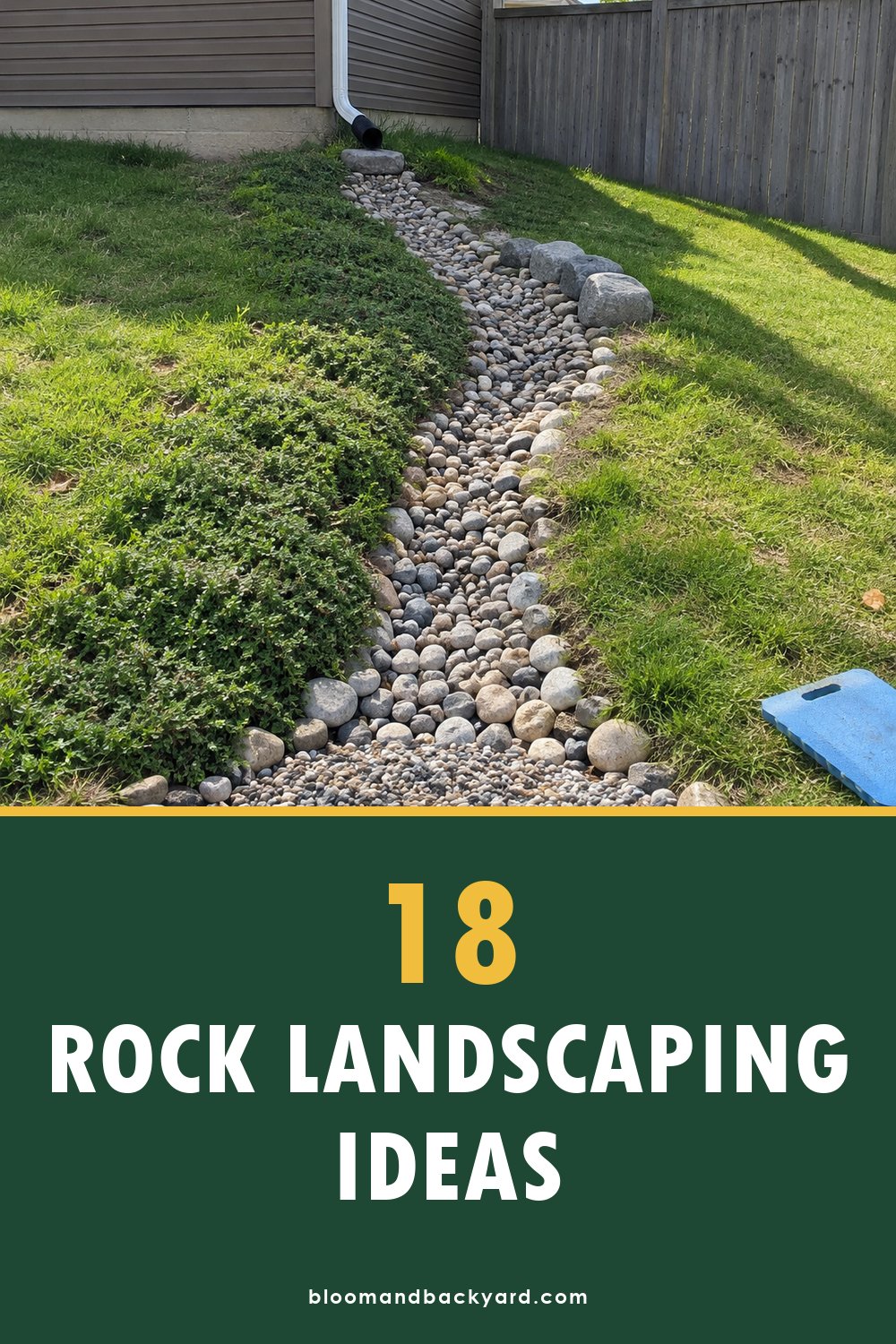
Rock landscaping ideas work when the stone is matched to the job: a mown strip, a wet corner, a slope, a hot wall.
These 18 beds name the stone, the plants and the edge, and say what each one takes.
Rock needs less mowing and often less water, but not none of either.
What are you fixing?
1. Pea Gravel Strip Where a Narrow Strip of Lawn Used to Be Mowed

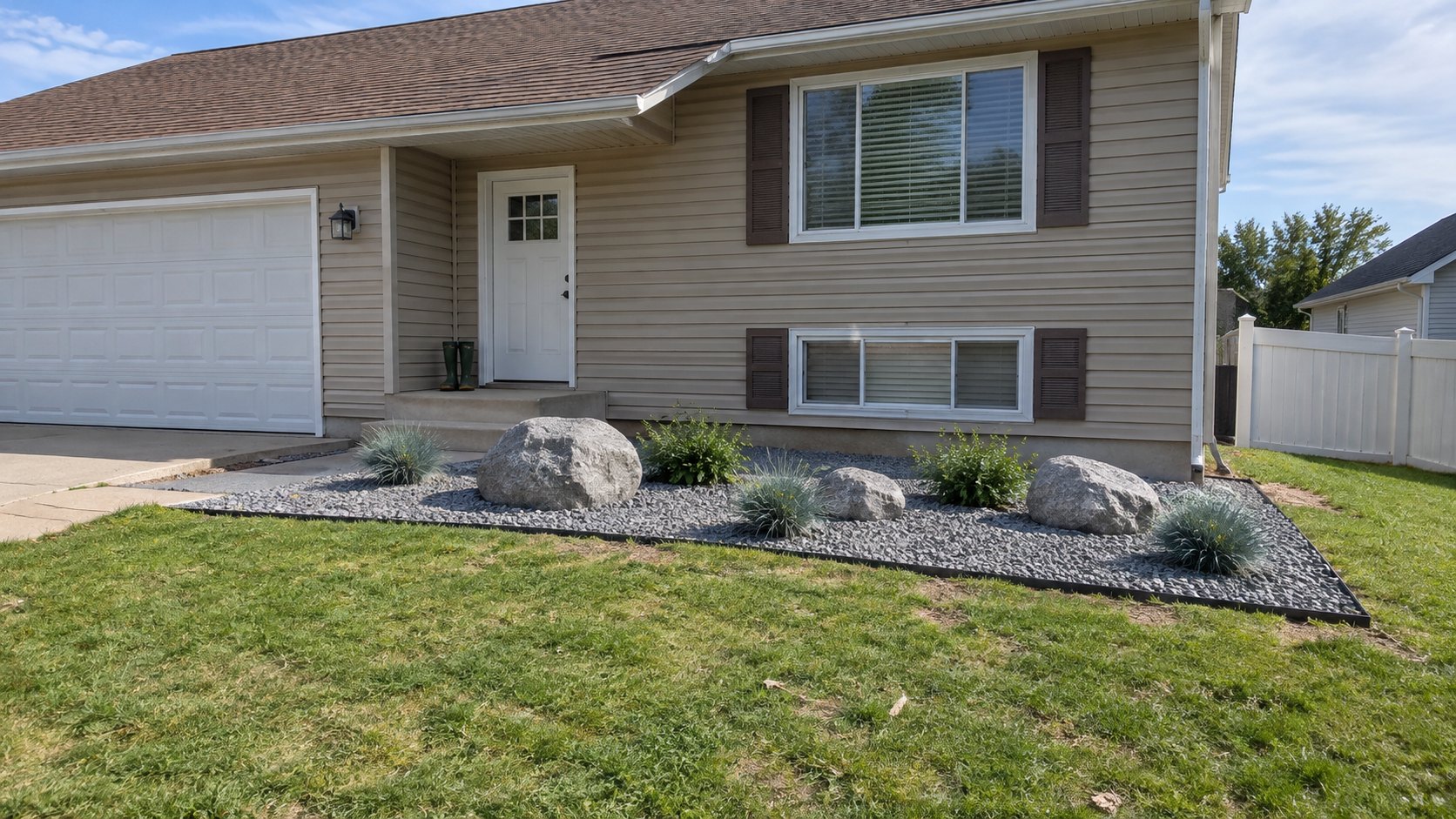
A lawn strip only 3 feet wide costs the most mowing for the least return. Fill it with 2 to 3 inches of pea gravel inside a steel edge, then plant blue fescue and creeping thyme in groups along the sunny side.
Plant in groups of three so the strip reads as one planned line from the street.
2. Crushed Granite, Russian Sage and Yarrow Along a Hot Side Yard

Angular crushed granite packs into an even surface and sits well in a sunny side yard. Russian sage reaches 3 to 4 feet in full sun and is hardy in about zones 4 to 9, with common yarrow filling in at its feet.
Both plants spread by their roots, so give each a few feet and a firm edge.
3. Three Boulders, Cobbles and a Yucca in a Struggling Lawn Corner
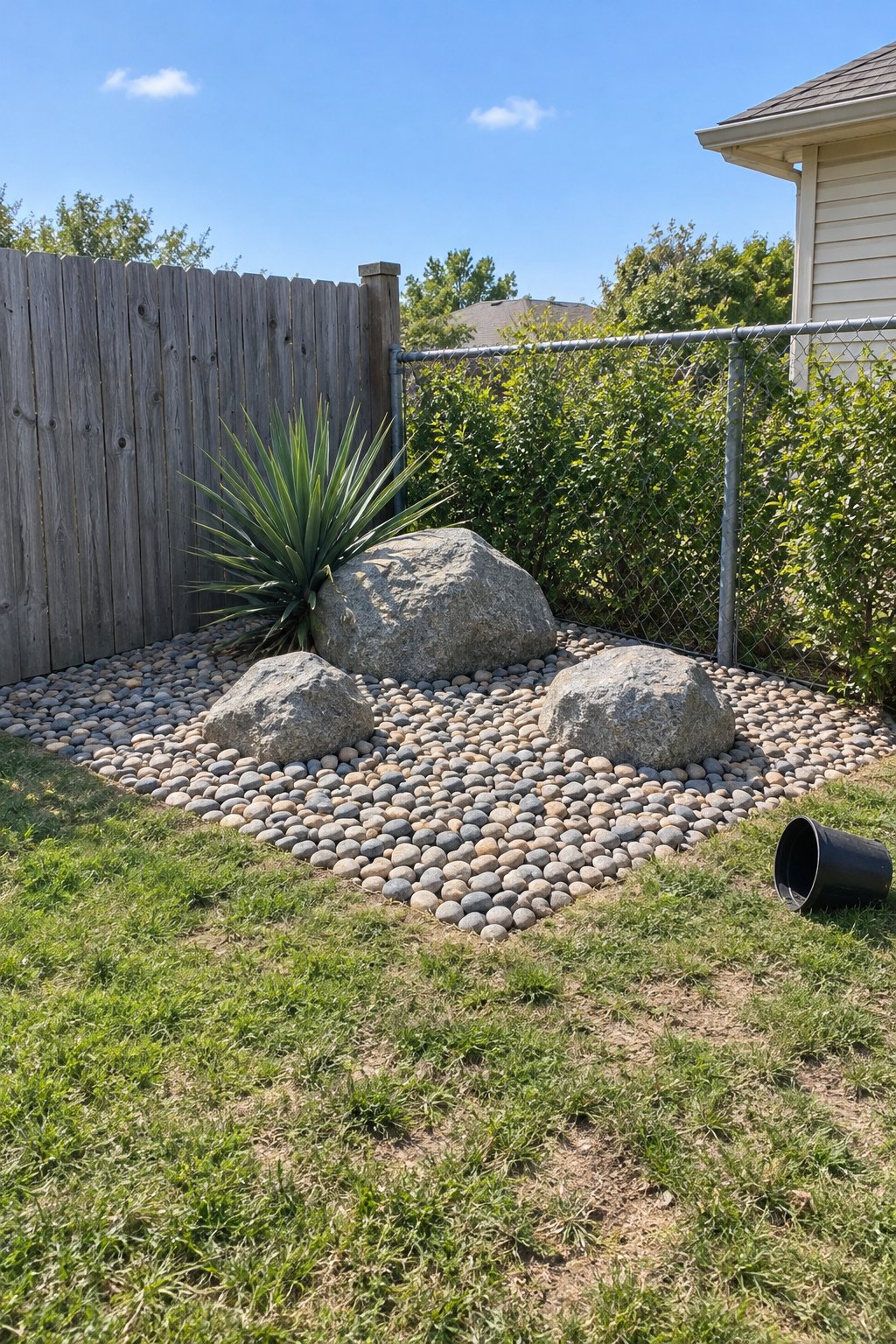
Where grass keeps losing in a corner, three boulders of different sizes with cobbles around them read as a natural outcrop. Set the largest a little off center and bury about a third of each, so they look grown there and not dropped.
Odd numbers and mixed heights are what stop a boulder group from looking placed.
4. A Fabric-Free Gravel Bed You Can Weed With a Hoe

Weed fabric slows weeds for a couple of seasons, and then dust and leaf bits settle on top and weeds root there. This bed skips it: firm bare soil, 2 to 3 inches of stone and plants close enough to shade the gaps.
Pull weeds while they are small, and a hoe will clear the bed in minutes.
5. Dry Creek Bed That Carries a Downspout to a Daylight Outlet
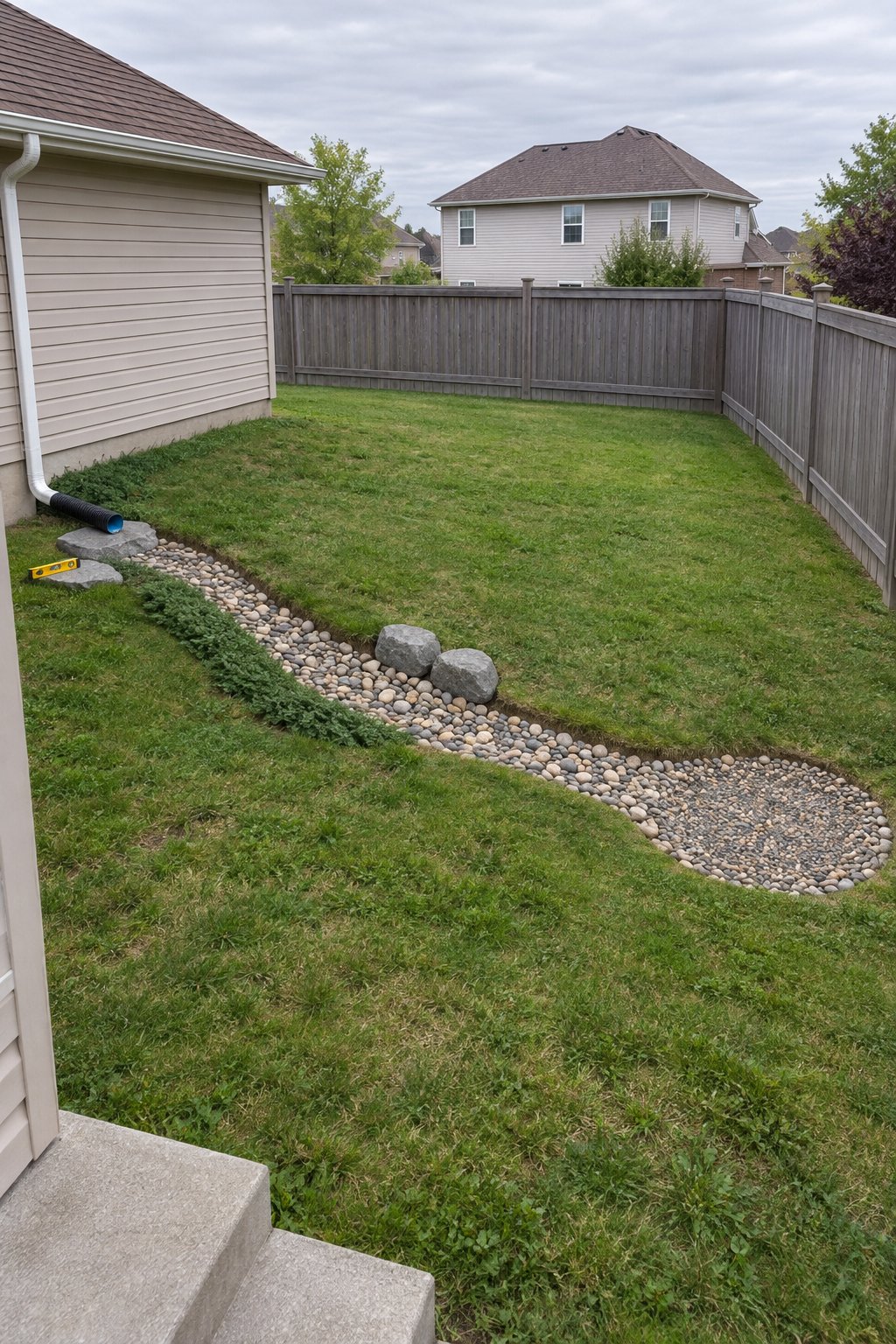
A dry creek bed gives roof water a path, so it stops pooling at the foundation. Dig a shallow channel with a steady fall, line it with fabric and fill it with 2 to 4 inch river rock, with smaller stones on top.
End it at least 5 feet from the house, somewhere the water is allowed to go.
6. A Stone Band Under the Roof Edge Where Mulch Keeps Washing Out
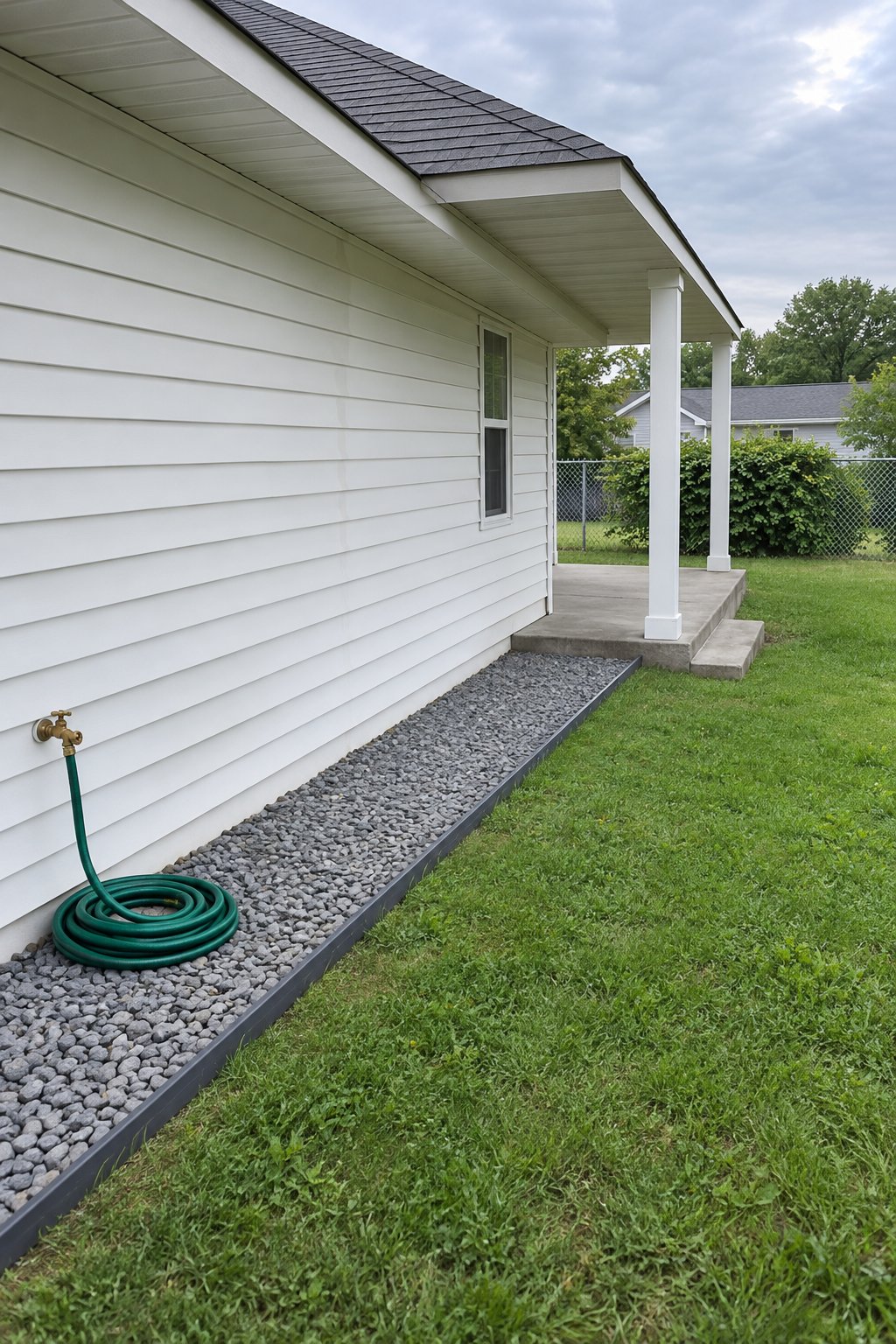
Water pouring off a roof edge splashes mulch onto the siding and digs a trench in bare soil. A band of washed stone about 2 feet wide and 3 inches deep sits where the water lands and stays put.
Leave plants out of the splash line and let the stone do the job.
7. Angular Stone and Yarrow Across a Gentle Slope

On a gentle slope, angular crushed stone locks together where rounded pea gravel and river rock roll downhill. Plant yarrow and Autumn Joy sedum in rows across the slope, not up and down it, so each row breaks the run of stone.
A steeper bank wants a wall, not a thicker layer of stone.
8. Cobble Band Beside the Driveway to Take the Runoff
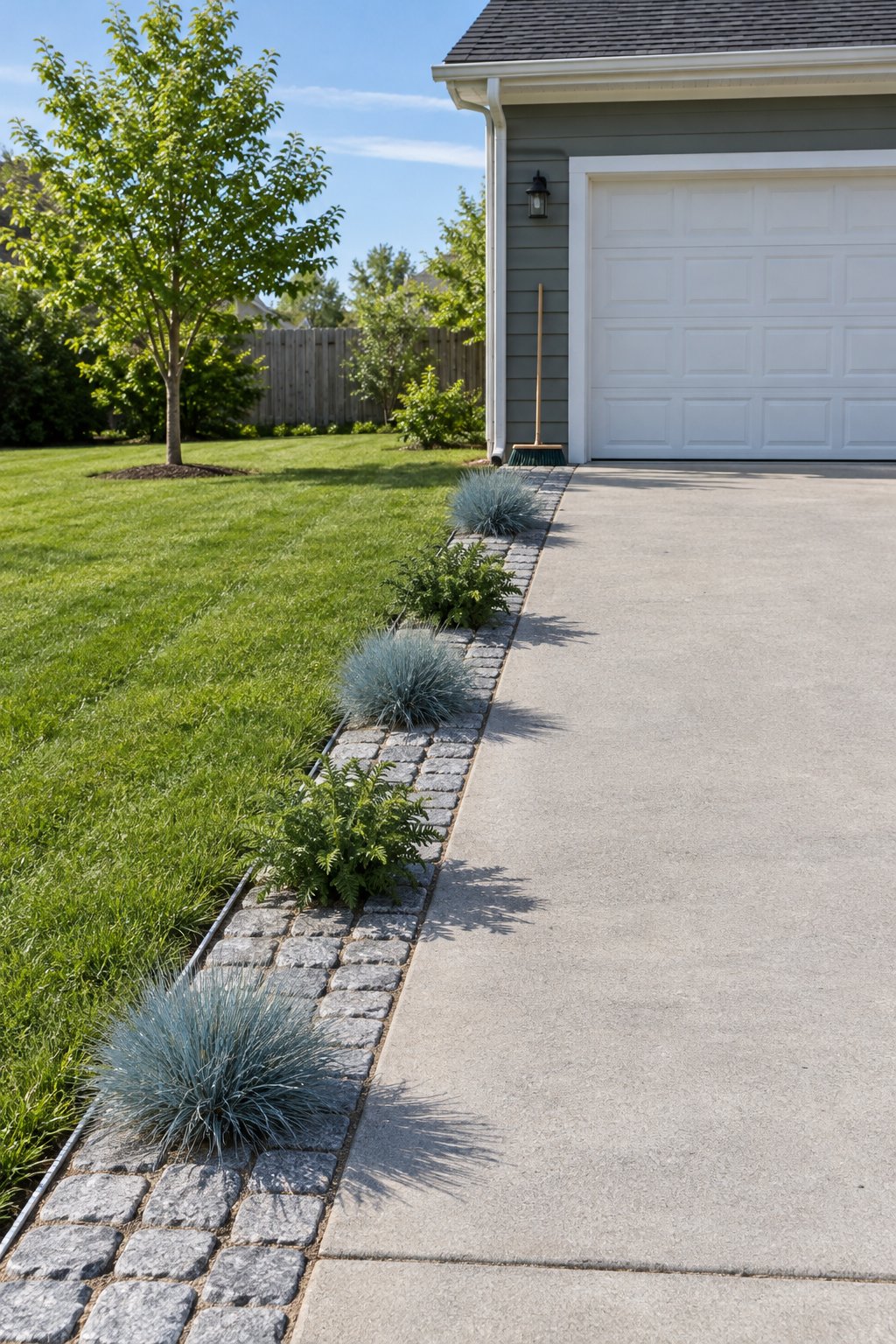
Pavement sheds rain straight onto the lawn edge, and the grass there washes thin. A band of granite cobbles about 18 inches wide slows the flow and ends the mowing along it.
Keep it back from the car doors so nobody steps out onto loose stone.
9. Stone Pad Under the Spigot and the A/C Drain Line

The muddy patch under an outdoor tap or an air conditioner’s drain line is where lawn dies first. A pad of washed stone 3 inches deep and about 3 feet square takes the drips and keeps shoes clean.
This is a spot you want to drain, not grow.
10. Front Yard Rock Landscaping for an HOA: Gray Stone, Straight Lines, Repeated Plants
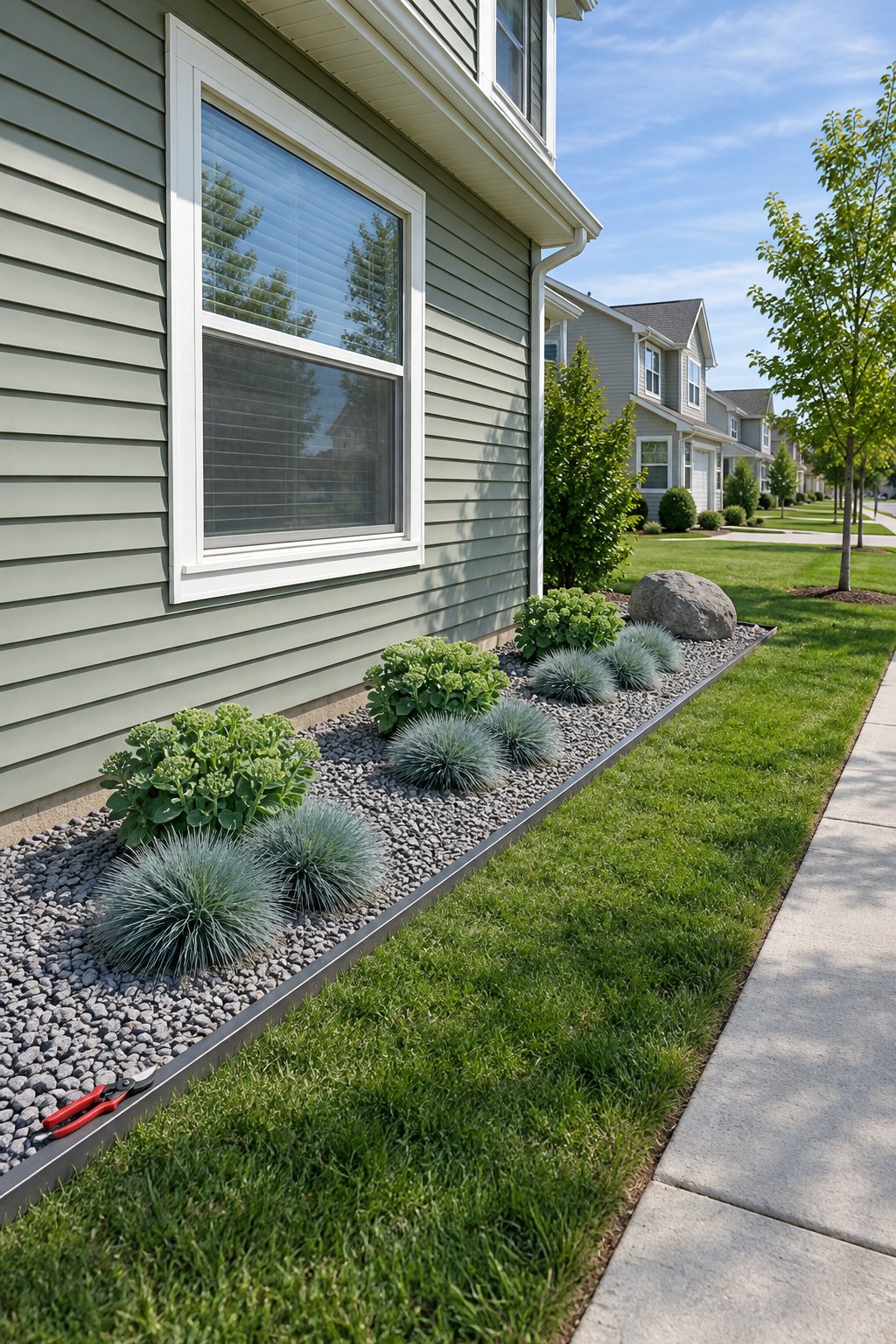
An HOA wants neat, and neat is what a uniform gray stone bed with a crisp steel edge delivers. Repeat Autumn Joy sedum and blue fescue in the same few spots, so the bed reads as ordered from the street.
Get approval in writing before you order stone, because some associations limit rock or its color.
11. Decomposed Granite Bed With Agastache and Thyme for a Hot, Dry Yard
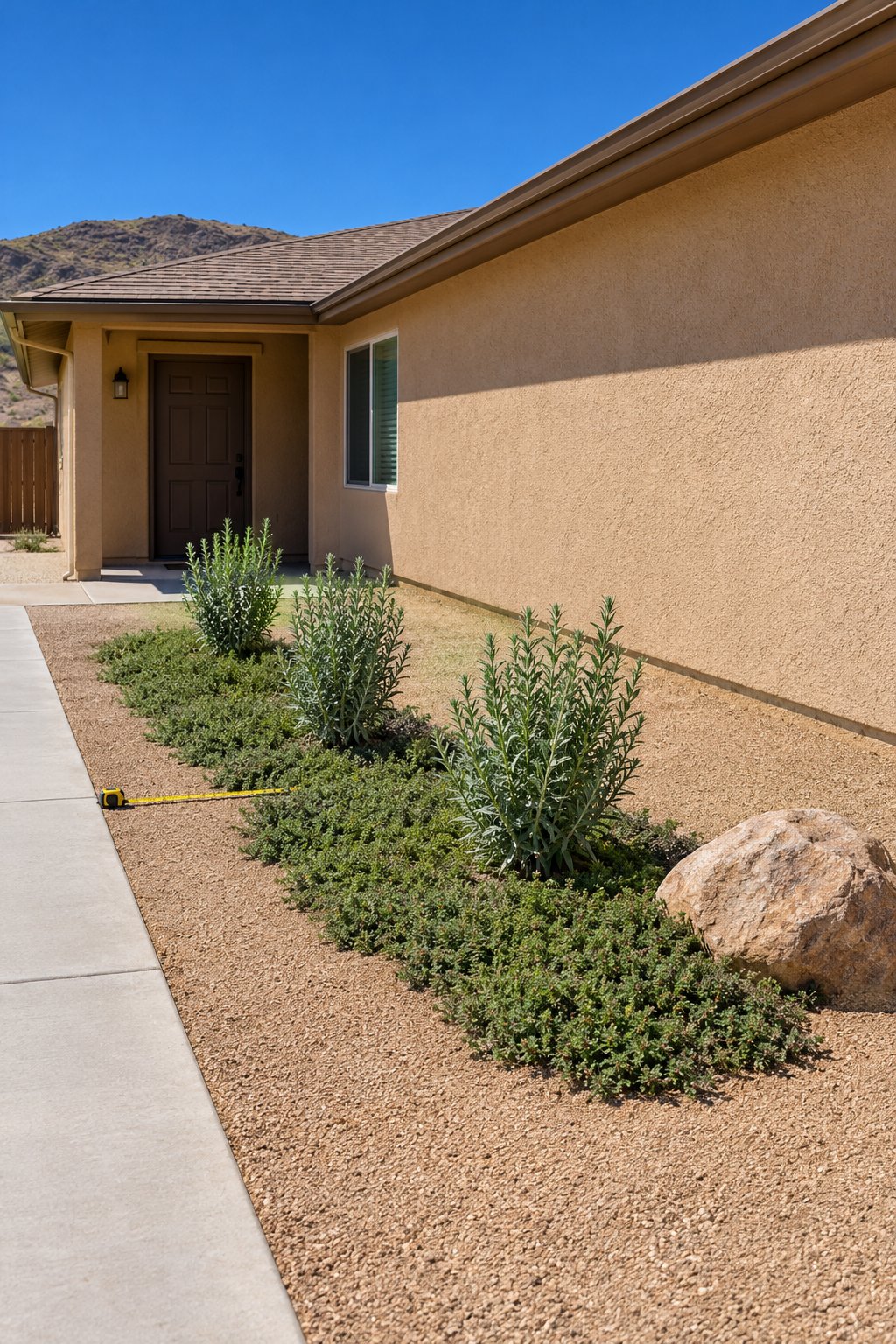
Decomposed granite is crushed granite with fines, and it packs firm when tamped. Keep it on level ground, because loose fine stone can erode on a slope.
Agastache rupestris is hardy in about zones 5 to 9 and tends to be short-lived, and it needs very well-drained soil through winter.
In the first summer, water the plants as if the stone were not there.
12. Wildfire Country: A Five-Foot Stone Apron With the Plants Set Beyond It
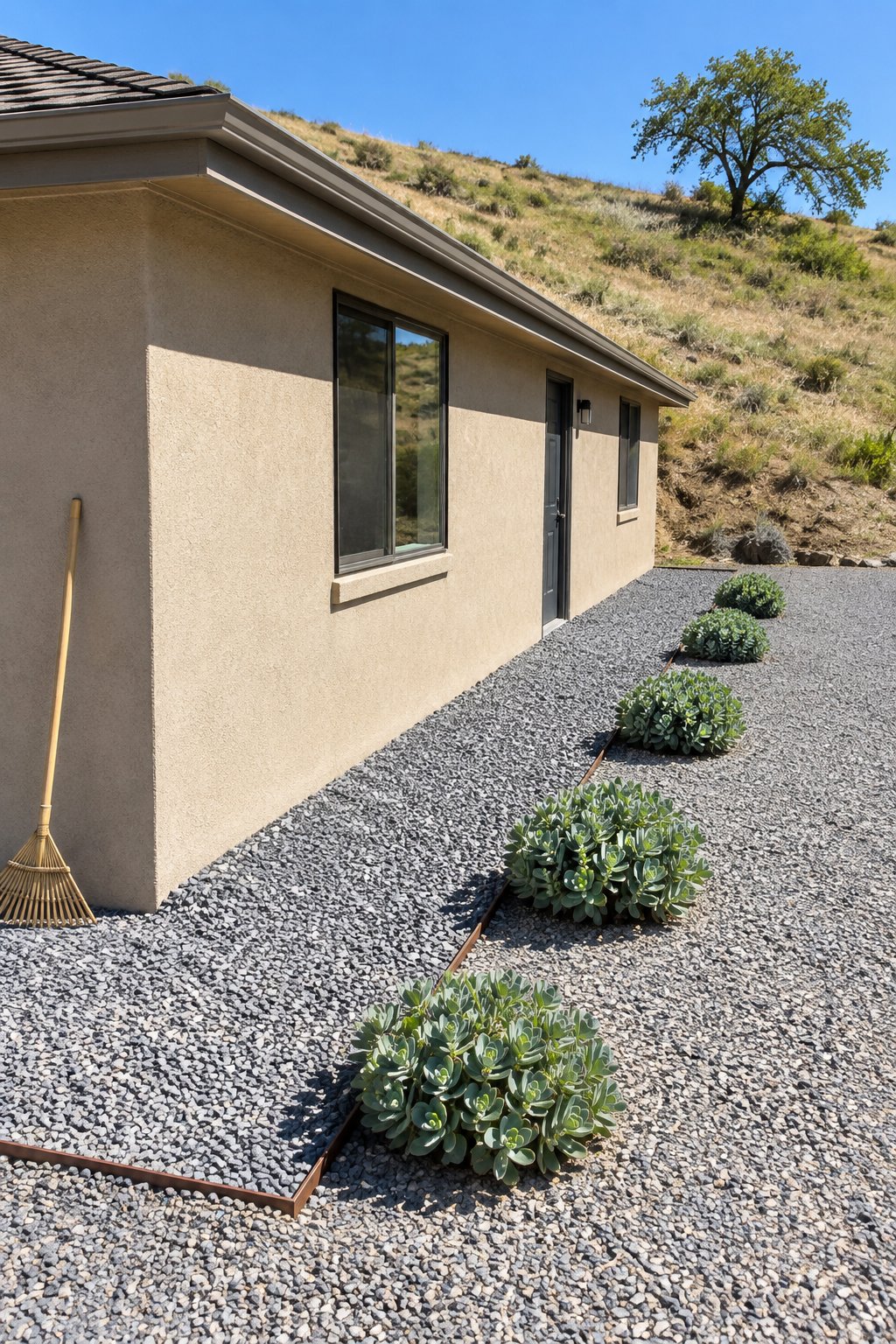
In wildfire country, state fire guidance such as California’s Zone 0 asks for nothing that burns in the first 5 feet around the house. Gravel or pavers there are the usual advice, with no bark mulch and no plants against the wall.
Ask your local fire district first, because the rules differ by place.
13. Cold Winters: Larger Stone Set Back From the Plow and the Snowblower
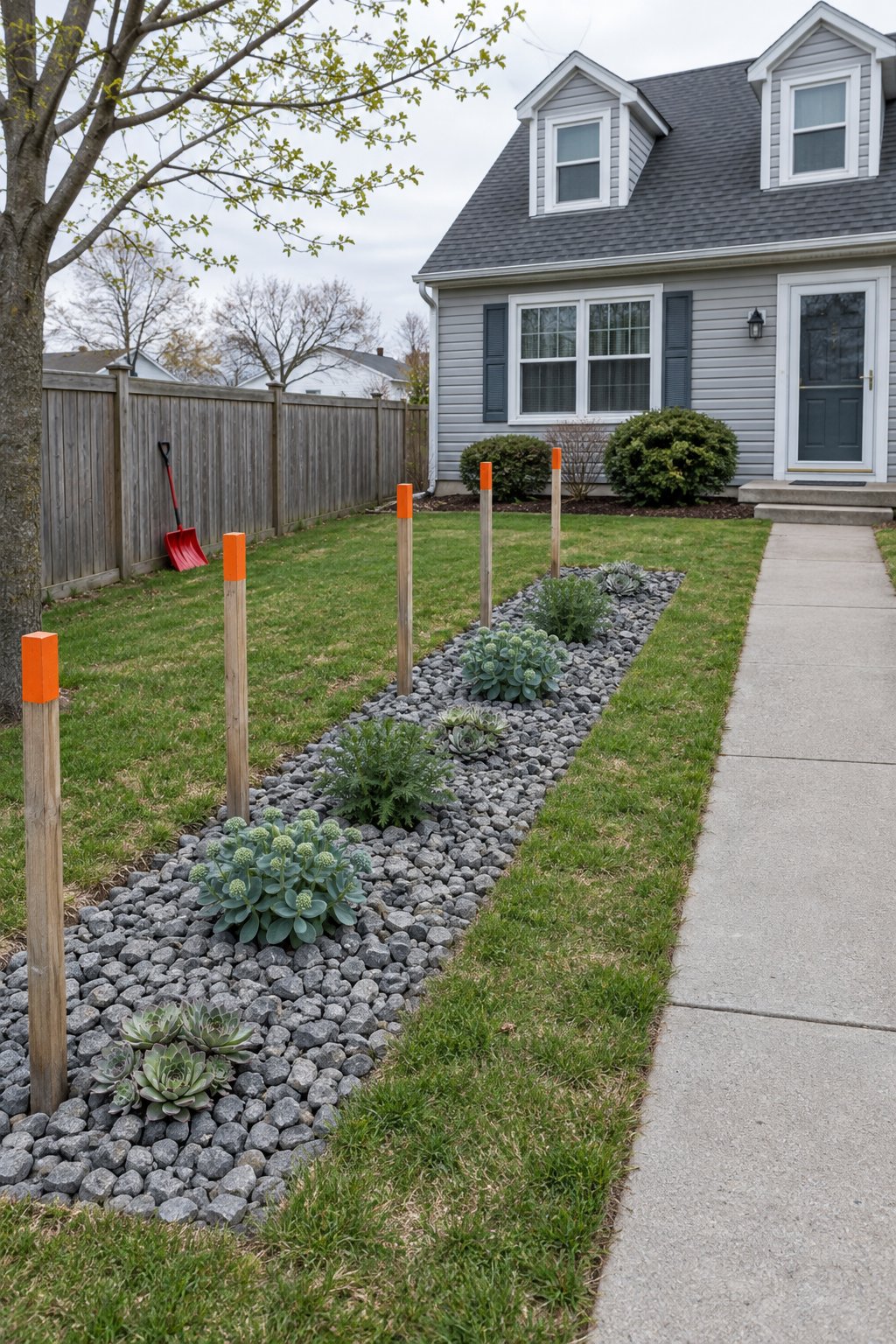
Small loose stone gets pushed into the lawn by a plow and thrown by a snowblower. Choose angular stone about an inch or larger, keep it a couple of feet off the walk and plant only perennials hardy to zone 3 or 4.
Stake the bed’s edge before the first snow so whoever plows can see where it ends.
14. Succulent-and-Stone Corner With Hens-and-Chicks and Sedum
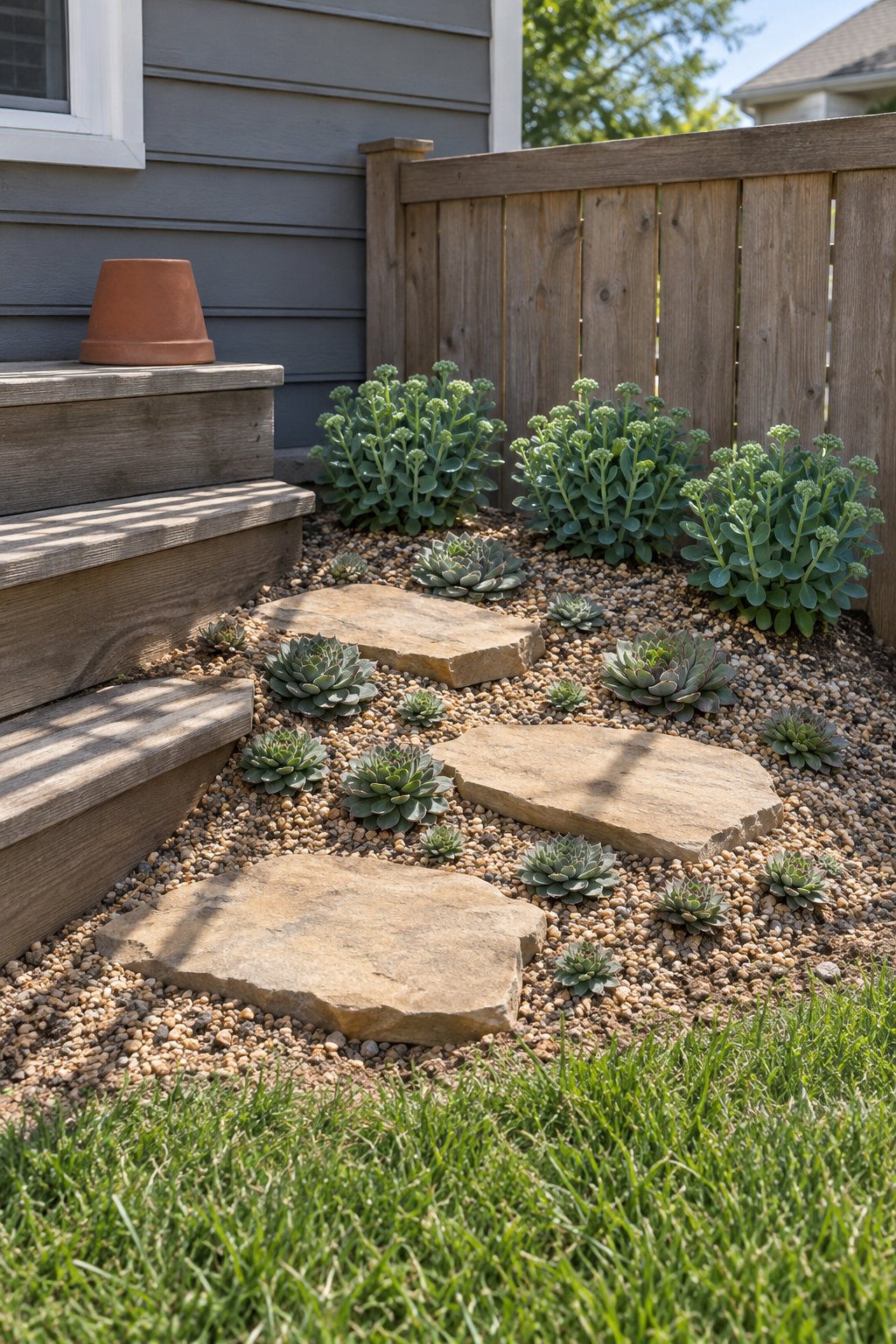
A raised mound of gritty soil, a few flagstone slabs and rosettes tucked into the gaps make a corner that likes being left alone. Hens-and-chicks are hardy in about zones 3 to 8 and need full sun and very sharp drainage.
The plants rot in wet soil, so the height of the mound is the whole idea.
15. Shady Rock-and-Fern Bed Under a Tree
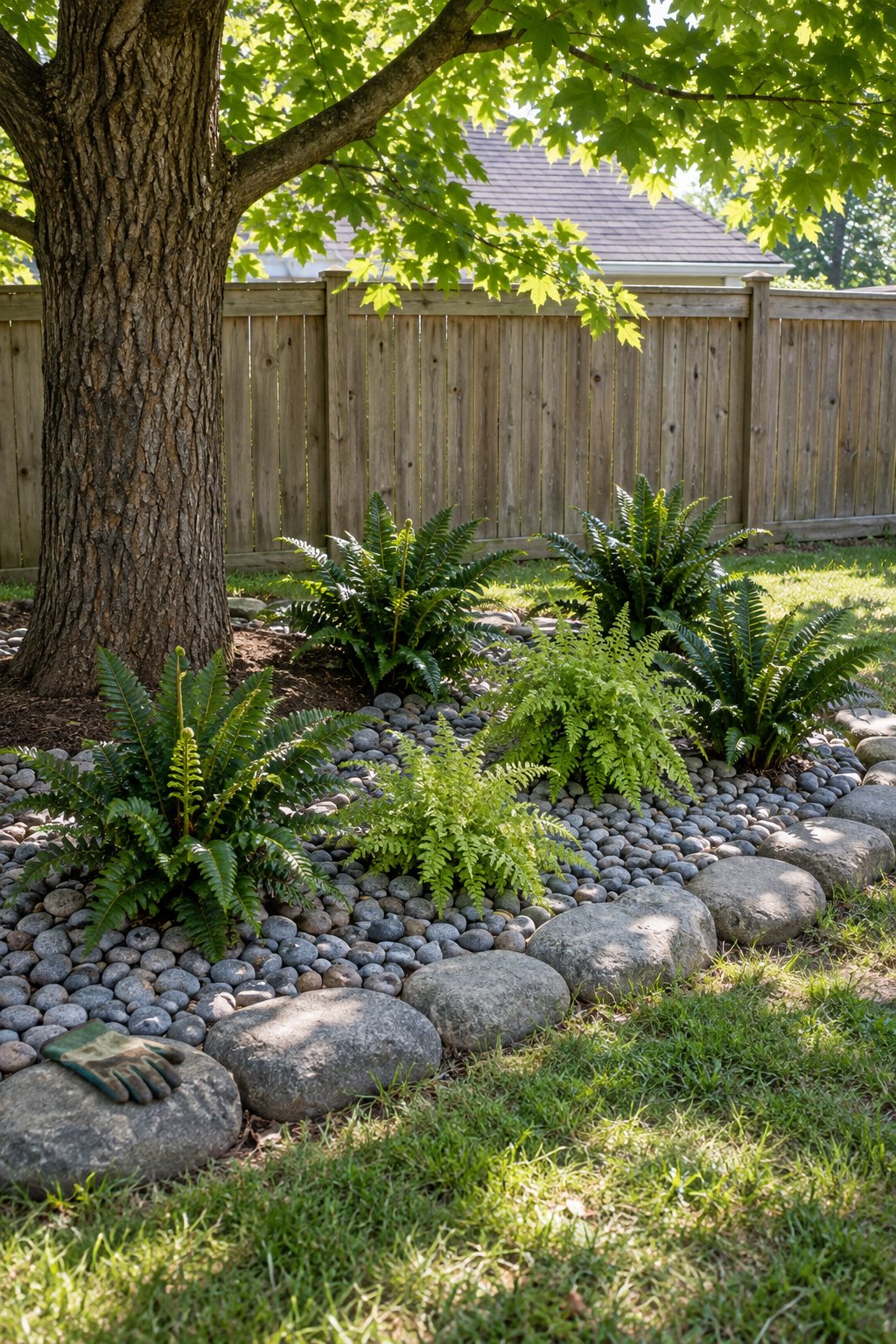
In dry shade, Christmas fern and lady fern against smooth river rock look like a woodland floor. Christmas fern is evergreen and hardy in about zones 5 to 9, and lady fern is deciduous and tolerates drier soil than many ferns.
Keep each fern’s crown above the stone, and keep the stone off the tree’s trunk.
16. Lava Rock Bed for a Light-Colored House, Held Away From the Wall
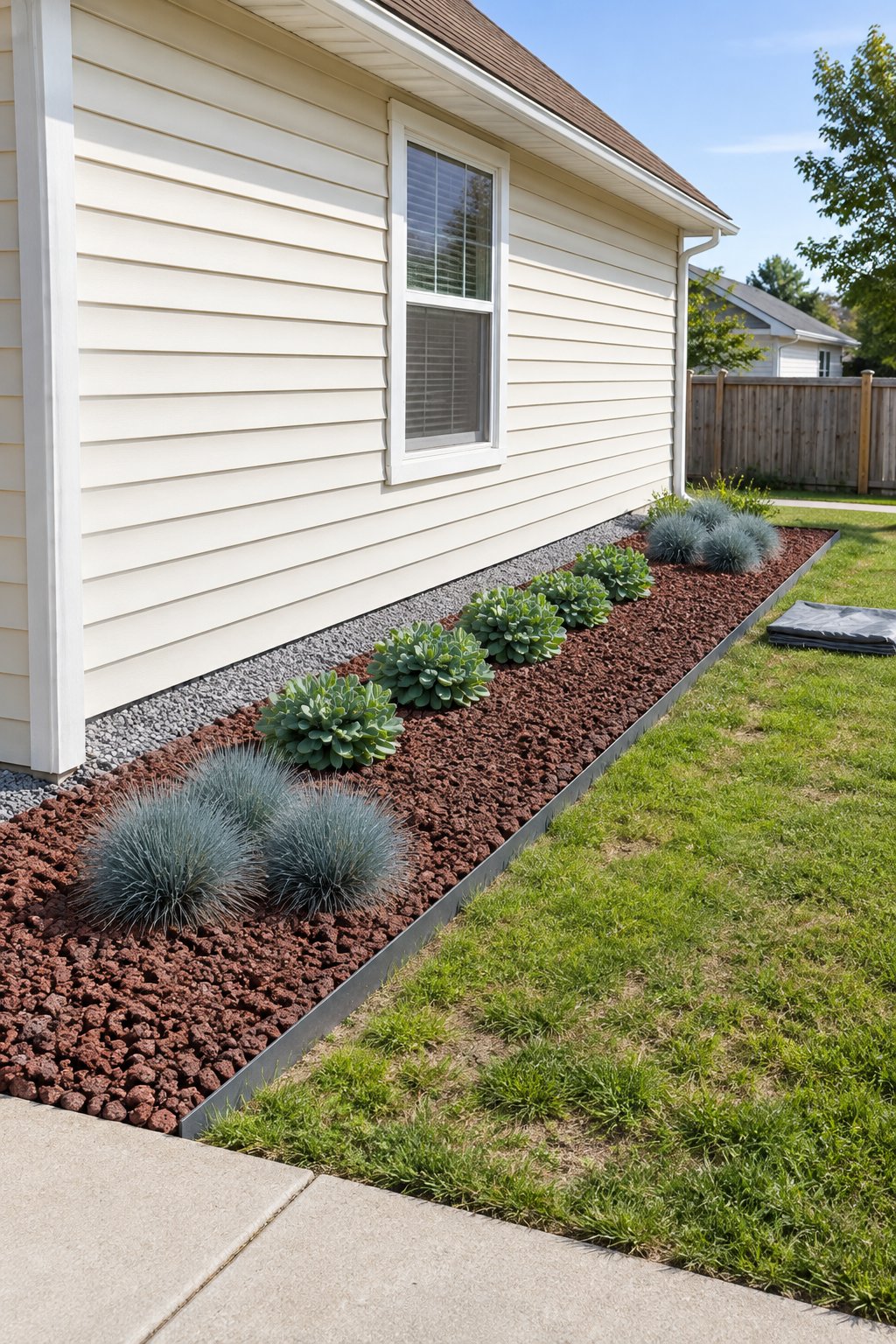
Red-brown lava rock is light, porous and rough, and it looks warm against pale siding. It does not lock together like crushed stone, and dark rock can hold heat, so leave a gap between it and a sunny wall.
Give it a firm edge and heat-loving plants, and it stays put.
17. Switch a Bark Bed to Stone Without Burying the Plants You Have
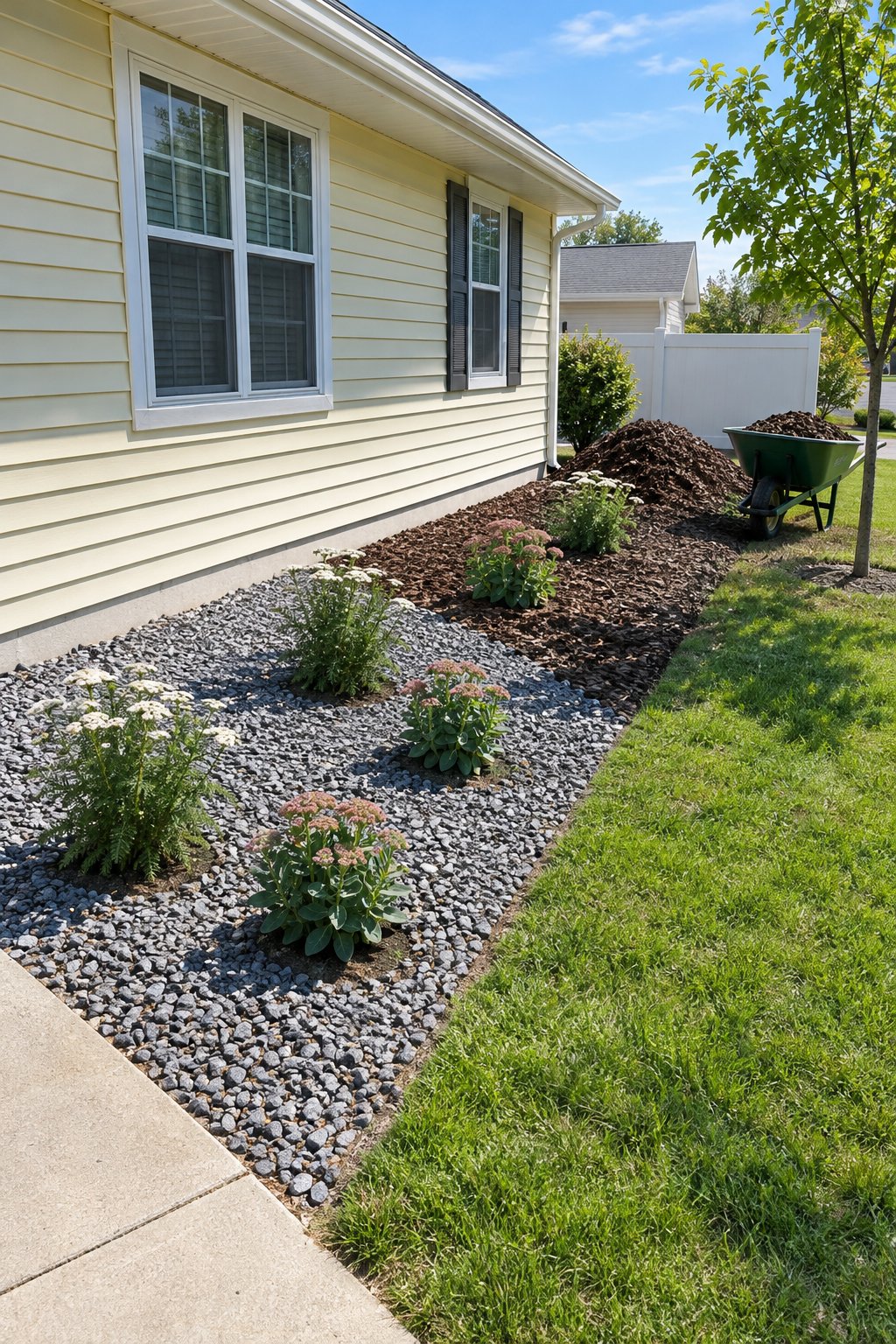
Rake the bark off first, because stone over bark just buries something that will rot. Then lay 2 to 3 inches of stone, keep it back from stems and crowns and keep only plants that like dry soil.
Rock is hard to remove later, so be sure before you spread it.
18. The Cheapest Version: Your Own Stones, Plant Divisions and One Load of Gravel
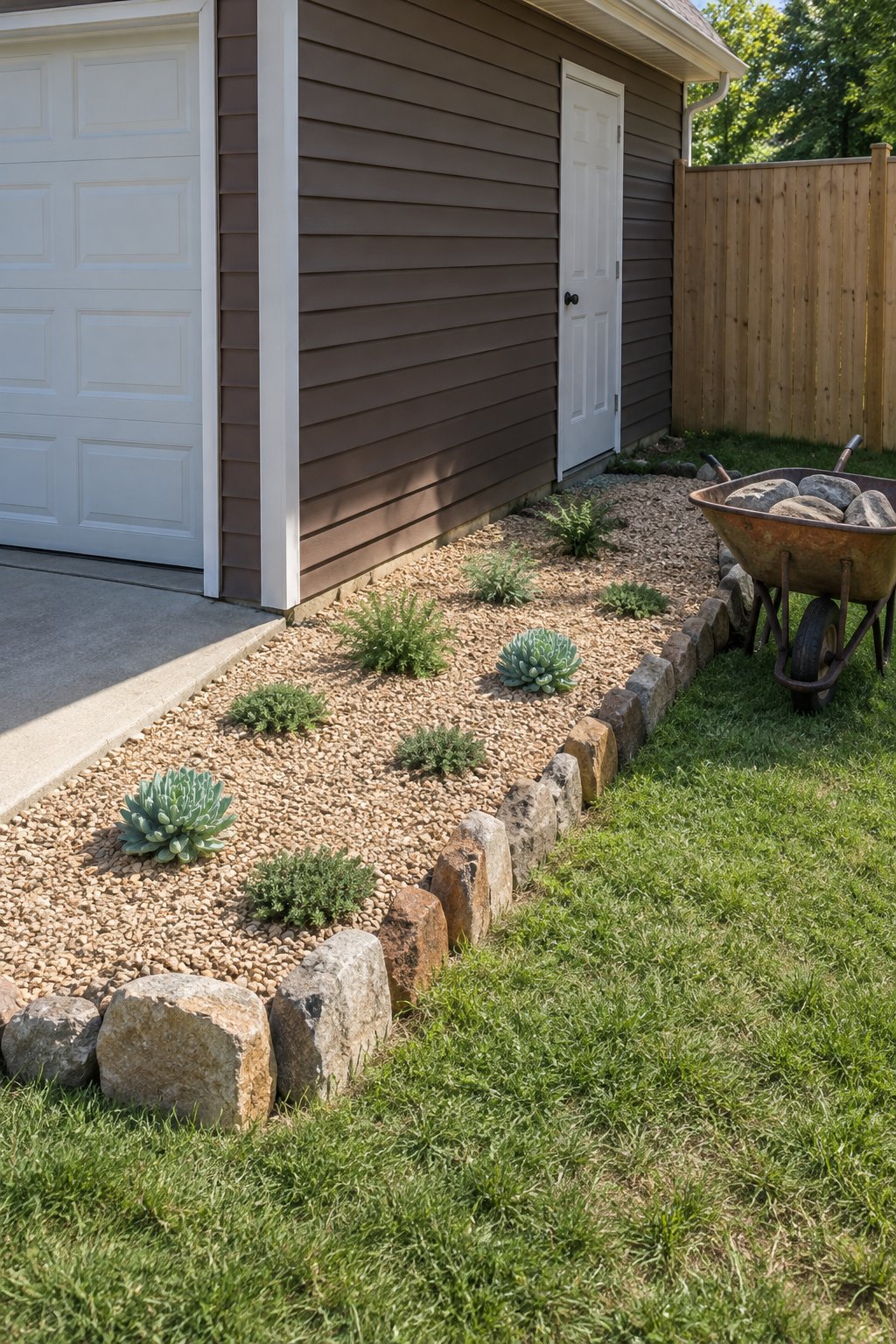
Collect fieldstones from your own yard, or from a friend with permission, and divide sedum and yarrow you already own. Buy one load of gravel for the base and spread it 2 to 3 inches deep.
Check before taking rock from public land, because many places do not allow it.
Rock Numbers on One Page
Every bed above rests on a few figures.
Check them against your supplier and your town before you order anything.
| What | The figure | Why |
|---|---|---|
| Depth of stone | About 2 to 3 inches for gravel, 3 to 4 for coarse stone | Less shows soil, more is wasted and slower to rake |
| Cubic yard | 27 cubic feet | Length times width times depth in feet, divided by 27 |
| Weight of gravel | Roughly 1.2 to 1.7 tons a cubic yard | Varies by stone and moisture, so ask the supplier |
| Coverage of one cubic yard | About 108 square feet at 3 inches, 162 at 2 inches | Worked from 27 cubic feet divided by the depth in feet |
| Downspout outlet | At least 5 feet from the foundation, often 10 on clay | Keeps roof water away from the house |
| Boulder burial | About a third of the stone below grade | Makes it look grown there and keeps it steady |
| No-plant zone near a wildfire house | The first 5 feet around the walls | State guidance such as California’s Zone 0, so ask your fire district |
Six Rock Landscaping Mistakes to Skip
Trusting weed fabric to last
Do thisFabric slows weeds for a couple of seasons, then dust and leaf bits on top let seeds root. Pull weeds while they are small and skip the fabric if you can.
Pale stone against a hot wall
Do thisStone gives heat back to the house and to plants beside it. Leave a gap of bare ground or keep thirsty plants a few feet away.
Rock under thirsty plants
Do thisRock mulch suits plants that like dry, well-drained soil. Keep hydrangeas and other water-lovers under bark.
Round stone on a slope
Do thisSmooth pea gravel and river rock roll downhill. Use angular crushed stone on a gentle slope and a wall on a steep one.
Spreading stone with no edge
Do thisStone creeps into the lawn and the mower throws it. Set a steel, brick or stone edge flush before you spread.
Never clearing the leaves
Do thisLeaves rot into the stone and seed weeds. Blow or sweep them off every fall, and top up thin spots.
How Much Stone to Order: Feet to Cubic Yards, With One Bed Worked Through
Suppliers sell stone by the cubic yard or by the ton, so you need both numbers.
Multiply length, width and depth in feet, then divide by 27, because one cubic yard is 27 cubic feet.
Take a bed 10 feet by 20 feet at 3 inches deep. Three inches is 0.25 foot, so 10 x 20 x 0.25 is 50 cubic feet, and 50 divided by 27 is about 1.85 cubic yards.
Add about 10 percent for settling and uneven ground, and the order is about 2 cubic yards.
Gravel and crushed stone commonly weigh roughly 1.2 to 1.7 tons a cubic yard, depending on the stone, so ask what yours weighs. At 1.4 tons a yard, 2 cubic yards is about 2.9 tons.
I would ask for the density in writing before I paid for a delivery by the ton.
Pick the one bed in your yard that costs you the most mowing, weeding or water, and start there. Mark it out with a hose, measure it, and work out the stone before you call a supplier.
One tidy rock bed that suits its spot beats three half-finished ones.
Frequently Asked Questions
How deep should rock be in a landscaping bed?
About 2 to 3 inches of gravel or crushed stone covers soil well, and coarse stone is often laid 3 to 4 inches deep. Thinner shows soil and thicker is mostly wasted.
Do I need weed fabric under rock?
It slows weeds for a while, but dust and leaf bits collect on top and weeds root there, and soil under fabric can dry out unnoticed. I would skip it in planting beds and keep fabric for dry creek beds and drainage, where it keeps soil out of the stone.
Does rock landscaping really need less water?
Stone cuts evaporation from the soil, so plants that like dry, well-drained soil do well in it. But stone can raise the temperature around plants, so new plantings still need regular water for the first season.
Can I put rock right against the house?
In wildfire country, fire guidance such as California’s Zone 0 asks for nothing combustible in the first 5 feet, so stone there is the usual advice. In hot sun, bare stone beside a wall gives heat back, so keep thirsty plants away from it and keep the stone below the siding.
Can I remove rock later if I change my mind?
It is hard work. Raking and shoveling stone pulls up soil with it, and the stone has to go somewhere, so be sure before you spread it.
You Might Also Like
Save This For Later

Loved rock landscaping ideas? Save this pin to your Pinterest board now so you can find it again anytime you need the inspiration.