Winter Window Box Ideas: 12 Evergreen Planters for Cold Months

Winter window box ideas start with timing: fill the box before the potting mix freezes, and it holds until spring.
These 12 use cut greens, bright stems, berries and a few living evergreens, sorted by window and light.
Cut greens suit any window; living plants need the right zone.
Find your window
1. Fir, White Pine and Cedar in Three Layers Under Double-Hung Windows
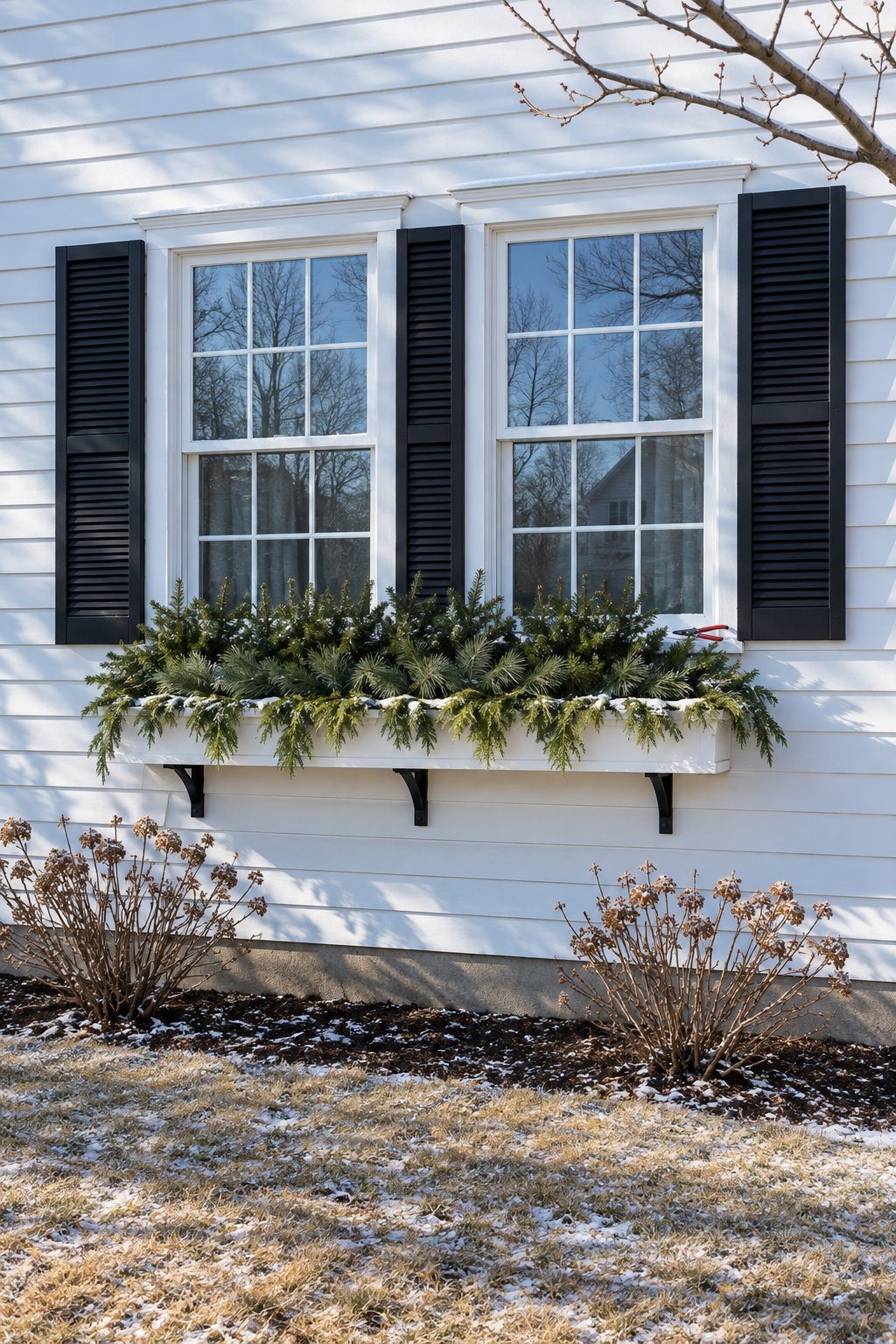
Three greens are plenty, as long as each one has a job: fir standing at the back, white pine filling the middle, cedar spilling over the front edge.
Push every stem a few inches into moist mix before it freezes, and the frozen soil holds the whole arrangement until spring.
2. Red-Twig Dogwood Standing Upright for a Tall Brick-Colonial Window
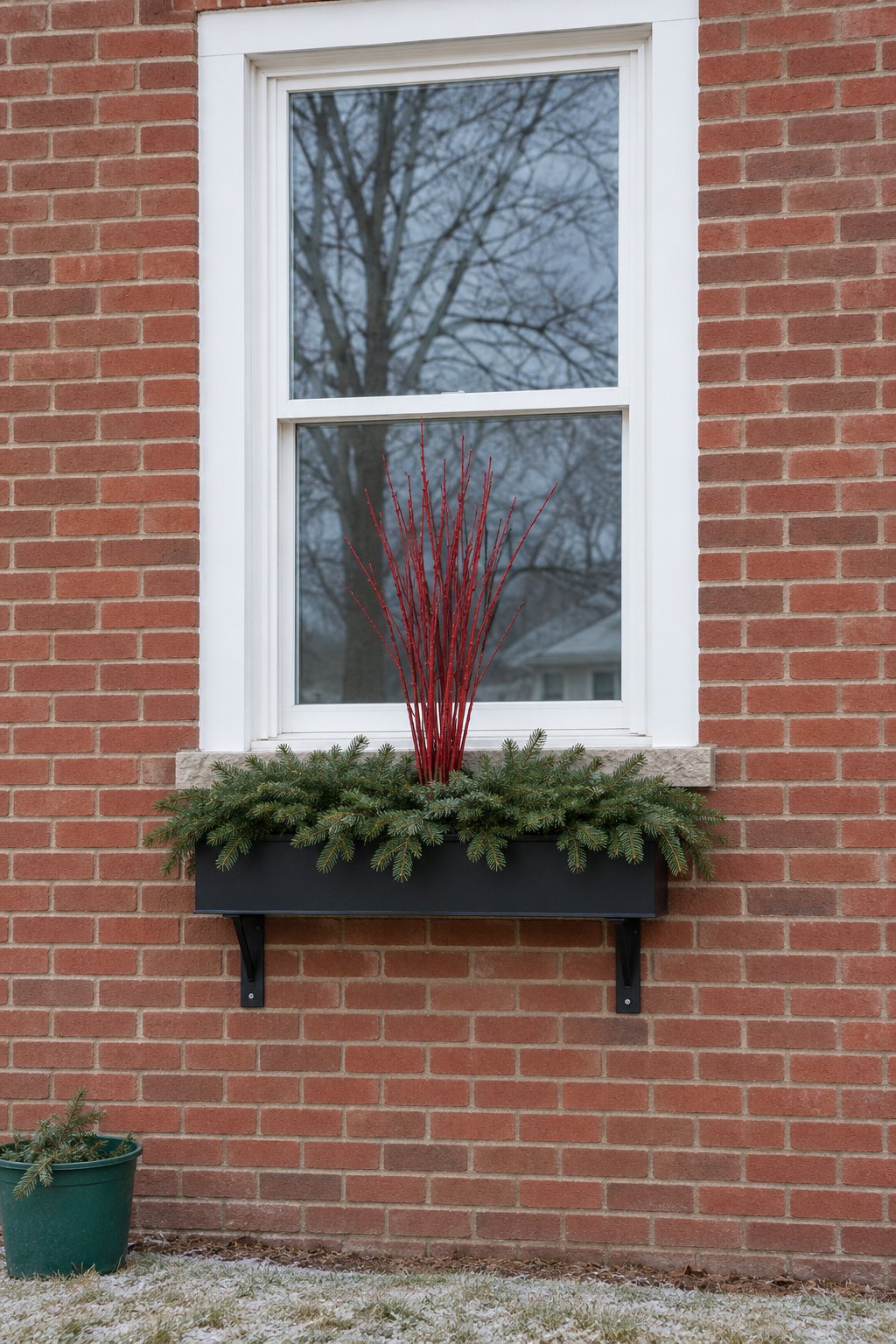
A tall window makes a low box look like a ledge, so give it height: a bundle of red-twig dogwood stems standing straight up out of a bed of fir.
Keep the stems in one tight group in the middle third, so they read as a single stroke of red from the street.
3. Yellow-Twig Dogwood Over Boxwood Against Charcoal Siding

Dark siding swallows dark greens, so this box leans on the brightest stems of winter: yellow-twig dogwood fanned over a mound of cut boxwood.
Cut boxwood stays fresh outdoors for weeks, and its small leaves make a tidy base under the loose stems.
4. Winterberry Branches Over Fir Under a Wide Ranch Picture Window
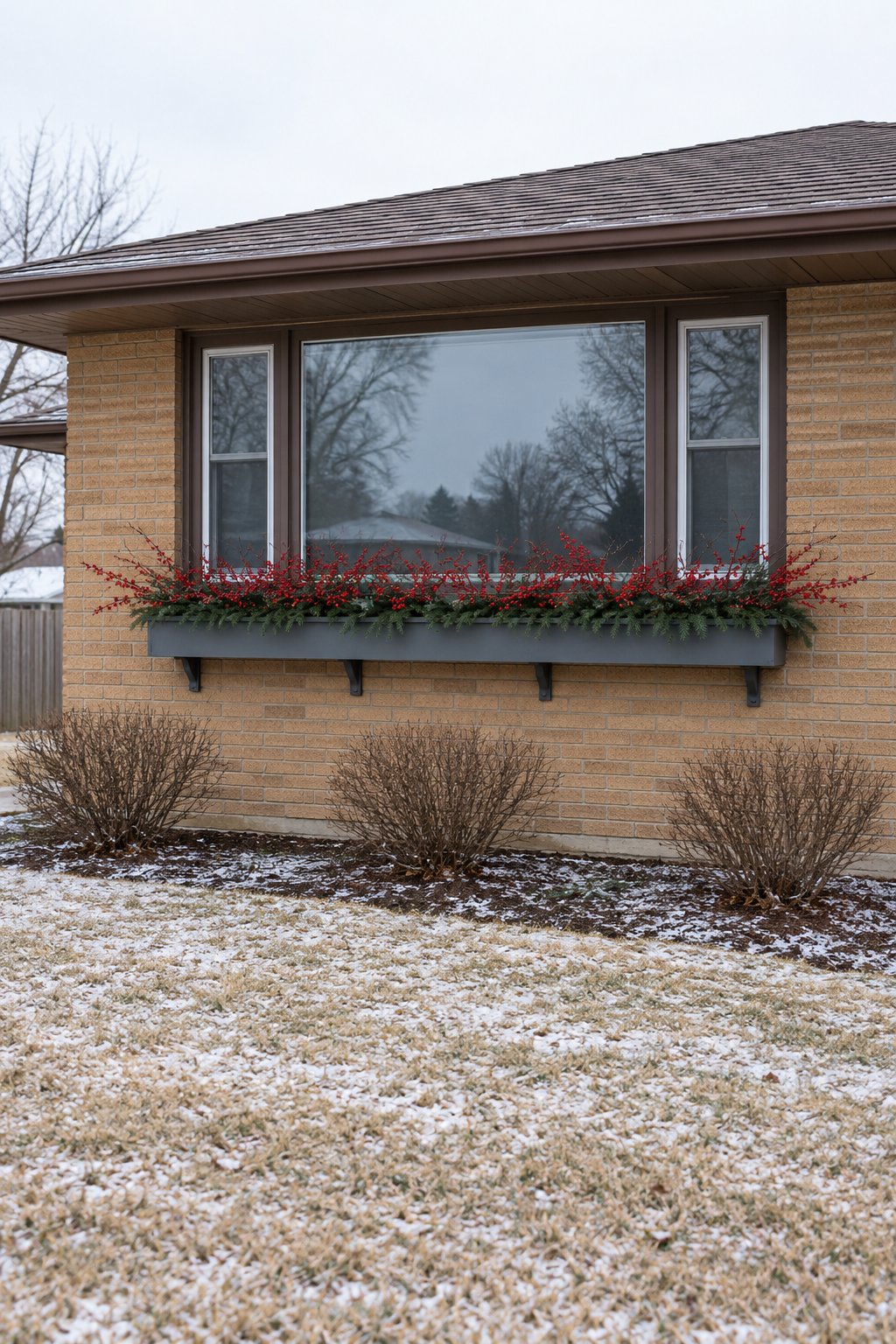
Winterberry is a native holly that drops its leaves in fall and keeps red berries on bare stems, which is exactly what a long, low box under a picture window wants.
Cut branches come with their berries already set; only a living shrub needs a male plant nearby to fruit.
5. Magnolia Leaves and Cedar in a Narrow Box Under Bungalow Casements

Southern magnolia is the broadleaf green I would trust in a box all winter: glossy on top, rusty brown underneath, and it keeps its shape outdoors.
Turn a few leaves brown side out, and the box gets a second color with nothing else added.
6. Matching Boxes of White Pine and Cones for a Pair of Shuttered Windows
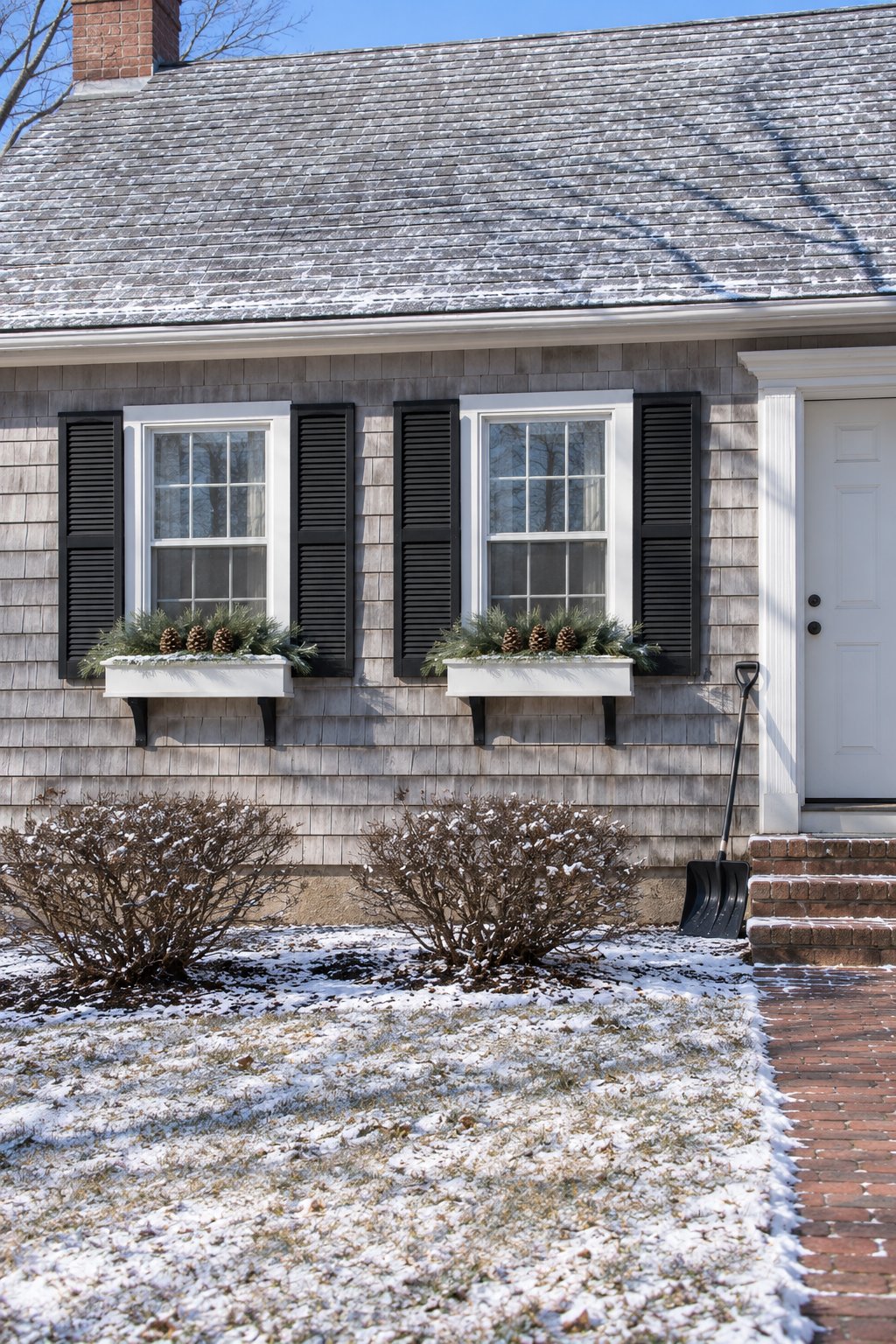
Two windows side by side want two boxes filled the same way, or the front of the house starts to look lopsided from the street.
Soft white pine with three natural cones on short stakes is about the simplest fill there is, and it still reads from the sidewalk.
7. Three Blue Star Junipers in a Box on a Sunny South Wall
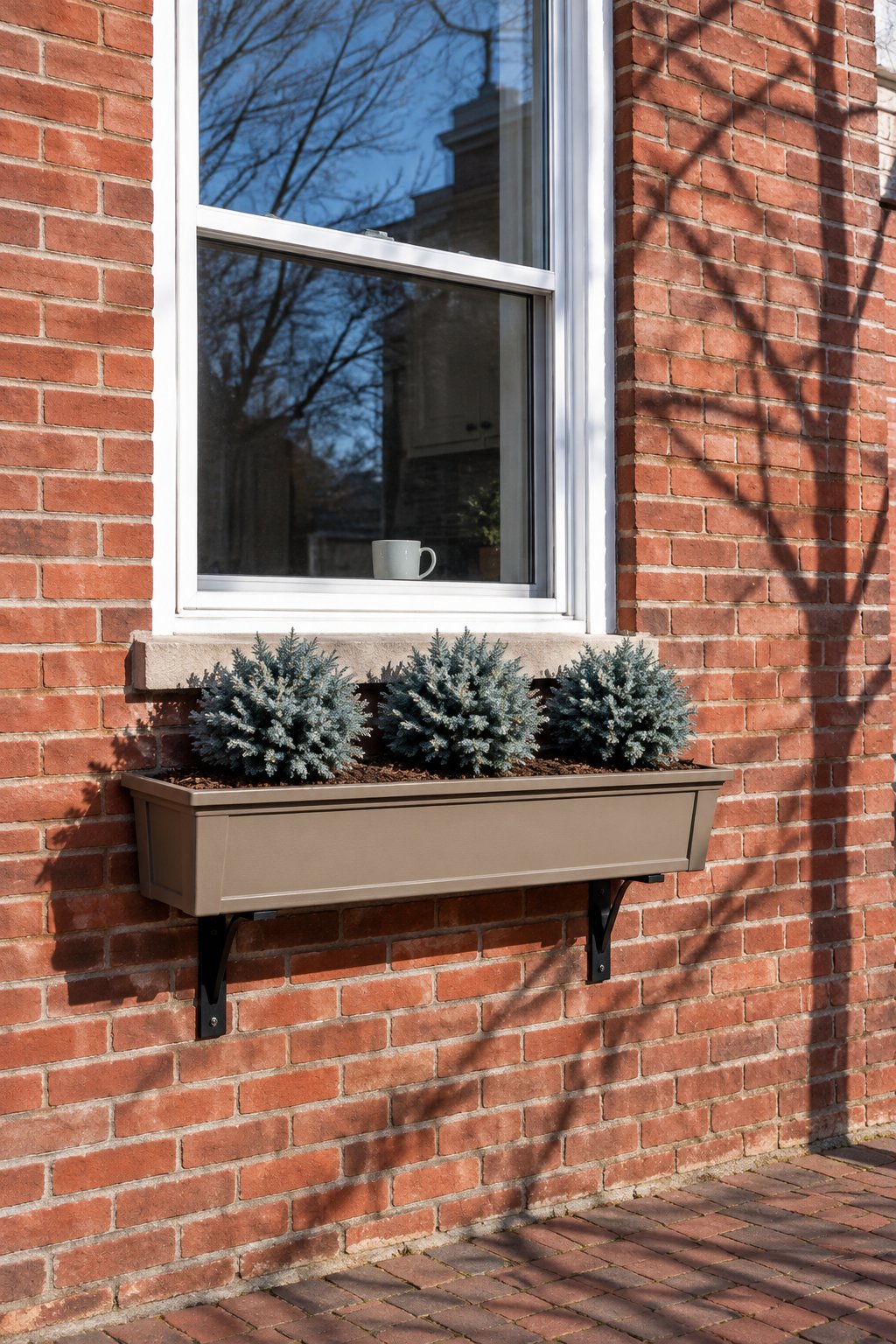
A window in full sun all day is the one place a living box beats cut greens: three Blue Star junipers stay silver-blue all winter and grow slowly.
Tags rate them to about zone 4, so by the two zones colder rule I use for porch pots, this box stays out in about zone 6 to 8.
8. Golden Mop Cypress and Blue Rug Juniper for a West Window
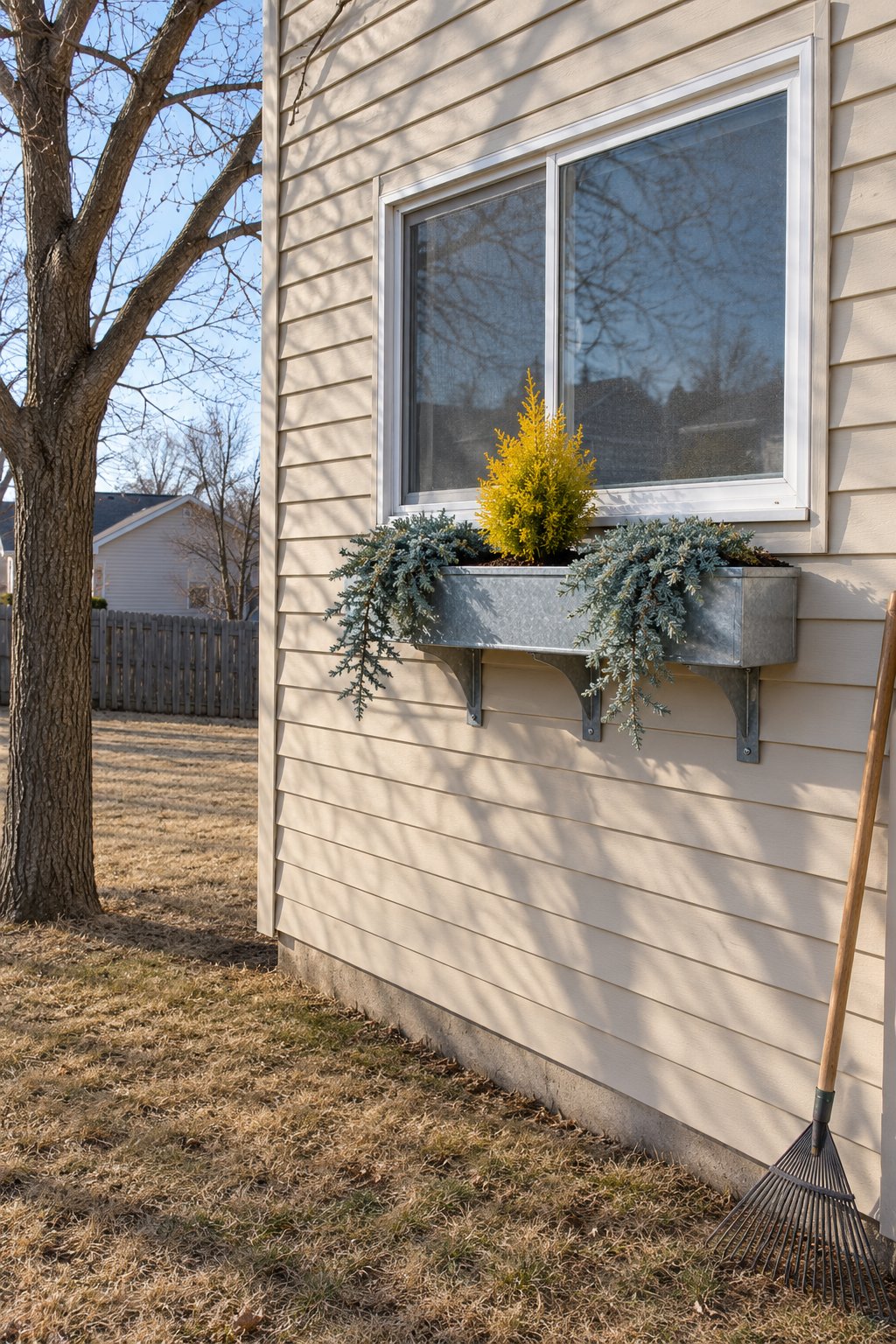
Hard afternoon sun suits gold and blue better than green: Golden Mop false cypress upright in the middle, Blue Rug juniper trailing over the rim.
Both want full sun and fast drainage, and the cypress is rated to about zone 4, so this box stays out in about zone 6 to 8.
9. A Clipped Row of Green Velvet Boxwood for a Part-Sun Craftsman Window
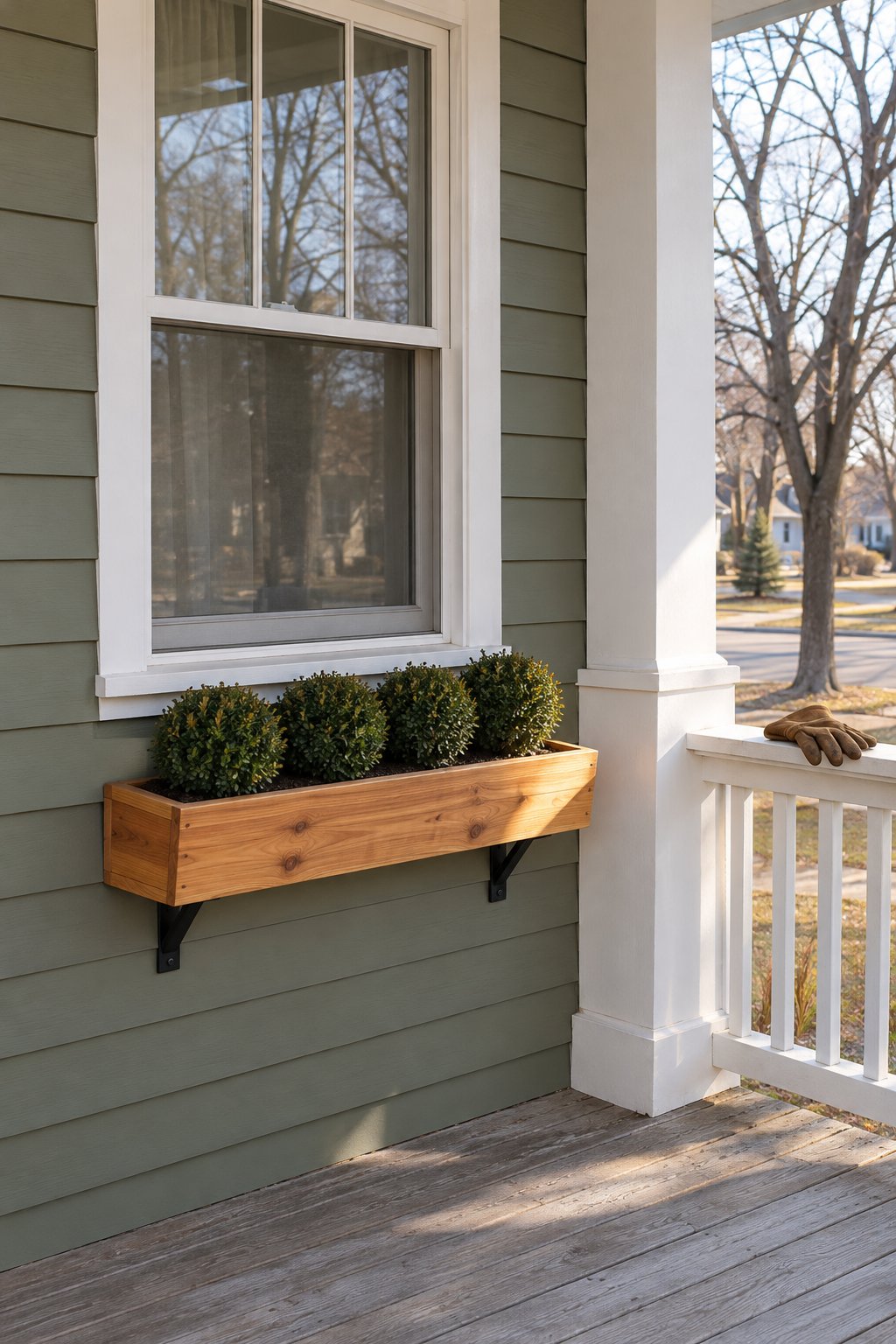
A row of small round boxwood is the calmest winter box I know, and it is happy with sun for half the day.
Tags rate Green Velvet to about zone 5, so in a box I would leave it out only in about zone 7 and warmer, and water it in winter thaws.
10. Hellebores and Wintergreen Under a North-Facing Window

North windows are where most living winter boxes give up, and hellebores are the exception: leathery evergreen leaves, then flowers in late winter to early spring.
Wintergreen makes a low, glossy edge with red berries, and both are rated to about zone 4, so the box stays out in about zone 6 and warmer.
11. A Pre-Filled Liner Lifted Into a Second-Story Box

For a window you can only reach from a ladder, do the arranging on the ground: fill a plastic liner with moist mix, fir, cedar and a few red stems at a table.
Let it drain before it goes up, because you already know how heavy a long window box gets when wet, and a ladder is no place to fight it.
12. Under a Deep Porch Roof, Give the Greens a Drink

A box under a porch roof gets no rain and no snow, so its soil goes dust-dry while the yard beyond it is soaked.
Water the mix on mild days once it has thawed, so the stems sit in damp soil instead of dry crumbs.
Winter Window Box Numbers on One Page
Every box above rests on a few rules.
Check your own zone and your window’s light against them before you cut or buy.
| What | The figure | Why |
|---|---|---|
| When to fill | Mid to late November in cold regions, before the mix freezes | Frozen mix will not take a stem, but it holds them once set |
| Longest-lasting cut greens | Fir and white pine, with boxwood, magnolia and cedar close behind | Spruce sheds sooner, and hemlock drops its needles fast |
| Living plants in a box | Rated about two zones colder than yours | Roots in a box get colder than roots in the ground |
| Watering a living box | Soil thawed, air above about 40 F, around midday | The water soaks in before the night freeze |
| Cutting from your own shrubs | No more than a third of any one plant | The shrub stays full and grows back |
| Box material | Fiberglass, resin, metal or wood, with drainage holes | Clay and glazed pottery can crack in freeze and thaw |
Six Winter Window Box Mistakes to Skip
A terracotta or glazed box left out
Do thisClay and glazed pottery can crack as wet soil freezes and thaws. Use fiberglass, resin, metal or wood, with drainage holes.
Waiting until the mix has frozen
Do thisFill the box while the potting mix is still soft, often mid to late November in cold regions, because frozen mix will not take a stem.
Hemlock as the base green
Do thisShort-needled hemlock drops its needles fast once cut. Build the base from fir or white pine instead.
Living plants rated only to your zone
Do thisPick plants rated about two zones colder than yours, or stick to cut greens in a box that winters outside.
Stripping one shrub for greens
Do thisTake no more than a third of any one plant, and spread your cuts across several shrubs.
Forgetting the box under the eaves
Do thisA covered box gets no rain or snow, so check it on mild days and water once the mix has thawed.
Winter Burn Is Thirst, Not Cold: Why a Living Box Needs Water in January
When a living evergreen browns in winter, it is usually drying out, not freezing. Needles keep losing water on sunny, windy days, and roots in frozen soil cannot replace it.
A window box holds only a few inches of mix, so its roots freeze sooner and harder than the same shrub’s would in a bed.
Nebraska Extension’s advice is to water only when the soil has thawed and the air is above about 40 F, around midday, so it soaks in before night.
Illinois Extension notes that sprays sold to seal in moisture do not last long enough to stand in for that.
On the first mild day of January, I would rather lift the edge of the liner and feel the weight than guess.
Start with one box and three cut greens before the mix freezes: fir at the back, pine in the middle, something that trails at the front. Add stems or berries once you see how it reads from the street.
If the box sits over bare ground, a narrow planted strip under the windows finishes the picture in spring.
Save living plants for boxes in milder zones and windows with steady light.
Frequently Asked Questions
When should I put winter greens in a window box?
After frost has finished the summer plants and before the potting mix freezes, which is often mid to late November in colder regions. Water the mix first and let it settle, so the stems sit firmly.
How long do cut evergreens last in a window box?
Outdoors in the cold, a box of fir and pine usually holds until spring. Spruce sheds sooner and hemlock drops its needles fast, so leave hemlock out.
Can I leave living plants in a window box all winter?
Only plants rated about two zones colder than your own, because roots in a box get much colder than roots in the ground. In about zone 5 and colder, cut greens are the safer choice.
Do winterberry branches need a male plant?
Only a living shrub does: winterberry plants are male or female, and a female sets berries only with a male of the same species blooming nearby. Cut branches already carry their berries, so use them as they are.
Do I need to water a winter window box?
A box of living evergreens, yes: water when the mix has thawed and the air is above about 40 F. A box of cut greens needs little once frozen, except under a roof where no rain reaches it.
You Might Also Like


Save This For Later

Loved winter window box ideas? Save this pin to your Pinterest board now so you can find it again anytime you need the inspiration.