Side Yard Pathway Ideas: 16 Walkways for the Strip Beside the House

Side yard pathway ideas have to solve a strip most of us ignore: 4 to 10 feet between two houses, often wet, shady and full of bins.
These 16 walkways handle the water, the wheels, the gates and the planting.
For path surfaces in general, my garden path ideas cover the basics.
What is your side yard’s problem?
1. Path on the High Side, a Shallow Swale Down the Low Middle
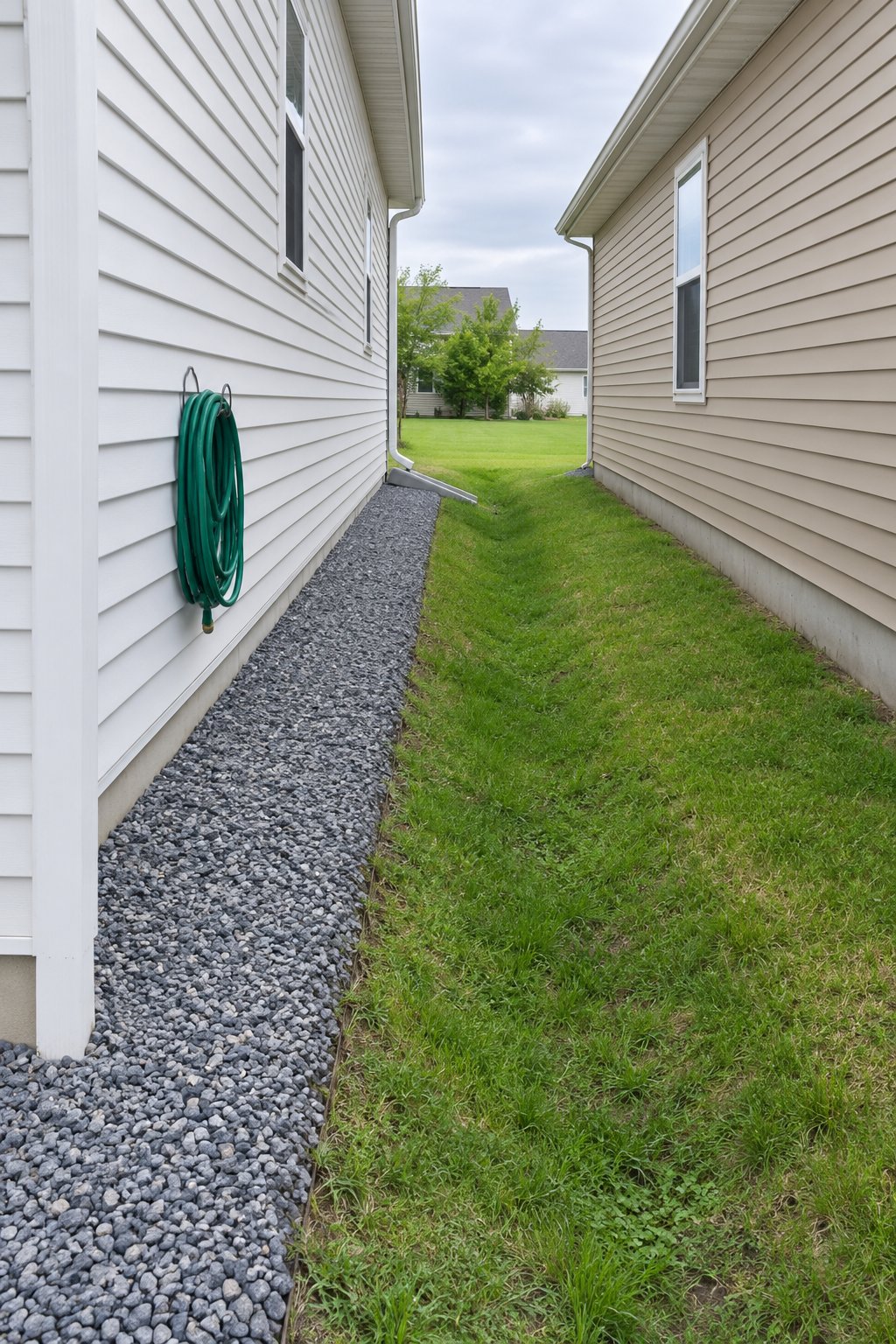
Side yard pathway ideas start with the water, because two roofs drain into one strip. Keep the walk on the high ground beside your wall and let a shallow grassed swale carry the runoff down the low line.
The ground should fall away from the foundation, about 6 inches in the first 10 feet where there is room.
2. Downspout Piped Under the Paver Path Instead of Across It
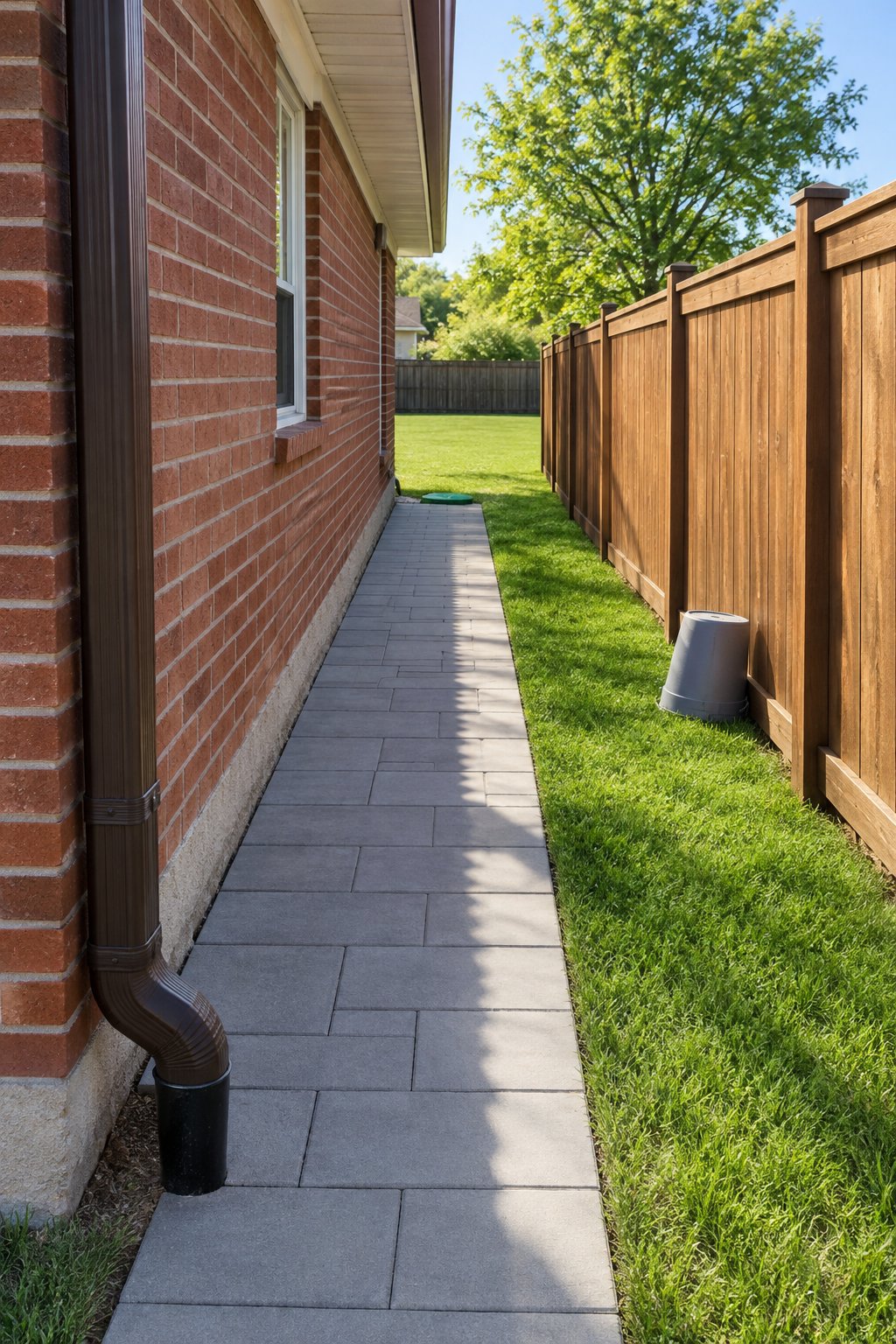
A downspout that empties onto the walk leaves a wet stripe and, in a cold winter, a sheet of ice. Connect it to a solid pipe buried under the path that carries the water past the house to a pop-up outlet in the lawn.
Running a hose down the downspout before you backfill is the cheapest test there is.
3. Flat Stepping Stones Along the Bank of a Dry Creek Bed

When a side yard carries real runoff, give the water its own channel of river rock and walk beside it, not in it. Set large flat stones on the higher bank, one stride apart.
The creek takes the low line and the path takes the high one.
4. A Gravel Path That Is Also the Top of a French Drain
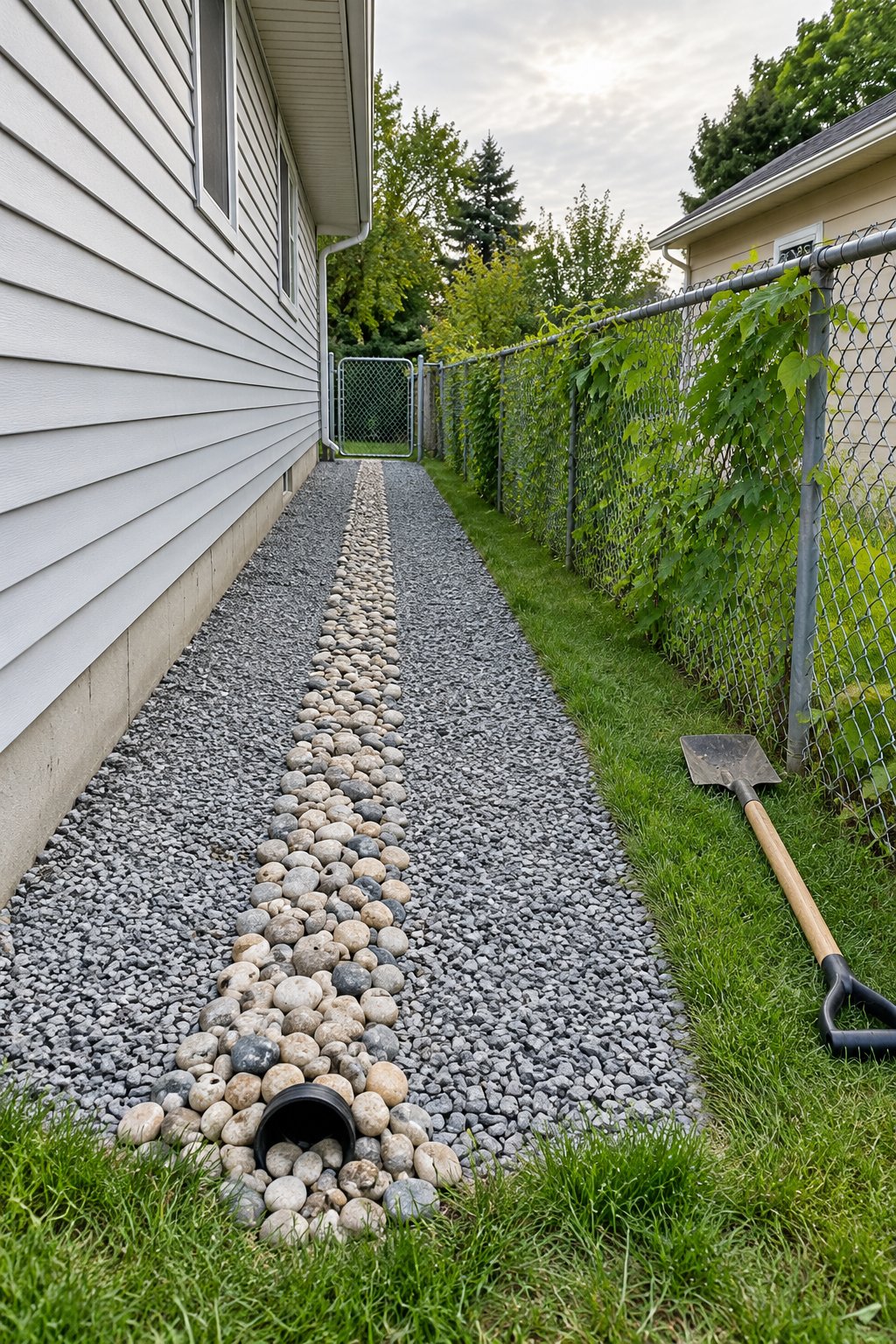
In a strip too narrow for a swale, bury the drain under the walk. A perforated pipe in a fabric-lined trench of washed stone collects the water, and packed crushed stone on top becomes the path.
Give the pipe a fall of at least 1/8 inch a foot and a real outlet downhill, or it just fills up.
5. A Paver Pad for the Bins Just Inside the Front Gate

Trash night is the side yard’s busiest hour, so park the carts where they leave from. A paver pad just inside the front gate keeps them off the walk and saves a trip down the whole strip.
A common 96-gallon cart is about 30 inches wide and 35 to 36 inches deep, so measure yours and add elbow room.
6. Four-Foot Paver Walk You Can Roll a Bin Down Without a Bump
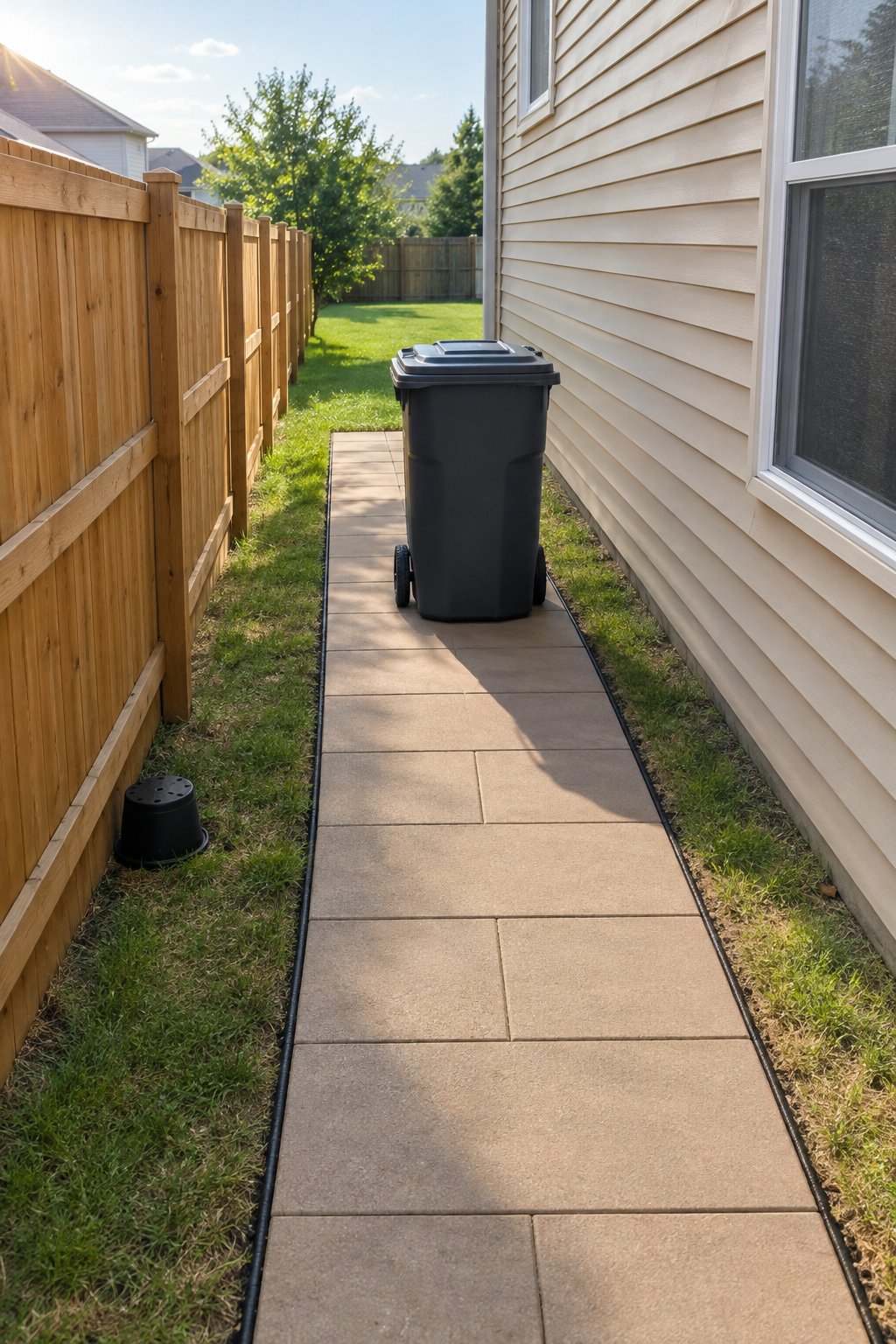
Wheels want a firm, flat, joint-tight surface, and spaced stepping stones fight them. Lay concrete pavers tight on 4 to 6 inches of packed crushed stone and an inch of sand.
Three feet fits a cart or a barrow alone, and about 4 feet fits you beside it.
7. A Gentle Ramp Instead of Steps Where the Side Yard Drops
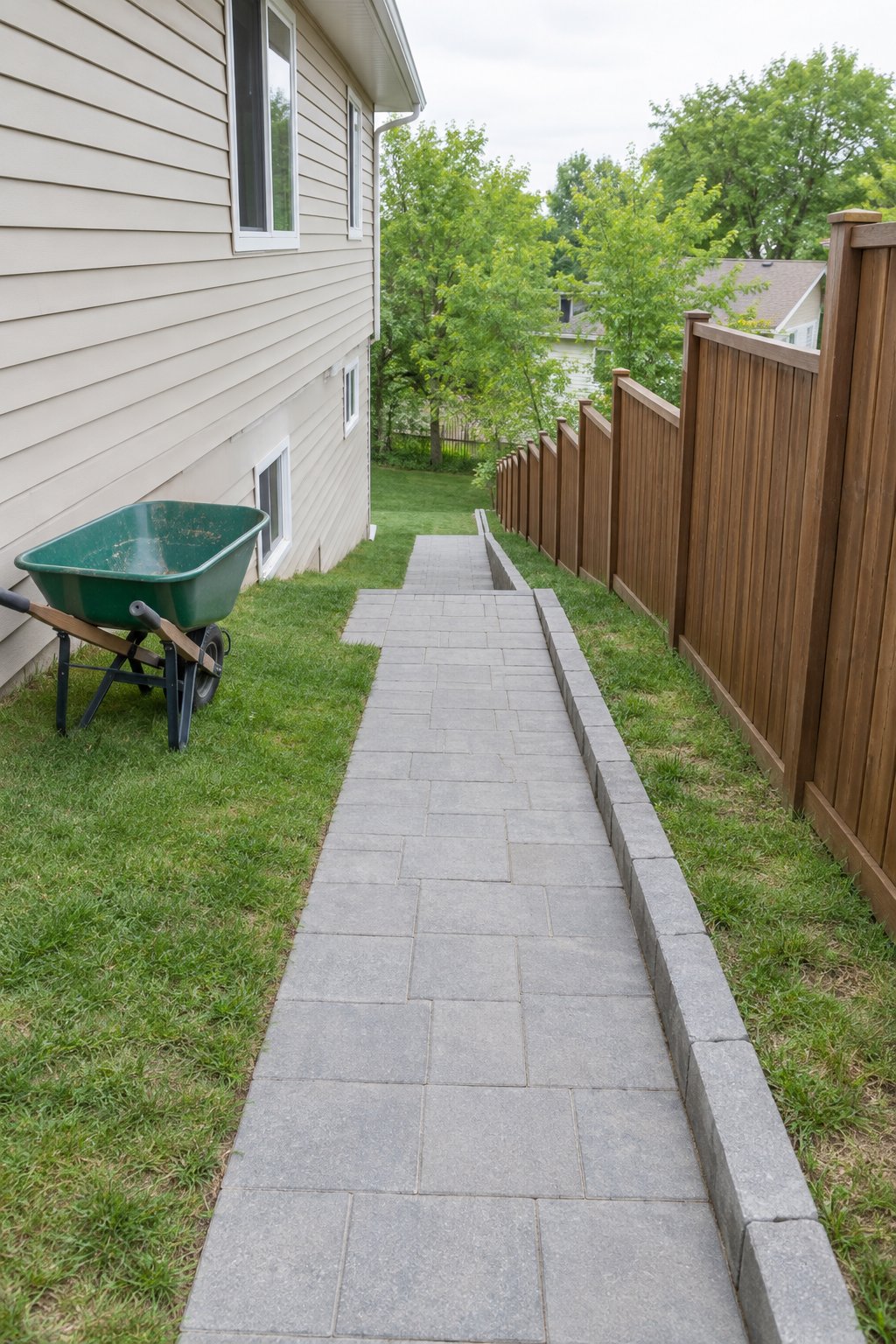
Steps stop wheels, so a side yard that falls toward the back works better as one long, gentle slope. Keep it no steeper than 1 in 12, the limit the ADA sets for public ramps, and gentler still for a loaded barrow.
Use a gritty surface, because a slope is the first place to turn slick when wet.
8. Two Gates With a Paved Landing at Each, Wide Enough for the Mower
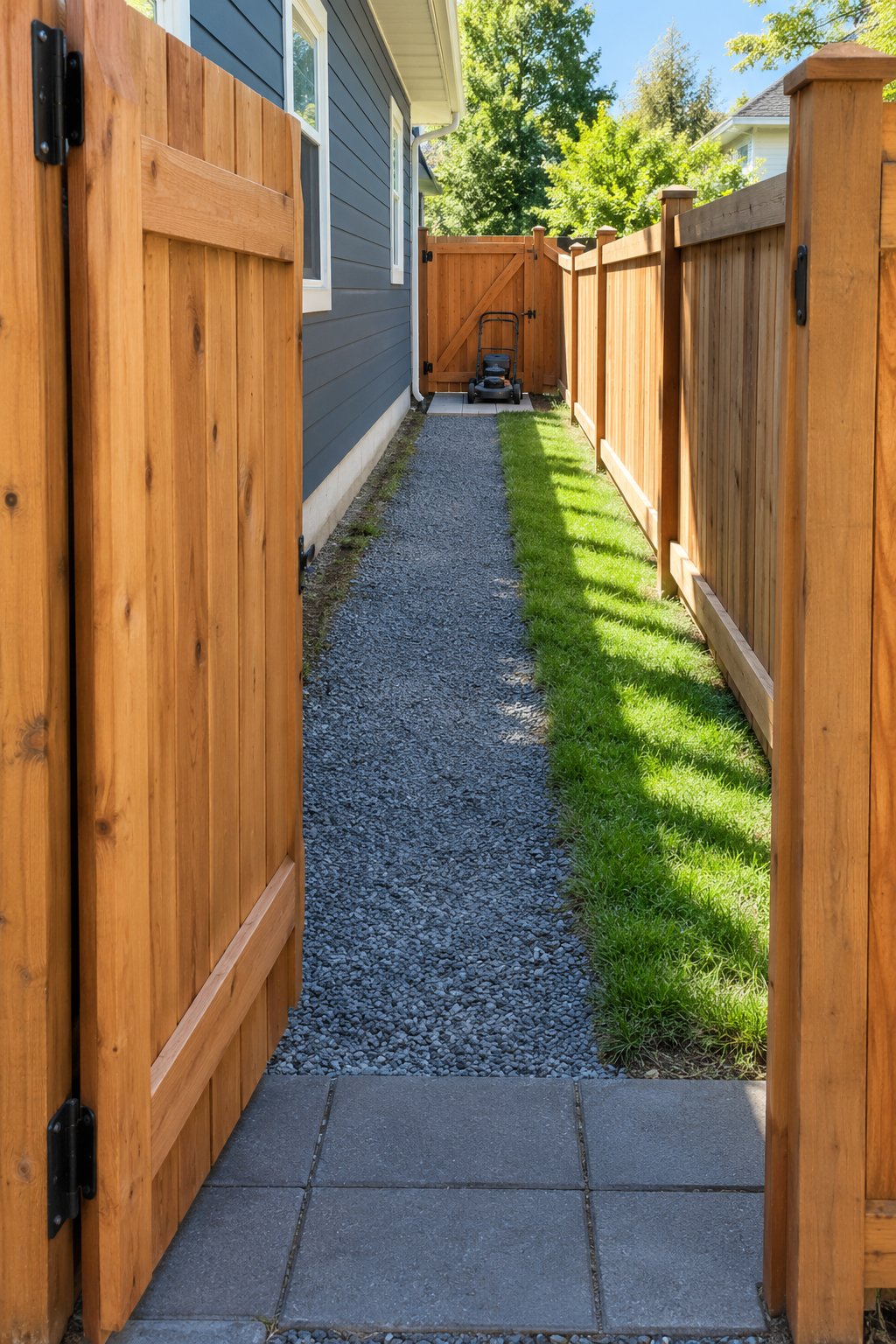
A side yard with a gate at each end is really a hallway, so give each gate a firm landing on both sides. Make the openings as wide as the path, about 4 feet, so a mower or a garden cart clears the posts.
I’d hang both gates to swing into my own yard, never out over the sidewalk.
9. A Gravel Bay at the Hose Bib and the Meters, Off the Walking Line
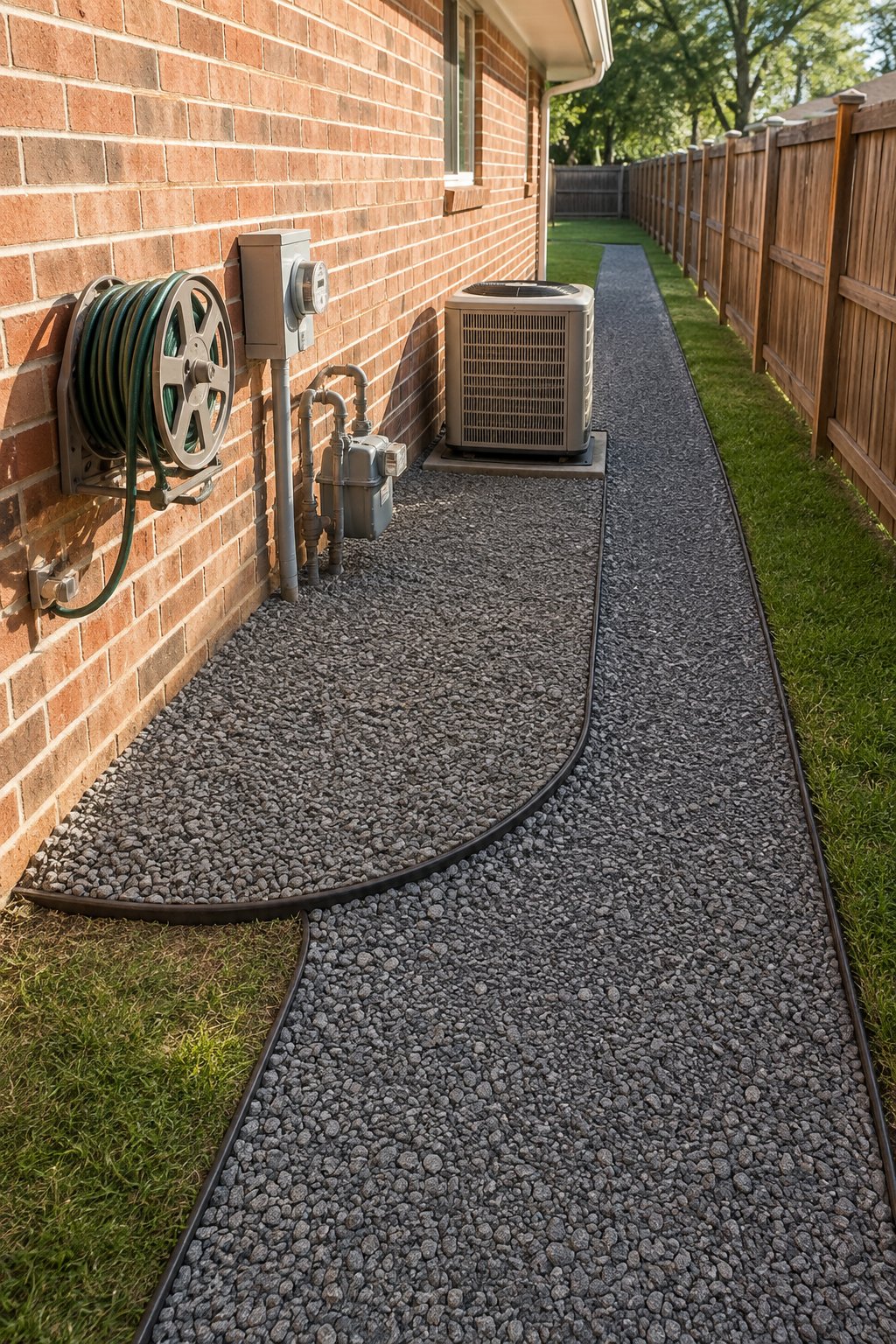
Spigots, meters and the A/C unit tend to live in the side yard, and someone has to reach each one. Give them a bay of crushed stone that bulges out from the path, so a coiled hose or a meter reader never blocks the walk.
Keep plants and screens out of the clearance your utility or the A/C manual asks for.
10. Large Square Pavers With a Row of Christmas Fern at the Fence

A north side yard gets little or no direct sun, which suits ferns far better than grass. Run large square pavers along the house and leave an 18-inch bed at the fence for Christmas fern.
It stays green through winter, takes shade, is hardy in roughly zones 3 to 9 and wants soil that drains.
11. Rough Exposed-Aggregate Slabs Set in Gravel, With Japanese Forest Grass

Smooth concrete and brick stay damp on a shady side and can grow a slick green film. Rough exposed-aggregate slabs set in crushed stone give a better grip and let water drain between them.
Japanese forest grass suits the part-shade edge, hardy in roughly zones 5 to 9 in evenly moist, well-drained soil.
12. Wood Chips Over Cardboard for a Rental or a Strip You Will Redo Later

If you rent, or the drainage fix is a year away, chips are the honest stopgap. Lay plain cardboard over the weeds, spread 3 to 4 inches of arborist chips and edge them with timbers set on the ground.
No digging, and it all rakes up when you leave.
13. Stabilized Decomposed Granite Along a Hot West Wall, Creeping Thyme at the Edge

A west side yard bakes all afternoon, and grass along it rarely holds up. Decomposed granite with a binder mixed in packs into a firm surface, held by steel edging on both sides.
Creeping thyme fills the fence edge in full sun and well-drained soil, roughly zones 4 to 8, and takes light foot traffic only.
14. Long Concrete Planks Laid Crosswise So the Strip Looks Wider

Lines that run across a narrow space make it read wider, while lines running down it make a corridor. Set long concrete planks crosswise like ladder rungs, with narrow joints of fine stone.
Fill the joints flush and keep them to 2 or 3 inches, so a wheel or a heel never drops in.
15. Clematis on Wires Along the Fence Instead of Shrubs That Eat the Path

Shrubs push out into a narrow walk, but a climber goes up and stays a few inches deep. Stretch a grid of wires on the fence, train clematis along it and keep the bed in front about a foot wide.
Clematis wants about six hours of sun on its leaves and a cool, mulched root zone.
16. Low-Voltage Path Lights on a Plug-In Transformer, and a Light at the Far Gate

Solar stake lights need hours of direct sun to charge, which a strip between two houses rarely gets. A low-voltage kit runs off a transformer plugged into an outdoor GFCI outlet, with the cable laid along the path edge as the kit directs.
No extension cords, and a new outlet or a hardwired gate light is an electrician’s job.
Side Yard Numbers on One Page
Most of the ideas above rest on a few figures.
Your town may have adopted its own version of the code, so check there before you regrade or build.
| What | The figure | Why |
|---|---|---|
| Ground fall from the foundation | About 6 inches in the first 10 feet | The model building code’s rule, so rain runs away from the house |
| When the next house is closer | At least 5 percent away from the wall, to a swale or drain | The code’s fallback where lot lines leave no room |
| Paving within 10 feet of the house | At least 2 percent pitch away | Hard surfaces shed water fast |
| Base under pavers | 4 to 6 inches of packed crushed stone, plus 1 inch of sand | Go deeper on clay or in frost country |
| Path width | 3 feet for a cart or barrow, about 4 to walk beside it | A common 96-gallon cart is about 30 inches wide |
| French drain fall | At least 1/8 inch per foot | Less, and water sits in the pipe |
| Ramp slope | No steeper than 1 in 12 | The ADA’s limit for public ramps, a fair ceiling for a barrow |
Six Side Yard Path Mistakes to Skip
Building the path in the low spot
Do thisKeep the walk on the high side near a wall and give the water its own swale, creek bed or drain.
Round pea gravel on the bin route
Do thisRound stone rolls under wheels and feet. Use packed crushed stone or tight pavers where carts go.
Shrubs planted at the path’s edge
Do thisRead the mature width on the tag and keep beds to what the strip can spare, often 12 to 18 inches. Grow up the fence instead.
Soil or mulch piled against the siding
Do thisKeep the finished surface about 6 inches below the siding so the wall can dry.
Blocking the meters and the spigot
Do thisLeave a clear bay in front of them and the clearance your utility asks for.
Digging without calling 811
Do thisGas, power and water lines often run down a side yard. Call 811 a few working days before you dig, even for a shallow trench.
Whose Strip Is It? Find the Property Line Before You Pave
Side yards are where property lines get fuzzy, because the fence is often not on the line. Before you pave, edge or move a gate, find your plat or survey, often in your closing papers or at the county recorder’s office.
If the line is unclear, a licensed surveyor can mark it, and that costs less than moving a finished path.
Check too for a utility or drainage easement along the side. It can limit what you build there, and crews may have the right to dig it up.
Talk to the neighbor before you change where the water goes, because a swale that dumps onto their side becomes a problem you both own.
Start with one rainstorm: stand in the side yard, watch where the water goes, then put the path on the high side.
Sort the water and the wheels first, and the plants and lights are easy to add later.
Frequently Asked Questions
How wide should a side yard path be?
Three feet fits a wheelbarrow or one trash cart, and about 4 feet lets you walk beside it. In a 4-foot side yard, give nearly all of it to the path and grow plants up the fence instead of out.
What is the best material for a side yard path?
For rolling bins, tight pavers or packed crushed stone on a 4 to 6 inch base. For foot traffic only, stepping stones or wood chips cost less; skip round pea gravel wherever wheels go.
How do I fix drainage in a side yard between two houses?
Grade the ground away from each foundation, then send the water down a shallow swale, a dry creek bed or a French drain to an outlet your town allows. Big regrading close to a foundation is worth a landscaper’s or engineer’s look.
What grows in a narrow shady side yard?
Compact shade plants such as Christmas fern in shade and Japanese forest grass in part shade. Read the mature width on every tag and keep the bed to about 18 inches.
Do solar path lights work in a side yard?
Only if the strip gets several hours of direct sun, and between two houses it often does not. A low-voltage kit plugged into an outdoor GFCI outlet is the more reliable choice.
You Might Also Like

Save This For Later

Loved side yard pathway ideas? Save this pin to your Pinterest board now so you can find it again anytime you need the inspiration.