Small Sloped Backyard Ideas: 14 Ways to Use a Hill Instead of Fighting It
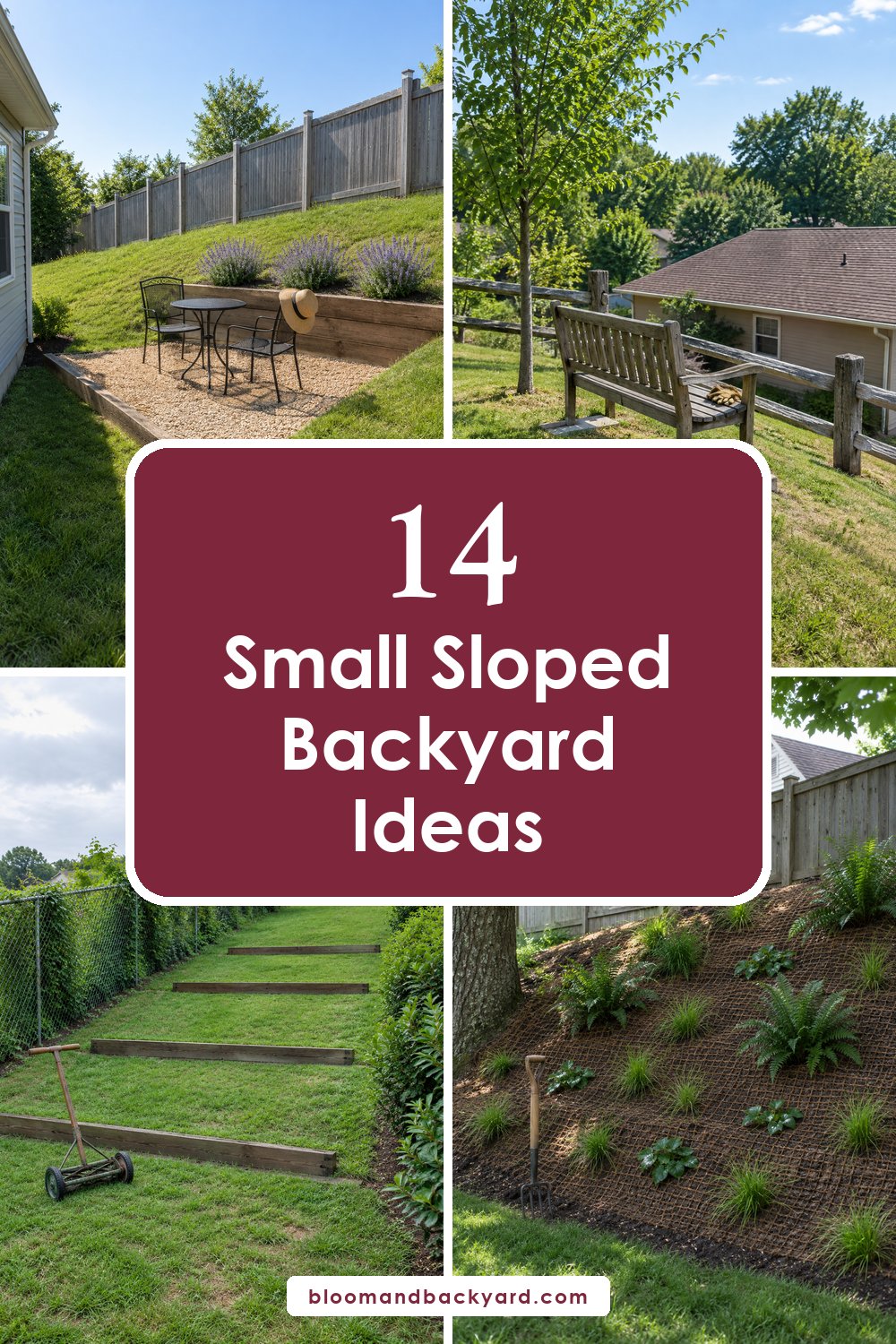
Small sloped backyard ideas work best when you stop trying to flatten the whole hill and level only the spots you use.
These 14 cover a flat place for a table, steps, play, planted banks and the water running down it.
Each one says what it takes, from a spade to an engineer.
Find your yard
1. A Bistro Terrace Cut Into the Hill, Built From Its Own Soil

Where the yard rises behind the house, dig into the uphill side and spread that soil downhill. An 8 by 8 foot pad holds a small table and two chairs.
Set the table on the cut half, on undisturbed soil, and pack any fill in layers of 6 inches or less.
2. A Low Deck on Posts Where the Yard Falls Away

When the ground drops away from the back door, a deck on posts gives you a flat floor without moving soil, and the drop becomes the view.
Past 30 inches above the ground, code calls for a guard, and footings go below your frost depth.
3. A Lower-Level Patio Down Where the Hill Flattens Out

Many sloped lots flatten out near the back fence. A small paver or gravel patio there feels like its own room, out of sight of the house.
The bottom is where the water goes, so cut a shallow swale just above the patio to steer runoff around it.
4. One Bench at the Top of the Hill, Set on Two Level Pavers

The high point of a sloped yard usually has the best view, and a bench there costs less than anything else on this list.
Dig two pavers in level under the legs so the bench never rocks or sinks.
5. Stone Slab Steps Sized by the Two Risers Plus One Tread Rule

Outdoor steps feel easy when two risers plus one tread add up to about 26 inches. A 6 inch riser pairs with a 14 inch tread.
Keep every riser the same height, because the odd one is the step people trip on.
6. Grass Treads Held by Timber Risers on a Long, Gentle Rise
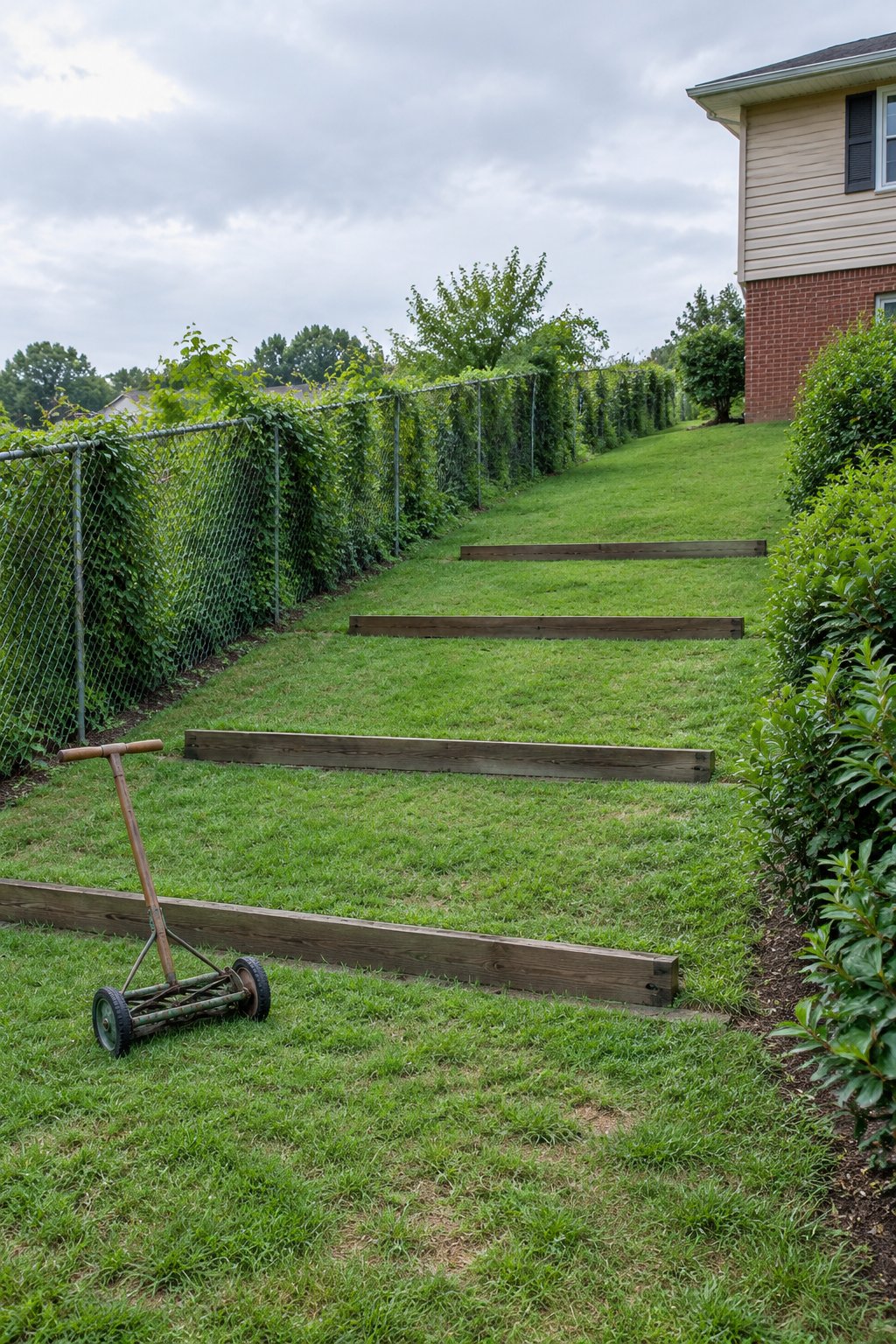
On a long, gentle slope, a few low timber risers with deep grass treads between them climb the hill and still mow like lawn.
Make each tread wider than your mower and keep the risers low, about 5 to 6 inches.
7. A Slide Set Into the Bank, With a Soft Landing at the Bottom

A slide laid down the face of a bank uses the hill as its ladder, so there is no tall platform to fall from.
Keep at least 6 feet clear past the exit and cover it with about 9 inches of wood chips.
8. Keep the Gentle Part in Grass, and Mow It the Safe Way

Kids will roll down any grassy slope, so keep the gentlest part in lawn and plant the rest.
Iowa State Extension calls a slope of about 30 percent, 1 foot of drop in 3 feet, too steep to mow.
9. A Shady Bank of Sedge, Wild Ginger and Christmas Fern Through Coir Netting

Under trees, a bank of Pennsylvania sedge, wild ginger and Christmas fern holds the soil without a mower. Sedge takes dry to moist shade, and wild ginger wants moist shade and spreads slowly.
Pin natural-fiber netting down first, then cut slits and plant through it in a staggered pattern.
10. A Sunny Bank of Catmint and Named Daylilies, Planted Across the Slope
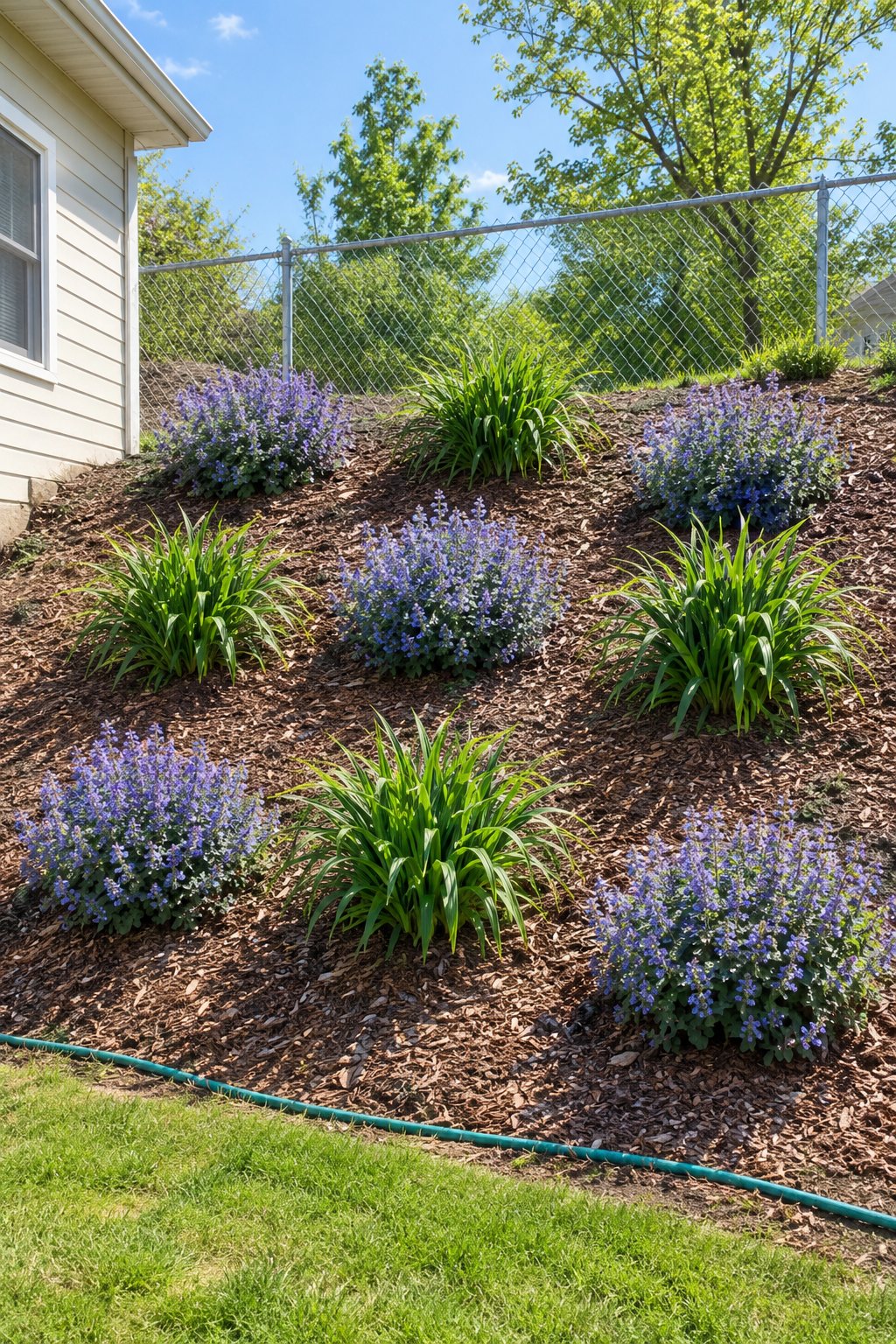
In full sun, catmint and named daylilies make a bank that flowers instead of needing a mower. Both want sun and soil that drains, and catmint starts blooming in late spring.
Plant in staggered rows across the slope, so water cannot run straight down a gap.
11. A Dry Creek That Steps Down the Hill Into a Rain Garden
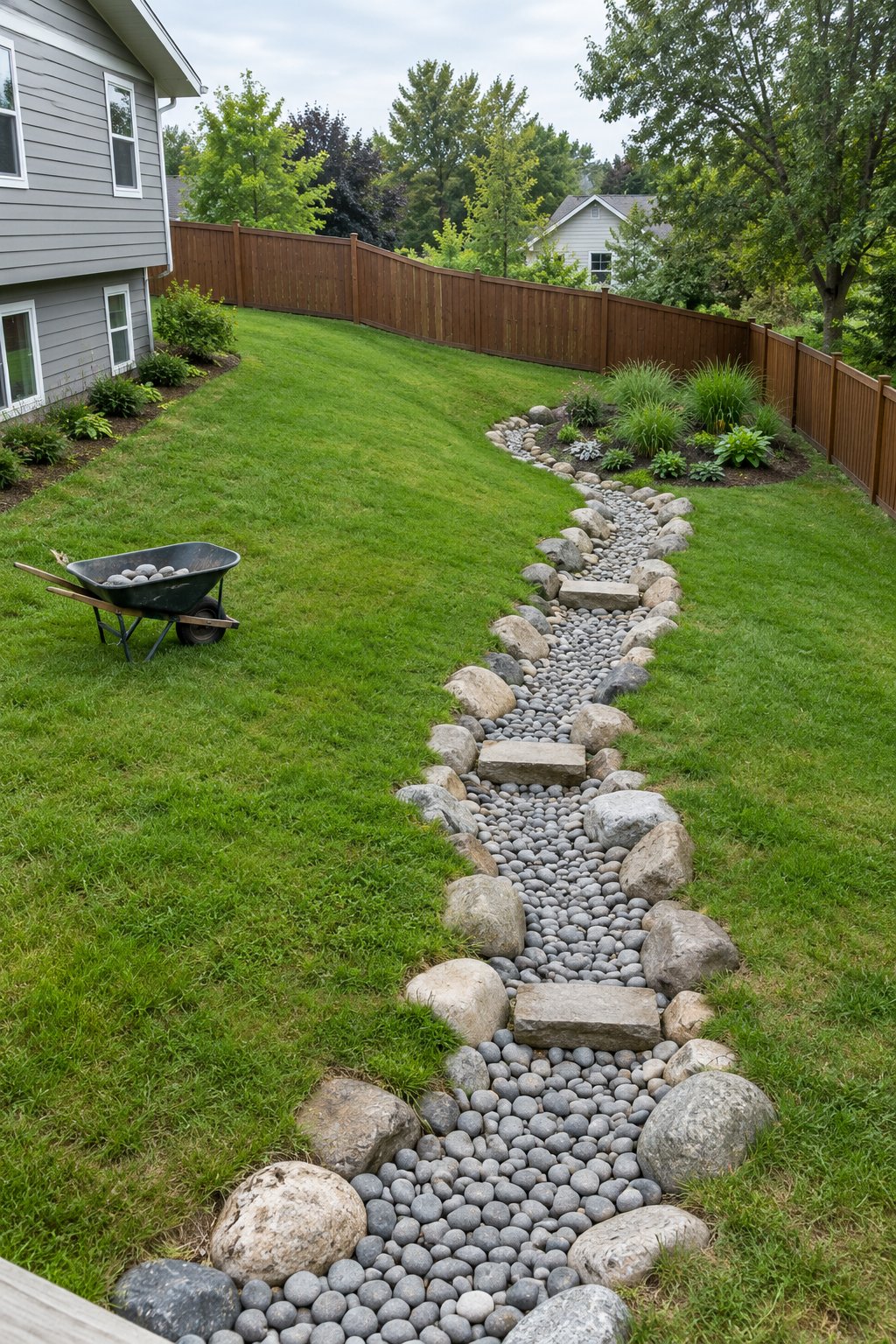
On a slope runoff moves fast, so a dry creek here wants bigger stones and a few low stone ledges across the channel to slow it.
End it in a shallow rain garden at least 10 feet from the house, never aimed at the neighbor.
12. Hill Running Toward the House? A Grassed Swale Above the Back Wall
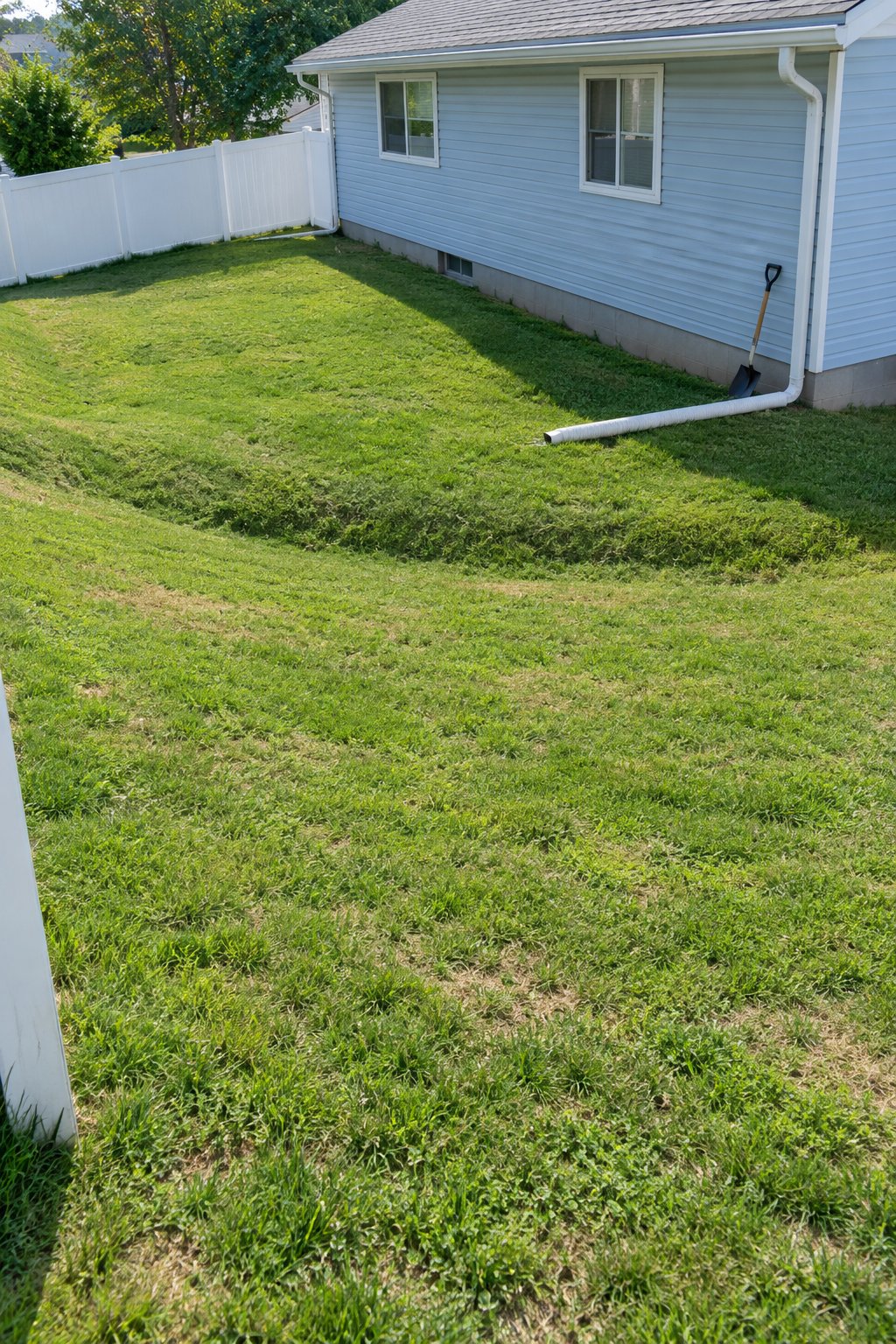
When the yard slopes down toward the house, a shallow grassed dip across the hill catches runoff and carries it around the building.
The ground beside the house should fall about 6 inches in the first 10 feet.
13. A Rain Barrel at the Top That Waters the Beds Below by Gravity
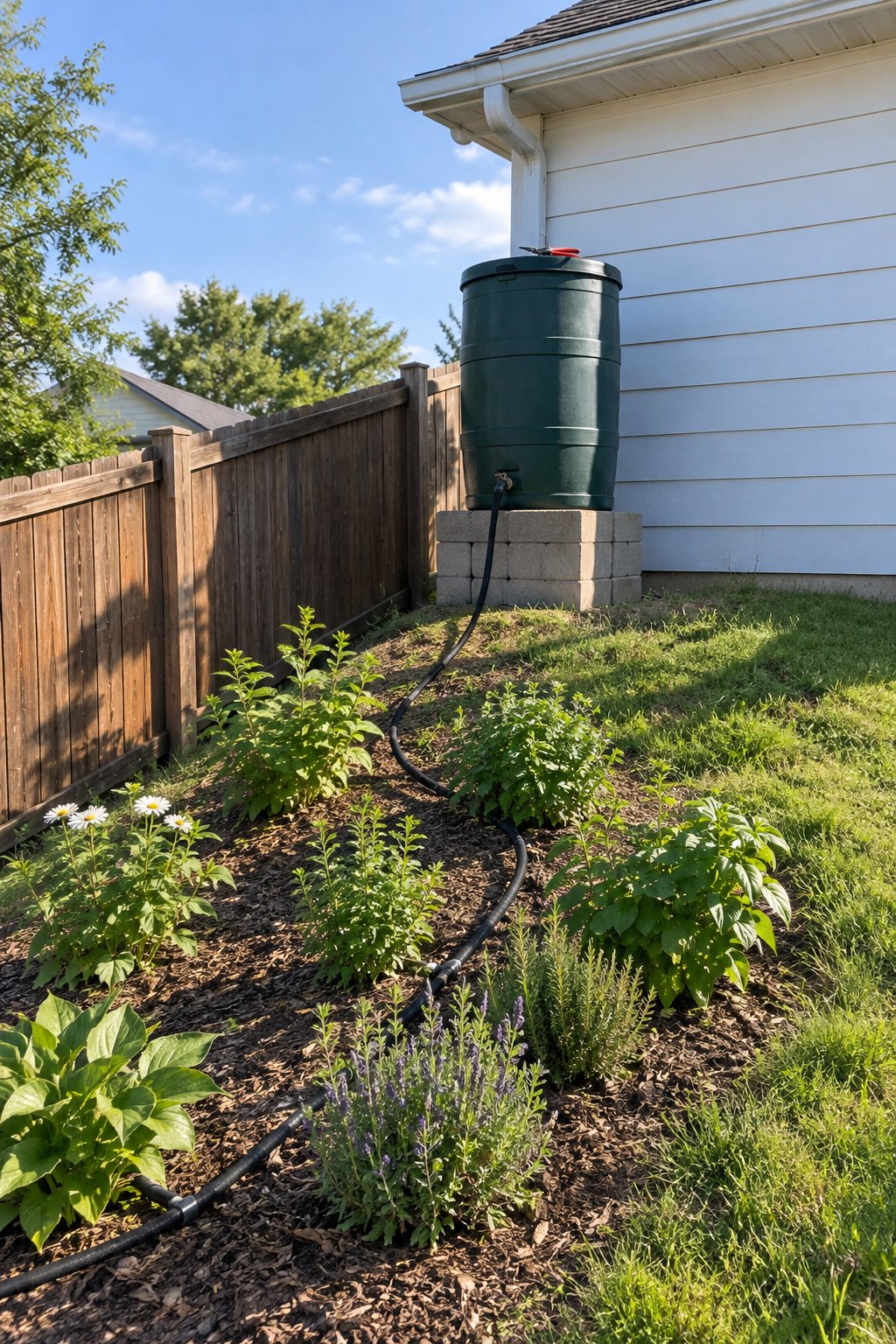
A slope gives you free water pressure. A barrel at the top can feed a soaker hose or a low-pressure drip line in the beds below.
Each foot of height adds only about 0.43 psi, so expect a slow, gentle flow on short runs.
14. Raised Beds That Step Down Beside the Garden Steps
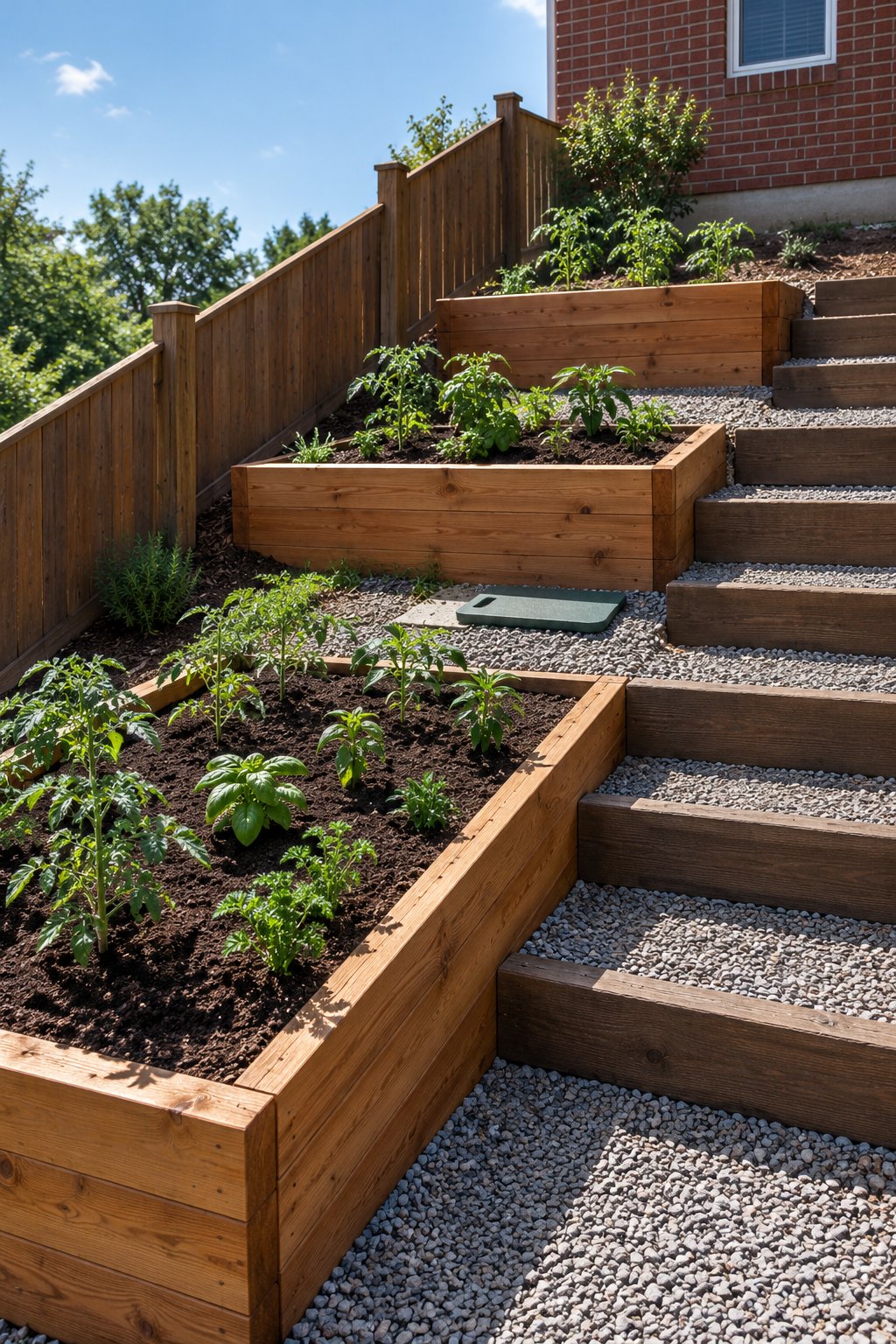
Three short boxes stepping down beside the stairs give each bed level soil, and every landing doubles as a place to kneel.
Level each box on its own before you fill it, digging into the high side.
Slope Numbers on One Page
Every idea above rests on a few figures.
Check them against your town’s rules and any maker’s instructions before you dig.
Cost words: Low is a weekend and a few supplies.
Moderate is several loads of stone or timber, or a rented machine. High is a permit, framing or a crew.
| What | The figure | Why |
|---|---|---|
| Too steep to mow | About 30 percent, 1 foot of drop in 3 feet | Plant it instead of keeping it in lawn |
| Outdoor step | Two risers plus one tread about 26 inches, such as 6 and 14 | Keep every riser in a run the same |
| Ground at the house | Falls about 6 inches in the first 10 feet | Keeps runoff away from the foundation |
| Wall height | Often a permit and an engineer around 3 to 4 feet | Rules vary by town, and tiers or a load above can count |
| Deck guard | Needed once the floor is more than 30 inches above the ground | Common in US residential code |
| Rain barrel pressure | About 0.43 psi per foot of height | Gentle enough to need low-pressure drip or a soaker |
Six Mistakes to Skip on a Small Sloped Yard
Digging before the 811 call
Do thisCall 811 a few working days before you cut into the hill. It is free, and public lines get marked before you dig.
Building the flat spot on loose fill
Do thisSet anything heavy on undisturbed soil, and pack any fill in layers of 6 inches or less so it does not settle.
A wall taller than your town allows
Do thisAsk your building department first, because walls often need a permit and an engineer around 3 to 4 feet, measured the town’s way.
Sending runoff at the house or the neighbor
Do thisLet the ground fall about 6 inches in the first 10 feet from the house, and aim swales and creeks at your own low corner.
Bare soil on a bank through the wet season
Do thisCover new planting with natural-fiber netting or mulch the same day, so rain cannot carve rills before the roots take hold.
Crown vetch or English ivy for a fast cover
Do thisBoth are invasive in many areas. Plant sedge and ferns in shade, or catmint and named daylilies in sun.
Measure Your Slope With Two Stakes, a String and a Line Level
Before you pick an idea, find out how steep the hill really is. Drive one stake at the top and one at the bottom, then tie a string between them and level it with a line level.
The height of the string at the lower stake is the rise, and the string’s length is the run. Divide the rise by the run and multiply by 100 for the percent.
Iowa State Extension treats about 20 percent as steep, about 30 percent as too steep to mow and about 50 percent as the steepest slope plants usually hold.
Under about 5 percent, a slope needs little special planning. Past 50, I would stop thinking about plants alone and look at steps, terraces or a properly built wall.
Start with one level spot you will actually use, a bench at the top or a small terrace near the door, and leave the rest of the hill sloped.
Plant the steep parts, steer the water, and the slope stops being a problem to fix.
Frequently Asked Questions
How do I landscape a small sloped backyard on a budget?
Keep most of the hill and change little of it: a bench on two pavers, grass treads held by timbers and a planted bank all cost little. Decks, tall walls and big regrading are where the money goes.
What is the best groundcover for a slope?
It depends on the light. Pennsylvania sedge, wild ginger and Christmas fern suit shade, while catmint and named daylilies suit full sun and soil that drains. Avoid crown vetch and English ivy, which are invasive in many areas.
How tall can a retaining wall be without a permit?
Many towns draw the line at around 3 to 4 feet, but some start lower, and a driveway or a second tier above the wall can change it. Ask your building department before you build.
How do I stop rain running off the hill toward my house?
Let the ground fall about 6 inches in the first 10 feet from the foundation, cut a shallow grassed swale above the house and send the downspouts out at least 5 feet. If water already gets into the basement, call a drainage pro.
What height should outdoor steps be?
A common rule is two risers plus one tread equal about 26 inches, with risers of roughly 5 1/2 to 7 inches and treads of 12 to 18. Keep every riser in a run the same height.
You Might Also Like

Save This For Later
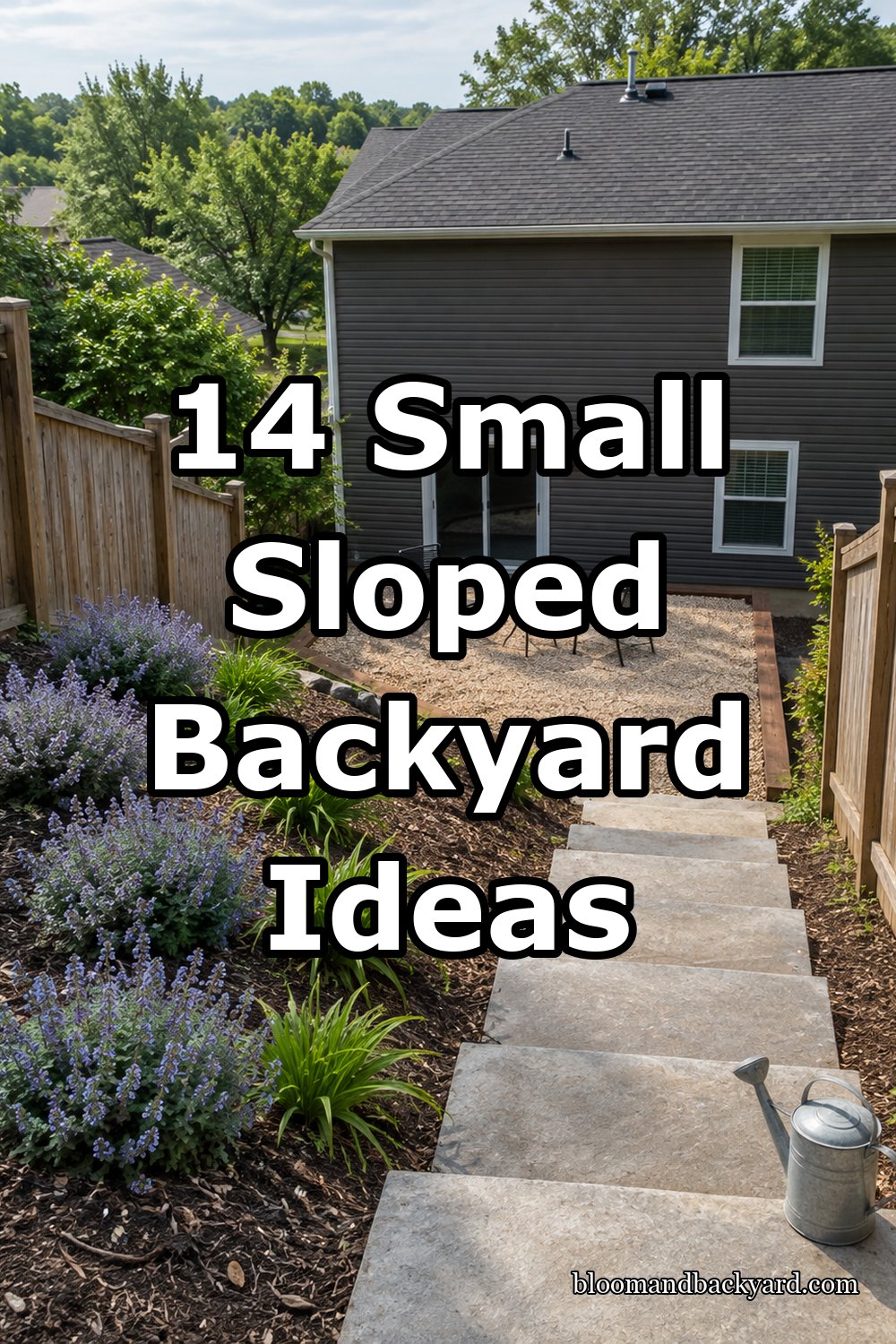
Loved small sloped backyard ideas? Save this pin to your Pinterest board now so you can find it again anytime you need the inspiration.