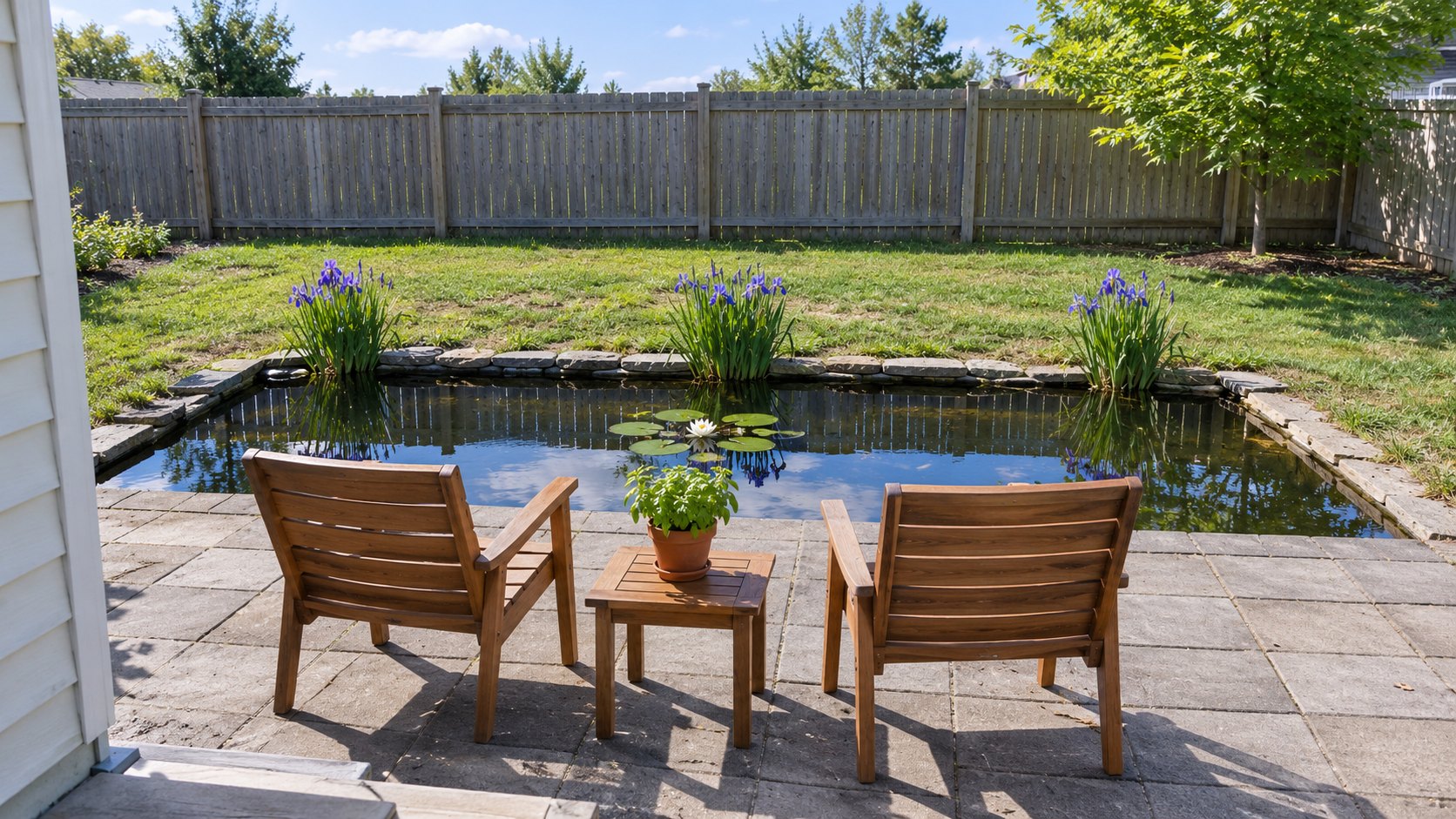
Backyard Pond Ideas: 12 Designs From a Pot to a Pond

Backyard pond ideas don’t have to start with a digger, because the smallest one here is a glazed pot on the patio.
These 12 designs go up in size, ending at a lined pond with a small waterfall.
Each one says what it takes, from a spade to an electrician.
How much water do you want?
1. A Glazed Pot Water Garden With a Miniature Water Lily
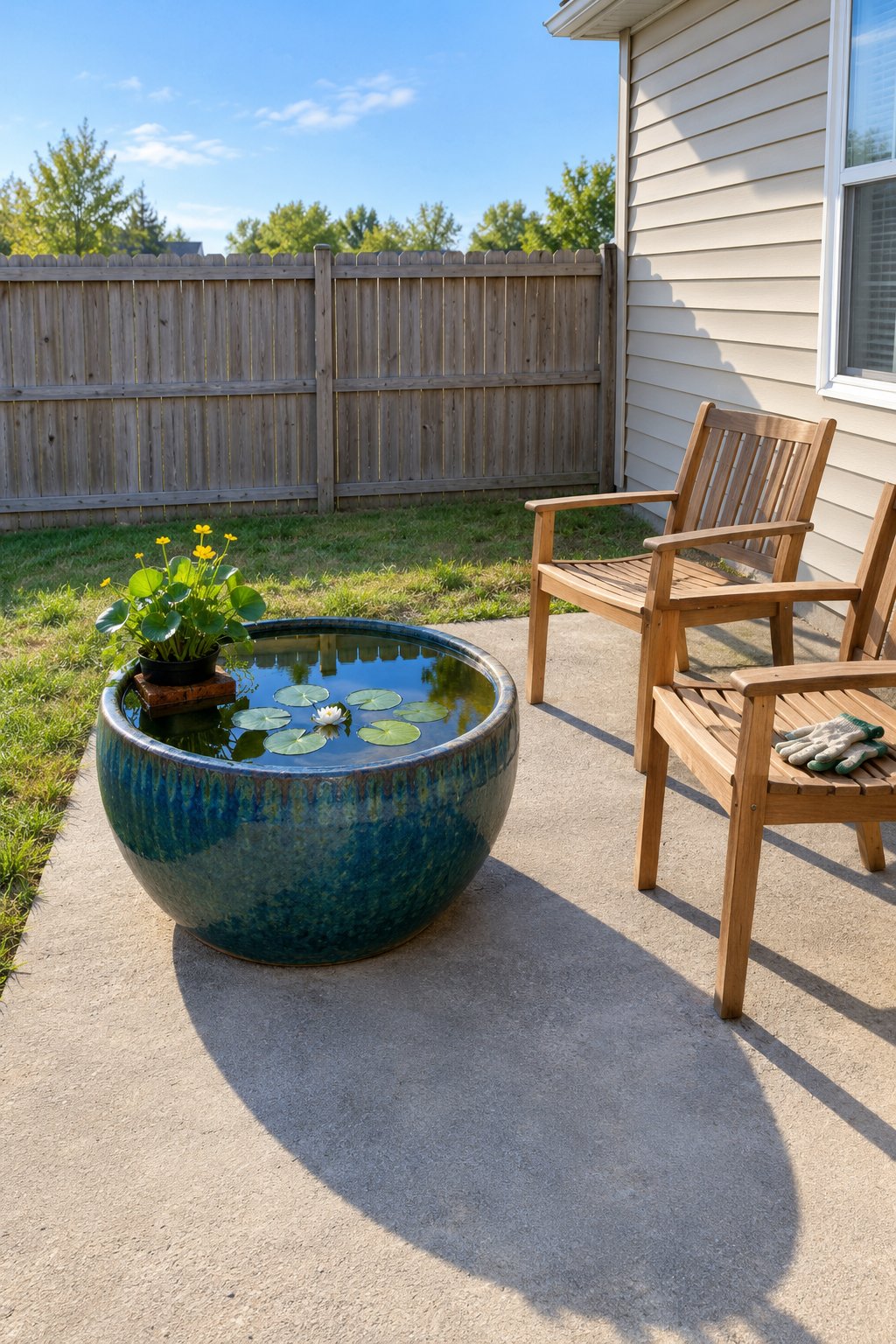
The smallest pond here is a wide glazed pot with no drainage hole, set in the sunniest corner of the patio. A miniature hardy water lily sits on the bottom and a marsh marigold on a brick near the rim.
Water lilies need at least six hours of sun a day to flower well, so the sun decides where the pot goes.
2. A Half-Barrel Pond Planted at Three Levels
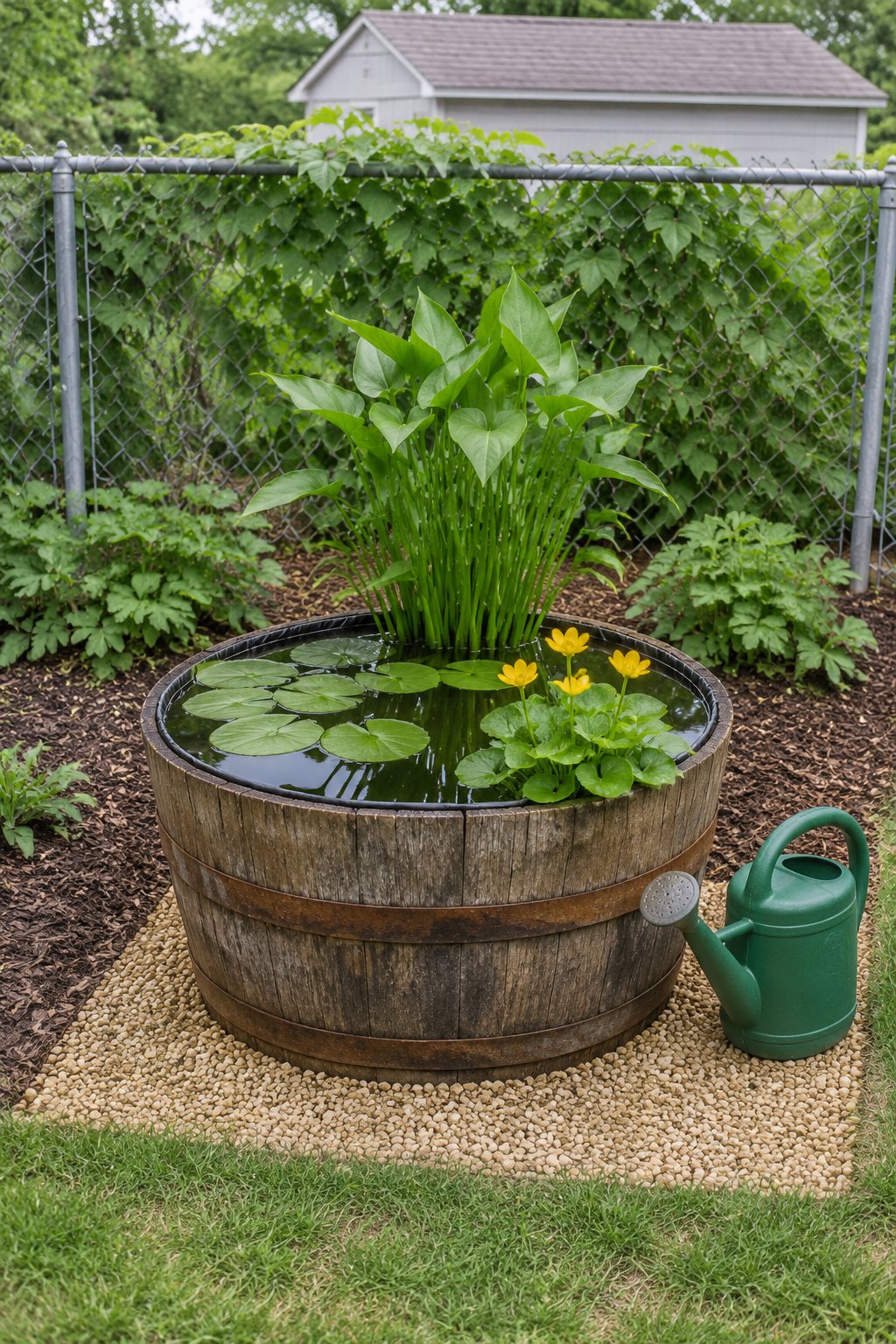
Stepping the plants is what makes a barrel look like a pond edge instead of a bucket. Put a water lily on the bottom, pickerelweed on a stack of bricks and a marsh marigold right at the rim.
Pickerelweed stands 2 to 3 feet tall with blue flower spikes in summer, so it gives the barrel its height.
3. A Galvanized Stock Tank Beside the Patio, No Hole Needed
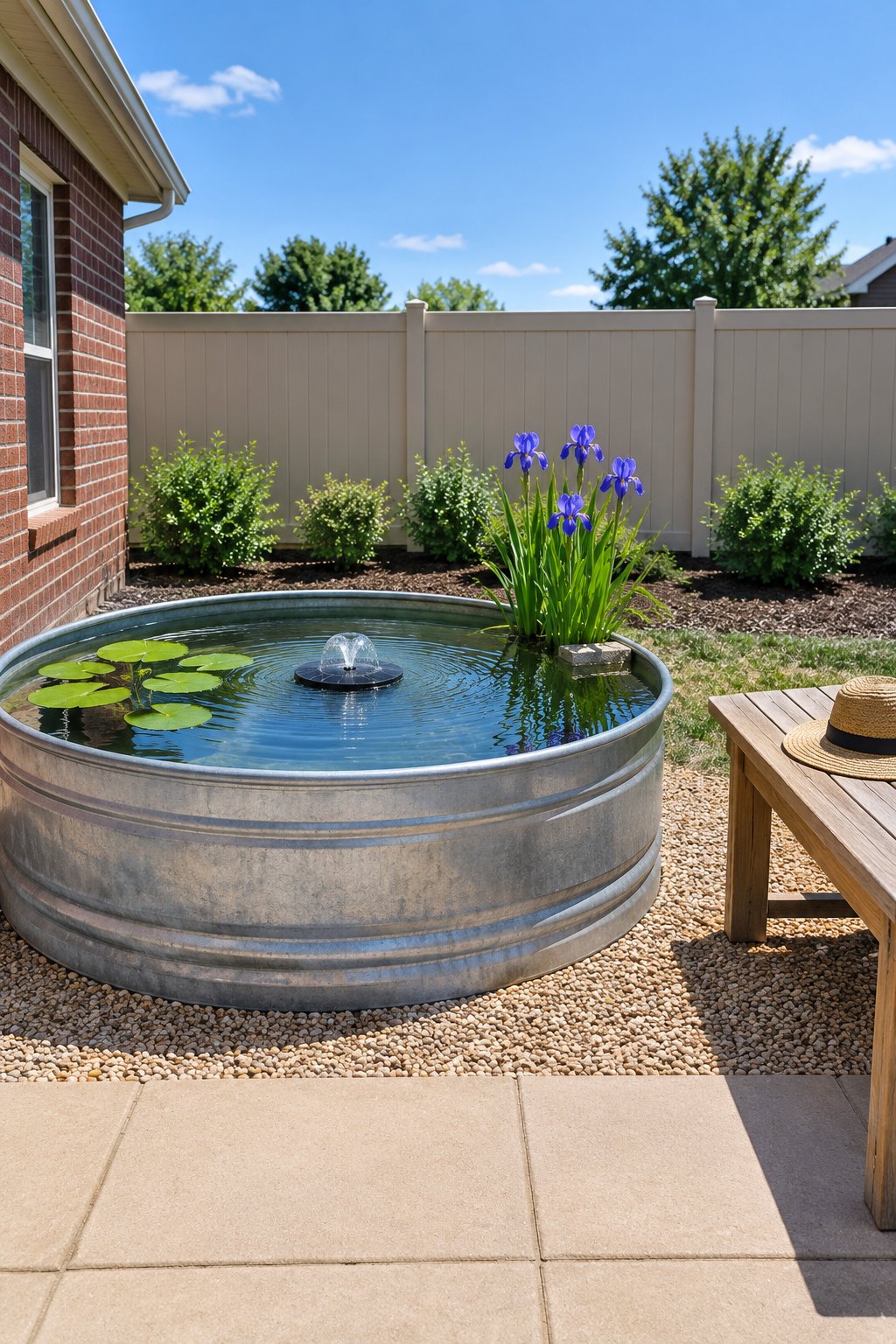
A round stock tank set level on gravel or pavers is a raised pond with no digging at all. Water weighs about 8.34 pounds a gallon, so a 100-gallon tank holds over 800 pounds of it.
Still water breeds mosquitoes, and a small pump or solar fountain that keeps the surface moving cuts egg-laying, though it does not stop it entirely.
4. A Sunken Tub Wildlife Pond With a Stone Ramp
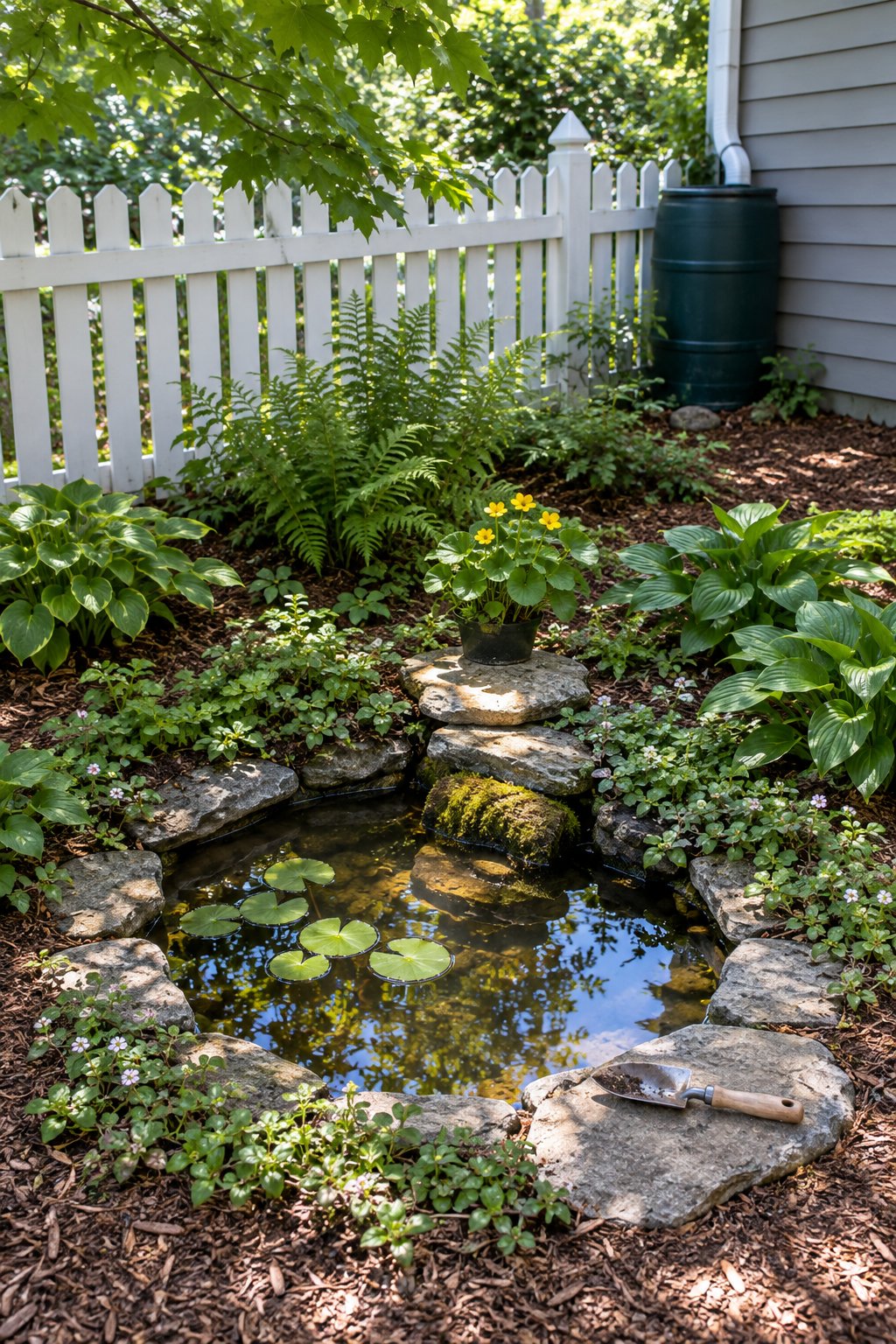
Sink a watertight tub level with the soil in a part-sun border, and birds and frogs will find it. Stack flat stones and a short log inside, from the bottom to the rim, so anything that falls in can climb out.
Fill it with rainwater from a barrel where you can, and leave the fish out.
5. A Preformed Pond Shell Set Into a Sunny Border
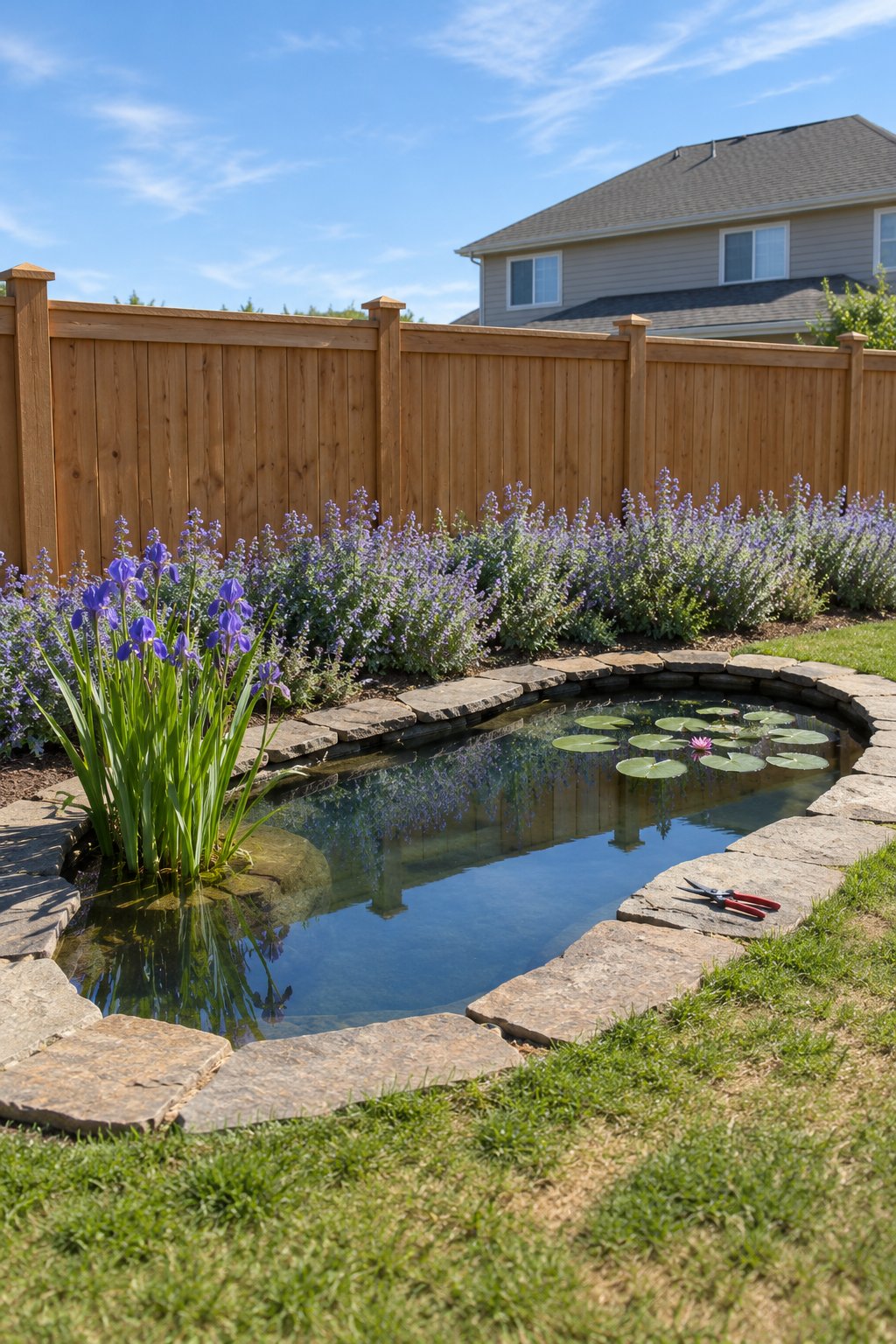
A rigid preformed shell is the quickest true in-ground pond. Dig to its shape, set it dead level and firm sand or soil around it as it fills, so the sides stay supported.
Choose a spot with six or more hours of sun, away from overhanging trees and out of the yard’s lowest point, where storm runoff would wash in.
6. A Family-Yard Pond Under a Rigid Metal Grille

Young children can drown in very small amounts of water, and garden ponds are one of the places it happens. Where small children live or visit, cover the pond with a rigid metal grille strong enough to hold a child’s weight.
Keep the grille above the water, never just under it, with openings no larger than about 3 inches.
7. A Lined Pond Built Right Up to the Patio Edge
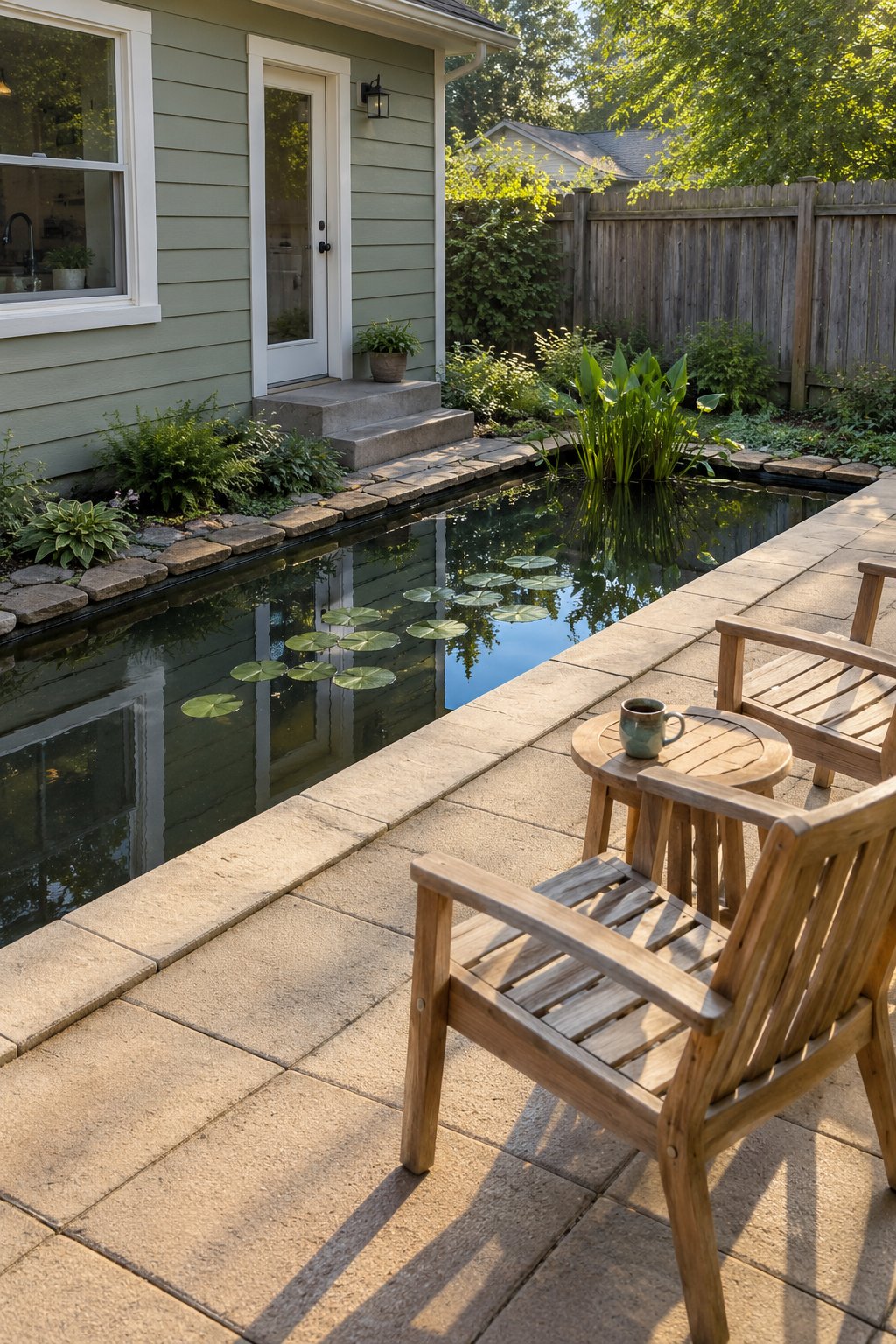
Put the water where you already sit, and the patio becomes its bank. Run a flexible liner under the last row of pavers, set on a solid base so they overhang the water slightly and hide the liner.
A pond you can see from the kitchen window and the patio chairs gets watched every day, not only on weekends.
8. A Raised Pond With a Wide Cap to Sit On
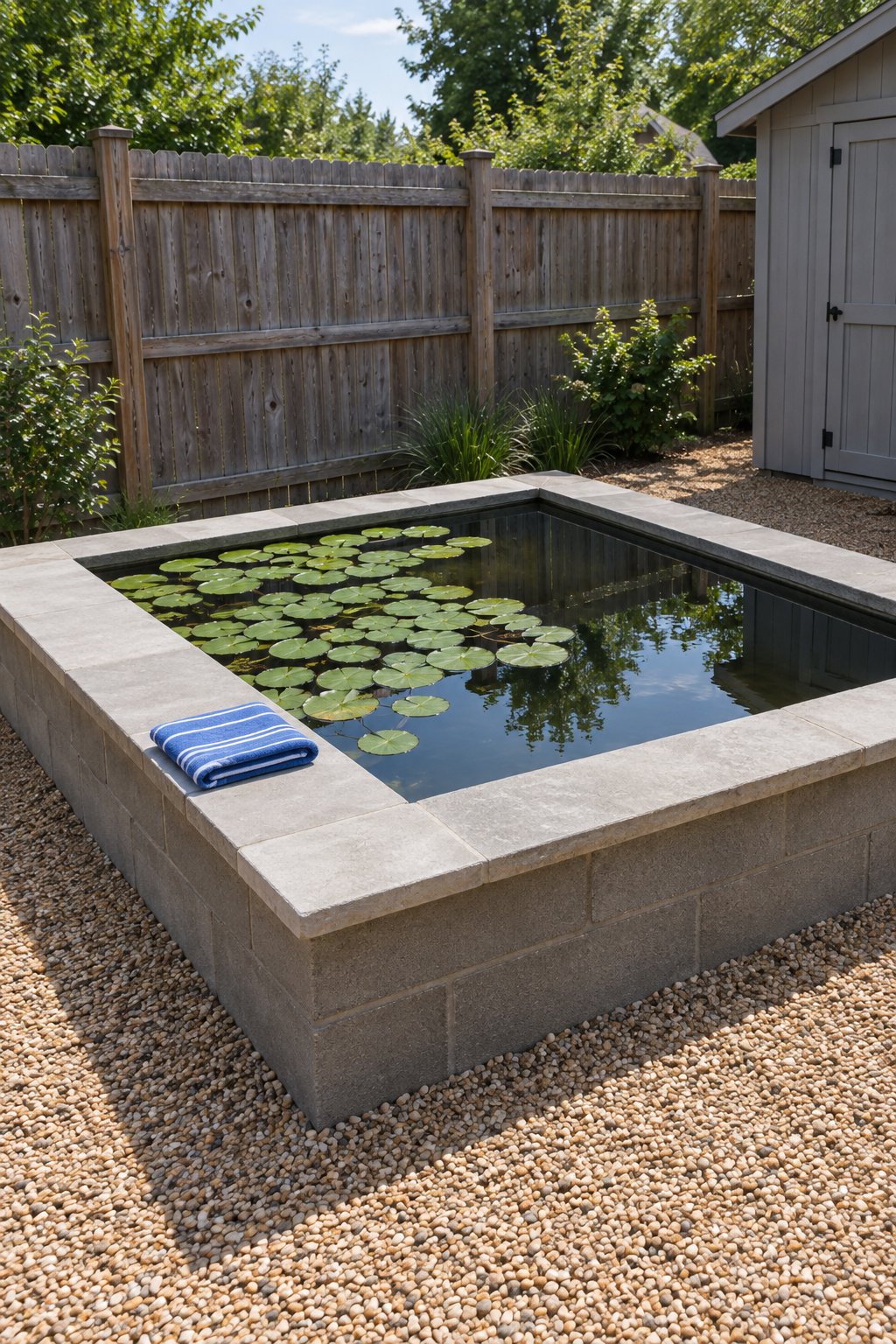
Block or timber walls about 18 inches high, lined inside and topped with a wide flat cap, give you a pond and a bench in one. Seat height is what pulls people to the edge to look in.
I like this one where the soil is rocky, since you build up instead of digging down.
9. A Rain-Fed Bog Garden at the End of a Downspout
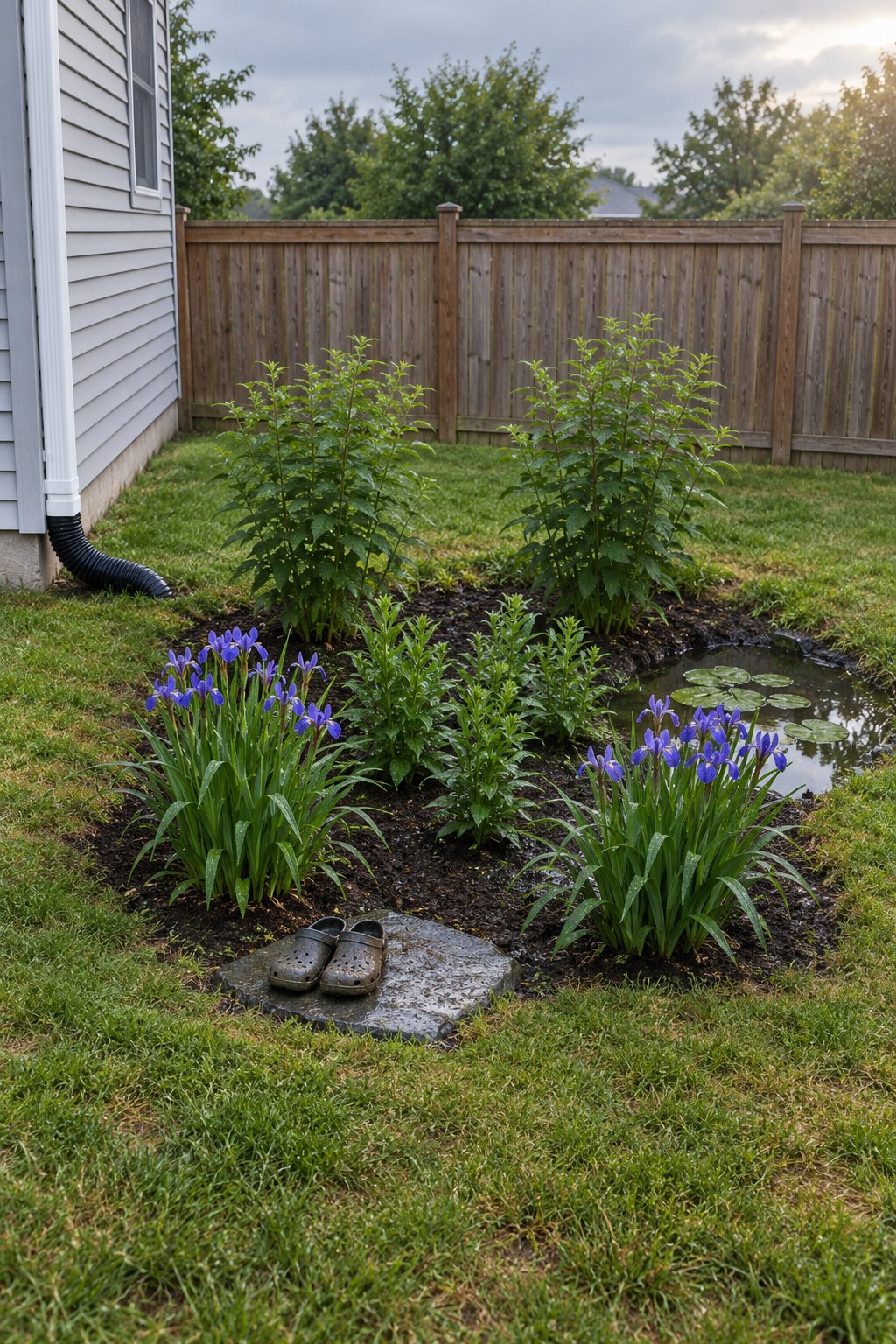
A bog garden is a lined hollow of soil that stays wet, fed by a downspout extension or a pond’s overflow. Pierce a few holes in the liner so the ground stays soggy without standing water.
Blue flag iris flowers in late spring, cardinal flower in late summer, and Joe-Pye weed stands 5 to 7 feet tall at the back.
10. A Flexible-Liner Wildlife Pond With a Pebble Beach

A wildlife pond wants at least one long, shallow slope, finished in pebbles, so birds can bathe and frogs can walk in and out. Shelves around the rest hold pickerelweed and marsh marigold, with a deeper zone in the middle.
Leave out the fish, which eat tadpoles and insect larvae, and let rain top it up where you can.
11. A Fish Pond With a Deep Zone for Winter

Fish that stay out through a freezing winter need water deep enough not to freeze solid, and in Indiana that means more than 2.5 feet at the deepest point. Dig that zone first, then shelve up from it.
Fish eat mosquito larvae, though big fish like koi are less help than small ones.
12. A Pond With a Small Recirculating Waterfall

A pump in the deep end sends water up a buried hose to a spillway stone on a low rise built from the dug soil. The same water goes round and round, so you only top up what evaporates.
The pump needs a GFCI-protected outdoor outlet, and adding one is a licensed electrician’s job, often with a permit.
Pond Numbers on One Page
Every design above rests on a few figures.
Check plant depths against the tag and safety rules against your town before you dig.
| What | The figure | Why |
|---|---|---|
| Sun for water lilies | At least 6 hours a day | With less, expect leaves and few flowers |
| Leaf cover on the water | 50 to 70 percent of the surface | Shade and plant competition help keep algae down |
| Marginal plants | 1 to 8 inches of water at the edge | Most edge plants want their crowns just under the surface |
| Standard hardy water lily | About 24 inches deep; miniatures much less | Follow the plant tag for your variety |
| Fish wintering where it freezes | More than 2.5 feet at the deepest point | Purdue’s figure for Indiana; shallower ponds can freeze solid |
| Safety grille openings | About 3 inches or smaller, above the water | The UK safety body RoSPA’s guidance; it must hold a child’s weight |
Five Backyard Pond Mistakes to Skip
Digging in the yard’s lowest spot
Do thisLow ground floods in heavy rain and collects runoff carrying silt and fertilizer. Pick slightly higher ground that drains away from the pond.
Siting it under a tree
Do thisLeaves rot in the water and feed algae, and the shade cuts flowering. Give the pond six or more hours of sun with no canopy over it.
Buying water hyacinth or water lettuce
Do thisBoth are invasive and banned in some states, and yellow flag iris is prohibited in several more. Check your state’s list and choose a native such as blue flag iris.
Steep sides all the way round
Do thisGive every pond one shallow slope or a ramp of stones, so birds, frogs and anything that falls in can get out.
A pump on an extension cord
Do thisPlug it into a GFCI-protected outdoor outlet. If you need a new one, have a licensed electrician install it.
Green Water in the First Weeks Is Normal: How a New Pond Settles
A freshly filled pond often turns green within its first few weeks, because algae reach the sun and the nutrients before the new plants do.
That stage usually passes as the plants grow in, so on its own it is no reason to drain the pond and start over.
The lasting fix is shade and competition: enough leaves to cover 50 to 70 percent of the surface, and submerged plants that take up the same nutrients the algae want. Smaller ponds and very sunny ones need more plants than that.
I would judge a new pond after its first full season, never after its first month.
Start with a pot or a half barrel this spring and find out whether you enjoy tending water before you dig. If you do, the same sunny spot is where the in-ground pond goes next.
Sun first, safety second, size last.
Frequently Asked Questions
How deep should a backyard pond be?
It depends on what lives in it. Edge plants sit 1 to 8 inches deep and standard hardy water lilies about 24 inches, while fish that winter outdoors in a cold climate need a zone that won’t freeze solid, more than 2.5 feet in Purdue’s Indiana guidance.
Will a pond bring mosquitoes?
Still water can. A pump, fountain or waterfall that keeps the surface moving cuts egg-laying, and fish eat larvae, though big ones like koi are less help than small fish.
Is a backyard pond safe with young children?
Young children can drown in very small amounts of water, so cover the pond with a rigid grille that holds a child’s weight, or wait until they are older. Ask your building department whether barrier or depth rules apply to ponds where you live.
Where is the best place for a pond?
In six or more hours of sun, away from overhanging trees and out of the yard’s lowest point, where runoff collects. Near the patio or a window means you will actually see it.
Should I use a preformed shell or a flexible liner?
A rigid shell is quickest for a small pond with a fixed shape, and a flexible liner over an underlayment suits any shape or size. To size a flexible liner, add twice the depth to both the length and the width, plus an overlap on every side to anchor it.
You Might Also Like


Save This For Later

Loved backyard pond ideas? Save this pin to your Pinterest board now so you can find it again anytime you need the inspiration.