Small Greenhouse Ideas: 15 Builds for a Backyard, Patio or Lean-To

Small greenhouse ideas work best when they fit the yard you already have: a sunny wall, a raised bed, a patio corner.
These 15 builds run from a cold frame to a walk-in kit, and each one says what it takes.
Face the long side south, and plan the vents before the shelves.
Where will yours go?
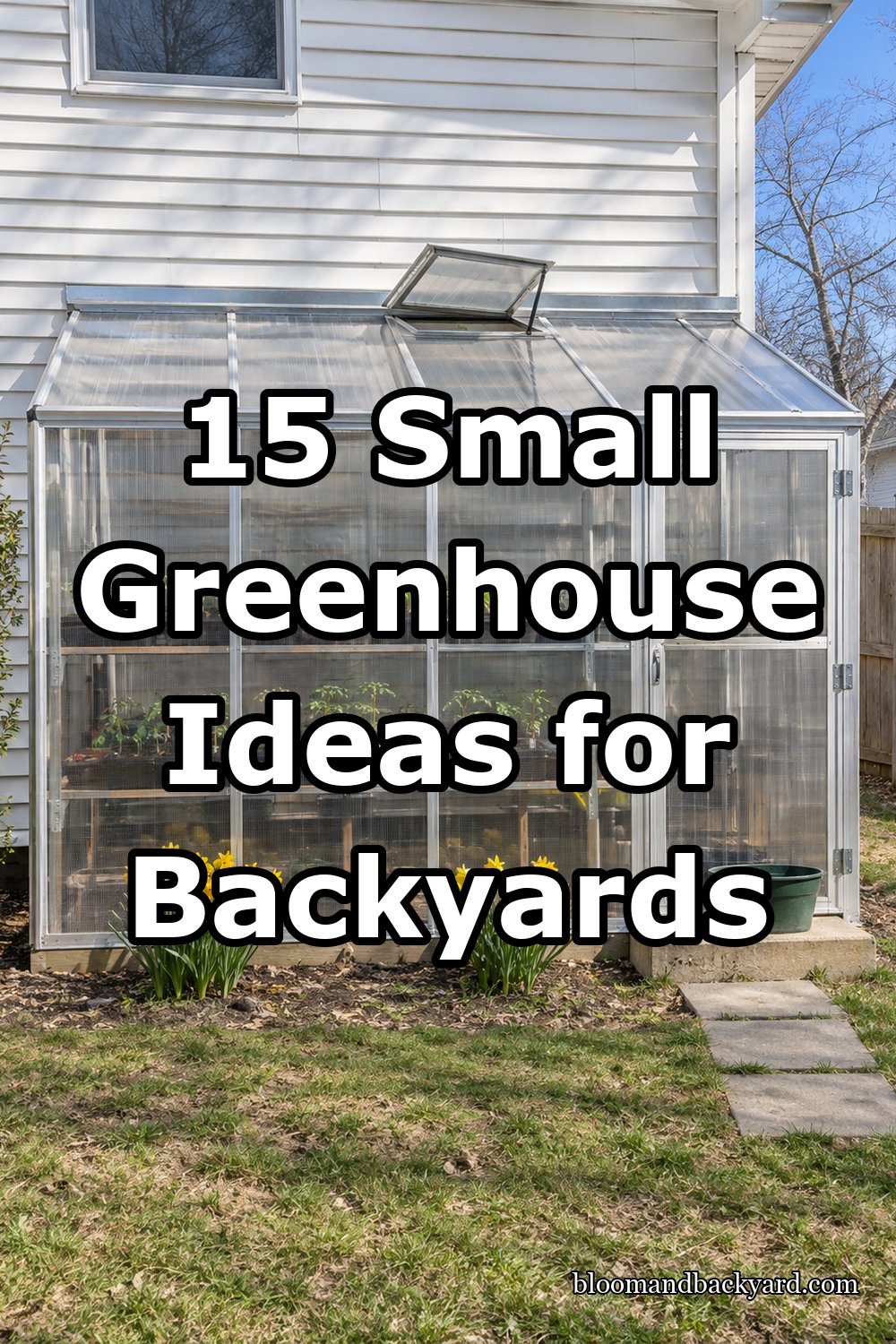
1. A Polycarbonate Lean-To on the South Wall of the House

A lean-to borrows one wall from the house, so a south-facing wall gives you the best of the low spring sun with one less side to build.
The catch is heat: lean-tos are harder to cool, so plan a roof vent and a door you can prop open.
2. Garage-Side Lean-To With an Outlet an Electrician Put In
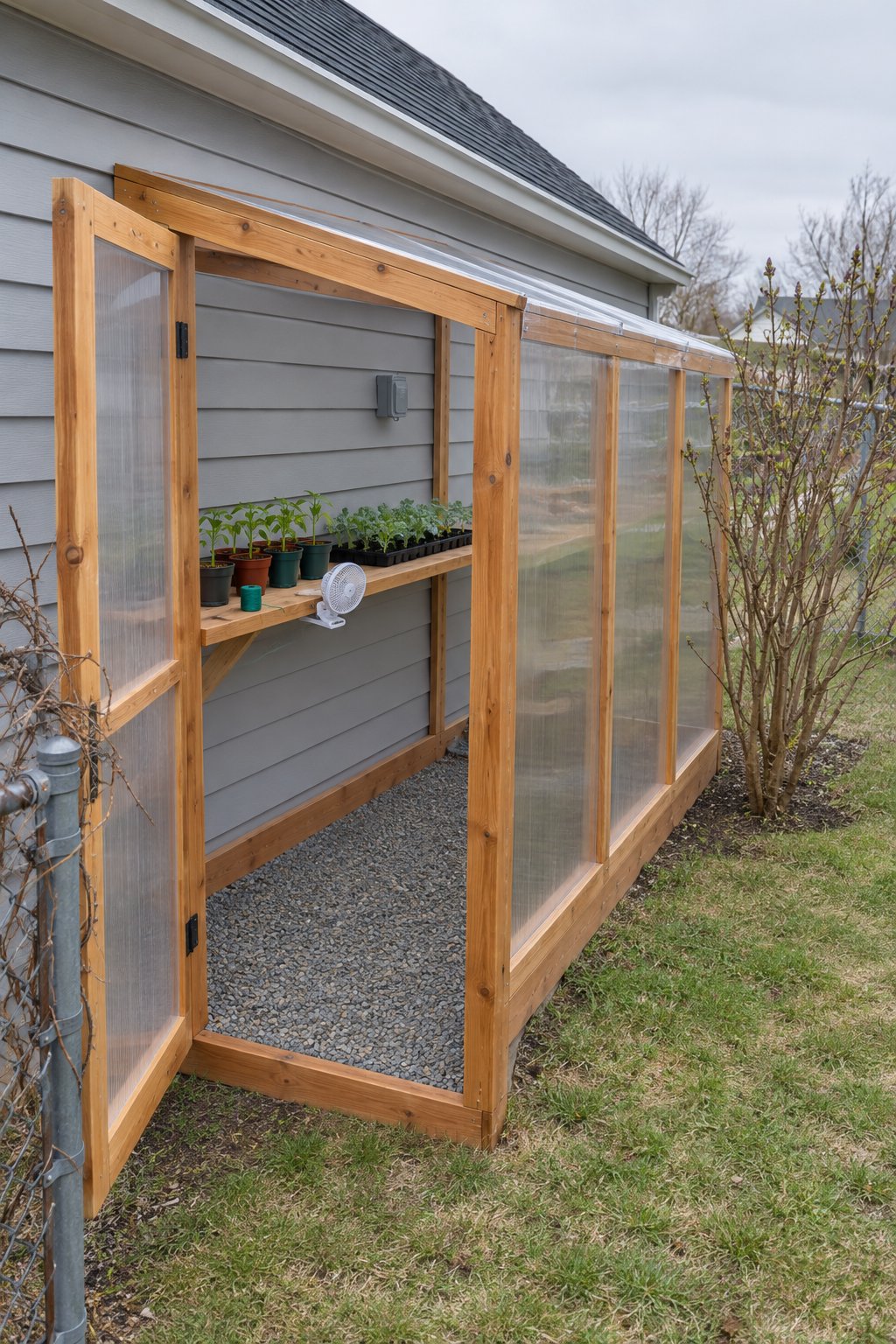
A garage wall facing south or southeast makes a good lean-to site, and it keeps fixings off the house. Power is the reason to choose it: a fan, a light or a small heater.
Use only outdoor-rated equipment, and have an electrician run a GFCI-protected outlet, never an extension cord.
3. A Reach-In Lean-To Against a Sunny Fence in a Townhouse Yard

When there is no room to walk in, a growhouse about 2 feet deep with four shelves holds a whole season of seed trays. Fix it to the fence posts, not just the boards.
A box this small heats up quickly in sun, so open both doors on bright mornings.
4. A 6×8 Polycarbonate Kit on a Gravel Base in a Timber Frame
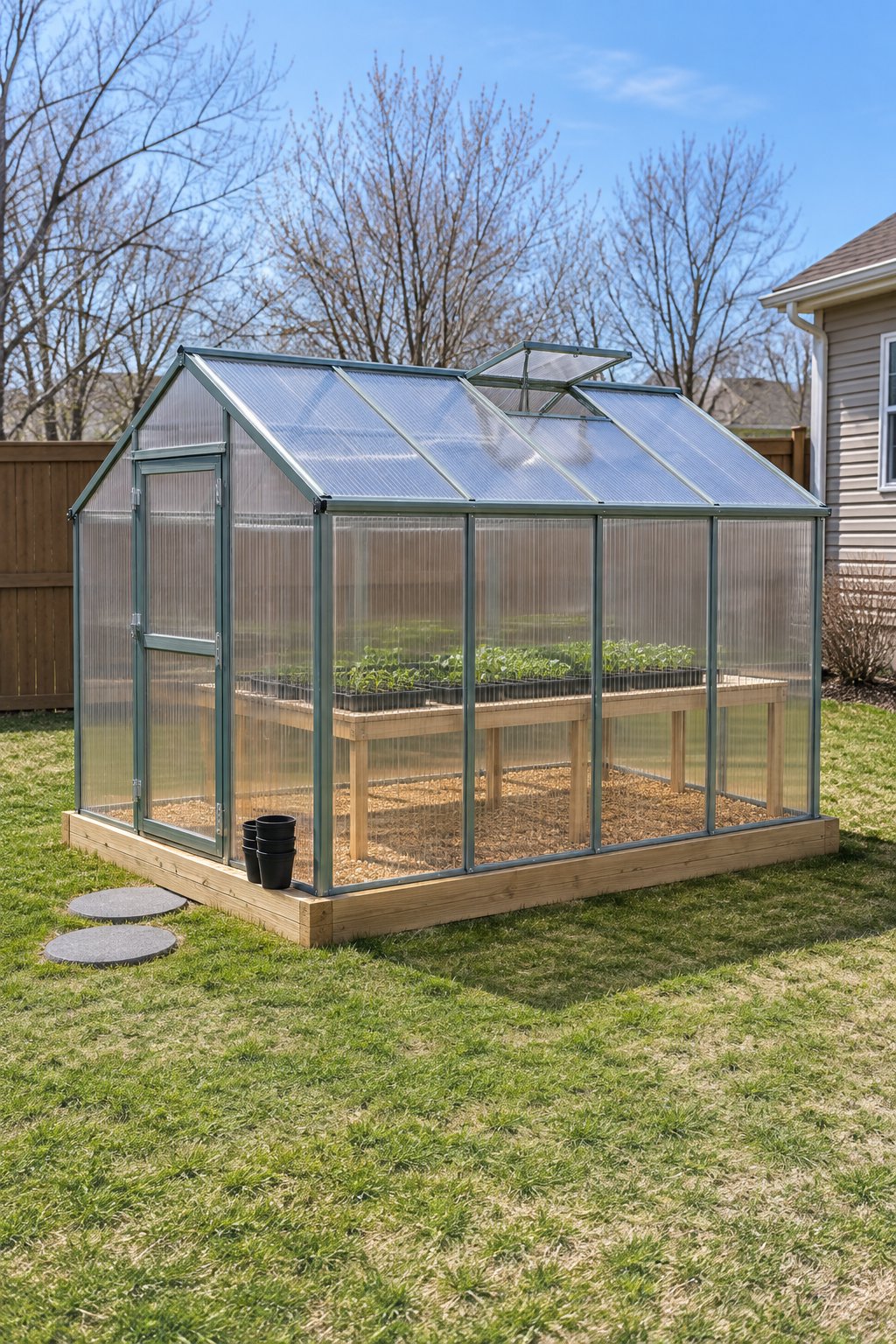
Most small kits sit on a level timber frame filled with compacted gravel, which drains and stays dry underfoot. Turn the long side to the south so the most glazing faces the sun.
Level beats everything here, because a twisted base makes doors and panels bind.
5. Kit Greenhouse on a Paver Pad, Pinned Down Against the Wind

A paver pad suits a greenhouse that sits beside the patio, and it sweeps clean. Light kits can lift in a strong gust, so anchoring is not optional.
Fix the base to the pad, or run cables from the corners to screw-in ground anchors and tighten them.
6. An Old-Window Greenhouse on a Timber Frame

Salvaged windows set into a 2×4 frame make a small greenhouse with real character. Design the walls around the windows you have, not the other way round.
Paint on windows from before 1978 very likely contains lead, so test it before you build and keep chips out of the soil.
7. A Timber A-Frame Wrapped in Greenhouse Film

Film is the cheapest way to cover a walk-in size, and steep A-frame sides shed rain and snow. Buy UV-treated greenhouse film, not ordinary plastic sheeting, which breaks down fast in sun.
Fix the film with wood battens rather than staples alone, so wind cannot tear it at the holes.
8. Put a Small Greenhouse at the North End of the Vegetable Beds

Set the greenhouse where the work already happens, at the end of the beds and on the path. On the north end it never shades a bed.
If your beds sit inside a fenced vegetable garden, leave room for it inside the fence line.
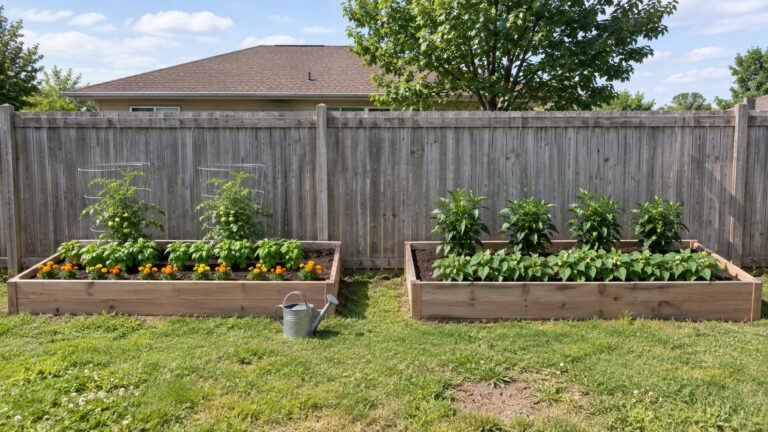
9. A Cedar Cold Frame With a Sloped Lid Beside the Raised Beds
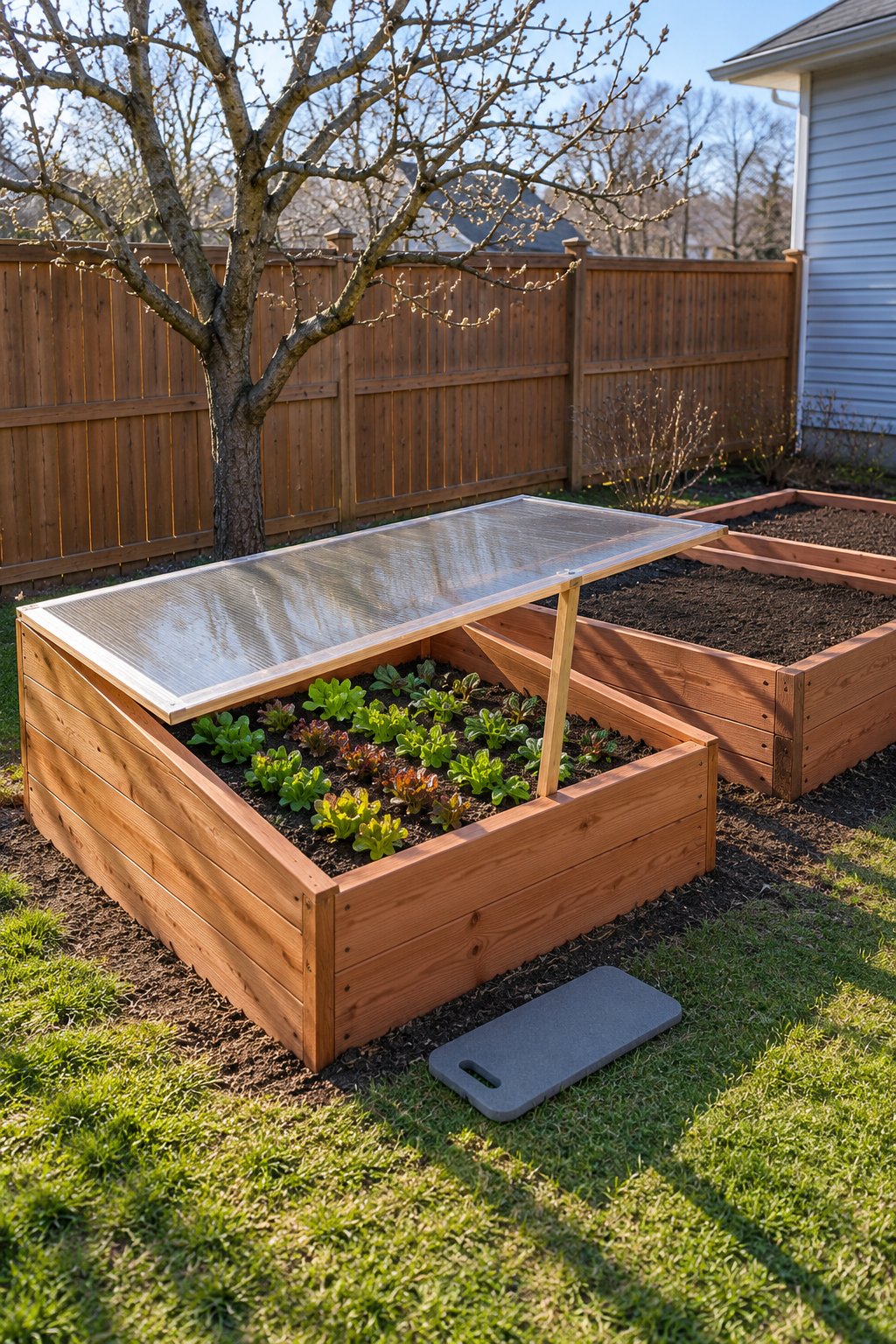
A cold frame is a bottomless box with a clear lid, high at the back and low at the front, facing south or southeast. Keep it no wider than about 4 to 5 feet so you can reach in.
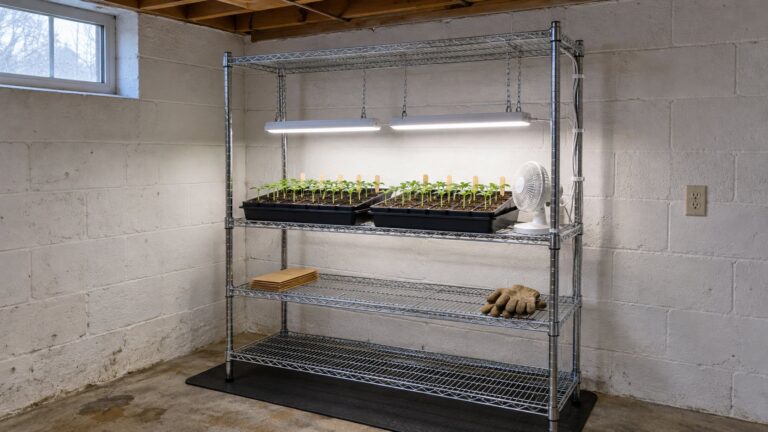
It is the halfway house where seedlings from the indoor seed-starting shelf harden off.
10. Stack Straw Bales Into a Cold Frame With a Polycarbonate Lid

Six straw bales in a rectangle make thick walls you can set up in an afternoon, with a sheet of twin-wall polycarbonate laid across the top. It suits spring greens like lettuce and spinach.
Weight or tie the lid down, because a loose sheet lifts in wind.
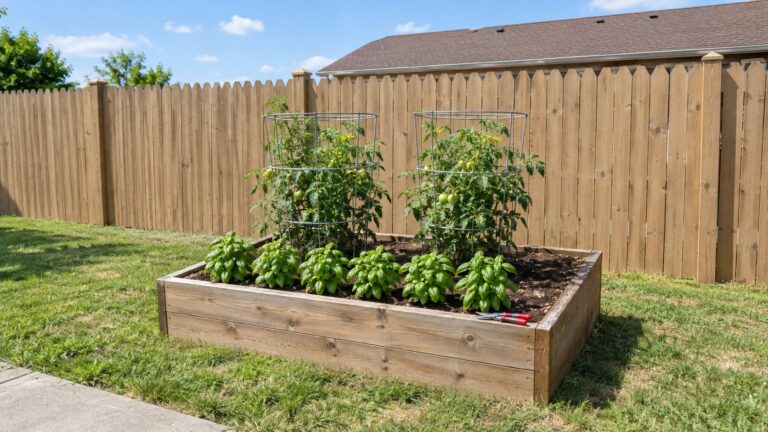
11. Hoop Tunnel Over a 4×8 Raised Bed

Slip hoops into pipe sleeves screwed inside the bed and clip greenhouse film over them; 4-foot hoops fit a 4-foot bed you reach from both sides. It works on any bed in a raised garden bed layout.
Roll up an end on sunny days, because a closed tunnel heats up fast even on a cool morning.
12. Walk-In Hoop House Over Two Beds and a Path

Bent metal hoops and greenhouse film cover two beds and a center path for far less than a framed greenhouse. Run it east to west so the long side faces south.
Doors at both ends and a roll-up side let air run straight through.
13. Strap a Zip-Up Mini Greenhouse to the Patio Wall

A shelf unit with a clear zip cover gives four shelves of seedlings with no digging at all, which makes it the renter’s version. Stand it against a south or east wall.
These are light, so strap the frame to the wall or weight the bottom shelf before the first windy day.
14. Fit a Potting Bench Along the Inside North Wall

Inside a small greenhouse, the potting bench goes on the north side and the seedlings on the sunny south side, so the bench never shades a tray. A slatted top lets water drain through.
If you want a whole room for it, a potting studio in a she shed is a different build.
15. Two Vents and an Automatic Opener: Let the Greenhouse Breathe

Hot air rises, so a roof vent lets it out while a low vent or the door draws cooler air in. A wax-cylinder opener works the roof vent with no power, opening as the air warms.
On a sunny spring day a shut greenhouse gets far hotter than the air outside.
Small Greenhouse Numbers on One Page
Every build above rests on a few rules of thumb.
Check them against your kit’s manual and your town’s rules before you start.
| What | The rule | Why |
|---|---|---|
| Which way it faces | Long side to the south or southeast | The most glazing catches the low spring sun |
| Shade | None from the house or trees in late winter | Winter shadows are longer than summer ones |
| Cold frame width | About 4 to 5 feet at most | You can reach in without climbing on it |
| Hoops over a bed | 4-foot hoops on a 4-foot bed | You can reach the middle from both sides |
| When to vent | Sunny days above about 40 to 45 F | Cold frames and tunnels overheat in sun |
| Permit | Often none for a one-story detached build up to 120 or 200 sq ft | Towns differ, and power or water can need a permit anyway |
| Old painted windows | Assume lead in paint from before 1978 | Test before you build |
Six Small Greenhouse Mistakes to Skip
A spot that is only sunny in summer
Do thisCheck the site in late winter, when the sun is low and the house and trees cast their longest shadows.
Leaving it shut on a sunny day
Do thisOpen the vents or the door whenever the sun is out and it is above about 40 to 45 F, or fit an automatic opener.
A kit with no anchors
Do thisFix the base to a frame or pad, or use ground anchors at the corners, before the first windy day.
An extension cord to a heater
Do thisUse only outdoor-rated equipment on a GFCI-protected circuit put in by an electrician.
Guessing with a fuel-burning heater
Do thisIf you use one, follow the maker’s venting rules exactly.
Building first, asking about permits later
Do thisAsk your building department and HOA about size, height and setbacks before you buy a kit.
Glass, Polycarbonate or Film: What Each Clear Cover Trades Away
Glass gives the clearest view and the longest life, but it is heavy, it breaks and it needs a strong, square frame.
Twin-wall polycarbonate is light, holds heat better than a single pane of glass and spreads the light so seedlings scorch less. Most sheets carry a UV coating on one side only, so that side faces out.
Greenhouse film is the cheapest and the easiest to fit over hoops, but even UV-treated film lasts only a few years.
For a first small greenhouse I would choose polycarbonate, and save film for hoops you can re-cover in an hour.
Start with the spot: watch where the late-winter sun falls, then pick the build that fits it, even if that is only a cold frame this year.
Get the direction, the vents and the anchors right, and every upgrade after that is easy.
Frequently Asked Questions
Which direction should a small greenhouse face?
Turn the long side to the south or southeast, and keep it clear of shade from the house and trees in late winter. For a lean-to, a south or east-facing wall works best.
Do I need a permit for a small greenhouse?
Often not for a one-story detached build under your town’s size limit, commonly 120 or 200 square feet. Adding power, water or heat can need a permit anyway, so ask your building department and HOA first.
How do I stop a small greenhouse from overheating?
Give it a roof vent and a low vent or a door you can prop, and open them on sunny days. A wax-cylinder opener runs the roof vent with no power, and shade cloth helps later in spring.
Can I heat a small greenhouse safely?
Use only outdoor-rated equipment, and have an electrician install a GFCI-protected circuit rather than running an extension cord. If you choose a fuel-burning heater, follow the maker’s venting rules exactly.
Is a cold frame worth it if I have no room for a greenhouse?
Yes. It hardens off seedlings started indoors and gives lettuce and spinach a head start in spring, and it needs only a few feet of sunny ground.
You Might Also Like

Save This For Later
Loved small greenhouse ideas? Save this pin to your Pinterest board now so you can find it again anytime you need the inspiration.