Garden Trellis Ideas: 16 Designs for Climbers, Privacy and Small Beds

Garden trellis ideas only work when the frame, the climber and the footing are matched.
These 16 setups cover tomatoes, beans, clematis, privacy screens and a balcony pot, and each says what it takes.
A leafy trellis catches wind like a sail, so how it is anchored matters as much as how it looks.
What are you growing?
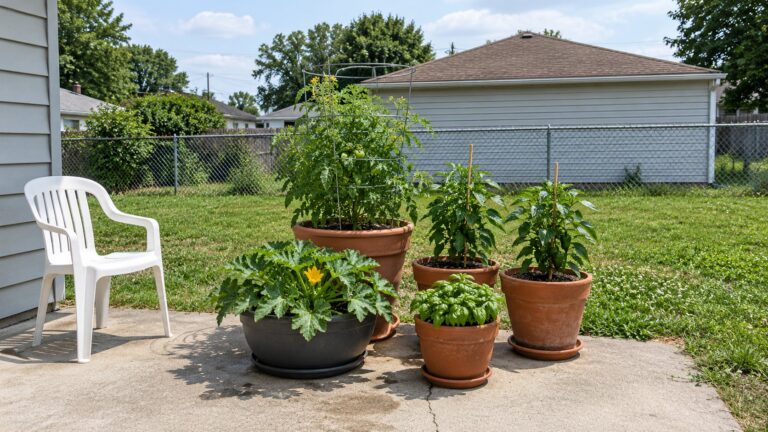
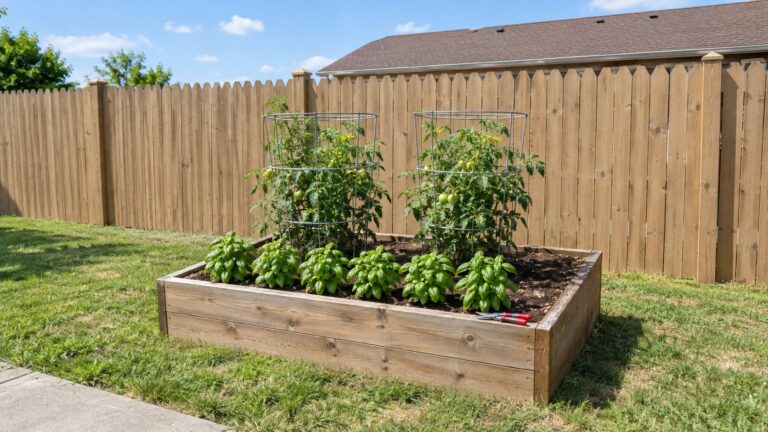
1. Tomatoes Woven Between Steel Posts and Twine, With Basil Along the Front

Set a steel post at each end of the row and a stake beside every second or third plant, then run twine down both sides. Start the first run when the plants are about a foot tall, 8 to 10 inches off the ground, and add another every 6 to 8 inches.
Stakes 6 to 7 feet long suit tall tomatoes, and 4 feet is enough for bush types.
2. One Tomato in a Wire Cage Rolled From Concrete Mesh, Staked at the Foot
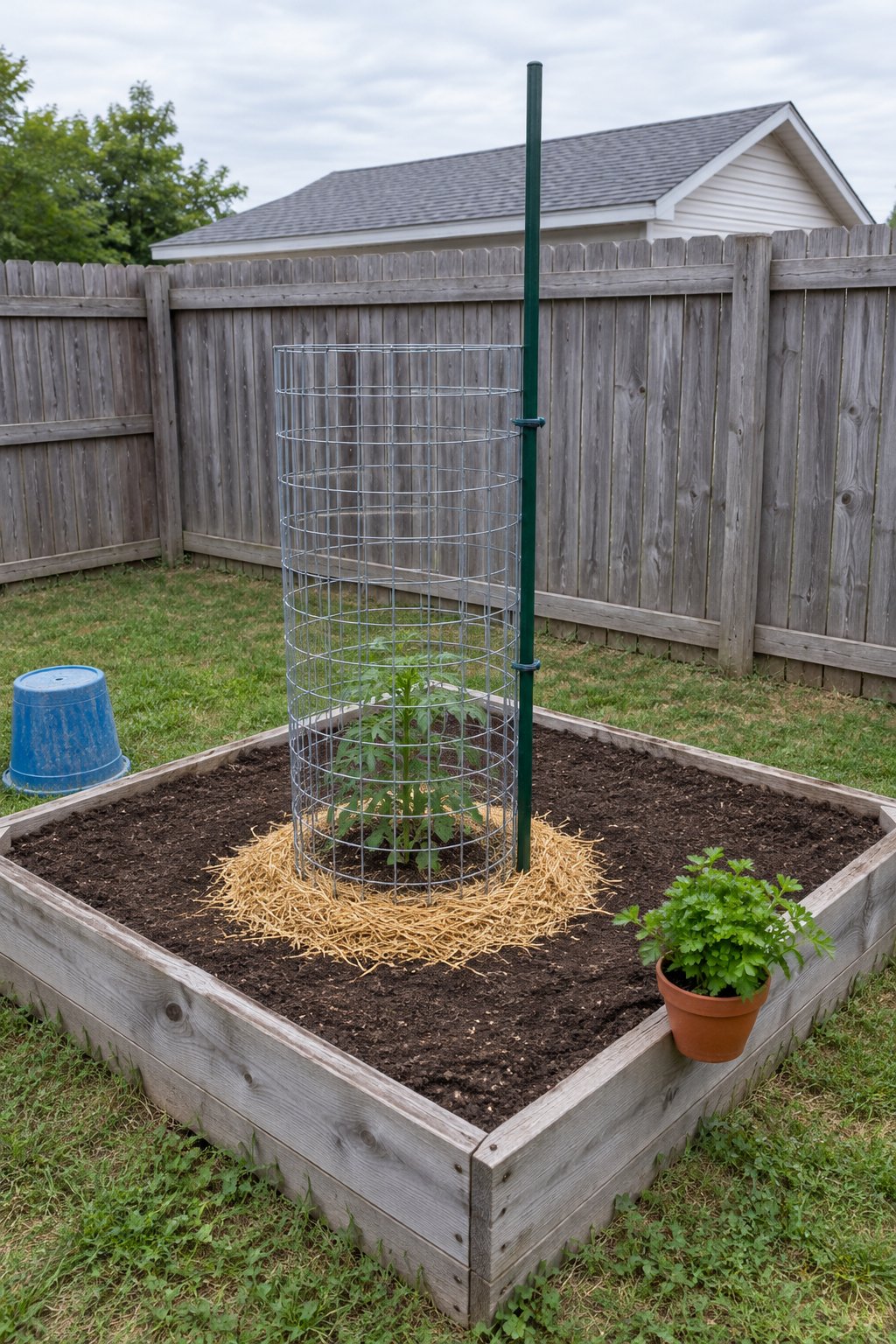
Roll a 5 to 6 foot length of wire mesh into a cylinder about 2 feet across, with openings wide enough to reach a hand through. The plant grows up inside it with no tying.
These cages are light, so stake each one to the ground.
3. Cucumber A-Frame From Two Wire Panels, With a Row of Lettuce Underneath

Lean two wire panels together and fasten them at the top, with the feet set apart. Plant cucumbers about 12 inches apart along each foot, and tie the first shoots loosely until the tendrils take hold.
Sow the lettuce along the base while the vines are small, and treat it as a first crop.
4. A Cattle-Panel Arch at the Head of the Garden Path, Hung With Pole Beans

Bend a 16 foot cattle panel into an arch with its ends about 6 feet apart, and it stands just under 7 feet tall. Anchor each end to two steel posts driven at least a foot into the ground.
Sow the pole beans along both sides once the frost has passed and the soil is warm.
5. Scarlet Runner Beans Up a Bamboo Teepee in the Middle of a Round Bed

Push six or so tall canes into the soil in a ring and lash them together at the top, then sow two to four seeds at the foot of each cane. Runner beans need 6 to 8 feet of support, and hummingbirds visit the flowers.
Wait until the frost has gone and the soil is near 60 degrees F before you sow.
6. Peas on Netting Stretched Between Two Posts at the Back of a Raised Bed

Stretch pea netting between two posts at the back of a bed, and sow peas about an inch deep and 2 inches apart along its foot. Put the netting up before you sow, so you never disturb the roots.
Peas are a cool-season crop, so sow as soon as the soil can be worked and expect them to fade in summer heat.
7. Thornless Blackberries on Two Wires Strung Between Sturdy Posts

Run one wire at about 3 feet and a second at about 5 feet between two sturdy posts, and tie the canes to them. The fruiting canes and the berries make a heavy load, so set the end posts deep.
Erect, semi-trailing and trailing types are pruned differently, so read the tag before you cut anything.
8. A Grapevine Screen on Two Wires, Set Along the Edge of the Patio

In a sunny spot, set a post at each end of the run, 2 to 3 feet deep, and string two galvanized wires at about 3 and 6 feet. Brace the end posts, because a mature vine is heavy and pulls on them.
It screens the view only while it has leaves, and the first crop usually comes about three years after planting.
9. Climbing Rose Tied Along Horizontal Wires on Eyebolts Against a Sunny Wall

Run wires 12 to 18 inches apart on eyebolts, with the lowest about a foot above the soil and the wire about 2 inches off the wall. Plant the rose 8 to 18 inches out from the wall and tie its long canes along the wires.
Canes tied close to horizontal send up more flowering side shoots than canes left straight up.
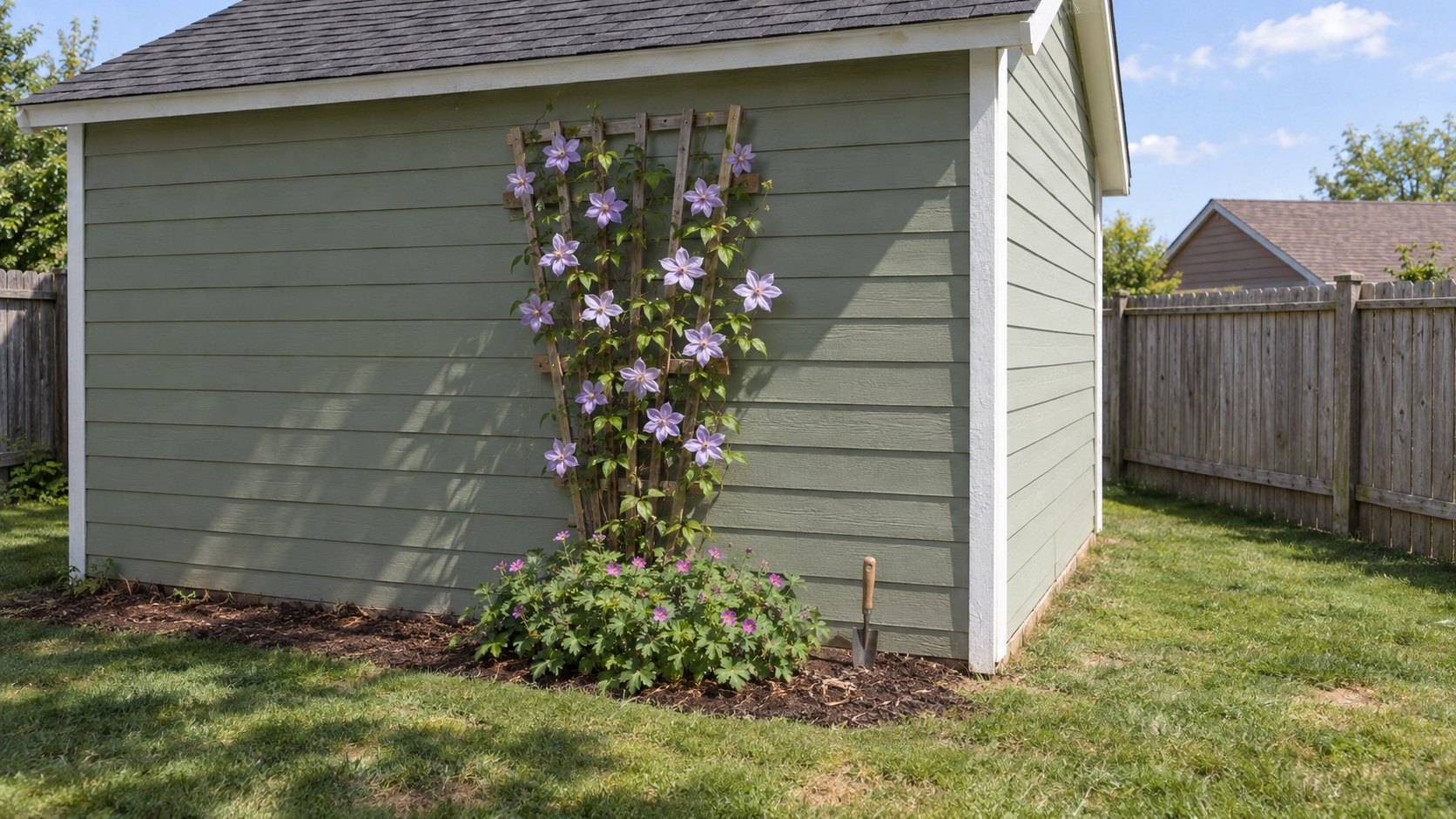
10. Clematis Up a Fan Trellis Fixed to a Shed Wall, With Cranesbill Over the Roots
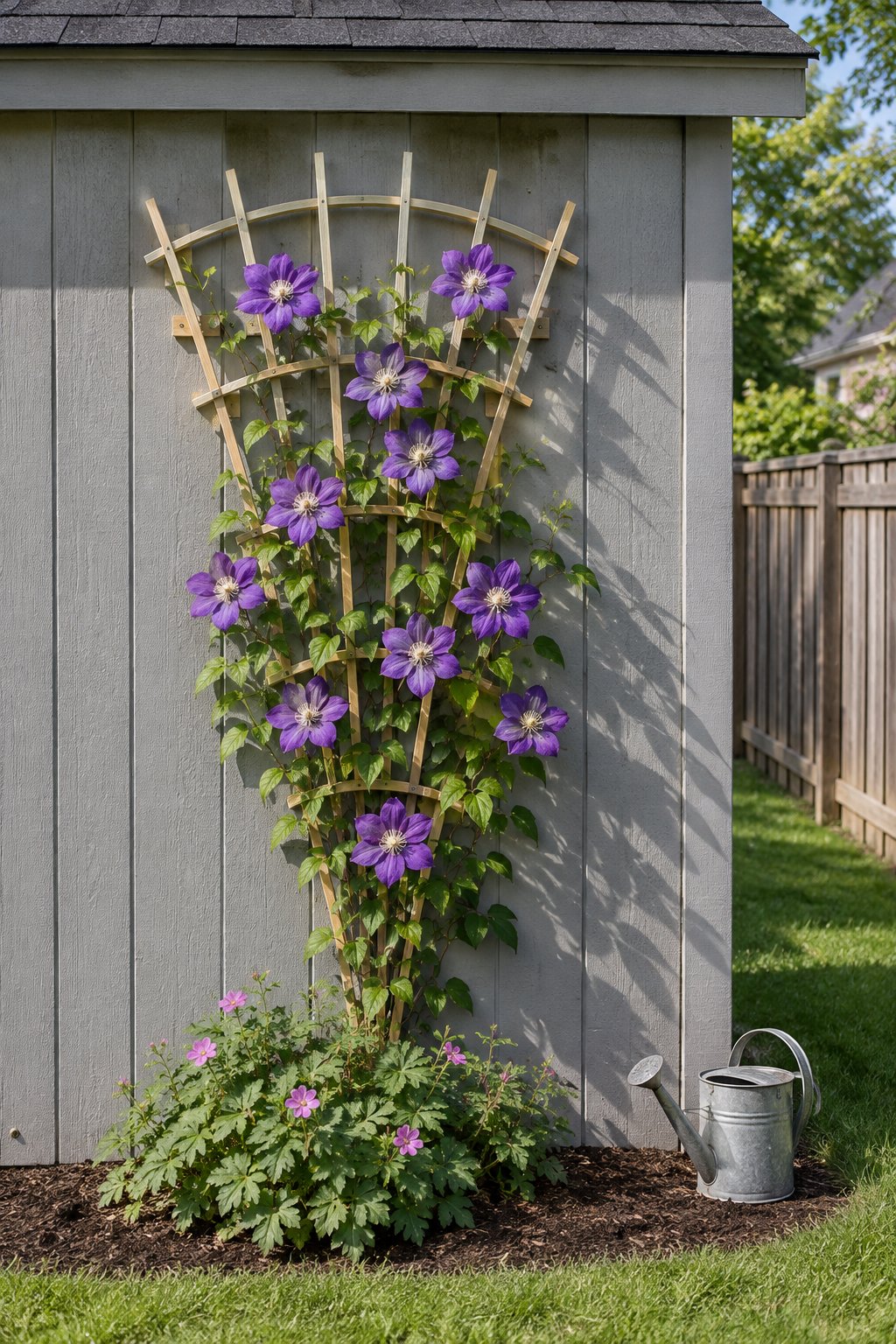
Screw a slatted fan trellis to a shed wall on spacer blocks, about 2 inches off the boards, and plant the clematis a little out from it. Clematis climbs by wrapping its leaf stalks around thin supports, so slats and wire suit it better than thick posts.
Tops in sun and roots in shade is the rule, which is why a low cranesbill goes at the foot.
11. Climbing Hydrangea on a Heavy Steel Arch at a Side Gate
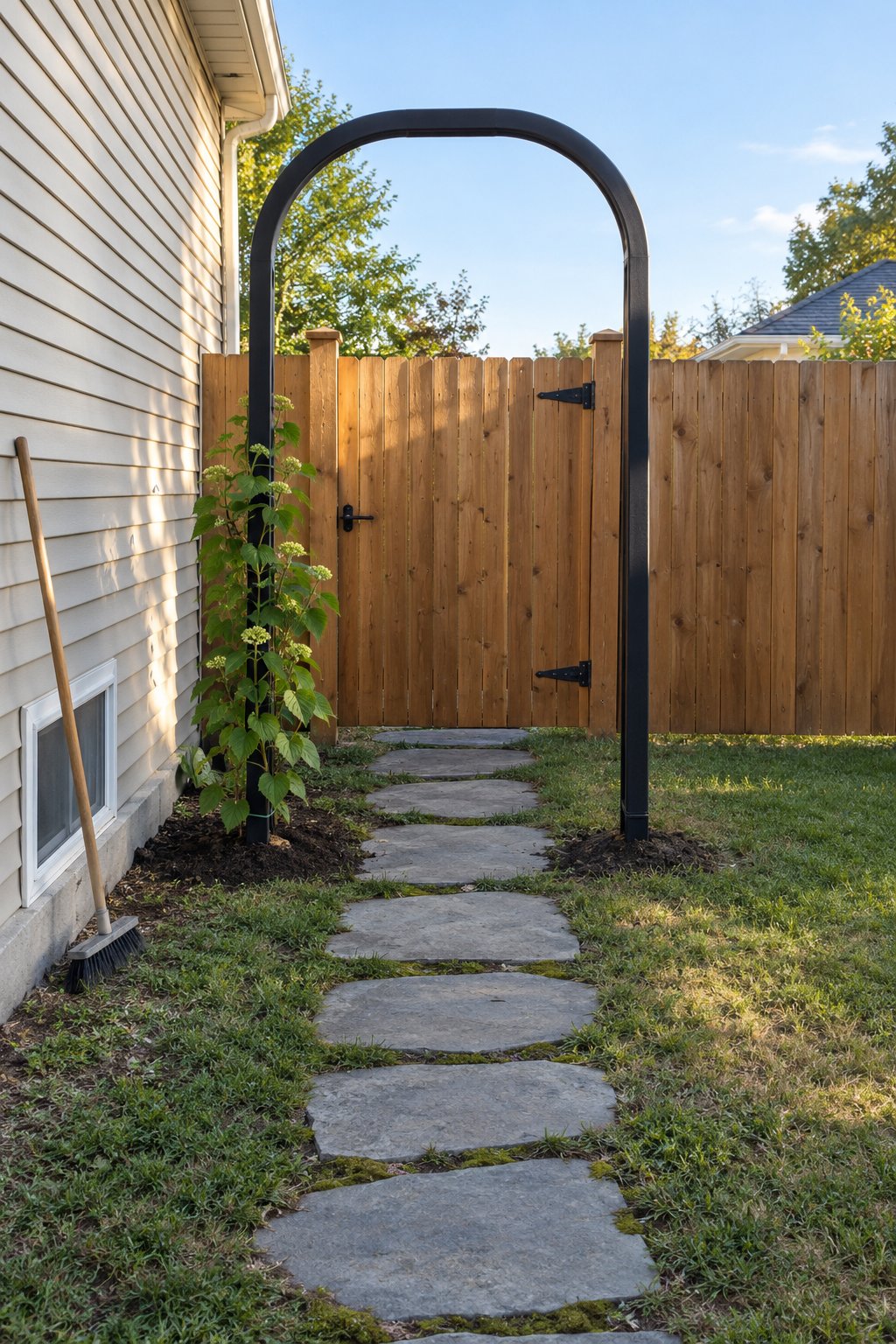
A climbing hydrangea clings on its own, but it grows big and heavy, so give it a strong arch with legs set in concrete or deep in the ground. It suits morning sun and afternoon shade, and it is slow to settle in.
Of the climbers here, this is the one that copes with a shadier gate.
12. A Trellis Topper Along a Fence, With Coral Honeysuckle Climbing Above the Boards
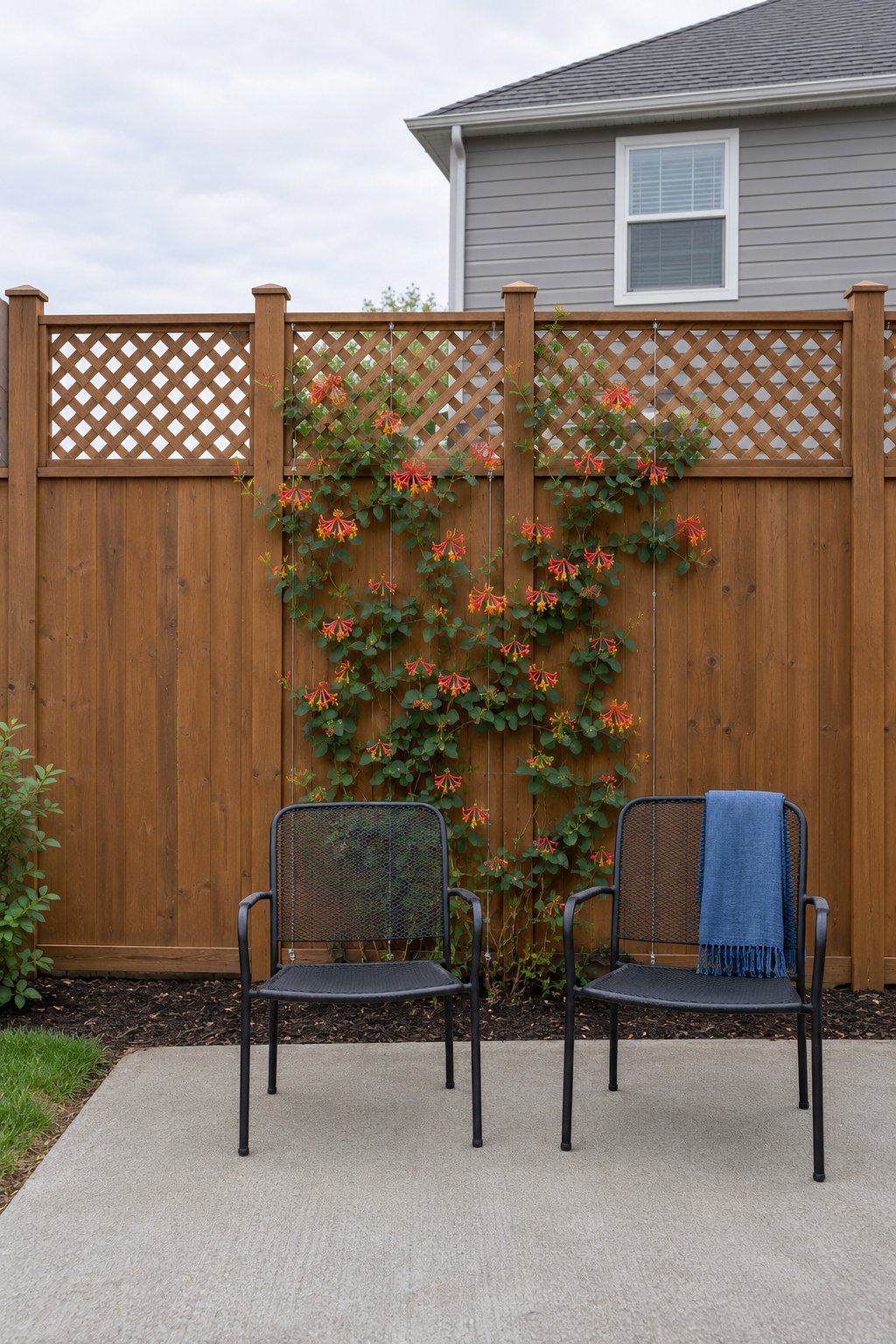
Fix wood trellis panels to the fence posts so they stand above the boards, and train native coral honeysuckle up them. It blooms in red tubes that hummingbirds visit, and it is not the invasive Japanese honeysuckle.
Ask your town whether a topper counts toward the fence height limit, and ask the neighbor first if the fence is shared.
13. Clematis on a Steel Obelisk in a Big Pot, With Low Plants Over the Roots
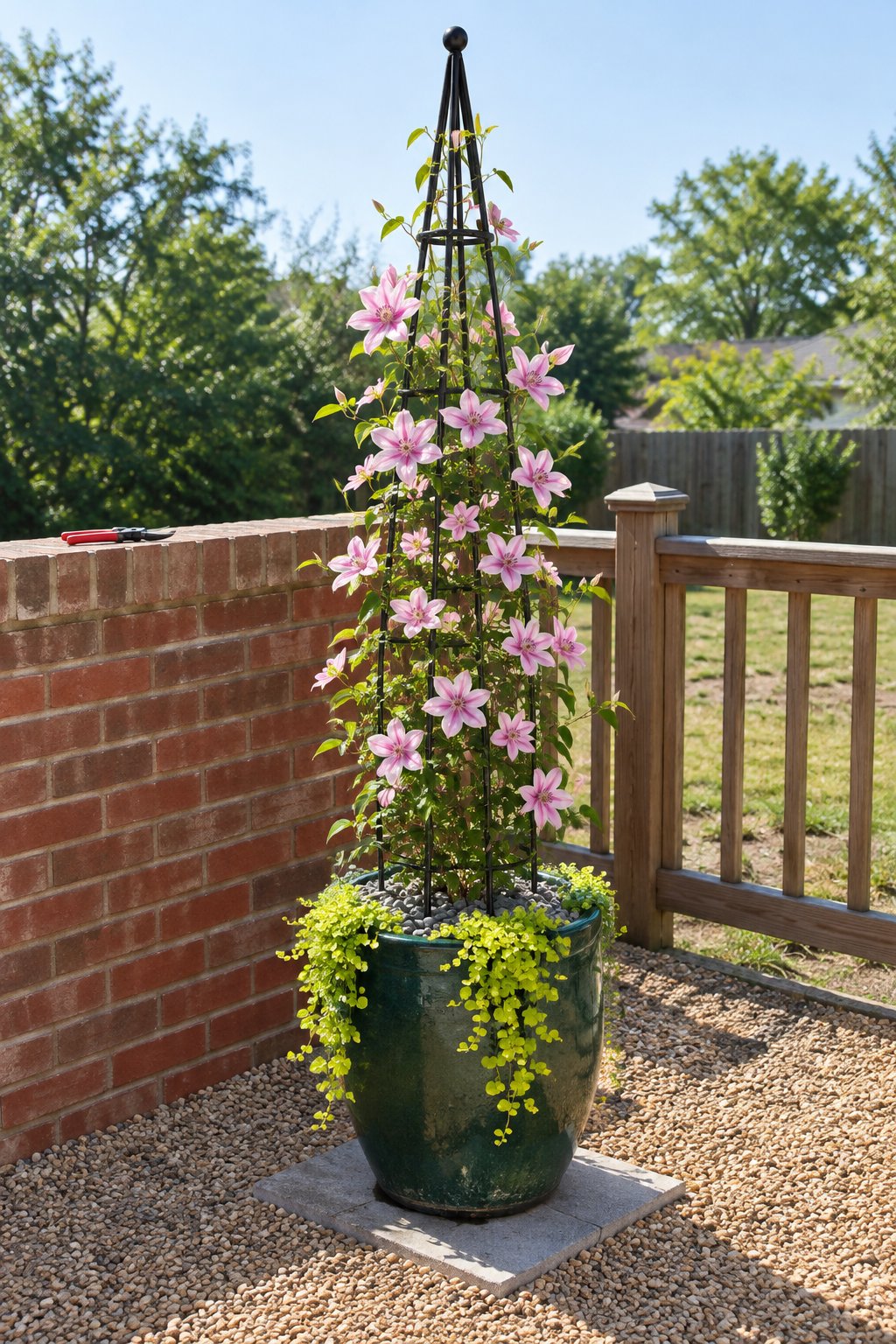
Plant a compact clematis in a pot at least 18 inches deep and wide, and push a steel obelisk down into the soil. Cover the surface with pebbles or a low plant so the roots stay cool.
The top wants sun, ideally about six hours a day, and full shade will not do.
14. Black-Eyed Susan Vine on a Small Trellis in a Balcony Pot, Clipped Inside the Rail
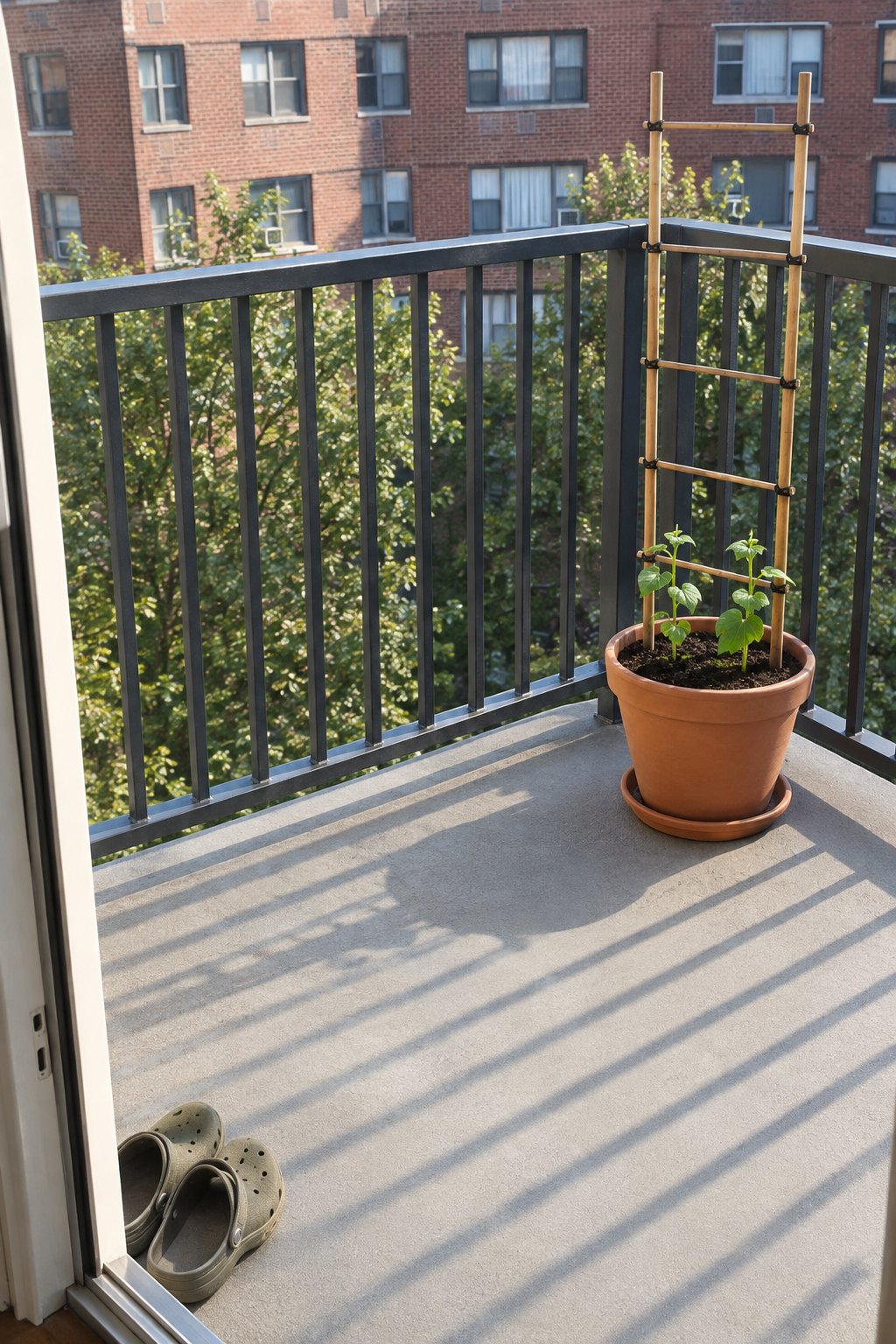
Stand a trellis in a deep pot on the balcony floor, set two or three young plants around its base and clip the vines to it. The vines reach 5 to 8 feet, so choose a trellis tall enough, and treat the plant as an annual in most climates.
It likes afternoon shade in hot places and soil kept evenly moist.
15. Sweet Peas on a Wire Grid Behind a Raised Cut-Flower Bed
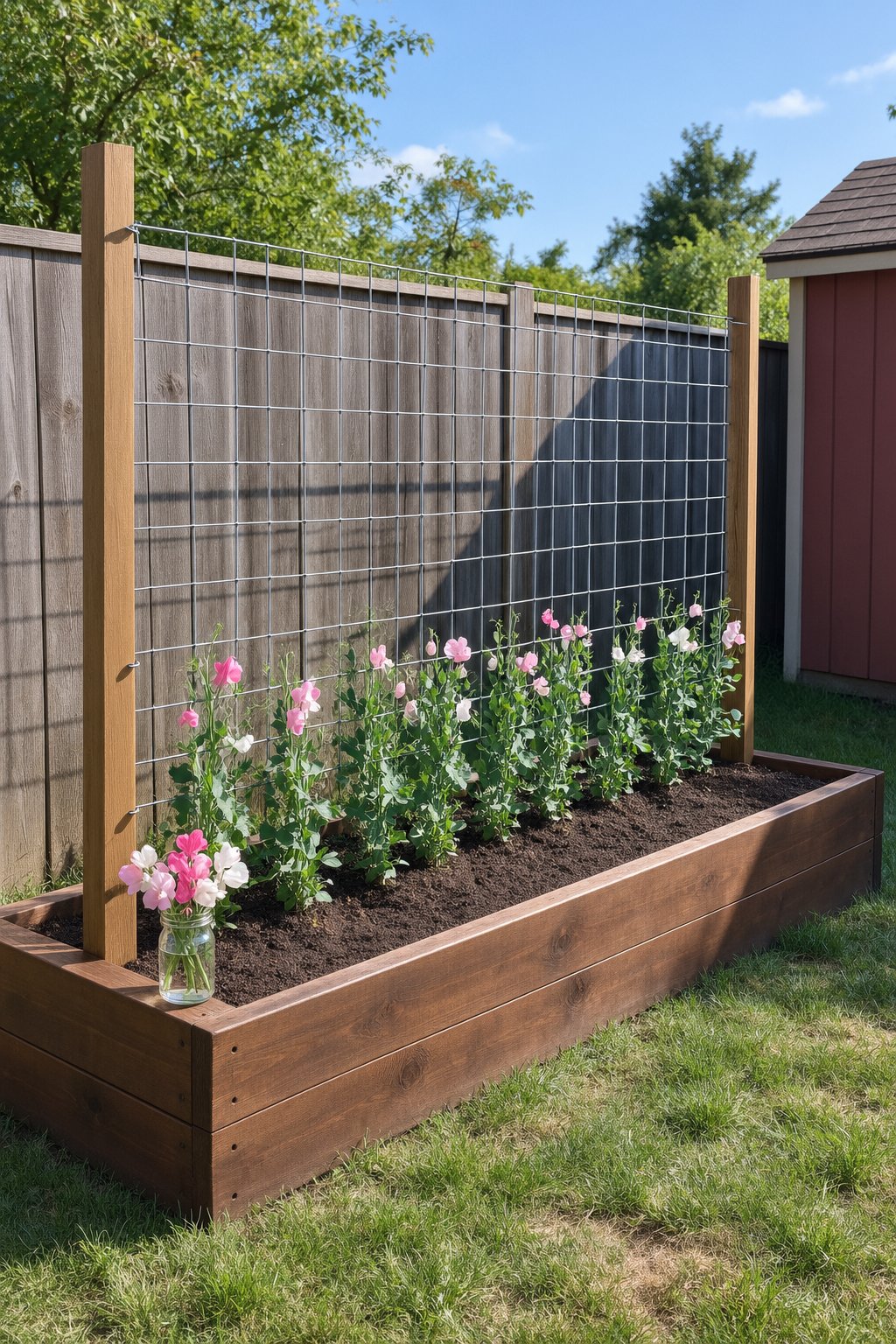
Fix a wire grid to two sturdy posts at the back of a raised bed, then sow sweet peas along its foot. They reach about 6 feet and climb by tendrils, so the grid must be open and strong.
Sweet peas are a cool-season flower, and heat ends the show, so sow them early.
16. A Renter’s Tall Planter and Trellis That Stands Free of the Siding, With Morning Glory
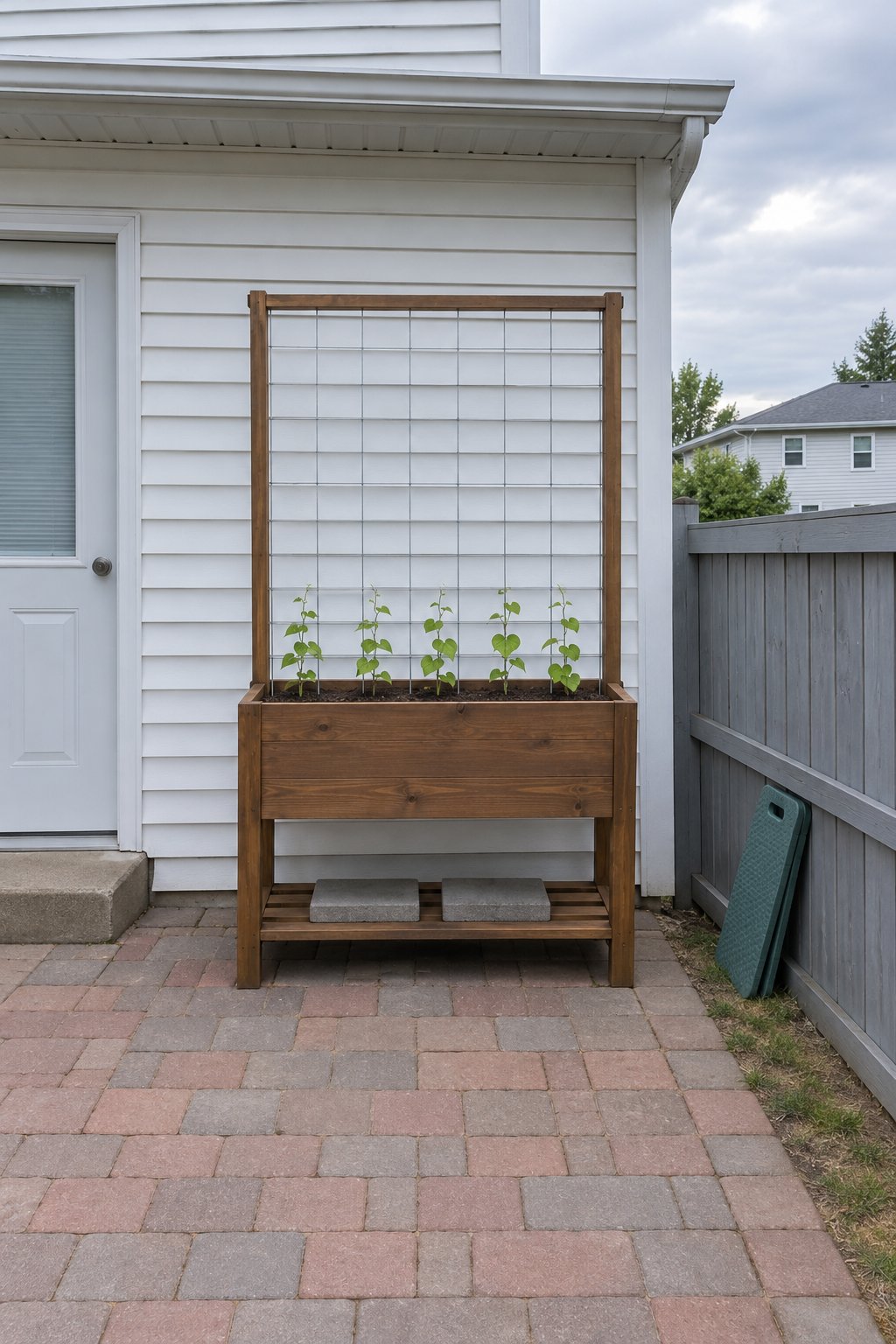
Pick a deep planter with a built-in trellis and weight its base with pavers, so nothing is screwed to the building. Stand it a foot or so out from the siding, so the vines cannot reach it.
Morning glory twines up the grid fast and can reseed, and several states list it as invasive.
How Each Climber Holds On
A trellis only works if the plant can grip it.
This table sorts the plants in this list by how they climb.
| Plant | How it climbs | What to give it |
|---|---|---|
| Pole and runner beans, morning glory, honeysuckle | Twines its whole stem around a support | Thin poles, canes, strings or wire |
| Peas, sweet peas, cucumbers, grapes | Grabs with tendrils | Netting, wire mesh or thin wire, not smooth boards |
| Clematis | Wraps its leaf stalks around a support | Thin wire, open mesh or narrow slats, thinner than about half an inch |
| Climbing hydrangea, English ivy, Virginia creeper | Clings straight to a surface | A strong frame for the hydrangea, and a free-standing trellis away from siding for the others |
| Tomatoes, climbing roses, blackberries | Does not hold on by itself | Twine, clips or ties along stakes, cages or wires |
Six Trellis Mistakes to Skip
A trellis shorter than the plant
Do thisRead the mature height on the tag or packet and build to it. Pole beans need about 6 feet or more, and tall tomatoes can reach 7 to 8 feet.
Posts set too shallow for the wind
Do thisBury at least a third of each post, and go deeper where the soil freezes. Call 811 before you dig, and ask your building department for the frost depth.
Fixing a trellis flat to the wall
Do thisStand it about 2 inches off, so stems have room to wrap and air can move. It also lets you paint or repair the wall behind.
Letting English ivy or Virginia creeper cling to siding
Do thisIvy roots work into cracks and joints, and Virginia creeper’s discs can mark paint, stucco and wood. Grow them on a free-standing trellis, or choose a twiner or tendril climber.
Planting wisteria, bittersweet or Japanese honeysuckle
Do thisChinese and Japanese wisteria, Oriental bittersweet and Japanese honeysuckle are invasive in much of the country, and the first two are heavy enough to strangle trees. Coral honeysuckle is the native alternative.
Smooth wide boards for tendrils and clematis
Do thisTendrils and leaf stalks need something thin to wrap around. Use netting, mesh, wire or narrow slats.
Twiners, Tendrils and Clingers: Match the Trellis to How the Plant Climbs
Plants hold on in different ways, and the trellis has to suit the way. Twiners such as pole beans, morning glory and honeysuckle wrap their stems around something thin, and tendril climbers such as peas, cucumbers and grapes reach out and grab it.
Clematis wraps its leaf stalks around supports thinner than about half an inch, so a fat post gives it nothing to hold.
Clingers such as English ivy and Virginia creeper stick straight to a wall and need no trellis, which is the trouble near siding.
Before you build, read the tag for the mature height and ask how heavy the plant gets. A pea vine weighs little, and a grapevine or a climbing hydrangea weighs a great deal.
Build to the plant’s size in three years, not its size in the pot at the garden center.
Start with one plant and one structure: read the tag for its mature height, build the support to that height before you plant and set the posts deep. Even the simplest DIY trellis ideas, twine on stakes or a bamboo teepee, need that much.
Height and anchoring decide whether a trellis lasts, more than the plant does.
Frequently Asked Questions
How tall should a garden trellis be?
Build to the plant’s mature height. Pole beans need about 6 feet or more, sweet peas reach about 6 feet, and tall tomatoes can grow 7 to 8 feet.
How deep should trellis posts go?
A common rule is at least a third of the post’s length, and deeper where the ground freezes, so ask your building department for the frost depth. Call 811 first, because wait times vary by state and private lines are not marked.
Which climbers damage walls or spread where they should not?
English ivy can work into cracks and joints, and Virginia creeper’s discs can mark paint, stucco and wood. Chinese and Japanese wisteria, Oriental bittersweet and Japanese honeysuckle are invasive in much of the country.
How do I prune clematis?
Group 1 flowers before June and needs little pruning beyond a trim after flowering. Group 2 has big flowers in May and June and gets a light prune in late winter, and group 3 flowers in late summer and is cut back hard in late winter. Check the tag for your plant’s group.
Which trellis climbers need full sun?
Tomatoes, beans, cucumbers, grapes and blackberries want a sunny spot, and so does a clematis’s top growth. Climbing hydrangea is the one here that copes with morning sun and afternoon shade.
You Might Also Like
Save This For Later
Loved garden trellis ideas? Save this pin to your Pinterest board now so you can find it again anytime you need the inspiration.