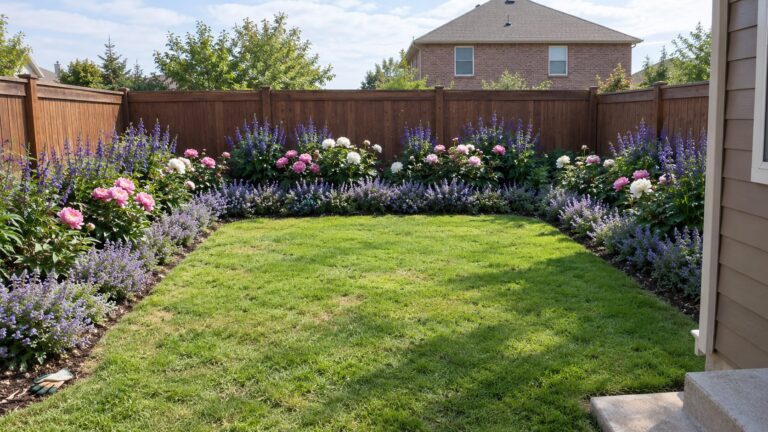
Garden Ideas for Small Spaces: 18 Plans for a Balcony, Corner or Courtyard

Garden ideas for small spaces start with a plan, not a plant list: one focal point, three heights and a floor kept clear.
These 18 plans cover a 6×8 courtyard, townhouse yards, patio corners, a stoop, side strips and two balconies.
Each one names its sun, its space and what it takes.
Find your space
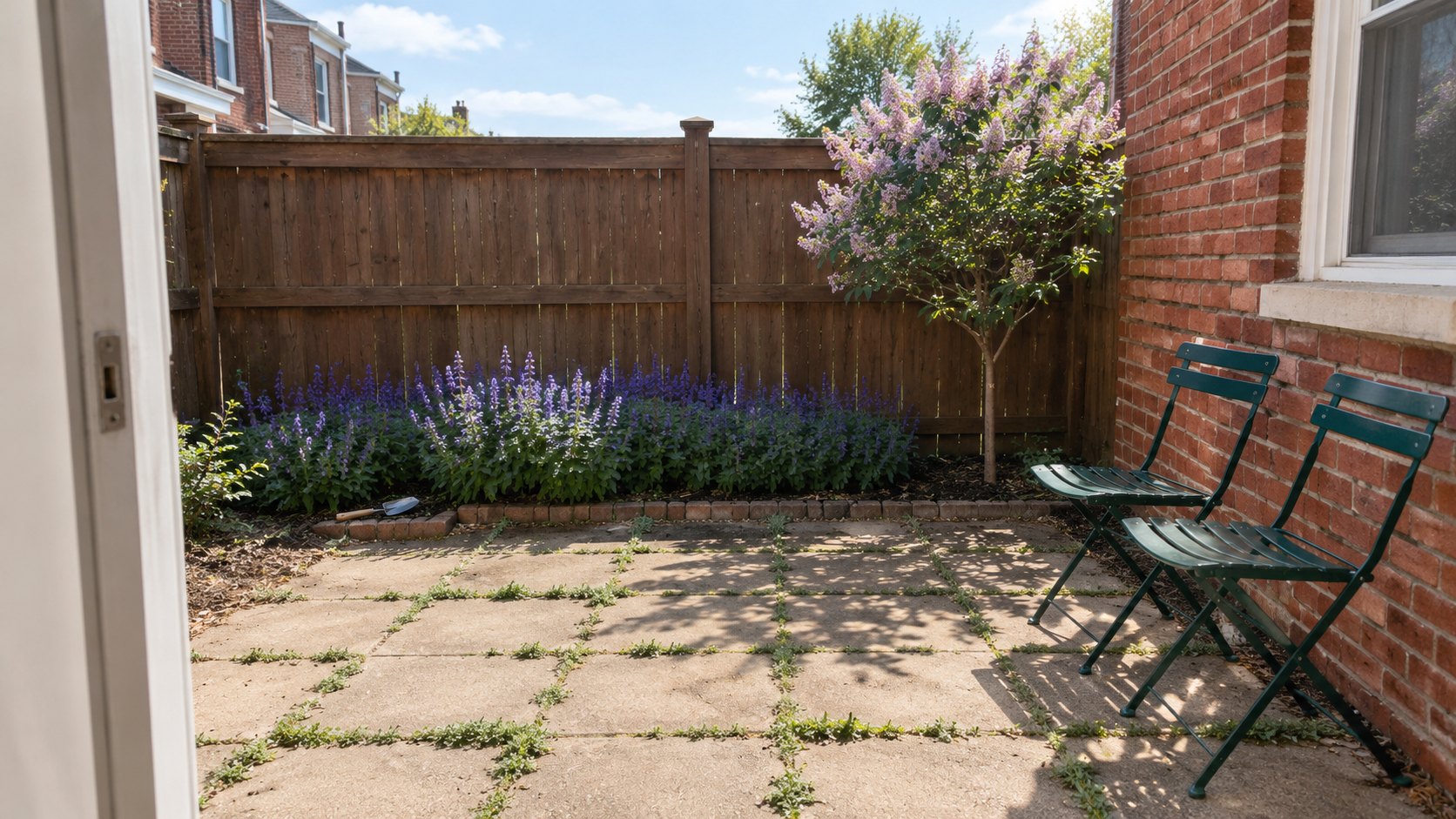
1. A 6×8 Courtyard Planted at Three Heights: Lilac Standard, Salvia and Thyme
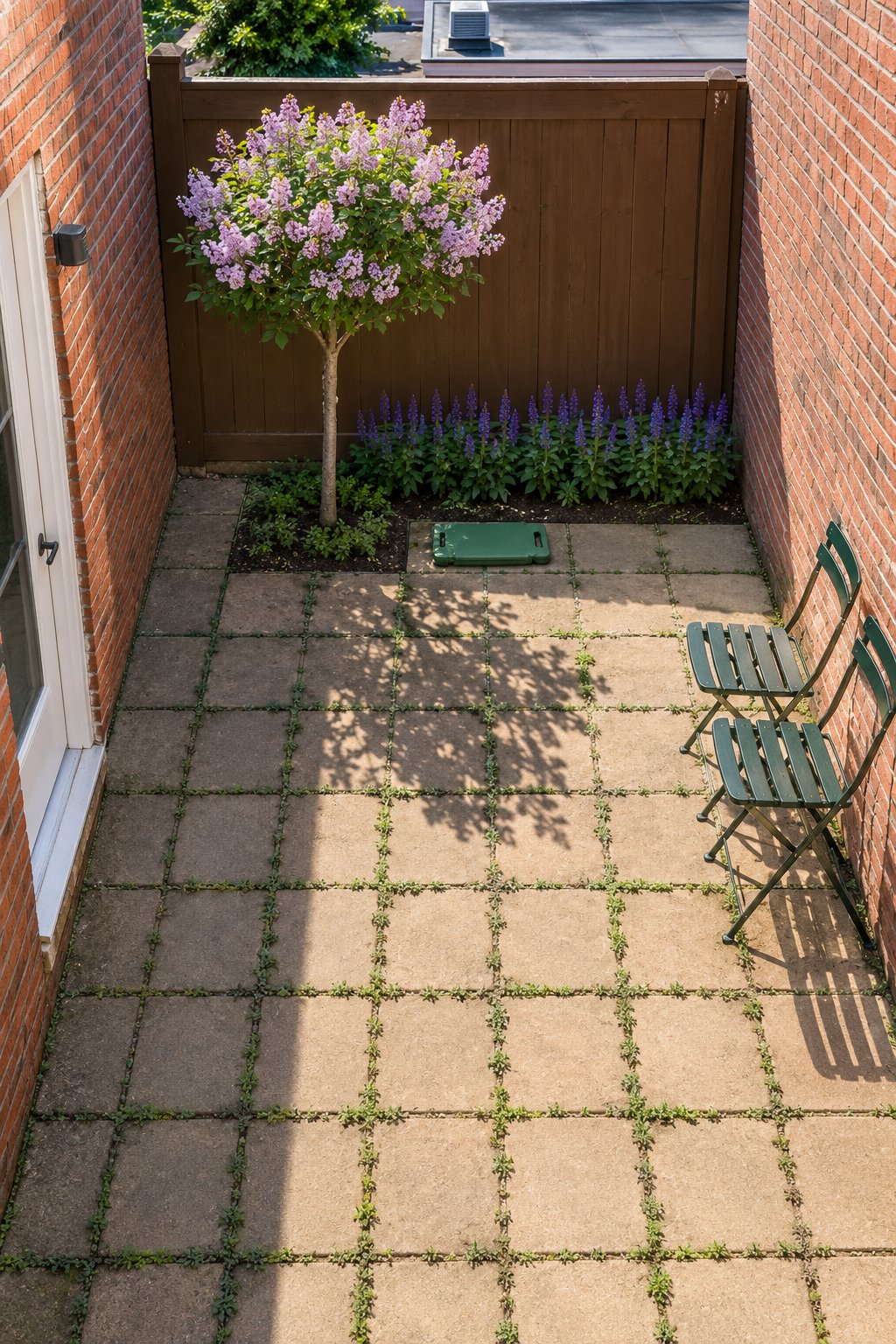
A 6×8 courtyard needs one tall thing, one knee-high band and something underfoot. A dwarf Korean lilac grown as a standard gives height on one stem, and ‘May Night’ salvia fills the middle.
Three heights make a tiny paved square read as a finished garden.
2. Shady Courtyard Built Around One Glazed Urn on the Line From the Door
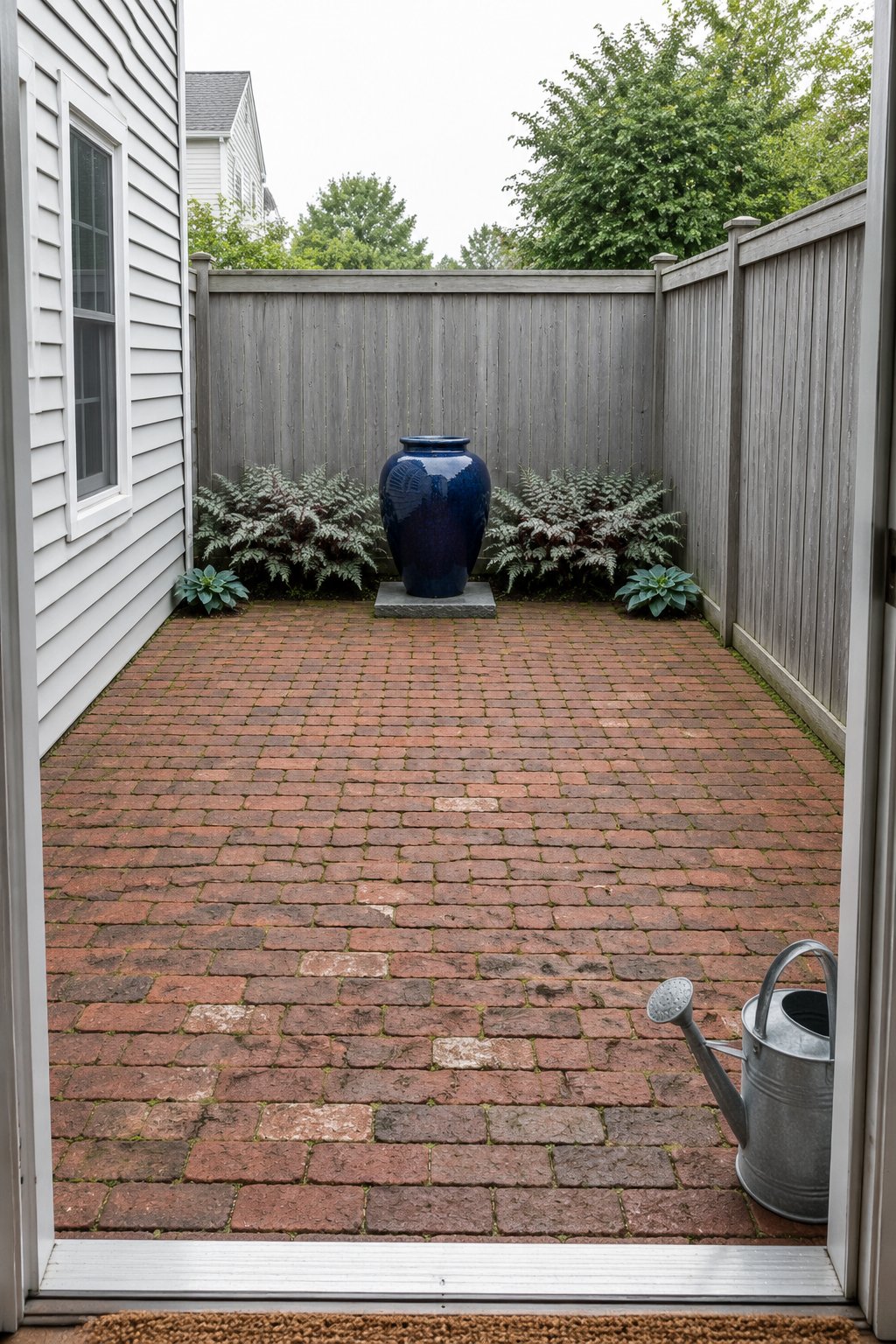
Stand in the back doorway and look straight out: the end of that line is your focal point. Put one large glazed urn there and keep the rest low and green.
One big object beats six small ones in a space this size.
Japanese painted fern and a miniature hosta under a foot tall suit the part shade at its feet.
3. Turn the Pavers 45 Degrees and Plant the Triangles at the Edges
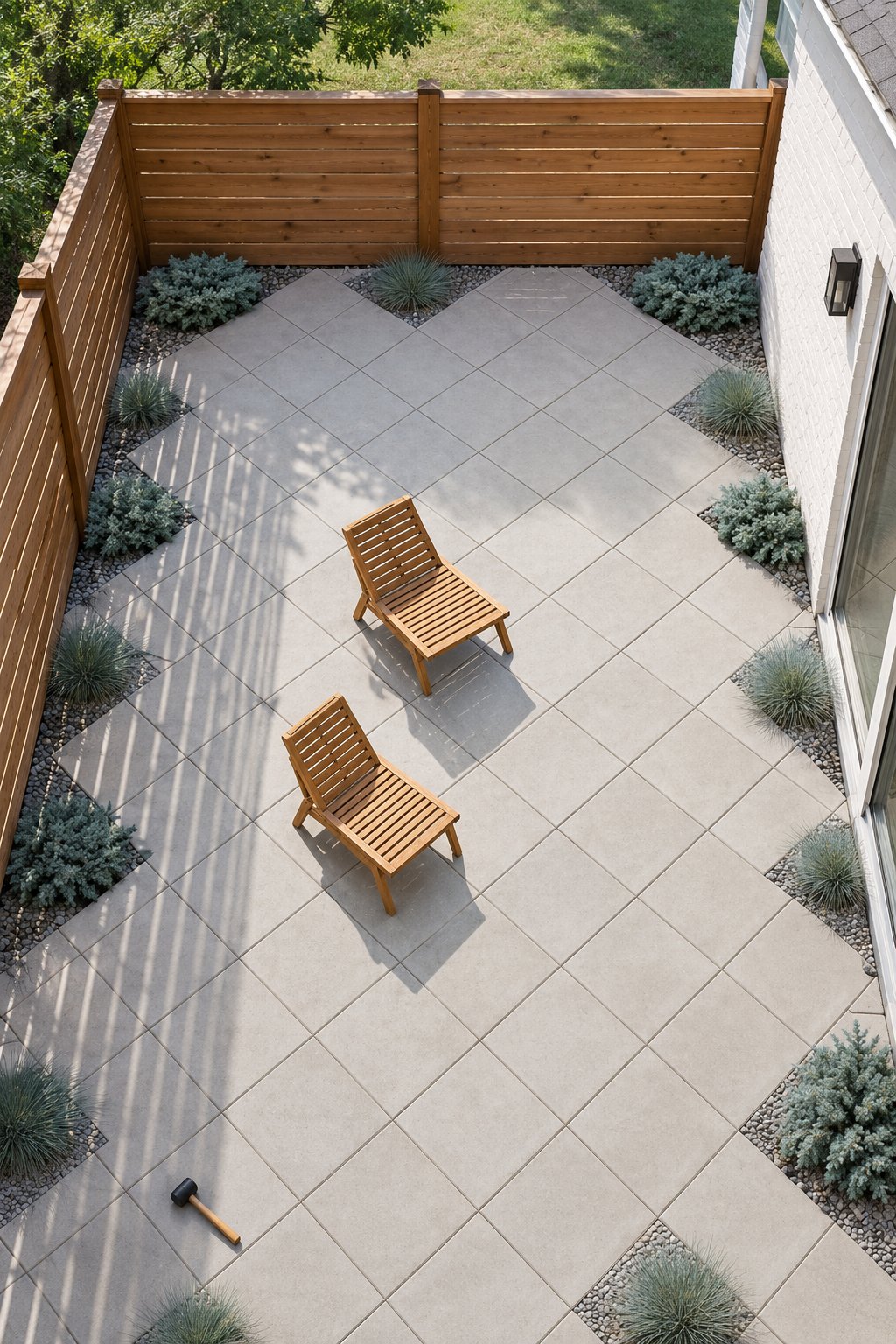
Pavers laid on the diagonal pull the eye corner to corner, the longest line in any rectangle. Big 24-inch squares mean fewer joints and a calmer floor.
The cut triangles along the fence become planting pockets instead of waste.
Fill them with ‘Blue Star’ juniper, a slow mound about 1 to 3 feet tall, and tufts of blue fescue. Both want full sun and hate wet soil.
4. Build the Beds at Seat Height So the Walls Are the Benches
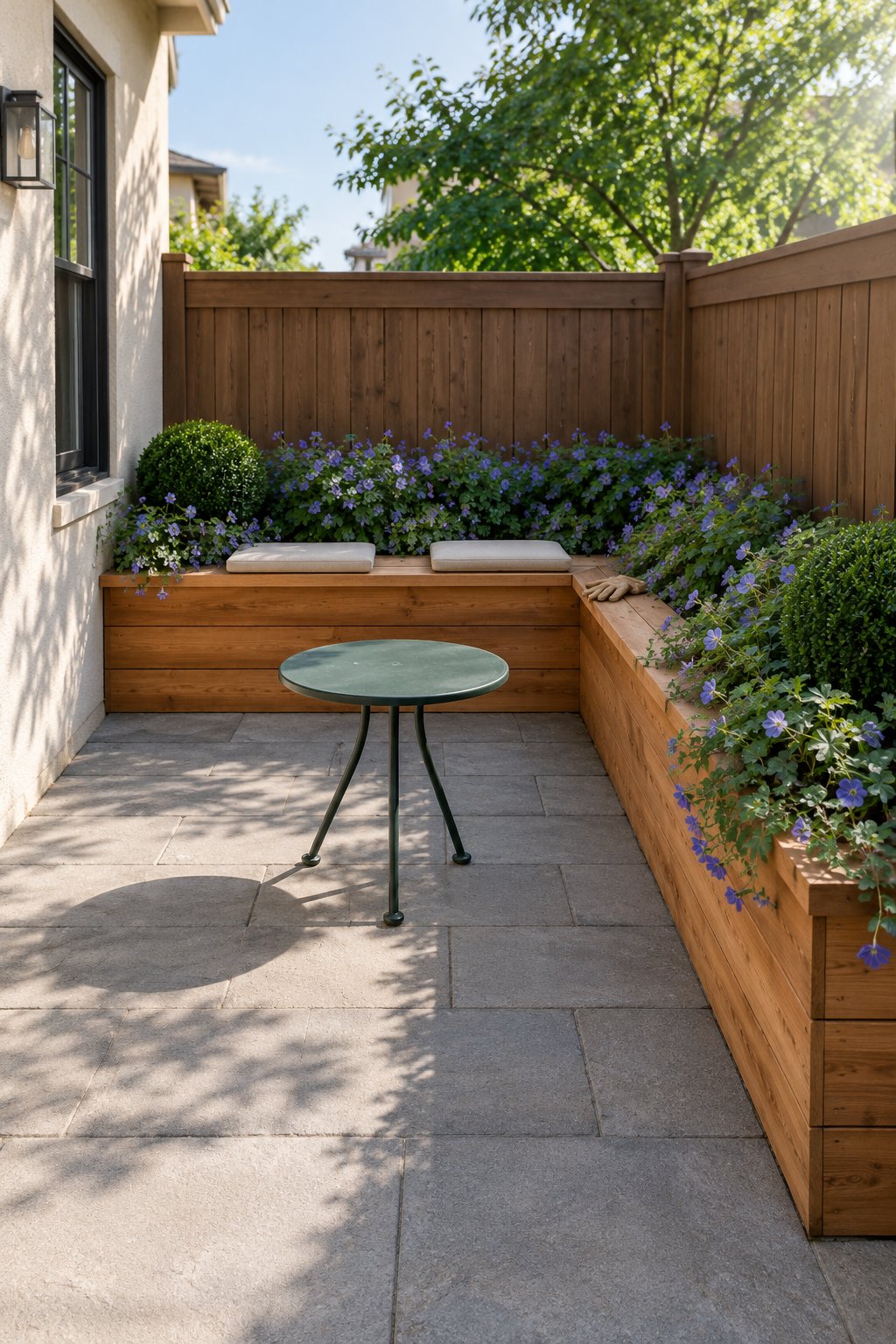
A 7×9 courtyard rarely fits beds and chairs, so build the bed walls about 17 to 19 inches high with a wide cap to sit on.
Every foot of wall does two jobs: it holds soil and it seats a guest.
‘Rozanne’ cranesbill spills over the edge and flowers from late spring into summer, with a dwarf boxwood at each corner.
5. Hang an Outdoor Mirror on the Back Fence Behind a Bed of Panicle Hydrangea
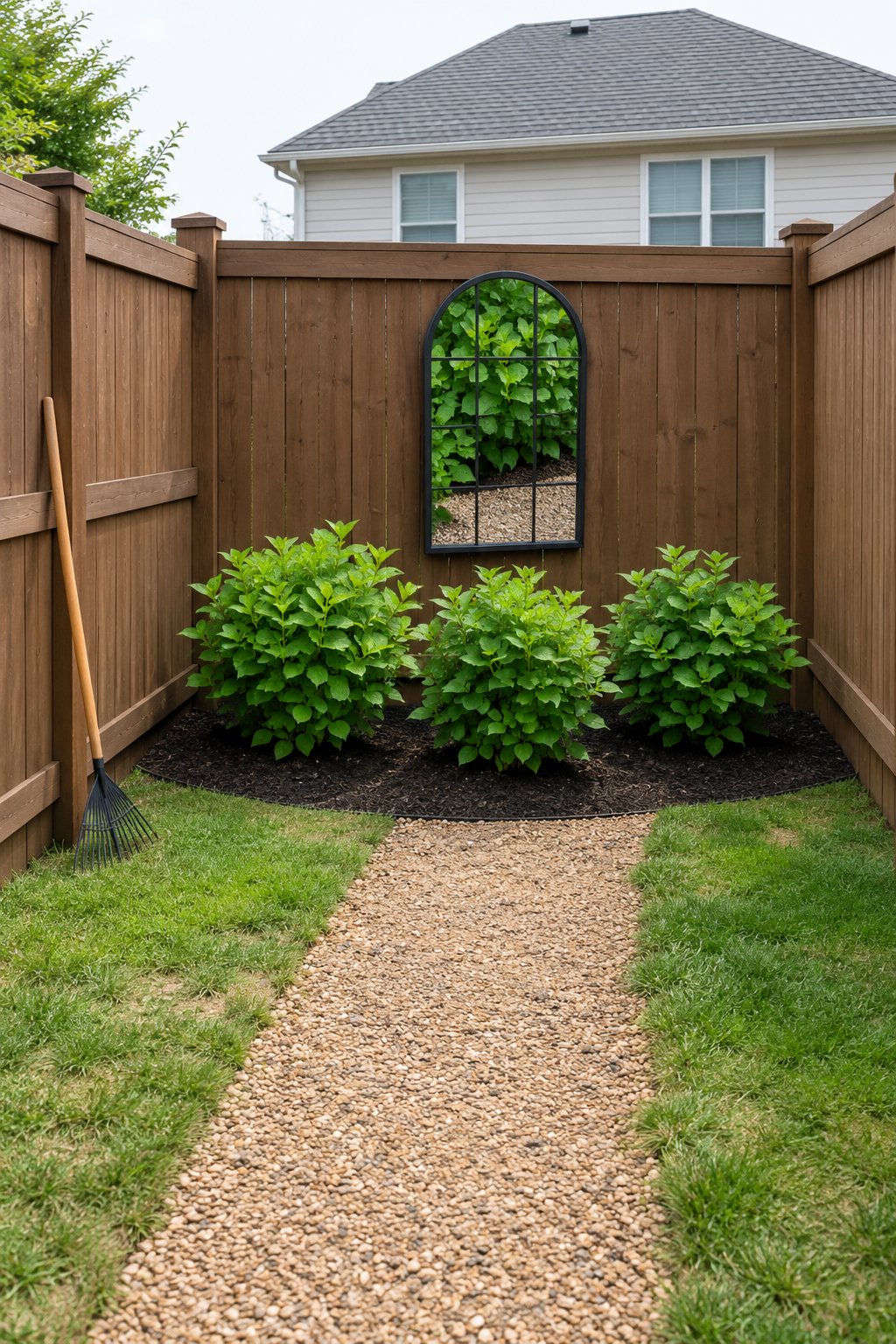
A mirror on the far fence repeats the planting in front of it, so a 15-foot yard reads as a doorway into more garden. Plant ‘Little Lime’ hydrangea before it, which grows about 3 to 5 feet and flowers from midsummer.
It only works when the mirror shows plants, never the trash cans.
6. Paint the Fence Charcoal and Plant Silver and Lime in Front of It

A dark fence recedes, so the boundary blurs and the plants step forward. Pale leaves show best against it: ‘Jack Frost’ brunnera, lime coral bells and golden Japanese forest grass, all for part shade.
Stain is the cheapest way I know to push a fence back.
7. One Multi-Stem Serviceberry as the Ceiling Over Two Chairs
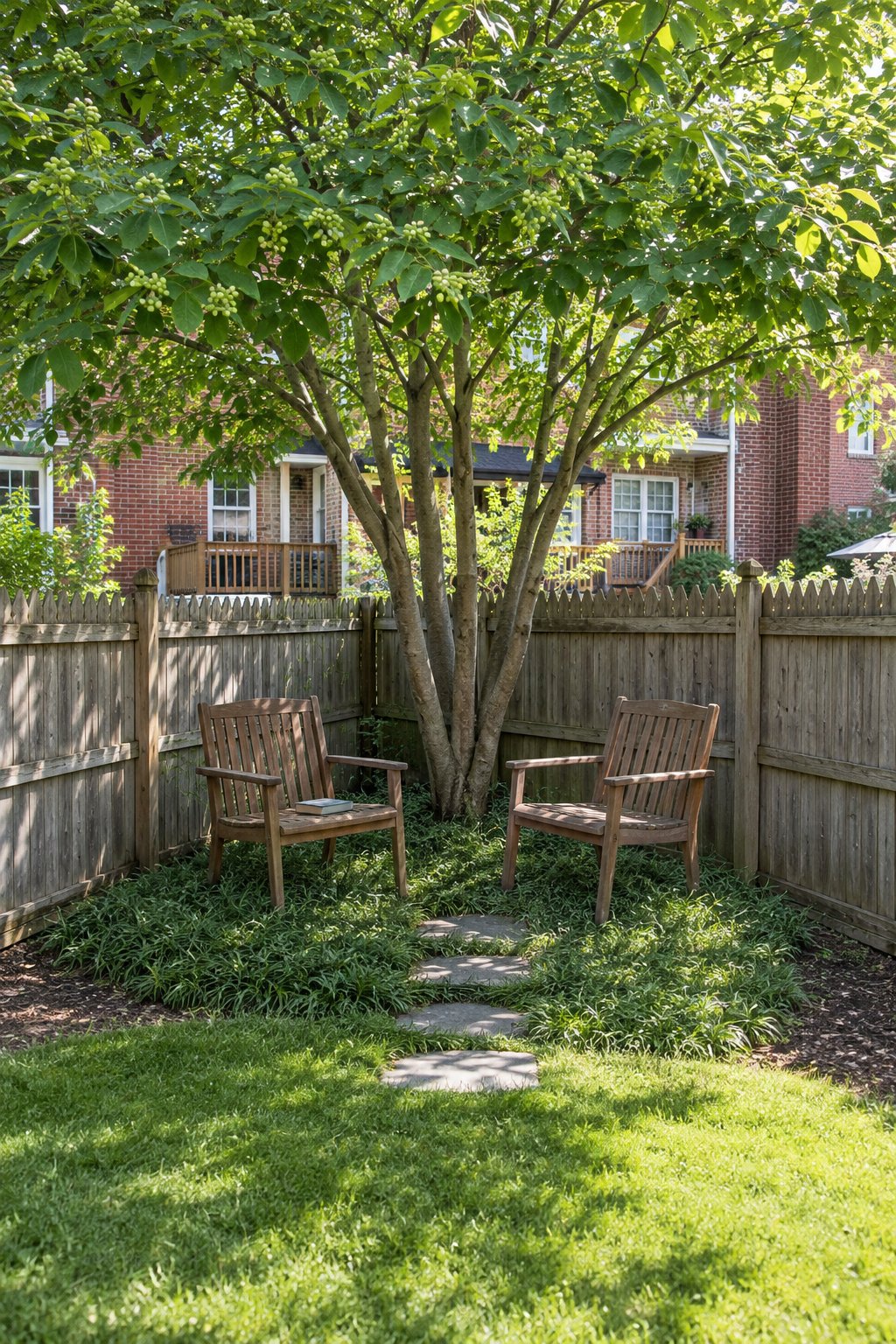
One tree gives a small yard a ceiling, and a ceiling makes a room. A multi-stem serviceberry flowers white in early spring and is commonly listed at 15 to 25 feet tall and about as wide.
Plant one tree in the corner away from the house and expect it to shade most of a small yard in time.
8. Plan the Townhouse Yard in Thirds: Sit, Grow, Store
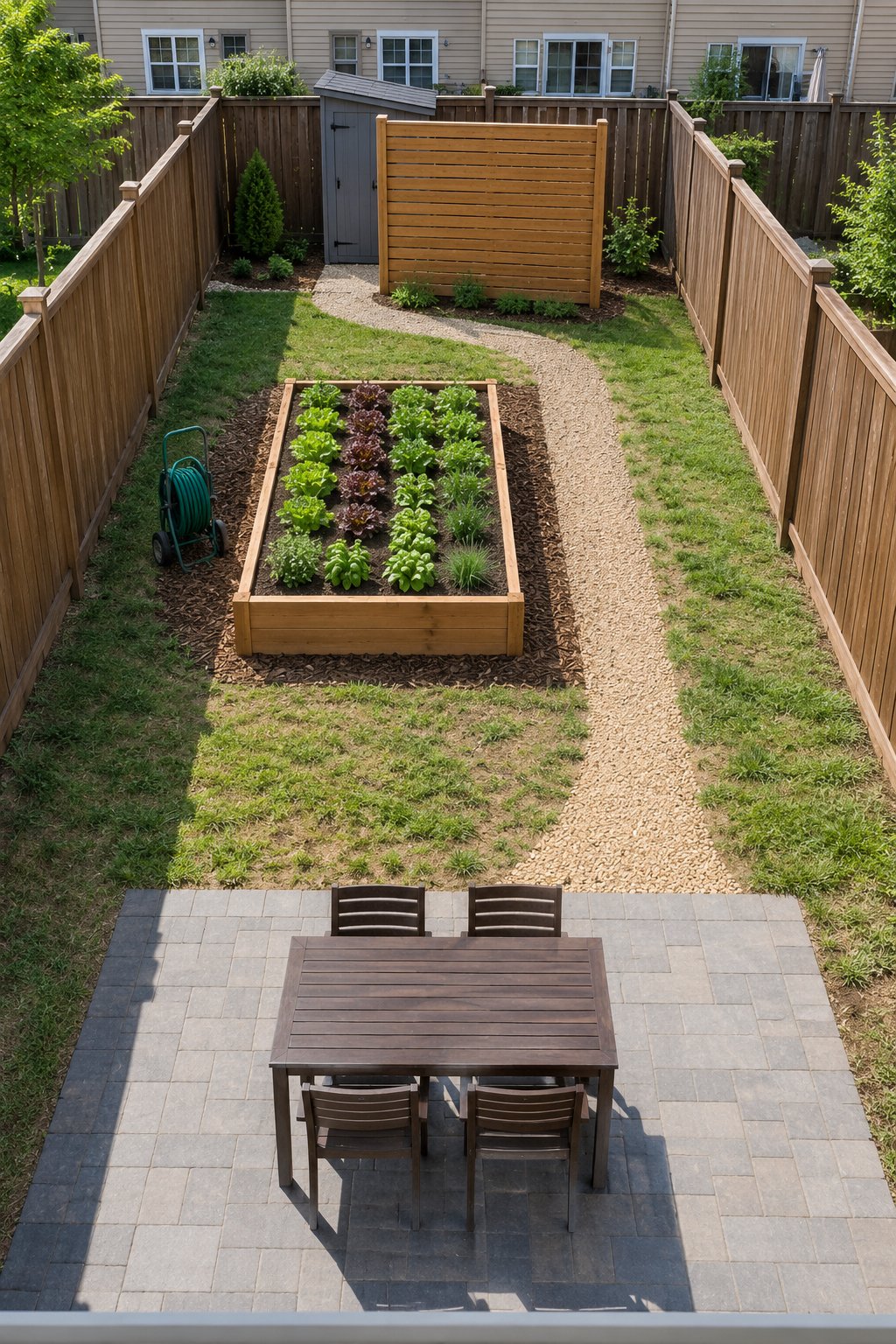
Put what you use daily nearest the door: a patio first, a 4×8 bed of lettuce and herbs in the sunny middle, storage at the back.
The part you visit least goes farthest from the door.
9. Grow the Garden on the Back Wall of the House
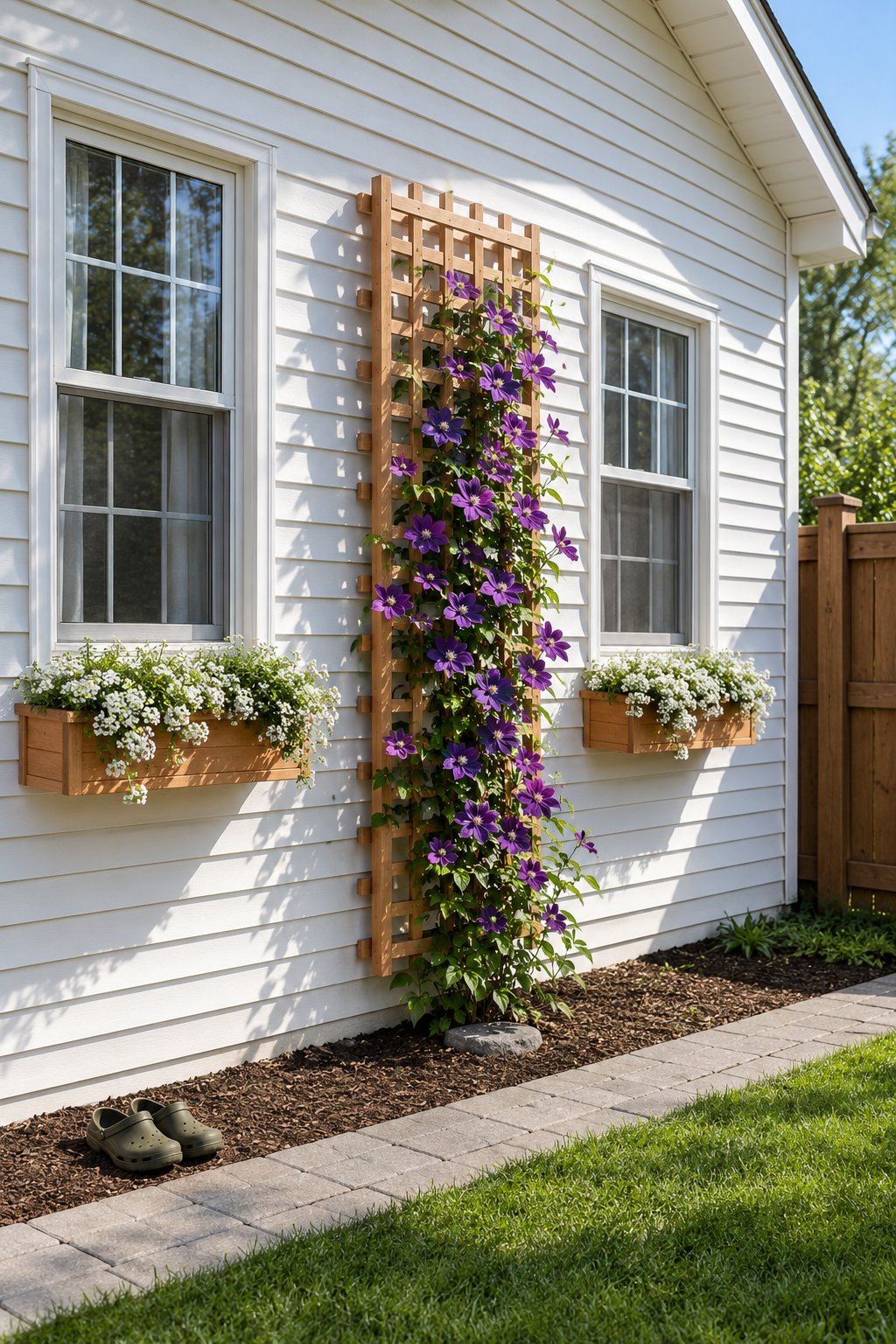
When the floor is spoken for, the back wall is free ground. A clematis on a trellis off the siding and two window boxes of sweet alyssum put flowers at eye level from inside.
Clematis wants its top in sun and its roots shaded, so mulch the base or lay a flat stone over it.
10. A Triangle Planter Built to Fit a Dead Patio Corner
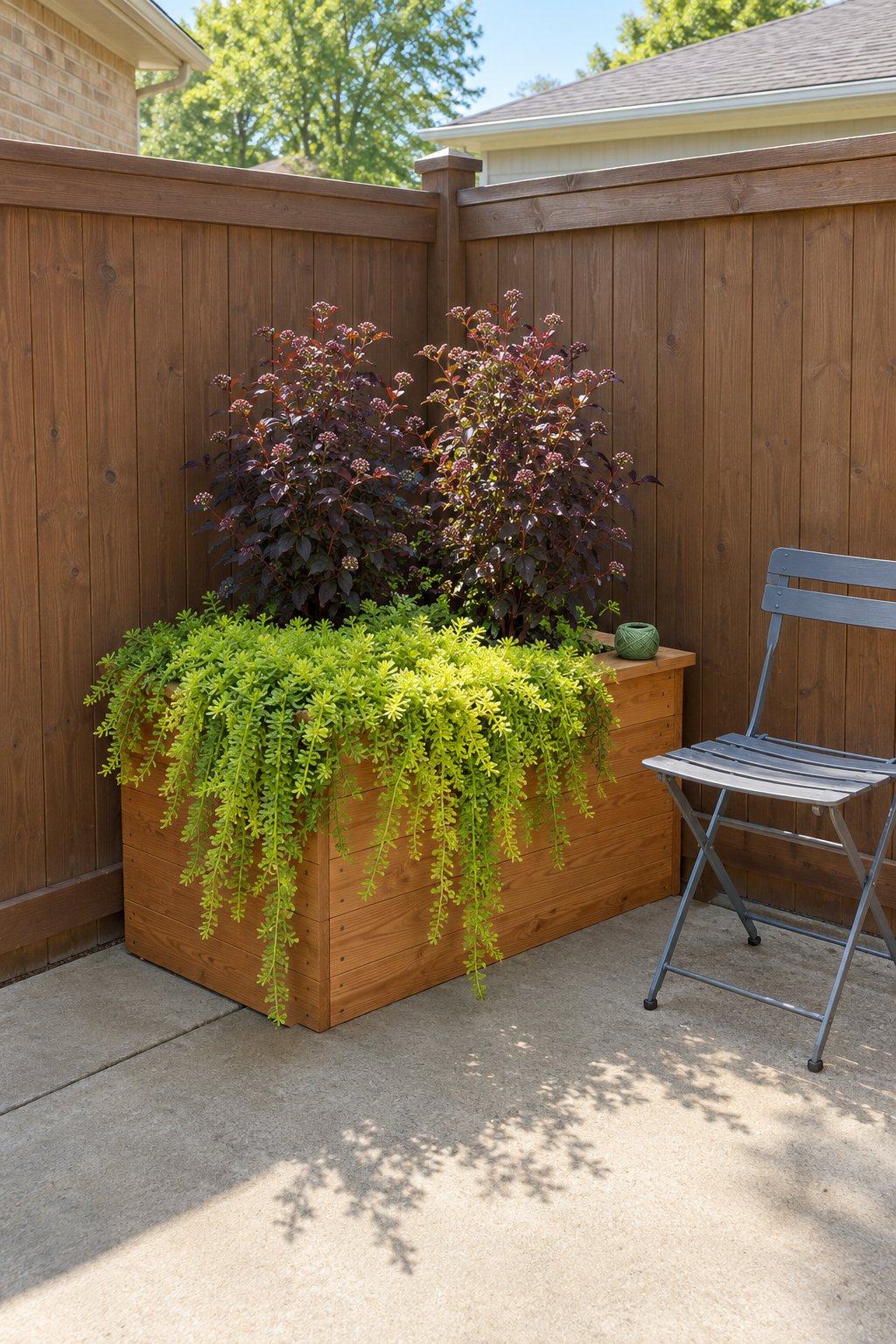
A corner is where round pots waste the most room. Build a cedar planter to the exact angle of the fences, and the whole corner becomes soil.
‘Little Devil’ ninebark gives the back 3 to 4 feet of dark leaves, with small pink-white flowers in early summer.
‘Angelina’ stonecrop spills over the front edge in sun and fast-draining mix.
11. Two Matching Pots on a Shaded Stoop, One Each Side of the Door

A stoop has room for two pots, so make them a pair: same pot, same plant, one each side. Symmetry makes a tiny entry look planned.
A clipped dwarf boxwood in each pot, skirted with lime coral bells, holds up in part shade.
12. A Knee-High Lavender Hedge in Place of a Patio Railing

A ground-level patio needs an edge, or it looks like a slab dropped on the lawn. One row of English lavender marks the room without blocking the view.
Lavender needs full sun and fast drainage and fails in heavy clay, so plant it in a slightly raised strip of gritty soil.
13. Lift Four Pavers and Plant the Hole in the Patio Floor
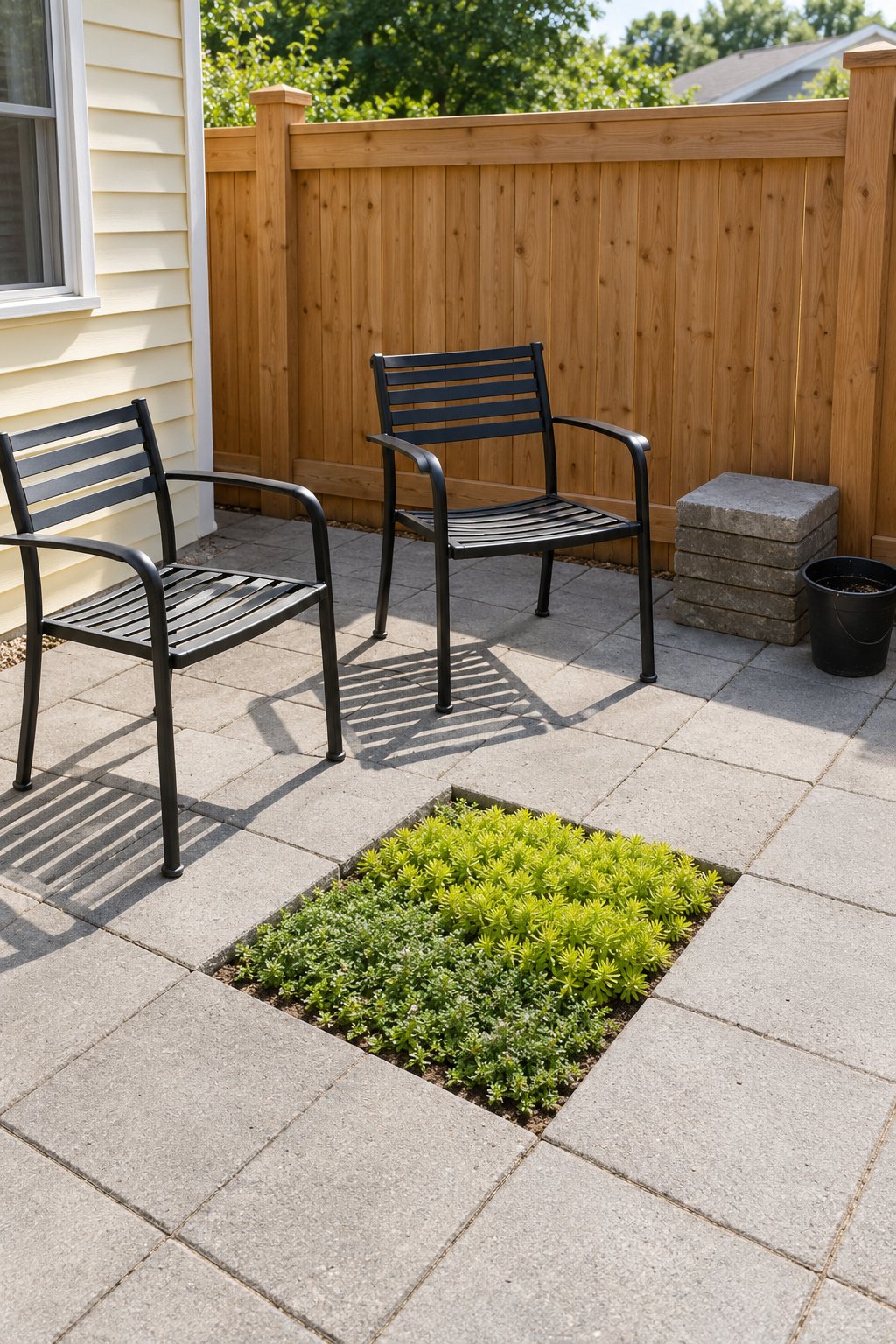
On a small patio the floor is the biggest surface, so plant part of it. Lift four pavers near a corner, dig out the base and fill with gritty soil.
A planted pocket softens a hard floor without costing you a chair.
‘Angelina’ stonecrop and creeping thyme both stay low and want full sun, and stonecrop can die in standing water.
14. Push Every Plant to the Edge and Keep the Middle Clear

On a 10×12 patio, scattered pots make it feel half its size. Line them along two edges and leave the center for a rug, a table and chairs.
An empty middle is what makes a small space read as roomy.
Three big pots of ‘Little Lime’ hydrangea along the back give height and flowers from midsummer.
15. Train a Climbing Rose Flat Along Wires on a Sunny Side Fence

A side strip has no depth, but the fence has length. Run horizontal wires and tie a climbing rose’s canes out sideways, close to level.
Canes trained near horizontal send up more side shoots, and the side shoots carry the flowers.
Lay a gravel path in front and let the rose take only the first foot of ground.
16. Space Narrow Evergreens Like Columns Down a Side Yard

Evenly spaced upright evergreens set a rhythm, and rhythm makes a leftover corridor look intended. ‘Emerald Green’ arborvitae is commonly 3 to 4 feet wide but 10 to 15 feet tall in time, in full sun.
Leave fence showing between them so the strip reads as a colonnade, not a wall.
17. Plan a Balcony Garden Around Its Weight, Then the Plants

Wet potting mix is far heavier than the dry bag; some sources put it at 40 to 60 pounds a cubic foot. So a balcony plan starts with the weight: the biggest pots against the building wall, the rail clear.
Ask the building manager about the load limit before you buy the large pots.
Lightweight fiberglass pots of ‘Blue Star’ juniper and ‘Angelina’ stonecrop take sun and dry spells.
18. A Trough of Feather Reed Grass Screens the Next Balcony

A living screen at the neighbor’s end moves in the wind instead of rattling. ‘Karl Foerster’ feather reed grass grows upright, roughly 3 to 5 feet in flower and about 2 feet wide, in full sun.
Plant it in one long trough, not a row of small pots, so it stands as one hedge.
Small Garden Numbers on One Page
Every plan above rests on a few figures.
Check them against your own space and the plant tag before you buy.
| What | The figure | Why |
|---|---|---|
| A small table and two chairs | About 6 by 8 feet | The smallest courtyard plan here |
| Space behind a chair | About 36 inches | Room to stand up and pass |
| Seat-wall height | About 17 to 19 inches | A normal bench height |
| Full sun | 6 or more hours of direct sun | What lavender, salvia, juniper and thyme want |
| Thyme between pavers | 8 to 12 inches apart | Fills the joints and takes light foot traffic |
| Shrubs in pots left out all winter | Rated about two zones colder than yours | Roots in a pot freeze harder than in the ground |
Five Small Garden Mistakes to Skip
Buying a plant by its nursery size
Do thisRead the mature height and width on the tag. A serviceberry is commonly listed at 15 to 25 feet tall and wide, so it gets the whole corner or nothing.
Pots scattered across the floor
Do thisGroup them along one or two edges and leave the middle open, with about 36 inches behind each chair.
Ten small things instead of one big one
Do thisPick one focal point, such as a large urn or a single tree, and keep everything near it lower and quieter.
Heavy pots in the middle of a balcony
Do thisAsk the building manager about the load limit, use lightweight pots and keep the largest ones against the wall.
A mirror that reflects sky or the trash cans
Do thisHang it where it reflects planting, tilt it slightly down and keep it away from bird feeders.
Every Plant Pays Rent: The Two-Season Test for a Small Garden
In a big yard a plant can look good for two weeks and hide the rest of the year. In a 6×8 courtyard there is nowhere to hide it.
Before you buy, name two things the plant does across the year: flowers and leaves, berries and fall color, or an evergreen shape.
Serviceberry gives white spring flowers, summer berries and fall color. ‘Little Devil’ ninebark gives dark leaves and early summer flowers, and ‘Blue Star’ juniper holds its blue all winter.
A plant that only earns its keep for one week belongs in a pot you can move, not in the one bed you have.
Pick the one space you look at most, give it a single focal point and three heights, and only then buy plants. For a bigger yard, the same thinking runs through my garden design ideas.
In a small space, people notice the plan long before they count the plants.
Frequently Asked Questions
How do you make a small garden look bigger?
Lay the floor on the diagonal, darken the boundary, keep the middle clear and give the space one focal point. An outdoor mirror that reflects planting adds depth too.
Which plants stay small enough for a small garden?
‘Blue Star’ juniper grows about 1 to 3 feet tall, ‘Rozanne’ cranesbill about 1 to 1.5 feet, ‘Little Devil’ ninebark 3 to 4 feet and miniature hostas under a foot. Always check the mature size on the tag for your plant.
How much weight can a balcony garden hold?
That limit belongs to the building, so ask the manager before you buy large pots. Wet potting mix weighs far more than the dry bag, so use lightweight pots and keep the biggest against the wall.
How big does a courtyard need to be for a table and chairs?
About 6 by 8 feet fits a small table and two chairs. Leave about 36 inches behind any chair people walk past.
Can renters make a small-space garden?
Yes. The stoop pots, the open-middle patio, the corner planter and both balcony plans all move with you. Anything drilled, dug or stained needs the owner’s OK first.
You Might Also Like
Save This For Later
Loved garden ideas for small spaces? Save this pin to your Pinterest board now so you can find it again anytime you need the inspiration.