Pollinator Garden Ideas: 15 Plans With Plants for Every Season
A pollinator garden earns its name in April and October, not in July, when almost everything flowers.
These 15 plans use native plants first and keep something in bloom from spring to fall.
The last three cover what flowers can’t: water, bare ground and winter stems.
Find your yard
1. Three Waves Along a Sunny Fence: White Beardtongue, Wild Bergamot and New England Aster
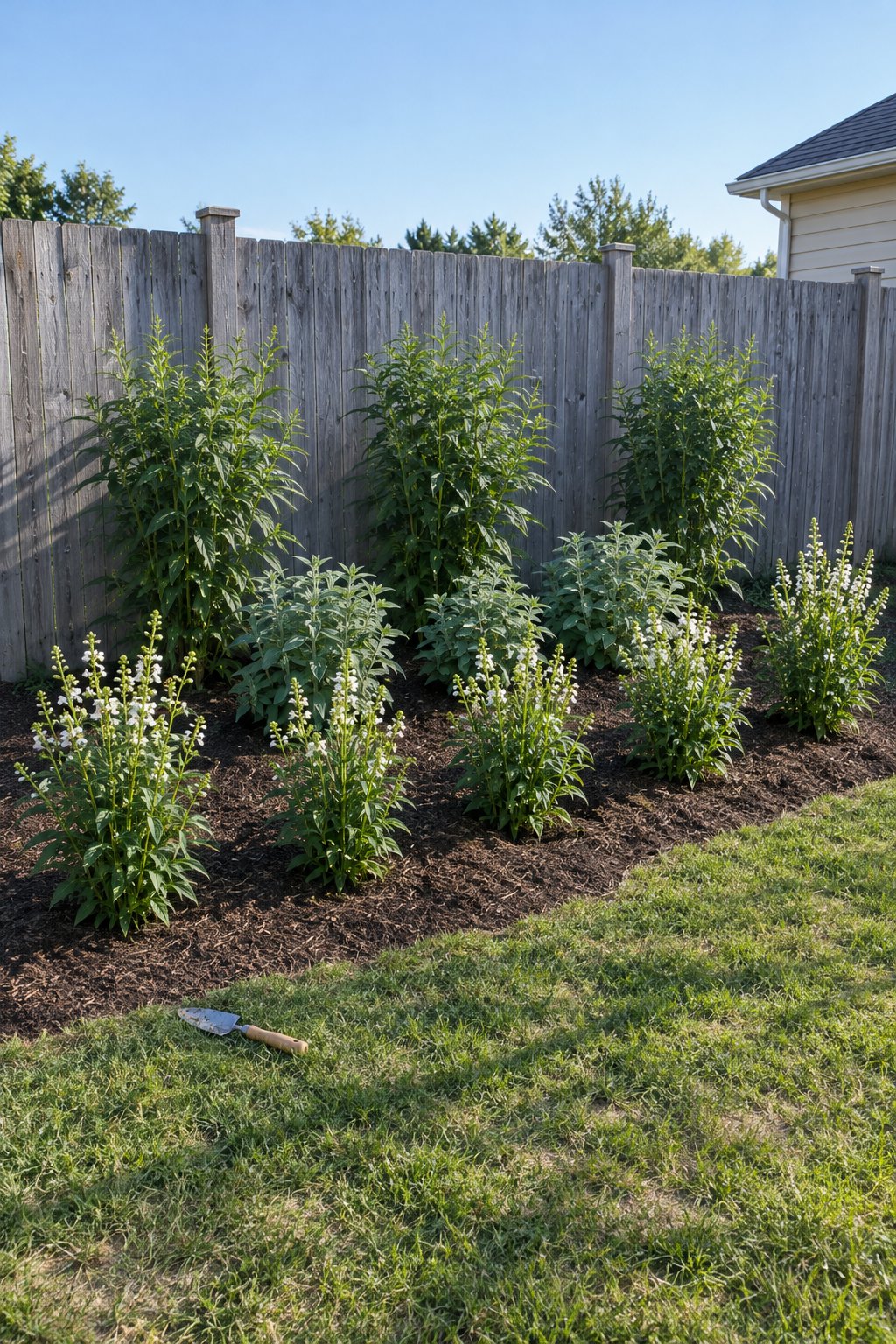
Plant for three months of bloom, not one, and give each wave its own row. White beardtongue opens along the front in late spring, wild bergamot takes the middle from June, and New England aster at the back flowers from August into October.
Each wave hands off to the next, so bees find food in this bed for most of the season.
2. A Hot Sidewalk Strip: Moss Phlox, Threadleaf Coreopsis and Butterfly Weed
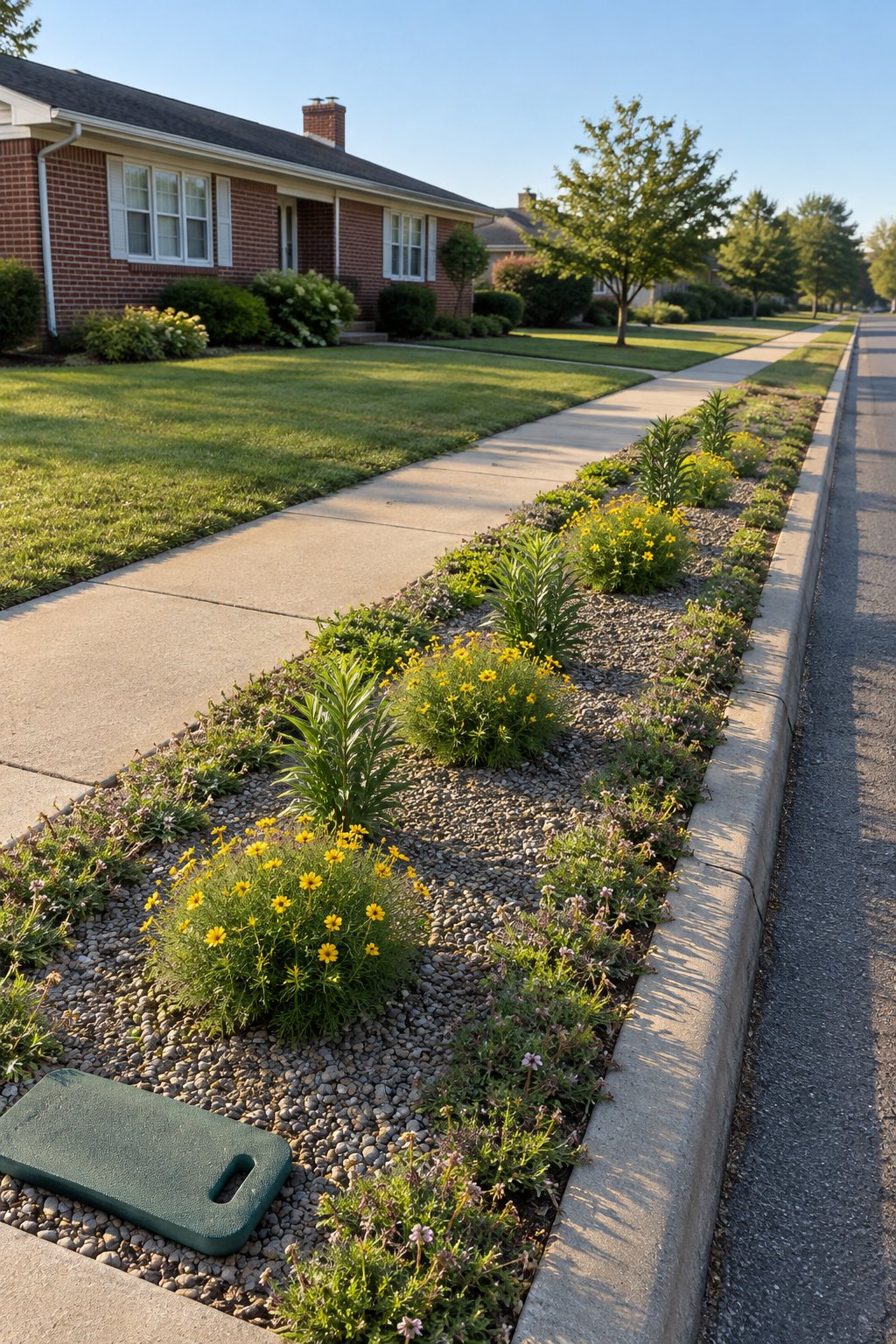
The strip between the walk and the street is the worst lawn on the block and one of the best spots for butterfly weed. It wants sun and well-drained, even dry ground, and its deep taproot is what carries it through a dry summer.
Moss phlox flowers along the edges in spring, threadleaf coreopsis from June and butterfly weed from July.
3. The Low Wet Corner: Swamp Milkweed, Boneset and Great Blue Lobelia

Stop fighting the soggy dip where the downspout drains and plant the natives that like it. Swamp milkweed is a monarch host that prefers wet soil, and great blue lobelia wants medium to moist ground.
Swamp milkweed flowers in June and July, boneset from July and great blue lobelia in late summer.
4. A Hummingbird Fence: Coral Honeysuckle on Wire, Wild Columbine and Cardinal Flower

Red tubes are the whole point here, staggered so one is open whenever hummingbirds pass. Wild columbine is one of the first nectar flowers in spring, coral honeysuckle can flower from April into fall, and cardinal flower takes over from August.
Put the columbine on the drier high end and the cardinal flower at the damp low end, because it needs soil that stays moist.
5. The Last Bed of the Year: Showy Goldenrod, Smooth Aster and New York Ironweed

A fall bed looks like nothing in May, and that is the price of the most useful bed in the yard. Showy goldenrod flowers from July into October, and smooth aster and New York ironweed from August into October.
That late food matters to bees heading into winter and to butterflies still on the wing.
6. An Early Start in the Corner: One Serviceberry Over Woodland Phlox

Spring is the hungriest gap in most yards, and one small tree fills it faster than any bed. Serviceberry flowers in April and May, and woodland phlox below it flowers from April into June in part shade.
By June the tree is covered in small berries, which is why I’d pick it over a plain ornamental.
7. Shade on the North Side: Wild Bleeding Heart, Zigzag Goldenrod and Blue Wood Aster
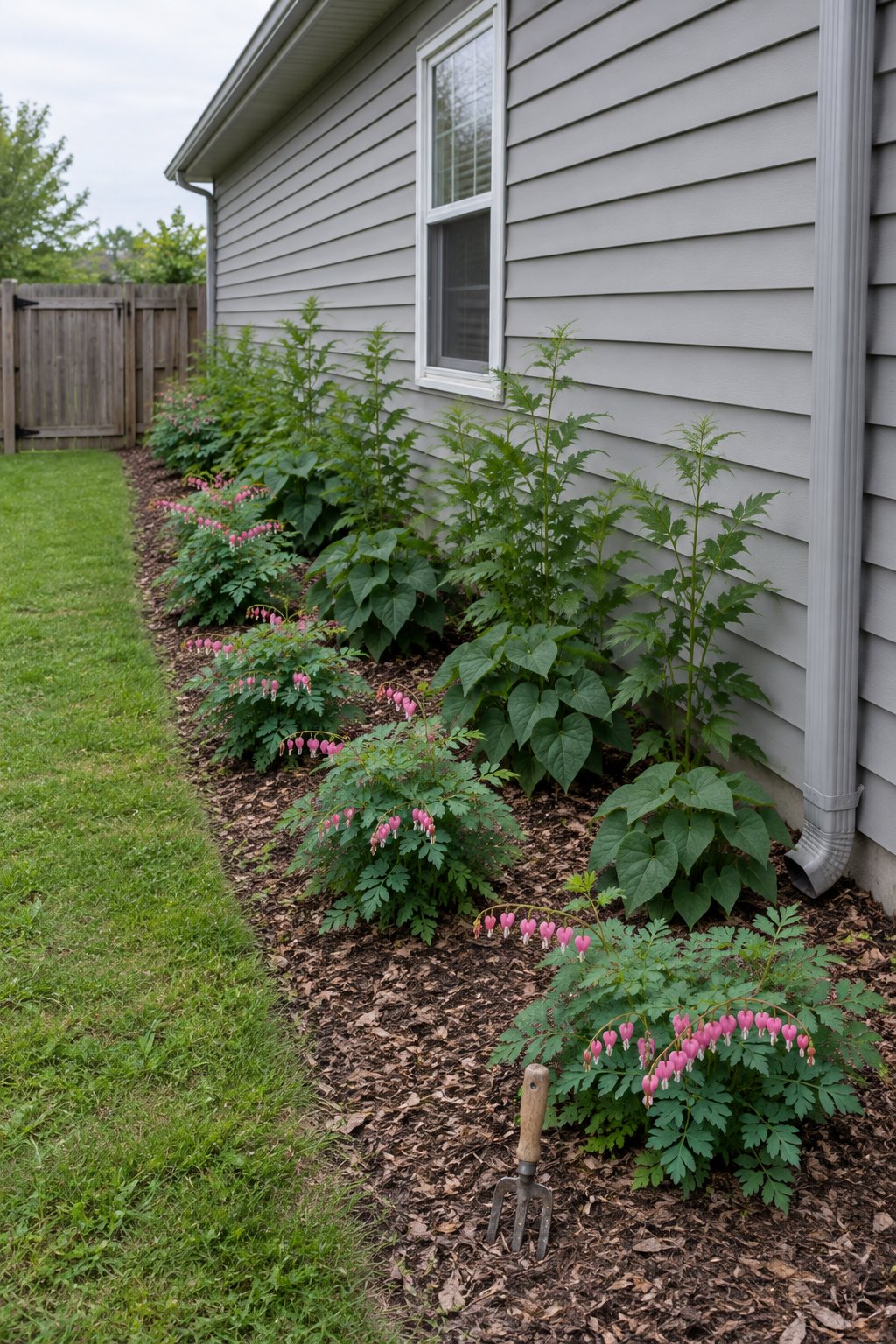
A shady wall can still feed pollinators, it just needs woodland natives rather than prairie ones. Wild bleeding heart can flower from May into September, and zigzag goldenrod and blue wood aster carry late summer and fall.
Zigzag goldenrod prefers part to full shade and moist soil, and it spreads by its roots.
8. Mow It High: A Bee Lawn of Fine Fescue, White Clover, Self-Heal and Creeping Thyme

The lawn is the biggest bed most people own, and it can flower without becoming a meadow. The University of Minnesota bee lawn mix pairs fine fescues with Dutch white clover, self-heal and creeping thyme.
Those flowers are not native, but they take mowing, which most natives don’t.
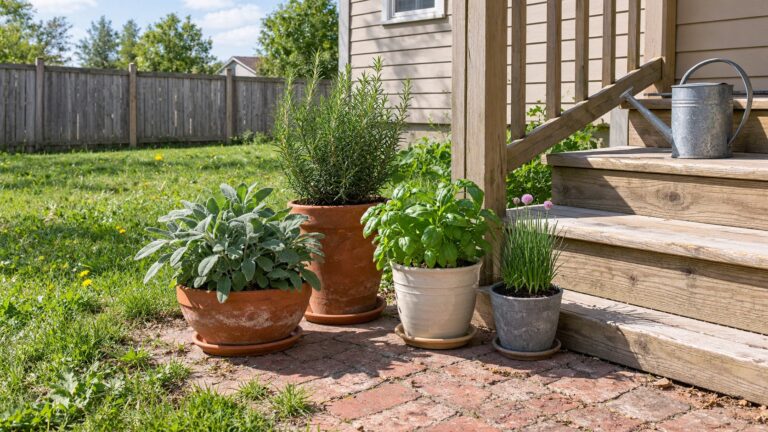
9. Renters, Three Pots on a Sunny Patio: Anise Hyssop, Nodding Onion and Chives in Flower

Three big pots beat a dozen small ones, because small pots dry out much faster. Chives flower in late spring, then anise hyssop and nodding onion take July and August.
Anise hyssop wants sun and well-drained soil, and it is short-lived but self-seeds.
10. Grow Dill, Parsley and Fennel for the Caterpillars, With Golden Alexanders Beside the Bed

Plant a few herbs you never intend to eat, because black swallowtail caterpillars feed on the carrot family. Dill, parsley and fennel are all hosts, and golden alexanders is a native host that flowers from April into June.
Expect chewed leaves by midsummer, which means the plan is working.
11. Leave the Violets: A Redbud by the Patio With Last Fall’s Leaves Underneath

The violets you pull from the lawn are the only food great spangled fritillary caterpillars eat. They overwinter in leaf litter and feed on new violet leaves in spring, so this corner keeps both.
Redbud flowers in April and also hosts Henry’s elfin, a small butterfly.
12. Swap the Butterfly Bush for Spicebush and Summersweet

Butterfly bush feeds adult butterflies but no native caterpillar eats it, and it is listed as invasive in parts of the US because its seed spreads on wind and water. Spicebush flowers from March to May and hosts the spicebush swallowtail, and summersweet flowers in July and August.
Both like moist soil and part shade, and summersweet spreads by suckers.
13. Wet Sand, Not Open Water: A Puddling Dish for Butterflies

Butterflies rarely land on open water, so they sip minerals from damp ground instead. This behavior is called puddling, and male butterflies do it far more often than females.
Sink a wide saucer level with the soil, fill it with sand, add flat stones and keep it damp, not flooded.
14. Leave a Patch of Bare Ground for Ground-Nesting Bees

Mulching every inch is the tidiest way to evict most of your bees. About 70 percent of North American native bee species nest in the ground, mostly in loose, undisturbed soil without thick mulch.
Pick a sunny, well-drained spot, such as a south-facing bank, and leave it bare and unturned.
15. Cut the Stems High, Not to the Ground

The fall cleanup that leaves the bed bare is the one that throws away next year’s bees. Leave hollow and pithy stems standing through winter, then cut them back once spring has warmed.
Xerces guidance is a stubble of 8 to 24 inches, which gives stem-nesting bees somewhere to nest.
The Bloom Calendar on One Page
These are the bloom windows from Penn State Extension’s York County pollinator table.
Expect them earlier in the South and later in the North.
| When | From these plans | Visitors listed |
|---|---|---|
| March to May | Spicebush, serviceberry, redbud | Butterflies, native bees, beetles |
| April to June | Moss phlox, woodland phlox, wild columbine, golden alexanders | Hummingbirds on columbine, bees and butterflies on the rest |
| June to August | White beardtongue, swamp milkweed, wild bergamot, coral honeysuckle | Native bees, butterflies, hummingbirds |
| July to September | Butterfly weed, anise hyssop, nodding onion, summersweet, showy goldenrod | Native bees, butterflies, flies, beetles |
| August to October | New England aster, smooth aster, New York ironweed, cardinal flower, great blue lobelia | Bees, butterflies, wasps, hummingbirds on the lobelias |
Six Pollinator Garden Mistakes to Skip
A bed that only flowers in July
Do thisCheck the bloom calendar above and add one plant for April and one for October before adding another summer flower.
One plant of every kind
Do thisPlant each kind in a group of three or more, so it reads as a patch of food rather than a sample.
Mulch over every inch
Do thisLeave at least one sunny patch bare, because most native bees nest in the ground.
Cutting everything to the ground in fall
Do thisLeave the stems standing through winter, then cut them to 8 to 24 inches once spring has warmed.
Bagging every fallen leaf
Do thisRake leaves under shrubs and trees instead, since fritillary caterpillars overwinter in leaf litter.
A butterfly bush as the centerpiece
Do thisPlant a native shrub such as spicebush or summersweet, which feeds caterpillars as well as adults.
Feed the Caterpillar, Not Just the Butterfly: Nectar Plants and Host Plants Are Two Lists
An adult butterfly will drink from dozens of flowers, but its caterpillar can usually eat only a few kinds of plant.
A yard full of nectar and no host plants feeds visitors and raises nobody.
Monarchs need milkweed, black swallowtails the carrot family, and great spangled fritillaries violets. Spicebush swallowtails need spicebush, pearl crescents asters, and Henry’s elfin redbud.
So when you choose plants, ask two questions: what flowers here, and who eats the leaves.
The chewed leaf is the sign the garden is working, so I’d leave it be.
Start with the gap your yard has now, which is usually April or October, and plant one group for it this season. Before you dig, read up on spacing perennials by their mature width, then add a host plant next year.
A pollinator garden is finished when something is flowering every month from spring to fall.
Frequently Asked Questions
What should I plant first in a pollinator garden?
Plant for the season your yard is missing, which is most often early spring or fall. A serviceberry or spicebush covers spring, and asters and goldenrod cover the end of the season.
Which milkweed should I grow?
Match it to your soil. Butterfly weed suits dry, well-drained ground, swamp milkweed suits damp soil, and common milkweed spreads by rhizomes, so give it a patch of its own.
Do pollinator gardens have to be native plants?
Native plants come first because many caterpillars can only eat them. Some non-natives still help, such as the white clover and creeping thyme in a bee lawn.
Can I make a pollinator garden as a renter?
Yes. The three pots in plan 9 and the puddling dish in plan 13 need no digging, and leaving stems and leaves standing needs no permission at all.
Won’t a pollinator garden look messy in winter?
Standing stems can look intentional with a clean edge or a mown strip in front. Cut them to 8 to 24 inches in spring, and the new growth covers the stubble within weeks.
You Might Also Like

Save This For Later

Loved pollinator garden? Save this pin to your Pinterest board now so you can find it again anytime you need the inspiration.