Small Front Garden Ideas: 18 Plans for a Narrow Strip by the Door
Small front garden ideas start with one spot: the narrow strip between the walk, the steps and the house wall.
These 18 plans are sorted by its depth, with dwarf shrubs sized to fit. For whole beds, see these flower bed ideas for the front of the house.
Measure the depth first, and call 811 before you dig.
How deep is your strip?
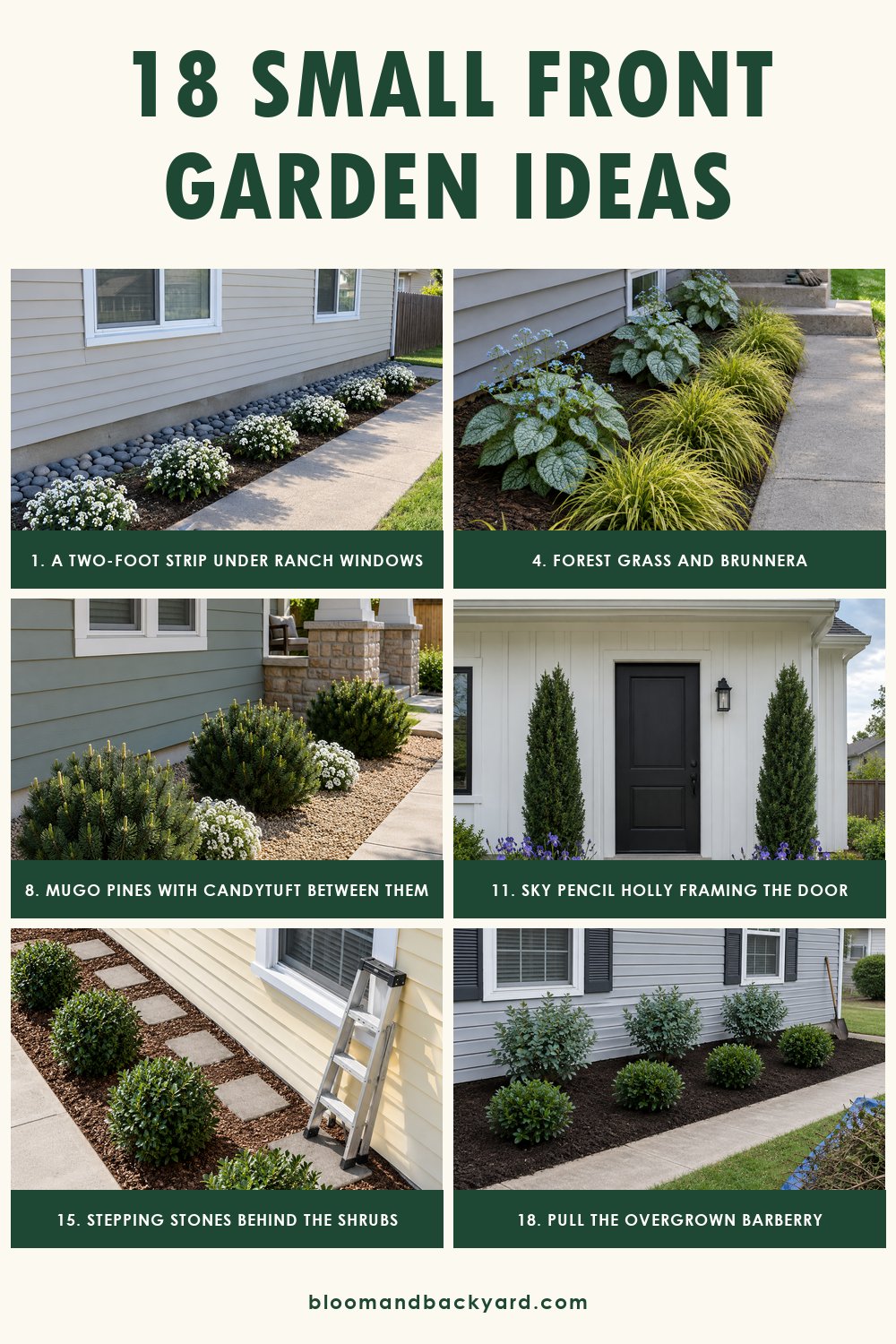
1. A Two-Foot Strip Under Ranch Windows: Candytuft in One Row, Stone Against the Wall
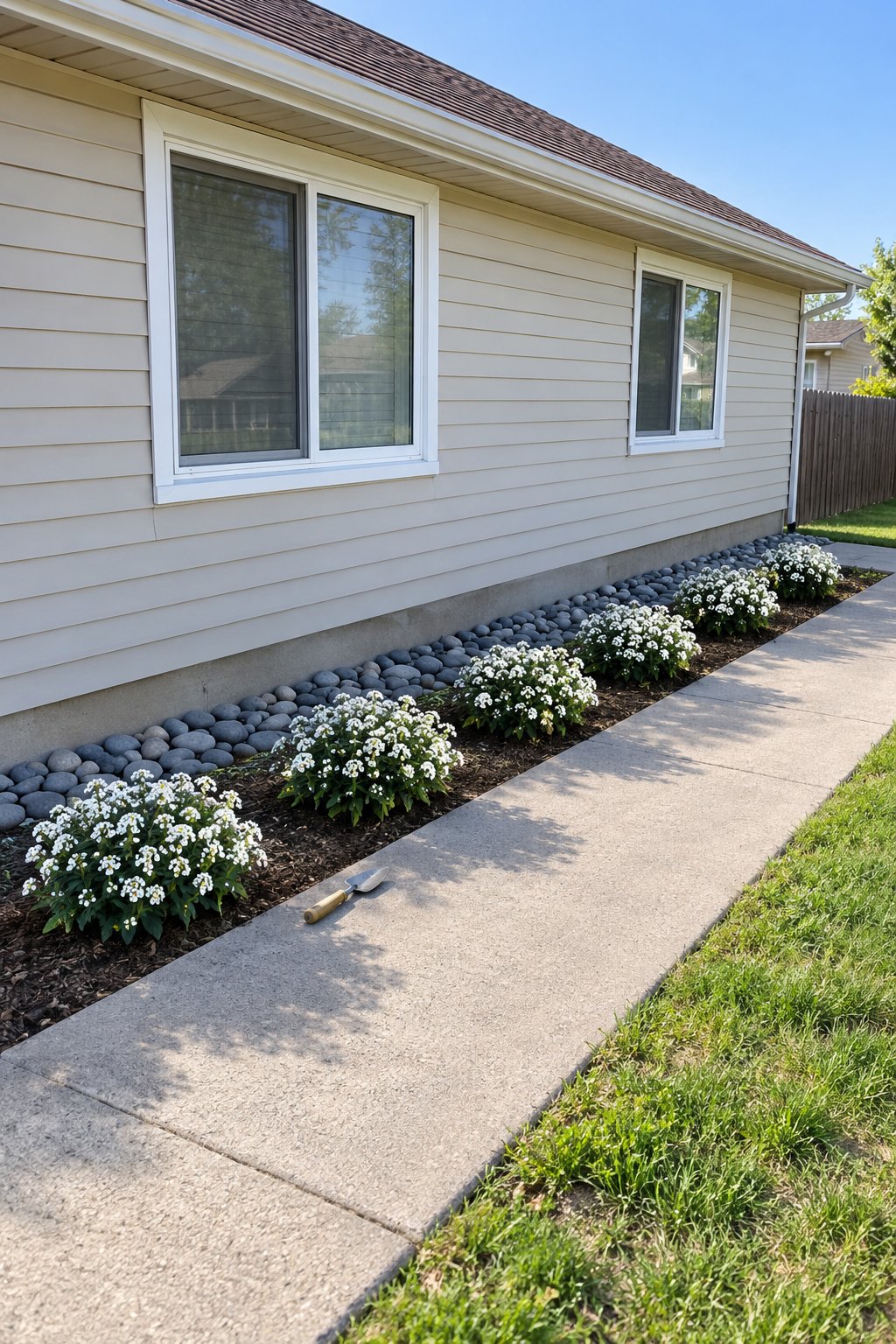
Two feet is too shallow for any shrub, so plant one row of candytuft along the walk and lay a 12-inch band of river stone against the wall. Candytuft stays under a foot tall and wants full sun and soil that drains.
The stone band keeps soil off the siding and gives you somewhere to put a ladder.
2. Three Low Weigela in a Three-Foot Strip Beside a Townhouse Stoop

My Monet weigela stays about 12 to 18 inches tall and not much wider, which makes it one of the few shrubs a 3-foot strip can hold. Set each one 2 feet out from the wall and about 2 feet apart.
It takes full sun or part sun, and the cream-edged leaves carry the strip.
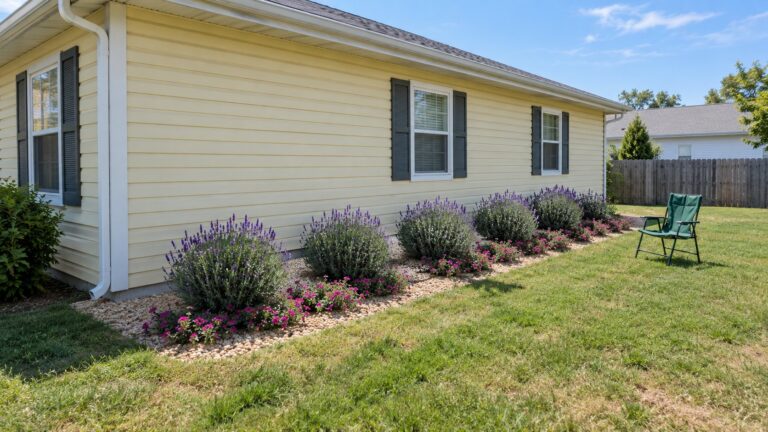
3. Lavender in Gravel for the Hot West Wall of a Brick Ranch

A west-facing brick wall throws back afternoon heat, and Munstead lavender is one of the few plants that likes it. It grows about 12 to 18 inches tall, wants full sun and needs soil that drains fast.
I would mulch it with gray pea gravel, never wet bark.
4. Forest Grass and Brunnera Along a North-Facing Split-Level
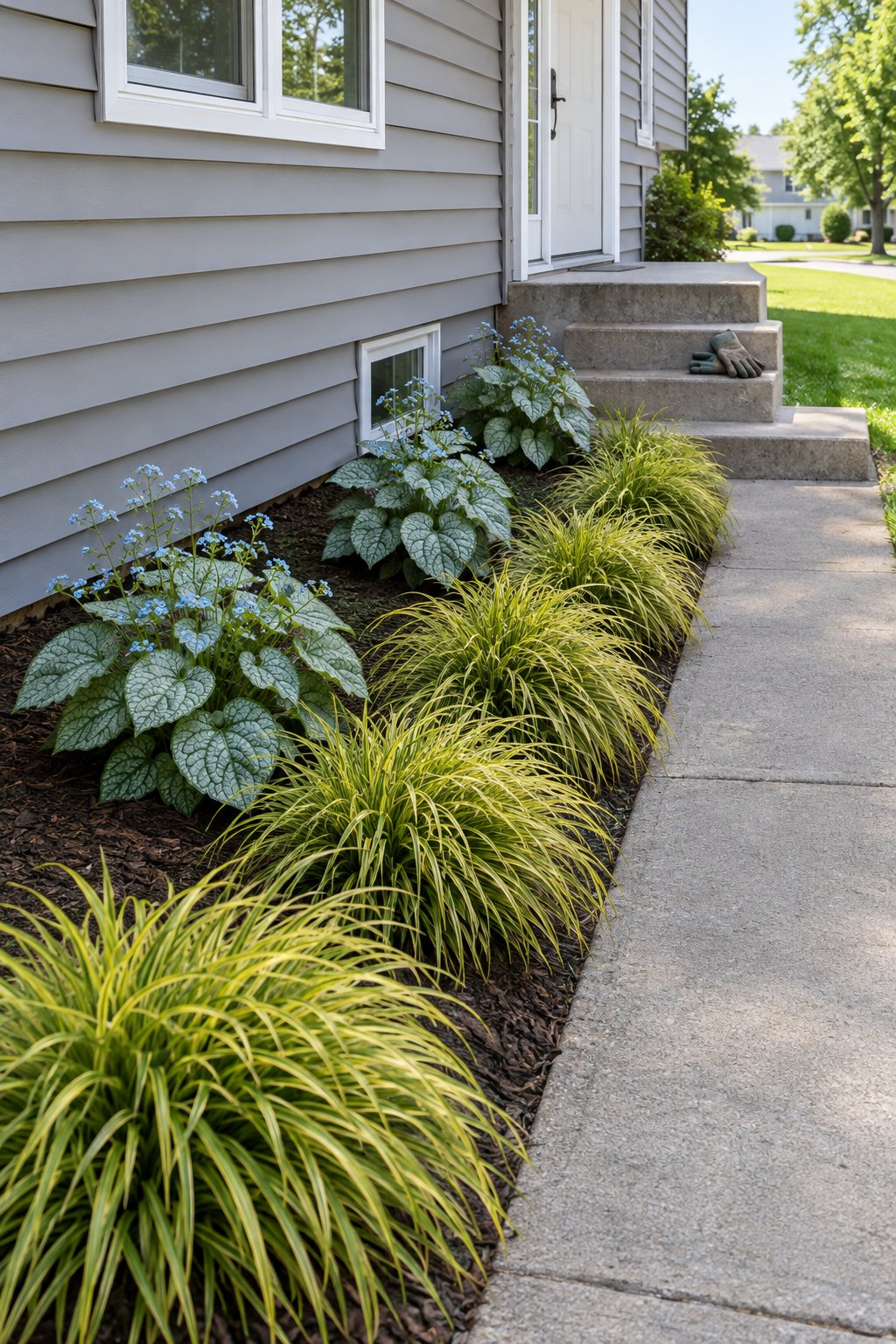
A north front gets open shade and stays cooler, which suits Japanese forest grass at the walk edge and Jack Frost brunnera behind it. Both want part shade and soil that stays moist but drains.
Forest grass stays about 12 to 18 inches tall, so it never climbs the siding.
5. One Row of Mountain Hydrangea for a Cape Cod’s East Side

Tuff Stuff mountain hydrangea grows about 2 to 3 feet tall and wide, a size a 4-foot bed can hold in a single row. Center each one 2.5 feet from the wall and 3 feet apart.
It does best with morning sun and some afternoon shade, which an east-facing front supplies.
6. Chokeberry and Calamint Either Side of Bungalow Porch Steps

Low Scape Mound chokeberry stays about 1 to 2 feet tall and takes wet or dry soil, so it handles the runoff that collects by porch steps. Put two each side, 2 feet out, with a calamint between each pair.
Nothing here grows taller than the second step.
7. Dwarf Inkberry in a Single Evergreen Line Under Colonial Windows
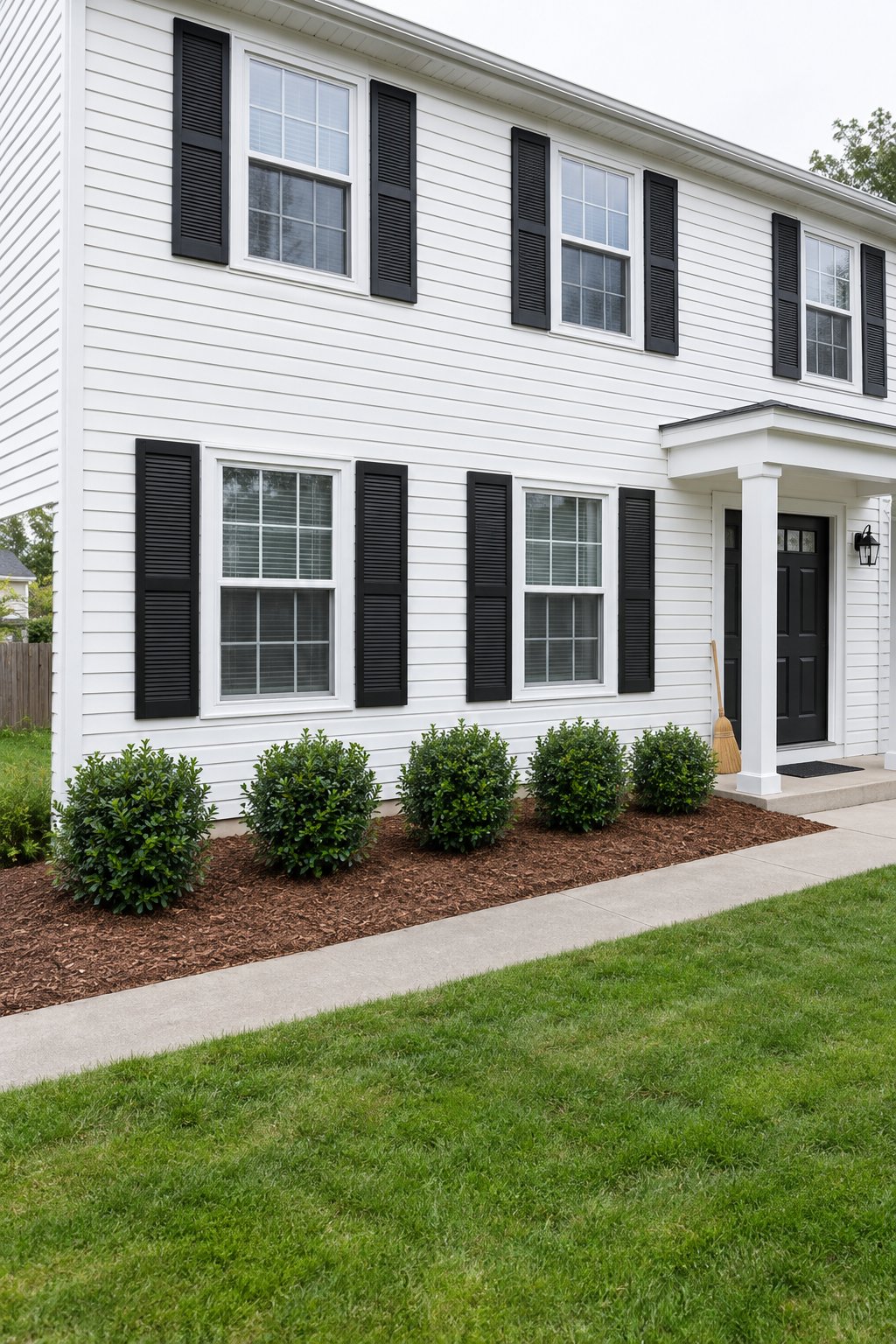
Gem Box inkberry is an evergreen that grows about 2 to 3 feet tall and wide, small enough for a 4-foot bed under first-floor windows. Space the plants 3 feet apart, centered 2.5 feet from the wall.
It grows in sun or part sun and likes moist, acidic soil.
8. Mugo Pines With Candytuft Between Them on a Sunny Craftsman Front
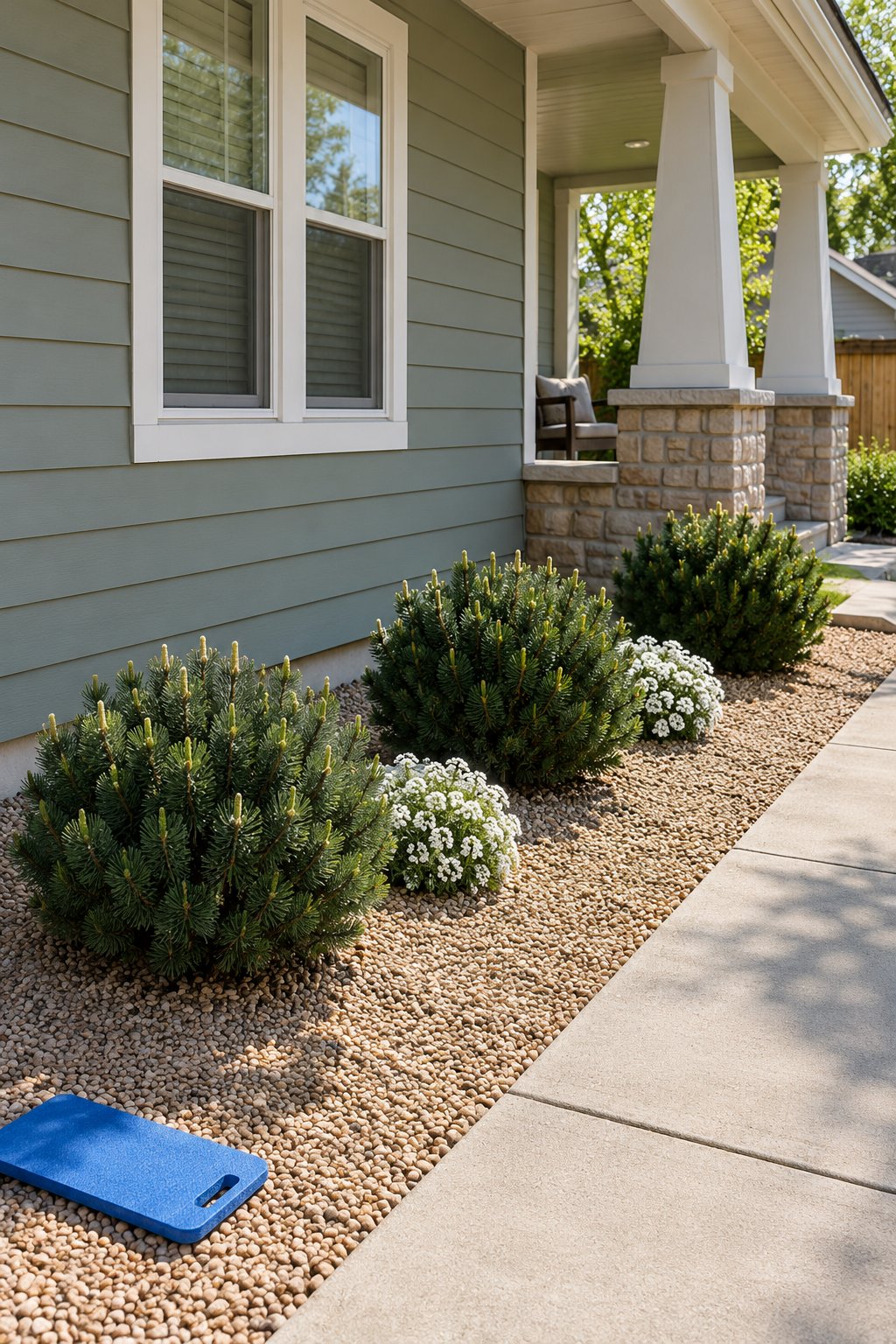
Mops mugo pine is a slow dwarf, usually listed around 3 to 4 feet tall, though some nurseries give 5. Set three in a row with candytuft in the gaps, and finish the bed with a clean edge between bed and lawn.
Both want full sun and soil that drains.
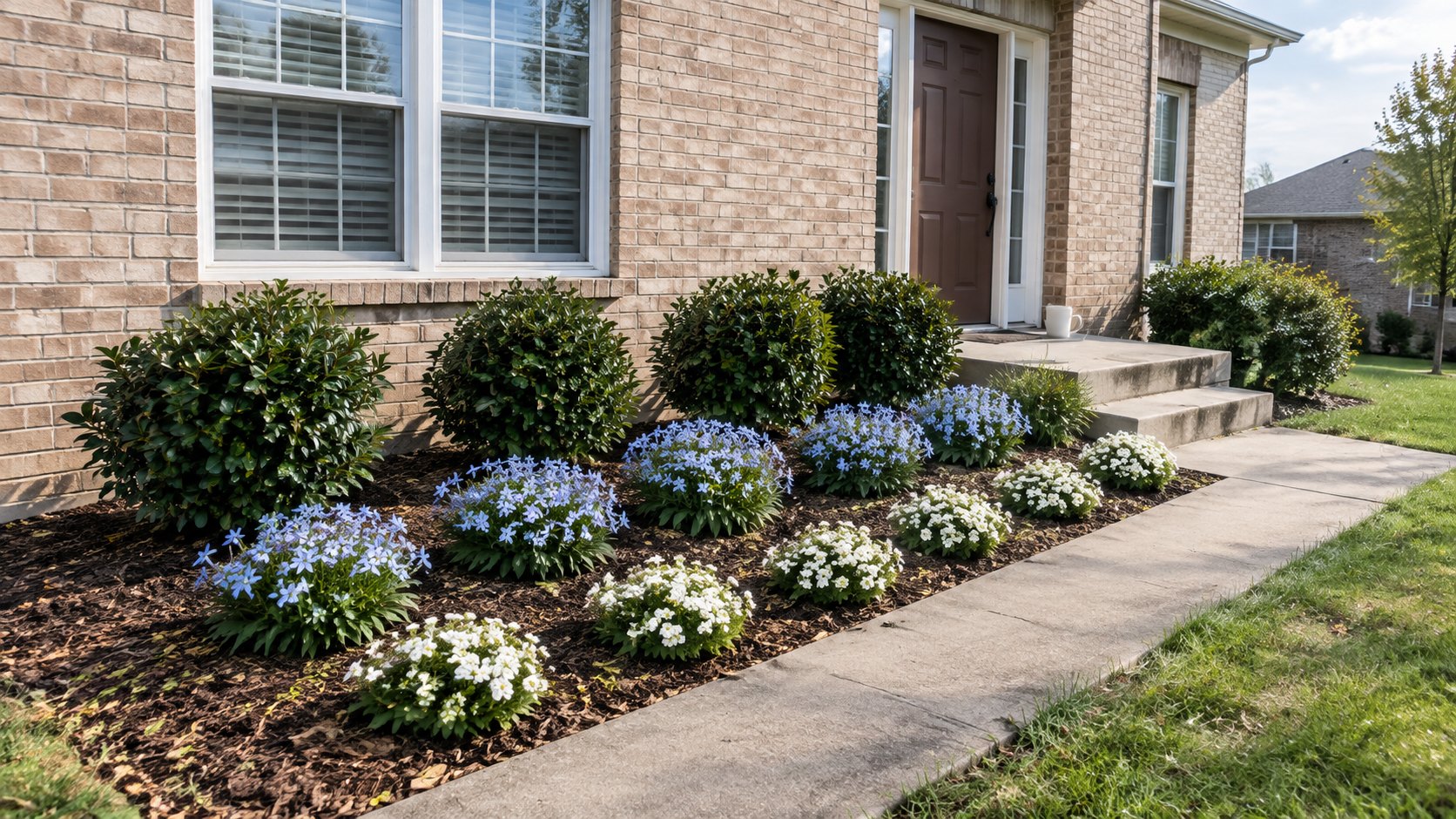
9. Six Feet Deep in Sun: Inkberry, Blue Star and Candytuft in Three Rows
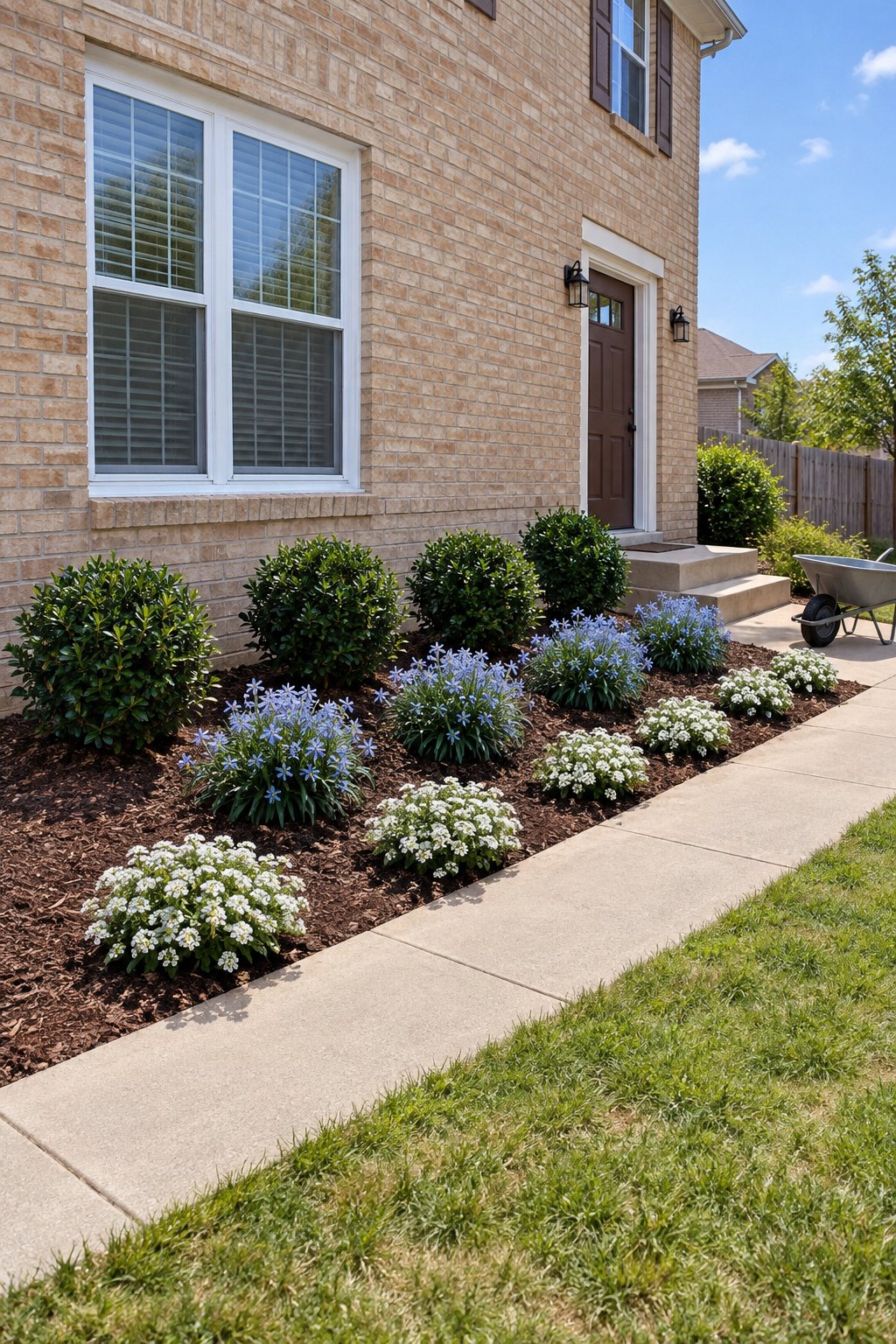
Six feet is the first depth with room for three layers. Dwarf inkberry goes at the back, 2.5 feet from the wall, Blue Ice amsonia in the middle and candytuft at the walk.
Blue Ice amsonia stays about 12 to 20 inches tall and flowers pale blue in late spring.
10. Part Shade in Three Layers: Hydrangea, Forest Grass and Epimedium

Under a street tree, put compact mountain hydrangea at the back, forest grass in the middle and epimedium along the walk. All three take part shade.
Epimedium is the one that copes with dry shade once settled, so give it the driest spot by the walk.
11. Sky Pencil Holly Framing the Door, With Siberian Iris Between
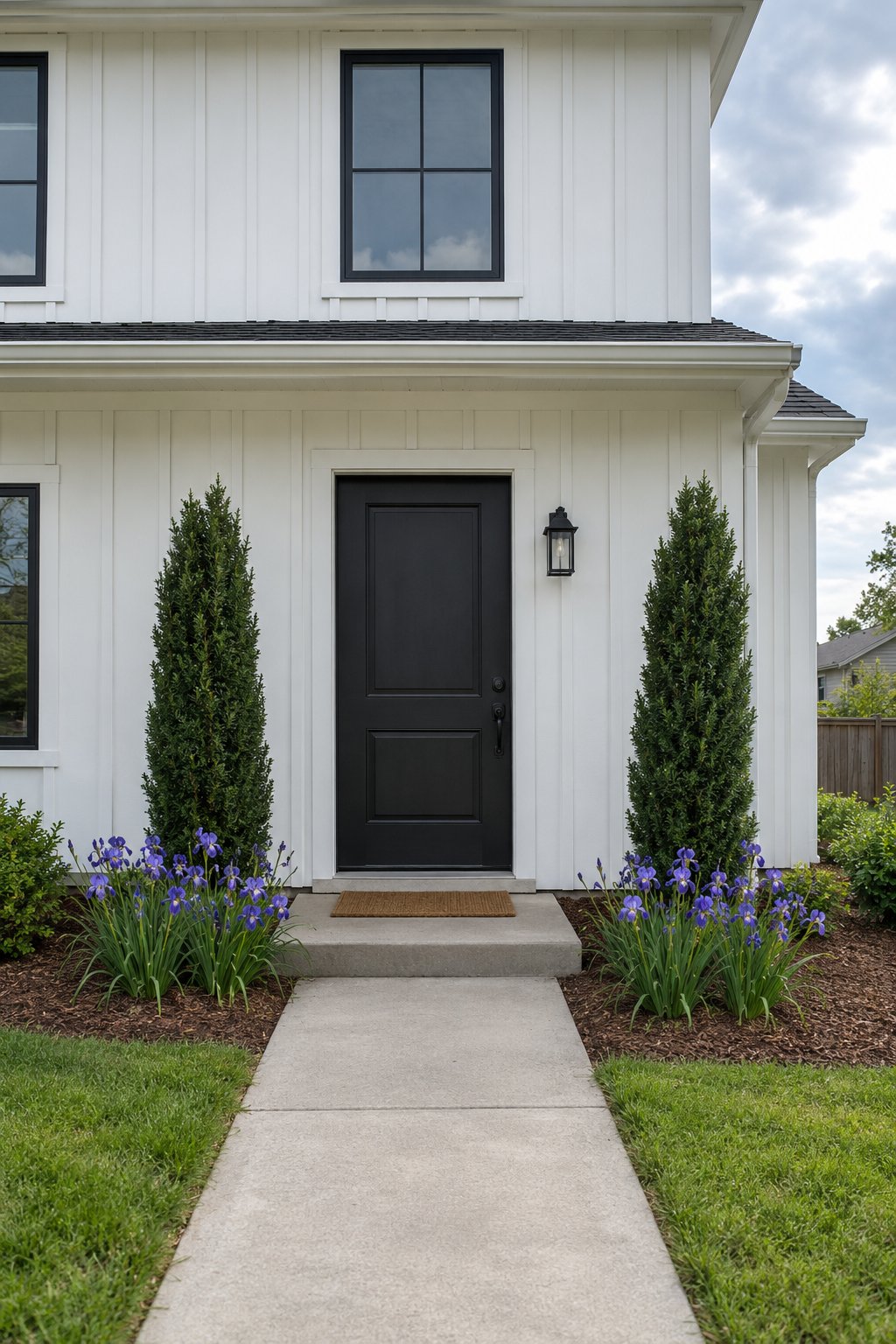
Sky Pencil holly grows tall and narrow, about 2 to 3 feet wide, so a pair can frame a door without taking the whole bed. It is usually listed for zones about 6 to 8, so check the tag.
Siberian iris fills the gap and flowers in late spring in moist soil.
12. Leave the Drip Line to Stone and Start the Planting Past It
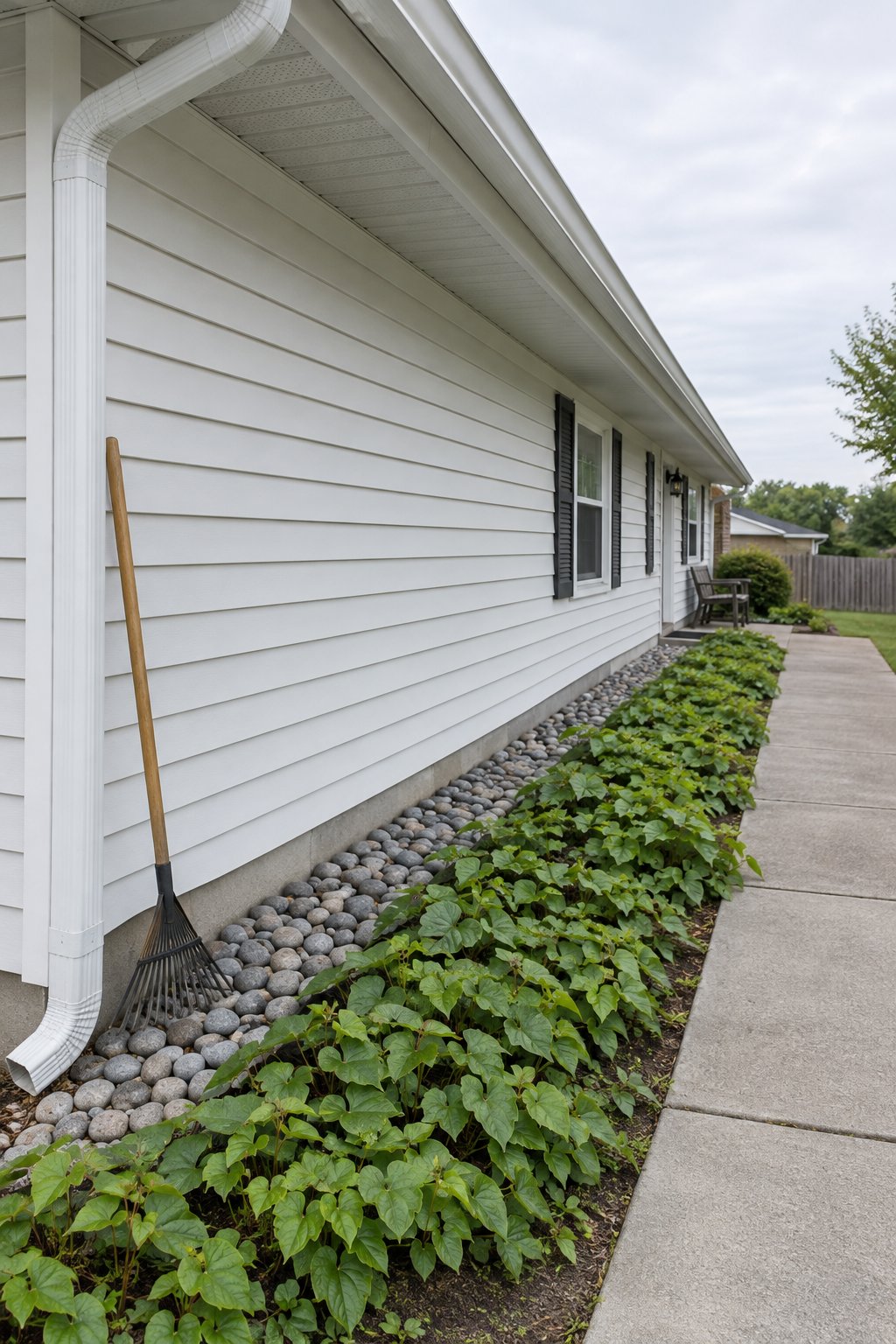
A roof overhang keeps rain off the soil beneath it, and drips from the edge wear a trench. Lay an 18-inch band of river stone under the drip line, like the beds built mostly from stone, and start planting past it.
Epimedium suits that edge on a shady side.
13. Send the Downspout Out, Then Plant Iris Where the Water Lands

A downspout emptying into a foundation bed soaks the ground right where you want it dry. Run a solid extension so the water lands at least 4 to 6 feet out, farther on clay.
Where it lands, plant Siberian iris and low chokeberry, which both handle wet soil.
14. Two Feet of Gravel Around the AC Unit, Lilyturf Beyond It

An air conditioner needs open air around it, and about 2 feet clear is a common rule, though the unit’s manual has the real figure. Lay a gravel apron that wide and plant lilyturf clumps past it.
Buy Liriope muscari, the clumping kind, and check the label, because Liriope spicata runs.
15. Stepping Stones Behind the Shrubs, Kept Clear for Ladders and Paint
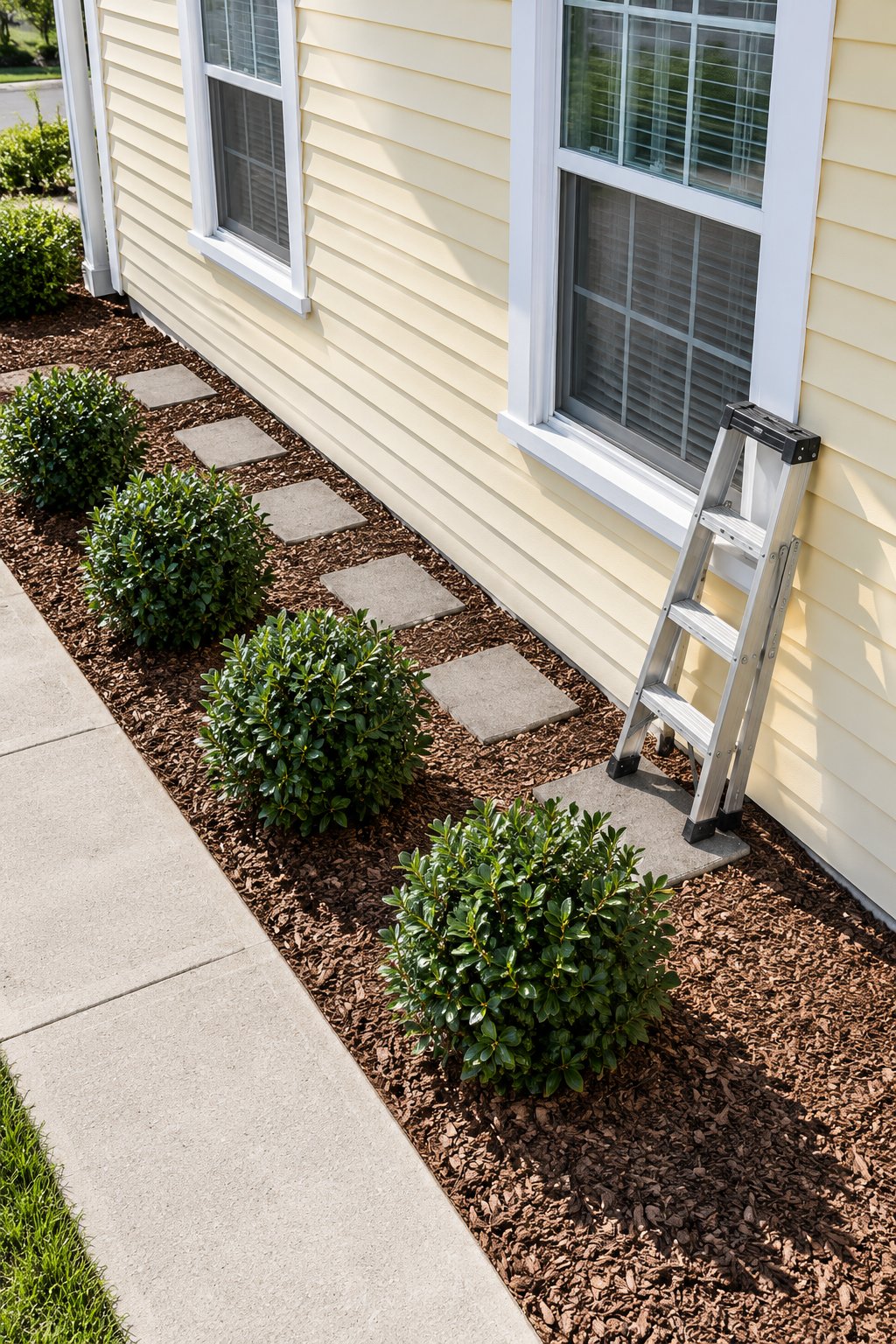
Somebody will need to reach that wall to paint, clean gutters or inspect the foundation. Lay a line of stepping stones 1 foot off the wall and center the shrubs 4 feet out.
Dwarf inkberry works here, and the 6-foot bed holds both the path and the row.
16. Outside Corner: One Spreading Yew, Given the Room Only a Corner Has
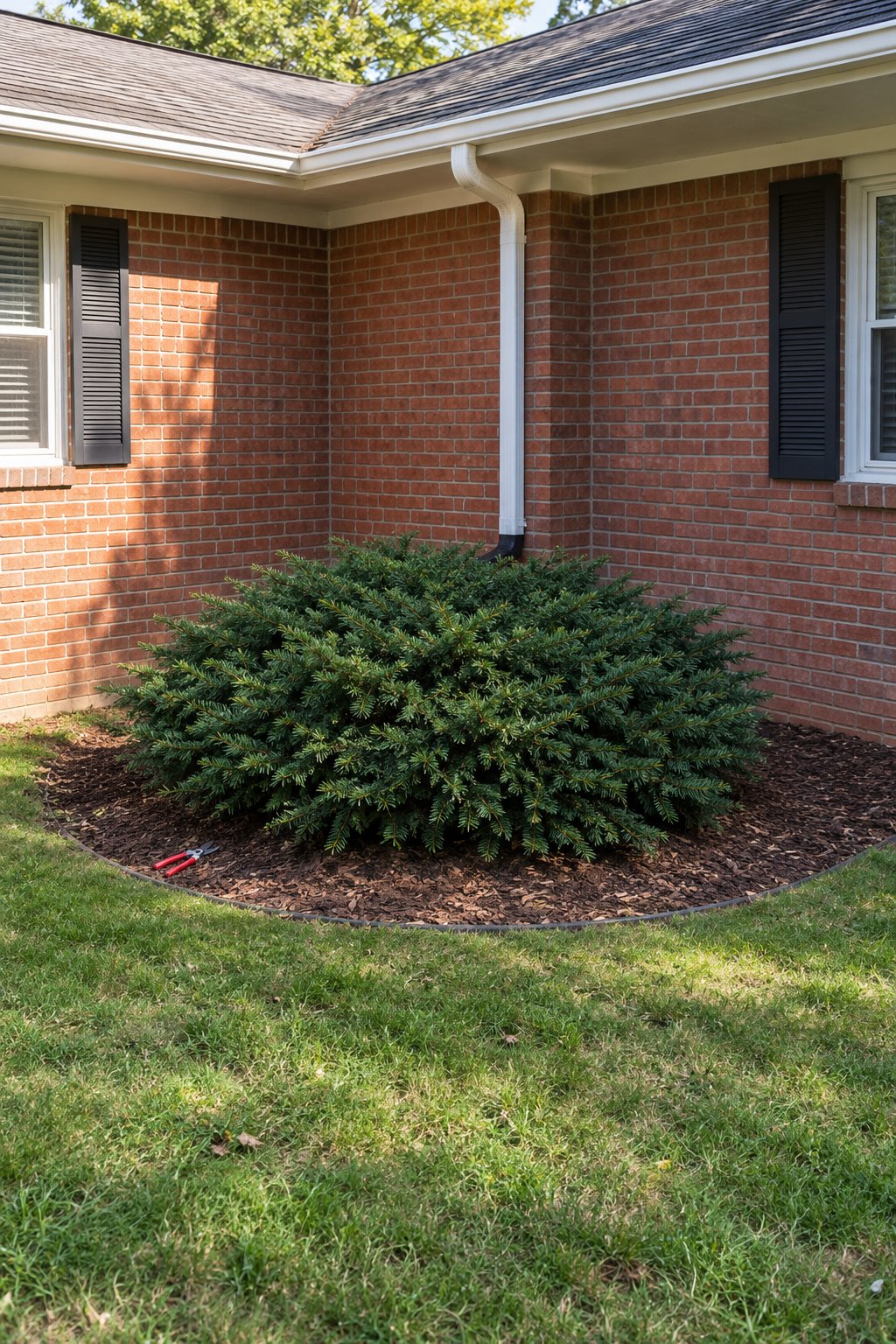
Densiformis yew grows into a dense mound about 3 to 4 feet tall and 5 to 6 feet wide, too wide for a straight strip. An outside corner with a bed about 7 feet each way can hold one.
Set it 4 feet out from both walls.
17. Summersweet in the Damp Inside Corner Where the Steps Meet the Wall
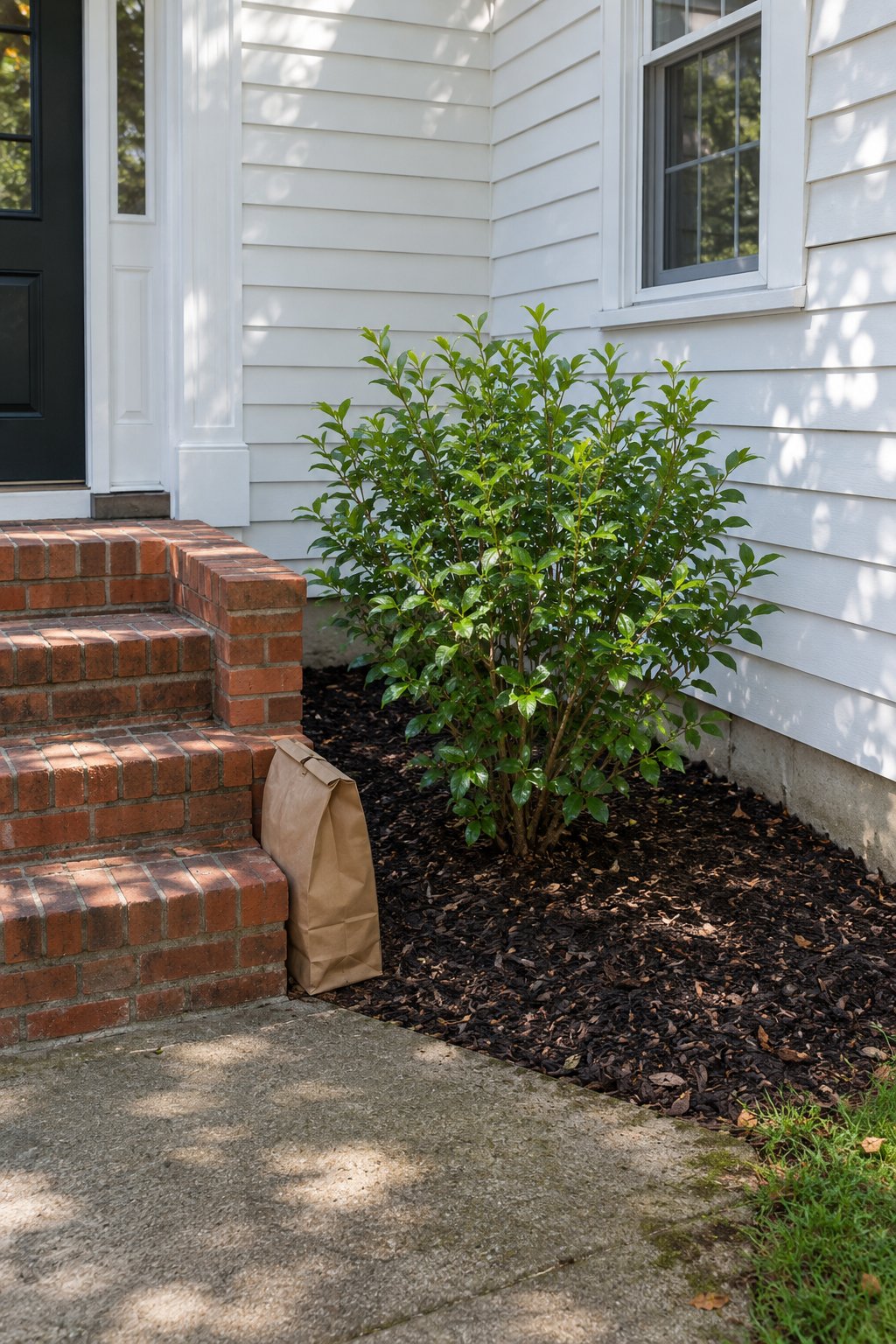
An inside corner by the steps tends to stay damp and shaded, which suits Hummingbird summersweet. It grows about 2 to 4 feet tall and up to 5 feet wide, and flowers white in July and August.
It spreads by suckers, so give it the whole corner and set it 3 feet from both walls.
18. Pull the Overgrown Barberry and Replant With Fothergilla and Chokeberry
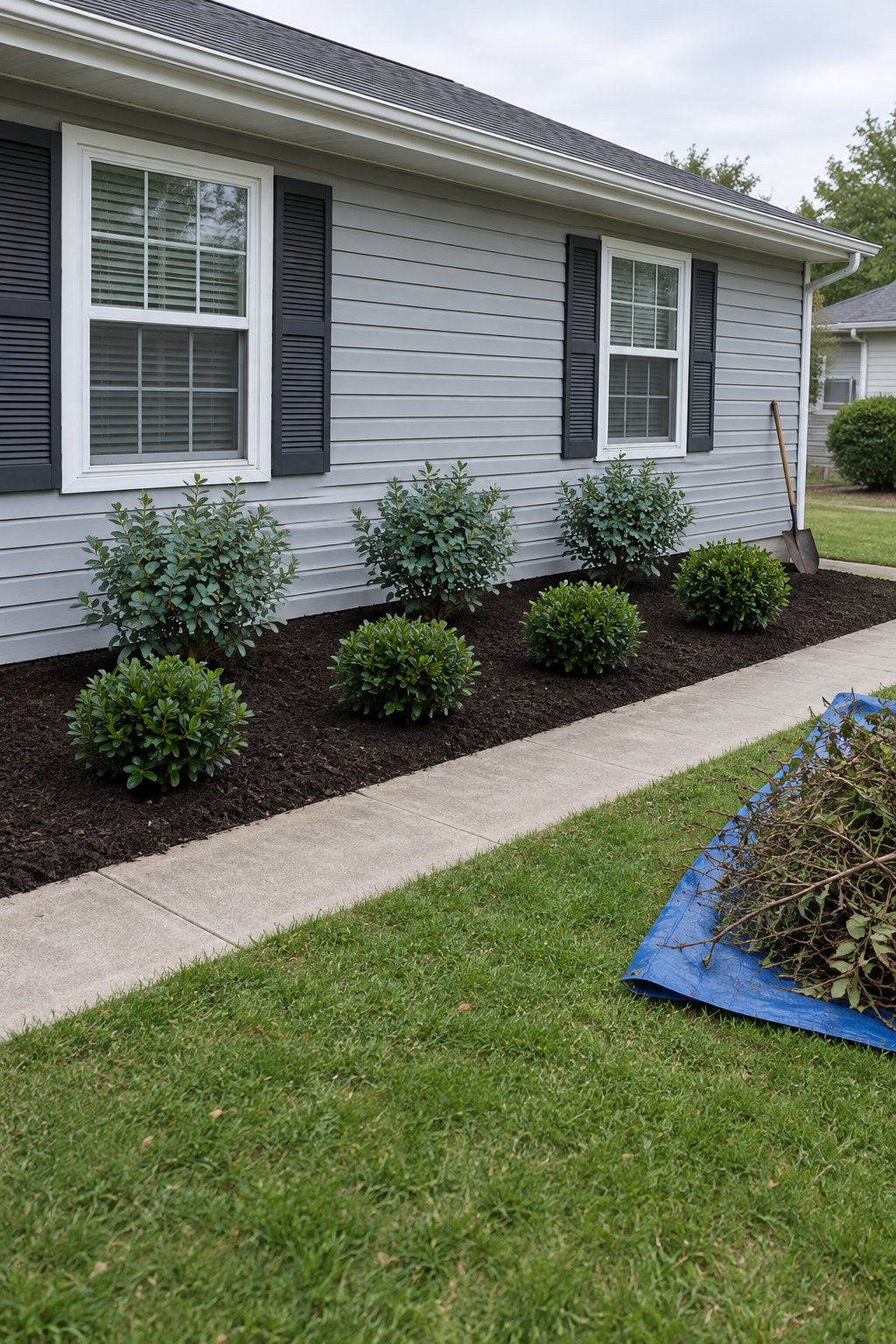
Japanese barberry and burning bush are invasive, and both are still common under front windows. Take them out, regrade so the soil falls away from the house, and replant.
Dwarf fothergilla at the back and low chokeberry in front are native replacements.
Foundation Planting Numbers on One Page
Every plan above rests on a few figures.
Check the mature width on each plant’s tag before you set it out.
| What | The figure | Why |
|---|---|---|
| What fits a 2 ft strip | Perennials under about a foot tall, no shrubs | A shrub’s half-width plus clearance is already 2 ft |
| What fits 3 to 4 ft | One row of dwarf shrubs up to about 3 ft wide | Centers 2 to 2.5 ft out leave the walk clear |
| What fits 5 to 6 ft | Three rows: shrub, mid-height, edging | The first depth with room for layers |
| Shrub center from the wall | Half its mature width plus about a foot, never under 2 ft | Air, paint and ladder room behind it |
| Siding clear of soil and mulch | About 6 inches | Keeps wood and trim from staying wet |
| Ground slope away from the house | About 6 inches over the first 10 feet | Rain runs away from the foundation |
| Downspout outlet | At least 4 to 6 feet out, farther on clay | Keeps the bed and the basement drier |
Six Foundation Bed Mistakes to Skip by the Front Door
Mulch heaped up to the siding
Do thisKeep mulch 2 to 3 inches deep and the siding about 6 inches clear of soil and mulch.
A bed that slopes toward the house
Do thisRegrade so the ground falls about 6 inches over the first 10 feet before you plant.
A downspout emptying into the bed
Do thisAdd a solid extension so the water lands at least 4 to 6 feet out, farther on clay.
Barberry or burning bush by the door
Do thisBoth are invasive, so replace them with a native such as fothergilla or chokeberry.
Lilyturf bought without reading the label
Do thisLook for Liriope muscari, which clumps, and skip Liriope spicata, which spreads by runners.
Shrubs packed around the AC unit
Do thisLeave the clearance in the unit’s manual, often about 2 feet, and plant beyond it.
What “Dwarf” on a Plant Tag Actually Promises
Dwarf on a tag means smaller than the wild species, not small. A dwarf conifer can still end up taller than your front windows.
Dwarf Alberta spruce is the classic case: most nurseries list it around 6 to 8 feet tall, and some give 10 feet or more for very old plants.
The height on many tags is roughly what the plant reaches in about ten years, and slow plants keep growing after that. That is why the sizes in this article are given as ranges.
Some dwarf conifers also throw a reverted shoot that grows like the full-size species. Cut it out at its base as soon as you spot it.
When two sources disagree on a plant’s size, I plan for the bigger number.
Start by measuring the strip from the wall to the walk, then pick the one plan that matches that depth and your sun. Once the strip by the door is done, move on to the rest of the front yard, because front of house landscaping reads best when the foundation bed is settled first.
One bed planted at the right spacing beats a crowded one you prune every spring.
Frequently Asked Questions
How far from the house should I plant foundation shrubs?
Set each shrub’s center at least half its mature width from the wall, plus about a foot, and never closer than about 2 feet. A shrub that grows 3 feet wide goes about 2.5 feet out.
What can I plant in a strip only 2 feet deep?
Low perennials such as candytuft, which stays under a foot tall, in one row along the walk. Leave the wall side in stone so the siding stays clear.
Should mulch touch the house?
No. Keep it 2 to 3 inches deep and leave about 6 inches of siding clear of mulch and soil.
What should go under the roof overhang?
Rain rarely reaches the soil under a deep eave, so lay stone there and start the plants just past the drip line. Water anything that sits under the overhang.
Which small front garden ideas work for renters?
The perennial strips in ideas 1 and 4 and the stone bands in ideas 1 and 12 need little digging. Shrubs are a permanent change, so get the landlord’s OK in writing first.
You Might Also Like
Save This For Later

Loved small front garden ideas? Save this pin to your Pinterest board now so you can find it again anytime you need the inspiration.