Garden Path Ideas: 18 Materials From Gravel to Stepping Stones

Garden path ideas come down to the material under your feet, so each of these 18 paths names its stone, its base and its width.
I also say which turn to mud, which grow weeds and which a wheelbarrow or wheelchair can use.
Call 811 before you dig any of them.
What is the problem under your feet?
1. A Four-Foot Crushed Stone Path Packed Firm, Ending at a Bench
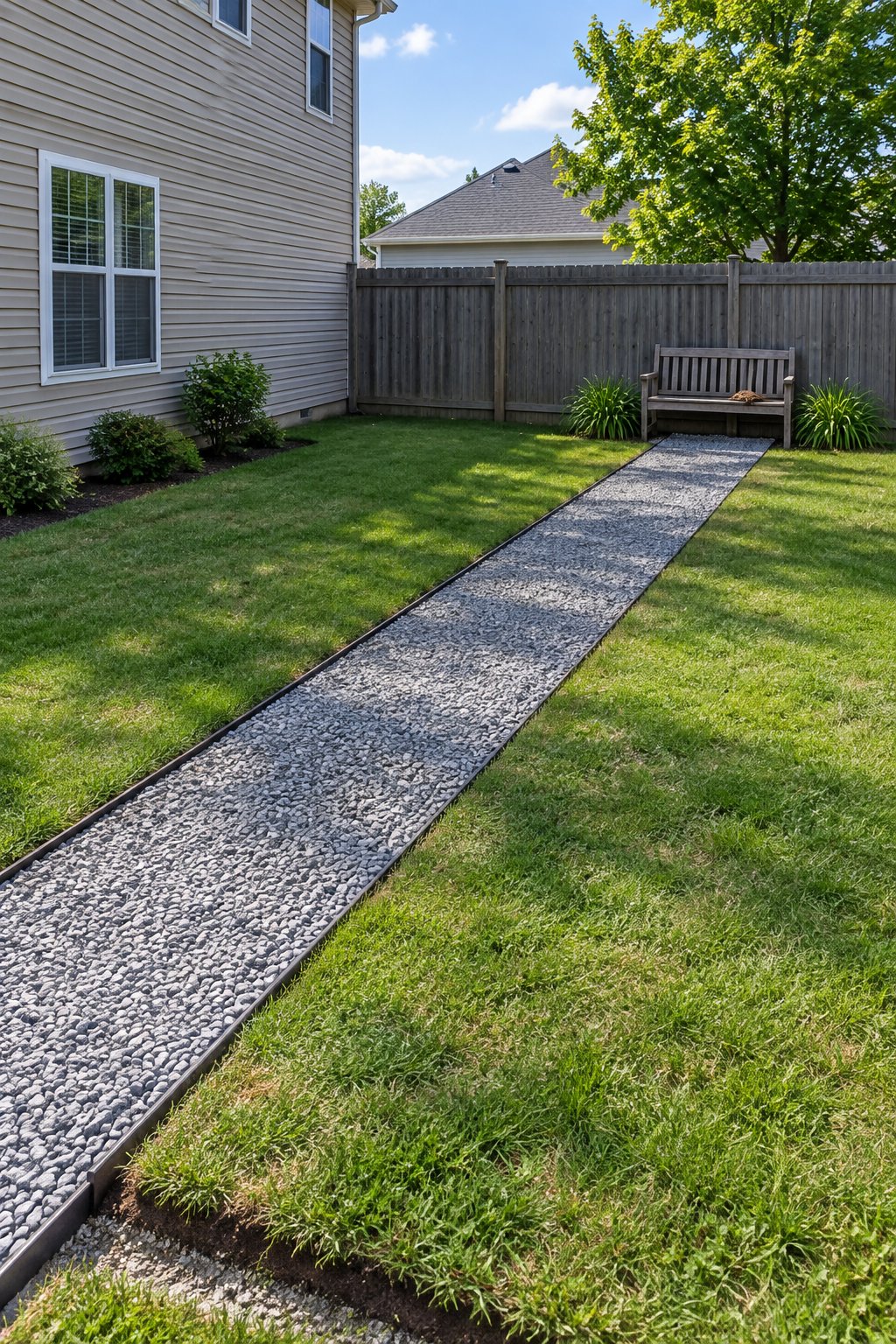
If a wheelbarrow, a walker or a wheelchair will use the path, crushed stone with fines beats every loose gravel on this list. Pack 4 to 6 inches of it in layers, the way I do it for my gravel fire pit area.
Angular stone locks together and stays put, where round stone rolls.
2. A Twelve-Foot Pea Gravel Walk to the Gate, Held In by Steel Edging
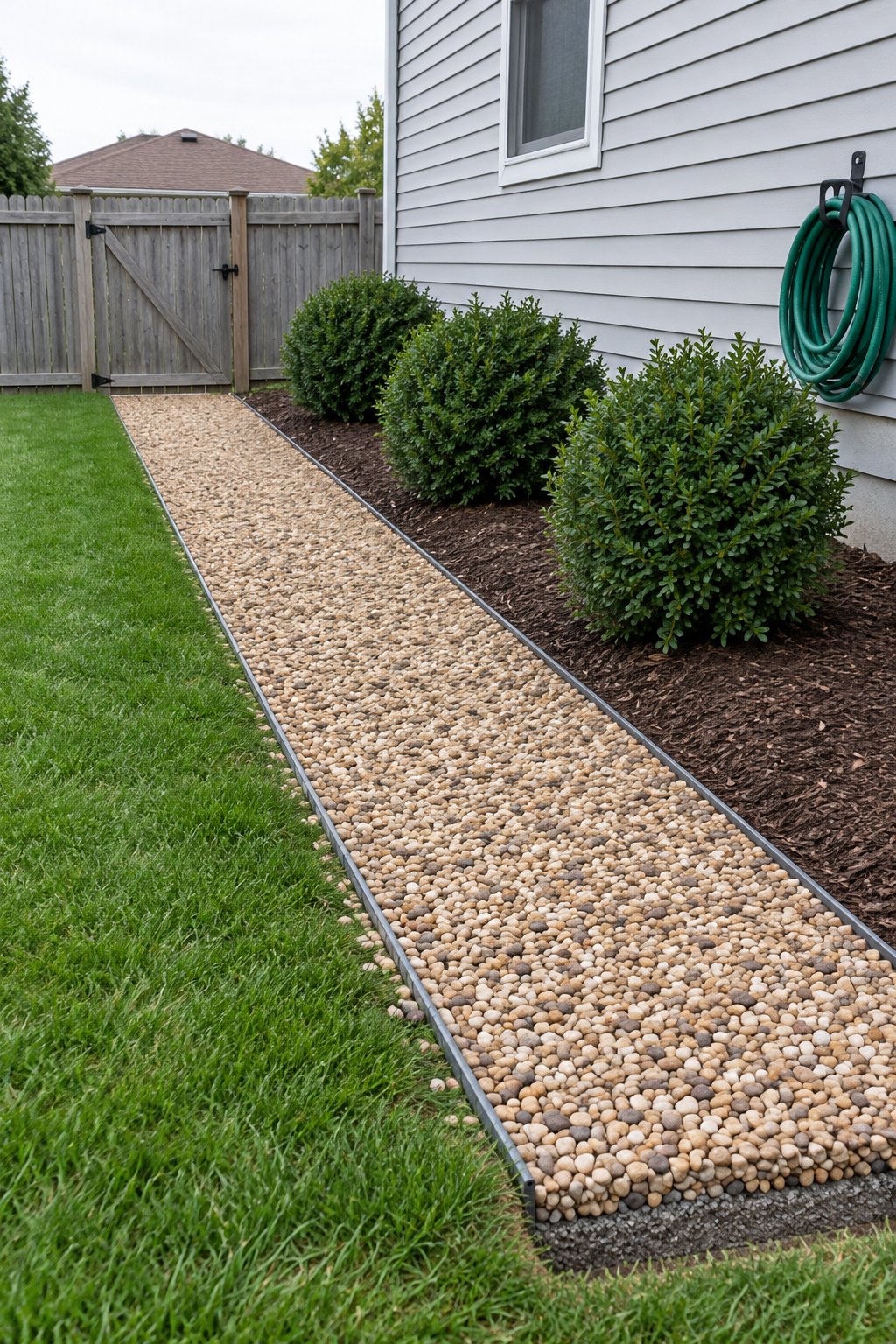
Pea gravel is a short-path material, and I would stop it at about 12 feet. Rounded stones roll underfoot and bog down wheels, so keep it to a flat walk with no wheelbarrow on it.
Keep the top layer to 2 or 3 inches over a packed base, because deeper pea gravel turns spongy.
3. Decomposed Granite Through a Sunny Border of Lavender, Raked Smooth

Decomposed granite gives the most finished look of any loose path, and it forgives a thin base the least. Pack 4 inches of crushed stone under it and lay the granite in layers of 2 inches or less.
On a slope or a wet spot it washes out, so add the stabilizer sold for it and read the maker’s limits.
4. Crushed Concrete From a Local Stone Yard, Packed Into a Service Path
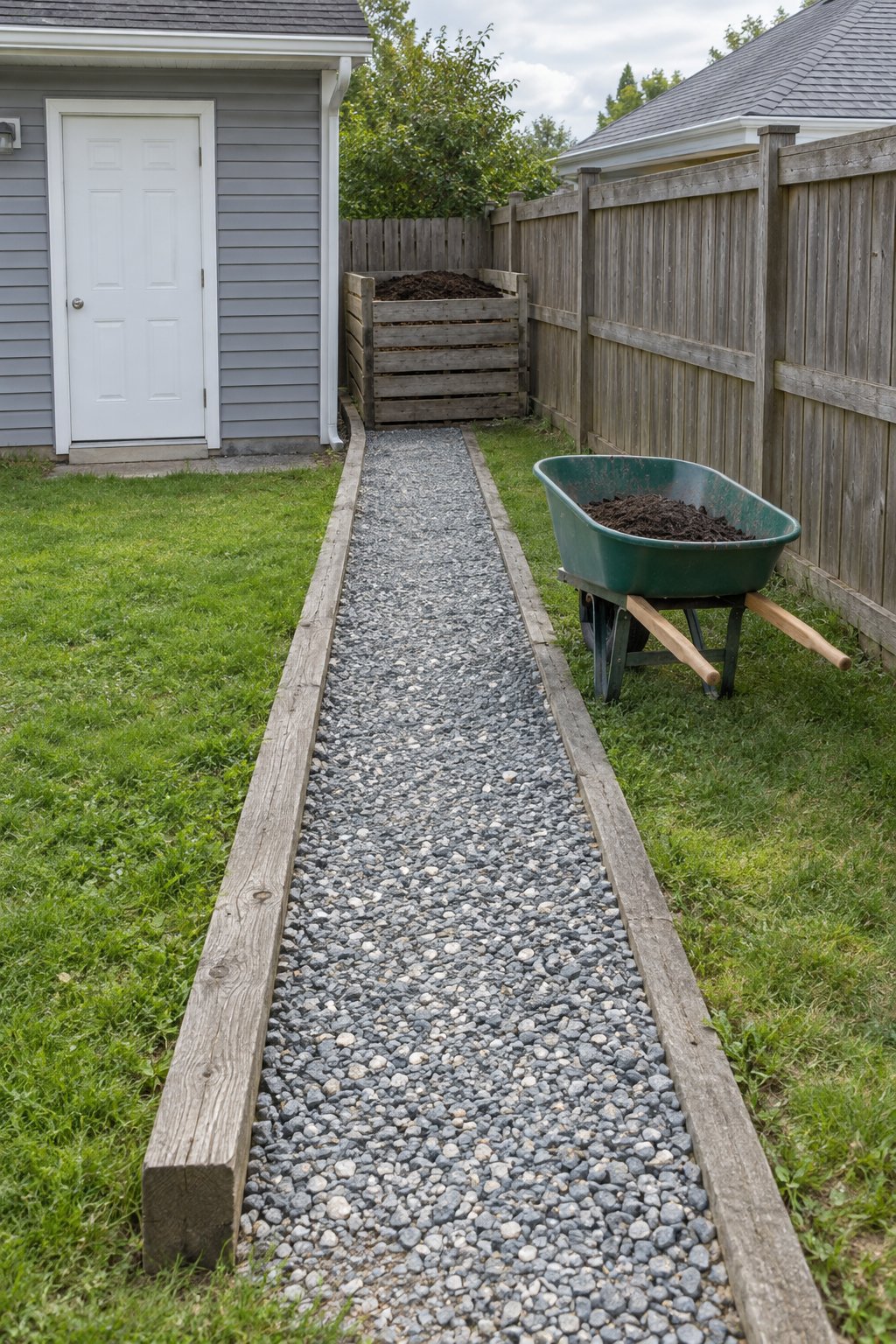
Ask the stone yard about crushed concrete, because it is angular like crushed stone and is often sold for less. It varies by yard, so ask for a mix with fines and look at a sample first.
Pack it in thin layers and dampen each one, and it settles into a firm, draining surface.
5. Gravel Held in a Plastic Grid on a Gentle Slope So It Stops Migrating

Loose gravel on a slope ends up at the bottom, so use a plastic honeycomb grid. The cells hold the stone, and makers say the confined stone is firm enough for wheelchairs and strollers.
Fill the cells with the fine angular stone the maker lists, and edge the path so the grid cannot slide.
6. Flat Stepping Stones Across the Lawn, Set One Stride Apart

Stepping stones are the cheapest real path, and the worst one for a wheelbarrow. Space them about 18 to 24 inches center to center, then walk the line before you cut a single hole.
Set each top level with the grass so the mower rolls over it.
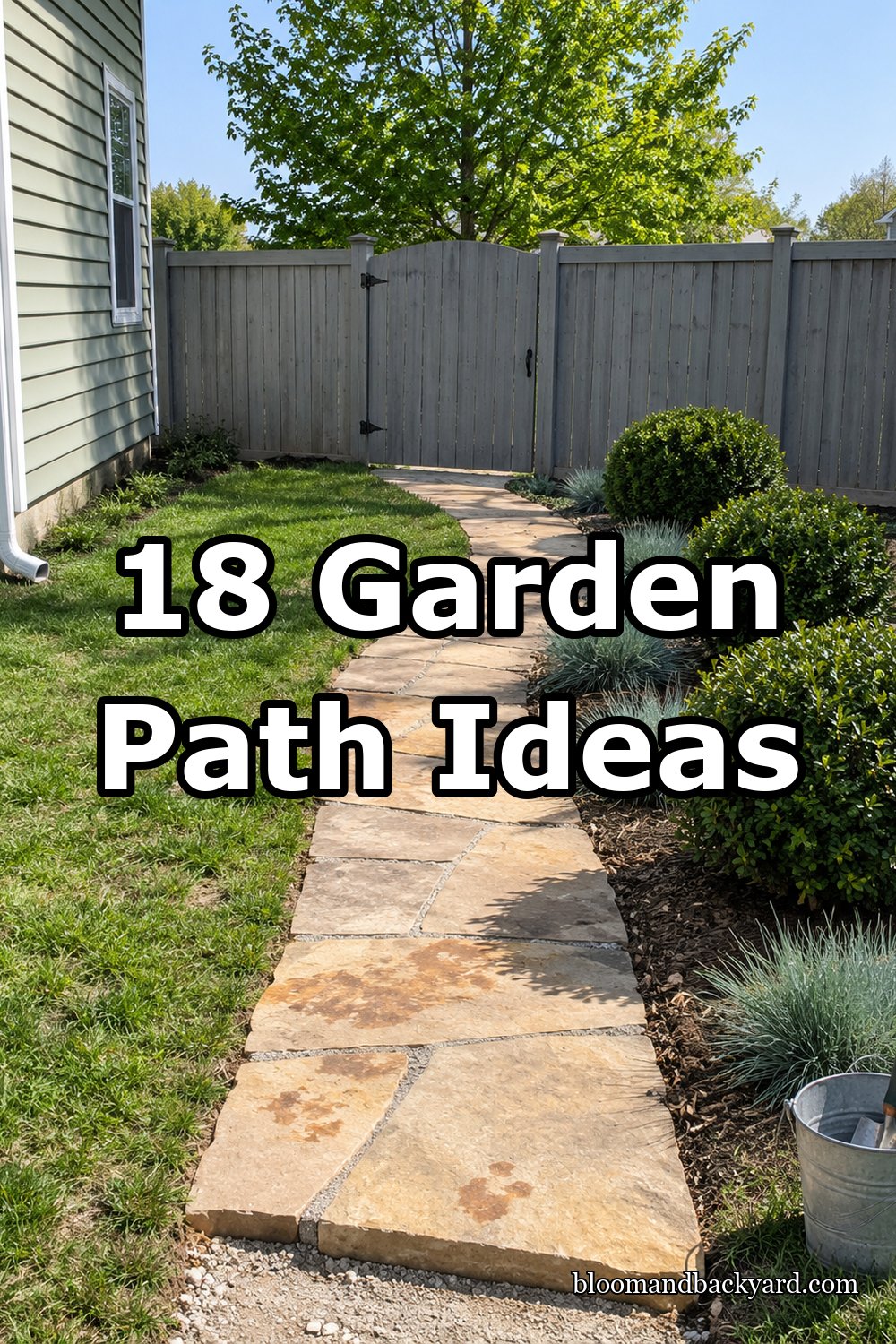
7. An Irregular Flagstone Walk Set Close, With Lady’s Mantle Spilling Over the Edge
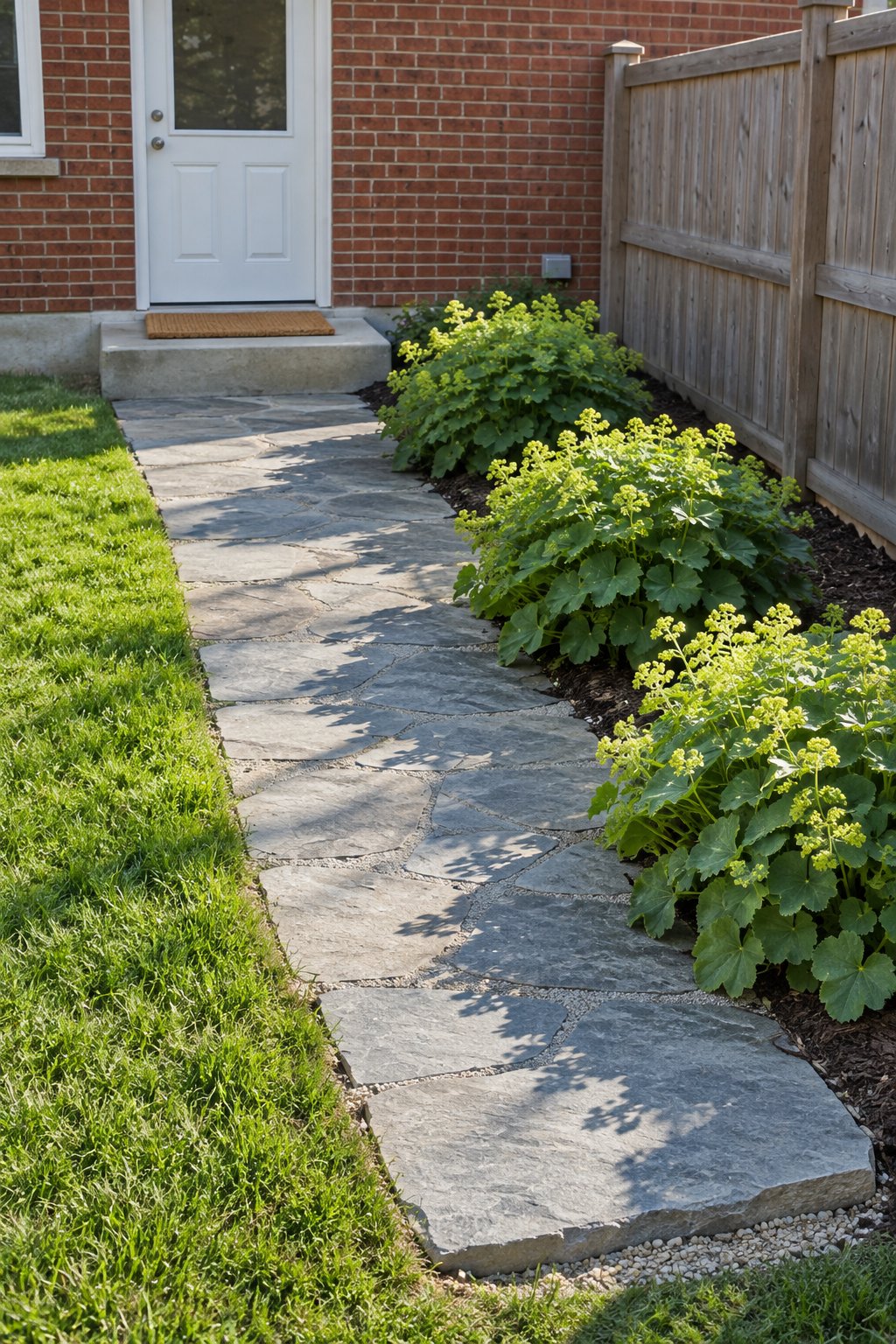
A flagstone walk is the one I would hire out past 15 feet, because fitting irregular stones is slow and heavy. Set each on packed crushed stone so the tops sit level with their neighbors.
Lady’s mantle spilling over the edge gives it the look of a cottage garden path, and it takes full sun to part shade.
8. Square Pavers Set Apart in Crushed Stone, a Walk That Needs Fewer Pavers
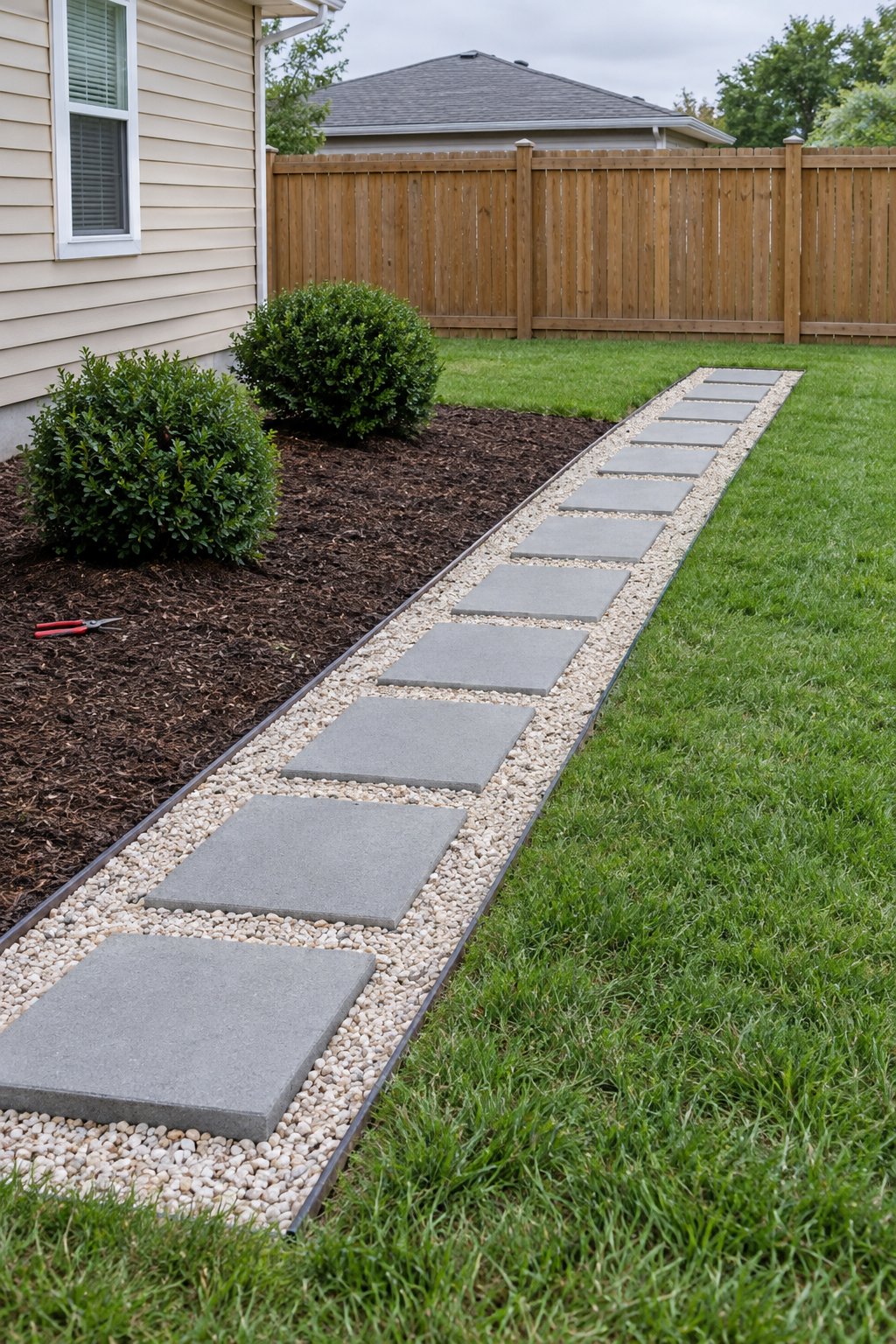
Leave a gap between large square pavers, fill it with gravel, and you buy fewer pavers than a solid walk. You still get a firm footing for each step.
Edge the whole strip, or the gravel between the pavers drifts onto them.
9. Reclaimed Brick in Running Bond, Laid in Sand Beside the Back Steps
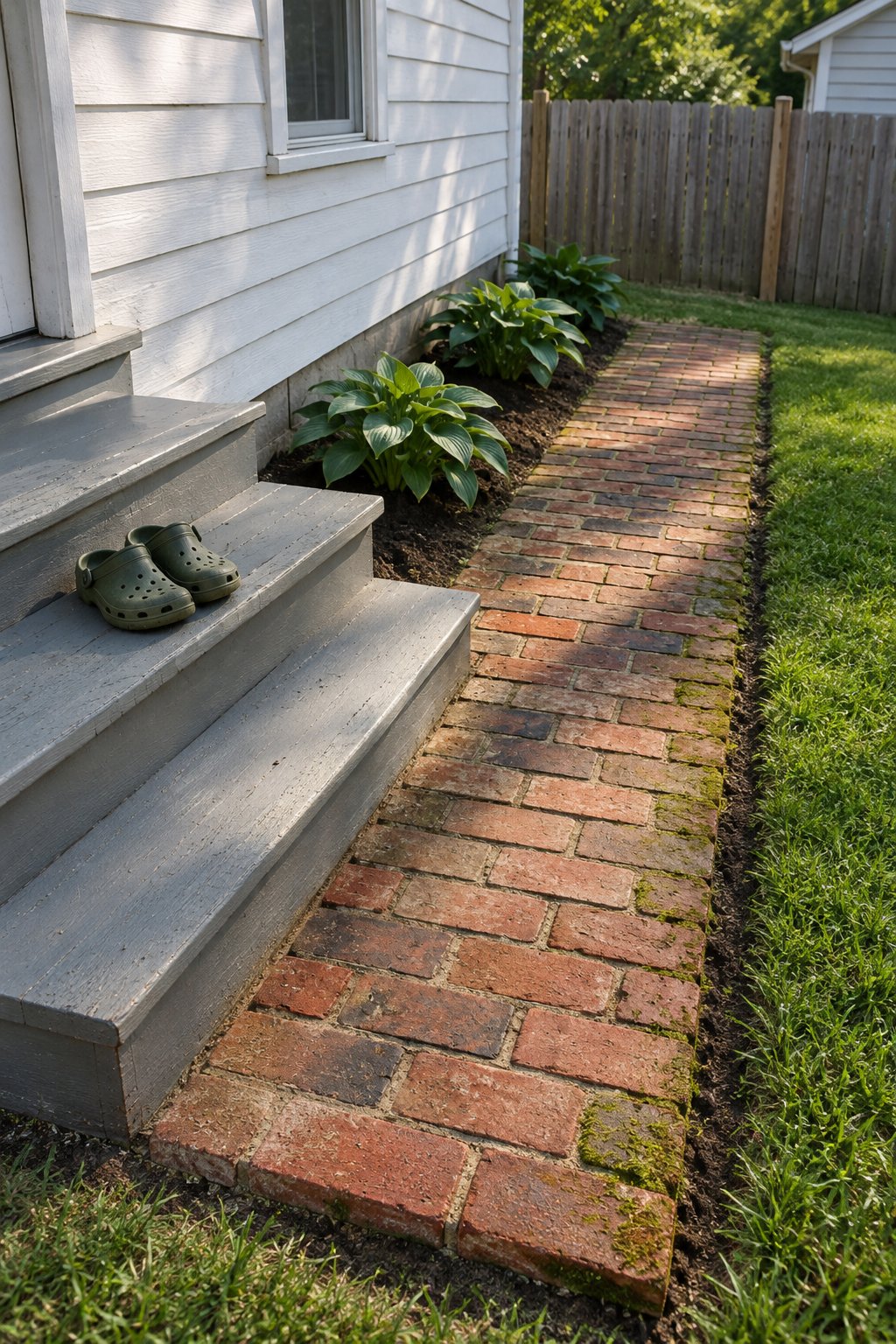
Brick is the one path that looks better old. Lay it on sand over packed stone, and check that the brick is sold for paving, because wall brick can crack in freezing weather.
Used brick is cheap but uneven, so sort it by thickness before you lay it.
10. Broken Concrete Slabs Pieced Together Like Flagstone, From a Torn-Out Patio

Torn-out concrete is the cheapest flagstone around, and sometimes free for the hauling. Pick flat pieces with one good face and set them on a few inches of packed stone.
Check every piece for rebar ends before it goes down, because a bent wire at ankle height is a hazard.
11. Arborist Wood Chips Through a Shade Border of Christmas Fern and Foamflower

Wood chips are the cheapest path to lay and the one that needs the most attention each year. Spread 3 to 4 inches over cardboard and top up every year or two as they rot down.
In a spot that never dries they turn to mud and go slick, so use stone there.
12. A Mown Path Through Tall Spring Grass, as Wide as the Mower

A mown path is the only free one here, and it needs no base at all. Leave the grass beside it long, and mow a strip about as wide as your mower deck at around 3 inches.
Check your town’s weed rules first, because some towns limit how tall grass may grow.
13. Log Rounds Bedded in Gravel Across a Damp Corner, Swapped Out When They Soften

Log rounds look wonderful, and they do not last, because wood in the ground rots. Bed rot-resistant rounds in gravel, never straight on soil, and expect to replace them in a few years.
Wet rounds go slick, so I would cut shallow grooves in the tops and use them only where I walk slowly.
14. A Gentle Slope in Gravel Treads Held by Timbers, With a Landing Between

On a slope, a path is really a set of steps. Break a short bank into gravel treads held by landscape timbers, with a level landing between each, because loose stone alone runs downhill in the first hard rain.
A slope of about 1 foot of drop in 20 is the steepest the ADA treats as a plain walkway.
15. A Path Across a Wet Low Spot, Crowned on a Deep Crushed Stone Base

Soggy ground is the reason most paths fail. Call 811, dig out the soft soil, pack the full 6 inches of crushed stone and pitch the surface about 1 inch over 4 feet so rain runs off.
Never put wood chips or grass on a spot that stays wet.
16. A Narrow Side-Yard Service Path of Crushed Stone, Pitched Away From the House
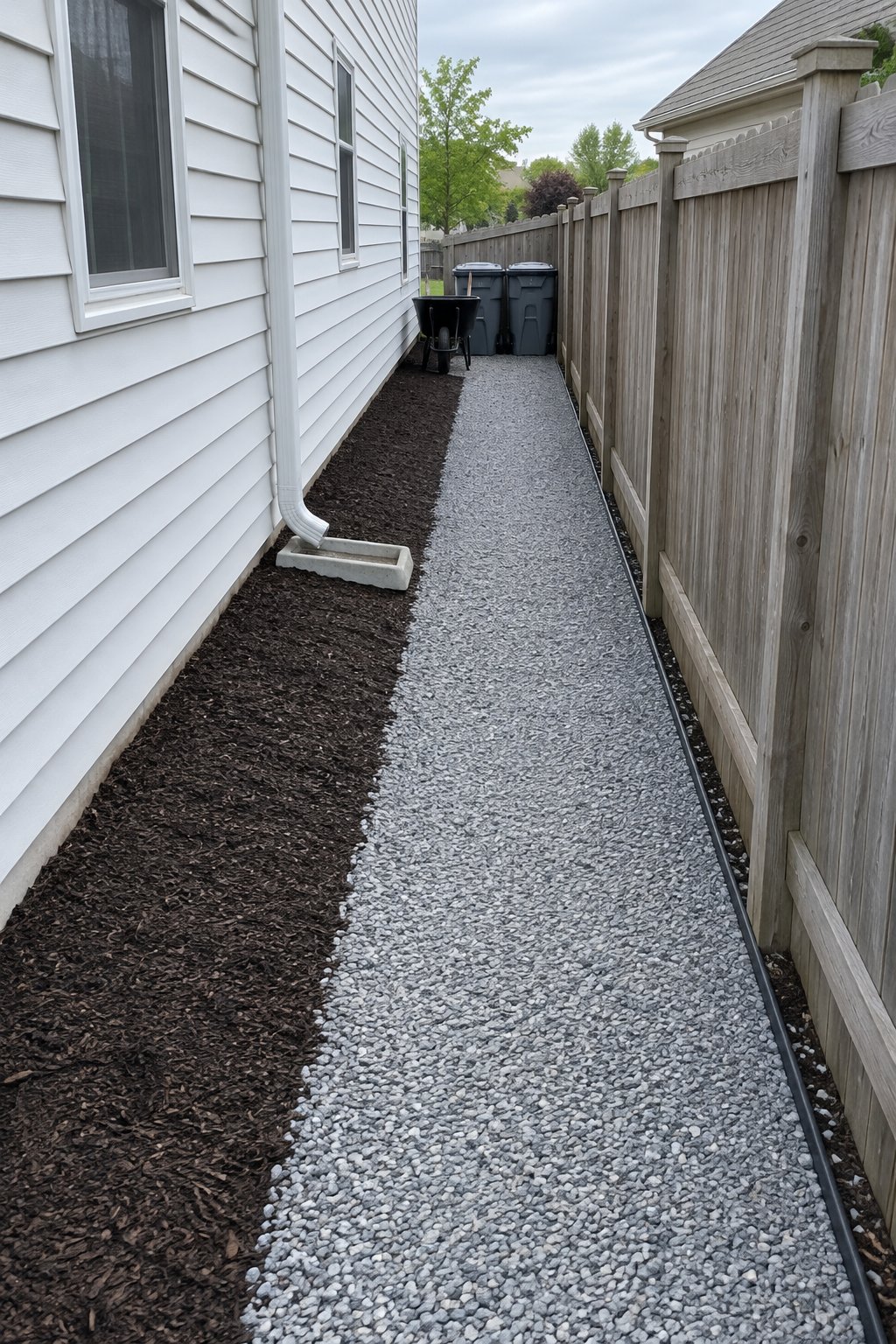
A side yard is for bins and wheelbarrows, so build the path for wheels. Pack crushed stone at least 3 feet wide, the least a loaded barrow needs, and pitch it away from the foundation.
Keep it clear of the downspout splash, or the stone washes into the middle.
17. Gravel Aisles Between Raised Beds, 3 Feet Wide and Edged by the Bed Boards

Gravel aisles stay dry and never need mowing, which makes them the tidiest way to walk between raised beds. Make them 3 feet wide so a barrow fits, as I lay out in my vegetable garden layout.
Soil and leaves collect in the stone and weeds root in them, so rake it over each spring.
18. A No-Dig Rental Path: Pavers on a Sand Bed Over Fabric, Lifted When You Move

Renters can have a real path without a shovel. Lay landscape fabric on level ground, spread about an inch of sand and set pavers on it.
Ask your landlord first, and keep it to flat ground and light use.
Garden Path Numbers on One Page
Every path above rests on a few figures.
Get them right before you buy stone or dig.
| What | The figure | Why |
|---|---|---|
| Base under gravel, pavers or flagstone | 4 to 6 inches of packed crushed stone | A packed base stops ruts and settling |
| Pea gravel on top | 2 to 3 inches, never deeper | Deeper pea gravel turns spongy underfoot |
| Decomposed granite | 2 to 3 inches, laid in layers of 2 inches or less | Thick layers pack hard on top and stay loose below |
| Wood chips | 3 to 4 inches over cardboard, topped up every year or two | They rot down into soil |
| Surface pitch | About 1 inch every 4 feet | Rain runs off instead of pooling |
| Stepping stone spacing | 18 to 24 inches, center to center | It matches an adult’s stride |
| Path width | 2 to 3 feet for one, 3 for a wheelbarrow, about 4 for two | A narrower path gets trampled at the edges |
Six Garden Path Mistakes to Skip
Soil instead of a packed base
Do thisDig out 4 to 6 inches and pack crushed stone before any surface goes on, or the path ruts and settles.
No edging on a loose path
Do thisHold gravel, granite and chips in with steel, stone or timber, or the path spreads and spills into the beds.
Pea gravel for wheels
Do thisUse packed crushed stone for a wheelbarrow, walker or wheelchair, because rounded stone rolls and bogs down wheels.
Plastic sheeting under the path
Do thisUse landscape fabric or cardboard that lets water through. Plastic holds water and the path puddles.
A surface with no pitch
Do thisSlope the surface about 1 inch over 4 feet so rain runs off the side instead of sitting on top.
Skipping the 811 call
Do thisCall 811 before any dig, even a shallow trench. The call is free, and the wait depends on your state.
Width Follows the Job: One Person, a Barrow, a Mower or a Wheelchair
A path is as wide as the widest thing that uses it. Two to 3 feet suits one person on foot, and about 3 feet fits a loaded wheelbarrow.
Two people side by side need about 4 feet, or one of them walks on the lawn.
For a wheelchair, the US Access Board asks for a clear 36 inches on trails, plus a 60 inch square passing space where the tread is narrower than 60 inches, and a surface firm and stable enough that a wheel does not sink. That rule is written for public trails, not yards, but it is a fair target if a guest who uses a chair or walker will visit.
For a mower, measure the deck and add a few inches each side.
The thing that matters more than width is where the path goes, because one that reaches a bench, a gate or a tap gets walked, and one that ends in lawn gets cut across.
Start with the route your feet already take, and pick the material for how the path will be used, not for how it photographs. Lay one 10 foot stretch first and watch how it wears before you build the rest.
A plain path that goes somewhere beats a pretty one that doesn’t.
Frequently Asked Questions
How wide should a garden path be?
Two to 3 feet suits one person, about 3 feet fits a wheelbarrow and about 4 feet lets two walk side by side. For a wheelchair, the US Access Board’s trail rule asks for a clear 36 inches.
What is the cheapest garden path to make?
A mown strip through long grass costs nothing but mower time. Wood chips are sometimes free from a tree crew, and broken concrete from a torn-out patio is sometimes free for the hauling.
What is the best path for a wheelbarrow or a wheelchair?
Packed crushed stone with fines, or a firm surface like pavers or flagstone on a packed base. Pea gravel and wood chips are loose, so a wheel sinks and bogs down in them.
How do I keep weeds out of a gravel path?
Start with a packed crushed stone base, which drains fast and gives weed seeds less to root in, and lay landscape fabric under it. Soil and leaves still collect on top, so rake and pull seedlings while they are small.
Can a renter make a garden path?
Yes. A mown strip, stepping stones set on the surface, or pavers laid loose on a sand bed (no. 18) can all be lifted when you move. Ask your landlord first, and call 811 before any digging.
You Might Also Like
Save This For Later
Loved garden path ideas? Save this pin to your Pinterest board now so you can find it again anytime you need the inspiration.