Chicken Coop Ideas: 20 Designs That Look Good and Keep Hens Safe

Chicken coop ideas are only worth copying if the hens are safe by morning.
These 20 are whole coop and run setups for 3 to 6 hens in an ordinary yard, each with a rough cost and what it takes.
Check your town’s hen rules before you buy birds, and see the bonus section near the end for how.
Which setup fits your yard?
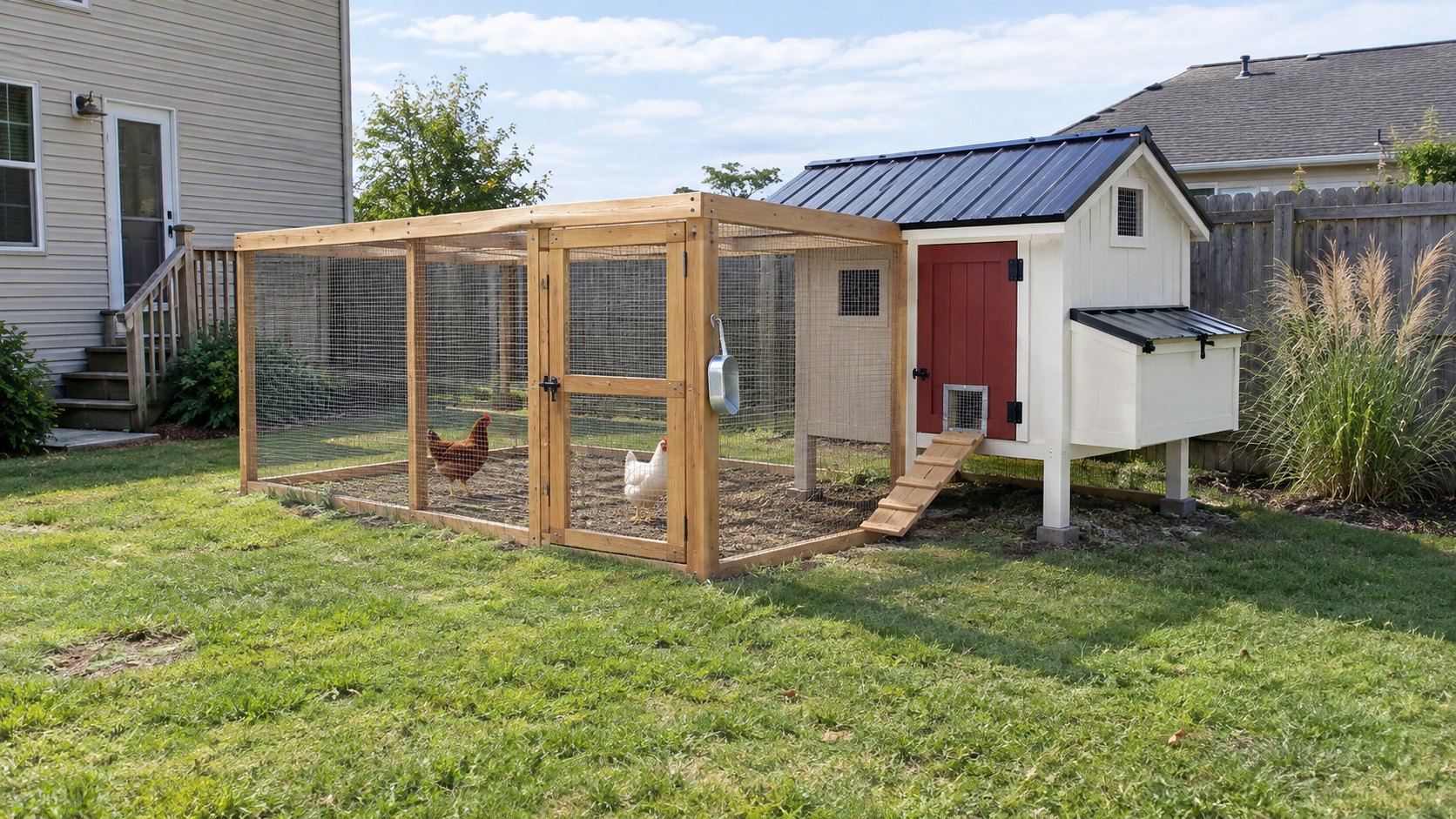
1. Three Hens, a 3 by 4 Foot Coop and a Long Run Along the Fence

Small chicken coop ideas work when the run does the work. Three hens need about 12 square feet inside, a 3 by 4 foot coop, and about 30 outside.
Raise the floor a foot off the ground, and cover the vents, the run and the run roof in half-inch hardware cloth.
If I had to spend extra anywhere, it would be on the run.
2. Raised Coop With the Run Tucked Underneath

Putting the run under the coop buys floor space in a small yard. A 4 by 6 foot coop on posts over a 4 by 6 foot run, plus a roofed 4 by 4 foot extension, gives four hens about 10 square feet each.
Close the sides to the ground with hardware cloth and add a skirt of the same mesh.
The coop floor is the best roof that run could have.
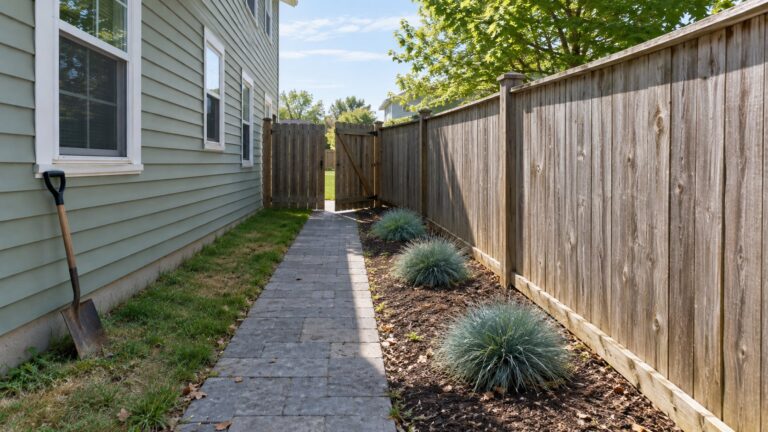
3. Side-Yard Strip: Coop at the Back, a 4 by 12 Foot Run Out Front

A side yard hides a run better than any hedge. A 4 by 4 foot coop at the back and a 4 by 12 foot run in front suit four hens.
Check setbacks, then call 811 before you bury mesh along the long sides, and see what the 811 call actually does.
I would make the gate wide enough for a wheelbarrow.
4. Lean-To Coop Built Against a Blank Shed Wall

A shed’s blank wall is a free back wall. Build a 3 by 4 foot lean-to against it, roofed to shed water away, with a 4 by 8 foot run out front for three hens.
Seal every gap where coop meets shed, since weasels use openings of an inch or more.
It is about the least lumber a coop can take.
5. Kit Coop Rewrapped in Hardware Cloth, With a Better Latch

Check what your kit’s run is wrapped in, because poultry netting holds hens in and keeps little out. Recover the run and vents in half-inch hardware cloth, fixed with screws and washers, not staples.
Swap any simple hook for a padlock or a multi-motion latch, then count hens at 4 square feet of floor each, whatever the box says.
A kit with new mesh is a good coop.
6. Garden Shed Turned Walk-In Coop, Vents Cut High
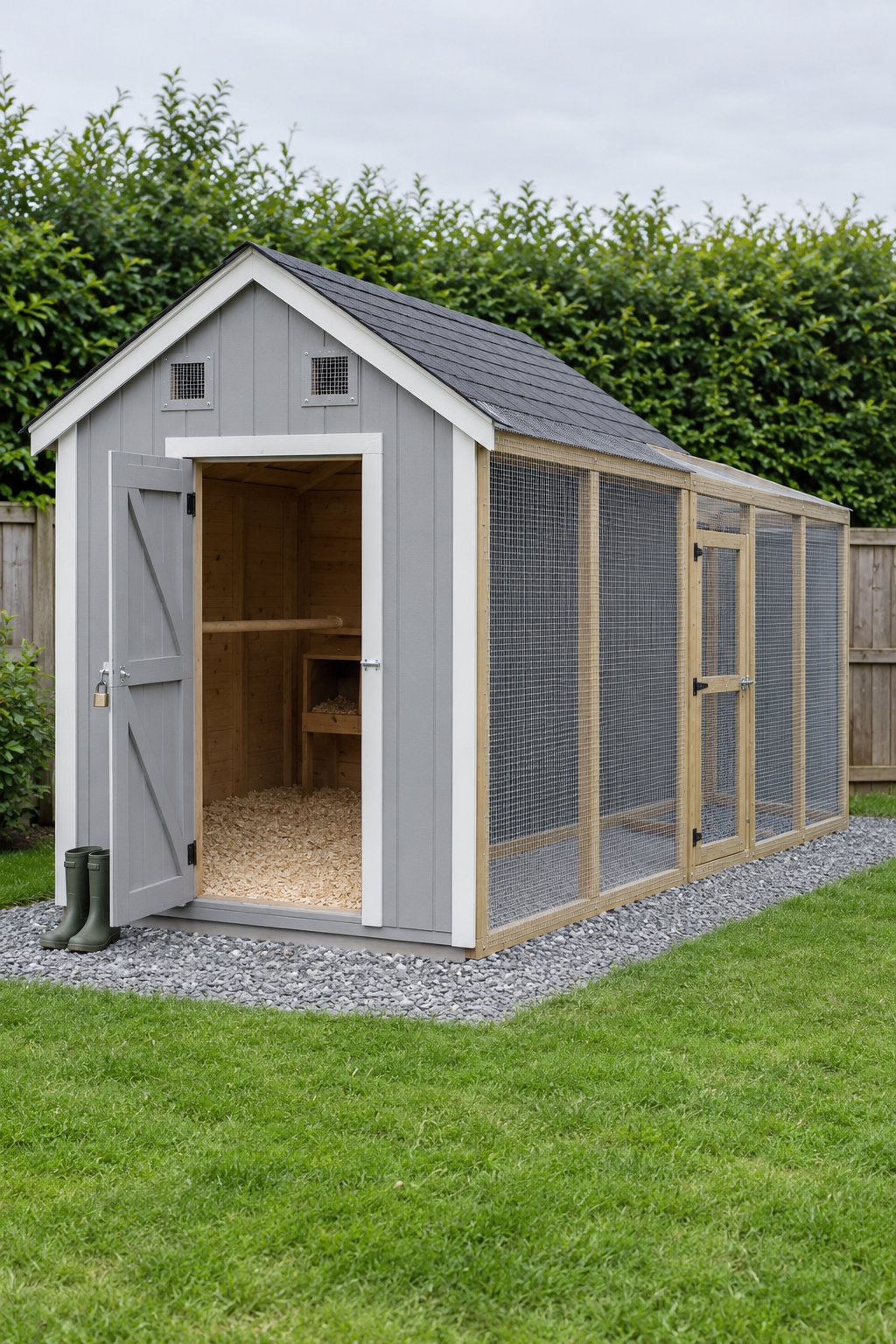
A garden shed already has the walls, roof and door, so the work is airflow. Cut vents high on two walls above the roost and screen each with hardware cloth, and a 6 by 8 foot shed holds six hens with a 6 by 10 foot run.
A padlock on the door makes a raccoon’s job harder.
The walk-in door is what you will thank yourself for in January.
7. Old Playhouse on Legs, With a Skirted Run

A used wooden playhouse is a coop someone else already framed. Stand it on posts a foot or more off the ground, put hardware cloth in the windows and give four hens a 4 by 10 foot run.
Lay a 12 to 18 inch skirt of mesh around the run and cover it with soil.
A playhouse with a sound floor is worth hauling home.
8. Dog Kennel Frame Clad in Hardware Cloth, Roofed on Top

A kennel panel is a run frame with a gate already hung. Wrap it in hardware cloth, roof it with wire against hawks and climbing raccoons, and put a small coop inside for up to six hens.
Add a second latch to the gate.
It is the quickest big run to put up.
9. A 4 by 6 Foot Shed-Roof Coop Built From Framing Lumber

Six hens fit a 4 by 6 foot coop at 4 square feet each. Give them about 4 feet of rounded 2 inch wide roost set 2 feet up, and two nest boxes, 12 inches each way.
A single-slope roof and plywood keep it among the easier DIY chicken coop ideas, and a 6 by 10 foot run finishes it.
I would build the nest boxes to open from outside.
10. Salvaged Lumber and Old Windows, Screened Properly

Old windows make good vents once they are screened. Build a 4 by 4 foot coop from salvaged boards, set sliding windows high with hardware cloth behind them, and add a 4 by 10 foot run for four hens.
Use only sound boards.
A coop from found wood can look better than anything off a shelf.
11. A Tall Walk-In Coop on a Concrete Block Base
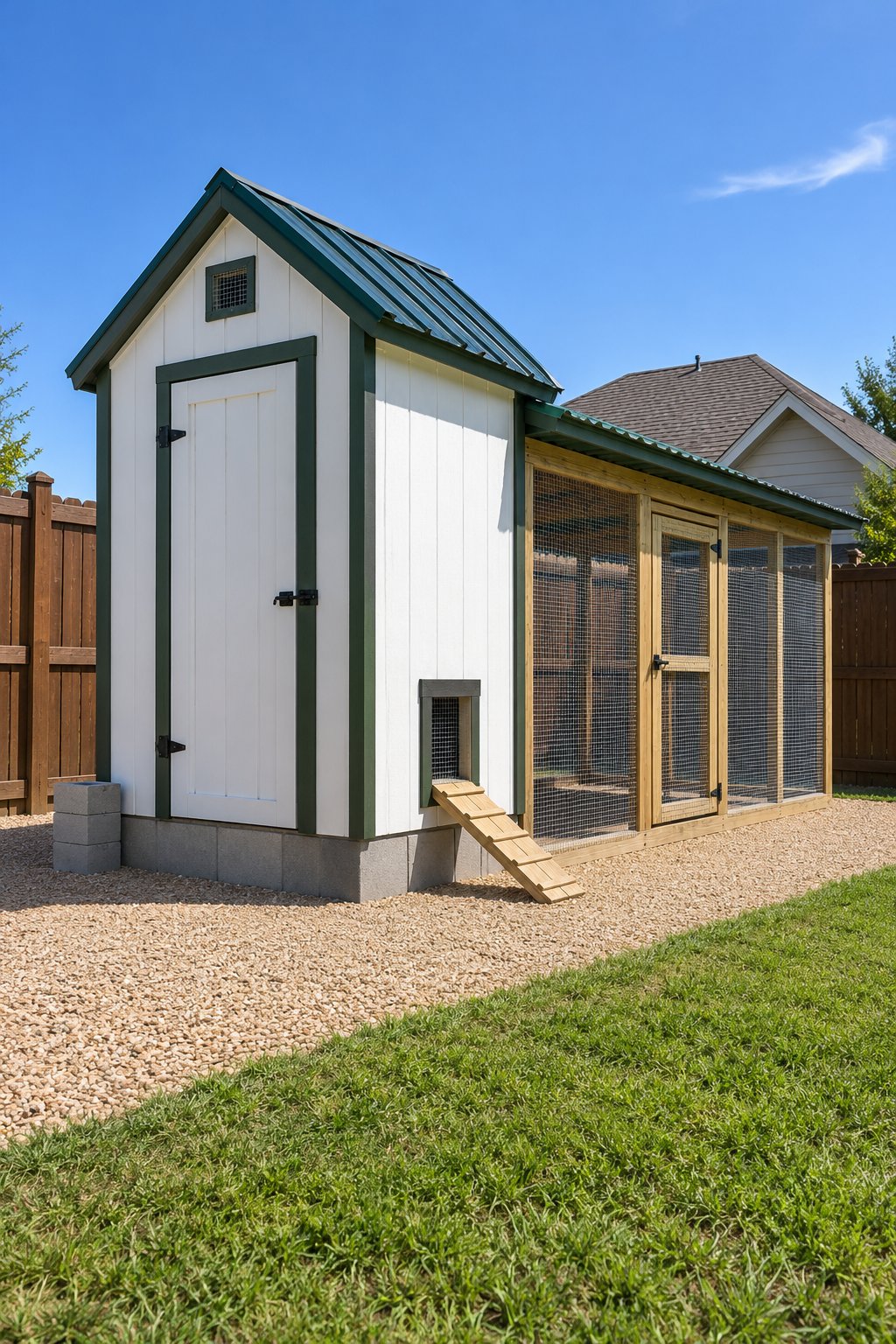
A coop you can stand up in changes the daily routine more than any other feature. Build it 4 by 8 feet on one or two courses of concrete block so nothing digs in, with a 6 by 10 foot run for six hens.
Plan on two people and several weekends.
For hens you plan to keep for years, build one you can stand up in.
12. A Wheeled Coop for Three Hens, Moved Across the Lawn

A wheeled coop suits two or three hens, since each one lives in it all day. A 4 by 12 foot frame with a 4 by 3 foot covered end and a mesh run, light enough for two adults to roll, gives three hens room.
The floor is open to the ground, so run a mesh skirt flat around the base.
I would keep it for the warm months.
13. Cold-Winter Coop: Vents High, Dry Shavings, No Heat Lamp

Skip the heat lamp. Fire officials call lamps the most dangerous coop heat source, and healthy hens used to your weather usually do not need extra heat.
Put the effort into vents high above the roost, 4 to 8 inches of dry shavings and a wooden roost.
In a cold coop, damp is a bigger enemy than the cold.
14. Hot-Summer Coop in Shade, With Cloth Over the Run

A coop in all-afternoon sun turns into an oven, so site it first. Shade the middle and west end of a 5 by 10 foot run with cloth, keep the water in shade and open the screened vents of a 4 by 5 foot coop for five hens.
A roof turbine vent is a permanent fix.
Shade matters more here than any paint color.
15. Wet Yard? Raise the Coop and Gravel the Run

A wet run is a miserable place for hens, so deal with water first. Raise a 4 by 4 foot coop on block piers with a floor sloped to hose out, and give four hens a 4 by 10 foot run on coarse gravel, which drains faster than packed soil, with one roofed corner.
A drained run does more than a prettier coop.
16. Snowy Yard: A Roofed Run With Wind Blocked on Two Sides
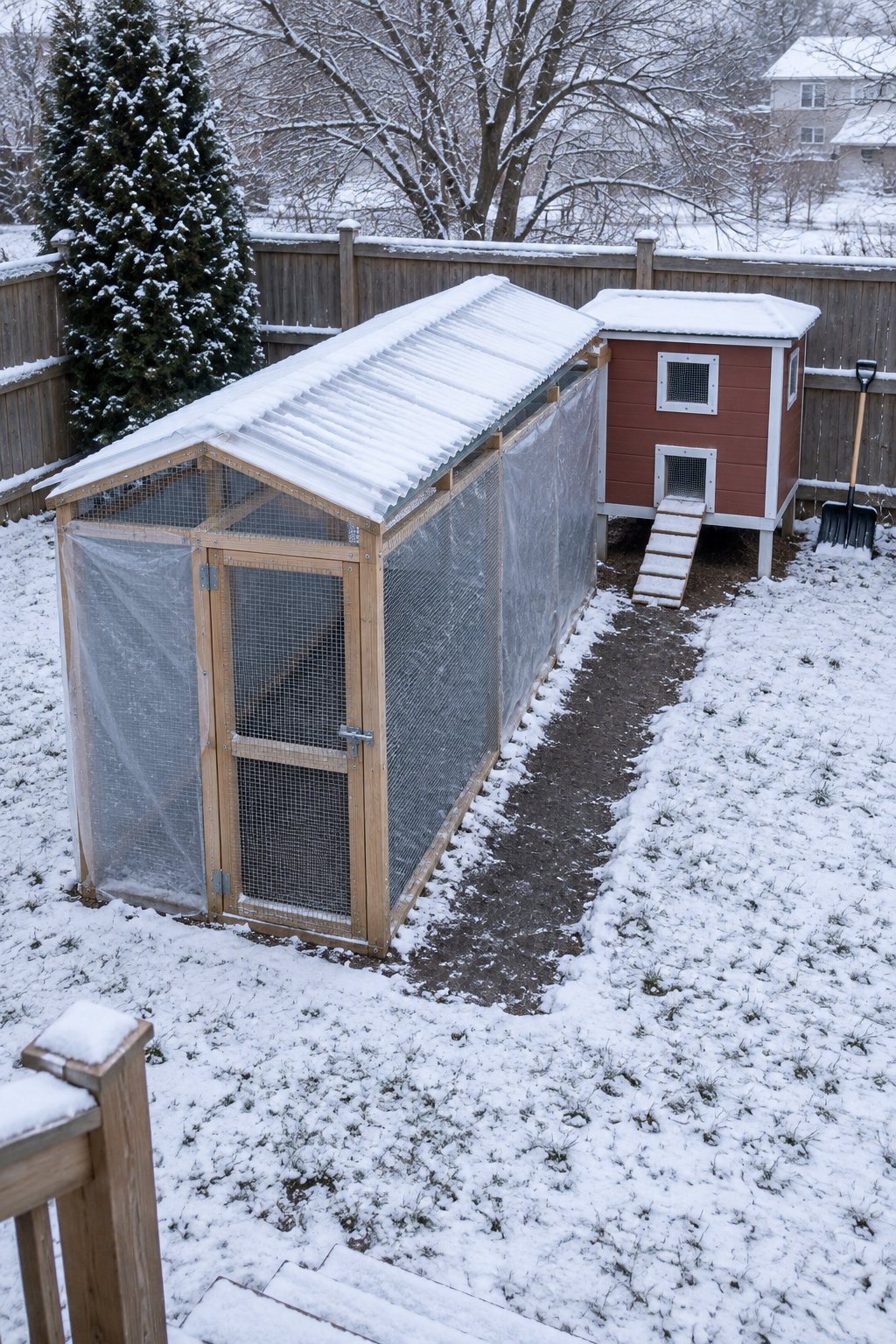
A roofed run lets hens out on a snow day, which is the point. Pitch the roof, ask the building department about snow load and fit clear panels over a 4 by 10 foot run for four hens.
Cover the two windward sides with plastic, stopping short of the roofline.
A dry run in January beats a nicer coop.
17. Renter and HOA Setup: Freestanding, on Pavers, Nothing Dug

A rental or HOA yard needs a coop that leaves when you do, so ask in writing first. Set a 3 by 4 foot freestanding coop and a 3 by 10 foot run on pavers for three hens.
Pin a 12 to 18 inch mesh skirt flat instead of digging, which is less secure than burying it, so keep the run roofed and the door locked.
Permission in writing beats a clever build.
18. A Coop Dressed as a Garden Shed, Planted Along the Outside

Chicken coop landscaping ideas start outside the wire, because hens strip anything inside it. Paint the coop to match the house, lay a gravel path to the door and plant a border along the outside of the run.
Pot some lavender, which wants full sun and well-drained soil, and edge the border with my flower bed edging ideas.
Landscaping turns a coop into part of the yard.
19. Painted Coop Behind a Slat Screen the Neighbors Can Live With

A dark coop behind a slat screen keeps the neighbors on your side. Set a coop and a 4 by 10 foot run back to your town’s setback and screen the run, as in my patio privacy ideas.
Keep feed in a lidded bin and the coop clean, so there is less to object to.
Hens are not silent, and I would rather tell the neighbors first.
20. Coop Next to the Vegetable Beds, With a Gate Between

Hens and vegetable beds can sit side by side only with a fence between them. Put a 4 by 5 foot coop and a 5 by 10 foot run for five hens beside the beds, and fence the beds as in my fenced vegetable garden designs.
Hens scratch up seedlings, so put the gate where you can carry a watering can through.
Hens and tomatoes get along best on opposite sides of a gate.
Coop Numbers on One Page
Every setup above rests on a few figures.
Get these right before you buy any lumber.
| What | The figure | Why |
|---|---|---|
| Coop floor per hen | About 4 square feet, 3 at the least | Sources differ, and more room costs little |
| Run per hen | About 10 square feet | Hens spend the day out here, so it matters more than the coop |
| Roost per hen | 6 to 10 inches, about 2 feet up | Every hen needs a spot off the floor at night |
| Nest boxes | One per 4 hens, about 12 inches each way | A dim, quiet box keeps eggs in one place |
| Mesh and burial | Half-inch hardware cloth, buried 12 inches or a 12 to 18 inch skirt | Chicken wire holds hens in, and diggers go under |
| First eggs | 18 to 22 weeks old | Most pullets start in that range, depending on the breed |
Six Chicken Coop Mistakes to Skip
Chicken wire as the only barrier
Do thisUse half-inch hardware cloth on the run, the vents and the windows, fixed with screws and washers. Poultry netting keeps hens in but does little to keep predators out.
A latch a raccoon can work
Do thisRaccoons open simple latches, so use a padlock or a latch that takes several different motions. Shut the hens in at dusk every evening.
Mesh that stops at the ground
Do thisBury the mesh at least 12 inches deep, or lay a skirt 12 to 18 inches wide around the base and cover it with soil. Call 811 before you dig.
A run with no roof
Do thisCover the top with wire or netting. Hawks drop in from above, and raccoons climb in over the sides.
Sealing the coop tight against the cold
Do thisLeave screened vents high on the wall, above the roost. A closed-up coop traps moisture and ammonia.
A heat lamp on a clamp
Do thisSkip it, because a lamp that falls into bedding starts fires. If you want heat, have an electrician wire a heater made for coops.
Before You Buy a Single Hen, Read Your Town’s Rules
Hen rules are set by your town, and they differ a lot. Some cap the number of hens, ban roosters, ask for a permit or want the coop a set distance from your property line.
Some ban chickens outright, and a few ask your neighbors to sign off. Look up the rule for your own address before you order hens or lumber.
Search your town’s code for “chickens” or “poultry,” then call the zoning or planning office to confirm and get the answer in writing. In an unincorporated area, the county usually sets the rule instead.
Your HOA covenants and your lease come on top, because a city that allows hens does not override either.
I would talk to the neighbors next door before I talked to the city, since they are the ones who will hear her.
Start with the rules and the numbers: check your town, then work out 4 square feet a hen inside and 10 in the run. Then pick one setup, cover every opening in half-inch hardware cloth and lock the door at dusk.
A safe coop beats a pretty one, and the best ones are both.
Frequently Asked Questions
How much space do four hens need?
Plan about 4 square feet per hen in the coop and 10 in the run, which is 16 and 40 square feet for four hens. Your town may set its own minimums, so check those too.
Do hens need a rooster to lay eggs?
No. A hen lays without one, and a rooster only matters for fertile eggs that can hatch.
Is chicken wire enough to keep hens safe?
No. It holds hens in, but raccoons can tear or reach through it. Use half-inch hardware cloth and add a roof, a buried skirt and a good lock, because no one barrier stops every predator.
Do chickens need a heat lamp in winter?
Healthy hens used to your climate usually do not. Extension advice is dry bedding, no drafts and vents that stay open, and a lamp is a fire risk.
When will my hens start laying?
Most pullets begin between 18 and 22 weeks old, depending on the breed. Have the nest boxes ready before then.
Save This For Later

Loved chicken coop ideas? Save this pin to your Pinterest board now so you can find it again anytime you need the inspiration.