Privacy Fence Ideas on a Budget: 16 Cheaper Ways to Screen a Yard
Privacy fence ideas on a budget start with one question: which view do you actually need to block?
These 16 build less fence, raise the one you have, or grow the screen.
Check your town’s height rules and call 811 before any post goes in.
Find your yard
1. Dog-Ear Pickets Butted Tight: The Cheapest Wood Privacy Fence

Plain dog-ear pickets on three rails are the simplest six-foot wood privacy fence to build. Butt every picket edge to edge, because the eye stops at solid boards.
Expect thin gaps as the wood dries, so the view is mostly blocked rather than sealed.
2. Board-on-Board Only Where the Neighbors Sit
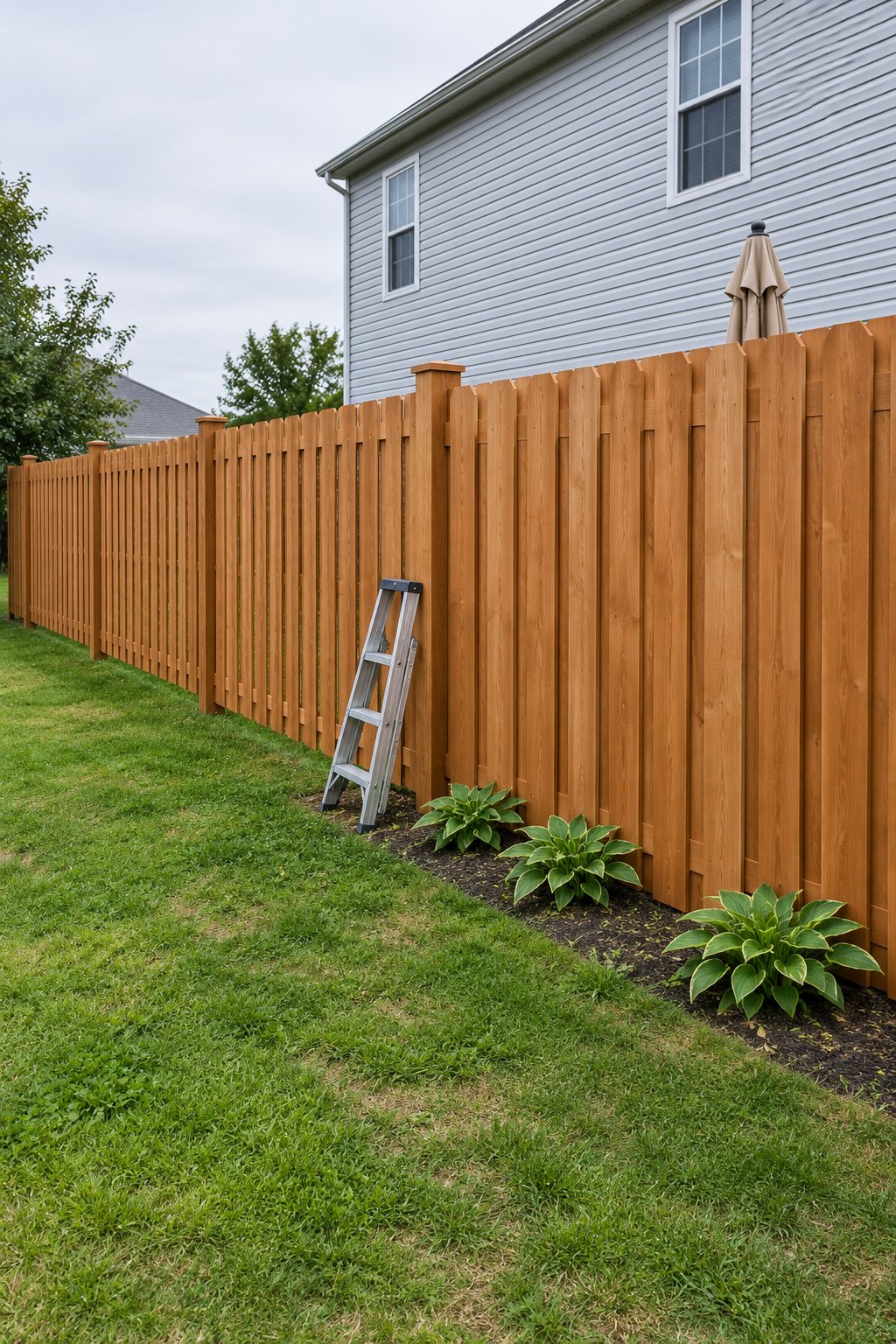
Board-on-board overlaps two layers of pickets, so no daylight shows even after the wood shrinks. It takes more boards per section, which is why I would use it only on the stretch facing a neighbor’s patio.
Spend on the line of sight, not the whole line.
3. Build Two Sections Where the View Comes In, Not the Whole Line

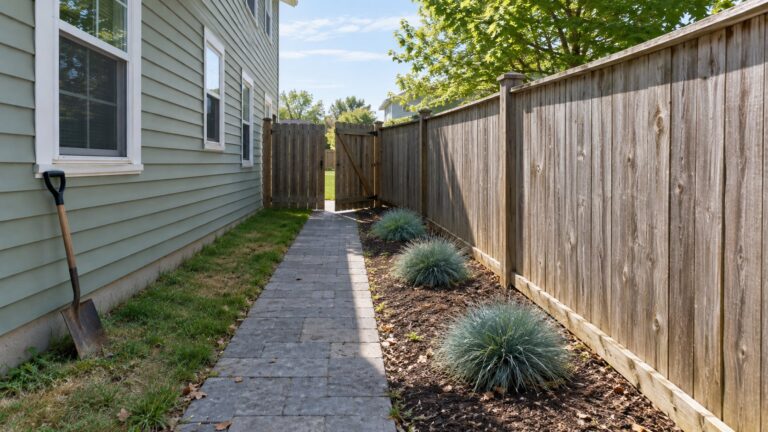
Most yards have one view that matters, usually a window that looks at the seat. Two 8-foot sections of six-foot fence on three posts can block it for a fraction of a full run.
Site it from your chair, because the seated sight line decides the spot.
4. Step the Height Down: Six Feet at the Patio, Four Toward the Street
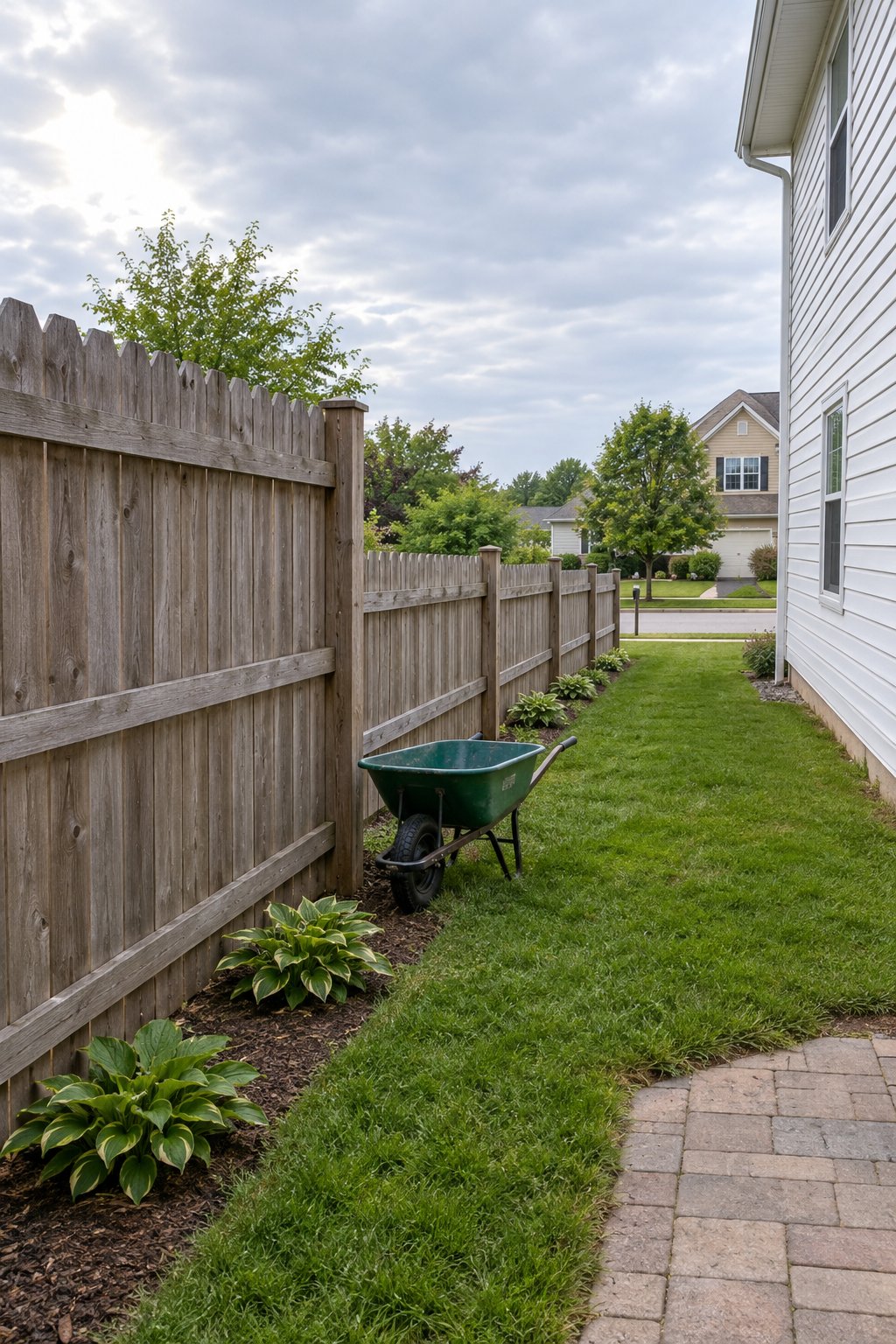
Codes commonly allow about 6 feet in back and side yards but only 3 to 4 feet in front, so a fence that steps down follows the rules and saves boards. Keep the tall part where you sit.
The lower run still marks the line; it just stops screening.
5. Set Posts 8 Feet Apart So Every Rail Is a Stock Length

Rails come in 8-foot lengths, so posts on 8-foot centers mean no wasted cuts. A common rule of thumb buries about a third of the post, and in cold areas the hole goes below the frost line, whichever is deeper.
Call 811 a few business days before you dig; the marking is free.
6. Weave Privacy Slats Into an Old Chain-Link Fence
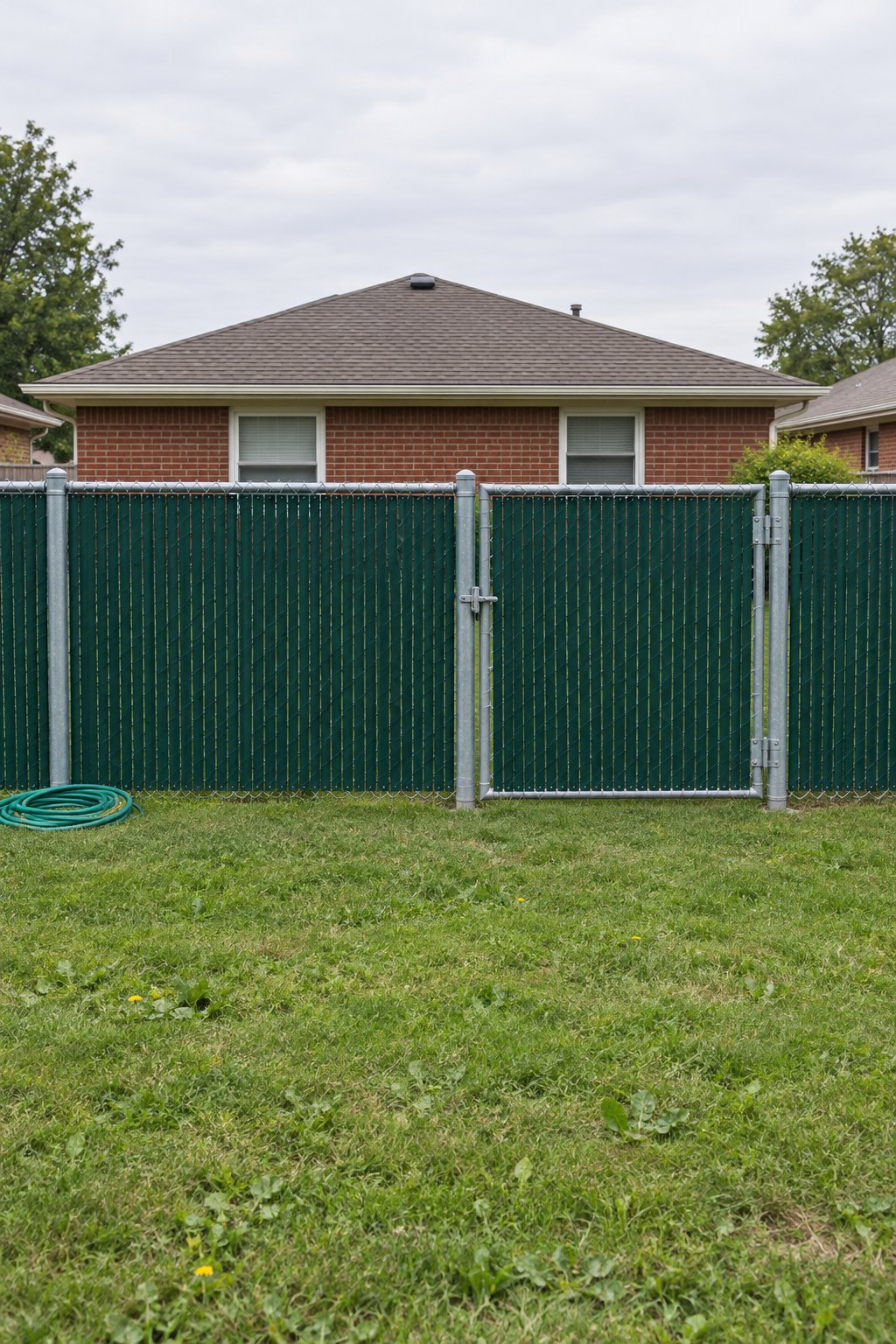
Chain-link is see-through by design, and slats woven down through the mesh turn it into a screen without new posts. Pick a dark color, because it recedes and lets plants in front stand out.
It is one of the cheapest ways to keep a fence you already own.
7. Tie Reed Rolls to the Inside of the Chain-Link

Reed fencing unrolls along the mesh and ties on every foot or so, so the job takes an afternoon and no tools beyond snips. It looks warmer than slats.
It weathers faster than wood, so plan to replace it.
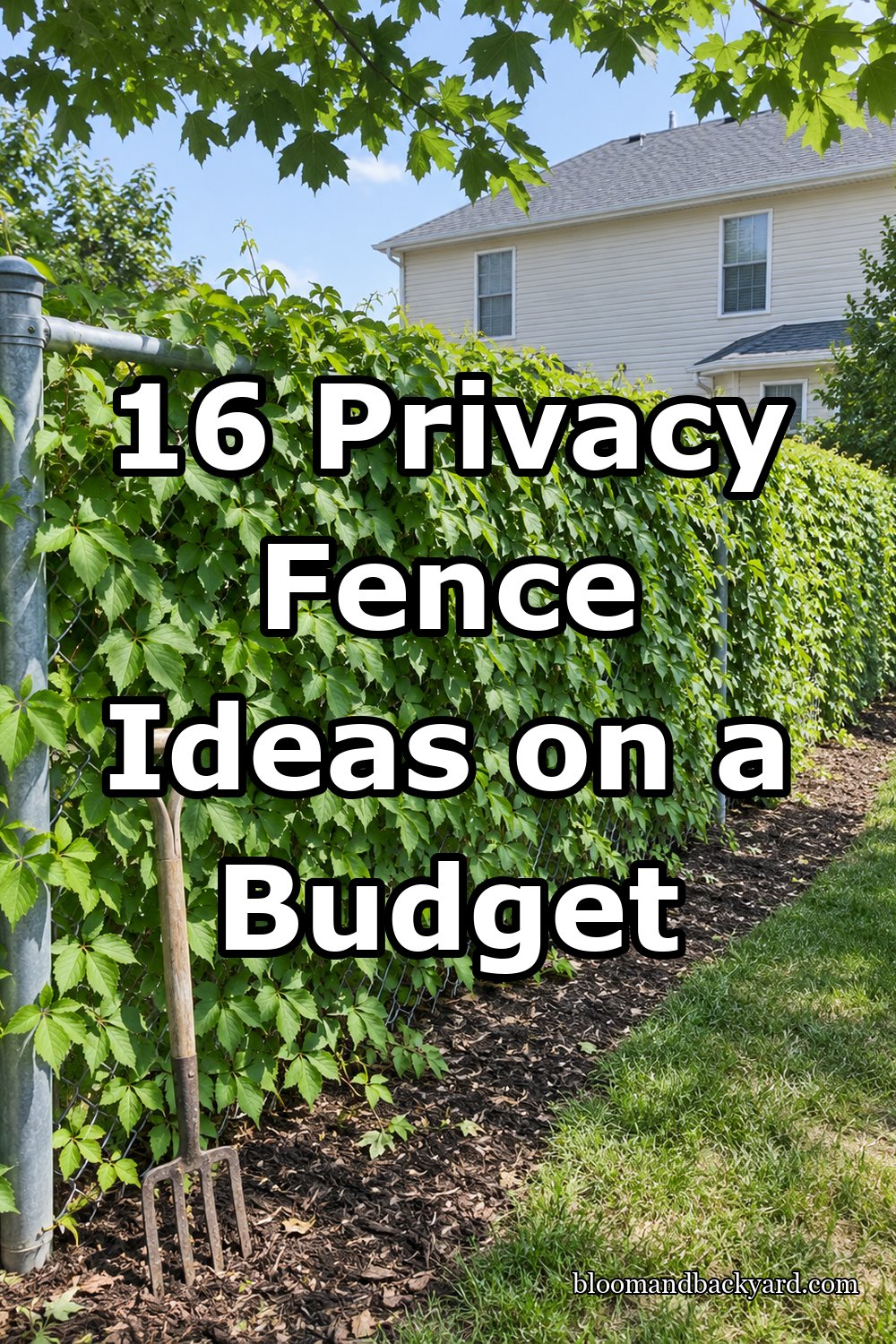
8. Virginia Creeper Up Chain-Link for a Living Wall

Virginia creeper is a fast native vine of the eastern and central US, and chain-link gives its tendrils something to grip. Plant a few along the base and it covers the mesh within a few seasons.
It drops its leaves in fall, so this is a summer screen.
9. A Lattice Topper on a Fence That Is a Foot Too Short

A five-foot fence often misses the view by inches, and a one-foot lattice topper closes it without new posts. The open grid lets light through, so the top looks lighter than solid boards.
Most towns count the topper as part of the fence height.
10. Bare-Root Arrowwood Viburnum From a Spring Seedling Sale

Many county conservation districts sell bare-root native shrubs in bundles each spring, far cheaper than potted plants. Arrowwood viburnum grows 6 to 10 feet tall and wide in sun or part shade, hardy roughly in zones 3 to 8.
It is deciduous and small at first, so give it a few years.
11. Small Green Giant Arborvitae Instead of Leyland Cypress

Leyland cypress is sold as the fast hedge, but it can reach 60 to 70 feet and is prone to canker in crowded rows. ‘Green Giant’ arborvitae is also quick, about 2 to 4 feet a year at NC State’s arboretum.
Both get huge, so buy small and plant them far enough off the line.
12. Pair a Four-Foot Fence With an Evergreen Hedge Behind It

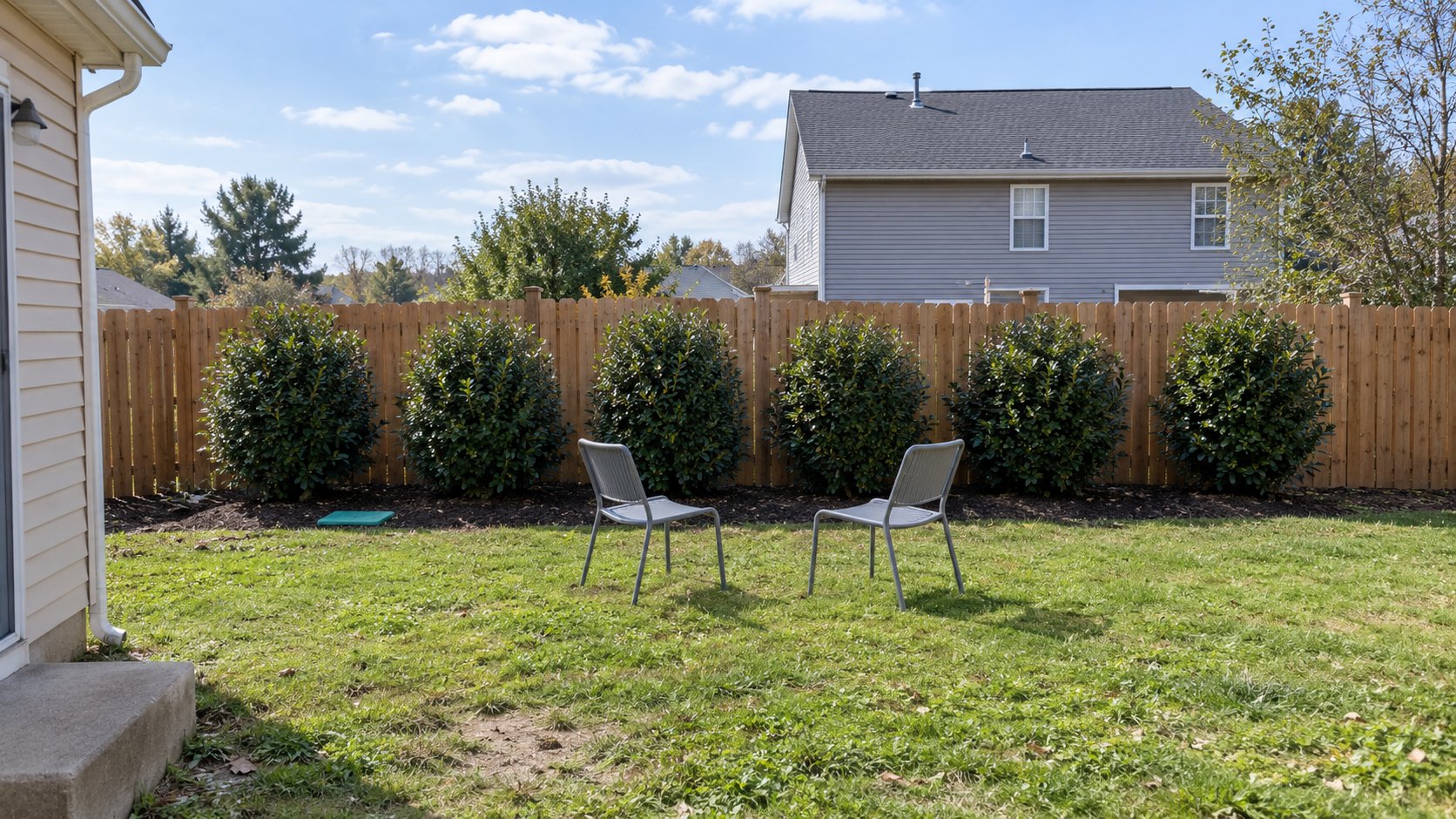
A short fence blocks the low view on day one, and an evergreen hedge just inside it takes over the top as it grows. Inkberry is a native evergreen that tolerates part shade, hardy roughly in zones 5 to 9.
It grows slowly and spreads by suckers, so the fence carries the first years.
13. Cattle Panels on T-Posts, Covered in Common Hop

A 16-foot cattle panel on steel T-posts makes a fence run with no digging for concrete. Common hop is a perennial vine that climbs about 20 feet in a season and dies back each winter.
Plant common hop, not Japanese hop, which is invasive.
14. Heat-Treated Pallets Stood on End Behind the Vegetable Bed

Free pallets stood upright on T-posts make a screen about 4 feet tall, which hides a seated view or a utility corner. Use only pallets stamped HT, never MB or unstamped ones.
Pallet wood is short and rough, so keep it to one corner, not the whole line.
15. Hire Out the Posts, Then Hang the Boards Yourself
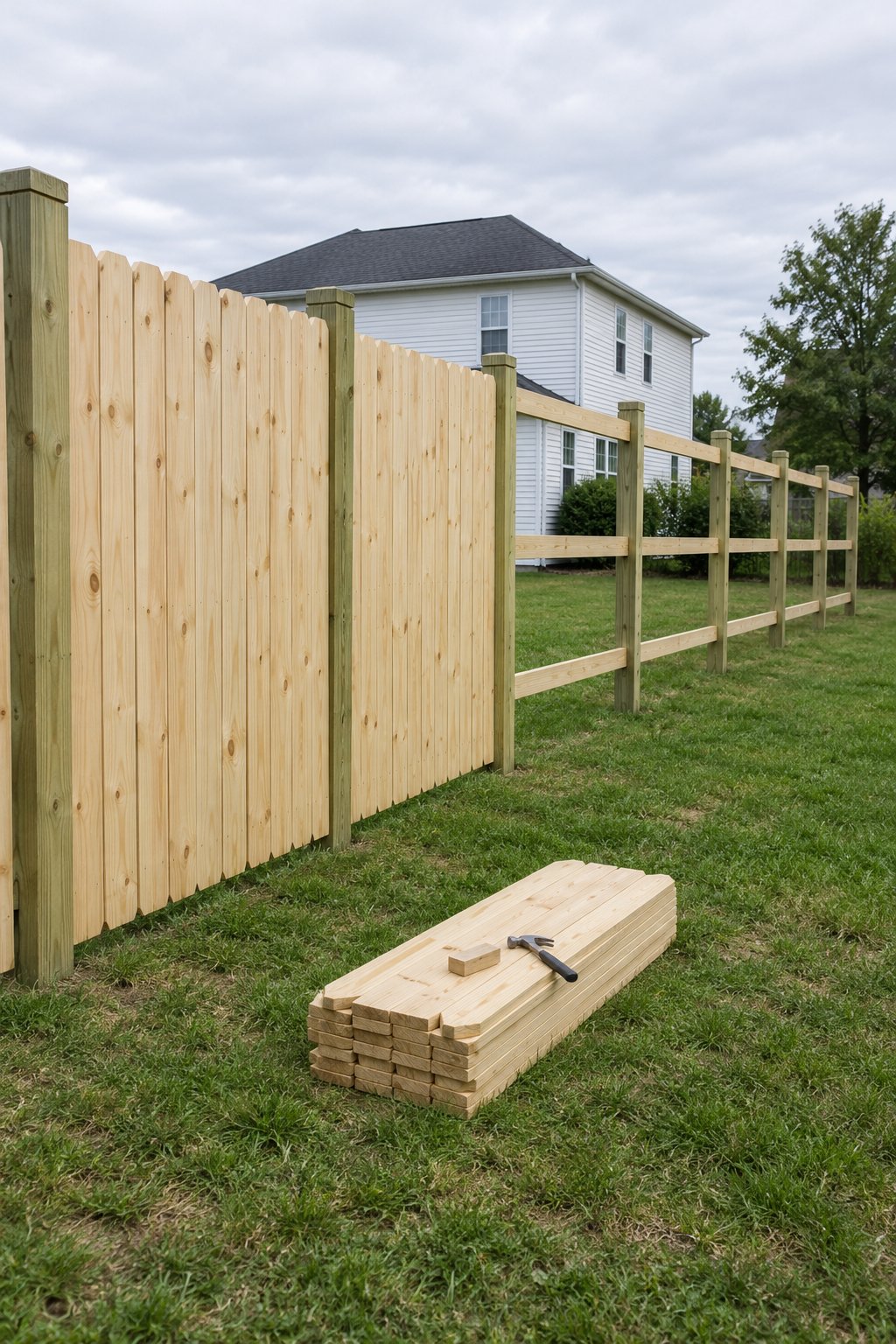
Setting posts straight, plumb and deep is the hardest part of a fence, and the part that decides whether it leans. Some installers will set posts only, leaving you rails and pickets.
Labor is often a big part of a pro quote, so splitting the job can cut the bill.
16. Split a Shared Fence With the Neighbor
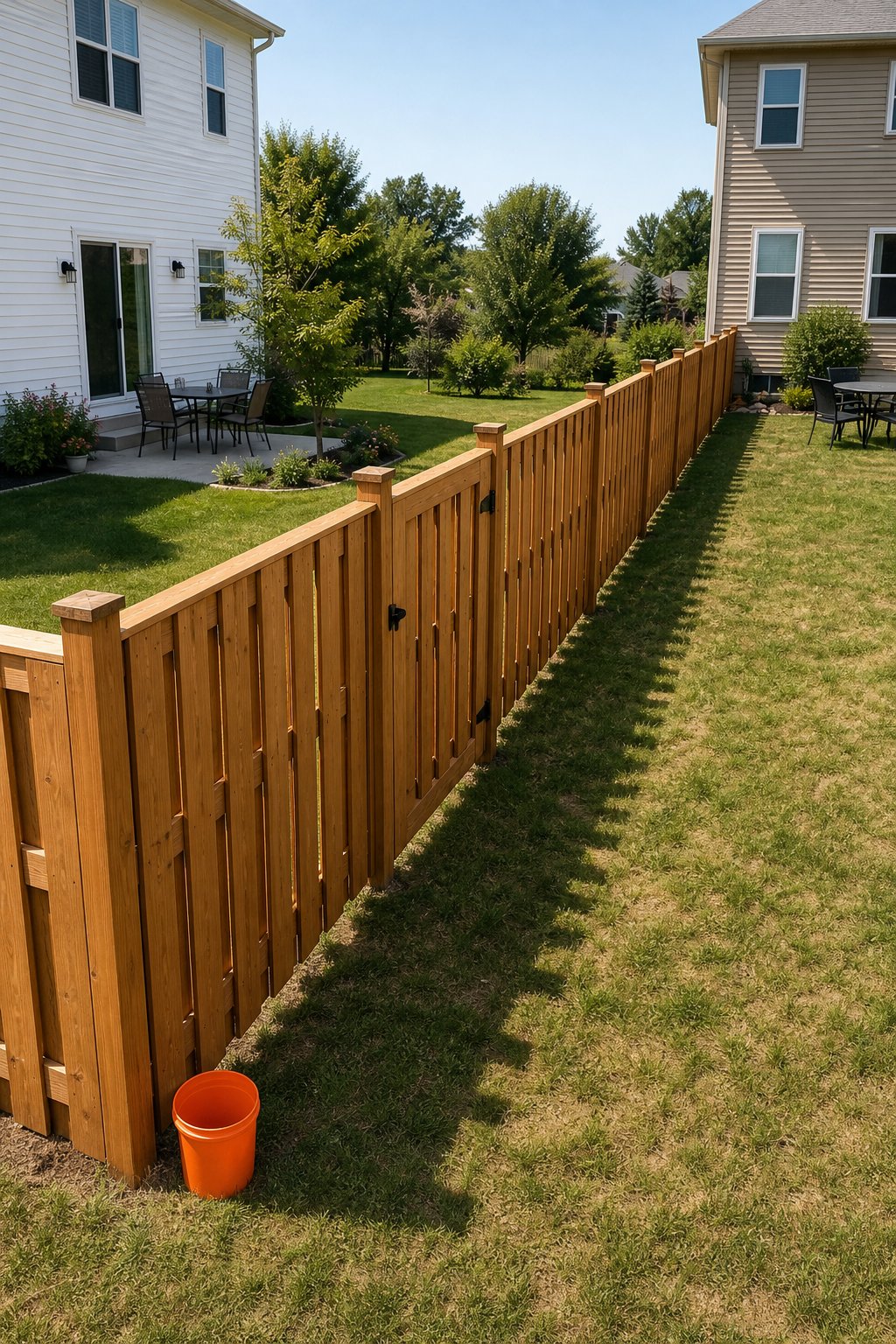
A fence on the property line serves both yards, so sharing it can halve the bill. A shadowbox style with pickets on both sides of the rails looks finished from either side.
Agree on the line, the height, the style and the upkeep in writing first.
Privacy Fence Numbers on One Page
Every idea above rests on a few figures.
Your town’s code and HOA rules come first, so check them before you buy anything.
| What | The figure | Why |
|---|---|---|
| Height in back and side yards | Commonly 6 feet | The usual cap, but some towns allow more or less |
| Height in front yards | Commonly 3 to 4 feet | Lower near driveways and corners for sight lines |
| Calling 811 | A few business days before digging | Free, and the marks come before the post holes |
| Post depth | About a third of the post, or below frost line | Whichever is deeper, unless code says more |
| Post spacing | About 8 feet | Matches stock rail lengths, so no waste |
| Green Giant arborvitae | About 2 to 4 feet a year | Fast, but still several years to a full screen |
Six Privacy Fence Mistakes That Cost More Later
Planting running bamboo as a hedge
Do thisRunning bamboo spreads by underground rhizomes into neighboring yards and is invasive in parts of the US. Choose a shrub, or a clumping type in a container.
Choosing privet because it is cheap
Do thisChinese privet is one of the worst invasive shrubs in the Southeast and spreads by seed and roots. Check your state’s invasive list and pick a native shrub.
A Leyland row a foot off the line
Do thisLeyland cypress can reach 60 to 70 feet tall and 12 to 20 feet wide. Plant anything big by its mature width, not its nursery size.
Guessing where the property line is
Do thisFind the survey stakes or plat, or hire a surveyor, before the first post. A fence on the wrong side of the line can have to come down.
Digging before the 811 marks
Do thisCall 811 a few business days ahead and wait for the marks. Hand-dig near any flagged line.
Adding height without checking the rule
Do thisToppers, rolls and extensions usually count toward the height limit. Ask your building department before you raise a fence.
Count the Posts First: How to Work Out What a Fence Run Needs
Before you price a fence, count its parts, because the post count drives most of the work.
For posts on 8-foot centers, divide the run by 8 and add one. A 48-foot run needs 7 posts, plus extras at corners and gates.
Each post is a hole to dig and set, so a shorter run saves more labor than cheaper boards do.
A six-foot fence usually takes three rails per bay. A nominal 6-inch picket is about 5.5 inches wide, so an 8-foot bay of butted pickets takes about 18, and board-on-board takes several more.
I would write those three numbers down before I ask for a single quote.
Start with the one view you want gone, then pick the cheapest idea that blocks it from your seat. Often that is two sections of fence or slats in an old chain-link, not a whole new line.
For screens that sit right beside the chairs, my patio privacy guide picks up where this one stops.
Frequently Asked Questions
What is the cheapest way to make a privacy fence?
Adding slats or reed rolls to a chain-link fence you already have is usually cheapest. For a new fence, plain dog-ear pickets on a short run where the view comes in cost far less than a full line.
How tall can a privacy fence be?
Many towns allow about 6 feet in back and side yards and 3 to 4 feet in front, but it varies. Check your local code and any HOA rules before you build.
How deep should fence posts go?
A common rule of thumb is about a third of the post’s length, or below the frost line in cold areas, whichever is deeper. Your local code may require more, and gate posts need extra.
What is the fastest-growing hedge for privacy?
‘Green Giant’ arborvitae is among the fastest, about 2 to 4 feet a year in NC State trials, but it gets very tall and wide. Avoid privet and running bamboo, which are invasive in many areas.
Can I use pallets for a fence?
Yes, for a short screen, if every pallet is stamped HT for heat treated. Skip pallets marked MB and any with no stamp.
You Might Also Like

Save This For Later
Loved privacy fence ideas on a budget? Save this pin to your Pinterest board now so you can find it again anytime you need the inspiration.