Mulch Landscaping Ideas: 15 Ways to Use Mulch Beyond a Ring Around a Tree

Mulch landscaping ideas usually stop at a ring around a tree, which wastes the cheapest design material in the yard.
These 15 use chips, straw and leaves as floors, paths, shapes and edges.
Each one says how deep to spread it and what it takes.
What do you want the mulch to do?
1. Wood Chip Aisles Between Raised Beds, Wide Enough for a Wheelbarrow
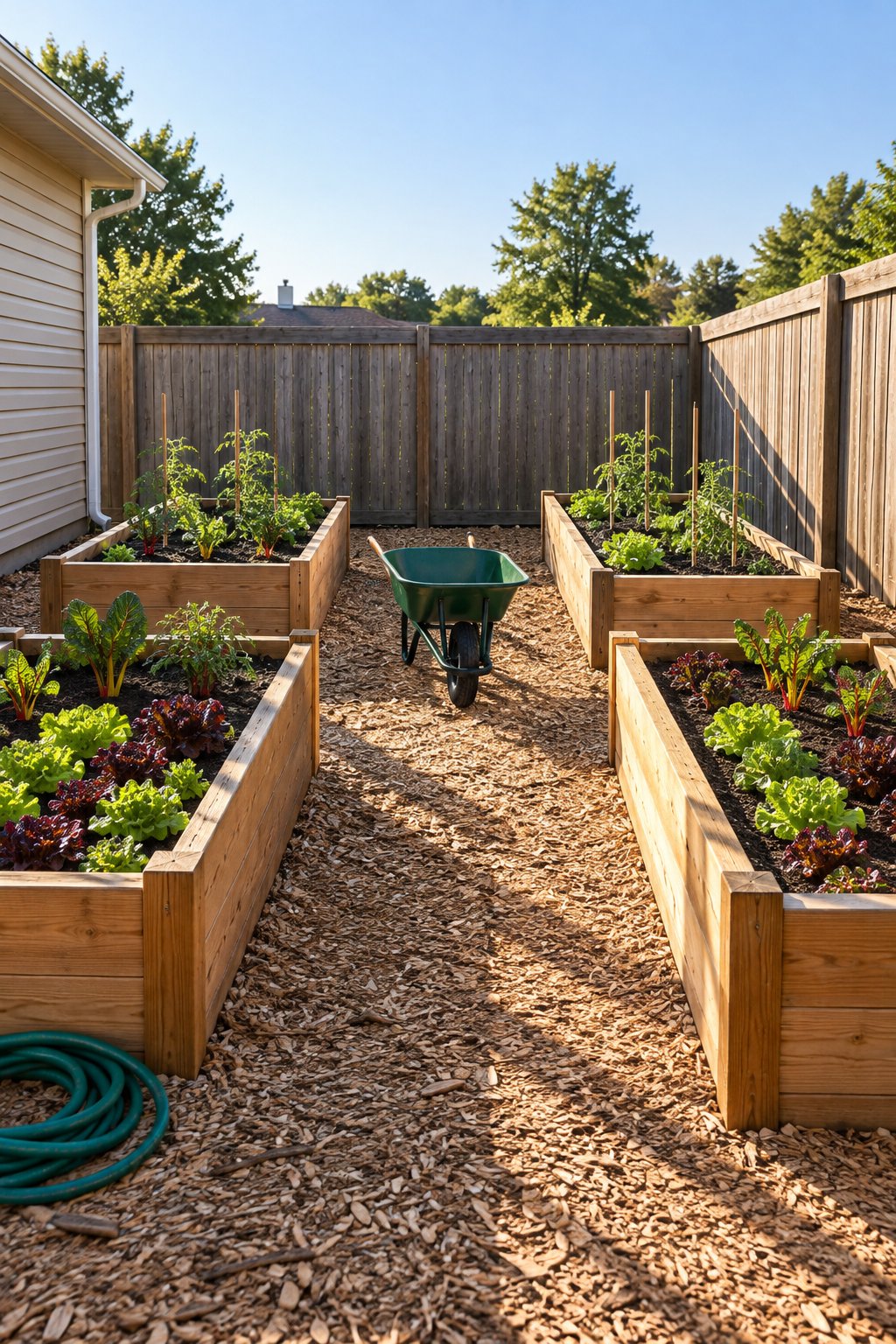
Wood chip landscaping ideas start where you walk most, and the aisles of a vegetable garden take the most traffic. Spread chips 3 to 4 inches deep in aisles about 3 feet wide.
Soft, dry footing between the beds is what makes you go out after the rain.
2. Flat Stepping Stones Set Into a Deep Mulched Border
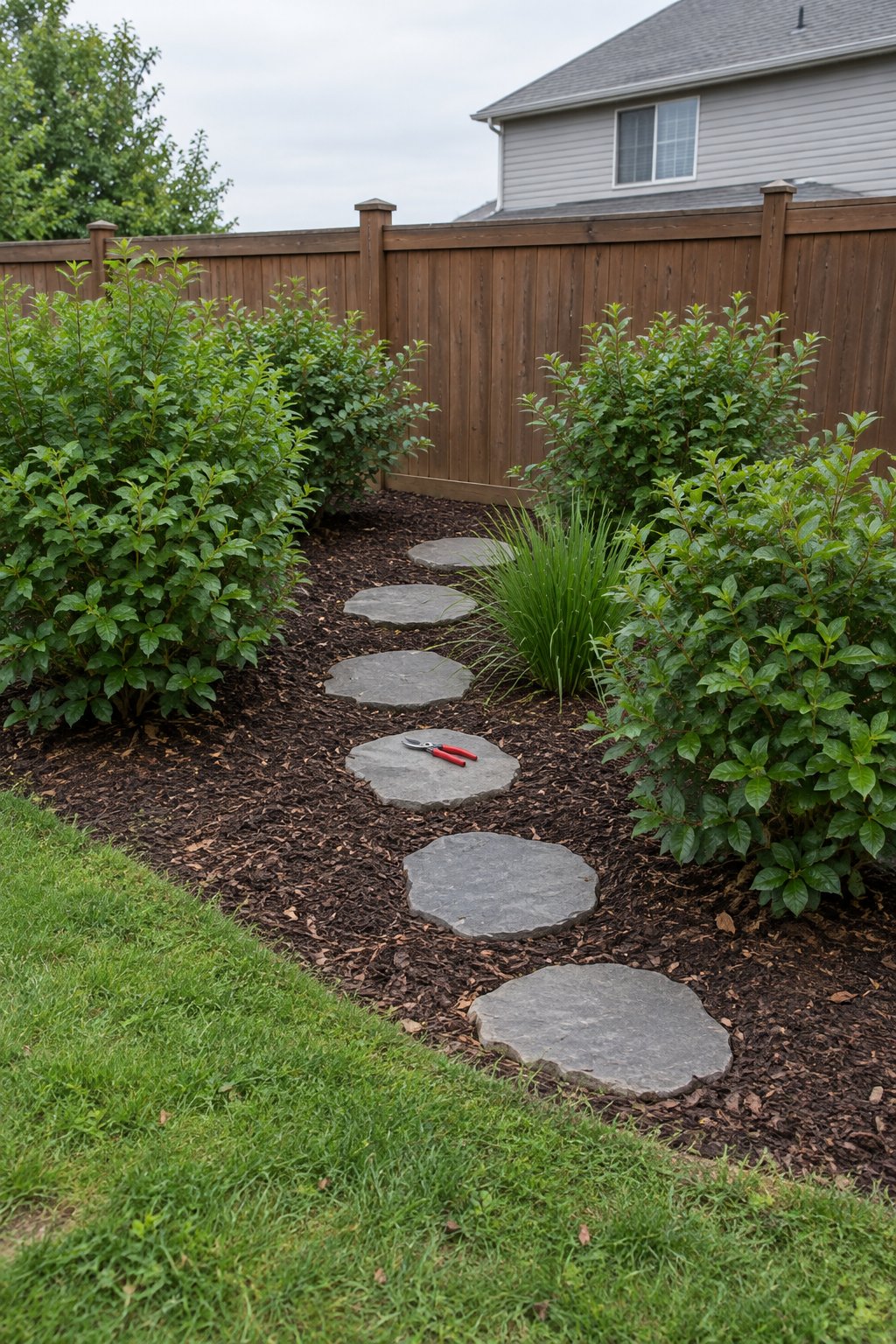
A border deeper than your arm’s reach needs a way in, or the back never gets pruned. Set flat stones one stride apart and bring the mulch up level with their tops.
The stones read as a path only when they sit flush, not perched on top.
3. A Play Area Under the Swing Set, Filled Deep With Wood Chips

Under home play equipment, the CPSC’s guidance is at least 9 inches of wood chips or mulch, reaching at least 6 feet out from the frame and farther in front of and behind swings. Loose fill packs down, so start deeper.
This is the one place where deep mulch is the point, not a mistake.
4. A Two-Chair Sitting Spot on Chips Under a Shade Tree
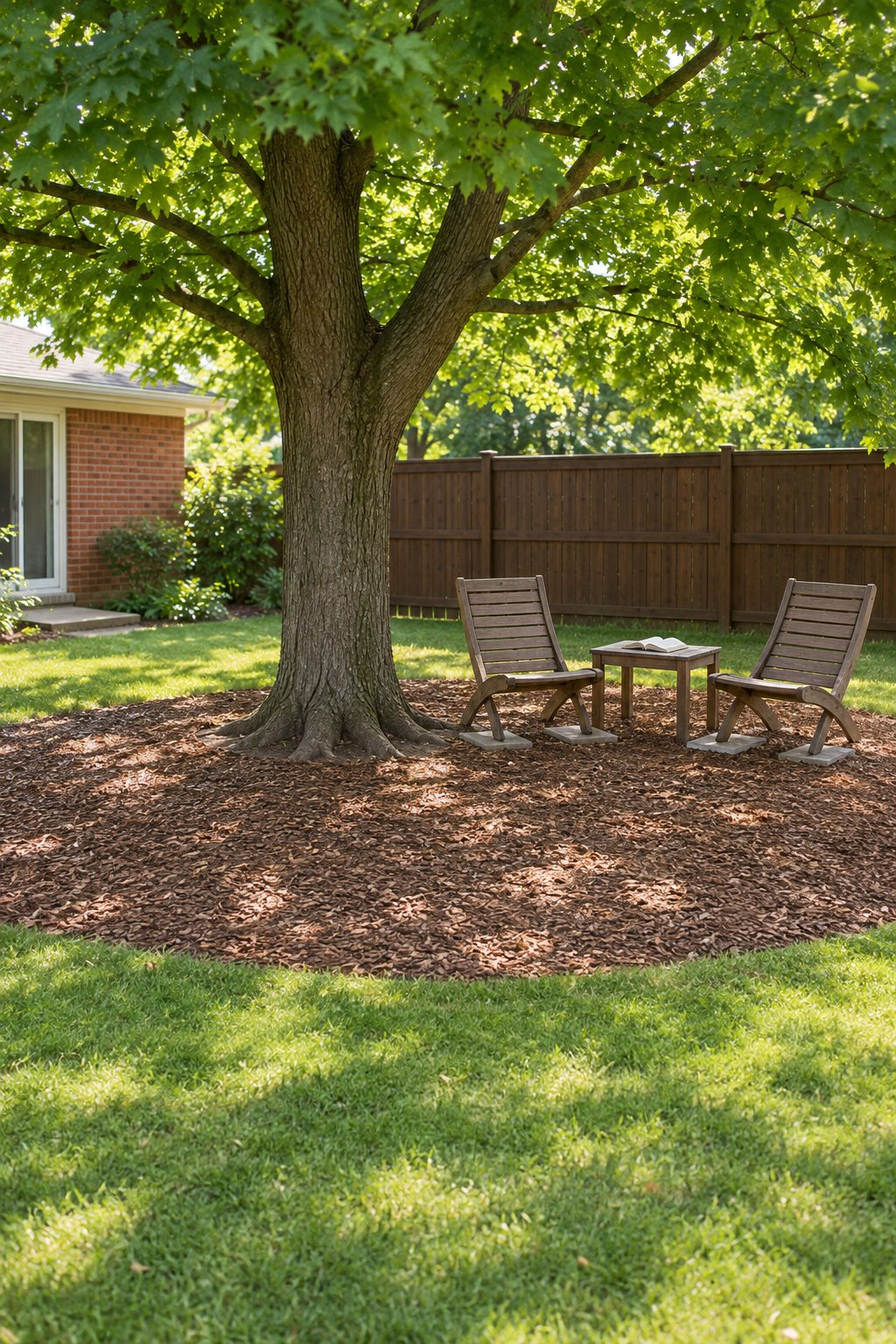
Grass thins under a big tree, so stop fighting it and make the shade a place to sit. Spread a wide, flat circle of shredded bark 2 to 3 inches deep and set two chairs on it.
Never pile soil or mulch against the trunk, and leave the flare where it meets the ground showing.
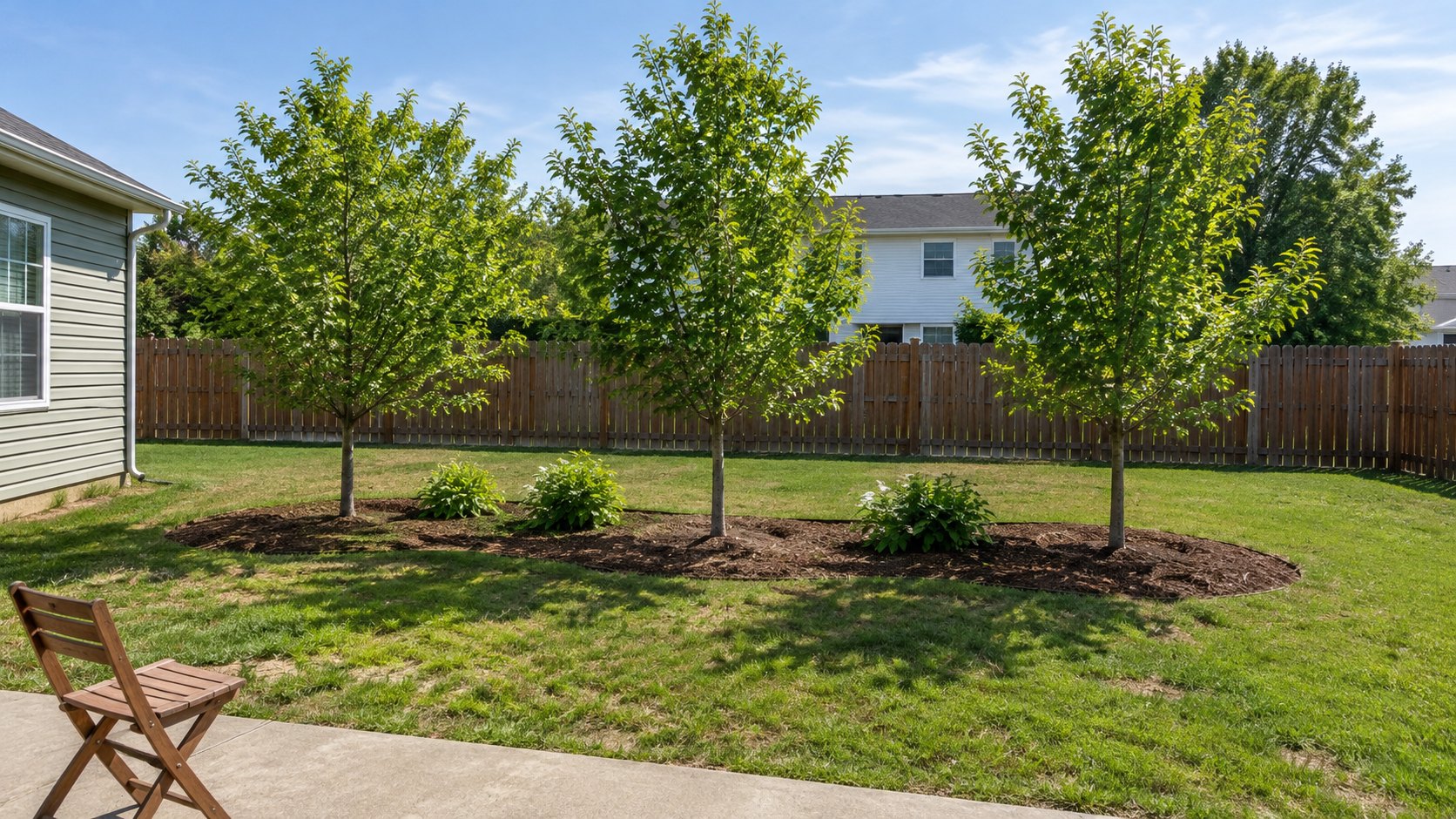
5. Join Three Lawn Trees Into One Mulched Island

Three trees with three rings make the mower weave around each one. Draw one long, flowing line that takes in all three and mulch everything inside it.
One smooth curve mows in a single pass and reads as a plan from the house.
6. A Kidney-Shaped Island Bed of Catmint, Seen From the Patio

An island bed is seen from every side, so put the tallest plant near its middle and keep it low at the edges. Here, catmint in three drifts circles one small shrub.
Catmint wants full sun and soil that drains, and it flowers from late spring.
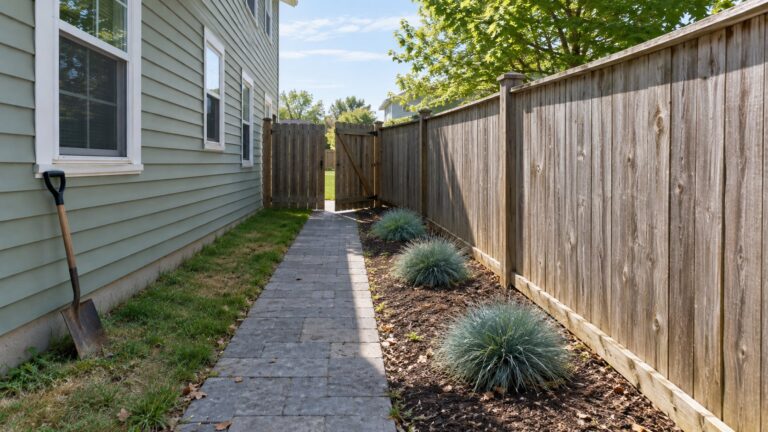
7. A Mulched Strip Along the Fence So the Trimmer Can Rest
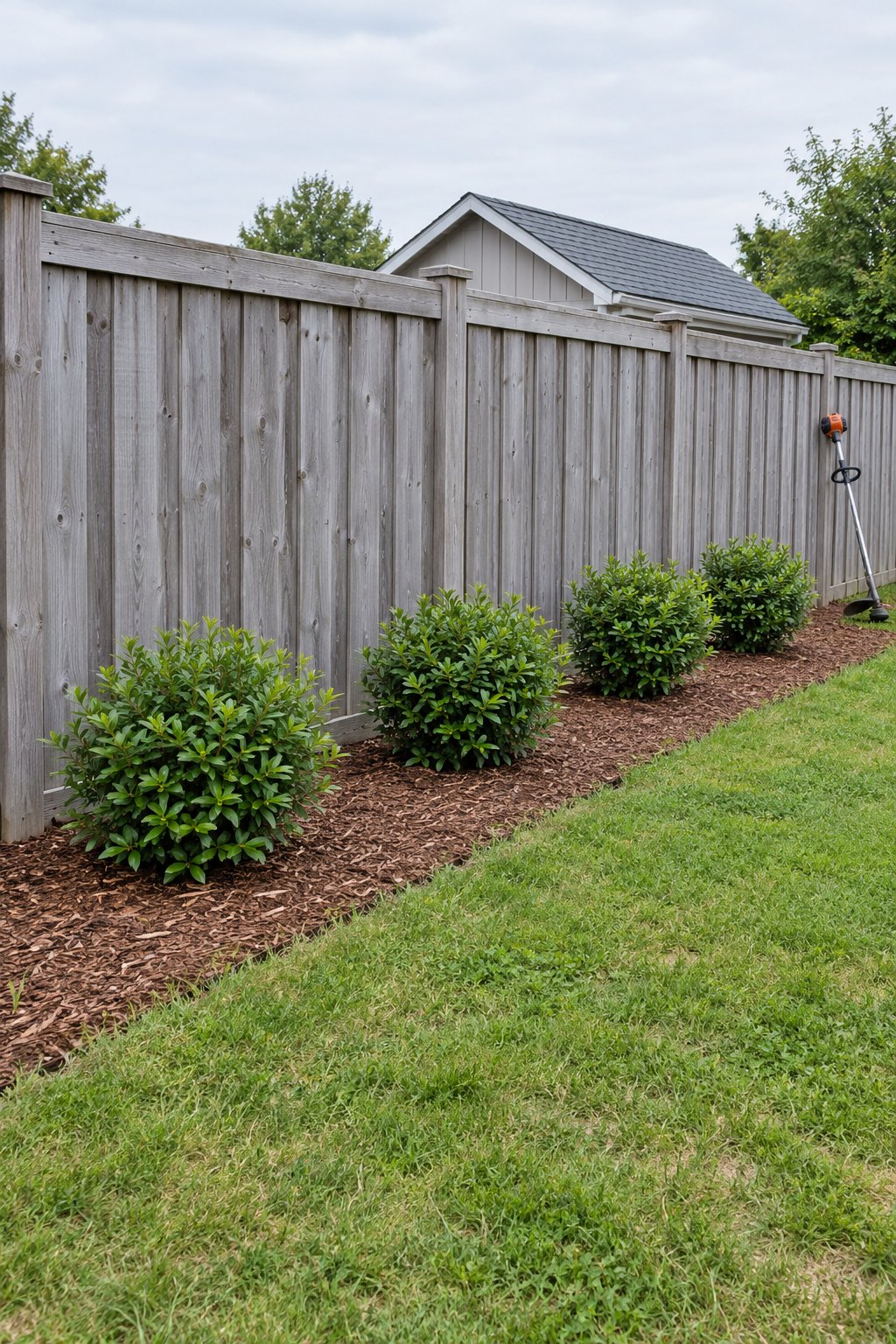
The thin lawn along a fence is the slowest strip of the yard to keep tidy. Replace it with a mulched band about 2 feet wide and a few low shrubs.
A straight band parallel to the fence gives the mower one clean line to run along.
8. A Spade-Cut Edge With the Mulch Sitting Below the Lip

A cut edge looks crisp when the mulch sits about an inch below the lawn, so a thin shadow line shows. Fill it level and the mulch spills onto the grass after one storm.
The shadow line is what makes a plain bed look finished from the street.
9. Pine Straw Down a Slope Under Tall Pines
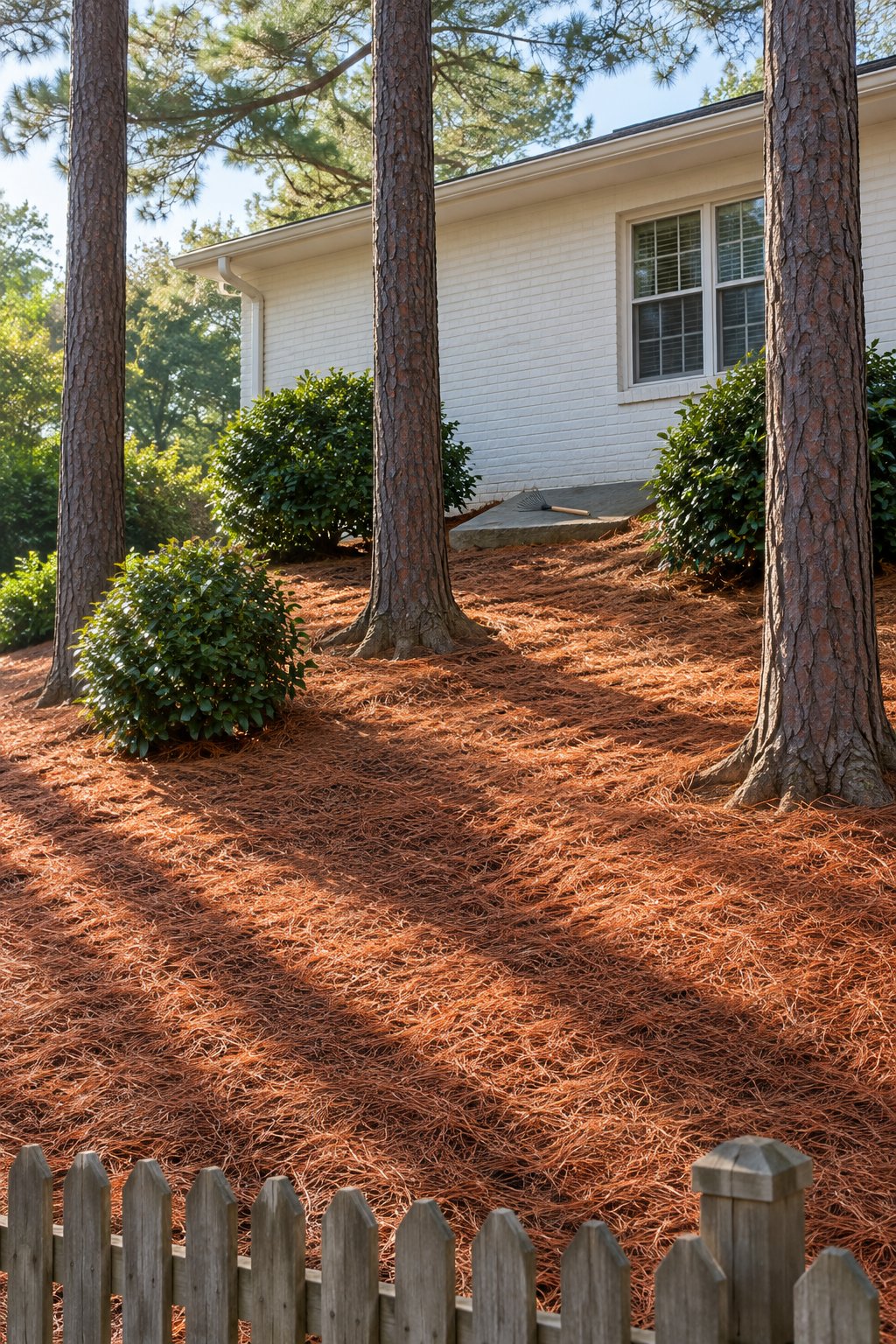
Pine straw landscaping suits a gentle bank under pines, because long needles lie flat and lock together as they settle. Chunky bark tends to float and wash down in a heavy rain.
Spread 4 to 5 inches loose, and it settles to about 2.
10. Shredded Leaves From Last Fall on a Perennial Border

The cheapest mulch falls on your lawn every autumn. Run the mower over the leaves, store them, and spread them 2 to 3 inches deep on the border in spring.
Shredding matters, because whole leaves can mat into a layer that sheds water.
11. Straw Between the Tomato Rows Once the Soil Warms

In a vegetable bed, straw is the mulch that gets raked aside at the end of the season. Wait until the soil has warmed and the plants are growing, then spread it a few inches deep.
Ask for straw, not hay, which usually carries seeds.
12. Mulch Color Picked to Suit the House

Mulch is the ground color of a bed, so pick it against the siding. A dark brown sets off green shrubs and white trim on a pale house, and plain undyed bark sits quietly against red brick.
Dyed mulch fades, and the colorants used are mostly iron oxide or carbon.
13. A Wood Chip Run Along the Fence Where the Dog Already Wore a Track

A dog that patrols the fence will keep killing the same strip of grass. Give in and spread coarse chips about 3 feet wide over the worn track.
Work with the path the dog already chose, not the one you wish it took.
14. A Chip Floor for the Work Corner by the Shed and Compost Bins

The corner behind the shed turns to mud first, because it is where the wheelbarrow goes every day. Lay chips over cardboard as a floor for the bins and the potting bench.
A work floor should look tidy, but it mainly has to keep your boots clean.
15. Creeping Phlox Planted Into Fresh Mulch Until It Covers the Bank

Here mulch is the stand-in for a groundcover that has not filled in yet. Creeping phlox wants full sun and soil that drains, and it flowers in spring.
Space the young plants out and let the mulch hold the bank until they knit together.
Mulch Numbers on One Page
Every idea above rests on a few figures.
Measure your own beds before you order, and round up a little.
| What | The figure | Why |
|---|---|---|
| Depth in beds | 2 to 3 inches | Enough to slow weeds and hold moisture without smothering roots |
| Depth on chip paths | 3 to 4 inches | Feet and wheels push it thin |
| Under home play equipment | At least 9 inches of chips, at least 6 feet around | CPSC guidance; start deeper because it packs down |
| Gap at trunks and stems | A few inches, never piled up | Damp mulch against bark invites decay |
| One cubic yard | 27 cubic feet: about 162 sq ft at 2 inches, 108 at 3 | Length x width x depth in feet, divided by 27 |
| A 2 cubic foot bag | About 12 sq ft at 2 inches | Handy for a single small bed |
| Fresh pine straw | 4 to 5 inches settles to about 2 | Spread it thicker than it looks |
| Topping up | Check each spring, add only enough to get back to 2 to 3 inches | Old mulch rots down; new layers on top build up |
Five Mulch Mistakes That Undo the Design
A mulch volcano piled up a trunk
Do thisSpread it flat, 2 to 3 inches deep, and pull it back a few inches so the trunk flare shows.
Adding a fresh layer every spring
Do thisCheck the depth first and add only enough to bring it back to 2 to 3 inches. Rake the old layer to fluff it if it has crusted.
Landscape fabric under bark or chips
Do thisSkip it in planted beds. The mulch rots into a thin layer on top of the fabric and weeds root right into it.
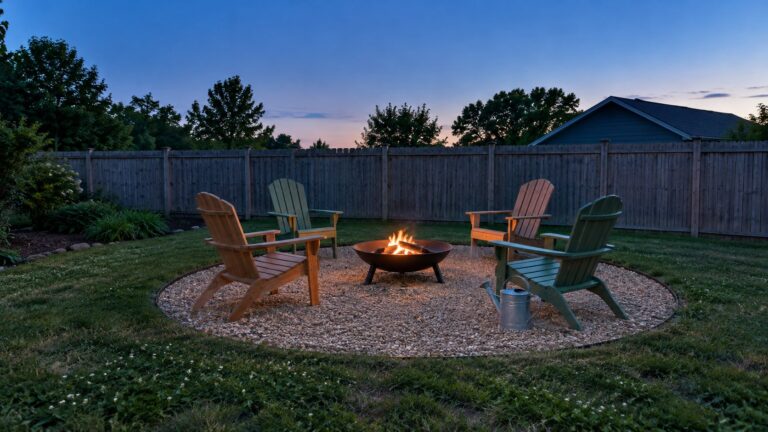
Bark mulch right up to a fire pit
Do thisKeep gravel or pavers around the pit. In wildfire country, Firewise guidance is noncombustible ground within 5 feet of the house too.
Rubber mulch in a planting bed
Do thisIt never feeds the soil and is hard to get out later, and extension sources raise concerns about zinc and flammability. Use wood or leaves in beds.
Do Wood Chips Steal Nitrogen From Your Plants? Only Where You Dig Them In
The worry is that wood chips rob nearby plants of nitrogen as they rot. The research summarized by university extension says that happens where fresh wood is mixed into the soil, not where it sits on top.
On the surface, chips are a mulch; dug into a planting hole, they become a problem.
Any tie-up on the surface stays in the thin zone where the chips touch the soil, below the reach of most roots. Over time, the chips break down and add organic matter.
That is why every idea above spreads mulch on the ground and never mixes it in. I would keep fresh chips out of planting holes and vegetable beds you turn each year, and use them freely everywhere else.
Pick the one spot in your yard that annoys you most, the muddy shed corner or the strip the trimmer fights, and try mulch there first. A load of chips is cheap to test and easy to rake up.
Spread it flat, keep it off trunks and stems, and top it up only when it thins.
Frequently Asked Questions
How much mulch do I need?
Multiply the length and width in feet by the depth in feet, then divide by 27 for cubic yards. A cubic yard covers about 162 square feet at 2 inches or 108 at 3.
Should I remove old mulch before adding new?
Usually not. Check the depth, rake the old layer loose and add only enough to get back to 2 to 3 inches.
Is dyed mulch a bad idea?
The colorants used are mostly iron oxide or carbon. The bigger question is the wood underneath, so ask whether it is certified free of old treated lumber, and expect the color to fade.
When is the best time to spread mulch?
Spring, once the soil has warmed and the beds are weeded, is the usual time. Around warm-season vegetables, wait until the soil is warm and the plants are growing.
Can I put wood chips right up against the house?
Leave a gap of a few inches at the siding. In wildfire country, Firewise guidance is gravel or other noncombustible ground in the first 5 feet.
You Might Also Like


Save This For Later
Loved mulch landscaping ideas? Save this pin to your Pinterest board now so you can find it again anytime you need the inspiration.