Perennial Garden Ideas: 16 Low-Maintenance Plans for Sun and Shade
Perennial garden ideas work best as plans: three to five plants chosen for one spot, spaced for their full size.
These 16 cover sun, shade, clay, dry ground, a fence corner and pots for renters.
Perennials are slow the first year, so each plan says what to expect.
What does your spot look like?
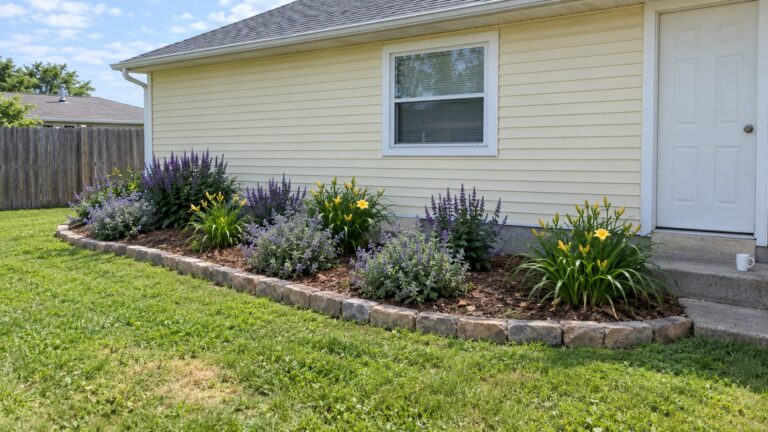
1. Along a Sunny Wood Fence: A First Perennial Border of Baptisia, Coneflower and Catmint
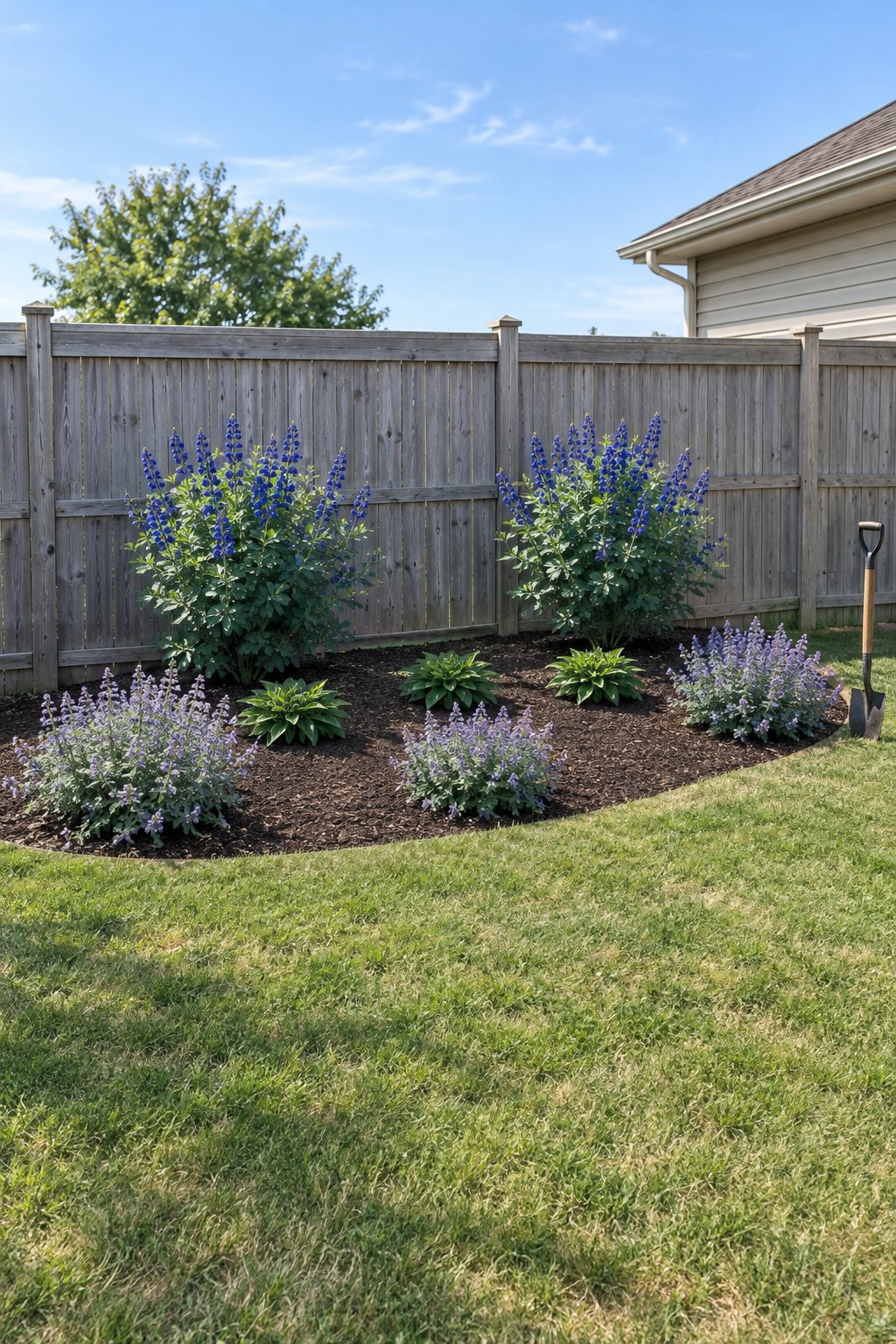
Make a perennial border 12 feet long and 5 feet deep, with two baptisia at the back, three purple coneflower in the middle and three catmint along the front. Set each plant apart by its mature width: 3 to 4 feet for baptisia, about 2 feet for coneflower and 2 to 3 feet for catmint.
Baptisia and catmint carry late spring in many climates and the coneflower takes over in summer, but baptisia needs 2 to 3 years to fill out and does not like being moved.
2. Cottage Border by the Patio: Peony, Bearded Iris, Columbine and Hardy Geranium
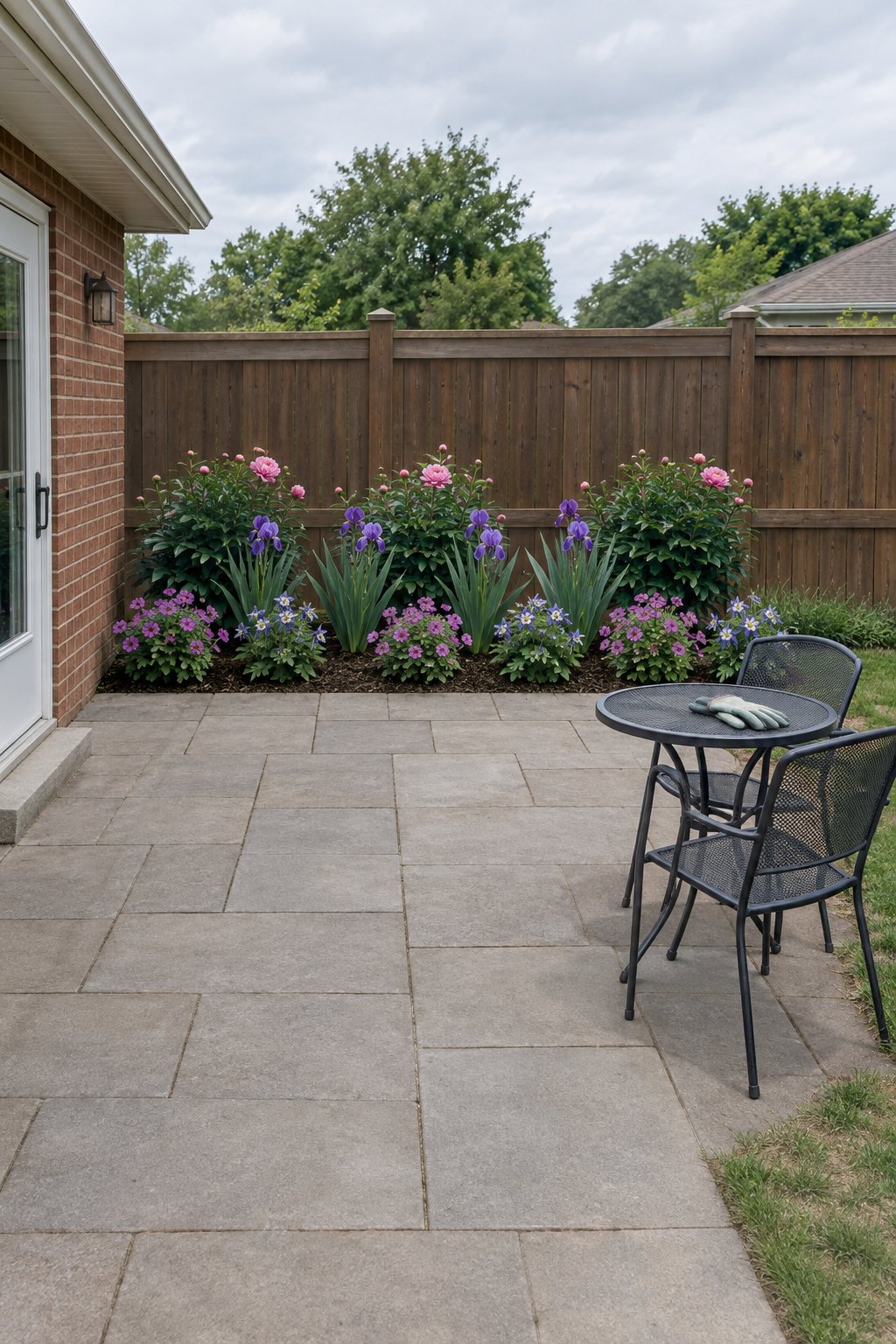
Run a bed 10 feet long and 3 feet deep along the patio edge, with peony at the back, bearded iris in the middle and columbine and hardy geranium at the front. All four flower in late spring to early summer in many climates.
Plant peony eyes 1 to 2 inches under the soil and set iris rhizome tops at the surface, because planting deeper is a common reason peony skips flowers and iris rots.
3. A Hot Driveway Strip: Sedum, Yarrow and Purple Coneflower With a Gravel Edge
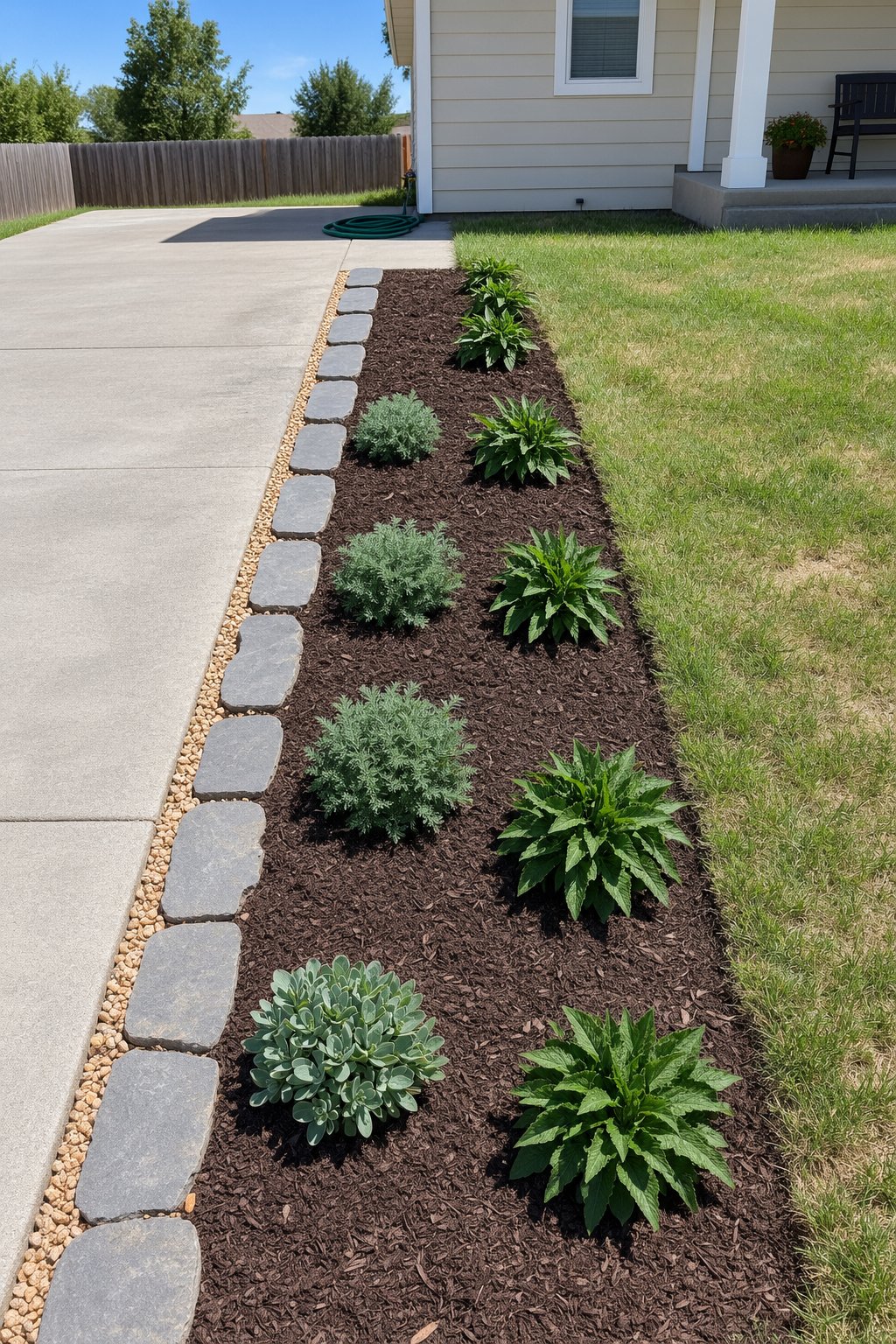
Fill a strip 20 feet long and 3 feet deep beside the pavement with sedum at the front, yarrow in the middle and coneflower at the back, about 2 feet apart. Heat bounces off a driveway, so pick plants that take full sun and dry spells.
‘Autumn Joy’ sedum and coneflower are drought tolerant once established, which means they still need water through their first season.
4. The Fence Corner: Amsonia, ‘May Night’ Salvia and Daylily in a Wedge
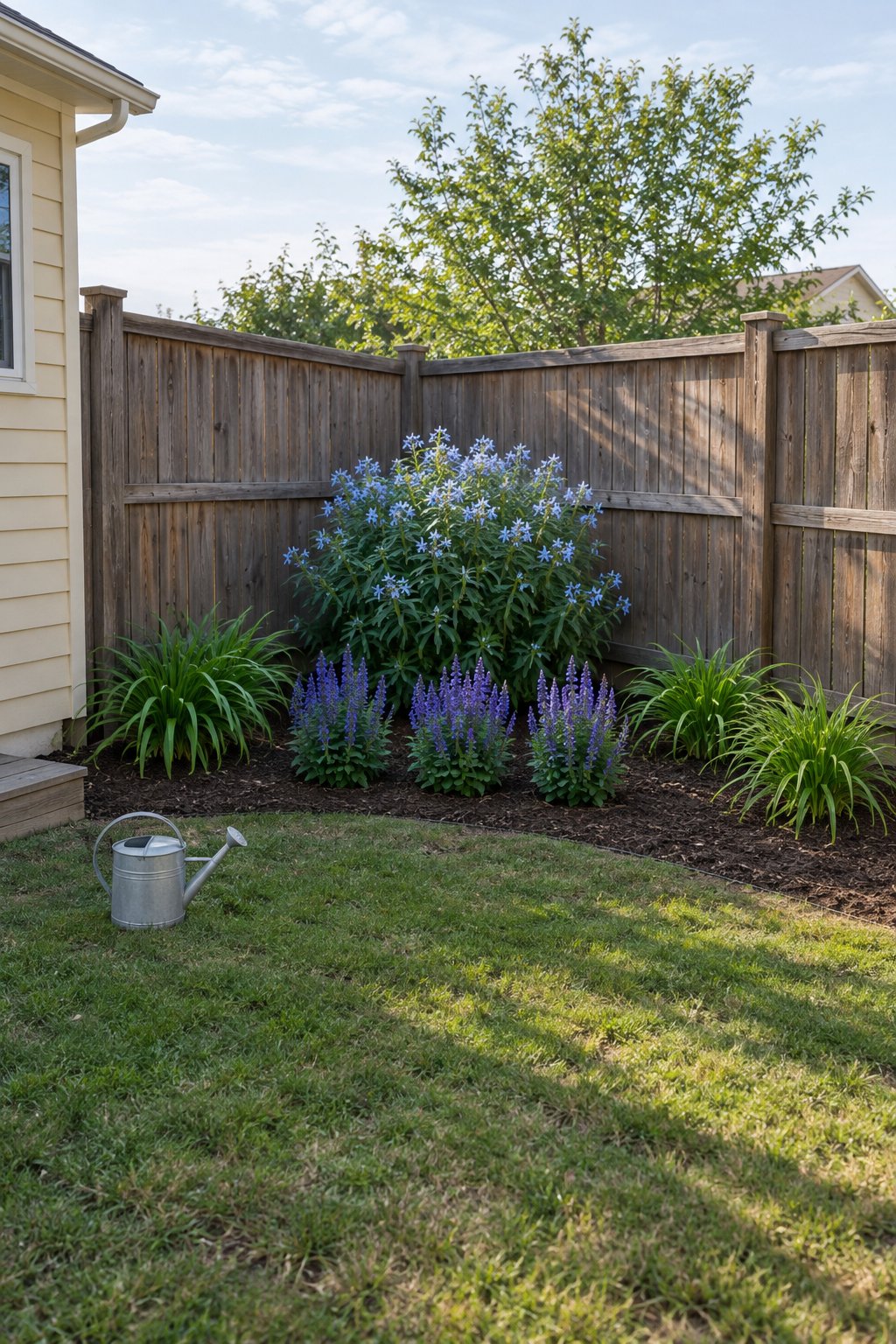
Plant a wedge 8 feet along each fence, with amsonia in the corner, salvia in front of it and daylilies to either side. Amsonia grows about 2 to 3 feet tall and wide and salvia 18 to 24 inches, so the planting steps down toward the lawn.
Amsonia and salvia flower in May and June, daylilies take over in summer, and amsonia turns gold in fall.
5. Late-Season Border: New England Aster, Black-Eyed Susan and Little Bluestem
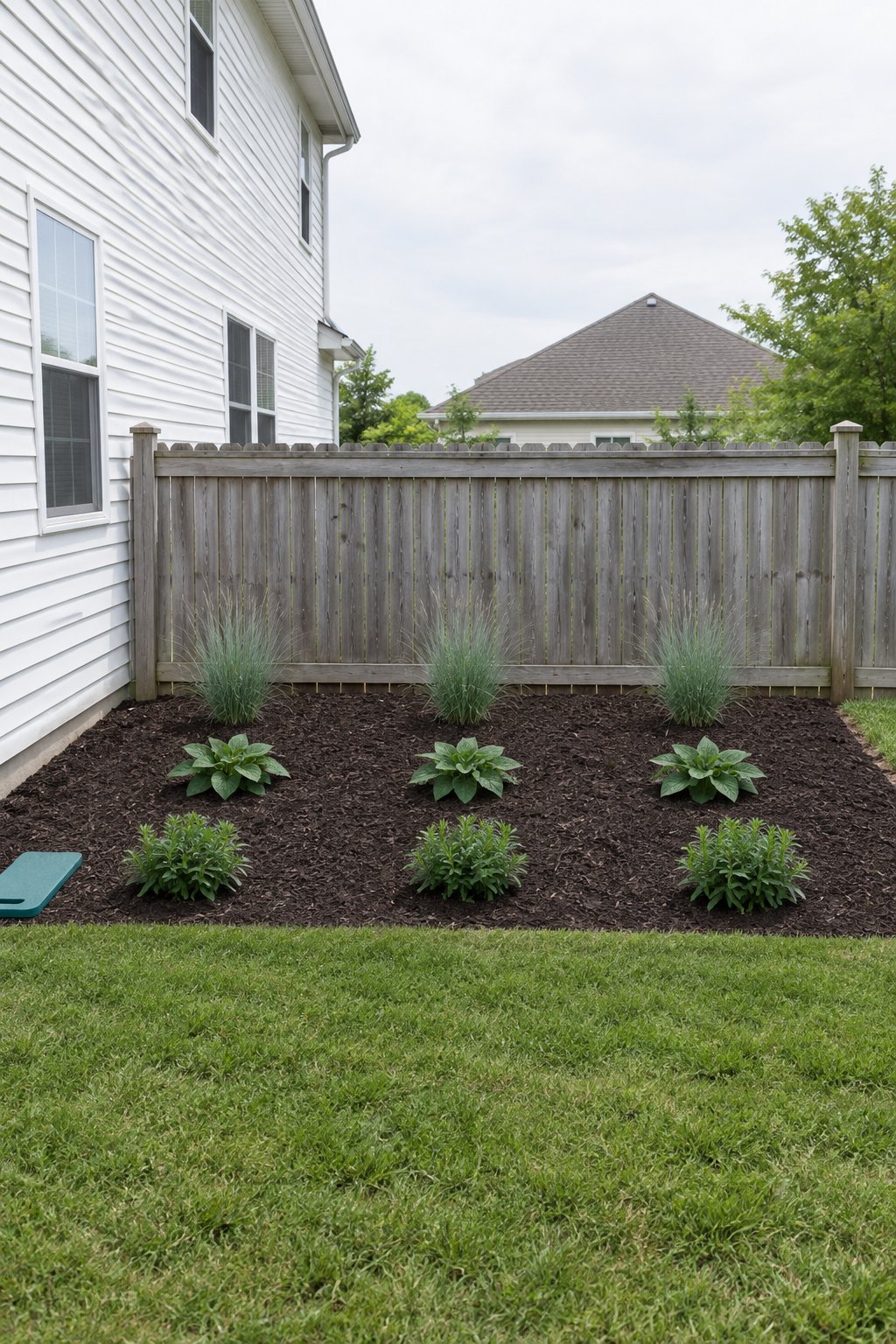
Plant a bed 10 feet long and 4 feet deep for September, with little bluestem at the back, black-eyed Susan in the middle and a compact New England aster such as ‘Purple Dome’ at the front. ‘Purple Dome’ reaches about 18 inches tall and 36 inches wide, so allow 3 feet for each.
In May this bed is only leaves, which is the honest price of a plan built for fall.
6. East Side of the House: Astilbe, Brunnera, Coral Bells and Siberian Iris Out of the Afternoon Sun
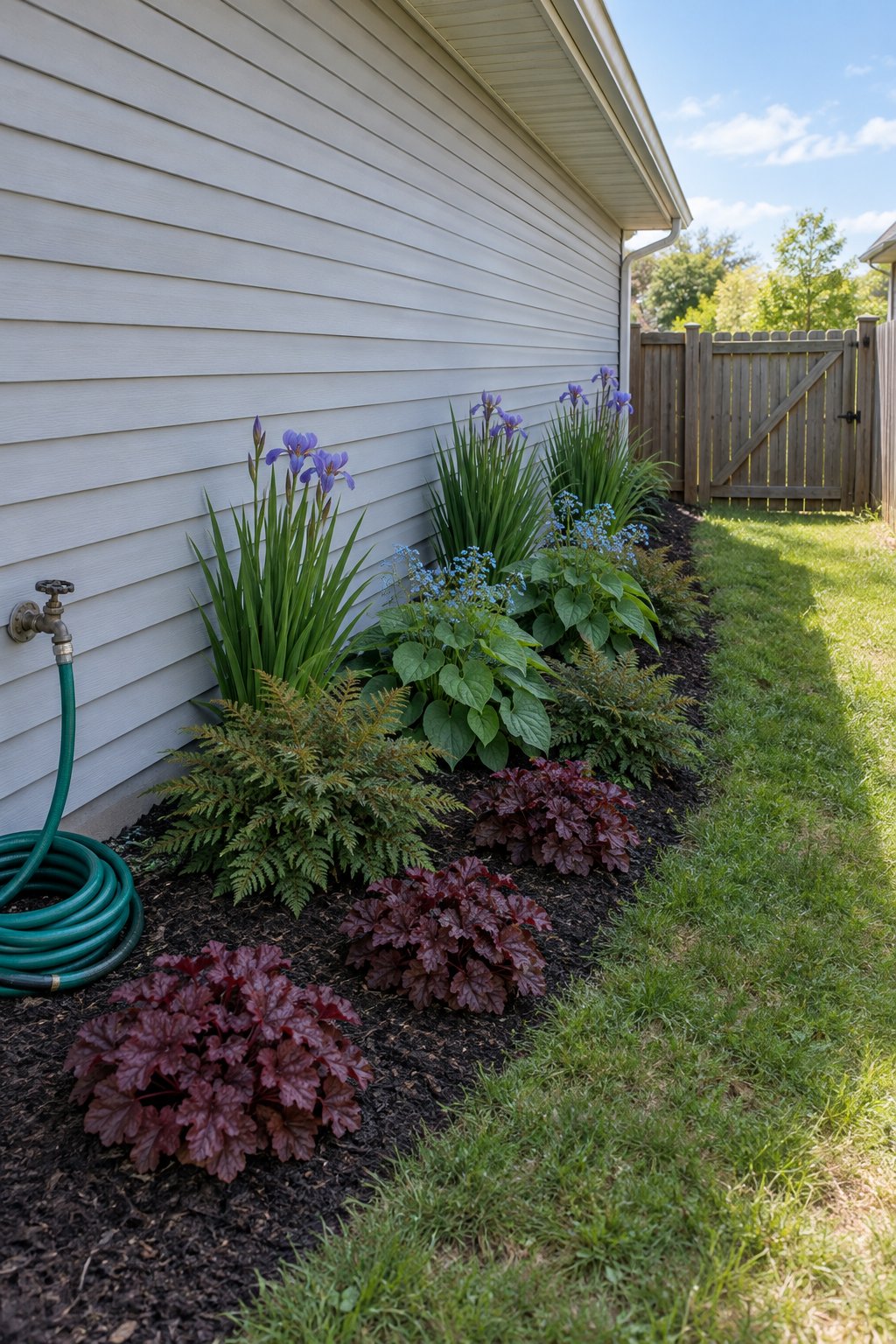
Plant a bed 10 feet long and 3 feet deep along the east wall, where morning sun arrives and the house shades the afternoon. Put Siberian iris at the back, astilbe and brunnera in the middle and coral bells at the front, with each set by its mature width.
All four want soil that stays evenly moist but not soggy, so put this bed within hose reach.
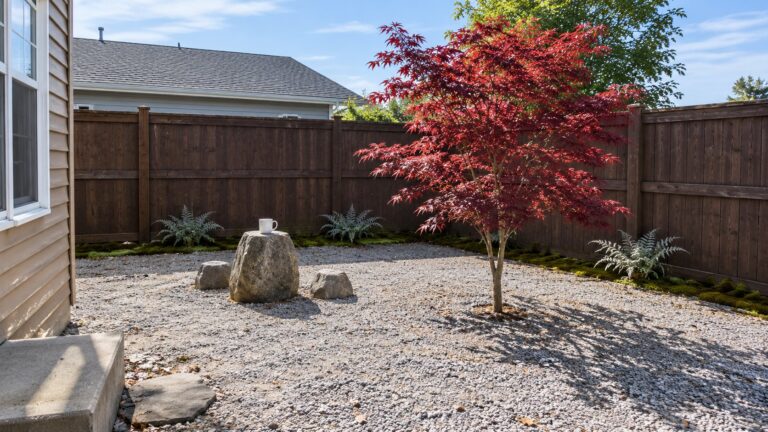
7. Dry Shade Under a Maple: Epimedium, Bigroot Geranium and Hellebore
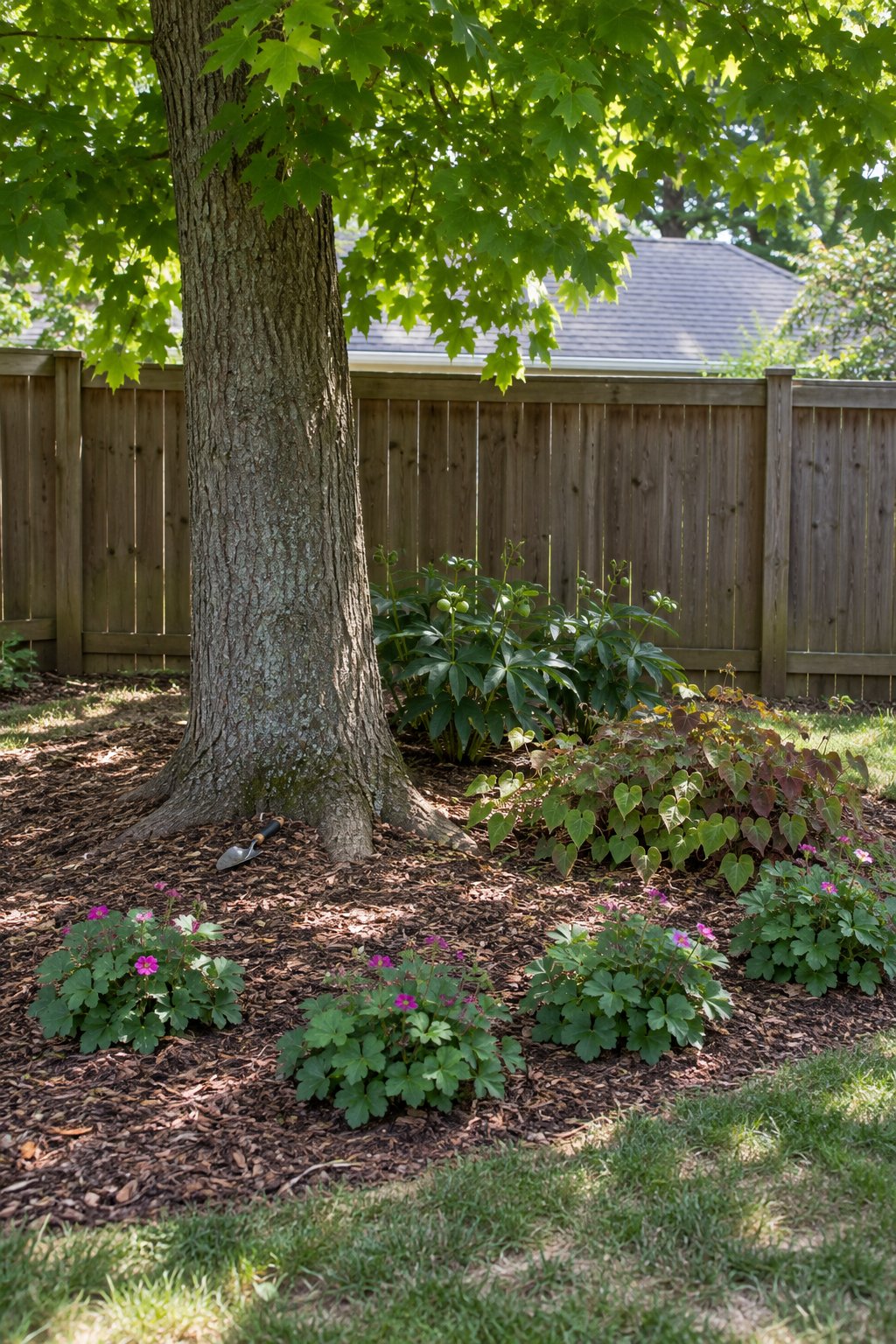
Plant small plants in the gaps between roots under a mature tree, with hellebore at the center, epimedium in a drift beside it and bigroot geranium along the edge. Dig small holes by hand and water through the first dry spells, because tree roots take the available moisture.
Hellebore keeps its leaves through summer, epimedium forms a slow weed-smothering clump, and bigroot geranium can self-seed.
8. North Wall Shade: Hosta, Painted Fern, Bleeding Heart and Foamflower
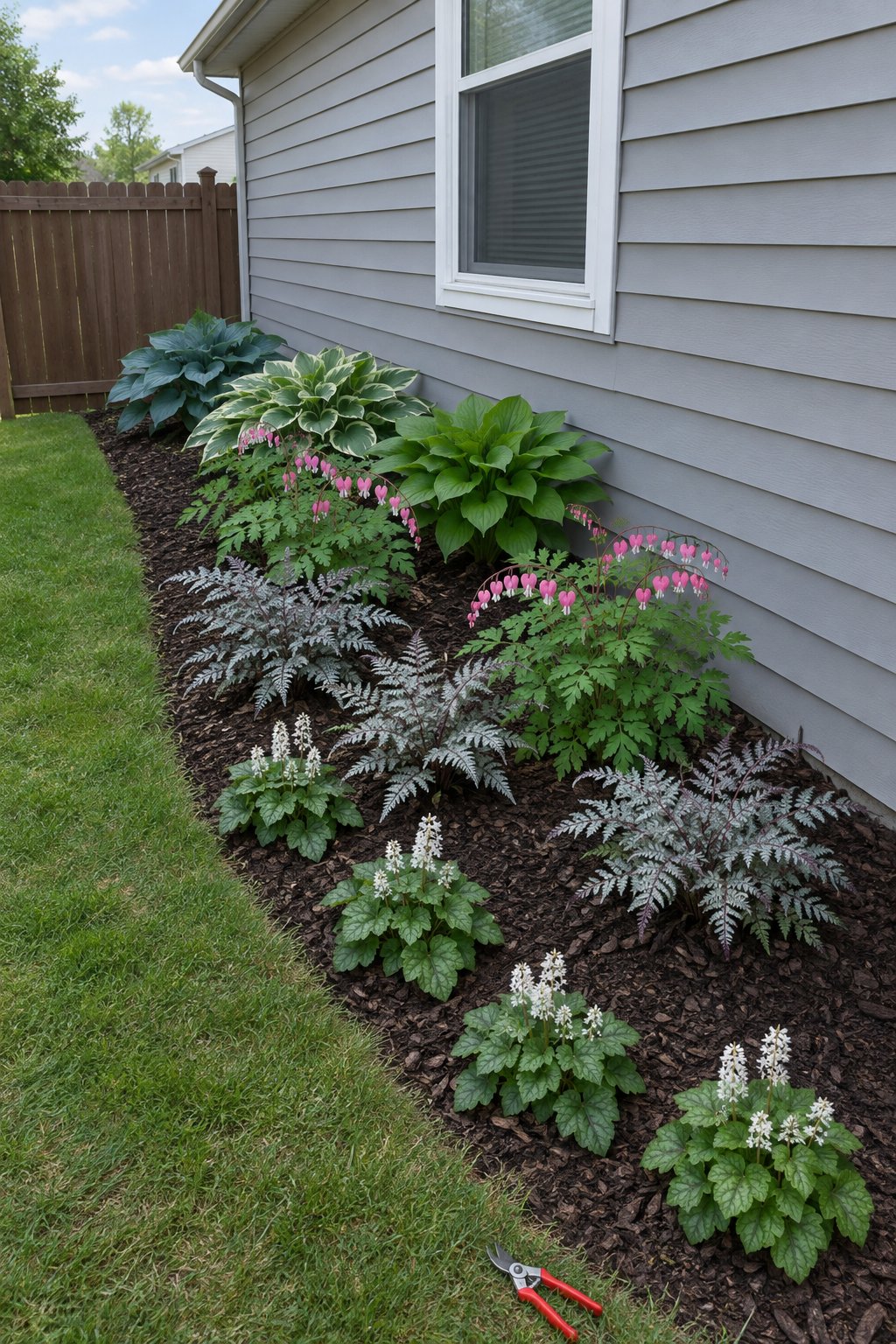
Plant a bed 12 feet long and 4 feet deep along a north wall with hosta at the back, bleeding heart and painted fern in the middle and foamflower at the front. Hosta takes full shade but does best in light shade, and the fern wants moist, well-drained soil.
Bleeding heart often yellows and disappears by midsummer, so I’d plant the hosta and fern beside it to cover the gap.
9. Heavy Clay: Siberian Iris, Daylily and Black-Eyed Susan in a Sunny Bed
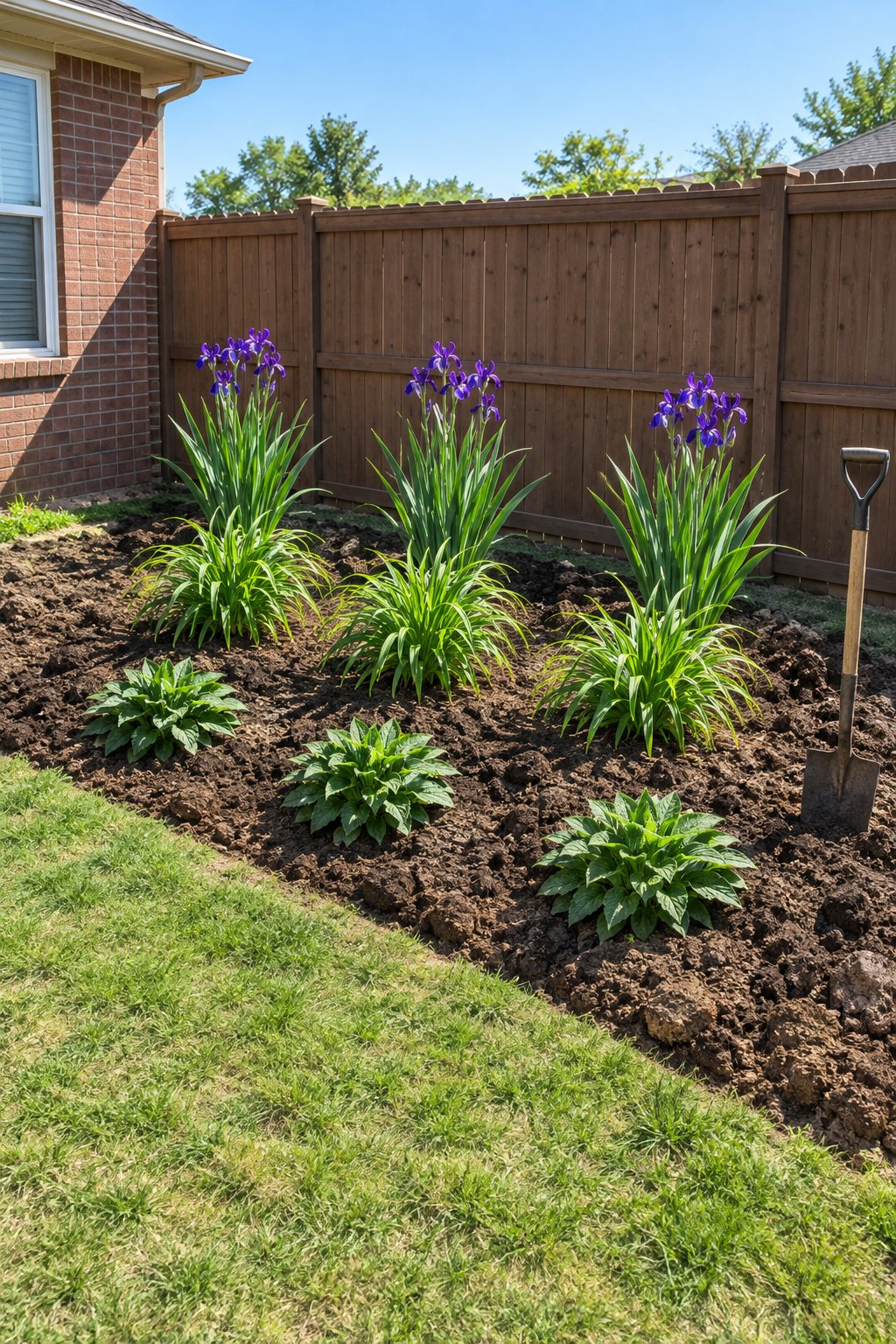
Plant a bed 10 feet long and 4 feet deep in clay, with Siberian iris at the back, daylily in the middle and black-eyed Susan at the front. All three are widely grown in clay as long as the bed drains, and Siberian iris also takes wet soil.
If water stands in the bed after rain, pick a drier spot, because daylily survives clay but not waterlogged ground.
10. Spreaders in a Bed of Their Own: Bee Balm, Obedient Plant and Yarrow Behind a Firm Edge

Give the pushy perennials their own bed 10 feet long and 6 feet deep, with a mown path on one side and a steel or stone edge on the other. Bee balm and obedient plant both spread by underground runners, and yarrow can spread too.
Bee balm needs dividing every 2 to 4 years, and dry soil keeps it somewhat in check.
11. A Bed That Looks Full in Year One: Hardy Geranium, Salvia and Coneflower With Zinnias in the Gaps
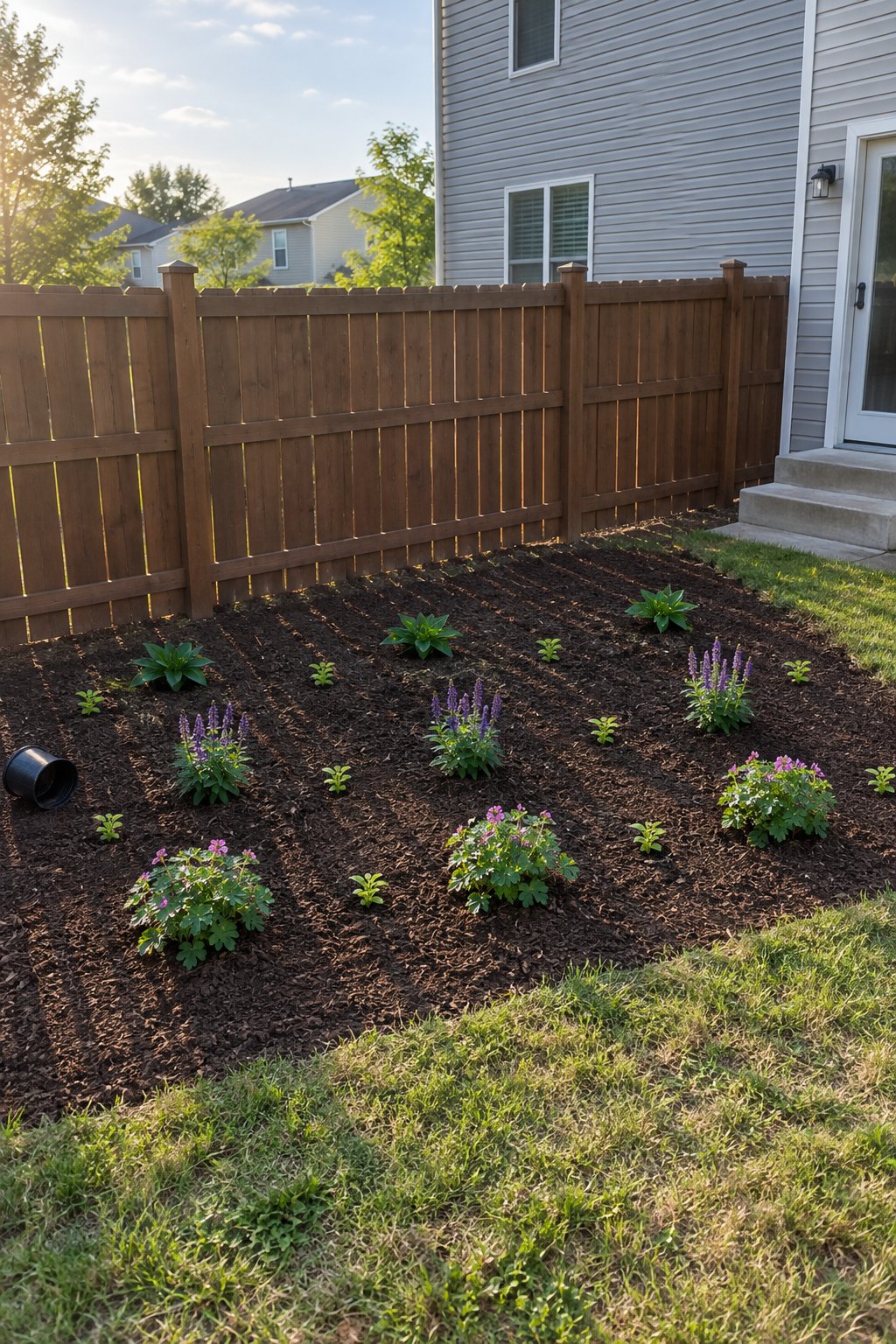
Plant the perennials at full mature spacing, then set zinnia transplants into the gaps once frost is past. Space the salvia and coneflower about 2 feet apart and the hardy geranium at the width on its tag.
The perennials sleep in year one and creep in year two, so the zinnias carry the first summer and the spacing keeps the bed from crowding later.
12. Along the Front Walk: Catmint, Balloon Flower and Pinks in Two Narrow Beds
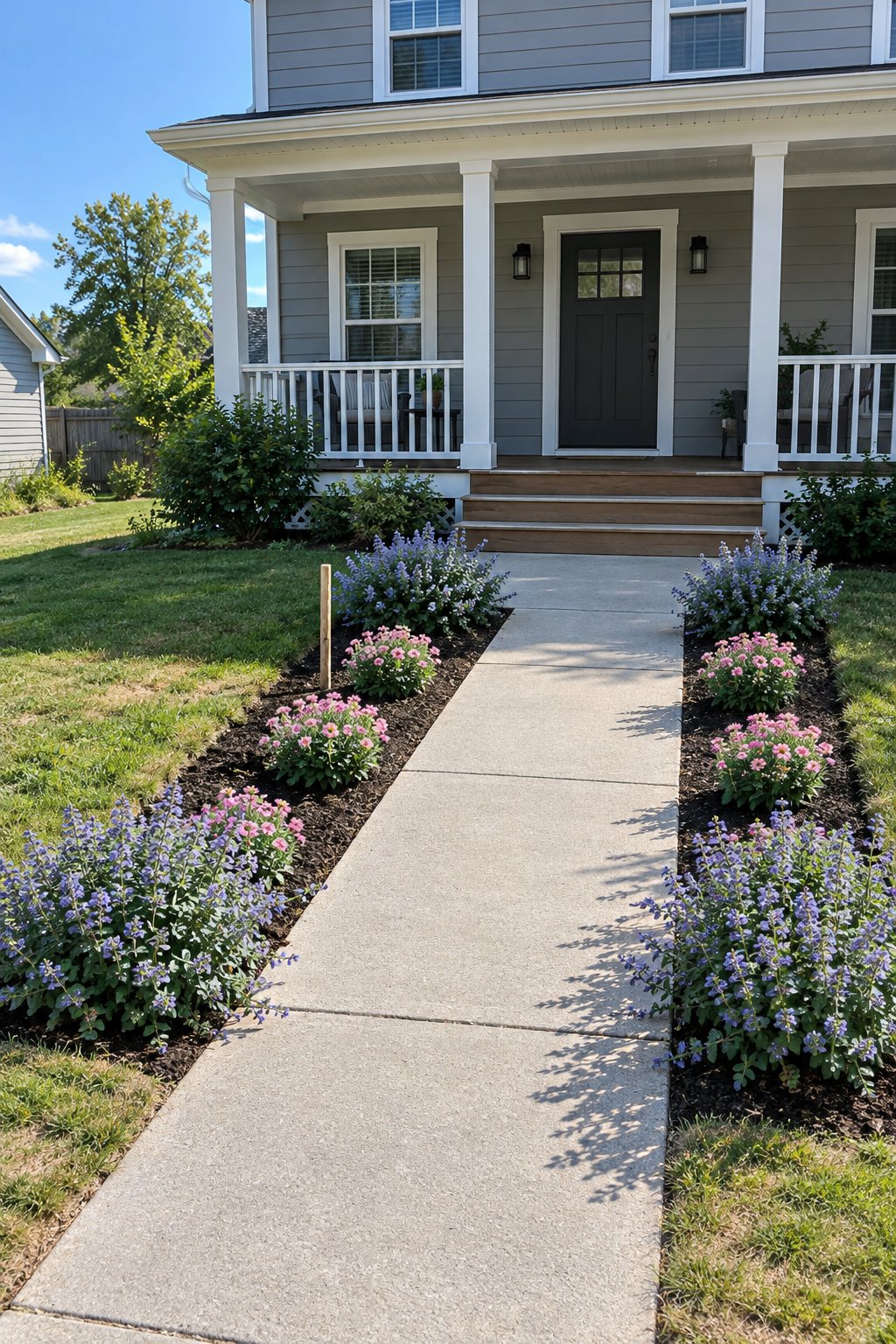
Plant a bed 2 to 3 feet deep along each side of the front walk, with catmint spilling at the corners and balloon flower and pinks in drifts of three. Set the catmint back half its mature width from the paving, so it spills over the edge but does not block the walk.
Balloon flower comes up very late in spring, so mark it with a stick or you may dig it up.
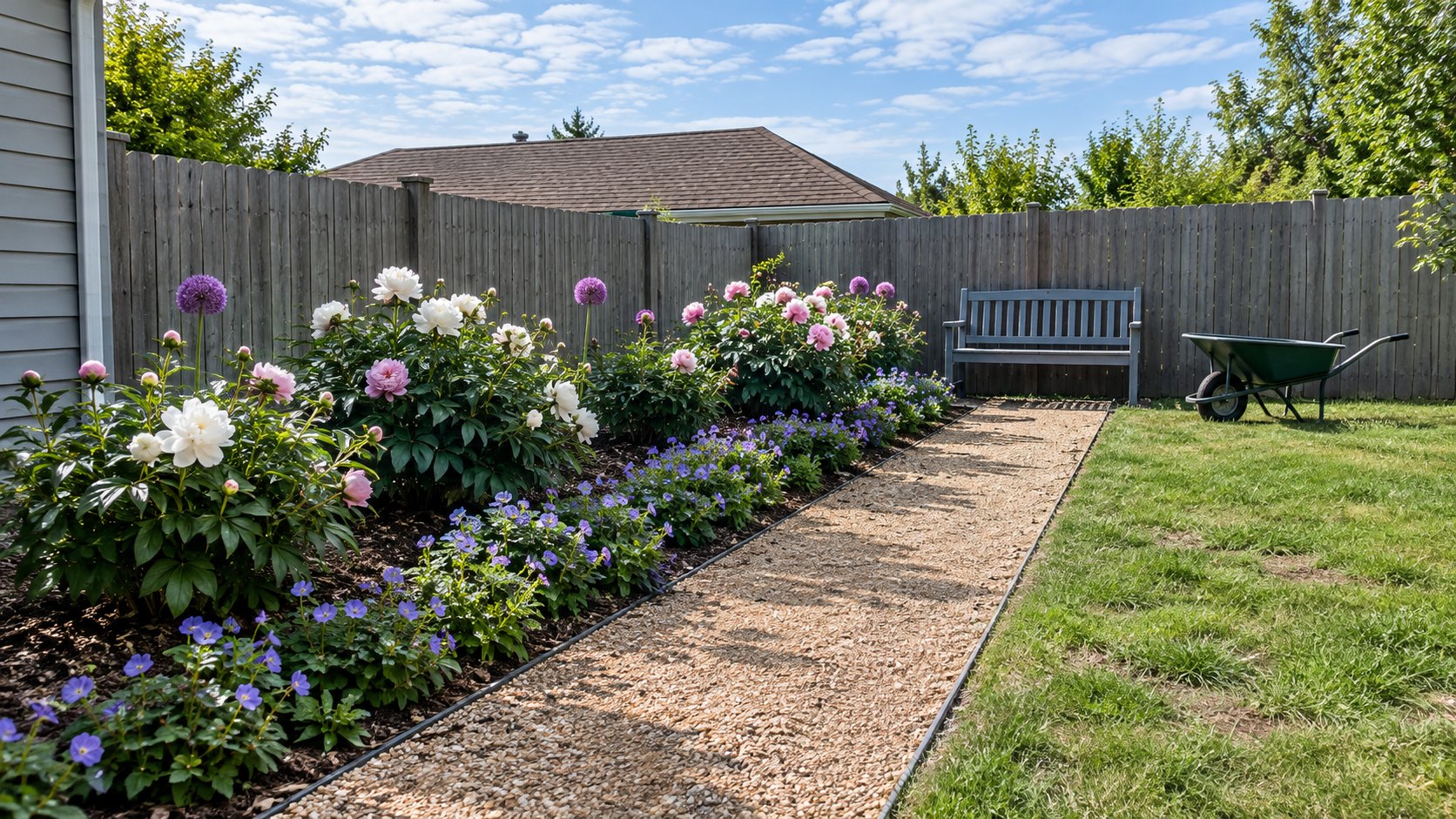
13. Soften a Gravel Path With Lady’s Mantle, Hardy Geranium and Coral Bells

Line a gravel path with lady’s mantle at the front, hardy geranium behind it and coral bells at the corners and in the stretches that get afternoon shade. The leaves overlap the edge and soften the line.
Lady’s mantle drops seed freely, so snip the flower stems after bloom, or you will find seedlings in the gravel.
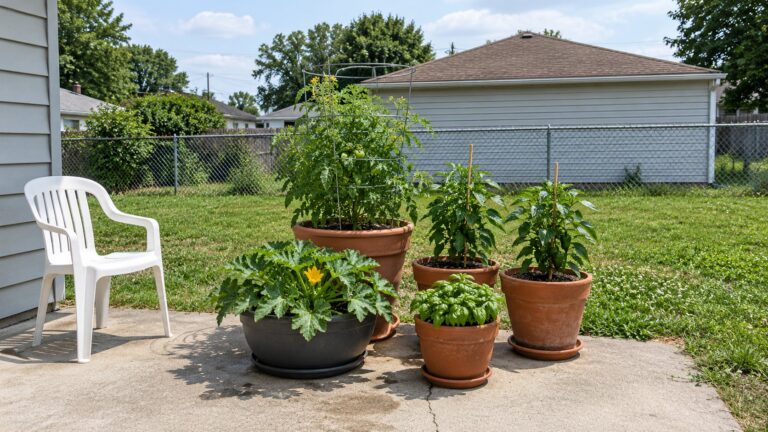
14. Renters, Start With Three Big Pots: Sedum, Salvia and Coneflower on a Sunny Slab

Set three large pots in a triangle on a sunny slab, one each of sedum, perennial salvia and coneflower. It is one of the easiest perennial garden ideas for a rental, since every piece leaves with you.
Roots in a pot freeze harder than roots in the ground, so choose plants hardy two zones colder than yours.
15. A Shady Porch in Pots: Hosta, Coral Bells and Painted Fern
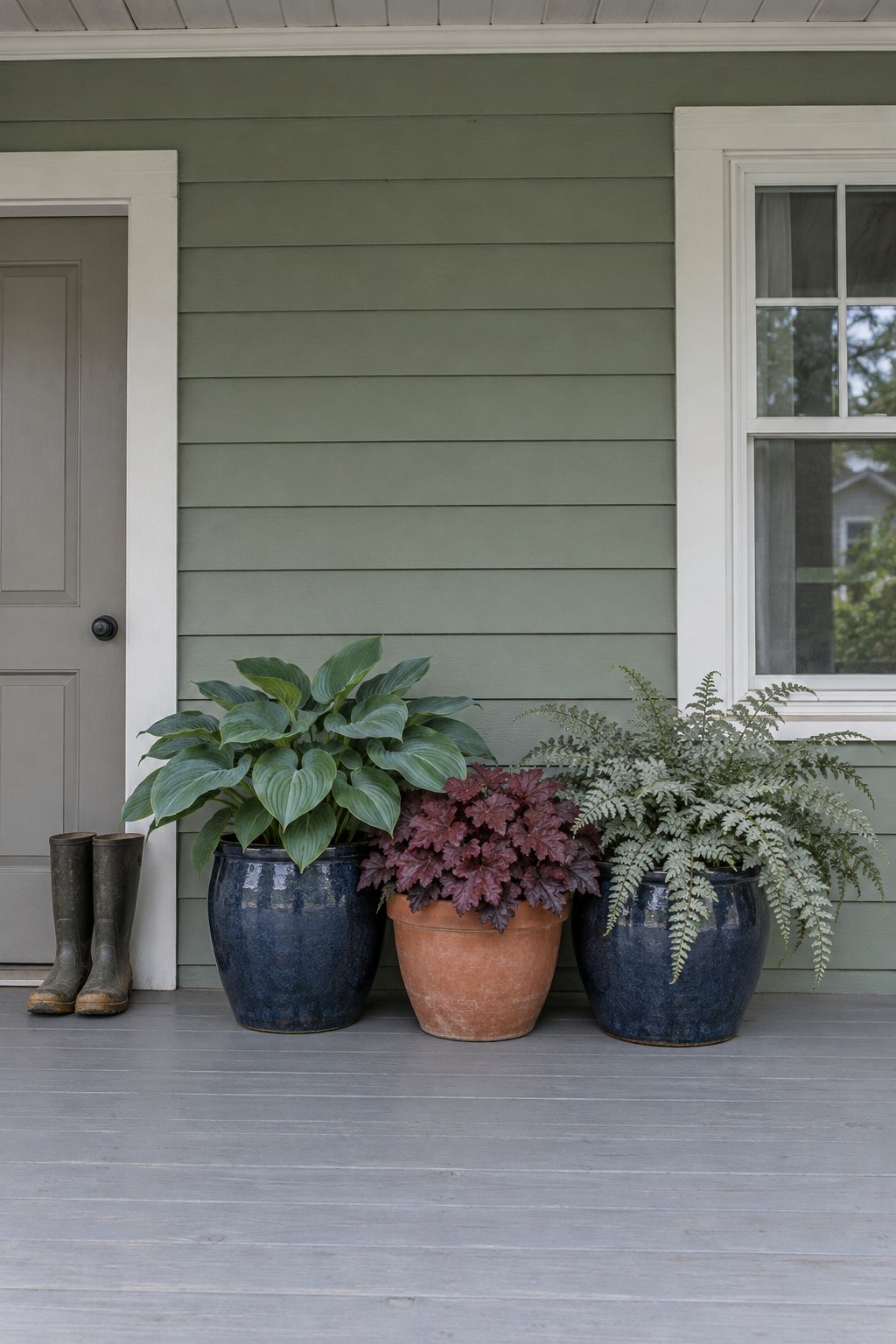
Set one pot each of hosta, coral bells and Japanese painted fern along a porch wall that gets shade or only morning sun. Keep the soil evenly moist but never soggy, with a drainage hole in every pot.
I’d group the three tightly so their leaves overlap and the pots read as one planting.
16. A Tall Back Row Along a Neighbor’s Fence: Joe-Pye Weed, Culver’s Root and Garden Phlox
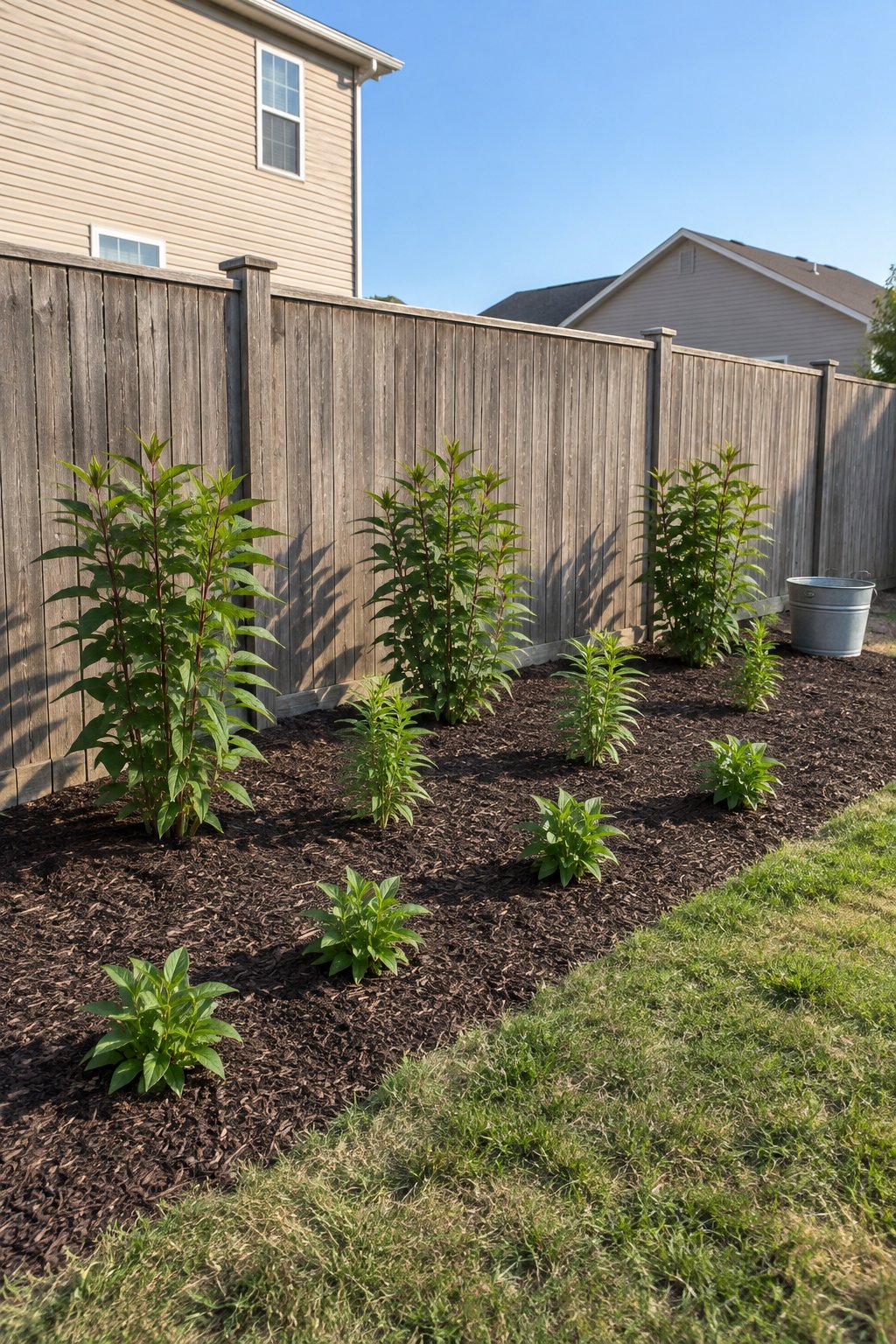
Plant a bed 15 feet long and 5 feet deep along a fence, with Joe-Pye weed and Culver’s root at the back and garden phlox in front. Joe-Pye weed usually grows 5 to 7 feet, so choose a shorter selection in a small yard.
Joe-Pye weed likes moist soil in full sun to part shade, and cutting it back by 2 feet in mid-May or early June keeps it shorter.
Perennial Numbers on One Page
Every plan above rests on a few figures.
Use them when you draw your own perennial garden plans.
| What | The figure | Why |
|---|---|---|
| Spacing | Baptisia 3 to 4 feet, catmint about 2 to 3 feet, coneflower and salvia about 2 feet | Set plants by mature width, because a bed planted at pot size crowds as it fills out |
| Year one (sleep) | Small top growth | The roots are building underneath, and baptisia can take 2 to 3 years to fill its space |
| Year two (creep) | Bigger clumps and some bloom | Many perennials are still short of their full size |
| Year three (leap) | Full size for many perennials | Fill the gaps with annuals until then |
| Planting depth | Peony eyes 1 to 2 inches, iris rhizome tops at the surface | Planted too deep, peony skips flowers and iris rots |
| Pots in winter | Choose plants hardy two zones colder than yours | Roots in a pot have less insulation than roots in the ground |
| Pinching asters | Up to a third, and stop by July 4 | It keeps the plant compact and avoids stress late in summer |
Six Perennial Garden Mistakes to Skip
Spacing by the nursery pot
Do thisSpace each plant by its mature width from the tag, such as 3 to 4 feet for baptisia, and fill the gaps with annuals in year one.
A spreader in a mixed bed
Do thisPut bee balm, obedient plant and yarrow in a bed with a firm edge, and snip lady’s mantle flower stems before they set seed.
Reading drought tolerant as no water
Do thisDrought tolerant means once established, so water new plants through their first season.
Shade plants in hot afternoon sun
Do thisShade hosta and light-leaved coral bells from strong afternoon sun, or the leaves bleach and scorch.
Moving or dividing baptisia
Do thisChoose its permanent spot first, because baptisia has deep roots and does not divide or transplant well.
Digging where something sleeps
Do thisMark balloon flower, which comes up very late, and bleeding heart, which can disappear by midsummer.
Divide One Clump, Plant a Second Bed for Free: Which Perennials Want It and Which Never Do
By year three or four many clumps outgrow their space, so dig one when its center goes thin or its flowers shrink and divide it into plants for a second bed.
Divide summer and fall bloomers in spring, divide spring bloomers after they flower or in fall, and never divide a plant while it is in bloom.
Sources vary, but daylily and coneflower are usually divided every 3 to 5 years, bee balm every 2 to 4 years, and hosta and Siberian iris only every 5 to 10 years. Cut each clump so every piece has at least two growing points, then replant at the same depth and water well.
Leave baptisia alone, because it does not divide or transplant well, and a peony can sit undisturbed for decades.
Start with the one plan that matches your spot, plant it at full spacing and expect a quiet first year. Then pair it with a bed shape from these garden design ideas, or add a seat with these backyard garden ideas.
Plant once at the right spacing, and the bed does the work from year three.
Frequently Asked Questions
Which perennial garden ideas are low maintenance?
None are zero care, but the full-sun plans with coneflower, sedum and catmint (nos. 1, 3 and 12) need the least once they are established. Plan to water new plants through their first season and tidy the bed once or twice a year.
How far apart should I plant perennials?
Space each plant by its mature width, measured from the tag. Baptisia wants 3 to 4 feet, and many coneflowers and salvias about 2 feet.
Do perennials flower in the first year?
Some do, but many are small the first year and fuller in years two and three, which gardeners call sleep, creep, leap. A new peony rarely flowers in year one, and baptisia can take 2 to 3 years to fill out.
Will these plans work in zone 6, 7 or 8?
Most plants here are hardy in zones 4 to 8 or wider, but ratings vary by plant and cultivar, so check the tag for your zone. In hot summers, favor the full-sun plans, because brunnera, astilbe and bleeding heart prefer cooler, moister sites.
Can I grow perennials in pots as a renter?
Yes, plans 14 and 15 use big pots and no digging. Choose plants hardy two zones colder than yours, because roots in a pot get colder than roots in the ground.
You Might Also Like
Save This For Later
Loved perennial garden ideas? Save this pin to your Pinterest board now so you can find it again anytime you need the inspiration.