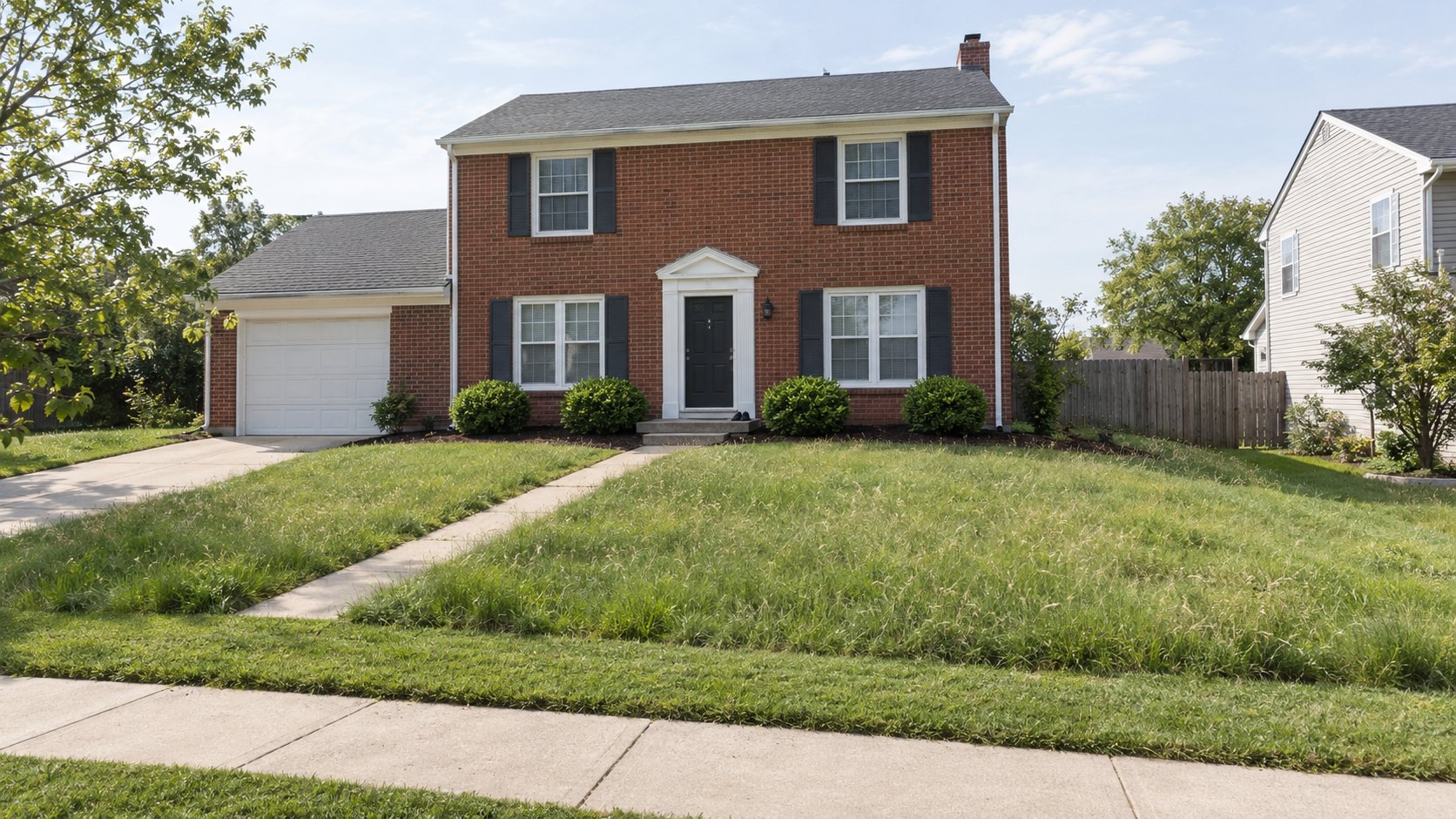
Low Maintenance Landscaping Front Yard: 16 Plans That Stay Tidy

Low maintenance landscaping front yard plans start with an honest line: no yard takes zero work.
These 16 plans cut the mowing, watering and weeding to a few jobs a year, and each says what the first season costs you.
Low maintenance means the work moves up front, not that it vanishes.
Which low maintenance front yard landscaping idea fits your yard?
1. Fine Fescue Lawn You Mow a Few Times a Year, With a Mown Border

A fine fescue lawn is the one grass lawn I would keep, because it can be mowed as little as two or three times a year. Mow a 2-foot band along the sidewalk and the taller grass behind it reads as a choice.
Left unmown all summer it grows tall and can lie over after heavy rain.
2. Buffalograss Lawn for a Hot, Dry Yard That Gets Little Water

Buffalograss is the lawn for a sunny, dry yard where bluegrass keeps quitting. It needs mowing less often than bluegrass and will go tan in a dry summer and after the first hard frost.
I would take a tan lawn for part of the year over a water bill that never ends.
3. Creeping Thyme Carpet Between Flagstones for a Small Sunny Yard
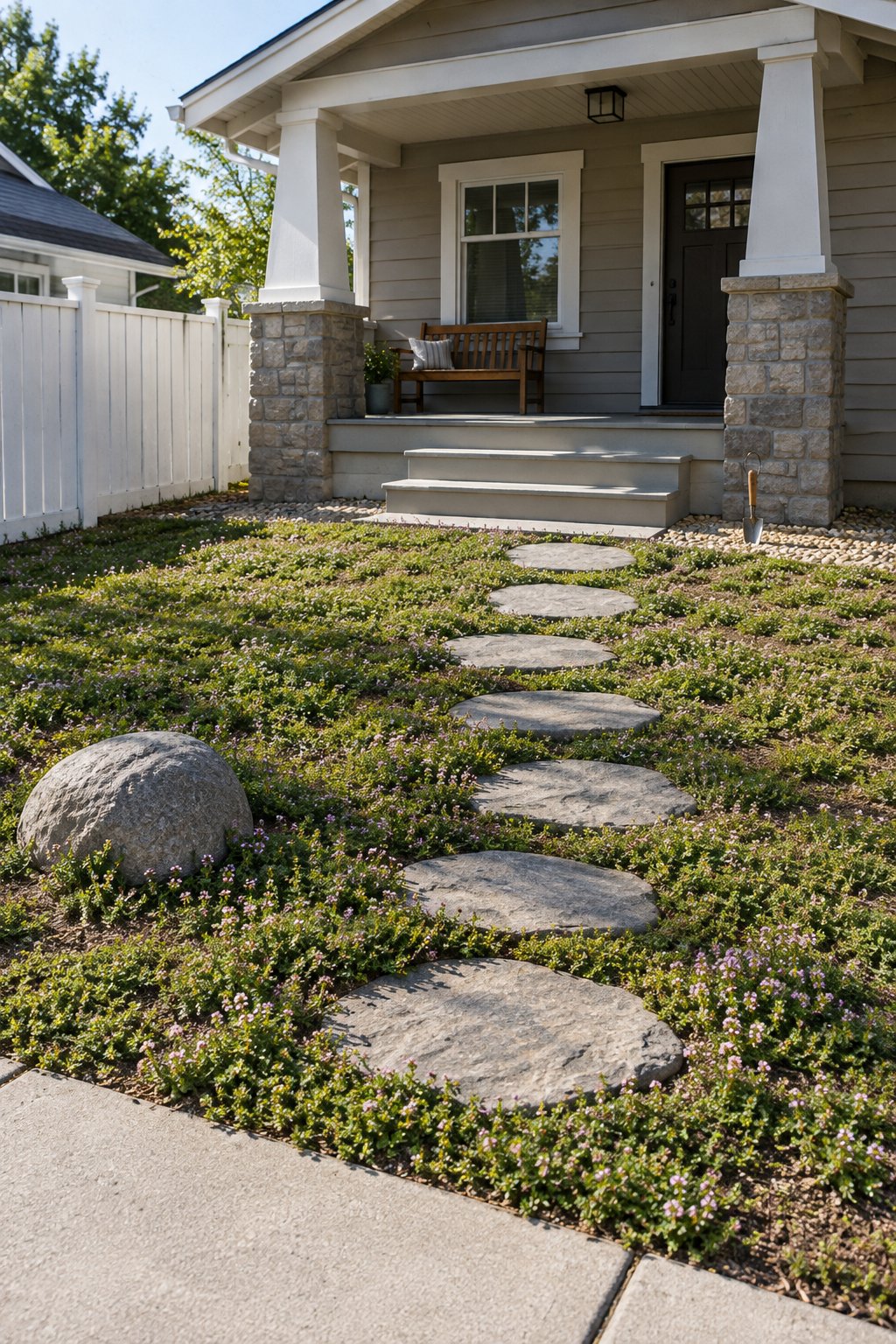
Creeping thyme between flagstones gives a small sunny yard a green floor and no mower. It stays 2 to 3 inches tall, handles dry spells and wants lean, fast-draining soil.
It suits stepping around, not a lawn for playing on.
4. Pennsylvania Sedge Under the Shade Tree, in Place of Struggling Grass

Where grass thins under a big tree, Pennsylvania sedge is calmer than reseeding every fall. It makes a soft carpet in dry to moist shade and needs mowing once or twice a season, if at all.
It fills slowly and takes little foot traffic, so keep one path across it.
5. Native Bunchgrass Border Along the Sidewalk, With One Clean Mown Edge
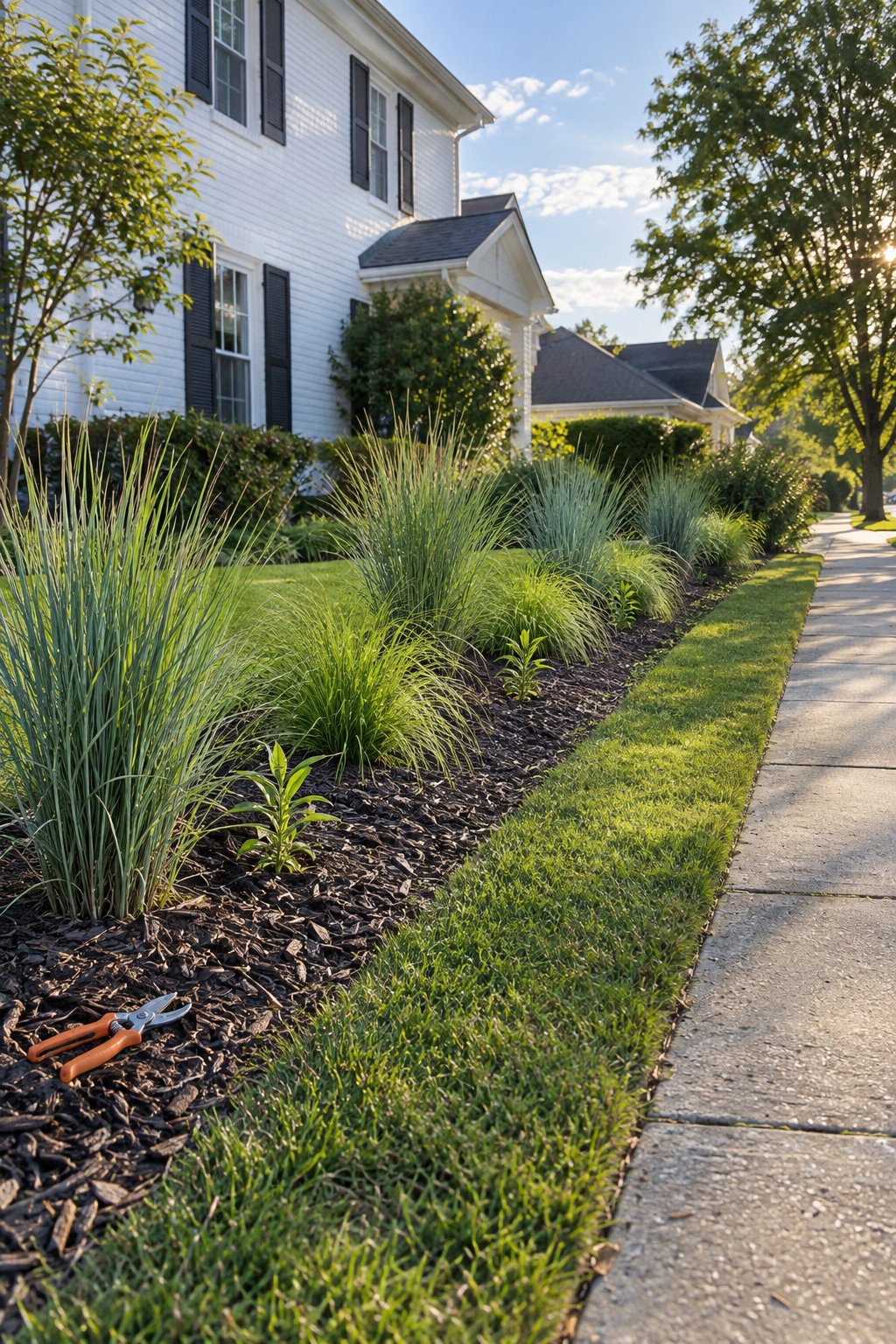
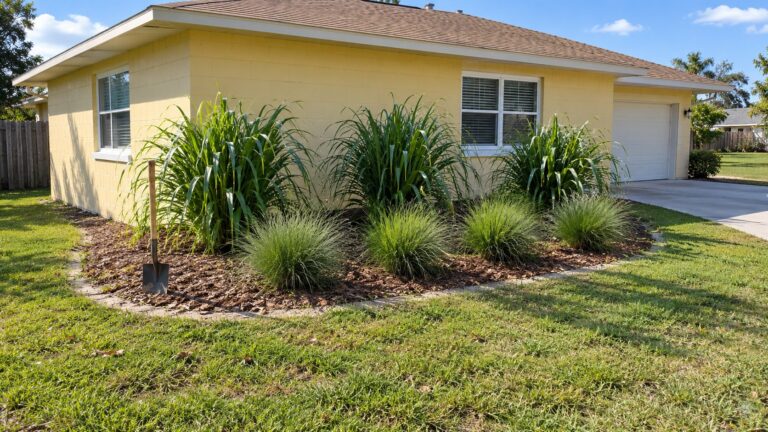
A strip of little bluestem and prairie dropseed along the sidewalk, with a butterfly weed or two, asks for water only while it settles. Both grasses are full-sun natives hardy from zone 3 to 9.
The mown strip between the planting and the sidewalk is what keeps it from reading as neglect.
6. Shrubby Cinquefoil and Stonecrop in a Four-Foot Strip by the House

A four-foot strip against a sunny wall wants plants that do not mind poor soil and dry spells. Shrubby cinquefoil blooms yellow from June to September, and two-row stonecrop makes a low mat at its feet.
A shrub that grows 3 to 5 feet wide needs room, so plant one or two, not a row.
7. Mailbox Bed Built for Plows, Salt and Neglect

A mailbox bed beside a salted road needs plants that shrug off salt and stay out of the plow’s way. Named daylilies and tall stonecrop both appear on extension salt-tolerance lists.
Leave room for the plow and the mail truck, and keep every plant below the box.
8. Corner Lot: Keep the Planting Knee-High and Skip the Pruning

On a corner lot, plants that stay low save you from trimming for visibility every summer. Blue grama, creeping phlox and stonecrop all stay under about 2 feet, near the height many towns cap inside the corner’s sight triangle.
A shrub that outgrows the limit becomes a pruning chore and a safety problem.
9. Fragrant Sumac Bank Instead of a Slope You Mow

A gentle bank is easier planted than mowed, and Gro-Low fragrant sumac is made for it. It stays under 3 feet tall, spreads about 8 feet wide and is described as great for slopes.
It spreads by suckers into thickets, so keep it away from beds you want to keep.
10. Where Water Stands: Swamp Milkweed and Fox Sedge in a Planted Hollow
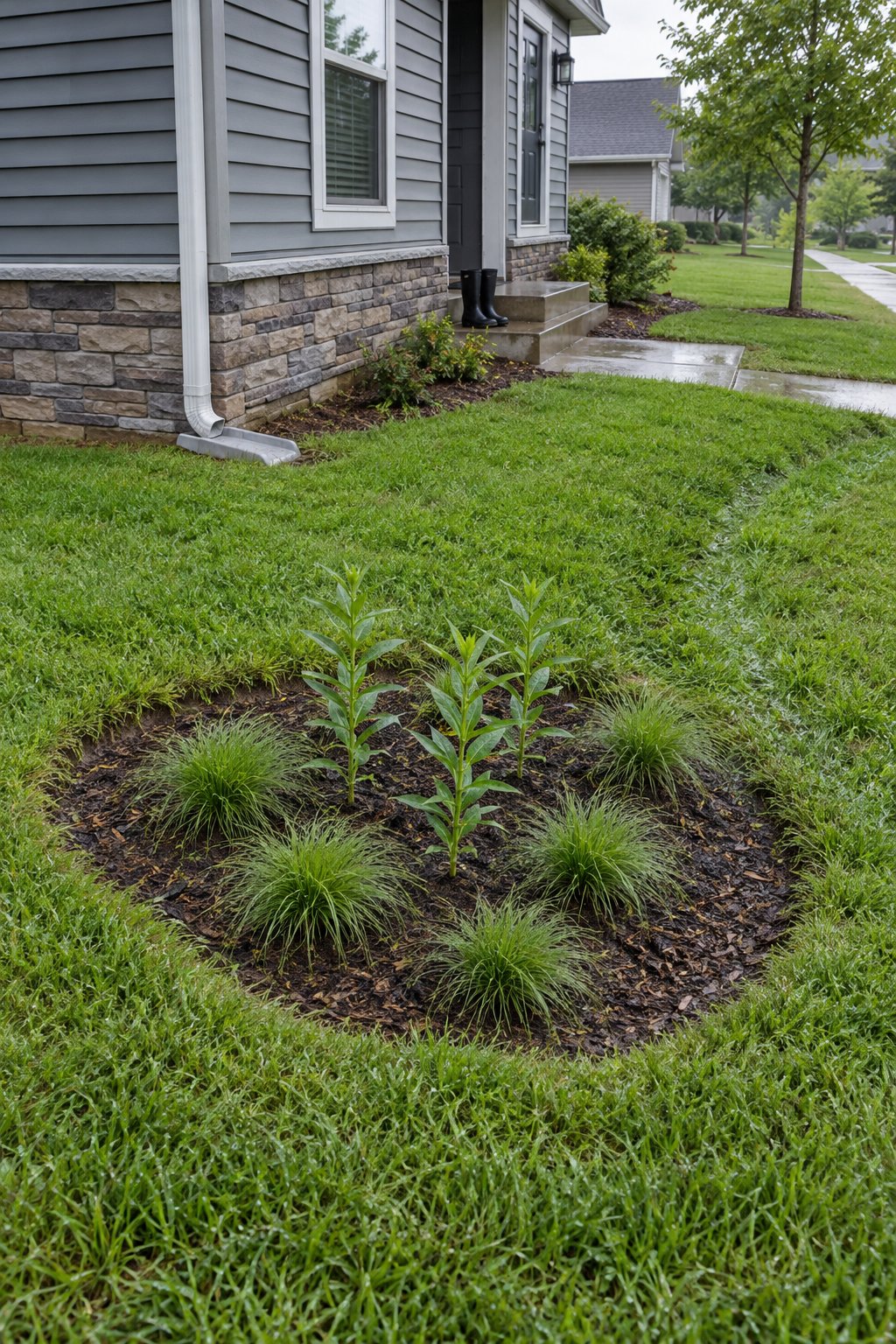
Grass in a low spot drowns, gets reseeded and drowns again, so plant the hollow with things that like it. Swamp milkweed tolerates wet soil, and fox sedge is a common rain-garden sedge.
Keep it at least 10 feet from the house, and ask about 30 if you have a basement.
11. Gravel and Red Yucca for Hot, Dry Summers, Set Back From the Wall

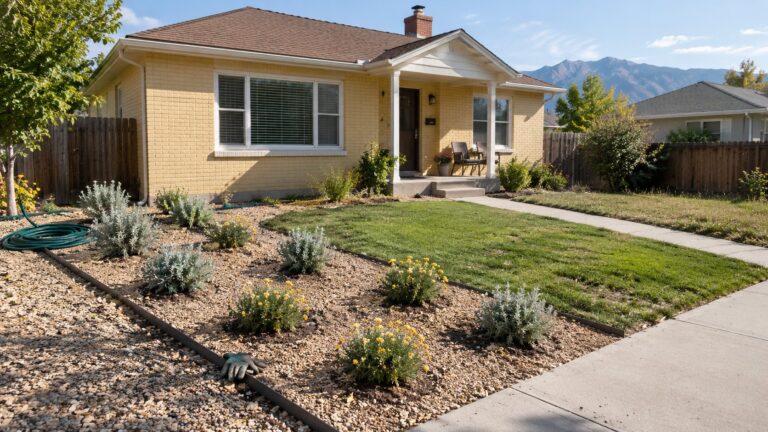
In a hot, dry climate I would plant red yucca and blue grama in gravel before fighting a lawn. Red yucca grows 3 to 5 feet tall, wants sharp drainage and is hardy in zones 6 to 10.
Leave a gap between light gravel and a sunny wall, because stone bounces heat onto plants and house.
12. Pine Straw, Dwarf Yaupon and Muhly Grass for a Humid Southern Front

Pine straw is the cheap, light mulch of the humid South, and most extension sources say it does not make soil much more acidic. Pair it with dwarf yaupon holly, an evergreen native hardy in zones 7 to 9.
Buy a named dwarf yaupon, because the plain species can sucker into a thicket.
13. Deer Country Bed: Lavender, Allium and Daffodils in Full Sun
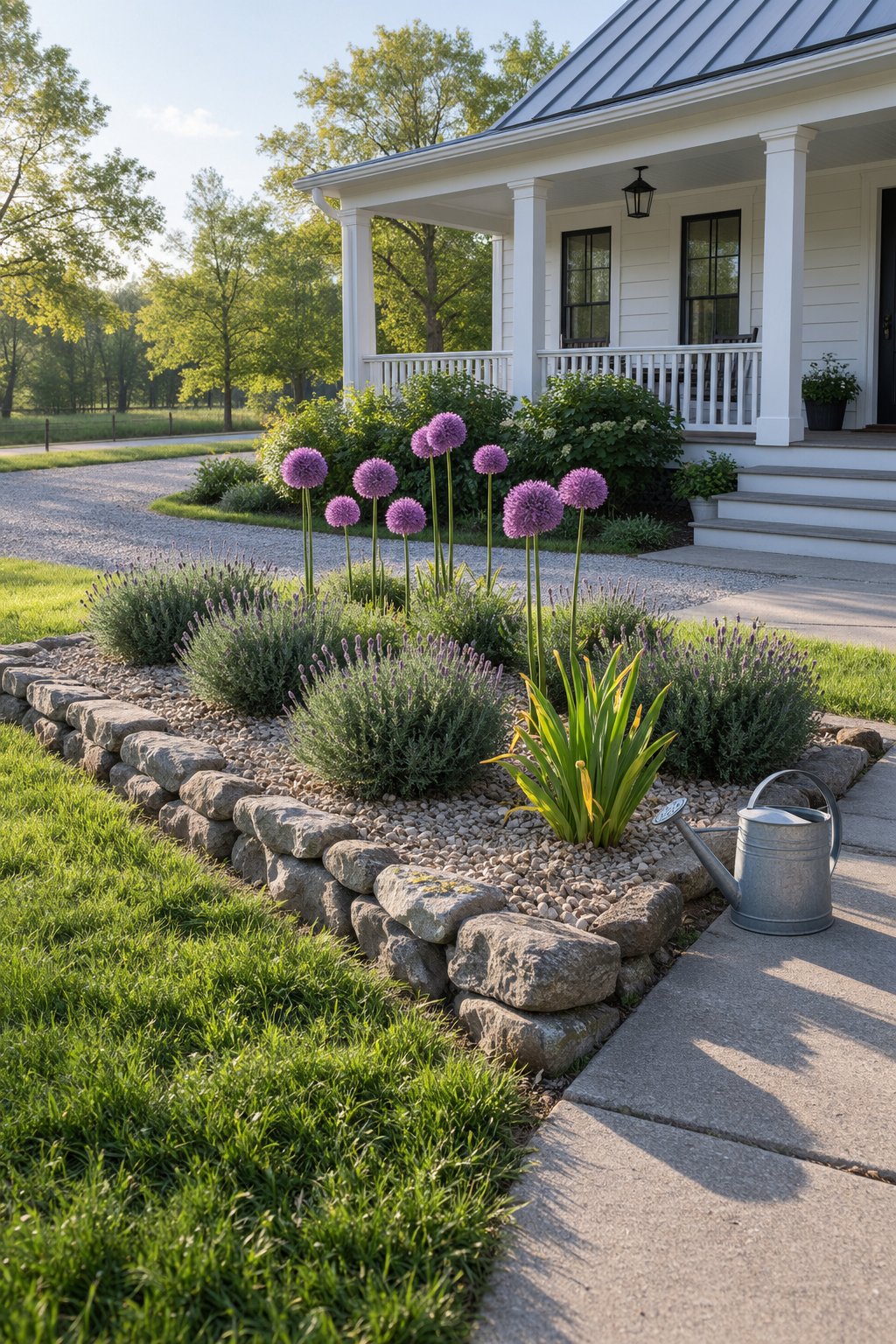
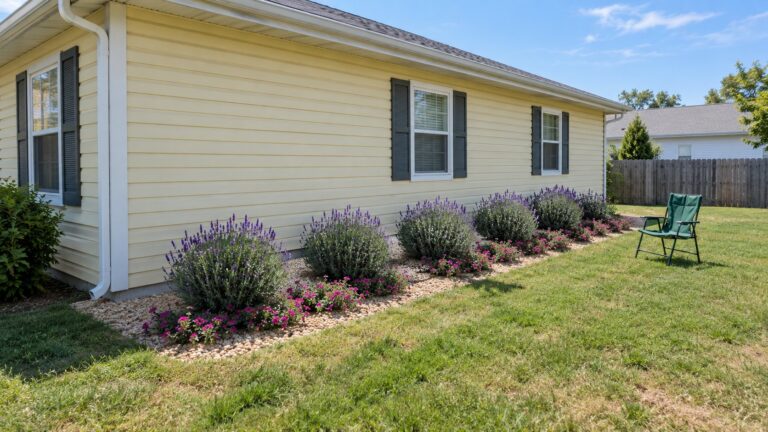
Deer will strip a bed overnight, so I would plant what they rarely touch. Cornell lists lavender, ornamental onion and daffodil as rarely damaged, though no plant is deer proof where deer are many.
Lavender needs very well-drained soil and dies out in heavy clay, so raise the bed or pick another plant.
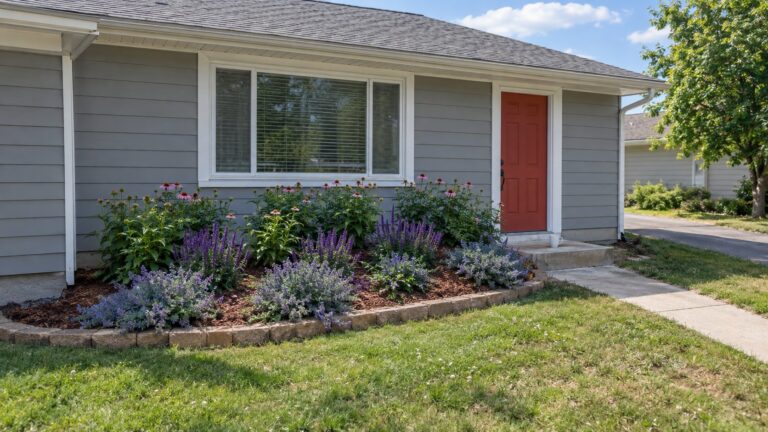
14. North Side Shade: Hellebores and Christmas Fern Under Shredded Leaves

On a north wall that never sees direct sun, hellebores and Christmas fern are the two plants I would trust. Cornell lists both as rarely damaged by deer, and the fern stays green in winter.
Hellebores seed themselves, which means free plants and a few extra to pull.
15. Japanese Holly Mounds for an HOA Yard That Wants Neat

Japanese holly is slow growing and evergreen, so the bed looks the same in January as in June. Many cultivars stay 3 to 4 feet tall, and it can be pruned hard if one gets big.
Check the tag, because the species reaches 5 to 10 feet and dislikes alkaline soil and hot, humid summers.
16. Sheet-Mulch One Bed From the Lawn, Then Plant It Next Season

The cheapest way I know to remove lawn is cardboard and wood chips, with no digging. Mow short, overlap plain cardboard 6 inches, wet it and cover it with 4 to 6 inches of chips.
Wait several months before planting, or cut planting holes through the cardboard if you cannot wait.
Low Maintenance Numbers on One Page
Most of the plans above rest on a few figures.
Check these before you buy or dig anything.
| What | The figure | Why |
|---|---|---|
| Mulch depth in a planted bed | 2 to 4 inches, kept off trunks and stems | Thinner lets weeds in, thicker holds too much moisture. Sheet mulch over cardboard runs 4 to 6 inches |
| Water for new plants | Deep soaking about once a week, through the first season | Roots are small at first, and shrubs often need a second season. Check the soil before you water |
| Cutting back native grasses | To a few inches in late winter or early spring | Finish before new green shoots show |
| A no-mow fine fescue lawn | Mow about 2 to 3 times a year | Early spring and fall, not through the summer |
| Plants in a corner sight triangle | Often capped near 30 inches | Your town sets the height and the triangle’s size |
| A wet-spot planting from the house | At least 10 feet, and some towns say 30 with a basement | Standing water near a foundation is a problem. Test that the hole drains in 24 hours |
Six Low Maintenance Mistakes to Skip
Weed fabric under mulch
Do thisSkip it in planted beds, because perennial weeds root through it and it tangles plant roots. Weed the soil, then spread 2 to 4 inches of shredded wood mulch.
Light gravel against a hot wall
Do thisStone absorbs and reflects heat onto plants and the house. Leave a gap, put organic mulch in the bed, and ask your fire district first if wildfire is a risk.
A ground cover that runs
Do thisEnglish ivy and common periwinkle are considered invasive in many areas. Pick a slow or clumping plant, and check your state’s invasive plant list.
Letting tree seedlings grow
Do thisCheck beds each spring and pull seedlings while they still come out by hand. A sapling in a bed needs a saw.
Trusting “drought tolerant” in year one
Do thisThat label applies once the roots have spread. Water new plantings deeply about once a week through the first season, and into a second one for shrubs.
A wild planting with no edge or paperwork
Do thisAdd a mown strip or a cut edge so it reads as kept. Check your town’s plant height rules and get written HOA approval before you replace lawn.
Year One Decides the Next Ten: The Honest Calendar of a Low Maintenance Yard
Low maintenance moves the work to the front of the calendar. It does not remove it.
In year one you water new roots and pull weeds while they are small.
From year two the list is short: one spring tidy to cut back grasses and perennials, one fall tidy for leaves, and a mulch top-up when the layer thins, often every year or two.
Skip that first year of water and weeding, and the weeds win.
I would rather spend one summer with a hose than ten years with a hoe.
Pick the one spot that costs you the most weekends, usually the lawn or the bare strip by the house, and change only that this year. Then give it the first summer’s water and weeding.
One planted bed that thrives beats three you gave up on. For fixes beyond upkeep, see my front yard landscaping ideas.
Frequently Asked Questions
Is there such a thing as a no-maintenance front yard?
No. Every plan here needs watering and weeding while it settles in, then a spring tidy and a mulch top-up. What goes away is most of the weekly mowing and watering.
Can I have a no mow front yard?
A fine fescue lawn (no. 1) mowed 2 to 3 times a year comes closest in cool regions, and buffalograss (no. 2) in dry, sunny ones. Neither is zero mowing, and your town or HOA may set height rules.
What is the easiest way to start easy front yard landscaping?
Fix the one spot that costs you the most work, such as a strip where grass keeps dying, with a plan from this list. One finished bed is easier to keep up than a half-planted yard.
Do I need landscape fabric under mulch?
Not in planted beds. Extension guidance says weeds eventually root through fabric and it tangles roots, so weed the soil and use 2 to 4 inches of organic mulch instead.
Will my HOA allow these plans?
Often you need written approval first, and a few states limit what an HOA can ban, so check yours. A sketch with plant names, grown sizes and a tidy edge helps.
You Might Also Like

Save This For Later
Loved low maintenance landscaping front yard? Save this pin to your Pinterest board now so you can find it again anytime you need the inspiration.