25 Backyard Ideas That Make an Ordinary Yard Worth Sitting In
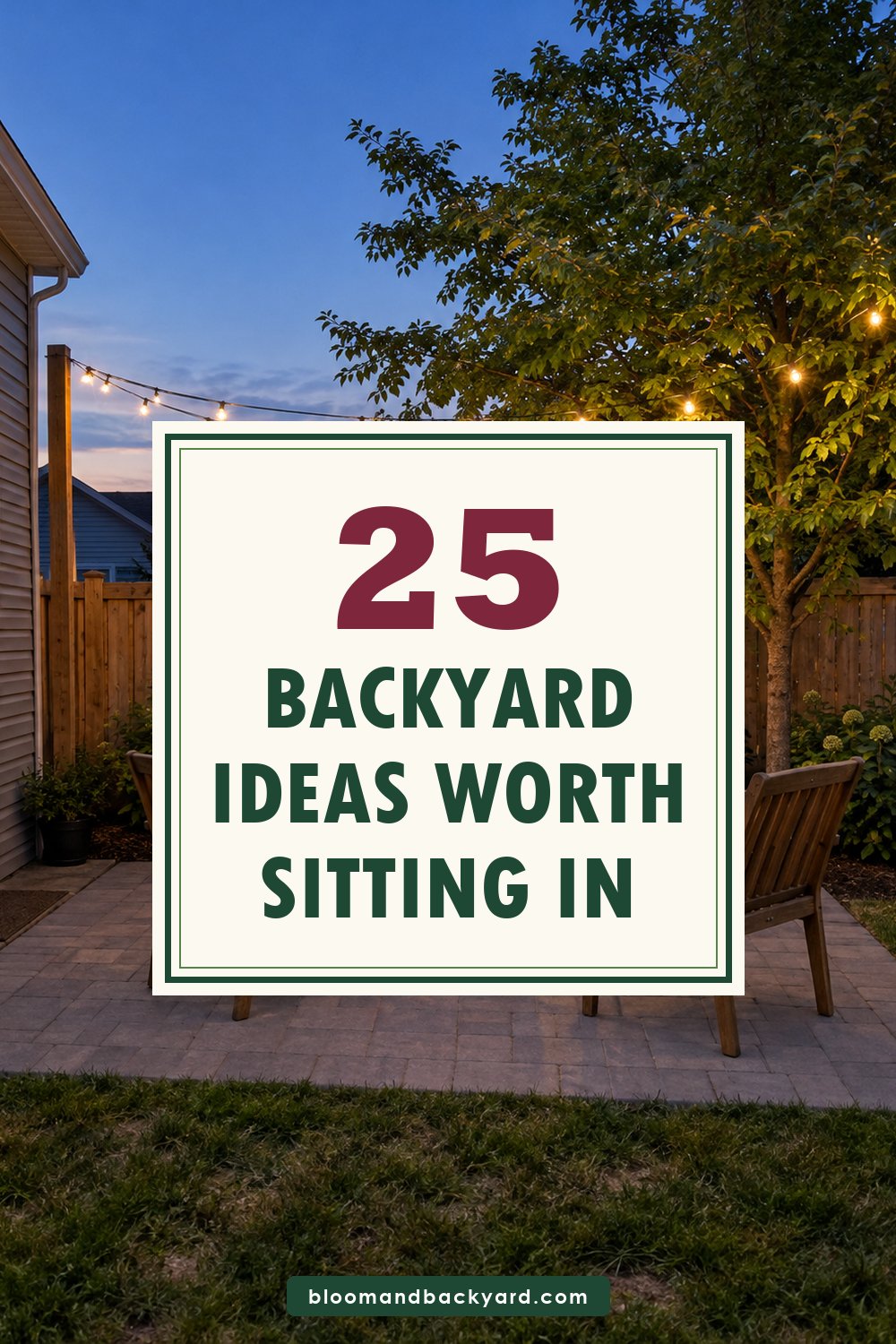
Backyard ideas work best when you start with what is wrong with your yard: nowhere to sit, no shade, no privacy, a worn lawn or a dead corner.
These 25 are sorted by that problem, and each one gives a cost and a renter note.
Call 811 before you dig, and check your lease, HOA and local rules first.
What is wrong with your yard?
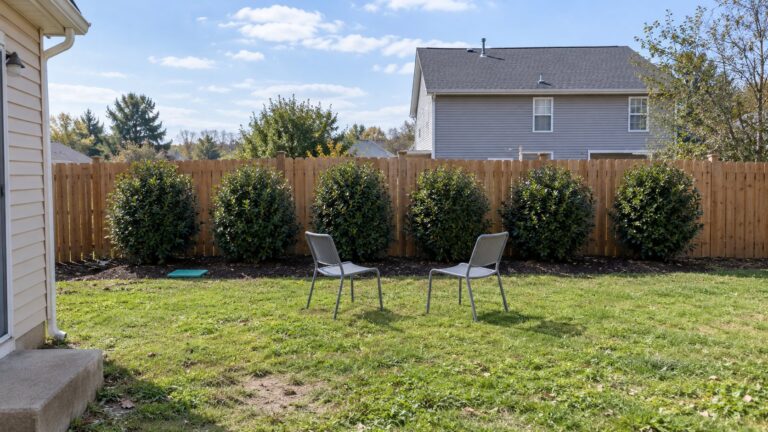
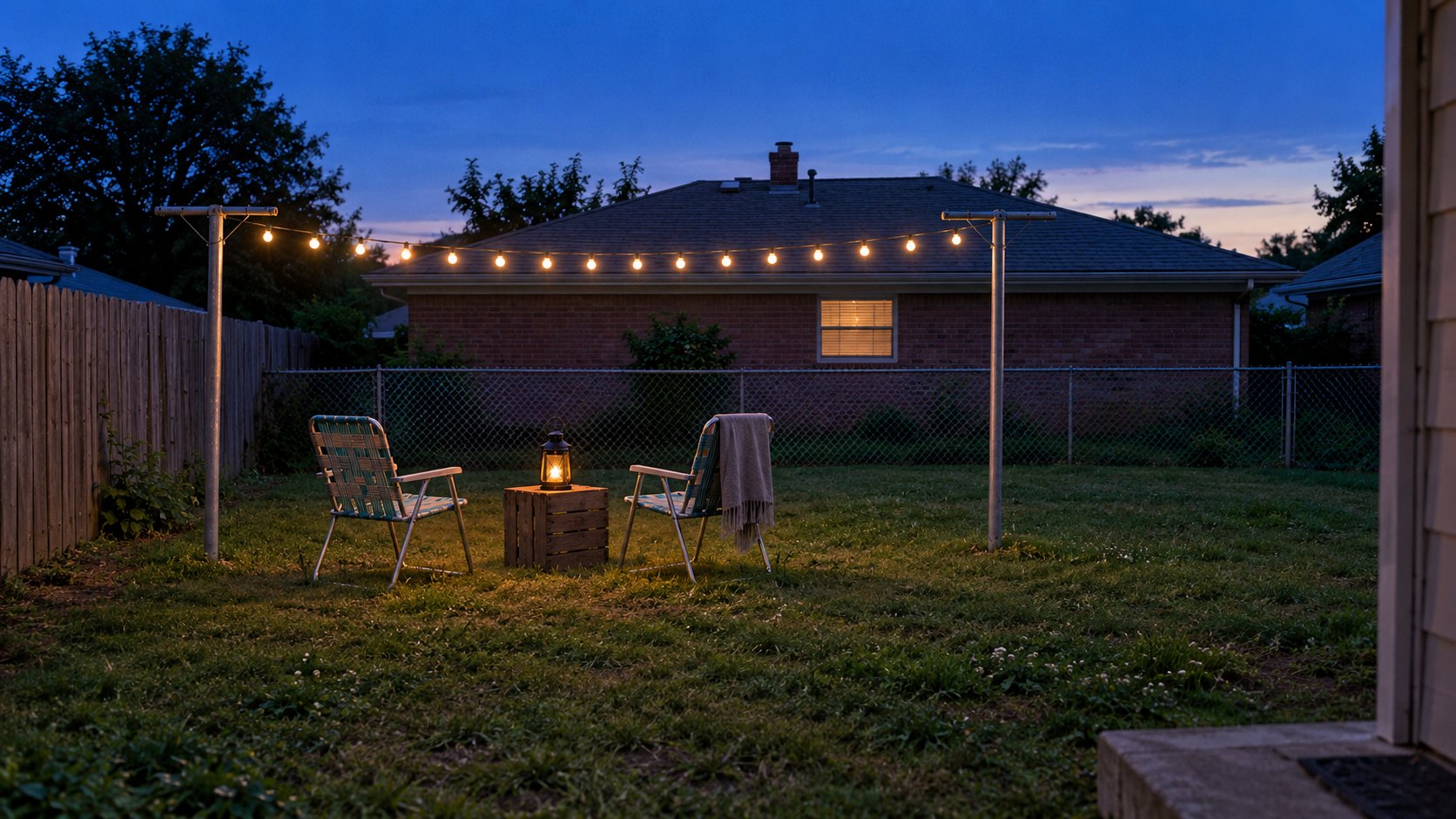
1. Two Chairs at the Far End, Facing the House

Put the seat at the far end, facing the house, and the lawn becomes somewhere you walk to. A flagstone pad about 8 by 8 feet holds two chairs and a table.
Call 811 before you dig, and lay the stones on compacted gravel and sand.
2. Cedar Platform on Deck Blocks Instead of a Real Deck

Concrete deck blocks give you a flat, dry floor without pouring a single footing. Build it about 8 by 10 feet, freestanding and low to the ground.
Ask your town and HOA about permits first, because the rules for low decks vary.
3. Bistro Table Outside the Slider, Not at the Back Fence

The table you use is the one nearest the kitchen, so set a bistro table on a paver square outside the sliding door. Pavers dry-laid on sand need no mortar.
A square about 6 by 6 feet fits a table, two chairs and room to push back.
4. Seat Six at a Table With Three Feet All Round

Long tables only work when people can still get past. Leave about 3 feet clear on every side, which makes a pad of roughly 9 by 12 feet for a 3 by 6 foot table.
Set the pavers on a flat, compacted base, and check HOA rules before you start.
5. Path Lights Low Enough to Light the Way, Not the Windows
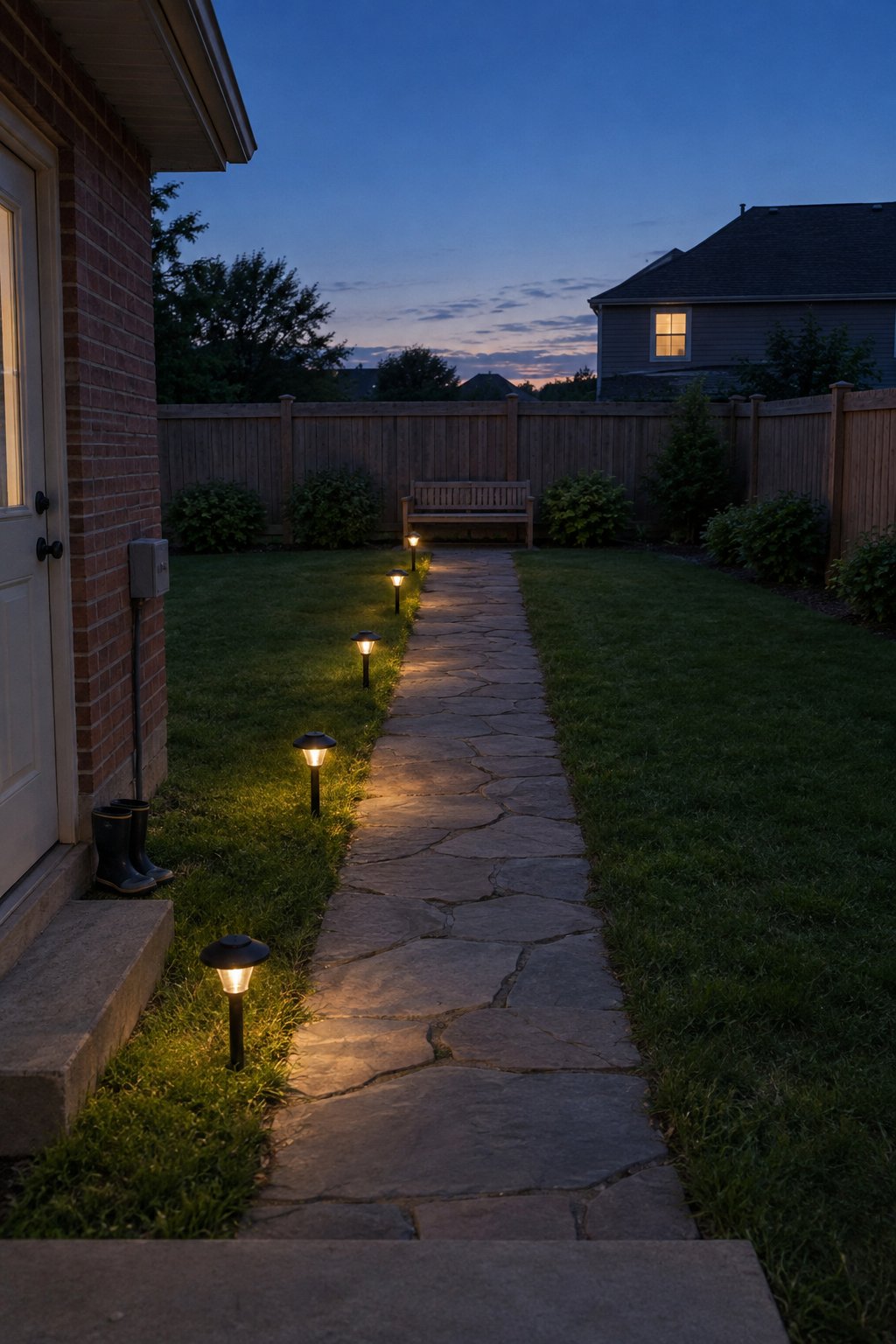
Low-voltage path lights at about knee height light your feet and nothing else. Plug the transformer into a weatherproof, GFCI-protected outdoor outlet.
If you have no such outlet, hire an electrician rather than run an indoor cord outside.
6. Lanterns on the Table Instead of Another String of Lights
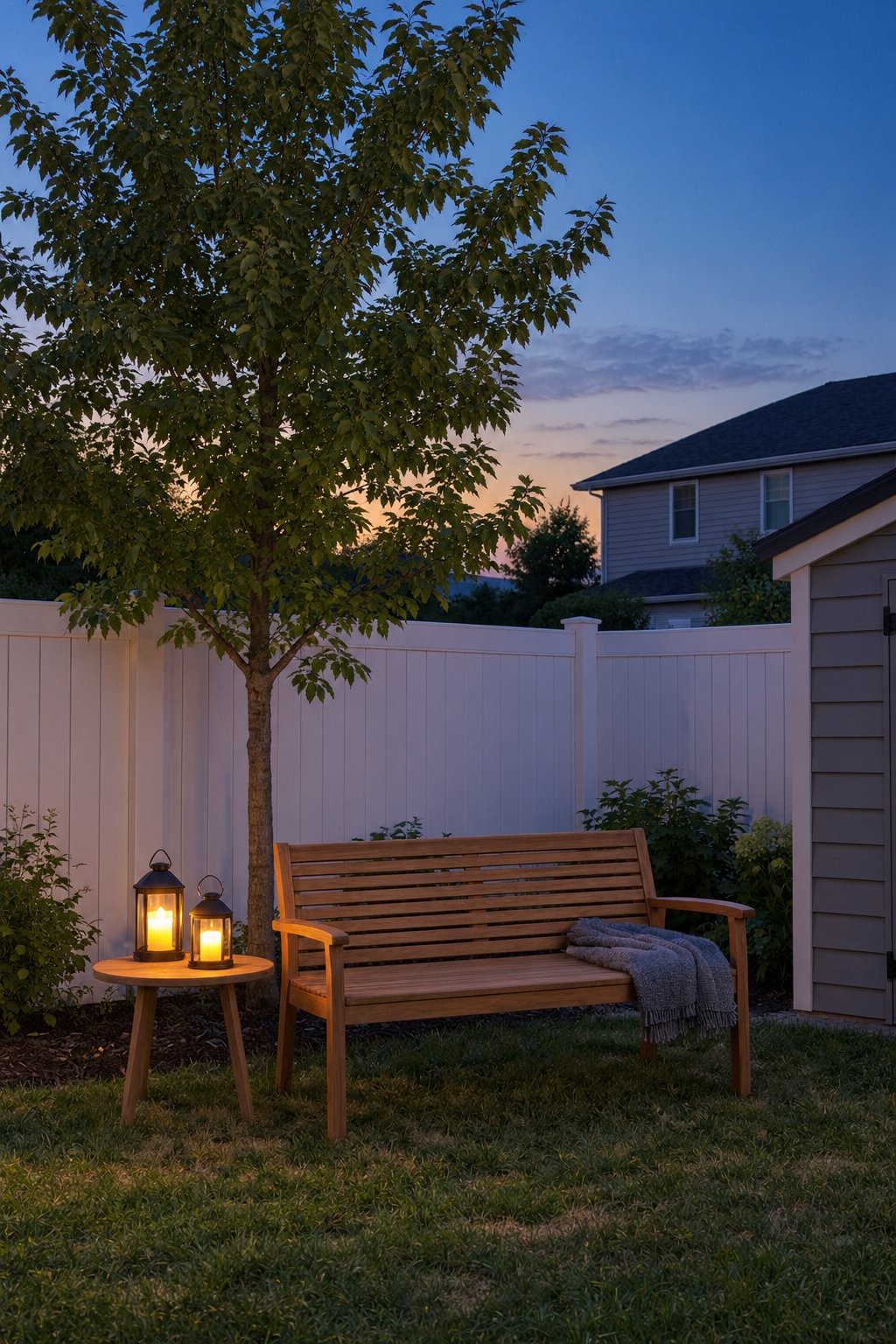
Two battery LED lanterns on a small table light a bench better than overhead string lights. Check their weather rating before leaving them out.
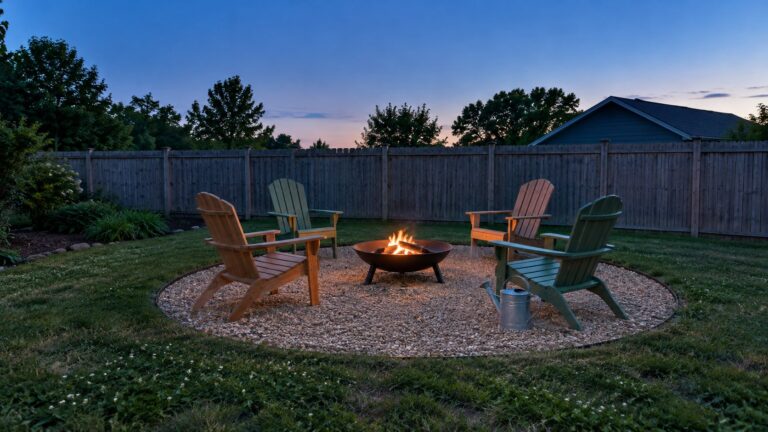
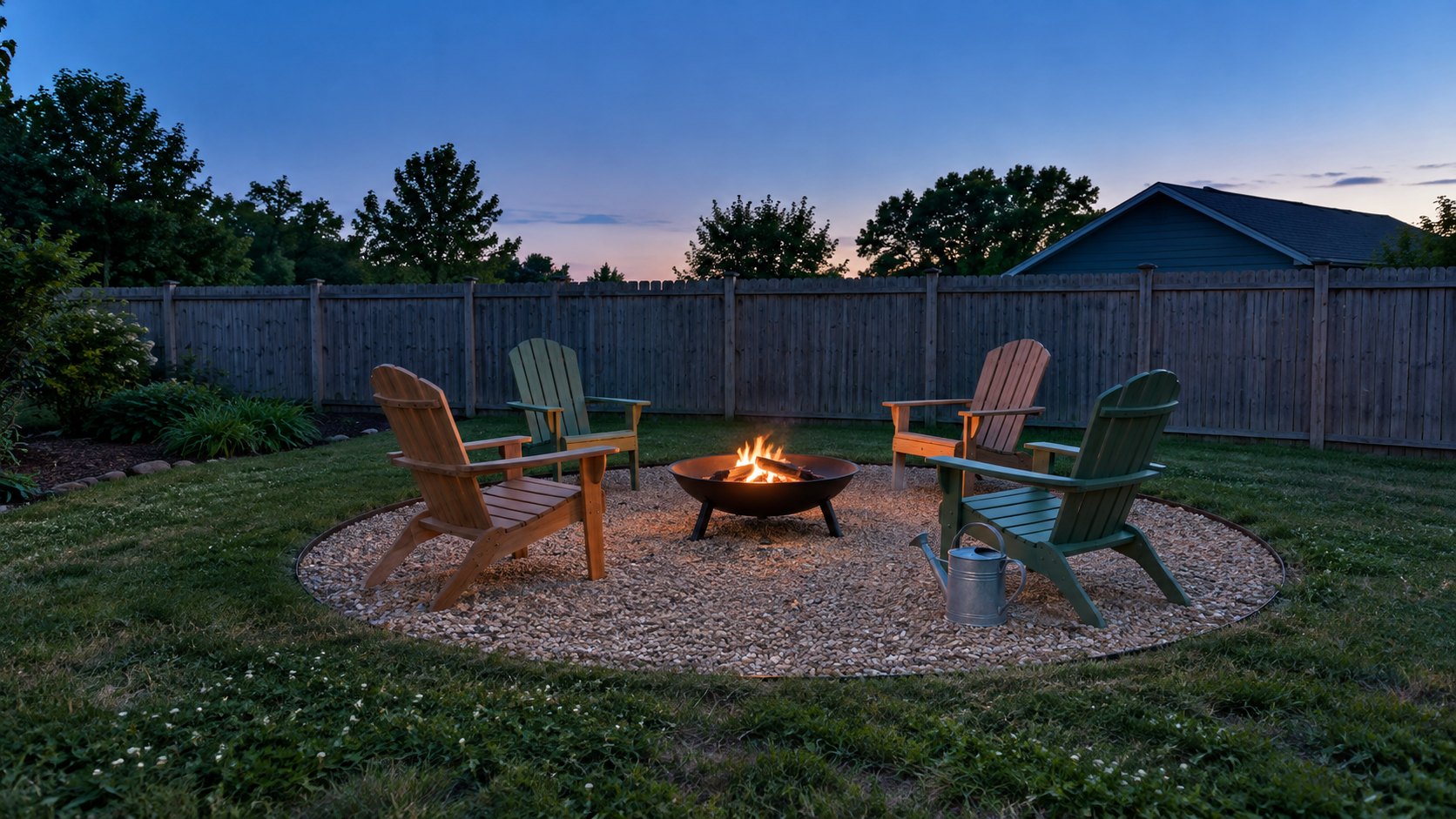
For a fire instead, my small backyard fire pit ideas show layouts that leave room to walk.
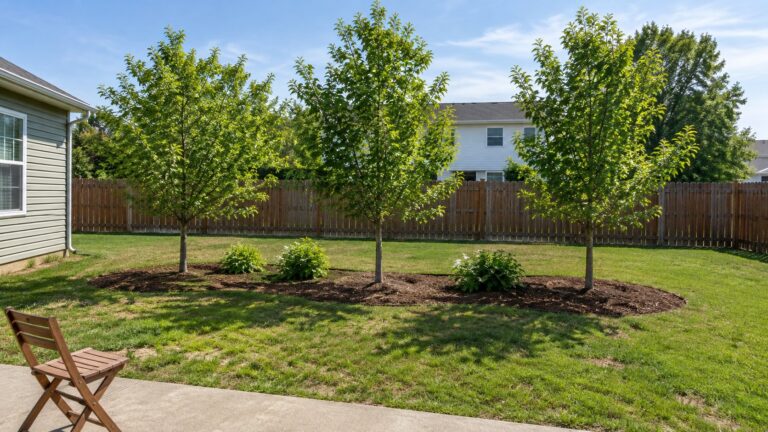
7. Plant One Small Tree Where the Afternoon Sun Comes From

Afternoon sun comes from the west, so plant one small tree there. A young serviceberry is a small tree that takes sun or part shade, though it shades little for a few years.
Read the mature size on the tag, and call 811 before you dig the hole.
8. Hang a Shade Sail From Posts, Not the Fascia

Sails need anchors that can take a hard pull, so use sturdy posts set in concrete or framing rated for it. Hang one corner lower so rain runs off.
Posts mean digging, so call 811, and ask about permits and HOA rules.
9. Offset Umbrella Over the Table, Not Over the Lawn

Putting the pole to one side leaves the middle of the table clear, which is the point of an offset umbrella. The base must be heavy enough for the canopy, so follow the maker’s guidance.
Close it when the wind picks up, and every evening.
10. Add a Lattice Topper Only If Your Fence Can Carry It

One foot of lattice on a 5 foot fence raises the sight line without a new fence. The posts must handle the extra wind.
Many towns cap back fences near 6 feet, so ask first. More screens are in my patio privacy ideas.
11. Side Gate That Latches Itself
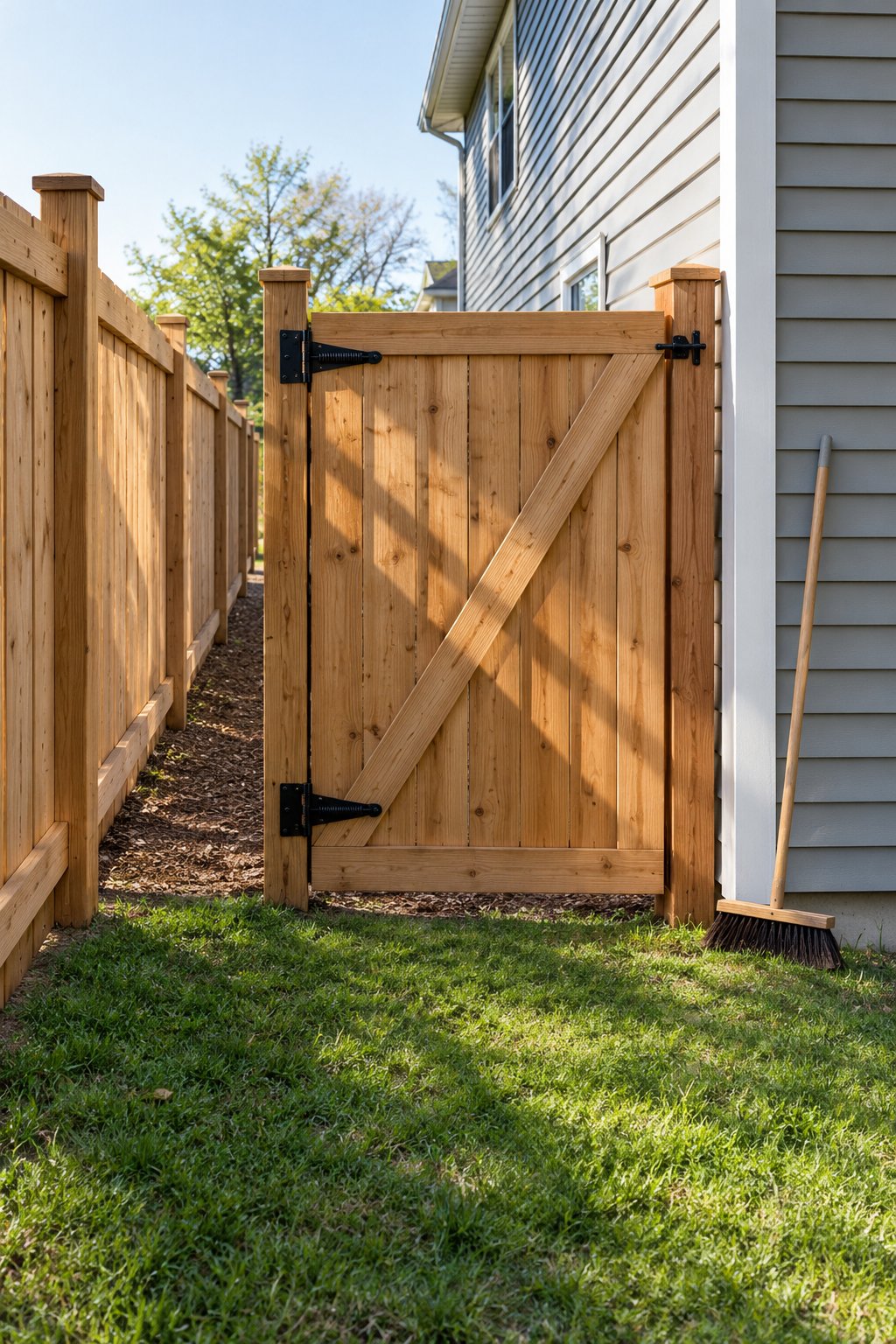
Self-closing hinges and a latch set high on the post make a gate that helps keep a dog in and small children from wandering out. It also hides the side yard.
New gate posts mean digging, so call 811 and check your town’s fence rules.
12. Mow a Curved Path Through Longer Grass

Stop mowing the back third and cut a path about 3 feet wide through it. The longer grass reads as planting, and the curve pulls you toward the back.
In tick country, keep the long grass away from where kids and pets play.
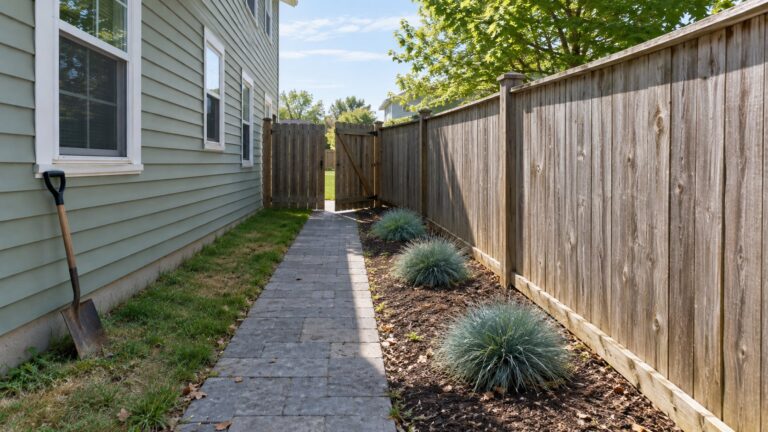
13. Border Three Plants Deep Along the Back Fence

Feather reed grass behind purple coneflower behind catmint gives a border three clear heights. All three want 6 hours or more of sun and suit roughly zones 4 to 8.
Cut a clean edge as in my flower bed edging ideas, and call 811 before you dig.
14. Clematis Up a Trellis Panel for a Bare Fence

Clematis does best with leaves in sun and roots in shade, so put a low shrub or stones at its base. Most are hardy across much of the US, so check the tag for your zone.
Stand the trellis a couple of inches off the fence for airflow.
15. One Raised Bed Where the Sun Stays Longest
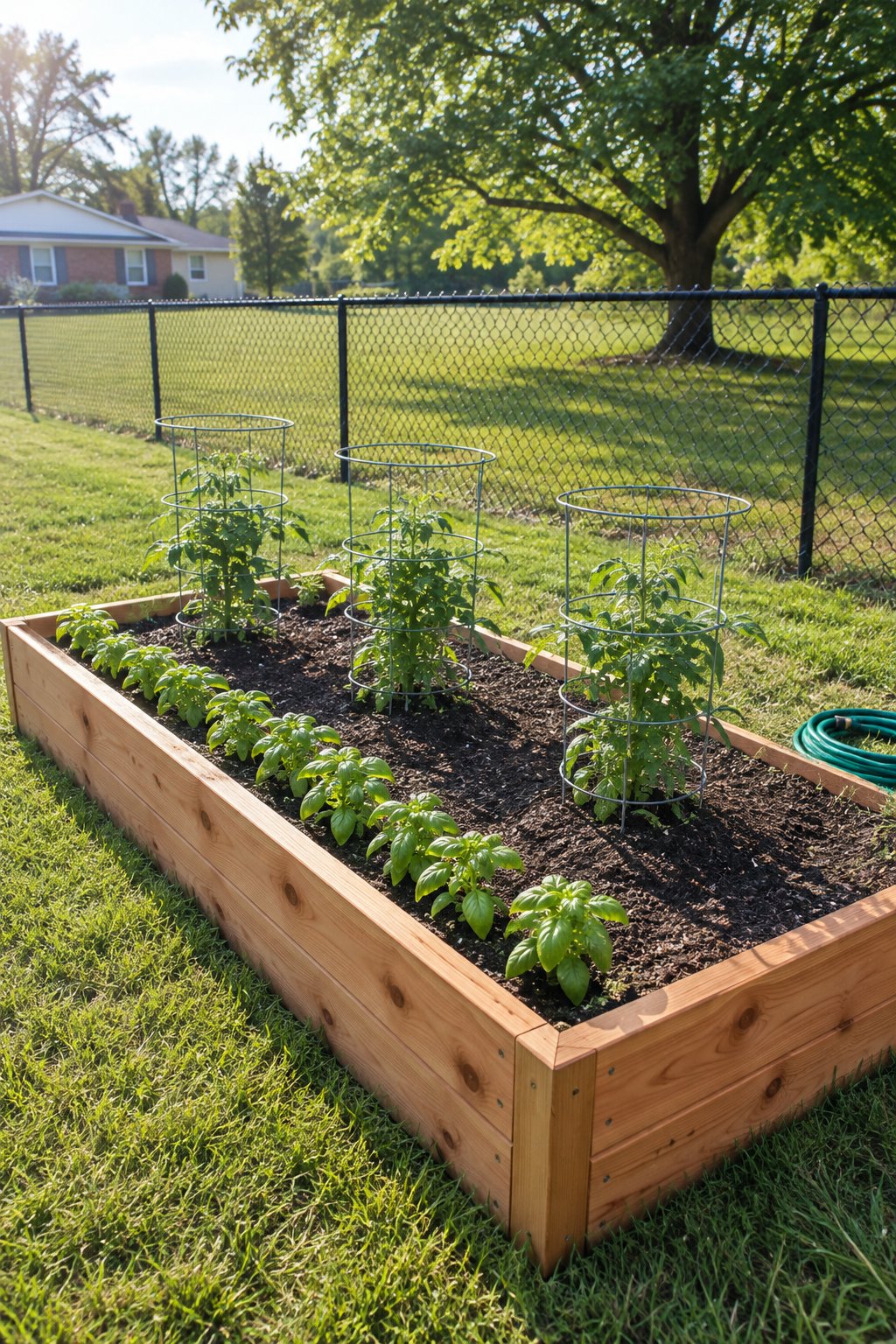
The sunniest spot beats the prettiest one, because tomatoes and most vegetables want 6 to 8 hours of direct sun. A 4 by 8 foot bed holds three caged tomato plants and a row of basil.
See my raised garden beds layout plans for narrow or sloped yards.
16. Seed the Bald Patch, Then Rope It Off
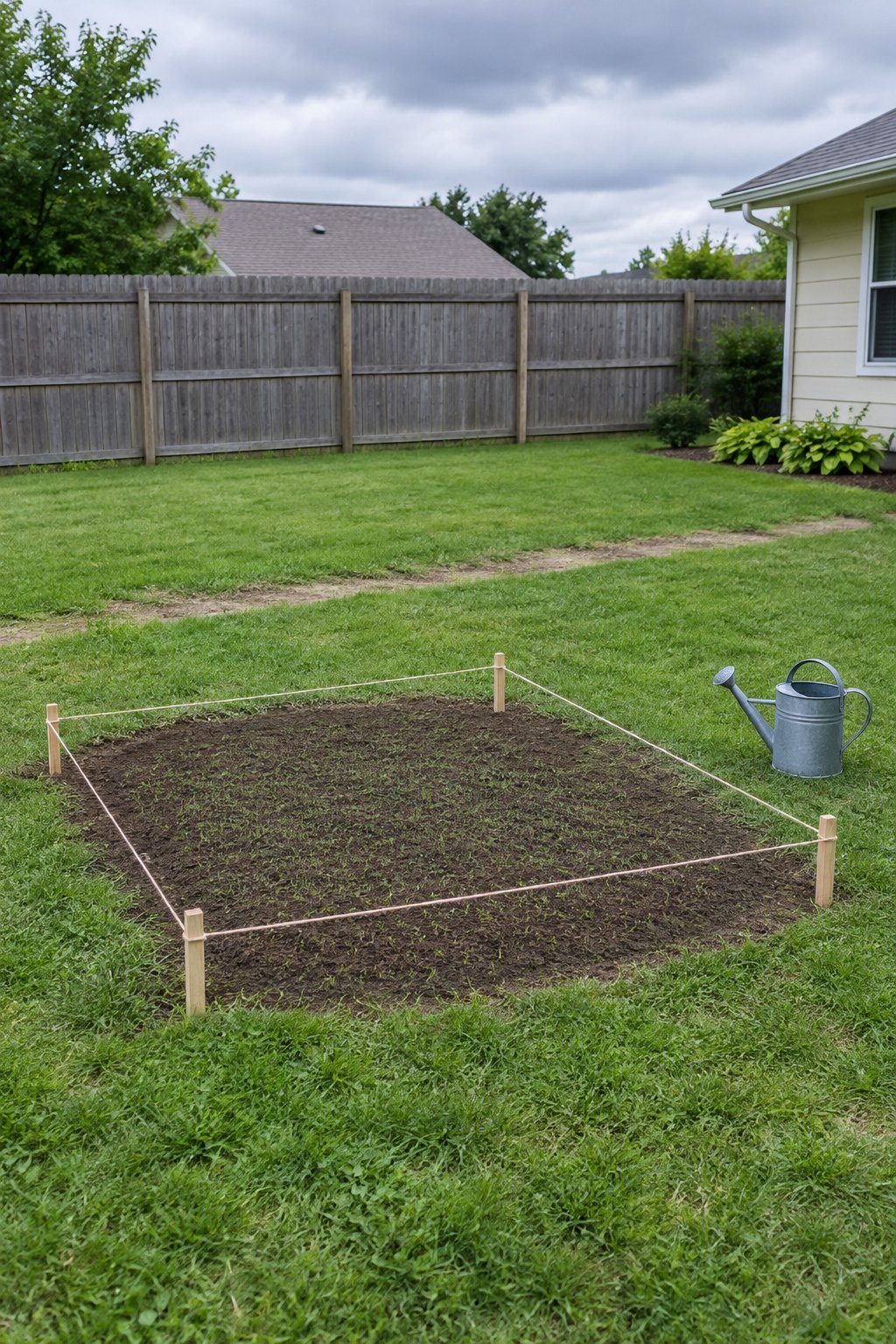
Seed mostly fails because people walk on it. Rake the bare patch, sow seed that matches your lawn, keep it damp and fence it with stakes and string.
Cool-season grass seeds best in early fall, warm-season grass in late spring or early summer.
17. Dry Creek Bed Where the Water Already Runs

Rain already has a route, and a rock-lined channel follows it and keeps it off the lawn, though it will not drain a soggy yard. Slope it away from the house and never toward the neighbor.
Call 811 before you dig, and call a pro if water stays for days.
18. Step Down a Gentle Slope With Timber and Gravel

Make every step the same height, because one uneven riser is what people trip on. Timber frames filled with gravel and pinned with rebar stakes suit a gentle slope.
Call 811 first, and ask about local rules if the slope is steep.
19. Sandbox With a Lid

Lids keep cats and rain out, so a sandbox with one stays clean. Use sand labeled for play, and set the box on level ground in part shade.
Put landscape fabric underneath so the grass does not creep in.
20. Swing Set on Level Ground, Not on Grass

Grass wears away under swings and does little to soften a fall. Spread about 9 inches of wood mulch, at least 6 feet past the frame, and start a little deeper because mulch settles.
Anchor it as the maker says, and call 811 before digging.
21. Rinse Muddy Paws on a Paver Pad by the Back Step
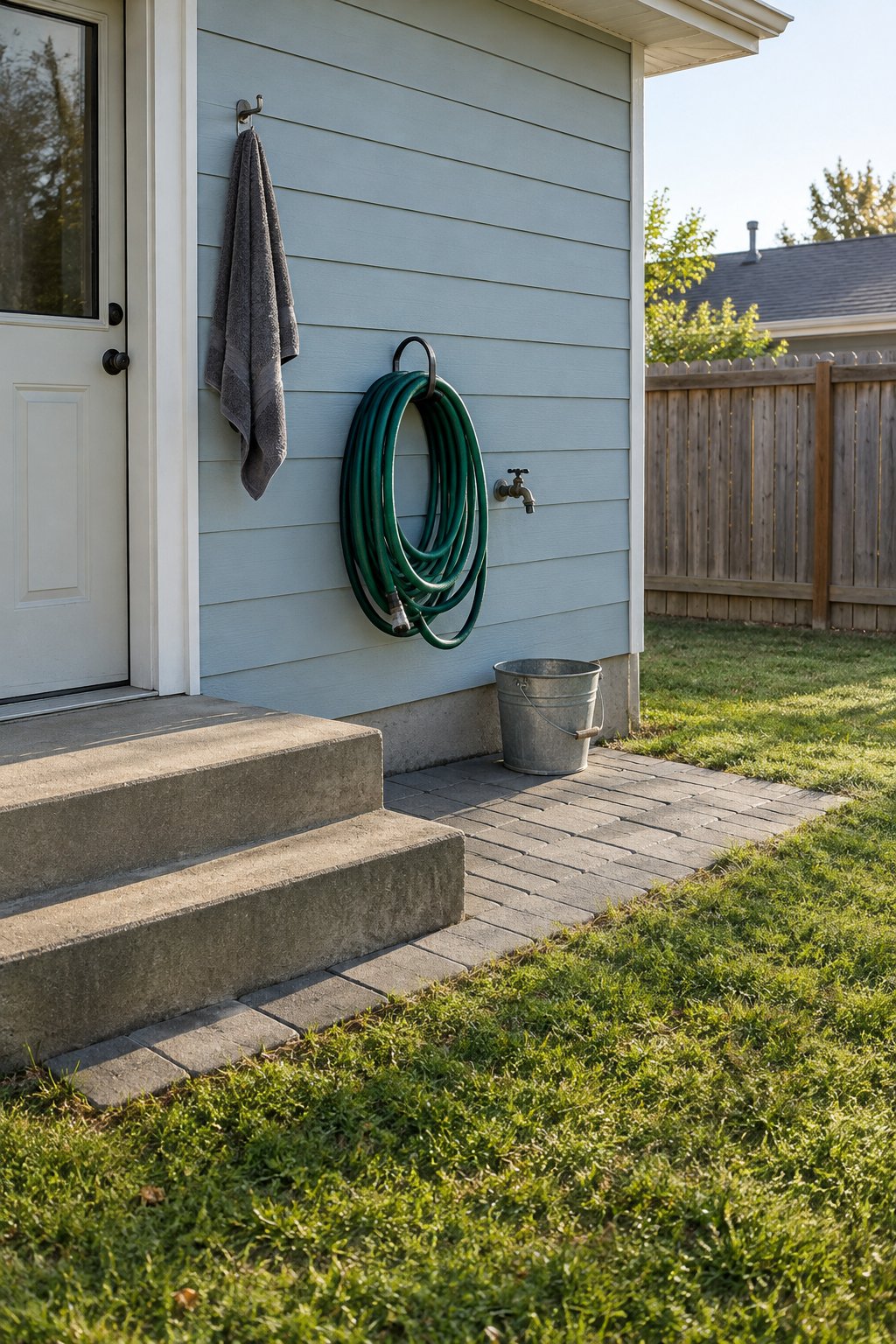
Boots and paws get hosed off on a small paver pad beside the back step, before they reach the floor. Pitch it slightly away from the house.
Hang the hose on a hook and keep a bucket and towel by the door.
22. Potting Bench in the Dead Corner

Give the dead corner by the shed a job, and make it a potting bench, because the tap and the pots are already close. Pick one with a lower shelf and a waist-high top.
Cedar resists rot better than untreated pine.
23. Rain Barrel at the Downspout, Lid On

Water for beds and pots costs nothing once a rain barrel sits at the downspout. Keep the lid on and a fine screen over the inlet, and do not drink from it.
A full 55 gallon barrel weighs over 400 pounds, so it needs a level, sturdy stand.
24. Arbor Over the Gap Where the Path Leaves the Patio

An arbor turns a gap in the fence line into a doorway. Make it at least 7 feet tall so you can walk through without ducking.
Posts go in the ground, so call 811 and check HOA and local rules.
25. Bird Feeder Where You Can See It From the Kitchen Sink

Hang the feeder within 3 feet of the window, so birds cannot build up speed and hit the glass. More than 30 feet away also works, but you lose the view.
Clean it every week or two with hot soapy water, and let it dry.
Backyard Numbers on One Page
Every idea above rests on a few figures.
Check these before you buy or build anything.
| What | The figure | Why |
|---|---|---|
| Space around a dining table | About 3 feet clear on every side | People can pull a chair out and still walk past |
| Sun for coneflower, catmint and tomatoes | 6 hours or more of direct sun | Tomatoes and most vegetables do best with 6 to 8 |
| Mulch under a swing set | About 9 inches once settled, at least 6 feet past the frame | It softens a fall, and the maker’s manual has the exact clear zone |
| A full 55 gallon rain barrel | Over 400 pounds | It needs a level, sturdy stand |
| Bird feeder and window | Within 3 feet, or more than 30 feet away | Birds hit the glass when they have room to build speed |
| Ground beside the house | Falls about 6 inches over the first 10 feet | A common model-code figure, and your local code decides |
Six Backyard Mistakes to Skip
Furniture across the walking routes
Do thisKeep a path about 3 feet wide from the door to every seat. If you have to turn sideways to reach a chair, move something.
Building where water runs toward the house
Do thisCheck that the ground beside the foundation falls away from the wall. If water pools there after rain, ask a pro before you build nearby.
Outdoor lights on indoor cords
Do thisUse outdoor-rated lights and cords, plugged into a weatherproof, GFCI-protected outlet. If you do not have one, hire an electrician.
A tree planted for its size today
Do thisRead the mature height and width on the tag, and plant with that in mind. Keep it well clear of the house, overhead wires and buried lines.
Posts, gates and arbors before the rules
Do thisAsk your town and HOA about permits, setbacks and height limits before you buy lumber. Then call 811.
Pavers on bare soil
Do thisDig out a few inches and fill with compacted gravel and sand first. Pavers laid straight on soil sink and shift.
What the 811 Call Actually Does Before You Dig
Most people treat 811 as a formality. It is a free call that sends utility companies out to mark what is buried in your yard.
You give the address and the spot you plan to dig, then wait for flags or paint on the ground.
The wait varies by state, often a few working days, so call before you buy the lumber. The colors follow a standard: red for electric, yellow for gas, orange for communications and blue for water.
Lines you own, such as a sprinkler pipe, lighting cable or the gas line to a grill, are usually not marked. Ask whoever installed them.
I would rather wait three days for a flag than meet a cable with a spade.
Start with the problem you notice from the back door every day, and fix only that one. A seat, some shade or a clear path usually does more than a long list of plants.
If the yard is small or money is tight, my small backyard ideas on a budget are a good next read.
One finished corner will show you what the next one needs.
Frequently Asked Questions
How do I start planning a backyard?
Stand at the back door and write down the one thing you wish you could do out there, such as sit, eat, get shade or keep a dog in. Fix that first, then add the next idea.
Do I need a permit for a deck, fence or arbor?
Often you do, and the rules vary by town and by HOA. Ask your building department and your HOA before you buy materials, and call 811 before any digging.
Can renters do these backyard ideas?
Anything freestanding is usually fine: chairs, a bistro set, lanterns, a sandbox, a potting bench, loose pavers. Anything dug in or fixed to a fence or the building needs the landlord’s OK first.
How deep should mulch be under a swing set?
A common guideline is about 9 inches of wood mulch once it has settled, so start deeper, and extend it at least 6 feet past the frame. Follow the manual that came with your swing set, because it has the exact clear zone.
Where is the best place for a seating area?
Close to the back door, where you can see it from the kitchen, is the spot you will use most. Afternoon sun comes from the west, so shade that side if you want to sit after lunch.
You Might Also Like
Save This For Later
Loved backyard ideas? Save this pin to your Pinterest board now so you can find it again anytime you need the inspiration.