Xeriscape Landscaping: 14 Plans for Yards That Barely Need Watering
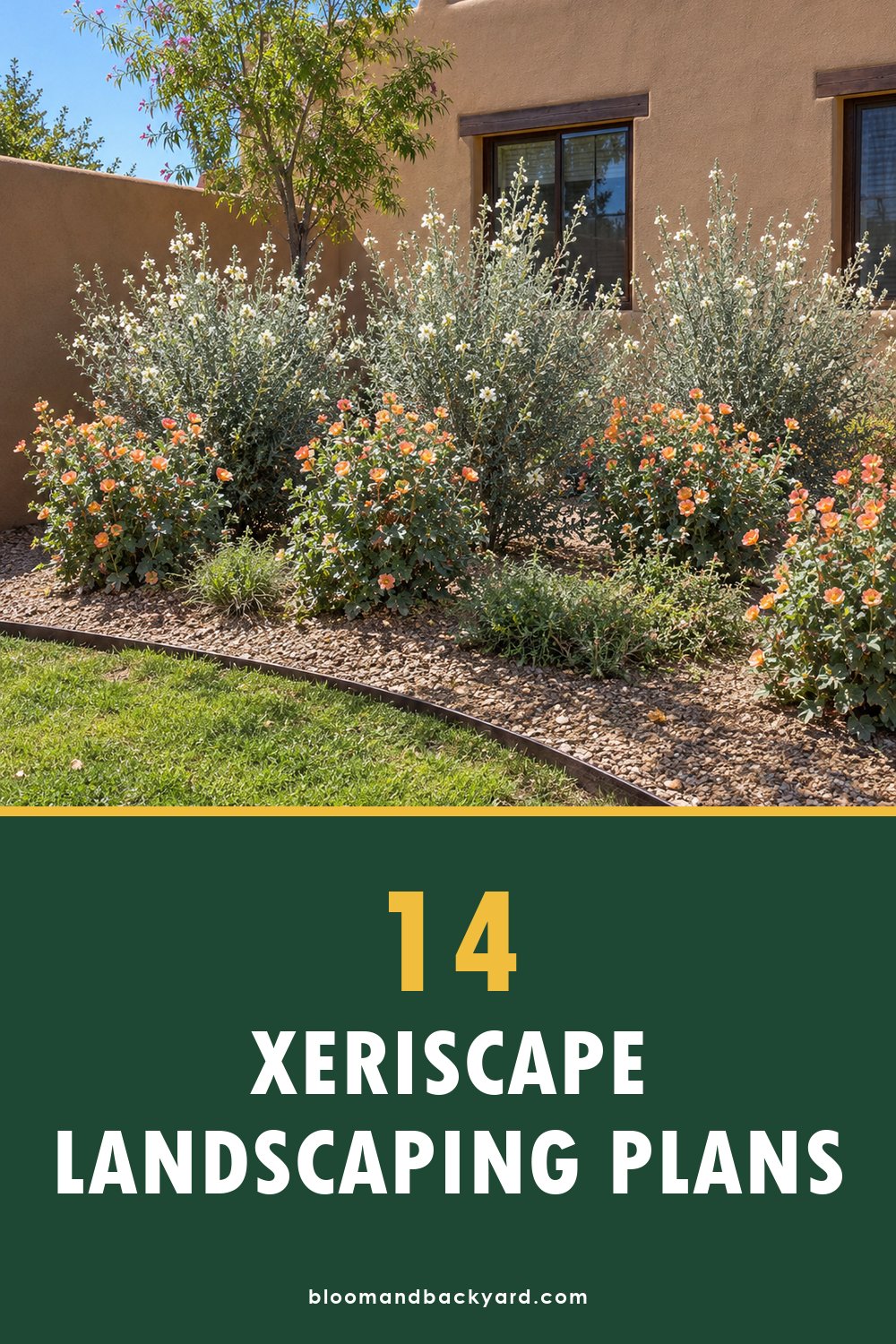
Xeriscape landscaping is a system, not a gravel yard: seven principles, from a plan and the right turf to drip and mulch.
These 14 plans apply it region by region, from the Mountain West to the rain-fed East.
Each one says what it takes, and when to call 811.
Find your yard
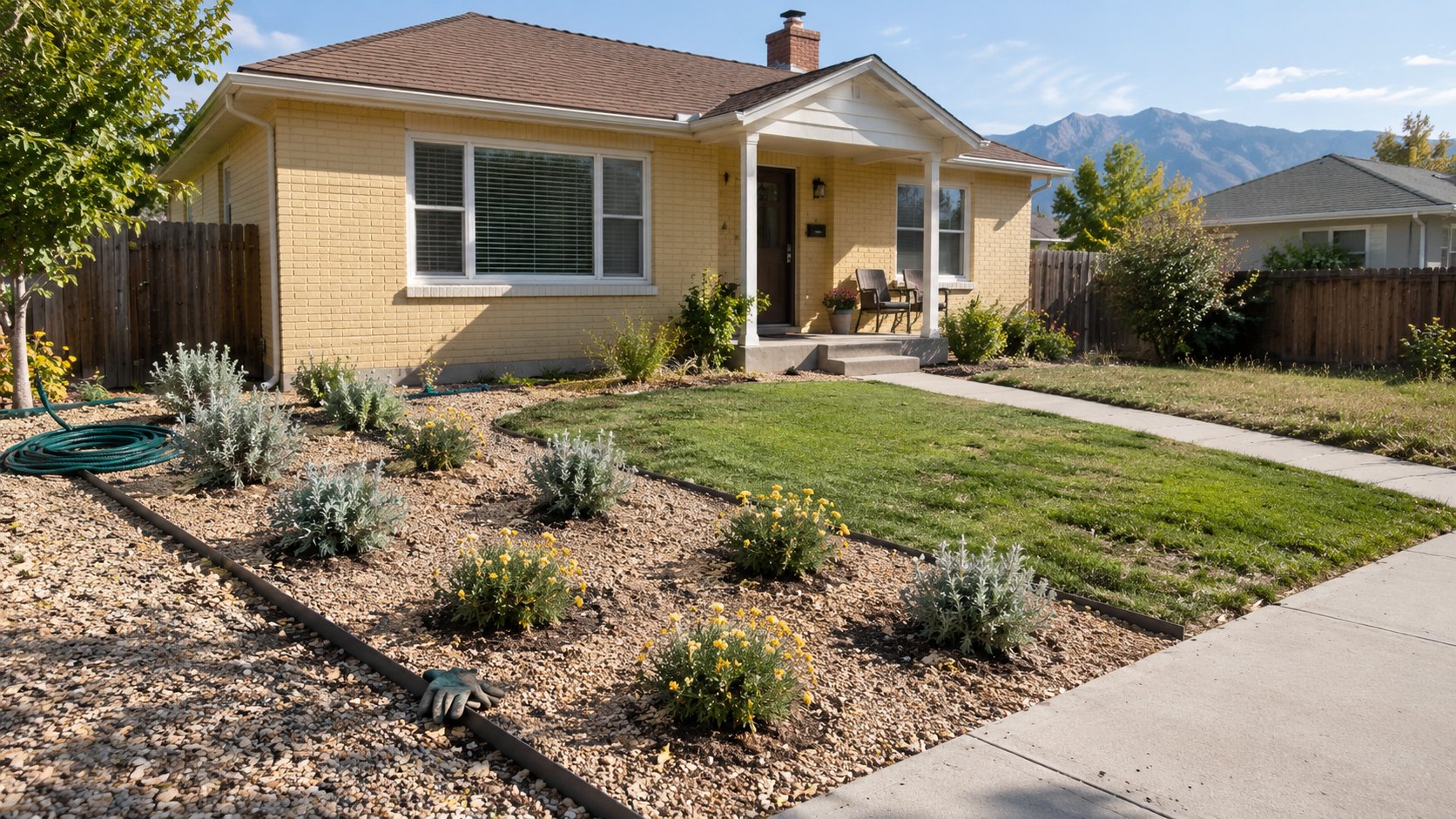
1. Front Range Front Yard: Bluegrass Cut Back to One Play Rectangle
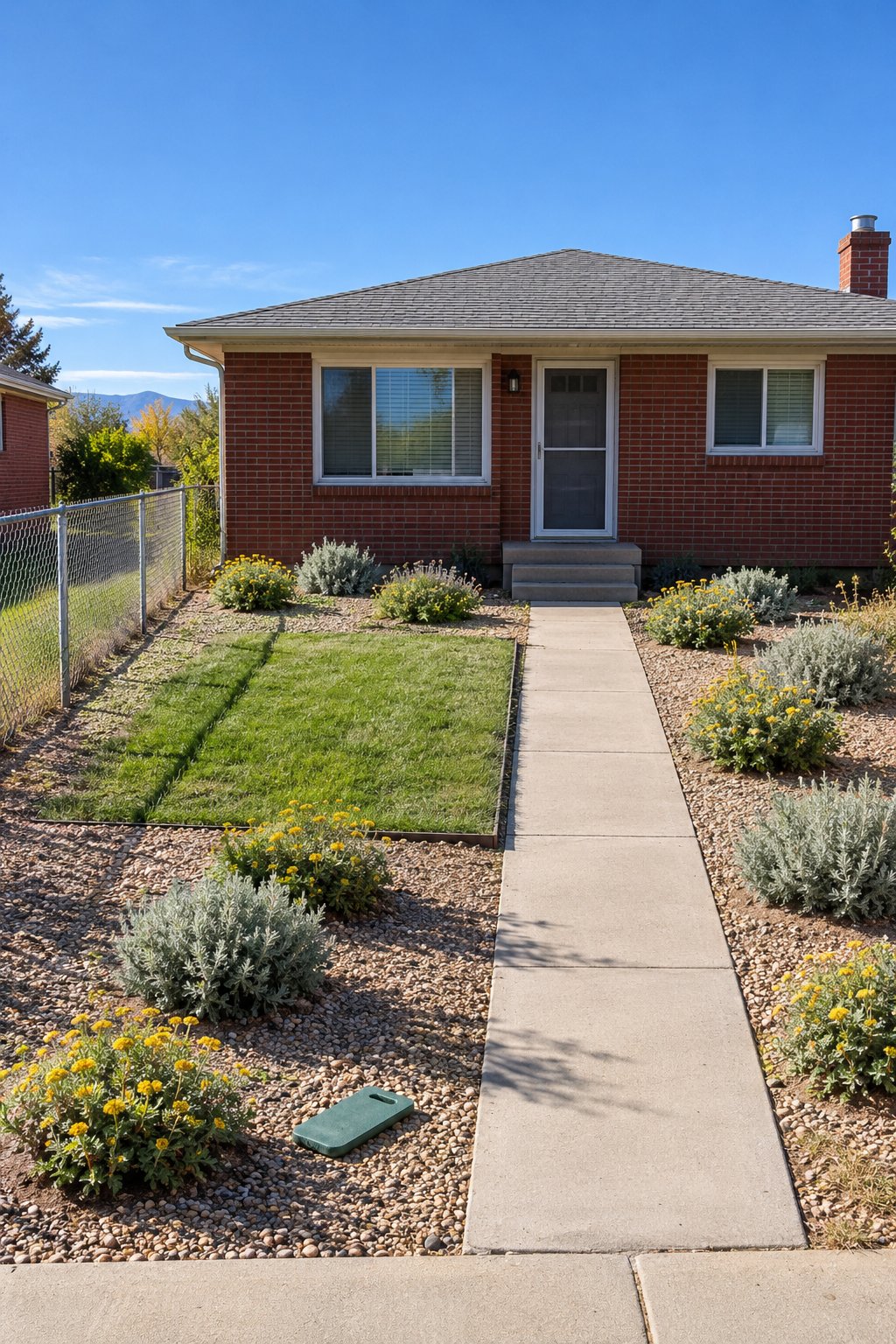
Keep lawn only where someone plays or walks, often one rectangle by the door, and plant the rest. Practical turf areas are one of the seven xeriscape principles, not a ban on grass.
Sulphur-flower buckwheat and fringed sage fill the beds in full sun and soil that drains.
2. Three Water Rings Around the Patio, Thirstiest Plants Closest

Hydrozone the whole yard: the few plants you water weekly sit by the patio, hummingbird mint fills a middle ring on drip, and Apache plume holds the fence.
Apache plume grows 4 to 6 feet and is drought tolerant once established, so the outer ring gets only rare soaks.
For one border done this way, seeone bed zoned by thirst from the hose outward.
3. Swap the Old Spray Zone for Drip Without Digging Up the Bed

Spray heads throw water onto mulch, paths and wind; drip puts it at the roots. A retrofit kit threads onto one old riser and adds a filter and a pressure regulator, since sprinkler zones run at higher pressure than drip takes.
Cap every spray head you no longer need, or the zone keeps spraying.
4. Low Desert Patio Shaded by One Desert Willow, on Decomposed Granite
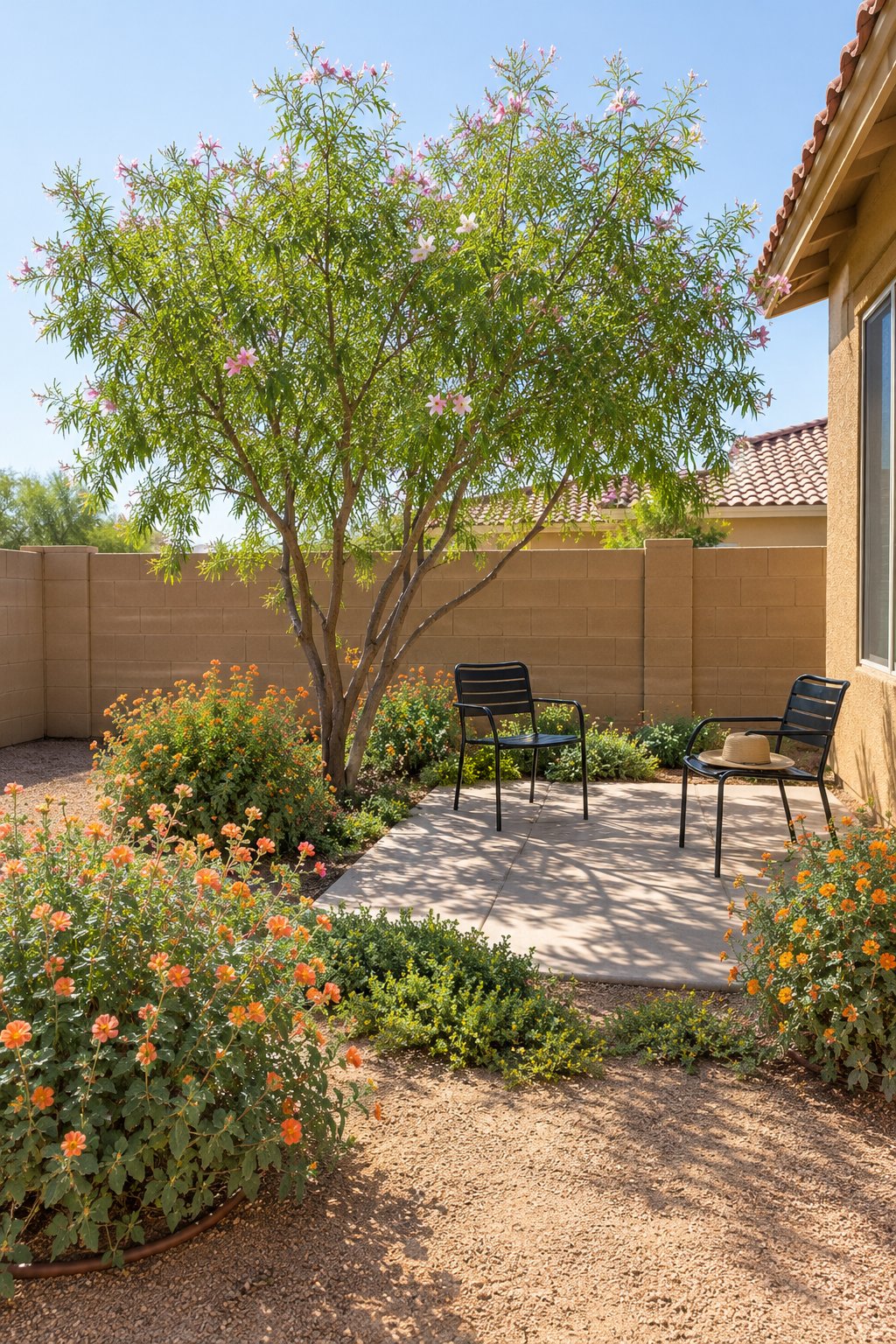
Plant a desert willow on the west side of the patio, lay decomposed granite and set globe mallow on drip around it. Both are native to the Southwest deserts and take full sun and heat.
The willow drops its leaves in winter, which lets the low sun back onto the patio.
5. Roof Water Into Sunken Basins Around a Blue Palo Verde

Desert rain comes in a few big storms, so dig shallow basins and steer each downspout into them. The blue palo verde goes in the largest basin, with desert marigold on the drier rim.
An inch of rain on 1,000 square feet of roof is about 620 gallons, far more than one barrel holds.
Keep every basin at least 10 feet from the foundation.
6. Xeriscape, Not Zeroscape: Plant Into the All-Rock Yard You Have

Bare rock throws heat at the house and gives no shade. Cut planting pockets through the stone, pull out any plastic underneath, and set deer grass and red yucca on drip.
Red yucca spreads 4 to 6 feet wide, so set it well out from a sunny wall.
These rock landscaping ideas cover laying stone around plants.
7. California Lawn Out, Manzanita, Ceanothus and Cleveland Sage In
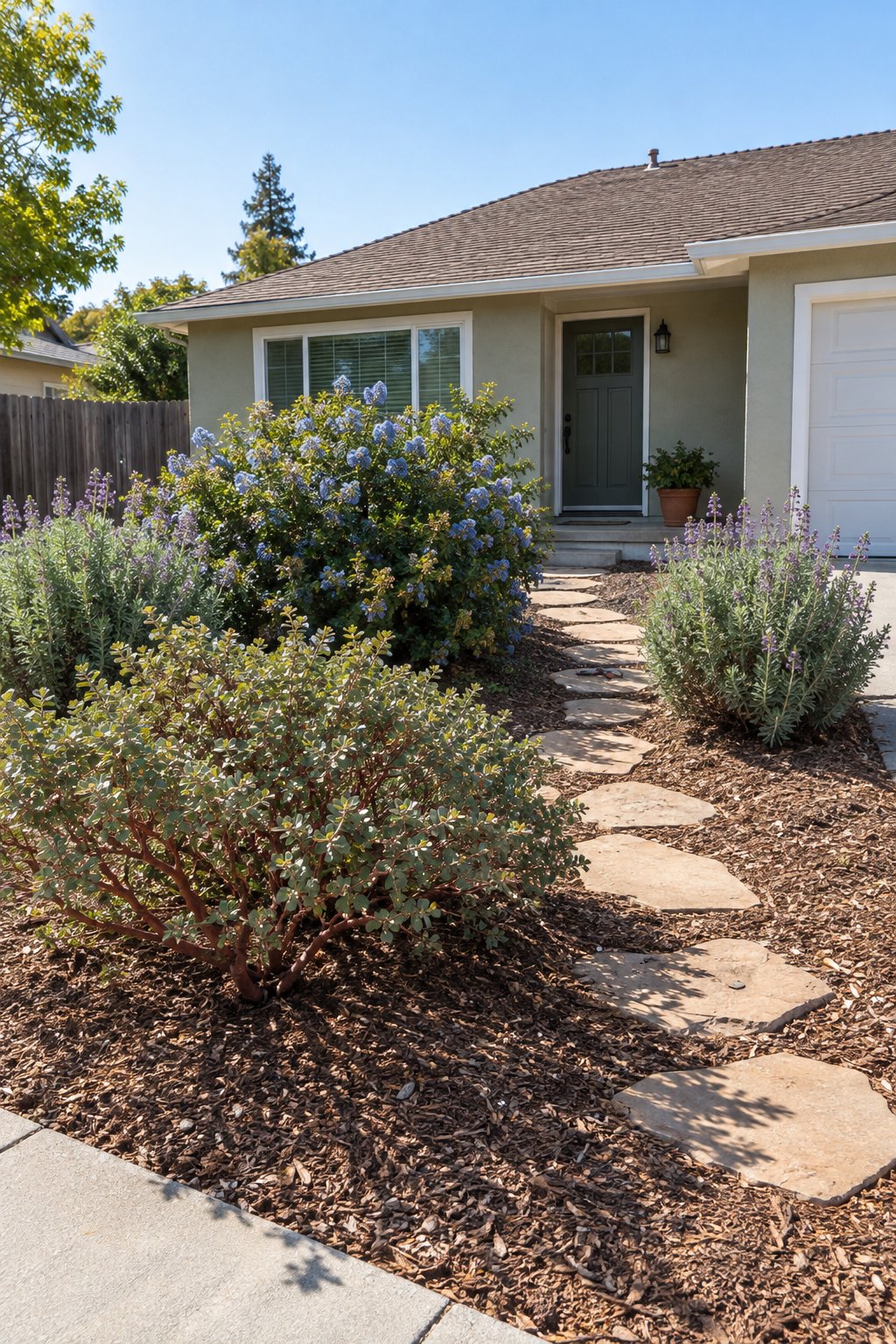
These summer-dry natives want soil that drains and only deep, infrequent water in summer once established. Manzanita does poorly in rich soil, heavy clay or soggy ground.
Give them their own valve, apart from anything you water weekly, because steady summer water shortens their lives.
8. A Shaggy Sedge Meadow Where the Back Lawn Was

Clustered field sedge is a California native sold as a low-mow lawn substitute that takes regular foot traffic. Mow it a few times a year, or leave it shaggy.
In a hot inland yard, UC Verde buffalograss, bred at UC Davis and UC Riverside, is the other swap, and it goes tan in winter.
9. Winter Rain Into a Swale, With Deer Grass in Place of Mexican Feather Grass
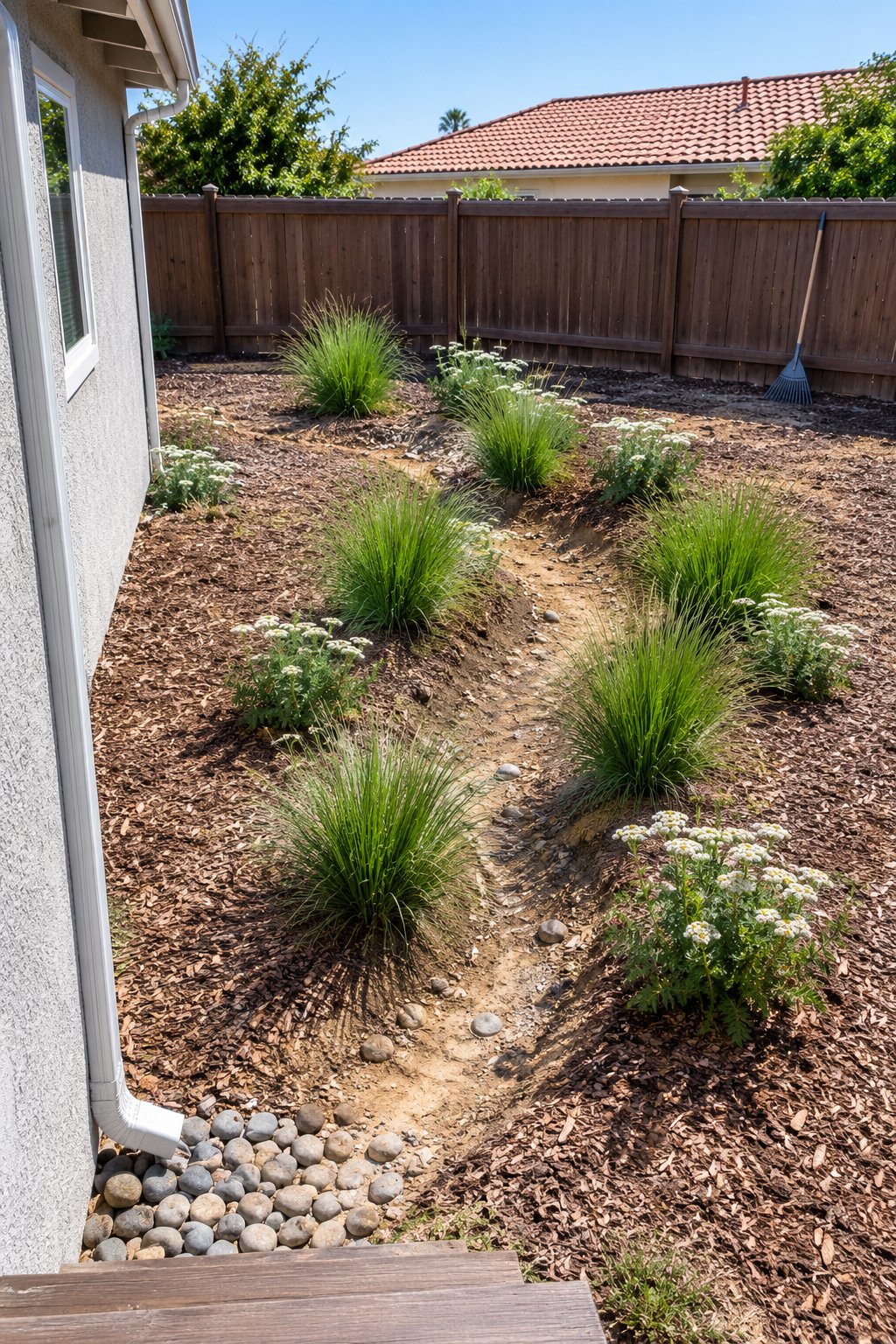
California rain falls in winter, so a shallow swale that slows downspout water and soaks it in carries plants into the dry months. Deer grass lines it, with common yarrow on the drier rim.
Skip Mexican feather grass, pampas grass and green fountain grass: California’s invasive plant council lists all three.
10. Great Plains Back Lawn Grown Out as Shortgrass Prairie, With One Mown Path

Buffalograss and blue grama are warm-season Plains natives, so plant them in late spring once the soil warms. Mow one path to a bench and leave the rest unmown.
Both want full sun and go tan in drought and winter, and buffalograss tolerates shade poorly.
For the mown version, see a mown buffalograss lawn for a hot, dry front yard.
11. Central Texas Yard on Thin Soil: Texas Sage, Lindheimer Muhly and Blackfoot Daisy

All three are Texas natives for full sun, and Texas A&M AgriLife named Lindheimer muhly a Texas Superstar for its drought tolerance. Texas sage wants soil that drains.
Blackfoot daisy stays under a foot tall and wants dry, lean soil, so keep it off the drip line that feeds thirstier plants.
12. A Rain-Fed Front Border for the Northeast and Midwest

In a humid climate, xeriscape means plants matched so well to the yard that rain carries them once established, not gravel. Little bluestem, butterfly weed and aromatic aster all want full sun and soil that drains.
Shredded wood mulch suits them here, 2 to 3 inches deep and kept off the stems.
13. Southeast Downspout Rain Garden of Soft Rush, Switchgrass and Cardinal Flower
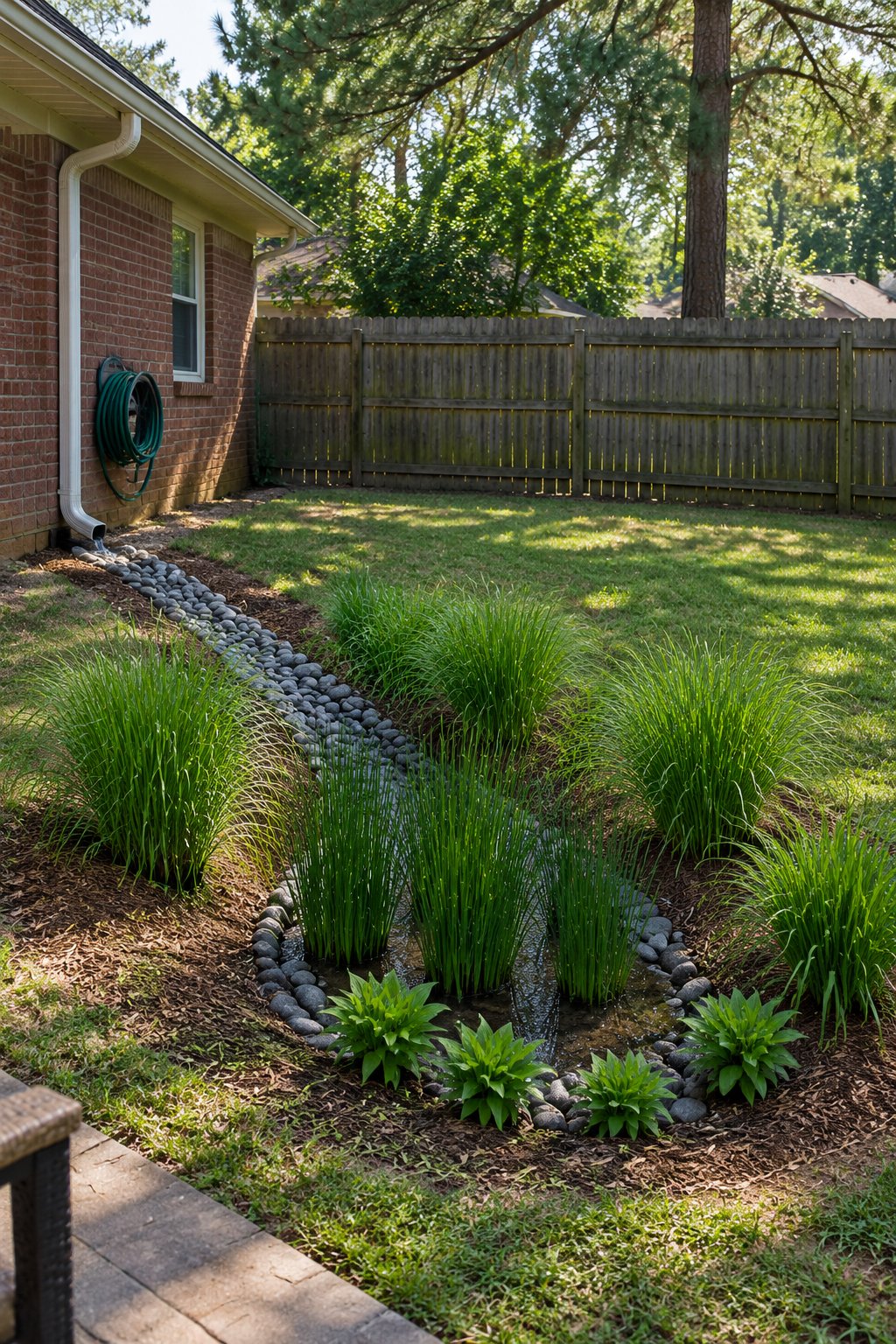
In the humid Southeast, storms are a bigger problem than drought. Steer a downspout into a shallow basin at least 10 feet from the house: soft rush in the wet bottom, switchgrass on the sides, cardinal flower where soil stays moist.
Most summers, the roof does the watering.
Florida yards get their ownFlorida landscaping plans.
14. Shade Under the Trees: Allegheny Spurge and Wild Ginger Instead of Thin Grass

Grass struggles in shade under trees and still asks for water and mowing. Replace it with Allegheny spurge, a slow-spreading native pachysandra of the Southeast, and wild ginger, mulched with shredded leaves.
Skip English ivy and common periwinkle, which are invasive in many areas.
Xeriscape by Region on One Page
When the rain falls decides the plan.
Find your region, then read its plans.
| Region | Rain | Lawn swap | Ground and mulch | Plans |
|---|---|---|---|---|
| Mountain West | Low, some of it as snow | A small lawn kept for play, or buffalograss | Gravel or wood, by plant | 1 to 3 |
| Southwest desert | Very low, in a few big storms | None, or a small patch by the patio | Decomposed granite or gravel | 4 to 6 |
| California, summer-dry | Winter rain, dry summers | Clustered field sedge or UC Verde buffalograss | Wood chips or gravel, by plant | 7 to 9 |
| Great Plains and Texas | Moderate, with long hot dry spells | Buffalograss and blue grama | Gravel or wood, by plant | 10 and 11 |
| Humid East | Steady, with summer storms | Native beds, shade groundcovers under trees | Shredded wood or leaves | 12 to 14 |
Six Xeriscape Mistakes to Skip
Covering the whole yard in rock
Do thisBare stone throws heat at the house and gives no shade. Plan for plants to cover much of the ground once they are grown.
Plastic sheeting under the stone
Do thisPlastic keeps water and air from the soil and the roots below it. Leave it out, and pull it up where you plant.
Leaving the old spray heads on
Do thisConvert the zone to drip or cap the heads you no longer need. Then reset the controller for longer, less frequent runs.
Cutting off water in year one
Do thisWater new plants deeply about once a week through the first season, and shrubs into the second. Drought tolerant means once established.
A pretty grass that seeds into wild land
Do thisCheck your state’s invasive list before you buy. In California that rules out Mexican feather grass and pampas grass.
Tearing out the lawn before asking
Do thisMany water utilities offer turf-replacement rebates and want you to apply before you remove anything. An HOA may want plan approval too.
Xeriscape Was Coined at a Water Utility, Not in a Rock Yard
The word comes from Denver Water, which coined it in 1981 from the Greek xeros, meaning dry, after drought and watering limits hit the region.
The utility worked with Colorado State University Extension and local landscape pros on seven principles: planning and design, soil, practical turf areas, appropriate plants, efficient irrigation, mulch and maintenance.
Nothing on that list says gravel, and grass is on it.
That is why a rain-fed native border in Ohio is as much a xeriscape as a desert yard of decomposed granite.
I read the seven as a checklist, because a plan that skips one usually shows it later as a dead patch or a water bill.
Start with one zone, not the whole yard: shrink one patch of lawn you never use, or convert one spray zone to drip this spring.
Find your region in the table, pick one plan, and add the next one when the first has made it through a summer.
Frequently Asked Questions
What is xeriscape landscaping?
It is a water-saving landscape system Denver Water named in 1981, built on seven principles: planning, soil, practical turf, suitable plants, efficient irrigation, mulch and maintenance. It does not mean an all-rock yard.
Does a xeriscape mean no lawn at all?
No. Practical turf areas are one of the principles, so keep grass where people play or walk and plant the rest.
What can I replace my lawn with?
It depends on your region: buffalograss and blue grama on the Plains and in the Mountain West, clustered field sedge in California, and native groundcovers such as Allegheny spurge in shade in the humid East. Check the plant’s sun needs before you buy.
Does a xeriscape need watering?
Yes, through the first season while roots grow, and shrubs often into the second. After that it depends on your climate, from deep, rare soaks in the West to rain alone in much of the East.
Can I get a rebate for removing my lawn?
Many water utilities offer turf-replacement rebates, so check yours. Many ask you to apply and get approval before you remove any grass.
You Might Also Like

Save This For Later

Loved xeriscape landscaping? Save this pin to your Pinterest board now so you can find it again anytime you need the inspiration.