Front Porch Plants: 18 Pots, Planters and Hanging Baskets for the Entry

Front porch plants live or die by one thing: how many hours of direct sun reach the door.
So these 18 pots, planters and baskets are sorted by light, and each says whether it is an annual or a perennial that can stay out all winter.
Count your porch’s sun before you buy a single plant.
How much sun reaches your door?
1. Angelonia and Fan Flower in One Tall Pot on a Hot, Sunny Stoop
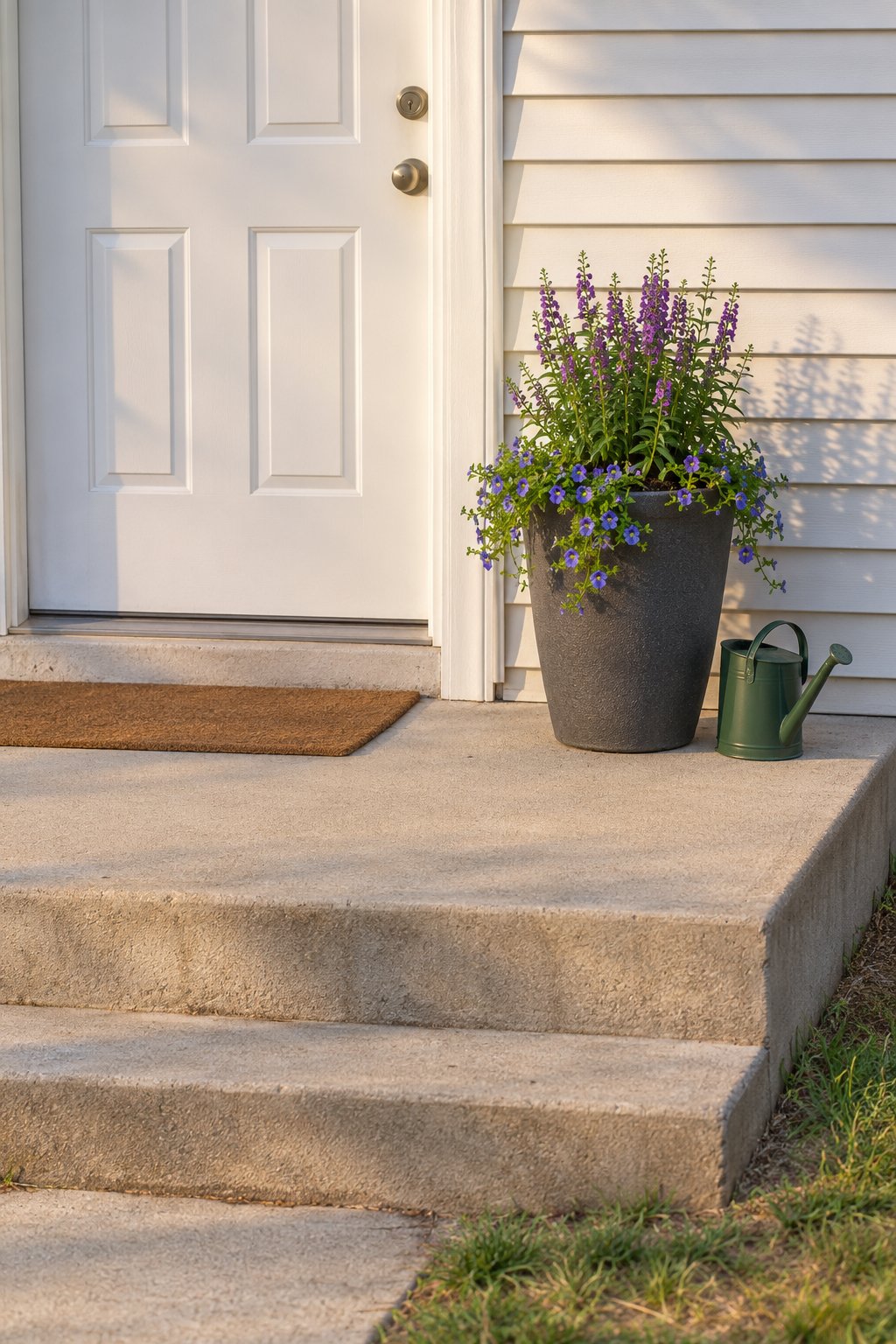
A stoop that bakes all afternoon is the best spot on the house for angelonia, which wants full sun and shrugs off summer heat. Tuck fan flower around the rim so it spills over the edge.
Both are grown as annuals in most of the US, so plant them after your last frost and start fresh each spring.
2. A Mandevilla Climbing an Obelisk in a Tall Pot Beside the Door
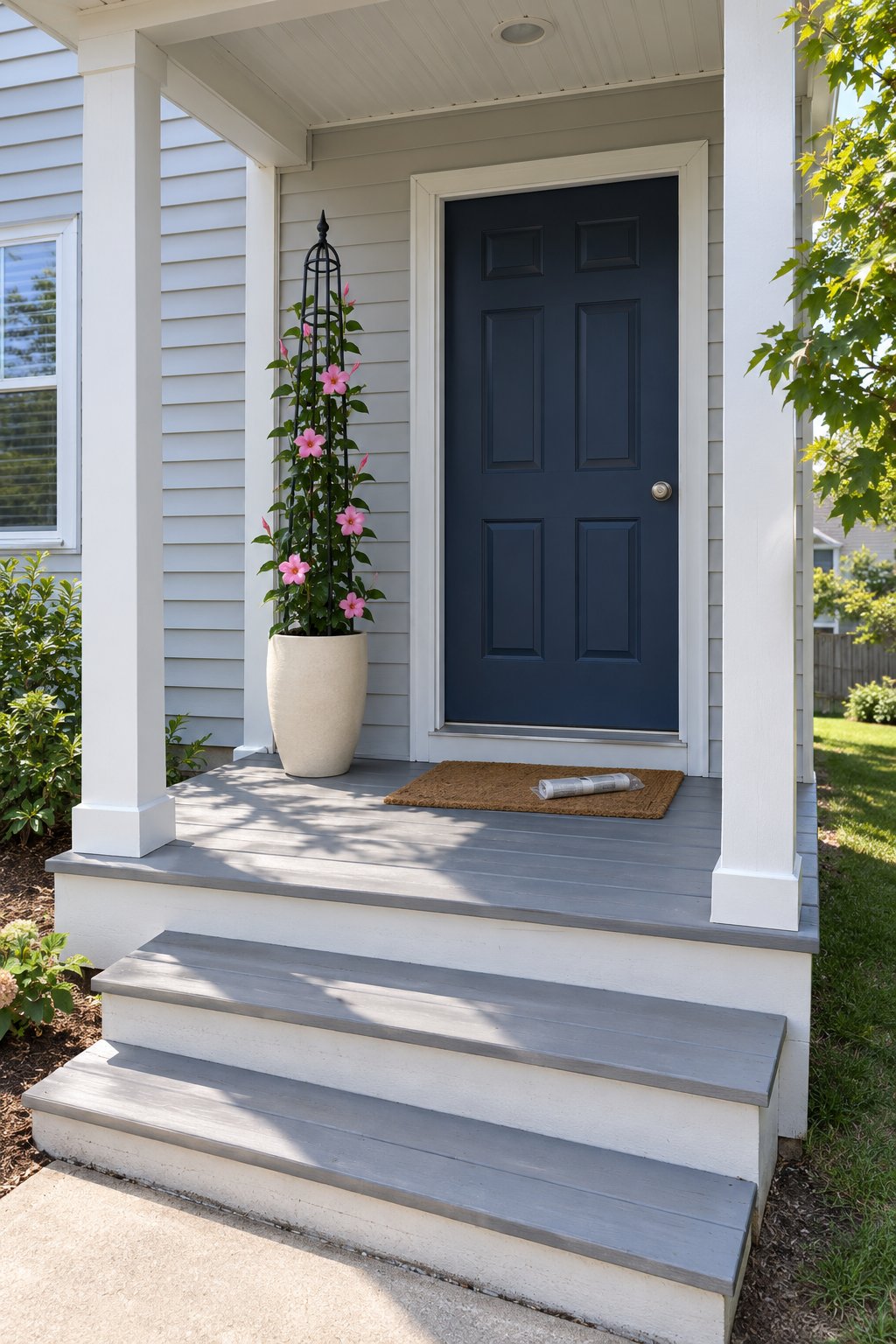
Nothing else gives a sunny entry height this fast. Mandevilla is a tropical vine that wants sun and something to twine up, so set a slim obelisk in the pot on planting day.
It survives winter outdoors only in about zones 10 and 11, so most of us grow it as a summer annual.
3. Sedum and Blue Fescue in a Frost-Resistant Pot That Stays Out All Year

This is the sunny pot I would never replant. Tall sedum and blue fescue both want full sun and soil that drains fast, and the sedum flowers from late summer into fall.
Most tags rate them to zone 3 or 4, so in a pot they can stay out in about zone 6 and warmer.
4. Pentas in Three Stepped Pots at the Side of the Steps
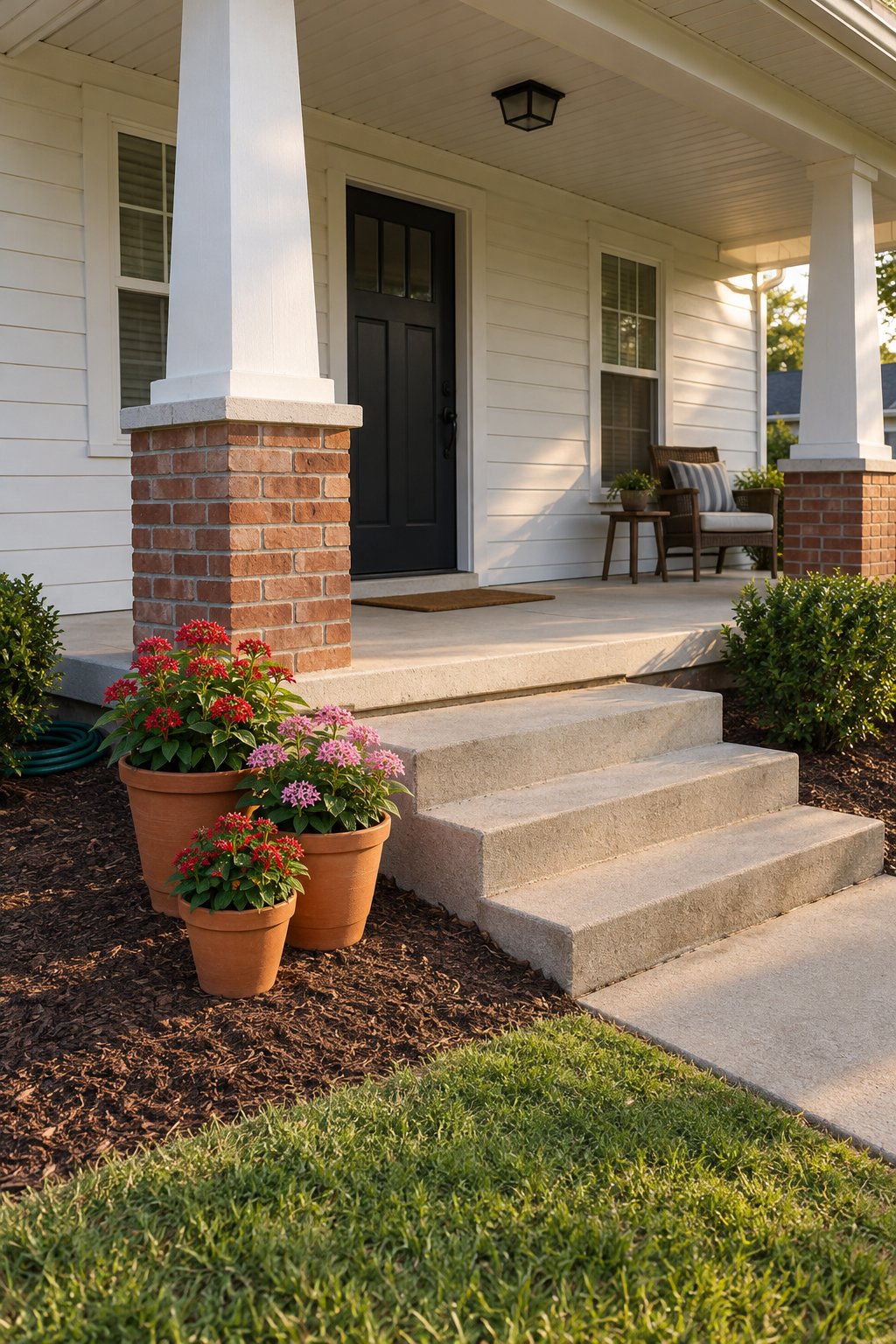
Pentas keep flowering through summer heat in full sun, which makes them the flower I would pick for a sunny walk-up. Set three matching pots in stepped sizes on the ground beside the bottom step.
They are annuals in most of the US and perennial only in about zones 10 and 11.
5. A Dwarf Panicle Hydrangea in a Big Pot Where the Morning Sun Lands

A compact panicle hydrangea is the best shrub for a porch pot, full stop. Dwarf types such as Bobo stay about 2.5 to 3 feet tall and take sun to part shade, with afternoon shade in hot regions.
It is rated to zone 3, so the pot can stay outside in about zone 5 and warmer.
6. New Guinea Impatiens With Diamond Frost on an East-Facing Porch

An east-facing porch gets the light New Guinea impatiens like best: morning sun, then afternoon shade. Diamond Frost euphorbia fills the gaps with a white haze of tiny flowers.
Both are tender annuals, so plant them after frost and pull them in fall.
7. A Dwarf Japanese Maple in a Wide Pot Beside a Morning-Sun Door

A dwarf Japanese maple is the one tree I would trust in a porch pot. Give it morning sun and afternoon shade, which keeps the leaves from scorching or bleaching.
In the ground it is rated to about zone 5, but in a pot it is safest left out in about zone 7 and warmer.
8. Caladiums and Impatiens Under a Deep Porch Roof

Under a deep roof, flowers sulk and leaves carry the color. Caladiums do best in shade, and a ring of shade impatiens around them adds the bloom.
Wait until the soil is about 70 F before planting caladium tubers, or buy plants already growing.
9. One Big Hosta, Alone in a Glazed Pot by a Shady Door

A single hosta in a big glazed pot is the calmest thing you can put by a shady door. It wants shade to part shade.
Most hostas are rated to zone 3 or 4, so the plant can winter out in about zone 5 or 6 and warmer; the glazed pot cannot.
10. A Matching Pair of Kimberly Queen Ferns Either Side of a Shady Door

On a covered porch, Kimberly Queen is the fern I would pick for pots by the door. It grows upright rather than floppy and takes more sun than a Boston fern.
It is hardy only in about zones 9 to 11, so most of the country grows it for one season.
11. Dwarf Alberta Spruce in Twin Pots for a Sunny Door All Year

A pair of dwarf Alberta spruce is the classic all-year pot, and it earns the title: dense, slow and green in January. Give it full sun in cool regions and some afternoon shade where summers are hot.
It is rated to about zone 2 or 3, so in a pot it can winter outside in about zone 5 and warmer.
12. Two Emerald Green Arborvitae in Tall Square Planters

Tall, narrow and plain, a pair of these frames a door without crowding the walk. Emerald Green grows only about 3 to 4 feet wide and takes sun to part shade.
It is rated to about zone 3, so the planters can stay out in about zone 5 and warmer.
13. Dwarf Hinoki Cypress Over Ice Dance Sedge for a Part-Shade Entry

For a door that gets a few hours of sun, a dwarf hinoki gives evergreen shape and a skirt of Ice Dance sedge softens the rim. Most tags rate the hinoki to zone 4 or 5 and the sedge to zone 5.
In a pot, leave this one out all winter only in about zone 7 and warmer.
14. Snapdragons and Sweet Alyssum in a Rail Planter for Spring
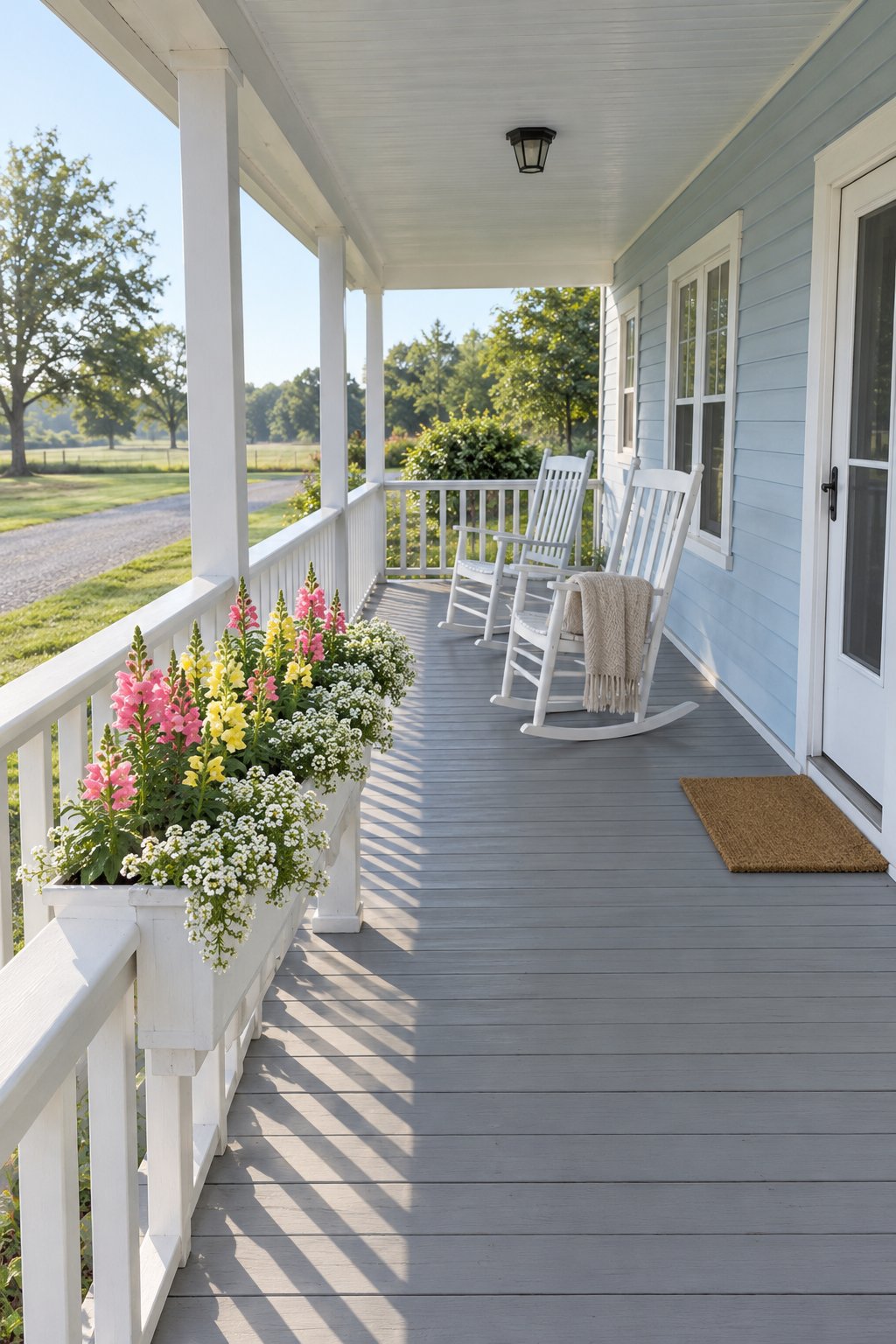
A sunny porch rail looks its best in spring, and snapdragons with sweet alyssum spilling over the front are made for it. Both are cool-season flowers that suit spring sun.
Expect them to slow down in midsummer heat, and swap in a heat lover such as pentas then.
15. A Window Box of Coleus and Torenia Under a Shaded Porch Window

Under a porch roof, a window box needs leaves first and flowers second. Coleus brings the color, and torenia, the wishbone flower, keeps blooming in shade.
Both are annuals, and a box under a roof gets no rain, so water it by hand.
16. Two Baskets of Dragon Wing Begonias Repeating the Pot Below
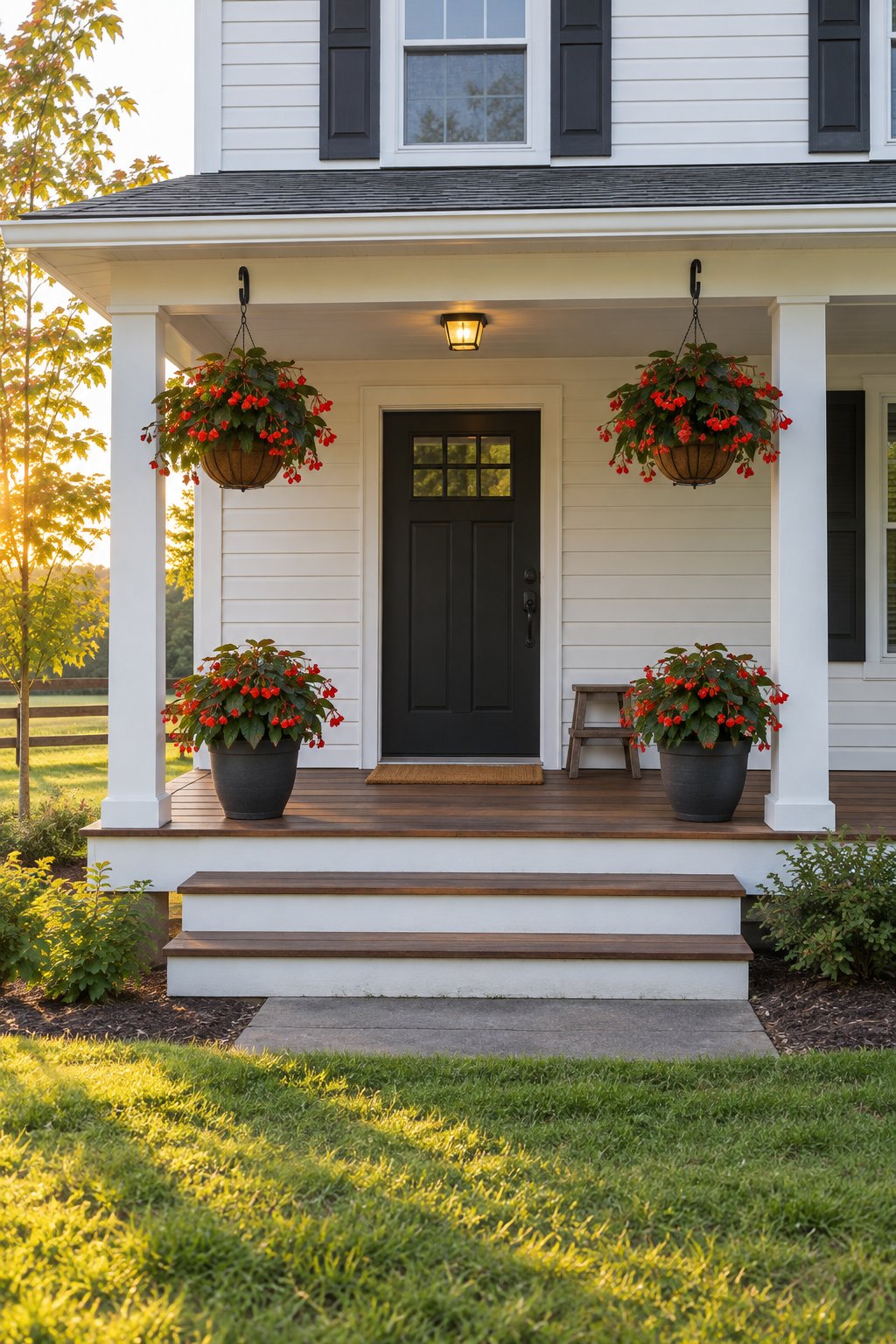
A hanging basket looks random until it repeats something. Hang two baskets of Dragon Wing begonias from the porch beam and plant the same begonia in the pot beneath each one.
They like part shade to shade and are grown as annuals in cooler regions.
17. A Layered Bulb Pot Planted in Fall for Tulips by the Door in Spring
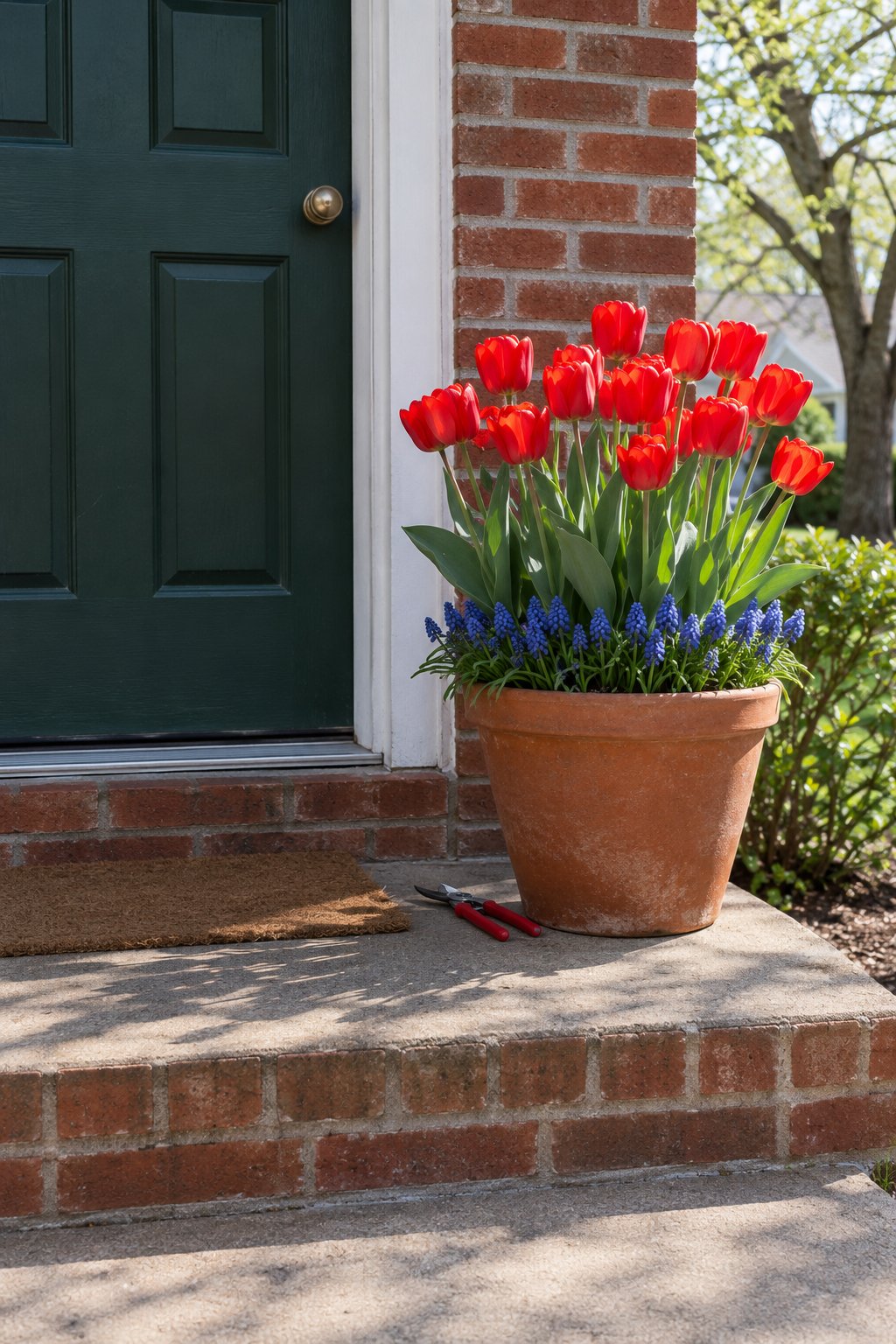
November is when the spring porch gets planted. Layer tulips deep and smaller bulbs such as grape hyacinths above them, in a pot at least 8 inches deep with drainage holes.
It then needs about 12 to 16 weeks at 30 to 40 F, often longer for tulips, usually in an unheated garage.
18. Evergreen Boughs Pushed Into the Summer Pot Before the Soil Freezes

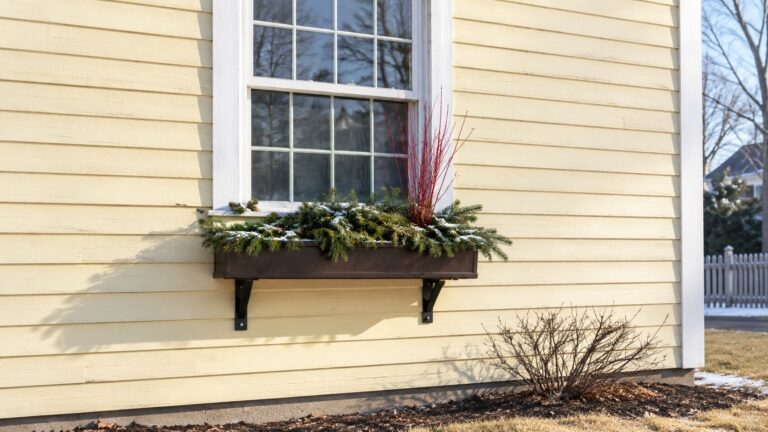
The summer pot does not have to sit empty all winter. Once the annuals die back, push cut evergreen boughs and a few red branches deep into the old soil, often around Thanksgiving.
Do it before the potting mix freezes, then water once so the stems set.
Front Porch Pot Numbers on One Page
Every pot above rests on a few figures.
Check your own zone and your porch’s sun against them before you buy.
| What | The figure | Why |
|---|---|---|
| Full sun | About 6 or more hours of direct sun | Angelonia, mandevilla, sedum, pentas and spruce want it |
| Part shade | About 3 to 6 hours, best in the morning | Hydrangea, New Guinea impatiens and Japanese maple like it |
| Shade | Less than about 3 hours | Caladiums, hostas, ferns and begonias suit it |
| Perennials left out in pots | Rated about two zones colder than yours | Roots in a pot get colder than roots in the ground |
| A fall bulb pot | At least 8 inches deep, about 12 to 16 weeks at 30 to 40 F | Tulips need the cold to flower, and often longer |
| Winter greens | In before the potting mix freezes | Frozen mix will not take a stem |
Six Front Porch Pot Mistakes to Skip
Sun plants under a deep porch roof
Do thisCount the hours of direct sun at the door on a clear day. Under about 3 hours, choose from the shade group instead.
Trusting the tag’s zone for a pot
Do thisFor anything that stays out all winter, pick a plant rated about two zones colder than where you live.
Terracotta and glazed pots left out all winter
Do thisEmpty them and store them dry, or use fiberglass, resin or metal for pots that winter outside.
Waiting for rain under a roof
Do thisRain rarely reaches pots on a covered porch, so check the soil with a finger every few days in summer.
A pot with no drainage hole
Do thisDrill a hole or use the pretty pot as a sleeve over a plain nursery pot that drains.
Pots in the walking line
Do thisKeep the path from the steps to the door clear, and set pots beside the steps, never on the treads.
Two Zones Colder: Why a Porch Pot Needs a Tougher Plant Than the Bed Beside It
Roots in a pot sit above ground with only a few inches of mix around them, so they get far colder than roots in a bed.
That is why Penn State and Illinois extension advise picking perennials rated two zones colder than where you live, so in zone 5 you look for a tag that says zone 3.
A bigger pot holds more soil and gives the roots more protection, so size up for anything that winters outside.
Even then it is not a promise, because zone maps are long-term averages and one hard winter can still take a plant.
If a plant is only one zone hardier than my own, I would roll it into an unheated garage for the coldest weeks.
Start with the light: check the door every couple of hours on a clear day, then pick one idea from the matching group above.
One pair of the right plants beats a crowd of the wrong ones.
Once the pots are sorted, the bed below the porch is next, and my flower bed ideas in front of the house pick up from there.
Frequently Asked Questions
What are the best front porch plants for shade?
Caladiums, hostas, Dragon Wing begonias, torenia and Kimberly Queen ferns all suit a covered porch with little direct sun. Water them by hand, because rain rarely reaches under a roof.
Can potted plants stay on the porch over winter?
Evergreens and perennials can, if they are rated about two zones colder than your zone and sit in a frost-resistant pot. Annuals and tropical plants such as mandevilla will not survive a hard frost.
What front porch plants stay green all year?
Dwarf Alberta spruce, Emerald Green arborvitae and dwarf hinoki cypress keep their foliage through winter in pots, within the zone limits in each idea above.
How many hours of sun does a sunny porch get?
Full sun means about 6 or more hours of direct sun a day. Part shade is about 3 to 6 hours, ideally in the morning, and shade is less than that.
When should I plant front porch pots?
Plant summer annuals after your last frost date, bulb pots in fall, and winter greens before the potting mix freezes, which is around Thanksgiving in many areas.
You Might Also Like


Save This For Later

Loved front porch plants? Save this pin to your Pinterest board now so you can find it again anytime you need the inspiration.