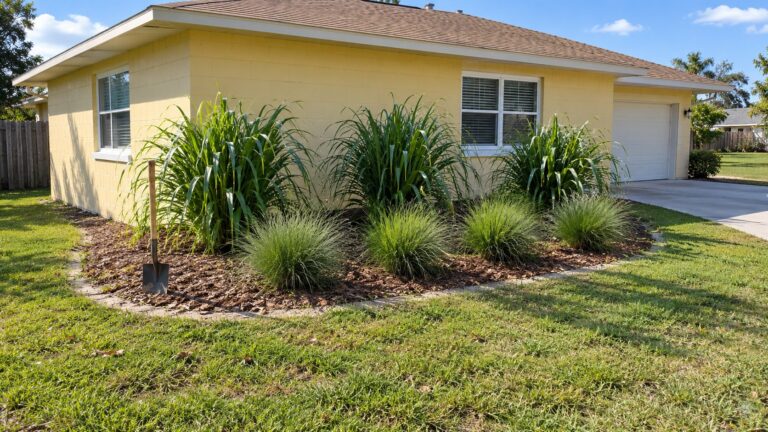
Full Sun Landscaping Ideas: 15 Plans for Hot, Dry Beds

Full sun landscaping ideas only work when the plants match the heat, so each of these 15 plans names its sun, drainage and water once established.
They cover the hottest spots: south walls, hellstrips, driveway edges, slopes and a gravel garden.
Group plants by thirst, and call 811 before you dig.
Find your hot spot
1. South Wall Bed of English Lavender and Winecups on Pea Gravel
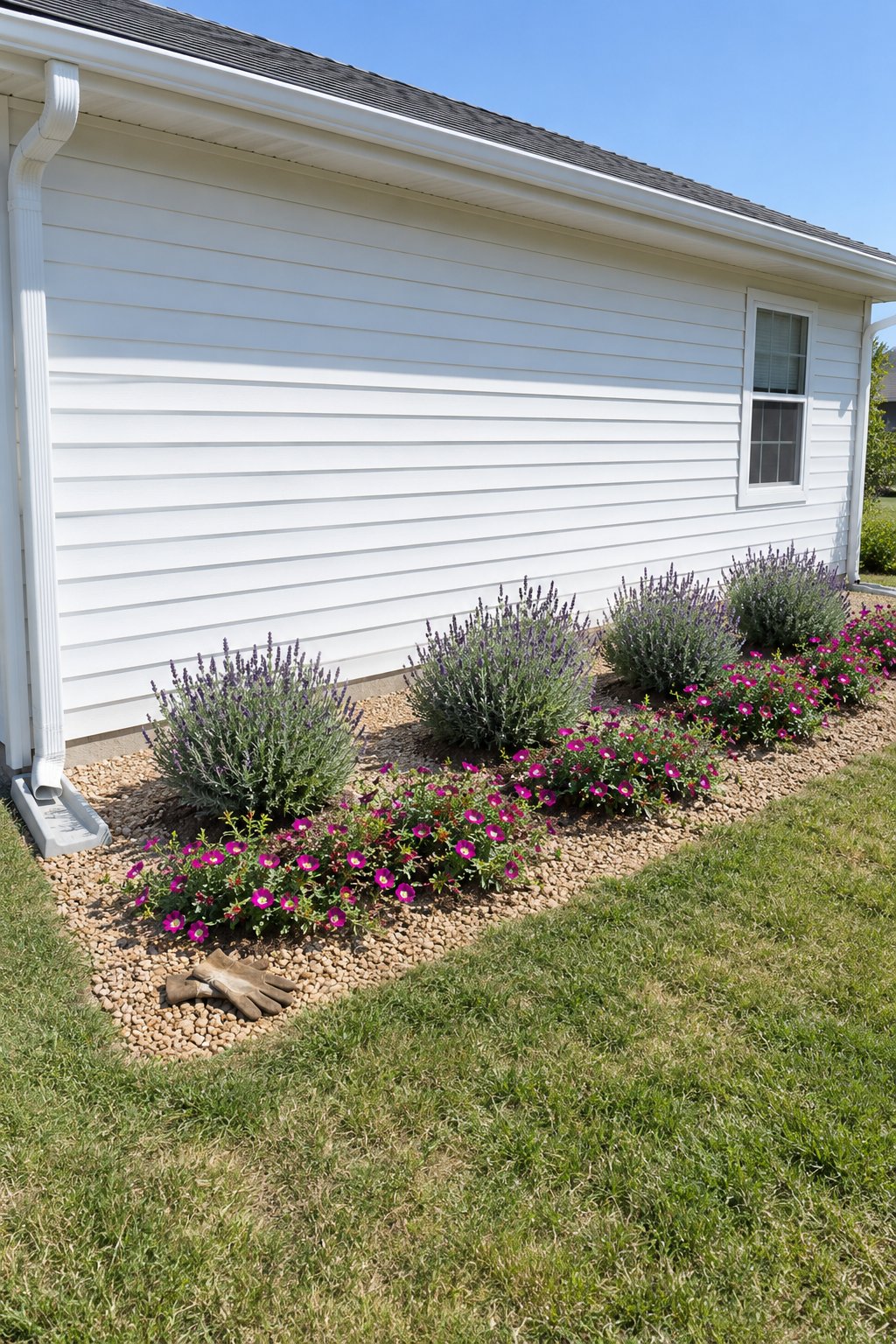
Start the bed 18 inches out from a south-facing wall, set English lavender in a row and let winecups sprawl in front. Both want full sun and sharp drainage.
Mulch with an inch or two of pea gravel kept off the crowns, not bark.
2. West Wall Blaze: Adam’s Needle Yucca and a Drift of Blanket Flower
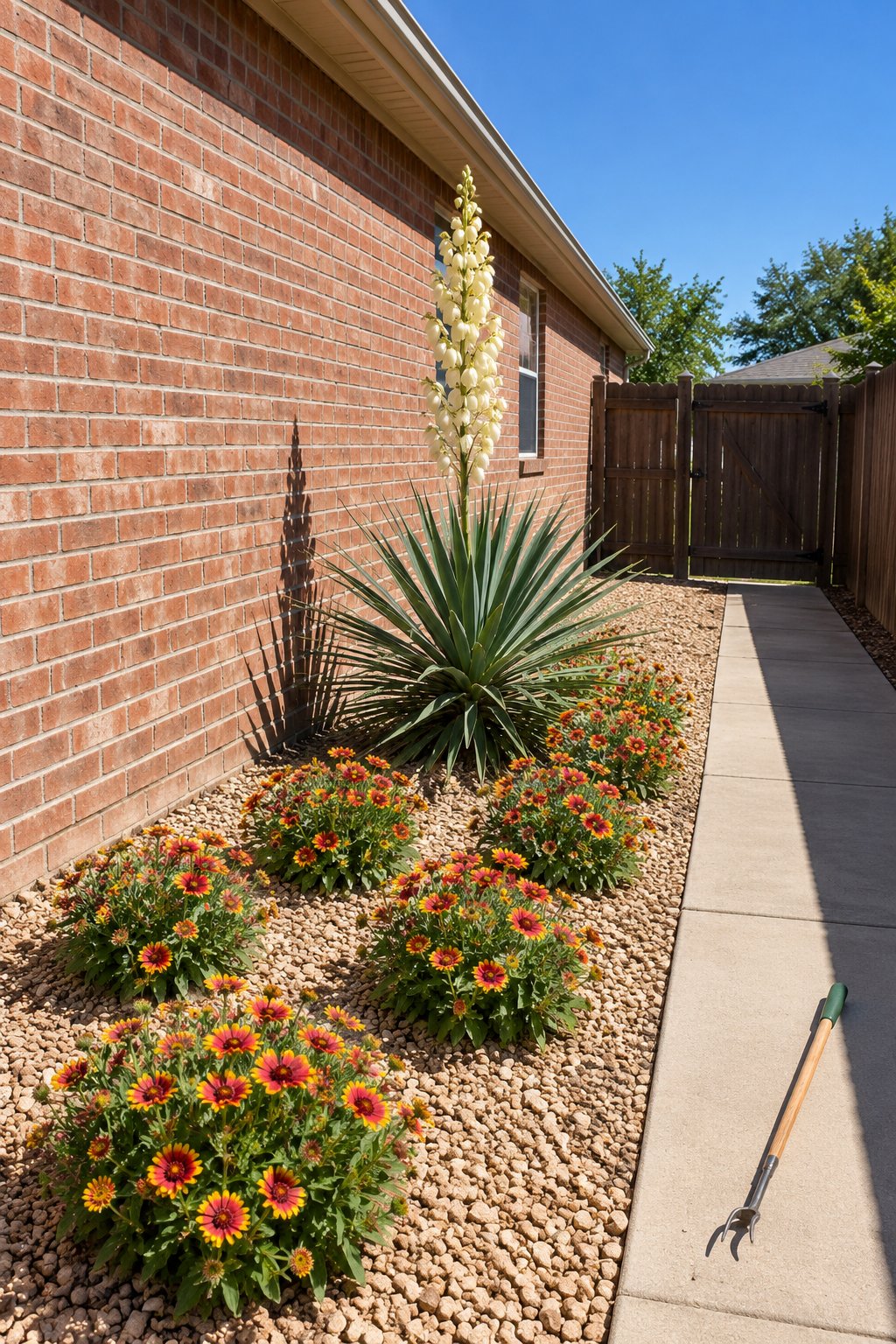
A west wall takes the hottest afternoon sun and throws heat back at the bed. One Adam’s needle yucca anchors it, and blanket flower fills around it in red and yellow from early summer.
Both want full sun and well-drained soil, and both shrug off the reflected heat.
3. The Dry Strip Under the Eaves: Hardy Ice Plant and Missouri Evening Primrose
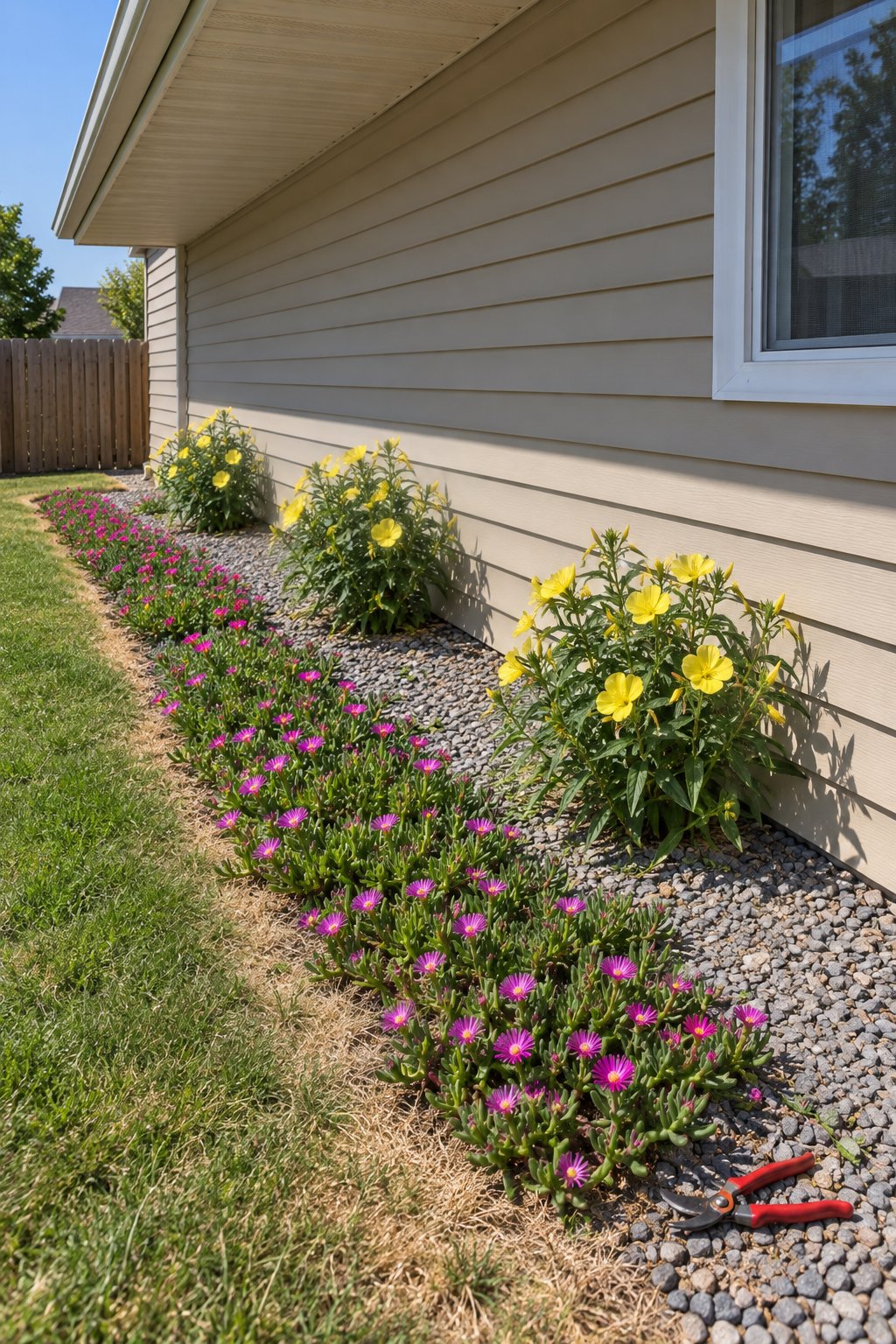
The ground under a wide eave gets little rain, which is exactly what hardy ice plant wants. Missouri evening primrose fills in behind it with big yellow flowers from late spring.
Hardy ice plant is reliable in roughly zones 6 to 9, and wet winter soil kills it faster than cold.
4. Hellstrip of Blue Grama and Mexican Hat, With Stepping Stones for Car Doors
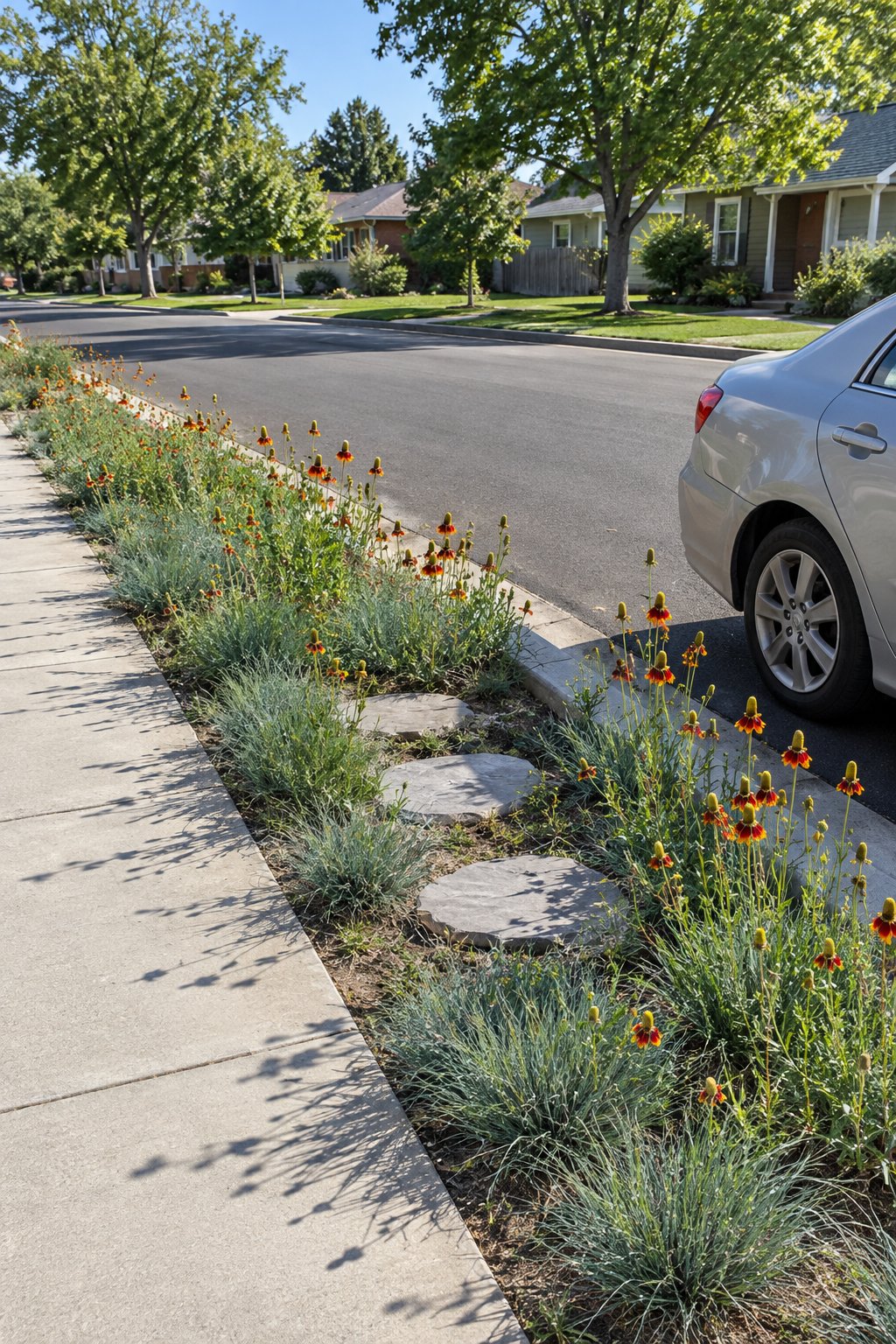
Plant the strip between sidewalk and curb with blue grama, a low native grass, and Mexican hat for summer flowers. Lay a flat stone every few feet so people can step out of a parked car.
Check your town’s rules first, since many set a height limit for the strip, and call 811, because utility lines often run under it.
5. Eastern Prickly Pear and Little Bluestem Set Back From the Driveway
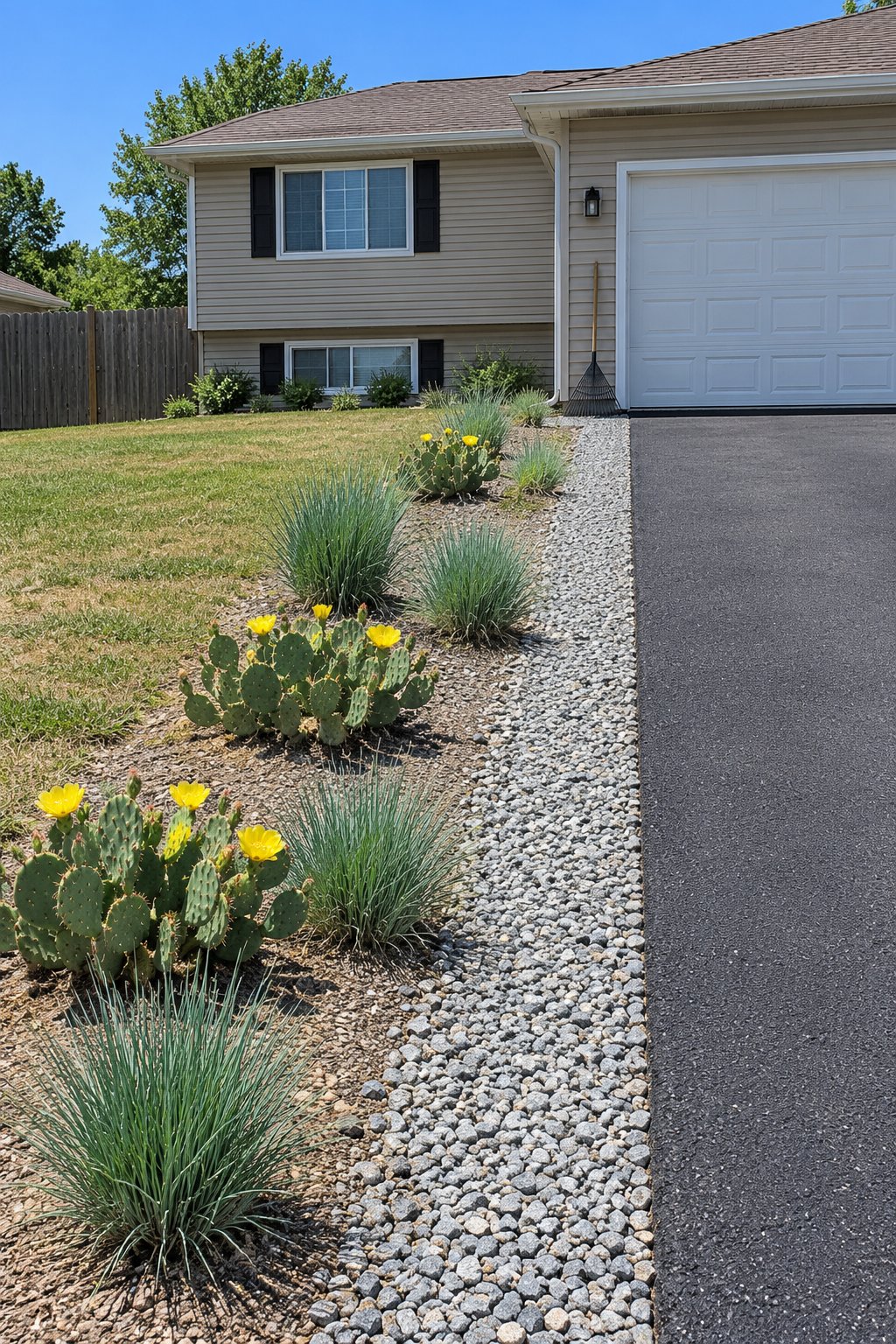
Eastern prickly pear flowers yellow in early summer at the hot driveway edge, and little bluestem turns copper in fall.
Leave a 2-foot gravel buffer so car doors, shovels and snow piles miss the spines.
For a softer, flowerier take, see this driveway strip of sedum, yarrow and coneflower.
6. A Mailbox Bed of Gaura and ‘Moonshine’ Yarrow That No Hose Reaches

A mailbox post sits in full sun with street heat, far from the spigot. Gaura and ‘Moonshine’ yarrow both handle that once established, and both flower from early summer.
Keep the bed about 3 feet across, so a watering can covers it in year one.
In snow country, this mailbox bed built for plows and salt takes the rougher version.
7. Hot Patio Edge: Bearded Iris and Pineleaf Penstemon Along the Concrete
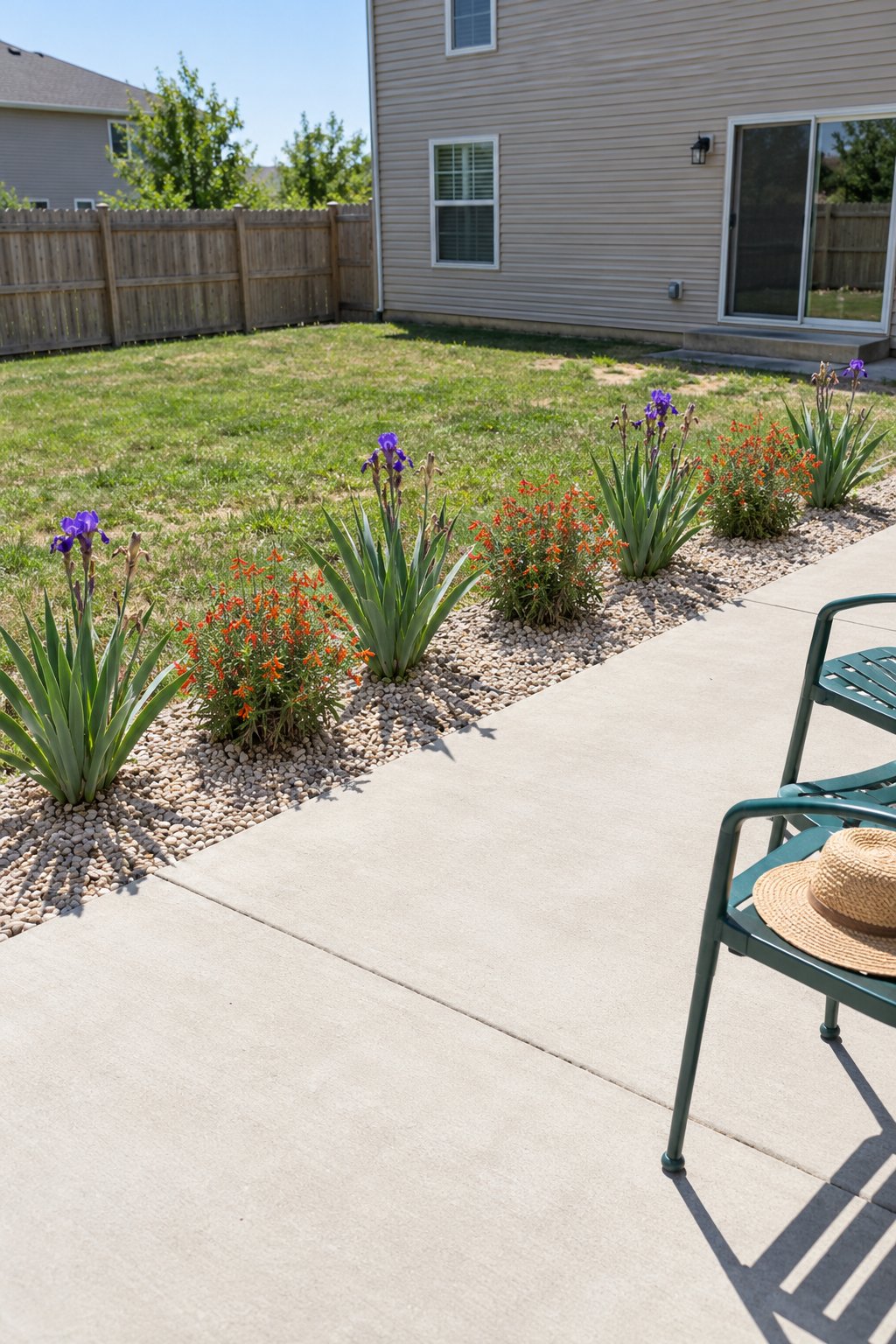
The strip beside a sunny concrete patio runs hotter than the yard behind it. Bearded iris carries late spring, and pineleaf penstemon follows with orange-red flowers into early summer.
Both rot in heavy, wet soil, so this works only where the patio sheds water away from the bed.
8. Renters’ Hot Patio: Two Big Pale Pots of Rosemary and Portulaca
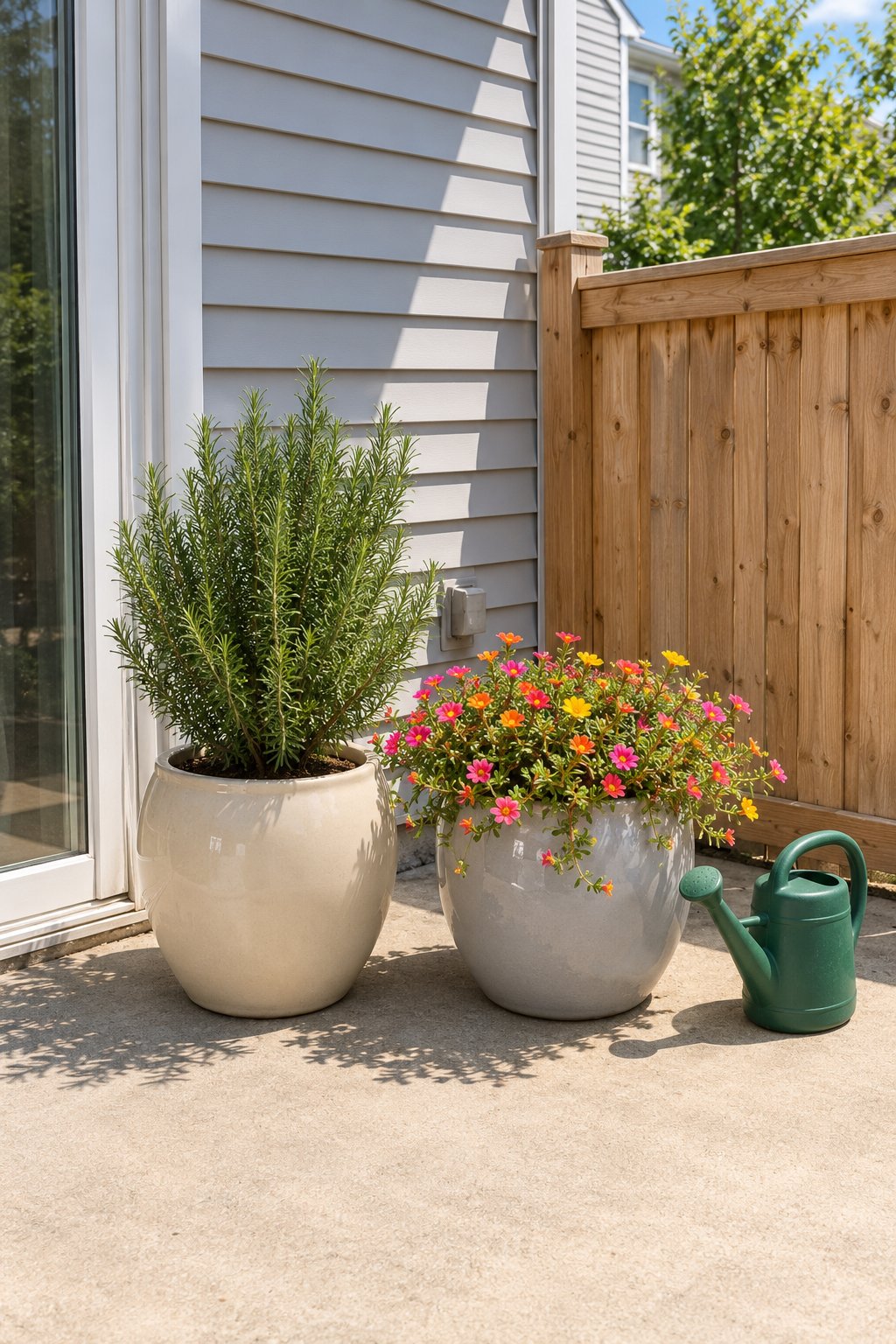
Pots dry out fastest in full sun, so go big: two pots at least 18 inches across outlast six small ones, and glazed pots lose less water than bare clay.
Rosemary only lives outdoors through winter in mild climates; elsewhere bring it in or treat it as an annual.
9. Creeping Juniper and Snow-in-Summer on a Sunny Slope You Never Mow
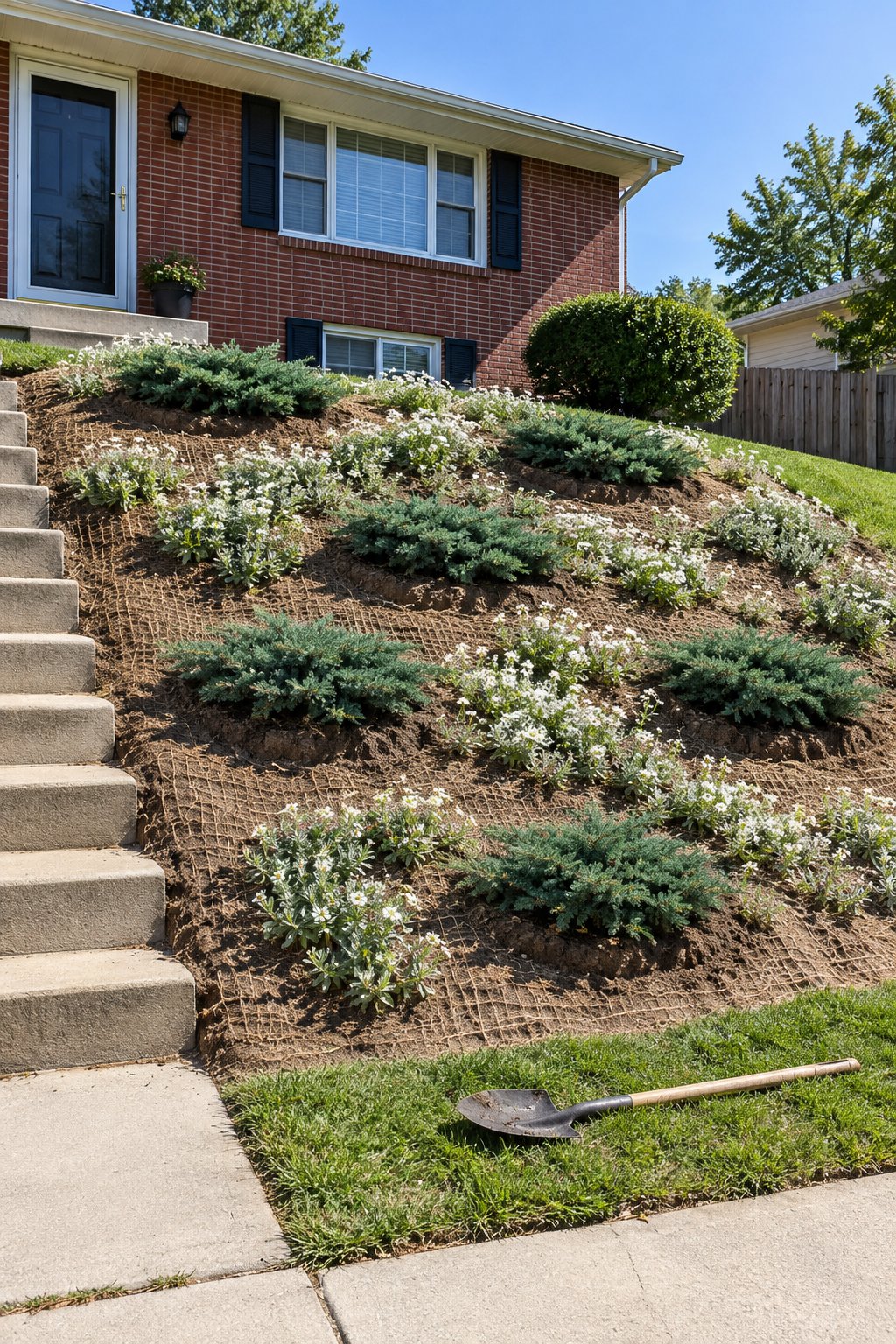
Plant a sunny slope in staggered pockets through jute netting, with a small soil ridge on the downhill side of each plant to hold water. Creeping juniper covers for good, and snow-in-summer flowers white in late spring.
Snow-in-summer spreads hard and fades in hot, humid summers, so give it the whole bank or use juniper alone in the South.
10. A Gravel Garden: Sea Holly, Rocky Mountain Penstemon and Blue Fescue Planted Into the Stone
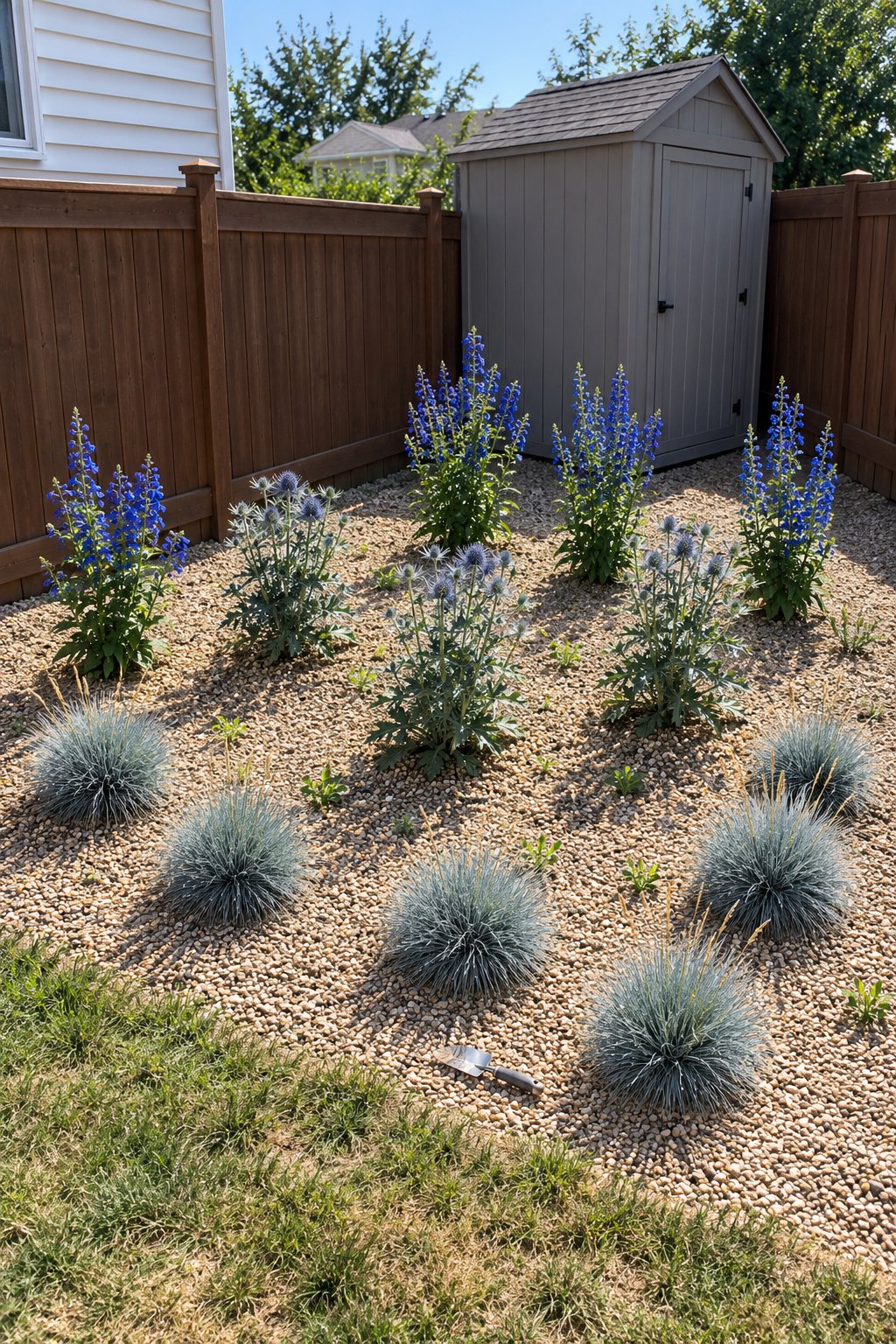
Here the gravel is the bed: plant into native soil, spread 2 to 3 inches of gravel and let seedlings come up in it. Rocky Mountain penstemon flowers blue in late spring, sea holly in summer.
Skip Mexican feather grass; California’s invasive plant council lists it as an invasive plant.
Blue fescue is the safer fine grass, and these rock landscaping ideas cover laying the stone.
11. A Raised Mound Over Heavy Clay, Topped With Lamb’s Ear and Russian Sage

Clay holds water around crowns all winter, so build up instead of digging in: mound loose topsoil mixed with gravel 6 to 12 inches above the clay. Lamb’s ear and Russian sage both want full sun and soil that drains.
Do not mix sand into clay; it can pack denser, not looser.
12. Group by Thirst: One Bed Zoned From the Hose Outward
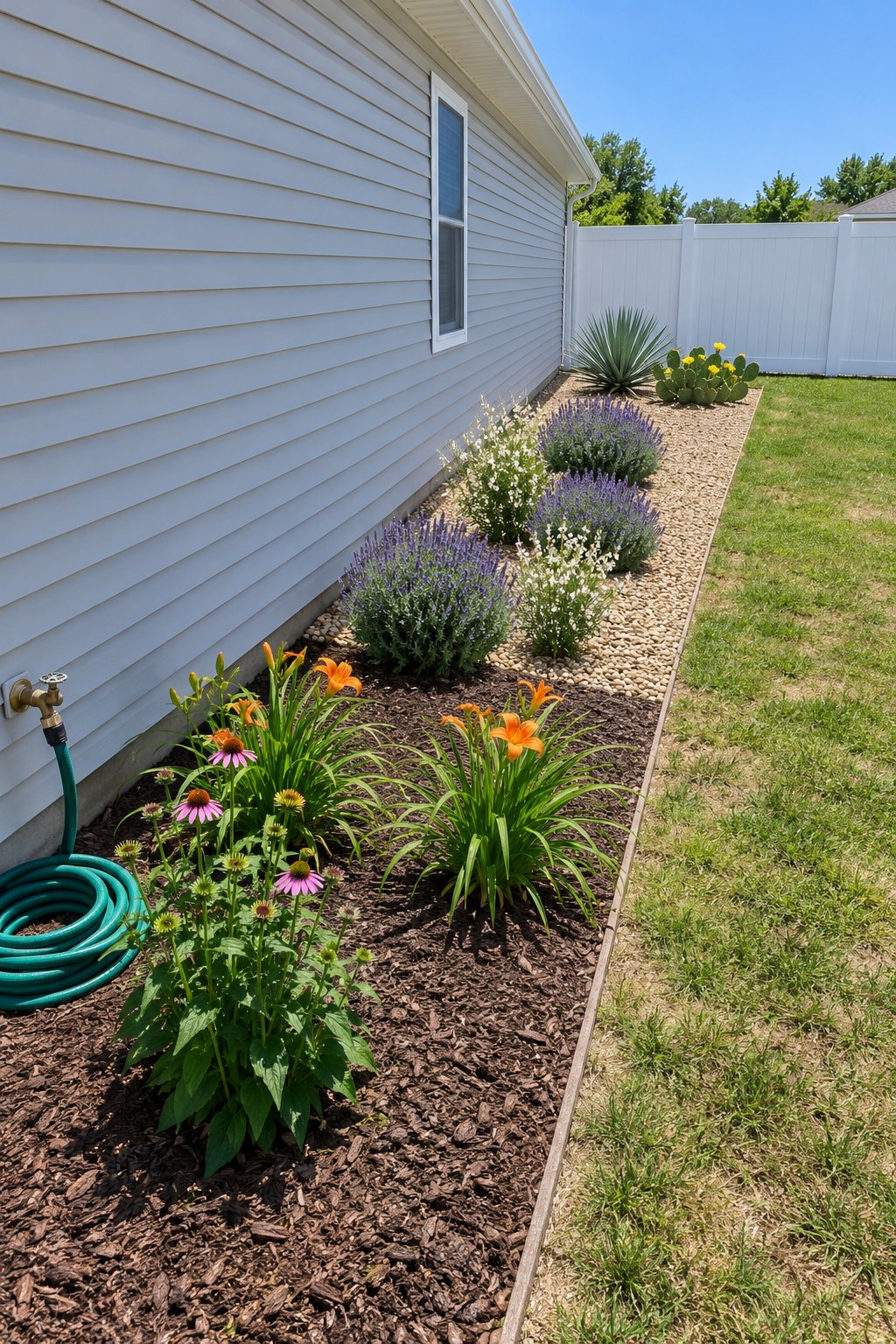
Put the thirstiest plants nearest the hose and the toughest at the far end. Purple coneflower and daylily sit by the spigot, lavender and gaura in the middle, yucca and prickly pear at the dry end.
Then one watering suits each zone, instead of drowning the cactus to keep the coneflower happy.
13. A Prairie-Style Front Bed of Switchgrass and Pale Purple Coneflower Under Shredded Wood
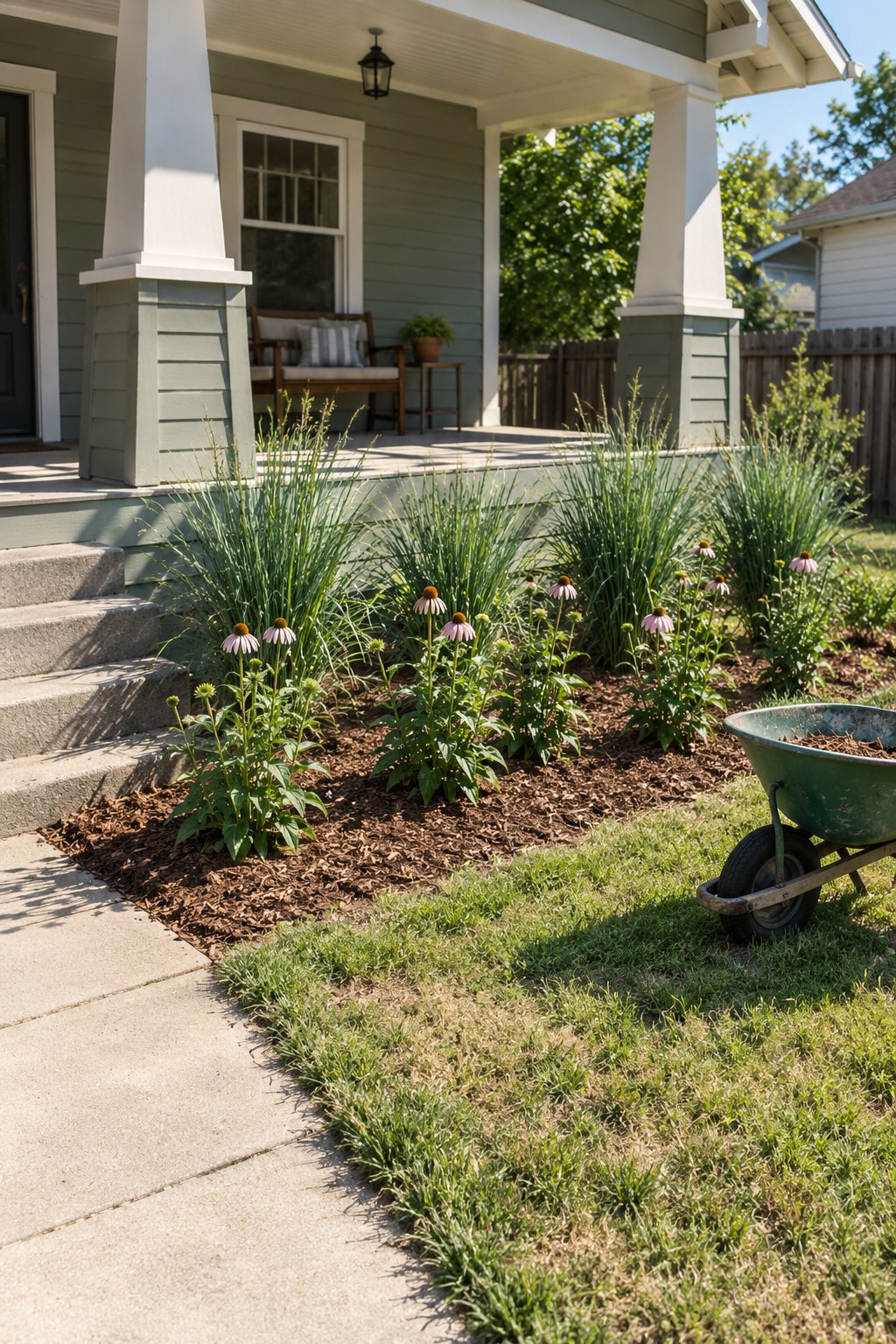
Prairie natives grow in ordinary soil, so loosen the ground and skip the rich compost. Pale purple coneflower flowers in early summer, and switchgrass stands through winter.
These take 2 to 3 inches of shredded wood mulch, unlike the silver-leaf plants above, which want gravel.
There are other ways to use wood mulch beyond a bed like this.
14. A New Fence-Line Bed on a Drip Timer: Rattlesnake Master and Prairie Dropseed
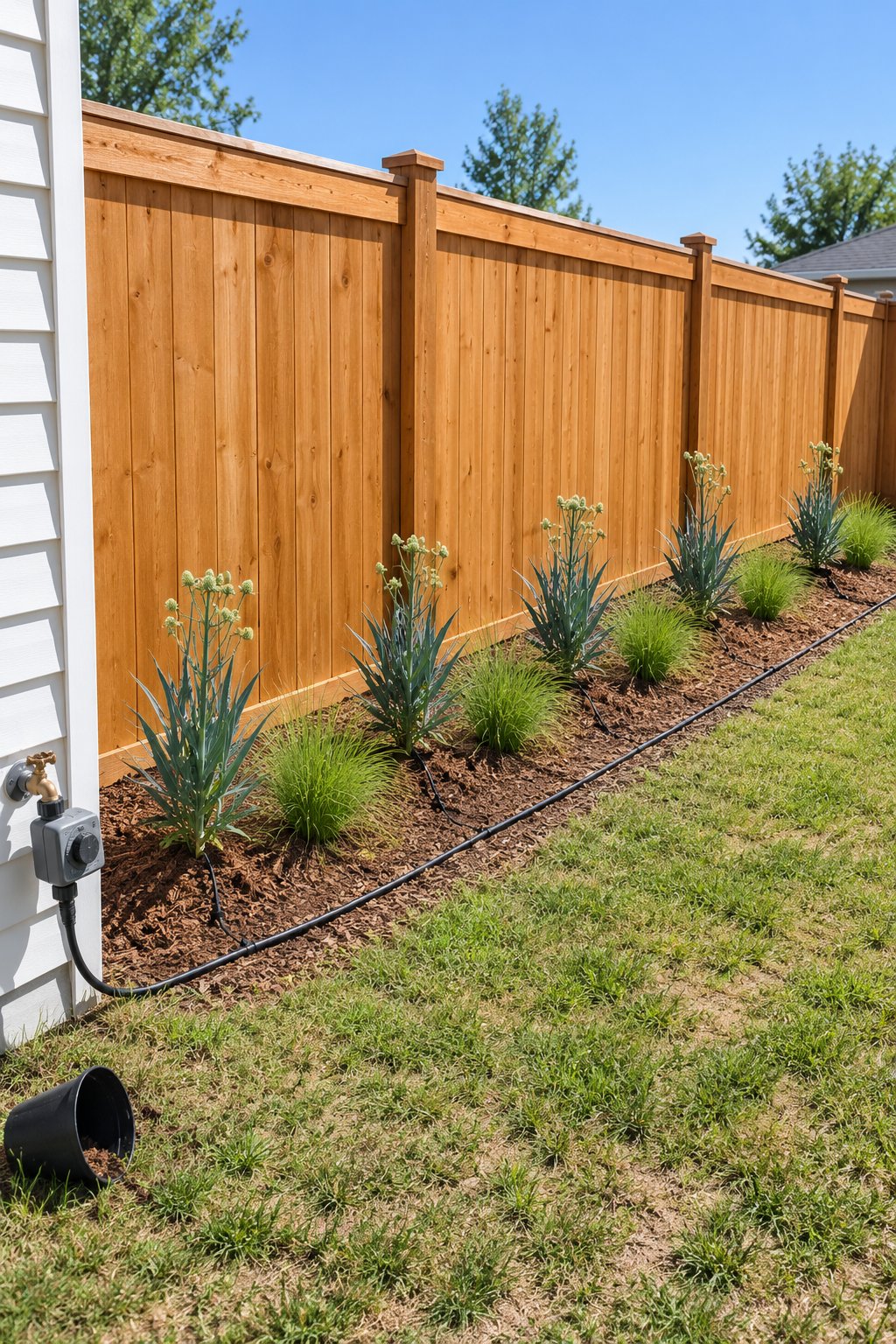
Lay a drip line under the mulch the day you plant and run it from a hose-end timer, no electrician needed. Rattlesnake master sends up round white heads from early summer, and prairie dropseed makes fine green fountains.
Drought tolerant means once established, often by the second summer, not the day you plant.
15. Two Smokebushes Screening a Sunny Fence, With a Bench Between Them

Smokebush wants full sun, takes dry soil once established and grows 10 to 15 feet wide, so space two along a long fence with a plain bench between. The pink-gray plumes show from late spring into summer.
Purple-leaf forms color best in full sun, and hardiness runs about zones 4 to 8.
Full Sun Plants Grouped by Water
Plant each group together so one watering suits the whole patch.
Every plant here needs regular water through its first season.
| Water group | Plants in this article | Once established | Mulch |
|---|---|---|---|
| Lowest | Prickly pear, yucca, hardy ice plant, winecups, blue grama | Rarely, only in long droughts | Gravel |
| Low | Lavender, lamb’s ear, penstemons, sea holly, gaura, yarrow, blanket flower, Mexican hat, Russian sage, juniper | A deep soak in long dry spells | Gravel, 1 to 2 inches, off the crowns |
| Low to moderate | Coneflowers, little bluestem, switchgrass, prairie dropseed, rattlesnake master, bearded iris, smokebush | Deep soaks in a hot, dry summer | Shredded wood, 2 to 3 inches (gravel for iris) |
| Moderate | Daylily, purple coneflower by the hose | More often than the rest in heat | Shredded wood, 2 to 3 inches |
| Pots | Rosemary, portulaca | Check daily in hot weather | None needed |
Six Full Sun Bed Mistakes to Skip
Rich compost in every planting hole
Do thisLoosen the native soil and plant dryland plants straight into it. Rich, wet soil makes many of them flop or rot.
Bark mulch around silver-leaf plants
Do thisUse 1 to 2 inches of gravel around lavender, lamb’s ear and penstemon, kept off the crowns.
Thirsty and dry plants side by side
Do thisGroup plants by water need, thirstiest nearest the hose, so you never water the whole bed for one plant.
Sand dug into heavy clay
Do thisBuild a mound 6 to 12 inches above the clay instead, or mix in organic matter for the moderate-water plants.
Planting Mexican feather grass in the West
Do thisPick blue fescue, little bluestem or blue grama; feather grass seeds freely and is assessed as invasive risk in California.
Cutting off water in year one
Do thisWater regularly through the first season and taper off; many plants are not established until their second summer.
Cold Rarely Kills a Dry-Garden Plant. Wet Winter Soil Does.
Lavender, hardy ice plant and the penstemons here handle cold well, but wet winter soil kills far more of them than frost does.
Their crowns sit in cold water for weeks in clay, rot, and the plant looks fine until spring.
That is why the plans above raise them on a mound, mulch them with gravel or tuck them into the rain shadow of an eave.
Read the hardiness zone on the tag as the cold limit only, then ask a second question: does this spot drain within a day after a soaking rain?
If it does not, choose from the moderate-water plants, which handle wet winters better.
Start with your hottest spot, the one where the lawn browns first, and turn just that strip into a bed from this list.
Water it through the first summer, then let it prove itself.
One bed that thrives on neglect beats a whole yard you water every evening.
Frequently Asked Questions
What are the best plants for full sun and dry soil?
For the driest spots, eastern prickly pear, Adam’s needle yucca, winecups and blue grama. For low water with more flowers, lavender, penstemons, gaura, blanket flower and yarrow, all in soil that drains.
How long do drought tolerant plants need watering?
Water regularly through the first growing season and taper off as the roots grow. Many are not fully established until their second summer, so watch them in a heat wave that year too.
Should I use rock or wood mulch in a full sun bed?
Use 1 to 2 inches of gravel around silver-leaf and Mediterranean plants like lavender and lamb’s ear. Use 2 to 3 inches of shredded wood around prairie plants like coneflower and switchgrass, kept off the stems.
How tall can plants be in a hellstrip or by a driveway?
It depends on your town, and some set a limit for the strip by the street. Check the local code, keep sightlines clear by the drive and call 811 before you dig.
Is Mexican feather grass invasive?
California’s invasive plant council lists it as an invasive plant, and it spreads by seed into wild land. Blue fescue, little bluestem or blue grama are safer choices.
You Might Also Like

Save This For Later

Loved full sun landscaping ideas? Save this pin to your Pinterest board now so you can find it again anytime you need the inspiration.